The cinema of my dreams – I always wanted to see the planets – Episode 45

Back on the alien vessel

If asking for and getting what you wanted was the technology of lesser beings, what was the other world’s technology like?

It was a question I asked myself, or perhaps a moment after, if the alien people we were currently talking to had difficulties with other more advanced people in their galaxy, where would we fit into the picture?

It was a worrying thought, because through time those that were inferior, in our world, were always subjugated by the more superior.

Granted we had spaceships making us seem reasonably advanced, but theirs were not like the one I was on.  We thought we were very clever getting the ship we were on into space, but out there, now, I certainly didn’t feel clever, or superior.

There was also the revelation that we had been observed for a long time, our progress monitored, and basically rejected as likely candidates for being welcomed.  Or being told we were not alone.

It must have been a dock to see us turn up one their proverbial doorstep, but not so great as out that they knew about us.  It was a case of our reputation preceded us, and it wasn’t the good, only the bad.

It would be true to say, given everything we’d done to our world through greed and selfishness, that finding off-world destinations for colonization was a definite requirement rather than an option, and along with that, to find and learn from other civilizations, especially those that had been in the same plight.

And having found what we had always believed, well, a lot of us anyway, that there was other life in the galaxy, it wasn’t going to sit well that we were basically in the ‘cane man’ stage of development as a civilization.

It was not much of a starting point for any sort of negotiation, diplomatic or otherwise, along with the prospect of meeting the other civilizations in this quadrant if it could be called that, basically from behind that proverbial eight-ball.

We were still no wiser as to where these people came from, or that it was near our first intended destination, Proxima Centauri.  We had a list NASA had compiled, earth-like exotic plants that were thought to be able to support life.

Several of the meetings between the world’s greatest scientific minds, when they were not off on one of their theoretical rants, all concluded that there should be life out in the universe somewhere, that all the known explanations of our existence were wrong, and we were descendants of aliens, possibly more than one species. 

It was a fanciful notion that drew interesting reactions from the Darwinians who believed we descended from the apes, the church, still stuck on their Adam and Eve theory, and others that we evolved after the ‘big bang’, or that our DNA arrived via a colliding meteor, which had me puzzled.

Now, I was not sure what I believed.

The Russian captain, now free of being threatened with an alien weapon, had completed a full circuit of the bridge, taken a moment to stare out into space, and where our ships were standing off, then come and join us.

I had a hundred questions, but the first was, “What was your mission?”

“Beat you lot into space.  To be honest we never expected you’d ever get that ship out of the space dock”

A year late, and people still arguing over staffing, fittings, weapons, technology, even bragging rights, if it hadn’t been for the Admiral, we might still be there.

“You didn’t answer the question, not specifically.  No one just wants to be first, and especially not brave about it.”

“Not yet.”

“I assume you’ve been in communication back home?”

“Communication wasn’t one of the strong points since no one really knew how to make instant calls work, so not really.  We’re basically flying by the seat of our pants.”

“I can see that, applying earth mentality to alien relations.  I would have thought you and your superiors would take a more diplomatic approach.”

“We tried.  You do realize were are technically inferior to this lot, and they don’t view us as being worthy of their time and effort.  Apparently, they knew exactly who we are, and where we were from, something I find hard to believe.”

“Did you visit the planet?”

“We were stopped by a patrolling ship, and they actually fired on us.”

I was not surprised.  We would have done exactly the same, in reverse.

“So, you started on the wrong foot and it only got worse from there.”

“What would you have done in the same situation?”

“Be less confrontational, but then, we’re on an exploratory mission, not one that takes whatever we can steal or in your case kidnap.  Did you realize who those people were?”

“They approached us.  Before we got to their planet we got a distress signal from what looked like a space station, quite a distance from the planet.  We didn’t know it was a prison, only that there were people in distress.  We rescued them, as anyone else would.  That’s when the proverbial hit the fan.”

“Did you know they had specialist knowledge?”

“Eventually, when the aliens came after us, I told them I needed to know why they were being so angry about a few criminals.  I offered them sanctuary if they were willing to share their knowledge.  They agreed.”

“They didn’t want to go home?”

“No.  They said they’d be killed by their own people.   We call it treason, they call it something else, but its more or less the same thing.  Now they’re going to kill all of us.”

© Charles Heath 2021-2022

NaNoWriMo – April – 2026 – Day 2

I’m sitting at my desk surrounded by any number of scraps of paper with more storylines, written excerpts, parts of stories, and a number of chapters of a work in progress.

Does this happen to anyone else?

The business of writing requires a talent to keep focused on the one project and silence all the other screaming voices in your head, pouring out their side of the story.

But it’s not working.

I try to be determined in my efforts to edit my current completed novel, after letting it ‘rest’ in my head for a few months.

I planned to have some time off, but all of those prisoners in my head started clamouring for my attention.  A story I started some time ago needs revising, another story I wrote last year for NANOWRIMO has come back to haunt me, and characters, well, they’re out in the waiting room, pacing up and down, ready to tell me their life stories.

Is the temporary cure coffee or wine?

Now I think I really do need a holiday

Or a trip to the asylum.  Thank God this is not the early 20th century, or I might never return.  And if it’s named Bellview, it would be just another story to be written.

The author who went Bonkers!

And that spy who’s at the end of his tether, just think James Bond movie full on action start and you’ve got the first chapter done!

Does it ever end?


A to Z – April – 2026 – B

B is for – Bullies can be beaten

It was the sort of stuff spy novels had in abundance.

But it was my imagination, fuelled by scores of those very same stories all rolled into one, that I used to explain why I was missing from school to classmates who thought I was the most boring and uninteresting person they had ever known.

I knew what they’d say, so I was going to take them on a journey, and in my childish mind, I was going to make it as believable as I could.

Of course, what a child imagines to be true and what is are two very different things.

But, like everything that ever happened to me, it didn’t start out as an opportunity to do the right thing; it was at the end of some very stinging barbs from Alistair Goodall, my tormentor and school bully.

I glared at him with all the hatred I could muster, which, considering he was a foot taller and about 50 pounds heavier than I, was really a waste of time.

He had just told everyone within hearing range that my absence had simply been because I was too scared to come to school, because he had threatened to beat me up.

It was true, but I wasn’t going to let that be my defining moment. Instead, I blurted out, “The whole family had to go into hiding because of things my father knew, and his life was in danger.”

Yes, we had gone away, but it was to another country, where my mother’s parents lived, and they had been killed in an accident. It was quite sudden; my mother and sister had gone first, and then my father and I followed. He had difficulty getting away, and it had been a last-minute decision.

He had to come back, and despite my pleas to leave me with my mother, he dragged me back, oblivious to the predicament I was in with Alistair Goodall.

Goodall looked at me incredulously at first, then with a smile. “Good try, squirt. You almost had me believing it. Your dad an informer? My dad’s a cop, so I’ll ask him, but we both know what he’s going to say.” He took a step closer. I braced for impact.

But then, realising I was digging a bigger hole, one that I might not get out of, “Your dad wouldn’t have a clue about witness protection. It wouldn’t be witness protection if everyone knew about it. This is stuff beyond his pay grade.”

I remembered a TV show I had seen while away, about witness protection, and how it was supposed to be secret, but the witness was sold out by the bad guy’s man in the police force.

“My dad’s very important,” he said, his voice raised an octave, a sure sign he was losing this war of words.

“Then if you went home and started asking questions about witnesses who are supposed to be in protection, then he would lose his job, or worse, go to jail for blabbing secrets.”

“Your blabbing secrets.”

“You’re threatening to beat me up if I don’t tell you where I’ve been. Just threatening me into telling you is going to get you into a heap of trouble. I suggest you let it go, and we keep this between us. Or can’t you keep secrets?”

“I can too.”

The whine in his voice told me that I had bested him, but for how long was a moot question. He was not going to keep this a secret.

The school term ended in an uneasy truce between Alistair and me, and the whole school broke for the summer holidays. It meant I could escape Alistair’s persecution, at least for a few weeks, time enough for the rest of the family to return, and a semblance of normalcy to return.

I had just about put the great lie out of my mind when Alistair turned up outside my house with a smug smile. That idea of keeping secrets was not one of his strong points.

“You’re really for it, now, squirt. My dad knows nothing about this crap story of yours. In fact, he copped a serve at work, and he’s coming around to put the pair of you straight.”

Damn. Why could the miserable twisted arse just let it go?

“You want to be anywhere but here when he gets here.”

He walked off laughing, thinking he’d bought me a whole new world of pain.

My father was home for a week, which was a shame, because he was never home, always busy, too busy to be bothered with any of us. It would have been better if he hadn’t, or my mother was here, which she was not, still delayed in her return.

I spent a good hour trying to think of how I was going to get out of this one, but whatever I did, there was no chance I was not going to get a beating for this. Goodall was a copper, and although my father said he was a bully and a terrible excuse for a local plod, as he called him, he was still the law. Previous infractions I had been accused of were all true, and it had got me into trouble and a warning; there had better not be a next time.

This was the next time, and it was a doozy.

There was only one path I could go down.

My father was in his study when I went to look for him. He was always working on something, with books and charts all over the desk. I never asked, and he never volunteered what his job was, but I would have to ask one day.

I knocked on the door and waited a minute or two before he asked me to come in.

“Did I hear you talking to someone before?”

“Alistair Goodall, bully son of the local copper. As bad as his father, he uses him as a shield. I’d complain about him, but you keep saying I have to man up. There’s no manning up against the likes of him.”

I had considered whinging about the kid, but I knew my father wouldn’t accept that as trying hard enough to find my own solution, and it was useless telling him there wasn’t one.

He looked at. “Your mother said you were being bullied. Why didn’t you come and see me?”

“You’re never home, and you reckon I have to sort it out myself. Bit hard when he’s taller and heavier than I am. And I don’t think you’d appreciate me hitting him with a baseball bat.”

“Drastic but effective, no doubt, but not worth the jail time. Why are you telling me this?”

“He wanted to know why I was away recently. I couldn’t tell him; he threatened to beat me up, so I made up a lie. The truth was too lame for a moron like him.”

“What lie?”

I told him and watched the already dark features go a lot darker.

“And you expected he wouldn’t take it to his father for confirmation?”

“Plods don’t get told anything, of course, he wouldn’t know, and even if it was true, no one from up the chain would share that with a fool like Goodall. Even I know that much.”

“How do you know all this stuff?”

“Reading. I’ve read a lot of books, seen films and TV shows. I know a lot of it is make-believe, but there has to be elements of it that are true. The point is that I told Alistair that it was a secret and asked him to keep it. I mean, in real circumstances, we would be trusting him, which you would think from all the bluster that he could. If it had been a test, he failed spectacularly. As for his father, sure, he would understand the nature of witness protection and the necessity for secrecy, so blabbing it to his superiors was wrong on so many levels. I’m sure they would have said they knew nothing about it, even if they did.”

My father thought about that for a minute, perhaps looking to point out the flaws in the logic, but I couldn’t see any.

“I don’t like Goodall. Got on my wrong side when he first became a Sergeant. Too smug by half, and, as you say, a bully who uses his position. You were wrong to lie. Now, go upstairs. I’ll deal with Goodall.”

I was sitting behind the wall at the top of the stairs, waiting for Goodall to come. I wondered if he would bring the toad Alistair with him.

The pounding on the door almost made my heart stop. My father took his time to answer the door, and then, “Sergeant Goodall, what do we owe the honour of this visit?” It was the most pleasant tone I’d ever heard my father use, to anyone.

“Mr. Laramie…” Goodall senior only had one level of speaking, loud and confrontational.

“Sergeant Goodall, there are two things I expect from any visitor who comes to my door: that the visitor addresses me in a civil tone and the other, not to make their cases on my doorstep. Now, if you give me your word you will be civil, I will invite you in.”

He must have nodded because I heard footsteps and the door closed. His office was on the ground floor, up the passage. I would be able to hear them if the door to the office weren’t closed.

“Now, Sergeant Goodall, what exactly is the problem?”

“Your son is telling preposterous lies.”

“Your son is a bully, and my son fears going to school because of him. I think you should be attending to your son’s proclivities rather than worrying about what my son says. Most kids his age speak utter gibberish at the best of times.”

A moment’s silence before, “It’s not the fact, it’s lies, it’s the nature of the lie.”

“Oh. The fact that we were away. Well, there’s something else you should be admonishing that wretch of a child of yours for. My son told him the truth. and gave him a warning that it was not to be put about, in fact, as I understand it, he told your son that it was to be kept secret, and because he believed your son, being the son of a respectable policeman who understands the nature of these sorts of secrets, could keep it. The fact that he couldn’t keep that simple secret disappointed my son, disappointed me, and disappointed the people who arranged our sojourn, while some very nasty people were put away. They are, at the very least, extremely disappointed that you were poking around in matters that were way above your pay grade. If my son comes home any time in the new year complaining about your son, I will forget about being magnanimous this one time, in the hope you can address the issues you have; if he comes home with a complaint, all bets are off. Do I make myself clear?”

“He was not lying?”

“He was trying to avoid being beaten up by a thug, Goodall. He trusted your boy, and he let him down badly. This matter should not be discussed, here or anywhere, and I expect by the time you pass through my front door, the matter of our sojourn will be forgotten, and the problem with your child will be on the way to being resolved. Now, if that’s all….”

A few seconds later, I heard Goodall being bundled out the door, and it closed firmly behind him.

My father took a risk, but it paid off.

By the end of the summer holidays, Goodall had moved on to another station and taken his wretched son with him.

Goodall wasn’t the only bully at that school, but I learned a new way to deal with them, one that didn’t include elaborate lies. Those I saved for the stories I started writing.

©  Charles Heath 2025-2026

365 Days of writing, 2026 – 75

Day 75 – One page at a time

Why Writing a Novel One Page at a Time Is the Secret Weapon Most Authors Overlook

“Write a page a day and the novel will finish itself.” — Anonymous

If you’ve ever stared at a blank screen, imagined the weight of a 70,000‑word manuscript, and felt the panic rise like a tide, you’re not alone. The biggest obstacle to finishing a novel is rarely a lack of ideas; it’s the mental mountain of “I have to finish this whole book right now.”

What if you could dismantle that mountain, one tiny, manageable step at a time? The answer is surprisingly simple: abandon the fantasy of “finishing the novel” as a single, monolithic goal and instead commit to writing just one page a day.

In this post, we’ll explore why the one‑page approach works, the psychology behind it, real‑world examples, and a step‑by‑step action plan you can start using tonight. By the time you reach the end, you’ll see that the “surprise” isn’t that you finish—it’s how effortlessly you get there.


1. The Myth of the “Finish‑the‑Book” Goal

A. The All‑Or‑Nothing Trap

When you set a goal like “write a novel,” the brain treats it as an all‑or‑nothing problem. The sheer scale triggers the same response as an Everest climb: overwhelm, fear, procrastination. Research from the University of Hertfordshire shows that people who frame large projects as a single goal are 30 % more likely to abandon them than those who break the project into micro‑tasks.

B. Perfectionism’s Hidden Hand

A “finish the book” mindset also feeds perfectionism. You wait for the perfect scene, the perfect line, the perfect chapter—until the page never appears. The result? Writer’s block masquerading as high standards.

C. The Illusion of Progress

Even if you write a little each day, the numbers stay hidden. Ten pages written in a week feels modest when you’re measuring against “70‑page chapters.” The lack of visible milestones robs you of the dopamine hit that keeps motivation alive.


2. Why One Page Works

BenefitHow It Helps You
Concrete, measurable outputA page is easy to count. You see progress instantly.
Low entry barrierTen minutes of focus can produce a page—no marathon sessions needed.
Reduces anxietySmaller stakes mean less fear of failure.
Builds a habit loopCue → Write one page → Reward (tick, momentum) → Repeat.
Creates a natural editing rhythmYou finish a page, step back, and can revise before moving on.

The Science of Micro‑Goals

A 2019 study published in Psychology of Learning found that micro‑goals (tasks taking under 15 minutes) trigger a greater sense of competence than larger goals, boosting intrinsic motivation. One page typically fits that time frame, making it the perfect sweet spot for the brain’s reward system.


3. Real‑World Proof: Authors Who Swore by the Page

AuthorMethodResult
Stephen King“Write 1,000 words a day” (~4 pages) – never missed a day for decades.Over 60 novels; the habit kept his output steady.
Haruki MurakamiWrites 2–3 pages each morning before his day job.Completed Kafka on the Shore and 1Q84 while running marathons.
Anne Lamott“Write one paragraph a day; if you can’t, write a sentence.”Finished Bird by Bird while caring for a newborn.
Neil GaimanSets a daily “page target” for short stories; uses a physical notebook to count.Produced American Gods and a prolific short‑story catalog.

Notice the pattern: the smallest unit—page, paragraph, even sentence—becomes the anchor. None of these writers waited for the perfect novel outline; they just kept turning pages.


4. The Surprising Result: You’ll Actually Finish

When you commit to one page per day, three things happen simultaneously:

  1. Momentum builds – Each page creates a tiny sense of achievement that compounds.
  2. Structure emerges – By the 30th day, you’ll have a “first draft” that can be reorganised, not a jumble of ideas.
  3. Deadline pressure evaporates – The goal is no longer a distant, intimidating deadline but a daily ritual you can control.

Mathematically, 70 pages (the rough length of a short novel) is just 70 days—a little over two months. Even if you write three pages a week, you’ll be done in under six months. The math feels doable, the habit feels natural, and the surprise is that you actually cross the finish line.


5. How to Implement the One‑Page Method Right Now

Step 1: Define Your “One Page”

  • Word count: Roughly 250–300 words (standard manuscript format).
  • Format: Use a dedicated notebook or a digital file titled “Page 1 – Draft” so you never lose track.

Step 2: Set a Concrete Cue

  • Morning coffee → open the document.
  • After lunch walk → pull out your notebook.
  • Pre‑bedtime → fire up a blank page.
    Pick a cue that fits your daily rhythm; consistency beats intensity.

Step 3: Time‑Box It (Optional)

  • Set a timer for 15 minutes.
  • Write until the timer ends or you’ve filled the page—whichever comes first.
    If you finish early, use the extra minutes to edit the page you just wrote.

Step 4: Track and Celebrate

  • Physical tracker: Tick a calendar for each page completed.
  • Digital tracker: Use a habit‑app (Habitica, Streaks) to log progress.
  • Celebrate weekly milestones (e.g., “10 pages = 10‑minute coffee break”).

Step 5: Review Every 10 Pages

  • Pause, read what you’ve written, and note any patterns, gaps, or ideas for restructuring.
  • This mini‑revision prevents the dreaded “edit‑later” pileup.

Step 6: Adjust When Needed

  • If life gets busy, aim for half a page instead of skipping entirely.
  • If inspiration strikes, you can double‑up—but keep the habit as the core.

6. Overcoming Common Objections

ObjectionReality CheckPractical Fix
“One page a day is too slow.”A finished novel is a marathon, not a sprint.Remember the compound effect: 1 page × 365 days = 365 pages—enough for a full novel and a sequel.
“What about quality?”Quality emerges from revision, not first‑draft speed.Use the 10‑page review to tidy prose and tighten plot.
“I’ll lose momentum on a bad day.”Bad days happen; the habit is forgiving.Write a sentence or bullet outline on off days—still a page in the notebook.
“My story needs big scenes; a page feels fragmented.”Treat each page as a scene slice; you can always expand later.Write a “scene map” after 10 pages to see where each fragment fits.
“I’m a full‑time worker; I can’t spare 15 minutes.”Micro‑tasks fit into any schedule.Pair the page with existing routines (commute, lunch break).

7. Bonus: Enhancing the One‑Page Habit with Simple Tools

  1. Pomodoro Timer – 2×7‑minute intervals give you a focused burst plus a quick break.
  2. Word Processor Templates – Pre‑set margins, font (Times New Roman, 12 pt), and line spacing; you won’t waste time formatting.
  3. Voice‑to‑Text Apps – If you’re on the go, dictate a page and edit later.
  4. Physical “Page‑Box” – Keep a small box where you drop a printed page each night; the tactile ritual reinforces progress.

8. The Final Thought: Let the Page Be Your Compass

Writing a novel is often portrayed as a heroic quest, a battle against an invisible beast. The one‑page method reframes it as a daily walk—steady, purposeful, and ultimately rewarding.

When you stop treating the novel as a gigantic, unscalable project and start seeing it as a collection of 250‑word steps, the surprise isn’t that you finish—it’s that the finish line never felt frightening to begin with.

Ready to try? Grab a notebook, set your cue, and write that first page tonight. In a week, you’ll have a tiny chapter; in a month, a solid manuscript. And soon enough, you’ll be holding the completed story you once thought impossible.

Happy writing—one page at a time.

Searching for locations: Coffs Harbour, New South Wales, Australia, and resorts Wyndham style

We have stayed in two different types of accommodation in Coffs Harbour, New South Wales, Australia, as a timeshare owner who can trade their week for a week anywhere in the world.

Both are resorts, but different sorts of resorts.  The first was a typical RCI resort, where everything is laid back and relaxing, with all the amenities one can expect from a resort.

The other, this one, the Wyndham in Coffs Harbour, is very different, and you notice it when you walk in the front door.  You are virtually assaulted by hard-nosed timeshare sales staff who really don’t take no for an answer, and then when you finally escape, ring you every day to make an appointment.

I left the phone off the hook.

Aside from that, the place is excellent, the accommodation very good, and the situation one of the best with what could be called a private beach.  There are also a number of bushwalks that cater to old people like me.

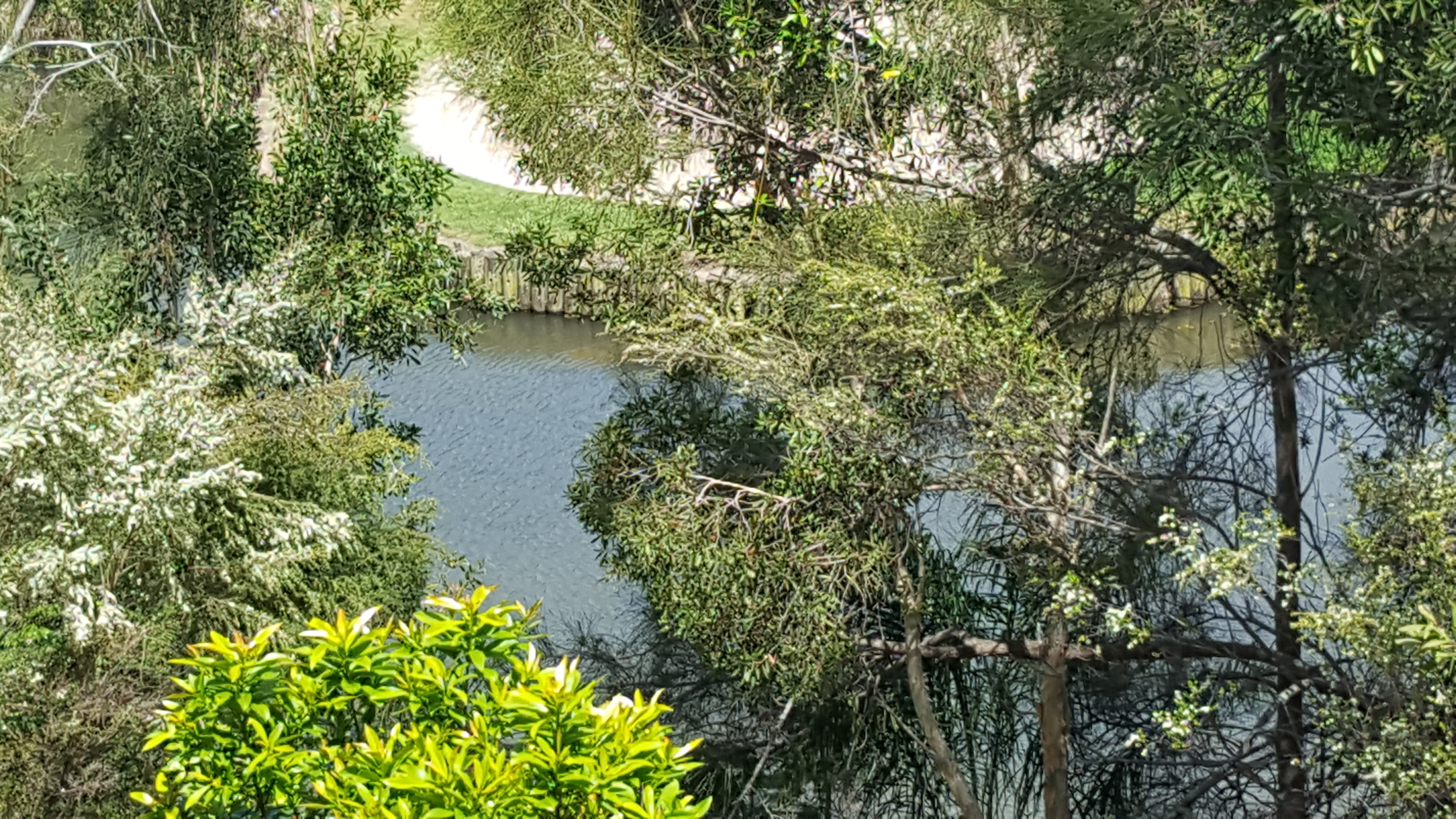
As you can see, lakes and greenery, and even a putting green.

20161030_141653

And in places, they try very hard to hide the ugly multi-story buildings in amongst the trees

20161030_141706

It is only a short walk to the ‘private beach’ and it is sufficiently long enough for a morning walk before breakfast.  You could even try to catch some fish for breakfast, though I’m not sure if anyone actually caught anything

20161030_142237

Or you can just stare out to sea

20161030_142225

And, back in the room, this is the view we had from our verandah

20161030_134910 - Copy

“The Price of Fame”, A Short Story

I looked at the invitation, a feeling of dread coming over me.  It was not entirely unexpected but like a great many things that had suddenly come into my life, it caused equal measures of fear and excitement.

The gold edging and the perfect script displaying my name in the exact centre of the envelope made it almost unique.  Very few people ever received such an invitation.

I held it in my hand for a longer than necessary, then put it down on the desk carefully, as if it would explode if I dropped it.

My first instinct, driven by fear, was not to accept.

But, fear or not, there was no question of me not attending.  Circumstances had painted me into a corner; I’d agreed to go a long time ago when I thought there was no chance it would come to pass.

Way back then, I had been compared to the aspiring painter in an attic having to die before I made any sort of impression.  In those days people thought it amusing.  I thought it was amusing.  Kirsty, in particular, had thought it was as impossible as I had.

Now it was not amusing.  Not even remotely.

My life was once quiet, peaceful, sedate, even boring.  That didn’t mean I lacked imagination, it was just not out on display for everyone to see.  Inspired by reading endless books, I had the capacity to transport myself into another world, divorced from reality, where my boring existence became whatever I wanted it to be.

It was also instrumental in bringing Kirsty into my life.  In reality, I thought she’d never take a second look at me, let alone a first.  So I pretended to be someone else.  Original, witty, charming, underneath more scared than I’d ever known.

And yet she knew, she’d always known and didn’t care.

As we spent more time together, she discovered I liked to write, not finish anything, just start, write a hundred pages, then lose interest.  Like everything I did.  Start, and never finish.

Why not?  It would never be published.  It would never succeed.

So she bribed me.  If I didn’t finish my first book and send it away, I couldn’t marry her.  It didn’t matter if it was rejected, all I had to do was finish a book, and send it.

The thought of marrying her had not entered my mind, because I hadn’t thought she would.  Incentive enough, I picked out one of the unfinished manuscripts and humoured her.  She read bits of it, not saying a word.  Sometimes she’d put a note or two on the manuscript, her equivalent to sweet nothings, and with it I gained inner confidence in my own ability, not only to write but in many other aspects of my life.

When it was finished, it was Kirsty who sent it off.  She read it, packaged it, addressed it, and sent it before I had a chance to change her mind.  Once gone, I heaved a huge sigh of relief.  It was done. That was, as far as I was concerned, the end of it.

It was not possible that one letter could change a person’s life so dramatically.  I came home to the all-knowing smile, and mischievous whimsicality that had always suggested trouble.

Trouble indeed!

My book was accepted.  With a cheque called an advance.  For more money than I knew what to do with.

This was followed not long after by publication.  And a dramatic change to my life, one I didn’t want.  To become a public person, to face an enormous number of people, people I didn’t know.

I went back to being scared.

Kirsty smiled at me and told me how wonderful I looked in my monkey suit.  Why couldn’t I go in jeans and a dress shirt?  All the best actors in Hollywood did it.

“This is not Hollywood.  You’re not an actor.”  It was a simple, practical, answer.

The hell I wasn’t.  I could act sick, dying, fake a heart attack, anything.  “What am I going to say?”

“You could talk about books.”  Quiet, efficient, oozing the confidence I didn’t feel.

She didn’t fuss.  She took it in her stride.  She dressed in her usual simple elegance, in a manner that made me love to be seen with her.  I couldn’t tie my tie, so she did it for me.  She straightened my jacket because I couldn’t do that either.  Nerves.  Can’t live with them, can’t live without them.  Or was that a reference to wives, or mistresses, or something else?

The palms of my hands were sweating.  Meatball hands, I thought, the sort of palms that betrayed the pretenders.  Me, I was the pretender.  My neck felt too large for the shirt.  Beads of sweat formed on my brow.  Where was a sponge when you needed one?

“I can’t do this.”

“You can.”

We hadn’t even left the hotel yet.

“How long before the execution.”

She looked at me with her whimsical smile.  “Long enough for me to give you a hard time.”

I lost count of the number of times I had to go to the bathroom, for one thing, or another.  Nerves I said.  Perhaps a dozen Valium or something similar.  Did I have any?  Had she hidden them?  Why did she keep smiling?

In the car, I looked at my watch at least a dozen times.  I couldn’t breathe.  It was too hot, too cold.  She held my hand, and it served best to stop the trembling that had set in.  Why did I agree to this?  Why?

We were greeted by the Events Manager, who was polite and genuinely interested.  He took us inside where he introduced the interviewer, another woman who oozed confidence and charm, who went over the format and generally tried to set me at ease.

I didn’t let Kirsty’s hand go.  Not yet.  She was my lifeline, the umbilical cord.  When it was severed, I knew I was going to die.

Bathroom?  Where was the bathroom?  Hell, five minutes to go, and I felt like passing out.  No, Kirsty couldn’t come in.  Comb my hair.  Straighten my tie, no it was straight.  Maybe I could hide in here?  I looked around.  No, maybe not.

Time.

The cue man was standing beside me, hand gently on my back.  He knew the score.  He knew I would turn and run the first chance I got.  Kirsty was on the other side, smiling.  Did she know too?

Then the announcement, my cue to walk on.

The gentle shove, the bright lights, the deafening applause, the seemingly endless walk to the chair, dear God, would I make it without tripping over?

How many times had I made this trip?  I stood, facing the audience, waved, then sat.  It was the fifteenth.  You’d think I’d learned by now.

There was nothing to it.

© Charles Heath 2016-2022

“What Sets Us Apart”, a mystery with a twist

David is a man troubled by a past he is trying to forget.

Susan is rebelling against a life of privilege and an exasperated mother who holds a secret that will determine her daughter’s destiny.

They are two people brought together by chance. Or was it?

When Susan discovers her mother’s secret, she goes in search of the truth that has been hidden from her since the day she was born.

When David realizes her absence is more than the usual cooling off after another heated argument, he finds himself being slowly drawn back into his former world of deceit and lies.

Then, back with his former employers, David quickly discovers nothing is what it seems as he embarks on a dangerous mission to find Susan before he loses her forever.

Find the Kindle version on Amazon here:  http://amzn.to/2Eryfth

whatsetscover

A to Z – April – 2026 – B

B is for – Bullies can be beaten

It was the sort of stuff spy novels had in abundance.

But it was my imagination, fuelled by scores of those very same stories all rolled into one, that I used to explain why I was missing from school to classmates who thought I was the most boring and uninteresting person they had ever known.

I knew what they’d say, so I was going to take them on a journey, and in my childish mind, I was going to make it as believable as I could.

Of course, what a child imagines to be true and what is are two very different things.

But, like everything that ever happened to me, it didn’t start out as an opportunity to do the right thing; it was at the end of some very stinging barbs from Alistair Goodall, my tormentor and school bully.

I glared at him with all the hatred I could muster, which, considering he was a foot taller and about 50 pounds heavier than I, was really a waste of time.

He had just told everyone within hearing range that my absence had simply been because I was too scared to come to school, because he had threatened to beat me up.

It was true, but I wasn’t going to let that be my defining moment. Instead, I blurted out, “The whole family had to go into hiding because of things my father knew, and his life was in danger.”

Yes, we had gone away, but it was to another country, where my mother’s parents lived, and they had been killed in an accident. It was quite sudden; my mother and sister had gone first, and then my father and I followed. He had difficulty getting away, and it had been a last-minute decision.

He had to come back, and despite my pleas to leave me with my mother, he dragged me back, oblivious to the predicament I was in with Alistair Goodall.

Goodall looked at me incredulously at first, then with a smile. “Good try, squirt. You almost had me believing it. Your dad an informer? My dad’s a cop, so I’ll ask him, but we both know what he’s going to say.” He took a step closer. I braced for impact.

But then, realising I was digging a bigger hole, one that I might not get out of, “Your dad wouldn’t have a clue about witness protection. It wouldn’t be witness protection if everyone knew about it. This is stuff beyond his pay grade.”

I remembered a TV show I had seen while away, about witness protection, and how it was supposed to be secret, but the witness was sold out by the bad guy’s man in the police force.

“My dad’s very important,” he said, his voice raised an octave, a sure sign he was losing this war of words.

“Then if you went home and started asking questions about witnesses who are supposed to be in protection, then he would lose his job, or worse, go to jail for blabbing secrets.”

“Your blabbing secrets.”

“You’re threatening to beat me up if I don’t tell you where I’ve been. Just threatening me into telling you is going to get you into a heap of trouble. I suggest you let it go, and we keep this between us. Or can’t you keep secrets?”

“I can too.”

The whine in his voice told me that I had bested him, but for how long was a moot question. He was not going to keep this a secret.

The school term ended in an uneasy truce between Alistair and me, and the whole school broke for the summer holidays. It meant I could escape Alistair’s persecution, at least for a few weeks, time enough for the rest of the family to return, and a semblance of normalcy to return.

I had just about put the great lie out of my mind when Alistair turned up outside my house with a smug smile. That idea of keeping secrets was not one of his strong points.

“You’re really for it, now, squirt. My dad knows nothing about this crap story of yours. In fact, he copped a serve at work, and he’s coming around to put the pair of you straight.”

Damn. Why could the miserable twisted arse just let it go?

“You want to be anywhere but here when he gets here.”

He walked off laughing, thinking he’d bought me a whole new world of pain.

My father was home for a week, which was a shame, because he was never home, always busy, too busy to be bothered with any of us. It would have been better if he hadn’t, or my mother was here, which she was not, still delayed in her return.

I spent a good hour trying to think of how I was going to get out of this one, but whatever I did, there was no chance I was not going to get a beating for this. Goodall was a copper, and although my father said he was a bully and a terrible excuse for a local plod, as he called him, he was still the law. Previous infractions I had been accused of were all true, and it had got me into trouble and a warning; there had better not be a next time.

This was the next time, and it was a doozy.

There was only one path I could go down.

My father was in his study when I went to look for him. He was always working on something, with books and charts all over the desk. I never asked, and he never volunteered what his job was, but I would have to ask one day.

I knocked on the door and waited a minute or two before he asked me to come in.

“Did I hear you talking to someone before?”

“Alistair Goodall, bully son of the local copper. As bad as his father, he uses him as a shield. I’d complain about him, but you keep saying I have to man up. There’s no manning up against the likes of him.”

I had considered whinging about the kid, but I knew my father wouldn’t accept that as trying hard enough to find my own solution, and it was useless telling him there wasn’t one.

He looked at. “Your mother said you were being bullied. Why didn’t you come and see me?”

“You’re never home, and you reckon I have to sort it out myself. Bit hard when he’s taller and heavier than I am. And I don’t think you’d appreciate me hitting him with a baseball bat.”

“Drastic but effective, no doubt, but not worth the jail time. Why are you telling me this?”

“He wanted to know why I was away recently. I couldn’t tell him; he threatened to beat me up, so I made up a lie. The truth was too lame for a moron like him.”

“What lie?”

I told him and watched the already dark features go a lot darker.

“And you expected he wouldn’t take it to his father for confirmation?”

“Plods don’t get told anything, of course, he wouldn’t know, and even if it was true, no one from up the chain would share that with a fool like Goodall. Even I know that much.”

“How do you know all this stuff?”

“Reading. I’ve read a lot of books, seen films and TV shows. I know a lot of it is make-believe, but there has to be elements of it that are true. The point is that I told Alistair that it was a secret and asked him to keep it. I mean, in real circumstances, we would be trusting him, which you would think from all the bluster that he could. If it had been a test, he failed spectacularly. As for his father, sure, he would understand the nature of witness protection and the necessity for secrecy, so blabbing it to his superiors was wrong on so many levels. I’m sure they would have said they knew nothing about it, even if they did.”

My father thought about that for a minute, perhaps looking to point out the flaws in the logic, but I couldn’t see any.

“I don’t like Goodall. Got on my wrong side when he first became a Sergeant. Too smug by half, and, as you say, a bully who uses his position. You were wrong to lie. Now, go upstairs. I’ll deal with Goodall.”

I was sitting behind the wall at the top of the stairs, waiting for Goodall to come. I wondered if he would bring the toad Alistair with him.

The pounding on the door almost made my heart stop. My father took his time to answer the door, and then, “Sergeant Goodall, what do we owe the honour of this visit?” It was the most pleasant tone I’d ever heard my father use, to anyone.

“Mr. Laramie…” Goodall senior only had one level of speaking, loud and confrontational.

“Sergeant Goodall, there are two things I expect from any visitor who comes to my door: that the visitor addresses me in a civil tone and the other, not to make their cases on my doorstep. Now, if you give me your word you will be civil, I will invite you in.”

He must have nodded because I heard footsteps and the door closed. His office was on the ground floor, up the passage. I would be able to hear them if the door to the office weren’t closed.

“Now, Sergeant Goodall, what exactly is the problem?”

“Your son is telling preposterous lies.”

“Your son is a bully, and my son fears going to school because of him. I think you should be attending to your son’s proclivities rather than worrying about what my son says. Most kids his age speak utter gibberish at the best of times.”

A moment’s silence before, “It’s not the fact, it’s lies, it’s the nature of the lie.”

“Oh. The fact that we were away. Well, there’s something else you should be admonishing that wretch of a child of yours for. My son told him the truth. and gave him a warning that it was not to be put about, in fact, as I understand it, he told your son that it was to be kept secret, and because he believed your son, being the son of a respectable policeman who understands the nature of these sorts of secrets, could keep it. The fact that he couldn’t keep that simple secret disappointed my son, disappointed me, and disappointed the people who arranged our sojourn, while some very nasty people were put away. They are, at the very least, extremely disappointed that you were poking around in matters that were way above your pay grade. If my son comes home any time in the new year complaining about your son, I will forget about being magnanimous this one time, in the hope you can address the issues you have; if he comes home with a complaint, all bets are off. Do I make myself clear?”

“He was not lying?”

“He was trying to avoid being beaten up by a thug, Goodall. He trusted your boy, and he let him down badly. This matter should not be discussed, here or anywhere, and I expect by the time you pass through my front door, the matter of our sojourn will be forgotten, and the problem with your child will be on the way to being resolved. Now, if that’s all….”

A few seconds later, I heard Goodall being bundled out the door, and it closed firmly behind him.

My father took a risk, but it paid off.

By the end of the summer holidays, Goodall had moved on to another station and taken his wretched son with him.

Goodall wasn’t the only bully at that school, but I learned a new way to deal with them, one that didn’t include elaborate lies. Those I saved for the stories I started writing.

©  Charles Heath 2025-2026

The story behind the story: A Case of Working With the Jones Brothers

To write a private detective serial has always been one of the items at the top of my to-do list, though trying to write novels and a serial, as well as a blog, and maintain a social media presence, well, you get the idea.

But I made it happen, from a bunch of episodes I wrote a long, long time ago, used these to start it, and then continue on, then as now, never having much of an idea where it was going to end up, or how long it would take to tell the story.

That, I think is the joy of ad hoc writing, even you, as the author, have as much of an idea of where it’s going as the reader does.

It’s basically been in the mill since 1990, and although I finished it last year, it looks like the beginning to end will have taken exactly 30 years.  Had you asked me 30 years ago if I’d ever get it finished, the answer would be maybe?

My private detective, Harry Walthenson

I’d like to say he’s from that great literary mould of Sam Spade, or Mickey Spillane, or Phillip Marlow, but he’s not.

But I’ve watched Humphrey Bogart play Sam Spade with much interest, and modelled Harry and his office on it.  Similarly, I’ve watched Robert Micham play Phillip Marlow with great panache, if not detachment, and added a bit of him to the mix.

Other characters come into play, and all of them, no matter what period they’re from, always seem larger than life.  I’m not above stealing a little of Mary Astor, Peter Lorre or Sidney Greenstreet, to breathe life into beguiling women and dangerous men alike.

Then there’s the title, like

The Case of the Unintentional Mummy – this has so many meanings in so many contexts, though I imagine that back in Hollywood in the ’30s and ’40s, this would be excellent fodder for Abbott and Costello

The Case of the Three-Legged Dog – Yes, I suspect there may be a few real-life dogs with three legs, but this plot would involve something more sinister.  And if made out of plaster, yes, they’re always something else inside.

But for mine, to begin with, it was “The Case of the …”, because I had no idea what the case was going to be about, well, I did, but not specifically.

Then I liked the idea of calling it “The Case of the Brothers’ Revenge” because I began to have a notion there was a brother no one knew about, but that’s stuff for other stories, not mine, so then it went the way of the others.

Now it’s called ‘A Case of Working With the Jones Brothers’, finished the first three drafts, and I am at the editor for the last reading.

I have high hopes of publishing it mid 2026.  It even has a cover.

PIWalthJones1

365 Days of writing, 2026 – 75

Day 75 – One page at a time

Why Writing a Novel One Page at a Time Is the Secret Weapon Most Authors Overlook

“Write a page a day and the novel will finish itself.” — Anonymous

If you’ve ever stared at a blank screen, imagined the weight of a 70,000‑word manuscript, and felt the panic rise like a tide, you’re not alone. The biggest obstacle to finishing a novel is rarely a lack of ideas; it’s the mental mountain of “I have to finish this whole book right now.”

What if you could dismantle that mountain, one tiny, manageable step at a time? The answer is surprisingly simple: abandon the fantasy of “finishing the novel” as a single, monolithic goal and instead commit to writing just one page a day.

In this post, we’ll explore why the one‑page approach works, the psychology behind it, real‑world examples, and a step‑by‑step action plan you can start using tonight. By the time you reach the end, you’ll see that the “surprise” isn’t that you finish—it’s how effortlessly you get there.


1. The Myth of the “Finish‑the‑Book” Goal

A. The All‑Or‑Nothing Trap

When you set a goal like “write a novel,” the brain treats it as an all‑or‑nothing problem. The sheer scale triggers the same response as an Everest climb: overwhelm, fear, procrastination. Research from the University of Hertfordshire shows that people who frame large projects as a single goal are 30 % more likely to abandon them than those who break the project into micro‑tasks.

B. Perfectionism’s Hidden Hand

A “finish the book” mindset also feeds perfectionism. You wait for the perfect scene, the perfect line, the perfect chapter—until the page never appears. The result? Writer’s block masquerading as high standards.

C. The Illusion of Progress

Even if you write a little each day, the numbers stay hidden. Ten pages written in a week feels modest when you’re measuring against “70‑page chapters.” The lack of visible milestones robs you of the dopamine hit that keeps motivation alive.


2. Why One Page Works

BenefitHow It Helps You
Concrete, measurable outputA page is easy to count. You see progress instantly.
Low entry barrierTen minutes of focus can produce a page—no marathon sessions needed.
Reduces anxietySmaller stakes mean less fear of failure.
Builds a habit loopCue → Write one page → Reward (tick, momentum) → Repeat.
Creates a natural editing rhythmYou finish a page, step back, and can revise before moving on.

The Science of Micro‑Goals

A 2019 study published in Psychology of Learning found that micro‑goals (tasks taking under 15 minutes) trigger a greater sense of competence than larger goals, boosting intrinsic motivation. One page typically fits that time frame, making it the perfect sweet spot for the brain’s reward system.


3. Real‑World Proof: Authors Who Swore by the Page

AuthorMethodResult
Stephen King“Write 1,000 words a day” (~4 pages) – never missed a day for decades.Over 60 novels; the habit kept his output steady.
Haruki MurakamiWrites 2–3 pages each morning before his day job.Completed Kafka on the Shore and 1Q84 while running marathons.
Anne Lamott“Write one paragraph a day; if you can’t, write a sentence.”Finished Bird by Bird while caring for a newborn.
Neil GaimanSets a daily “page target” for short stories; uses a physical notebook to count.Produced American Gods and a prolific short‑story catalog.

Notice the pattern: the smallest unit—page, paragraph, even sentence—becomes the anchor. None of these writers waited for the perfect novel outline; they just kept turning pages.


4. The Surprising Result: You’ll Actually Finish

When you commit to one page per day, three things happen simultaneously:

  1. Momentum builds – Each page creates a tiny sense of achievement that compounds.
  2. Structure emerges – By the 30th day, you’ll have a “first draft” that can be reorganised, not a jumble of ideas.
  3. Deadline pressure evaporates – The goal is no longer a distant, intimidating deadline but a daily ritual you can control.

Mathematically, 70 pages (the rough length of a short novel) is just 70 days—a little over two months. Even if you write three pages a week, you’ll be done in under six months. The math feels doable, the habit feels natural, and the surprise is that you actually cross the finish line.


5. How to Implement the One‑Page Method Right Now

Step 1: Define Your “One Page”

  • Word count: Roughly 250–300 words (standard manuscript format).
  • Format: Use a dedicated notebook or a digital file titled “Page 1 – Draft” so you never lose track.

Step 2: Set a Concrete Cue

  • Morning coffee → open the document.
  • After lunch walk → pull out your notebook.
  • Pre‑bedtime → fire up a blank page.
    Pick a cue that fits your daily rhythm; consistency beats intensity.

Step 3: Time‑Box It (Optional)

  • Set a timer for 15 minutes.
  • Write until the timer ends or you’ve filled the page—whichever comes first.
    If you finish early, use the extra minutes to edit the page you just wrote.

Step 4: Track and Celebrate

  • Physical tracker: Tick a calendar for each page completed.
  • Digital tracker: Use a habit‑app (Habitica, Streaks) to log progress.
  • Celebrate weekly milestones (e.g., “10 pages = 10‑minute coffee break”).

Step 5: Review Every 10 Pages

  • Pause, read what you’ve written, and note any patterns, gaps, or ideas for restructuring.
  • This mini‑revision prevents the dreaded “edit‑later” pileup.

Step 6: Adjust When Needed

  • If life gets busy, aim for half a page instead of skipping entirely.
  • If inspiration strikes, you can double‑up—but keep the habit as the core.

6. Overcoming Common Objections

ObjectionReality CheckPractical Fix
“One page a day is too slow.”A finished novel is a marathon, not a sprint.Remember the compound effect: 1 page × 365 days = 365 pages—enough for a full novel and a sequel.
“What about quality?”Quality emerges from revision, not first‑draft speed.Use the 10‑page review to tidy prose and tighten plot.
“I’ll lose momentum on a bad day.”Bad days happen; the habit is forgiving.Write a sentence or bullet outline on off days—still a page in the notebook.
“My story needs big scenes; a page feels fragmented.”Treat each page as a scene slice; you can always expand later.Write a “scene map” after 10 pages to see where each fragment fits.
“I’m a full‑time worker; I can’t spare 15 minutes.”Micro‑tasks fit into any schedule.Pair the page with existing routines (commute, lunch break).

7. Bonus: Enhancing the One‑Page Habit with Simple Tools

  1. Pomodoro Timer – 2×7‑minute intervals give you a focused burst plus a quick break.
  2. Word Processor Templates – Pre‑set margins, font (Times New Roman, 12 pt), and line spacing; you won’t waste time formatting.
  3. Voice‑to‑Text Apps – If you’re on the go, dictate a page and edit later.
  4. Physical “Page‑Box” – Keep a small box where you drop a printed page each night; the tactile ritual reinforces progress.

8. The Final Thought: Let the Page Be Your Compass

Writing a novel is often portrayed as a heroic quest, a battle against an invisible beast. The one‑page method reframes it as a daily walk—steady, purposeful, and ultimately rewarding.

When you stop treating the novel as a gigantic, unscalable project and start seeing it as a collection of 250‑word steps, the surprise isn’t that you finish—it’s that the finish line never felt frightening to begin with.

Ready to try? Grab a notebook, set your cue, and write that first page tonight. In a week, you’ll have a tiny chapter; in a month, a solid manuscript. And soon enough, you’ll be holding the completed story you once thought impossible.

Happy writing—one page at a time.