Searching for locations: The Mary Valley Rattler, Gympie, Queensland, Australia

I have a passion for visiting transport museums, to see old trains, planes, buses, cars, even ships if it’s possible.

This has led to taking a number of voyages on the TSS Earnslaw in Queenstown, New Zealand.

Many, many, many years ago on Puffing Billy, a steam train in the Dandenongs, Victoria, Australia.

The steam train in Kingston, New Zealand, before it was closed down, but hopefully it will reopen sometime in the future.

The London Transport Museum in London England, which had a lot of buses.

The Workshops Railway Museum in Ipswich, Queensland, where once the many steam engines were built and maintained, and now had only a handful of engines remaining.

However, in the quest for finding and experiencing old transportation methods, we came across the Mary Valley Rattler, which runs out of Gympie, Queensland, Australia.

The ride begins in Gympie at the old Gympie Railway station, and as can be seen below, is one of the relics of the past, and, nothing like the new more modern stations.  Thankfully.

If you’re going to have a vintage train, then you have to have a vintage station.

The Class of engine, seen below, is the C17, a superheated upgrade to the C16 it was based on, and first run in 1903.  This particular engine was built in 1951, although the first of its type was seen in  1920 and the last of 227 made in 1953.  It was the most popular of the steam engines used by Queensland Railways.

The C designation meant it had four driving axels and 17 was the diameter of the cylinder, 17 inches.  It is also known as a 4-8-0 steam locomotive
 and nicknamed one of the “Brown Bombers” because of its livery, brown with green and red trimming.

Also, this engine was built in Maryborough, not far from Gympie by Walkers Limited, one of 138.

This photo was taken as the train returned from Amamoor, a trip that takes up to an hour.

The locomotive is detached from the carriages, then driven to the huge turntable to turn around for the return journey to Amamoor.

This is the locomotive heading down to the water station, and then taking on water.  After that, it will switch lines, and reverse back to reconnect the carriages for the trip to Amamoor.

The carriages are completely restored and are extremely comfortable.  It brings back, for me, many memories of riding in older trains in Melbourne when I was a child.

The trains, then, were called Red Rattlers.

This is the locomotive climbing one of the hilly parts of the line before crossing over the Mary River on a trestle bridge.

This is the engine at Amamoor near the picnic area where young children and excited parents and grandparents can get on the locomotive itself and look inside where the driver sits.

And, no, I didn’t volunteer to shovel coal.

This particular locomotive spent most of its working life between Townsville and Mount Isa and was based in Cloncurry, Charters Towers, and Townsville, before being sent, at the end of its useful days in the late 1960s, to the Ipswich Railway Workshops.

“The Things We Do For Love”

Would you give up everything to be with the one you love?

…

Is love the metaphorical equivalent to ‘walking the plank’; a dive into uncharted waters?

For Henry, the only romance he was interested in was a life at sea, and when away from it, he strived to find sanctuary from his family and perhaps life itself.  It takes him to a small village by the sea, a place he never expected to find another just like him, Michelle, whom he soon discovers is as mysterious as she is beautiful.

Henry had long since given up the notion of finding romance, and Michelle couldn’t get involved for reasons she could never explain, but in the end, both acknowledge that something happened the moment they first met.  

Plans were made, plans were revised, and hopes were shattered.

A chance encounter causes Michelle’s past to catch up with her, and whatever hope she had of having a normal life with Henry, or anyone else, is gone.  To keep him alive she has to destroy her blossoming relationship, an act that breaks her heart and shatters his.

But can love conquer all?

It takes a few words of encouragement from an unlikely source to send Henry and his friend Radly on an odyssey into the darkest corners of the red-light district in a race against time to find and rescue the woman he finally realizes is the love of his life.

The cover, at the moment, looks like this:

lovecoverfinal1

Is love the metaphorical equivalent to ‘walking the plank’; a dive into uncharted waters?

For Henry the only romance he was interested in was a life at sea, and when away from it, he strived to find sanctuary from his family and perhaps life itself.  It takes him to a small village by the sea, s place he never expected to find another just like him, Michelle, whom he soon discovers is as mysterious as she is beautiful.

Henry had long since given up the notion of finding romance, and Michelle couldn’t get involved for reasons she could never explain, but in the end both acknowledge that something happened the moment they first met.  

Plans were made, plans were revised, and hopes were shattered.

A chance encounter causes Michelle’s past to catch up with her, and whatever hope she had of having a normal life with Henry, or anyone else, is gone.  To keep him alive she has to destroy her blossoming relationship, an act that breaks her heart and shatters his.

But can love conquer all?

It takes a few words of encouragement from an unlikely source to send Henry and his friend Radly on an odyssey into the darkest corners of the red light district in a race against time to find and rescue the woman he finally realizes is the love of his life.

The cover, at the moment, looks like this:

lovecoverfinal1

First Dig Two Graves – the editor’s final draft – Day 10

This book has been sitting in the ‘to-be-done’ tray, so this month it is going to get the final revision.

…

John is in Vienna, Austria.

It’s been quite some years since we were in Vienna, and I remember it was a very pleasant experience, and the copious notes and photographs I took have aided in the writing of this chapter.

There is no doubting the zeal Worthington will put into the capture or assassination of Zoe, if and when she is discovered, and John would be horrified if he knew he was being used in such a manner.

At times it is going to be a bit like reading an Eric Ambler thriller, going to the hotel, getting information from concierges, and then tracking her movements. Money, as always, speaks one language, pay enough and you will find out what you want to know.

We know Zoe is languishing in a basement somewhere in Bratislava.

John is about to find out that is where she went, but searching for someone in Bratislava is going to be completely different from searching for someone in Austria.

The same rules don’t apply in Hungary.

…

As for our visit, we stayed in the Hilton Vienna Park, though the park had a different name then. It wax also when we have our first authentic Vienna Schnitzel and sampled Austrian cherries.

From there we took the train to Schonbrunn Palace, with its extensive gardens and maze, and the impressive architecture, old rooms and paintings, and at the end, so many sets of crockery.

There was also a kitchen nearby that made Apple Strudel, where we watched it being made and then had a slice to taste afterward.

We also went to a Wiener Palace which served a large and varied number of sausages.

Unfortunately, there were no music recitals or orchestral events at the time of our visit.

…

An excerpt from “If Only” – a work in progress

Investigation of crimes doesn’t always go according to plan, nor does the perpetrator get either found or punished.

That was particularly true in my case.  The murderer was incredibly careful in not leaving any evidence behind, to the extent that the police could not rule out whether it was a male or a female.

At one stage the police thought I had murdered my own wife though how I could be on a train at the time of the murder was beyond me.  I had witnesses and a cast-iron alibi.

The officer in charge was Detective First Grade Gabrielle Walters.  She came to me on the day after the murder seeking answers to the usual questions like, when was the last time you saw your wife, did you argue, the neighbors reckon there were heated discussions the day before.

Routine was the word she used.

Her fellow detective was a surly piece of work whose intention was to get answers or, more likely, a confession by any or all means possible.  I could sense the raging violence within him.  Fortunately, common sense prevailed.

Over the course of the next few weeks, once I’d been cleared of committing the crime, Gabrielle made a point of keeping me informed of the progress.

After three months the updates were more sporadic, and when, for lack of progress, it became a cold case, communication ceased.

But it was not the last I saw of Gabrielle.

The shock of finding Vanessa was more devastating than the fact she was now gone, and those images lived on in the same nightmare that came to visit me every night when I closed my eyes.

For months I was barely functioning, to the extent I had all but lost my job, and quite a few friends, particularly those who were more attached to Vanessa rather than me.

They didn’t understand how it could affect me so much, and since it had not happened to them, my tart replies of ‘you wouldn’t understand’ were met with equally short retorts.  Some questioned my sanity, even, for a time, so did I.

No one, it seemed, could understand what it was like, no one except Gabrielle.

She was by her own admission, damaged goods, having been the victim of a similar incident, a boyfriend who turned out to be an awfully bad boy.  Her story varied only in she had been made to witness his execution.  Her nightmare, in reliving that moment in time, was how she was still alive and, to this day, had no idea why she’d been spared.

It was a story she told me one night, some months after the investigation had been scaled down.  I was still looking for the bottom of a bottle and an emotional mess.  Perhaps it struck a resonance with her; she’d been there and managed to come out the other side.

What happened become our secret, a once-only night together that meant a great deal to me, and by mutual agreement, it was not spoken of again.  It was as if she knew exactly what was required to set me on the path to recovery.

And it had.

Since then, we saw each about once a month in a cafe.   I had been surprised to hear from her again shortly after that eventful night when she called to set it up, ostensibly for her to provide me with any updates on the case, but perhaps we had, after that unspoken night, formed a closer bond than either of us wanted to admit.

We generally talked for hours over wine, then dinner and coffee.  It took a while for me to realize that all she had was her work, personal relationships were nigh on impossible in a job that left little or no spare time for anything else.

She’d always said that if I had any questions or problems about the case, or if there was anything that might come to me that might be relevant, even after all this time, all I had to do was call her.

I wondered if this text message was in that category.  I was certain it would interest the police and I had no doubt they could trace the message’s origin, but there was that tiny degree of doubt, about whether or not I could trust her to tell me what the message meant.

I reached for the phone then put it back down again.  I’d think about it and decide tomorrow.

© Charles Heath 2018-2020

In a word: well

At first, you would think this word has something to do with your health.

You’d be right.  “Are you well?” or “Are you well enough?”

Of course, it can cause some confusion, because how do you measure degrees of wellness.

Reasonably well, very well, not well, or just well.  Not a good descriptive word for the state of your health, maybe.

How about what if the team played well.  Not health this time, but a standard.

There’s ordinary, mediocre, as a team, brilliantly, and then there’s well.

It seems it can be used to describe an outcome.

Well, well.

Hang on, that’s something else again.

What about, then, we use the word to describe a hole in the ground with water at the bottom.

Or not if it is a drought.

A lot of people get water from a well, in fact in the olden days that was a common sight in a village.

What about those environment destroyers, oilmen.  They have oil wells, don’t they?

And when I went to school, there were ink wells on every desk.

Messy too, because I was once the ink monitor.

But if the well’s dried up?

It becomes a metaphor for a whole new bunch of stuff.

OR what about a stairwell?

And at the complexity of it all, for such a small word, tears well up in my eyes.

‘What Sets Us Apart’ – A beta readers view

There’s something to be said for a story that starts like a James Bond movie, throwing you straight in the deep end, a perfect way of getting to know the main character, David, or is that Alistair?

A retired spy, well not so much a spy as a retired errand boy, David’s rather wry description of his talents, and a woman that most men would give their left arm for, not exactly the ideal couple, but there is a spark in a meeting that may or may not have been a setup.

But as the story progressed, the question I kept asking myself was why he’d bother.

And, page after unrelenting page, you find out.

Susan is exactly the sort of woman to pique his interest.  Then, inexplicably, she disappears.  That might have been the end to it, but Prendergast, that shadowy enigma, David’s ex-boss who loves playing games with real people, gives him an ultimatum, find her or come back to work.

Nothing like an offer that’s a double-edged sword!

A dragon for a mother, a sister he didn’t know about, Susan’s BFF who is not what she seems or a friend indeed, and Susan’s father who, up till David meets her, couldn’t be less interested, his nemesis proves to be the impossible dream, and he’s always just that one step behind.

When the rollercoaster finally came to a halt, and I could start breathing again, it was an ending that was completely unexpected.

I’ve been told there’s a sequel in the works.

Bring it on!

…

The book can be purchased here:  http://amzn.to/2Eryfth

…

The Cinema of My Dreams – It ended in Sorrento – Episode 57

Setting up Francesca

…

I asked Alfie to send me a track of Francesca’s movements, yes, I cloned her phone too, because I didn’t trust her, and yes, she went to see Anna at the Burkehardt’s residence.

We had a recording of her conversation, but it didn’t amount to much and Anna finished up yelling at her and kicking her out of the house.  Not literally, but if she hadn’t left the house when she did…

She was sitting at the table with her computer open.  By the way she shut it quickly, I suspect it was a video call to her boss.

“Your boss not happy with progress?”

She glared at me.

“You should go and have a talk to Anna Burkehardt.  Charming lady.”

Cecelia snorted almost too loudly on her way to the bathroom.

Francesca shrugged.  “Where have you been?”

“Looking at vines, would you believe.”

“How is that going to help?

“It’s not.  But I’ve decided you can come with me to see the countess.”

“You found her?”

“Not exactly.  She’s always been here, waiting for the day to sign the documents.  I was going to keep her away from your lot, now I’m not so sure that’s a good idea.  You can recognise her if you see her?”

“Are you saying the woman you have is not the countess?”

“No.  I’m asking if you can recognise her.”

“Of course.  We have a half dozen photographs we used, and some that deliberately disguise her in case she’s trying to be anonymous.”

“Good.  Tomorrow morning.”

That simple conversation was to see if she called her boss and they make arrangements to ‘take’ the countess into their protective custody, or, take her to Anna von Burkehardt.

As I said to Cecelia later, we would soon find out who Francesca and her people were working for.  Because of the hostility that Anne had shown towards her, I was wondering if Anna was, in fact, the one who hired them to find the countess.

“You’re going to have a busy morning tomorrow,” I said to Cecelia.  “You need to watch is leave and see if anyone follows us.”

“Do you really think they’d be that unsubtle?”

“Yes.  When large sums of money are involved.”

“And what will Anna do to her?”

“Nothing.  She’ll know straight away it’s not the real Countess, so I’m sure after they snatch her, the Countess will escape.  She can’t afford to be unmasked.  Not yet.

The fact that Cecelia didn’t tell me what I was doing was risky, told me that it was risky.

During the night, tossing and turning, with various women on my mind, I went through various scenarios, each of which had a bad outcome, the worst where Francesca became collateral damage.

This whole exercise was to see the lengths the fake Countess would go to not to be identified.  Or whether she thought her cover was good enough to fool everyone.

Except perhaps Anna.

A mother knows her daughter-in-law, especially after all that time.  A fake could not replicate the mannerisms, the speech, the idiosyncrasies, or a lifetime of just being together.

And I was banking on Francesca’s boss being greedy and putting money before ethics.  Francesca didn’t strike me as one with ethical problems, but I had read books by their covers before and been horribly wrong.

If it all blew up in my face at the very least, I could use it as an example of what not to do, but I doubt Cecelia would thank me in a hurry.

By the time I was ready to go, Cecelia had gone out for her morning run, and Francesca was ready to go and see the countess.  We had just enough time to sort out how we were going to communicate, and it was going to be amusing having Cecelia’s voice in my head.

At one point I had heavy breathing in my ear and told her it was distracting.  She simply replied that I should get out and join her and get rid of some of that retirement flab.

She did not have to be so mean, even if she was right.

I finished the coffee Cecelia had made in the percolator an hour before and tasted over-brewed, then finally stopped running scenarios that ended in disaster in my head.

“You ready?” I asked her.

I’d seen the transcript of the call Francesca made to her boss after I told her I was taking her to see the countess, and I knew the answer to that question.  It was rhetorical, but I couldn’t tell her that.

I just hoped the team that descended on us at the hotel was not a smash-and-grab type, not afraid to leave bodies behind.

© Charles Heath 2023

The cinema of my dreams – Was it just another surveillance job – Episode 41

I’m back home and this story has been sitting on the back burner for a few months, waiting for some more to be written.

The trouble is, there are also other stories to write, and I’m not very good at prioritizing.

But, here we are, a few minutes opened up and it didn’t take long to get back into the groove.

Chasing leads, maybe

—

I gave it about five minutes before I think I started breathing again and then headed back to Jennifer.

Or where I thought I had left her.

She wasn’t there. I think, in the end, it didn’t surprise me. She had been reluctant from the start so if I had to guess, she had done a bunk. This was not her fight, nor mine, but she had a ticket out. Why would you want to come back after being betrayed by the likes of Severin and Maury?

I hope she left the car behind.

Now that I was here there was no point leaving, so I took a few minutes to search the surrounding area, just in case she was still here, just someplace else, and when she wasn’t, I quickly and silently made my way back to the side of the house with the open door from a different direction.

There was another set of French doors, these curtained, and with an overhead light above the doorway, so I kept my distance in case there was a movement activator, another which looked to be a servant’s entrance at the back. Neither door looked to be an easy viable entrance.

The original side door was still unlocked, with no lights or movement inside.

I waited, then opened the door wide enough to slip through. Again, I waited in case there was a silent alarm, then when nothing stirred, slipped through and closed the door behind me.

On the other side of the door, it was quite dark, except now I could see, on one wall, the dying embers of a fire. Someone had been in the room earlier and most likely gone to bed.

It meant the house was occupied.

It also meant I had to be careful.

On the other side of the doors, it was a lot warmer. Again I waited a few minutes, just in case someone came, and, when they didn’t, I pulled out a small torch and turned it on.

In front of me were two chairs and a table, one I would have walked into without a light. The walls had shelves and those shelves were filled with books. Some behind glass doors, others not. There was another chair by the fire, and beside it, a stack of cooks, and a table with had an empty glass and a bottle, and a pair of reading glasses.

The downstairs reading room.

I cross the room slowly, hoping there were no squeaky floorboards, to be expected in an old house like this one. The timber flooring was exposed only at the edges of the room, the rest of the floor covered in a large, discolored, and fraying carpet square.

It was old, like everything else in the room.

I was tempted to have a look at how far the books dated back to but resisted the urge. I was looking for information on the owner.

At the doorway to what looked like a passage, I turned off the torch and peered out. It was not exactly dark, my eyes had adjusted to the low-level light from low wattage lights about a foot above the floor.

Lights to help guide the way at night.

Left, rooms, right, rooms, at the end of the passage a wide doorway leading towards the other side of the house. Larger rooms perhaps.

I turned right and headed towards the front, and they stopped at the doorway to the next room. I’d deliberately walked on the carpet runner in the middle of the passage, and just managed to catch my foot when one part of the floor creaked softly.

The room next door was almost the same as the one I’d entered by, with chairs and shelves but only on two sides. This room had a long window and no French doors.

On one side there was a writing desk, open, with papers scatted on the writing surface. I quickly crossed the room to it, switched on the light, and checked.

Bills. In the name of Mrs. Marianne Quigley. This had to be Adam Quigley’s mother, and by deduction, O’Connell’s mother.

Proof I was in the right place.

Then I heard the squeak of a floorboard followed by the clicking sound of a gun being cocked.

“Don’t move, or I’ll shoot. Hands in the air. And don’t make me ask twice.”

Hands up it was.

—

© Charles Heath 2020-2022

First Dig Two Graves – the editor’s final draft – Day 7

This book has been sitting in the ‘to-be-done’ tray, so this month it is going to get the final revision.

…

With Zoe gone and not looking like she will be coming back, John has to get back into the mainstream of life.

Or he could do something a little more positive, try and find Zoe and seek out her intentions. To that end, he comes up with an idea, phone an old friend, Rupert, who once had aspirations of being a private investigator, and employ him to find her.

But, as he quickly remembers, Rupert has a sister named Isobel who hates him, and despite her, John hires them, though when Rupert learns he’s looking for a Russian/Chinese assassin, he has momentary second thoughts.

Money always speaks the right language.

But, lurking in the background, Sebastian now had a tail on John, almost knowing that he was never going to take his advice and leave Zoe alone.

And, like John, he knew of Rupert, and his sister, yet another of Sebastian’s once upon a time hot dates that failed, and of her situation, which means he was about to kill two birds with one stone.

Find out what John was up to.

Isobel is about to liven their lives up considerably.

…

Searching for locations: Coffs Harbour, New South Wales, Australia, and resorts Wyndham style

We have stayed in two different types of accommodation in Coffs Harbour, New South Wales, Australia, as a timeshare owner who can trade their week for a week anywhere in the world.

Both are resorts, but different sorts of resorts.  The first was a typical RCI resort, where everything is laid back and relaxing, with all the amenities one can expect from a resort.

The other, this one, the Wyndham in Coffs Harbour, is very different, and you notice it when you walk in the front door.  You are virtually assaulted by hard-nosed timeshare sales staff who really don’t take no for an answer, and then when you finally escape, ring you every day to make an appointment.

I left the phone off the hook.

Aside from that, the place is excellent, the accommodation very good, and the situation one of the best with what could be called a private beach.  There are also a number of bushwalks that cater to old people like me.

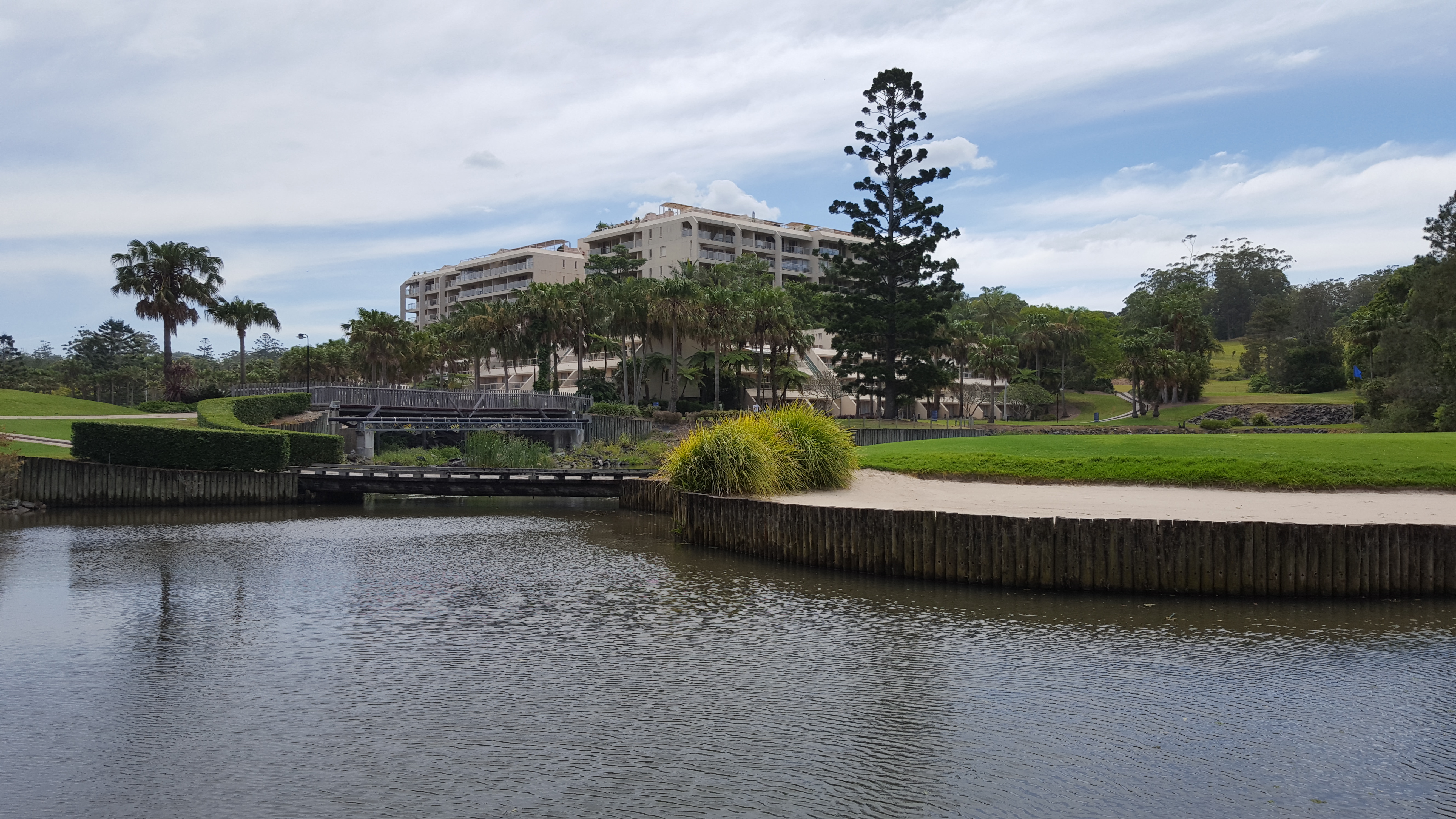
As you can see, lakes and greenery, and even a putting green.

20161030_141653

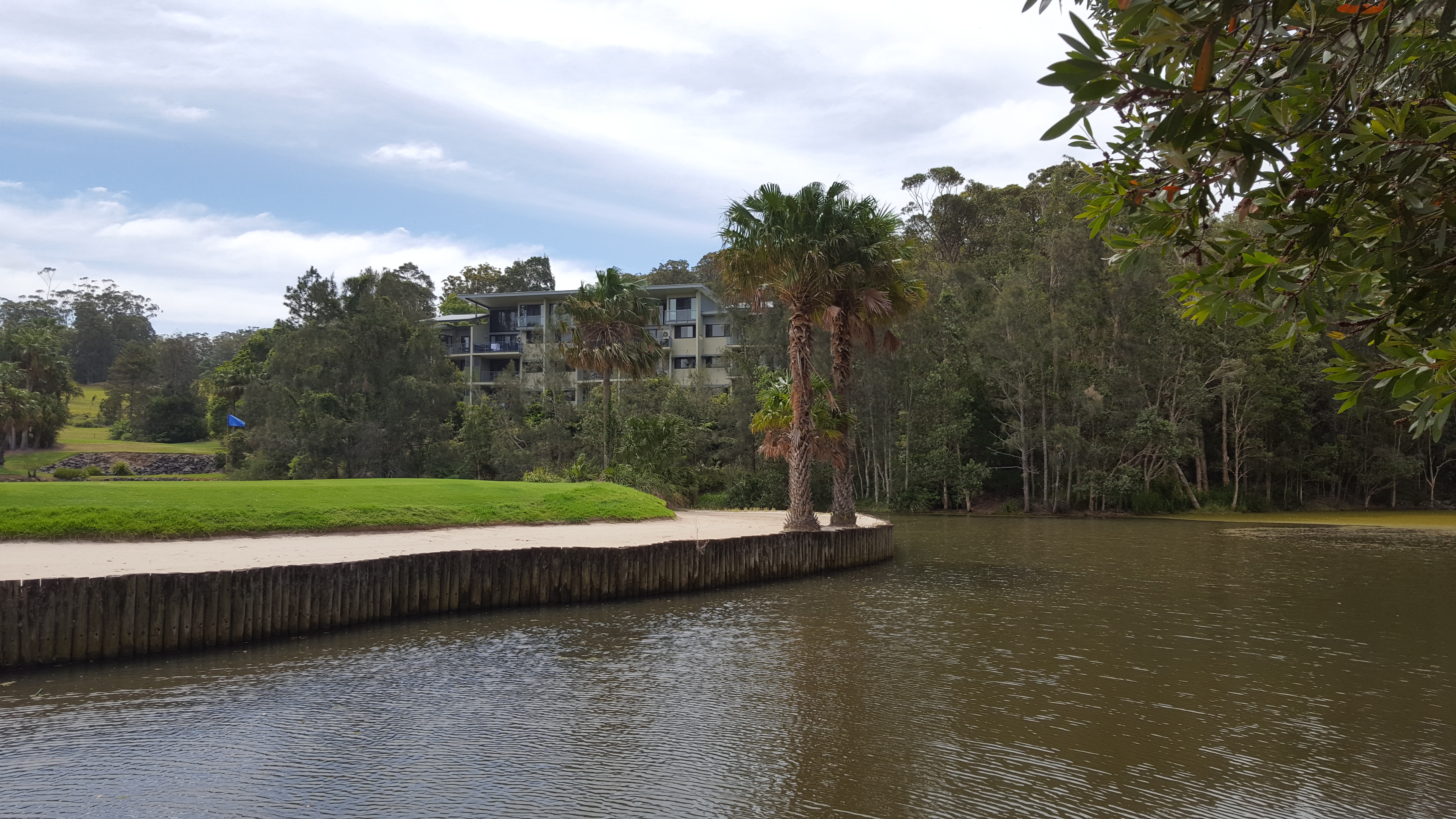
And in places, they try very hard to hide the ugly multi-story buildings in amongst the trees

20161030_141706

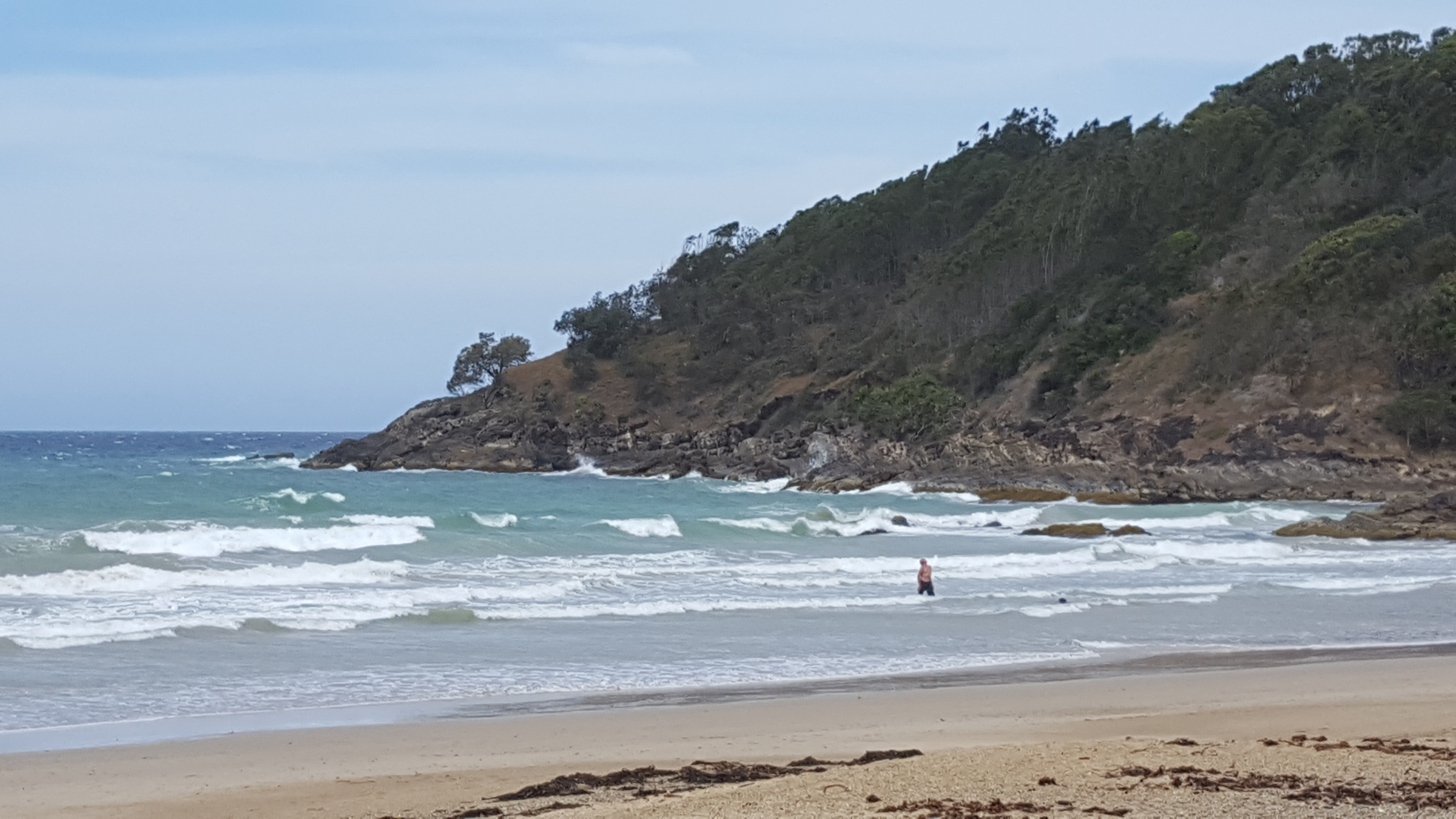
It is only a short walk to the ‘private beach’ and it is sufficiently long enough for a morning walk before breakfast.  You could even try to catch some fish for breakfast, though I’m not sure if anyone actually caught anything

20161030_142237

Or you can just stare out to sea

20161030_142225

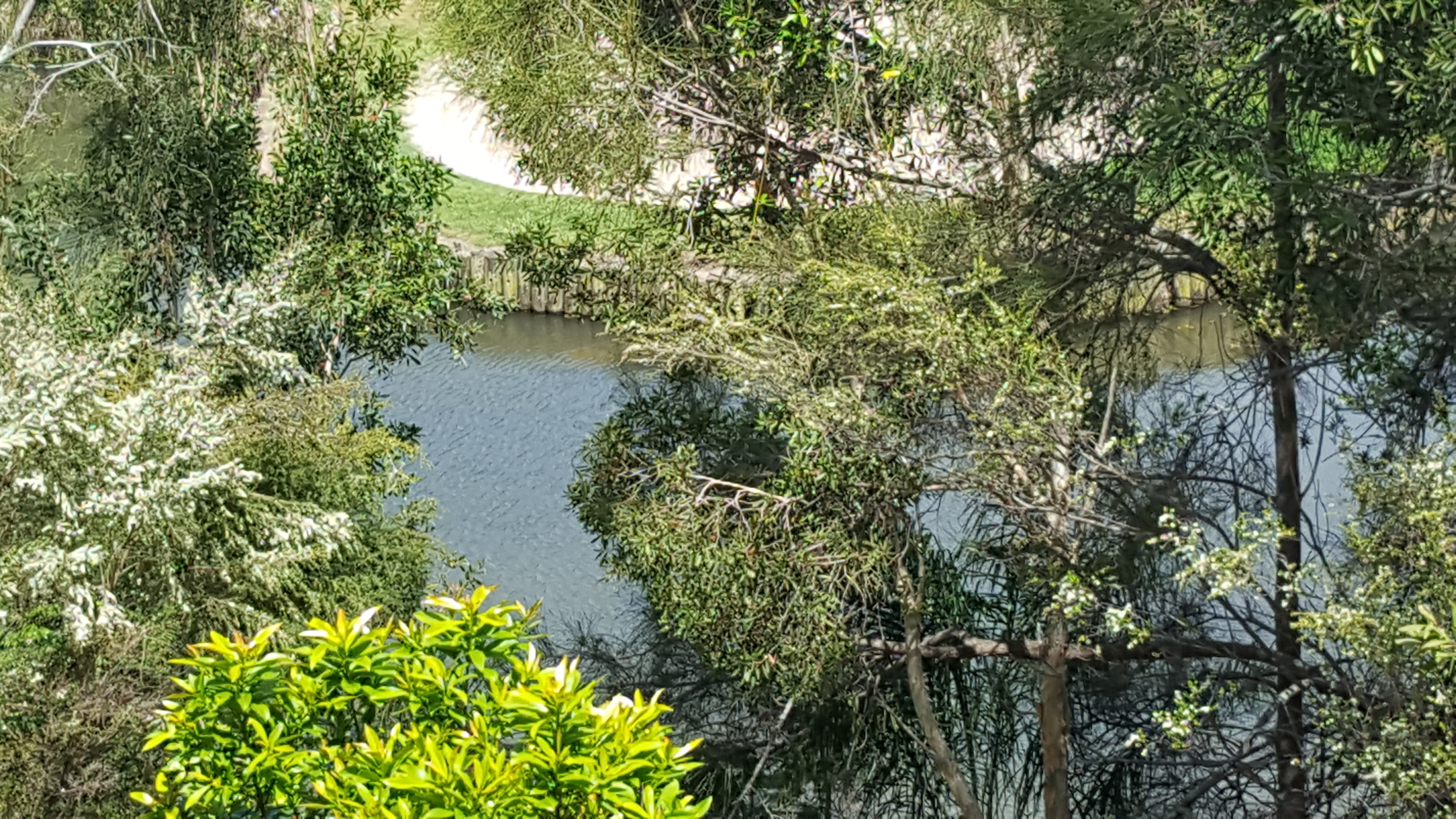
And, back in the room, this is the view we had from our verandah

20161030_134910 - Copy