The cinema of my dreams – I never wanted to go to Africa – Episode 34

Our hero knows he’s in serious trouble.

The problem is, there are familiar faces and a question of who is a friend and who is foe made all the more difficult because of the enemy, if it was the enemy, simply because it didn’t look or sound or act like the enemy.

Now, it appears, his problems stem from another operation he participated in, and because of it, he has now been roped into what might be called a suicide mission.

I had hoped we’d land in daylight, but I could see the benefits of arriving at the landing strip after darkness had fallen, and a more primitive form of landing lights had been used.

Less interest from the local people and no bright lights lighting up the runway.

The only lights I could see from the air were the primitive landing lights, fires burning in used fuel drums, and a glimmer of light emanating from two of the buildings set back from the airstrip.

It did worry me, probably more than it should, that the pilots would be landing a plane of this size in virtually a paddock, flying by the seat of their pants, and all credit to them if they got the plane on the ground.  I guessed they’d flown into more than one hot spot around the world, and at least at this one, they were not being shot at.

Their turn around would be quick, just enough time to take on a small amount of fuel and then leave.  No one had said if it would be a fuel tanker or by drums and hand pumps.

The plane had a short distance to go from the end of the runway to what might be called terminal buildings.  The moment the engines were cut, there was a flurry of movement, and after the fuselage door was quickly opened by the co-pilot, then the rear access ramp lowered and standing at the end, once it hit the ground, I could see a tanker and a Land Rover heading towards the rear of the plane, with only small headlamps on.

Monroe had joined me.  Behind me was a hive of activity as the team moved the crates of camera equipment to the end of the ramp, and then the individual packs.  Jacobi was escorted down on the ground by his two-man guard.

“Is this necessary,” he asked as he passed by me

I ignored him.

The Range Rover stopped just by the bottom of the ramp, and two men got out, one I assumed was Colonel Chiswick, former British Army, came over to train the local soldiers, and didn’t go home, and the other a Ugandan soldier with Sergeant stripes.  Perhaps this was one of their airfields feeding supplies and troops for border patrol duties.

Monroe went down first, and I followed.

Chiswick came up to me, holding out a hand.  “James, I presume?”  I shook it.

I nodded towards Jill, “And Monroe.”

“Welcome to nowhere in particular.”

In the distance, another three Range Rovers were heading towards the plane and then stopped within easy distance of the ramp to easily facilitate the moving of the camera equipment into the rear.  Drivers of the cars ushered them, taking their packs and putting them in the back.

I saw a meaningful look pass between Jacobi and Chiswick.  They knew each other.  No surprises there.  If Chiswick was running this base, then he’d have to know about Jacobi whom we knew had friends in all the high places on every side of the fence.

Another car pulled up, a jeep.  “For your man to get to the base.  I gather he has his instructions?”

Mobley nodded, threw his pack in the back, and the jeep drove off.

“Nice night,” Chiswick said, finally, “Glad it’s not raining, or it would have been a rather sticky landing.”

“How long before the plane leave?”

“About an hour.  Don’t worry.  Planes come and go here all the time, so no one really cares much.”

The crates, packs and other men were loaded and taken away.  Monroe had a final word to the pilot, now down on the ground and supervising the fuel loading, then joined me in the Colonel’s car.

“You’ll be leaving just before first light.  Best to get away before the villagers stir.  There will be one or two curious souls, but they’re harmless.  The soldiers here have been informed that you are here for a training exercise, nothing unusual as we get squads from all over from time to time.  As I said, your arrival will have caused little interest.”

From the locals.  It was anyone else other than the locals I was worried about. 

“Excellent.”


There was not much else to talk about in the few minutes it took to get to the compound at the back of the so-called terminal buildings.  It consisted of about ten large barracks, an administration building, and what looked to be a mess.

Pale lights were showing from one of the barracks, and seeing the cars parked out the front, I assumed this was where we would stay until we departed.

The Colonel didn’t get out of the car.  “We’ll be leaving at 04:00 tomorrow morning.  Make sure you’re ready to go.”

“You’re coming too?”

“Bamfield asked me.  Wants to make sure you had someone who knows the lie of the land.”

“I thought you’d delegate that to a few of the soldiers.”

“No.  Can’t have them involved in an incursion or there will be trouble.  This is an off the book’s operation.  Looking forward to it, actually.  There are a few people over there I’d like to have a talk to if we get the time.”

I shrugged.  Just one more problem to deal with.  The Colonel didn’t strike me as being a talker, but a man who let actions define who he was.  And just because Bamfield vouched for him didn’t mean he might be not be working on his own retirement fund.

© Charles Heath 2019-2022

Writing a book in 365 days – My Story 45

More about my story – What about a sequel?

Beyond ‘The End’: When Your First Novel Whispers ‘Sequel!’

They say everyone has one novel in them. That singular, definitive story waiting to be told. And if you’re deep in the trenches of writing that very first book – or perhaps just emerging, blinking, from the final draft – you know the magnitude of that achievement. It’s a mountain climbed, a world birthed, a dream realised.

But what if, as you type those triumphant final words, your story doesn’t feel quite… finished? What if your characters still have unresolved arcs, your world still hums with unexplored corners, and a new conflict is already brewing on the distant horizon?

This is the siren call of the sequel, the whisper of a series, beckoning you beyond “The End.” And the question isn’t if it will happen, but how you decide when your definitive first novel should become the definitive first step in a much larger journey.

The Organic Unfurling: When Ideas Spark Early

Sometimes, the seed of a series is planted before you even write chapter one. You might be world-building, and realise your magic system is too complex for a single adventure. Or you create a cast of characters so rich, you know their individual journeys can’t possibly culminate in one book.

This is the beauty of organic discovery. As you plot, you might hit a snag and realise a subplot isn’t fitting, but it would make a fantastic central conflict for a future story. Or you leave a minor mystery unsolved, not out of oversight, but with the deliberate thought: “That’s for book two.”

Key signs it might be more than a standalone (even early on):

  • Vast World-Building: Your setting feels like a continent, not just a town. There are untouched cultures, unvisited lands, or deep historical layers begging exploration.
  • Complex Character Arcs: Your protagonist’s journey is profound, but you can see clear paths for growth beyond this initial conflict. Or a compelling secondary character deserves their own spotlight.
  • Lingering Questions/Plot Threads: You’ve wrapped up the central conflict of Book 1, but there are larger societal issues, ancient prophecies, or personal vendettas that naturally spill over.

The Post-Draft Revelation: When Your Story Demands More

Often, the realization hits after you’ve finished the first draft – or even after a round of revisions. You might be reading through, feeling proud, and suddenly a new idea sparks. “What if X happened next?” “How would Y react to Z now?”

This is a beautiful moment, because it means you’ve built something robust enough to inspire more. Your subconscious is telling you there’s still creative gold in that particular mine.

How to approach this post-draft revelation:

  1. Does Book 1 Stand Alone? This is crucial. A “definitive first novel” must feel complete in itself. The central conflict should be resolved, and the protagonist should have achieved a significant milestone. Don’t write a cliffhanger just because you might write a sequel. Future books should deepen the experience, not fix the first one.
  2. Brainstorm the Arc: Dedicate a session (or several) to mapping out potential sequels. What’s the new central conflict? How have your characters changed? What new challenges do they face? This isn’t about writing, just exploring.
  3. Check for Crossover Appeal: Does the core premise of your first novel have enough appeal to sustain multiple stories? Are there fresh angles to explore, or would you merely be repeating yourself?
  4. Listen to Your Gut: Does the thought of continuing fill you with excitement or dread? While writing is always hard work, the initial spark for a series should feel invigorating.

Why Stop at One? The Power of “More”

The adage “everyone has one novel in them” is true. But the idea that you should only write one is a self-imposed limitation. If your imagination is already conjuring new adventures in the same world, if your characters are clamouring for more development, why stifle that creative energy?

A series allows for:

  • Deeper World Exploration: To truly immerse readers in a rich, complex world.
  • Rich Character Development: To show growth, setbacks, and evolving relationships over a longer timeline.
  • Unfolding Grand Narratives: To tackle epic conflicts or explore complex themes that simply can’t be contained in a single volume.

So, as you nurture that definitive first novel, remember to keep an ear open. Does your story hum with untold tales? Do your characters beckon you towards new horizons? If so, embrace the possibility. Your definitive first novel might just be the definitive first step into a much larger, more thrilling literary journey. Why write one when you have a whole universe waiting to unfurl?

Top 5 sights on the road less travelled – Madrid

Beyond the Postcards: 5 Unique Madrid Experiences on the Road Less Travelled

Madrid. The very name conjures images of grand boulevards, world-class art museums, and bustling tapas bars. And while the Prado, the Royal Palace, and Retiro Park are undeniably magnificent, there’s a whole other layer to Spain’s vibrant capital, waiting to be discovered by those willing to stray from the well-trodden path.

If you’re like me – a traveller who loves to peel back the layers and uncover the authentic pulse of a city – then pack your sense of adventure. Here are my top five “road less travelled” experiences that will show you Madrid most tourists never see.


1. Dive into the Multicultural Heart of Lavapiés & the Mercado de San Fernando

Forget the polished tourist markets; head straight to Lavapiés, one of Madrid’s most historic and multicultural neighbourhoods. This isn’t just about street art (though there’s plenty of incredible murals to discover); it’s about the aroma of spices, the sound of different languages, and the genuine buzz of local life.

Your main mission here? The Mercado de San Fernando. Unlike the famous Mercado de San Miguel, San Fernando is a working neighbourhood market that has embraced a new life while retaining its authentic charm. Here, you can buy “libros al peso” (books by weight), sample craft beers, indulge in delicious Ethiopian food, browse artisanal goods, or grab a traditional Spanish tapa alongside locals doing their daily shopping. It’s a sensory feast and a true microcosm of modern Madrid.

  • Why it’s special: Authentic, multicultural, affordable, and a peek into Madrid’s real daily life.
  • Don’t miss: The book stall, the craft beer vendors, and simply soaking in the atmosphere.

2. Catch Sunset (and a Panorama) at Parque de las Siete Tetas

Looking for the best panoramic view of Madrid, away from the tourist crowds? Ditch the rooftop bars and head to Parque del Cerro del Tío Pío, affectionately known by locals as “Parque de las Siete Tetas” (Park of the Seven Tits) due to its seven rolling hills.

Located in the Vallecas district (easily accessible by metro), this park offers an unparalleled, uninterrupted vista of the entire city skyline, with the majestic Sierra de Guadarrama mountains as a backdrop. Grab a picnic, a bottle of wine, and join Madrileños as they gather here to watch the sun dip below the horizon, painting the city in hues of orange and gold. It’s a truly magical and unpretentious experience.

  • Why it’s special: The best, most local sunset spot with breathtaking views.
  • Don’t miss: The golden hour – arrive 45 minutes before sunset for the full spectacle.

3. Step into a Tranquil Oasis at the Sorolla Museum

While the Prado and Reina Sofía are essential, escape the crowds at the beautiful Sorolla Museum, dedicated to the luminous works of Spanish impressionist Joaquín Sorolla. Housed in the artist’s former home and studio, this museum is a serene retreat.

Wander through light-filled rooms filled with his vibrant paintings, many depicting sun-drenched beaches and family life. But the real hidden gem here are the exquisite Andalusian-style gardens, designed by Sorolla himself. They offer a tranquil escape from the city bustle, making you feel as though you’ve stumbled into a private, sun-drenched oasis. It’s a personal and intimate experience with art and history.

  • Why it’s special: A stunning house-museum with beautiful art and serene gardens, far less crowded than the major museums.
  • Don’t miss: The gardens are as much a work of art as the paintings themselves.

4. Immerse Yourself in a Traditional Vermutería Experience

Forget the generic sangria; dive into a truly Madrileño tradition: the vermutería. While tapas bars are everywhere, a dedicated vermutería offers a unique glimpse into a cherished cultural ritual. Vermouth, often served on tap (vermut de grifo), is a fortified wine infused with botanicals, and it’s experiencing a massive revival.

Seek out a classic spot like Casa Camacho in Malasaña or Bodega de la Ardosa (also in Malasaña, though it’s more broadly a classic tavern). Order a “vermút de grifo” (vermouth on tap), often served with an olive and a slice of orange. Pair it with their specific, often pickle-laden, tapas. It’s a delicious, slightly bitter, and utterly authentic way to start your evening, surrounded by locals engaging in lively conversation.

  • Why it’s special: A distinct Madrid tradition, away from tourist traps, with a unique drink and specific food pairings.
  • Don’t miss: Trying a “yayo” at Casa Camacho – a local concoction of vermouth, soda, and gin.

5. Explore the Opulent World of the Museo Cerralbo

For a glimpse into the extravagant life of a 19th-century Spanish aristocrat, the Museo Cerralbo is an absolute treasure, yet surprisingly overlooked by many guidebooks. The Marqués de Cerralbo, a passionate collector, bequeathed his entire palace and its vast contents to the state.

Walking through its ornately decorated rooms, you’ll find an astonishing collection of art, weaponry, ancient artifacts, and opulent furnishings, all preserved as if the family just stepped out for the afternoon. It’s a time capsule that offers a fascinating contrast to the often more institutional feel of other museums, providing an intimate look at the aesthetics and lifestyle of Madrid’s elite.

  • Why it’s special: A beautifully preserved opulent palace and private collection, offering a unique historical perspective.
  • Don’t miss: The stunning grand staircase and the ballroom – imagine the parties that took place here!

Madrid is a city of endless discoveries, and sometimes the most memorable experiences are found when you venture just a little bit off the well-worn path. So, ditch the guidebook for an afternoon, follow your curiosity, and let Madrid truly reveal itself to you.

What are your favourite hidden gems in Madrid? Share them in the comments below!

‘Sunday in New York’ – A beta reader’s view

I’m not a fan of romance novels but …

There was something about this one that resonated with me.

This is a novel about a world generally ruled by perception, and how people perceive what they see, what they are told, and what they want to believe.

I’ve been guilty of it myself as I’m sure we all have at one time or another.

For the main characters Harry and Alison there are other issues driving their relationship.

For Alison, it is a loss of self-worth through losing her job and from losing her mother and, in a sense, her sister.

For Harry, it is the fact he has a beautiful and desirable wife, and his belief she is the object of other men’s desires, and one in particular, his immediate superior.

Between observation, the less than honest motives of his friends, a lot of jumping to conclusions based on very little fact, and you have the basis of one very interesting story.

When it all comes to a head, Alison finds herself in a desperate situation, she realises only the truth will save their marriage.

But is it all the truth?

What would we do in similar circumstances?

Rarely does a book have me so enthralled that I could not put it down until I knew the result. They might be considered two people who should have known better, but as is often the case, they had to get past what they both thought was the truth.

And the moral of this story, if it could be said there is one, nothing is ever what it seems.

Available on Amazon here: amzn.to/2H7ALs8

Top 5 sights on the road less travelled – Venice

The Unbeaten Path: 5 Hidden Treasures in Venice (That Aren’t St. Mark’s)

Venice. The name alone conjures images of shimmering canals, graceful gondolas, and the architectural masterpiece that is the Doge’s Palace. It is, undeniably, one of the most beautiful cities on earth.

But let’s be honest: the magic can quickly evaporate when you’re battling a thousand other tourists just to get a photo of the Rialto Bridge.

The true, deep magic of Venice—the one that smells of salt-laced air and centuries of history—isn’t found on the main tourist arteries. It’s found in the quiet, echoing calle (streets) and the forgotten, sun-drenched squares of the districts that rarely make the postcard racks.

If you’re ready to trade the packed piazza for unique local discoveries, ditch the map of the standard tourist loop. Here are five essential, off-the-beaten-path things to do in Venice that will give you a taste of the city’s authentic heart.


1. Swap Grand Palaces for the Cemetery Island: Isola di San Michele

While most visitors focus on Murano or Burano, the island of San Michele offers a profound and beautiful experience few tourists seek out. This is the official cemetery island of Venice, and it offers a silence and solitude that is impossible to find on the main islands.

A short vaporetto ride (Line 4.1 or 4.2) across the lagoon transports you to a walled sanctuary where cypress trees stand sentinel over generations of Venetians, including famous residents like Igor Stravinsky and Ezra Pound.

Why it’s worth the detour: The stunning, stark beauty of the Renaissance Chiesa di San Michele in Isola, combined with the meticulously maintained gardens and marble tombs, offers a reflective pause in your itinerary. It truly feels like stepping into a different world—one without shops, crowds, or noise. It’s a poignant reminder of the ebb and flow of Venetian life.

2. Embrace the Bacaro Trail in Dorsoduro

If you want to eat and drink like a Venetian, you must embrace the bacaro culture. A bacaro is a traditional, often hole-in-the-wall Venetian bar specializing in cicchetti (small, tapas-style snacks) and ombra (a small glass of local wine).

While you can find bacari near the main spots, the Dorsoduro district, particularly near Ca’ Foscari University, is where the scene is truly vibrant and local. This area is filled with students and residents, not tour groups.

How to do it right: Forget sitting down for a lengthy, expensive dinner. Between 5 PM and 7 PM, join the locals and hop between a few chosen spots, ordering a couple of cicchetti (perhaps salted cod, polpetta, or marinated artichokes) and an ombra at each.

  • Try: Cantinone Già Schiavi (famous for its wine selection) or Al Squero (offering fantastic views across the canal to the boatyard where gondolas are repaired).

3. Seek Out the Hidden Staircase: Scala Contarini del Bovolo

In a city known for its bridges and canals, architecture often takes a supporting role. However, if you are drawn to hidden architectural gems, the Scala Contarini del Bovolo is a must-see.

Tucked away in a tiny, almost impossible-to-find courtyard near the Rialto, the Palazzo Contarini del Bovolo features an extraordinary exterior spiral staircase. Known as the “staircase of the snail” (bovolo), this Renaissance masterpiece combines Gothic and Byzantine elements, curling up five stories to an open loggia.

The payoff: Climbing the staircase is an adventure in itself, but the true reward is the panoramic view from the top. You get a unique, intimate perspective of Venice’s terracotta rooftops and bell towers without the claustrophobic crowds of St. Mark’s Campanile. Finding it is half the fun—put the address into your phone and be prepared to wander down several dead-end alleys.

4. Explore the Authentic Heart of Cannaregio and the Ghetto

To experience genuine Venetian daily life—the sight of laundry dangling over canals, residents chatting in dialect, and non-chain grocery stores—head north to the Cannaregio district.

This area, which stretches toward the Mestre train station, is largely residential and offers excellent, affordable dining options. More importantly, it is home to the Ghetto Nuovo, the world’s first Jewish Ghetto, established in 1516.

Why it’s special: The Ghetto Nuovo is a place of powerful history and resilient culture. Due to space constraints imposed by the Republic, the buildings here are some of the tallest in Venice, stacked upon medieval foundations. Walk through the quiet central square, observe the five historic synagogues (many offer guided tours), and soak up the unique atmosphere. It’s a perfect way to step back into a complex, vital layer of Venetian history often overlooked by visitors rushing to the main sites.

5. Capture the Pastel Hues of Burano (But Go Early)

Yes, Burano is often listed on the main island tours, but most visitors arrive mid-day when the ferry lines are long, and the narrow canals are choked with people attempting the perfect photograph. To truly experience the magic of the famous rainbow-colored island, you must commit to the early start.

The secret timing: Take one of the first vaporetti out to Burano (via Murano and Torcello). Arriving just as the golden morning light hits the facades allows you to wander the lanes in near solitude. The local fishermen and lace makers are just beginning their day, and the lack of crowds amplifies the whimsical, fairy-tale quality of the architecture.

Tip: Since the island is famous for lacemaking, skip the mass-produced trinkets and seek out a small workshop where you can see the intricate craft being actively practiced.


Don’t Just Visit Venice—Live It

To travel the road less travelled in Venice isn’t about ticking off lesser-known sights; it’s about slow travel. It’s about getting lost, turning down the alley that looks too narrow, and replacing the tourist map with genuine curiosity.

When you allow yourself to wander away from the golden routes, you stop being a hurried observer and start becoming a temporary resident. The Venice you discover in these quiet pockets is richer, deeper, and far more rewarding.

An excerpt from “Echoes from the Past”

Available on Amazon Kindle here:  https://amzn.to/2CYKxu4

With my attention elsewhere, I walked into a man who was hurrying in the opposite direction.  He was a big man with a scar running down the left side of his face from eye socket to mouth, and who was also wearing a black shirt with a red tie.

That was all I remembered as my heart almost stopped.

He apologized as he stepped to one side, the same way I stepped, as I also muttered an apology.

I kept my eyes down.  He was not the sort of man I wanted to recognize later in a lineup.  I stepped to the other side and so did he.  It was one of those situations.  Finally getting out of sync, he kept going in his direction, and I towards the bus, which was now pulling away from the curb.

Getting my breath back, I just stood riveted to the spot watching it join the traffic.  I looked back over my shoulder, but the man I’d run into had gone.  I shrugged and looked at my watch.  It would be a few minutes before the next bus arrived.

Wait, or walk?  I could also go by subway, but it was a long walk to the station.  What the hell, I needed the exercise.

At the first intersection, the ‘Walk’ sign had just flashed to ‘Don’t Walk’.  I thought I’d save a few minutes by not waiting for the next green light.  As I stepped onto the road, I heard the screeching of tires.

A yellow car stopped inches from me.

It was a high powered sports car, perhaps a Lamborghini.  I knew what they looked like because Marcus Bartleby owned one, as did every other junior executive in the city with a rich father.

Everyone stopped to look at me, then the car.  It was that sort of car.  I could see the driver through the windscreen shaking his fist, and I could see he was yelling too, but I couldn’t hear him.  I stepped back onto the sidewalk, and he drove on.  The moment had passed and everyone went back to their business.

My heart rate hadn’t come down from the last encounter.   Now it was approaching cardiac arrest, so I took a few minutes and several sets of lights to regain composure.

At the next intersection, I waited for the green light, and then a few seconds more, just to be sure.  I was no longer in a hurry.

At the next, I heard what sounded like a gunshot.  A few people looked around, worried expressions on their faces, but when it happened again, I saw it was an old car backfiring.  I also saw another yellow car, much the same as the one before, stopped on the side of the road.  I thought nothing of it, other than it was the second yellow car I’d seen.

At the next intersection, I realized I was subconsciously heading towards Harry’s new bar.   It was somewhere on 6th Avenue, so I continued walking in what I thought was the right direction.

I don’t know why I looked behind me at the next intersection, but I did.  There was another yellow car on the side of the road, not far from me.  It, too, looked the same as the original Lamborghini, and I was starting to think it was not a coincidence.

Moments after crossing the road, I heard the roar of a sports car engine and saw the yellow car accelerate past me.  As it passed by, I saw there were two people in it, and the blurry image of the passenger; a large man with a red tie.

Now my imagination was playing tricks.

It could not be the same man.  He was going in a different direction.

In the few minutes I’d been standing on the pavement, it had started to snow; early for this time of year, and marking the start of what could be a long cold winter.  I shuddered, and it was not necessarily because of the temperature.

I looked up and saw a neon light advertising a bar, coincidentally the one Harry had ‘found’ and, looking once in the direction of the departing yellow car, I decided to go in.  I would have a few drinks and then leave by the back door if it had one.

Just in case.

© Charles Heath 2015-2020

newechocover5rs

Writing a book in 365 days – My Story 45

More about my story – What about a sequel?

Beyond ‘The End’: When Your First Novel Whispers ‘Sequel!’

They say everyone has one novel in them. That singular, definitive story waiting to be told. And if you’re deep in the trenches of writing that very first book – or perhaps just emerging, blinking, from the final draft – you know the magnitude of that achievement. It’s a mountain climbed, a world birthed, a dream realised.

But what if, as you type those triumphant final words, your story doesn’t feel quite… finished? What if your characters still have unresolved arcs, your world still hums with unexplored corners, and a new conflict is already brewing on the distant horizon?

This is the siren call of the sequel, the whisper of a series, beckoning you beyond “The End.” And the question isn’t if it will happen, but how you decide when your definitive first novel should become the definitive first step in a much larger journey.

The Organic Unfurling: When Ideas Spark Early

Sometimes, the seed of a series is planted before you even write chapter one. You might be world-building, and realise your magic system is too complex for a single adventure. Or you create a cast of characters so rich, you know their individual journeys can’t possibly culminate in one book.

This is the beauty of organic discovery. As you plot, you might hit a snag and realise a subplot isn’t fitting, but it would make a fantastic central conflict for a future story. Or you leave a minor mystery unsolved, not out of oversight, but with the deliberate thought: “That’s for book two.”

Key signs it might be more than a standalone (even early on):

  • Vast World-Building: Your setting feels like a continent, not just a town. There are untouched cultures, unvisited lands, or deep historical layers begging exploration.
  • Complex Character Arcs: Your protagonist’s journey is profound, but you can see clear paths for growth beyond this initial conflict. Or a compelling secondary character deserves their own spotlight.
  • Lingering Questions/Plot Threads: You’ve wrapped up the central conflict of Book 1, but there are larger societal issues, ancient prophecies, or personal vendettas that naturally spill over.

The Post-Draft Revelation: When Your Story Demands More

Often, the realization hits after you’ve finished the first draft – or even after a round of revisions. You might be reading through, feeling proud, and suddenly a new idea sparks. “What if X happened next?” “How would Y react to Z now?”

This is a beautiful moment, because it means you’ve built something robust enough to inspire more. Your subconscious is telling you there’s still creative gold in that particular mine.

How to approach this post-draft revelation:

  1. Does Book 1 Stand Alone? This is crucial. A “definitive first novel” must feel complete in itself. The central conflict should be resolved, and the protagonist should have achieved a significant milestone. Don’t write a cliffhanger just because you might write a sequel. Future books should deepen the experience, not fix the first one.
  2. Brainstorm the Arc: Dedicate a session (or several) to mapping out potential sequels. What’s the new central conflict? How have your characters changed? What new challenges do they face? This isn’t about writing, just exploring.
  3. Check for Crossover Appeal: Does the core premise of your first novel have enough appeal to sustain multiple stories? Are there fresh angles to explore, or would you merely be repeating yourself?
  4. Listen to Your Gut: Does the thought of continuing fill you with excitement or dread? While writing is always hard work, the initial spark for a series should feel invigorating.

Why Stop at One? The Power of “More”

The adage “everyone has one novel in them” is true. But the idea that you should only write one is a self-imposed limitation. If your imagination is already conjuring new adventures in the same world, if your characters are clamouring for more development, why stifle that creative energy?

A series allows for:

  • Deeper World Exploration: To truly immerse readers in a rich, complex world.
  • Rich Character Development: To show growth, setbacks, and evolving relationships over a longer timeline.
  • Unfolding Grand Narratives: To tackle epic conflicts or explore complex themes that simply can’t be contained in a single volume.

So, as you nurture that definitive first novel, remember to keep an ear open. Does your story hum with untold tales? Do your characters beckon you towards new horizons? If so, embrace the possibility. Your definitive first novel might just be the definitive first step into a much larger, more thrilling literary journey. Why write one when you have a whole universe waiting to unfurl?

Inspiration, maybe – Volume 1

50 photographs, 50 stories, of which there is one of the 50 below.

They all start with –

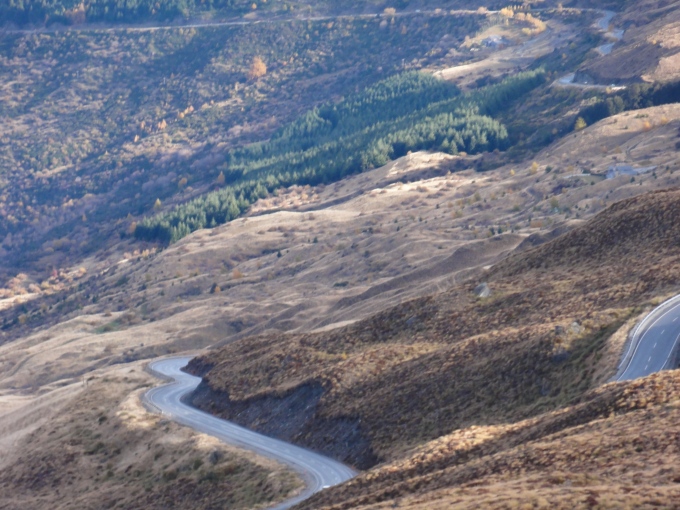
A picture paints … well, as many words as you like.  For instance:

lookingdownfromcoronetpeak

And the story:

It was once said that a desperate man has everything to lose.

The man I was chasing was desperate, but I, on the other hand, was more desperate to catch him.

He’d left a trail of dead people from one end of the island to the other.

The team had put in a lot of effort to locate him, and now his capture was imminent.  We were following the car he was in, from a discrete distance, and, at the appropriate time, we would catch up, pull him over, and make the arrest.

There was nowhere for him to go.

The road led to a dead-end, and the only way off the mountain was back down the road were now on.  Which was why I was somewhat surprised when we discovered where he was.

Where was he going?

“Damn,” I heard Alan mutter.  He was driving, being careful not to get too close, but not far enough away to lose sight of him.

“What?”

“I think he’s made us.”

“How?”

“Dumb bad luck, I’m guessing.  Or he expected we’d follow him up the mountain.  He’s just sped up.”

“How far away?”

“A half-mile.  We should see him higher up when we turn the next corner.”

It took an eternity to get there, and when we did, Alan was right, only he was further on than we thought.”

“Step on it.  Let’s catch him up before he gets to the top.”

Easy to say, not so easy to do.  The road was treacherous, and in places just gravel, and there were no guard rails to stop a three thousand footfall down the mountainside.

Good thing then I had the foresight to have three agents on the hill for just such a scenario.

Ten minutes later, we were in sight of the car, still moving quickly, but we were going slightly faster.  We’d catch up just short of the summit car park.

Or so we thought.

Coming quickly around another corner we almost slammed into the car we’d been chasing.

“What the hell…” Aland muttered.

I was out of the car, and over to see if he was in it, but I knew that it was only a slender possibility.  The car was empty, and no indication where he went.

Certainly not up the road.  It was relatively straightforward for the next mile, at which we would have reached the summit.  Up the mountainside from here, or down.

I looked up.  Nothing.

Alan yelled out, “He’s not going down, not that I can see, but if he did, there’s hardly a foothold and that’s a long fall.”

Then where did he go?

Then a man looking very much like our quarry came out from behind a rock embedded just a short distance up the hill.

“Sorry,” he said quite calmly.  “Had to go if you know what I mean.”

I’d lost him.

It was as simple as that.

I had been led a merry chase up the hill, and all the time he was getting away in a different direction.

I’d fallen for the oldest trick in the book, letting my desperation blind me to the disguise that anyone else would see through in an instant.

It was a lonely sight, looking down that road, knowing that I had to go all that way down again, only this time, without having to throw caution to the wind.

“Maybe next time,” Alan said.

“We’ll get him.  It’s just a matter of time.”

© Charles Heath 2019-2021

Find this and other stories in “Inspiration, maybe”  available soon.

InspirationMaybe1v1

In a word: Fourth

When you realize you are the fourth child, you are really hoping that the split is two boys and three girls.  Woe betide you if you are a boy and you have three sisters.  It could also be as interesting, notice I didn’t say intolerable) if you are a girl with three brothers.

Hang on, I know someone who was in that exact same situation.  Fortunately, being a girl and the youngest, she could do no wrong in the eyes of her father.

But I digress (as usual)

The meaning of fourth is self-evident, just count to four and it’s the fourth number, perhaps better explained by the fact it is one after the third in a series

Then we use it with other words like,

Fourth-gear, usually reserved for the highway where one expects to geta clear run.  Of course, with more and more cars on the road, sometimes it’s difficult to get out of second.

The fourth estate, no, not what a rich person owns, along with a lot more one guesses, but another name for the press.

One fourth, your share of an estate, if of course, you have three other siblings.  And, in murder mysteries, usually those fourths seem to die mysteriously, and your fourth becomes a third, a half, and then you go to jail.

in fourth place, where it seems all the horse I back run

And,

This is not to be confused with the word forth, which sounds the same but means something entirely different, like

I’m sure we’ve all been told to go forth and be something or other, which means to go forward or come out of hiding

It is also a Scottish river, one notably called the Firth of Forth, and if it sounds odd, so do a lot things in Scotland

You could also place back and forth, much the same as you would in a hospital waiting for the birth of your first child.

First Dig Two Graves

A sequel to “The Devil You Don’t”

Revenge is a dish best served cold – or preferably so when everything goes right

Of course, it rarely does, as Alistair, Zoe’s handler, discovers to his peril. Enter a wildcard, John, and whatever Alistair’s plan for dealing with Zoe was dies with him.

It leaves Zoe in completely unfamiliar territory.

John’s idyllic romance with a woman who is utterly out of his comfort zone is on borrowed time. She is still trying to reconcile her ambivalence, after being so indifferent for so long.

They agree to take a break, during which she disappears. John, thinking she has left without saying goodbye, refuses to accept the inevitable, calls on an old friend for help in finding her.

After the mayhem and being briefly reunited, she recognises an inevitable truth: there is a price to pay for taking out Alistair; she must leave and find them first, and he would be wise to keep a low profile.

But keeping a low profile just isn’t possible, and enlisting another friend, a private detective and his sister, a deft computer hacker, they track her to the border between Austria and Hungary.

What John doesn’t realise is that another enemy is tracking him to find her too. It could have been a grand tour of Europe. Instead, it becomes a race against time before enemies old and new converge for what will be an inevitable showdown.