Top 5 sights on the road less travelled – Dublin

Escape the Crowds: Dublin’s Top 5 Hidden Gem Attractions

Dublin is a city of undeniable charm, buzzing with energy, history, and a legendary pub scene. While iconic spots like the Guinness Storehouse, Trinity College, and Dublin Castle are must-sees, they often come with lengthy queues and shoulder-to-shoulder crowds.

But what if you long for a taste of authentic Dublin culture and history without the tourist rush?

Luckily, the Irish capital is brimming with distinctive features tucked away in quieter corners. We’ve compiled a list of the top five visitor attractions in Dublin that offer unique experiences, fascinating stories, and, best of all, a peaceful respite from the throngs.


1. The Chester Beatty Library

Nestled within the walls of Dublin Castle (but often overlooked by those rushing to the main courtyard), the Chester Beatty is a true global treasure. This museum and library holds the collected works of Sir Alfred Chester Beatty, one of the greatest collectors of the 20th century.

Why it’s distinctive: This isn’t just a collection of old books. You’ll find exquisite manuscripts, rare books, miniature paintings, and decorative arts from across Asia, the Middle East, North Africa, and Europe. It houses some of the world’s most important holdings of Islamic, East Asian, and Western printed materials.

The Quiet Factor: While the Dublin Castle grounds can be busy, the library itself offers a tranquil, dimly lit haven perfect for quiet reflection. Best of all? Admission is free. Don’t forget to visit the rooftop garden café for stunning views over the city.

2. The Dublin Writers Museum (Temporarily Closed – See Alternative Below)

Note: While the original Dublin Writers Museum building is currently closed for relocation, the spirit of literary Dublin is still alive and accessible in less-crowded formats.

The Alternative: The Museum of Literature Ireland (MoLI)

Located in UCD’s stately Newman House on St. Stephen’s Green, MoLI is a beautiful, modern museum dedicated to the rich tapestry of Irish writing, from James Joyce to contemporary voices.

Why it’s distinctive: Set in the beautiful historic home where literary giants like Gerard Manley Hopkins and James Joyce once studied, MoLI offers interactive displays, beautiful exhibitions (including the original ‘Copy No. 1’ of Joyce’s Ulysses), and stunning period rooms.

The Quiet Factor: While popular with writers and literature lovers, MoLI rarely reaches the peak capacity of the larger city museums. It offers spacious exhibition rooms and one of the finest cultural gift shops in the city. The tranquil, hidden courtyard garden is a perfect spot to enjoy a coffee and escape the city noise.

3. Richmond Barracks, Inchicore

Stepping slightly outside the immediate city centre opens up historical venues of immense importance. Richmond Barracks, located in the Inchicore area, offers a deep dive into pivotal moments of Irish history, particularly the 1916 Easter Rising.

Why it’s distinctive: This site served as the primary holding place for over 3,000 men arrested after the 1916 Rising. It was here that Pádraig Pearse and the other executed leaders were court-martialed. Today, it operates as a heritage centre and a community hub, offering moving and highly informative tours detailing the barracks’ role through the centuries, including its post-independence use as housing for local families.

The Quiet Factor: Because it requires a short tram ride (the Luas Red Line to Suir Road), it naturally filters out the casual tourist crowd. You’ll likely enjoy a small, intimate guided tour that allows for detailed questions and reflection.

4. The Marsh’s Library

For those who crave the smell of old paper and the feeling of stepping back in time, Marsh’s Library is an essential visit. Dating back to 1707, it is one of the oldest public libraries in Ireland.

Why it’s distinctive: This library remains virtually unchanged since it opened its doors in the early 18th century. It features beautiful dark oak bookcases, wire cages (used to prevent the theft of valuable texts), and over 25,000 rare and fascinating books. You can walk the very aisles where writers like Bram Stoker and James Joyce once studied.

The Quiet Factor: Tucked away behind St. Patrick’s Cathedral, Marsh’s charges a small entrance fee, which helps keep visitor numbers manageable. The atmosphere is hushed and reverential—it’s an ideal place to spend an hour truly absorbing Dublin’s intellectual history without jostling for space.

5. The Botanic Gardens (National Botanic Gardens of Ireland)

While not entirely undiscovered, Dublin’s National Botanic Gardens in Glasnevin offers such a vast, sprawling space that crowds simply melt away amongst the lush greenery.

Why it’s distinctive: Spread across nearly 50 acres, the gardens feature stunning Victorian glasshouses (including the curvilinear range designed by Richard Turner), extensive plant collections, a tranquil arboretum, and historically significant grounds. It’s an essential centre for conservation and research.

The Quiet Factor: Located a short bus ride north of the city centre (near the Glasnevin Cemetery, another excellent, quiet spot), the gardens provide endless walking paths, hidden benches, and quiet corners. You can easily spend an entire afternoon wandering the grounds and enjoying the peace, particularly once you move past the main entrance and glasshouses.


Trade the Noise for Narrative

Dublin’s biggest attractions tell a powerful story, but sometimes the best narratives are found off the beaten path. By seeking out these quieter, distinctive attractions, you can enjoy a more personal, profound, and peaceful encounter with the heart and history of the Irish capital. Happy Exploring!

Inspiration, Maybe – Volume 2

50 photographs, 50 stories, of which there is one of the 50 below.

They all start with –

A picture paints … well, as many words as you like.  For instance:

And, the story:

Have you ever watched your hopes and dreams simply just fly away?

Everything I thought I wanted and needed had just left in an aeroplane, and although I said I was not going to, i came to the airport to see the plane leave.  Not the person on it, that would have been far too difficult and emotional, but perhaps it was symbolic, the end of one life and the start of another.

But no matter what I thought or felt, we had both come to the right decision.  She needed the opportunity to spread her wings.  It was probably not the best idea for her to apply for the job without telling me, but I understood her reasons.

She was in a rut.  Though her job was a very good one, it was not as demanding as she had expected, particularly after the last promotion, but with it came resentment from others on her level, that she, the youngest of the group would get the position.

It was something that had been weighing down of her for the last three months, and if noticed it, the late nights, the moodiness, sometimes a flash of temper.  I knew she had one, no one could have such red hair and not, but she had always kept it in check.

And, then there was us, together, and after seven years, it felt like we were going nowhere.  Perhaps that was down to my lack of ambition, and though she never said it, lack of sophistication.  It hadn’t been an issue, well, not until her last promotion, and the fact she had to entertain more, and frankly I felt like an embarrassment to her.

So, there it was, three days ago, the beginning of the weekend, and we had planned to go away for a few days and take stock.  We both acknowledged we needed to talk, but it never seemed the right time.

It was then she said she had quit her job and found a new one.  Starting the following Monday.

Ok, that took me by surprise, not so much that it something I sort of guessed might happen, but that she would just blurt it out.

I think that right then, at that moment, I could feel her frustration with everything around her.

What surprised her was my reaction.  None.

I simply asked where who, and when.

A world-class newspaper, in New York, and she had to be there in a week.

A week.

It was all the time I had left with her.

I remember I just shrugged and asked if the planned weekend away was off.

She stood on the other side of the kitchen counter, hands around a cup of coffee she had just poured, and that one thing I remembered was the lone tear that ran down her cheek.

Is that all you want to know?

I did, yes, but we had lost that intimacy we used to have when she would have told me what was happening, and we would have brainstormed solutions. I might be a cabinet maker but I still had a brain, was what I overheard her tell a friend once.

There’s not much to ask, I said.  You’ve been desperately unhappy and haven’t been able to hide it all that well, you have been under a lot of pressure trying to deal with a group of troglodytes, and you’ve been leaning on Bentley’s shoulder instead of mine, and I get it, he’s got more experience in that place,  and the politics that go with it, and is still an ally.

Her immediate superior and instrumental in her getting the position, but unlike some men in his position he had not taken advantage of a situation like some men would.  And even if she had made a move, which I doubted, that was not the sort of woman she was, he would have politely declined.

One of the very few happily married men in that organisation, so I heard.

So, she said, you’re not just a pretty face.

Par for the course for a cabinet maker whose university degree is in psychology.  It doesn’t take rocket science to see what was happening to you.  I just didn’t think it was my place to jump in unless you asked me, and when you didn’t, well, that told me everything I needed to know.

Yes, our relationship had a use by date, and it was in the next few days.

I was thinking, she said, that you might come with me,  you can make cabinets anywhere.

I could, but I think the real problem wasn’t just the job.  It was everything around her and going with her, that would just be a constant reminder of what had been holding her back. I didn’t want that for her and said so.

Then the only question left was, what do we do now?

Go shopping for suitcases.  Bags to pack, and places to go.

Getting on the roller coaster is easy.  On the beginning, it’s a slow easy ride, followed by the slow climb to the top.  It’s much like some relationships, they start out easy, they require a little work to get to the next level, follows by the adrenaline rush when it all comes together.

What most people forget is that what comes down must go back up, and life is pretty much a roller coaster with highs and lows.

Our roller coaster had just come or of the final turn and we were braking so that it stops at the station.

There was no question of going with her to New York.  Yes, I promised I’d come over and visit her, but that was a promise with crossed fingers behind my back.  After a few months in t the new job the last thing shed want was a reminder of what she left behind.  New friends new life.

We packed her bags, three out everything she didn’t want, a free trips to the op shop with stiff she knew others would like to have, and basically, by the time she was ready to go, there was nothing left of her in the apartment, or anywhere.

Her friends would be seeing her off at the airport, and that’s when I told her I was not coming, that moment the taxi arrived to take her away forever.  I remember standing there, watching the taxi go.  It was going to be, and was, as hard as it was to watch the plane leave.

So, there I was, finally staring at the blank sky, around me a dozen other plane spotters, a rather motley crew of plane enthusiasts.

Already that morning there’s been 6 different types of plane depart, and I could hear another winding up its engines for take-off.

People coming, people going.

Maybe I would go to New York in a couple of months, not to see her, but just see what the attraction was.  Or maybe I would drop in, just to see how she was.

As one of my friends told me when I gave him the news, the future is never written in stone, and it’s about time you broadened your horizons.

Perhaps it was.


© Charles Heath 2020-2021

Coming soon.  Find the above story and 49 others like it in:

Writing a book in 365 days – 304

Day 304

What is ‘style’

What Is Style, Anyway? A Deep Dive into Its Many Faces

You hear the word “style” thrown around everywhere. “Oh, she has great style!” “That’s not really my style.” “We need to adopt a new brand style.” But have you ever stopped to consider just how multifaceted and powerful this seemingly simple concept truly is?

From the clothes we wear to the way we craft a sentence, style is an invisible force shaping perception, conveying meaning, and defining identity. Let’s peel back the layers and explore the various aspects that make up the rich tapestry of “style.”

1. Your Signature: Personal Style

This is perhaps the most intimate and immediately recognizable form of style. Your personal style is your unique fingerprint on the world – the way you speak, dress, decorate your home, or even how you approach a problem.

In writing, your personal style is your distinctive voice. It’s the rhythm of your prose, your preferred vocabulary, your unique way of structuring sentences, and the characteristic tone you adopt. It’s what makes a reader say, “Ah, I can tell this is by [Your Name]!” early on in a piece. It’s developed over time, shaped by your experiences, personality, and influences, and it’s what makes your work authentically yours. Whether it’s a dry wit, a poignant lyricism, or a straightforward reportage, your personal style is your artistic DNA.

2. The Blueprint: Categorical & Aesthetic Styles

Beyond the individual, style often manifests in broader categories or aesthetic movements. These are frameworks that have evolved over time, often tied to specific historical periods, philosophies, or artistic intentions.

Think about architecture: you immediately picture different elements for Gothic (soaring arches, intricate details, dramatic light) versus Minimalist (clean lines, functional forms, understated elegance).

In literature, these categorical styles define genres and movements:

  • Minimalist Prose: Characterised by sparse language, short sentences, and a focus on showing rather than telling. It strips away excess to convey essential meaning.
  • Gothic Style: Evokes a sense of dread, mystery, and romanticism, often featuring dark settings, supernatural elements, and heightened emotions.
  • Free Verse: A poetic style that disregards traditional meter and rhyme schemes, allowing the poet to create their own rhythm and structure, often mimicking natural speech patterns.
  • Stream of Consciousness: A narrative style that attempts to depict the multitudinous thoughts and feelings that pass through the mind.

These styles provide a common language and a set of shared conventions that allow artists and audiences to connect within a recognised context. They are not rigid cages but rather rich traditions from which to draw inspiration or, indeed, to deliberately diverge.

3. The Adaptable Garment: Contextual & Required Style

Sometimes, style isn’t about personal expression or aesthetic preference; it’s about purpose and audience. This is where contextual and required style comes into play – the practical application of tailoring your approach to fit a specific need.

  • Publisher Guidelines: If you’re submitting a manuscript, adhering to publisher style guides (e.g., APA, MLA, Chicago, or an in-house guide) is non-negotiable. This dictates everything from formatting and citation methods to hyphenation rules and preferred spellings. It ensures consistency, clarity, and professionalism.
  • Audience-Specific Writing: A story written for a children’s magazine will have a vastly different style than an academic paper or a pulp fiction novel. The vocabulary, sentence structure, themes, and overall tone must be carefully calibrated to resonate with the intended readers. You wouldn’t use complex metaphors for toddlers, nor overly simplistic language for a literary journal.
  • Platform & Medium Specifics: Articles for a fast-paced online news site demand punchy headlines and concise paragraphs, while a feature in a glossy print magazine might allow for more expansive prose and evocative imagery. Each medium has its own stylistic conventions that best serve its purpose and audience.
  • Brand Voice: Businesses and organisations develop a “brand style” or “voice” to ensure all their communications are consistent and reflect their identity, whether it’s formal and authoritative or playful and approachable.

This aspect of style is less about artistic freedom and more about effective communication. It’s the mark of a skilled practitioner who understands how to adapt their craft to meet external demands without necessarily sacrificing their core personal style. It’s about being versatile enough to wear many hats.

The Art of Balancing Act

Ultimately, mastering style involves a fascinating dance between these three aspects. How do you maintain your unique personal voice while writing in a minimalist style for a publisher with strict guidelines aimed at a niche audience?

The answer lies in understanding that style is not monolithic but a dynamic interplay. Your personal style forms the foundation; categorical styles offer a palette of expressive tools; and contextual styles provide the framework for effective delivery.

Embrace the journey of discovering your own unique style, explore the vast landscapes of established aesthetics, and cultivate the wisdom to adapt your approach when the situation demands it. For understanding “style” in all its forms, you unlock a powerful key to self-expression, communication, and connection.

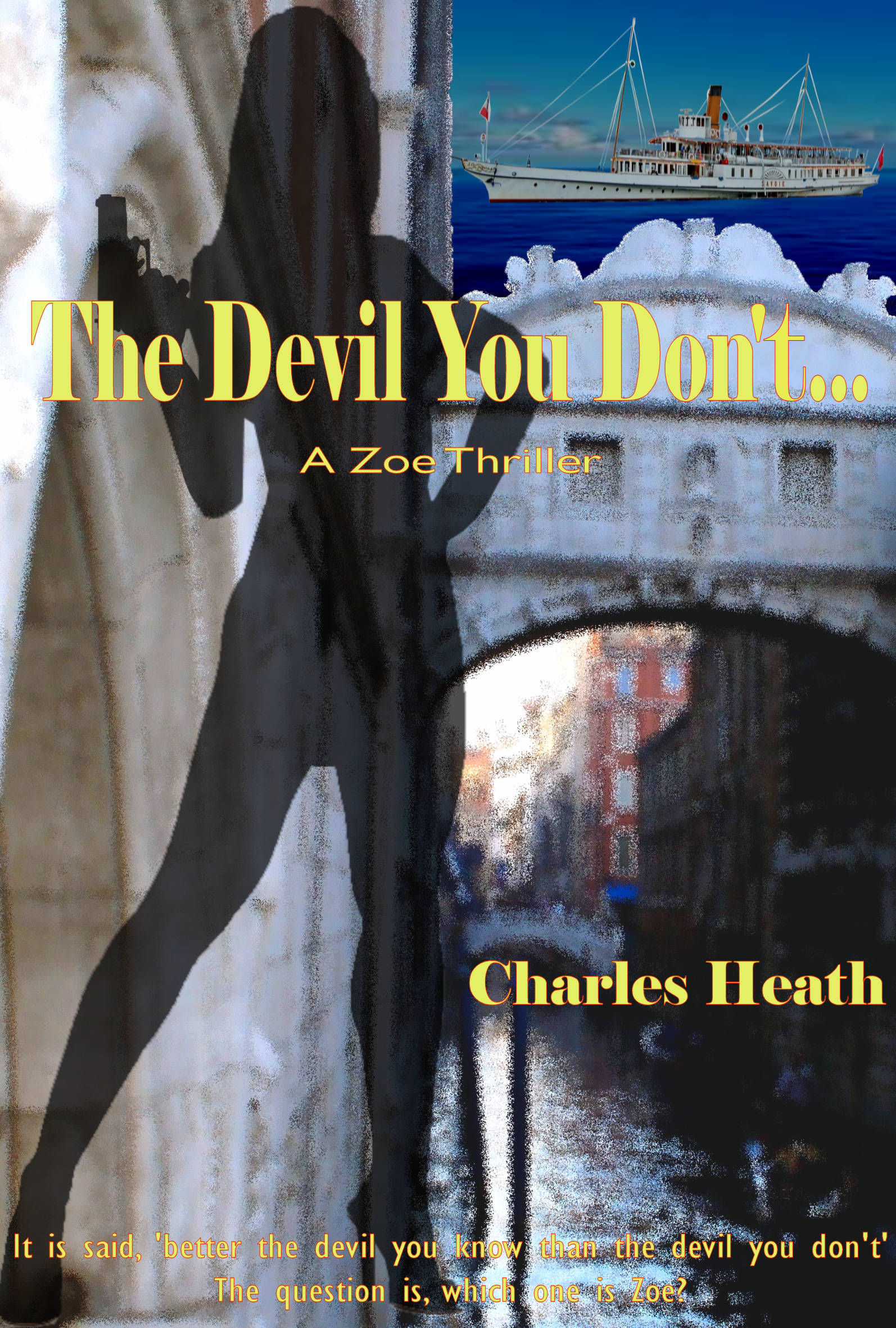
‘The Devil You Don’t’ – A beta reader’s view

It could be said that of all the women one could meet, whether contrived or by sheer luck, what are the odds it would turn out to be the woman who was being paid a very large sum to kill you.

John Pennington is a man who may be lucky in business, but not so lucky in love. He has just broken up with Phillipa Sternhaven, the woman he thought was the one, but relatives and circumstances, and perhaps because she was a ‘princess’, may also have contributed to the end result.

So, what do you do when you are heartbroken?

That is a story that slowly unfolds, from the first meeting with his nemesis on Lake Geneva, all the way to a hotel room in Sorrento, where he learns the shattering truth.

What should have been solace after disappointment, turns out to be something else entirely, and from that point, everything goes to hell in a handbasket.

He suddenly realizes his so-called friend Sebastian has not exactly told him the truth about a small job he asked him to do, the woman he is falling in love with is not quite who she says she is, and he is caught in the middle of a war between two men who consider people becoming collateral damage as part of their business.

The story paints the characters cleverly displaying all their flaws and weaknesses. The locations add to the story at times taking me back down memory lane, especially to Venice where, in those back streets I confess it’s not all that hard to get lost.

All in all a thoroughly entertaining story with, for once, a satisfying end.

Available on Amazon here: https://amzn.to/2Xyh1ow

NANOWRIMO – November 2025 – Day 16

The Third Son of a Duke

A year passes, replacements are found, and it’s time to leave.

Of course, being in the middle of wartime, Australia is busy requisitioning ships to take soldiers, nurses, and doctors, plus supplies to the various fronts. Getting home might not be as easy as he thought it might be.

Passage will require a government permit and finding out when the next available ship that hasn’t been requisitioned is available, hoping that it is not fully booked with other passengers, doctors and nurses, and soldiers returning.

And if he is lucky enough to get a berth, it will cost more, as no doubt the shipping company is running a risk of being torpedoed on the high seas.

There are basically no convoys and no naval escorts.

It is also just after Australia has sent a large contingent to Egypt in preparation for the Dardanelles offensive, aka Gallipoli.

Before he goes, he sends his father a letter, one that states that he is no longer standing on the sidelines and is heading home to take up the fight his brothers had started, and from which one had died in service to his country.

He had also got a note from one of his contemporaries, read ex school bullying that basically calls him a coward who ran away.  The white feather sent makes a pretty damning statement.

Thus, from the cattle station to Brisbane in a plane, probably experiencing what was soon to become passenger flights, and getting a few ideas about aerial reconnaissance, which no doubt others were already considering, he gets a series of trains to Melbourne.

Back then, travel was far more difficult, and in wartime, a far more difficult proposition.

2105 words, for a total of 24865 words.

Writing about writing a book – Day 24, a missing piece of the puzzle

There’s always the necessity for creating backstories so that the reader doesn’t come across a part of the story that doesn’t make sense.

Perhaps one of my failings is that I have to go over what I’ve already written, sometimes to make sure there is continuity and that what I’ve written makes sense.

This collection of memories our main character is having serves the purpose of setting up later plot points, but more importantly, is supposed to give the reader an idea of what the main character has gone through before arriving at the start of the story.

This part will serve to provide a little more information on the relationship between Bill and Barry, though I rather like the nickname I gave him.

“Bastards,” Killer muttered.

We called him ‘Killer’ because it was the nickname the Army had given him.  We were sharing the guard duty and had spoken briefly over the watch, but up till then, the silence had stretched over an hour or so.  It didn’t take long for anyone to realize he was a man of few words.

He’d been in the regular army for years and asked for the posting.  He’d made Sergeant several times, only to lose those same stripes for fighting, usually after R&R and a bout of heavy drinking.  Now assigned to our platoon to lend his experience, the conscripts were expecting him to ‘look after’ them.  Other than myself and the Lieutenant, he was the only other regular soldier.  Unfortunately for them, he hated both conscripts and the Viet Cong in varying degrees and depending on his mood there was little tolerance left for the rest of us.

“The people who sent us here or the people trying to kill us?” I asked before I realized I’d spoken.

I didn’t hear the reply, the skies opening up with another torrential downpour that lasted for about five minutes and going as fast as it came.  When the sun finally came up, it would make the atmosphere steamy, hot, and unbearable.  It was quite warm now, and I was feeling both uncomfortable, and fatigued.

Killer looked just as stoic as he had before the rain.  He looked at me.  “Damn weather.  Worse than home.”

“Scotland?”

“Scapa Flow, Kirkwall.  I should have been an engineer on ships like my father, but I was too stupid.  Joined the Army and finished here.  What’s your excuse?”

“Square peg in a round hole.  The army handles us in its stride.”  It was more or less the truth.  I joined the Army to get away from my parents.

“That it does.  That it does.”

The rain came and went, during which the rest of the camp roused and went about its business.  It had been a long night for some, still getting over the shock of the attack, and the ever-pervading thought the enemy was still out there, biding their time.  It would be, for them, a waiting game, waiting for the conditions to wear us down, and lose concentration as inevitably we would.

Certainly, by the time we were relieved from sentry duty, I felt I was in no condition to match wits with a donkey, let alone the enemy on his own home ground.  When I stumbled over to the mess area and looked at the tired and haggard looks on the faces of the platoon, I realized that went for all of us.

Killer and I managed to get about an hour’s rest before the call came to move out, rain or no rain, and after a breakfast that would make anyone ill, we left.  For hours it rained.  No one spoke as we strained to listen over the rain spattering on the undergrowth, all the time expecting the unexpected.  That was the benefit of the surprise attack; we no longer took for granted we would be safe.

Water gathered in pools along the trail, hiding any chance of seeing landmines.  Rainwater and sweat ran into our eyes, making it difficult to see.  Water leaked everywhere, making it very uncomfortable.  This was not war.  This was utter stupidity.

I was about to remark on the futility of it all to the Lieutenant, who had taken the lead, when one second, he was talking to me and the next he crashed to the ground, a sniper’s bullet killing him instantly.   Someone yelled “Contact” and we all hit the ground, bullets flying all around us. 

Too late, I thought, as I felt the hit of what seemed to be a large rock, then the searing pain in my leg, just as I hit the ground…


© Charles Heath 2015-2025

The cinema of my dreams – I never wanted to go to Africa – Episode 39

Our hero knows he’s in serious trouble.

The problem is, there are familiar faces and a question of who is a friend and who is foe made all the more difficult because of the enemy, if it was the enemy, simply because it didn’t look or sound or act like the enemy.

Now, it appears, his problems stem from another operation he participated in, and because of it, he has now been roped into what might be called a suicide mission.


“Are there?  How many should I have?”

The only way he could know there was not a full complement as if he had been told by someone how many people were in our group from the outset.  I looked at Jacobi, and he shrugged.

“This is not a good time to be playing games, Sergeant James.”

The guards gripped their weapons a little tighter and looked ready to use them.

“The only one playing games here would be you.  It would be irrelevant if I had more or I had fewer people here because you have more than enough to cover us, and then some.  But you would agree it would be imprudent for me to put all my eggs in one basket as it were, and yes, there are several others, but they are waiting for me to call them, further down the track.  Not to put too fine a point on it, distrust works both ways.  We don’t come back, I can assure you, your losses will be bigger than ours.  Oh, and a word of advice, don’t go looking for them, not unless you want good men to die needlessly.”

Tough talk, and could get us killed, but I was hoping that until he had the diamonds in his hands, he would humor me.  A minute or so passed where I assumed he was making a calculation on what the odds were, then he shrugged.  There was merit in what I’d told him.  Monroe and Shurl had plenty of ammunition and would have a foxhole that wouldn’t be over-run or penetrated.

“I think you might be right, so let’s not get bogged down in an argument that’s going nowhere.  We have what you want, and you have what we want.  Let’s go inside and talk.”

Was that a sigh of relief moment?  Perhaps.  But it was clear he needed us out of the way before his men could search the cars.  I was happy to let him think he had the upper hand.

“Lead the way.”

We all filed into the building and sat down around a large table.  There were bottles of water out, and we might have drunk from them but I could see the seal had been broken on min so it looked like we would be going thirsty.

The commander drank from his, no doubt as a gesture that the water was safe.  None of my people were buying it.

“I’ll kick it off,” I said.  “Are our people in good health?”

“Of course.  Healthy enough to walk out of here of their own accord.  Did you bring the compensation with you?”

“I did.”

“Can I see it?”

“Can I see our people.”

Friendly, and time-consuming double talk.  I could see he was waiting impatiently.  “All in good time.  “Did you have any trouble getting here?” he asked casually.  “I heard there were some local militias on the road collecting road taxes earlier today.”

“If there was, we didn’t see any.  Smooth run, except for the state of the roads.  I hope the road taxes those people are collecting are to fix the roads.”

He smiled.  “It is what it is.  This is the Democratic Republic of the Congo, not the United States of America.  Things are done differently here.  We put the people first, and the roads second.”

There was a discreet knock on the door, followed by a cowering man coming into the room and walking up behind the commander.  He took a few seconds to whisper into his ear, during which the commander’s expression turned very dark.

I had to assume that they had found all the weapons we had left for them to find, and not done a very close inspection to find those we did not want them to find.  It was a bold assumption and could make a difference once we left, and if we were attacked.  I was sure that was part of the message the man had relayed to his commander.

The man almost ran out of the building, slamming the door behind him.

The commander looked at me.  “Where are the diamonds?”

That was as direct as he could get.

“At this point, that’s for me to know until I’m assured you intend to honor your part of the agreement.  Searching our cars for the diamonds tells me you are not a man to be trusted, and, you should have realized in making that discovery, you’re not dealing with fools.”

The dark expression eased, and he tried to look like the man who held all the cards.  He probably did, but it would be interesting to see to what extent he would press his advantage.  We had nothing to lose, though it didn’t send a very good message to the team that I was willing to sacrifice them.  This was after all supposed to be a suicide mission.

“What’s to stop me from just shooting your people one by one until you tell me.”

“The same reason I told you at the gate.  You will lose a lot more than I will.  Something you might not be aware of is that the people who sent me have control over satellites.  You might not be familiar with satellite technology, but be assured that we are being observed, and have been on this little odyssey.  It also means that they, sitting in a bunker somewhere in the world, also have access to nasty drones, you know, the sort that leaves craters where villages and settlements once were.  This place would not withstand a direct hit, and there would be no one left alive after it.  Killing any or all of us will incur wrath you really don’t want to deal with.  Put simply, if I don’t drive out of here with my people within half an hour this whole area will become an uninhabitable crater.”

Bamfield had said as one option, not that he could order such a strike, was to threaten them with a drone strike.  I hadn’t done that in as many words, but the commander looked as though he got the inference.

“You could do that anyway.”

“I could, but that’s not the way I work.  For some odd reason. The people I work for seem to think you might be useful to them in the future, and Jacobi here will be happy to stay and talk about it.  Now, the clock is ticking.”

He took a moment, then stood.  “Let’s go meet your people then.”


Ⓒ Charles Heath  2020

Writing a book in 365 days – 303

Day 303

Writing what we think

The Unfiltered Mind: Should We Always Write What We Think, Right Now?

We’ve all been there: a thought flares up, an emotion surges, an opinion crystallises in our minds, and the immediate urge is to put it into words. Whether it’s a social media post, a blog entry, or even just an email, the impulse to share what’s on our minds at that very moment can be incredibly powerful.

But should we always succumb to this impulse? And should we worry that our opinions might change, making our current unfiltered thoughts seem inconsistent or even naive in the future? Let’s dive into the fascinating tightrope walk between immediate expression and thoughtful deliberation.

The Immediate Appeal: Pros of Writing What’s On Your Mind Right Now

There’s a lot to be said for capturing the raw, unfiltered essence of your current thoughts and feelings:

  1. Authenticity and Relatability: When you write from the heart, in the moment, it often resonates deeply with others. It’s raw, it’s real, and it allows readers to connect with your humanity, vulnerabilities, and genuine excitement or frustration.
  2. Capturing a Fleeting Moment: Our perspectives are dynamic. Writing what’s on your mind right now captures a snapshot of a specific time, place, and emotional state. This can be invaluable for creative writing, journaling, or even historical documentation of your own growth.
  3. Catharsis and Clarity: For the writer, the act of dumping thoughts onto a page can be incredibly therapeutic. It helps process emotions, organise jumbled ideas, and can even lead to unexpected insights. It’s like talking it out, but with the permanence of the written word.
  4. Sparking Genuine Discussion: Unfiltered thoughts, especially when they challenge norms or express strong emotions, often ignite more passionate and honest conversations. They create a starting point that feels lived-in, rather than perfectly curated.
  5. Unleashing Creativity: Sometimes, the best ideas come from letting our minds wander and capturing those initial sparks before they fade. Overthinking can stifle creativity; immediate expression can unleash it.

The Perils of Impulsivity: Cons of Writing What’s On Your Mind Right Now

However, the “publish now, think later” approach comes with its own set of significant risks:

  1. Regret and Irreversibility: Words, once written and especially once published, can be incredibly difficult to retract. A hastily written thought might cause offence, damage a reputation, or simply be something you deeply regret having shared once the initial emotion has passed.
  2. Lack of Nuance and Context: Immediate thoughts are often driven by strong emotions and may lack the necessary context, research, or empathy that a more considered piece would have. This can lead to misinterpretation, oversimplification, or even spreading misinformation.
  3. Inconsistency and Perceived Fickleness: If your opinions are constantly shifting (which is natural!), a steady stream of “in-the-moment” posts might make you appear inconsistent, unreliable, or not fully committed to any particular stance.
  4. Emotional Overload for the Audience: While authenticity is good, a constant stream of highly charged, unfiltered emotions might be overwhelming or even off-putting for your audience. There’s a fine line between relatable vulnerability and incessant venting.
  5. Digital Footprints: Everything you write online leaves a digital footprint. An opinion expressed in a moment of anger or naivete could resurface years later and impact your professional or personal life in unforeseen ways.

Should We Worry About Our Opinions Changing?

This brings us to the crucial question: should the fact that our opinions might change deter us from expressing what we feel at a particular time?

Absolutely not. To worry about opinion change is to worry about growth.

Our opinions are not static monuments; they are living, breathing entities that evolve with new information, experiences, and reflections. To pretend otherwise is to deny our own human capacity for learning and adaptation.

  • Embrace the Journey: Your past opinions are part of your journey. They show where you’ve been, what you’ve learned, and how you’ve grown. There’s power in being able to say, “This is what I believed then, and here’s how my perspective has shifted and why.”
  • Context is Key: The key isn’t to never express a current thought, but to understand the context. If you’re writing a personal blog or journal, documenting your evolving thoughts is a feature, not a bug. If you’re writing a manifesto for a political party, perhaps a more measured and consistent tone is expected.
  • Transparency Builds Trust: Being transparent about your evolving views can actually build trust with your audience. It shows vulnerability and intellectual honesty, demonstrating that you’re open to new ideas and capable of critical self-reflection.

Finding the Balance: Fleeting Feelings vs. A Set Tone

The true art of writing lies in finding the balance between these two poles:

  • For Fleeting Feelings: Use platforms and formats that allow for ephemerality and personal reflection. Your private journal, a “thoughts-of-the-day” section on a blog, creative writing, or even temporary social media stories are perfect for capturing the moment without the pressure of eternal consistency.
  • For a Set Tone or Attitude: When your writing has a specific purpose – building a brand, advocating for a cause, informing a professional audience, writing a definitive guide – then careful consideration, research, and a consistent tone become paramount. This requires pausing, editing, and often seeking feedback.

The “Pause Button” is Your Friend: Before hitting “send” or “publish,” consider asking yourself:

  1. Is this merely venting, or does it contribute something valuable?
  2. Who is my audience, and how might they interpret this?
  3. Will I still stand by these words in an hour, a day, a month?
  4. Am I presenting this as an immutable truth, or as a current perspective? (Adding disclaimers like “My current thinking on this is…” can be incredibly helpful).

Ultimately, our opinions should change. It’s a sign of a vibrant, engaged mind. The goal isn’t to suppress our immediate thoughts, but to develop the wisdom to know when to share them raw, when to refine them, and when to keep them for personal reflection.

The most compelling writing often comes from those who are brave enough to share their authenticity, but wise enough to wield their words with care.


What are your thoughts on this? Do you lean towards immediate expression or careful deliberation? Share your perspectives in the comments below!

Top 5 sights on the road less travelled – Dublin

Escape the Crowds: Dublin’s Top 5 Hidden Gem Attractions

Dublin is a city of undeniable charm, buzzing with energy, history, and a legendary pub scene. While iconic spots like the Guinness Storehouse, Trinity College, and Dublin Castle are must-sees, they often come with lengthy queues and shoulder-to-shoulder crowds.

But what if you long for a taste of authentic Dublin culture and history without the tourist rush?

Luckily, the Irish capital is brimming with distinctive features tucked away in quieter corners. We’ve compiled a list of the top five visitor attractions in Dublin that offer unique experiences, fascinating stories, and, best of all, a peaceful respite from the throngs.


1. The Chester Beatty Library

Nestled within the walls of Dublin Castle (but often overlooked by those rushing to the main courtyard), the Chester Beatty is a true global treasure. This museum and library holds the collected works of Sir Alfred Chester Beatty, one of the greatest collectors of the 20th century.

Why it’s distinctive: This isn’t just a collection of old books. You’ll find exquisite manuscripts, rare books, miniature paintings, and decorative arts from across Asia, the Middle East, North Africa, and Europe. It houses some of the world’s most important holdings of Islamic, East Asian, and Western printed materials.

The Quiet Factor: While the Dublin Castle grounds can be busy, the library itself offers a tranquil, dimly lit haven perfect for quiet reflection. Best of all? Admission is free. Don’t forget to visit the rooftop garden café for stunning views over the city.

2. The Dublin Writers Museum (Temporarily Closed – See Alternative Below)

Note: While the original Dublin Writers Museum building is currently closed for relocation, the spirit of literary Dublin is still alive and accessible in less-crowded formats.

The Alternative: The Museum of Literature Ireland (MoLI)

Located in UCD’s stately Newman House on St. Stephen’s Green, MoLI is a beautiful, modern museum dedicated to the rich tapestry of Irish writing, from James Joyce to contemporary voices.

Why it’s distinctive: Set in the beautiful historic home where literary giants like Gerard Manley Hopkins and James Joyce once studied, MoLI offers interactive displays, beautiful exhibitions (including the original ‘Copy No. 1’ of Joyce’s Ulysses), and stunning period rooms.

The Quiet Factor: While popular with writers and literature lovers, MoLI rarely reaches the peak capacity of the larger city museums. It offers spacious exhibition rooms and one of the finest cultural gift shops in the city. The tranquil, hidden courtyard garden is a perfect spot to enjoy a coffee and escape the city noise.

3. Richmond Barracks, Inchicore

Stepping slightly outside the immediate city centre opens up historical venues of immense importance. Richmond Barracks, located in the Inchicore area, offers a deep dive into pivotal moments of Irish history, particularly the 1916 Easter Rising.

Why it’s distinctive: This site served as the primary holding place for over 3,000 men arrested after the 1916 Rising. It was here that Pádraig Pearse and the other executed leaders were court-martialed. Today, it operates as a heritage centre and a community hub, offering moving and highly informative tours detailing the barracks’ role through the centuries, including its post-independence use as housing for local families.

The Quiet Factor: Because it requires a short tram ride (the Luas Red Line to Suir Road), it naturally filters out the casual tourist crowd. You’ll likely enjoy a small, intimate guided tour that allows for detailed questions and reflection.

4. The Marsh’s Library

For those who crave the smell of old paper and the feeling of stepping back in time, Marsh’s Library is an essential visit. Dating back to 1707, it is one of the oldest public libraries in Ireland.

Why it’s distinctive: This library remains virtually unchanged since it opened its doors in the early 18th century. It features beautiful dark oak bookcases, wire cages (used to prevent the theft of valuable texts), and over 25,000 rare and fascinating books. You can walk the very aisles where writers like Bram Stoker and James Joyce once studied.

The Quiet Factor: Tucked away behind St. Patrick’s Cathedral, Marsh’s charges a small entrance fee, which helps keep visitor numbers manageable. The atmosphere is hushed and reverential—it’s an ideal place to spend an hour truly absorbing Dublin’s intellectual history without jostling for space.

5. The Botanic Gardens (National Botanic Gardens of Ireland)

While not entirely undiscovered, Dublin’s National Botanic Gardens in Glasnevin offers such a vast, sprawling space that crowds simply melt away amongst the lush greenery.

Why it’s distinctive: Spread across nearly 50 acres, the gardens feature stunning Victorian glasshouses (including the curvilinear range designed by Richard Turner), extensive plant collections, a tranquil arboretum, and historically significant grounds. It’s an essential centre for conservation and research.

The Quiet Factor: Located a short bus ride north of the city centre (near the Glasnevin Cemetery, another excellent, quiet spot), the gardens provide endless walking paths, hidden benches, and quiet corners. You can easily spend an entire afternoon wandering the grounds and enjoying the peace, particularly once you move past the main entrance and glasshouses.


Trade the Noise for Narrative

Dublin’s biggest attractions tell a powerful story, but sometimes the best narratives are found off the beaten path. By seeking out these quieter, distinctive attractions, you can enjoy a more personal, profound, and peaceful encounter with the heart and history of the Irish capital. Happy Exploring!

What I learned about writing – Take the time to stop and smell the roses

Televison is a great recorder of the past, and most channels, and especially cable tv have great libraries of films that go back more than a hundred years.

And, whilst it’s possible that modern day films and television series can try to recapture the past, the English as an exception being very good at it, often it is impossible to capture it correctly.

But, if you have a film shot in the moment, then you have a visual record of what life, and what was once part of our world before you in all it’s dated glory. The pity of it is that, then, we never appreciated it.

After all, in those particular times, who had the time to figuratively stop and smell the roses. Back then as life was going on, we were all tied up with just trying to get through each day.

Years later, often on reflection, we try to remember the old days, and, maybe, remember some of what it was like, but the chances are that change came far too rapidly, and often too radical, that it erases what we thought we knew existed before.

My grandmothers house is a case in point. In it’s place is a multi lane super highway, and there’s nothing left to remind us, or anyone of it, just some old sepia photographs.

I was reminded of how volatile history really is when watching an old documentary, in black and white, and how the city I grew up in used to look.

Then, even though it seemed large to me then, it was a smaller city, with suburbs that stretched about ten or so miles in every direction, and the outer suburbs were where people moved to get a larger block, and countrified atmosphere.

Now, those outer suburbs are no longer spacious properties, the acreage subdivided and the old owners now much richer for a decision made with profit not being the motivator, and the current suburban sprawl is now out to forty or fifty miles.

The reason for the distance is no longer the thought of open spaces and cleaner air, the reason for moving now is that land further out is cheaper, and can make buying that first house more affordable.

This is where I tip my hat to the writers of historical fiction. I myself am writing a story based in the 1970s, and its difficult to find what is and isn’t time specific.

If only I had a dollar for every time I went to write the character pulling out his or her mobile phone.

What I’ve found is the necessity to research, and this has amounted to finding old films, documentaries of the day, and a more fascinating source of information, the newspapers of the day.

The latter especially has provoked a lot of memories and a lot of stuff I thought I’d forgotten, some of it by choice, but others that were poignant.

Yes, and don’t get me started on the distractions.

If only I’d started this project earlier…