Crossing the finish line of your first draft is a triumph. The blank page is no more, and your ideas are finally spilling out. Yet, beneath that satisfaction often lingers an unspoken truth: the work isn’t done. Now comes the equally critical (and often underrated) task: narrowing the target. This phase transforms an amorphous draft into a sharp, impactful piece that resonates deeply with its audience. Think of it as sculpting the raw marble of your thoughts into a statue with purpose. Let’s explore how to do this with intention and clarity.
The Power of the First Draft
Before diving into refinement, it’s important to honour the messy beauty of your first draft. It’s a “get it out” stage—where creativity flows unfiltered, and every idea, no matter how half-baked, is welcomed. But here’s the thing: first drafts are not meant to be final products. They’re blueprints, prototypes, or even “vessels of possibility.” The magic happens next, when you take a step back and ask, “What is this really trying to say?”
Step 1: Identify Your Core Message
The first step in narrowing your target is distilling your work down to its essence. Ask yourself:
What is the single most important takeaway?
What changes do I want the reader to experience?
Write this down in a single sentence. If your draft aims to persuade, what’s the one action you want your reader to take? If it’s a story, what’s the central theme or emotion you want to evoke? This core message becomes your compass during the editing phase.
Example:
Vague: “Climate change is a problem that affects us all, and we need to do something about it.”
Narrowed: “Rising ocean temperatures are accelerating coastal erosion—here’s how you can advocate for immediate policy change in your community.”
The narrowed version focuses on a specific cause (ocean temperatures), effect (coastal erosion), and a clear call to action (advocacy and policy).
Step 2: Cut What Doesn’t Serve the Core
Once you have clarity on your message, ruthlessly edit out anything that doesn’t amplify it. This includes:
Tangential anecdotes: A personal story might have been fun to write, but if it doesn’t tie back to your point, it’s a detour.
Jargon or fluff: Replace vague phrases like “a lot of people” with specific data or terms.
Redundant sections: Are two paragraphs exploring the same idea? Consolidate.
Pro Tip: Use the “kill your darlings” mantra, but with a twist. If a line makes you cringe but still feels essential, it might belong. The goal isn’t to erase creativity—it’s to eliminate clutter.
Step 3: Refine Your Audience Focus
Know your reader’s face. The more specific you are about your audience’s needs, the sharper your focus. Ask:
Who is most likely to engage with this?
What do they need to know, feel, or do?
If your draft is for a niche audience (e.g., organic farmers, tech startups, grieving parents), tailor your language, examples, and structure to speak directly to them. Narrowing your audience isn’t about exclusion—it’s about connection.
Example: A post about healthy eating for adolescent athletes versus busy working parents will require fundamentally different angles, even if the topic is the same.
Step 4: Use Feedback to Sharpen the Edge
Once you’ve narrowed your draft, seek feedback. Ask your beta readers or editors:
“Is the main point clear?”
“Did anything feel off-topic or confusing?”
“Where did I lose you?”
Their honest responses will highlight where your focus is strong and areas that need tightening.
Conclusion: From Broad to Bold
Narrowing your target isn’t about stifling creativity—it’s about amplifying it. By focusing on one core message, one audience, and one action, you create writing that’s not just heard but felt. So, after your first draft, give yourself permission to dig deeper. Prune, polish, and focus until your work becomes a beacon of clarity.
Your Turn: Grab a pen and write your core message in one sentence. If you can’t sum up your draft in a tweet, keep refining.
Final Thought: A narrow target may seem limiting, but it’s the very thing that turns a sea of words into a sea change.
The Paradox of Creativity: Why Truth is the Ultimate Source of Imagination
We’ve all heard the compliment—or perhaps received it ourselves: “Your imagination is incredible. How do you come up with this stuff?”
It’s usually said with a sense of awe, as if you’ve just pulled a rabbit out of an empty hat, or channelled a world entirely detached from reality. But as a writer, creator, or storyteller, that praise often lands with a strange, paradoxical weight.
Why? Because you know the secret: you didn’t make most of it up.
Every fantastical world, every eccentric character arc, and every gripping plot twist was tethered to something real. You didn’t invent the emotion; you observed it. You didn’t conjure the setting from thin air; you cobbled it together from the texture of a memory, a snippet of overheard dialogue on the subway, or a raw truth you lived through five years ago.
So, how can it be that you are praised for your imagination, when every line you write is based on a truth?
Let’s explore the beautiful, messy alchemy of writing, where reality transforms into myth, and why telling the truth is the secret superpower behind all great fiction.
1. The Misunderstanding of “Imagination”
To understand the paradox, we first have to redefine imagination. Culturally, we tend to view imagination as a purely generative force—the ability to conjure something ex nihilo (out of nothing). We think of it as pure fantasy, magic, or delusion.
However, the true root of imaginative writing isn’t invention; it’s synthesis.
As the acclaimed fantasy author Neil Gaiman once noted, writers take two things that have never been put together before and glue them together. But those “two things” are almost always harvested from lived experience.
You didn’t invent grief; you simply mapped it onto a dragon rider losing their companion.
You didn’t invent awkward first-date anxiety; you just gave that nervous tic to an interstellar diplomat.
When readers praise your “imagination,” they aren’t applauding your ability to hallucinate a universe from a vacuum. They are applauding your ability to perceive the world deeply enough to rearrange its pieces into a new mosaic.
2. Emotional Truth Beats Factual Accuracy
In creative writing, there is a massive difference between fact and truth.
Facts are rigid. They are the exact coordinates, dates, and objective sequences of events.
Truths are fluid, resonant, and universally felt.
You can write a story about a spaceship navigating a black hole (pure science fiction/imagination), but if the protagonist is paralysed by the fear of being unloved, every reader in the audience suddenly relates. The spaceship is made up; the terror of rejection is a biological and emotional truth.
Readers praise your imagination because the outer shell of your story is fantastical. But they stay, and they feel moved, because the engine running underneath is fueled by undeniable human truth. You used a lie (a made-up world) to tell the truth (how it feels to be human).
3. The Filter of Subjectivity: Why It Still Belongs to You
If every line is based on a truth, why doesn’t everyone write the same story? Why is your book unique while mine is different?
The answer lies in the prism of subjectivity.
No two people experience the same truth in the exact same way. Memory is notoriously unreliable; it is colored by our traumas, our biases, our joys, and our desires. When you take a real-life argument, a genuine heartbreak, or a flash of beauty you witnessed at a park, it passes through the unique lens of who you are.
By the time that truth makes it from your nervous system, through your subconscious, and onto the page, it has been refracted into something entirely new. You didn’t invent the clay, but you are the only sculptor who could have shaped it quite like that. The praise for your “imagination” is actually praise for your perspective.
4. Observation: The Writer’s Real Job
Great writers are rarely geniuses locked in ivory towers; they are professional eavesdroppers and relentless watchers.
To base every line on a truth requires you to pay attention to the mundane world. It means noticing:
The specific way a grieving person’s hands shake when they try to hold a coffee cup.
The defensive cadence in someone’s voice when they are lying.
The sudden, heavy silence that falls over a room when a secret is revealed.
When you translate these minute, authentic observations into your writing, readers are startled by how “accurate” your creations feel. They say, “How did you imagine characters so complex?” But the truth is, you didn’t imagine them—you simply paid closer attention to real people than most are willing to do.
Embracing the Paradox
So, the next time someone marvels at your boundless imagination, don’t rush to correct them and explain that your protagonist’s emotional breakdown was ripped straight from your Tuesday afternoon panic attack.
Accept the compliment.
Understand that what they are really saying is: “Thank you for taking the messy, confusing, often painful truths of our shared existence, wrapping them in wonder, and handing them back to me in a way I could finally understand.”
Imagination isn’t the opposite of truth; it is truth’s translator. And as a writer, your job is simply to keep your eyes open, tell the truth, and let the magic take care of itself.
What truth are you turning into a story today? Let us know in the comments below!
The Un‑Seen Sarajevo: 5 Off‑The‑Beaten‑Path Experiences Worth the Detour
When you picture Sarajevo, you probably picture the iconic Baščaršija market, the Latin Bridge, or the panoramic tram ride up to the Sarajevo Bascarsija‑Tunnel Museum. Those sites are undeniably worth a visit, but the city’s real soul lives in the nooks and crannies that tourists rarely discover. If you’re the type of traveller who prefers a side‑street over a main avenue, a hidden café over a crowded restaurant, or a quiet trail over a bustling viewpoint, keep reading. Below are five truly “road‑less‑travelled” activities that will give you a deeper, more intimate connection with Bosnia’s capital.
Wander the Secret Gardens of Vrelo Bosna – Beyond the Main Walkway
Why it feels off‑the‑map Most visitors stroll the short, well‑signposted path that leads straight to the river’s mouth and snap a quick photo of the iconic meadow. Few venture farther up the valley where a network of stone‑lined footpaths winds through secluded glades, ancient oak groves, and a series of tiny, crystal‑clear pools that look like something out of a fairy‑tale.
What to do
Follow the “Old Trapper’s Trail.” Starting at the main parking lot, veer left after the first wooden bridge and look for a faded wooden sign reading “Staza lovca” (hunter’s trail).
Spot the “Stone‑Heart” (Kameni Srž). A natural limestone formation shaped like a heart, half‑submerged in a shallow pool—perfect for a quiet moment or a Instagram story that will genuinely surprise your followers.
Pack a light snack. The area is a perfect spot for a picnic under the shade of centuries‑old beech trees. Bring a small blanket, some local cheese (bjelica), and a bottle of Bosnian fruit‑wine.
Practical tips
Getting there: Take bus line 16 from the city centre to the “Vrelo Bosna” stop (≈15 min). The trailhead is a few minutes’ walk from the stop.
Best time: Early morning (7–9 am) in spring or early autumn. The lighting is soft, the crowds are non‑existent, and the air smells of wild mint.
What to bring: Sturdy walking shoes (the path includes a few rocky sections), a reusable water bottle, and a small rain jacket—weather can change quickly in the valleys.
Sip Coffee at Kovačevići’s “Mali Hram” – A Hidden Bosnian‑Austro‑Hungarian Café
Why it feels off‑the‑map Tucked inside a modest residential block of the Kovačevići neighbourhood, “Mali Hram” (The Little Temple) is a tiny, family‑run coffee house that has been serving Bosnian coffee the same way since the 1900s. Its interior is a living museum: brass coffee pots, hand‑stitched tablecloths, and a faded photograph of a young Emperor Franz Julius I strolling through Sarajevo’s streets.
What to do
Order the “Bosanska Cevapi” espresso. It’s a double‑shot, dark roasted brew served with a slice of “hurmašice” (traditional sweet dumpling) on the side.
Chat with the owners. The elderly couple love sharing stories about how the café survived the siege, the Austro‑Hungarian era, and the city’s post‑war revival.
Listen to the old radio. A vintage 1930s German radio plays folk songs in the background, giving you a tangible sense of Sarajevo’s multicultural past.
Practical tips
Getting there: From the central train station, hop on tram line 1 toward “Ilidža” and get off at “Kovačevići” (≈12 min). Walk two blocks east; the café is marked only by a tiny hand‑painted sign.
Best time: Mid‑afternoon, when locals gather for “kafa i razgovor.” Expect a relaxed, unhurried pace.
What to bring: Cash (most small cafés don’t accept cards) and a notebook—many visitors leave a short message on the community board.
Trek to Hajdučke Kule – The Forgotten Ottoman Watchtowers
Why it feels off‑the‑map While most tourists flock to the historic Clock Tower, few know that a row of three smaller stone towers – the “Hajdučke Kule” (Bandit Towers) – sit on the steep hillside overlooking the old town. Built in the 16th century to spot incoming raiders, they now offer an unobstructed panorama of Sarajevo’s red‑tile roofs, the Miljacka River snaking below, and the distant peaks of the Dinaric Alps.
What to do
Climb the middle tower. A narrow spiral staircase (≈30 steps) leads to a small viewing platform with a rusted iron railing. Bring a compact camera; the view is unfiltered – no tourist crowds, just the city’s raw silhouette.
Explore the “Stone Labyrinth.” At the base of the towers lies a network of ancient stone walls that locals used for rope‑making. Walk the labyrinth and feel the cool stone under your feet.
Capture sunset light. The western orientation floods the towers with golden light just before sunset, creating dramatic shadows ideal for photography.
Practical tips
Getting there: Take bus line 21 to “Koševo” and follow the signs to “Hajdučke Kule.” The trailhead is a short, steep stairwell leading up the hill.
Best time: Late afternoon in late spring or early summer, when the hillside is lush but the path isn’t slick.
What to bring: A flashlight (the interior of the towers is dim), a small first‑aid kit (the stairs are uneven), and a lightweight rain poncho.
Discover the Underground Art Gallery of the Sarajevo Tunnel – A Post‑War Secret
Why it feels off‑the‑map The Sarajevo Tunnel Museum is a well‑known symbol of resilience, but beneath its concrete entrance lies a concealed, community‑run art space called “Podzemni Studio.” Created in 1997 by a group of former tunnel workers, it showcases raw, politically charged artworks made from salvaged war materials—metal, bullet casings, and glass shards.
What to do
Take the “Hidden Passage” tour. A volunteer guide leads a small group (max 8 people) down a dimly lit corridor to the studio. You’ll hear personal anecdotes about how the space helped heal trauma after the siege.
Interact with the installations. Some pieces are tactile; you can run your fingers over a sculpture made of welded railway tracks, symbolising the city’s connection between past and future.
Purchase a “Tunnel‑Made” souvenir. Small items—keychains, magnets, or hand‑crafted ceramic mugs—are sold to support the artists.
Practical tips
Getting there: Walk from the main tunnel museum (just a 5‑minute stroll). Look for the narrow door on the left side of the parking lot marked “Studio.”
Best time: Weekdays, early in the morning (9–11 am). The studio limits visitors to preserve the intimate atmosphere.
What to bring: A modest donation (the gallery is non‑profit), a respectful demeanour (some works deal with heavy themes), and curiosity.
Attend a Traditional “Sevdalinka” Evening in the Village of Bojan
Why it feels off‑the‑map Sevdalinka, the soulful Bosnian folk song, is often performed in touristy restaurants in the Old Town. In Bojan—a small farming village 12 km south of Sarajevo—elder musicians gather every Saturday night in the courtyard of a centuries‑old stone house, singing unaccompanied a cappella renditions passed down through generations.
What to do
Join the circle. Bring a small portable seat or blanket, and sit on the low stone steps while locals welcome you with a warm “Dobrodošli.”
Learn a line. The host will hand you a lyric sheet and teach you the chorus—an unforgettable way to become part of the tradition.
Taste homemade “pita.” Freshly baked burek and honey‑drizzled pita (pie) are served on rustic wooden plates.
Practical tips
Getting there: Rent a car or take a local “taxi‑bush” (mini‑bus) from the “Ilidža” bus station to Bojan. The trip takes about 30 minutes on winding country roads.
Best time: Late summer (July–August) when the evenings are warm and the village’s olive trees are in full bloom.
What to bring: A respectful attitude, a small contribution (a bottle of local rakija or a few euros) for the host, and a camera with a discreet flash setting—photos are welcomed, but flash isn’t.
How to Fit All Five Into a 3‑Day Itinerary
Day
Morning
Afternoon
Evening
1
Vrelo Bosna hidden trails – hike & picnic
Hajdučke Kule – climb towers & sunset
Mali Hram café – coffee & conversation
2
Underground art gallery – Tunnel Studio tour
Bojan Sevdalinka evening – travel to village
Return to Sarajevo for a nightcap in the Old Town
3
Free day – revisit favorite spot or explore other museums
Optional: River rafting on the Miljacka or a museum of contemporary Bosnian art
Wrap‑up dinner at a local konoba (tavern) featuring live folk music
Feel free to shuffle the order—each activity stands on its own, but the rhythm above balances active exploration with relaxed cultural immersion.
Final Thoughts: Why the “Road‑Less‑Travelled” Matters
Travel isn’t just a checklist of monuments; it’s a conversation with the people, the landscapes, and the hidden histories that shape a place. In Sarajevo, the well‑trodden path tells you what the city is, while the side streets, secret gardens, and tucked‑away cafés whisper how Sarajevo has survived, adapted, and continued to sing its unique song.
So next time you book a trip to Bosnia’s capital, consider swapping one of those popular sights for a hidden trail, a modest coffee shop, or an underground gallery. You’ll return home with stories that are truly yours, and you’ll leave a lighter footprint—one that respects the intimacy of the places you discover.
Ready to venture off the map? Pack your walking shoes, bring an open heart, and let Sarajevo’s quieter corners reveal themselves. Happy exploring!
With my attention elsewhere, I walked into a man who was hurrying in the opposite direction. He was a big man with a scar running down the left side of his face from the eye socket to the mouth, and he was wearing a black shirt with a red tie.
That was all I remembered as my heart almost stopped.
He apologised as he stepped to one side, the same way I stepped, as I also muttered an apology.
I kept my eyes down. He was not the sort of man I wanted to recognise later in a lineup. I stepped to the other side, and so did he. It was one of those situations. Finally getting out of sync, he kept going in his direction, and I went towards the bus, which was now pulling away from the curb.
Getting my breath back, I just stood riveted to the spot watching it join the traffic. I looked back over my shoulder, but the man I’d run into had gone. I shrugged and looked at my watch. It would be a few minutes before the next bus arrived.
Wait, or walk? I could also go by subway, but it was a long walk to the station. What the hell, I needed the exercise.
At the first intersection, the ‘Walk’ sign had just flashed to ‘Don’t Walk’. I thought I’d save a few minutes by not waiting for the next green light. As I stepped onto the road, I heard the screeching of tyres.
A yellow car stopped inches from me.
It was a high-powered sports car, perhaps a Lamborghini. I knew what they looked like because Marcus Bartleby owned one, as did every other junior executive in the city with a rich father.
Everyone stopped to look at me, then the car. It was that sort of car. I could see the driver through the windscreen shaking his fist, and I could see he was yelling too, but I couldn’t hear him. I stepped back onto the sidewalk, and he drove on. The moment had passed, and everyone went back to their business.
My heart rate hadn’t come down from the last encounter. Now it was approaching cardiac arrest, so I took a few minutes and several sets of lights to regain composure.
At the next intersection, I waited for the green light, and then a few seconds more, just to be sure. I was no longer in a hurry.
Next, I heard what sounded like a gunshot. A few people looked around, worried expressions on their faces, but when it happened again, I saw it was an old car backfiring. I also saw another yellow car, much the same as the one before, stopped on the side of the road. I thought nothing of it, other than it was the second yellow car I’d seen.
At the next intersection, I realised I was subconsciously heading towards Harry’s new bar. It was somewhere on 6th Avenue, so I continued walking in what I thought was the right direction.
I don’t know why I looked behind me at the next intersection, but I did. There was another yellow car on the side of the road, not far from me. It, too, looked the same as the original Lamborghini, and I was starting to think it was not a coincidence.
Moments after crossing the road, I heard the roar of a sports car engine and saw the yellow car accelerate past me. As it passed by, I saw there were two people in it, and the blurry image of the passenger was a large man with a red tie.
Now my imagination was playing tricks.
It could not be the same man. He was going in a different direction.
In the few minutes I’d been standing on the pavement, it had started to snow; early for this time of year, and marking the start of what could be a long, cold winter. I shuddered, and it was not necessarily because of the temperature.
I looked up and saw a neon light advertising a bar, coincidentally the one Harry had ‘found’ and, looking once in the direction of the departing yellow car, I decided to go in. I would have a few drinks and then leave through the back door if there were one.
Discovering Podgorica’s Hidden Gems: A Road Less Travelled
Nestled on the banks of the Morača River, Podgorica is often overshadowed by its mountainous neighbours and coastal rivals in the Balkans. But for those willing to venture beyond its bustling city centre, this Montenegrin capital holds a trove of quiet enchantments. If you’re craving a deeper, more offbeat experience, here are five extraordinary ways to unlock Podgorica’s soul.
1. Step Back in Time in Donja Lastva
Tucked just a short walk from the city centre, the historic neighbourhood of Donja Lastva is a labyrinth of cobblestone streets, 19th-century stone houses, and vibrant murals. Once a medieval merchant district, its peaceful atmosphere offers a stark contrast to Podgorica’s modern core. Stroll through hidden courtyards, admire the architecture, and sip a coffee at a local kafana (traditional café) to savour life at a slower pace. Don’t miss the Old Jewish Quarter, a poignant reminder of the community that once thrived here.
2. Unwind on Vrmac Hill
For panoramic views of the city and the surrounding mountains, head to Vrmac Hill. A short, family-friendly hike leads to a vantage point dominated by the Ethnographic Museum of Montenegro and a historic fort. The well-maintained trails are perfect for a morning walk or sunset picnic. In spring, the hillside bursts into colour with wildflowers, while autumn offers fiery foliage. It’s a favourite among locals, but rarely crowded with tourists.
3. Get Cultured at the Ethnographic Museum
Perched on Vrmac Hill, this quirky museum is a window into Montenegro’s rural heritage. Wander through recreated village houses filled with traditional costumes, farming tools, and folk art. The museum also hosts rotating contemporary art exhibitions, making it a fascinating blend of old and new. Pro tip: Visit on a weekday to have it mostly to yourself!
4. Shop and Savour at the Podgorica Municipal Market
For a taste of local life, head to the Podgorica Municipal Market (Pazar). Open six days a week, this bustling bazaar is a riot of colour and aroma. Sample krompiruša (Montenegrin potato soup), fresh ražnjići cheese, and fragrant herbs. Haggle for handmade crafts or pick up a jar of truffle honey from the region’s famed forests. It’s a feast for the senses—and your wallet!
5. Visit the Đurđe Krstić House – A Literary Pilgrimage
Poet and writer Đurđe Krstić (1879–1934) is Montenegro’s Shakespearean figure, and his 19th-century stone house in Podgorica is a modest tribute to his legacy. Now a museum, it’s housed in a simple, ivy-clad building where he once lived. Inside, you’ll find his personal library, manuscripts, and memorabilia. Though it’s a niche spot, it offers a poetic insight into Montenegro’s cultural heart.
Tips for Exploring Off the Beaten Path
Best Time to Go: Visit during the shoulder seasons (May–June or September–October) for milder weather and fewer crowds.
Transport: Most of these spots are walkable within the city centre, but consider renting a bike for a leisurely pace.
Taste the Local Flavour: Pair your explorations with a stop at Café Jelena or Risto – Montenegrin Cuisine for authentic, home-style meals.
Podgorica’s charm lies in its contrasts: history meeting modernity, tranquillity nestled next to the city’s pulse. By straying from the well-worn paths, you’ll uncover a city that’s unafraid to show its soul—and it’s waiting for you to discover it. So, pack your curiosity and let Podgorica surprise you, one hidden gem at a time.
50 photographs, 50 stories, of which there is one of the 50 below.
They all start with –
A picture paints … well, as many words as you like. For instance:
And the story:
…
It was once said that a desperate man has everything to lose.
The man I was chasing was desperate, but I, on the other hand, was more desperate to catch him.
He’d left a trail of dead people from one end of the island to the other.
The team had put in a lot of effort to locate him, and now his capture was imminent. We were following the car he was in, from a discreet distance, and, at the appropriate time, we would catch up, pull him over, and make the arrest.
There was nowhere for him to go.
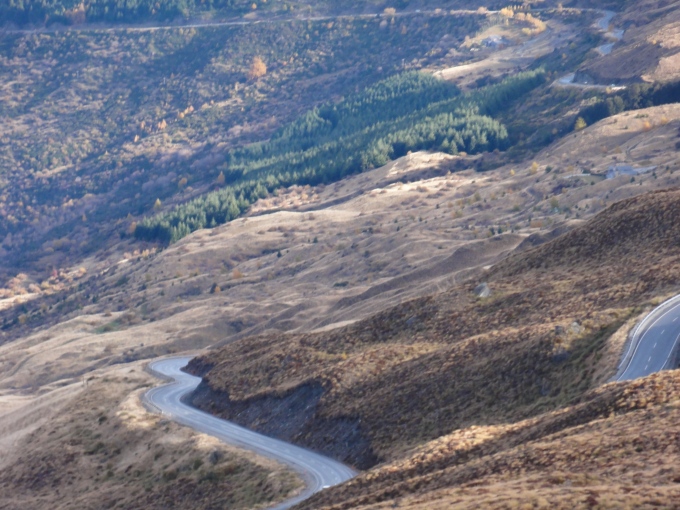
The road led to a dead-end, and the only way off the mountain was back down the road we were now on. Which was why I was somewhat surprised when we discovered where he was.
Where was he going?
“Damn,” I heard Alan mutter. He was driving, being careful not to get too close, but not far enough away to lose sight of him.
“What?”
“I think he’s made us.”
“How?”
“Dumb bad luck, I’m guessing. Or he expected we’d follow him up the mountain. He’s just sped up.”
“How far away?”
“A half-mile. We should see him higher up when we turn the next corner.”
It took an eternity to get there, and when we did, Alan was right, only he was further on than we thought.”
“Step on it. Let’s catch him up before he gets to the top.”
Easy to say, not so easy to do. The road was treacherous, and in places, just gravel, and there were no guard rails to stop a three-thousand-foot fall down the mountainside.
Good thing then, I had the foresight to have three agents on the hill for just such a scenario.
Ten minutes later, we were in sight of the car, still moving quickly, but we were going slightly faster. We’d catch up just short of the summit car park.
Or so we thought.
Coming quickly around another corner, we almost slammed into the car we’d been chasing.
“What the hell…” Aland muttered.
I was out of the car and over to see if he was in it, but I knew that it was only a slender possibility. The car was empty, and no indication of where he had gone.
Certainly not up the road. It was relatively straightforward for the next mile, at which we would have reached the summit. Up the mountainside from here, or down.
I looked up. Nothing.
Alan yelled out, “He’s not going down, not that I can see, but if he did, there’s hardly a foothold and that’s a long fall.”
Then where did he go?
Then a man looking very much like our quarry came out from behind a rock embedded just a short distance up the hill.
“Sorry,” he said quite calmly. “Had to go if you know what I mean.”
I’d lost him.
It was as simple as that.
I had been led a merry chase up the hill, and all the time he was getting away in a different direction.
I’d fallen for the oldest trick in the book, letting my desperation blind me to the disguise that anyone else would see through in an instant.
It was a lonely sight, looking down that road, knowing that I had to go all that way down again, only this time, without having to throw caution to the wind.
The Paradox of Creativity: Why Truth is the Ultimate Source of Imagination
We’ve all heard the compliment—or perhaps received it ourselves: “Your imagination is incredible. How do you come up with this stuff?”
It’s usually said with a sense of awe, as if you’ve just pulled a rabbit out of an empty hat, or channelled a world entirely detached from reality. But as a writer, creator, or storyteller, that praise often lands with a strange, paradoxical weight.
Why? Because you know the secret: you didn’t make most of it up.
Every fantastical world, every eccentric character arc, and every gripping plot twist was tethered to something real. You didn’t invent the emotion; you observed it. You didn’t conjure the setting from thin air; you cobbled it together from the texture of a memory, a snippet of overheard dialogue on the subway, or a raw truth you lived through five years ago.
So, how can it be that you are praised for your imagination, when every line you write is based on a truth?
Let’s explore the beautiful, messy alchemy of writing, where reality transforms into myth, and why telling the truth is the secret superpower behind all great fiction.
1. The Misunderstanding of “Imagination”
To understand the paradox, we first have to redefine imagination. Culturally, we tend to view imagination as a purely generative force—the ability to conjure something ex nihilo (out of nothing). We think of it as pure fantasy, magic, or delusion.
However, the true root of imaginative writing isn’t invention; it’s synthesis.
As the acclaimed fantasy author Neil Gaiman once noted, writers take two things that have never been put together before and glue them together. But those “two things” are almost always harvested from lived experience.
You didn’t invent grief; you simply mapped it onto a dragon rider losing their companion.
You didn’t invent awkward first-date anxiety; you just gave that nervous tic to an interstellar diplomat.
When readers praise your “imagination,” they aren’t applauding your ability to hallucinate a universe from a vacuum. They are applauding your ability to perceive the world deeply enough to rearrange its pieces into a new mosaic.
2. Emotional Truth Beats Factual Accuracy
In creative writing, there is a massive difference between fact and truth.
Facts are rigid. They are the exact coordinates, dates, and objective sequences of events.
Truths are fluid, resonant, and universally felt.
You can write a story about a spaceship navigating a black hole (pure science fiction/imagination), but if the protagonist is paralysed by the fear of being unloved, every reader in the audience suddenly relates. The spaceship is made up; the terror of rejection is a biological and emotional truth.
Readers praise your imagination because the outer shell of your story is fantastical. But they stay, and they feel moved, because the engine running underneath is fueled by undeniable human truth. You used a lie (a made-up world) to tell the truth (how it feels to be human).
3. The Filter of Subjectivity: Why It Still Belongs to You
If every line is based on a truth, why doesn’t everyone write the same story? Why is your book unique while mine is different?
The answer lies in the prism of subjectivity.
No two people experience the same truth in the exact same way. Memory is notoriously unreliable; it is colored by our traumas, our biases, our joys, and our desires. When you take a real-life argument, a genuine heartbreak, or a flash of beauty you witnessed at a park, it passes through the unique lens of who you are.
By the time that truth makes it from your nervous system, through your subconscious, and onto the page, it has been refracted into something entirely new. You didn’t invent the clay, but you are the only sculptor who could have shaped it quite like that. The praise for your “imagination” is actually praise for your perspective.
4. Observation: The Writer’s Real Job
Great writers are rarely geniuses locked in ivory towers; they are professional eavesdroppers and relentless watchers.
To base every line on a truth requires you to pay attention to the mundane world. It means noticing:
The specific way a grieving person’s hands shake when they try to hold a coffee cup.
The defensive cadence in someone’s voice when they are lying.
The sudden, heavy silence that falls over a room when a secret is revealed.
When you translate these minute, authentic observations into your writing, readers are startled by how “accurate” your creations feel. They say, “How did you imagine characters so complex?” But the truth is, you didn’t imagine them—you simply paid closer attention to real people than most are willing to do.
Embracing the Paradox
So, the next time someone marvels at your boundless imagination, don’t rush to correct them and explain that your protagonist’s emotional breakdown was ripped straight from your Tuesday afternoon panic attack.
Accept the compliment.
Understand that what they are really saying is: “Thank you for taking the messy, confusing, often painful truths of our shared existence, wrapping them in wonder, and handing them back to me in a way I could finally understand.”
Imagination isn’t the opposite of truth; it is truth’s translator. And as a writer, your job is simply to keep your eyes open, tell the truth, and let the magic take care of itself.
What truth are you turning into a story today? Let us know in the comments below!
Revenge is a dish best served cold – or preferably so when everything goes right
Of course, it rarely does, as Alistair, Zoe’s handler, discovers to his peril. Enter a wildcard, John, and whatever Alistair’s plan for dealing with Zoe was dies with him.
It leaves Zoe in completely unfamiliar territory.
…
John’s idyllic romance with a woman who is utterly out of his comfort zone is on borrowed time. She is still trying to reconcile her ambivalence after being so indifferent for so long.
They agree to take a break, during which she disappears. John, thinking she has left without saying goodbye, refuses to accept the inevitable and calls on an old friend for help in finding her.
After the mayhem and being briefly reunited, she recognises an inevitable truth: there is a price to pay for taking out Alistair; she must leave and find them first, and he would be wise to keep a low profile.
But keeping a low profile just isn’t possible, and enlisting another friend, a private detective and his sister, a deft computer hacker, they track her to the border between Austria and Hungary.
What John doesn’t realise is that another enemy is tracking him to find her too. It could have been a grand tour of Europe. Instead, it becomes a race against time before enemies old and new converge for what will be an inevitable showdown.
For a story that was conceived during those long boring hours flying in a steel cocoon, striving to keep away the thoughts that the plane and everyone in it could just simply disappear as planes have in the past, it has come a long way.
Whilst I have always had a fascination with what happened during the second world war, not the battles or fighting, but in the more obscure events that took place, I decided to pen my own little sidebar to what was a long and bitter war.
And, so, it continues…
——
One of the sentries came running into the church, out of breath and clearly agitated.
Blinky looked at him. “What is it, man?”
“The reinforcements, sir.”
“Theirs or ours?”
“German. Staff car, a panzer, and two trucks with soldiers.
He looked at me. “That’s a little over the top, or have you been more of a pest than usual?” He sighed. “How many men are in the castle”
“Twenty-plus, but this is not unexpected, just a little sooner than I was told it might happen. it simply means they know Meyer is coming.”
“This adds what, another twenty or thirty, and a tank. I mean, seriously, a tank. Why?”
“I think the target that we’re here to rescue is far more important than we’re being told. If he’s part of the V2 rocket program or just rockets in general, what does that suggest to you?”
I had an idea, but I hadn’t really thought too much about it. But somewhere in my subconscious there had been a movie, rather far-fetched when I saw it, Flash Gordon, a man who flies a rocket into outer space.
No one really believed it was possible, that it was akin to a modern-day fairy tale. Could it be possible that this one man, Meyer, could make that fairy tale become true?
Was Hitler’s eventual plan to send rockets into space? He had a chap called Von Braun, why would it matter about Meyer? Perhaps he wasn’t willing to share this fantastic knowledge.
“You’re talking impossible stuff. I’m guessing he knows where the rocket factories are, so we can bomb them. I’d want to stop someone with that knowledge, at any cost. I guess we’re now going to take out a panzer and kill a few more enemy soldiers. It might be why we came with explosive.”
Why did it not surprise me that someone knew more than they were letting on?
“Where are they headed, Sarge?”
“The castle.”
“Then we’re going to have to move on them before they get out and about. A panzer can do some serious damage. They’ll no doubt park it in the castle walls, so we’re going to need a way in, and out.”
“Got just the man. In the meantime, Sarge, follow them just to make sure they are going to the castle.”
“Sir.”
…
I searched the compound for Carlo but he had gone missing. It didn’t take much to guess where he had gone. I didn’t think he believed he could take on the whole German army on his own, but he would have heard about the new arrivals and gone to have a look where they ended up himself.
Since he knew the other entrances to the castle that none of us did. He would have much better access to the inside than any of us, and no doubt without the fear of being caught.
He was nowhere to be found, though one of Blinky’s soldiers said that he had seen Carlo leaving and thought it wise not to ask him where he was going.
It wasn’t until several hours later, as darkness fell, that both he and the soldier sent to follow the new arrivals, returned together.
Blinky called a conference, it was time to make a plan of attack.
The soldier reported the new arrivals had gone to the castle, in the main gate, and where to beyond that he couldn’t tell. They closed the gate, and he wasn’t following them in.
Carlo had more information because he had managed to get inside.
He’d even drawn a rough map of the castle and surrounding grounds. There were a series of lines drawn on that map, and it turned out, Carlo said, these were the drainage tunnels under the castle.
I was surprised to see that the tunnel I had tried to escape in however many days ago that was, was part of that drainage system.
As much as I was equally surprised that the drainage tunnels were big enough to have men walking in, and that they were a much more efficient manner to travel within the castle, via under the castle, useful no doubt in times of battles between the warring Italian cities.
The map also showed four underground entrances, three of which I knew about, the other I should have guessed because they would not have left one direction without an exit. The reason why no one knew about it was because it looked like the tunnel had collapsed and blocked the way.
That, Carlo said, was just an illusion.
That was going t be our way in.
Our force was small, five soldiers, myself, Enrico and Carlo, and two Resistance defectors. 10 against fifty battle-hardened soldiers. Of course, Carlo being Carlo said that would not be a problem,. A statement I took with a grain of salt until he said, “We have the means to even the odds.”
He had our undivided attention.
“We use the drains to create a diversion. The fools have parked their tank and trucks over the drains. You have brought explosives with timers?” Carlo looked at Blinky.
“We did. It was an afterthought. Thompson thought you might find a use for them.”
“Good. You have an expert?”
One of the soldiers, Corporal Spellman, put his hand up. “Tell me where to put them and I’ll make them go boom.”
“You come with me now,” Carlo said to Spellman. “We come back in an hour, maybe a little more, so be ready to leave.”
It was in darkness. I was sure I had left several lights on, especially over the door, so I could see to unlock it.
I looked up and saw that the globe was broken.
Instant alert.
I went to the first hiding spot for the gun, and it wasn’t there. I went to the backup, and it wasn’t there either. Someone had found my carefully hidden stash of weapons and removed them.
Who?
There were four hiding spots, and all were empty. Someone had removed the weapons. That could only mean one possibility.
I had a visitor, not necessarily here for a social call.
But, of course, being the well-trained agent I’d once been and not one to be caught unawares, I crossed over to my neighbour and relieved him of a weapon that, if found, would require a lot of explaining.
Suitably armed, it was time to return the surprise.
There were three entrances to the villa: the front door, the back door, and a rather strange escape hatch. One of the more interesting attractions of the villa I’d rented was its heritage. It was built in the late 1700s by a man who was, by all accounts, a thief. It had a hidden underground room, which had been in the past a vault but was now a wine cellar, and it had an escape hatch by which the man could come and go undetected, particularly if there was a mob outside the door baying for his blood.
It now gave me the means to enter the villa without my visitors being alerted, unless, of course, they were in the vicinity of the doorway inside the villa, but that possibility was unlikely. It was not where anyone could anticipate or expect a doorway to be.
The secret entrance was at the rear of the villa, behind a large copse, two camouflaged wooden doors built into the ground. I moved aside some of the branches that covered them and lifted one side. After I’d discovered the doors and rusty hinges, I’d oiled and cleaned them, and cleared the passageway of cobwebs and fallen rocks. It had a mildew smell, but nothing would get rid of that. I’d left torches at either end so I could see.
I closed the door after me and went quietly down the steps, enveloped in darkness till I switched on the torch. I traversed the short passage, which turned ninety degrees about halfway to the door at the other end. I carried the key to this door on the keyring, found it and opened the door. It too had been oiled and swung open soundlessly.
I stepped into the darkness and closed the door.
I was on the lower level under the kitchen, now the wine cellar, the ‘door’ doubling as a set of shelves which had very little on them, less to fall and alert anyone in the villa.
Silence, an eerie silence.
I took the steps up to the kitchen, stopping when my head was level with the floor, checking to see if anyone was waiting. There wasn’t. It seemed to me to be an unlikely spot for an ambush.
I’d already considered the possibility of someone coming after me, especially because it had been Bespalov I’d killed, and I was sure he had friends, all equally as mad as he was. Equally, I’d also considered it nigh on impossible for anyone to find out it was me who killed him because the only people who knew that were Prendergast, Alisha, a few others in the Department, and Susan.
That raised the question of who told them where I was.
If I were the man I used to be, my first suspect would be Susan. The departure this morning, and now this was too coincidental. But I was not that man.
Or was I?
I reached the start of the passageway that led from the kitchen to the front door and peered into the semi-darkness. My eyes had got used to the dark, and it was no longer an inky void. Fragments of light leaked in around the door from outside and through the edge of the window curtains where they didn’t fit properly. A bone of contention upstairs in the morning, when first light shone and invariably woke me up hours before I wanted to.
Still nothing.
I took a moment to consider how I would approach the visitor’s job. I would get a plan of the villa in my head, all entrances, where a target could be led to or attacked, and where there would be no escape.
Coming in the front door. If I were not expecting anything, I’d just open the door and walk in. One shot would be all that was required.
Contract complete.
I sidled quietly up the passage, staying close to the wall, edging closer to the front door. There was an alcove where the shooter could be waiting. It was an ideal spot to wait.
Crunch.
I stepped on some nutshells.
Not my nutshells.
I felt it before I heard it. The bullet with my name on it.
And how the shooter missed, from point-blank range, and hit me in the arm, I had no idea. I fired off two shots before a second shot from the shooter went wide and hit the door with a loud thwack.
I saw a red dot wavering as it honed in on me, and I fell to the floor, stretching out, looking up where the origin of the light was coming and pulled the trigger three times, evenly spaced, and a second later I heard the sound of a body falling down the stairs and stopping at the bottom, not very far from me.
Two assassins.
I’d not expected that.
The assassin by the door was dead, a lucky shot on my part. The second was still breathing.
I checked the body for any weapons and found a second gun and two knives. Armed to the teeth!
I pulled off the balaclava; a man, early thirties, definitely Italian. I was expecting a Russian.
I slapped his face, waking him up. Blood was leaking from several slashes on his face when his head had hit the stairs on the way down. The awkward angle of his arms and legs told me there were broken bones, probably a lot worse internally. He was not long for this earth.
“Who employed you?”
He looked at me with dead eyes, a pursed mouth, perhaps a smile. “Not today, my friend. You have made a very bad enemy.” He coughed, and blood poured out of his mouth. “There will be more …”
Friends of Bespalov, no doubt.
I would have to leave. Two unexplainable bodies, I’d have a hard time explaining my way out of this mess. I dragged the two bodies into the lounge, clearing the passageway just in case someone had heard anything.
Just in case anyone was outside at the time, I sat in the dark, at the foot of the stairs, and tried to breathe normally. I was trying not to connect the dots that led back to Susan, but the coincidence was worrying me.
A half-hour passed, and I hadn’t moved. Deep in thought, I’d forgotten about being shot, unaware that blood was running down my arm and dripping onto the floor.
Until I heard a knock on my front door.
Two thoughts: it was either the police, alerted by the neighbours, or it was the second wave, though why would they be knocking on the door?
I stood and immediately felt a stabbing pain in my arm. I took out a handkerchief and turned it into a makeshift tourniquet, then wrapped a kitchen towel around the wound.
If it were the police, this was going to be a difficult situation. Holding the gun behind my back, I opened the door a fraction and looked out.
No police, just Maria. I hoped she was not part of the next ‘wave’.
“You left your phone behind on the table. I thought you might be looking for it.” She held it out in front of her.
When I didn’t open the door any further, she looked at me quizzically and then asked, “Is anything wrong?”
I was going to thank her for returning the phone, but I heard her breathe in sharply and add, breathlessly, “You’re bleeding.”
I looked at my arm and realised it was visible through the door, and not only that, the towel was soaked in blood.
“You need to go away now.”
Should I tell her the truth? It was probably too late, and if she were any sort of law-abiding citizen, she would go straight to the police.
She showed no signs of leaving, just an unnerving curiosity. “What happened?”
I ran through several explanations, but none seemed plausible. I went with the truth. “My past caught up with me.”
“You need someone to fix that before you pass out from blood loss. It doesn’t look good.”
“I can fix it. You need to leave. It is not safe to be here with me.”
The pain in my arm was not getting any better, and the blood was starting to run down my arm again as the tourniquet loosened. She was right, I needed it fixed sooner rather than later.
I opened the door and let her in. It was a mistake, a huge mistake, and I would have to deal with the consequences. Once inside, she turned on the light and saw the pool of blood just inside the door and the trail leading to the lounge. She followed the trail and turned into the lounge, turned on the light, and no doubt saw the two dead men.
I expected her to scream. She didn’t.
She gave me a good, hard look, perhaps trying to see if I was dangerous. Killing people wasn’t something you looked the other way about. She would have to go to the police.
“What happened here?”
“I came home from the cafe and two men were waiting for me. I used to work for the Government, but no longer. I suspect these men were here to repay a debt. I was lucky.”
“Not so much, looking at your arm.”
She came closer and inspected it.
“Sit down.”
She found another towel and wrapped it around the wound, retightening the tourniquet to stem the bleeding.
“Do you have medical supplies?”
I nodded. “Upstairs.” I had a medical kit, and on the road, I usually made my own running repairs. Another old habit I hadn’t quite shaken off yet.
She went upstairs, rummaged, and then came back. I wondered briefly what she would think of the unmade bed, though I was not sure why it might interest her.
She helped me remove my shirt and then cleaned the wound. Fortunately, she didn’t have to remove a bullet. It was a clean wound but it would require stitches.
When she’d finished, she said, “Your friend said one day this might happen.”
No prizes for guessing who that friend was, and it didn’t please me that she had involved Maria.
“Alisha?”
“She didn’t tell me her name, but I think she cares a lot about you. She said trouble has a way of finding you, gave me a phone and said to call her if something like this happened.”
“That was wrong of her to do that.”
“Perhaps, perhaps not. Will you call her?”
“Yes. I can’t stay here now. You should go now. Hopefully, by the time I leave in the morning, no one will ever know what happened here, especially you.”
 Wander the Secret Gardens of Vrelo Bosna – Beyond the Main Walkway
 Sip Coffee at Kovačevići’s “Mali Hram” – A Hidden Bosnian‑Austro‑Hungarian Café
 Trek to Hajdučke Kule – The Forgotten Ottoman Watchtowers
 Discover the Underground Art Gallery of the Sarajevo Tunnel – A Post‑War Secret
 Attend a Traditional “Sevdalinka” Evening in the Village of Bojan