In a word: While

How long is a piece of string?

Yes, that’s the meaning of the word while.

Simply because I want you to wait here while I go down the shops.

How long will that be?

I don’t know.  A while.  Anything from half an hour to a lifetime.

Then there’s another way of using the word:  While I do this can you do that.

This is more definite but still ambiguous.  How long will that be?

As long as it takes.  Anything from half an hour to a lifetime.

it is by definition, a period of time.

Then it gets more ambiguous, in that the arrangements say in place while he is alive.

Being a murder mystery writer and reader, it becomes a sufficient reason to kill a wealthy relative to get their inheritance.  But, if murder is not in mind, then it can be anything from a half-hour to a lifetime!

Less of an enigma is this use of the word:  I’m going the while away the time playing computer games.

At least you know how long that’s going to be, i.e. till you get bored.

This is not to be confused with the word wile, which means to use a cunning or devious means to get someone to do your bidding.

We’ve all heard of feminine wiles.  Granddaughters are experts in using them, I can personally attest to that.

There are other meanings but these are no longer used in modern English.

An excerpt from “Sunday in New York”

Now available on Amazon at:  https://amzn.to/2H7ALs8

Williams’ Restaurant, East 65th Street, New York, Saturday, 8:00 p.m.

We met the Blaine’s at Williams’, a rather upmarket restaurant that the Blaine’s frequently visited, and had recommended.

Of course, during the taxi ride there, Alison reminded me that with my new job, we would be able to go to many more places like Williams’.  It was, at worst, more emotional blackmail, because as far as Alison was concerned, we were well on our way to posh restaurants, the Trump Tower Apartments, and the trappings of the ‘executive set’.

It would be a miracle if I didn’t strangle Elaine before the night was over.  It was she who had filled Alison’s head with all this stuff and nonsense.

Aside from the half frown half-smile, Alison was looking stunning.  It was months since she had last dressed up, and she was especially wearing the dress I’d bought her for our 5th anniversary that cost a month’s salary.  On her, it was worth it, and I would have paid more if I had to.  She had adored it, and me, for a week or so after.

For tonight, I think I was close to getting back on that pedestal.

She had the looks and figure to draw attention, the sort movie stars got on the red carpet, and when we walked into the restaurant, I swear there were at least five seconds silence, and many more gasps.

Even I had a sudden loss of breath earlier in the evening when she came out of the dressing room.  Once more I was reminded of how lucky I was that she had agreed to marry me.  Amid all those self-doubts, I couldn’t believe she had loved me when there were so many others ‘out there’ who were more appealing.

Elaine was out of her seat and came over just as the Head Waiter hovered into sight.  She personally escorted Alison to the table, allowing me to follow like the Queen’s consort, while she and Alison basked in the admiring glances of the other patrons.

More than once I heard the muted question, “Who is she?”

Jimmy stood, we shook hands, and then we sat together.  It was not the usual boy, girl, boy, girl seating arrangement.  Jimmy and I on one side and Elaine and Alison on the other.

The battle lines were drawn.

Jimmy was looking fashionable, with the permanent blade one beard, unkempt hair, and designer dinner suit that looked like he’d slept in it.  Alison insisted I wear a tuxedo, and I looked like the proverbial penguin or just a thinner version of Alfred Hitchcock.

The bow tie had been slightly crooked, but just before we stepped out she had straightened it.  And took the moment to look deeply into my soul.  It was one of those moments when words were not necessary.

Then it was gone.

I relived it briefly as I sat and she looked at me.  A penetrating look that told me to ‘behave’.

When we were settled, Elaine said, in that breathless, enthusiastic manner of hers when she was excited, “So, Harry, you are finally moving up.”  It was not a question, but a statement.

I was not sure what she meant by ‘finally’ but I accepted it with good grace.  Sometimes Elaine was prone to using figures of speech I didn’t understand.  I guessed she was talking about the new job.  “It was supposed to be a secret.”

She smiled widely.  “There are no secrets between Al and I, are there Al?”

I looked at ‘Al’ and saw a brief look of consternation.

I was not sure Alison liked the idea of being called Al.  I tried it once and was admonished.  But it was interesting her ‘best friend forever’ was allowed that distinction when I was not.  It was, perhaps, another indicator of how far I’d slipped in her estimation.

Perhaps, I thought, it was a necessary evil.  As I understood it, the Blaine’s were our mentors at the Trump Tower, because they didn’t just let ‘anyone’ in.  I didn’t ask if the Blaine’s thought we were just ‘anyone’ before I got the job offer.

And then there was that look between Alison and Elaine, quickly stolen before Alison realized I was looking at both of them.  I was out of my depth, in a place I didn’t belong, with people I didn’t understand.  And yet, apparently, Alison did.  I must have missed the memo.

“No,” Alison said softly, stealing a glance in my direction, “No secrets between friends.”

No secrets.  Her look conveyed something else entirely.

The waiter brought champagne, Krug, and poured glasses for each of us.  It was not the cheap stuff, and I was glad I brought a couple of thousand dollars with me.  We were going to need it.

Then, a toast.

To a new job and a new life.

“When did you decide?”  Elaine was effusive at the best of times, but with the champagne, it was worse.

Alison had a strange expression on her face.  It was obvious she had told Elaine it was a done deal, even before I’d made up my mind.  Perhaps she’d assumed I might be ‘refreshingly honest’ in front of Elaine, but it could also mean she didn’t really care what I might say or do.

Instead of consternation, she looked happy, and I realized it would be churlish, even silly if I made a scene.  I knew what I wanted to say.  I also knew that it would serve little purpose provoking Elaine, or upsetting Alison.  This was not the time or the place.  Alison had been looking forward to coming here, and I was not going to spoil it.

Instead, I said, smiling, “When I woke up this morning and found Alison missing.  If she had been there, I would not have noticed the water stain on the roof above our bed, and decide there and then how much I hated the place.” I used my reassuring smile, the one I used with the customers when all hell was breaking loose, and the forest fire was out of control.  “It’s the little things.  They all add up until one day …”  I shrugged.  “I guess that one day was today.”

I saw an incredulous look pass between Elaine and Alison, a non-verbal question; perhaps, is he for real?  Or; I told you he’d come around.

I had no idea the two were so close.

“How quaint,” Elaine said, which just about summed up her feelings towards me.  I think, at that moment, I lost some brownie points.  It was all I could come up with at short notice.

“Yes,” I added, with a little more emphasis than I wanted.  “Alison was off to get some study in with one of her friends.”

“Weren’t the two of you off to the Hamptons, a weekend with some friends?” Jimmy piped up, and immediately got the ‘shut up you fool’ look, that cut that line of conversation dead.  Someone forgot to feed Jimmy his lines.

It was followed by the condescending smile from Elaine, and “I need to powder my nose.  Care to join me, Al?”

A frown, then a forced smile for her new best friend.  “Yes.”

I watched them leave the table and head in the direction of the restroom, looking like they were in earnest conversation.  I thought ‘Al’ looked annoyed, but I could be wrong.

I had to say Jimmy looked more surprised than I did.

There was that odd moment of silence between us, Jimmy still smarting from his death stare, and for me, the Alison and Elaine show.  I was quite literally gob-smacked.

I drained my champagne glass gathering some courage and turned to him.  “By the way, we were going to have a weekend away, but this legal tutorial thing came up.  You know Alison is doing her law degree.”

He looked startled when he realized I had spoken.  He was looking intently at a woman several tables over from us, one who’d obviously forgotten some basic garments when getting dressed.  Or perhaps it was deliberate.  She’d definitely had some enhancements done.

He dragged his eyes back to me.  “Yes.  Elaine said something or other about it.  But I thought she said the tutor was out of town and it had been postponed until next week.  Perhaps I got it wrong.  I usually do.”

“Perhaps I’ve got it wrong.”  I shrugged, as the dark thoughts started swirling in my head again.  “This week or next, what does it matter?”

Of course, it mattered to me, and I digested what he said with a sinking heart.  It showed there was another problem between Alison and me; it was possible she was now telling me lies.  If what he said was true and I had no reason to doubt him, where was she going tomorrow morning, and had she really been with a friend studying today?

We poured some more champagne, had a drink, then he asked, “This promotion thing, what’s it worth?”

“Trouble, I suspect.  Definitely more money, but less time at home.”

“Oh,” raised eyebrows.  Obviously, the women had not talked about the job in front of him, or, at least, not all the details.  “You sure you want to do that?”

At last the voice of reason.  “Me?  No.”

“Yet you accepted the job.”

I sucked in a breath or two while I considered whether I could trust him.  Even if I couldn’t, I could see my ship was sinking, so it wouldn’t matter what I told him, or what Elaine might find out from him.  “Jimmy, between you and me I haven’t as yet decided one way or another.  To be honest, I won’t know until I go up to Barclay’s office and he asks me the question.”

“Barclay?”

“My boss.”

“Elaine’s doing a job for a Barclay that recently moved in the tower a block down from us.  I thought I recognized the name.”

“How did Elaine get the job?”

“Oh, Alison put him onto her.”

“When?”

“A couple of months ago.  Why?”

I shrugged and tried to keep a straight face, while my insides were churning up like the wake of a supertanker.  I felt sick, faint, and wanting to die all at the same moment.  “Perhaps she said something about it, but it didn’t connect at the time.  Too busy with work I expect.  I think I seriously need to get away for a while.”

I could hardly breathe, my throat was constricted and I knew I had to keep it together.  I could see Elaine and Alison coming back, so I had to calm down.  I sucked in some deep breaths, and put my ‘manage a complete and utter disaster’ look on my face.

And I had to change the subject, quickly, so I said, “Jimmy, Elaine told Alison, who told me, you were something of a guru of the cause and effects of the global economic meltdown.  Now, I have a couple of friends who have been expounding this theory …”

Like flicking a switch, I launched into the well-worn practice of ‘running a distraction’, like at work when we needed to keep the customer from discovering the truth.  It was one of the things I was good at, taking over a conversation and pushing it in a different direction.  It was salvaging a good result from an utter disaster, and if ever there was a time that it was required, it was right here, right now.

When Alison sat down and looked at me, she knew something had happened between Jimmy and I.  I might have looked pale or red-faced, or angry or disappointed, it didn’t matter.  If that didn’t seal the deal for her, the fact I took over the dining engagement did.  She knew well enough the only time I did that was when everything was about to go to hell in a handbasket.  She’d seen me in action before and had been suitably astonished.

But I got into gear, kept the champagne flowing and steered the conversation, as much as one could from a seasoned professional like Elaine, and, I think, in Jimmy’s eyes, he saw the battle lines and knew who took the crown on points.  Neither Elaine nor Jimmy suspected anything, and if the truth be told, I had improved my stocks with Elaine.  She was at times both surprised and interested, even willing to take a back seat.

Alison, on the other hand, tried poking around the edges, and, once when Elaine and Jimmy had got up to have a cigarette outside, questioned me directly.  I chose to ignore her, and pretend nothing had happened, instead of telling her how much I was enjoying the evening.

She had her ‘secrets’.  I had mine.

At the end of the evening, when I got up to go to the bathroom, I was physically sick from the pent up tension and the implications of what Jimmy had told me.  It took a while for me to pull myself together; so long, in fact, Jimmy came looking for me.  I told him I’d drunk too much champagne, and he seemed satisfied with that excuse.  When I returned, both Alison and Elaine noticed how pale I was but neither made any comment.

It was a sad way to end what was supposed to be a delightful evening, which to a large degree it was for the other three.  But I had achieved what I set out to do, and that was to play them at their own game, watching the deception, once I knew there was a deception, as warily as a cat watches its prey.

I had also discovered Jimmy’s real calling; a professor of economics at the same University Alison was doing her law degree.  It was no surprise in the end, on a night where surprises abounded, that the world could really be that small.

We parted in the early hours of the morning, a taxi whisking us back to the Lower East Side, another taking the Blaine’s back to the Upper West Side.  But, in our case, as Alison reminded me, it would not be for much longer.  She showed concern for my health, asked me what was wrong.  It took all the courage I could muster to tell her it was most likely something I ate and the champagne, and that I would be fine in the morning.

She could see quite plainly it was anything other than what I told her, but she didn’t pursue it.  Perhaps she just didn’t care what I was playing at.

And yet, after everything that had happened, once inside our ‘palace’, the events of the evening were discarded, like her clothing, and she again reminded me of what we had together in the early years before the problems had set in.

It left me confused and lost.

I couldn’t sleep because my mind had now gone down that irreversible path that told me I was losing her, that she had found someone else, and that our marriage was in its last death throes.

And now I knew it had something to do with Barclay.

© Charles Heath 2015-2020
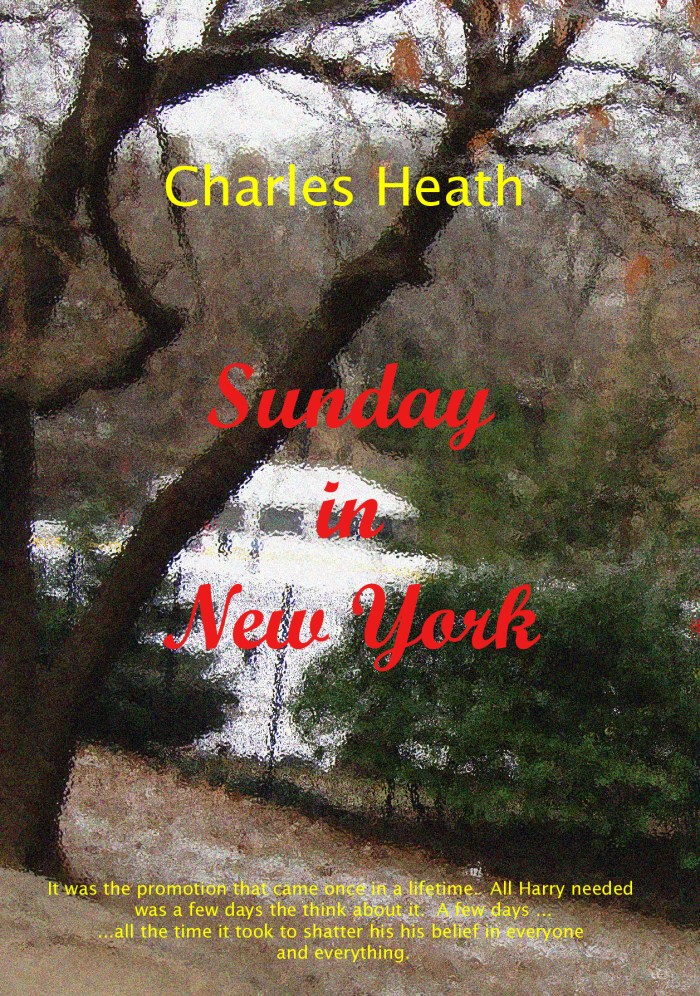
Sunday In New York

Third son of a Duke – The research behind the story – 2

All stories require some form of research, quite often to place a character in a place at a particular time, especially if it is in a historical context. This series will take you through what it was like in 1914 through 1916.

A Tale of Two Worlds: The Divergent Realities of Edwardian England and Australia for Emigrants of the Second and Third Classes in 1913

Abstract: This paper examines the starkly contrasting lived experiences of individuals classified within the second and third classes of Edwardian England in 1913, and how these experiences would have been amplified and transformed for emigrants seeking a new life in Australia. It argues that while social stratification was a defining feature of Edwardian society, the opportunities, challenges, and very definition of “class” itself were reshaped by the colonial context. For those in the second class, emigration to Australia offered a potential upward mobility and access to a less rigid social hierarchy, albeit with the loss of established comforts. Conversely, third-class emigrants faced a more precarious journey and a future in Australia that, while potentially offering escape from absolute poverty, was characterised by strenuous labour and persistent class divisions, albeit with different manifestations than those in England.

Introduction:

The year 1913 stands on the cusp of profound global change. The Edwardian era in Britain, a period of apparent prosperity and burgeoning modernity, was underpinned by a deeply entrenched social hierarchy. While the aristocracy and upper classes enjoyed unparalleled privilege, the majority of the population navigated the complexities of a class system that dictated access to education, employment, housing, and social standing. Simultaneously, the vast Australasian continent, still very much a product of British colonialism, presented itself as a land of opportunity and a potential escape route for those seeking to improve their fortunes. This paper will delve into how the specific realities of the second and third classes in Edwardian England would have translated and transformed for individuals embarking on an emigrant journey to Australia in 1913. We will explore the economic, social, and cultural landscapes that defined these classes in both nations and analyse the differential impact of emigration on their prospects.

Defining “Class” in Edwardian England, 1913:

Understanding the emigrant experience necessitates a clear definition of the social strata under consideration. In Edwardian England, class was a multifaceted construct, encompassing not only wealth but also occupation, education, manners, and inherited status.

  • Second Class: This broad category typically encompassed the upper-middle and lower-upper classes. Members of the second class were often professionals (doctors, lawyers, successful merchants), landed gentry (though not necessarily those with vast estates), and those with inherited but not immense wealth. They likely enjoyed a comfortable standard of living, with access to private education, servants in the household, leisure activities like travel and country pursuits, and a degree of social respectability. Their homes would have been well-appointed, and their social circles largely confined to those of similar standing. While not immune to economic anxieties, they possessed a degree of financial security and a strong sense of social entitlement. Their lives were marked by adherence to social etiquette and a commitment to maintaining appearances.
  • Third Class: This encompassed the working classes and the poorer segments of society. This included manual labourers, factory workers, agricultural labourers, domestic servants (those not in the privileged positions of lady’s maids or housekeepers), and the unemployed or casually employed. Their lives were characterised by hardship, long working hours, meagre wages, and often overcrowded and unsanitary living conditions. Access to education was limited, often confined to elementary schooling. Leisure time was scarce, and their social lives were largely localised within their communities. While a strong sense of camaraderie and mutual support often existed within working-class communities, their opportunities for social advancement were severely restricted by their economic circumstances.

The Pull of Australia: Motivations for Emigration:

The decision to emigrate was rarely taken lightly, especially for those in the lower strata. For individuals in both second and third classes, Australia offered a variety of perceived benefits:

  • Economic Opportunity: This was the primary driver for most emigrants. Australia, with its expanding industries, agricultural potential, and ongoing infrastructure projects, promised jobs and the possibility of acquiring land. For the third class, this offered an escape from the cyclical unemployment and low wages of industrial England. For the second class, while perhaps not driven by immediate destitution, it offered a chance for greater financial independence and a less competitive professional landscape.
  • Land Ownership: The dream of owning land was a powerful allure, particularly for those accustomed to renting or living in cramped urban environments. Australia, with its vast open spaces, seemed to offer a realistic path to achieving this aspiration.
  • Escape from Social Constraints: For some, emigration represented an opportunity to shed the rigid social expectations and limitations of British society. This was particularly true for those who felt stifled by the class system or who sought a fresh start.
  • Adventure and a “New Life”: The romanticised image of the rugged, untamed Australian landscape, coupled with a sense of pioneering spirit, certainly played a role in the decision-making process for some.

Life in Edwardian England (1913) vs. Australia for Second-Class Emigrants:

The experience of a second-class individual emigrating to Australia in 1913 would have been a significant, though not necessarily catastrophic, departure from their English life.

  • Economic Realities:
  • England: Secure, comfortable income derived from professions, investments, or inherited wealth. Possibility of maintaining a household with domestic staff, enjoying leisure pursuits, and accessing quality goods and services.
  • Australia: While opportunities for professionals and those with capital existed, the initial adjustment could involve a reduction in immediate disposable income. The cost of living, particularly for imported goods, might be higher. Professional qualifications might not be recognized immediately, requiring a period of re-establishment. The dream of owning land was attainable, but it required significant upfront investment and considerable physical labour, a stark contrast to the life of a gentleman in England. They might find themselves engaging in more hands-on management of their affairs than they were accustomed to.
  • Social Landscape:
  • England: A well-defined social hierarchy. Access to established social clubs, networks, and prestige based on lineage and profession.
  • Australia: A less rigidly stratified society, particularly in the burgeoning colonial towns and rural areas. Social mobility was theoretically greater, and status was often earned through enterprise and success rather than solely inherited. However, a distinct colonial elite, often mirroring British class structures, still existed. Second-class emigrants might find themselves interacting with a wider range of social groups than they were used to, which could be both liberating and challenging. The absence of established familiar social institutions could lead to a sense of isolation.
  • Daily Life and Opportunities:
  • England: A life of routine, comfort, and established social obligations. Access to cultural amenities, established educational institutions, and a predictable social calendar.
  • Australia: A more rugged and practical existence. Daily life would likely be more focused on establishing a livelihood, whether through professional practice, managing a farm, or investing in nascent industries. Housing might be less grand initially. Access to sophisticated cultural offerings would be limited compared to English cities. However, opportunities for entrepreneurship and innovation were abundant. The “bush” lifestyle, while romantically appealing to some, would demand significant adaptation and resilience.
  • Key Differences: The most significant difference for a second-class emigrant would be the dilution of inherited privilege. While they might retain their education and professional skills, the automatic social deference they received in England would be less pronounced. They would need to prove themselves in a new context. The physical environment and the pace of life would also be a major adjustment, demanding a greater degree of self-reliance.

Life in Edwardian England (1913) vs. Australia for Third-Class Emigrants:

For third-class emigrants, the journey to Australia represented a more drastic transformation, offering the potential for a radical improvement in their material circumstances, but also presenting significant challenges.

  • Economic Realities:
  • England: Barely subsisting on low wages, facing chronic underemployment, and living in poverty. Limited access to nutritious food, adequate housing, and healthcare. The spectre of the workhouse loomed for many.
  • Australia: While wages might not be astronomically high, they were generally higher than in England for similar manual labour. The availability of work was often more consistent, especially in growing industries and agricultural sectors. Opportunities for land settlement, often with government assistance, were a key draw, offering a path towards self-sufficiency and eventual ownership. This was a stark contrast to the perpetual rented accommodation of their English lives.
  • Social Landscape:
  • England: A rigid class structure that severely limited social mobility. Interactions largely confined to their own class, with clear demarcations from those above.
  • Australia: While class distinctions certainly existed in Australia, they were often expressed differently. The shared experience of pioneering and hard work could foster a sense of egalitarianism amongst the working classes, at least in the early stages of settlement. Opportunities to interact with individuals from different backgrounds were more common in a less populated and developing society. However, established colonial society did attempt to replicate British class norms, and social hierarchies based on wealth and occupation would still emerge.
  • Daily Life and Opportunities:
  • England: Gruelling and often unhealthy working conditions, long hours, and limited leisure. Life was a constant struggle for survival.
  • Australia: Demanding physical labour, often in harsh environmental conditions (heat, drought, isolation). However, this labour was often rewarded with better wages and the prospect of owning land or establishing a small business. The concept of “mateship” and mutual support among fellow workers was crucial for survival and social connection. Daily life would be centred around hard work, but with the tangible reward of building a future for oneself and one’s family. Access to education might still be limited, but the opportunities for vocational training and on-the-job learning are present.
  • Key Differences: The most profound difference for third-class emigrants was the potential for tangible self-improvement and a sense of ownership. While the labour was arduous, it offered the promise of a better life, free from the grinding poverty and lack of prospects that defined their existence in England. The concept of “making something of yourself” was a more attainable reality in Australia, even if it required immense sacrifice. The sense of community would shift from the familiar, often insular, working-class neighbourhoods of England to a new reliance on fellow emigrants and settlers.

The Journey Itself:

The emigrant journey also served as a crucible, shaping the experience of class.

  • Second-Class Emigrants: Likely travelled in superior accommodation, with more comfortable berths and better food. The journey might have been perceived more as an extended holiday or a grand adventure, albeit with a purpose.
  • Third-Class Emigrants: Travelled in steerage, facing cramped and often unhygienic conditions for months. This shared hardship, however, could forge strong bonds and a sense of solidarity amongst fellow travellers, laying the groundwork for future community building in Australia. The journey itself was a harsh introduction to the realities of their new life.

Conclusion:

In 1913, the prospect of emigration to Australia for individuals from the second and third classes of Edwardian England offered vastly different trajectories. For the second class, it was a calculated risk, a stepping stone to potentially greater prosperity and a less stratified social existence, albeit at the cost of established comforts and social deference. They were trading one form of privilege for the potential of another, earned through enterprise. For the third class, emigration represented a more desperate gamble, a chance to escape the suffocating grip of poverty and lack of opportunity. While the physical labour would be immense and the challenges significant, Australia offered a concrete possibility of self-sufficiency, land ownership, and a future beyond the daily struggle for survival. The very definition of “class” in Australia, while not devoid of its own hierarchies, was often more fluid and dependent on individual effort and success. Ultimately, emigration to Australia in 1913 was not a uniform experience; for those from the second and third classes of Edwardian England, it was a divergence of pathways, each shaped by existing social structures and transformed by the promise and the reality of a new continent. The emigrant journey, therefore, served not only as a physical relocation but as a profound redefinition of class and opportunity.

Writing about writing a book – Research – 9

Background material used in researching the Vietnam was and various other aspects of that period

Saigon in the sixties – heaven or hell

Saigon’s Neon Oasis: Where Soldiers Found Solace Amidst the Vietnam War’s Peak

The Vietnam War was a brutal, relentless conflict, a landscape of jungle, mud, and unimaginable hardship. But for those serving, there were moments, brief and precious, when the war receded, replaced by the artificial glow of city lights, the clink of ice in a glass, and the distant thrum of rock and roll. This was Saigon, the dynamic, often chaotic capital of South Vietnam, a city that, at the peak of the war, became a paradoxical oasis for weary soldiers seeking escape.

Saigon was a city of stark, poignant contrasts. On one hand, it was the administrative and logistical heart of the war effort, a place of military compounds, constant vigilance, and ever-present tension. On the other, it pulsed with a vibrant, albeit often artificial, civilian life, offering a dazzling array of “entertainment” spots where GIs could, for a few hours, pretend they weren’t in a war zone.

Let’s take a stroll through the Saigon of the late 1960s, a city that learned to cater to the needs of soldiers desperate for a moment of normalcy.

The Gritty Glamour of the GI Bars

The most immediate and common escape for soldiers in Saigon was undoubtedly its bustling bar scene. Streets like Tou Do (later Dong Khoi) and Nguyen Hue were lined with establishments ranging from dimly lit dives to multi-level discos, each promising a temporary reprieve.

  • Hostess Bars: These were perhaps the most iconic. Girls, often dressed in traditional ao dai or fashionable Western clothes, would sit with soldiers, chat, dance, and encourage them to buy “Saigon Tea” (often watered-down drinks at inflated prices). The atmosphere was a potent mix of camaraderie, loneliness, longing, and sometimes, genuine connection amidst the transactional nature. Places like “The Caravelle Bar” (not the main hotel bar, but smaller adjacent spots), “The Blue Door,” and countless nameless establishments served as noisy, smoky havens.
  • Live Music Venues: Rock and roll was king. Bands, often local Vietnamese groups with surprisingly good English, belted out hits from the Rolling Stones, Beatles, Creedence Clearwater Revival, and Jimi Hendrix. These places were a cacophony of sound, laughter, and the clinking of bottles – a direct link to the world they’d left behind.
  • “Relaxation” Spots: Beyond the main drag, smaller, shadier alleys held a myriad of establishments offering various forms of “stress relief,” from massage parlors to more illicit activities. These spots catered to the darker side of desperation and the sheer animal need for comfort or oblivion.

A Taste of Home, A Taste of Elsewhere: Restaurants & Cafes

Food was another critical component of the escape. After weeks or months of C-rations, a proper meal was a luxury.

  • American Eateries: Many restaurants sprang up catering specifically to American tastes, serving steaks, burgers, fries, and milkshakes. These provided a comforting taste of home, a tangible link to a world without war.
  • French Influence: Saigon still bore the indelible mark of its French colonial past, and this was evident in its sophisticated dining scene. Soldiers could find excellent French cuisine, from rich stews to delicate pastries, and enjoy strong, aromatic Vietnamese coffee in elegant cafes.
  • Local Delights: For the more adventurous, the city offered an explosion of local flavors. Pho stalls, bustling street markets selling grilled meats and fresh spring rolls, and family-run restaurants serving traditional Vietnamese dishes were everywhere. While some soldiers stuck to what they knew, many embraced the opportunity to savor authentic local fare.

R&R: A Slice of Luxury and Normalcy

Beyond the quick escapes, many soldiers sought longer periods of Rest & Recuperation (R&R). While some went to destinations like Bangkok or Sydney, Saigon itself offered significant R&R opportunities, particularly for those on shorter breaks.

  • Luxury Hotels: The Hotel Caravelle, the Rex Hotel, and the Continental Palace were beacons of relative luxury. With air conditioning, swimming pools, attentive service, and fine dining, these hotels offered a temporary return to civilian life. Soldiers could shed their uniforms, don civilian clothes (often custom-tailored in Saigon’s famous tailor shops), and enjoy amenities that felt worlds away from their daily realities.
  • Shopping: Saigon was a shopper’s paradise. GIs could get custom-tailored suits or dresses made almost overnight, sending them home as gifts or wearing them during their R&R. There were also markets bustling with vendors selling silks, lacquerware, “gucci bags” (often fake, but still coveted), and trinkets of all kinds.
  • Movies & Bowling: For simpler diversions, Saigon had cinemas showing American films and even bowling alleys, offering familiar pastimes that helped to momentarily erase the war from their minds.

The Ever-Present Shadow

Despite the neon lights, the music, and the fleeting moments of normalcy, the war was an ever-present shadow. The sound of distant artillery, the occasional explosion from a VC attack, the sight of wounded soldiers being transported, and the sheer number of uniformed personnel served as constant reminders. The “entertainment” in Saigon was less about genuine joy and more about coping, about finding a temporary mental refuge from the relentless pressure and trauma of combat.

For soldiers at the peak of the Vietnam War, Saigon was a place of profound duality: a chaotic battlefield and a desperate sanctuary, a city that offered illusions of escape while continuously reminding them of the grim reality just beyond its glittering facade. It was a place where humanity, in all its complexity, struggled to find moments of solace, however brief, in the heart of conflict.

Research for the writing of a thriller – 1

Background material used in creating a location, an explosive situation, and characters to bring it alive – the story – A Score to Settle

The premise

The Powder Keg Conference: When Irony Meets Incitement in the Republic of Azmar

The world of international politics often serves up a certain dish of absurdity, but occasionally, the ingredients align for a truly catastrophic meal. We are witnessing such a geopolitical culinary disaster right now, brewing in the fictional Republic of Azmar.

Azmar is, by all measures, a textbook example of modern authoritarianism: a military dictatorship, financially and politically shielded by a major superpower, and helmed by President General Kroll, a man whose personal wealth seems to increase inversely to his country’s freedoms. The regime’s human rights abuses—disappearances, rigged judiciary, suppression of dissent—are not simply allegations; they are an open, festering secret among global watchdog organizations.

And yet, this week, Azmar is throwing a party.

The Irony Convention

In a move that strains the very definition of chutzpah, the Kroll regime is hosting the Global Summit for Progressive Human Rights Advancement.

The contrast is dizzying. While political prisoners languish in overcrowded, secret facilities, the capital city has been scrubbed clean. Banners proclaiming “Justice Through Dialogue” hang from lampposts. The state-run media is ecstatic, broadcasting endless interviews about Azmar’s commitment to “international transparency.”

The goal, of course, is not dialogue. It is legitimization. The conference is a Potemkin Village, a meticulously constructed facade designed to convince foreign investors and, more importantly, the regime’s international patrons that Azmar is a stable, reforming nation.

And perhaps the most volatile element of this stagecraft? The roster of attendees.

The Ethical Tightrope Walk of the Keynote Speaker

The event has attracted truly renowned figures: Nobel Laureates, celebrated international lawyers, and veteran human rights defenders. These are people whose careers have been defined by fighting the very abuses Azmar exemplifies.

Why are they here? For some, it is the genuine belief that dialogue must occur, even with the devil. For others, it’s the hefty speaking fees and the promise of a global stage. Whatever the motivation, their presence offers the Kroll regime exactly what it craves: a veneer of institutional approval.

When a celebrated author stands at the podium, criticizing abstract concepts of oppression while simultaneously shaking hands with the architect of that oppression, the lines between principle and pragmatism blur dangerously. Their words, intended as a critique, are instead absorbed into the regime’s propaganda machine: “See? Even the world’s greatest thinkers endorse Azmar’s path forward.”

It is a tense, ethically compromised theatre. But the real drama is about to erupt just outside the conference hall.

The Return of the Ghost

For years, the domestic unrest in Azmar has been a low, continuous rumble—a simmering resentment against Kroll’s corruption and brutality. The memory of the previous government, the democratically elected administration deposed in the violent coup fifteen years ago, lingered like a ghost, kept alive only by hushed whispers.

That ghost has just materialized.

Simultaneously with the arrival of the international luminaries, news has swept through the Azmari underground that Elias Mendieta, the long-missing son of the deposed and disappeared president, has returned home.

Elias Mendieta represents everything President Kroll is not: legitimacy, democratic mandate, and the promise of a free Azmar. His return is not just political news; it is a profound symbolic act. It transforms simmering discontent into active incitement.

The Collision Course

The timing is either impossibly unlucky for President Kroll or perfectly calculated by Mendieta’s supporters.

Think about the dynamics now at play:

  1. Maximum Global Focus: The world’s major media outlets and human rights organizations are all focused on Azmar due to the conference.
  2. Maximum Internal Tension: The regime has poured all its resources into maintaining a facade of tranquility, meaning security forces are stretched and focused on keeping the peace in the capital’s diplomatic quarters.
  3. Maximum Ideological Threat: Elias Mendieta, the embodiment of popular resistance and democratic history, is now mobilizing supporters in the streets.

This is not a political confrontation that will play out in press releases. This is a dramatic, high-stakes collision.

If Mendieta attempts to make a dramatic public appearance, the regime faces an impossible choice:

  • Option A: Allow him to speak. This instantly delegitimizes the conference and risks igniting mass protests that could turn revolutionary.
  • Option B: Arrest or silence him violently. Doing so while Nobel Laureates are debating “the future of free expression” literally blocks away would shatter the carefully constructed facade and invite global condemnation, potentially forcing the major power propping up Kroll to finally step back.

The Republic of Azmar has prepared a gilded stage for a dialogue on human rights, but what is truly about to commence is a revolution.

What could possibly go wrong? Everything. And we are all watching the fuse burn down.

Top 5 sights on the road less travelled – Lisbon

Lisbon Beyond the Postcard: 5 Things to Do When You’ve Already Mastered the Classics

You’ve done the pilgrimage. You’ve braved the crowds on Tram 28, queued for pastéis de nata in Belém, and navigated the steep, melancholic streets of Alfama. You’ve seen the sunset from a crowded miradouro, and you’ve felt the history radiating from the Jerónimos Monastery.

Congratulations. You’ve seen Lisbon.

But the true magic of the Portuguese capital doesn’t lie on the postcard; it thrives in the quiet corners, the industrial chic neighborhoods, and the views reserved only for those willing to wander a little further.

If you’re ready to move past the tourist checklist and dive into the real Lisboa, here are the next top five, road-less-travelled experiences waiting for you.


1. Get Lost in the Green Lungs: Parque Florestal de Monsanto

What it is: Lisbon’s massive, sprawling answer to Central Park, covering over 10 square kilometers of forest, trails, and panoramic views.

The moment tourists step off the plane, they head east toward the castle or south toward the river. They forget that the city is hugged by a surprisingly wild, untamed forest park to the west. Monsanto is where locals go to truly escape the urban bustle.

Forget the crowded views from São Jorge; Monsanto offers dozens of quiet, breathtaking overlooks. The ultimate gem here is the abandoned Panorâmico de Monsanto. Once a glamorous restaurant and viewing deck built in the 1960s, it now stands as a vast, graffiti-covered ruin.

While officially decommissioned, the views from this concrete shell are genuinely jaw-dropping, offering a 360-degree perspective of the entire city, the Tagus River, and the Atlantic beyond. It requires a bus or short taxi ride to reach, making it inconvenient enough to keep the crowds away.

  • Why it’s “Less Travelled”: It’s outside the central walking zone, requiring dedicated transport.
  • The Insider Tip: Go for sunrise or sunset. Bring good walking shoes and a tripod for unforgettable photos from the Panorâmico.

2. Sail Across the Tagus for Seafood Bliss at Cacilhas

What it is: A quick, inexpensive ferry ride across the Tagus River to the industrial-chic municipality of Almada, offering arguably the best views of the Lisbon skyline.

While the famous Vasco da Gama Bridge and the 25 de Abril Bridge dominate the skyline, taking a short trip on the iconic orange Cacilheiros ferry from Cais do Sodré is a true local experience. The destination, Cacilhas, feels a world away from the busy, boutique-lined streets of Chiado.

Instead of monuments, you find authentic, old-school Portugal. Head straight for Rua Cândido dos Reis, a street lined with incredible, reasonably priced seafood restaurants (marisqueiras). Dining here means indulging in freshly caught fish, grilled to perfection, and avoiding the tourist mark-up found in the city center.

Don’t miss the chance to walk a little further to the 110-meter-tall Cristo Rei statue. While Belem Tower is beautiful, viewing the city skyline with the entire Lisbon waterfront framed across the water is a perspective few tourists ever seek out.

  • Why it’s “Less Travelled”: Tourists rarely leave the Lisbon side of the river unless heading to the main beaches.
  • The Insider Tip: Try the restaurant Ponto Final for stunning riverside dining right on the water (reservations essential) or Solar dos Nunes for a cozier, highly authentic experience.

3. Explore Tile-Soaked History at the Museu Nacional do Azulejo

What it is: The National Tile Museum, housed in the magnificent former Convent of Madre de Deus, dedicated entirely to the history and artistry of Portugal’s defining cultural expression: the azulejo (painted ceramic tile).

While every street corner in Lisbon is adorned with beautiful tiles, few visitors dedicate the time to understand the profound history behind this art form. The Azulejo Museum may not sound as instantly thrilling as a castle, but it is essential to understanding the city’s identity.

Located slightly off the beaten track in the eastern suburbs (near Santa Apolónia), the museum showcases five centuries of ceramic evolution, from Moorish influence to Baroque grandeur. The real highlight is the stunning Great View of Lisbon—a 23-meter-long panel of tiles dating from 1738, depicting the city’s skyline before the devastating earthquake of 1755.

Walking through the ornate church and the quiet cloisters of the convent offers a peaceful, meditative experience far removed from the crush of the central museums.

  • Why it’s “Less Travelled”: Its location is slightly inconvenient, requiring a short taxi or specific bus route.
  • The Insider Tip: Take time to admire the stunning, gold-leaf-laden chapel inside the former convent—it rivals those in Belém.

4. Discover the Industrial Grit of Marvila (Lisbon’s Brooklyn)

What it is: A rapidly gentrifying, formerly industrial neighborhood east of the Parque das Nações, now home to warehouses converted into craft breweries, contemporary art spaces, and cutting-edge gastronomy.

If you’re looking for Lisbon’s hip, creative heartbeat—the neighborhood where young artists and entrepreneurs are truly setting up shop—it’s Marvila. It lacks the historic charm of Alfama but makes up for it with raw, industrial energy.

This is the perfect spot for the craft beer enthusiast. Marvila boasts a strip of excellent breweries operating out of converted warehouses, including Musa and Dois Corvos. Unlike the tourist taverns, these spots offer excellent local brews, complex menus, and a true sense of community.

Beyond the beer, Marvila is home to massive art galleries and unique cultural hubs that are constantly changing, reflecting a contemporary Lisbon that is dynamic and forward-looking.

  • Why it’s “Less Travelled”: It’s still transitioning and is primarily a local destination, far from the central tourist loop.
  • The Insider Tip: Visit on a weekend afternoon to enjoy the buzzing atmosphere at the breweries when they often have food trucks or live music.

5. Trade Sintra’s Fairytale Crowds for the Coastal Calm of Ericeira

What it is: A traditional fishing town located about 45 minutes north of Lisbon, designated as Europe’s only World Surfing Reserve.

Sintra is spectacular, but during peak season, it can feel more like an amusement park than a historical site. For a coastal day trip that delivers beauty, tradition, and relaxation, head to Ericeira.

While it’s internationally famous among surfers for its diverse reef and beach breaks, the town itself maintains an incredible, whitewashed village charm. Here, you’ll find narrow, winding streets, blue-and-white houses, and excellent local bakeries selling regional specialties (ouriços and tâmaras).

The atmosphere is noticeably slower and more authentic than that of the tourist hub of Cascais. Spend the day watching the surfers at Ribeira d’Ilhas, wander through the historic center, and enjoy a spectacular ocean-view meal featuring the freshest catch of the day.

  • Why it’s “Less Travelled”: It requires a dedicated bus journey (or car hire) and is often overlooked in favor of the more marketed Sintra or Cascais.
  • The Insider Tip: Have lunch at a traditional marisqueira near the fishing port to ensure the fish was caught that morning.

The Next Chapter of Your Lisbon Story

Lisbon is a city of layers. Once you peel back the vibrant, initial layer of historic landmarks and Fado-filled taverns, you discover a deeper, more rewarding experience.

These five spots are not just alternatives; they are invitations. They invite you to slow down, cross the river, explore the urban edge, and understand the real, living pulse of one of Europe’s most exciting capitals.


Have you explored any of these hidden Lisbon gems? Share your favourite road less travelled experience in the comments below!

Skeletons in the closet, and doppelgangers

A story called “Mistaken Identity”

How many of us have skeletons in the closet that we know nothing about? The skeletons we know about generally stay there, but those we do not, well, they have a habit of coming out of left field when we least expect it.

In this case, when you see your photo on a TV screen with the accompanying text that says you are wanted by every law enforcement agency in Europe, you’re in a state of shock, only to be compounded by those same police, armed and menacing, kicking the door down.

I’d been thinking about this premise for a while after I discovered my mother had a boyfriend before she married my father, a boyfriend who was, by all accounts, the man who was the love of her life.

Then, in terms of coming up with an idea for a story, what if she had a child by him that we didn’t know about, which might mean I had a half brother or sister I knew nothing about. It’s not an uncommon occurrence from what I’ve been researching.

There are many ways of putting a spin on this story.

Then, in the back of my mind, I remembered a story an acquaintance at work was once telling us over morning tea, that a friend of a friend had a mother who had a twin sister and that each of the sisters had a son by the same father, without each knowing of the father’s actions, both growing up without the other having any knowledge of their half brother, only to meet by accident on the other side of the world.

It was an encounter that in the scheme of things might never have happened, and each would have remained oblivious of the other.

For one sister, the relationship was over before she discovered she was pregnant, and therefore had not told the man he was a father. It was no surprise the relationship foundered when she discovered he was also having a relationship with her sister, a discovery that caused her to cut all ties with both of them and never speak to either from that day.

It’s a story with more twists and turns than a country lane!

And a great idea for a story.

That story is called ‘Mistaken Identity’.

Top 5 sights on the road less travelled – Athens

Athens: The Road Less Travelled – Your Next Five Unforgettable Discoveries

Athens. The very name conjures images of ancient wonders: the majestic Acropolis, the bustling Plaka, the grandeur of the Parthenon. And rightly so – these iconic sites are breathtaking and essential to any first-time visit. But what if you’ve already stood in awe of the Caryatids, navigated the labyrinthine streets of Plaka, or found yourself yearning for something beyond the well-trodden tourist path?

Athens is a city of layers, a vibrant tapestry where ancient history brushes shoulders with modern grit, bohemian charm, and serene coastal beauty. For the curious traveller eager to dig a little deeper, to uncover the authentic soul of this magnificent metropolis, a wealth of hidden gems awaits.

So, if you’re ready to venture beyond the postcards, here are the next top five things to do or see in Athens, proving that the road less travelled truly leads to unforgettable discoveries:


1. Lose Yourself in Anafiotika: An Island Village in the City

Nestled directly under the shadow of the Acropolis, yet often overlooked, lies Anafiotika. This tiny, picturesque neighbourhood feels like a Cycladic island village magically transplanted to the heart of Athens. Built by craftsmen from the island of Anafi who came to Athens in the 19th century to work on King Otto’s palace, they created homes reminiscent of their homeland.

Why it’s unique: Whitewashed cubic houses, impossibly narrow alleys, vibrant bougainvillea, and sleepy cats create an atmosphere of serene timelessness. It’s an oasis of calm that feels a world away from the city’s hustle and bustle, despite being just steps from the tourist throng.

What to do: Wander aimlessly. Get wonderfully lost. Discover hidden churches, admire the unique architecture, and soak in the tranquil ambience. It’s a photographer’s dream and a perfect spot for quiet contemplation.

Pro Tip: Go early in the morning or late in the afternoon to avoid the crowds and catch the best light. Allow yourself to simply be rather than rushing through.


2. Embrace the Bohemian Heart of Exarchia

For a taste of Athens’ alternative, intellectual, and slightly rebellious spirit, head to Exarchia. This neighbourhood is a vibrant hub of students, artists, and activists, known for its lively squares, independent bookstores, vintage shops, and some of the city’s most striking street art.

Why it’s unique: Exarchia offers a raw, unfiltered view of contemporary Athenian life. It’s a place of passionate debate, political murals, and a strong sense of community. It’s not sanitised for tourists; it’s authentic, edgy, and exhilarating.

What to do: Explore the captivating street art, grab a coffee at one of the bustling cafes on Exarchia Square, browse the unique bookstores (many with English sections), or catch a live music performance in a local bar. The open-air cinema, Cine Vox, is also a summer highlight.

Pro Tip: While generally safe during the day, be aware of your surroundings, especially at night. It’s a place to observe and soak in the atmosphere respectfully, rather than overtly act like a tourist.


3. Savour the Culinary & Cultural Delights of Pangrati

Just a stone’s throw from the Panathenaic Stadium (the site of the first modern Olympic Games), but much less explored by visitors, lies Pangrati. This charming, upscale residential neighbourhood is a true Athenian gem, celebrated for its fantastic food scene, stylish boutiques, and relaxed, local vibe.

Why it’s unique: Pangrati is where Athenians go to eat, drink, and socialise. You’ll find traditional tavernas serving authentic Greek dishes alongside trendy cafes, wine bars, and gourmet restaurants. It’s less about ancient ruins and more about experiencing daily Athenian life.

What to do: Embark on a self-guided food tour, hopping from ouzeri (meze bar) to taverna for delicious local specialities. Visit the Goulandris Museum of Contemporary Art for a dose of modern culture, or simply enjoy a leisurely coffee and watch the world go by in one of its leafy squares.

Pro Tip: Don’t miss the chance to try a koulouri (sesame bread ring) from a street vendor or indulge in a traditional bougatsa (custard-filled pastry) for breakfast.


4. Unwind by the Athenian Riviera & Lake Vouliagmeni

Who knew Athens had a stunning coastline easily accessible from the city centre? Escape the urban heat and discover the Athenian Riviera, a beautiful stretch of coastline dotted with beaches, marinas, and charming seaside towns. A particular highlight is Lake Vouliagmeni.

Why it’s unique: This natural thermal lake, nestled in a breathtaking setting, is a hidden wellness oasis. Its brackish waters are constantly refreshed by both the sea and underground thermal springs, maintaining a year-round temperature of 22-29°C (71-84°F). It’s home to natural fish spa therapies and is rich in minerals.

What to do: Swim in the therapeutic waters of Lake Vouliagmeni, relax on the sunbeds, or enjoy a coffee with a view. Further along the Riviera, explore the chic beaches of Glyfada or enjoy fresh seafood at a coastal taverna.

Pro Tip: Take the tram (T6 from Syntagma Square), which runs along the coast, offering scenic views and easy access to various spots along the Riviera. It’s a fantastic half or full-day escape.


5. Embark on a Street Art Safari in Metaxourgeio & Kerameikos

While Exarchia offers a glimpse, the neighbourhoods of Metaxourgeio and Kerameikos are increasingly becoming an open-air gallery showcasing some of Athens’ most powerful and poignant street art. These areas, once neglected, are undergoing a renaissance, with art playing a significant role in their transformation.

Why it’s unique: Beyond mere graffiti, you’ll discover huge, intricate murals by renowned Greek and international artists that tell stories, provoke thought, and add vibrant colour to the urban landscape. It’s a dynamic, ever-changing exhibition that reflects the pulse of the city.

What to do: Take a guided street art tour (many local companies offer them) to understand the history and meaning behind the pieces, or simply wander with an open mind and a camera. You’ll find works ranging from political commentary to whimsical fantasies. Afterwards, enjoy a drink in one of Metaxourgeio’s trendy bars.

Pro Tip: Don’t just look at the big pieces; pay attention to smaller, intricate stencils and tags that reveal hidden gems around every corner. Keep an eye out for commissioned works as well as more anarchic expressions.


Athens is a city that rewards the curious, the adventurous, and those willing to step a little off the beaten path. While the ancient marvels will always be its cornerstone, these five “next steps” offer a richer, more diverse, and deeply authentic immersion into the heart and soul of this incredible European capital. So, pack your bags, lace up your comfortable shoes, and prepare to discover the Athens you never knew existed!

What hidden gems have you discovered in Athens? Share your favourite “road less travelled” spots in the comments below!

Research for the writing of a thriller – 1

Background material used in creating a location, an explosive situation, and characters to bring it alive – the story – A Score to Settle

The premise

The Powder Keg Conference: When Irony Meets Incitement in the Republic of Azmar

The world of international politics often serves up a certain dish of absurdity, but occasionally, the ingredients align for a truly catastrophic meal. We are witnessing such a geopolitical culinary disaster right now, brewing in the fictional Republic of Azmar.

Azmar is, by all measures, a textbook example of modern authoritarianism: a military dictatorship, financially and politically shielded by a major superpower, and helmed by President General Kroll, a man whose personal wealth seems to increase inversely to his country’s freedoms. The regime’s human rights abuses—disappearances, rigged judiciary, suppression of dissent—are not simply allegations; they are an open, festering secret among global watchdog organizations.

And yet, this week, Azmar is throwing a party.

The Irony Convention

In a move that strains the very definition of chutzpah, the Kroll regime is hosting the Global Summit for Progressive Human Rights Advancement.

The contrast is dizzying. While political prisoners languish in overcrowded, secret facilities, the capital city has been scrubbed clean. Banners proclaiming “Justice Through Dialogue” hang from lampposts. The state-run media is ecstatic, broadcasting endless interviews about Azmar’s commitment to “international transparency.”

The goal, of course, is not dialogue. It is legitimization. The conference is a Potemkin Village, a meticulously constructed facade designed to convince foreign investors and, more importantly, the regime’s international patrons that Azmar is a stable, reforming nation.

And perhaps the most volatile element of this stagecraft? The roster of attendees.

The Ethical Tightrope Walk of the Keynote Speaker

The event has attracted truly renowned figures: Nobel Laureates, celebrated international lawyers, and veteran human rights defenders. These are people whose careers have been defined by fighting the very abuses Azmar exemplifies.

Why are they here? For some, it is the genuine belief that dialogue must occur, even with the devil. For others, it’s the hefty speaking fees and the promise of a global stage. Whatever the motivation, their presence offers the Kroll regime exactly what it craves: a veneer of institutional approval.

When a celebrated author stands at the podium, criticizing abstract concepts of oppression while simultaneously shaking hands with the architect of that oppression, the lines between principle and pragmatism blur dangerously. Their words, intended as a critique, are instead absorbed into the regime’s propaganda machine: “See? Even the world’s greatest thinkers endorse Azmar’s path forward.”

It is a tense, ethically compromised theatre. But the real drama is about to erupt just outside the conference hall.

The Return of the Ghost

For years, the domestic unrest in Azmar has been a low, continuous rumble—a simmering resentment against Kroll’s corruption and brutality. The memory of the previous government, the democratically elected administration deposed in the violent coup fifteen years ago, lingered like a ghost, kept alive only by hushed whispers.

That ghost has just materialized.

Simultaneously with the arrival of the international luminaries, news has swept through the Azmari underground that Elias Mendieta, the long-missing son of the deposed and disappeared president, has returned home.

Elias Mendieta represents everything President Kroll is not: legitimacy, democratic mandate, and the promise of a free Azmar. His return is not just political news; it is a profound symbolic act. It transforms simmering discontent into active incitement.

The Collision Course

The timing is either impossibly unlucky for President Kroll or perfectly calculated by Mendieta’s supporters.

Think about the dynamics now at play:

  1. Maximum Global Focus: The world’s major media outlets and human rights organizations are all focused on Azmar due to the conference.
  2. Maximum Internal Tension: The regime has poured all its resources into maintaining a facade of tranquility, meaning security forces are stretched and focused on keeping the peace in the capital’s diplomatic quarters.
  3. Maximum Ideological Threat: Elias Mendieta, the embodiment of popular resistance and democratic history, is now mobilizing supporters in the streets.

This is not a political confrontation that will play out in press releases. This is a dramatic, high-stakes collision.

If Mendieta attempts to make a dramatic public appearance, the regime faces an impossible choice:

  • Option A: Allow him to speak. This instantly delegitimizes the conference and risks igniting mass protests that could turn revolutionary.
  • Option B: Arrest or silence him violently. Doing so while Nobel Laureates are debating “the future of free expression” literally blocks away would shatter the carefully constructed facade and invite global condemnation, potentially forcing the major power propping up Kroll to finally step back.

The Republic of Azmar has prepared a gilded stage for a dialogue on human rights, but what is truly about to commence is a revolution.

What could possibly go wrong? Everything. And we are all watching the fuse burn down.

“The Devil You Don’t”, she was the girl you would not take home to your mother!

Now only $0.99 at https://amzn.to/2Xyh1ow

John Pennington’s life is in the doldrums. Looking for new opportunities, and prevaricating about getting married, the only joy on the horizon was an upcoming visit to his grandmother in Sorrento, Italy.

Suddenly he is left at the check-in counter with a message on his phone telling him the marriage is off, and the relationship is over.

If only he hadn’t promised a friend he would do a favour for him in Rome.

At the first stop, Geneva, he has a chance encounter with Zoe, an intriguing woman who captures his imagination from the moment she boards the Savoire, and his life ventures into uncharted territory in more ways than one.

That ‘favour’ for his friend suddenly becomes a life-changing event, and when Zoe, the woman who he knows is too good to be true, reappears, danger and death follow.

Shot at, lied to, seduced, and drawn into a world where nothing is what it seems, John is dragged into an adrenaline-charged undertaking, where he may have been wiser to stay with the ‘devil you know’ rather than opt for the ‘devil you don’t’.

newdevilcvr6
