Writing a book in 365 days – 321

Day 321

What will happen to the hero?

The Novelist’s Secret: We’re Just As Curious As You Are

We all know the feeling. It’s midnight, the house is dark, and you are gripping the latest thriller, utterly unable to put it down. Your heart pounds, palms sweat, and the only certainty in the universe is the desperate need to know: Will the hero survive?

This is the glorious, undeniable suspense of the reader. We assume this thrill is exclusive to us—the consumers of the story.

But what if I told you that, sitting across the desk, hunched over a lukewarm cup of coffee and a blinking cursor, the person crafting the plot is often experiencing the very same, stomach-dropping curiosity?

The prevailing image of the novelist is that of an omniscient deity, a master architect meticulously placing every brick, knowing how the structure must inevitably fall. While some writers certainly embody this role—the celebrated “plotters”—the deepest, most resonant stories often emerge when the creator surrenders control and becomes, quite simply, the hero’s most dedicated and most anxious first reader.

The suspense of a novel is not only in the reader but also in the novelist, who is equally curious about what will happen to the hero. This is the great secret of discovery writing: The story is not written; it is uncovered.

The Myth of the Master Plan

For those who write by “discovery” (often affectionately termed “pantsers,” because they write by the seat of their pants), the process is less like following a blueprint and more like exploring a vast, uncharted cave. You have a flashlight (your protagonist’s core motivation) and a general direction, but you have no idea if the path ahead leads to a treasure chamber or a sudden, terrifying drop.

When a writer starts a story this way, the suspense is inherent in every word. Every time the protagonist is confronted with a choice, the author holds their breath, asking:

Will he take the risk, or play it safe?
Will she finally tell the truth, even though it ruins everything?
Is this conflict a dead end, or a pivot point?
This is not simple intellectual curiosity; it is a genuine, existential stake in the outcome. The novelist is betting their time, their craft, and the integrity of the entire manuscript on the hero making an organic, believable next move—a move the novelist themselves must wait to witness.

When Characters Take the Wheel

The moment a character truly comes alive is the moment they cease being a puppet for the writer’s agenda and become an autonomous force.

This is the thrilling, terrifying point of no return for the author. The character stops doing what the outline demands and starts doing what they would logically do, given their history, flaws, and desires.

Many authors describe this sensation. Characters rebel. They refuse to fall in love with the intended partner. They walked out of the room when they were supposed to deliver a crucial monologue. They exhibit an inconvenient, but utterly truthful, streak of self-sabotage that the author never planned.

When this happens, the novelist’s job shifts from creator to witness. We are no longer designing the journey; we are scrambling to keep up, racing down the page just to see how our heroes will resolve the mess they’ve just made.

This is the purest form of writerly suspense. We are tied to the narrative not just by obligation, but by a sudden, intense fear for our creation. Will this impulsive decision ruin the story? Or will it, astonishingly, unlock the one perfect plot twist we never saw coming?

The Unique Burden of the Author’s Suspense

The reader’s suspense is passive; it is the anticipation of consumption. The author’s suspense, however, is active; it is the anxiety of creation and execution.

An author’s curiosity isn’t just about what happens, but about how they are going to manage to write it convincingly.

If the hero is trapped in a burning building, the reader wonders: How will he get out?

The novelist wonders: How will he get out, and can I write that scene with enough detail, tension, and structural integrity that the whole book doesn’t collapse at this crucial moment?

The novelist’s curiosity is perpetually interwoven with the demands of craft. We are curious about the outcome, but we are also desperately curious about our own ability to deliver that outcome flawlessly. We are thrilled by the uncertainty, but burdened by the knowledge that we are responsible for making that uncertainty pay off.

The Beautiful Surrender

To create genuine suspense for the reader, the writer must first allow themselves to feel it. The greatest narratives are not those where the author is in total control, but those where the author has surrendered enough control to be genuinely surprised.

If the author already knows every character beat, every twist, and every final line, the writing process can become mechanical and stale—and that flatness will invariably translate to the finished page.

The writer who is slightly nervous, slightly unsure, and deeply invested in the fate of their protagonist is the writer who is pouring genuine, fresh energy into the text.

So the next time you are lost in a book, turning pages in a fever pitch of excitement, remember the person who wrote it. They may have been turning those internal pages just as quickly, hoping, fearing, and discovering the story right alongside you.

This shared curiosity—this simultaneous suspense binding creator and consumer—is perhaps the purest magic of the human-authored novel. It is the moment we realise that writing is not the act of manufacturing an inevitability, but the wondrous challenge of documenting a life that insists on being lived.

Inspiration, Maybe – Volume 2

50 photographs, 50 stories, of which there is one of the 50 below.

They all start with –

A picture paints … well, as many words as you like.  For instance:

And, the story:

Have you ever watched your hopes and dreams simply just fly away?

Everything I thought I wanted and needed had just left in an aeroplane, and although I said I was not going to, i came to the airport to see the plane leave.  Not the person on it, that would have been far too difficult and emotional, but perhaps it was symbolic, the end of one life and the start of another.

But no matter what I thought or felt, we had both come to the right decision.  She needed the opportunity to spread her wings.  It was probably not the best idea for her to apply for the job without telling me, but I understood her reasons.

She was in a rut.  Though her job was a very good one, it was not as demanding as she had expected, particularly after the last promotion, but with it came resentment from others on her level, that she, the youngest of the group would get the position.

It was something that had been weighing down of her for the last three months, and if noticed it, the late nights, the moodiness, sometimes a flash of temper.  I knew she had one, no one could have such red hair and not, but she had always kept it in check.

And, then there was us, together, and after seven years, it felt like we were going nowhere.  Perhaps that was down to my lack of ambition, and though she never said it, lack of sophistication.  It hadn’t been an issue, well, not until her last promotion, and the fact she had to entertain more, and frankly I felt like an embarrassment to her.

So, there it was, three days ago, the beginning of the weekend, and we had planned to go away for a few days and take stock.  We both acknowledged we needed to talk, but it never seemed the right time.

It was then she said she had quit her job and found a new one.  Starting the following Monday.

Ok, that took me by surprise, not so much that it something I sort of guessed might happen, but that she would just blurt it out.

I think that right then, at that moment, I could feel her frustration with everything around her.

What surprised her was my reaction.  None.

I simply asked where who, and when.

A world-class newspaper, in New York, and she had to be there in a week.

A week.

It was all the time I had left with her.

I remember I just shrugged and asked if the planned weekend away was off.

She stood on the other side of the kitchen counter, hands around a cup of coffee she had just poured, and that one thing I remembered was the lone tear that ran down her cheek.

Is that all you want to know?

I did, yes, but we had lost that intimacy we used to have when she would have told me what was happening, and we would have brainstormed solutions. I might be a cabinet maker but I still had a brain, was what I overheard her tell a friend once.

There’s not much to ask, I said.  You’ve been desperately unhappy and haven’t been able to hide it all that well, you have been under a lot of pressure trying to deal with a group of troglodytes, and you’ve been leaning on Bentley’s shoulder instead of mine, and I get it, he’s got more experience in that place,  and the politics that go with it, and is still an ally.

Her immediate superior and instrumental in her getting the position, but unlike some men in his position he had not taken advantage of a situation like some men would.  And even if she had made a move, which I doubted, that was not the sort of woman she was, he would have politely declined.

One of the very few happily married men in that organisation, so I heard.

So, she said, you’re not just a pretty face.

Par for the course for a cabinet maker whose university degree is in psychology.  It doesn’t take rocket science to see what was happening to you.  I just didn’t think it was my place to jump in unless you asked me, and when you didn’t, well, that told me everything I needed to know.

Yes, our relationship had a use by date, and it was in the next few days.

I was thinking, she said, that you might come with me,  you can make cabinets anywhere.

I could, but I think the real problem wasn’t just the job.  It was everything around her and going with her, that would just be a constant reminder of what had been holding her back. I didn’t want that for her and said so.

Then the only question left was, what do we do now?

Go shopping for suitcases.  Bags to pack, and places to go.

Getting on the roller coaster is easy.  On the beginning, it’s a slow easy ride, followed by the slow climb to the top.  It’s much like some relationships, they start out easy, they require a little work to get to the next level, follows by the adrenaline rush when it all comes together.

What most people forget is that what comes down must go back up, and life is pretty much a roller coaster with highs and lows.

Our roller coaster had just come or of the final turn and we were braking so that it stops at the station.

There was no question of going with her to New York.  Yes, I promised I’d come over and visit her, but that was a promise with crossed fingers behind my back.  After a few months in t the new job the last thing shed want was a reminder of what she left behind.  New friends new life.

We packed her bags, three out everything she didn’t want, a free trips to the op shop with stiff she knew others would like to have, and basically, by the time she was ready to go, there was nothing left of her in the apartment, or anywhere.

Her friends would be seeing her off at the airport, and that’s when I told her I was not coming, that moment the taxi arrived to take her away forever.  I remember standing there, watching the taxi go.  It was going to be, and was, as hard as it was to watch the plane leave.

So, there I was, finally staring at the blank sky, around me a dozen other plane spotters, a rather motley crew of plane enthusiasts.

Already that morning there’s been 6 different types of plane depart, and I could hear another winding up its engines for take-off.

People coming, people going.

Maybe I would go to New York in a couple of months, not to see her, but just see what the attraction was.  Or maybe I would drop in, just to see how she was.

As one of my friends told me when I gave him the news, the future is never written in stone, and it’s about time you broadened your horizons.

Perhaps it was.


© Charles Heath 2020-2021

Coming soon.  Find the above story and 49 others like it in:

Third son of a Duke – The research behind the story – 3

All stories require some form of research, quite often to place a character in a place at a particular time, especially if it is in a historical context. This series will take you through what it was like in 1914 through 1916.

The Unravelling Threads: Class, Gender, and the Dawn of a New Social Order in Edwardian England (Pre-1913 to Women’s Suffrage)

Abstract

This paper examines the profound social transformations occurring in England leading up to 1913 and culminating in women’s suffrage. It argues that the rigid, tripartite class structure (First, Second, Third) was in an advanced state of disintegration, driven by increased education, improved economic prospects for many, and a challenge to traditional hierarchies. Concurrently, women, empowered by growing educational and employment opportunities and frustrated by their subordinate legal and political status, increasingly rejected the confines of the domestic sphere. This paper charts the interconnected shifts: the erosion of aristocratic power, the rise of the educated and organised working man, and the burgeoning feminist consciousness that relentlessly pushed for political inclusion, ultimately securing the vote as a symbol of a fundamentally altered social landscape.

Introduction

By the autumn of 1913, England, seemingly secure in its imperial grandeur, was in fact undergoing a profound and irreversible social metamorphosis. The Victorian certainties of a hierarchical, class-driven society were fraying under the weight of economic change, educational advancement, and an increasingly vocal demand for social and political justice. The notion of a strictly defined “first, second, and third class” was disintegrating, giving way to a more fluid, complex, and contested social order. Concomitantly, the traditional role of women, once confined almost exclusively to the domestic realm, was being vigorously challenged. Education, employment, and a growing consciousness of their disenfranchisement spurred women to demand more than just children, hearth, and husband. This paper will explore these parallel and often intersecting trajectories, charting the general shift from a static, class-driven society before 1913 to the pivotal moment when women finally secured the parliamentary vote, demonstrating how these societal changes irrevocably altered the fabric of British life.

The Erosion of the First Class: Nobility in Decline

Throughout the 19th century, the British social hierarchy was ostensibly topped by the aristocracy and landed gentry – the “First Class.” Their power derived from inherited land, wealth, and a virtual monopoly on political office in both Houses of Parliament. However, by the late Victorian and Edwardian periods, their pre-eminence was under severe strain. The agricultural depression of the late 19th century drastically reduced rental incomes, diminishing the economic foundation of their power. Concurrently, the rise of industrial and commercial wealth created a new plutocracy that could rival, if not surpass, the traditional landed elites. New money, often earned through manufacturing, finance, or colonial ventures, began to infiltrate the upper echelons, sometimes through strategic marriages with impoverished gentry, further blurring the lines of inherited status.

Moreover, death duties, introduced and increased by Liberal governments (notably the “People’s Budget” of 1909), systematically eroded inherited wealth, forcing the sale of ancestral lands and estates. The burgeoning meritocracy, fuelled by expanding educational opportunities, also challenged the notion of inherited privilege as the sole determinant of leadership. While titles and social prestige still held currency, the aristocracy’s direct political power was diminished, especially in the House of Commons, and their social authority increasingly rested on an image of continuity rather than actual economic or political dominance. The shift was palpable: old wealth was struggling to maintain its footing against the surging tide of new wealth and new ideas.

The Diminished Ruling Classes and the Ascent of the Middle and Working Man

The “ruling classes” – traditionally comprising the aristocracy and the upper echelons of the gentry and clergy – found their influence diluted not only by the decline of old money but also by the rise of an expanded and increasingly professionalised middle class. This “Second Class,” encompassing industrialists, merchants, bankers, doctors, lawyers, and civil servants, derived its power from expertise, capital, and administrative competence rather than land. With the expansion of the empire and the burgeoning complexities of modern governance and economy, their practical and intellectual contributions became indispensable. They filled the ranks of local councils, managed vast commercial enterprises, and staffed the burgeoning bureaucracy, effectively taking over many of the administrative and professional functions once loosely held by the gentry.

Crucially, below them, the “working man” – historically considered the “Third Class” – was indeed forging ahead. The Elementary Education Act of 1870, followed by subsequent legislation, made education compulsory for all children, significantly raising literacy rates and opening doors to better-paid, skilled employment. This created a more knowledgeable and politically conscious populace. Improved wages, particularly for skilled workers in growing industries, meant a higher standard of living for many. The rise of powerful trade unions, such as the Amalgamated Society of Engineers and the Miners’ Federation of Great Britain, provided collective bargaining power that challenged the absolute authority of employers. Landmark legal victories, like the Trades Disputes Act of 1906, solidified their right to strike and organise.

Politically, the extension of the franchise through the Reform Acts of 1867 and 1884 enfranchised a significant proportion of working-class men, fundamentally altering the electoral landscape. This paved the way for the emergence of the Labour Party in 1900, which provided a distinct political voice for the working class, advocating for social welfare, workers’ rights, and a more equitable distribution of wealth. By 1913, the working man was no longer a silent, passive force; he was increasingly educated, organised, and politically assertive, demanding a greater share in the nation’s prosperity and governance. This shift from deference to demand was a cornerstone of the unravelling class system.

The Awakening of Women: Education, Aspiration, and Discontent

Parallel to these shifts in class structure, an equally profound transformation was occurring in the social expectations and aspirations of women. For centuries, the ideal of the “Angel in the House” confined middle and upper-class women to the domestic sphere, while working-class women often toiled in arduous, low-paid labour simply to survive. However, by 1913, this paradigm was collapsing under the weight of new opportunities and growing discontent.

The expansion of girls’ education was a primary catalyst. Institutions like the Girls’ Public Day School Trust, established in 1872, offered rigorous academic curricula, moving beyond mere accomplishments to genuine intellectual training. Crucially, the establishment of women’s colleges at Oxford (Lady Margaret Hall, Somerville) and Cambridge (Girton, Newnham) in the late 19th century, along with the admission of women to London University degrees, provided pathways to higher education previously unimaginable. Girls, increasingly, wanted better education prospects and the opportunity to go to university, not merely to become more accomplished wives, but to pursue professions and intellectual lives.

This educational revolution coincided with new employment opportunities. The late 19th and early 20th centuries saw the growth of “feminised” professions like teaching and nursing, as well as the burgeoning fields of clerical work (typists, secretaries) and retail. While these jobs were often lower-paid and carried less prestige than male-dominated professions, they offered financial independence and a public role beyond the home. Women were no longer content to have children, stay at home, and tend to their husbands; they wanted careers, intellectual stimulation, and a life of purpose that transcended domesticity.

Legal reforms also facilitated this shift. The Married Women’s Property Acts of 1870 and 1882 were revolutionary, granting married women the right to own and control their own earnings and property, rather than having them automatically revert to their husbands. This significantly improved their economic autonomy and legal standing, laying the groundwork for greater independence.

The Fight for Political Agency: From Social Reform to Suffrage

The growing educational and economic empowerment of women inevitably led to demands for political inclusion. Women, increasingly involved in social reform movements (temperance, poverty relief, public health), recognised the intrinsic link between their lack of political power and their inability to effect meaningful change. They observed that while male factory workers, coal miners, and agricultural labourers had been granted the vote, educated, tax-paying women remained disenfranchised.

The suffrage movement, which had roots in the mid-19th century, gained significant momentum in the period leading up to 1913. It is divided broadly into two wings:

  1. The National Union of Women’s Suffrage Societies (NUWSS): Led by Millicent Garrett Fawcett, the “Suffragists” employed constitutional and peaceful methods – petitions, lobbying MPs, public meetings, and propaganda. Their arguments centred on equality, justice, and the idea that women’s unique moral insights were necessary for good governance.
  2. The Women’s Social and Political Union (WSPU): Founded by Emmeline Pankhurst and her daughters Christabel and Sylvia, the “Suffragettes” adopted more militant tactics from 1905 onwards. Frustrated by the slow pace of constitutional change, they engaged in civil disobedience, property damage (window smashing, arson), hunger strikes, and public disruption, famously employing the slogan “Deeds, not Words.” While controversial, their actions brought unprecedented publicity to the cause, forcing it onto the national political agenda.

By 1913, the suffrage movement was a powerful, albeit divided, force, having successfully articulated the fundamental injustice of female political exclusion. The arguments against women’s suffrage — that women were too emotional, intellectually inferior, or that their participation would corrupt politics and abandon the home — were increasingly seen as outdated and indefensible in the face of women’s demonstrated capabilities and contributions to society.

The Catalyst of War and the Culmination of Change (1914-1918)

The outbreak of the First World War in August 1914 temporarily halted the militant suffrage campaign, as the WSPU, in particular, threw its weight behind the war effort. This proved to be a pivotal moment. With millions of men going to the front, women stepped into roles previously deemed exclusively male: working in munitions factories (the “munitionettes”), driving ambulances, working on farms, conducting clerical work, and taking on jobs in public transport. Their indispensable contribution to the war effort shattered any remaining arguments about their physical and mental incapacity. The war demonstrated, unequivocally, that women were capable, patriotic citizens, essential to the nation’s survival.

The war also highlighted the practical absurdity of the existing franchise laws. Many soldiers at the front, having been away from home for extended periods, no longer met the property qualifications to vote. There was a political consensus that a new franchise act was necessary to enfranchise these returning servicemen. The opportunity arose to include women within this reform. The selfless service of women during the war, coupled with the strategic abandonment of militancy by the suffragettes, created an undeniable moral and political imperative for reform.

Finally, in 1918, the Representation of the People Act was passed. This landmark legislation granted the vote to women over 30 who met minimum property qualifications (either as householders or wives of householders, or as university graduates), and simultaneously enfranchised all men over 21. While not full universal suffrage (which would come in 1928, granting women the vote on the same terms as men), the 1918 Act represented a monumental victory. It was a recognition not just of women’s war effort, but also of the decades of growing educational attainment, economic independence, and persistent political agitation that had preceded it. The “first class” was largely gone, the “ruling classes” diffused, the working man empowered, and now, a significant portion of women had also gained a direct voice in shaping their nation’s future.

Conclusion

The period leading up to 1913 and culminating in the 1918 Representation of the People Act witnessed a seismic shift in English society. The rigid, inherited class structure, which had defined social and political life for centuries, was indeed disintegrating. The nobility struggled under economic pressures and a rising meritocracy, while the traditional “ruling classes” found their influence diluted by an expanding professional middle class. Concurrently, the working man, empowered by education, trade unionism, and the franchise, was forging ahead, demanding greater social and economic justice.

Crucially, these changes did not occur in isolation from the burgeoning aspirations of women. As girls gained unprecedented access to education and women increasingly entered the workforce, they rejected the narrow confines of the domestic sphere. This collective awakening, coupled with legal reforms and decades of organised political activism, laid the groundwork for the suffrage movement. The First World War acted as a powerful accelerant, decisively demonstrating women’s indispensable role in national life and making their continued political disenfranchisement untenable.

The granting of the vote to women in 1918 was not merely a legislative act; it was a profound symbol of a new social contract. It marked the formal acknowledgment that the old order, based on inherited privilege, patriarchal authority, and rigid class divisions, had irrevocably passed. England, by 1918, had moved significantly towards a more inclusive, albeit still imperfect, society – one where education, economic contribution, and gender, rather than simply birthright, increasingly defined an individual’s place and political agency. The threads of the old class system had unravelled, paving the way for a more complex tapestry of social and political identities, forever changing the landscape of British democracy.

Writing about writing a book – Research – 10

Background material used in researching the Vietnam war and various other aspects of that period

The psychological cost of the war

The Wounds That Wouldn’t Bleed: Ailments Ignored in the Vietnam War

The Vietnam War was a conflict unlike any other the United States had faced. It was a war fought without front lines, defined by relentless heat, suffocating humidity, and an enemy that could appear and vanish in an instant.

While the bravery of field medics (corpsmen and ‘Docs’) in saving lives under fire is unquestionable, the systemic priorities of triage—getting the wounded off the battlefield and stabilizing life-threatening injuries—meant that a massive spectrum of chronic issues, insidious tropical diseases, and rapidly developing psychological trauma were often minimized, misdiagnosed, or tragically ignored.

Here, we examine some of the most pervasive physical and psychological problems faced by soldiers in Vietnam that suffered from a profound lack of medical knowledge or understanding at the time.


1. The Invisible Enemy: Psychological Trauma and the Battle for the Mind

Perhaps the most significant failure of the medical system during the Vietnam era was the inability to properly recognize, diagnose, and treat the psychological toll of the conflict.

Battle Fatigue vs. Post-Traumatic Stress

When veterans returned from World War I, their trauma was called “shell shock.” By World War II, it was “combat fatigue.” In Vietnam, the terms were often minimized further, reducing severe psychological breakdown to simple “Malingering” or “Adjustment Reaction of Combat” (ARC).

The reality, which wouldn’t be formally recognized as Post-Traumatic Stress Disorder (PTSD) until 1980, was that soldiers were enduring moral injury, existential fear, and chronic stress that profoundly altered their brains.

Why it was ignored:

  • Triage Priority: A bullet hole took precedence over a panic attack. Medics were trained to save life and limb, not treat anxiety or nightmares, which were often seen as a lack of fortitude rather than injury.
  • The Rapid Rotation: Soldiers served one-year tours. This quick deployment and extraction created a high-intensity, short-duration experience that left little time for psychological decompression. Soldiers were often back on the streets of the U.S. within 48 hours of leaving the jungle, carrying their trauma immediately into civilian life without systemic transition or monitoring.
  • Lack of Training: Psychological care was not integrated into frontline medical training. Soldiers complaining of severe depression, extreme paranoia, or panic attacks were often given mild sedatives and sent back to the line, perpetuating the cycle of trauma.

2. Jungle Rot, Immersion Foot, and Chronic Skin Ailments

The humid, perpetually wet environment of Southeast Asia was a breeding ground for infections that troops rarely, if ever, experienced in temperate climates. While many were treatable, they were often dismissed as minor annoyances until they became debilitating.

The Problem of Pervasive Fungi

Soldiers rarely wore dry clothes or dry boots. This led to a host of chronic dermatological nightmares:

  • Jungle Rot (Tropical Ulcers): Severe, deep fungal, and bacterial infections that often developed around minor scrapes or insect bites. These infections were intensely painful, slow to heal, and could leave deep, permanent scars. Because they were not immediately life-threatening, treatment was often limited to basic cleaning and topical creams, which struggled against the persistent humidity.
  • Immersion Foot (Trench Foot): Though more commonly associated with WWI, this condition was rampant. Prolonged exposure to wet conditions damaged nerves and blood vessels in the feet. If not addressed quickly, it could lead to permanent numbness, chronic pain, and in severe cases, the need for amputation.

Why it was ignored:

  • Normalization: Medics dealt with “wet foot” complaints constantly. The sheer volume of non-fatal skin issues meant that only the most severe cases were evacuated, forcing troops to fight on with chronic, festering wounds that impacted mobility and mental focus.
  • Medic Knowledge Gap: Tropical medicine was not a primary focus for most U.S. military doctors and medics, many of whom were trained for European or temperate environments. The tenacious nature of tropical pathogens was frequently underestimated.

3. The Crisis of Self-Medication and Substance Abuse

The stress, fear, and hopelessness experienced by many troops led to staggering rates of drug use, which peaked near the end of the conflict. This was not initially treated as a medical or psychological crisis, but primarily as a disciplinary problem.

The Opioid Epidemic in the Ranks

By the early 1970s, it was estimated that 10–15% of American troops in Vietnam were addicted to heroin, which was cheap, pure, and easily accessible. Marijuana and amphetamines (often called “speed” or “pep pills”) were also widely used to counteract fatigue, stress, or simply boredom.

Why it was ignored/mismanaged:

  • Punishment Over Treatment: The military initially approached substance abuse as a failure of discipline and a threat to combat readiness, leading to punitive measures (like dishonorable discharge) rather than therapeutic intervention. This discouraged soldiers from seeking help.
  • Lack of Resources: There were few dedicated military facilities or personnel focused exclusively on drug detoxification and addiction counseling within the war zone.
  • Systemic Blindness: The high command often struggled to acknowledge the extent of the problem, preferring to view it as a small behavioral issue rather than a massive systemic reaction to the trauma of a brutal and unpopular war.

4. Unrecognized Exposures: Lingering Toxins

While the full medical impact of exposure to chemical agents like Agent Orange did not become widely known until years after the war, troops were dealing with immediate, acute symptoms that were often misdiagnosed or dismissed.

Medics were not equipped to understand or treat the complex, long-term effects of dioxin exposure. Soldiers who developed severe skin rashes (chloracne), gastrointestinal distress, or chronic neurological symptoms were often treated symptomatically and sent back to duty, unaware of the devastating biological time bomb they were carrying.

The Cost of Ignorance

The failures in recognizing and treating these “invisible” ailments during the Vietnam War underscore a critical lesson for military medicine: the wound not bleeding is often the most dangerous.

The generation of veterans who returned home—many physically healed but mentally broken, struggling with chronic pain, addiction, or undiagnosed psychological scars—paid the steepest price for the medical system’s lack of knowledge, its focus on immediate trauma, and its reluctance to acknowledge the true, corrosive nature of a prolonged jungle war.

The legacy of Vietnam required the armed forces and the Veterans Administration to fundamentally alter their approach to mental health and chronic care, a painful evolution that continues today.

Writing a book in 365 days – 319/320

Days 319 and 320

Writing exercise – using other words for hate, run, disappointed, joyful, and frightened

Hate is such a strong word, but then so are detest, abhor, and perhaps disgust.  The thing is, does everyone understand these other words?

I hated my parents, I hated my brothers, and I think at one particular time in my life, I hated the world.  I guess when everything you planned for just hot pulled out from under you, it’s easy to blame everything and everyone else.

At the time, there wasn’t another word strong enough.

So, when the world has taken you by the scruff of the neck and starts strangling the life out of you, what do you do?  You run.  Anywhere is better than where you are.

Isn’t it?

I’d it running though, or a strategic exit.  It depends on who you are.

Disappointed?  Hell, yeah!

To see a relationship that had been nurtured from the beginning of grade school to the end of high school, to have in place a plan for the rest of your life, and then in a few weeks before the Prom, and graduation, see it all thrown on the scrap heap because the new boy in town had swept the girl of your dreams off her feet, well that was devastation, and a dozen other ‘d’ words.  Disappointment didn’t even scratch the surface.

Stamping out all those years of joy, though, as I was reminded several times by well-meaning people, I wasn’t old enough time know what love, pain and the damn thing of life, it was better to get the love and loss thing over so that the next time, if there was a next time, I’d know what to do.

Wrong.

My next foray into a serious relationship lasted a few years but fell apart when she had an accident.  I wasn’t there at the time, but she had taken it upon herself to take on the hardest slope without telling me and got injured.

I went up with the rescue team, but it seemed the sight of me only made the accident far worse than it was: a broken leg, failing to take a tight turn, one I knew needed a little more practice than she had.

It didn’t matter that I was not judging or critical, only concerned for her.

She was taken by air ambulance to the hospital, and then I didn’t see her again.

I was starting to think that I was never meant to find the true meaning of joy, or being happy, or content, or just be comfortable in the company of that woman I was told was out there somewhere waiting for me.

Right.

I’d like to see that prophecy come true.

So, of course, the opposite of joy was despair, frightened that I was never going to find true love.

Just saying that out loud scares the hell out of me.

Frightened, scared, paralysed with fear, simply paralysed.

My job hadn’t found anyone suitable.  Dating girls at the office was a minefield, especially when it all goes south.  I’d seen it happen far too many times, with devastating results for both parties.

So …

What’s the story? My story, really, with a few embellishments.

It’s there in parts, a story I tried to write a few years back, but started pottering anew.

The disappointment, the girlfriend moving on, plans destroyed, and not being the son and an heir, having a father who expected more than a lesser son could give, forced him to reconsider his life.

Instead of going to a local college and being at home, he moved across the country to go to a better university, having attained the necessary GPA to do an undergraduate degree in Economics, and then an MBA.  Five and a half to six years.

Tried to come home one and got into a fight with the son and heir and left.

Perhaps others got to share his disappointment.

Another few years pass.  His sister asks him to come home to see a sick mother.  It’s Christmas.

He gets on the plane.

Had he finally decided to stop running?

It is time to put the hate aside and try to get along.

Can help stifle the disappointment.

Can he find the joy of living at home again?

What was it, in stepping on that plane, that brought back all the disappointment, all the pain, and no chance of ever bringing back that childhood that wasn’t all that bad until he hit middle school.

Christmas is the time for joy.

Will he find it again?

Sit back, relax, and enjoy the in-flight service.

Top 5 sights on the road less travelled – Edinburgh

Beyond the Castle: Unearthing Edinburgh’s Hidden Gems (The Road Less Travelled)

Edinburgh. The name alone conjures images of its majestic castle, the Royal Mile’s bustling crowds, and Arthur’s Seat’s iconic silhouette. And while these are undoubtedly must-sees for any visitor, what if you’re craving a taste of the city that goes deeper, a little off the well-trodden tourist path? If you’ve already ticked off the big hitters or simply fancy an Edinburgh experience that feels more personal and unique, then buckle up. We’re venturing down the road less travelled to uncover five fantastic, alternative experiences in this captivating Scottish capital.

1. Dive into the Artistic Depths of the Dean Village

Forget the galleries packed shoulder-to-shoulder. For a truly enchanting artistic escape, head to Dean Village. This picturesque oasis, nestled on the Water of Leith, feels like stepping back in time. Once a thriving milling community, it’s now a bohemian enclave dotted with stunning Victorian architecture, charming bridges, and lush greenery.

Why it’s off the beaten path: While it’s a beautiful spot for a stroll, many visitors overlook it in favour of more central attractions.

What to do: Wander along the river, admire the intricate buildings of Well Court and the former mills, and soak in the tranquil atmosphere. Keep an eye out for resident artists working in their studios (some even have open days!). It’s a photographer’s paradise and a balm for the soul.

2. Uncover Literary Secrets at the Writer’s Museum

Edinburgh is a UNESCO City of Literature, and while the National Library is impressive, the Writers’ Museum offers a more intimate and characterful glimpse into the lives of Scotland’s literary giants. Housed in a beautiful 17th-century tenement building off the Royal Mile, this museum is dedicated to the lives and works of Robert Burns, Sir Walter Scott, and Robert Louis Stevenson.

Why it’s off the beaten path: It’s tucked away on a side street, and its smaller scale means it’s often bypassed by those seeking grander institutions.

What to do: Explore the rooms filled with personal belongings, manuscripts, portraits, and furniture belonging to these iconic writers. You can almost feel their creative energy lingering in the air. It’s a deeply personal and inspiring experience for any book lover.

3. Explore the Fascinating Underbelly of the Real Mary King’s Close (Beyond the Main Entrance)

Okay, so “Real Mary King’s Close” is a popular attraction, but hear us out. Instead of booking a standard tour, seek out some of the specialist tours or historical reenactments that occasionally run. These often delve deeper into specific aspects of the Close’s history, focusing on social history, specific residents, or even ghost stories with more dramatic flair.

Why it’s off the beaten path: While the main tours are well-marketed, these niche offerings cater to a more dedicated historical interest and have limited availability.

What to do: Look for advertised events or inquire at local historical societies. These tours can offer a more immersive and less crowded experience, allowing you to truly connect with the stories of those who lived and died beneath the city.

4. Take a Tranquil Escape to the Hermitage of Braid Nature Reserve

Need a break from the urban buzz? The Hermitage of Braid Nature Reserve offers a surprisingly wild and peaceful escape within the city limits. This beautiful wooded glen, also along the Water of Leith, is a haven for wildlife and a perfect spot for a contemplative walk.

Why it’s off the beaten path: It’s further south from the city centre and less advertised than the more accessible parks.

What to do: Follow the winding paths through ancient woodlands, discover charming waterfalls, and enjoy the abundant birdlife. There’s a small, historic Hermitage building and a lovely walled garden to explore. It’s the ideal place to recharge your batteries and reconnect with nature.

5. Indulge Your Sweet Tooth (or Savoury Cravings) at the Stockbridge Market

While Edinburgh has plenty of great restaurants, for a truly local and vibrant food experience, head to the Stockbridge Market. Held every Sunday in the charming Stockbridge neighbourhood, this bustling market is a food lover’s paradise, showcasing a diverse array of local producers, artisanal bakers, and talented street food vendors.

Why it’s off the beaten path: It’s a local’s favourite and attracts a more discerning crowd than the typical tourist markets.

What to do: Sample delicious Scottish produce, from artisan cheeses and freshly baked bread to gourmet baked goods and international street food. Grab a coffee, enjoy the lively atmosphere, and perhaps pick up some unique souvenirs. It’s a fantastic way to experience the city’s culinary heart and support local businesses.

So, the next time you find yourself in Edinburgh, dare to stray from the familiar. These five hidden gems offer a different perspective, a chance to discover the soul of the city beyond the postcards. Happy exploring!

What are your favourite “off the beaten path” spots in Edinburgh? Share them in the comments below!

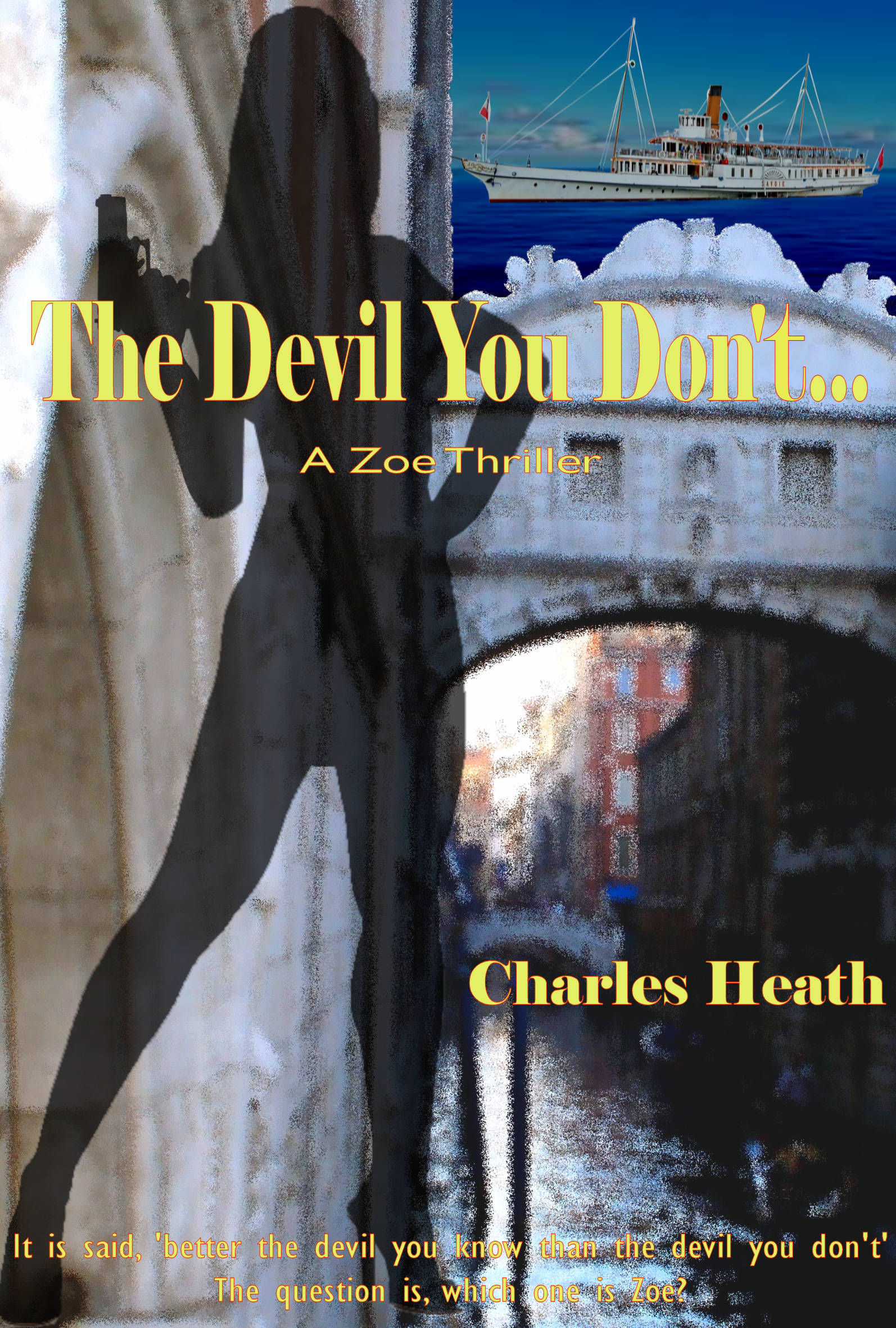
‘The Devil You Don’t’ – A beta reader’s view

It could be said that of all the women one could meet, whether contrived or by sheer luck, what are the odds it would turn out to be the woman who was being paid a very large sum to kill you.

John Pennington is a man who may be lucky in business, but not so lucky in love. He has just broken up with Phillipa Sternhaven, the woman he thought was the one, but relatives and circumstances, and perhaps because she was a ‘princess’, may also have contributed to the end result.

So, what do you do when you are heartbroken?

That is a story that slowly unfolds, from the first meeting with his nemesis on Lake Geneva, all the way to a hotel room in Sorrento, where he learns the shattering truth.

What should have been solace after disappointment, turns out to be something else entirely, and from that point, everything goes to hell in a handbasket.

He suddenly realizes his so-called friend Sebastian has not exactly told him the truth about a small job he asked him to do, the woman he is falling in love with is not quite who she says she is, and he is caught in the middle of a war between two men who consider people becoming collateral damage as part of their business.

The story paints the characters cleverly displaying all their flaws and weaknesses. The locations add to the story at times taking me back down memory lane, especially to Venice where, in those back streets I confess it’s not all that hard to get lost.

All in all a thoroughly entertaining story with, for once, a satisfying end.

Available on Amazon here: https://amzn.to/2Xyh1ow

Top 5 sights on the road less travelled – Lisbon

Lisbon Beyond the Postcard: 5 Things to Do When You’ve Already Mastered the Classics

You’ve done the pilgrimage. You’ve braved the crowds on Tram 28, queued for pastéis de nata in Belém, and navigated the steep, melancholic streets of Alfama. You’ve seen the sunset from a crowded miradouro, and you’ve felt the history radiating from the Jerónimos Monastery.

Congratulations. You’ve seen Lisbon.

But the true magic of the Portuguese capital doesn’t lie on the postcard; it thrives in the quiet corners, the industrial chic neighborhoods, and the views reserved only for those willing to wander a little further.

If you’re ready to move past the tourist checklist and dive into the real Lisboa, here are the next top five, road-less-travelled experiences waiting for you.


1. Get Lost in the Green Lungs: Parque Florestal de Monsanto

What it is: Lisbon’s massive, sprawling answer to Central Park, covering over 10 square kilometers of forest, trails, and panoramic views.

The moment tourists step off the plane, they head east toward the castle or south toward the river. They forget that the city is hugged by a surprisingly wild, untamed forest park to the west. Monsanto is where locals go to truly escape the urban bustle.

Forget the crowded views from São Jorge; Monsanto offers dozens of quiet, breathtaking overlooks. The ultimate gem here is the abandoned Panorâmico de Monsanto. Once a glamorous restaurant and viewing deck built in the 1960s, it now stands as a vast, graffiti-covered ruin.

While officially decommissioned, the views from this concrete shell are genuinely jaw-dropping, offering a 360-degree perspective of the entire city, the Tagus River, and the Atlantic beyond. It requires a bus or short taxi ride to reach, making it inconvenient enough to keep the crowds away.

  • Why it’s “Less Travelled”: It’s outside the central walking zone, requiring dedicated transport.
  • The Insider Tip: Go for sunrise or sunset. Bring good walking shoes and a tripod for unforgettable photos from the Panorâmico.

2. Sail Across the Tagus for Seafood Bliss at Cacilhas

What it is: A quick, inexpensive ferry ride across the Tagus River to the industrial-chic municipality of Almada, offering arguably the best views of the Lisbon skyline.

While the famous Vasco da Gama Bridge and the 25 de Abril Bridge dominate the skyline, taking a short trip on the iconic orange Cacilheiros ferry from Cais do Sodré is a true local experience. The destination, Cacilhas, feels a world away from the busy, boutique-lined streets of Chiado.

Instead of monuments, you find authentic, old-school Portugal. Head straight for Rua Cândido dos Reis, a street lined with incredible, reasonably priced seafood restaurants (marisqueiras). Dining here means indulging in freshly caught fish, grilled to perfection, and avoiding the tourist mark-up found in the city center.

Don’t miss the chance to walk a little further to the 110-meter-tall Cristo Rei statue. While Belem Tower is beautiful, viewing the city skyline with the entire Lisbon waterfront framed across the water is a perspective few tourists ever seek out.

  • Why it’s “Less Travelled”: Tourists rarely leave the Lisbon side of the river unless heading to the main beaches.
  • The Insider Tip: Try the restaurant Ponto Final for stunning riverside dining right on the water (reservations essential) or Solar dos Nunes for a cozier, highly authentic experience.

3. Explore Tile-Soaked History at the Museu Nacional do Azulejo

What it is: The National Tile Museum, housed in the magnificent former Convent of Madre de Deus, dedicated entirely to the history and artistry of Portugal’s defining cultural expression: the azulejo (painted ceramic tile).

While every street corner in Lisbon is adorned with beautiful tiles, few visitors dedicate the time to understand the profound history behind this art form. The Azulejo Museum may not sound as instantly thrilling as a castle, but it is essential to understanding the city’s identity.

Located slightly off the beaten track in the eastern suburbs (near Santa Apolónia), the museum showcases five centuries of ceramic evolution, from Moorish influence to Baroque grandeur. The real highlight is the stunning Great View of Lisbon—a 23-meter-long panel of tiles dating from 1738, depicting the city’s skyline before the devastating earthquake of 1755.

Walking through the ornate church and the quiet cloisters of the convent offers a peaceful, meditative experience far removed from the crush of the central museums.

  • Why it’s “Less Travelled”: Its location is slightly inconvenient, requiring a short taxi or specific bus route.
  • The Insider Tip: Take time to admire the stunning, gold-leaf-laden chapel inside the former convent—it rivals those in Belém.

4. Discover the Industrial Grit of Marvila (Lisbon’s Brooklyn)

What it is: A rapidly gentrifying, formerly industrial neighborhood east of the Parque das Nações, now home to warehouses converted into craft breweries, contemporary art spaces, and cutting-edge gastronomy.

If you’re looking for Lisbon’s hip, creative heartbeat—the neighborhood where young artists and entrepreneurs are truly setting up shop—it’s Marvila. It lacks the historic charm of Alfama but makes up for it with raw, industrial energy.

This is the perfect spot for the craft beer enthusiast. Marvila boasts a strip of excellent breweries operating out of converted warehouses, including Musa and Dois Corvos. Unlike the tourist taverns, these spots offer excellent local brews, complex menus, and a true sense of community.

Beyond the beer, Marvila is home to massive art galleries and unique cultural hubs that are constantly changing, reflecting a contemporary Lisbon that is dynamic and forward-looking.

  • Why it’s “Less Travelled”: It’s still transitioning and is primarily a local destination, far from the central tourist loop.
  • The Insider Tip: Visit on a weekend afternoon to enjoy the buzzing atmosphere at the breweries when they often have food trucks or live music.

5. Trade Sintra’s Fairytale Crowds for the Coastal Calm of Ericeira

What it is: A traditional fishing town located about 45 minutes north of Lisbon, designated as Europe’s only World Surfing Reserve.

Sintra is spectacular, but during peak season, it can feel more like an amusement park than a historical site. For a coastal day trip that delivers beauty, tradition, and relaxation, head to Ericeira.

While it’s internationally famous among surfers for its diverse reef and beach breaks, the town itself maintains an incredible, whitewashed village charm. Here, you’ll find narrow, winding streets, blue-and-white houses, and excellent local bakeries selling regional specialties (ouriços and tâmaras).

The atmosphere is noticeably slower and more authentic than that of the tourist hub of Cascais. Spend the day watching the surfers at Ribeira d’Ilhas, wander through the historic center, and enjoy a spectacular ocean-view meal featuring the freshest catch of the day.

  • Why it’s “Less Travelled”: It requires a dedicated bus journey (or car hire) and is often overlooked in favor of the more marketed Sintra or Cascais.
  • The Insider Tip: Have lunch at a traditional marisqueira near the fishing port to ensure the fish was caught that morning.

The Next Chapter of Your Lisbon Story

Lisbon is a city of layers. Once you peel back the vibrant, initial layer of historic landmarks and Fado-filled taverns, you discover a deeper, more rewarding experience.

These five spots are not just alternatives; they are invitations. They invite you to slow down, cross the river, explore the urban edge, and understand the real, living pulse of one of Europe’s most exciting capitals.


Have you explored any of these hidden Lisbon gems? Share your favourite road less travelled experience in the comments below!

Writing a book in 365 days – 319/320

Days 319 and 320

Writing exercise – using other words for hate, run, disappointed, joyful, and frightened

Hate is such a strong word, but then so are detest, abhor, and perhaps disgust.  The thing is, does everyone understand these other words?

I hated my parents, I hated my brothers, and I think at one particular time in my life, I hated the world.  I guess when everything you planned for just hot pulled out from under you, it’s easy to blame everything and everyone else.

At the time, there wasn’t another word strong enough.

So, when the world has taken you by the scruff of the neck and starts strangling the life out of you, what do you do?  You run.  Anywhere is better than where you are.

Isn’t it?

I’d it running though, or a strategic exit.  It depends on who you are.

Disappointed?  Hell, yeah!

To see a relationship that had been nurtured from the beginning of grade school to the end of high school, to have in place a plan for the rest of your life, and then in a few weeks before the Prom, and graduation, see it all thrown on the scrap heap because the new boy in town had swept the girl of your dreams off her feet, well that was devastation, and a dozen other ‘d’ words.  Disappointment didn’t even scratch the surface.

Stamping out all those years of joy, though, as I was reminded several times by well-meaning people, I wasn’t old enough time know what love, pain and the damn thing of life; it was better to get the love and loss thing over so that the next time, if there was a next time, I’d know what to do.

Wrong.

My next foray into a serious relationship lasted a few years but fell apart when she had an accident.  I wasn’t there at the time, but she had taken it upon herself to take on the hardest slope without telling me and got injured.

I went up with the rescue team, but it seemed the sight of me only made the accident far worse than it was: a broken leg, failing to take a tight turn, one I knew needed a little more practice than she had.

It didn’t matter that I was not judging or critical, only concerned for her.

She was taken by air ambulance to the hospital, and then I didn’t see her again.

I was starting to think that I was never meant to find the true meaning of joy, or being happy, or content, or just be comfortable in the company of that woman I was told was out there somewhere waiting for me.

Right.

I’d like to see that prophecy come true.

So, of course, the opposite of joy was despair, frightened that I was never going to find true love.

Just saying that out loud scares the hell out of me.

Frightened, scared, paralysed with fear, simply paralysed.

My job hadn’t found anyone suitable.  Dating girls at the office was a minefield, especially when it all goes south.  I’d seen it happen far too many times, with devastating results for both parties.

So …

What’s the story?

It’s there in parts, a story I tried to write a few years back, but started pottering anew.

The disappointment, the girlfriend moving on, plans destroyed, and not being the son and an heir, having a father who expected more than a lesser son could give, forced him to reconsider his life.

Instead of going to a local college and being at home, he moved across the country to go to a better university, having attained the necessary GPA to do an undergraduate degree in Economics, and then an MBA.  Five and a half to six years.

Tried to come home one and got into a fight with the son and heir and left.

Perhaps others got to share his disappointment.

Another few years pass.  His sister asks him to come home to see a sick mother.  It’s Christmas.

He gets on the plane.

Had he finally decided to stop running?

It is time to put the hate aside and try to get along.

Can help stifle the disappointment.

Can he find the joy of living at home again?

What was it, in stepping on that plane, that brought back all the disappointment, all the pain, and no chance of ever bringing back that childhood that wasn’t all that bad until he hit middle school?

Christmas is the time for joy.

Will he find it again?

Sit back, relax, and enjoy the in-flight service.

“The Things we do for Love”, the story behind the story

This story has been ongoing since I was seventeen, and just to let you know, I’m 72 this year.

Yes, it’s taken a long time to get it done.

Why, you might ask.

Well, I never gave it much interest because I started writing it after a small incident when I was 17, and working as a book packer for a book distributor in Melbourne

At the end of my first year, at Christmas, the employer had a Christmas party, and that year, it was at a venue in St Kilda.

I wasn’t going to go because at that age, I was an ordinary boy who was very introverted and basically scared of his own shadow and terrified by girls.

Back then, I would cross the street to avoid them

Also, other members of the staff in the shipping department were rough and ready types who were not backwards in telling me what happened, and being naive, perhaps they knew I’d be either shocked or intrigued.

I was both adamant I wasn’t coming and then got roped in on a dare.

Damn!

So, back then, in the early 70s, people looked the other way when it came to drinking, and of course, Dutch courage always takes away the concerns, especially when normally you wouldn’t do half the stuff you wouldn’t in a million years

I made it to the end, not as drunk and stupid as I thought I might be, and St Kilda being a salacious place if you knew where to look, my new friends decided to give me a surprise.

It didn’t take long to realise these men were ‘men about town’ as they kept saying, and we went on an odyssey.  Yes, those backstreet brothels where one could, I was told, have anything they could imagine.

Let me tell you, large quantities of alcohol and imagination were a very bad mix.

So, the odyssey in ‘The things we do’ was based on that, and then the encounter with Diana. Well, let’s just say I learned a great deal about girls that night.

Firstly, not all girls are nasty and spiteful, which seemed to be the case whenever I met one. There was a way to approach, greet, talk to, and behave.

It was also true that I could have had anything I wanted, but I decided what was in my imagination could stay there.  She was amused that all I wanted was to talk, but it was my money, and I could spend it how I liked.

And like any 17-year-old naive fool, I fell in love with her and had all these foolish notions.  Months later, I went back, but she had moved on, to where no one was saying or knew.

Needless to say, I was heartbroken and had to get over that first loss, which, like any 17-year-old, was like the end of the world.

But it was the best hour I’d ever spent in my life and would remain so until I met the woman I have been married to for the last 48 years.

As Henry, he was in part based on a rebel, the son of rich parents who despised them and their wealth, and he used to regale anyone who would listen about how they had messed up his life

If only I’d come from such a background!

And yes, I was only a run away from climbing up the stairs to get on board a ship, acting as a purser.

I worked for a shipping company and they gave their junior staff members an opportunity to spend a year at sea working as a purser on a cargo ship that sailed between Melbourne, Sydney and Hobart in Australia.

One of the other junior staff members’ turn came, and I would visit him on board when he would tell me stories about life on board, the officers, the crew, and other events. These stories, which sounded incredible to someone so impressionable, were a delight to hear.

Alas, by that time, I had tired of office work and moved on to be a tradesman at the place where my father worked.

It proved to be the right move, as that is where I met my wife.  Diana had been right; love would find me when I least expected it.

lovecoverfinal1