Writing a book in 365 days – 175

Day 175

Writing Exercise

Don’t ask me how I got in the middle of the family version or World War 3, but I just happened to call in at the family home on my way home to the residence I’d always wanted after finally moving out of the home.

Enough parental hints had been dropped that it was time to leave the ‘nest, and I agreed.

My older brother had moved out a long time ago and went overseas. I never understood why, and he never explained. He just didn’t come back, and oddly enough no one talked about it.

My younger sister was still at home, and she had hinted there was going to be some news if I decided to come to dinner, and since she was cooking, I agreed. She was a professional chef, and her cooking was not to be missed when on offer.

But…

When I let myself in and announced I’d arrived, there was … silence.

Very unusual, because the house was always a cacophony of noise for one reason or another. At the very least, Susannah and my mother would be exchanging ideas in what my father often called a robust discussion.

Then my mother came out of the dining room at the sound of my arrival, much like a spectre out of the darkness.

“You go talk to Sue. She’s under a great deal of strain and not thinking clearly.”

This meant if I interpreted the tone, my mother had tried to tell her, rather than suggest, what to do, and Sue didn’t take orders very well. She never had, and her last three years at high school had been fraught. Things had settled down after she left for college and cooking school, but it all started up again when she returned home.

Mother had a death wish, father said. He understood that Sussanah needed to find her own path, but Mother had always expected her to follow in her footsteps. She had started the family restaurant but was now getting on, as she called it, and wanted Sue to take over.

Sue said she would if she could modernise the menu. That was the proverbial red rag to the bull.

I went out to the kitchen, but it was empty, so that meant she would be upstairs in her room. I slowly climbed the stairs, thinking back on the last time I had been in the house, about a month before. Sue had just returned from a culinary tour of the south of France and was full of enthusiasm and new recipes.

I’d picked her up from the airport, and we had a discussion, whether mother would ever change her mind, or bring the restaurant into the modern era. I was sure then as I was now, the only way anything would change was if she were to retire or die. Neither option was a possibility.

The door was closed, a bad sign. Mother-daughter arguments had been the mainstay of my youth. She was too much like her mother. My brother and I just kept out of her way.

I knocked, then said, “It’s me.”

“What do you want?” It was not the most welcoming of tones.

“You did ask me to come around, with the offer of fine dining. And a revelation. I guess there’s not going to be a revelation.”

The door opened, and once again I noticed that the sister I once knew had gone, replaced by the new and more mature version of what had always been a brilliant chef. But it was the youthfulness, charm, and playful manner that made it hard to believe just how good she was.

She stood to one side and let me pass. It was probably the third time ever that I had been let into the inner sanctum. It was where she and Matilda, the girl I had always hoped to marry one day, plotted to make my life miserable.

She went back to the unmade, messy bed, and sat cross-legged in the middle, next to several stuffed animals. “How is Matty?”

Oh, by the way, I did marry her, despite the prank my sister pulled that almost made me miss the wedding.

“Wishing she didn’t have to work in New York, but it won’t be for much longer.”

“She told me.”

To further her career and make an impact back home, she had to dazzle the media moguls. That done, the prestigious award for her news coverage, which was recently presented, was enough to impress the local media people, and they finally offered her a job.

“And you? Mother says you are under a great deal of stress.”

“Who wouldn’t with her looking over your shoulder, micro-managing. I was cooking dinner until she decided I needed a hand. When is she ever going to realise I am not her clone or her lackey, that she is only partially responsible for the chef I am today?”

“Funny how she never says that about me.”

“You’re a short-order cook at the local diner. That is not fine dining, that is feeding slop to the pigs at the trough.” She said it with the exact tones and emphasis my mother did when she decried the fact I was wasting my talent in such a den of iniquity.

The truth was I had no talent. Just the ability to make slop look more appealing to the customers, at least better than what Harvey, the previous short-order chef, did. “That’s not what you said about my baseball legend hamburgers.”

She smiled. “OK. You have a knack for presenting edible food, which is a first for the diner. They’re lucky to have you. It’s better than being a busboy in our mother’s place.”

She was right. I did that every summer from the time I could wash dishes. Just because we were family didn’t mean we got privileges.

“True.” I sat down on the chair beside the makeup desk and saw, in the corner, a pile of clothes tossed in a suitcase, the one she had come home with. Hadn’t finished unpacking or getting ready to leave?

“So, silly question, but I’m guessing dinner is off?”

“Yes. She’s annoyed with me for the last time.”

“Meaning?”

“I got an offer to help update the dessert menu for a restaurant chain in LA. One of the instructors at cooking school heard there was an opening, and he always liked my desserts. I’m going to take it while my mother tries to decide what she wants to do.”

“You’re going to do a Jeremy?” My older brother, who’d stormed out after another ‘robust’ discussion with the matriarch.

“I’ve tried talking, olive branches, and common sense. She hasn’t any. That place is going downhill, and she can’t see it and can’t be told. Even father has given up. I know you’ve tried, but she is what she is.”

“When are you going?”

“I was just waiting to see you, ask you to take me to the airport. I’ll stay the night at the hotel and leave tomorrow.”

“You can stay with me, and I’ll take you.”

“Don’t you do the breakfast shift at the diner?”

“Fred can fill in. Pancakes, beans and eggs. Anyone can do that.”

She shrugged. “OK. Down in ten.”

By the time I got to the bottom of the stairs, I still didn’t have a clue how I was going to break the news. The one person who didn’t deserve this was my father, but he always knew life was going to be difficult. He’d accepted that years ago, and just got on with his own life.

Sometimes it seemed to me they were not even connected. I’d always got the impression he knew Jeremy was going to leave, and I also knew, quite by accident, that he frequently visited him in his new home. Being in sales for a company that dealt with a lot of overseas customers, he was able to travel without letting on.

I’d suspected getting me out of the house was so he could move forward with retirement plans, but that dream had been parked.

I went into the lounge room, or what was their TV room, where the TV was on CNN.

“Did you talk some sense into her?” Mother seemed agitated.

“No. But sadly, I have to agree with her. You should consider semi-retirement, and let her run the restaurant. She would be like a breath of fresh air.”

If I’d thought first, I might not have said it. It got the expected reaction.

“While there is still breath in me…”

“Yes, that’s all well and good, mother, but it’s going to be very painful when there are no customers. You know and I know what was great thirty years ago, is not any more, and you can’t deny business has dropped nearly fifty per cent. If you persist down this path, the doors will close in less than six months. You have to move with the times or close the doors. It’s that simple. Three other restaurants, like yours, have closed in the last four months.”

She glared at me. She knew as well as I did what was happening around her. Closing her eyes and hoping it would go away was never going to happen.

“This is coming from a cook at best at the local slophouse.”

“Call the diner whatever you like, mother, but it is always full. People want simple and affordable food. Families can’t afford the cost of dining out fancy any more. The diner isn’t fancy, but it’s homely, they can sit together in a booth, and it’s where their friends go.”

“So, I should turn my place into a slophouse?”

Sue had come down the stairs and left her case at the door.

“Maybe you should, if you want to still have a place.”

“You’ve been cooking for a week, what would you know about anything?”

“Only what you taught me, and if you’re denigrating your own talented mother, then I think it’s time you took a good, long, hard look at yourself. Let’s go, David. I don’t know who this woman is, but it’s not my mother.”

Then she turned and walked out. This was exactly how it ended with Jeremy. I shrugged. There was not going to be any resolution this night.

Mother looked at me, and I thought, perhaps for the first time, she realised what was happening.

“Where’s she going?”

“Away. She’s going to work in LA. At least others think she is a talented and innovative chef. By the time you realise that, it will be too late. Good night.”

I followed Susannah to where she was waiting for me at the front door. She took a long, last look around. “Pity,” she muttered.

I opened the door, and she went through, heading towards my car, parking in the street.

She didn’t look back.

©  Charles Heath 2025

The first case of PI Walthenson – “A Case of Working With the Jones Brothers”

This case has everything, red herrings, jealous brothers, femme fatales, and at the heart of it all, greed.

See below for an excerpt from the book…

Coming soon!

PIWalthJones1

An excerpt from the book:

When Harry took the time to consider his position, a rather uncomfortable position at that, he concluded that he was somehow involved in another case that meant very little to him.

Not that it wasn’t important in some way he was yet to determine, it was just that his curiosity had got the better of him, and it had led to this: sitting in a chair, securely bound, waiting for someone one of his captors had called Doug.

It was not the name that worried him so much, it was the evil laugh that had come after the name was spoken.

Doug what? Doug the ‘destroyer’, Doug the ‘dangerous’, Doug the ‘deadly’; there was any number of sinister connotations, and perhaps that was the point of the laugh, to make it more frightening than it was.

But there was no doubt about one thing in his mind right then: he’d made a mistake. A very big. and costly, mistake. Just how big the cost, no doubt he would soon find out.

His mother, and his grandmother, the wisest person he had ever known, had once told him never to eavesdrop.

At the time he couldn’t help himself and instead of minding his own business, listening to a one-sided conversation which ended with a time and a place. The very nature of the person receiving the call was, at the very least, sinister, and, because of the cryptic conversation, there appeared to be, or at least to Harry, criminal activity involved.

For several days he had wrestled with the thought of whether he should go. Stay on the fringe, keep out of sight, observe and report to the police if it was a crime. Instead, he had willingly gone down the rabbit hole.

Now, sitting in an uncomfortable chair, several heat lamps hanging over his head, he was perspiring, and if perspiration could be used as a measure of fear, then Harry’s fear was at the highest level.

Another runnel of sweat rolled into his left eye, and, having his hands tied, literally, it made it impossible to clear it. The burning sensation momentarily took his mind off his predicament. He cursed and then shook his head trying to prevent a re-occurrence. It was to no avail.

Let the stinging sensation be a reminder of what was right and what was wrong.

It was obvious that it was the right place and the right time, but in considering his current perilous situation, it definitely was the wrong place to be, at the worst possible time.

It was meant to be his escape, an escape from the generations of lawyers, what were to Harry, dry, dusty men who had been in business since George Washington said to the first Walthenson to step foot on American soil, ‘Why don’t you become a lawyer?” when asked what he could do for the great man.

Or so it was handed down as lore, though Harry didn’t think Washington meant it literally, the Walthenson’s, then as now, were not shy of taking advice.

Except, of course, when it came to Harry.

He was, Harry’s father was prone to saying, the exception to every rule. Harry guessed his father was referring to the fact his son wanted to be a Private Detective rather than a dry, dusty lawyer. Just the clothes were enough to turn Harry off the profession.

So, with a little of the money Harry inherited from one of his aunts, he leased an office in Gramercy Park and had it renovated to look like the Sam Spade detective agency, you know the one, Spade and Archer, and The Maltese Falcon.

There’s a movie and a book by Dashiell Hammett if you’re interested.

So, there it was, painted on the opaque glass inset of the front door, ‘Harold Walthenson, Private Detective’.

There was enough money to hire an assistant, and it took a week before the right person came along, or, more to the point, didn’t just see his business plan as something sinister. Ellen, a tall cool woman in a long black dress, or so the words of a song in his head told him, fitted in perfectly.

She’d seen the movie, but she said with a grin, Harry was no Humphrey Bogart.

Of course not, he said, he didn’t smoke.

Three months on the job, and it had been a few calls, no ‘real’ cases, nothing but missing animals, and other miscellaneous items. What he really wanted was a missing person. Or perhaps a beguiling, sophisticated woman who was as deadly as she was charming, looking for an errant husband, perhaps one that she had already ‘dispatched’.

Or for a tall, dark and handsome foreigner who spoke in riddles and in heavily accented English, a spy, or perhaps an assassin, in town to take out the mayor. The man was such an imbecile Harry had considered doing it himself.

Now, in a back room of a disused warehouse, that wishful thinking might be just about to come to a very abrupt end, with none of the romanticized trappings of the business befalling him. No beguiling women, no sinister criminals, no stupid policemen.

Just a nasty little man whose only concern was how quickly or how slowly Harry’s end was going to be.

© Charles Heath 2019-2024

‘Sunday in New York’ – A beta reader’s view

I’m not a fan of romance novels but …

There was something about this one that resonated with me.

This is a novel about a world generally ruled by perception, and how people perceive what they see, what they are told, and what they want to believe.

I’ve been guilty of it myself as I’m sure we all have at one time or another.

For the main characters Harry and Alison there are other issues driving their relationship.

For Alison, it is a loss of self-worth through losing her job and from losing her mother and, in a sense, her sister.

For Harry, it is the fact he has a beautiful and desirable wife, and his belief she is the object of other men’s desires, and one in particular, his immediate superior.

Between observation, the less than honest motives of his friends, a lot of jumping to conclusions based on very little fact, and you have the basis of one very interesting story.

When it all comes to a head, Alison finds herself in a desperate situation, she realises only the truth will save their marriage.

But is it all the truth?

What would we do in similar circumstances?

Rarely does a book have me so enthralled that I could not put it down until I knew the result. They might be considered two people who should have known better, but as is often the case, they had to get past what they both thought was the truth.

And the moral of this story, if it could be said there is one, nothing is ever what it seems.

Available on Amazon here: amzn.to/2H7ALs8

We all need a little attention now and then

When I was last in Europe we decided to get the Eurostar, from London, through the Chunnel, to Paris Disneyland.  Not exactly as fast as the Japanese bullet trains, but faster than anything we have in this country.

You are hurtling along at up to 160 kph, though it feels a lot faster, and then you begin to brake, and it seems like nothing is happening, except for some outside friction noise, and the speed dropping.

I feel like that now, on my way to the bottom of the abyss.

At the end of that fall, it is something referred to as hitting rock bottom.

I’m told once you hit rock bottom the only way is up.

The question is, who do you know that has fallen into the abyss and come back to tell you about it?

Put into layman’s terms, hurling down the abyss is like having a severe episode of depression.  There are different types, some worse than others.  Hitting the ground is roughly the equivalent of looking for a way out that eases the pain and not finding one, and that, for some people, is a quite drastic answer.

But the sign that the free fall is braking, like the express train slowing down, is a sign that you’ve seen the light, that there are external forces that can render assistance.

I see them now, the hands of friends, the hands of people I don’t know, but who are concerned.

Writers like any other professional people are the same as everyone else, but with one rather interesting difference.  It is a profession where a lot of the time you are on your own, alone with your thoughts, your characters, your fantasy world, which sometimes so frighteningly drifts into your reality.

Some of us will make a fortune, some of us will make an adequate living, and live the ‘dream’ of doing the one job they always wanted to, and most will not.

I’m not rich, I’m not one who gets an adequate income, yet.

But I will get out of this abyss.

I can feel the brakes.

My eldest granddaughter, who is 15, tells me the fantasy story where she is a princess I’m writing for her is brilliant.

The free fall has stopped.  I step out into the sunshine.

All I needed was a little praise.

Writing a book in 365 days – 174

Day 174

Emotional Responses

Have you found yourself writing a passage where you have either burst out laughing or shed a tear?

Sometimes, when we are writing certain emotional scenes, that depth of feeling required might actually be a response to something that may have happened to you.

I never thought I could write comedy, because I didn’t believe I had that sort of humour in me. And yet, not so long ago, I was writing a scene where the lines were not meant to be comedic, but just the way the words were going on paper caused me to smile. It was actually something that made me want to write more, if possible, to feed off that first line.

It didn’t quite come as I expected, but over a few days working and reworking, the whole scene came off better than I’d expected, and I was hoping the reader got it.

The same goes for more serious stuff, and I did eventually lean on some of my own feelings on the subject.

But when I was writing it, it was sad, yes, but it didn’t evoke an emotional response.

When I came back to it a few days later, for some odd reason, it did. I actually found tears in my eyes, and I realised that it did hark back to an event where, at the time, it hadn’t affected me, but with more of the story, it did.

Now, writing about my family history and finding out a lot of things I didn’t know about my parents and grandparents, those emotions sometimes run so high, it’s not possible to write. I wonder, when someone finally gets around to reading it, they might have the same feelings.

The cinema of my dreams – I always wanted to go on a treasure hunt – Episode 70

Here’s the thing…

Every time I close my eyes, I see something different.

I’d like to think the cinema of my dreams is playing a double feature but it’s a bit like a comedy cartoon night on Fox.

But these dreams are nothing to laugh about.

Once again there’s a new installment of an old feature, and we’re back on the treasure hunt.

The beach, and a body

I had expected to find the rocks we were slowly and carefully chambering over to be smooth, worn down by the constant washing over by the waves.

They were, to a certain extent, but there were places where the jagged edges were as sharp as a knife, and I had more than one cut on my hand.

Even with the stiff breeze coming in off the water, it was still hot, laborious work and it took over an hour to reach the first part of Sandy Beach, a thin strip below the rock line, and soaring behind it, a rocky cliff face that would required rock climb training to scale, and then notwithstanding a lot of safety gear.

It didn’t surprise me that Nadia was an expert rock climber.  She was built like a finely tuned cat, as lithe and graceful moving across the hazards.

At times she held my hand, keeping me from falling off, or worse, into danger, and certain injury.  At times, I didn’t want to let go.

Then on the windswept beach, she looked every bit the conqueror, hair blowing in the breeze, completely ignoring the conditions.  She belonged here, I didn’t.

The beach stretched for 200 yards or so and was, at times, up to 50 feet wide. Nothing had walked on this beach since the last tide, but more than likely, not for a long time because it was inaccessible from the shoreline unless you were a rock climber

But it was private land, and a fading sign, with Ormistons fading name at the bottom, told anyone who came ashore that trespassers would be prosecuted.

And, I thought. If they survived the reefs, at this tide semi-exposed and covered the whole of the distance.  No boat could get through. 

That also meant it was highly unlikely that the pirate had landed here, but we did a sweep with the metal detectors.  I had my hopes built up where my detector started making a lot of noise, but it was only a cupboard door with a metal hinge that had set it off, a bit of flotsam washed ashore.

We were both disappointed, then lamenting our luck or lack of it, we started heading towards the neck stretch of sand, barely discernable in the distance, but not before another hazardous trek across the rocks.

It took half an hour carefully picking our across the rocks before it was good to be on the sand again.  I helped her down from the rock perch and took a moment to rest.

“Did you see something further up the beach, just before you jumped?”

I had, but I thought it was the carcass of a beached fish. Perhaps a dolphin that had been savaged by sharks.  Or just a lump of kelp, of which some was scattered along the Highgate line.

“It might be just kelp.  Or more flotsam.  I’m sure we’ll soon find out.”

We also had to keep an eye on the tide, having started out just ashore or so before low tide, giving ourselves sufficient time to search and get back.

This part of the shoreline was longer, and closer to the edge of the property line, accessible only by climbing the rocks that jutted out into the sea, not exactly the easiest of tasks.  In fact, it served as a deterrent, and as far as Nadia was aware, no one had ever scaled that cliff face.

The object on the ground was no closer to being identified from a distance, but now, closer, it looked to me like it might be a body, my first thought, another of the Cossatino’s hit jobs, the shore being so remote it would never be discovered.

“That’s a body,” I heard the panic in her tone, right behind me.

We both dropped the detectors and ran, discovering as we came up to it, that we were both right.

It was covered from head to toe in black, including a balaclava covering the face.  It was impossible to tell what sex it was, lying front down with the head tilted to one side as if the ocean had washed it ashore.

The fact there were no tears in the clothing told me, I’d there were reefs out there, the body had not been washed ashore.  Just how did it get there.

These were all momentary thoughts because there was a more urgent thing to be done

“Help me roll it over,” I said.

She took the bottom half and I the top and gently lifted it just enough to turn it over onto the back, then I slowly pulled the balaclava off.

As soon as I saw the face, bruised and swollen, I knew who it was.

Nadia shrieked, then said, “What the hell is he doing here?”

The missing Boggs.

I could tell by the look on her face she was assuming her family had something to do with him being here.

But, all that aside, I tried not to panic, or let my surprise or shock take over, letting the medical training I’d received during a stint with the local fire station take over, first checking to see if he had a pulse.

It was faint, but there.  That meant we needed medical help. And fast.  I pulled my phone out and checked for a signal.  Then, with maps, got our location.  There was something familiar about the numbers, but their significance eluded me.  There were bigger problems to worry about.

Then I dialed 911, and when they answered, described the situation, gave them the location, and with a few other instructions to me from the dispatcher, I went back to Boggs.

By this time Nadia was beside him, wiping his face gently with tissues she must have had in her pocket.  I tried not to give her the impression I blamed her family for his situation, simply because that might not be the case.

The last time I saw him he had a rope and his mother had said he was an experienced climber.  And with his proximity to the cliff face, it wasn’t hard to put two and two together.

I checked his pulse again and listened closely to his breathing, shallow with a slight rattle.  I unzipped his jacket and lifted his shirt, and could see the discoloration from bruising.  It was possible he slipped, or lost his footing, and crashed against an outcrop, knocking himself out, or falling to the ground with the same effect.  A closer inspection showed the bare minimum of climbing equipment set up, and now, looking closer at the cliff face, I could see the rope dangling, but stopping short by about 20 feet.

Nadia didn’t speak, but I could see she was scared.

I touched her on the shoulder and she jumped.

“It’s not your fault,” I said.

“But it could be…”

“I don’t think so.  He looks like he tried coming down the side of the cliff and slipped or fell.  I think he may have collapsed here, but the tide has removed any foot or drag marks so it’s hard to tell what happened.”

“Why not go the way we did?”

“He might not know about it or considered it too far.  Or the climbing fanatic in him took over.  I have to say, I never knew he was a climber, in fact, there’s probably a lot I don’t know.  Maybe if I’d spent more time with him this mightn’t have happened.”

While waiting I called Boggs mother and relayed what had happened, where he’d been taken and the prognosis, which was good.  He was in no danger of dying, though had he not been found, that would have been a different story.  Then I called the sheriff’s office to let them know, but he had already had the news passed on, and I said I would drip in and answer any questions they might have.  I guess Boggs might have to explain why he was trespassing. 

Not long after that, I turned to look back towards the way we’d just come in response to the sound of a helicopter.  If it was, that was a remarkably quick response time.  When it came closer I could see it was one of the Coast Guards’ distinctive red Sikorski’s, which was surprising.

The helicopter veered inland and the sound of the approach was somewhat muffled.  I had thought they might come on on a sea approach, but then it occurred to me it might be an opportunity to fly over the Cossatino kingdom, having a legitimate excuse to do so.  Then it crossed the cliff line with a roar, and hovered while the pilot assessed a landing spot.

I could see several people at the side door making preparations as the pilot brought it down, gently landing on the sand.  As soon as it touched down two men jumped out, one, I assumed, a medic.

“You were quick.”

It had been less than a half-hour since I called.

“We just wrapped up at another accident.  What do we have here?”

I went through all the things I’d done and ended by showing him the chest bruising.

His was a more thorough check and confirmed what I’d discovered, no broken bones, possible cracked ribs, or sprains to both ankles, indicating he had fallen a short distance.

A stretcher was brought over, and they carefully put Boggs on it, then took him to the helicopter, the whole operation taking no more than ten minutes.  I declined the offer of going back with him, there being space only for one other passenger.  He gave me the name of the hospital they would be taking him to, and I watched the helicopter leave.

The whole time Nadia had kept her distance, and, I’d noticed, glanced up the cliff.  Did she think the arrival of a helicopter on their beach would summon a posse of Cossatinos?  That thought had also occurred to me, especially where there were signs, now somewhat faded, that said trespassers would be shot on sight.

I looked too.

And saw something I had not expected to see.

© Charles Heath 2020-2022

An excerpt from “Echoes from the Past”

Available on Amazon Kindle here:  https://amzn.to/2CYKxu4

With my attention elsewhere, I walked into a man who was hurrying in the opposite direction.  He was a big man with a scar running down the left side of his face from eye socket to mouth, and who was also wearing a black shirt with a red tie.

That was all I remembered as my heart almost stopped.

He apologized as he stepped to one side, the same way I stepped, as I also muttered an apology.

I kept my eyes down.  He was not the sort of man I wanted to recognize later in a lineup.  I stepped to the other side and so did he.  It was one of those situations.  Finally getting out of sync, he kept going in his direction, and I towards the bus, which was now pulling away from the curb.

Getting my breath back, I just stood riveted to the spot watching it join the traffic.  I looked back over my shoulder, but the man I’d run into had gone.  I shrugged and looked at my watch.  It would be a few minutes before the next bus arrived.

Wait, or walk?  I could also go by subway, but it was a long walk to the station.  What the hell, I needed the exercise.

At the first intersection, the ‘Walk’ sign had just flashed to ‘Don’t Walk’.  I thought I’d save a few minutes by not waiting for the next green light.  As I stepped onto the road, I heard the screeching of tires.

A yellow car stopped inches from me.

It was a high powered sports car, perhaps a Lamborghini.  I knew what they looked like because Marcus Bartleby owned one, as did every other junior executive in the city with a rich father.

Everyone stopped to look at me, then the car.  It was that sort of car.  I could see the driver through the windscreen shaking his fist, and I could see he was yelling too, but I couldn’t hear him.  I stepped back onto the sidewalk, and he drove on.  The moment had passed and everyone went back to their business.

My heart rate hadn’t come down from the last encounter.   Now it was approaching cardiac arrest, so I took a few minutes and several sets of lights to regain composure.

At the next intersection, I waited for the green light, and then a few seconds more, just to be sure.  I was no longer in a hurry.

At the next, I heard what sounded like a gunshot.  A few people looked around, worried expressions on their faces, but when it happened again, I saw it was an old car backfiring.  I also saw another yellow car, much the same as the one before, stopped on the side of the road.  I thought nothing of it, other than it was the second yellow car I’d seen.

At the next intersection, I realized I was subconsciously heading towards Harry’s new bar.   It was somewhere on 6th Avenue, so I continued walking in what I thought was the right direction.

I don’t know why I looked behind me at the next intersection, but I did.  There was another yellow car on the side of the road, not far from me.  It, too, looked the same as the original Lamborghini, and I was starting to think it was not a coincidence.

Moments after crossing the road, I heard the roar of a sports car engine and saw the yellow car accelerate past me.  As it passed by, I saw there were two people in it, and the blurry image of the passenger; a large man with a red tie.

Now my imagination was playing tricks.

It could not be the same man.  He was going in a different direction.

In the few minutes I’d been standing on the pavement, it had started to snow; early for this time of year, and marking the start of what could be a long cold winter.  I shuddered, and it was not necessarily because of the temperature.

I looked up and saw a neon light advertising a bar, coincidentally the one Harry had ‘found’ and, looking once in the direction of the departing yellow car, I decided to go in.  I would have a few drinks and then leave by the back door if it had one.

Just in case.

© Charles Heath 2015-2020

newechocover5rs

Inspiration, maybe – Volume 1

50 photographs, 50 stories, of which there is one of the 50 below.

They all start with –

A picture paints … well, as many words as you like.  For instance:

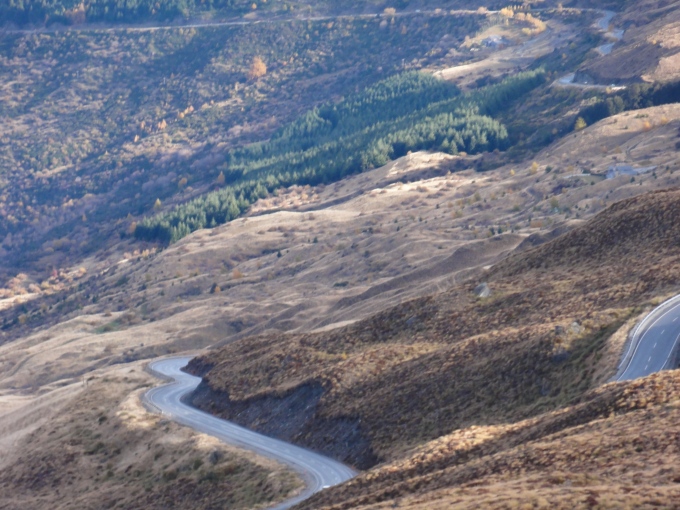
lookingdownfromcoronetpeak

And the story:

It was once said that a desperate man has everything to lose.

The man I was chasing was desperate, but I, on the other hand, was more desperate to catch him.

He’d left a trail of dead people from one end of the island to the other.

The team had put in a lot of effort to locate him, and now his capture was imminent.  We were following the car he was in, from a discrete distance, and, at the appropriate time, we would catch up, pull him over, and make the arrest.

There was nowhere for him to go.

The road led to a dead-end, and the only way off the mountain was back down the road were now on.  Which was why I was somewhat surprised when we discovered where he was.

Where was he going?

“Damn,” I heard Alan mutter.  He was driving, being careful not to get too close, but not far enough away to lose sight of him.

“What?”

“I think he’s made us.”

“How?”

“Dumb bad luck, I’m guessing.  Or he expected we’d follow him up the mountain.  He’s just sped up.”

“How far away?”

“A half-mile.  We should see him higher up when we turn the next corner.”

It took an eternity to get there, and when we did, Alan was right, only he was further on than we thought.”

“Step on it.  Let’s catch him up before he gets to the top.”

Easy to say, not so easy to do.  The road was treacherous, and in places just gravel, and there were no guard rails to stop a three thousand footfall down the mountainside.

Good thing then I had the foresight to have three agents on the hill for just such a scenario.

Ten minutes later, we were in sight of the car, still moving quickly, but we were going slightly faster.  We’d catch up just short of the summit car park.

Or so we thought.

Coming quickly around another corner we almost slammed into the car we’d been chasing.

“What the hell…” Aland muttered.

I was out of the car, and over to see if he was in it, but I knew that it was only a slender possibility.  The car was empty, and no indication where he went.

Certainly not up the road.  It was relatively straightforward for the next mile, at which we would have reached the summit.  Up the mountainside from here, or down.

I looked up.  Nothing.

Alan yelled out, “He’s not going down, not that I can see, but if he did, there’s hardly a foothold and that’s a long fall.”

Then where did he go?

Then a man looking very much like our quarry came out from behind a rock embedded just a short distance up the hill.

“Sorry,” he said quite calmly.  “Had to go if you know what I mean.”

I’d lost him.

It was as simple as that.

I had been led a merry chase up the hill, and all the time he was getting away in a different direction.

I’d fallen for the oldest trick in the book, letting my desperation blind me to the disguise that anyone else would see through in an instant.

It was a lonely sight, looking down that road, knowing that I had to go all that way down again, only this time, without having to throw caution to the wind.

“Maybe next time,” Alan said.

“We’ll get him.  It’s just a matter of time.”

© Charles Heath 2019-2021

Find this and other stories in “Inspiration, maybe”  available soon.

InspirationMaybe1v1

Writing a book in 365 days – 174

Day 174

Emotional Responses

Have you found yourself writing a passage where you have either burst out laughing or shed a tear?

Sometimes, when we are writing certain emotional scenes, that depth of feeling required might actually be a response to something that may have happened to you.

I never thought I could write comedy, because I didn’t believe I had that sort of humour in me. And yet, not so long ago, I was writing a scene where the lines were not meant to be comedic, but just the way the words were going on paper caused me to smile. It was actually something that made me want to write more, if possible, to feed off that first line.

It didn’t quite come as I expected, but over a few days working and reworking, the whole scene came off better than I’d expected, and I was hoping the reader got it.

The same goes for more serious stuff, and I did eventually lean on some of my own feelings on the subject.

But when I was writing it, it was sad, yes, but it didn’t evoke an emotional response.

When I came back to it a few days later, for some odd reason, it did. I actually found tears in my eyes, and I realised that it did hark back to an event where, at the time, it hadn’t affected me, but with more of the story, it did.

Now, writing about my family history and finding out a lot of things I didn’t know about my parents and grandparents, those emotions sometimes run so high, it’s not possible to write. I wonder, when someone finally gets around to reading it, they might have the same feelings.

First Dig Two Graves

A sequel to “The Devil You Don’t”

Revenge is a dish best served cold – or preferably so when everything goes right

Of course, it rarely does, as Alistair, Zoe’s handler, discovers to his peril. Enter a wildcard, John, and whatever Alistair’s plan for dealing with Zoe was dies with him.

It leaves Zoe in completely unfamiliar territory.

John’s idyllic romance with a woman who is utterly out of his comfort zone is on borrowed time. She is still trying to reconcile her ambivalence, after being so indifferent for so long.

They agree to take a break, during which she disappears. John, thinking she has left without saying goodbye, refuses to accept the inevitable, calls on an old friend for help in finding her.

After the mayhem and being briefly reunited, she recognises an inevitable truth: there is a price to pay for taking out Alistair; she must leave and find them first, and he would be wise to keep a low profile.

But keeping a low profile just isn’t possible, and enlisting another friend, a private detective and his sister, a deft computer hacker, they track her to the border between Austria and Hungary.

What John doesn’t realise is that another enemy is tracking him to find her too. It could have been a grand tour of Europe. Instead, it becomes a race against time before enemies old and new converge for what will be an inevitable showdown.