The Well Never Runs Dry: Why You Should Write Even When You’re Empty
There is a pervasive myth in the creative world: the idea that writing is a faucet that must be turned off the moment the water stops flowing. We are told to wait for the “muse,” to respect the “dry spell,” and to stop pushing when the well runs dry.
But here is the professional truth: If you wait for inspiration, you will eventually stop writing altogether.
Professionalism isn’t about waiting for a lightning strike of genius; it’s about showing up to the page when you have absolutely nothing to say. If you struggle with the “Empty Page Syndrome,” here is why you should never stop writing—and how to keep going when the ideas have seemingly evaporated.
1. Writing is a Muscle, Not a Mood
Think of your writing ability like a muscle in the gym. If you only lift weights when you feel “inspired” to be strong, you will never see progress. The days you don’t want to be there are the days that build your endurance.
When you force yourself to write through a period of low inspiration, you aren’t necessarily aiming for a masterpiece. You are building the cognitive stamina required to sustain a career. By showing up, you prove to your brain that writing is a non-negotiable habit, like brushing your teeth or sleeping.
2. The “Bad” Writing is the Foundation
When you force yourself to write without ideas, the result is often messy, clunky, and uninspired. That’s okay. In fact, it’s necessary.
Professional writers understand that you cannot edit a blank page. By writing “bad” words, you are clearing the mental pipes. Often, the act of putting down a terrible sentence acts as a catalyst for a better thought. You have to move the cursor to find the gold. If you stop writing the moment you feel stuck, you never reach the breakthrough that lies just three paragraphs deeper.
3. Ideas are a Result, Not a Prerequisite
We often think: I need an idea to start writing. The reality is: Writing creates the idea.
When you sit down to write, you are engaging in a process of discovery. Your brain doesn’t store ideas in a neat little organized file cabinet; it generates them through the friction of the keyboard. If you sit and wait for the perfect prompt, you will wait forever. If you start typing “I don’t know what to write about today,” you have already started the process of thinking. That movement inevitably leads somewhere.
4. How to Keep Writing When You’re Empty
If you’re staring at a blinking cursor and feeling that familiar drought, try these three strategies:
The “Brain Dump” Method: Don’t worry about structure or audience. Open a document and write down every annoyance, thought, or observation from your morning. It doesn’t have to be a published piece; it just has to be words on a page.
The “Retrospective” Approach: If you can’t invent something new, refine something old. Go back to an old draft, a failed paragraph, or a notebook scrap from six months ago. Editing is writing. It counts.
The Constraint Hack: Creativity loves a cage. If you don’t know what to write, give yourself a strict limit. Write 200 words about the colour red. Write a paragraph explaining your favourite meal to an alien. Arbitrary constraints force your brain out of its rut.
The Bottom Line
The difference between an amateur and a professional is often just the ability to endure the days when the spark is gone. You don’t need a brilliant idea to be a writer; you just need to be a person who writes.
So, don’t stop. Keep writing through the silence, the boredom, and the “bad” drafts. The well isn’t dry—it’s just waiting for you to pick up the bucket.
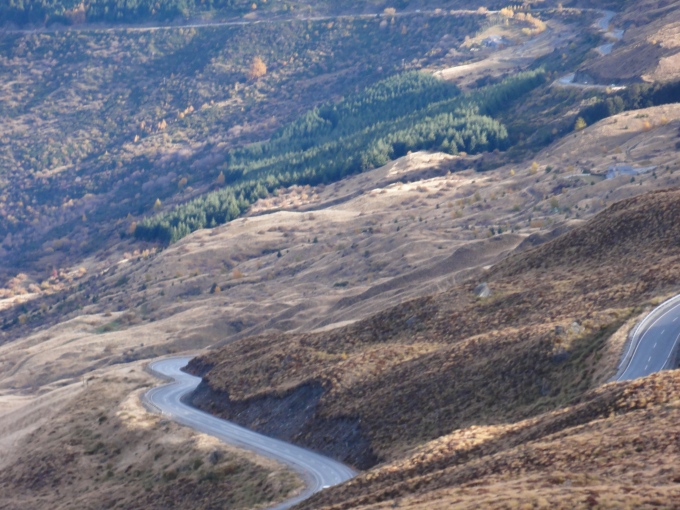
50 photographs, 50 stories, of which there is one of the 50 below.
They all start with –
A picture paints … well, as many words as you like. For instance:
And the story:
…
It was once said that a desperate man has everything to lose.
The man I was chasing was desperate, but I, on the other hand, was more desperate to catch him.
He’d left a trail of dead people from one end of the island to the other.
The team had put in a lot of effort to locate him, and now his capture was imminent. We were following the car he was in, from a discreet distance, and, at the appropriate time, we would catch up, pull him over, and make the arrest.
There was nowhere for him to go.
The road led to a dead-end, and the only way off the mountain was back down the road we were now on. Which was why I was somewhat surprised when we discovered where he was.
Where was he going?
“Damn,” I heard Alan mutter. He was driving, being careful not to get too close, but not far enough away to lose sight of him.
“What?”
“I think he’s made us.”
“How?”
“Dumb bad luck, I’m guessing. Or he expected we’d follow him up the mountain. He’s just sped up.”
“How far away?”
“A half-mile. We should see him higher up when we turn the next corner.”
It took an eternity to get there, and when we did, Alan was right, only he was further on than we thought.”
“Step on it. Let’s catch him up before he gets to the top.”
Easy to say, not so easy to do. The road was treacherous, and in places, just gravel, and there were no guard rails to stop a three-thousand-foot fall down the mountainside.
Good thing then, I had the foresight to have three agents on the hill for just such a scenario.
Ten minutes later, we were in sight of the car, still moving quickly, but we were going slightly faster. We’d catch up just short of the summit car park.
Or so we thought.
Coming quickly around another corner, we almost slammed into the car we’d been chasing.
“What the hell…” Aland muttered.
I was out of the car and over to see if he was in it, but I knew that it was only a slender possibility. The car was empty, and no indication of where he had gone.
Certainly not up the road. It was relatively straightforward for the next mile, at which we would have reached the summit. Up the mountainside from here, or down.
I looked up. Nothing.
Alan yelled out, “He’s not going down, not that I can see, but if he did, there’s hardly a foothold and that’s a long fall.”
Then where did he go?
Then a man looking very much like our quarry came out from behind a rock embedded just a short distance up the hill.
“Sorry,” he said quite calmly. “Had to go if you know what I mean.”
I’d lost him.
It was as simple as that.
I had been led a merry chase up the hill, and all the time he was getting away in a different direction.
I’d fallen for the oldest trick in the book, letting my desperation blind me to the disguise that anyone else would see through in an instant.
It was a lonely sight, looking down that road, knowing that I had to go all that way down again, only this time, without having to throw caution to the wind.
Revenge is a dish best served cold – or preferably so when everything goes right
Of course, it rarely does, as Alistair, Zoe’s handler, discovers to his peril. Enter a wildcard, John, and whatever Alistair’s plan for dealing with Zoe was dies with him.
It leaves Zoe in completely unfamiliar territory.
…
John’s idyllic romance with a woman who is utterly out of his comfort zone is on borrowed time. She is still trying to reconcile her ambivalence after being so indifferent for so long.
They agree to take a break, during which she disappears. John, thinking she has left without saying goodbye, refuses to accept the inevitable and calls on an old friend for help in finding her.
After the mayhem and being briefly reunited, she recognises an inevitable truth: there is a price to pay for taking out Alistair; she must leave and find them first, and he would be wise to keep a low profile.
But keeping a low profile just isn’t possible, and enlisting another friend, a private detective and his sister, a deft computer hacker, they track her to the border between Austria and Hungary.
What John doesn’t realise is that another enemy is tracking him to find her too. It could have been a grand tour of Europe. Instead, it becomes a race against time before enemies old and new converge for what will be an inevitable showdown.
Every time I close my eyes, I see something different.
I’d like to think the cinema of my dreams is playing a double feature but it’s a bit like a comedy cartoon night on Fox.
But these dreams are nothing to laugh about.
Once again there’s a new instalment of an old feature, and back on the treasure hunt.
…
I lasted the week in the warehouse, and, surprising myself, I actually liked it.
And, had I been like all the other workers employed there, keeping their heads down and getting on with the job, everything would have remained the same.
My problem, it seemed, was Alex Benderby. He had been a bully at school, and he was a bully in the workplace, hiding behind his father’s name and reputation, not that his father was much better, just a little more discreet.
On day 2, Alex discovered I was working in the warehouse, his domain. For some reason it amused him that I should be there, working for the Benderby’s, something I’d been very vocal about it not working for them, even if, he reminded me, they were the last people on earth.
He confronted me with two of his bully friends. Alex was not someone to walk around alone. He knew what would happen if he did.
“What changed, Smidge.”
The nickname he gave me, though I never quite understood why. English and language had never been his strong point.
“The poverty line. Sometimes people have to swallow their pride. It’s not a big deal, Alex.”
“Is to me, to see how the mighty have fallen. I’ve got my eye on you Smidge. One wrong foot, and, well, we shall see.”
The salacious grin, as he walked away, was the key. He could and no doubt would hold my job over me as he did with countless others. At that moment I think I made a promise to myself, to help Boggs find the treasure, and bury Alex in a hoe so deep not even his or his father’s money and influence could save him.
Hours later, still rankling over the confrontation, I nearly ran into Alex again, just managing to avoid him by slipping behind the shelving to wait until he passed by.
When he didn’t, I decided to wait till he walked past, and then head in the other direction. But, after a few minutes and he hadn’t appeared, I peered around the corner of the shelving and saw him sitting on a half-emptied pallet of boxes.
Waiting.
Waiting for what, or more to the point, whom?
Five minutes later I found out. A long, cool woman in a tall black dress, a woman I’d seen before but couldn’t quite place.
“Nadia.”
“Alex. What do you want?” Her tone was far from conciliatory, and if she was not happy about being there, why was she?
“A favour.”
“You’ve run out of favours Alex.”
“Then how about I tell your father exactly what you were doing when you were doing something else?”
A moment’s silence before the fury. “We had an agreement.”
“I need a favour. You’re the only one I can trust. After this, I promise, we’re done.”
Another quick look around the corner of the shelves. One person looking smug, the other looking very, very angry.
But, it appeared, that Alex had the leverage.
“What is it?”
“Rico has a map. I want it. You bring it to me, you’re off the hook.”
She gave him a long hard stare. “I deliver the map, and I see you again, you’re a dead man. Your father might think he runs this part of town, but I can assure you there are far scarier people than him and his henchmen. Remember that Alex.”
If she had a gun I think she might have shot him, but instead left him with a latent threat. It was good to see that he was, for once, the one with the worried look.
The Epic Dream & The First Word: Conquering Your Biggest Writing Projects (One Step at a Time)
Picture this: You’ve got an incredible idea brewing – a sprawling fantasy epic, a gritty crime trilogy, a non-fiction deep dive into a complex subject that demands multiple volumes. Your imagination soars, your fingers itch… and then, a tidal wave of overwhelm crashes over you.
The sheer scale of it. The endless pages, the character arcs, the world-building, the research, the plot twists across three (or more!) books… it feels less like a project and more like a mountain range you’re expected to scale in a single bound. It’s daunting, terrifying even. The dream of “a three-book series” can quickly paralyse you before you’ve even written a single chapter of the first.
But here’s the quiet wisdom that veteran writers (and anyone who’s ever tackled a seemingly insurmountable task) learn: No one climbs Everest in a single leap. They take one step, then another, then another.
The secret isn’t to think about writing a three-book series; it’s to write this sentence. Then this paragraph. Then this scene. Then this chapter.
Eating the Elephant, One Bite at a Time
Our brains, wonderful as they are, struggle with “massive.” They crave manageable chunks. When you stare at the blank page with “Book One” echoing in your mind, your brain screams, “Impossible!” But when you tell it, “Today, we’re just outlining Chapter 3,” or “Let’s focus on nailing this one dialogue exchange,” suddenly, it feels achievable.
This isn’t just about managing the external task; it’s about managing your internal self-talk. Breaking down an overwhelming project into small, actionable pieces transforms it from an insurmountable beast into a series of achievable tasks.
A book series? Break it into individual books.
A single book? Break it into acts, then chapters.
A chapter? Break it into scenes.
A scene? Break it into beats, key actions, or dialogue exchanges.
A page? Break it into paragraphs.
You get the idea. Each small victory builds momentum, chipping away at that intimidating mountain until, suddenly, you’re at the summit, looking back at the path you’ve forged.
The Power of the First Step
And this is where that timeless piece of wisdom rings so profoundly true: “The secret of getting ahead is getting started.” (Attributed to Mark Twain, and eternally valid).
It’s not about the perfect first sentence, or having the entire plot mapped out in glorious detail. It’s about showing up. It’s about putting anything down. That blank page, that empty document, is the biggest hurdle. Once there’s something on it, no matter how rough, how imperfect, how far from your grand vision, you’ve begun. You’ve broken the spell of inaction.
Think of it:
You can’t edit a blank page.
You can’t refine a scene that doesn’t exist.
You can’t finish a series you haven’t started.
The act of starting generates its own energy. It creates a tiny gravitational pull that helps you take the next step, and the next. That first word, that first paragraph, that first outline sketch – it’s the anchor that stops you from drifting in the sea of “what ifs” and pulls you towards “what is.”
Your Action Plan for Tackling Giants:
Deconstruct Your Dream: Don’t just see “Book One.” See “Book One, Part 1, Chapter 1, Scene 1, Character X enters the room.”
Set Micro-Goals: Instead of “write a book,” try “Today, I’ll write 250 words” or “I’ll outline the next three scenes” or “I’ll spend 15 minutes brainstorming character names.”
Embrace Imperfection: Your first draft is meant to be bad. Get it done, then make it good. Don’t let the fear of not being perfect stop you from being prolific.
Celebrate Small Wins: Finished a chapter? High five yourself! Outlined a whole book? Treat yourself to a nice coffee. These small acknowledgments reinforce positive habits.
So, if you’re standing at the foot of your own literary Everest, feeling the chill of overwhelm, remember these two powerful truths: Break it down, and just start. Your masterpiece isn’t waiting for perfection; it’s waiting for your first word.
The Alchemy of Creation: Is Frank Zappa Right About the Business of Art?
“Art is making something out of nothing and selling it.”
When Frank Zappa—the iconoclastic guitarist, composer, and cultural provocateur—uttered those words, he wasn’t just being cynical. He was being surgical. To the romantic, art is a divine spark, an ethereal communion with the muse. To Zappa, it was a mechanical process of materialising an idea and navigating the marketplace.
But is he right? Does this definition capture the soul of creativity, or does it strip away the magic? Let’s pull apart Zappa’s assertion and see what remains.
The “Something Out of Nothing” Paradox
At first glance, the idea of making “something out of nothing” sounds like a biological impossibility. Every artist draws from a vast, internal library of influences, memories, traumas, and aesthetics. We are all bricoleurs—we take the scraps of our experiences and stitch them into new tapestries.
However, Zappa’s quote highlights the courage of the blank canvas.
Before an artist sits down to compose, paint, or write, that specific arrangement of notes, colors, or words did not exist. The artist is the zero-point, the lightning rod that pulls a chaotic, unformed feeling from the ether and anchors it into physical reality. That process—the translation of abstract thought into a tangible object—is the fundamental “miracle” of art.
The “Selling It” Reality Check
This is the part that makes many artists uncomfortable. We like to pretend that art exists in a vacuum, purely for the sake of expression. If that were true, artists wouldn’t bother with galleries, streaming platforms, or bookstores.
Zappa was a famously savvy businessman who understood the architecture of the music industry better than almost anyone. By saying art is about “selling it,” he was acknowledging that art is a form of communication.
Selling isn’t just about money; it’s about exchange. When you sell a piece of art, you are asking someone else to place value on your perspective. You are saying, “I have made this thing out of nothing, and I believe it is significant enough to become a part of your life.”
The transaction is the final step of the creative cycle. Without the audience (the buyer/the observer), the “something” remains in a box in your basement. Bringing it to the world, putting a price tag on it, and finding a home for it is an act of completion.
The Cynicism vs. The Pragmatism
Is there a danger in viewing art this way? Yes. If you focus too much on selling, you start creating art designed to be sold rather than art designed to be true. This leads to the commercial sludge—the derivative sounds and mass-produced aesthetics that Zappa spent his entire career railing against.
But if you view the process through Zappa’s lens, it becomes incredibly empowering. It demystifies the artistic struggle:
The Blank Page is just a starting point.
The Output is your product.
The Marketplace is the arena where you prove your worth.
The Verdict
Frank Zappa’s definition is perhaps the most honest perspective an artist can adopt. It removes the pretension and the “tortured genius” mythology that causes so many creators to freeze up.
If art is simply taking nothing and making something, there is no pressure for it to be perfect immediately. If art is about selling, it encourages you to take your work seriously enough to share it with others.
So, go ahead and be the magician who pulls an idea out of thin air. Just don’t forget that the magic only becomes real when someone else sees it, holds it, and decides it matters.
What do you think? Is Zappa’s definition too clinical, or is it the perspective every creator needs to hear? Let me know in the comments below.
Beyond the Big Five: Warsaw’s Hidden Gems That Will Captivate You (Without the Crowds)
Warsaw is a city that whispers tales of resilience and rebirth, and while the Royal Castle and the Old Town Market Square rightfully draw admirers, there’s a magic to be found in its less-trodden paths. If you’re looking to experience the true soul of the Polish capital without battling a sea of selfie sticks, then this list is for you. Forget the predictable queues; we’re diving into Warsaw’s top five tourist attractions that boast distinctive charm and a serene atmosphere.
Here are five must-visit spots that offer a unique perspective on Warsaw, perfect for the discerning traveller:
1. The Palace of Culture and Science – The Observatory Deck (and beyond!)
Yes, the Palace of Culture and Science is a prominent landmark, but many visitors only see its imposing exterior. The real magic for those seeking fewer crowds lies in its observatory deck on the 30th floor. While it’s a known spot, it rarely experiences the overwhelming throngs of other city viewpoints. The 360-degree panorama of Warsaw from here is breathtaking, particularly at sunset when the city lights begin to twinkle.
Why it’s distinctive: It’s not just the view; it’s the architectural style (a controversial “gift” from the Soviet Union) and the sheer scale of the building that make it a talking point. Venture beyond the deck, and you’ll find cinema complexes, theatres, and museums within its walls, offering a glimpse into Warsaw’s cultural heart without the typical tourist hustle.
2. POLIN Museum of the History of Polish Jews – Immersive Storytelling
While gaining well-deserved recognition, the POLIN Museum is often overlooked by those solely focused on pre-war history. This isn’t just a museum; it’s an immersive journey through a thousand years of Jewish life in Poland. Through stunning architectural design and innovative exhibits, you’ll walk through recreated historical spaces, interact with multimedia displays, and gain a profound understanding of a community that shaped Polish heritage.
Why it’s distinctive: The sheer scale and ambition of its narrative, covering centuries of history, art, and culture. It’s a space that educates, inspires, and often deeply moves visitors. The building itself is a masterpiece, representing a modern interpretation of Jewish heritage.
3. Łazienki Park – Royal Retreat and Artistic Haven
Łazienki Park is Warsaw’s largest green space, and while it’s a popular spot for locals, it rarely feels overrun by tourists. This 18th-century royal complex is a tranquil oasis, featuring opulent palaces, charming gardens, and an amphitheatre. The iconic Palace on the Isle, perched on a picturesque lake, is a sight to behold. You might even spot some resident peacocks strutting their stuff!
Why it’s distinctive: It’s a harmonious blend of natural beauty and neoclassical architecture. Unlike meticulously manicured gardens, Łazienki Park feels like a truly lived-in royal retreat. The open-air Chopin concerts held here in the summer (check schedules!) are a truly magical experience, usually with plenty of space to spread out.
4. The Neon Museum – A Vibrant Flashback
Step into a world of glowing colours and retro charm at the Neon Museum. This unique institution showcases remnants of the Cold War era’s communist-era neon signs, meticulously restored and displayed within a former factory. It’s a visually striking and surprisingly poignant collection that tells a story of Polish urbanism and design during a specific historical period.
Why it’s distinctive: It’s an unconventional museum dedicated to a specific, visually captivating art form. The sheer density of vibrant, luminous signs creates an unforgettable atmosphere. It’s a photographer’s dream and a fascinating glimpse into a bygone era of Polish advertising and urban character.
5. Praga District – The Authentic “Wild East”
For a truly authentic Warsaw experience, venture across the Vistula River to the Praga district. Once considered the “wild east” of Warsaw, Praga has retained much of its pre-war architectural character, with crumbling facades, hidden courtyards, and a distinct bohemian vibe. It’s a stark contrast to the meticulously reconstructed Old Town and offers a more raw, gritty, and intriguing side of the city.
Why it’s distinctive: It’s a living testament to Warsaw’s pre-war past, defying the city’s narrative of complete destruction and reconstruction. Explore its intricate street art, independent galleries, and charming cafes for a taste of Warsaw’s evolving artistic scene. Take a guided walking tour to truly appreciate the hidden stories etched into its buildings.
So, next time you find yourself in Warsaw, dare to stray from the beaten path. These five attractions offer not just unique sights, but also a chance to connect with the city’s diverse history, vibrant culture, and captivating spirit, all without the overwhelming crowds. Happy exploring!
It was in darkness. I was sure I had left several lights on, especially over the door, so I could see to unlock it.
I looked up and saw that the globe was broken.
Instant alert.
I went to the first hiding spot for the gun, and it wasn’t there. I went to the backup, and it wasn’t there either. Someone had found my carefully hidden stash of weapons and removed them.
Who?
There were four hiding spots, and all were empty. Someone had removed the weapons. That could only mean one possibility.
I had a visitor, not necessarily here for a social call.
But, of course, being the well-trained agent I’d once been and not one to be caught unawares, I crossed over to my neighbour and relieved him of a weapon that, if found, would require a lot of explaining.
Suitably armed, it was time to return the surprise.
There were three entrances to the villa: the front door, the back door, and a rather strange escape hatch. One of the more interesting attractions of the villa I’d rented was its heritage. It was built in the late 1700s by a man who was, by all accounts, a thief. It had a hidden underground room, which had been in the past a vault but was now a wine cellar, and it had an escape hatch by which the man could come and go undetected, particularly if there was a mob outside the door baying for his blood.
It now gave me the means to enter the villa without my visitors being alerted, unless, of course, they were in the vicinity of the doorway inside the villa, but that possibility was unlikely. It was not where anyone could anticipate or expect a doorway to be.
The secret entrance was at the rear of the villa, behind a large copse, two camouflaged wooden doors built into the ground. I moved aside some of the branches that covered them and lifted one side. After I’d discovered the doors and rusty hinges, I’d oiled and cleaned them, and cleared the passageway of cobwebs and fallen rocks. It had a mildew smell, but nothing would get rid of that. I’d left torches at either end so I could see.
I closed the door after me and went quietly down the steps, enveloped in darkness till I switched on the torch. I traversed the short passage, which turned ninety degrees about halfway to the door at the other end. I carried the key to this door on the keyring, found it and opened the door. It too had been oiled and swung open soundlessly.
I stepped into the darkness and closed the door.
I was on the lower level under the kitchen, now the wine cellar, the ‘door’ doubling as a set of shelves which had very little on them, less to fall and alert anyone in the villa.
Silence, an eerie silence.
I took the steps up to the kitchen, stopping when my head was level with the floor, checking to see if anyone was waiting. There wasn’t. It seemed to me to be an unlikely spot for an ambush.
I’d already considered the possibility of someone coming after me, especially because it had been Bespalov I’d killed, and I was sure he had friends, all equally as mad as he was. Equally, I’d also considered it nigh on impossible for anyone to find out it was me who killed him because the only people who knew that were Prendergast, Alisha, a few others in the Department, and Susan.
That raised the question of who told them where I was.
If I were the man I used to be, my first suspect would be Susan. The departure this morning, and now this was too coincidental. But I was not that man.
Or was I?
I reached the start of the passageway that led from the kitchen to the front door and peered into the semi-darkness. My eyes had got used to the dark, and it was no longer an inky void. Fragments of light leaked in around the door from outside and through the edge of the window curtains where they didn’t fit properly. A bone of contention upstairs in the morning, when first light shone and invariably woke me up hours before I wanted to.
Still nothing.
I took a moment to consider how I would approach the visitor’s job. I would get a plan of the villa in my head, all entrances, where a target could be led to or attacked, and where there would be no escape.
Coming in the front door. If I were not expecting anything, I’d just open the door and walk in. One shot would be all that was required.
Contract complete.
I sidled quietly up the passage, staying close to the wall, edging closer to the front door. There was an alcove where the shooter could be waiting. It was an ideal spot to wait.
Crunch.
I stepped on some nutshells.
Not my nutshells.
I felt it before I heard it. The bullet with my name on it.
And how the shooter missed, from point-blank range, and hit me in the arm, I had no idea. I fired off two shots before a second shot from the shooter went wide and hit the door with a loud thwack.
I saw a red dot wavering as it honed in on me, and I fell to the floor, stretching out, looking up where the origin of the light was coming and pulled the trigger three times, evenly spaced, and a second later I heard the sound of a body falling down the stairs and stopping at the bottom, not very far from me.
Two assassins.
I’d not expected that.
The assassin by the door was dead, a lucky shot on my part. The second was still breathing.
I checked the body for any weapons and found a second gun and two knives. Armed to the teeth!
I pulled off the balaclava; a man, early thirties, definitely Italian. I was expecting a Russian.
I slapped his face, waking him up. Blood was leaking from several slashes on his face when his head had hit the stairs on the way down. The awkward angle of his arms and legs told me there were broken bones, probably a lot worse internally. He was not long for this earth.
“Who employed you?”
He looked at me with dead eyes, a pursed mouth, perhaps a smile. “Not today, my friend. You have made a very bad enemy.” He coughed, and blood poured out of his mouth. “There will be more …”
Friends of Bespalov, no doubt.
I would have to leave. Two unexplainable bodies, I’d have a hard time explaining my way out of this mess. I dragged the two bodies into the lounge, clearing the passageway just in case someone had heard anything.
Just in case anyone was outside at the time, I sat in the dark, at the foot of the stairs, and tried to breathe normally. I was trying not to connect the dots that led back to Susan, but the coincidence was worrying me.
A half-hour passed, and I hadn’t moved. Deep in thought, I’d forgotten about being shot, unaware that blood was running down my arm and dripping onto the floor.
Until I heard a knock on my front door.
Two thoughts: it was either the police, alerted by the neighbours, or it was the second wave, though why would they be knocking on the door?
I stood and immediately felt a stabbing pain in my arm. I took out a handkerchief and turned it into a makeshift tourniquet, then wrapped a kitchen towel around the wound.
If it were the police, this was going to be a difficult situation. Holding the gun behind my back, I opened the door a fraction and looked out.
No police, just Maria. I hoped she was not part of the next ‘wave’.
“You left your phone behind on the table. I thought you might be looking for it.” She held it out in front of her.
When I didn’t open the door any further, she looked at me quizzically and then asked, “Is anything wrong?”
I was going to thank her for returning the phone, but I heard her breathe in sharply and add, breathlessly, “You’re bleeding.”
I looked at my arm and realised it was visible through the door, and not only that, the towel was soaked in blood.
“You need to go away now.”
Should I tell her the truth? It was probably too late, and if she were any sort of law-abiding citizen, she would go straight to the police.
She showed no signs of leaving, just an unnerving curiosity. “What happened?”
I ran through several explanations, but none seemed plausible. I went with the truth. “My past caught up with me.”
“You need someone to fix that before you pass out from blood loss. It doesn’t look good.”
“I can fix it. You need to leave. It is not safe to be here with me.”
The pain in my arm was not getting any better, and the blood was starting to run down my arm again as the tourniquet loosened. She was right, I needed it fixed sooner rather than later.
I opened the door and let her in. It was a mistake, a huge mistake, and I would have to deal with the consequences. Once inside, she turned on the light and saw the pool of blood just inside the door and the trail leading to the lounge. She followed the trail and turned into the lounge, turned on the light, and no doubt saw the two dead men.
I expected her to scream. She didn’t.
She gave me a good, hard look, perhaps trying to see if I was dangerous. Killing people wasn’t something you looked the other way about. She would have to go to the police.
“What happened here?”
“I came home from the cafe and two men were waiting for me. I used to work for the Government, but no longer. I suspect these men were here to repay a debt. I was lucky.”
“Not so much, looking at your arm.”
She came closer and inspected it.
“Sit down.”
She found another towel and wrapped it around the wound, retightening the tourniquet to stem the bleeding.
“Do you have medical supplies?”
I nodded. “Upstairs.” I had a medical kit, and on the road, I usually made my own running repairs. Another old habit I hadn’t quite shaken off yet.
She went upstairs, rummaged, and then came back. I wondered briefly what she would think of the unmade bed, though I was not sure why it might interest her.
She helped me remove my shirt and then cleaned the wound. Fortunately, she didn’t have to remove a bullet. It was a clean wound but it would require stitches.
When she’d finished, she said, “Your friend said one day this might happen.”
No prizes for guessing who that friend was, and it didn’t please me that she had involved Maria.
“Alisha?”
“She didn’t tell me her name, but I think she cares a lot about you. She said trouble has a way of finding you, gave me a phone and said to call her if something like this happened.”
“That was wrong of her to do that.”
“Perhaps, perhaps not. Will you call her?”
“Yes. I can’t stay here now. You should go now. Hopefully, by the time I leave in the morning, no one will ever know what happened here, especially you.”
Beyond the Crowds: Riga’s Top 5 Distinctive & Unforgettable Hidden Gems
Riga. The name itself conjures images of cobblestone streets, vibrant Art Nouveau facades, and the bustling energy of its UNESCO-listed Old Town. And while these iconic sights are undoubtedly charming, sometimes the most profound travel experiences are found just a little off the well-trodden path.
For the discerning traveller who yearns for authenticity without the elbow-to-elbow crowds, who seeks distinctive features and stories that resonate long after the trip is over, Riga holds a treasure trove of quieter wonders. So, put down that mainstream guide and join me on a journey to uncover five visitor attractions in Riga that promise unique character and peaceful exploration.
1. The Zanis Lipke Memorial: A Testament to Humanity
More than just a museum, the Zanis Lipke Memorial is a profound architectural and emotional experience. Hidden away on Ķīpsala island, this striking black tarred wooden structure resembles an inverted Noah’s Ark, built directly over the secret bunker where Zanis Lipke, a dockworker, hid and saved over 50 Jews from the Holocaust during WWII.
Distinctive Features: The building itself is an architectural marvel – stark, symbolic, and deeply moving. Inside, a narrow, dark passage leads down into the actual bunker, immersing you in the chilling reality of those hidden. The design perfectly complements the powerful story of courage and sacrifice, creating a space for quiet introspection and remembrance. It’s rarely crowded, allowing you to absorb its sombre beauty and the incredible human spirit it honours at your own pace.
2. The Latvian Ethnographic Open-Air Museum: A Walk Through Time
Escape the city entirely and step into rural Latvia from centuries past at the Latvian Ethnographic Open-Air Museum. Sprawling across a vast, picturesque forest on the shores of Lake Jugla, this is one of Europe’s largest open-air museums. It features nearly 120 traditional Latvian buildings – farmsteads, churches, windmills, and fishing villages – painstakingly moved from various regions of Latvia and reconstructed here.
Distinctive Features: Each building tells a story, showcasing the lifestyle, crafts, and traditions of Latvian peasants, fishermen, and artisans from the 17th to the 20th centuries. You can wander through authentic homes, see traditional tools, and often witness artisans demonstrating ancient crafts. Due to its sheer size and slightly out-of-the-way location (easily reachable by bus), it rarely feels crowded, offering ample space to stroll, reflect, and enjoy the tranquil natural surroundings. It’s a living history book under the open sky.
While parts of Riga are famous for Art Nouveau, the Kalnciema Quarter offers a different, equally captivating architectural experience: beautifully restored wooden buildings. This charming neighbourhood, a bit west of the Old Town, is a vibrant cultural hub, especially on weekends.
Distinctive Features: The cluster of meticulously renovated 19th-century wooden houses, each with intricate carvings and pastel hues, creates an almost fairytale-like atmosphere. Beyond the architecture, the quarter hosts organic food and craft markets, open-air concerts, art exhibitions, and pop-up cafes – all within a relaxed, community-focused setting. While market days bring a lively buzz, it’s a far cry from the tourist throngs, offering a genuine glimpse into Riga’s modern bohemian culture against a stunning historical backdrop.
4. The Corner House (KGB Museum): A Chilling Echo of the Past
For a powerful and sobering experience, visit “The Corner House” (Stūra Māja), the former headquarters of the Soviet KGB in Latvia. This imposing building, now a museum, is a stark reminder of Latvia’s turbulent 20th century.
Distinctive Features: A visit here is not just about exhibits; it’s about walking through history. You can explore the original cells, interrogation rooms, the former waiting rooms, and the chilling exercise yard. The atmosphere is sombre and reflective, offering a raw and unfiltered look at the methods and impact of the Soviet regime. While popular, the nature of the visit (often guided tours through specific areas) means it rarely feels overwhelmingly crowded, allowing for a deeply personal engagement with this poignant piece of history.
5. Miera Iela & The Great Cemetery: Artisanal Charm Meets Serene History
Combine two distinctive, less-trafficked experiences by exploring Miera Iela (Peace Street) and its adjacent Great Cemetery. Miera Iela has earned the nickname “hipster street” for its collection of independent cafes, artisan boutiques, small art galleries, and vintage shops.
Distinctive Features: Miera Iela offers a refreshing contrast to the Old Town, showcasing Riga’s contemporary, creative pulse. Stroll, grab a coffee, browse unique items. Just a stone’s throw away, you’ll find the Great Cemetery (Lielie Kapi). Far from morbid, this historic cemetery is a sprawling, peaceful park adorned with magnificent sculptures, grand mausoleums, and ancient trees. It’s a place of quiet beauty and historical significance, where many notable Latvians are laid to rest, and where you can enjoy a serene walk amidst stunning funerary art and natural tranquillity, almost always in solitude.
Riga is a city that keeps on giving, especially when you’re willing to venture slightly off the beaten path. These five distinctive attractions offer not just sights, but stories, emotions, and a deeper connection to the heart of Latvia, all within the tranquil embrace of fewer crowds.
Have you visited any of these hidden gems in Riga, or found other distinctive, uncrowded spots? Share your experiences in the comments below!
My next destination in the quest was the hotel we believed Anne Merriweather had stayed at.
I was, in a sense, flying blind because we had no concrete evidence she had been there, and the message she had left behind didn’t quite name the hotel or where Vladimir was going to take her.
Mindful of the fact that someone might have been following me, I checked to see if the person I’d assumed had followed me to Elizabeth’s apartment was still in place, but I couldn’t see him. Next, I made a mental note of seven different candidates and committed them to memory.
Then I set off to the hotel, hailing a taxi. There was the possibility that the cab driver was one of them, but perhaps I was slightly more paranoid than I should be. I’d been watching the queue, and there were two others before me.
The journey took about an hour, during which time I kept an eye out the back to see if anyone had been following us. If anyone was, I couldn’t see them.
I had the cab drop me off a block from the hotel and then spent the next hour doing a complete circuit of the block the hotel was on, checking the front and rear entrances, the cameras in place, and the siting of the driveway into the underground carpark. There was a camera over the entrance, and one we hadn’t checked for footage. I sent a text message to Fritz to look into it.
The hotel lobby was large and busy, which was exactly what you’d want if you wanted to come and go without standing out. It would be different later at night, but I could see her arriving about mid-afternoon, and anonymous among the clientele the hotel attracted.
I spent an hour sitting in various positions in the lobby simply observing. I had already ascertained where the elevator lobby for the rooms was, and the elevator down to the car park. Fortunately, it was not ‘guarded’, but there was a steady stream of concierge staff coming and going to the lower levels, and, just from time to time, guests.
Then, when there was a commotion at the front door, what seemed to be a collision of guests and free-wheeling bags, I saw one of the seven potential taggers sitting by the front door. Waiting for me to leave? Or were they wondering why I was spending so much time there?
Taking advantage of that confusion, I picked my moment to head for the elevators that went down to the car park, pressed the down button, and waited.
There was no car on the ground level, so I had to wait, watching, like several others, the guests untangling themselves at the entrance, and keeping an eye on my potential surveillance, still absorbed in the confusion.
The doors to the left car opened, and a concierge stepped out, gave me a quick look, then headed back to his desk. I stepped into the car, pressed the first level down, the level I expected cars to arrive on, and waited what seemed like a long time for the doors to close.
As they did, I was expecting to see a hand poke through the gap, a latecomer. Nothing happened, and I put it down to a television moment.
There were three basement levels, and for a moment, I let my imagination run wild and considered the possibility that there were more levels. Of course, there was no indication on the control panel that there were any other floors, and I’d yet to see anything like it in reality.
With a shake of my head to return to reality, the car arrived, the doors opened, and I stepped out.
A car pulled up, and the driver stepped out, went around to the rear of his car, and pulled out a case. I half expected him to throw me the keys, but the instant glance he gave me told him he was not the concierge, and instead he brushed past me like I wasn’t there.
He bashed the up button several times impatiently and cursed when the doors didn’t open immediately. Not a happy man.
Another car drove past on its way down to a lower level.
I looked up and saw the CCTV camera, pointing towards the entrance, visible in the distance. A gate that lifted up was just about back in position, then clunked when it finally closed. The footage from the camera would not prove much, even if it had been working, because it didn’t cover the lift lobby, only what was in the direction of the car entrance.
The doors to the other elevator car opened, and a man in a suit stepped out.
“Can I help you, sir? You seem lost.”
Security, or something else. “It seems that way. I went to the elevator lobby, got in, and it went down rather than up. I must have been in the wrong place.”
“Lost it is, then, sir.” I could hear the contempt for Americans in his tone. “If you will accompany me, please.”
He put out a hand ready to guide me back into the elevator. I was only too happy to oblige him. There had been a sign near the button panel that said the basement levels were only to be accessed by the guests.
Once inside, he turned a key and pressed the lobby button. The doors closed, and we went up. He stood, facing the door, not speaking. A few seconds later, he was ushering me out to the lobby.
“Now, sir, if you are a guest…”
“Actually, I’m looking for one. She called me and said she would be staying in this hotel and to come down and visit her. I was trying to get to the sixth floor.”
“Good. Let’s go over to the desk and see what we can do for you.”
I followed him over to the reception desk, where he signalled one of the clerks, a young woman who looked and acted very efficiently, and told her of my request, but then remained to oversee the proceeding.
“Name of guest, sir?”
“Merriweather, Anne. I’m her brother, Alexander.” I reached into my coat pocket and pulled out my passport to prove that I was who I said I was. She glanced cursorily at it.
She typed the name into the computer, and then we waited a few seconds while it considered what to output. Then, she said, “That lady is not in the hotel, sir.”
Time to put on my best-confused look. “But she said she would be staying here for the week. I made a special trip to come here to see her.”
Another puzzled look from the clerk, then, “When did she call you?”
An interesting question to ask, and it set off a warning bell in my head. I couldn’t say today, it would have to be the day she was supposedly taken.
“Last Saturday, about four in the afternoon.”
Another look at the screen, then, “It appears she checked out Sunday morning. I’m afraid you have made a trip in vain.”
Indeed, I had. “Was she staying with anyone?”
I just managed to see the warning pass from the suited man to the clerk. I thought he had shown an interest when I mentioned the name, and now I had confirmation. He knew something about her disappearance. The trouble was, he wasn’t going to volunteer any information because he was more than just hotel security.
“No.”
“Odd,” I muttered. “I thought she told me she was staying with a man named Vladimir something or other. I’m not too good at pronouncing those Russian names. Are you sure?”
She didn’t look back at the screen. “Yes.”
“OK, now one thing I do know about staying in hotels is that you are required to ask guests with foreign passports their next destination, just in case they need to be found. Did she say where she was going next?” It was a long shot, but I thought I’d ask.
“Moscow. As I understand it, she lives in Moscow. That was the only address she gave us.”
I smiled. “Thank you. I know where that is. I probably should have gone there first.”
She didn’t answer; she didn’t have to, her expression did that perfectly.
The suited man spoke again, looking at the clerk. “Thank you.” He swivelled back to me. “I’m sorry we can’t help you.”
“No. You have more than you can know.”
“What was your name again, sir, just in case you still cannot find her?”
“Alexander Merriweather. Her brother. And if she is still missing, I will be posting a very large reward. At the moment, you can best contact me via the American Embassy.”
Money is always a great motivator, and that thoughtful expression on his face suggested he gave a moment’s thought to it.
I left him with that offer and left. If anything, the people who were holding her would know she had a brother, that her brother was looking for her, and equally that brother had money.