The cinema of my dreams – I always wanted to go on a treasure hunt – Episode 17

Here’s the thing…

Every time I close my eyes, I see something different.

I’d like to think the cinema of my dreams is playing a double feature but it’s a bit like a comedy cartoon night on Fox.

But these dreams are nothing to laugh about.

Once again there’s a new instalment of an old feature, and we’re back on the treasure hunt.

…

I could hardly say no, but it was not going to be a place either of us would want to be if he came back, and especially if he had company.

But, Boggs didn’t seem to care, and strolled up to the dock, and then walked down to the boat.  IT wasn’t gated like some of the others were, but they had very expensive yachts that no doubt belongs to the local millionaires, people like the Benderby’s and their country club friends.

I remember my father talking about them once, and he had little respect for any of them.,  They, he said, had no time or money to worry about the welfare of their employees, but never lacked for anything themselves.

Looking at those yachts now, I could believe him.

I couldn’t say the same for Rico’s boat.  It was old, made of wood, and looked like boats I’d seen in old movies.  It was about 40 or 50 foot long, with a tall mast and a sail tied up ready to unfurl when out to see.

It had a large diesel engine, and it was this Rico used to get out of the bay until he was past the sandbank at the entrance.

On the transom, it had the words ‘Freedom Runner’ starting to peel and fade, and you could just make out the old name of the boat, ‘Elsie’, perhaps the wife or lover of the previous owner.  That must have been a long time ago, because I’d known Rico as long as I’d known Boggs, and that was nearly 18 years.

I had to ask, “You think Rico is running a collection service?”

“Someone is, according to the police chief.”

“How do you know that?  I thought the police were our sworn enemy.”

Considering the trouble we’d got into over the years, and the number of times the police chief had locked us up in the cells as punishment, we just spent our days avoiding him..  Perhaps the punishment had worked.

“He was around out place the other night.”

I wasn’t aware that Boggs was up to anything that would interest the law, but, then, he never told me everything he did.

“Why?”

“Come to see my mother.”

“What’s she been doing?”

“Nothing.  He was asking her out on a date.  Probably trying to cosy up to her so he can snoop on what Rico’s doing.  There’s no other reason why he would be interested in her.”

Actually, he was wrong.  Boggs mother was, for her age, quite attractive, or so my mother said.  She said a few other uncomplimentary things about her, but I was not going to repeat them to Boggs.

Nor did I agree with my mother’s assessment.  At times I saw more of Boggs mother than my own.

“Or maybe not.  But if she was to go out with him, that would make Rico think twice about doing anything, including giving you a hard time, or trying to steal the map.”

“You don’t know Rico.  He is just plain stupid.”

“He hasn’t been caught.”

“Yet.”

Then Boggs decided to walk over to the side of the boat and step onto the deck.

”What are you doing?” I hissed.

People on the other boats tied up to the pier were looking or pretending not to look, but I had no doubt they would report our actions to Rico

“Going on board.  I don’t think Rico would mind.”

It was said with a fair degree of bravado, but the halting tone told me otherwise.

“Are you coming?”

Damn him.  It was not as if he was giving me a choice.

I shrugged.  God help us if Rico comes back.

…

© Charles Heath 2019-2026

What I learned about writing – There’s always a reason to learn more

The Unending Classroom: Why Even Experts Never Stop Learning

You’ve done it. You’ve reached that career pinnacle, published that book, mastered a skill, or achieved a long-sought goal. You’re an expert, an authority, a “somebody.” The world might even be looking to you for answers. It’s a fantastic feeling, a testament to hard work, talent, and dedication.

But then what?

The common wisdom often implies that once you’ve “arrived,” the hard part is over. The learning, surely, is mostly done. You’ve earned the right to simply be the expert.

Here’s the radical truth: No matter how accomplished you are – whether you’re a published author with a string of bestsellers or a seasoned professional at the top of your field – there is always, always, always a reason to learn more.

This isn’t just about staying relevant in a rapidly changing world (though that’s certainly part of it). It’s about something far more profound.

The World Doesn’t Stand Still (And Neither Should You)

Think about it. Technology evolves at warp speed. New research constantly reshapes our understanding of everything from psychology to physics. Industries pivot, methodologies are refined, and cultural landscapes shift. The “best practice” of yesterday might be obsolete tomorrow.

For a published author, this could mean learning about new marketing channels, experimenting with different narrative structures, or even delving into the latest scientific discoveries to add depth to their next fictional world. For a CEO, it might be understanding emerging leadership theories, mastering a new data analytics tool, or exploring the intricacies of global economies. Stagnation, even for a moment, means falling behind.

The Humility of True Mastery

Paradoxically, the more you learn, the more you realize how much you don’t know. This isn’t disheartening; it’s liberating. True masters often possess a deep sense of humility, recognizing that their expertise is merely a lighthouse in an infinite ocean of knowledge.

This humility fuels curiosity. It allows open-mindedness to new ideas, even those that challenge deeply held beliefs. It prevents intellectual arrogance and the dangerous assumption that you have all the answers. The most accomplished individuals are often the most ardent students, perpetually seeking to refine their craft, broaden their understanding, and test their own assumptions.

Fueling Creativity and Innovation

Learning isn’t just about accumulating facts; it’s about making new connections. When you expose yourself to diverse fields, new theories, or different cultural perspectives, you create fertile ground for innovation. A solution to a problem in your industry might come from an insight gained from studying ancient philosophy, quantum mechanics, or even a completely unrelated hobby.

Think of an acclaimed artist who studies engineering, or a top chef who delves into the science of fermentation. This cross-pollination of ideas is where true breakthroughs happen, allowing you to approach challenges with fresh eyes and discover novel solutions.

The Sheer Joy of Growth

Beyond all the practical benefits, there’s a simple, undeniable joy in learning. It keeps your mind sharp, your spirit engaged, and your life enriched. It’s about personal growth, challenging yourself, and experiencing the thrill of mastering something new – even if it’s just a tiny piece of a vast puzzle.

That feeling you had when you first accomplished something significant? You can tap into that feeling again and again, simply by choosing to remain a student.

So, What’s Your Next Lesson?

No matter where you are on your journey, take a moment to consider:

  • What’s one thing you’re genuinely curious about, even if it seems unrelated to your primary expertise?
  • What new skill could enhance your current capabilities, even slightly?
  • Whose perspective could you seek out to challenge your own understanding?

Pick up that book, enrol in that course, listen to that podcast, or engage in that conversation. Embrace the unending classroom. Because the most profound accomplishment isn’t just reaching a destination; it’s recognising that the journey of learning never truly ends, and that’s precisely where the magic happens.

365 Days of writing, 2026 – My second story 24

More about my second novel

…

It’s the final battle.

Never trust anyone else to do the job you should have done yourself in the first place.

It’s an interesting premise, but somehow encapsulates the ethos of this story.

Who is Romanov?  Zoe, Irina, whatever you want to call her, he’s her father.

But…

The notion that anonymously putting out a finder’s fee on his daughter’s head, coupled with the ire of Olga over the death of her son, sent everyone from the Minister in the Kremlin down into a tailspin.

The first effort, had the kidnappers just followed the rules, would have got an enormous payday, and everything would have been resolved there and then, in Marseilles.

No, people got greedy.

So did all the others, getting wind of what was at stake, enough to retire, or continue to retire in style.

Dominica, Yuri, and even Olga had she been smart.

She was not.

People didn’t have to die.  Zoe could have been spared a killing spree, and John, maybe some quality time with Olga.  It’s a mistake Olga won’t make again.

And John, now with a father-in-law, well, it’s just another surprise in a long list of surprises.

…

Top 5 sights on the road less travelled – Amsterdam

Beyond the Canals: Amsterdam’s Unbeaten Path – Top 5 Surprises Await!

Amsterdam. The very name conjures images of charming canals, tulip-filled fields, and the intoxicating allure of the Red Light District. And while these are undeniably iconic, this vibrant city offers so much more for the curious traveller willing to step off the well-trodden tourist highway. If you’re looking for an authentic Amsterdam experience, one that whispers secrets rather than shouts them, then buckle up. We’re venturing onto the road less travelled, and here are the top five hidden gems that are begging to be discovered:

1. Dive into the Depths of History at the Resistance Museum (Verzetsmuseum)

Forget the crowded Anne Frank House (though it remains a powerful experience). For a profoundly moving and comprehensive look at the Dutch spirit during World War II, the Resistance Museum is an absolute must. Housed in a grand building, this museum goes beyond personal stories to illustrate the ingenuity, bravery, and sheer determination of ordinary citizens who defied the Nazi occupation. Through immersive exhibits, personal artifacts, and compelling narratives, you’ll gain a deeper understanding of the complex realities of life under occupation. It’s a more nuanced and less overwhelming perspective that will leave a lasting impression.

2. Wander Through the Enchanting “Nine Streets” (De Negen Straatjes) – A Shopper’s Secret Sanctuary

While the Kalverstraat is synonymous with mainstream shopping, the Nine Streets offer a completely different, and infinitely more charming, retail therapy experience. Nestled between the main canals, these nine narrow, interconnected streets are a labyrinth of independent boutiques, vintage shops, quirky galleries, and cozy cafés. You’ll find unique fashion finds, handcrafted jewellery, vintage treasures, and artisanal delights that you won’t see anywhere else. It’s the perfect place to get lost, discover hidden gems, and soak in the authentic Amsterdam vibe, far from the selfie-stick wielding crowds.

3. Escape to the Green Oasis of Westerpark

Need a respite from the urban bustle? Look no further than Westerpark. This former industrial site has been transformed into a sprawling, vibrant park that’s a beloved local haunt. It’s not just about green spaces; Westerpark is a hub of creativity and culture. Explore the re-purposed factory buildings that now house art studios, performance spaces, and trendy restaurants and bars. During warmer months, it’s the perfect spot for a picnic, a bike ride, or to simply relax by the water. Keep an eye out for events, outdoor cinema screenings, and lively markets that often pop up here.

4. Savour the Flavours of Amsterdam Noord: A Transformative Waterfront

Across the IJ River, a whole new world of Amsterdam awaits in Amsterdam Noord. A short (and free!) ferry ride from behind Centraal Station will transport you to this rapidly developing district. Once an industrial wasteland, Noord is now a playground of innovation and creativity. Marvel at the striking architecture of the EYE Film Museum, ascend the A’DAM Lookout for breathtaking panoramic views (and a thrilling swing!), or explore the eclectic street art and independent eateries. This is where local life thrives, offering a glimpse into a more contemporary and edgy side of the city.

5. Uncover Artistic Treasures at the Hermitage Amsterdam

While the Rijksmuseum and Van Gogh Museum are world-renowned, the Hermitage Amsterdam often flies under the radar but consistently delivers exceptional exhibitions. This branch of the famed St. Petersburg museum showcases a diverse range of art and artifacts, often from its vast permanent collection or through collaborations with other international institutions. You might find anything from Dutch Masters to contemporary art, historical artifacts, or fascinating cultural displays. It’s an excellent opportunity to experience world-class art in a less crowded and more intimate setting, offering a refreshing artistic detour.

Amsterdam is a city that rewards the intrepid. By venturing slightly off the beaten path, you’ll discover a richer, more authentic experience that goes far beyond the postcards. So, next time you find yourself in this captivating Dutch capital, dare to explore the road less travelled. You might just be surprised by what treasures you uncover.

What are your favourite hidden gems in Amsterdam? Share them in the comments below!

An excerpt from “Echoes from the Past”

Available on Amazon Kindle here:  https://amzn.to/2CYKxu4

…

With my attention elsewhere, I walked into a man who was hurrying in the opposite direction.  He was a big man with a scar running down the left side of his face from the eye socket to the mouth, and he was wearing a black shirt with a red tie.

That was all I remembered as my heart almost stopped.

He apologised as he stepped to one side, the same way I stepped, as I also muttered an apology.

I kept my eyes down.  He was not the sort of man I wanted to recognise later in a lineup.  I stepped to the other side, and so did he.  It was one of those situations.  Finally getting out of sync, he kept going in his direction, and I went towards the bus, which was now pulling away from the curb.

Getting my breath back, I just stood riveted to the spot watching it join the traffic.  I looked back over my shoulder, but the man I’d run into had gone.  I shrugged and looked at my watch.  It would be a few minutes before the next bus arrived.

Wait, or walk?  I could also go by subway, but it was a long walk to the station.  What the hell, I needed the exercise.

At the first intersection, the ‘Walk’ sign had just flashed to ‘Don’t Walk’.  I thought I’d save a few minutes by not waiting for the next green light.  As I stepped onto the road, I heard the screeching of tyres.

A yellow car stopped inches from me.

It was a high-powered sports car, perhaps a Lamborghini.  I knew what they looked like because Marcus Bartleby owned one, as did every other junior executive in the city with a rich father.

Everyone stopped to look at me, then the car.  It was that sort of car.  I could see the driver through the windscreen shaking his fist, and I could see he was yelling too, but I couldn’t hear him.  I stepped back onto the sidewalk, and he drove on.  The moment had passed, and everyone went back to their business.

My heart rate hadn’t come down from the last encounter.   Now it was approaching cardiac arrest, so I took a few minutes and several sets of lights to regain composure.

At the next intersection, I waited for the green light, and then a few seconds more, just to be sure.  I was no longer in a hurry.

Next, I heard what sounded like a gunshot.  A few people looked around, worried expressions on their faces, but when it happened again, I saw it was an old car backfiring.  I also saw another yellow car, much the same as the one before, stopped on the side of the road.  I thought nothing of it, other than it was the second yellow car I’d seen.

At the next intersection, I realised I was subconsciously heading towards Harry’s new bar.   It was somewhere on 6th Avenue, so I continued walking in what I thought was the right direction.

I don’t know why I looked behind me at the next intersection, but I did.  There was another yellow car on the side of the road, not far from me.  It, too, looked the same as the original Lamborghini, and I was starting to think it was not a coincidence.

Moments after crossing the road, I heard the roar of a sports car engine and saw the yellow car accelerate past me.  As it passed by, I saw there were two people in it, and the blurry image of the passenger was a large man with a red tie.

Now my imagination was playing tricks.

It could not be the same man.  He was going in a different direction.

In the few minutes I’d been standing on the pavement, it had started to snow; early for this time of year, and marking the start of what could be a long, cold winter.  I shuddered, and it was not necessarily because of the temperature.

I looked up and saw a neon light advertising a bar, coincidentally the one Harry had ‘found’ and, looking once in the direction of the departing yellow car, I decided to go in.  I would have a few drinks and then leave through the back door if there were one.

Just in case.

…

© Charles Heath 2015-2020

newechocover5rs

Top 5 sights on the road less travelled – Brussels

Experiential Counter-Mapping: Identifying the Next Five Nodes of Authentic Discovery in Brussels, Beyond the Touristic Saturation

Abstract

Traditional tourism models often lead to the homogenization of urban experience, obscuring authentic local narratives in favour of standardised, high-volume attractions. This paper critiques this phenomenon within the context of Brussels, a city frequently reduced to political (EU) and monumental (Grand-Place) iconography. Employing a methodology rooted in spatial critique and experiential archaeology, this study identifies five critical nodes of engagement that constitute the ‘road less travelled.’ These locations—the Cauchie House, the Abattoir Market of Anderlecht, the Cemetery of Laeken, the Riches Claires Quarter, and the Museum of the Fantastic—are analysed for their capacity to foster a deeper ‘sense of place’ and provide counter-narratives to the dominant tourist script. The findings offer a functional counter-map for niche tourism research, urban cultural policy, and the traveller seeking genuine phenomenological immersion in Brussels’ complex identity.


1. Introduction: The Cartography of Obfuscation

The concept of the ‘road less travelled’ is a critical response to the spatial saturation characterising contemporary mass tourism (MacCannell, 1976). In major European capitals, the concentration of tourist movement inevitably produces an urban palimpsest where local life is marginalised by visitor infrastructure. Brussels, the de facto capital of the European Union, suffers from a duality: it is simultaneously intensely global and deeply localised, yet tourist flows rarely penetrate beyond the central polygon.

This paper addresses the gap between the celebrated icons of Brussels and its myriad authentic micro-environments. Our objective is to delineate five specific, non-obvious attractions that serve as points of resistance to touristic homogenization. These selections are chosen not merely for their novelty, but for their structural capacity to reveal historical, social, and architectural layers often invisible to the transient visitor. This research posits that true urban discovery requires an intentional shift from the consumption of spectacle to the immersion in marginal and historical spaces.

2. Theoretical Framework and Methodology

2.1 The Authentic and the Anti-Spectacle

The theoretical underpinning of this analysis draws heavily from the concepts of the Flâneur (Baudelaire; Benjamin, 1982), who navigates the urban space with deliberate aimlessness, and the pursuit of ‘authenticity’ (Wang, 1199). Authenticity here is defined not as an untouched, pristine state, but as a space where local residents predominantly shape the environment and narrative, minimising the performative elements designed solely for the external gaze.

Furthermore, the paper utilises the concept of heterotopia (Foucault, 1986)—spaces that function as counter-sites, mirroring and yet contesting the spaces around them. The identified locations are heterotopic in nature, offering temporary escapes from the normative routes of the city.

2.2 Selection Criteria

The five locations were chosen based on a qualitative multi-criteria assessment designed to prioritise genuine local context and historical depth over ease of access or mainstream popularity:

  1. Low Visibility Index (LVI): Minimal mention in standard commercial guidebooks (LVI > 0.8).
  2. High Local Density (HLD): Spaces primarily utilised by residents for daily life, commerce, or reflection (HLD > 0.7).
  3. Architectural or Historical Singularity: Possessing a unique, specific lineage or design that deviates from generic European norms.
  4. Sensory Richness: Providing diverse inputs (smell, sound, social texture) is essential for embodied urban phenomenology.

3. Findings: The Five Nodes of Brussel’s Counter-Map

The following five destinations represent significant departures from the conventional Brussels itinerary, offering profound opportunities for experiential engagement.

3.1 Node 1: The Cauchie House (Maison Cauchie) – Art Nouveau/Déco Transition

Located in the Etterbeek municipality, the Cauchie House stands as a monument to the Belgian Art Nouveau and nascent Art Déco movements, yet remains largely unknown outside specialized architectural circles. Designed and inhabited by architect Paul Cauchie in 1905, the façade is a sophisticated canvas of allegorical sgraffito, a technique where a surface layer is scratched away to reveal colored layers beneath.

Unlike the readily accessible works of Victor Horta, the Cauchie House is characterised by its domestic scale and the intimate, often ephemeral, nature of its public access (typically open only one weekend per month). This forced scarcity elevates the site from mere attraction to an object of deliberate visitation, rewarding the traveller who pursues genuine architectural pilgrimage. It illuminates Brussels’ lesser-known role as a laboratory for early 20th-century design innovation, transcending the city’s medieval core narrative.

3.2 Node 2: The Anderlecht Abattoir Market (Marché des Abattoirs) – Economic Geography and Sensory Immersion

The Abattoir market, situated in the working-class Cureghem district of Anderlecht, is arguably the most visceral and powerful example of Brussels’ economic and cultural diversity. Operating chiefly on Friday, Saturday, and Sunday, it functions as a critical nexus of commerce, history, and community life. The site encompasses the historical abattoir complex, protected by stunning 19th-century metalwork market halls.

This location presents a sharp contrast to the sanitised tourism of the centre. Researchers engaging with this space encounter a complex sensory environment characterised by multilingual chatter (often Arabic, Turkish, and French), and the raw economic exchange of food, livestock, and goods. It offers a vital counterpoint to the EU narrative, grounding the visitor in the immediate realities of contemporary urban provisioning and immigration-driven cultural shifts. Its exploration is a direct engagement with Brussels’ socio-economic periphery.

3.3 Node 3: The Cemetery of Laeken (Cimetière de Laeken) – Historical Reflection and Necropolis Art

While major cities possess cemeteries of note, the Cimetière de Laeken is distinct due to its historical connection to the Belgian monarchy (located adjacent to the Royal Domain) and its remarkable collection of funerary art, particularly the covered galleries and crypts. Often overshadowed by the better-known Père Lachaise in Paris, Laeken offers a serene, elevated space that synthesises social history and landscape architecture.

The centrepiece is the unique complex of underground galleries and the “Grotto of the Statue of the Dying Christ.” Visiting Laeken is a contemplative experience, offering panoramic views of the city that place the Royal Palace and Atomium in context. As a necropolis, it serves as a powerful historical archive, detailing the fortunes and failures of Brussels’ 19th and early 20th-century elite, away from the bustling urban center.

3.4 Node 4: The Riches Claires Quarter and the Béguinage Church – Urban Contradiction

The Riches Claires quarter (“Rijke Klaren”) lies just west of the Bourse, a micro-district often traversed but rarely explored. This area represents a complex urban palimpsest, juxtaposing historic poverty, bohemian chic, and architectural remnants. The focal point is the magnificent Église Saint-Jean-Baptiste au Béguinage (St. John the Baptist at the Beguinage).

This Baroque masterpiece, with its unusual triple-gable façade, stands hidden amongst highly dense, often gritty urban blocks. The Beguinage itself speaks to the historical organisation of religious and social life in Brussels, tracing a timeline from medieval seclusion to modern urban integration. Exploring this node highlights the abrupt shifts in Brussels’ social geography—walking from the highly polished central streets into the narrow, often shadowed alleys reveals the city’s inherent contradictions and layered history of settlement and displacement.

3.5 Node 5: The Museum of the Fantastic (Musée du Fantastique) – Niche Culture and Surrealism

Brussels is globally known for its embrace of surrealism (Magritte) and fantasy (comic art). However, the small, privately run Musée du Fantastique in the Saint-Gilles municipality offers an eccentric, curated deep dive into the world of fantastic art, myth, and the unusual. Its collection, housed in a modest residential building, focuses on the ephemeral, the folkloric, and the grotesque.

As a high-LVI, high-specificity institution, it provides a crucial counter-narrative to officially sanctioned cultural narratives. The museum’s scale and personal curation immerse the visitor in a space of concentrated imagination, reflecting the enduring local cultural appreciation for the bizarre and the slightly macabre—a tradition that extends from the Flemish Masters to post-war Belgian comics.

4. Conclusion: Implications for Experiential Urbanism

The identification of these five non-obvious destinations in Brussels provides empirical support for the theoretical assertion that authentic urban experience resides at the periphery of mainstream tourist infrastructure. The Cauchie House offers architectural intimacy; the Abattoir Market provides socio-economic immersion; Laeken offers historical reflection; the Riches Claires quarter reveals spatial contradiction; and the Museum of the Fantastic provides niche cultural insight.

For urban planners and tourism researchers, these findings underscore the need to promote distributed visitation models that leverage the cultural assets of diverse municipal districts (Etterbeek, Anderlecht, Laeken, Saint-Gilles). By intentionally decentralising experience, cities like Brussels can mitigate the pressures of overtourism in their historical centres while enriching the visitor’s perception of the city’s multifaceted identity. Ultimately, traversing the ‘road less travelled’ is not just a matter of finding new locations, but of adopting a methodological posture aligned with deep, contextual engagement.

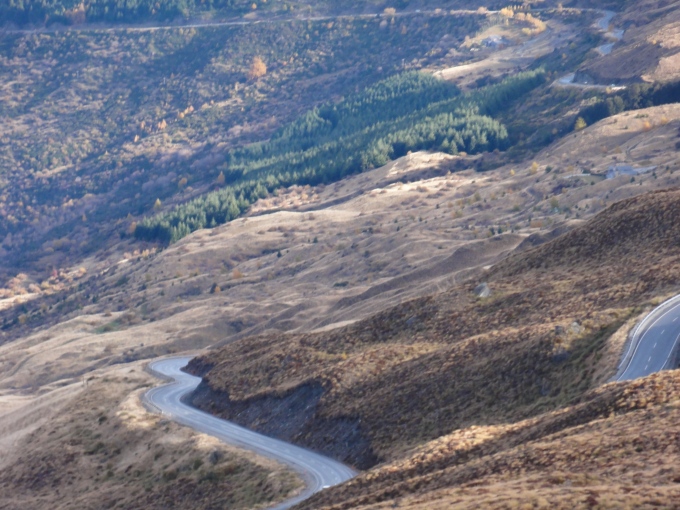
Inspiration, maybe – Volume 1

50 photographs, 50 stories, of which there is one of the 50 below.

They all start with –

A picture paints … well, as many words as you like.  For instance:

lookingdownfromcoronetpeak

And the story:

…

It was once said that a desperate man has everything to lose.

The man I was chasing was desperate, but I, on the other hand, was more desperate to catch him.

He’d left a trail of dead people from one end of the island to the other.

The team had put in a lot of effort to locate him, and now his capture was imminent.  We were following the car he was in, from a discreet distance, and, at the appropriate time, we would catch up, pull him over, and make the arrest.

There was nowhere for him to go.

The road led to a dead-end, and the only way off the mountain was back down the road we were now on.  Which was why I was somewhat surprised when we discovered where he was.

Where was he going?

“Damn,” I heard Alan mutter.  He was driving, being careful not to get too close, but not far enough away to lose sight of him.

“What?”

“I think he’s made us.”

“How?”

“Dumb bad luck, I’m guessing.  Or he expected we’d follow him up the mountain.  He’s just sped up.”

“How far away?”

“A half-mile.  We should see him higher up when we turn the next corner.”

It took an eternity to get there, and when we did, Alan was right, only he was further on than we thought.”

“Step on it.  Let’s catch him up before he gets to the top.”

Easy to say, not so easy to do.  The road was treacherous, and in places, just gravel, and there were no guard rails to stop a three-thousand-foot fall down the mountainside.

Good thing then, I had the foresight to have three agents on the hill for just such a scenario.

Ten minutes later, we were in sight of the car, still moving quickly, but we were going slightly faster.  We’d catch up just short of the summit car park.

Or so we thought.

Coming quickly around another corner, we almost slammed into the car we’d been chasing.

“What the hell…” Aland muttered.

I was out of the car and over to see if he was in it, but I knew that it was only a slender possibility.  The car was empty, and no indication of where he had gone.

Certainly not up the road.  It was relatively straightforward for the next mile, at which we would have reached the summit.  Up the mountainside from here, or down.

I looked up.  Nothing.

Alan yelled out, “He’s not going down, not that I can see, but if he did, there’s hardly a foothold and that’s a long fall.”

Then where did he go?

Then a man looking very much like our quarry came out from behind a rock embedded just a short distance up the hill.

“Sorry,” he said quite calmly.  “Had to go if you know what I mean.”

I’d lost him.

It was as simple as that.

I had been led a merry chase up the hill, and all the time he was getting away in a different direction.

I’d fallen for the oldest trick in the book, letting my desperation blind me to the disguise that anyone else would see through in an instant.

It was a lonely sight, looking down that road, knowing that I had to go all that way down again, only this time, without having to throw caution to the wind.

“Maybe next time,” Alan said.

“We’ll get him.  It’s just a matter of time.”

…

© Charles Heath 2019-2026

…

Find this and other stories in “Inspiration, maybe”, available soon.

InspirationMaybe1v1

365 Days of writing, 2026 – My second story 24

More about my second novel

…

It’s the final battle.

Never trust anyone else to do the job you should have done yourself in the first place.

It’s an interesting premise, but somehow encapsulates the ethos of this story.

Who is Romanov?  Zoe, Irina, whatever you want to call her, he’s her father.

But…

The notion that anonymously putting out a finder’s fee on his daughter’s head, coupled with the ire of Olga over the death of her son, sent everyone from the Minister in the Kremlin down into a tailspin.

The first effort, had the kidnappers just followed the rules, would have got an enormous payday, and everything would have been resolved there and then, in Marseilles.

No, people got greedy.

So did all the others, getting wind of what was at stake, enough to retire, or continue to retire in style.

Dominica, Yuri, and even Olga had she been smart.

She was not.

People didn’t have to die.  Zoe could have been spared a killing spree, and John, maybe some quality time with Olga.  It’s a mistake Olga won’t make again.

And John, now with a father-in-law, well, it’s just another surprise in a long list of surprises.

…

First Dig Two Graves

A sequel to “The Devil You Don’t”

…

Revenge is a dish best served cold – or preferably so when everything goes right

Of course, it rarely does, as Alistair, Zoe’s handler, discovers to his peril. Enter a wildcard, John, and whatever Alistair’s plan for dealing with Zoe was dies with him.

It leaves Zoe in completely unfamiliar territory.

…

John’s idyllic romance with a woman who is utterly out of his comfort zone is on borrowed time. She is still trying to reconcile her ambivalence after being so indifferent for so long.

They agree to take a break, during which she disappears. John, thinking she has left without saying goodbye, refuses to accept the inevitable and calls on an old friend for help in finding her.

After the mayhem and being briefly reunited, she recognises an inevitable truth: there is a price to pay for taking out Alistair; she must leave and find them first, and he would be wise to keep a low profile.

But keeping a low profile just isn’t possible, and enlisting another friend, a private detective and his sister, a deft computer hacker, they track her to the border between Austria and Hungary.

What John doesn’t realise is that another enemy is tracking him to find her too. It could have been a grand tour of Europe. Instead, it becomes a race against time before enemies old and new converge for what will be an inevitable showdown.

The cinema of my dreams – I always wanted to write a war story – Episode 15

For a story that was conceived during those long boring hours flying in a steel cocoon, striving to keep away the thoughts that the plane and everyone in it could just simply disappear as planes have in the past, it has come a long way.

Whilst I have always had a fascination in what happened during the second world war, not the battles or fighting, but in the more obscure events that took place, I decided to pen my own little sidebar to what was a long and bitter war.

And, so, it continues…

 …

The new leader of the resistance was the woman, Martina, best if I didn’t know her last name.  Fair enough.  There had been a necessary restructure after the infiltration, and untimely deaths of over half their number.

When I asked what happened to the former leader, I learned that he, and all but five other members were captured and taken to the castle.  They were now, for all intents and purposes, double agents, working for the Thompson at the castle.

The remaining five, of which Giuseppe and Martina belonged, had been forced to hide, dodging the men sent from the castle to hunt them down and kill them.

It was both the lack of reporting from the castle, followed by a message received regarding a possible traitor inside the resistance we had received in London, that set everything in motion, including my arrival to ascertain what was happening within the resistance group, and also at the castle.  Until that information reached us, there had been no reason to suspect that anything was wrong, and that the plans set in place to facilitate the defection of useful German scientists and, in some cases, high ranking officers, or that it had been infiltrated and to put it bluntly, original members had been killed and replaced.

I hadn’t realised who was in charge until the paratroopers had arrived and I’d become a prisoner.  Part of my brief had also been to verify the layout of the castle in accordance with old plans we had found using my archaeology background as a front, and Id managed to explore certain areas before Thompson had become suspicious and basically stopped me.  I’d searched part of the lower levels of the castle, but hadn’t got as far as the dungeons, where I eventually discovered becoming one myself, they were keeping many more prisoners.

I hadn’t long enough in the dungeons to discover whether any of the prisoners were part of the original team sent, whether there were any defectors being still held there, except for two that I’d seen, and definitely one I talked to, but there had to be more.

And, now that I’d found the remaining members of the resistance, it was my intention to return to rescue then, and retake the castle.  What was going to make it difficult, if not impossible, was the fact there were only five, and they were all busy trying not to get caught.  Still, I had to try, and I asked Martina if it was possible to get everyone together for a meeting.

Martina just laughed.  Whether it was my request or my plan to retake the castle was the cause of her mirth.

“With what?”  she said incredulously, “there are only five of us left, and we spend most of our time keeping one step ahead of the turncoats.”

“How many of them are there?”

“Too many, led by that bastard Francesco.  He didn’t like taking orders from a woman, thought we’d picked the wrong side, especially when the Germans killed about fifty of the villagers when we refused to give ourselves up.  They killed his wife and mother  after he refused to send them away.”

That didn’t seem right to me, to align yourself with that sort of enemy, not after what they had done.  Except there was no telling what anyone might do in the face of such an adversary, or circumstances.  But I had to ask, “Why would they?”

“They’ve got hostages from the village up there, in the dungeons.  That’s how they turned them.”

Damn.  I was not going to be able to turn them back, not when the lives of their friends, even family, was being threatened.

“Is that the case for those who didn’t surrender?”

“No.  Our relatives left when we could see what was going to happen.”

“So, the problem we have is, freeing the hostages, freeing the soldiers if there are any of the original group, retake the castle, and get the pipeline working again.”  And, I thought to myself, pull off seven miracles in fifteen minutes.

I was putting forward what was for all intents and purposes impossible.

“There’s more,” she said.  “There is a high-value scientist coming, last advice was that he was in transit from Germany to here.  We know, and they know, courtesy of Francesco.  They want him captured; we want him safely delivered to the submarine waiting to take him to England.  He’s due in three days, and he doesn’t know the castle’s allegiances have changed.”

“Then we’ll have to intercept him.”

“Yes, but we don’t know what he looks like, but we do have a code name.  Francesco and the castle don’t have that, only his real name.”

A name I saw on a highly confidential document on Forster’s desk the day he briefed me on my current mission.  Blackfoot.  I thought it was an operation.  I think that was the code name for the defector.

“Blackfoot?”

“How did you know?”

“A lucky guess.” 

The question I had was, why didn’t he tell me about it?  Did he think I was going to get captured and tortured?

“Well, you’re right.  But it means Francesco and his men are going to be looking extra hard for us, because without that codename, as soon as they fail to confirm their identity to him, he will kill himself rather than go back, which I’m guessing will be their least preferred option.  And to make matters worse, London’s orders are quite specific, this man must be delivered alive.  He has critical information they need, and which will hasten the end of the war”

“Then I think we should tell London the nature of our situation and see what they come up with.”

 …

© Charles Heath 2019