365 Days of writing, 2026 – 42

Day 42 – The writers mind

“The Writer’s Mind: Beyond Inspiration, Embracing the Power of Stubbornness and Patience”

Introduction: A Question of Depth

Have you ever compared a writer to a miner toiling in a dimly lit cave, chipping away at the rock not with a pickaxe, but with a fragile needle? This vivid metaphor—digging a well with a needle—captures the essence of the writer’s mind: not a vessel for fleeting inspiration, but a forge for stubbornness and patience. So, what truly defines a writer’s mind? Is it the spark of inspiration, or the quiet, relentless force of persistence?


The Myth of Inspiration: A Spark That Flickers

Pop culture often paints writers as scribes waiting for divine whispers, sitting by windows with blank pages and poetic daydreams. While inspiration undeniably provides a spark, it is but a matchstick in the fireplace of creation. Stephen King once said, “If it’s just sitting there, waiting to be written, why not write it?” This mindset reframes inspiration as a beginning, not a destination. Waiting for the “right moment” can become a prison. The truth? Ideas are seeds; they need tending, not just falling from the sky.


The Reality: A Symphony of Persistence and Patience

The writer’s mind is less a lightning bolt and more a marathon. Consider J.K. Rowling, who penned drafts of Harry Potter while raising a child on welfare. Or Maya Angelou, who wrote I Know Why the Caged Bird Sings after years of honing her voice. These stories reveal a pattern: legendary works are forged through relentless effort.

Persistence isn’t just about writing; it’s about rewriting, revising, and surviving rejection. Hemingway famously reworked the last page of A Farewell to Arms 39 times. This is the heart of the writer’s mind—not genius, but grit.


The Well-Metaphor: Chipping Away to Find the Flow

Imagine digging a well with nothing but a needle. The ground is rocky, the process endless, and doubt creeps in. Yet, somewhere beneath the surface, water waits. The writer’s mind is this process: slow, methodical, and demanding unwavering resolve. Each word, sentence, and draft is a careful poke at the earth. There’s no shortcut, no instant success—only the gradual discovery of a depth that was always there.

This metaphor also mirrors the emotional journey. There are days when the needle slips, and the hole seems futile. But the well, once unearthed, becomes a source of life. So too does the act of writing become a wellspring of clarity and purpose—if only you keep digging.


Embracing the Grind: Practical Wisdom for Writers

  1. Show Up Daily: Treat writing like a craft, not a performance. Neil Gaiman advises, “Write every day, even when you don’t want to.”
  2. Refine, Don’t Perfection: Let your first draft be messy. The magic happens in the revisions.
  3. Track Progress: Like a miner tallying each inch, note your progress—words written, pages turned.
  4. Celebrate Small Wins: Finished a paragraph? A chapter? Honour those victories; they’re proof of your stubbornness.
  5. Lean on the Community: Join writing groups. The collective grit of fellow writers fuels your fire.

Conclusion: The Writer’s Mind is a Masterpiece of Perseverance

In the end, a writer’s mind is not defined by inspiration but by the conviction to return to the page, time and again, like a miner with a needle. It’s the courage to dig when the well seems a mirage, and the patience to believe the water will flow. So, the next time you grapple with the blankness of a page or the weight of a half-finished novel, remember: you’re not failing—you’re simply chipping away at the rock, one determined stroke at a time.

The well is there. Keep digging.

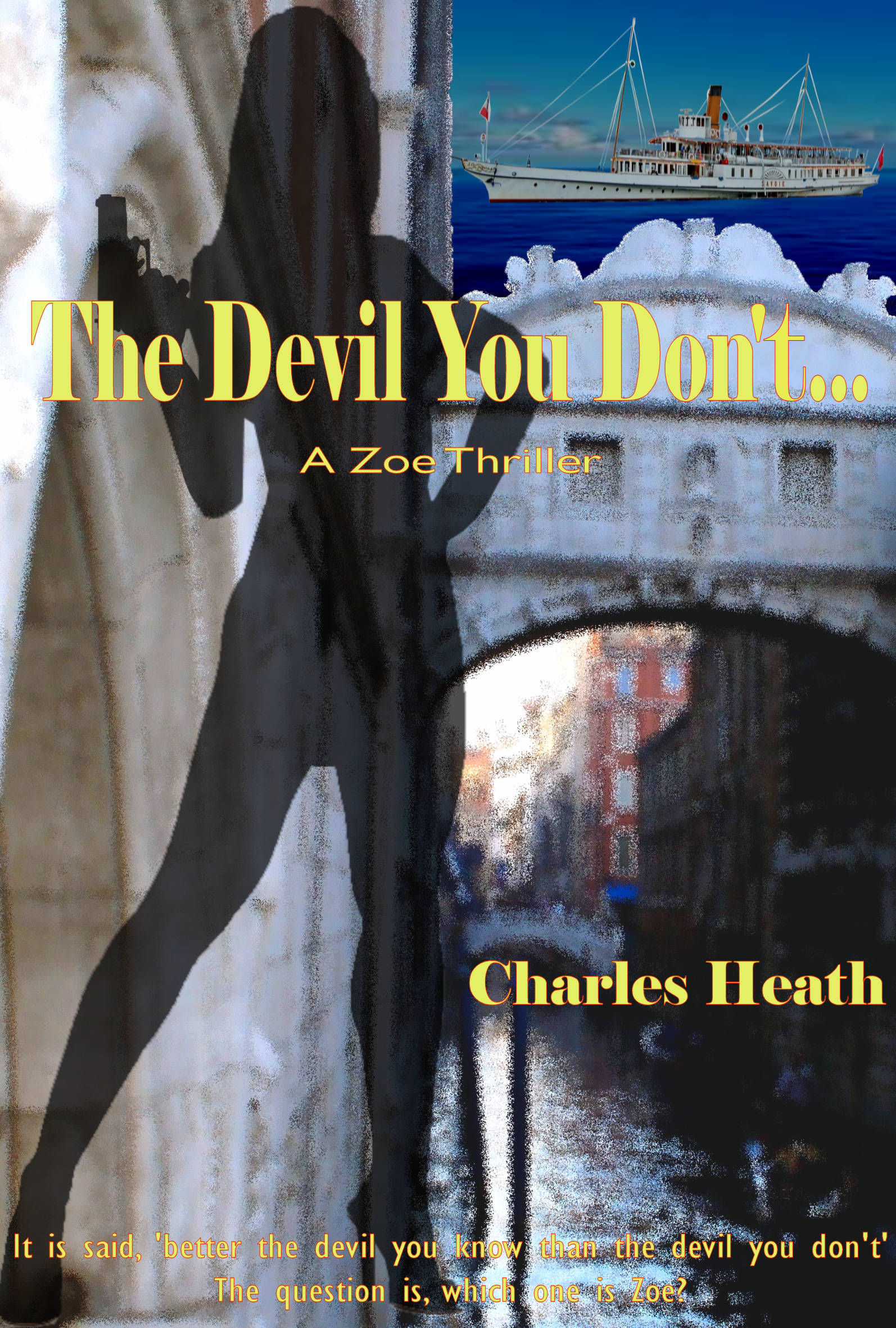
An excerpt from “The Devil You Don’t”

Available on Amazon Kindle here:  https://amzn.to/2Xyh1ow

By the time I returned to the Savoie, the rain had finally stopped, and there was a streak of blue sky to offer some hope the day would improve.

The ship was not crowded, the possibility of bad weather perhaps holding back potential passengers.  Of those I saw, a number of them would be aboard for the lunch by Phillippe Chevrier.  I thought about it, but the Concierge had told me about several restaurants in Yvoire and had given me a hand-drawn map of the village.  I think he came from the area because he spoke with the pride and knowledge of a resident.

I was looking down from the upper deck observing the last of the boarding passengers when I saw a woman, notable for her red coat and matching shoes, making a last-minute dash to get on board just before the gangway was removed.  In fact, her ungainly manner of boarding had also captured a few of the other passenger’s attention.  Now they would have something else to talk about, other than the possibility of further rain.

I saw her smile at the deckhand, but he did not smile back.  He was not impressed with her bravado, perhaps because of possible injury.  He looked at her ticket then nodded dismissively, and went back to his duties in getting the ship underway.  I was going to check the departure time, but I, like the other passengers, had my attention diverted to the woman in red.

From what I could see there was something about her.  It struck me when the light caught her as she turned to look down the deck, giving me a perfect profile.  I was going to say she looked foreign, but here, as in almost anywhere in Europe, that described just about everyone.  Perhaps I was just comparing her to Phillipa, so definitively British, whereas this woman was very definitely not.

She was perhaps in her 30’s, slim or perhaps the word I’d use was lissom, and had the look and manner of a model.  I say that because Phillipa had dragged me to most of the showings, whether in Milan, Rome, New York, London, or Paris.  The clothes were familiar, and in the back of my mind, I had a feeling I’d seen her before.

Or perhaps, to me, all models looked the same.

She looked up in my direction, and before I could divert my eyes, she locked on.  I could feel her gaze boring into me, and then it was gone as if she had been looking straight through me.  I remained out on deck as the ship got underway, watching her disappear inside the cabin.  My curiosity was piqued, so I decided to keep an eye out for her.

I could feel the coolness of the air as the ship picked up speed, not that it was going to be very fast.  With stops, the trip would take nearly two hours to get to my destination.  It would turn back almost immediately, but I was going to stay until the evening when it returned at about half eight.  It would give me enough time to sample the local fare, and take a tour of the medieval village.

Few other passengers ventured out on the deck, most staying inside or going to lunch.  After a short time, I came back down to the main deck and headed forward.  I wanted to clear my head by concentrating on the movement of the vessel through the water, breathing in the crisp, clean air, and let the peacefulness of the surroundings envelope me.

It didn’t work.

I knew it wouldn’t be long before I started thinking about why things hadn’t worked, and what part I played in it.  And the usual question that came to mind when something didn’t work out.  What was wrong with me?

I usually blamed it on my upbringing.

I had one of those so-called privileged lives, a nanny till I was old enough to go to boarding school, then sent to the best schools in the land.  There I learned everything I needed to be the son of a Duke, or, as my father called it in one of his lighter moments, nobility in waiting.

Had this been five or six hundred years ago, I would need to have sword and jousting skills, or if it had been a few hundred years later a keen military mind.  If nothing else I could ride a horse, and go on hunts, or did until they became not the thing to do.

I learned six languages, and everything I needed to become a diplomat in the far-flung British Empire, except the Empire had become the Commonwealth, and then, when no-one was looking, Britain’s influence in the world finally disappeared.  I was a man without a cause, without a vocation, and no place to go.

Computers were the new vogue and I had an aptitude for programming.  I guess that went hand in hand with mathematics, which although I hated the subject, I excelled in.  Both I and another noble outcast used to toss ideas around in school, but when it came to the end of our education, he chose to enter the public service, and I took a few of those ideas we had mulled over and turned them into a company.

About a year ago, I was made an offer I couldn’t refuse.  There were so many zeroes on the end of it I just said yes, put the money into a very grateful bank, and was still trying to come to terms with it.

Sadly, I still had no idea what I was going to do with the rest of my life.  My parents had asked me to come back home and help manage the estate, and I did for a few weeks.  It was as long as it took for my parents to drive me insane.

Back in the city, I spent a few months looking for a mundane job, but there were very few that suited the qualifications I had, and the rest, I think I intimidated the interviewer simply because of who I was.  In that time I’d also featured on the cover of the Economist, and through my well-meaning accountant, started involving myself with various charities, earning the title ‘philanthropist’.

And despite all of this exposure, even making one of those ubiquitous ‘eligible bachelor’ lists, I still could not find ‘the one’, the woman I wanted to spend the rest of my life with.  Phillipa seemed to fit the bill, but in time she proved to be a troubled soul with ‘Daddy’ issues.  I knew that in building a relationship compromise was necessary, but with her, in the end, everything was a compromise and what had happened was always going to be the end result.

It was perhaps a by-product of the whole nobility thing.  There was a certain expectation I had to fulfill, to my peers, contemporaries, parents and family, and those who either liked or hated what it represented.  The problem was, I didn’t feel like I belonged.  Not like my friend from schooldays, and now obscure acquaintance, Sebastian.  He had been elevated to his Dukedom early when his father died when he was in his twenties.  He had managed to fade from the limelight and was rarely mentioned either in the papers or the gossip columns.  He was one of the lucky ones.

I had managed to keep a similarly low profile until I met Phillipa.  From that moment, my obscurity disappeared.  It was, I could see now, part of a plan put in place by Phillipa’s father, a man who hogged the limelight with his daughter, to raise the profile of the family name and through it their businesses.  He was nothing if not the consummate self-advertisement.

Perhaps I was supposed to be the last piece of the puzzle, the attachment to the establishment, that link with a class of people he would not normally get in the front door.  There was nothing refined about him or his family, and more than once I’d noticed my contemporaries cringe at the mention of his name, or any reference of my association with him.

Yet could I truthfully say I really wanted to go back to the obscurity I had before Phillipa?  For all her faults, there were times when she had been fun to be with, particularly when I first met her when she had a certain air of unpredictability.  That had slowly disappeared as she became part of her father’s plan for the future.  She just failed to see how much he was using her.

Or perhaps, over time, I had become cynical.

I thought about calling her.  It was one of those moments of weakness when I felt alone, more alone than usual.

I diverted my attention back to my surroundings and the shoreline.  Out of the corner of my eye, I could see the woman in the red coat, making a move.  The red coat was like a beacon, a sort of fire engine red.  It was not the sort of coat most of the women I knew would wear, but on her, it looked terrific.  In fact, her sublime beauty was the one other attribute that was distinctly noticeable, along with the fact her hair was short, rather than long, and jet black.

I had to wrench my attention away from her.

A few minutes later several other passengers came out of the cabin for a walk around the deck, perhaps to get some exercise, perhaps checking up on me, or perhaps I was being paranoid.  I waited till they passed on their way forward, and I turned and headed aft.

I watched the wake sluicing out from under the stern for a few minutes, before retracing my steps to the front of the ship and there I stood against the railing, watching the bow carve its way through the water.  It was almost mesmerizing.  There, I emptied my mind of thoughts about Phillipa, and thoughts about the woman in the red coat.

Until a female voice behind me said, “Having a bad day?”

I started, caught by surprise, and slowly turned.  The woman in the red coat had somehow got very close me without my realizing it.  How did she do that?  I was so surprised I couldn’t answer immediately.

“I do hope you are not contemplating jumping.  I hear the water is very cold.”

Closer up, I could see what I’d missed when I saw her on the main deck.  There was a slight hint of Chinese, or Oriental, in her particularly around the eyes, and of her hair which was jet black.  An ancestor twice or more removed had left their mark, not in a dominant way, but more subtle, and easily missed except from a very short distance away, like now.

Other than that, she was quite possibly Eastern European, perhaps Russian, though that covered a lot of territory.  The incongruity of it was that she spoke with an American accent, and fluent enough for me to believe English was her first language.

Usually, I could ‘read’ people, but she was a clean slate.  Her expression was one of amusement, but with cold eyes.  My first thought, then, was to be careful.

“No.  Not yet.”  I coughed to clear my throat because I could hardly speak.  And blushed, because that was what I did when confronted by a woman, beautiful or otherwise.

The amusement gave way to a hint of a smile that brightened her demeanor as a little warmth reached her eyes.  “So that’s a maybe.  Should I change into my lifesaving gear, just in case?”

It conjured up a rather interesting image in my mind until I reluctantly dismissed it.

“Perhaps I should move away from the edge,” I said, moving sideways until I was back on the main deck, a few feet further away.  Her eyes had followed me, and when I stopped she turned to face me again.  She did not move closer.

I realized then she had removed her beret and it was in her left side coat pocket.  “Thanks for your concern …?”

“Zoe.”

“Thanks for your concern, Zoe.  By the way, my name is John.”

She smiled again, perhaps in an attempt to put me at ease.  “I saw you earlier, you looked so sad, I thought …”

“I might throw myself overboard?”

“An idiotic notion I admit, but it is better to be safe than sorry.”

Then she tilted her head to one side then the other, looking intently at me.  “You seem to be familiar.  Do I know you?”

I tried to think of where I may have seen her before, but all I could remember was what I’d thought earlier when I first saw her; she was a model and had been at one of the showings.  If she was, it would be more likely she would remember Phillipa, not me.  Phillipa always had to sit in the front row.

“Probably not.”  I also didn’t mention the fact she may have seen my picture in the society pages of several tabloid newspapers because she didn’t look the sort of woman who needed a daily dose of the comings and goings, and, more often than not, scandal associated with so-called celebrities.

She gave me a look, one that told me she had just realized who I was.  “Yes, I remember now.  You made the front cover of the Economist.  You sold your company for a small fortune.”

Of course.  She was not the first who had recognized me from that cover.  It had raised my profile considerably, but not the Sternhaven’s.  That article had not mentioned Phillipa or her family.  I suspect Grandmother had something to do with that, and it was, now I thought about it, another nail in the coffin that was my relationship with Phillipa.

“I wouldn’t say it was a fortune, small or otherwise, just fortunate.”  Each time, I found myself playing down the wealth aspect of the business deal.

“Perhaps then, as the journalist wrote, you were lucky.  It is not, I think, a good time for internet-based companies.”

The latter statement was an interesting fact, one she read in the Financial Times which had made that exact comment recently.

“But I am boring you.”  She smiled again.  “I should be minding my own business and leaving you to your thoughts.  I am sorry.”

She turned to leave and took a few steps towards the main cabin.

“You’re not boring me,” I said, thinking I was letting my paranoia get the better of me.  It had been Sebastian on learning of my good fortune, who had warned me against ‘a certain element here and abroad’ whose sole aim would be to separate me from my money.  He was not very subtle when he described their methods.

But I knew he was right.  I should have let her walk away.

She stopped and turned around.  “You seem nothing like the man I read about in the Economist.”

A sudden and awful thought popped into my head.  Those words were part of a very familiar opening gambit.  “Are you a reporter?”

I was not sure if she looked surprised, or amused.  “Do I look like one?”

I silently cursed myself for speaking before thinking, and then immediately ignored my own admonishment.  “People rarely look like what they are.”

I saw the subtle shake of the head and expected her to take her leave.  Instead she astonished me.

“I fear we have got off on the wrong foot.  To be honest, I’m not usually this forward, but you seemed like you needed cheering up when probably the opposite is true.  Aside from the fact this excursion was probably a bad idea.  And,” she added with a little shrug, “perhaps I talk too much.”

I was not sure what I thought of her after that extraordinary admission. It was not something I would do, but it was an interesting way to approach someone and have them ignoring their natural instinct.  I would let Sebastian whisper in my ear for a little longer and see where this was going.

“Oddly enough, I was thinking the same thing.  I was supposed to be traveling with my prospective bride.  I think you can imagine how that turned out.”

“She’s not here?”

“No.”

“She’s in the cabin?”  Her eyes strayed in that direction for a moment then came back to me.  She seemed surprised I might be traveling with someone.

“No.  She is back in England, and the wedding is off.  So is the relationship.  She dumped me by text.”

OK, why was I sharing this humiliating piece of information with her?  I still couldn’t be sure she was not a reporter.

She motioned to an empty seat, back from the edge.  No walking the plank today.  She moved towards it and sat down.  She showed no signs of being cold, nor interested in the breeze upsetting her hair.  Phillipa would be having a tantrum about now, being kept outside, and freaking out over what the breeze might be doing to her appearance.

I wondered, if only for a few seconds if she used this approach with anyone else.  I guess I was a little different, a seemingly rich businessman alone on a ferry on Lake Geneva, contemplating the way his life had gone so completely off track.

She watched as I sat at the other end of the bench, leaving about a yard between us.  After I leaned back and made myself as comfortable as I could, she said, “I have also experienced something similar, though not by text message.  It is difficult, the first few days.”

“I saw it coming.”

“I did not.”  She frowned, a sort of lifeless expression taking over, perhaps brought on by the memory of what had happened to her.  “But it is done, and I moved on.  Was she the love of your life?”

OK, that was unexpected.

When I didn’t answer, she said, “I am sorry.  Sometimes I ask personal questions without realizing what I’m doing.  It is none of my business.”  She shivered.  “Perhaps we should go back inside.”

She stood, and held out her hand.  Should I take it and be drawn into her web?  I thought of Sebastian.  What would he do in this situation?

I took her hand in mine and let her pull me gently to my feet.  “Wise choice,” she said, looking up at the sky.

It just started to rain.

© Charles Heath 2015-2023

newdevilcvr6

In a word: Fourth

When you realize you are the fourth child, you are really hoping that the split is two boys and three girls.  Woe betide you if you are a boy and you have three sisters.  It could also be as interesting, notice I didn’t say intolerable) if you are a girl with three brothers.

Hang on, I know someone who was in that exact same situation.  Fortunately, being a girl and the youngest, she could do no wrong in the eyes of her father.

But I digress (as usual)

The meaning of fourth is self-evident, just count to four and it’s the fourth number, perhaps better explained by the fact it is one after the third in a series

Then we use it with other words like,

Fourth-gear, usually reserved for the highway where one expects to geta clear run.  Of course, with more and more cars on the road, sometimes it’s difficult to get out of second.

The fourth estate, no, not what a rich person owns, along with a lot more one guesses, but another name for the press.

One fourth, your share of an estate, if of course, you have three other siblings.  And, in murder mysteries, usually those fourths seem to die mysteriously, and your fourth becomes a third, a half, and then you go to jail.

in fourth place, where it seems all the horse I back run

And,

This is not to be confused with the word forth, which sounds the same but means something entirely different, like

I’m sure we’ve all been told to go forth and be something or other, which means to go forward or come out of hiding

It is also a Scottish river, one notably called the Firth of Forth, and if it sounds odd, so do a lot things in Scotland

You could also place back and forth, much the same as you would in a hospital waiting for the birth of your first child.

An excerpt from “What Sets Us Apart”, a mystery with a twist

See the excerpt from the story below, just a taste of what’s in store…

http://amzn.to/2Eryfth

whatsetscover

McCallister was old school, a man who would most likely fit in perfectly campaigning on the battlefields of Europe during the Second World War. He’d been like a fish out of water in the army, post-Falklands, and while he retired a hero, he still felt he’d more to give.

He’d applied and was accepted as head of a SWAT team, and, watching him now as he and his men disembarked from the truck in almost military precision, a look passed between Annette, the police liaison officer, and I that said she’d seen it all before. I know I had.

There was a one in four chance his team would be selected for this operation, and she had been hoping it would be one of the other three. While waiting for them to arrive she filled me in on the various teams. His was the least co-operative, and the more likely to make ad-hoc decisions rather than adhere to the plan, or any orders that may come from the officer in charge.

This, she said quite bluntly, was going to end badly.

I still had no idea why Prendergast instructed me to attend the scene of what looked to be a normal domestic operation, but as the nominated expert in the field in these types of situations, it was fairly clear he wasn’t taking any chances. It was always a matter of opinion between us, and generally I lost.

In this case, it was an anonymous report identifying what the authorities believed were explosives in one of the dockside sheds where explosives were not supposed to be.

The only reason why the report was given any credence was the man, while not identifying himself by name, said he’d been an explosive expert once and recognized the boxes. That could mean anything, but the Chief Constable was a cautious man.

With his men settled and preparing their weapons, McCallister came over to the command post, not much more than the SUV my liaison and I arrived in, with weapons, bulletproof vests, and rolls of tape to cordon off the area afterward. We both had coffee, steaming in the cold early morning air. Dawn was slowly approaching and although rain had been forecast it had yet to arrive.

A man by the name of Benson was in charge. He too had groaned when he saw McCallister.

“A fine morning for it.” McCallister was the only enthusiastic one here.

He didn’t say what ‘it’ was, but I thought it might eventually be mayhem.

“Let’s hope the rain stays away. It’s going to be difficult enough without it,” Benson said, rubbing his hands together. We had been waiting for the SWAT team to arrive, and another team to take up their position under the wharf, and who was in the final stages of securing their position.

While we were waiting we drew up the plan. I’d go in first to check on what we were dealing with, and what type of explosives. The SWAT team, in the meantime, were to ensure all the exits to the shed were covered. When I gave the signal, they were to enter and secure the building. We were not expecting anyone inside or out, and no movement had been detected in the last hour since our arrival and deployment.

“What’s the current situation?”

“I’ve got eyes on the building, and a team coming in from the waterside, underneath. Its slow progress, but they’re nearly there. Once they’re in place, we’re sending McKenzie in.”

He looked in my direction.

“With due respect sir, shouldn’t it be one of us?” McCallister glared at me with the contempt that only a decorated military officer could.

“No. I have orders from above, much higher than I care to argue with, so, McCallister, no gung-ho heroics for the moment. Just be ready to move on my command, and make sure you have three teams at the exit points, ready to secure the building.”

McCallister opened his mouth, no doubt to question those orders, but instead closed it again. “Yes sir,” he muttered and turned away heading back to his men.

“You’re not going to have much time before he storms the battlements,” Benson quietly said to me, a hint of exasperation in his tone. “I’m dreading the paperwork.”

It was exactly what my liaison officer said when she saw McCallister arriving.

The water team sent their ‘in position’ signal, and we were ready to go.

In the hour or so we’d been on site nothing had stirred, no arrivals, no departures, and no sign anyone was inside, but that didn’t mean we were alone. Nor did it mean I was going to walk in and see immediately what was going on. If it was a cache of explosives then it was possible the building was booby-trapped in any number of ways, there could be sentries or guards, and they had eyes on us, or it might be a false alarm.

I was hoping for the latter.

I put on the bulletproof vest, thinking it was a poor substitute for full battle armor against an exploding bomb, but we were still treating this as a ‘suspected’ case. I noticed my liaison officer was pulling on her bulletproof vest too.

“You don’t have to go. This is my party, not yours,” I said.

“The Chief Constable told me to stick to you like glue, sir.”

I looked at Benson. “Talk some sense into her please, this is not a kindergarten outing.”

He shrugged. Seeing McCallister had taken all the fight out of him. “Orders are orders. If that’s what the Chief Constable requested …”

Madness. I glared at her, and she gave me a wan smile. “Stay behind me then, and don’t do anything stupid.”

“Believe me, I won’t be.” She pulled out and checked her weapon, chambering the first round. It made a reassuring sound.

Suited up, weapons readied, a last sip of the coffee in a stomach that was already churning from nerves and tension, I looked at the target, one hundred yards distant and thought it was going to be the longest hundred yards I’d ever traversed. At least for this week.

A swirling mist rolled in and caused a slight change in plans.

Because the front of the buildings was constantly illuminated by large overhead arc lamps, my intention had been to approach the building from the rear where there was less light and more cover. Despite the lack of movement, if there were explosives in that building, there’d be ‘enemy’ surveillance somewhere, and, after making that assumption, I believed it was going to be easier and less noticeable to use the darkness as a cover.

It was a result of the consultation, and studying the plans of the warehouse, plans that showed three entrances, the main front hangar type doors, a side entrance for truck entry and exit and a small door in the rear, at the end of an internal passage leading to several offices. I also assumed it was the exit used when smokers needed a break. Our entry would be by the rear door or failing that, the side entrance where a door was built into the larger sliding doors. In both cases, the locks would not present a problem.

The change in the weather made the approach shorter, and given the density of the mist now turning into a fog, we were able to approach by the front, hugging the walls, and moving quickly while there was cover. I could feel the dampness of the mist and shivered more than once.

It was nerves more than the cold.

I could also feel rather than see the presence of Annette behind me, and once felt her breath on my neck when we stopped for a quick reconnaissance.

It was the same for McCallister’s men. I could feel them following us, quickly and quietly, and expected, if I turned around, to see him breathing down my neck too.

It added to the tension.

My plan was still to enter by the back door.

We slipped up the alley between the two sheds to the rear corner and stopped. I heard a noise coming from the rear of the building, and the light tap on the shoulder told me Annette had heard it too. I put my hand up to signal her to wait, and as a swirl of mist rolled in, I slipped around the corner heading towards where I’d last seen the glow of a cigarette.

The mist cleared, and we saw each other at the same time. He was a bearded man in battle fatigues, not the average dockside security guard.

He was quick, but my slight element of surprise was his undoing, and he was down and unconscious in less than a few seconds with barely a sound beyond the body hitting the ground. Zip ties secured his hands and legs, and tape his mouth. Annette joined me a minute after securing him.

A glance at the body then me, “I can see why they, whoever they are, sent you.”

She’d asked who I worked for, and I didn’t answer. It was best she didn’t know.

“Stay behind me,” I said, more urgency in my tone. If there was one, there’d be another.

Luck was with us so far. A man outside smoking meant no booby traps on the back door, and quite possibly there’d be none inside. But it indicated there were more men inside, and if so, it appeared they were very well trained. If that were the case, they would be formidable opponents.

The fear factor increased exponentially.

I slowly opened the door and looked in. A pale light shone from within the warehouse itself, one that was not bright enough to be detected from outside. None of the offices had lights on, so it was possible they were vacant. I realized then they had blacked out the windows. Why hadn’t someone checked this?

Once inside, the door closed behind us, progress was slow and careful. She remained directly behind me, gun ready to shoot anything that moved. I had a momentary thought for McCallister and his men, securing the perimeter.

At the end of the corridor, the extent of the warehouse stretched before us. The pale lighting made it seem like a vast empty cavern, except for a long trestle table along one side, and, behind it, stacks of wooden crates, some opened. It looked like a production line.

To get to the table from where we were was a ten-yard walk in the open. There was no cover. If we stuck to the walls, there was equally no cover and a longer walk.

We needed a distraction.

As if on cue, the two main entrances disintegrated into flying shrapnel accompanied by a deafening explosion that momentarily disoriented both Annette and I. Through the smoke and dust kicked up I saw three men appear from behind the wooden crates, each with what looked like machine guns, spraying bullets in the direction of the incoming SWAT members.

They never had a chance, cut down before they made ten steps into the building.

By the time I’d recovered, my head heavy, eyes watering and ears still ringing, I took several steps towards them, managing to take down two of the gunmen but not the third.

I heard a voice, Annette’s I think, yell out, “Oh, God, he’s got a trigger,” just before another explosion, though all I remember in that split second was a bright flash, the intense heat, something very heavy smashing into my chest knocking the wind out of me, and then the sensation of flying, just before I hit the wall.

I spent four weeks in an induced coma, three months being stitched back together and another six learning to do all those basic actions everyone took for granted. It was twelve months almost to the day when I was released from the hospital, physically, except for a few alterations required after being hit by shrapnel, looking the same as I always had.

But mentally? The document I’d signed on release said it all, ‘not fit for active duty; discharged’.

It was in the name of David Cheney. For all intents and purposes, Alistair McKenzie was killed in that warehouse, and for the first time ever, an agent left the Department, the first to retire alive.

I was not sure I liked the idea of making history.

© Charles Heath 2016-2020

The cinema of my dreams – I always wanted to see the planets – Episode 9

What’s the worst that could happen?

Captains invariably hated the word ‘problem’. I did too, because it conjured up so many different scenarios, each more scarier than the last, and maginified exponentially because we were in space.

We took a closer look, and it was the sort of damage if it was back on Earth, one would associate with weapons fire, lasers to be exact.

Yes, in the 24th century we had ray guns, handheld, and ship bound.

The only problem was, only the cruise class vessels, like the one I was now on, were allowed to have them, and using them, well, the paperwork alone could keep a complement of 20 working day and night for a month.

Test them, yes, less paperwork, use them, no. There had never been a reason to.

But someone had, and on a freighter, which only meant one possibility, that whatever the freighter had been carrying, had been worth violating a thousand regulations and rules.

And bring their ship and selves out into the light.

It was, of course, Space Command’s worst nightmare realised, that the ideal of space exploration as a united effort by everyone, had a member who had decided against unity.

Unless, of course, the improbably had happened, there was life outside our solar system, and we were dealing with a new planet, or people.

Except I would not expect them to use something as conventional as a laser.

Myrtle had put us very close to the damaged area and taken a number of photographs, and the engineer had analysed the damaged area.

Then, cleared to enter the freighter, she took us up to the cargo doors and waited as we watched them open.

It was the same time the engineer’s hand held computer started beeping.

And a warning light on the console in front of Myrtle started flashing, accompanied by a warning klaxon.

Another vessel had just entered our proximity zone.

© Charles Heath 2021

A photograph from the Inspirational bin – 28

Just what everyone needs in their backyard:  A Gazebo, or a small bandstand!

20200215_142419

Often when we go to different places, it gives us ideas, sometimes ideas beyond what is possible.

I have always wanted a gazebo, perhaps not on the same grand scale as the one above, but one where we can put a BBQ and a few seats, and relax on a sunny afternoon.

Shade, a cool breeze, a cold glass of wine or beer, and the aroma of meat cooking on an open flame.

But…

Reality sets in.  The backyard isn’t big enough, so my dream will stay just that.

But as an idea for a story, I suspect this might be the place where you first met the love of your life in circumstances that become the stuff of legends.

It can definitely be a meeting place, whether to carry on illegal activities, whether it’s after sneaking away to be with someone whom others will not approve, or whether it is many, many years later to reminisce, or to reconnect.

As usual, the possibilities are endless.

The cinema of my dreams – Was it just another surveillance job – Episode 47

I’m back home and this story has been sitting on the back burner for a few months, waiting for some more to be written.

The trouble is, there are also other stories to write, and I’m not very good at prioritizing.

But, here we are, a few minutes opened up and it didn’t take long to get back into the groove.

Chasing leads, maybe


When the room was empty and only Richards and I remained, he cut the ties that bound my hands and legs.

“Bad business,” he said.

I sat again, and flexed the muscles that had begun to stiffen up whilst tightly bound.

“I’m assuming you know a woman by the name of Jan?” I said. “She told me she was working for MI6 so I’m assuming you’re her handler.”

“When she chooses to be handled, yes.  Jan is just one of her names.  She’s currently missing, and I think we now know why?”

“Her work,” I nodded towards the body.

“God no.  She’s charged with chasing down leads and then calling the cavalry.  We had a tracker on this chap, found him, and had him in a safe facility awaiting interrogation, what we thought was safe at any rate, and Jan and another agent watching over him until the interrogation team arrived.  When the interrogation team got there everyone was gone, but with enough blood on the floor to paint a pretty clear picture.  Maury had been interrogated and killed there, dumped here, with no indication of the whereabouts of our agents.  She told me this guy and another trained you, and others, in rather strange circumstances.  A bogus operation. To what end?”

“From what I could tell, a single surveillance operation.  Me and a dozen others.  Cut loose after it failed, those of us that survived, that is.”

“A lot of effort to achieve nothing.”

“Pity we can’t ask him what it was about?”  I looked over at the body.  Maury was hardly recognizable.  Whoever carried out the interrogation had been either in a hurry or in a bad mood.

“Indeed.  She told me this chap called O’Connell was involved.  Now so?”

Another rule that popped into my head from the training: never share information with other agencies unless you absolutely had to.  I had no doubt if Dobbin was here, he would agree, but he wasn’t.

I wondered if I should tell him she had allegiance to another branch of the secret services, or mention Dobbin.

“He was the surveillance target.  We were charged with observing him, but not what he was suspected of.  I followed him as far as the exploding shop, got temporarily disorientated after the blast,, but managed to reacquire the target, following him to an alley where I spoke briefly to him before Maury and Severin arrived, and he was shot, apparently killed.”

“Either he was or he wasn’t.”

“The body disappeared.  My view is he is still alive, somewhere.”

“That explosion was supposed to be caused by a gas leak.”

“Standard operational doubletalk.  A journalist was killed, apparently in the shop waiting for the target.  It went up after the target passed, I’m assuming his tradecraft was to check first then go back.  Never got a chance.  I think now given the circumstances, the journalist was going to hand something off.  I’ve been asked a number of times by various people about a USB drive.  You know anything about it?”

“This is the first I’m hearing about anything about a USB drive.  You know what was on it?”

“Above my pay grade, I was told.”

“OK.  What about this Severin character?:

“All I have is a phone number, and that, I think we can both agree, will be a burner.”

“Agreed, but it might be useful.”

I gave it to him and he put it on his phone.

A new team of men in white suits arrived at the door, no doubt MI5 forensic specialists, and two more agents, bigger and tougher, what I would call the muscle.

“I’m afraid you’re going to have to come back to the office to answer a few more questions.  It’s not custody, but mandatory co-operation.”

“And if I refuse?”

“It might make their day if you know what I mean.”

I shrugged.  One I might be able to take, but not the both of them.  And they both looked like they would be happy to teach me the error of my ways if I tried to escape/

“That won’t be necessary.  I’m taking him with me.”

“Dobbin just came to the door, flashing an MI6 warrant card.

“I’ve been charged with cleaning this mess up.”

“And so you shall, but not including this agent.  Orders from above, reasons why, as they say, are above your pay grade.

I suspect the warrant card said Dobbin outranked him.  Did our people have fake MI6 IDs?

“This is highly irregular.”

“Call your boss, if you don’t like it.  I can wait.”

I could see the reluctance in his face.

He glared at me.  “Go, but don’t go too far.  I still might get clearance to have another chat.”

© Charles Heath 2020-2022

365 Days of writing, 2026 – 41

Day 41 – Writing exercise – This might be the last thing I ever tell you…

Here’s the thing.

You get to a point where you realise that your days are numbered.

It sneaks up on you, even though you know the end is near, but you don’t want to think about it, because it’s not time.

That last heart attack, the one the doctor warned you about if you didn’t slow down, well, thinking that it was not going to happen to you, it does.

But it’s inevitable.  Slowing down, taking it easy, it might stave off the inevitable, but it was always going to happen.

I’d lived a good life.  Not perfect.  I’d made mistakes, but we all do.  I thought that when I’d lost Elsie, my life was over.

It wasn’t.  God had other plans for me. 

But now, I felt as though my work was done.

I could relax and let whatever was coming come.

Father Bernard was an eternal optimist.  I guess being a priest, you had to be.

I’m sure he had seen everything, and then some.  He wasn’t much younger than I, and when I broached the subject of retirement, he always said he had a little more of God’s work to be before he departed this mortal earth.

How he could put on a happy face visiting us, poor, wretched, dying souls, was beyond me.  But it was a palliative care ward, and we were all on that last stretch, from third base to home.

I felt his approach, rather than seeing, my eyes no longer bring what they used to be.  It was followed by the gentle squeak as his bulk tried to find a comfortable position.

“Still trying to sneak up on me?” I said.

“I don’t think that’s possible.  You don’t fool me.”

I opened my eyes and waited until his face came into focus.  We were both at the end of our run.

“Can’t help trying to beat the odds.  The tribe are coming tomorrow.  They think I’m dragging this out just to inconvenience them.”

“Aren’t you?”

“Perhaps a little.  They want their inheritance. Last month, Joseph tried to convince me that the money was no use to me, given my prospects.”

“Given your prospects.  He’s a doctor now?”

“After consulting with Richards, I’m sure he’s asked if there was a way of hastening the process.  He says he needs the money.”

“Then he doesn’t know?”

My children and their children had certain expectations given to them by my eldest son, the mercenary.  I found it rather strange that he had always been expecting to cash in on the Morgan millions.  There was never a lot of money, but I expect he and the others could wait to find out how much they were getting.

And after a bad run a year ago when they all thought I was going to die, as indeed I did too, they had all slugged in anticipation of a payday, and found themselves drowning in debt.

I was surprised they hadn’t sent in an assassin.

“I told him.  I told them all.  The coffers are empty.  The last of the fortune is going to these people, though I have to say, for the premium care package, it’s pretty ordinary.”

“You could be talking to the vicar’s dog, instead of me.  Your eulogy is going to be the best you’ve ever heard.”

“How’s that going?”

“Still struggling to find anything nice about you.  I’m sure it’s out there somewhere.”

A face appeared in the doorway.  The youngest of Joseph’s brood, with seven elder siblings, she had suffered the most.  He favoured the boys, and the two girls got very little.

I felt sorry for them and helped where I could

Father Bernard dragged himself out of the chair.  “I’ll be back tomorrow.  You might need some moral support.”

He nodded to Elsie as he passed her.  She came in and sat in the recently vacated chair.

“Your dad knows you’re here?”

“I asked him to come with me.  As you can see, he didn’t.”

“He’s coming tomorrow.”

“I’m not.  Got work at the diner.”

“Maisie?”

Maisie was her older sister.  She was no longer at home, and I couldn’t remember the last time she’d spoken to her father.

“Swears she’ll never talk to him again.  The so-called inheritance is going to the boys.  He said we should find rich husbands if we wanted money.”

“Not what your mother would say, or be pleased about if she were still around.  A pity.  But who knows, you might become filthy rich one day.”

“If only.”

“Have you decided what you want to do?”  She had just finished high school with excellent grades.  The trouble was the fees for a college education.  Her father was never going to pay.

“It’s no use even thinking about it.  I’m never going to be able to afford it.  Not on the money I earn.”

“What if I did some juggling?”

“I don’t want you to suffer any more than you have to.  That money is for you, and your care.”

“I’m not going to be around for much longer.”

“And not spite dad?  That isn’t you, Grandpa.  You know how antsy he is about his non-existent inheritance.  They all sit around the table divvying up the spoils.  They even fight over it.”

“Well, don’t you be like them.  Like I told you, your father took the education funds your grandmother set up for you all and spent it on a failing business.  Lucky his mother had died, or she would have killed him.”

“Why didn’t you?”

“Because there is this thing called the psychological moment, and that’s when I intend to see the look on his face.”

“Can I be there when it happens?”

“I’m sure you will be.”

Elsie was the only one of my grandchildren who came to see me every other day, because the hospice was on her way home between the school and her home.  Maisie came to see me less frequently but more often than all the others.

The boys clearly didn’t want to be there, but they were made to sit out five sullen minutes before they were dismissed.

Elsie thought it was sad that I was dying alone and miserable, but I said nothing could be further from the truth.  I had fellow patients and the priest continually dropping in.  And she came to see me, so I didn’t feel alone.

Joseph had a brother, Harry, and a sister, Margaret, one who had moved to the other side of the country and was relatively successful.  Harry was completely opposite to his brother, taking after his mother.

Had been to see me once, when I moved into the hospice, and I told him they’d let him know when I was about to die, so he could be there, if he wanted to.  I said it would not bother me if he missed.  Death wasn’t a pretty thing to watch.

Margaret was not that far away, but had a demanding life looking after family, the house, and work.  Times were difficult.  She was always tired but upbeat.  She had her mother’s strength.  My imminent passing was just another thing on her worry list.

That her visits were erratic was understandable.

Today, it was a surprise.

Mid afternoon, before Joseph and the tribe arrived she walked through the door.  There was an air of exhaustion about her, and something else.

My worst fear was that she would get what killed her mother.  The doctors said it was a million-to-one chance, but odds were something I never diced with.

She slumped into the chair.  In her mid forties, she was as devastatingly beautiful as her mother, but tended to hide it away.  She was born an angel and would always be one.

“I’m sure whatever it is, Marge, it can’t be that bad.”

I’d given her a few moments to gather herself.

“On a scale of one to ten, not as bad as you.  Doc Richard’s called and said the end is near.  I think he’s got his wires crossed. You look better than the last time I saw you.”

“Modern medicine.”

“Right.  If I didn’t know you better, it would be spite.  How is my darling brother?”

“Still an ass.”

She smiled.  “What went wrong?”

“Your mother used to say he took too long to come out, wasn’t ready for the world.”

“It wasn’t ready for him.  I feel sorry for his girls.”

She’s lambasted him more than once over his attitude towards them, even warned his wife before they were married.  After Elsie, she stayed for five years, then, one day, packed a bag and left.

When a trace of her could be found, the police charged him with murder, and until she finally made an appearance, briefly, he was going to spend his life in jail.

We were very glad to hand his kids back, just when he thought we’d keep them.  We probably should have.

“How are you?” I asked.

“Do you have a week?”

Of all of them, she was the only one who didn’t dance around me on eggshells.

“I can clear a spot in my hectic schedule, between the chronic gambler and the man who dreams of Amazonian women.”

She looked at me oddly, sometimes forgetting I worked as a clinical psychologist.

“Inmates.  The drugs make them delusional.  There’s also a Hollywood it girl, whatever that means.  I think Gloria didn’t want to die a cleaner.”

She shook her head.  “We are what we are.”

“In that, I beg to differ.  You have always been our little angel, and all you have to do is sit there, and I feel like I’m in heaven.”

“Stop trying to make me feel better.”

She had perked up, which is what I was hoping for. 

“You think that after you go, you’ll see Mum again?”

We’d often had long discussions on the afterlife.  It was a common theme in this place that once we’re dead, we would join our loved ones in heaven.  If we have to go to heaven.

“I’m hoping to.  Father Bernard says that I’ll be going to heaven because I have the patience of a saint.  I guess lying to a priest won’t get me to the pearly gates.”

We both pondered what any of that meant other than small talk for dying people, and I pulled out the surprise.

She saw me take it out from under the pillow.

“Is that….?”

“The fabled diary?  Yes.  Preserved and about to be presented in accordance with your mother’s wishes.”

I handed her the aged leather-bound diary that her mother had written during the gap year between high school and college, of the six months she spent in Italy and Greece seeing the ancient wonders of the world, and a whole lot more, meticulously recorded.

Margaret carefully hugged it to her, tears in her eyes, the last and most prized possession of her mother.  She had asked me to give it to her at the appropriate time. That was now.

“There is one more thing that goes with it.  You, your daughters, and both Maisie and Elsie will be going on a field trip, all of you, retracing her steps, day by day.  The funds are set aside, the travel arrangements getting there, getting around the little hotels, and the places, you just have to go to the travel agent named in the front of the book.

“It’s all in place.  Money and legalities, Mr Winter, you’ve met him.  There’s no saying no for any of you. I have made arrangements to handle both your spouses and the boys.  They will never understand the meaning of this escapade.

“Your mother always intended this to happen, just not take so long.”

It took a few minutes before she could speak.  “How, why. It’s impossible…”

“And yet its not.  It had nothing to do with the inheritance.  Winter has taken care of everything.  You simply pack a bag and get on the plane.”

“Joseph’s girls?”

“They won’t say no.  Joseph has no say, not if he wants anything from the estate.  He’s about to discover the truth if his situation, and you don’t want to be here for that.”

“I can’t believe it.  I can’t believe you had this all this time.”

“I was my most treasured possession.  Now it is yours.  My time is limited.  I have memorised every word, every nuance.  The day we met is there, and she let me off lightly.  She did not suffer fools gladly, and I was a fool back then.”

Father Bernard hovered outside the door.

“But, now you have it, Marg, treasure, because for me, that was worth more than any material wealth.  You are the master of your own and the other girls’ destinies, as your mother always intended.  I’ve seen to it that you have the means.”

She slowly rose out of her seat, took my hand, and squeezed it.

“I’m sorry, Dad, for everything.  I wasn’t the greatest of children.”

“You were your mother.  She knew the little firebrand she’d created.  It’s why you two fought so much.  Two peas in a pod.  And she loved you so very much.”

“Don’t you dare die before we han have one more chat.”  She patted the diary.  “About this.”

“No guarantees, I’m afraid.  But Joseph is coming.  Don’t let the others decline, they need to see her as I saw her, the free spirit she truly was, before children and responsibility.  It wears us all down in the end.”

Farther Bernard had to run interference until Margaret left, a role he relished because of Joseph’s contempt for God and the church.  He made the conversion of non-believers his mission in life.

I called him the Patron Saint of non-believers.

He came in and took the seat before Joseph and the tribe walked in.

There was no doubting the contempt in his eyes for the priest.  The priest’s greeting was very obsequious.  If Joseph expected him to leave, it wasn’t going to happen.

I called the nurse to see if a few seats could be found, and after Joseph and Lucinda had sat and the three sons told to stay put and not use their phones, I started the ball rolling.

“I’ve asked Father Bernard to act as a witness to our discussion because I think you are acting under a misapprehension about what is going to happen when I die.”

Joseph looked sullen, Lucindale furious, the others restless.

“I can imagine you lot sitting around the table divvying up the spoils.”

Lucinda rolled her eyes and elbowed Joseph.  “I told you those brats would come here and tell him everything.”

“They’re not brats, Lucy, they’re my granddaughters.  There’s a distinction.”

She simply sighed.

“So, this might be the last thing I ever tell you.  Whatever you think you’re entitled to, you’re not.  You took your mother’s money set aside for your two girls and wasted it on your boys.  When Maisie told me what you did, that was the day we changed our wills. 

“Harry and his family came to see me a few weeks back, and he asked for nothing.  He has never asked for anything. 

“Margaret has been in far more times than you have, and we spoke of old times and the battles of will.  In a way, she was more heartache and angst for your mother and me than you were, but she changed, what I like to think mellowed, and we have made peace.  She is everything your mother was, and will be everything we could have hoped for.

“Now there’s you, Joseph, and seriously, what the hell went wrong?”

He had been looking sullen from the moment he walked in.  Now, it seemed he’d heard enough.  He stood, almost knocking the chair over.

“I don’t need a lecture from a broken old man.”

“Perhaps not.  But if you want a piece of the inheritance, the price is to sit down, shut up, and take your medicine.”

He sat.

“I don’t have to.”  Lucinda, I think, just realised her ship was sailing, not coming in.

“That’s fine, Lucy.  If you walk out that door, you will be deported.  I spoke to Javier, and he wanted to know where you are.  Don’t give me a reason to tell him.”

She slumped back in her chair.  I had found out quite by accident when she used Joseph as a reference, and it had been forwarded to me by mistake, throwing up a different surname.  Her married name, back in the Philippines.  A marriage that had not ended in death, divorce or annulment.

“What’s that about?”  Joseph looked understandably angry.

He didn’t know she was trying to get members of her family into the country using his name.

“Nothing.  We’ll talk later.”

It was exhausting talking to Joseph.  The three boys had been watching and wanted to be anywhere but this room.

“I’ll make this short.  When you leave here, you go to Mr Winter.  You’ve had dealings with him so you know who he is and where he is.  Do it soon.

“There, you will be given a document to sign.  It advises that your house mortgage will be paid out, on the condition that if you break any of the conditions stated, the house becomes the property of your brother or sister.  There is no discussion on this.  You have a long history of saying one thing and doing something else.  Now you have to stick to your word.

“You will also have the balance of your main credit card paid in full, on condition that you cancel it.  That is the balance as of midday today. 

“Any others you open will be your problem.  I suggest you keep away from credit.  You will also sign a document that says you have no further claim on my estate.  I strongly advise you to accept the terms.  It’s the best you’re going to get.”

“What about the boys?”

“They’re your responsibility, not mine.”

“So the girls get something, and they get nothing.”

“Think about what you did with their education and coming-of-age funds, Joseph. That was their inheritance.  What they would have got is the repayment of what they didn’t deserve.”

“That’s not fair.”  Albert, the oldest, finally spoke.

I think that was the first time in five years he’d said a word to me.

“You need to take that up with your father.  Expectation is a bitch, Albert, and you should have followed in Maisie’s footsteps.  Make the most of what you have and rely only on your own recognisance.  The same goes for the other two.

“Now I’m done.  You don’t need to come back if you don’t want to.  Like I said, Joseph.  If you don’t accept the deal before I die, you get nothing.”

Winters had told me that I could set up all the disbursements before I died, so long as there was someone to manage them. 

Harry had agreed to be that person.  He had no qualms with teaching Joseph lessons in financial management, though he did say he didn’t like the idea of taking his house if he didn’t accept what I thought were reasonable terms.

Matilda, Harry’s wife, didn’t think she would go with the other women to Italy, but would visit.  She had young children who would be difficult to separate from.

Winters finally reported that Joseph had accepted the deal, but that was probably because alumina had been sent home; he had reported her himself.  But he was still unaware of the trip his girls were about to make.

Margaret had finally set up a family group chat on Facebook and got all the girls to join, and then told them of the quest she and the others were to go on.  It got complete acceptance, and plans were well in advance when Margaret and Elsie came to see me.

It was time.

Old age and a heavy tiredness came over me that morning, and it was difficult to breathe.  I had asked them not to come; I didn’t want them to see me as this old, worn-out husk of what I used to be.

Father Bernard had dropped in mid-morning and knew that the end was near.  He was ready, the accoutrements of death with him.

The girls came in with brave faces, but those facades soon broke into tears.  There were no words, and even if there were, I was too tired to say them.

They told me of their plans, that it was next month, and they were so looking towards to their adventure.  Everyone was reading the diary, getting acquainted with the places and events.  All were gaining an appreciation for the mother and grandmother they had now, and wished they had known.

That was the problem with this lifetime.  Never enough time to do the little things, to get to know the one you love, get to do those things together, but there was never enough time.

I remember the doctor saying, “Say your goodbyes now.”

I think by this time I’d drift off into a place where, just on the periphery, I could see nnn, holding out her hand.

When I reached her, I took her hand in mine and gave it a little squeeze.  Finally, after a sigh of relief, we were together again. 

©  Charles Heath  2026

If I only had one day to stop over in – Riga – what would I do?

One Day in Riga? Spend It All in One Magical Spot – The Old Town (Vecrīga)

If you’ve only got a single layover in Latvia’s capital, there’s no better way to make the hours count than to lose yourself in the winding cobblestones, pastel‑painted facades, and centuries‑old stories of Riga’s Old Town. One neighbourhood, one day, endless memories.


Why the Old Town is the Ultimate “One‑Place” Stopover

What you getWhy it matters for a 12‑hour lay‑over
Iconic landmarks in walking distance – St. Peter’s Church, House of Blackheads, Riga Cathedral, and the famous Riga Skyline from the church tower.No need for a taxi or public‑transport schedule; you can see them all in under two hours of strolling.
A living museum – Gothic, Baroque, and Art Nouveau layers sit side‑by‑side, giving you a crash‑course in Baltic history.Perfect for Instagram‑worthy shots and satisfying curiosity in a short time.
Café culture & quick bites – Cozy coffee houses, open‑air markets, and bite‑size Latvian treats.Fuel up fast and keep the momentum going.
Ease of access – The Old Town is just a 5‑minute walk from the central railway station (Rīgas Dzelzceļš) and a 10‑minute tram ride from the International Airport (RIX).You can get there, explore, and be back in time for your next flight without stress.

In short, Vecrīga packs the history, architecture, food, and vibe of an entire city into a compact, pedestrian‑friendly quarter.


A Mini‑Itinerary: 8 Hours of Pure Riga

Tip: Grab a city map or enable offline maps on your phone. The Old Town is mostly sign‑posted in English, but a quick glance at a paper map can help you stay on track.

TimeActivityHighlights
08:30 – 09:00Arrival & Coffee BoostStep off the tram or walk from the train station to Café Leningrad (or the historic Miera iela “Mierā” café). Order a latte and a kliņģeris (a buttery Latvian croissant) to power up.
09:00 – 09:30St. Peter’s ChurchClimb the tower (≈ 25 min) for a panoramic view of the city’s rooftops and the Daugava River. The view alone is worth the sweat.
09:45 – 10:30House of BlackheadsStep inside the flamboyant guild hall. Its opulent interior, gilded ceilings, and the “Three Brothers” façade make for a stunning photo series.
10:45 – 11:30Riga Cathedral & the DomeWalk across the narrow lane to the Riga Cathedral, Latvia’s oldest church (11th century). If you’re feeling adventurous, climb the cathedral dome for a quieter, equally spectacular vista.
11:45 – 12:30Lunch on the SpotGrab a quick bite at Folkklubs Ala Pagrabs (underground tavern) – try the Grey Peas with Speck, a classic Latvian comfort dish, and a local craft beer.
12:45 – 13:30The Latvian National Opera (outside)Even if you can’t catch a performance, the façade and surrounding square are photogenic. Snap a few shots before heading back.
13:45 – 14:30Souvenir & Snack StopPop into a small shop on Mākslās iela for hand‑woven Linen scarves or a jar of Riga Black Balsam. Pick up a pīrāgi (filled pastry) for the journey home.
14:45 – 15:30Leisurely Walk & DepartureMeander down Rātslaukums (the Town Hall Square), soak the atmosphere, and make your way back to the station or airport with a relaxed mind.

Total time: ~8 hours (leaving a buffer for security checks and travel to/from the airport).


What Makes the Old Town So Memorable?

1. A Time Machine in Cobblestones

Every lane tells a story: the German‑influenced Gothic spires, the Renaissance merchant houses, and the Art Nouveau whispers that peek out behind the medieval façade. Walking here feels like flipping through a living history book—only you’re the protagonist.

2. Café Culture Meets Medieval Walls

Riga’s coffee scene thrives inside centuries‑old buildings. A steaming cup of locally roasted beans paired with a biezpiena kūka (cottage‑cheese cake) is a sensory shortcut to Latvian hospitality.

3. Panoramic Vistas Without the Hassle

Two towers (St. Peter’s and the Cathedral) give you 360° views that most travellers miss when they rush through the city. From the top, you’ll see the Daugava River, the modern skyline of the Business District, and the red‑brick Soviet‑era blocks—a quick lesson in Riga’s layered past.

4. Compact, Walkable, Photogenic

Because the Old Town is under 1 km², you can soak in every highlight without worrying about public transport timetables. This makes it perfect for a layover where every minute counts.


Practical Tips for the One‑Day Explorer

TipDetails
Buy a “Riga City Card” (optional)If you plan to climb both towers, the card gives a small discount and free tram rides for the day.
Dress for the climbSt. Peter’s tower isn’t wheelchair‑accessible; wear comfortable shoes and bring a light jacket—inside it can be breezy.
Cash vs. CardMost places accept cards, but have a few euros handy for street vendors or small cafés.
LanguageEnglish is widely spoken in the Old Town; a friendly “Labdien!” (good day) will earn you smiles.
Time ManagementKeep an eye on the clock—especially if your flight is early morning or late night. The tram from the airport runs every 15 minutes.
SafetyThe area is very safe day and night, but keep an eye on your belongings in crowded spots.

Quick FAQ

Q: I only have 6 hours. Can I still do the Old Town?
A: Absolutely. Skip the lunch sit‑down and opt for a street‑food market (e.g., at Riga Central Market’s “Food Hall” just outside the Old Town) to save time.

Q: I’m travelling with kids. Is the Old Town child‑friendly?
A: Yes. The cobblestone streets are stroller‑friendly, the towers have short waiting lines, and there are plenty of ice‑cream stalls for treats.

Q: What about the weather?
A: Riga can be windy and rainy in spring/fall. Bring a compact umbrella and a warm layer; the towers’ interiors provide great shelter.


Wrap‑Up: One Spot, One Day, One Unforgettable Memory

When a flight itinerary hands you a fleeting glimpse of a capital city, the key is to focus, not scatter. Riga’s Old Town delivers all of the city’s charm—history, architecture, food, and breathtaking views—within a walkable block.

So the next time you find yourself with a 12‑hour layover in the Baltics, set your compass to Vecrīga. Climb a tower, sip a latte in a centuries‑old courtyard, and let the echoes of medieval merchants and Art Nouveau artists linger in your mind long after you board the next plane.

Ready to turn that brief stopover into a story you’ll retell? Pack a light backpack, grab your camera, and let Riga’s Old Town write the chapter.


If you found this guide useful, subscribe for more one‑day city deep‑dives, and share your own Riga moments in the comments below! Safe travels!

What I learned about writing – Brevity, without losing meaning or context

We’re back to our old friend, writing concisely, and making the point in as few words as possible. Most of Alistair MacLean’s earlier books were just that, an economy of words that were a joy to read.

And, believe me, I have aspired to be like him, and most of the time failed.

Writing in such a way takes practice, but who has the time to practise when all you want to do is get words on paper?

But there is more than one way to set a scene or describe a person, for instance,

It was a dark and stormy night

It assumes that we all know what a dark and stormy night is, but then there’s the problem that everyone has their own definition of what a dark and stormy night is to them. And, of course, we have to refrain from using idioms and allegories.

So…

Fred woke to the sound of rain pattering on the lush foliage outside his window. He had left it slightly ajar to get the last whisps of the late evening breeze and the cooling air when the storm finally arrived. A flash of lightning lit the room for a brief moment, enough time to see the curtains push back before a long rumble of thunder filled the air. returned, the sound of the rain soothing, Fred closed his eyes and went back to sleep.

While it may be a bit wordy, it paints a picture in our minds, more so if we have had the experience, and can leave us wondering if something good or something awful is about to happen.

The last word: don’t sacrifice words for the sake of sacrificing words.