50 photographs, 50 stories, of which there is one of the 50 below.
They all start with –
A picture paints … well, as many words as you like. For instance:
And the story:
…
It was once said that a desperate man has everything to lose.
The man I was chasing was desperate, but I, on the other hand, was more desperate to catch him.
He’d left a trail of dead people from one end of the island to the other.
The team had put in a lot of effort to locate him, and now his capture was imminent. We were following the car he was in, from a discreet distance, and, at the appropriate time, we would catch up, pull him over, and make the arrest.
There was nowhere for him to go.
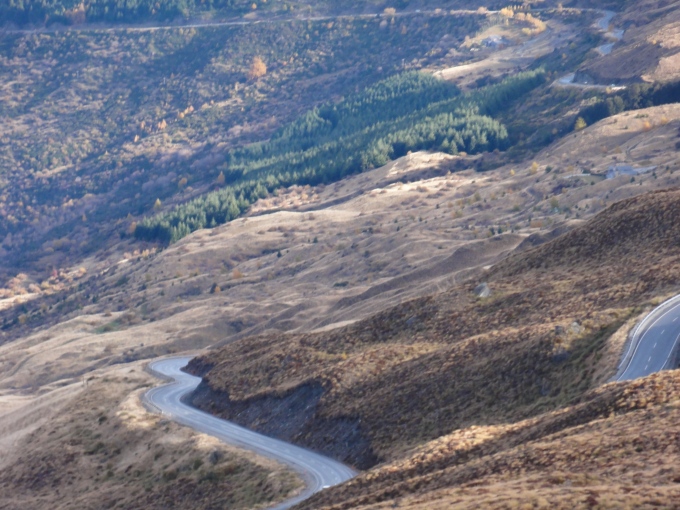
The road led to a dead-end, and the only way off the mountain was back down the road we were now on. Which was why I was somewhat surprised when we discovered where he was.
Where was he going?
“Damn,” I heard Alan mutter. He was driving, being careful not to get too close, but not far enough away to lose sight of him.
“What?”
“I think he’s made us.”
“How?”
“Dumb bad luck, I’m guessing. Or he expected we’d follow him up the mountain. He’s just sped up.”
“How far away?”
“A half-mile. We should see him higher up when we turn the next corner.”
It took an eternity to get there, and when we did, Alan was right, only he was further on than we thought.”
“Step on it. Let’s catch him up before he gets to the top.”
Easy to say, not so easy to do. The road was treacherous, and in places, just gravel, and there were no guard rails to stop a three-thousand-foot fall down the mountainside.
Good thing then, I had the foresight to have three agents on the hill for just such a scenario.
Ten minutes later, we were in sight of the car, still moving quickly, but we were going slightly faster. We’d catch up just short of the summit car park.
Or so we thought.
Coming quickly around another corner, we almost slammed into the car we’d been chasing.
“What the hell…” Aland muttered.
I was out of the car and over to see if he was in it, but I knew that it was only a slender possibility. The car was empty, and no indication of where he had gone.
Certainly not up the road. It was relatively straightforward for the next mile, at which we would have reached the summit. Up the mountainside from here, or down.
I looked up. Nothing.
Alan yelled out, “He’s not going down, not that I can see, but if he did, there’s hardly a foothold and that’s a long fall.”
Then where did he go?
Then a man looking very much like our quarry came out from behind a rock embedded just a short distance up the hill.
“Sorry,” he said quite calmly. “Had to go if you know what I mean.”
I’d lost him.
It was as simple as that.
I had been led a merry chase up the hill, and all the time he was getting away in a different direction.
I’d fallen for the oldest trick in the book, letting my desperation blind me to the disguise that anyone else would see through in an instant.
It was a lonely sight, looking down that road, knowing that I had to go all that way down again, only this time, without having to throw caution to the wind.
One Day in Budapest: The One Place You Must Visit to Make It Unforgettable
Budapest, the radiant capital of Hungary, straddles the mighty Danube River with regal grace. If you’re passing through with just a 24-hour stopover, time is precious—and every minute counts. You could scramble to tick off museums, thermal baths, and ruin bars, but to make your brief encounter with this city truly memorable, there’s one place that captures the soul, history, and breathtaking beauty of Budapest in a single panoramic view:
The Fisherman’s Bastion (Halászbástya).
Perched atop Castle Hill in the historic Buda district, the Fisherman’s Bastion isn’t just a viewpoint—it’s a fairytale come to life. Built between 1895 and 1902 in a neo-Gothic and neo-Romanesque style, this ornate terrace was originally constructed as part of Budapest’s millennium celebrations. Legend says it was named after the medieval guild of fishermen who once defended this stretch of the city walls.
But why prioritise this over Budapest’s many other wonders?
1. The View That Defines Budapest
From the seven turrets and arcaded terraces of Fisherman’s Bastion, you get the postcard panorama of the city. To the east, across the shimmering Danube, lies the grand Hungarian Parliament Building—its domed silhouette glowing in the morning light or illuminated like a crown at night. The Chain Bridge stretches beneath, connecting Buda and Pest in elegant symmetry. At sunrise or sunset, the city feels like a living painting.
This view alone makes the climb worth it. It’s not just scenery—it’s a moment of awe that crystallises your entire Budapest experience.
2. A Fairytale Atmosphere
With its whitewashed stone turrets, intricate balconies, and stairways that seem lifted from a storybook, the Bastion feels like something out of a dream. It’s especially enchanting in the early morning, when the crowds are thinner, and the golden light spills over the rooftops of the old town.
Don’t miss the underground section—originally a fish market—now housing exhibitions and offering unique angles of the Danube and Parliament.
3. Next-Door to the Magic
The Fisherman’s Bastion sits right beside Matthias Church, a stunning 13th-century Gothic church with a kaleidoscopic tiled roof and an interior glittering with gold and stained glass. Spend 15 quiet minutes inside, and you’ll feel like you’ve stepped back centuries.
Together, these two landmarks form the heart of Budapest’s medieval heritage—compact, walkable, and utterly Instagram-worthy.
4. The Perfect Starting (or Ending) Point
Whether you begin your day here at sunrise or end it with the city lights flickering to life, Fisherman’s Bastion sets the tone. After soaking in the view, you can easily descend into the charming Vörösmarty Square, explore Váci Street for coffee and souvenirs, or hop on a Danube cruise to see the city from the water—all within your tight schedule.
Pro Tips for Your One-Day Stopover:
Arrive early. Beat the tour groups by getting there right at opening time (typically 9:00 AM).
Visit at dusk. The city lights reflect off the river, and Parliament glows in golden illumination—a sight you’ll remember forever.
Combine it with Castle Hill. Take 30 minutes to wander the cobbled streets of the Buda Castle district—quaint cafés, artisan shops, and hidden courtyards await.
Use public transport. Take Tram 19 or 47 to Széll Kálmán tér, then the funicular up to the Castle—fast, scenic, and efficient.
Final Thoughts
In just one day, you can’t see everything Budapest offers—but you can feel its spirit. And at Fisherman’s Bastion, with the wind in your hair and the Danube gleaming below, you’ll feel it deeply. It’s more than a sightseeing stop; it’s the soul of the city in a single, breathtaking moment.
So when your plane touches down for that brief layover, let Fisherman’s Bastion be your destination. Because sometimes, one perfect place is all it takes to fall in love with an entire city.
Revenge is a dish best served cold – or preferably so when everything goes right
Of course, it rarely does, as Alistair, Zoe’s handler, discovers to his peril. Enter a wildcard, John, and whatever Alistair’s plan for dealing with Zoe was dies with him.
It leaves Zoe in completely unfamiliar territory.
…
John’s idyllic romance with a woman who is utterly out of his comfort zone is on borrowed time. She is still trying to reconcile her ambivalence after being so indifferent for so long.
They agree to take a break, during which she disappears. John, thinking she has left without saying goodbye, refuses to accept the inevitable and calls on an old friend for help in finding her.
After the mayhem and being briefly reunited, she recognises an inevitable truth: there is a price to pay for taking out Alistair; she must leave and find them first, and he would be wise to keep a low profile.
But keeping a low profile just isn’t possible, and enlisting another friend, a private detective and his sister, a deft computer hacker, they track her to the border between Austria and Hungary.
What John doesn’t realise is that another enemy is tracking him to find her too. It could have been a grand tour of Europe. Instead, it becomes a race against time before enemies old and new converge for what will be an inevitable showdown.
What Dashiell Hammett’s The Maltese Falcon Teaches Us About Plotting and Vivid Description
When we talk about the titans of American crime fiction, one name towers above the rest: Dashiell Hammett. Before Raymond Chandler gave us poetic metaphors, and long before modern thriller writers cluttered pages with convoluted twists, Hammett stripped the genre down to its bone and sinew.
At the center of his legacy is The Maltese Falcon (1930). Beyond its status as the quintessential noir novel, The Maltese Falcon is a masterclass in two distinct literary arts: exemplary plotting and vivid, objective description.
If you are a writer looking to sharpen your craft, or simply a lover of brilliant storytelling, Hammett’s seminal work offers invaluable lessons. Let’s dive into the anatomy of The Maltese Falcon and explore what we can learn from the man who revolutionised modern fiction.
1. The Power of the Objective Eye (Vivid Description Through Action)
Many aspiring writers believe that “vivid description” means loading a paragraph with purple prose, elaborate metaphors, and sweeping adjectives. Hammett proves the exact opposite.
As a former operative for the Pinkerton National Detective Agency, Hammett wrote what he knew. His descriptions are rooted in strict realism. He doesn’t tell us how a character feels; he shows us how they move, how they dress, and how they react to their environment.
The Iconic Introduction of Sam Spade
Look at how Hammett introduces his protagonist, private investigator Sam Spade, in the opening pages:
“Spade’s blondish gray hair was cut short, made his head-top look like a rose-bush with the blossoms clipped off. Eyes-yellow-gray—were small and wary. His chin prominent and hard… He sat reading a newspaper with a hard-boiled unconcern.”
Notice what’s missing? There is no deep internal monologue explaining Spade’s moral ambiguity. Instead, Hammett uses concrete, sharp imagery—”hard,” “wary,” “blossoms clipped off”—to paint a picture that lets the reader’s imagination do the heavy lifting.
What We Can Learn:
Show, Don’t Preach: Let your characters’ physical traits and micro-actions reveal their inner psychology.
Precision Over Poetry: Choose nouns and verbs that pack a punch. Instead of saying a room was messy, describe the exact placement of the half-empty highball glass and the unread mail.
Behavior as Characterization: Hammett understood that in high-stakes environments, people reveal themselves through posture, tics, and glances, not soliloquies.
2. The Architecture of Exemplary Plotting
A common trap in genre fiction is the “plot maze”—where authors add twists just to confuse the reader, resulting in a narrative that collapses under its own weight. The Maltese Falcon avoids this by treating its plot like a piece of precision machinery. Every scene moves the ball forward, and every character has a distinct, driving motivation.
The plot kicks off when Brigid O’Shaughnessy (disguised as “Miss Wonderley”) walks into Spade’s office with a lie. From that moment, a chain reaction of greed is set in motion, drawing in a colourful rogues’ gallery: Kasper Cairo, Joel Cairo, and the ominous Kasper Gutman (the “Fat Man”).
They are all hunting the elusive, jewel-encrusted black bird. But the falcon itself is famously a MacGuffin—an object that drives the plot forward while ultimately holding no intrinsic value.
What We Can Learn:
Character-Driven Plotting: Hammett doesn’t force his characters to do unnatural things just to make a plot twist work. The plot is an inevitable collision course driven by greedy, desperate people all chasing the same prize.
Master the MacGuffin: Give your characters a focal point of desire, but remember that the pursuit of the object is always more interesting than the object itself. The tension comes from the shifting alliances and betrayals among the hunters.
Tight Causality: In a well-plotted story, Scene A must lead directly to Scene B, connected by either “therefore” or “but”—never “and then.” Hammett ensures that every lie told and every body dropped has immediate consequences for Sam Spade.
3. The Enigma of the Protagonist (Ambiguity is Magnetic)
Traditional heroes up to that point were often clear-cut champions of good. Sam Spade shattered that mold. He is sleeping with his late partner’s wife, he is mercenary about his fees, and at the end of the novel, he turns the woman he loves (and desires) over to the police because, as he tells her, “I’m not going to play the sap for you.”
Hammett teaches us that a protagonist doesn’t need to be likable to be compelling. They need to have a code. Spade’s code isn’t about traditional morality; it’s about professional pride and survival in a corrupt world.
What We Can Learn:
Embrace Moral Grey Areas: Flawed protagonists are infinitely more relatable and realistic than paragons of virtue.
Define Your Character’s Code: Even if your character is a scoundrel, they must have lines they refuse to cross. This creates internal tension and reader loyalty.
Final Takeaway: Read Hammett Like a Blueprint
Dashiell Hammett didn’t just write pulp detective stories; he wrote literature that exposed the anxieties of modern life through the lens of crime.
By studying The Maltese Falcon, writers can learn how to strip away narrative fat. Through vivid, objective descriptions, you can ground your readers in reality, and through rigorous, cause-and-effect plotting, you can keep them turning the pages late into the night.
The falcon may have been a fake, but the lessons Dashiell Hammett left behind are the real deal.
Are you a fan of classic noir? What is your favorite Dashiell Hammett novel? Let us know in the comments below!
It was in darkness. I was sure I had left several lights on, especially over the door, so I could see to unlock it.
I looked up and saw that the globe was broken.
Instant alert.
I went to the first hiding spot for the gun, and it wasn’t there. I went to the backup, and it wasn’t there either. Someone had found my carefully hidden stash of weapons and removed them.
Who?
There were four hiding spots, and all were empty. Someone had removed the weapons. That could only mean one possibility.
I had a visitor, not necessarily here for a social call.
But, of course, being the well-trained agent I’d once been and not one to be caught unawares, I crossed over to my neighbour and relieved him of a weapon that, if found, would require a lot of explaining.
Suitably armed, it was time to return the surprise.
There were three entrances to the villa: the front door, the back door, and a rather strange escape hatch. One of the more interesting attractions of the villa I’d rented was its heritage. It was built in the late 1700s by a man who was, by all accounts, a thief. It had a hidden underground room, which had been in the past a vault but was now a wine cellar, and it had an escape hatch by which the man could come and go undetected, particularly if there was a mob outside the door baying for his blood.
It now gave me the means to enter the villa without my visitors being alerted, unless, of course, they were in the vicinity of the doorway inside the villa, but that possibility was unlikely. It was not where anyone could anticipate or expect a doorway to be.
The secret entrance was at the rear of the villa, behind a large copse, two camouflaged wooden doors built into the ground. I moved aside some of the branches that covered them and lifted one side. After I’d discovered the doors and rusty hinges, I’d oiled and cleaned them, and cleared the passageway of cobwebs and fallen rocks. It had a mildew smell, but nothing would get rid of that. I’d left torches at either end so I could see.
I closed the door after me and went quietly down the steps, enveloped in darkness till I switched on the torch. I traversed the short passage, which turned ninety degrees about halfway to the door at the other end. I carried the key to this door on the keyring, found it and opened the door. It too had been oiled and swung open soundlessly.
I stepped into the darkness and closed the door.
I was on the lower level under the kitchen, now the wine cellar, the ‘door’ doubling as a set of shelves which had very little on them, less to fall and alert anyone in the villa.
Silence, an eerie silence.
I took the steps up to the kitchen, stopping when my head was level with the floor, checking to see if anyone was waiting. There wasn’t. It seemed to me to be an unlikely spot for an ambush.
I’d already considered the possibility of someone coming after me, especially because it had been Bespalov I’d killed, and I was sure he had friends, all equally as mad as he was. Equally, I’d also considered it nigh on impossible for anyone to find out it was me who killed him because the only people who knew that were Prendergast, Alisha, a few others in the Department, and Susan.
That raised the question of who told them where I was.
If I were the man I used to be, my first suspect would be Susan. The departure this morning, and now this was too coincidental. But I was not that man.
Or was I?
I reached the start of the passageway that led from the kitchen to the front door and peered into the semi-darkness. My eyes had got used to the dark, and it was no longer an inky void. Fragments of light leaked in around the door from outside and through the edge of the window curtains where they didn’t fit properly. A bone of contention upstairs in the morning, when first light shone and invariably woke me up hours before I wanted to.
Still nothing.
I took a moment to consider how I would approach the visitor’s job. I would get a plan of the villa in my head, all entrances, where a target could be led to or attacked, and where there would be no escape.
Coming in the front door. If I were not expecting anything, I’d just open the door and walk in. One shot would be all that was required.
Contract complete.
I sidled quietly up the passage, staying close to the wall, edging closer to the front door. There was an alcove where the shooter could be waiting. It was an ideal spot to wait.
Crunch.
I stepped on some nutshells.
Not my nutshells.
I felt it before I heard it. The bullet with my name on it.
And how the shooter missed, from point-blank range, and hit me in the arm, I had no idea. I fired off two shots before a second shot from the shooter went wide and hit the door with a loud thwack.
I saw a red dot wavering as it honed in on me, and I fell to the floor, stretching out, looking up where the origin of the light was coming and pulled the trigger three times, evenly spaced, and a second later I heard the sound of a body falling down the stairs and stopping at the bottom, not very far from me.
Two assassins.
I’d not expected that.
The assassin by the door was dead, a lucky shot on my part. The second was still breathing.
I checked the body for any weapons and found a second gun and two knives. Armed to the teeth!
I pulled off the balaclava; a man, early thirties, definitely Italian. I was expecting a Russian.
I slapped his face, waking him up. Blood was leaking from several slashes on his face when his head had hit the stairs on the way down. The awkward angle of his arms and legs told me there were broken bones, probably a lot worse internally. He was not long for this earth.
“Who employed you?”
He looked at me with dead eyes, a pursed mouth, perhaps a smile. “Not today, my friend. You have made a very bad enemy.” He coughed, and blood poured out of his mouth. “There will be more …”
Friends of Bespalov, no doubt.
I would have to leave. Two unexplainable bodies, I’d have a hard time explaining my way out of this mess. I dragged the two bodies into the lounge, clearing the passageway just in case someone had heard anything.
Just in case anyone was outside at the time, I sat in the dark, at the foot of the stairs, and tried to breathe normally. I was trying not to connect the dots that led back to Susan, but the coincidence was worrying me.
A half-hour passed, and I hadn’t moved. Deep in thought, I’d forgotten about being shot, unaware that blood was running down my arm and dripping onto the floor.
Until I heard a knock on my front door.
Two thoughts: it was either the police, alerted by the neighbours, or it was the second wave, though why would they be knocking on the door?
I stood and immediately felt a stabbing pain in my arm. I took out a handkerchief and turned it into a makeshift tourniquet, then wrapped a kitchen towel around the wound.
If it were the police, this was going to be a difficult situation. Holding the gun behind my back, I opened the door a fraction and looked out.
No police, just Maria. I hoped she was not part of the next ‘wave’.
“You left your phone behind on the table. I thought you might be looking for it.” She held it out in front of her.
When I didn’t open the door any further, she looked at me quizzically and then asked, “Is anything wrong?”
I was going to thank her for returning the phone, but I heard her breathe in sharply and add, breathlessly, “You’re bleeding.”
I looked at my arm and realised it was visible through the door, and not only that, the towel was soaked in blood.
“You need to go away now.”
Should I tell her the truth? It was probably too late, and if she were any sort of law-abiding citizen, she would go straight to the police.
She showed no signs of leaving, just an unnerving curiosity. “What happened?”
I ran through several explanations, but none seemed plausible. I went with the truth. “My past caught up with me.”
“You need someone to fix that before you pass out from blood loss. It doesn’t look good.”
“I can fix it. You need to leave. It is not safe to be here with me.”
The pain in my arm was not getting any better, and the blood was starting to run down my arm again as the tourniquet loosened. She was right, I needed it fixed sooner rather than later.
I opened the door and let her in. It was a mistake, a huge mistake, and I would have to deal with the consequences. Once inside, she turned on the light and saw the pool of blood just inside the door and the trail leading to the lounge. She followed the trail and turned into the lounge, turned on the light, and no doubt saw the two dead men.
I expected her to scream. She didn’t.
She gave me a good, hard look, perhaps trying to see if I was dangerous. Killing people wasn’t something you looked the other way about. She would have to go to the police.
“What happened here?”
“I came home from the cafe and two men were waiting for me. I used to work for the Government, but no longer. I suspect these men were here to repay a debt. I was lucky.”
“Not so much, looking at your arm.”
She came closer and inspected it.
“Sit down.”
She found another towel and wrapped it around the wound, retightening the tourniquet to stem the bleeding.
“Do you have medical supplies?”
I nodded. “Upstairs.” I had a medical kit, and on the road, I usually made my own running repairs. Another old habit I hadn’t quite shaken off yet.
She went upstairs, rummaged, and then came back. I wondered briefly what she would think of the unmade bed, though I was not sure why it might interest her.
She helped me remove my shirt and then cleaned the wound. Fortunately, she didn’t have to remove a bullet. It was a clean wound but it would require stitches.
When she’d finished, she said, “Your friend said one day this might happen.”
No prizes for guessing who that friend was, and it didn’t please me that she had involved Maria.
“Alisha?”
“She didn’t tell me her name, but I think she cares a lot about you. She said trouble has a way of finding you, gave me a phone and said to call her if something like this happened.”
“That was wrong of her to do that.”
“Perhaps, perhaps not. Will you call her?”
“Yes. I can’t stay here now. You should go now. Hopefully, by the time I leave in the morning, no one will ever know what happened here, especially you.”
I’m back home and this story has been sitting on a back burner for a few months, waiting for some more to be written.
The trouble is, there are also other stories to write, and I’m not very good at prioritizing.
But, here we are, a few minutes opened up and it didn’t take long to get back into the groove.
Chasing leads, maybe
…
She had brought a file. It looked the same as the last one she brought with her, the one with my name on it.
This time it was thicker.
Intelligence gathering at its finest. There’d be stuff in there that even I didn’t know about me.
She didn’t open it, just looked at me.
“What have you been doing?”
“Working?”
“For whom?”
“Nobbin, of course. I am now assigned to his section. Did you do that?”
“He did. He tells me you’re working on the O’Connell investigation.”
“Is that what it’s called. He never told me that. And I had to find out where I’d been assigned by logging onto a computer. An email or a letter would have made my life a little easier.”
“You’re just lucky you’re still working here. Now, tell me more about this Severin character.”
“I told you everything I knew the last time you spoke to me. Apparently, you seemed to know who it was. Perhaps you might tell me, too.”
“It’s…”
“And,” I interrupted, “don’t tell me it’s above my pay grade. I was potentially working for traitors and could have finished up in jail for treason.”
“You might still get there.”
Then why hadn’t she had me arrested and thrown in a dungeon the last time we met? There was an easy answer to that question. She needed me out in the field. Nobbin needed me in the field. They presumably needed me to remain available to Severin for whatever reason.
“What do you want?”
She opened the file, turned a few pages, and stopped at a yellow sheet of paper. I wasn’t able to read it upside down, but it had very small spidery writing on it.
Then she looked at me again.
“Some secret documents appear to have gone missing. We believe that is to say Director Dobbin thinks these may have been on a USB drive that was in the possession of O’Connell at the time of his death. You were there at the time of his death. You can see where this is going…”
No matter which answers I gave it was the wrong one, which led to do not pass go and do not collect two hundred dollars, or pounds as the case may be.
“I haven’t got it, and he didn’t tell me where it was, and I saw him die.”
“If you say so.” She went back to the file and turned some more pagers.
“What do you mean?”
She looked up. “So far, there’s no body been recovered, or any evidence there was a shooting where you said it was.”
“Are you trying to tell me he’s alive, because if you are, then I must be a very poor judge of people who have no pulse. He was not about to get up and walk away.”
“Did you see the body removed?”
Now there’s an interesting point. I had done as I was told and left when told to. I assumed Severin would sort the problem out, in fact, hadn’t he called in the cleaners? I saw a white van.
Actually, when I thought about it, I had no idea what happened after I left. And, now that I remember, I didn’t see anyone get out of the white van.
My next destination in the quest was the hotel we believed Anne Merriweather had stayed at.
I was, in a sense, flying blind because we had no concrete evidence she had been there, and the message she had left behind didn’t quite name the hotel or where Vladimir was going to take her.
Mindful of the fact that someone might have been following me, I checked to see if the person I’d assumed had followed me to Elizabeth’s apartment was still in place, but I couldn’t see him. Next, I made a mental note of seven different candidates and committed them to memory.
Then I set off to the hotel, hailing a taxi. There was the possibility that the cab driver was one of them, but perhaps I was slightly more paranoid than I should be. I’d been watching the queue, and there were two others before me.
The journey took about an hour, during which time I kept an eye out the back to see if anyone had been following us. If anyone was, I couldn’t see them.
I had the cab drop me off a block from the hotel and then spent the next hour doing a complete circuit of the block the hotel was on, checking the front and rear entrances, the cameras in place, and the siting of the driveway into the underground carpark. There was a camera over the entrance, and one we hadn’t checked for footage. I sent a text message to Fritz to look into it.
The hotel lobby was large and busy, which was exactly what you’d want if you wanted to come and go without standing out. It would be different later at night, but I could see her arriving about mid-afternoon, and anonymous among the clientele the hotel attracted.
I spent an hour sitting in various positions in the lobby simply observing. I had already ascertained where the elevator lobby for the rooms was, and the elevator down to the car park. Fortunately, it was not ‘guarded’, but there was a steady stream of concierge staff coming and going to the lower levels, and, just from time to time, guests.
Then, when there was a commotion at the front door, what seemed to be a collision of guests and free-wheeling bags, I saw one of the seven potential taggers sitting by the front door. Waiting for me to leave? Or were they wondering why I was spending so much time there?
Taking advantage of that confusion, I picked my moment to head for the elevators that went down to the car park, pressed the down button, and waited.
There was no car on the ground level, so I had to wait, watching, like several others, the guests untangling themselves at the entrance, and keeping an eye on my potential surveillance, still absorbed in the confusion.
The doors to the left car opened, and a concierge stepped out, gave me a quick look, then headed back to his desk. I stepped into the car, pressed the first level down, the level I expected cars to arrive on, and waited what seemed like a long time for the doors to close.
As they did, I was expecting to see a hand poke through the gap, a latecomer. Nothing happened, and I put it down to a television moment.
There were three basement levels, and for a moment, I let my imagination run wild and considered the possibility that there were more levels. Of course, there was no indication on the control panel that there were any other floors, and I’d yet to see anything like it in reality.
With a shake of my head to return to reality, the car arrived, the doors opened, and I stepped out.
A car pulled up, and the driver stepped out, went around to the rear of his car, and pulled out a case. I half expected him to throw me the keys, but the instant glance he gave me told him he was not the concierge, and instead he brushed past me like I wasn’t there.
He bashed the up button several times impatiently and cursed when the doors didn’t open immediately. Not a happy man.
Another car drove past on its way down to a lower level.
I looked up and saw the CCTV camera, pointing towards the entrance, visible in the distance. A gate that lifted up was just about back in position, then clunked when it finally closed. The footage from the camera would not prove much, even if it had been working, because it didn’t cover the lift lobby, only what was in the direction of the car entrance.
The doors to the other elevator car opened, and a man in a suit stepped out.
“Can I help you, sir? You seem lost.”
Security, or something else. “It seems that way. I went to the elevator lobby, got in, and it went down rather than up. I must have been in the wrong place.”
“Lost it is, then, sir.” I could hear the contempt for Americans in his tone. “If you will accompany me, please.”
He put out a hand ready to guide me back into the elevator. I was only too happy to oblige him. There had been a sign near the button panel that said the basement levels were only to be accessed by the guests.
Once inside, he turned a key and pressed the lobby button. The doors closed, and we went up. He stood, facing the door, not speaking. A few seconds later, he was ushering me out to the lobby.
“Now, sir, if you are a guest…”
“Actually, I’m looking for one. She called me and said she would be staying in this hotel and to come down and visit her. I was trying to get to the sixth floor.”
“Good. Let’s go over to the desk and see what we can do for you.”
I followed him over to the reception desk, where he signalled one of the clerks, a young woman who looked and acted very efficiently, and told her of my request, but then remained to oversee the proceeding.
“Name of guest, sir?”
“Merriweather, Anne. I’m her brother, Alexander.” I reached into my coat pocket and pulled out my passport to prove that I was who I said I was. She glanced cursorily at it.
She typed the name into the computer, and then we waited a few seconds while it considered what to output. Then, she said, “That lady is not in the hotel, sir.”
Time to put on my best-confused look. “But she said she would be staying here for the week. I made a special trip to come here to see her.”
Another puzzled look from the clerk, then, “When did she call you?”
An interesting question to ask, and it set off a warning bell in my head. I couldn’t say today, it would have to be the day she was supposedly taken.
“Last Saturday, about four in the afternoon.”
Another look at the screen, then, “It appears she checked out Sunday morning. I’m afraid you have made a trip in vain.”
Indeed, I had. “Was she staying with anyone?”
I just managed to see the warning pass from the suited man to the clerk. I thought he had shown an interest when I mentioned the name, and now I had confirmation. He knew something about her disappearance. The trouble was, he wasn’t going to volunteer any information because he was more than just hotel security.
“No.”
“Odd,” I muttered. “I thought she told me she was staying with a man named Vladimir something or other. I’m not too good at pronouncing those Russian names. Are you sure?”
She didn’t look back at the screen. “Yes.”
“OK, now one thing I do know about staying in hotels is that you are required to ask guests with foreign passports their next destination, just in case they need to be found. Did she say where she was going next?” It was a long shot, but I thought I’d ask.
“Moscow. As I understand it, she lives in Moscow. That was the only address she gave us.”
I smiled. “Thank you. I know where that is. I probably should have gone there first.”
She didn’t answer; she didn’t have to, her expression did that perfectly.
The suited man spoke again, looking at the clerk. “Thank you.” He swivelled back to me. “I’m sorry we can’t help you.”
“No. You have more than you can know.”
“What was your name again, sir, just in case you still cannot find her?”
“Alexander Merriweather. Her brother. And if she is still missing, I will be posting a very large reward. At the moment, you can best contact me via the American Embassy.”
Money is always a great motivator, and that thoughtful expression on his face suggested he gave a moment’s thought to it.
I left him with that offer and left. If anything, the people who were holding her would know she had a brother, that her brother was looking for her, and equally that brother had money.
Every time I close my eyes, I see something different.
I’d like to think the cinema of my dreams is playing a double feature but it’s a bit like a comedy cartoon night on Fox.
But these dreams are nothing to laugh about.
Once again there’s a new instalment of an old feature, and we’re back on the treasure hunt.
…
Mrs Boggs has a gun and will use it
…
The sheriff was looking at me.
“Don’t you have a negotiator?”
“Tried. We have fifteen minutes before she starts shooting them.”
“Given the circumstances, surely there is a more simple solution.”
“She’s not in a position where we could neutralize the problem.”
I could see the scene in my mind. Benderby’s passion for privacy was going to be his undoing.
“Why me?”
“She wants the truth about her son’s death.”
“I wasn’t there when he was killed.”
“You were when they confessed.”
“So were you?”
“The recording was inadmissible evidence, a confession gained under duress.”
“Then it doesn’t matter what I say, the same argument applies.”
“Just tell her what she wants to hear and get the gun. We’ll take care of the rest.”
“And if she shoots Sam in the process?” Finally, my mother decided to speak.
“I don’t think she will, but we will take precautions.”
“I’m not going to change her mind, but if it saves her life, I’ll try.”
I didn’t see how the bulletproof vest was going to help if her aim was off, a very genuine possibility. It made me feel like I was overweight, and it restricted movement.
A large crowd had formed outside the venue, and it was hard to tell what they were thinking, other than this was yet another random act of gun violence.
The deputies cleared a path, and we went into the large room that was usually full of diners. People within a six-table radius had moved away, leaving Benderby, and Alex, sitting somewhat stultified, glancing in the direction where Elsie Boggs was.
She was not visible from where we were standing, yet it appeared she could see us.
“That’s far enough, Sheriff. Just send Sam here, and back off.
As the sheriff backed away, I walked slowly towards the table where I could now clearly see Benderby and Alex, and then I felt a shiver. His first wife, rarely seen in public, and daughter, Alex’s younger sister were also at the table. She had left him long before Benderby had embarked on his questionable ventures.
Wrong place, wrong time, and possible collateral damage.
I stopped about fifteen feet from both Elsie Boggs and the Benderby’s. The two women were visibly terrified.
Elsie Boggs said nothing, which surprised me after asking for me.
“If you want justice for your son, this is not going to achieve it. At least consider letting some of these people leave. They have nothing to do with this.”
“No. They’re witnesses.”
“To what exactly?”
“Alex’s confession.”
“It isn’t a confession if it’s under duress. It won’t be admissible in a court of law, and you know as well as I do that Alex would confess to anything if he believed it would save himself.”
“It’s not him he’s going to save.”
I heard once the effective range of a handgun was about twenty feet, and in the hands of an amateur far less. I was not sure if Mrs. Boggs knew how to use it, but she was certainly holding it steady, using both hands, like I’d seen on TV.
I suspect the weapon was Rico’s, because Boggs had shown me a gun he had found hidden away in the closet in the spare bedroom where Rico had been staying before being arrested.
I remembered it had a safety lock, but I couldn’t see it from where I was standing.
But the threat was real, she was aiming the gun at Alex’s sister. That was not going to help her case when this was over. It also brought into focus her state of mind, which was more than likely all over the place after losing her son.
I had to try, and talk her out of this course of action.
“This is not the way to get things done. It’s a matter for the police, and I’m sure they will investigate any claims you make.”
She shook her head. “The sheriff is in Benderby’s pocket. There will be no investigation. Their minds are already made up.”
She was right of course, and without any real assurances the sheriff was going to do anything, regret seemed little point to stop her.
“Look…”
She raised the gun towards the roof, over the heads of the Benderby’s, and shot a round into the ornate plasterwork, breaking it and showering them with plaster dust and normal dust.
It caused three of them to cough.
Two distinct points were resolved at that moment, the safety was off, and she could shoot. Would distance be the only factor?
“You’re running out of time, Alex.”
I saw a slight movement in what would have been her peripheral vision, more armed police moving into several more accessible places, one improving the firing line for a marksman to eliminate the problem.
Unfortunately, she saw it too, and shot another round in that direction, hitting a female police officer who was one of three with weapons drawn.
Mrs. Boggs situation just went from bad to worse.
“I told you all to leave,” she yelled, “so whatever happens now is on you.”
The other two officers had to hold their firebecause returning fire might hit one of the Benderby’s. I hadn’t realized until then that she had also positioned herself so the Benderby’s became shields.
And if she shot at me, she would have to take the Benderby’s out of her sights, which might give a quick-thinking, or quick moving officer a chance of a shot.
This was where I should come up with some calming words, but it was clear that the last foray by the sheriff’s people had rattled her. The gun was getting more unsteady in her hands.
“Alex,” she said, a tinge of hysteria on her tone, and an edge that indicated time was running out for someone at that table, “You’ve got five seconds.”
Alex was not the bravest of souls, but, sitting at that table with his father, maybe he feared being a failure in front of him, than losing a sister.
He turned towards her, and said, “Go to hell.”
Five seconds later it was over.
Mrs.Boggs changed the target and shot Alex in the head, changed aim, and shot Benderby, and before either body hit the floor, three officers shot Mrs. Boggs.
The moment Alex spoke his words, I dropped to the floor, only registering what had happened after the five shots, and watching Mrs. Boggs collapse to the floor. No husband, no son, Rico in jail, she had nothing left to live for.
How can something so simple become so complicated and complex?
In New York, it seemed impossible to get exactly what you would like. The coffee there is driven by what the machine interprets you want, aside from the language constraints due to the fact that English (or American) comes in a zillion different flavours.
So, what do I like (you notice I don’t say ‘want’)
A double shot Latte with two sugars and half a shot of vanilla. That’s in a large cup.
As we all know coffee can come in a regular, large, or extra-large cup, but, hang on, these cup sizes sometimes have names, and you need to know what these names are.
My efforts of pointing to the cup size in New York often had horrendous consequences, when the cup piles were close together. Sometimes it was a double shot in a regular, and a single shot in an extra-large cup.
One even had the name benti, or bento, or something like that.
Being old and decrepit, my memory for cup sizes isn’t all that great, so using a name in one shop that doesn’t have that size, well, you get it.
It seems not only coffee makers in New York have a problem producing consistent coffee.
Perhaps, then that’s half the charm of drinking it, the fact that no cup is ever the same.
And, when an outlet gets it right, finally, they go and change the coffee bean supplier, and all of a sudden, it’s bitter, or it’s lighter, as coffee shops try to reduce their costs and maximise profits.
Six dollars is a lot of money for a cup of coffee unless of course, you have to feed that addiction in which case, you’ll have a cup at whatever the cost.
I need coffee right now, so its off te the cupboard to see what’s available.
Maccona instant, which is not bad
A Nespresso long black – ok, don’t get me started with Nespresso because they have numbers from 1 to 12, possibly more, recognising strengths, and I usually have a double shot using a 10 and a 12.
And, yes, they fool around with the type of beans they use because there seem to be inconsistencies in potency from time to time.
Then there’s coffee bags, much the same as tea bags, which produces and interestingly flavoured brew which I’m still trying to figure out. It tastes like coffee, but there’s something else there, like … paper?
When has time gone? I mean, just yesterday it felt like the start of a new year, and all those projects I had lined up are still on paper, somewhere.
Does anyone else over sixty-five get the feeling time is speeding up rather than slowing down? It sounds weird, doesn’t it, that as you slow down as old age approaches, time goes faster, and those things you wanted to get done seem further away. I’m 72 this year, and it feels like I only turned 65 a year ago!
When you’re young, it always seems like you will have all the time in the world, and that seems to play out over the first forty or fifty years, while you’re putting this off, putting that off, while all the little details of life take more and more of your time.
And there’s that one huge thing that hangs over your head, the fact that you might never get to that time when you said you would have time for it. People are dying younger again, of stress, bad habits and overexercising.
I’ll never be guilty of the last once. It’ll probably be bad habits, something we are all guilty of.
That’s also a reason why I don’t have New Year’s resolutions, and I try not to make plans for anything too far ahead.
It’s also the reason why we decided to travel and do all those things people say they’re going to do when they retire, only to discover they can’t for one reason or another, or they just simply died.
Stopping work after being so wrapped up in it can kill you, and it’s not beyond the realms of possibility that you can quite literally die of boredom.
It’s why I write. Keeps the mind active, gives me something to do, and believe me, when I’m writing, I’m never bored, and it’s a perfect fit between bouts of being a grandfather, a taxi service, and doing everything else that needs a not-so-handy handyman.
Time literally flying by is the same reason why my granddaughters have grown so much, because it seems like it was only yesterday, they were babies, and now the eldest is 22. When did she get so grown-up?
Oh, well, back to childminding duties. It’s the school holidays and tomorrow we’re off to travel down ‘the coast’, which is most ubiquitously called the Gold Coast or otherwise known as Surfer’s Paradise. It’s glitzy, has a dark side, and always looks shiny until the sun goes down. We go there during the day. Tomorrow will be the first time in over a year.
If we can get the kids off their computers and smartphones.


 Thrills, Spills, and just a dash of Romance