The cinema of my dreams – It ended in Sorrento – Episode 64

What is Juliet’s game?

…

Juliet was waiting for me by the car where we had left it.

By that time, I was almost ready to strangle her with my bare hands.

“Where did you go?”

“Away from trouble.  I waited until I was sure you were not going to be killed, then I left.”  She held out the gun by the barrel.  “I figured you would have been able to take that guy without the gun, and there was no point being captured with it.”

She was right, but that didn’t make me any less angry.

I took it and unlocked the car.

“Where are the women?”

“He doesn’t know.  Worse still, he had no idea that another woman was taken at the same time.”

“You believe him?”

“Given the circumstances of seeing the woman who was going to solve all your problems dead on the floor had a way of making you believe.  No one is that good an actor.”

She looked at me with a strange expression.  “You have one working with you.”

“Her mother wasn’t killed in front of her.  Not the same.”

“Square one then?”

“It might be.  If he didn’t know where they were or wanted to, it’s as likely as not they are not on any of his properties.  If he didn’t care what happened to the countess, that doesn’t mean the same for those who are holding her, or Mrs Rodby.  They’ll know, eventually, a reward will be offered, and we’re giving them one.”

I called Cecilia.  “How’s the search going.  I assume the fact you haven’t called me means you’ve found nothing?”

“Zip.  This Dicostini has a lot of dud property.  Maybe someone should tell him to build a resort rather than try to grow grapes.  There’d be a lot more money in it.”

“I think he has more problems than that to worry about right now.”

“How did you go?”

“Kept the place under surveillance, waiting to see if the fake countess was hiding at his place.  She was.  She came out, and they had an argument. And he killed her.”

“What?  Shot her?”

“He hit her in a moment of temper, she fell awkwardly, hitting her head on the table, dead before she hit the floor.”

“That makes things a little difficult.  I assume you didn’t get the location of the two women?”

“You assume correctly.”

“Then they could be anywhere?”

“Maybe, maybe not.  I’m going to give you a name and address.  Get onto Anthony and find out where he lives, then park yourself outside until you hear from me.  I have a hunch, but be prepared to waste some time if it doesn’t pan out.  Take Alfie with you.  Leave Francesca, there’s nothing she can do now.”

“What are you planning?”

“Offering a huge reward for Mrs Rodby.  I think we can safely say the countess is either dead or will be when Dicostini calls the kidnappers.”

“Wouldn’t they just kill her too?”

“They might, but if they’re good, that won’t be a problem.  Getting a bigger payday is.  Everybody has a price.”

“Even you?”

“When I figure out how to disappear, maybe.  Go.  Time is wasting.”

I thought about starting the car, then didn’t.

It was not enough that so many different scenarios were running through my head when the call finally came.  I was sure now the main game was over, the side players would be looking for a slice of the action.

There were only two candidates.  One seemed improbable, which made it the more likely, the other the logical choice, but unlikely.  It all depended on how fast Anthony could get the wanted poster out there.

In the meantime, I had another more perplexing problem.

“What are you doing here?” I asked Juliet.

She looked at me strangely.  “You asked me.”

“I mean, what are you doing here in Italy?”

She kept looking at me as if I were mad.

“I was setting up for a conference.”

She looked earnest, but there was something in her manner.

“Are you really that pathologist.  I mean, for a down-and-out doctor, how could such a disgraced person get a foot back in the door?”

Her look of bemusement turned to annoyance.  “Tell me what you really think?  It took a lot of banging on doors and grovelling.”

I shook my head.  That wasn’t the whole story.

“Why, so I keep running into you?”

“Fate.  Serendipity.  The universe is telling us we didn’t end things properly the last time.”

Words.  Words that had a certain ring to them.  I shook my head. 

“Fate is a load of bollocks, Juliet.”

“You can call me Julie if you like.  It sounds better.”

“This is not done with, not by a long chalk.”

…

© Charles Heath 2023 – 2026

The 2am Rant: It’s good, it’s bad, and at times it can be very, very ugly

It was as if Microsoft Word was sent down from that place in the universe where a group of torturers sit around a table to find new ways of making our lives just that little bit more difficult.

I mean, most of the time it works really well and behaves itself.

But…

Then there are the times, usually when you are stressed about a deadline, or you are nearly at the end of what you believe to be the most brilliant writing you have ever put on paper.

Then…

Disaster strikes.

It could be that the power goes off, even for just a few seconds, but it’s enough to kill the computer.  It could be that you have reached the end and closed Word down, thinking that it had autosaved, all the while ignoring that little pop-up that says, ‘Do you want to save your work’?

It’s been a long day, night, or session.  You’re tired, and your mind is elsewhere, as it always is at the end.

You always assume that autosave is on.  It was the last time; it has been since the day you installed it, however long ago that was.

So…

When the power comes back on, you start the computer, go into Word, and it brings back all the windows you had open when the power failed, and the one with the brilliant piece you just wrote, it’s just a blank sheet.

Or up to where it last autosaved, which is nowhere near the end.

Or it didn’t save at all.

You forget the software was updated recently, and that always brings changes.  Usually, unwanted changes.

By which time you have that sinking feeling that all is lost, deadline missed, brilliant work lost, it’s the end of the world.

You promise yourself you’re going to get Scrivener, or something else, where this doesn’t happen.

Or if you’re like me, you put the cat on the keyboard and tell him to sort the mess out.

What I learned about writing – Storytelling

More Than Just Words: Why We’re All Hungry for Stories

Ever found yourself completely engrossed in a book, a captivating film, or even a friend’s animated anecdote? There’s a reason for that. It’s not just our idle entertainment; it’s a primal, fundamental part of who we are. We are, quite literally, hardwired for stories.

Think about it. From the earliest cave paintings depicting hunts and rituals to the grand epics passed down through generations, humanity has always relied on narrative. It’s how we make sense of the world, how we connect with each other, and how we leave our mark.

The Ancient Art of Immortality

At its core, storytelling is a form of history. It’s how we preserve the experiences, the triumphs, and the struggles of those who came before us. Before written records, oral traditions were the lifeblood of cultures, passing down knowledge, wisdom, and identity. The stories of elders became the lessons for the young, the myths explained the inexplicable, and the legends inspired courage.

But it’s more than just a historical record. Storytelling is also a profound act of immortality. When we share a story, we breathe life back into memories. We keep alive the spirit of individuals, the essence of moments, and the impact of events. A well-told story can transcend time, allowing us to feel present with people who are no longer with us, to understand perspectives different from our own, and to learn from their journeys. It’s through stories that our ancestors, our heroes, and even our ordinary lives can continue to resonate in the present and echo into the future.

Feeding the Soul

Beyond its historical and immortalising qualities, storytelling simply feeds our souls. In a world often characterised by fleeting information and digital overload, a good story offers depth, connection, and emotional resonance.

  • Connection: Stories allow us to step into someone else’s shoes, fostering empathy and understanding. They remind us that despite our differences, we share universal human experiences – love, loss, fear, hope.
  • Meaning-Making: We use stories to process our own lives and the complexities of the world around us. They help us identify patterns, understand causes and effects, and find meaning in the chaos.
  • Inspiration: Stories of resilience, innovation, and courage can ignite our own imaginations and empower us to pursue our dreams. They show us what’s possible.
  • Escape and Joy: Sometimes, we just need to get lost in a different world. Stories offer a welcome escape, a chance to experience adventure, romance, or mystery, and to simply find joy in a well-crafted narrative.

The Power is in Your Hands (and Voice!)

So, the next time you’re drawn to a narrative, remember you’re tapping into something ancient and essential. And even more importantly, remember that you, too, are a storyteller. Your experiences, your memories, your unique perspective – they all have the power to inspire, to connect, and to offer a piece of yourself to the world.

Don’t underestimate the stories you hold. Share them. Write them down. Tell them to your children, your friends, your colleagues. Because in a world hungry for connection and meaning, every story is a gift, a tiny act of immortality, and a vital thread in the rich tapestry of human experience.

365 Days of writing, 2026 – My second story 21

More about my second novel

…

Zoe is now painfully reminded why she did not get involved with other people, why it was better to be responsible only for herself.  It was easy, perhaps to blame John for making his own problems by not heeding her advice, but, just the same, she felt a small shred of responsibility for his current situation.

After learning that John has been kidnapped by Olga, Zoe first goes to see an old colleague, and Yuri’s friend, Dominica to interrogate her, then meets up with Yuri, and it does not end well for one of them.  After telling her he’s the elusive Romanov, Yuri informs her of the fact that Olga has taken John and that Worthington is about to use John’s mother as leverage against her.

Not knowing immediately where Olga is, but believing she will not kill him because Zoe will come to her, she detours to take care of Worthington, having finally realised why he was searching for her.  In another of her many disguises, room service visits his room, and Worthington gets more than dinner served up to him.

Of course, Yuri lies. He is not Romanov, and Romanov is not trying to kill her, but find her.

Who is she? Well, you’ll have to read the book to find out.

And, as for Olga, well, hell hath no fury than a woman avenging a woman avenging her son!

…

Top 5 sights on the road less travelled – London

London’s Secret Charms: 5 Uncrowded Gems with Unforgettable Features

London. The very name conjures images of iconic landmarks, bustling streets, and a vibrant energy that pulses through its historic veins. But let’s be honest, that energy often translates into crowds – a beautiful, diverse, fascinating crowd, but a crowd nonetheless.

What if you yearn for a different rhythm? A London where you can connect with history, art, and nature without constantly jostling for a view? A London where distinctive features truly shine, allowing you to savour every unique detail?

Fear not, intrepid explorer! I’ve curated a list of five phenomenal London attractions that deliver on distinctive character without the typical tourist throngs. These are the places where you can breathe, ponder, and truly absorb the magic of this incredible city.


1. Sir John Soane’s Museum: A Collector’s Labyrinth of Wonders

What makes it distinctive? Imagine stepping into the mind of an eccentric 19th-century architect, where every surface, every nook, and every cranny is crammed with art, antiquities, and architectural fragments. Sir John Soane’s Museum is not a typical museum; it’s a meticulously preserved house that he designed to display his vast and eclectic collection exactly as he wanted it. Expect a fascinating, almost overwhelming, visual feast. Highlights include an Egyptian sarcophagus, a room of hidden paintings on hinged panels, and ceilings adorned with fragments of Roman sculpture.

Why it’s uncrowded: Its very nature – a house packed to the rafters – means visitor numbers are carefully controlled. It’s a small, intimate space, encouraging quiet contemplation rather than rapid sightseeing. You’ll often find yourself with plenty of room to explore.

Insider Tip: Look out for the “picture rooms” where walls literally open up to reveal more art behind them. It’s a delightful, theatrical surprise!


2. The Wallace Collection: Opulence and Masterpieces in a Grand Mansion

What makes it distinctive? Housed in Hertford House, a magnificent stately home in Marylebone, The Wallace Collection offers a truly unique experience: a peerless collection of 18th-century French art, furniture, porcelain, and old master paintings, all displayed in the sumptuous setting of a historic private residence. It feels less like a public gallery and more like you’ve been invited into a wealthy collector’s home. From rococo masterpieces like Fragonard’s “The Swing” to an impressive armoury, the sheer quality and variety are astonishing.

Why it’s uncrowded: While well-known, it often gets overlooked in favour of the larger, more public museums. Its location, slightly off the main tourist drag, also helps keep numbers manageable. Plus, it’s completely free to enter!

Insider Tip: Don’t miss the stunning central courtyard, which has been beautifully enclosed to create a light-filled restaurant – perfect for a refined coffee or lunch break.


3. Chelsea Physic Garden: London’s Oldest Botanic Oasis

What makes it distinctive? Tucked away behind high walls near the Thames, the Chelsea Physic Garden is a living museum of plants with a fascinating history. Established in 1673 by the Worshipful Society of Apothecaries, it was created specifically for the study of medicinal plants. Today, it’s a tranquil four-acre oasis showcasing around 5,000 different species, including the largest fruiting olive tree in Britain and the world’s most northerly grapefruit tree. It’s a place where history, science, and nature intertwine beautifully.

Why it’s uncrowded: It charges a modest entrance fee and isn’t on the primary tourist routes, ensuring a peaceful atmosphere. It’s a favourite among locals seeking serenity, rather than a must-see for first-time visitors ticking off landmarks.

Insider Tip: Check their website for workshops, talks, and guided tours which offer deeper insights into the garden’s extensive collections and history.


4. St. Dunstan in the East Church Garden: A Ruined Beauty Reclaimed by Nature

What makes it distinctive? This is perhaps one of London’s most visually stunning “hidden” gems. What once was a grand medieval church, later rebuilt by Sir Christopher Wren, was largely destroyed during the Blitz in 1941. Instead of rebuilding, the ruins were transformed into a public garden. Ivy-clad walls, elegant Gothic arches, and a Wren tower now frame a vibrant collection of trees and plants. It’s an ethereal, almost magical space that perfectly blends history with nature’s resilience.

Why it’s uncrowded: Despite its proximity to the Tower of London and Monument, it’s tucked away down a side street, making it easy to miss if you don’t know it’s there. It’s a favourite spot for city workers on their lunch break and photographers, but rarely overwhelmed by tourists.

Insider Tip: Visit on a sunny day when the light filters through the archways and foliage, creating a truly enchanting atmosphere. Find a bench and simply soak in the tranquility.


5. Leighton House: An Artist’s Victorian Fantasy

What makes it distinctive? Step into the fantastical home and studio of Victorian artist Frederic, Lord Leighton, and prepare to be mesmerised. The crowning glory is the “Arab Hall,” a breathtaking space inspired by Leighton’s travels to the Middle East. Adorned with over 1,000 iridescent Islamic tiles, a golden dome, and a tranquil fountain, it’s like stepping into a dream. Beyond this, the house offers beautiful period rooms, Leighton’s grand studio, and a collection of his and his contemporaries’ art. It’s a truly unique architectural and artistic vision.

Why it’s uncrowded: Located in Holland Park, West London, it’s a little further out than central attractions, which naturally reduces footfall. It also requires a timed ticket, ensuring a pleasant visitor experience.

Insider Tip: Look closely at the tiles in the Arab Hall – many are original 16th and 17th-century pieces, carefully acquired by Leighton himself.


So, the next time you find yourself in the magnificent city of London, consider taking a detour from the main thoroughfares. These five distinctive, uncrowded attractions offer a chance to connect with a different side of the capital – one that’s rich in history, beauty, and quiet wonder. Happy exploring!

Have you discovered any other uncrowded London treasures? Share them in the comments below!

In a word: Great

Or is it grate?

Is it possible to mix the two up?  I don’t think so.

Great usually means: everything is great, or good, or excellent, whatever degree of goodness you want to put to it.

It could also mean something else, like:  Well, you were a great help! when in fact you want to say how useless they were.

Large or little.

Like all creatures great and small,  Why not say big or small.  Big doesn’t quite have the same effect.

Of course, you could be a great person, well, what I really mean is distinguished.  Besides, great could mean way above average, too.  Or grand, or impressive, the list goes on.

And haven’t we all, at some time had a great-aunt.  No not the good one, the ‘great’ one, denoting her seniority, not necessarily how nice she is.


As for the other grate, we can build a fire in it.

Or add an ‘un’ in front and ‘ful’ at the end, to denote what parents sometimes think of their children

Or get a block of cheese and ‘grate’ it into small shreds.

Or speak in a voice that grates on your nerves, possibly by that great-aunt.

“The Things We Do For Love”

Would you give up everything to be with the one you love?

…

Is love the metaphorical equivalent to ‘walking the plank’; a dive into uncharted waters?

For Henry, the only romance he was interested in was a life at sea, and when away from it, he strived to find sanctuary from his family and perhaps life itself.  It takes him to a small village by the sea, a place he never expected to find another just like him, Michelle, whom he soon discovers is as mysterious as she is beautiful.

Henry had long since given up the notion of finding romance, and Michelle couldn’t get involved for reasons she could never explain, but in the end, both acknowledged that something had happened the moment they first met.  

Plans were made, plans were revised, and hopes were shattered.

A chance encounter causes Michelle’s past to catch up with her, and whatever hope she had of having a normal life with Henry, or anyone else, is gone.  To keep him alive, she has to destroy her blossoming relationship, an act that breaks her heart and shatters his.

But can love conquer all?

It takes a few words of encouragement from an unlikely source to send Henry and his friend Radly on an odyssey into the darkest corners of the red-light district in a race against time to find and rescue the woman he finally realises is the love of his life.

The cover, at the moment, looks like this:

lovecoverfinal1

Is love the metaphorical equivalent to ‘walking the plank’; a dive into uncharted waters?

For Henry, the only romance he was interested in was a life at sea, and when away from it, he strived to find sanctuary from his family and perhaps life itself.  It takes him to a small village by the sea, s place he never expected to find another just like him, Michelle, whom he soon discovers is as mysterious as she is beautiful.

Henry had long since given up the notion of finding romance, and Michelle couldn’t get involved for reasons she could never explain, but in the end, both acknowledge that something happened the moment they first met.  

Plans were made, plans were revised, and hopes were shattered.

A chance encounter causes Michelle’s past to catch up with her, and whatever hope she had of having a normal life with Henry, or anyone else, is gone.  To keep him alive she has to destroy her blossoming relationship, an act that breaks her heart and shatters his.

But can love conquer all?

It takes a few words of encouragement from an unlikely source to send Henry and his friend Radly on an odyssey into the darkest corners of the red-light district in a race against time to find and rescue the woman he finally realizes is the love of his life.

The cover, at the moment, looks like this:

lovecoverfinal1

Searching for locations: The Opera House, Paris, France

This was one of the more interesting experiences for the grandchildren as they were, as all young girls are, interested in ballet.

We thoroughly enjoyed our visit which included some time watching ballet practice.

I could not convince anyone to take the elevator back down to the ground floor as it was suspected we might be ‘attacked’ by the ‘phantom’.  Certainly, the elevator was very old and I think at the time it was being repaired.

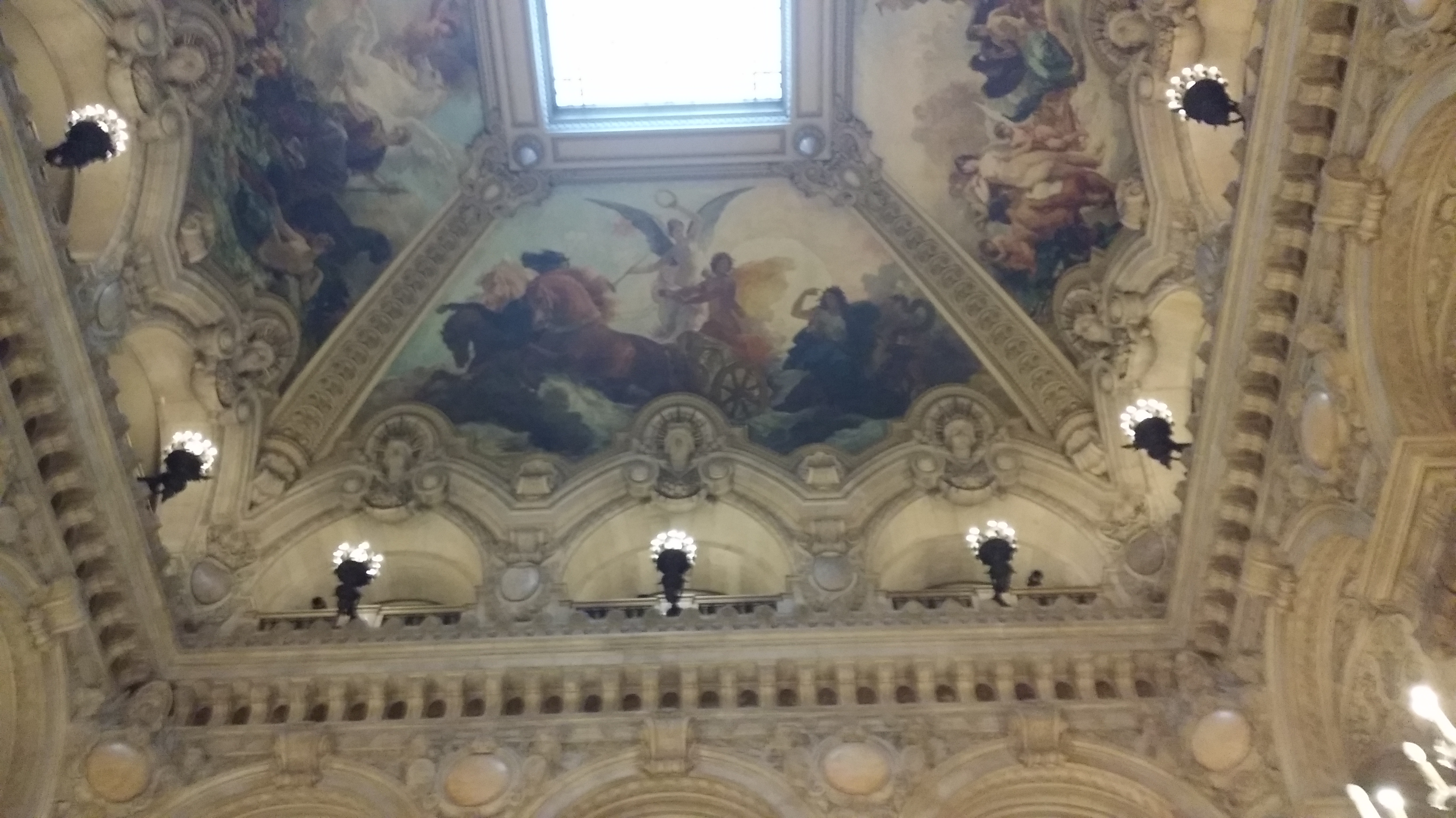
20140108_124100

Part of the Grand Staircase in Palais Garnier Opera de Paris

20140108_125843

The ceiling above the main staircase.  The ceiling above the staircase was painted by Isidore Pils to depict The Triumph of Apollo, The Enchantment of Music Deploying its Charms, Minerva Fighting Brutality Watched by the Gods of Olympus, and The City of Paris Receiving the Plan of the New Opéra.

20140108_123338


The ceiling of Chagall at the Palais Garnier

On 23 September 1964, the new ceiling of the Opéra Garnier was inaugurated with great pomp.  It was painted by Marc Chagall at the request of André Malraux

20140108_125807

Amphitheatre and Orchestra Pit entrance

20140108_122243

Interior, and doorways to boxes

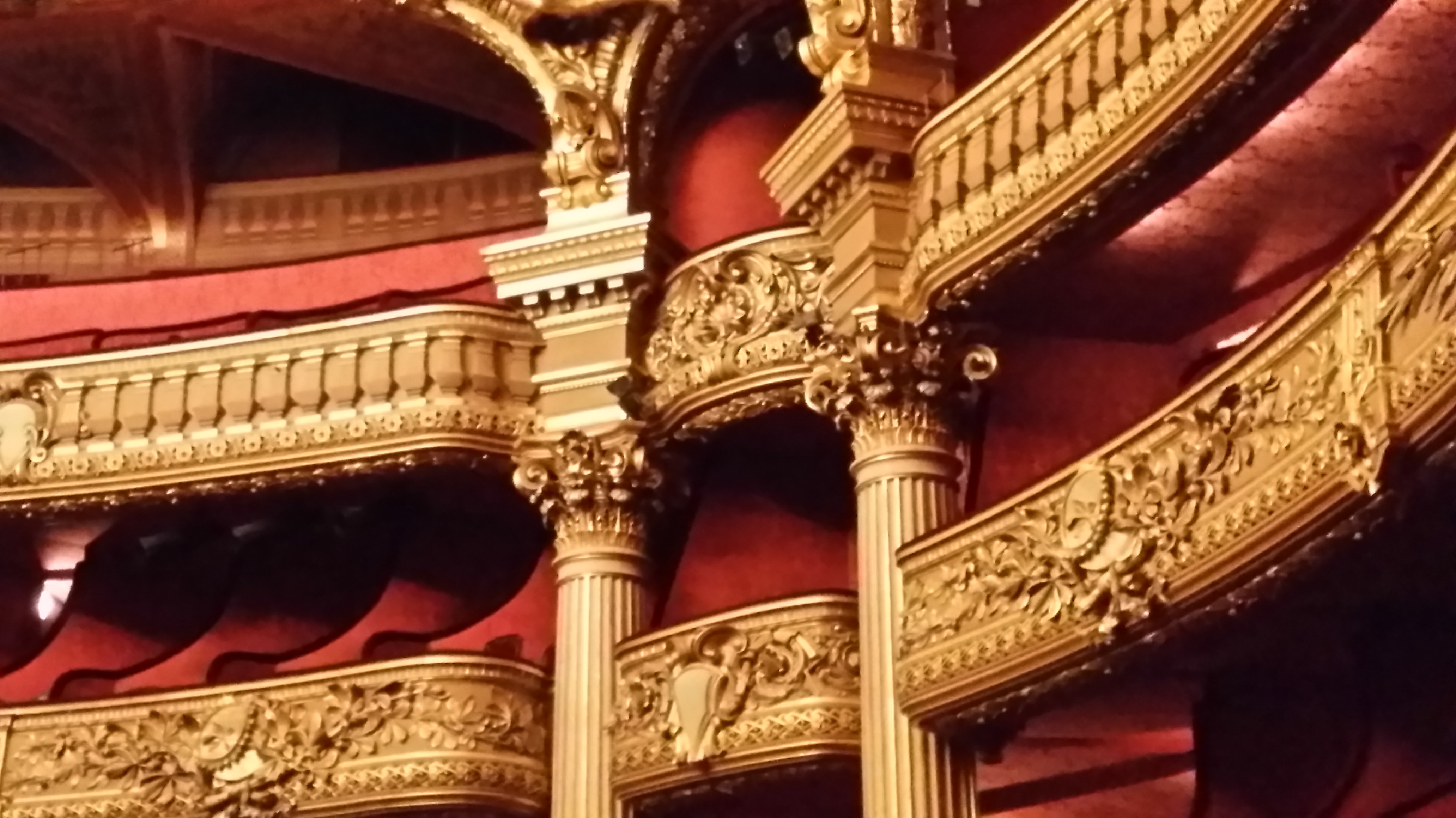
20140108_123500

Box seats in the auditorium

20140108_123512

Ornate ceilings and columns

20140108_123332

Seating inside the auditorium

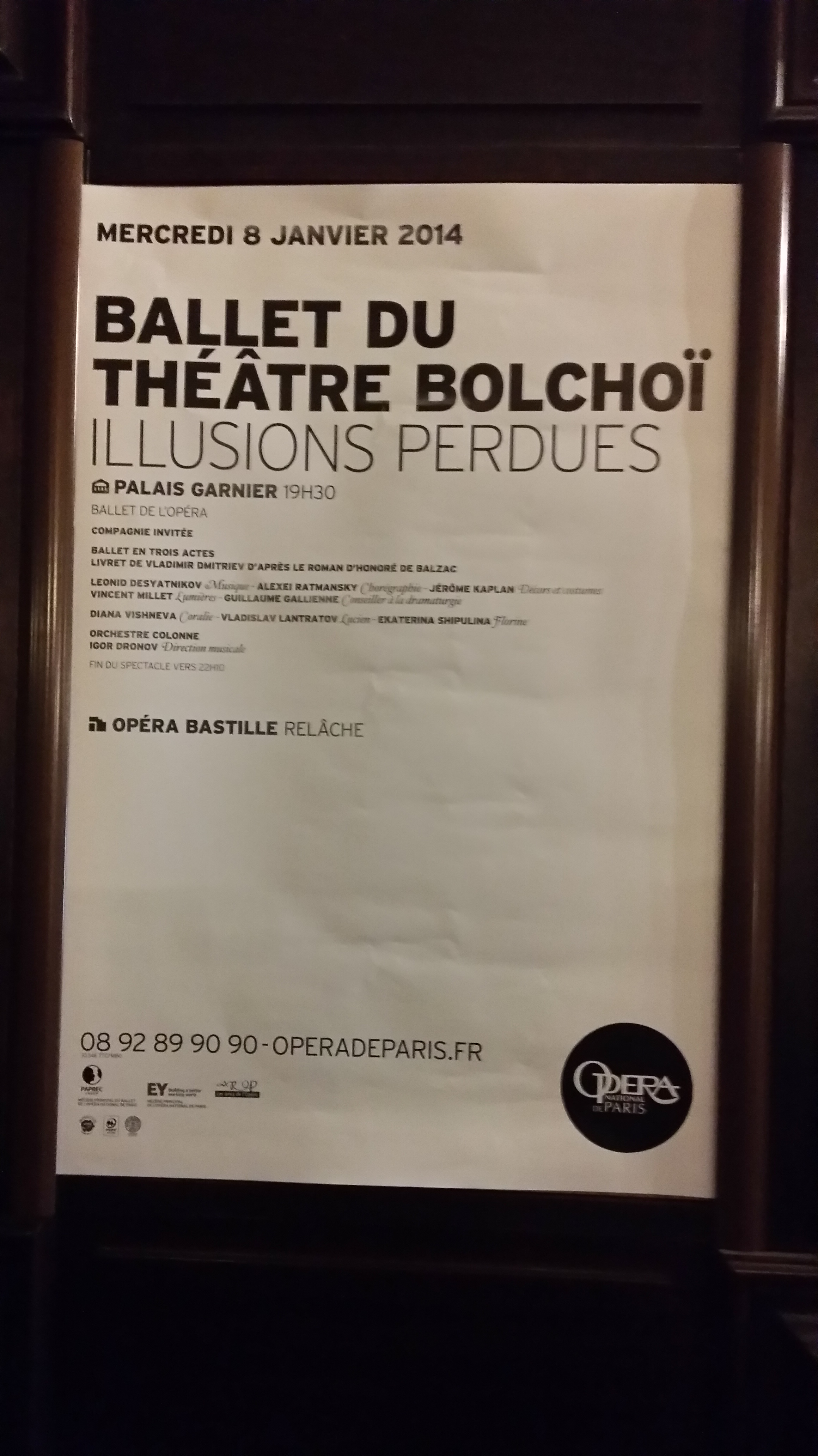
20140108_125603

The day we were leaving Paris, was the first night of the Bolshoi Ballet.  My two granddaughters were greatly disappointed at missing out on the opportunity of a lifetime, to see the Bolshoi Ballet at the Paris Opera House.

20140108_123359

But we did get to see the principals practising.

An excerpt from “If Only” – a work in progress

Investigations of crimes don’t always go according to plan, nor does the perpetrator get found or punished.

That was particularly true in my case.  The murderer was incredibly careful in not leaving any evidence behind, to the extent that the police could not rule out whether it was a male or a female.

At one stage, the police thought I had murdered my own wife, though how I could be on a train at the time of the murder was beyond me.  I had witnesses and a cast-iron alibi.

The officer in charge was Detective First Grade Gabrielle Walters.  She came to me on the day after the murder seeking answers to the usual questions like, when was the last time you saw your wife, did you argue, the neighbours reckon there were heated discussions the day before.

Routine was the word she used.

Her fellow detective was a surly piece of work whose intention was to get answers or, more likely, a confession by any or all means possible.  I could sense the raging violence within him.  Fortunately, common sense prevailed.

Over the course of the next few weeks, once I’d been cleared of committing the crime, Gabrielle made a point of keeping me informed of the progress.

After three months, the updates were more sporadic, and when, for lack of progress, it became a cold case, communication ceased.

But it was not the last time I saw Gabrielle.

The shock of finding Vanessa was more devastating than the fact that she was now gone, and those images lived on in the same nightmare that came to visit me every night when I closed my eyes.

For months, I was barely functioning, to the extent that I had all but lost my job and quite a few friends, particularly those who were more attached to Vanessa rather than me.

They didn’t understand how it could affect me so much, and since it had not happened to them, my tart replies of ‘you wouldn’t understand’ were met with equally short retorts.  Some questioned my sanity, even, for a time, so did I.

No one, it seemed, could understand what it was like, no one except Gabrielle.

She was by her own admission, damaged goods, having been the victim of a similar incident, a boyfriend who turned out to be an awfully bad boy.  Her story varied only in that she had been made to witness his execution.  Her nightmare, in reliving that moment in time, was how she was still alive and, to this day, had no idea why she’d been spared.

It was a story she told me one night, some months after the investigation had been scaled down.  I was still looking for the bottom of a bottle and an emotional mess.  Perhaps it struck a resonance with her; she’d been there and managed to come out the other side.

What happened became our secret, a once-only night together that meant a great deal to me, and by mutual agreement, it was not spoken of again.  It was as if she knew exactly what was required to set me on the path to recovery.

And it had.

Since then, we saw each other about once a month in a cafe.   I had been surprised to hear from her again shortly after that eventful night when she called to set it up, ostensibly for her to provide me with any updates on the case, but perhaps we had, after that unspoken night, formed a closer bond than either of us wanted to admit.

We generally talked for hours over wine, then dinner and coffee.  It took a while for me to realise that all she had was her work; personal relationships were nigh on impossible in a job that left little or no spare time for anything else.

She’d always said that if I had any questions or problems about the case, or if there was anything that might come to me that might be relevant, even after all this time, all I had to do was call her.

I wondered if this text message was in that category.  I was certain it would interest the police, and I had no doubt they could trace the message’s origin, but there was that tiny degree of doubt about whether or not I could trust her to tell me what the message meant.

I reached for the phone, then put it back down again.  I’d think about it and decide tomorrow.

© Charles Heath 2018-2020

365 Days of writing, 2026 – My second story 21

More about my second novel

…

Zoe is now painfully reminded why she did not get involved with other people, why it was better to be responsible only for herself.  It was easy, perhaps to blame John for making his own problems by not heeding her advice, but, just the same, she felt a small shred of responsibility for his current situation.

After learning that John has been kidnapped by Olga, Zoe first goes to see an old colleague, and Yuri’s friend, Dominica to interrogate her, then meets up with Yuri, and it does not end well for one of them.  After telling her he’s the elusive Romanov, Yuri informs her of the fact that Olga has taken John and that Worthington is about to use John’s mother as leverage against her.

Not knowing immediately where Olga is, but believing she will not kill him because Zoe will come to her, she detours to take care of Worthington, having finally realised why he was searching for her.  In another of her many disguises, room service visits his room, and Worthington gets more than dinner served up to him.

Of course, Yuri lies. He is not Romanov, and Romanov is not trying to kill her, but find her.

Who is she? Well, you’ll have to read the book to find out.

And, as for Olga, well, hell hath no fury than a woman avenging a woman avenging her son!

…