A moment to slip back into the past

Television is a great recorder of the past, and most channels, and especially cable tv have great libraries of films that go back more than a hundred years.

And, whilst it’s possible that modern-day films and television series can try to recapture the past, the English as an exception being very good at it, often it is impossible to capture it correctly.

But, if you have a film shot in the moment, then you have a visual record of what life, and what was once part of our world before you in all its dated glory. The pity of it is that, then, we never appreciated it.

After all, in those particular times, who had the time to figuratively stop and smell the roses. Back then as life was going on, we were all tied up with just trying to get through each day.

Years later, often on reflection, we try to remember the old days, and, maybe, remember some of what it was like, but the chances are that change came far too rapidly, and often too radical, that it erases what we thought we knew existed before.

My grandmother’s house is a case in point. In its place is a multi-lane superhighway, and there’s nothing left to remind us, or anyone of it, just some old sepia photographs.

I was reminded of how volatile history really is when watching an old documentary, in black and white, and how the city I grew up in used to look.

Then, even though it seemed large to me then, it was a smaller city, with suburbs that stretched about ten or so miles in every direction, and the outer suburbs were where people moved to get a larger block, and countrified atmosphere.

Now, those outer suburbs are no longer spacious properties, the acreage subdivided and the old owners now much richer for a decision made with profit not being the motivator, and the current suburban sprawl is now out to forty or fifty miles.

The reason for the distance is no longer the thought of open spaces and cleaner air, the reason for moving now is that land further out is cheaper, and can make buying that first house more affordable.

This is where I tip my hat to the writers of historical fiction. I myself am writing a story based in the 1970s, and it’s difficult to find what is and isn’t time-specific.

If only I had a dollar for every time I went to write the character pulling out his or her mobile phone.

What I’ve found is the necessity to research, and this has amounted to finding old films, documentaries of the day, and a more fascinating source of information, the newspapers of the day.

The latter especially has provoked a lot of memories and a lot of stuff I thought I’d forgotten, some of it by choice, but others that were poignant.

Yes, and don’t get me started on the distractions.

If only I’d started this project earlier…

“The Things We Do For Love”

Would you give up everything to be with the one you love?

…

Is love the metaphorical equivalent to ‘walking the plank’; a dive into uncharted waters?

For Henry, the only romance he was interested in was a life at sea, and when away from it, he strived to find sanctuary from his family and perhaps life itself.  It takes him to a small village by the sea, a place he never expected to find another just like him, Michelle, whom he soon discovers is as mysterious as she is beautiful.

Henry had long since given up the notion of finding romance, and Michelle couldn’t get involved for reasons she could never explain, but in the end, both acknowledge that something happened the moment they first met.  

Plans were made, plans were revised, and hopes were shattered.

A chance encounter causes Michelle’s past to catch up with her, and whatever hope she had of having a normal life with Henry, or anyone else, is gone.  To keep him alive she has to destroy her blossoming relationship, an act that breaks her heart and shatters his.

But can love conquer all?

It takes a few words of encouragement from an unlikely source to send Henry and his friend Radly on an odyssey into the darkest corners of the red-light district in a race against time to find and rescue the woman he finally realizes is the love of his life.

The cover, at the moment, looks like this:

lovecoverfinal1

Is love the metaphorical equivalent to ‘walking the plank’; a dive into uncharted waters?

For Henry the only romance he was interested in was a life at sea, and when away from it, he strived to find sanctuary from his family and perhaps life itself.  It takes him to a small village by the sea, s place he never expected to find another just like him, Michelle, whom he soon discovers is as mysterious as she is beautiful.

Henry had long since given up the notion of finding romance, and Michelle couldn’t get involved for reasons she could never explain, but in the end both acknowledge that something happened the moment they first met.  

Plans were made, plans were revised, and hopes were shattered.

A chance encounter causes Michelle’s past to catch up with her, and whatever hope she had of having a normal life with Henry, or anyone else, is gone.  To keep him alive she has to destroy her blossoming relationship, an act that breaks her heart and shatters his.

But can love conquer all?

It takes a few words of encouragement from an unlikely source to send Henry and his friend Radly on an odyssey into the darkest corners of the red light district in a race against time to find and rescue the woman he finally realizes is the love of his life.

The cover, at the moment, looks like this:

lovecoverfinal1

Travelling after a pandemic: Destination Hobart – 1

Hobart in June – Winter – Day 1 – Saturday

…

Overnight the rain began and hasn’t stopped.  It is cold, and the heater in the room is not quite adequate for the space it has to heat up.  Fortunately, the bed has electric blankets, and it was warm, lying wake listening to the raindrops.  That warmth makes it difficult to get out of bed, but this is a holiday, and we have to get motivated.

We have a balcony, and from there the bleakness of the early morning is stark, but at least the rain is light if not a fine mist.

Worse, it alternates between this fine mist and a short downpour, which means the umbrella goes up and down until you give up.  Later, the rain is not heavy, and just tolerable.

We head off to the Salamanca markets, happening only on Saturday morning.  Unable to walk long distances, we drive, about four minutes from our apartment, but miss a turn, it takes 10, then and 5 to assess the parking situation which, in the end, was the easiest part of this expedition.

The hardest part, walking among the very large crowd of people defying the rain and cold.  I can tolerate large crowds but today, they seem to want to stop suddenly, and just stand and talk in the middle of the walkways making it difficult to impossible to maintain any sort of continuity.

There were hundreds of stalls, the most predominant, micro distillers for some odd reason, selling expensive spirits for about $90 a 700ml bottle, which I regard as overly expensive.  My son has made Bourbon some years ago and it cost him about $10 for 4.5 liters, so it must be a lucrative sideline, even after you’ve added the excise.

There were a great many food stands, and choices, one of which was a curly potato skewer, which was interesting to say the least.  On a meat pie quest, we found a stand that sold pies, but they were warming a new batch, and the waiting line was about 50 or 60 people long.

I went back a half-hour later and they had sold out.  They must be one of the highlights of the market to be so in demand, and that people would stand in the cold and rain just to get one.

Having been defeated by aches and pains, the cold and rain, as well as the large crowd, and the absence of anything we wanted, it was fortunate that time had expired on our parking space.

We had contemplated finding a restaurant to have lunch, deciding it was time to have a proper meal rather than a snack, there didn’t seem to be any places open, and the cafes were packed.

This sparked off an odyssey to find a decent restaurant.

After leaving the markets, we find a road that follows the coastline.  Aside from houses either side, and at one point a marina and the Wrest Point casino, which was not a place we intended to visit, the further we went, the less chance it seemed of finding what we were looking for.

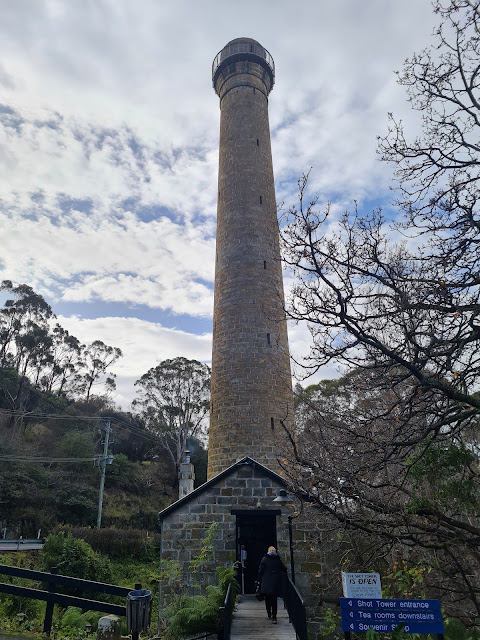
But we did find a tourist attraction, a shot tower, and a museum.

And a tea room that had afternoon tea.  Not exactly what we were looking for.  That said, and feeling like going any further would not fix the search parameters, I go to Google maps and search for restaurants near us.

There’s a Vietnamese restaurant, 6.1 km back the way we came, and being the best choice out of five or six others, we go.

And here’s the thing, it’s just around the corner from where we’re staying.  Go figure.

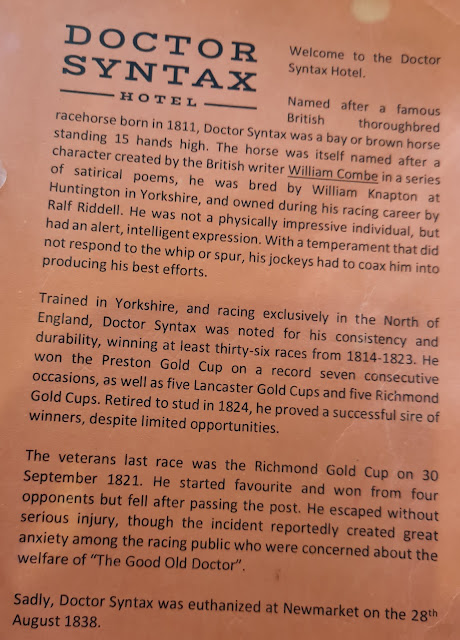
 But, there is a twist, we drive past one of the hotels that were recommended to us back at the apartments, so we go there, the Hotel Doctor Syntax.  We figure we’re more likely to get the vegetable component there than the other place.

It turns out to be a master stroke, getting steak, pork belly, roast potatoes, gravy, asparagus, and seafood on the side.  All having generous servings as one would expect from a hotel bistro.

The food must be great because they were full and had to turn people away.  We were very lucky to get the last table but one, and that one didn’t last very long.

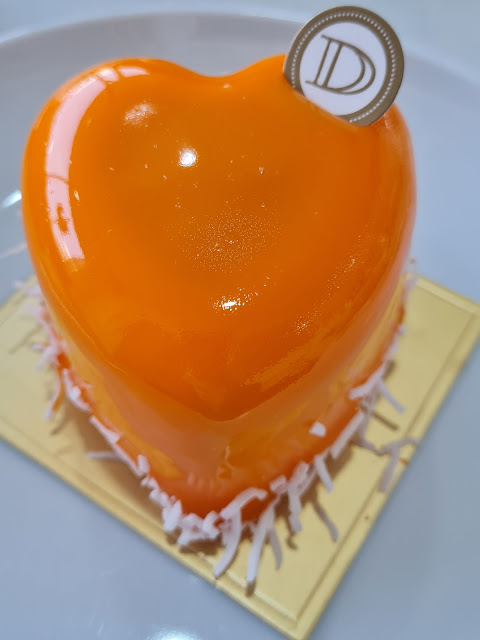
After a long, leisurely lunch surrounded by warmth and atmosphere, we had one more stop.  Coffee and cake at Daci and Daci, a café recommended to us.

It was worth the experience, although it took some fortitude to fit it in after such a large lunch.  I suspect before we go back for a second visit, yes, it was that good, we will make sure we are less full of lunch first.  The cake I had was delicious but very filling.  The coffee?  Excellent.

An excerpt from “If Only” – a work in progress

Investigation of crimes doesn’t always go according to plan, nor does the perpetrator get either found or punished.

That was particularly true in my case.  The murderer was incredibly careful in not leaving any evidence behind, to the extent that the police could not rule out whether it was a male or a female.

At one stage the police thought I had murdered my own wife though how I could be on a train at the time of the murder was beyond me.  I had witnesses and a cast-iron alibi.

The officer in charge was Detective First Grade Gabrielle Walters.  She came to me on the day after the murder seeking answers to the usual questions like, when was the last time you saw your wife, did you argue, the neighbors reckon there were heated discussions the day before.

Routine was the word she used.

Her fellow detective was a surly piece of work whose intention was to get answers or, more likely, a confession by any or all means possible.  I could sense the raging violence within him.  Fortunately, common sense prevailed.

Over the course of the next few weeks, once I’d been cleared of committing the crime, Gabrielle made a point of keeping me informed of the progress.

After three months the updates were more sporadic, and when, for lack of progress, it became a cold case, communication ceased.

But it was not the last I saw of Gabrielle.

The shock of finding Vanessa was more devastating than the fact she was now gone, and those images lived on in the same nightmare that came to visit me every night when I closed my eyes.

For months I was barely functioning, to the extent I had all but lost my job, and quite a few friends, particularly those who were more attached to Vanessa rather than me.

They didn’t understand how it could affect me so much, and since it had not happened to them, my tart replies of ‘you wouldn’t understand’ were met with equally short retorts.  Some questioned my sanity, even, for a time, so did I.

No one, it seemed, could understand what it was like, no one except Gabrielle.

She was by her own admission, damaged goods, having been the victim of a similar incident, a boyfriend who turned out to be an awfully bad boy.  Her story varied only in she had been made to witness his execution.  Her nightmare, in reliving that moment in time, was how she was still alive and, to this day, had no idea why she’d been spared.

It was a story she told me one night, some months after the investigation had been scaled down.  I was still looking for the bottom of a bottle and an emotional mess.  Perhaps it struck a resonance with her; she’d been there and managed to come out the other side.

What happened become our secret, a once-only night together that meant a great deal to me, and by mutual agreement, it was not spoken of again.  It was as if she knew exactly what was required to set me on the path to recovery.

And it had.

Since then, we saw each about once a month in a cafe.   I had been surprised to hear from her again shortly after that eventful night when she called to set it up, ostensibly for her to provide me with any updates on the case, but perhaps we had, after that unspoken night, formed a closer bond than either of us wanted to admit.

We generally talked for hours over wine, then dinner and coffee.  It took a while for me to realize that all she had was her work, personal relationships were nigh on impossible in a job that left little or no spare time for anything else.

She’d always said that if I had any questions or problems about the case, or if there was anything that might come to me that might be relevant, even after all this time, all I had to do was call her.

I wondered if this text message was in that category.  I was certain it would interest the police and I had no doubt they could trace the message’s origin, but there was that tiny degree of doubt, about whether or not I could trust her to tell me what the message meant.

I reached for the phone then put it back down again.  I’d think about it and decide tomorrow.

© Charles Heath 2018-2020

The Things We Do For Love – The final editor’s draft – Day 2

…

Some people are not who they appear to be.

Henry, for instance, had suffered the tragic loss of what he believed to be his one true love.  That, in essence, had led him to that life at sea, away from everything and everyone, because all it did was remind him of what he had lost.

And, yes, he was not going to fall in love again, it was far too painful.

Trying to get over the overwhelming grief, still raw a year later, he hears the arrival of another guest, and curious discovers it is a woman about his age, one who is quite at odds with what he would expect as a guest, at this hotel, at this time of year.

It raises that inevitable question, why would someone like her be there?

This leads to an awkward dinner where, with only two guests in the hotel, would it not be better if they sat together?  Neither thought so, but it seems impolite not to.

From there, of course, the conversation could only get worse, with each emphasising, in their thoughts, just how much they didn’t want to be there.

It is here we discover how these two are going to get along, or not, as the days proceed, not having realised that meeting others was a possibility, but meeting someone else who might be a match, never.  Both know they’re at that hotel to stay away from everyone else, but, in the coming days, that wasn’t going to be possible.

Plans must be made.

…

‘What Sets Us Apart’ – A beta readers view

There’s something to be said for a story that starts like a James Bond movie, throwing you straight in the deep end, a perfect way of getting to know the main character, David, or is that Alistair?

A retired spy, well not so much a spy as a retired errand boy, David’s rather wry description of his talents, and a woman that most men would give their left arm for, not exactly the ideal couple, but there is a spark in a meeting that may or may not have been a setup.

But as the story progressed, the question I kept asking myself was why he’d bother.

And, page after unrelenting page, you find out.

Susan is exactly the sort of woman to pique his interest.  Then, inexplicably, she disappears.  That might have been the end to it, but Prendergast, that shadowy enigma, David’s ex-boss who loves playing games with real people, gives him an ultimatum, find her or come back to work.

Nothing like an offer that’s a double-edged sword!

A dragon for a mother, a sister he didn’t know about, Susan’s BFF who is not what she seems or a friend indeed, and Susan’s father who, up till David meets her, couldn’t be less interested, his nemesis proves to be the impossible dream, and he’s always just that one step behind.

When the rollercoaster finally came to a halt, and I could start breathing again, it was an ending that was completely unexpected.

I’ve been told there’s a sequel in the works.

Bring it on!

…

The book can be purchased here:  http://amzn.to/2Eryfth

…

In a word: Great

Or is it grate?

Is it possible to mix the two up?  I don’t think so.

Great usually means: everything is great, or good, or excellent, whatever degree of goodness you want to put to it.

It could also mean something else, like:  Well, you were a great help! when in fact you want to say how useless they were.

Large or little.

Like all creatures great and small,  Why not say big or small.  Big doesn’t quite have the same effect.

Of course, you could be a great person, well, what I really mean is distinguished.  Besides, great could mean way above average, too.  Or grand, or impressive, the list goes on.

And haven’t we all, at some time had a great-aunt.  No not the good one, the ‘great’ one, denoting her seniority, not necessarily how nice she is.


As for the other grate, we can build a fire in it.

Or add an ‘un’ in front and ‘ful’ at the end, to denote what parents sometimes think of their children

Or get a block of cheese and ‘grate’ it into small shreds.

Or speak in a voice that grates on your nerves, possibly by that great-aunt.

The story behind the story: A Case of Working With the Jones Brothers

To write a private detective serial has always been one of the items at the top of my to-do list, though trying to write novels and a serial, as well as a blog, and maintain a social media presence, well, you get the idea.

But I made it happen, from a bunch of episodes I wrote a long, long time ago, used these to start it, and then continue on, then as now, never having much of an idea where it was going to end up, or how long it would take to tell the story.

That, I think is the joy of ad hoc writing, even you, as the author, have as much idea of where it’s going as the reader does.

It’s basically been in the mill since 1990, and although I finished it last year, it looks like the beginning to end will have taken exactly 30 years.  Had you asked me 30 years ago if I’d ever get it finished, the answer would be maybe?

My private detective, Harry Walthenson

I’d like to say he’s from that great literary mold of Sam Spade, or Mickey Spillane, or Phillip Marlow, but he’s not.

But, I’ve watched Humphrey Bogart play Sam Spade with much interest, and modelled Harry and his office on it.  Similarly, I’ve watched Robert Micham play Phillip Marlow with great panache, if not detachment, and added a bit of him to the mix.

Other characters come into play, and all of them, no matter what period they’re from, always seem larger than life.  I’m not above stealing a little of Mary Astor, Peter Lorre or Sidney Greenstreet, to breathe life into beguiling women and dangerous men alike.

Then there’s the title, like

The Case of the Unintentional Mummy – this has so many meanings in so many contexts, though I imagine that back in Hollywood in the ’30s and ’40s, this would be excellent fodder for Abbott and Costello

The Case of the Three-Legged Dog – Yes, I suspect there may be a few real-life dogs with three legs, but this plot would involve something more sinister.  And if made out of plaster, yes, they’re always something else inside.

But for mine, to begin with, it was “The Case of the …”, because I had no idea what the case was going to be about, well, I did, but not specifically.

Then I liked the idea of calling it “The Case of the Brother’s Revenge” because I began to have a notion there was a brother no one knew about, but that’s stuff for other stories, not mine, so then went the way of the others.

Now it’s called ‘A Case of Working With the Jones Brothers’, finished the first three drafts, and at the editor for the last.

I have high hopes of publishing it in early 2021.  It even has a cover.

PIWalthJones1

“Trouble in Store” – Short stories my way:  Jack, the girl, and the shopkeeper

I have reworked the first part of the story with a few new elements about the characters and changed a few of the details of how the characters finish up in the shop before the policewoman makes her entrance.

This is part of the new first section is the one that involves the Jack, the girl, and the shopkeeper


Jack exchanged a look with the shopkeeper, who in return gave him a slight shrug as if to say he had no idea what this was about.

He could see the girl was not strung out on drugs; if she was it would be a good bet both would be shot or dead by now.  She was just the unfortunate partner of a boy who was on drugs and had found herself in a dangerous position.

Beth, his wife, had told him she didn’t like nor trust the shopkeeper and that her friend in the same apartment block had told her he had been seen selling drugs to youths who hung around just before he closed.  She had warned him it would not be safe, but he had ignored her.

It was a bit late to tell her she was right.

He took a half step towards the door, judging the distance and time it would take to open the door and get out.

Too far, and he would be too slow, his reward for running; a bullet in the back.

Perhaps another half step when she wasn’t looking.


The shopkeeper changed his expression to one more placatory, and said quietly to the girl, “Look, this is not this chap’s problem.”  He nodded in the direction of the customer.  “I’m sure he’d rather not be here, and you would glad of one less distraction.”

He could see she was wavering.  She was not holding the gun so steadily, and the longer this dragged on, the more nervous and unpredictable she would become.

And in the longer game, the customer would sing his praises no matter what happened if he could get him out of the shop alive and well.

This could still be a win-win situation.


The girl looked at Jack.  The shopkeeper was right.  If he wasn’t here this could be over. 

But there was another problem.  It didn’t look like Simmo was in any shape to getaway.  In fact, this was looking more like a suicide mission.

She waved the gun in his direction.  ‘Get out now, before I change my mind.’

As the gun turned to the shopkeeper, Jack wasn’t going to wait to be asked twice and started sidling towards the door.


© Charles Heath 2016-2020

You can research anywhere, even in, er, a waiting room

Watching the doors that lead to the consulting rooms is about as exciting as watching pigeons standing on a window ledge.

But…

When you have little else to do while waiting to see the doctor, it can take on new meaning, especially if you don’t want to be like 95% of the others waiting and be on their mobile phones.

What you basically have is a cross-section of people right in front of you, a virtual cornucopia of characters just waiting to stay in your next novel, of course with some minor adjustments.  It’s the actions and traits I’m looking for, and since it is a hospital, there’s bound to be some good ones.

It’s a steady drip of patients getting called, and it seems like more are arriving than being seen, and those that are being called have arrived and barely got to sit down, whilst a steady core has been waiting, and waiting, and waiting…

Everyone reacts differently to waiting.

A lady arrives, walking tentatively into the waiting area.  It’s reasonably full so the first thing she does is look for a spot where she doesn’t have to sit next to anyone else.  I’m the same, nothing worse if you sit next to a talker, and getting their life history.

Another sits, looking like they’re going to read, they brought a book with them, but it sits on her lap.  The phone comes out, a quick scan, then it remains in hand.  Is she expecting a call or text wishing her luck?  It’s not the oncology clinic so she doesn’t have cancer.  Hopefully.  The fact she brought a book tells me she’s been here before and knows a 9:00 appointment is rarely on time.

As we are discovering.

A couple arrives, maybe a mother and daughter, maybe a patient and her support person.  Both of them don’t look very well do it’s a toss-up who is there to see the doctor.

Next is a man who could easily pass as living on the street.  It’s probably an injustice to say so, but his appearance is compelling, and I’m not the only one.  He sits and the person next to him gets up, apparently looking for something, then moves subtly to another seat.  Someone else nearby wrinkles her nose.  Two others look in his direction and then whisper to each other.  No guesses what the subject is.

More arrive, fewer seats, some are called, but everyone notices, and avoids, the man.

The sign of the door where the stream of patients are going, says no entry staff only, and periodically a staff member comes striding out purposely, or sedately, clutching a piece of all-important paper, the sign of someone who knows where they’re going, on an important mission.  Names are being called from this door and various other sections of the room, requiring you to keep one ear open.

It seems all hospitals are branches of the United Nations, medical staff, and particularly doctors, are recruited from all over the world, and it seems to be able to speak understandable English is not one of the mandatory requirements, and sometimes the person calling out the name, has a little difficulty with the pronunciation.

Perhaps like the UN, we need interpreters.  No, most of the names are recognizable until there is a foreign name that’s unpronounceable, or a person with English as a second language calls an English name.  It makes what could be an interminable wait into something more interesting.

And then there are the people who have names that are completely at odds with their nationality.  They are lucky enough to have the best of a number of cultures, and perhaps a deeper level of understanding where others do not.  I’m reminded never to judge a book by it’s cover.

When there is a lull in arrivals and call-ups, there’s the doctor in consult room 2.  He’s apparently the doctor with no patients and periodically he comes out to look in his pigeonhole, or just look over the patients waiting, and more importantly checking the door handle when not delivering printouts to the consulting room next door.

He’s a doctor with no patients, get my drift.  Well, that joke fell very flat, so, fortunately, he comes out, a piece of paper in hand, and calls a name.  His quiet period is over.  Someone else will have to look at the door handle.

But we’re still waiting, waiting.

It’s been an hour and four minutes, and a little frustrating.  Surely when you check-in they should give you an estimated waiting time, or better still how many patients there are before you.

I guess its time to join the rest and pick up the mobile phone.

The good news, I only got to type one word before my name was called.  By a person who could pronounce it correctly.

The doctor, well that’s another story.