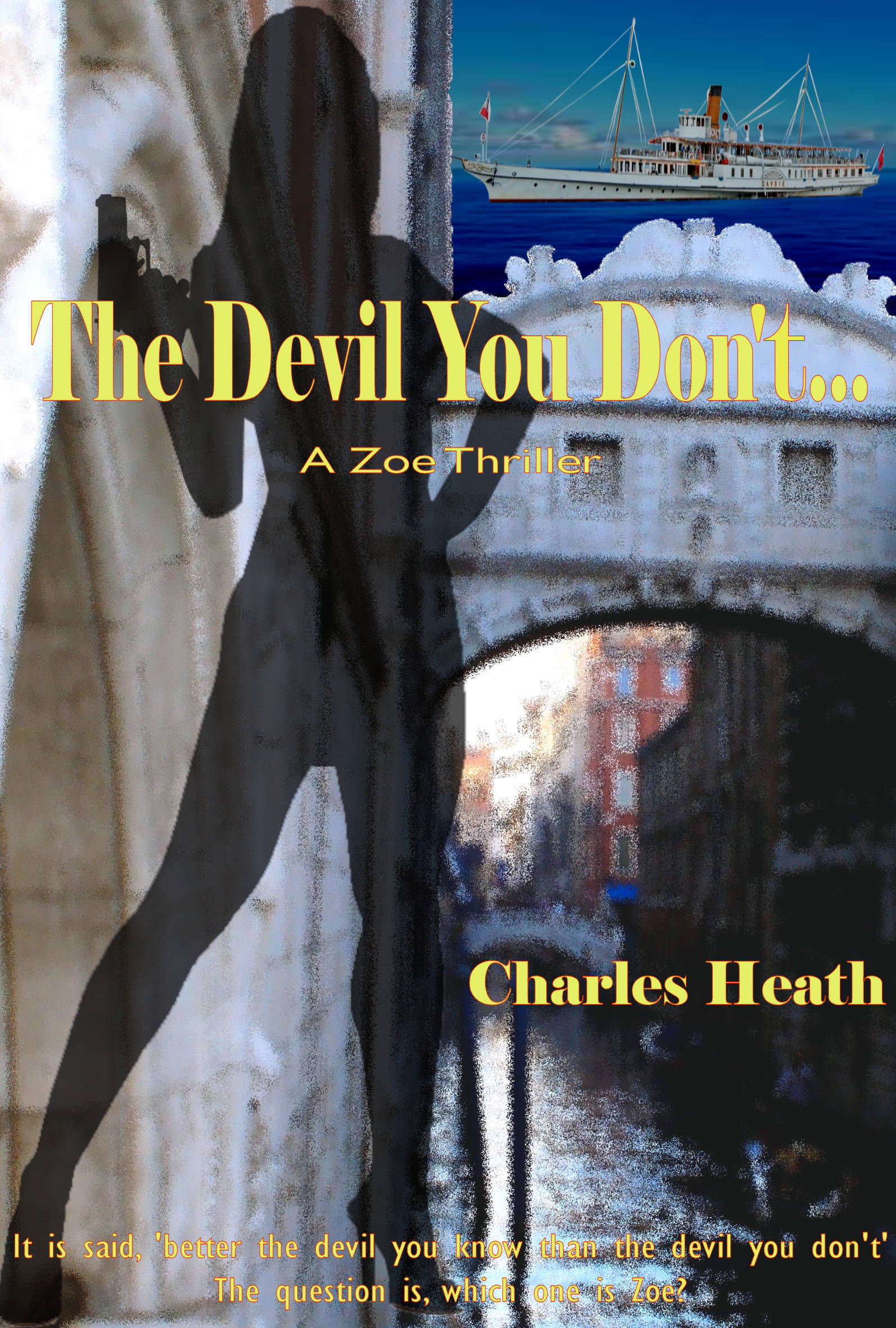
David is a man troubled by a past he is trying to forget.
Susan is rebelling against a life of privilege and an exasperated mother who holds a secret that will determine her daughter’s destiny.
They are two people brought together by chance. Or was it?
When Susan discovers her mother’s secret, she goes in search of the truth that has been hidden from her since the day she was born.
When David realizes her absence is more than the usual cooling off after another heated argument, he finds himself being slowly drawn back into his former world of deceit and lies.
Then, back with his former employers, David quickly discovers nothing is what it seems as he embarks on a dangerous mission to find Susan before he loses her forever.
How to Give Your Writing Perpetual Motion – Keep Readers Turning Pages
…
Introduction – Why Perpetual Motion Matters in Writing
If you’ve ever read a novel that seemed to fly from page to page, you’ve experienced the magic of perpetual motion in storytelling. It’s the invisible engine that propels a narrative forward, keeps the reader’s heartbeat syncing with the plot, and makes the story feel alive.
In the world of SEO and content marketing, the same principle applies: writing that moves not only captivates human readers but also satisfies search engines that value engagement metrics (time‑on‑page, scroll depth, bounce rate).
In this post we’ll:
Define what “perpetual motion” means for a book or article.
Identify the five core elements that create unstoppable momentum.
Show you step‑by‑step tactics to inject movement into any piece of writing.
Give actionable checklists you can copy‑paste into your next manuscript.
Whether you’re a novelist, a blog writer, or a marketer drafting whitepapers, the strategies below will help your words move, move, move—and keep your audience hooked from the first sentence to the final period.
1. What Is “Perpetual Motion” in a Book?
Concept
Traditional Definition
Writing Equivalent
Perpetual Motion
A machine that keeps moving without external energy.
Narrative momentum that sustains itself without artificial filler.
Energy Input
Fuel, wind, electricity.
Conflict, curiosity, and stakes that constantly replenish interest.
Friction
Resistance that slows motion.
Exposition overload, flat dialogue, or pacing lulls that cause readers to disengage.
A good book works like a well‑oiled watch: each gear (scene) turns another (scene), and the whole mechanism keeps ticking until the climax resolves the tension. When friction appears—excessive back‑story or static description—the watch stops, and so does the reader’s momentum.
Bottom line: Perpetual motion in writing means continuous, purposeful forward motion that never feels forced.
2. The Five Engines of Narrative Momentum
SEO tip: Use the phrase “narrative momentum” (or variations) 3‑4 times throughout the article to improve keyword relevance.
Engine
What It Does
Quick Wins
1. Clear Goal / Hook
Gives the reader a why from the first line.
Open with a compelling question, a startling fact, or a vivid image.
2. Rising Stakes
Raises the tension a little each chapter, keeping the reader eager to know what happens next.
Add a new obstacle or reveal a hidden secret at the end of each scene.
3. Active Voice & Strong Verbs
Eliminates friction caused by weak, passive constructions.
Replace “was decided” with “decided,” “the door was opened” with “she flung the door open.”
4. Rhythm & Pacing
Mirrors a heartbeat—fast when needed, slow for breath.
Vary sentence length, use short punchy sentences during action, linger with longer ones in reflection.
5. Mini‑Cliffhangers
Gives the reader a “just‑one‑more‑page” feeling.
End sections with an unanswered question, a ticking clock, or a sudden twist.
When all five engines fire together, the story achieves perpetual motion—it never stalls, yet never feels rushed.
3. How to Build Perpetual Motion, Step by Step
Step 1 – Craft a Magnetic Opening (The First 150 Words)
Start with a concrete, sensory image. Example: “The rain hammered the tin roof like a thousand tiny drums, each beat echoing the panic in Maya’s chest.”
Introduce the central conflict or mystery within the first sentence. Example: “By midnight, the city’s power grid would go dark, and Maya was the only one who knew why.”
Pose a question that can’t be answered until the story ends. Result: Readers feel compelled to keep turning pages for the answer.
Keyword placement: Insert the phrase “writing should move, move, move” naturally within the opening paragraph to reinforce SEO focus.
Step 2 – Map Out a Momentum Blueprint
Chapter
Core Goal
New Complication
Mini‑Cliffhanger
1
Introduce protagonist & inciting incident
Power grid hack revealed
“A flicker of red light crossed the sky—an unknown signal.”
2
Establish stakes (family, city, personal)
Antagonist’s motive exposed
“The mayor’s smile cracked; he wasn’t the hero she’d thought.”
…
…
…
…
Use a simple spreadsheet or card system (e.g., Trello) to visualize the escalating stakes.
Step 3 – Replace Passive Beats With Active Momentum
Passive Sentence
Active Revision
“The letter was delivered by the courier.”
“The courier slipped the letter into his pocket.”
“A feeling of dread was felt by the crowd.”
“Dread rippled through the crowd.”
“The secret was discovered after many weeks.”
“After weeks of searching, they finally uncovered the secret.”
Why it works: Active verbs are like accelerators—instantaneous energy that pushes the narrative forward.
Step 4 – Use Pacing Techniques Like a Film Editor
Situation
Technique
Effect
High‑stakes chase
Short, staccato sentences; heavy use of verbs.
Heightens urgency.
Emotional revelation
Longer, lyrical sentences; occasional pauses (em dashes).
Gives the reader space to breathe and absorb.
Transition between scenes
One‑sentence scene‑breaks (“—”) to create a beat.
Keeps the rhythm steady and the story moving.
Pro tip: Run a read‑aloud test—if you have to pause to find the next thought, the pacing is broken.
Step 5 – End Every Section With a Mini‑Cliffhanger
Type A – Unanswered Question: “Who owned the key they just found?”
Type B – Imminent Threat: “The timer ticked down to 00:00.”
Type C – Unexpected Twist: “She turned the page and saw her own handwriting.”
Aiming for one mini‑cliffhanger per 800‑1,200 words works well for both novels and long‑form blog posts.
4. Checklist: Is Your Writing in Perpetual Motion?
Checklist Item
How to Verify
Goal‑Driven Opening
Does the first paragraph give a clear why?
Rising Stakes
Are the stakes higher at the end of each chapter/section?
Active Voice
Run a passive‑voice detector (e.g., Hemingway App) – <5% passive.
Varied Sentence Length
Count sentences: >30% under 10 words, >20% over 20 words.
Mini‑Cliffhanger
Each major break ends with a question or twist?
Readability Score
Aim for a Flesch–Kincaid Grade 8–10 (easy for most readers).
SEO Checks
Primary keyword “perpetual motion in writing” appears in title, H1, first 100 words, and 3‑4 times later.
Internal Links
Link to at least 2 related posts (e.g., “5 Ways to Improve Story Pacing”).
External Authority
Cite a reputable source (e.g., The Elements of Style or a literary scholar).
If you answer yes to > 80% of these, your manuscript is on track for perpetual motion.
5. Real‑World Examples: Momentum in Action
5.1. Novel Example – The Hunger Games by Suzanne Collins
Hook: “When I’m in the arena, I’m a hunter, not a girl trying to be pretty.” – Instantly stakes the survival conflict.
Rising Stakes: Every round eliminates more tributes, increasing tension.
Mini‑Cliffhanger: Each chapter ends with a sudden danger (e.g., “A shadow moved behind the trees”).
5.2. Blog Example – HubSpot’s “The Ultimate Guide to Content Marketing”
Goal‑Driven Intro: “If you want to double your organic traffic in 90 days, read on.”
Active Voice & Lists: Uses bullet points and strong verbs (“Boost,” “Capture,” “Convert”).
Pacing: Short intro, long body (deep dives), brief conclusions – keeps the reader moving.
Takeaway: Both fiction and non‑fiction rely on the same engines of momentum; you can copy the formula across genres.
6. Common Pitfalls That Kill Momentum (And How to Fix Them)
Problem
Why It Breaks Perpetual Motion
Fix
Info‑dump exposition
Readers must stop to process facts.
Weave facts into dialogue or action.
Flat dialogue
No conflict, no stakes.
Give each line a purpose—reveal character, raise tension, or advance plot.
Redundant scenes
Repeating information creates friction.
Trim scenes that don’t add new stakes or character development.
Over‑descriptive language
Slows the reading pace.
Use show, don’t tell—focus on sensory snippets that serve the plot.
Lack of clear end‑goal
No direction, readers lose interest.
Define a concrete endpoint (e.g., “Save the kingdom”, “Publish the article”).
Quick Exercise: Take a 500‑word excerpt from your current draft. Highlight any sentence longer than 30 words or any passive verb. Rewrite them using the guidelines above, then read the passage aloud. Feel the difference? That’s your momentum boost.
7. Tools & Resources to Keep Your Writing Moving
Tool
Use
Link (placeholder)
Scrivener
Storyboard chapters, set word‑count goals.
[Scrivener]
Hemingway Editor
Spot passive voice, sentence complexity.
[Hemingway]
Grammarly
Real‑time suggestions for active verbs.
[Grammarly]
Google Docs – Outline Mode
Quickly jump between sections to check pacing.
[Google Docs]
SEO Surfer
Ensure keyword placement and readability score.
[Surfer SEO]
8. Conclusion – Turn Your Words Into a Self‑Sustaining Engine
When you write, think of each paragraph as a gear in a perpetual‑motion machine. Give it a clear purpose, push it forward with active verbs, and connect it to the next gear through rising stakes and mini‑cliffhangers.
The result? A manuscript—or blog post—that moves, move, move without exhausting its readers or the algorithm.
Ready to set your story in perpetual motion? Download our free Momentum Blueprint PDF (link below) and start applying these techniques today.
CTA Button: GET THE MOMENTUM BLUEPRINT
Bonus: Sample Opening Rewrite (500‑word demo)
Original:
“Emily walked into the old house. It was dark, and she could feel the cold air. She thought about the rumors that the house was haunted, but she told herself she was just being silly. She went up the stairs slowly.”
Rewritten for perpetual motion:
Rain slammed against the cracked windows as Emily pushed the front door open. The hallway smelled of damp wood, and the house exhaled a chill that wrapped around her throat. Every whisper she’d heard about ghosts made her skin prickle, yet she forced a grin—she’d face whatever waited upstairs. With one foot on the creaking stair, the sound of a floorboard snapping behind her stole her breath.
Notice how the revised version:
Starts with a vivid, moving image.
Uses active verbs (pushed, exhaled, forced, snapped).
Raises stakes (whispers about ghosts, snapping floorboard).
Ends on a mini‑cliffhanger (“stole her breath”).
Apply the same energy to every scene, and your writing will never lose its forward drive.
To write a private detective serial has always been one of the items at the top of my to-do list, though trying to write novels and a serial, as well as a blog, and maintain a social media presence, well, you get the idea.
But I made it happen, from a bunch of episodes I wrote a long, long time ago, used these to start it, and then continued on, then as now, never having much of an idea where it was going to end up, or how long it would take to tell the story.
That, I think, is the joy of ad hoc writing, even you, as the author, have as much of an idea of where it’s going as the reader does.
It’s basically been in the mill since 1990, and although I finished it last year, it looks like the beginning to end will have taken exactly 30 years. Had you asked me 30 years ago if I’d ever get it finished, the answer would be maybe?
My private detective, Harry Walthenson
I’d like to say he’s from that great literary mould of Sam Spade, or Mickey Spillane, or Philip Marlowe, but he’s not.
But I’ve watched Humphrey Bogart play Sam Spade with much interest, and modelled Harry and his office on it. Similarly, I’ve watched Robert Micham play Phillip Marlow with great panache, if not detachment, and added a bit of him to the mix.
Other characters come into play, and all of them, no matter what period they’re from, always seem larger than life. I’m not above stealing a little of Mary Astor, Peter Lorre or Sidney Greenstreet, to breathe life into beguiling women and dangerous men alike.
Then there’s the title, like
The Case of the Unintentional Mummy – this has so many meanings in so many contexts, though I imagine that back in Hollywood in the ’30s and ’40s, this would be excellent fodder for Abbott and Costello
The Case of the Three-Legged Dog – Yes, I suspect there may be a few real-life dogs with three legs, but this plot would involve something more sinister. And if made out of plaster, yes, they’re always something else inside.
But for mine, to begin with, it was “The Case of the …”, because I had no idea what the case was going to be about, well, I did, but not specifically.
Then I liked the idea of calling it “The Case of the Brothers’ Revenge” because I began to have a notion there was a brother no one knew about, but that’s stuff for other stories, not mine, so then it went the way of the others.
Now it’s called ‘A Case of Working With the Jones Brothers’, finished the first three drafts, and I am at the editor for the last reading.
I have high hopes of publishing it in mid-2026. It even has a cover.
Rodby’s generosity did not extend to the Citation taking me back to Venice, but he did fund a business class seat on a commercial flight the next morning.
I was in no hurry to go back, the overnight sojourn giving me time to make a plan of sorts. A few hours after I left the police, I received a message from Alfie with an attached sound file.
A recording of a phone call between Jaime and Larry.
“Your enemy just arranged for me to be dragged off to a police station and interrogated.”
An interesting start to a conversation.
“Which enemy?”
Good to know he had more than one.
“You know who. He was supposed to be in Venice, not London, and he’s not supposed to be working with anyone, yet it seems he is.”
“On what pretext did they take you in?”
“That C4 you left in your crates in my warehouse. They think it’s mine “
“Did you tell them about me?”
“Didn’t have to, you left your name all over the crates. They’ll be looking for you.”
“Let them look. What did he have to say?”
“Annoyed that you’re going after him.”
“How does he know that?”
“How does he know anything, Larry. He does. He says his ex-boss is the one who wants you, not him, and that story you told me about him killing your brother, it’s not true.”
“He’s lied to you, just like I said he would.”
“Then that means your mother is lying too, because I called her, and she had a different version of events. I can’t trust you, and you are now very hot property, and I can’t afford to be involved with you. The police have taken the crates away, so as far as I’m concerned, it’s the last I want to see of them, and you. Don’t try to contact me again.”
The phone went dead.
Good. She did the right thing, though it was as expected. She could also quite easily contact him another way, but for the time being, I’d give her the benefit of the doubt.
Next, I called Larry’s mother.
Same background noise, it seemed she didn’t want to go home. Larry must be ingratiating himself.
“I spoke to Jaime, the woman Larry is purported to be romancing. He is not, or not as far as I can tell.”
“She has since then.”
“She does now. What would Larry want with C4?”
“What’s C4?”
“Explosive.”
“Vaults. His father used to specialise in blowing safes and tried to teach the son, but Larry nearly blew both of them to the afterlife.”
“It’d have to be a very big safe.”
“You could always ask him yourself. He’s going to be around for dinner tomorrow night. Just be wary of the bodyguards. There are three of them.”
“Things might get a little rough. Do you really want that in your house?”
“Someone needs to teach the bastard a lesson. By the way, a good call from that Jaime woman, asking me about your role with my sons. She seemed surprised.”
“I wasn’t very nice to her.”
“She’s a criminal, not a thoroughly bad one like Larry, but one nonetheless. You don’t have to be nice to them. Let’s hope she doesn’t have to worry about her sons like I had to.”
That was the problem with that sort of family business. The children really have nowhere to go but join or disappear. Then it became a battle for survival, especially if you had a parent running the organisation. Then there were always expectations, and then that first kill.
Larry’s brother had never wanted that life; he wanted to live on his terms, but neither the father nor the eldest son and successor saw it that way.
“I thought I could escape all of this cloak-and-dagger stuff, but Larry seems to have put that on hold. Perhaps if we have a little chat, he might change his mind.”
“I think it would be better than what you had in mind. He increased their guards too when he was not here, and it’s unsettling for her, and especially me. I’ll see you tomorrow.”
It couldn’t be easy for her with a son like him, especially now that the police were looking for him. He was not going to get back into the country because his name would be on an alert list, so it would be interesting to see how he got back home.
He had the means, simply because he had turned up in Sorrento using none of the known methods of transportation. And he didn’t own a private jet, or at least, one that I knew of. Something else to investigate.
I called Alfie.
“Got the message. Interesting call.”
“Do you believe her?”
“Not really. But we’ll know soon enough. I’m having dinner at his mother’s tomorrow night and he will be there.”
“Then plan C is off the table for the moment?”
Plan C was to take his wife and child to use as leverage. It might still be needed, depending on the upcoming meeting.
“Backburner. Where’s Cecilia?”
“I moved her to your place. Seemed the best option.”
“She will need a sniper rifle and get herself to Sorrento tomorrow morning. Give the address. She’ll need a site that gives a good view of the dining room. And needless to say, no advertising her presence.”
“Have you got a plan?”
“Not really. He’s not going to do a lot with his wife and daughter there, but, again, it’s Larry, and he is unpredictable.”
“I hope you know what you’re doing “
“Never. Now, it seems the C4 was to crack a safe or create a diversion. You need to get the team to find out what he’s planning. You might want to go through ex-partners and associates in case he’s on a revenge kick.”
“Rodby said he wouldn’t be unhappy if you just shot him.”
“We’re not allowed to.”
“There are ways and means.”
“Then we’re no better than they are. We’ve had this conversation a few times.”
“We’re not winning the war, and people are getting restless. There’s talk that Rodby will be replaced by a more aggressive department head.”
That was all the department needed, someone to hasten its demise. It was already vastly limited in what it could do, and in recent years reduced to little more than intelligence gathering and a few side missions. After I left, it had lost its sting in the tail. I thought Rodby was marking time for his retirement.
Now it seemed that it might come earlier than expected. Was this why he was pushing the Larry project, one last hurrah?
“It won’t happen, they can’t possibly get rid of institutions like him.”
By the time I returned to the Savoie, the rain had finally stopped, and there was a streak of blue sky to offer some hope that the day would improve.
The ship was not crowded, the possibility of bad weather perhaps holding back potential passengers. Of those I saw, a number of them would be aboard for the lunch by Phillippe Chevrier. I thought about it, but the Concierge had told me about several restaurants in Yvoire and had given me a hand-drawn map of the village. I think he came from the area because he spoke with the pride and knowledge of a resident.
I was looking down from the upper deck observing the last of the boarding passengers when I saw a woman, notable for her red coat and matching shoes, making a last-minute dash to get on board just before the gangway was removed. In fact, her ungainly manner of boarding had also captured a few of the other passengers’ attention. Now they would have something else to talk about, other than the possibility of further rain.
I saw her smile at the deckhand, but he did not smile back. He was not impressed with her bravado, perhaps because of possible injury. He looked at her ticket, then nodded dismissively and went back to his duties in getting the ship underway. I was going to check the departure time, but I, like the other passengers, had my attention diverted to the woman in red.
From what I could see, there was something about her. It struck me when the light caught her as she turned to look down the deck, giving me a perfect profile. I was going to say she looked foreign, but here, as in almost anywhere in Europe, that described just about everyone. Perhaps I was just comparing her to Phillipa, so definitively British, whereas this woman was very definitely not.
She was perhaps in her 30’s, slim or perhaps the word I’d use was lissom, and had the look and manner of a model. I say that because Phillipa had dragged me to most of the showings, whether in Milan, Rome, New York, London, or Paris. The clothes were familiar, and in the back of my mind, I had a feeling I’d seen her before.
Or perhaps, to me, all models looked the same.
She looked up in my direction, and before I could divert my eyes, she locked on. I could feel her gaze boring into me, and then it was gone as if she had been looking straight through me. I remained out on deck as the ship got underway, watching her disappear inside the cabin. My curiosity was piqued, so I decided to keep an eye out for her.
I could feel the coolness of the air as the ship picked up speed, not that it was going to be very fast. With stops, the trip would take nearly two hours to get to my destination. It would turn back almost immediately, but I was going to stay until the evening when it returned at about half eight. It would give me enough time to sample the local fare and take a tour of the medieval village.
Few other passengers ventured out on the deck, most staying inside or going to lunch. After a short time, I came back down to the main deck and headed forward. I wanted to clear my head by concentrating on the movement of the vessel through the water, breathing in the crisp, clean air, and letting the peacefulness of the surroundings envelope me.
It didn’t work.
I knew it wouldn’t be long before I started thinking about why things hadn’t worked and what part I played in it. And the usual question that came to mind when something didn’t work out. What was wrong with me?
I usually blamed it on my upbringing.
I had one of those so-called privileged lives, a nanny till I was old enough to go to boarding school, then sent to the best schools in the land. There I learned everything I needed to be the son of a Duke, or, as my father called it in one of his lighter moments, nobility in waiting.
Had this been five or six hundred years ago, I would have needed to have sword and jousting skills, or if it had been a few hundred years later, a keen military mind. If nothing else, I could ride a horse and go on hunts, or did until they became not the thing to do.
I learned six languages, and everything I needed to become a diplomat in the far-flung British Empire, except the Empire had become the Commonwealth, and then, when no one was looking, Britain’s influence in the world finally disappeared. I was a man without a cause, without a vocation, and no place to go.
Computers were the new vogue, and I had an aptitude for programming. I guess that went hand in hand with mathematics, which, although I hated the subject, I excelled in. Both I and another noble outcast used to toss ideas around in school, but when it came to the end of our education, he chose to enter the public service, and I took a few of those ideas we had mulled over and turned them into a company.
About a year ago, I was made an offer I couldn’t refuse. There were so many zeroes on the end of it I just said yes, put the money into a very grateful bank, and was still trying to come to terms with it.
Sadly, I still had no idea what I was going to do with the rest of my life. My parents had asked me to come back home and help manage the estate, and I did for a few weeks. It was as long as it took for my parents to drive me insane.
Back in the city, I spent a few months looking for a mundane job, but there were very few that suited my qualifications, and the rest I think I intimidated simply because of who I was. In that time, I’d also featured on the cover of the Economist and, through my well-meaning accountant, started involving myself with various charities, earning the title ‘philanthropist’.
And despite all of this exposure, even making one of those ubiquitous ‘eligible bachelor’ lists, I still could not find ‘the one’, the woman I wanted to spend the rest of my life with. Phillipa seemed to fit the bill, but in time, she proved to be a troubled soul with ‘Daddy’ issues. I knew that in building a relationship, compromise was necessary, but with her, in the end, everything was a compromise, and what had happened was always going to be the end result.
It was perhaps a by-product of the whole nobility thing. There was a certain expectation I had to fulfil, to my peers, contemporaries, parents and family, and those who either liked or hated what it represented. The problem was, I didn’t feel like I belonged. Not like my friend from schooldays, and now obscure acquaintance, Sebastian. He had been elevated to his Dukedom early when his father died when he was in his twenties. He had managed to fade from the limelight and was rarely mentioned either in the papers or the gossip columns. He was one of the lucky ones.
I had managed to keep a similarly low profile until I met Phillipa. From that moment, my obscurity disappeared. It was, I could see now, part of a plan put in place by Phillipa’s father, a man who hogged the limelight with his daughter, to raise the profile of the family name and through it their businesses. He was nothing if not the consummate self-advertisement.
Perhaps I was supposed to be the last piece of the puzzle, the attachment to the establishment, that link with a class of people he would not normally get in the front door. There was nothing refined about him or his family, and more than once I’d noticed my contemporaries cringe at the mention of his name, or any reference of my association with him.
Yet could I truthfully say I really wanted to go back to the obscurity I had before Phillipa? For all her faults, there were times when she had been fun to be with, particularly when I first met her, when she had a certain air of unpredictability. That had slowly disappeared as she became part of her father’s plan for the future. She just failed to see how much he was using her.
Or perhaps, over time, I had become cynical.
I thought about calling her. It was one of those moments of weakness when I felt alone, more alone than usual.
I diverted my attention back to my surroundings and the shoreline. Out of the corner of my eye, I could see the woman in the red coat, making a move. The red coat was like a beacon, a sort of fire engine red. It was not the sort of coat most of the women I knew would wear, but on her, it looked terrific. In fact, her sublime beauty was the other attribute that was distinctly noticeable, along with the fact that her hair was short rather than long and jet-black.
I had to wrench my attention away from her.
A few minutes later, several other passengers came out of the cabin for a walk around the deck, perhaps to get some exercise, perhaps checking up on me, or perhaps I was being paranoid. I waited till they passed on their way forward, and I turned and headed aft.
I watched the wake sluicing out from under the stern for a few minutes before retracing my steps to the front of the ship, and there I stood against the railing, watching the bow carve its way through the water. It was almost mesmerising. There, I emptied my mind of thoughts about Phillipa and thoughts about the woman in the red coat.
Until a female voice behind me said, “Having a bad day?”
I started, caught by surprise, and slowly turned. The woman in the red coat had somehow got very close to me without my realising it. How did she do that? I was so surprised I couldn’t answer immediately.
“I do hope you are not contemplating jumping. I hear the water is very cold.”
Closer up, I could see what I’d missed when I saw her on the main deck. There was a slight hint of Chinese, or Oriental, in her, particularly around the eyes, and of her hair, which was jet black. An ancestor twice or more removed had left their mark, not in a dominant way, but more subtly, and easily missed except from a very short distance away, like now.
Other than that, she was quite possibly Eastern European, perhaps Russian, though that covered a lot of territory. The incongruity of it was that she spoke with an American accent and was fluent enough for me to believe English was her first language.
Usually, I could ‘read’ people, but she was a clean slate. Her expression was one of amusement, but with cold eyes. My first thought, then, was to be careful.
“No. Not yet.” I coughed to clear my throat because I could hardly speak. And blushed, because that was what I did when confronted by a woman, beautiful or otherwise.
The amusement gave way to a hint of a smile that brightened her demeanour as a little warmth reached her eyes. “So that’s a maybe. Should I change into my lifesaving gear, just in case?”
It conjured up a rather interesting image in my mind until I reluctantly dismissed it.
“Perhaps I should move away from the edge,” I said, moving sideways until I was back on the main deck, a few feet further away. Her eyes had followed me, and when I stopped, she turned to face me again. She did not move closer.
I realised then she had removed her beret and it was in her left side coat pocket. “Thanks for your concern …?”
“Zoe.”
“Thanks for your concern, Zoe. By the way, my name is John.”
She smiled again, perhaps in an attempt to put me at ease. “I saw you earlier, you looked so sad, I thought …”
“I might throw myself overboard?”
“An idiotic notion, I admit, but it is better to be safe than sorry.”
Then she tilted her head to one side, then the other, looking intently at me. “You seem to be familiar. Do I know you?”
I tried to think of where I may have seen her before, but all I could remember was what I’d thought earlier when I first saw her; she was a model and had been at one of the showings. If she were, it would be more likely she would remember Phillipa, not me. Phillipa always had to sit in the front row.
“Probably not.” I also didn’t mention the fact that she may have seen my picture in the society pages of several tabloid newspapers because she didn’t look the sort of woman who needed a daily dose of the comings and goings, and, more often than not, scandal associated with so-called celebrities.
She gave me a look, one that told me she had just realised who I was. “Yes, I remember now. You made the front cover of the Economist. You sold your company for a small fortune.”
Of course. She was not the first who had recognised me from that cover. It had raised my profile considerably, but not Sternhaven’s. That article had not mentioned Phillipa or her family. I suspect Grandmother had something to do with that, and it was, now I thought about it, another nail in the coffin that was my relationship with Phillipa.
“I wouldn’t say it was a fortune, small or otherwise, just fortunate.” Each time, I found myself playing down the wealth aspect of the business deal.
“Perhaps then, as the journalist wrote, you were lucky. It is not, I think, a good time for internet-based companies.”
The latter statement was an interesting fact, one she read in the Financial Times, which had made that exact comment recently.
“But I am boring you.” She smiled again. “I should be minding my own business and leaving you to your thoughts. I am sorry.”
She turned to leave and took a few steps towards the main cabin.
“You’re not boring me,” I said, thinking I was letting my paranoia get the better of me. It had been Sebastian, on learning of my good fortune, who had warned me against ‘a certain element here and abroad’ whose sole aim would be to separate me from my money. He was not very subtle when he described their methods.
But I knew he was right. I should have let her walk away.
She stopped and turned around. “You seem nothing like the man I read about in the Economist.”
A sudden and awful thought popped into my head. Those words were part of a very familiar opening gambit. “Are you a reporter?”
I was not sure if she looked surprised or amused. “Do I look like one?”
I silently cursed myself for speaking before thinking, and then immediately ignored my own admonishment. “People rarely look like what they are.”
I saw the subtle shake of the head and expected her to take her leave. Instead, she astonished me.
“I fear we have got off on the wrong foot. To be honest, I’m not usually this forward, but you seemed like you needed cheering up when probably the opposite is true. Aside from the fact that this excursion was probably a bad idea. And,” she added with a little shrug, “perhaps I talk too much.”
I was not sure what I thought of her after that extraordinary admission. It was not something I would do, but it was an interesting way to approach someone and have them ignore their natural instinct. I would let Sebastian whisper in my ear for a little longer and see where this was going.
“Oddly enough, I was thinking the same thing. I was supposed to be travelling with my prospective bride. I think you can imagine how that turned out.”
“She’s not here?”
“No.”
“She’s in the cabin?” Her eyes strayed in that direction for a moment, then came back to me. She seemed surprised I might be travelling with someone.
“No. She is back in England, and the wedding is off. So is the relationship. She dumped me by text.”
OK, why was I sharing this humiliating piece of information with her? I still couldn’t be sure she was not a reporter.
She motioned to an empty seat, back from the edge. No walking the plank today. She moved towards it and sat down. She showed no signs of being cold, nor interested in the breeze upsetting her hair. Phillipa would be having a tantrum about now, being kept outside, and freaking out over what the breeze might be doing to her appearance.
I wondered, if only for a few seconds, if she used this approach with anyone else. I guess I was a little different, a seemingly rich businessman alone on a ferry on Lake Geneva, contemplating the way his life had gone so completely off track.
She watched as I sat at the other end of the bench, leaving about a yard between us. After I leaned back and made myself as comfortable as I could, she said, “I have also experienced something similar, though not by text message. It is difficult, the first few days.”
“I saw it coming.”
“I did not.” She frowned, a sort of lifeless expression taking over, perhaps brought on by the memory of what had happened to her. “But it is done, and I moved on. Was she the love of your life?”
OK, that was unexpected.
When I didn’t answer, she said, “I am sorry. Sometimes I ask personal questions without realising what I’m doing. It is none of my business.” She shivered. “Perhaps we should go back inside.”
She stood and held out her hand. Should I take it and be drawn into her web? I thought of Sebastian. What would he do in this situation?
I took her hand in mine and let her pull me gently to my feet. “Wise choice,” she said, looking up at the sky.
By definition, a voyage of exploration was about finding new lands and people. Of course, it would be naive to think that all people would be peaceful but one could generally assume they would make some effort to make a gesture of goodwill, to begin with.
Either we had got off to bad start by starting out on the galactic version of the wrong side of the tracks or everyone in this galaxy was hostile.
Or perhaps I was making the wrong assumption but as number one said, why send three ships when one would suffice?
I decided another short visit to the Princess might clear up a few misconceptions before they became glaring errors in judgement.
She didn’t smile when she saw me.
“Let me guess, they sent a welcoming committee.”
She’d known. And it looked like if I wanted the right answers I’d have to ask the right questions
“I take it your escape was too easy?”
“I’m surprised you didn’t realise that yourself.”
“I didn’t want to believe it, but that’s just the optimist in me. Does this mean the people where we left are working with the people we’re going to, and are both conspiring against us?”
“Or perhaps it’s not the world, but just the one. He knew my history, he’d know who was in power, and if I was to make an educated guess, he is likely a spy for them. This galaxy has a history of wars, spies, and uneasy peace. You have to pick your friends wisely.”
I’d participated in a war or two on land, not in space, and a few serious disputes over landing rights in space, but this was a whole new enterprise.
“We’re here to make friends with everyone, being the new kids on the block.” When I saw her bewildered look, I added, ” an earth expression. We try to make friends with everyone irrespective of who they are, where they come from, and what they’ve done.”
“I wish you well, but it’s doomed to failure. You will have to pick a side.”
I shook my head. “That’s the old way of thinking back home. I’m not bringing that with us. This is why we’re here now, mending other people’s bridges; sorry another earth expression.”
“I think I would like living on your planet now; are all the people like you?”
“Sadly no. Unfortunately, we suffer from the problems you are all too familiar with, and even though there are enough sensible people in our world who are striving to be better, progress is slow. Watching your planet slowly self-destruct because of greed and ignorance has helped. It took a long time for everyone to realise we all had to live together whether we liked it or not, and that it was in everyone’s best interest to work together.”
“Everyone except the other ship’s captain. He had a very different view of your world, one where some people are being marginalised simply because they didn’t want to join the collective.”
“It’s not that they didn’t want to join, it was because they didn’t want to share technology or resources without a cost. We don’t like people who want to profit at the expense of others, that in itself if allowed to happen would create disproportionate wealth and inevitably power in a single entity. We’ve been there, done that, and that’s why our world is dying. I’m sure the first thing the other captain asked for was technology so they could take it back and sell it.”
“Isn’t that what you would also do?”
“No. I was put here by a unified people who want what we find to be used for the benefit of everyone. Even those who would not reciprocate if the roles were reversed.”
“Noble indeed, but most here would say misguided. We have tried in the past to do just that, so I can tell you it will be a hard path.”
“Be that as it may it doesn’t solve our current situation.
“Then perhaps I can give you a solution, but not quite the one you’re looking for. Maybe I could become the first alien crew member on your ship. As a member of the crew, and not leaving the ship, particularly in these parts of the galaxy, I would not be a threat to one side or used as an example by the other. I’m sure you could find something for me to do. It would be, using one of your analogies, a win-win situation?
This is the moon, unexpectedly observable in the late afternoon.
For me, the moon provided inspiration for an episodic story I have entitled, for now, ‘I always wanted to see the planets’.
It’s about a freighter captain who gets a gig as First Officer on an exploratory starship, who by a series of inexplicable events gets promoted to captain, and has to navigate not only the outer reaches of space, but new species.
But in the back of my mind there is that expression ‘shoot for the moon’, which could mean almost anything.
It could mean going for the unobtainable, whether it be a job, or the partner of your dreams. Failing can be heartbreak. Success might mean you’d be ‘over the moon’.
Them there’s travelling to moon, perhaps the next logical step for regular people, heading off the spend a week on a moon base hotel. I’m not sure what we would see out there in space; Perhaps a UFO?
Fictionalised, a moon base might just be the meeting place for various species, and being the mystery writer I am, what if there was a murder?
I fell asleep in front of the computer screen, and when I woke up, I realised that I had just had a very bad dream. Or don’t they call bad dreams nightmares?
Can you diagnose yourself as having depression?
Of course, if you were to tell someone else, in one of those very serious tones, “I think I have depression”, they will ask you what you’ve got to be depressed about.
It’s a good question. My first answer would be, “Why did the doctor put me on antidepressants?” You know the stuff they give you, some derivative of Serapax.
Then, if you tell anyone you’re on that stuff, they turn around and tell you just how bad it is and get off it right now.
That’s all very well, but you tell them you still have depression, and so the argument goes on.
But…
These days, they use low doses of antidepressants to manage pain, and in my case back pain. The first pill they gave me was Lyrica, which slowly took my memory away so that I couldn’t remember what anyone had said earlier in the day.
I thought I had early-onset Alzheimer’s, or worse, dementia.
So, I got off that, got the pain back, and moved to lesser antidepressants. Now I’m seeing things.
That might help with the imagination for writing stories sometimes, but telling people you see the patterns on tiles moving is not a good start to any conversation.
Back to depression, though. It might be caused by being locked down and not being able to go anywhere, but that has never bothered me because I hate going out.
It might be a result of my childhood coming back to haunt me, and, believe me, you would not want the childhood I had, but it’s a maybe. A lot of old people find their past creeping up on them, and what happened 60 years ago seems more relevant than what happened 60 minutes ago.
You might think you’re badly done by, that everyone else is responsible for the mess you made of your life, if it is indeed a mess, but no, that isn’t true. My life is exactly what it’s meant to be, though how I got here remains the biggest of mysteries.
It’s why I’m writing the autobiography of a very ordinary nobody.
OK, that might be a hint, thinking I’m a nobody. After all, when I go out, I always feel like I’m invisible.
A friend of mine tells me he always cries when there’s a sad part of a film on, and that’s his determination of depression.
I do too, but I don’t think it’s that.
After all, I did psychology and should understand the nuances of the human psyche, what makes us happy, what makes us sad, what makes us us.
So, rightly or wrongly, I’ve stopped taking the antidepressants.
If my blog suddenly stops, you’ll know I’ve made the wrong decision.
The single, concussive crack of the chestnut limb outside was a sharp, solitary detonation.
Then came the trajectory of ruin. A heavy thud against the iron ribbing overhead. The agonising screech of structural iron under stress. And finally, the violent fracture of one frame of the glass sky, pierced by a branch.
A single, jagged shard of glass—heavy as a guillotine and clear as ice—dropped straight through the humid air of the atrium. It sliced cleanly through the heavy cotton paper pinned to the easel, bisecting the intricate, half-finished ink study of a winter-blooming orchid, crashing on the ground in an explosion of fragments. The easel shuddered but remained standing, holding a ruined masterpiece.
Ten feet away, he stood entirely frozen. He held a porcelain mixing palette in his left hand, his fingers stained with indigo and muted greens. He had stepped back only moments before, losing himself in the impossible equation of blending a colour to match the infinite, fleeting beauty of a petal. That lost moment had saved his life.
Yet, as the cold London winter rushed through the gaping wound in the roof, his lungs didn’t seize from the gradual drop in temperature. His heart didn’t race from the proximity of death. His gaze was locked entirely on the clean, violent split down the centre of his paper. The metric of his life—his self-appointed commission to preserve order against the dying of the year—had been broken in a single second. His measured breaths abandoned him.
Then, she breezed in.
She moved through the sudden draft and the falling dust of the wreckage, stepping over a glittering carpet of broken glass with the casual grace of someone walking through a meadow. She stopped not three feet from him.
Instantly, his hyper-perceptive mind was overwhelmed. In the grey, ruined skeletal light of the shattered greenhouse, she was dressed in her full ‘glad rags’—a chaotic, theatrical tapestry of textures and rich fabrics that entirely defied the bleakness of the day. With her came the aroma of her perfume. It was heavy, slightly overpowering, and instantly intoxicating. It flooded his senses, displacing the sterile smell of paint and damp greenhouse soil. He was forced to inhale her deeply.
She looked at the bisected drawing, then looked at him. She didn’t see a tragedy in the debris. To her, the falling branch, the shattering glass, and the ruined paper possessed a perfect, natural geometry. It was a milestone. A necessary destruction.
When her eyes met his, the cadence of her tone was a fluid, unmeasured rhythm that bypassed all his intellectual defences. She spoke into the cooling, turgid air, her voice acting like a literal psychological switch:
“So fair and foul a day I have not seen.”
The words clicked inside him. The switch flipped, turning him instantly into a man he had never experienced before—someone he hadn’t even known existed. The defensive, analytical armour he had worn for a lifetime dissolved in the space of a heartbeat. He didn’t check his pulse. He didn’t calculate the cost of the damage. He didn’t look back at the art.
He simply looked at her, a strange, unbidden warmth rising in his chest, and his voice came out steady, bold, and entirely unprompted by his usual caution.
“What a pleasant surprise,” he said, the words shocking him even as they left his lips. “I was hoping you might come.”
She smiled, knowing the significance of the moment completely, while he stood in the wreckage of his well-ordered life, finally learning how to breathe.
Her smile widened, but the breezy nonchalance that usually defined her didn’t falter. Instead, her eyes danced with a quiet, triumphant satisfaction. She had spent a lifetime watching him build fortress walls out of ink lines, paint colours, and stopwatch pulses, and she had just witnessed the entire structure collapse without him even trying to catch the falling pieces.
“Hoping?” she repeated, trailing the word out like a musical note as she took a half-step closer. The hem of her velvet coat swept across a shard of glass, sending a tiny, musical ring through the cold air. “My, my. The sky falls, the great work is ruined, and you are indulging in hope. Who are you, and what have you done with my philosopher?”
She didn’t wait for an answer, nor did she need one. Her tone carried that familiar, teasing rhythm, but there was an undercurrent of profound relief in it. She saw the subtle thaw in his posture, the way his shoulders had dropped, and the fierce, unblinking focus with which he was suddenly looking at her. The switch hadn’t just changed him; it had freed him.
“I suppose the universe simply grew tired of waiting for you to finish that drawing,” she murmured, gesturing with a gloved hand toward the bisection on the easel. “It has terrible manners, but excellent timing.”
With the easy, unthinking fluidity that defined her entire existence, she closed the final distance between them. It was a sequence of movements he had experienced a thousand times before over the years—her casual, tactile nature that always threatened to upend his strict boundaries.
First came the touching of hands. Her fingers, warm despite the winter draft rushing through the ceiling, brushed against his paint-stained knuckles. It was a brief, grounding friction that seemed to anchor him to the solid earth while the glass world shattered around them.
Then, she stepped fully into his space for the hug. It was the kind of embrace she gave him every time she blew back into his life—loose, effortless, and entirely unbothered by decorum. It was a gesture meant to say everything was good, that the chaos didn’t matter, and that the world, however broken, was exactly as it should be. He inhaled the full, intoxicating weight of her perfume, no longer counting the seconds of the breath, simply letting her presence fill his lungs.
As she began to pull away, she leaned in for the casual kiss on his cheek—a fleeting, habitual punctuation mark to her greetings that he had long classified as mere background noise in her breezy demeanour.
But this time, the trajectory altered.
The kiss didn’t snap back into the air. Her lips pressed against his skin, warm and soft, and then they lingered. One second. Two. A fraction of a heartbeat longer than it ever had in all the years they had known each other.
In that quiet, extended moment of contact, the casual playfulness evaporated. The lingering warmth of her lips against his cheek spoke a truth that her cryptic words had only hinted at. It was a silent, heavy admission that bypassed his intellect entirely and struck straight at his heart.
When she finally pulled back, her eyes were soft, stripped of their usual mocking shield. She didn’t say a word. She didn’t need to. As she turned to look back at the ruined greenhouse and park staff assembling to deal with the crisis, the truth hung in the frosty air between them, absolute and undeniable: he was special to her, and his well-ordered life was officially a thing of the past.
The warmth of her lips remained branded against his cheek long after she pulled away.
Inside his mind, the intricate grid system he had spent decades constructing was dead silent. Usually, a moment like this would trigger an immediate internal panic—a frantic calculation of boundaries crossed, heart rates spiked, and the sheer logistical nightmare of letting a chaotic force into his meticulously partitioned life. His brain should have been screaming danger.
Instead, there was only the quiet, heavy realisation that the walls hadn’t just been breached; they had been made completely irrelevant. That lingering second—that tiny elongation of time—was a metric he couldn’t catalogue. It didn’t fit into a botanical sketch. It couldn’t be regulated by a slow inhale. For the first time, he didn’t want to measure the moment; he just wanted to feel it. He felt raw, exposed, and entirely alive.
“Well,” she said, her voice snapping him gently out of the silence as she looked around the glittering wreckage. “We can’t exactly stay here and slowly freeze to death, can we?”
Without a word, he began to move, but the rhythm of his actions was entirely new. He didn’t meticulously wipe down his palette or carefully layer tissue paper over his workspace. Together, they began gathering the scattered remnants of his day, sweeping the ruined sketches, the paint tubes, and the loose charcoal pencils into his old leather satchel.
It felt less like a cleanup and more like an act of containment. They were packing the raw chaos of the afternoon—the shattered glass, the scent of her perfume, the concussive crack of the tree, and the terrifyingly beautiful truth of that lingering kiss—and compressing it all down into the dark, leather vault of his bag. It was like forcing a storm into a genie’s bottle. They were corking the madness, sealing it away from the rest of the world, knowing full well that it couldn’t stay trapped forever.
He buckled the brass straps of the satchel closed. The weight of it felt different now. It was no longer a bag of tools; it was a vessel holding a volatile, magical current.
He knew that the next time they opened it—the next time she randomly blew back into his life and uncorked this shared chaos—it wouldn’t feel like a disaster at all. It would feel like a wish being granted.
He slung the strap over his shoulder, turned to her, and for the first time in his life, offered her his hand first. She took it, her fingers wrapping warmly around his, and together they stepped out of the shattered atrium and into the biting teeth of the London winter.
The moment they stepped beyond the threshold of the glasshouse, the London winter dropped its prelude and became the beast. Above them, the ancient canopy of Kew roared, a massive, thrashing roof of branches fighting the sky. Down on the path, the ground shrubs were locked in a desperate, violent battle against the elements, bending low to the gravel just to keep their roots.
She took the lead instantly. She didn’t just walk into the storm; she embraced it, her velvet coat billowing behind her like a sail, laughing as a sudden gust caught her hair. She was entirely in her element—blind to the danger of flying debris, oblivious to the frost biting at her skin.
He watched her for a single heartbeat, then reached out and gently pulled her back by the arm.
It wasn’t an act of disapproval or a desire to control her movement. It was the instinct of a man who understood that her beautiful, breezy blindness often led her straight into the teeth of trouble. There had been times before—scandals, reckless choices, nights spent wandering places she shouldn’t have been—that had elicited sharp chastisements from her family and mutual friends. They called her reckless; they called her a disaster. He simply saw someone who needed a grounding wire.
He didn’t lecture her. He simply altered his stride, placing his broader frame between her and the worst of the freezing wind, keeping his hand lightly at her waist as they fought their way toward the iron gates where his car was parked.
His car sat by the curb, a beautiful, stark contrast to the modern world around it. It was a pristine piece of post-war British engineering—a vehicle defined by heavy steel, sweeping chrome arches, and an uncompromising, mechanical geometry. It was a machine that required patience, precise double-declutching, and an appreciation for the aesthetic of a bygone era.
On paper, she wouldn’t be caught dead in something so traditional, so rigidly tied to the past. It was exactly the kind of car his conservative parents approved of, and exactly the kind her progressive circle mocked as a relic. Yet, as he unlocked the heavy passenger door, she looked at the vehicle with absolute adoration. She didn’t care about the historical status or the cost; she adored it because it was an extension of his soul. She loved the immaculate care he poured into it.
They scrambled inside, slamming the heavy doors against the tempest.
Instantly, the canopy’s roar and the howling wind cut off, replaced by the deep, insulated silence of the car’s interior. The air inside warmed rapidly, thick with the rich, comforting scent of old Connolly leather, polished walnut wood, and the intoxicating, slightly overpowering cloud of her perfume. The storm was packed away. The bottle was corked.
She didn’t waste a second. Before he could even slide his satchel off his shoulder, she turned in the leather passenger seat, her eyes bright with a sudden, chaotic spark of mischief. She looked at the massive, white-rimmed steering wheel, then looked at him.
“Can I drive?” she asked.
The proposal that she drive his pristine, post-war automobile would typically plunge a man of his rigid nature into an internal crisis. But the switch had already been flipped. Without a word, he placed the heavy brass key into her palm.
What followed completely upended his understanding of her.
He had braced himself for chaos—braced for grinding gears, late braking, and the erratic pacing that defined her walks through the world. Instead, the moment her hands gripped the white-rimmed steering wheel, a shocking transformation occurred. She didn’t fight the heavy, unassisted steering or bully the vintage gearbox; she danced with it.
She drove with a profound, instinctive care. Her footwork on the heavy clutch was precise, easing the car into motion without a single shudder, matching the engine’s revs with a mechanical intuition that rivaled his own. She respected the geometry of the machine. She anticipated the corners, navigating the rain-slicked London streets with a fluid, flawless accuracy that left him completely speechless.
Yet, it was still an extension of her nature. It was a complete contradiction.
Where he drove with a hyper-vigilant calculation—constantly monitoring the gauges, counting the distance to the car ahead, managing the drive like an equation—she drove with an effortless, breezy surrender. She wasn’t looking at the dashboard; she was looking through the glass, humming a half-remembered melody, completely at peace within the speed. She didn’t need to measure the drive to master it. Her precision didn’t come from anxiety or rules; it came from a deep, innate harmony with the moment.
Sitting in the passenger seat, watching the profile of her face illuminated by the amber glow of the walnut dashboard, he felt a quiet awe settle into his chest.
Perhaps, in some hidden, unexamined corner of his mind, he had always known she was this person. Or perhaps he was finally realising the terrifying, beautiful truth of the woman beside him: she was not just a simple gale of chaos meant to disrupt his order. She was a landscape of infinite, shifting facets. She possessed depths, hidden disciplines, and secret rooms that would take him a lifetime to unravel fully.
And for the first time in his life, the prospect of a mystery that couldn’t be neatly sketched or categorised didn’t terrify him. It felt like a lifetime he eagerly wanted to spend.
Experiential Counter-Mapping: Identifying the Next Five Nodes of Authentic Discovery in Brussels, Beyond the Touristic Saturation
Abstract
Traditional tourism models often lead to the homogenization of urban experience, obscuring authentic local narratives in favour of standardised, high-volume attractions. This paper critiques this phenomenon within the context of Brussels, a city frequently reduced to political (EU) and monumental (Grand-Place) iconography. Employing a methodology rooted in spatial critique and experiential archaeology, this study identifies five critical nodes of engagement that constitute the ‘road less travelled.’ These locations—the Cauchie House, the Abattoir Market of Anderlecht, the Cemetery of Laeken, the Riches Claires Quarter, and the Museum of the Fantastic—are analysed for their capacity to foster a deeper ‘sense of place’ and provide counter-narratives to the dominant tourist script. The findings offer a functional counter-map for niche tourism research, urban cultural policy, and the traveller seeking genuine phenomenological immersion in Brussels’ complex identity.
1. Introduction: The Cartography of Obfuscation
The concept of the ‘road less travelled’ is a critical response to the spatial saturation characterising contemporary mass tourism (MacCannell, 1976). In major European capitals, the concentration of tourist movement inevitably produces an urban palimpsest where local life is marginalised by visitor infrastructure. Brussels, the de facto capital of the European Union, suffers from a duality: it is simultaneously intensely global and deeply localised, yet tourist flows rarely penetrate beyond the central polygon.
This paper addresses the gap between the celebrated icons of Brussels and its myriad authentic micro-environments. Our objective is to delineate five specific, non-obvious attractions that serve as points of resistance to touristic homogenization. These selections are chosen not merely for their novelty, but for their structural capacity to reveal historical, social, and architectural layers often invisible to the transient visitor. This research posits that true urban discovery requires an intentional shift from the consumption of spectacle to the immersion in marginal and historical spaces.
2. Theoretical Framework and Methodology
2.1 The Authentic and the Anti-Spectacle
The theoretical underpinning of this analysis draws heavily from the concepts of the Flâneur (Baudelaire; Benjamin, 1982), who navigates the urban space with deliberate aimlessness, and the pursuit of ‘authenticity’ (Wang, 1199). Authenticity here is defined not as an untouched, pristine state, but as a space where local residents predominantly shape the environment and narrative, minimising the performative elements designed solely for the external gaze.
Furthermore, the paper utilises the concept of heterotopia (Foucault, 1986)—spaces that function as counter-sites, mirroring and yet contesting the spaces around them. The identified locations are heterotopic in nature, offering temporary escapes from the normative routes of the city.
2.2 Selection Criteria
The five locations were chosen based on a qualitative multi-criteria assessment designed to prioritise genuine local context and historical depth over ease of access or mainstream popularity:
Low Visibility Index (LVI): Minimal mention in standard commercial guidebooks (LVI > 0.8).
High Local Density (HLD): Spaces primarily utilised by residents for daily life, commerce, or reflection (HLD > 0.7).
Architectural or Historical Singularity: Possessing a unique, specific lineage or design that deviates from generic European norms.
Sensory Richness: Providing diverse inputs (smell, sound, social texture) is essential for embodied urban phenomenology.
3. Findings: The Five Nodes of Brussel’s Counter-Map
The following five destinations represent significant departures from the conventional Brussels itinerary, offering profound opportunities for experiential engagement.
3.1 Node 1: The Cauchie House (Maison Cauchie) – Art Nouveau/Déco Transition
Located in the Etterbeek municipality, the Cauchie House stands as a monument to the Belgian Art Nouveau and nascent Art Déco movements, yet remains largely unknown outside specialized architectural circles. Designed and inhabited by architect Paul Cauchie in 1905, the façade is a sophisticated canvas of allegorical sgraffito, a technique where a surface layer is scratched away to reveal colored layers beneath.
Unlike the readily accessible works of Victor Horta, the Cauchie House is characterised by its domestic scale and the intimate, often ephemeral, nature of its public access (typically open only one weekend per month). This forced scarcity elevates the site from mere attraction to an object of deliberate visitation, rewarding the traveller who pursues genuine architectural pilgrimage. It illuminates Brussels’ lesser-known role as a laboratory for early 20th-century design innovation, transcending the city’s medieval core narrative.
3.2 Node 2: The Anderlecht Abattoir Market (Marché des Abattoirs) – Economic Geography and Sensory Immersion
The Abattoir market, situated in the working-class Cureghem district of Anderlecht, is arguably the most visceral and powerful example of Brussels’ economic and cultural diversity. Operating chiefly on Friday, Saturday, and Sunday, it functions as a critical nexus of commerce, history, and community life. The site encompasses the historical abattoir complex, protected by stunning 19th-century metalwork market halls.
This location presents a sharp contrast to the sanitised tourism of the centre. Researchers engaging with this space encounter a complex sensory environment characterised by multilingual chatter (often Arabic, Turkish, and French), and the raw economic exchange of food, livestock, and goods. It offers a vital counterpoint to the EU narrative, grounding the visitor in the immediate realities of contemporary urban provisioning and immigration-driven cultural shifts. Its exploration is a direct engagement with Brussels’ socio-economic periphery.
3.3 Node 3: The Cemetery of Laeken (Cimetière de Laeken) – Historical Reflection and Necropolis Art
While major cities possess cemeteries of note, the Cimetière de Laeken is distinct due to its historical connection to the Belgian monarchy (located adjacent to the Royal Domain) and its remarkable collection of funerary art, particularly the covered galleries and crypts. Often overshadowed by the better-known Père Lachaise in Paris, Laeken offers a serene, elevated space that synthesises social history and landscape architecture.
The centrepiece is the unique complex of underground galleries and the “Grotto of the Statue of the Dying Christ.” Visiting Laeken is a contemplative experience, offering panoramic views of the city that place the Royal Palace and Atomium in context. As a necropolis, it serves as a powerful historical archive, detailing the fortunes and failures of Brussels’ 19th and early 20th-century elite, away from the bustling urban center.
3.4 Node 4: The Riches Claires Quarter and the Béguinage Church – Urban Contradiction
The Riches Claires quarter (“Rijke Klaren”) lies just west of the Bourse, a micro-district often traversed but rarely explored. This area represents a complex urban palimpsest, juxtaposing historic poverty, bohemian chic, and architectural remnants. The focal point is the magnificent Église Saint-Jean-Baptiste au Béguinage (St. John the Baptist at the Beguinage).
This Baroque masterpiece, with its unusual triple-gable façade, stands hidden amongst highly dense, often gritty urban blocks. The Beguinage itself speaks to the historical organisation of religious and social life in Brussels, tracing a timeline from medieval seclusion to modern urban integration. Exploring this node highlights the abrupt shifts in Brussels’ social geography—walking from the highly polished central streets into the narrow, often shadowed alleys reveals the city’s inherent contradictions and layered history of settlement and displacement.
3.5 Node 5: The Museum of the Fantastic (Musée du Fantastique) – Niche Culture and Surrealism
Brussels is globally known for its embrace of surrealism (Magritte) and fantasy (comic art). However, the small, privately run Musée du Fantastique in the Saint-Gilles municipality offers an eccentric, curated deep dive into the world of fantastic art, myth, and the unusual. Its collection, housed in a modest residential building, focuses on the ephemeral, the folkloric, and the grotesque.
As a high-LVI, high-specificity institution, it provides a crucial counter-narrative to officially sanctioned cultural narratives. The museum’s scale and personal curation immerse the visitor in a space of concentrated imagination, reflecting the enduring local cultural appreciation for the bizarre and the slightly macabre—a tradition that extends from the Flemish Masters to post-war Belgian comics.
4. Conclusion: Implications for Experiential Urbanism
The identification of these five non-obvious destinations in Brussels provides empirical support for the theoretical assertion that authentic urban experience resides at the periphery of mainstream tourist infrastructure. The Cauchie House offers architectural intimacy; the Abattoir Market provides socio-economic immersion; Laeken offers historical reflection; the Riches Claires quarter reveals spatial contradiction; and the Museum of the Fantastic provides niche cultural insight.
For urban planners and tourism researchers, these findings underscore the need to promote distributed visitation models that leverage the cultural assets of diverse municipal districts (Etterbeek, Anderlecht, Laeken, Saint-Gilles). By intentionally decentralising experience, cities like Brussels can mitigate the pressures of overtourism in their historical centres while enriching the visitor’s perception of the city’s multifaceted identity. Ultimately, traversing the ‘road less travelled’ is not just a matter of finding new locations, but of adopting a methodological posture aligned with deep, contextual engagement.

 Checklist Item
 GET THE MOMENTUM BLUEPRINT