In a word: Flight

There is a saying, if God wanted us to fly then he would have given us wings.

Unfortunately, he didn’t, so we do not get to know what it’s like to be in flight,

Unless…

We take an aeroplane, which usually has a flight number such as QF607, or in conversation, ‘I’ll be taking the 6 o’clock flight’.

If someone runs away, then we say they have taken flight.

If we roll back a few years, say about 80, to World War 2, flight tales on a whole new meaning.

It refers to a group of planes, in one case a number of spitfires, or,

The man in charge, a flight lieutenant, also colloquially known as ‘flight’.

This is not be confused with the word flite which has several very obscure meanings,

First, it means to quarrel or argue, or engage in a debate, and

Second, to make a complaint.

But one that sticks in my my mind is Flyte, from Brideshead Revisited.  they were a very interesting family.

The cinema of my dreams – I always wanted to go on a treasure hunt – Episode 38

Here’s the thing…

Every time I close my eyes, I see something different.

I’d like to think the cinema of my dreams is playing a double feature but it’s a bit like a comedy cartoon night on Fox.

But these dreams are nothing to laugh about.

Once again there’s a new instalment of an old feature, and we’re back on the treasure hunt.

Before we embarked on the great driving expedition, for which I was beginning to think might be harder than it seemed to Boggs’ one-track mind, we decided to go and check out the mall, and if, indeed, there was an underground river, or, at the very least, if his flooding theory was correct. 

We were going to need very old clothes, and when I left the next morning, my mother noticed it.

“I’m going to do some gardening with Boggs.  He came up with this notion we could help out at the old folk’s home.”

“That’s a nice thought.”

And it was a lie I knew would eventually come back to bite me.  My mother hadn’t exactly told me to stop seeing Boggs, because she was beginning to think his mental capacity had been diminished after the beating.

It was a logical and perfectly acceptable reason for his odd behavior.

I went directly to Boggs’ house, and he was waiting for me.  From there it was about twenty minutes, to a spot where he knew the surrounding fence had a hole big enough for us to crawl through.

It was odd seeing the place again, sitting out a few miles from the town, looking forlorn.  At the front entrance, off the road specially built between it and the town, there were miles of cyclone fencing, with signs alternately telling people to keep out on threat of prosecution for trespass, and more recently, hazard signs proclaiming the whole area was unsafe.

From where we’d stopped, we could see the carpark, enough for hundreds of cars, a bus terminus, a taxi rank, and the front façade of the shopping center, mostly looking like the front of a castle, with towers and ramparts.

There had been auxiliary plans for a medieval theme park at one stage, that would have blended in with the mall buildings, but that had to be abandoned, even though the land allocated to it was stable.  Or so a surveyor said.

We continued on until we reached the side leading to the marina.  From this vantage point looking one way, there was the ocean, and the other, the damage to the side of the mall buildings, the cracks, and, in places, where the roof had collapsed.

This would be the first time I’d set foot in the place since it had been a mall.

It had been popular, and there was always plenty of people shopping, eating and drinking, going to the cinemas, or just having a day out.  There had also been a museum dedicated to the naval days.

Now there was nothing.

It was ironic that as many of the castles in the British Isles that had been reduced to rubble, that was exactly what was going to happen here if someone didn’t take a bulldozer to the lot and level it out.

And that might happen sooner rather than later.  This was reputed to be the site of many a disappearance of a local person.  Three girls, two men, and a boy were supposedly hidden somewhere inside the mall, but the bodies had never been found.

I was thinking of those missing people when I said, with a degree of trepidation, “Do you really want to do this?  I mean, if you’re sure there’s an underground waterway here, I’ll happily take your word for it.”

Boggs just shook his head.  “You’re the last person I’d expect to chicken out.”

“It not that.”

“Isn’t it?  I can go by myself if you’re worried about getting hurt.”

“No.  You and me together.  I have to learn to fight those fears.”

Another look, then, “OK.  “Just a little further.”

Another minute or so, we reached a large rusting cylinder which had an almost illegible sign on it say the tank held inflammable liquid.  I tapped on the metal and it sounded empty.  I guess as part of the shut down they would have had to drain the tank.  I followed the tangle of pipes that ran slightly downhill for about 20 yards and then saw the opening in the fence Boggs had referred to.

We left our bikes behind the tank, among some bushes.

We then walked down to the fence line where the pipes passed through, and Boggs pulled back the chain wire.  A closer look showed it had been cut halfway up, making it easy to slip by, easier if there were two people along for the visit.

“Did you cut the fence,” I asked him.

He didn’t answer.  I guess he wanted me to think he had.

“Have you been here before?”

“Through here, yes.  A few times.”  He held the wire away and I climbed through.  I did the same for him on the other side, and he joined me.  The two halves melded back together so from a distance no one could tell the fence had been tampered with.

From the fence, we had to cross the access road to the marina, and across a carpark, now overgrown with weeds, and bushes, with the odd tree springing up through the cracks in the concrete.

The wall, when we reached it, was where several large cracks joined, and part of the wall had fallen away leaving a hole large enough to crawl through.  I put my head through the crack and could barely see anything.  There was light coming from the seaward side, but on the other, it was inky darkness.

There was also a very disturbing aroma, like freshly laid concrete crossed with the smell of a garage repair shop.  Years of spilled oil and grease.

“Is it safe?”  I asked.

Boggs shrugged.  “It could all fall down at any moment.  You read the signs on the fence.  Basically, this is, on one hand, cheating death.  On the other, we could be on the verge of an interesting discovery.”  Then, without another word, he went through the gap and inside. 

A few seconds later, I could see the light from his cell phone.

I shrugged.  If anything happened, like the building falling on me, I probably wouldn’t feel it.  And he was right, we could be on the verge of an interesting discovery.

I followed him inside and slid down the broken concrete and bricks to a dirty but solid-feeling floor, where Boggs was waiting, the light from his phone pointed in the direction of a storefront.

And looking at a dummy still dressed in clothes left behind.

I couldn’t help but think I’d seen that style of clothes somewhere before.

© Charles Heath 2020

The cinema of my dreams – I always wanted to go on a treasure hunt – Episode 38

Here’s the thing…

Every time I close my eyes, I see something different.

I’d like to think the cinema of my dreams is playing a double feature but it’s a bit like a comedy cartoon night on Fox.

But these dreams are nothing to laugh about.

Once again there’s a new instalment of an old feature, and we’re back on the treasure hunt.

Before we embarked on the great driving expedition, for which I was beginning to think might be harder than it seemed to Boggs’ one-track mind, we decided to go and check out the mall, and if, indeed, there was an underground river, or, at the very least, if his flooding theory was correct. 

We were going to need very old clothes, and when I left the next morning, my mother noticed it.

“I’m going to do some gardening with Boggs.  He came up with this notion we could help out at the old folk’s home.”

“That’s a nice thought.”

And it was a lie I knew would eventually come back to bite me.  My mother hadn’t exactly told me to stop seeing Boggs, because she was beginning to think his mental capacity had been diminished after the beating.

It was a logical and perfectly acceptable reason for his odd behavior.

I went directly to Boggs’ house, and he was waiting for me.  From there it was about twenty minutes, to a spot where he knew the surrounding fence had a hole big enough for us to crawl through.

It was odd seeing the place again, sitting out a few miles from the town, looking forlorn.  At the front entrance, off the road specially built between it and the town, there were miles of cyclone fencing, with signs alternately telling people to keep out on threat of prosecution for trespass, and more recently, hazard signs proclaiming the whole area was unsafe.

From where we’d stopped, we could see the carpark, enough for hundreds of cars, a bus terminus, a taxi rank, and the front façade of the shopping center, mostly looking like the front of a castle, with towers and ramparts.

There had been auxiliary plans for a medieval theme park at one stage, that would have blended in with the mall buildings, but that had to be abandoned, even though the land allocated to it was stable.  Or so a surveyor said.

We continued on until we reached the side leading to the marina.  From this vantage point looking one way, there was the ocean, and the other, the damage to the side of the mall buildings, the cracks, and, in places, where the roof had collapsed.

This would be the first time I’d set foot in the place since it had been a mall.

It had been popular, and there was always plenty of people shopping, eating and drinking, going to the cinemas, or just having a day out.  There had also been a museum dedicated to the naval days.

Now there was nothing.

It was ironic that as many of the castles in the British Isles that had been reduced to rubble, that was exactly what was going to happen here if someone didn’t take a bulldozer to the lot and level it out.

And that might happen sooner rather than later.  This was reputed to be the site of many a disappearance of a local person.  Three girls, two men, and a boy were supposedly hidden somewhere inside the mall, but the bodies had never been found.

I was thinking of those missing people when I said, with a degree of trepidation, “Do you really want to do this?  I mean, if you’re sure there’s an underground waterway here, I’ll happily take your word for it.”

Boggs just shook his head.  “You’re the last person I’d expect to chicken out.”

“It not that.”

“Isn’t it?  I can go by myself if you’re worried about getting hurt.”

“No.  You and me together.  I have to learn to fight those fears.”

Another look, then, “OK.  “Just a little further.”

Another minute or so, we reached a large rusting cylinder which had an almost illegible sign on it say the tank held inflammable liquid.  I tapped on the metal and it sounded empty.  I guess as part of the shut down they would have had to drain the tank.  I followed the tangle of pipes that ran slightly downhill for about 20 yards and then saw the opening in the fence Boggs had referred to.

We left our bikes behind the tank, among some bushes.

We then walked down to the fence line where the pipes passed through, and Boggs pulled back the chain wire.  A closer look showed it had been cut halfway up, making it easy to slip by, easier if there were two people along for the visit.

“Did you cut the fence,” I asked him.

He didn’t answer.  I guess he wanted me to think he had.

“Have you been here before?”

“Through here, yes.  A few times.”  He held the wire away and I climbed through.  I did the same for him on the other side, and he joined me.  The two halves melded back together so from a distance no one could tell the fence had been tampered with.

From the fence, we had to cross the access road to the marina, and across a carpark, now overgrown with weeds, and bushes, with the odd tree springing up through the cracks in the concrete.

The wall, when we reached it, was where several large cracks joined, and part of the wall had fallen away leaving a hole large enough to crawl through.  I put my head through the crack and could barely see anything.  There was light coming from the seaward side, but on the other, it was inky darkness.

There was also a very disturbing aroma, like freshly laid concrete crossed with the smell of a garage repair shop.  Years of spilled oil and grease.

“Is it safe?”  I asked.

Boggs shrugged.  “It could all fall down at any moment.  You read the signs on the fence.  Basically, this is, on one hand, cheating death.  On the other, we could be on the verge of an interesting discovery.”  Then, without another word, he went through the gap and inside. 

A few seconds later, I could see the light from his cell phone.

I shrugged.  If anything happened, like the building falling on me, I probably wouldn’t feel it.  And he was right, we could be on the verge of an interesting discovery.

I followed him inside and slid down the broken concrete and bricks to a dirty but solid-feeling floor, where Boggs was waiting, the light from his phone pointed in the direction of a storefront.

And looking at a dummy still dressed in clothes left behind.

I couldn’t help but think I’d seen that style of clothes somewhere before.

© Charles Heath 2020

The cinema of my dreams – I always wanted to write a war story – Episode 15

For a story that was conceived during those long boring hours flying in a steel cocoon, striving to keep away the thoughts that the plane and everyone in it could just simply disappear as planes have in the past, it has come a long way.

Whilst I have always had a fascination in what happened during the second world war, not the battles or fighting, but in the more obscure events that took place, I decided to pen my own little sidebar to what was a long and bitter war.

And, so, it continues…


The new leader of the resistance was the woman, Martina, best if I didn’t know her last name.  Fair enough.  There had been a necessary restructure after the infiltration, and untimely deaths of over half their number.

When I asked what happened to the former leader, I learned that he, and all but five other members were captured and taken to the castle.  They were now, for all intents and purposes, double agents, working for the Thompson at the castle.

The remaining five, of which Giuseppe and Martina belonged, had been forced to hide, dodging the men sent from the castle to hunt them down and kill them.

It was both the lack of reporting from the castle, followed by a message received regarding a possible traitor inside the resistance we had received in London, that set everything in motion, including my arrival to ascertain what was happening within the resistance group, and also at the castle.  Until that information reached us, there had been no reason to suspect that anything was wrong, and that the plans set in place to facilitate the defection of useful German scientists and, in some cases, high ranking officers, or that it had been infiltrated and to put it bluntly, original members had been killed and replaced.

I hadn’t realised who was in charge until the paratroopers had arrived and I’d become a prisoner.  Part of my brief had also been to verify the layout of the castle in accordance with old plans we had found using my archaeology background as a front, and Id managed to explore certain areas before Thompson had become suspicious and basically stopped me.  I’d searched part of the lower levels of the castle, but hadn’t got as far as the dungeons, where I eventually discovered becoming one myself, they were keeping many more prisoners.

I hadn’t long enough in the dungeons to discover whether any of the prisoners were part of the original team sent, whether there were any defectors being still held there, except for two that I’d seen, and definitely one I talked to, but there had to be more.

And, now that I’d found the remaining members of the resistance, it was my intention to return to rescue then, and retake the castle.  What was going to make it difficult, if not impossible, was the fact there were only five, and they were all busy trying not to get caught.  Still, I had to try, and I asked Martina if it was possible to get everyone together for a meeting.

Martina just laughed.  Whether it was my request or my plan to retake the castle was the cause of her mirth.

“With what?”  she said incredulously, “there are only five of us left, and we spend most of our time keeping one step ahead of the turncoats.”

“How many of them are there?”

“Too many, led by that bastard Francesco.  He didn’t like taking orders from a woman, thought we’d picked the wrong side, especially when the Germans killed about fifty of the villagers when we refused to give ourselves up.  They killed his wife and mother  after he refused to send them away.”

That didn’t seem right to me, to align yourself with that sort of enemy, not after what they had done.  Except there was no telling what anyone might do in the face of such an adversary, or circumstances.  But I had to ask, “Why would they?”

“They’ve got hostages from the village up there, in the dungeons.  That’s how they turned them.”

Damn.  I was not going to be able to turn them back, not when the lives of their friends, even family, was being threatened.

“Is that the case for those who didn’t surrender?”

“No.  Our relatives left when we could see what was going to happen.”

“So, the problem we have is, freeing the hostages, freeing the soldiers if there are any of the original group, retake the castle, and get the pipeline working again.”  And, I thought to myself, pull off seven miracles in fifteen minutes.

I was putting forward what was for all intents and purposes impossible.

“There’s more,” she said.  “There is a high-value scientist coming, last advice was that he was in transit from Germany to here.  We know, and they know, courtesy of Francesco.  They want him captured; we want him safely delivered to the submarine waiting to take him to England.  He’s due in three days, and he doesn’t know the castle’s allegiances have changed.”

“Then we’ll have to intercept him.”

“Yes, but we don’t know what he looks like, but we do have a code name.  Francesco and the castle don’t have that, only his real name.”

A name I saw on a highly confidential document on Forster’s desk the day he briefed me on my current mission.  Blackfoot.  I thought it was an operation.  I think that was the code name for the defector.

“Blackfoot?”

“How did you know?”

“A lucky guess.” 

The question I had was, why didn’t he tell me about it?  Did he think I was going to get captured and tortured?

“Well, you’re right.  But it means Francesco and his men are going to be looking extra hard for us, because without that codename, as soon as they fail to confirm their identity to him, he will kill himself rather than go back, which I’m guessing will be their least preferred option.  And to make matters worse, London’s orders are quite specific, this man must be delivered alive.  He has critical information they need, and which will hasten the end of the war”

“Then I think we should tell London the nature of our situation and see what they come up with.”


© Charles Heath 2019

And what was the inspiration behind the story “[Any title you’ve written]”

As accomplished as we can be at putting words on paper, what is it that makes it so difficult to sit in a chair with a camera on you, and saying words rather than writing them?

Er and um seem to crop up a lot in verbal speech.

OK, it was a simple question; “What motivates you to write?”

Damn.

My brain just turned to mush, and the words come out sounding like a drunken sailor after a night out on the town.

The written answer to the question is simple; “The idea that someone will read what I have written, and quite possibly enjoy it; that is motivation enough.”

It highlights the difficulties of the novice author.

Not only are there the constant demands of creating a ‘brand’ and building a ‘following’, there is also the need to market oneself, and the interview is one of the more effective ways of doing this.

If only I can settle the nerves.

I mean, really, it is only my granddaughter who is conducting the interview, and the questions are relatively simple.

The trouble is, I’ve never had to do it before, well, perhaps in an interview for a job, but that is less daunting.  That usually sticks to a predefined format.

Here the narrative can go in any direction.  There are set questions, but the interviewer, in her inimitable manner, can sometimes slide a question in out of left field.

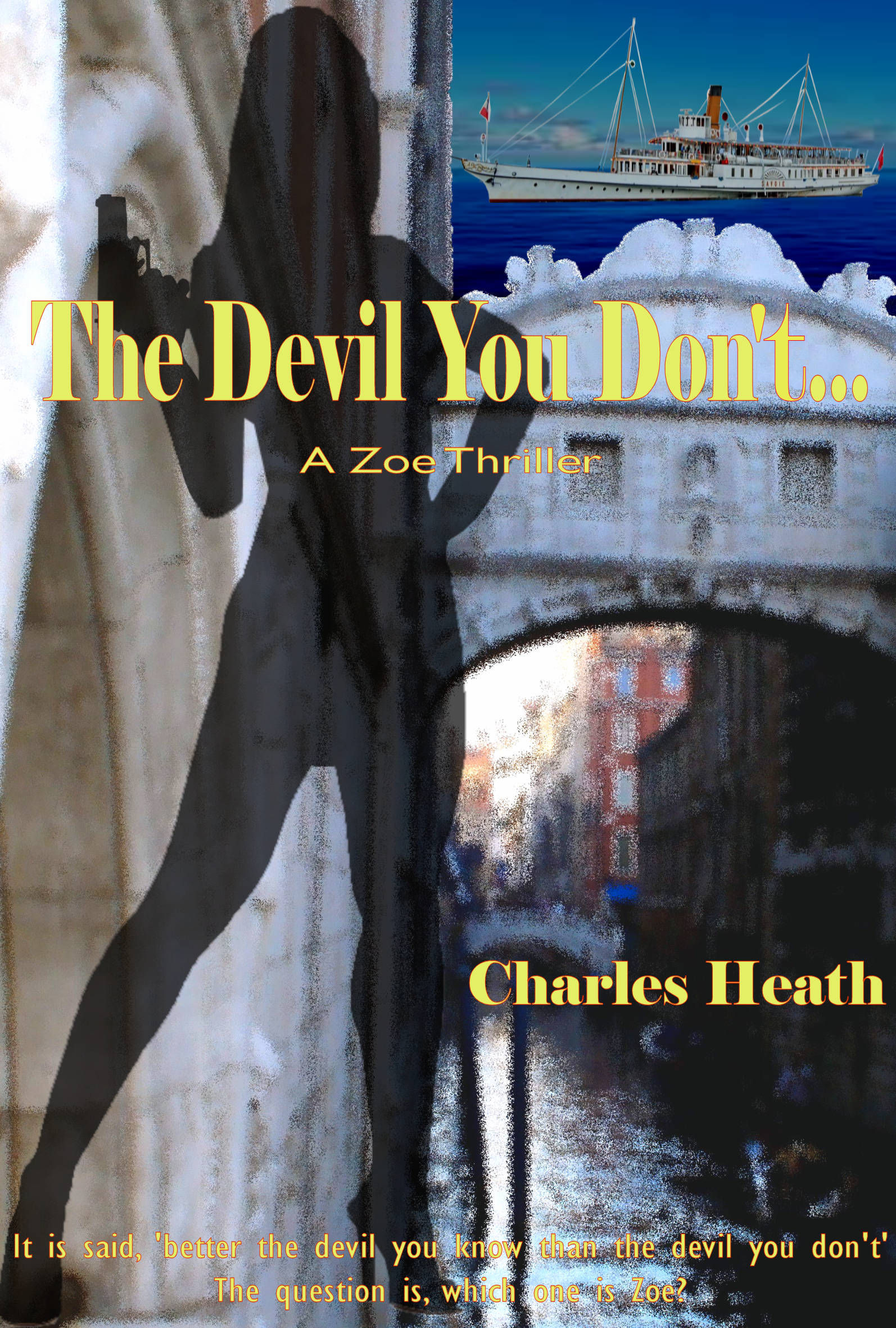
For instance, “Your character Zoe the assassin, is she based on someone you know, or an amalgam of other characters you’ve read about or seen in movies?”

That was an interesting question, and one that has several answers, but the one most relevant was; “It was the secret alter ego of one of the women I used to work with.  I asked her one day if she wasn’t doing what she was, what she would like to do.  It fascinated me that other people had a desire to be something more exotic in an alter ego.”

Of course, the next question was about what I wanted to be in an alter ego.

Maybe I’ll tell you next time.

“The Enemy Within” – the editor’s second draft – Day 30

This book has finally come back from the Editor, so this month it is going to get a second revision, a second draft for the editor, and beta readers.

And so it begins…

So, we have a mission, and we have the players.

We let it play out. People die, and others escape. If you escape, knowing that someone is trying to kill you, what is the first thing to happen in the spy world?

A debriefing.

Searching for the reasons why and coming to conclusions can result in accusations. Or at worst, the survivors are blamed for those that didn’t. I hesitate to say it was like in the first days of flying aeroplanes, if it crashed, it was pilot error, not the plane.

The unthinkable happens, the survivor is fired, and the researcher/briefer is sent to their own version of a debriefing to find out what went wrong. At least, that is what everyone thinks happened.

What actually did was far more sinister, and our man who was fired, with a little help, launched his own investigation. It is coincidental that he was in a relationship with the researcher right up until the briefing when she broke it off.

But what follows makes a very interesting story, and highlights the fact that in the shadowy world of intelligence gathering, everyone lies, everyone has an agenda, and not everyone has the best interests of their country at heart.

Searching for locations: The Pagoda Forest, near Zhengzhou City, Henan Province, China

The pagoda forest

After another exhausting walk, by now the heat was beginning to take its toll on everyone, we arrived at the pagoda forest.

A little history first:

The pagoda forest is located west of the Shaolin Temple and the foot of a hill.  As the largest pagoda forest in China, it covers approximately 20,000 square meters and has about 230 pagodas build from the Tang Dynasty (618-907) to the Qing Dynasty (1644-1911).

Each pagoda is the tomb of an eminent monk from the Shaolin Temple.  Graceful and exquisite, they belong to different eras and constructed in different styles.  The first pagoda was thought to be built in 791.

It is now a world heritage site.

No, it’s not a forest with trees it’s a collection of over 200 pagodas, each a tribute to a head monk at the temple and it goes back a long time.  The tribute can have one, three, five, or a maximum of seven layers.  The ashes of the individual are buried under the base of the pagoda.

The size, height, and story of the pagoda indicate its accomplishments, prestige, merits, and virtues. Each pagoda was carved with the exact date of construction and brief inscriptions and has its own style with various shapes such as a polygonal, cylindrical, vase, conical and monolithic.

This is one of the more recently constructed pagodas

There are pagodas for eminent foreign monks also in the forest.

From there we get a ride back on the back of a large electric wagon

to the front entrance courtyard where drinks and ice creams can be bought, and a visit to the all-important happy place.

Then it’s back to the hotel.

An excerpt from “Strangers We’ve Become” – Coming Soon

I wandered back to my villa.

It was in darkness.  I was sure I had left several lights on, especially over the door so I could see to unlock it.

I looked up and saw the globe was broken.

Instant alert.

I went to the first hiding spot for the gun, and it wasn’t there.  I went to the backup and it wasn’t there either.  Someone had found my carefully hidden stash of weapons and removed them.

Who?

There were four hiding spots and all were empty.  Someone had removed the weapons.  That could only mean one possibility.

I had a visitor, not necessarily here for a social call.

But, of course, being the well-trained agent I’d once been and not one to be caught unawares, I crossed over to my neighbor and relieved him of a weapon that, if found, would require a lot of explaining.

Suitably armed, it was time to return the surprise.

There were three entrances to the villa, the front door, the back door, and a rather strange escape hatch.  One of the more interesting attractions of the villa I’d rented was its heritage.  It was built in the late 1700s, by a man who was, by all accounts, a thief.  It had a hidden underground room which had been in the past a vault but was now a wine cellar, and it had an escape hatch by which the man could come and go undetected, particularly if there was a mob outside the door baying for his blood.

It now gave me the means to enter the villa without my visitors being alerted, unless, of course, they were near the vicinity of the doorway inside the villa, but that possibility was unlikely.  It was not where anyone could anticipate or expect a doorway to be.

The secret entrance was at the rear of the villa behind a large copse, two camouflaged wooden doors built into the ground.  I move aside some of the branches that covered them and lifted one side.  After I’d discovered the doors and rusty hinges, I’d oiled and cleaned them, and cleared the passageway of cobwebs and fallen rocks.  It had a mildew smell, but nothing would get rid of that.  I’d left torches at either end so I could see.

I closed the door after me, and went quietly down the steps, enveloped in darkness till I switched on the torch.  I traversed the short passage which turned ninety degrees about halfway to the door at the other end.  I carried the key to this door on the keyring, found it and opened the door.  It too had been oiled and swung open soundlessly.

I stepped in the darkness and closed the door.

I was on the lower level under the kitchen, now the wine cellar, the ‘door’ doubling as a set of shelves which had very little on them, less to fall and alert anyone in the villa.

Silence, an eerie silence.

I took the steps up to the kitchen, stopping when my head was level with the floor, checking to see if anyone was waiting.  There wasn’t.  It seemed to me to be an unlikely spot for an ambush.

I’d already considered the possibility of someone coming after me, especially because it had been Bespalov I’d killed, and I was sure he had friends, all equally as mad as he was.  Equally, I’d also considered it nigh on impossible for anyone to find out it was me who killed him because the only people who knew that were Prendergast, Alisha, a few others in the Department, and Susan.

That raised the question of who told them where I was.

If I was the man I used to be, my first suspect would be Susan.  The departure this morning, and now this was too coincidental.  But I was not that man.

Or was I?

I reached the start of the passageway that led from the kitchen to the front door and peered into the semi-darkness.  My eyes had got used to the dark, and it was no longer an inky void.  Fragments of light leaked in around the door from outside and through the edge of the window curtains where they didn’t fit properly.  A bone of contention upstairs in the morning, when first light shone and invariably woke me up hours before I wanted to.

Still nothing.

I took a moment to consider how I would approach the visitor’s job.  I would get a plan of the villa in my head, all entrances, where a target could be led to or attacked where there would be no escape.

Coming in the front door.  If I was not expecting anything, I’d just open the door and walk-in.  One shot would be all that was required.

Contract complete.

I sidled quietly up the passage staying close to the wall, edging closer to the front door.  There was an alcove where the shooter could be waiting.  It was an ideal spot to wait.

Crunch.

I stepped on some nutshells.

Not my nutshells.

I felt it before I heard it.  The bullet with my name on it.

And how the shooter missed, from point-blank range, and hit me in the arm, I had no idea.  I fired off two shots before a second shot from the shooter went wide and hit the door with a loud thwack.

I saw a red dot wavering as it honed in on me and I fell to the floor, stretching out, looking up where the origin of the light was coming and pulled the trigger three times, evenly spaced, and a second later I heard the sound of a body falling down the stairs and stopping at the bottom, not very far from me.

Two assassins.

I’d not expected that.

The assassin by the door was dead, a lucky shot on my part.  The second was still breathing.

I checked the body for any weapons and found a second gun and two knives.  Armed to the teeth!

I pulled off the balaclava; a man, early thirties, definitely Italian.  I was expecting a Russian.

I slapped his face, waking him up.  Blood was leaking from several slashes on his face when his head had hit the stairs on the way down.  The awkward angle of his arms and legs told me there were broken bones, probably a lot worse internally.  He was not long for this earth.

“Who employed you?”

He looked at me with dead eyes, a pursed mouth, perhaps a smile.  “Not today my friend.  You have made a very bad enemy.”  He coughed and blood poured out of his mouth.  “There will be more …”

Friends of Bespalov, no doubt.

I would have to leave.  Two unexplainable bodies, I’d have a hard time explaining my way out of this mess.  I dragged the two bodies into the lounge, clearing the passageway just in case someone had heard anything.

Just in case anyone was outside at the time, I sat in the dark, at the foot of the stairs, and tried to breathe normally.  I was trying not to connect dots that led back to Susan, but the coincidence was worrying me.

A half-hour passed and I hadn’t moved.  Deep in thought, I’d forgotten about being shot, unaware that blood was running down my arm and dripping onto the floor.

Until I heard a knock on my front door.

Two thoughts, it was either the police, alerted by the neighbors, or it was the second wave, though why would they be knocking on the door?

I stood, and immediately felt a stabbing pain in my arm.  I took out a handkerchief and turned it into a makeshift tourniquet, then wrapped a kitchen towel around the wound.

If it was the police, this was going to be a difficult situation.  Holding the gun behind my back, I opened the door a fraction and looked out.

No police, just Maria.  I hoped she was not part of the next ‘wave’.

“You left your phone behind on the table.  I thought you might be looking for it.”  She held it out in front of her.

When I didn’t open the door any further, she looked at me quizzically, and then asked, “Is anything wrong?”

I was going to thank her for returning the phone, but I heard her breathe in sharply, and add, breathlessly, “You’re bleeding.”

I looked at my arm and realized it was visible through the door, and not only that, the towel was soaked in blood.

“You need to go away now.”

Should I tell her the truth?  It was probably too late, and if she was any sort of law-abiding citizen she would go straight to the police.

She showed no signs of leaving, just an unnerving curiosity.  “What happened?”

I ran through several explanations, but none seemed plausible.  I went with the truth.  “My past caught up with me.”

“You need someone to fix that before you pass out from blood loss.  It doesn’t look good.”

“I can fix it.  You need to leave.  It is not safe to be here with me.”

The pain in my arm was not getting any better, and the blood was starting to run down my arm again as the tourniquet loosened.  She was right, I needed it fixed sooner rather than later.

I opened the door and let her in.  It was a mistake, a huge mistake, and I would have to deal with the consequences.  Once inside, she turned on the light and saw the pool of blood just inside the door and the trail leading to the lounge.  She followed the trail and turned into the lounge, turned on the light, and no doubt saw the two dead men.

I expected her to scream.  She didn’t.

She gave me a good hard look, perhaps trying to see if I was dangerous.  Killing people wasn’t something you looked the other way about.  She would have to go to the police.

“What happened here?”

“I came home from the cafe and two men were waiting for me.  I used to work for the Government, but no longer.  I suspect these men were here to repay a debt.  I was lucky.”

“Not so much, looking at your arm.”

She came closer and inspected it.

“Sit down.”

She found another towel and wrapped it around the wound, retightening the tourniquet to stem the bleeding.

“Do you have medical supplies?”

I nodded.  “Upstairs.”  I had a medical kit, and on the road, I usually made my own running repairs.  Another old habit I hadn’t quite shaken off yet.

She went upstairs, rummaged, and then came back.  I wondered briefly what she would think of the unmade bed though I was not sure why it might interest her.

She helped me remove my shirt, and then cleaned the wound.  Fortunately, she didn’t have to remove a bullet.  It was a clean wound but it would require stitches.

When she’d finished she said, “Your friend said one day this might happen.”

No prizes for guessing who that friend was, and it didn’t please me that she had involved Maria.

“Alisha?”

“She didn’t tell me her name, but I think she cares a lot about you.  She said trouble has a way of finding you, gave me a phone and said to call her if something like this happened.”

“That was wrong of her to do that.”

“Perhaps, perhaps not.  Will you call her?”

“Yes.  I can’t stay here now.  You should go now.  Hopefully, by the time I leave in the morning, no one will ever know what happened here, especially you.”

She smiled.  “As you say, I was never here.”

© Charles Heath 2018-2022

strangerscover9

Searching for locations: Shaolin Kung Fu, near Zhengzhou City, Henan Province, China

After leaving the hotel in Zhengzhou, which was once one of the eight ancient capitals of China, we are going to Dengfeng city, the home of China’s most famous martial art – Shaolin Kung Fu.

The Shaolin Temple nearby is the origin of Chinese Zen Buddhism, and the Songyang Academy, called “the Centre of Heaven and Earth” is located 87 Km from Zhengzhou, or, as we were advised, a 2-hour drive.  It will be scenic because we are heading towards the mountains.

As one of the four ancient Song Dynasty Academies, Songyang Academy is one of many schools in the province.  It is both on a large scale, is quite spectacular, and is a comprehensive Wushu training base where students are trained to spread the Shaolin Wushu Kung fu style at home and abroad.

There is a 500-seat demonstration hall where you are able to observe 30 minutes of various martial arts in shows starting on the hour.

Outside there is a specific area that generally has about 600 trainees learning kung fu elements during the day but can hold 5,000 people when outdoor performances are required.

The kung fu school

The thing you notice most about the kung fu school is its size and then the number of buses which tells you that it is a popular tourist stop.

And with that size comes long distances between the car park and the venues we need to go to, the first of which is about half a km, and that’s just to get to the ticket plaza.

But, it is pleasantly set out and is quite a large number of shops for both souvenirs and food

We pass by some of the students going through their paces

From there it’s another long, long walk to the show arena, where we’re supposed to see various kung fu elements on display.  We watched this for a few minutes, then headed off towards the hall for a more intense demonstration of kung fu, and because there is limited seating we have to start lining up at the head of the queue to get a seat.

But…

Everyone else has the same idea and we join the throng which then becomes a ride, and true to the Chinese they start finding ways to push in, even using the imaginary friend somewhere ahead in the queue.

The doors open and then it’s open slather, with the hoards pushing from behind and sliding up the side to get in first.  We go with the tide, and manage to get in and find a seat though we were separated from three of our group.

It was an interesting show even though not one word of English was spoken, which from our point of view was a disappointment because we had no idea what was going on.

However…

It wasn’t hard to follow

What the performers were doing was relatively self-explanatory, and quite fascinating, especially the guy who broke a sword over his head, and the guy who stopped two spears penetrating the neck, both examples of very disciplined men.

Boys gave a demonstration of kung fu moves, and intensity and age increased as this progressed to the end.

Next, we were taken in hand by an instructor in Tai chi or an equivalent, I was not quite sure what it was called, and went through the twelve or maybe more moves that constituted a morning or afternoon exercise session or it could be just for relaxation.  I lasted the first session but it was a little difficult to do with my sore limbs and a bad back.

Not that I could remember any of it now other than hands overhead, hands in front, bent knees, and a few gentle kung fu hand moves.

Perhaps when I get home I might seek out someone to show me the moves.

Whilst the others were following their training instructor, I wandered about, finding a large statue


And some smaller statues

Lunch in the Zen Restaurant

After all that exercise it was time to have lunch purportedly the same food as the king fu masters.
It’s in the Zen restaurant, aptly named, and the food when it came, came thick and fast, but some of it wasn’t very nice, meat with bones, tofu, a tasteless soup, but some good dishes like the vegetables and noodles with meat, without bones.

The only problem was nothing to drink except a pot of hot water.  No tea, no cold water, and if you wanted a cold drink you had to pay for it.  After paying 550 yuan why should we have to pay more for a drink when we have not had to so far.

But no cold water?  That was just not on, and when we brought this to the attention of the tour guide she just simply ignored us.  We just didn’t get anything.

That basically tainted the whole experience.

After lunch, there was the Shaolin Temple and the Pogoda Forest to visit.

“Sunday in New York”, a romantic adventure that’s not a walk in the park!

“Sunday in New York” is ultimately a story about trust, and what happens when a marriage is stretched to its limits.

When Harry Steele attends a lunch with his manager, Barclay, to discuss a promotion that any junior executive would accept in a heartbeat, it is the fact his wife, Alison, who previously professed her reservations about Barclay, also agreed to attend, that casts a small element of doubt in his mind.

From that moment, his life, in the company, in deciding what to do, his marriage, his very life, spirals out of control.

There is no one big factor that can prove Harry’s worst fears, that his marriage is over, just a number of small, interconnecting events, when piled on top of each other, points to a cataclysmic end to everything he had believed in.

Trust is lost firstly in his best friend and mentor, Andy, who only hints of impending disaster, Sasha, a woman whom he saved, and who appears to have motives of her own, and then in his wife, Alison, as he discovered piece by piece damning evidence she is about to leave him for another man.

Can we trust what we see with our eyes or trust what we hear?

Haven’t we all jumped to conclusions at least once in our lives?

Can Alison, a woman whose self-belief and confidence is about to be put to the ultimate test, find a way of proving their relationship is as strong as it has ever been?

As they say in the classics, read on!

Purchase:

http://tinyurl.com/Amazon-SundayInNewYork