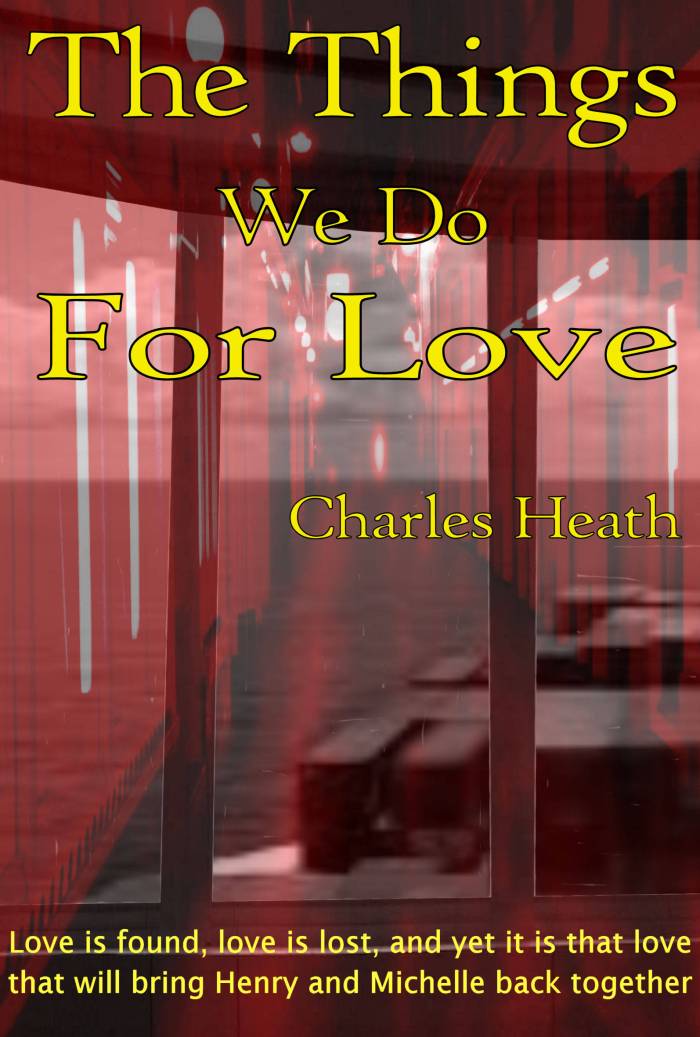
An excerpt from “The Things We Do For Love”; In love, Henry was all at sea!

In the distance, he could hear the dinner bell ringing and roused himself.  Feeling the dampness of the pillow, and fearing the ravages of pent-up emotion, he considered not going down but thought it best not to upset Mrs. Mac, especially after he said he would be dining.

In the event, he wished he had reneged, especially when he discovered he was not the only guest staying at the hotel.

Whilst he’d been reminiscing, another guest, a young lady, had arrived.  He’d heard her and Mrs. Mac coming up the stairs and then shown to a room on the same floor, perhaps at the other end of the passage.

Henry caught his first glimpse of her when she appeared at the door to the dining room, waiting for Mrs. Mac to show her to a table.

She was in her mid-twenties, slim, with long brown hair, and the grace and elegance of a woman associated with countless fashion magazines.  She was, he thought, stunningly beautiful with not a hair out of place, and make-up flawlessly applied.  Her clothes were black, simple, elegant, and expensive, the sort an heiress or wife of a millionaire might condescend to wear to a lesser occasion than dinner.

Then there was her expression; cold, forbidding, almost frightening in its intensity.  And her eyes, piercingly blue and yet laced with pain.  Dracula’s daughter was his immediate description of her.

All in all, he considered, the only thing they had in common was, like him, she seemed totally out of place.

Mrs. Mac came out of the kitchen, wiping her hands on her apron.  She was, she informed him earlier, chef, waitress, hotelier, barmaid, and cleaner all rolled into one.  Coming up to the new arrival she said, “Ah, Miss Andrews, I’m glad you decided to have dinner.  Would you like to sit with Mr. Henshaw, or would you like to have a table of your own?”

Henry could feel her icy stare as she sized up his appeal as a dining companion, making the hair on the back of his neck stand up.  He purposely didn’t look back.  In his estimation, his appeal rating was minus six.  Out of a thousand!

“If Mr. Henshaw doesn’t mind….”  She looked at him, leaving the query in mid-air.

He didn’t mind and said so.  Perhaps he’d underestimated his rating.

“Good.”  Mrs. Mac promptly ushered her over.  Henry stood, made sure she was seated properly and sat.

“Thank you.  You are most kind.”  The way she said it suggested snobbish overtones.

“I try to be when I can.”  It was supposed to nullify her sarcastic tone but made him sound a little silly, and when she gave him another of her icy glares, he regretted it.

Mrs. Mac quickly intervened, asking, “Would you care for the soup?”

They did, and, after writing the order on her pad, she gave them each a look, imperceptibly shook her head, and returned to the kitchen.

Before Michelle spoke to him again, she had another quick look at him, trying to fathom who and what he might be.  There was something about him.

His eyes, they mirrored the same sadness she felt, and, yes, there was something else, that it looked like he had been crying?  There was a tinge of redness.

Perhaps, she thought, he was here for the same reason she was.

No.  That wasn’t possible.

Then she said, without thinking, “Do you have any particular reason for coming here?”  Seconds later she realized she’d spoken it out loud, had hadn’t meant to actually ask, it just came out.

It took him by surprise, obviously not the first question he was expecting her to ask of him.

“No, other than it is as far from civilization, and home, as I could get.”

At least we agree on that, she thought.

It was obvious he was running away from something as well.

Given the isolation of the village and lack of geographic hospitality, it was, from her point of view, ideal.  All she had to do was avoid him, and that wouldn’t be difficult.

After getting through this evening first.

“Yes,” she agreed.  “It is that.”

A few seconds passed, and she thought she could feel his eyes on her and wasn’t going to look up.

Until he asked, “What’s your reason?”

Slightly abrupt in manner, perhaps, because of her question and how she asked it.

She looked up.  “Rest.  And have some time to myself.”

She hoped he would notice the emphasis she had placed on the word ‘herself’ and take due note.  No doubt, she thought, she had completely different ideas of what constituted a holiday than he, not that she had said she was here for a holiday.

Mrs. Mac arrived at a fortuitous moment to save them from further conversation.

Over the entree, she wondered if she had made a mistake coming to the hotel.  Of course, there had been no conceivable way she could know that anyone else might have booked the same hotel, but realized it was foolish to think she might end up in it by herself.

Was that what she was expecting?

Not a mistake then, but an unfortunate set of circumstances, which could be overcome by being sensible.

Yet, there he was, and it made her curious, not that he was a man, by himself, in the middle of nowhere, hiding like she was, but for quite varied reasons.

On discreet observance, whilst they ate, she gained the impression his air of light-heartedness was forced, and he had no sense of humour.

This feeling was engendered by his looks, unruly dark hair, and permanent frown.  And then there was his abysmal taste in clothes on a tall, lanky frame.  They were quality but totally unsuited to the wearer.

Rebellion was written all over him.

The only other thought crossing her mind, and incongruously, was he could do with a decent feed.  In that respect, she knew now from the mountain of food in front of her, he had come to the right place.

“Mr. Henshaw?”

He looked up.  “Henshaw is too formal.  Henry sounds much better,” he said, with a slight hint of gruffness.

“Then my name is Michelle.”

Mrs. Mac came in to take their order for the only main course, gather up the entree dishes, and then return to the kitchen.

“Staying long?” she asked.

“About three weeks.  Yourself?”

“About the same.”

The conversation dried up.

Neither looked at the other, rather at the walls, out the window, towards the kitchen, anywhere.  It was, she thought, unbearably awkward.

Mrs. Mac returned with a large tray with dishes on it, setting it down on the table next to theirs.

“Not as good as the usual cook,” she said, serving up the dinner expertly, “but it comes a good second, even if I do say so myself.  Care for some wine?”

Henry looked at Michelle.  “What do you think?”

“I’m used to my dining companions making the decision.”

You would, he thought.  He couldn’t help but notice the cutting edge of her tone.  Then, to Mrs. Mac, he named a particular White Burgundy he liked, and she bustled off.

“I hope you like it,” he said, acknowledging her previous comment with a smile that had nothing to do with humour.

“Yes, so do I.”

Both made a start on the main course, a concoction of chicken and vegetables that were delicious, Henry thought when compared to the bland food he received at home and sometimes aboard my ship.

It was five minutes before Mrs Mac returned with the bottle and two glasses.  After opening it and pouring the drinks, she left them alone again.

Henry resumed the conversation.  “How did you arrive?  I came by train.”

“By car.”

“Did you drive yourself?”

And he thought, a few seconds later, that was a silly question, otherwise she would not be alone, and certainly not sitting at this table. With him.

“After a fashion.”

He could see that she was formulating a retort in her mind, then changed it, instead, smiling for the first time, and it served to lighten the atmosphere.

And in doing so, it showed him she had another more pleasant side despite the fact she was trying not to look happy.

“My father reckons I’m just another of ‘those’ women drivers,” she added.

“Whatever for?”

“The first and only time he came with me I had an accident.  I ran up the back of another car.  Of course, it didn’t matter to him the other driver was driving like a startled rabbit.”

“It doesn’t help,” he agreed.

“Do you drive?”

“Mostly people up the wall.”  His attempt at humour failed.  “Actually,” he added quickly, “I’ve got a very old Morris that manages to get me where I’m going.”

The apple pie and cream for dessert came and went and the rapport between them improved as the wine disappeared and the coffee came.  Both had found, after getting to know each other better, their first impressions were not necessarily correct.

“Enjoy the food?” Mrs. Mac asked, suddenly reappearing.

“Beautifully cooked and delicious to eat,” Michelle said, and Henry endorsed her remarks.

“Ah, it does my heart good to hear such genuine compliments,” she said, smiling.  She collected the last of the dishes and disappeared yet again.

“What do you do for a living,” Michelle asked in an off-hand manner.

He had a feeling she was not particularly interested, and it was just making conversation.

“I’m a purser.”

“A what?”

“A purser.  I work on a ship doing the paperwork, that sort of thing.”

“I see.”

“And you?”

“I was a model.”

“Was?”

“Until I had an accident, a rather bad one.”

“Oh, I’m sorry.”

So that explained the odd feeling he had about her.

As the evening wore on, he began to think there might be something wrong, seriously wrong with her because she didn’t look too well.  Even the carefully applied makeup, from close, didn’t hide the very pale, and tired look, or the sunken, dark-ringed eyes.

“I try not to think about it, but it doesn’t necessarily work.  I’ve come here for peace and quiet, away from doctors and parents.”

“Then you will not have to worry about me annoying you.  I’m one of those fall-asleep-reading-a-book types.”

Perhaps it would be like ships passing in the night and then smiled to himself about the analogy.

Dinner over, they separated.

Henry went back to the lounge to read a few pages of his book before going to bed, and Michelle went up to her room to retire for the night.

But try as he might, he was unable to read, his mind dwelling on the unusual, yet compellingly mysterious person he would be sharing the hotel with.

Overlaying that original blurred image of her standing in the doorway was another of her haunting expressions that had, he finally conceded, taken his breath away, and a look that had sent more than one tingle down his spine.

She may not have thought much of him, but she had certainly made an impression on him.

…

© Charles Heath 2015-2024
lovecoverfinal1

Writing a book in 365 days – 88/89

Days 88 and 89

Writing exercise – Things are not what they seem

…

Include the elements, who does this person think they are, who are they really, what are they running from or to, and what just happened they cannot undo.

…

I knew her simply as Emma, the enigmatic woman who lived in Apartment 772, five doors up from me. Sometimes she would be alone, sometimes with a man whom I assumed was her husband. They were quiet and unassuming and had lived in the block for about a year.

Amonth the others on our floor, there were the busybodies, the people who had more time than sense and spent their time talking about matters they generally knew nothing about. Emma was one of those subjects.

To them, she was not married, the man was really two who looked the same, possibly brothers, and that arguments had been heard, up the stairs, and from within the apartment. I simply told them it was none of their business.

Each morning, I would leave for work at the same time. Emma was more erratic but would also leave for work about the same time. I took the bus from the stop outside the building; she took a bus from the other side in the opposite direction.

Each evening, I would come home on the bus, stopping on the other side of the street. Not so often, Emma would come home in a car, driven by the man she was seen with in the building. She would get out, and he would drive off, only to return a half hour later on foot.

No, I wasn’t a stalker; she had simply piqued my interest.

…

This morning was different.

I came down to join the others at the bus stop, waiting for the bus that was three minutes late. i was running late.

Emma was on the other side of the road, standing next to the shelter, but there was something else. A case, not a large one, not a small one, but one just enough for her to pack enough for a free days away.

This sent my deductive mind into overdrive.

IT was cold but the sun was out, and she was holding rather than wearing her red coat with the fur collar. She was not wearing her usual white blouse and black pants, but a summery yellow dress with flowers on it, a yellow ribbon in her hair, and instead of practical flat heeled shoes she was earing high heels. It completely transformed her into someone else.

My assumption that she was an office clerk or shop salesperson was shattered. Perhaps she was something else entirely. Had my bus been on time, I would have missed this transformation. Perhaps she was emulating the epitome of a 1950s housewife.

She was certainly nothing like the type of woman that would be associated with the man who brought her home. He was rough, unkempt, perhaps a factory worker or something else. My mind briefly went to a dark place and back again. No, it was not possible.

Of course, all of this speculation could be resolved in an instant if only I had the courage to talk to her, and now that I had seen her in this guise, that might never happen. She was far too nice for the likes of me.

I;d seen her glance nervously over the road, as if she was looking for the man in the car, the man we saw with her in the corridors of our building. Did he bring her home last night? Was she running away from him? It would explain the nervous glances. Those nervous glances extended to the direction the bus came from, and she was willing it to arrive so she could get away.

If he did come out and saw her trying to escape, would I try to intervene and save her? No. I was too much of a coward to do that. Those furtive and apprehensive looks confirmed my suspicion that she was leaving. He was not her type, and maybe was once, but not now. Not this version of her.

Had they argued? Had it got violent? I hadn’t heard anything, but then I never did. I went to bed early so that I was fresh for the next day. What could have happened that precipitated this? If she was trying to get away, would she come back?

…

My attention was diverted for a moment on a pair of badly behaving school children. when I looked back, I could see the stricken look on her face, staring at the entrance to the building. I turned around and saw the man, quickly looking up and down the street, then over the road.

His manner told me he had seen her, and he was almost running towards her.

I looked up the road and the bus wasn’t coming. She had picked up the suitcase but in the motion of doing that she had dropped her coat, and buy the time she picked it up he was there. He grabbed her by the arms and was yelling, not too loudly, at her.

I couldn’t understand the language he was speaking.

She looked devastated and didn’t put up any resistance. He was trying to take her case and she wouldn’t let him. Others at the bus stop were moving away, not wanting to get involved.

I made a decision. it might not be the right one, it might be none of my business, but to me it looked like he was hurting her.

I crossed the road and stepped up to them.

He stopped and glared at me. “You want to go away, little man.” Full of himself and arrogant. I knew then what he was. Italian, recently arrived, with halting English. There were a few near where I worked, men who were recently arrived, looking for a new life.

I pulled out my badge and showed it to him. “You might want to rethink that, sir.” He stepped back slightly. My detective’s badge carried only so much weight, and people like him generally had no respect for the law.

I looked at her. “Are you alright? Is this man bothering you?”

She looked at me, trying to remember where she had seen me. It was certainly not as a policeman. I rarely let anyone know who or what I was.

Over the other side of the road, my bus came and went. Damn.

“Yes,” she said. “You are from apartments. A policeman. Yes, this man is annoying me.
I wish to go to my sisters.”

“And this man?”

“Comes from home, thinks we are still,” she hesitated, looking for a word, “friends. That is home, not here. He is terrible man at home, why I leave. I do not wish to see him, now or ever again.”

“OK.” I turned back to him. “Leave now, sir. She does not want to see you.”

“Not true. This is wife, my woman, she is mine, do what I tell her!”

She came and stood beside me. “Was married, divorced now. I am not his.”

He took a step towards me and tried to push me aside to get to her, as she moved backwards to stand behind me. Perhaps I acted on instinct, perhaps it was the fact he was going to shove me, but I grabbed his arm, twisted him to one side, and when he tried to resist, I levered him onto the ground, pinning his arms behind him.

A patrol car pulled up just as he hit the ground, and two uniformed officers jumped out, one with a hand on his gun. I held up my badge and said, “This man was trying to take this woman away forcefully, I told him to stop after identifying myself as a police officer, and when he didn’t, I had to restrain him.

The bus arrived and pulled in front of the police car. The two policemen had the man in custody and were holding him.

She looked at the very angry man, and at the bus. “May I catch bus. My sister is waiting for my arrival.”

“You want to prefer charges against this man?” I asked.

“No. I just want to leave. Please.”

I looked at the two officers. “Go. We’ll detain this man for a few minutes. Give him a warning.”

“Thank you.” She picked up her case and walked over to the bus. She took one last look back, and then she was gone.

I had no doubt I wouldn’t see her again.

They gave him a warming and then let him go, waiting until he had walked off. He gave the nastiest of looks, and I knew my business wasn’t done with him. He didn’t look the sort who would let it go.

…

©  Charles Heath  2025

An excerpt from “If Only” – a work in progress

Investigation of crimes doesn’t always go according to plan, nor does the perpetrator get either found or punished.

That was particularly true in my case.  The murderer was incredibly careful in not leaving any evidence behind, to the extent that the police could not rule out whether it was a male or a female.

At one stage the police thought I had murdered my own wife though how I could be on a train at the time of the murder was beyond me.  I had witnesses and a cast-iron alibi.

The officer in charge was Detective First Grade Gabrielle Walters.  She came to me on the day after the murder seeking answers to the usual questions like, when was the last time you saw your wife, did you argue, the neighbors reckon there were heated discussions the day before.

Routine was the word she used.

Her fellow detective was a surly piece of work whose intention was to get answers or, more likely, a confession by any or all means possible.  I could sense the raging violence within him.  Fortunately, common sense prevailed.

Over the course of the next few weeks, once I’d been cleared of committing the crime, Gabrielle made a point of keeping me informed of the progress.

After three months the updates were more sporadic, and when, for lack of progress, it became a cold case, communication ceased.

But it was not the last I saw of Gabrielle.

The shock of finding Vanessa was more devastating than the fact she was now gone, and those images lived on in the same nightmare that came to visit me every night when I closed my eyes.

For months I was barely functioning, to the extent I had all but lost my job, and quite a few friends, particularly those who were more attached to Vanessa rather than me.

They didn’t understand how it could affect me so much, and since it had not happened to them, my tart replies of ‘you wouldn’t understand’ were met with equally short retorts.  Some questioned my sanity, even, for a time, so did I.

No one, it seemed, could understand what it was like, no one except Gabrielle.

She was by her own admission, damaged goods, having been the victim of a similar incident, a boyfriend who turned out to be an awfully bad boy.  Her story varied only in she had been made to witness his execution.  Her nightmare, in reliving that moment in time, was how she was still alive and, to this day, had no idea why she’d been spared.

It was a story she told me one night, some months after the investigation had been scaled down.  I was still looking for the bottom of a bottle and an emotional mess.  Perhaps it struck a resonance with her; she’d been there and managed to come out the other side.

What happened become our secret, a once-only night together that meant a great deal to me, and by mutual agreement, it was not spoken of again.  It was as if she knew exactly what was required to set me on the path to recovery.

And it had.

Since then, we saw each about once a month in a cafe.   I had been surprised to hear from her again shortly after that eventful night when she called to set it up, ostensibly for her to provide me with any updates on the case, but perhaps we had, after that unspoken night, formed a closer bond than either of us wanted to admit.

We generally talked for hours over wine, then dinner and coffee.  It took a while for me to realize that all she had was her work, personal relationships were nigh on impossible in a job that left little or no spare time for anything else.

She’d always said that if I had any questions or problems about the case, or if there was anything that might come to me that might be relevant, even after all this time, all I had to do was call her.

I wondered if this text message was in that category.  I was certain it would interest the police and I had no doubt they could trace the message’s origin, but there was that tiny degree of doubt, about whether or not I could trust her to tell me what the message meant.

I reached for the phone then put it back down again.  I’d think about it and decide tomorrow.

© Charles Heath 2018-2020

In a word: Spark

So, as far as I’m concerned the word ‘spark’ is something that is created by a fire, and can create havoc.

But…

Another meaning is that a ‘spark’ is created by a ‘spark plug’ in order to force the pistons of an engine to drive the crankshaft

This leads to…

There is no spark in this relationship, so perhaps it’s going nowhere.  No, we’re not looking for a fiery spark, but a small amount of very intense feeling

Spark?

I was watching God Friended Me last night and I’m sure like many others we were waiting to see that spark that would change their relationship from the friend zone, to something else.

And…

I think it was there.  Of course, we’ll have to wait till next week to find out.

As for the word spark, well there several different meanings, one of which I am familiar with when I was young.

Being called a ‘bright spark’

Depending on who used that remark, it could either mean you were clever or you were a smart ass, which I suspect was the reference to me.

Then, moving on

Saying something inflammatory ‘sparked’ the crowd into action.  A single remark can be equated to a literal ‘spark’ that can ignite a reaction.

A lynching perhaps?

And what about, once upon a time, a ship’s radio officer, he was called ‘sparks’ or ‘sparkie’, also a name that sometimes refers to an electrician.

I can see plenty of uses for this word in a story.

‘What Sets Us Apart’ – A beta readers view

There’s something to be said for a story that starts like a James Bond movie, throwing you straight in the deep end, a perfect way of getting to know the main character, David, or is that Alistair?

A retired spy, well not so much a spy as a retired errand boy, David’s rather wry description of his talents, and a woman that most men would give their left arm for, not exactly the ideal couple, but there is a spark in a meeting that may or may not have been a setup.

But as the story progressed, the question I kept asking myself was why he’d bother.

And, page after unrelenting page, you find out.

Susan is exactly the sort of woman to pique his interest.  Then, inexplicably, she disappears.  That might have been the end to it, but Prendergast, that shadowy enigma, David’s ex-boss who loves playing games with real people, gives him an ultimatum, find her or come back to work.

Nothing like an offer that’s a double-edged sword!

A dragon for a mother, a sister he didn’t know about, Susan’s BFF who is not what she seems or a friend indeed, and Susan’s father who, up till David meets her, couldn’t be less interested, his nemesis proves to be the impossible dream, and he’s always just that one step behind.

When the rollercoaster finally came to a halt, and I could start breathing again, it was an ending that was completely unexpected.

I’ve been told there’s a sequel in the works.

Bring it on!

…

The book can be purchased here:  http://amzn.to/2Eryfth

…

The cinema of my dreams – I never wanted to go to Africa – Episode 36

Our hero knows he’s in serious trouble.

The problem is, there are familiar faces and a question of who is a friend and who is foe made all the more difficult because of the enemy, if it was the enemy, simply because it didn’t look or sound or act like the enemy.

Now, it appears, his problems stem from another operation he participated in, and because of it, he has now been roped into what might be called a suicide mission.


The next stretch of road was from Aba to Nagero, the gateway to the Garamba National Park.  This was a road where we would have to be more careful because it was possible, now we were off the main road, even though it was designated a highway, or perhaps that was a little too optimistic since it had a number N26, which ran into the R240 at a place nominally named Faradje, but did have a place to stay called the Residence Robert Ball.

I guess I missed that.

Beyond Faradje the road was a little more intense, but something else that worried me, there was more scope for us to be ambushed.  To be honest, I had expected trouble for the last 100 kilometers, but trucks and people were plentiful enough to keep any surprises away.  Now, that element of safety had gone and for quite some distance now we’d been moving slowly, and everyone was on alert.

My fears were not misplaced.

We’d hit a rather rough patch and had to slow down, and coming into a creek crossing the road narrowed, and the trees came down to the side of the road, providing any would-be attacker plenty of cover.  I had been considering how I would arrange an ambush when, suddenly the car in front stopped suddenly, and we, caught unawares, slid almost into the back of them.

My other radio crackled, Monroe was reporting in.  “Houston, we’ve got a problem.”

A flooded creek that was impassable, or a rockfall.  There had been one of each so far, but both had been relatively easy to negotiate.

Then she added, “A gentleman in army gear with a gun.  He’s brought a few friends to the party.”

“Real army, or…”

“The or, I think.  Some of his ‘men’ are, well, not men.”

A local militia.  Ahead I could see several more of the ‘soldiers’ filtering down to cover each of the vehicles until a real soldier stopped near ours, gun aimed and ready to fire.

“Send in our guide and get him to sort the matter out.”

No one was asking us to leave the vehicles yet, so this might but just a ‘request’ for a passing fee.  Jacobi had said this might happen once we left the mainstream roads.  I had hoped, the Garamba National Park is internationally known, all roads in and out would be ‘protected’.  Perhaps that was only for convoys protected by Government troops, a service we had to forego due to the nature of our business.

Five minutes passed, then the next update.

“Jacobi is going now.  We’ve finally got past any possible misunderstandings.  Good thing he knows the language.”

Mindful of where the soldier covering us was standing and his line of sight into the car, I said into the other radio, “Mobley?”

“Sir?”

“Where are you?”

“About a k behind you.”

“Stop.  Park, and approach on foot.  We have a small problem, about 10 militiamen have stopped us at a choke point.”

“Done.  I will be there shortly.  Take them out?”

“Get a position and standby.”

Forward of us little was happening.  I could now see Jacobi and the group commander standing to one side of the lead vehicle, talking.  Jacobi was gesturing, and the soldier was looking defensive.

Seconds dragged by like they were minutes.

Davies came back to life.  “Why have we stopped?”

“Checkpoint.”

“There isn’t meant to be a checkpoint here, is there?”

“No.”

Before we started out Davies had hidden a sidearm under her seat, in a place where I had hoped would not be checked by the border officials.  They had made a cursory scan in the front of the car but hadn’t seen it.  Now she had reached down and had it in her hand, at the same time making sure she had eye contact with the militiaman on her side of our car.

Our personal detail had doubled in the last minute or so.  I had just watched Jacobi return to the lead vehicle, get in, but leave the door open.

The radio crackled again.  “They want five thousand US dollars, and we can proceed.”

“We got five thousand.”

“Jacobi says two should do it.”

“Give it a go.”

I watched and waited as it took a few more minutes before Jacobi, with a bulky envelope, got out of the car and walked towards the soldier.

Showing we had money and were willing to hand it over might lead to further demands, particularly if the soldier though he was being disrespected.  It all depended on Jacobi’s negotiating skills.

Mobley reported in.  He had a position where he could see the men at the head of the convoy.

I spoke into the radio to the others, “Has everyone got a clear shot on their covering guards, just in case this goes sideways.”

“They’re not exactly soldiers,” I heard Barnes say.

“But they’ll shoot to kill you all the same.  Unfortunately, we’re on a mission-critical timeline here, and whilst I don’t like it, it’s going to be one of those at all costs decisions.”

A series of ‘ready’ came over the radio.

Several more minutes passed, and more animated conversation between Jacobi and the commander, then Jacobi returned to the car, minus the envelope.

Was it successful?

Monroe.  “Seems he wants ten thousand now.  Orders?”

“Negotiations are over.”

Several shots rang our, taking down the three men at the front of the convoy in quick succession, the signal for the others to take out their guards almost simultaneously.  It was a miracle none of the guards got a shot off, but, then, they were standing a little too close for their own good.


Five minutes later we were back on the road, the militiamen having their arms removed, and removed from sight, just in case anyone came looking for them.  It might be a forward group from the kidnappers, looking for some extra cash, or, if the negotiations had dragged on, looking to take the ransom and then demand another when we turned up empty-handed.

Whatever had happened, it was over.

Ten minutes later Mobley had re-joined the convoy behind me.


© Charles Heath 2019-2020

The cinema of my dreams – I always wanted to write a war story – Episode 36

For a story that was conceived during those long boring hours flying in a steel cocoon, striving to keep away the thoughts that the plane and everyone in it could just simply disappear as planes have in the past, it has come a long way.

Whilst I have always had a fascination with what happened during the second world war, not the battles or fighting, but in the more obscure events that took place, I decided to pen my own little sidebar to what was a long and bitter war.

And, so, it continues…

…

Jackerby came back and sat down.  It was clear he was annoyed his lunch was interrupted.

“Atherton’s not among those Leonardo brought back.”

Johannsen silently breathed a sigh of relief.  While he was still outside there was hope he would not get hurt.  If he had the sense to keep his head down.  Anyone else, Johannesen would not have cared.

“Who did Leonardo bring in?”

“Some woman called Martina, the one he says is in charge of the resistance.  He said he raided their last stronghold, killed everyone except the three people he knew were in the resistance.  They’re now in the dungeons.”

“We should be down there asking questions.”  A pointed glare from Wallace carried the message, what are you doing here?

“No use.  He nearly killed them, and it’ll take a while for them to recover.”

“To find out where Atherton is?”

“It seems that was the least of his concerns.  Apparently, she apparently humiliated him so he was more interested in payback.”

“It wouldn’t be hard to humiliate a fool like him,” Johannsen muttered.

Wallace glared at him.  “You should have more faith in our Italian friends, Richard.”

“My faith in him extends only to the fact he will drink the cellar dry.”

Wallace shrugged.  “Once he’s served his purpose…” and left it at that.  “Have you got onto London and asked them for further information on Mayer?”

“I think, by now, they would have tumbled to what’s going on here.  Especially after I saw Atherton come out of the radio room just before Jackerby arrived.  I asked the operator, and he gave me a coded message, but it’s not like any code I’ve seen.”

“And you’re telling me this now?”

“At least he didn’t smash it, which is what I would have done.  We haven’t heard any more from High Command other than to say the traitor was thought to be heading for Innsbruck and coming over the mountains near the Brenner Pass.  They’ve got people looking, but nothing as yet.”

“Now we’ve lost Carmichael, do we have a description of him?”

“Yes.”

“Good.  At least something is happening.”


After lunch, Johannsson went down to the dungeon to check on the prisoners.  Wallace had assigned their ‘welfare’ to him.  It was a difficult assignment seeing they arrived both exhausted, weak, and then subjected to an initial interrogation that determined whether or not they got medicines or food.

Most were left to starve.  Any women were sent to the soldier’s barracks, where they were out of his control.  None had ever come back, and he was ordered not to go check on them.

All told, there were 12 still in cells, with three due to be executed later that day.  All had worked in an armaments factory and had admitted to having information about the bombs that were being dropped over England.

Another six had yet to say what information they had, and had been subjected to severe torture, the handiwork of two of Jackerby’s men, and who Johannsen thought had been trained by the Gestapo.  In fact, he believed they were Gestapo, and that Jackerby, though he didn’t have the uniform, was a ranking SS officer.

Not a man to cross.  Leonardo would find that out soon enough.

The most recent three, the resistance fighters were put in separate cells next to each other.  The guards had been told to listen to any conversations they had, and report.  As yet, none of them had spoken.

Considering the condition they arrived in, that was no surprise.

He stood outside the cell holding the woman they called Martina.

The leader.

She hadn’t moved from the moment she had been dropped there.

A guard appeared beside him.

“Nothing yet?” Johansson asked him.

“I doubt they’ll speak again.  If that’s what Leonardo does to his so-called countrymen; I’d hate to see what he does to his enemies.”

“You let me know if she says anything.”

The soldier nodded, then went back to his station.

The other two were men, one old, one younger.  An odd group to be part of the resistance.  The woman he could understand and was the key. 

He now believed Atherton would come to rescue her.  Like any good British soldier, his empathy would be his downfall.

…

© Charles Heath 2020-2023

A to Z Blog Challenge – April 2025 – L

…

L is for – Let’s have some fun.  Burned operatives get a second chance

…

I’d seen the Trevi Fountain in the movies, but, until now, it just seemed like any other fountain, only larger.

In reality, it was much more than that, and, so it seemed, it was also that for many other people.  Mid-afternoon on a warm sunny day, they were all standing in awe.

Perhaps some were making a wish, and I saw several toss coins in.  There would be a lot of money in there, and I couldn’t help but think about what sort of job it would be to retrieve it.

Odd too, I thought, if they hadn’t, how many old and rare coins might be somewhere on the floor.  Of course, I only thought of the aesthetic value rather than the practicality of the water system that the Romans had built long before such feats of engineering were being contemplated.

No, I was here on holiday. 

After years of travelling to a great many places for my job, one that never really gave me any time for sightseeing, I’d decided it was time to indulge in a little tourism.

Before this, I’d been to the Colosseum, the old ruins, the Spanish Steps, and the Parthenon.  This was going to wrap up in the afternoon.

“So, are you here on business or pleasure?”

I turned to see Giuseppe, a man I’d had a rather complicated relationship with in the past, and one who was not told I was coming.

But the fact he was here was no surprise.

It was, however, surprising that he could sneak up on me.  It showed I was slipping, or, more than likely, I was more susceptible to being distracted.

“I am but a humble tourist.  I’m sorry, but you have been following me for nothing.”

“Why is it I find that difficult to believe?”

Maybe because of what I used to do, but it was not something I would openly admit.  And the only reason he was standing there was that someone else had made a mistake, and required a bit of diplomacy to smooth the waters.

Unfortunately, that had destroyed my invisibility in Italy, and probably most of Europe, and these days I spent most of my time in semi-retirement driving a desk.  Not entirely put out to pasture.

“As difficult as it might be, having your cover blown makes it impossible to continue, verified by the fact you’re here now.  Was it a red flag on my name or facial recognition?”

“Just remember, we’re watching you.”

With a last shake of his head, he walked over to a car parked a short of distance away, got in, and drove off.  I had no doubt he was not the only one who had been watching me.

“It seems you were right.”

Another voice, this time a woman, and expected.  Carla had been waiting in the coffee shop for Giuseppe or someone like him to make an appearance.

“They were not exactly hiding the fact they had me under surveillance.”

She handed me the coffee with a smile.

“That means we can have some fun, does it not?”

That had been the plan.  I knew if I entered Italy using the identity I used the last time, it would put them on alert and prompt a reaction.

“It still doesn’t mean they won’t suspect something is afoot.”

“And since when did you start doubting yourself?”

Since my last operation fell apart because I made one simple mistake that no agent would have made in a million years.  But, I had, and it basically ended two careers.

The other person had just handed me the coffee and unaccountably seemed less angry with me than she should be.

“You of all people should know the answer to that.”

She sighed and took my hand in hers.  “What I do know is that there’s a very clever operation afoot, and you’re the one who planned it.  And, far from being on the sidelines, we have a new and very important role to play.  And speaking of play, it’s time you and I got into our roles.  Oh, and just for the record, I still love you and I know how you feel about me, and before I brought you coffee, I made a wish.”

So had I, and it had been answered.

…

©  Charles Heath  2025

Writing a book in 365 days – My story 11

More about my story

…

So…

The conference is also having a dinner the night before it all gets under way, with dancing.  Someone had this notion that an orchestra should be supplied and play classics from the Glenn Miller/Benny Goodman/Dorsey Brothers era.

The idea behind this interesting development was intriguing, to say the least, after I watched a late-night movie that had Glenn Miller and his band in it, and the music was amazing.  I’ve always been a fan of it, and I have countless recordings of nearly all the big bands of the era.

It’s also a time when our protagonist will get a look at all of the participants and decide which people are going to be a problem or not.  It is also the first time he gets to meet the head of the secret police, and the description he was given was far kinder than the reality.  And, the evil man has more interest in his partner, one of the younger and more attractive of the women present.

But it’s more about what’s going to happen when our protagonist happened to notice some odd activity at the rear of the building near the kitchens and goes to investigate.

It goes from a friendly enquiry to a hostage situation to a shootout, to getting injured and sent to hospital.  Our protagonist is not carrying an injury.

But, the silver lining, he now knows who is the leader of the rebels.

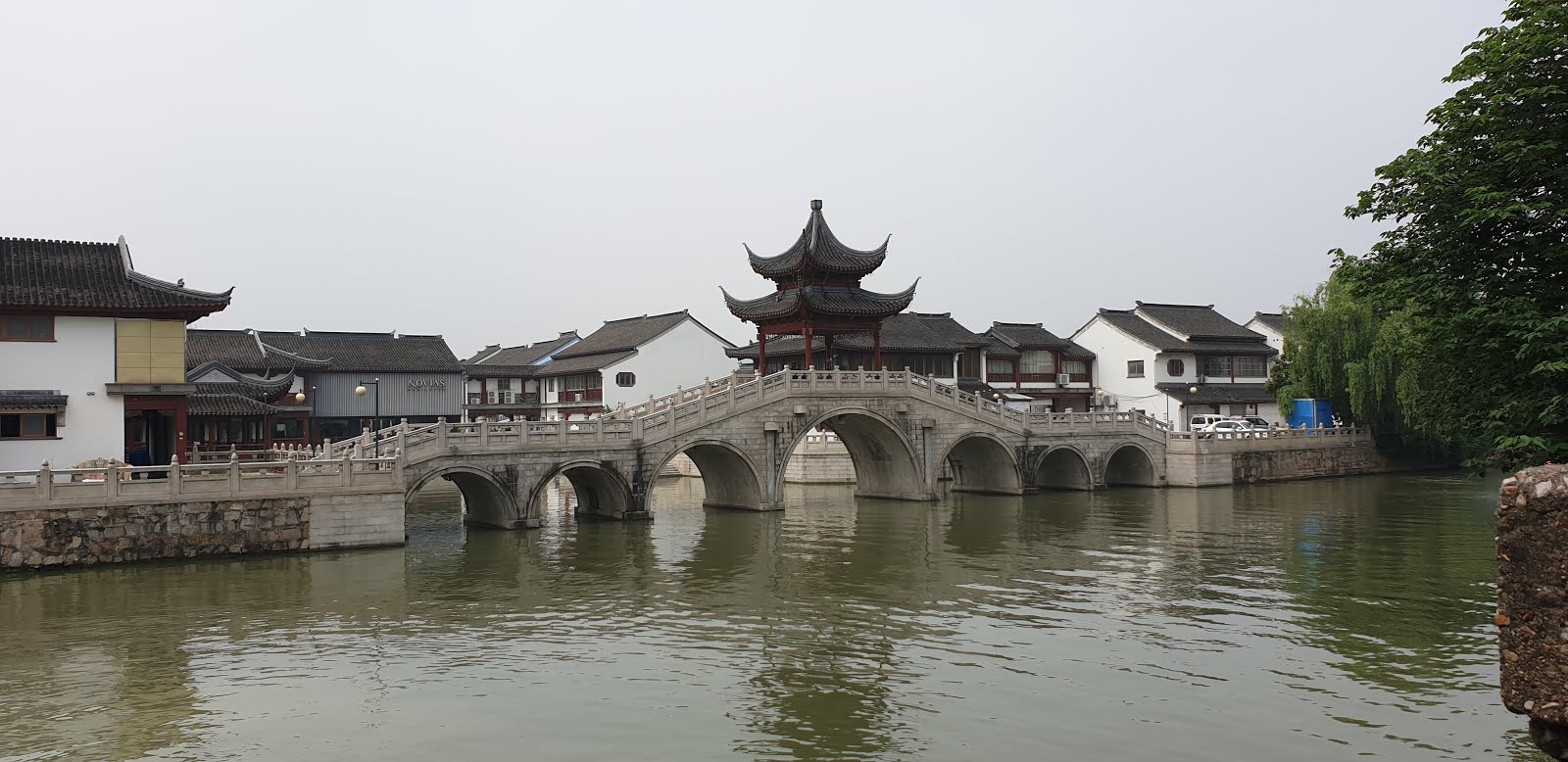
Searching for locations: The canals of Suzhou, China

This morning is a boat ride that will take us along a small portion of the main canal, and we head through a number of back streets, to a landing where there are a number of boats all vying with each other to get us passengers on boats.

But…

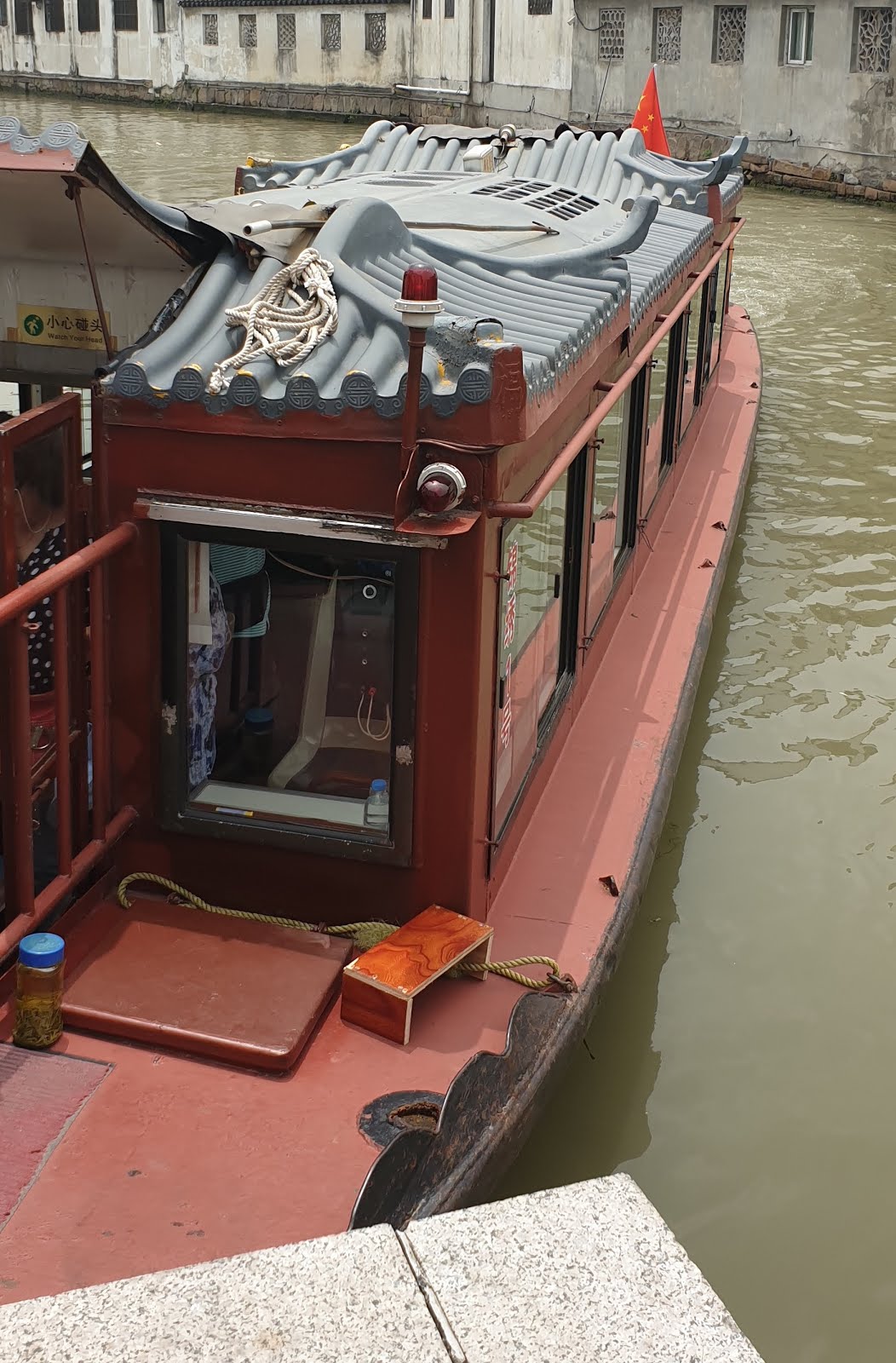
These boats don’t have a wharf to tie up to and then put out a stable gangplank.  No.  They just more into a concrete step and you take your life in your hands getting on.  One wrong step and you’re in the canal.  And not a very clean one at that.

That’s if another boat doesn’t come along and bumps you, knocking you off balance.  We managed not to lose anyone in boarding the vessel.

This is where we get on the boat

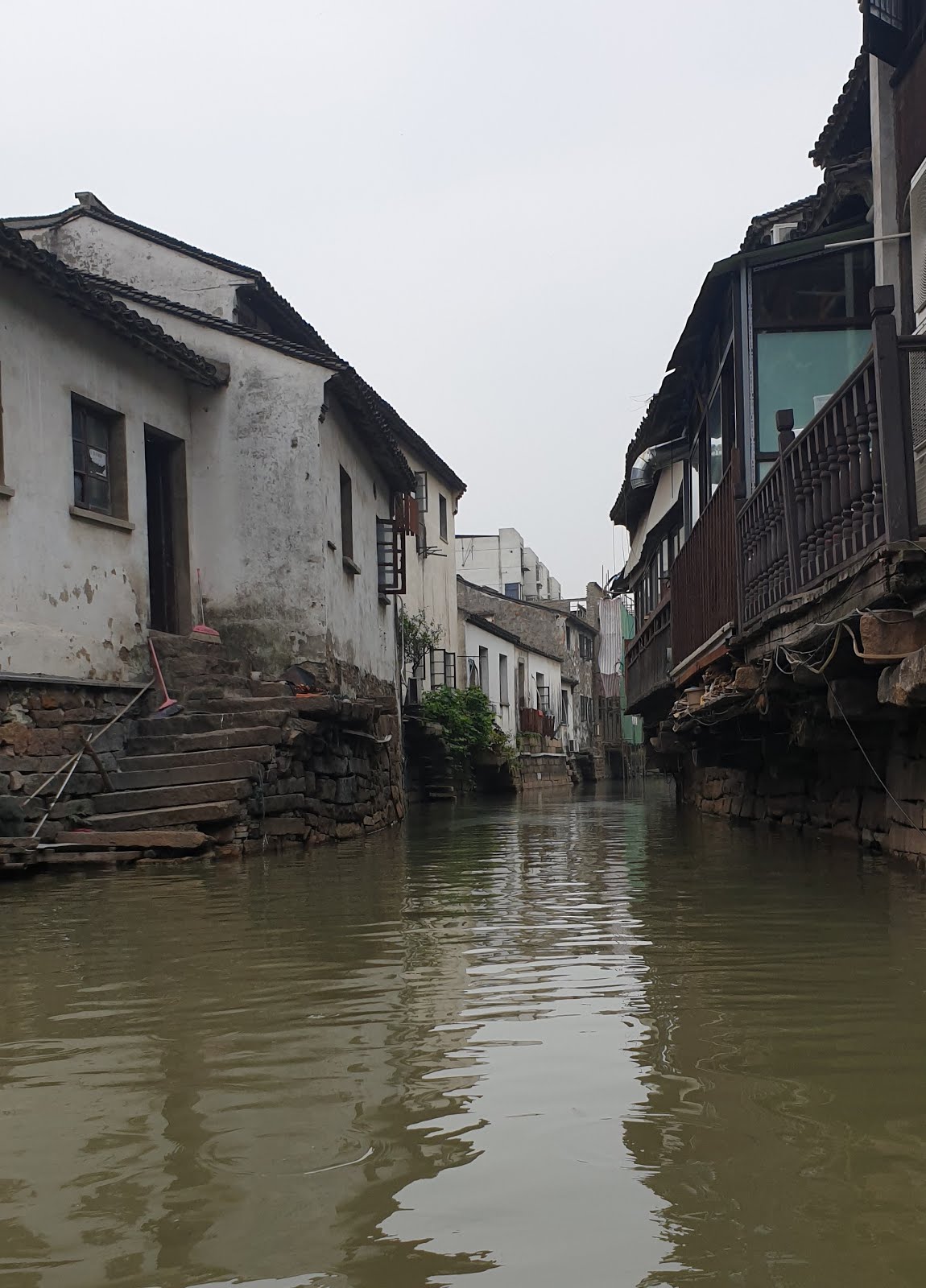
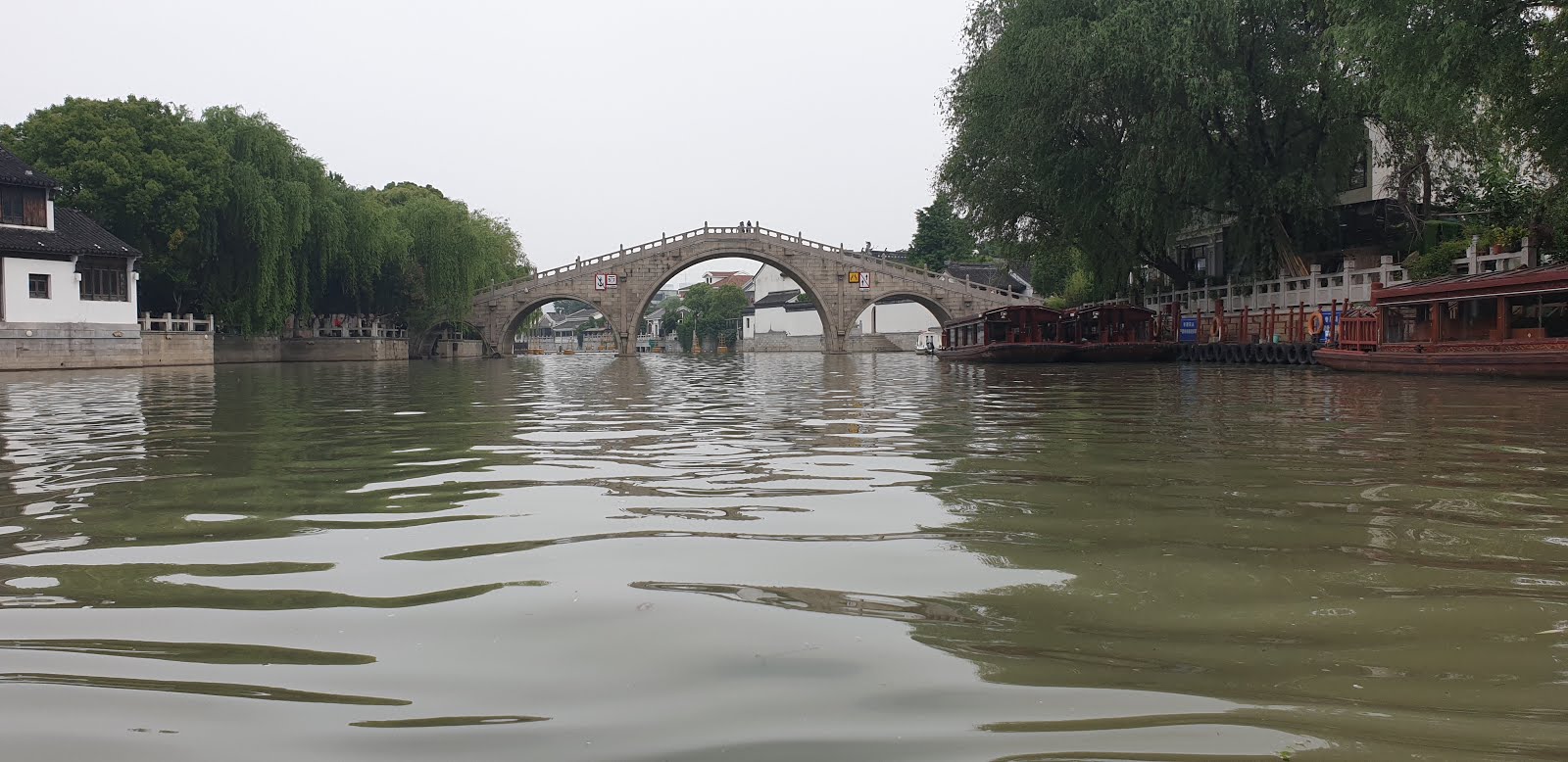
We go along what appears to be downstream towards another larger canal, past tree-lined streets until the canal narrows and we’re looking at the backs of houses, which look very dilapidated.

And the canals?  Well, it’s not quite like it is in Venice

Though some parts of the canal look better than others

What doesn’t bear thinking about is the electrical wiring which is a nightmarish spider web of cables going off in all directions.  How anyone could troubleshoot problems is beyond me.

We pass under a number of bridges, and then, about 30 minutes after leaving, we reach a larger canal and do a 180-degree turn, and head back to a drop off point the will enable us to walk through a typical everyday Chinese market for food and the other items.

This drop off point is much the same as the starting point, a concrete step which is as hazardous as the first.  At least we don’t have to compete with other boats for the landing spot.

We take a leisurely stroll down a small section of Pingjiang Road with small shops on either side, selling all manner of goods

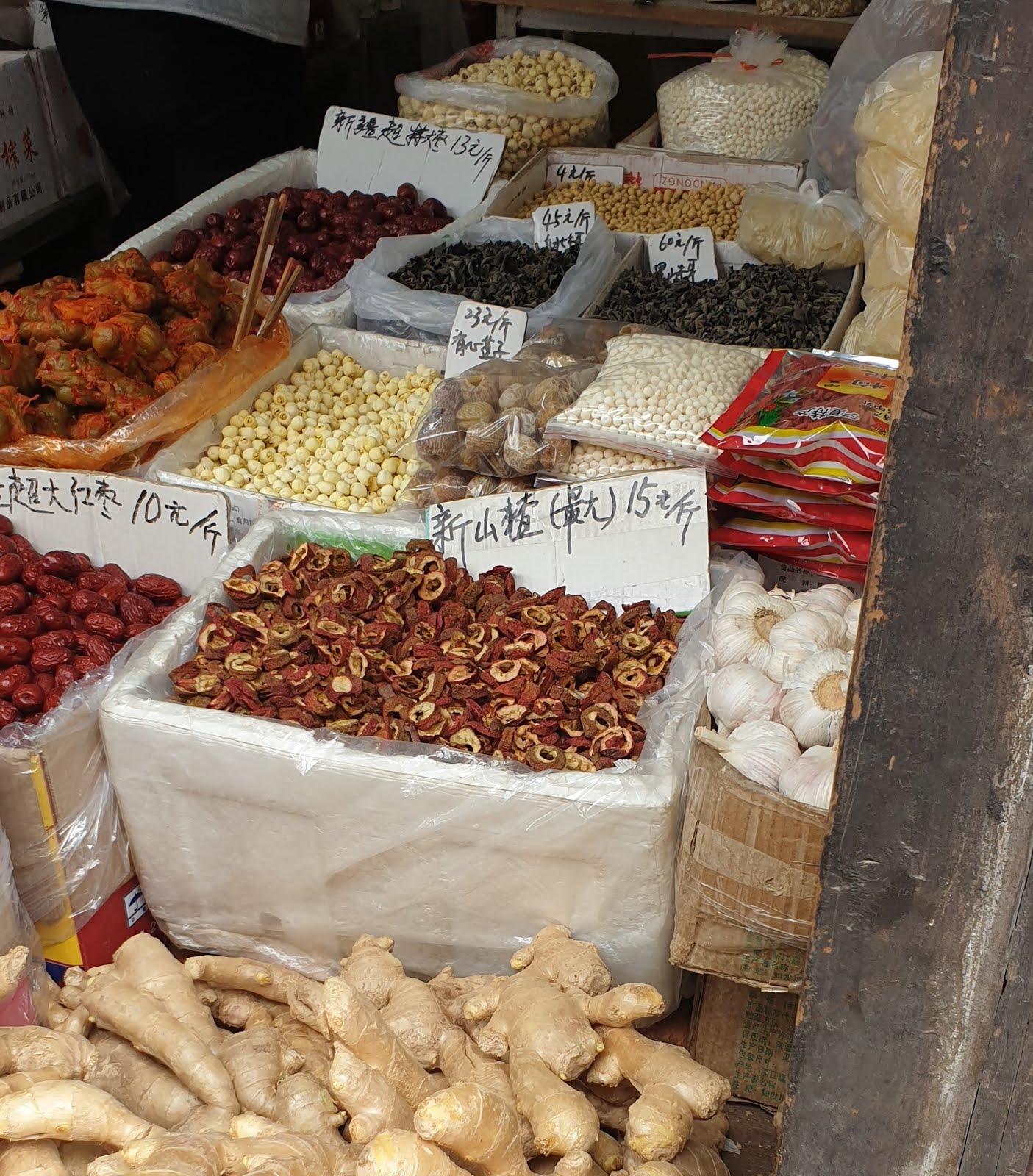
but my interest is in the food and the prices, which at times seem quite expensive for so-called local people, so maybe because the tourists go down this street every day, the prices have been inflated accordingly.

I find it rather disappointing.

We walk to the bridge, go under to the other side crossing the canal and find the coffee shop which is also the meeting place.

So…

When is a coffee shop not a coffee shop, when it takes an eternity to make a cup of coffee, we waited 25 minutes?

We also ordered beef black pepper rice and it took 20 minutes before it arrived, but it was well worth the wait.  Strands of perfectly cooked beef with onion, carrot, and capsicum, with a very peppery and spicy sauce, with a side of boiled rice.

A pizza was ordered too but it did not arrive at all before we left.