The Fear You Feel When You Write, It’s Normal: Embracing the Wisdom of Marguerite Duras
Every writer knows the moment.
The cursor blinks relentlessly on a blank, stark-white screen. The room is quiet, perhaps too quiet. Your chest tightens, a familiar knot twists in your stomach, and a voice whispers: This is terrible. Who do you think you are? You have nothing to say.
If you have ever felt this paralysing wave of anxiety before putting pen to paper (or fingers to keyboard), take a deep breath. You are not failing as a writer; you are simply doing the work.
As the legendary French novelist and filmmaker Marguerite Duras famously observed, the fear you feel when you write is not a sign to stop. It is normal.
Let’s unpack this profound truth and explore why fear is actually the secret companion of every great writer.
Who Was Marguerite Duras and Why Did She Understand Writing’s Terror?
Marguerite Duras was a literary force of nature. Best known for her autobiographical novel The Lover (which won the prestigious Prix Goncourt), Duras wrote with a raw, uncompromising intensity that cut straight to the human soul. She didn’t write polite stories; she wrote about obsession, desire, memory, and the dark corners of the human psyche.
Because she mined such deep, vulnerable territory, Duras understood the cost of creation. She knew that to write authentically, one must court vulnerability. And vulnerability is terrifying.
Duras famously spoke about the solitude and the terror of the writing life. She suggested that writing is not a gentle hobby or a neat profession; it is an expedition into the unknown. When you sit down to write, you are venturing into a territory that does not yet exist, dragging ideas out of the ether and forcing them into reality. Of course it’s scary.
Why Does Writing Actually Scare Us?
If we want to overcome writing anxiety, we first have to understand its roots. Why does a harmless activity like arranging words on a page trigger a fight-or-flight response?
1. The Gap Between Taste and Talent
As Ira Glass famously noted, beginners (and even seasoned pros) suffer from a cruel paradox: our taste is refined enough to know when something isn’t working, but our execution often falls short of our vision. That gap—between the masterpiece in your head and the messy draft on your screen—is where fear lives.
2. The Fear of Exposure
Writing is an act of self-revelation. Even in fiction or copywriting, your worldview, your obsessions, and your fears bleed onto the page. To share your writing with the world is to stand naked in public. What if they judge you? What if they misunderstand you? What if they simply don’t care?
3. Confronting the Unknown
Unlike math or accounting, writing doesn’t have a definitive formula. When you start a piece, you rarely know exactly where it will end. You are stepping into a fog, trusting that the path will appear as you walk it. The human brain hates uncertainty, and it interprets that blank page as a survival threat.
How to Make Friends with Your Writing Fear
If fear is a normal, permanent resident of the writer’s house, how do we coexist with it? How do we write through the terror instead of running away from it?
1. Stop Waiting to Feel Confident
Many aspiring writers make the fatal mistake of waiting for the fear to go away before they start writing. They wait for inspiration, for the “right mood,” or for unshakeable confidence.
It never comes.
Professional writers don’t feel less fear than amateurs; they simply’ve learned to act in spite of it. As Duras understood, the fear is part of the process. Expect it. Greet it when you sit down at your desk: Ah, hello anxiety, I see you’re here. Let’s write anyway.
2. Lower the Stakes (Lower the Bar)
Perfectionism is fear in a fancy tuxedo. We get terrified because we put immense pressure on every single sentence to be brilliant.
Give yourself permission to write badly. As legendary humorist James Thurber put it: “Don’t get it right, get it written.” Your first draft is merely you telling the story to yourself. No one else has to see the mess.
3. Lean Into the Discomfort
If you feel a little sick to your stomach or nervous about a passage you are writing, pay attention. That discomfort is often a compass pointing directly toward truth. If a sentence makes you squirm, it usually means you’re touching on something real, raw, and powerful. Lean into it.
The Ultimate Takeaway
Writing is an act of courage. Every time you face the blank page and refuse to look away, you are engaging in a brave act of creation.
The next time that familiar knot forms in your stomach, remember the words and the spirit of Marguerite Duras. Remind yourself that the fear doesn’t mean you’re doing it wrong; it means you’re doing it right. It means you care. It means you are treading on sacred, uncharted ground.
So, feel the fear. Acknowledge it. And then, open your document and type that first sentence anyway.
Are you struggling with writer’s block or creative fear? How do you push past the blank page anxiety? Let’s discuss in the comments below!
Rabat’s Secret Side: 5 Distinctive Attractions to Escape the Crowds
When you think of Rabat, Morocco’s elegant capital, images of the iconic blue-and-white walls of the Kasbah of the Udayas or the grand silhouette of the Hassan Tower likely come to mind. And for good reason—they’re breathtaking.
But the true magic of a city often lies just beyond the postcard-perfect sights. It’s found in the quiet corners, the local haunts, and the places where the city’s pulse beats a little softer. If you’re yearning to experience the distinctive soul of Rabat without the jostle of tour groups, you’re in for a treat.
Here are five remarkable, uncrowded attractions that will show you a completely different side of this imperial city.
1. The Ancient Whispers of Chellah Necropolis
What it is: A serene, sprawling archaeological site on the outskirts of the city that feels like a world away. Chellah is a captivating fusion of history, built upon the ruins of an ancient Roman town and later transformed into a fortified medieval necropolis.
Why it’s distinctive: This isn’t just one ruin; it’s a layered tapestry of time. You can walk along ancient Roman roads, touch the weathered stones of a forum, and then explore the hauntingly beautiful ruins of a 14th-century Islamic mosque with its elegant minaret. The real stars of the show, however, are the storks. Large stork nests perch precariously atop the ruins, and their constant clacking fills the air with a wild, primitive soundtrack you won’t find anywhere else.
Why it’s not crowded: Its location, a short walk or taxi ride from the main medina, naturally filters out the casual tourist. The sheer size of the site means that even on a busy day, you can easily find a quiet corner to yourself.
Pro Tip: Visit in the late afternoon. The golden hour light casts a magical glow on the stone, and the sighing of the wind through the cypress trees makes the whole place feel truly bewitching.
2. The Botanical Wonderland: Exotic Gardens of Bouknadel
What it is: A breathtaking 17-acre botanical garden nestled between Rabat and Salé, designed in the 1950s by French landscape architect Jean-Claude Nicolas Forestier.
Why it’s distinctive: This is more than just a garden; it’s a masterclass in design. A labyrinth of paths winds through distinct zones, from an Islamic-style garden with a reflective pool to a cactus-studded desert landscape and a lush, palm-filled jungle. The garden is famous for its “Grotto Café,” a cool, subterranean restaurant built into a cave—a perfect spot for a mint tea break. It’s a tranquil, beautifully curated escape.
Why it’s not crowded: It requires a dedicated trip, so it’s often missed by those on a tight schedule. It’s a beloved spot for locals but rarely, if ever, overrun with tourists.
Pro Tip: Take your time. Don’t just look for the plants; listen for the birds. The garden is an important bird sanctuary, so bring a little patience, and you might be rewarded with some wonderful sightings.
3. An Architectural Marvel: The National Library of the Kingdom of Morocco
What it is: A stunningly modern structure that stands in stark, beautiful contrast to Rabat’s ancient history. The new building, opened in 2022, is a cultural landmark and a haven of tranquillity.
Why it’s distinctive: The architecture itself is the main event. A series of hexagonal modules create a visually striking facade inspired by traditional Moroccan geometric patterns (zellij). Inside, you’ll find a vast, light-filled reading room that feels like a cathedral of books. It’s a place where Morocco’s rich literary heritage meets cutting-edge design. You don’t need to be a researcher to appreciate the sense of peace and intellectual energy.
Why it’s not crowded: For a tourist, a library is an unconventional choice. You’ll share the space mostly with students and locals, making for an authentically peaceful and modern Moroccan experience.
Pro Tip: You can enter the public areas to admire the architecture. Check their website for visitor access policies, and be sure to walk up to the upper levels for the best view of the main reading hall.
4. A Timeless View from the Moorish Café (Café Maure)
What it is: A simple, historic café perched on a cliffside overlooking the Atlantic Ocean and the mouth of the Bou Regreg river. It has been serving tea and coffee since the early 20th century.
Why it’s distinctive: This is an experience, not just a beverage. The café offers what is arguably the single best panoramic view in Rabat. From its terrace, you can see the kasbah, the ocean, the Hassan Tower, and the city of Salé. The interior is a time capsule, with worn wooden benches and tables, and the air is thick with the scent of mint and history. The sound of crashing waves and the call to prayer drifting across the river is unforgettable.
Why it’s not crowded: While it’s well-known to residents, its simplicity deters the large tour bus crowds. It’s a place for lingering with a book or a friend, not for a quick photo stop.
Pro Tip: Go in the late afternoon and order a thé à la menthe (mint tea). There’s nothing quite like sipping the sweet, steaming tea while watching the sun dip towards the horizon.
5. The Treasure Trove: The Archaeological Museum
What it is: A compact, beautifully curated museum that houses some of Morocco’s most important archaeological finds.
Why it’s distinctive: While many museums attempt to do everything, this one has a focused, world-class collection. Its crown jewels are the incredible bronze artifacts from the Roman site of Volubilis, including a stunning portrait of Cato the Younger. The displays are excellent, providing a deep dive into the pre-Islamic cultures—from prehistoric to Roman—that shaped this land. It’s a quiet, scholarly space that tells a fascinating story often overlooked in the bustling medinas.
Why it’s not crowded: Let’s be honest: most tourists come for the souks and the sights, not the museums. This means you can often have entire rooms to yourself, allowing you to appreciate the incredible artifacts without distraction.
Pro Tip: The museum is right next to the Andalusian Gardens. Visit the gardens early when they’re quietest, and then escape into the cool, calm halls of the museum to escape the midday sun.
Ready to Discover Rabat’s Soul?
Rabat rewards the curious traveller. By stepping just a little off the main path, you’ll find a city of serene gardens, ancient echoes, and modern marvels. These five spots are just a starting point—a key to a quieter, more personal Moroccan experience.
Have you been to Rabat and discovered a hidden gem of your own? Share it in the comments below! We’d love to hear your secret spots.
It would be very interesting if duelling was still allowed. There are a few people I’d like to stand toe to toe with, take ten paces, and then test my ability to shoot with an old-style flint duelling pistol.
What’s this got to do with anything?
It’s where our word of the day comes in. If I lose my nerve, or I know my opposite number is a better shot, my second would have to stand in my place.
It’s, if anything, an older use of the word.
Of course, it mainly means, on one hand, coming second in a race or a competition, not exactly the place you really want to be, simply because no one really remembers who came second.
It plays host to a plethora of statements using second as part of the saying, such as,
Second rate, second hand, even if it had more than one owner, second best.
But then there’s a few more that mean something else like a second look, mainly because you didn’t trust your eyes, second nature, it’s been drilled into you (a rather painful idiom if it truly was) and second sight, though this might not necessarily be a verifiable attribute.
And, of lesser note, I’m not necessarily sure I’m second to none.
On the other hand, and pardon the pun using this definition, it also describes a length of time, very short in fact, and it takes 60 of them to make a minute.
Hang on, it’ll only take a second. Yes, we often use the word in vain. I doubt there is any one of us who could do anything useful in a second.
Nairobi’s Hidden Gems: 5 Incredible Attractions Without the Crowds
When you think of Nairobi, the mind often leaps to the iconic sights: the silhouettes of giraffes at the Giraffe Centre, the heart-warming sight of orphaned elephants at the Sheldrick Trust, or the breathtaking skyline viewed from a safari in Nairobi National Park.
And for good reason—these are world-class attractions. But they are also, well, popular. If you’re looking to swap the bustling queues for a more intimate, unique, and equally memorable experience, you’re in luck. Nairobi is a city of layers, and just beneath the surface of the main tourist trail lies a treasure trove of hidden gems.
Here are the top five visitor attractions in Nairobi that are rarely crowded but burst with distinctive character and unforgettable stories.
1. The Kenya National Archives: A Treasure Trove of Culture and History
Tucked away in a grand building right in the heart of the city’s central business district, the Kenya National Archives is one of Nairobi’s most-underestimated attractions. While the ground floor is a bustling hive of document services, head upstairs and step into another world.
What Makes It Distinctive: The second floor houses the incredible Murumbi African Heritage Collection. This is a jaw-dropping assortment of artifacts, ethnographic material, books, and art collected by Kenya’s second Vice President, Joseph Murumbi, and his wife, Sheila. From ancient tribal jewelry and textiles to intricate masks and powerful contemporary art, it’s a comprehensive and beautifully curated journey through the art and culture of Kenya and beyond.
Why It’s Not Crowded: Most tourists walk right past it, assuming it’s just a place for official records. It’s a serene, air-conditioned escape from the city heat where you can spend hours lost in the exhibits, often sharing the space with just a handful of local students.
Pro-Tip: Give yourself at least two hours. Don’t miss the stunning collection of African postage stamps or the powerful portraits in the art gallery. The entrance fee is a bargain for the sheer volume of world-class history on display.
2. The Nairobi Railway Museum: A Journey to the City’s Birth
Ever wondered why Nairobi exists in the first place? The answer lies on the tracks. The Nairobi Railway Museum, located right next to the main railway station, is a charming and nostalgic ode to the “Lunatic Express,” the railway line that gave birth to the city.
What Makes It Distinctive: This museum is an open-air gallery of majestic, rusting giants. You can climb aboard historic steam and diesel locomotives, explore royal carriages (including one used for Queen Elizabeth’s visit!), and delve into the fascinating, and often dramatic, history of the railway’s construction. It’s a tangible link to a bygone era of colonial ambition, engineering marvels, and the man-eating lions of Tsavo.
Why It’s Not Crowded: In a city obsessed with wildlife, the history of a railway is often overlooked. It feels like a well-kept secret, offering a peaceful and fascinating stroll through the very machines that shaped the nation.
Pro-Tip: Hire one of the on-site guides. Their personal stories and detailed knowledge bring the old engines and carriages to life in a way that plaques never could. On weekdays, you might even see modern trains rolling past, creating a surreal contrast between past and present.
3. Kazuri Beads Factory: Where Art and Empowerment Meet
For a truly special souvenir and a feel-good experience, leave the city centre and head to the leafy suburb of Karen for a visit to the Kazuri Beads Factory. “Kazuri” means “small and beautiful” in Swahili, and that perfectly describes the handcrafted ceramic beads and pottery made here.
What Makes It Distinctive: This isn’t just a shop; it’s a working factory with a powerful social mission. Kazuri employs over 300 single mothers, providing them with a sustainable livelihood and healthcare. You can take a free tour to see the entire process—from the kiln firing to the meticulous hand-painting—and chat with the talented artisans. It’s a vibrant, colourful, and inspiring place that supports local Kenyan women directly.
Why It’s Not Crowded: It’s slightly off the beaten path compared to the Karen Blixen Museum down the road. Tour groups tend to rush in and out, leaving plenty of space for independent travellers to browse at their own pace without feeling pressured.
Pro-Tip: Go in the morning to see the factory buzzing with activity. The “seconds” section, where you can buy slightly imperfect pieces at a huge discount, is fantastic for finding unique treasures.
4. The Ngong Hills: Nairobi’s Iconic Escape
While the Nairobi National Park offers a safari on the city’s doorstep, the Ngong Hills offer a spectacular escape above it. These iconic, four-ridged peaks are the rolling, green giants immortalised in Karen Blixen’s “Out of Africa.”
What Makes It Distinctive: The views are, simply put, epic. On a clear day, you can see the entire Nairobi skyline to the north and the vast expanse of the Great Rift Valley to the west. A hike along the ridges is a fantastic way to get some exercise, feel the wind on your face, and appreciate the natural beauty that frames the city. It’s a spiritual and rejuvenating experience.
Why It’s Not Crowded: While it gets busy with local hikers and picnickers on weekends, you’ll rarely find international tour buses here. Go on a weekday, and you might have large sections of the trail entirely to yourself, with only the sound of the wind for company.
Pro-Tip: Start early in the morning to avoid the midday sun. It’s an exposed hike, so bring plenty of water, a hat, and sunscreen. You don’t need a guide for the main trail, but hiring one from the local community at the entrance gate can provide fascinating insights and support the local economy.
5. Olorgesailie Prehistoric Site: A Glimpse into Human Origins
For the ultimate off-the-beaten-path adventure, take a day trip south of the city to Olorgesailie. This is not your average tourist attraction; it’s a world-class, paleoanthropological site and a UNESCO World Heritage contender.
What Makes It Distinctive: This dry, dusty basin was once a lakeside prehistoric camp. The ground is literally littered with fossilised bones and, most astoundingly, hundreds of hand-axe tools created by early human ancestors (Homo erectus) over a million years ago. The small, excellent museum and guided walk take you through the incredible discoveries made here, offering a mind-bending perspective on the deep history of humanity in the very place it unfolded.
Why It’s Not Crowded: It’s a drive (about 90 minutes from Nairobi) and requires a dedicated trip. This geological and historical marvel is simply too remote and niche for the standard tourist itinerary, making it one of the most peaceful and profound places you can visit in the region.
Pro-Tip: A 4×4 vehicle is recommended, especially after rain. Combine the trip with a visit to Lake Magadi, a spectacular soda lake often tinged pink with flamingos. Pack a picnic and make a full day of it—the journey is as spectacular as the destination.
So next time you find yourself in Nairobi, I urge you to venture beyond the well-trodden path. Ditch the crowds for a morning at the Railway Museum, find your cultural bearings at the National Archives, and discover that the city’s most distinctive features are often its quietest. Happy travels
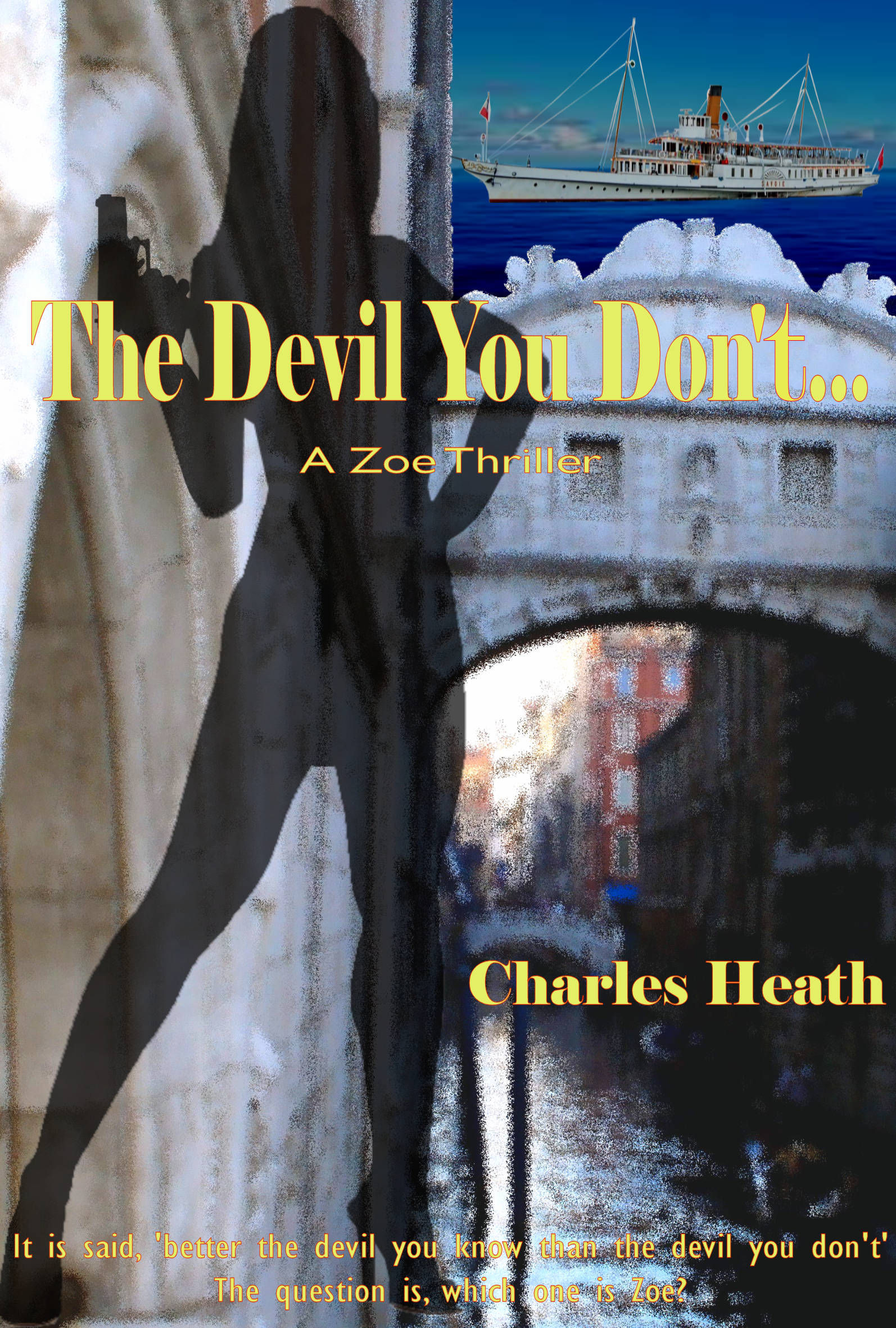
John Pennington’s life is in the doldrums. Looking for new opportunities and prevaricating about getting married, the only joy on the horizon was an upcoming visit to his grandmother in Sorrento, Italy.
Suddenly, he is left at the check-in counter with a message on his phone telling him the marriage is off, and the relationship is over.
If only he hadn’t promised a friend he would do a favour for him in Rome.
At the first stop, Geneva, he has a chance encounter with Zoe, an intriguing woman who captures his imagination from the moment she boards the Savoire, and his life ventures into uncharted territory in more ways than one.
That ‘favour’ for his friend suddenly becomes a life-changing event, and when Zoe, the woman who he knows is too good to be true, reappears, danger and death follow.
Shot at, lied to, seduced, and drawn into a world where nothing is what it seems, John is dragged into an adrenaline-charged undertaking, where he may have been wiser to stay with the ‘devil you know’ rather than opt for the ‘devil you don’t’.
The Fear You Feel When You Write, It’s Normal: Embracing the Wisdom of Marguerite Duras
Every writer knows the moment.
The cursor blinks relentlessly on a blank, stark-white screen. The room is quiet, perhaps too quiet. Your chest tightens, a familiar knot twists in your stomach, and a voice whispers: This is terrible. Who do you think you are? You have nothing to say.
If you have ever felt this paralysing wave of anxiety before putting pen to paper (or fingers to keyboard), take a deep breath. You are not failing as a writer; you are simply doing the work.
As the legendary French novelist and filmmaker Marguerite Duras famously observed, the fear you feel when you write is not a sign to stop. It is normal.
Let’s unpack this profound truth and explore why fear is actually the secret companion of every great writer.
Who Was Marguerite Duras and Why Did She Understand Writing’s Terror?
Marguerite Duras was a literary force of nature. Best known for her autobiographical novel The Lover (which won the prestigious Prix Goncourt), Duras wrote with a raw, uncompromising intensity that cut straight to the human soul. She didn’t write polite stories; she wrote about obsession, desire, memory, and the dark corners of the human psyche.
Because she mined such deep, vulnerable territory, Duras understood the cost of creation. She knew that to write authentically, one must court vulnerability. And vulnerability is terrifying.
Duras famously spoke about the solitude and the terror of the writing life. She suggested that writing is not a gentle hobby or a neat profession; it is an expedition into the unknown. When you sit down to write, you are venturing into a territory that does not yet exist, dragging ideas out of the ether and forcing them into reality. Of course it’s scary.
Why Does Writing Actually Scare Us?
If we want to overcome writing anxiety, we first have to understand its roots. Why does a harmless activity like arranging words on a page trigger a fight-or-flight response?
1. The Gap Between Taste and Talent
As Ira Glass famously noted, beginners (and even seasoned pros) suffer from a cruel paradox: our taste is refined enough to know when something isn’t working, but our execution often falls short of our vision. That gap—between the masterpiece in your head and the messy draft on your screen—is where fear lives.
2. The Fear of Exposure
Writing is an act of self-revelation. Even in fiction or copywriting, your worldview, your obsessions, and your fears bleed onto the page. To share your writing with the world is to stand naked in public. What if they judge you? What if they misunderstand you? What if they simply don’t care?
3. Confronting the Unknown
Unlike math or accounting, writing doesn’t have a definitive formula. When you start a piece, you rarely know exactly where it will end. You are stepping into a fog, trusting that the path will appear as you walk it. The human brain hates uncertainty, and it interprets that blank page as a survival threat.
How to Make Friends with Your Writing Fear
If fear is a normal, permanent resident of the writer’s house, how do we coexist with it? How do we write through the terror instead of running away from it?
1. Stop Waiting to Feel Confident
Many aspiring writers make the fatal mistake of waiting for the fear to go away before they start writing. They wait for inspiration, for the “right mood,” or for unshakeable confidence.
It never comes.
Professional writers don’t feel less fear than amateurs; they simply’ve learned to act in spite of it. As Duras understood, the fear is part of the process. Expect it. Greet it when you sit down at your desk: Ah, hello anxiety, I see you’re here. Let’s write anyway.
2. Lower the Stakes (Lower the Bar)
Perfectionism is fear in a fancy tuxedo. We get terrified because we put immense pressure on every single sentence to be brilliant.
Give yourself permission to write badly. As legendary humorist James Thurber put it: “Don’t get it right, get it written.” Your first draft is merely you telling the story to yourself. No one else has to see the mess.
3. Lean Into the Discomfort
If you feel a little sick to your stomach or nervous about a passage you are writing, pay attention. That discomfort is often a compass pointing directly toward truth. If a sentence makes you squirm, it usually means you’re touching on something real, raw, and powerful. Lean into it.
The Ultimate Takeaway
Writing is an act of courage. Every time you face the blank page and refuse to look away, you are engaging in a brave act of creation.
The next time that familiar knot forms in your stomach, remember the words and the spirit of Marguerite Duras. Remind yourself that the fear doesn’t mean you’re doing it wrong; it means you’re doing it right. It means you care. It means you are treading on sacred, uncharted ground.
So, feel the fear. Acknowledge it. And then, open your document and type that first sentence anyway.
Are you struggling with writer’s block or creative fear? How do you push past the blank page anxiety? Let’s discuss in the comments below!
It was the first time in almost a week that I made the short walk to the cafe alone. It was early, and the chill of the morning was still in the air. In summer, it was the best time of the day. When Susan came with me, it was usually much later, when the day was much warmer and less tolerable.
On the morning of the third day of her visit, Susan said she was missing the hustle and bustle of London, and by the end of the fourth she said, in not so many words, she was over being away from ‘civilisation’. This was a side of her I had not seen before, and it surprised me.
She hadn’t complained, but it was making her irritable. The Susan that morning was vastly different to the Susan on the first day. So much, I thought, for her wanting to ‘reconnect’, the word she had used as the reason for coming to Greve unannounced.
It was also the first morning I had time to reflect on her visit and what my feelings were towards her. It was the reason I’d come to Greve: to soak up the peace and quiet and think about what I was going to do with the rest of my life.
I sat in my usual corner. Maria, one of two waitresses, came out, stopped, and there was no mistaking the relief in her manner. There was an air of tension between Susan and Maria I didn’t understand, and it seemed to emanate from Susan rather than the other way around. I could understand her attitude if it was towards Alisha, but not Maria. All she did was serve coffee and cake.
When Maria recovered from the momentary surprise, she said, smiling, “You are by yourself?” She gave a quick glance in the direction of my villa, just to be sure.
“I am this morning. I’m afraid the heat, for one who is not used to it, can be quite debilitating. I’m also afraid it has had a bad effect on her manners, for which I apologise. I cannot explain why she has been so rude to you.”
“You do not have to apologise for her, David, but it is of no consequence to me. I have had a lot worse. I think she is simply jealous.”
It had crossed my mind, but there was no reason for her to be. “Why?”
“She is a woman, I am a woman, she thinks because you and I are friends, there is something between us.”
It made sense, even if it was not true. “Perhaps if I explained…”
Maria shook her head. “If there is a hole in the boat, you should not keep bailing but try to plug the hole. My grandfather had many expressions, David. If I may give you one piece of advice, as much as it is none of my business, you need to make your feelings known, and if they are not as they once were, and I think they are not, you need to tell her. Before she goes home.”
Interesting advice. Not only a purveyor of excellent coffee, but Maria was also a psychiatrist who had astutely worked out my dilemma. What was that expression, ‘not just a pretty face’?
“Is she leaving soon?” I asked, thinking Maria knew more about Susan’s movements than I did.
“You would disappoint me if you had not suspected as much. Susan was having coffee and talking to someone in her office on a cell phone. It was an intense conversation. I should not eavesdrop, but she said being here was like being stuck in hell. It is a pity she does not share your love for our little piece of paradise, is it not?”
“It is indeed. And you’re right. She said she didn’t have a phone, but I know she has one. She just doesn’t value the idea of getting away from the office. Perhaps her role doesn’t afford her that luxury.”
And perhaps Alisha was right about Maria, that I should be more careful. She had liked Maria the moment she saw her. We had sat at this very table, the first day I arrived. I would have travelled alone, but Prendergast, my old boss, liked to know where ex-employees of the Department were, and what they were doing.
She sighed. “I am glad I am just a waitress. Your usual coffee and cake?”
“Yes, please.”
Several months had passed since we had rescued Susan from her despotic father; she had recovered faster than we had thought, and settled into her role as the new Lady Featherington, though she preferred not to use that title, but go by the name of Lady Susan Cheney.
I didn’t get to be a Lord, or have any title, not that I was expecting one. What I had expected was that Susan, once she found her footing as head of what seemed to be a commercial empire, would not have time for details like husbands, particularly when our agreement made before the wedding gave either of us the right to end it.
There was a moment when I visited her recovering in the hospital, where I was going to give her the out, but I didn’t, and she had not invoked it. We were still married, just not living together.
This visit was one where she wanted to ‘reconnect’ as she called it, and invite me to come home with her. She saw no reason why we could not resume our relationship, conveniently forgetting she indirectly had me arrested for her murder, charges both her mother and Lucy vigorously pursued, and had the clone not returned to save me, I might still be in jail.
It was not something I would forgive or forget any time soon.
There were other reasons why I was reluctant to stay with her, like forgetting small details, an irregularity in her character I found odd. She looked the same, she sounded the same, she basically acted the same, but my mind was telling me something was not right. It was not the Susan I first met, even allowing for the ordeal she had been subjected to.
But, despite those misgivings, there was no question in my mind that I still loved her, and her clandestine arrival had brought back all those feelings. But as the days passed, I began to get the impression my feelings were one-sided and she was just going through the motions.
Which brought me to the last argument, earlier, where I said if I went with her, it would be business meetings, social obligations, and quite simply her ‘celebrity’ status that would keep us apart. I reminded her that I had said from the outset I didn’t like the idea of being in the spotlight, and when I reiterated it, she simply brushed it off as just part of the job, adding rather strangely that I always looked good in a suit. The flippancy of that comment was the last straw, and I left before I said something I would regret.
I knew I was not a priority. Maybe somewhere inside me, I had wanted to be a priority, and I was disappointed when I was not.
And finally, there was Alisha. Susan, at the height of the argument, had intimated she believed I had an affair with her, but that elephant was always in the room whenever Alisha was around. It was no surprise when I learned Susan had asked Prendergast to reassign her to other duties.
At least I knew what my feelings for Alisha were, and there were times when I had to remember she was persona non grata. Perhaps that was why Susan had her banished, but, again, a small detail; jealousy was not one of Susan’s traits when I first knew her.
Perhaps it was time to set Susan free.
When I swung around to look in the direction of the lane where my villa was, I saw Susan. She was formally dressed, not in her ‘tourist’ clothes, which she had bought from one of the local clothing stores. We had fun that day, shopping for clothes, a chore I’d always hated. It had been followed by a leisurely lunch, lots of wine and soul searching.
It was the reason why I sat in this corner; old habits die hard. I could see trouble coming from all directions, not that Susan was trouble or at least I hoped not, but it allowed me the time to watch her walking towards the cafe in what appeared to be short, angry steps; perhaps the culmination of the heat wave and our last argument.
She glared at me as she sat, dropping her bag beside her on the ground, where I could see the cell phone sitting on top. She followed my glance down, and then she looked unrepentant back at me.
Maria came back at the exact moment she was going to speak. I noticed Maria hesitate for a second when she saw Susan, then put her smile in place to deliver my coffee.
Neither spoke nor looked at each other. I said, “Susan will have what I’m having, thanks.”
Maria nodded and left.
“Now,” I said, leaning back in my seat, “I’m sure there’s a perfectly good explanation as to why you didn’t tell me about the phone, but that first time you disappeared, I’d guessed you needed to keep in touch with your business interests. I thought it somewhat unwisethat you should come out when the board of one of your companies was trying to remove you, because of what was it, an unexplained absence? All you had to do was tell me there were problems and you needed to remain at home to resolve them.”
My comment elicited a sideways look, with a touch of surprise.
“It was unfortunate timing on their behalf, and I didn’t want you to think everything else was more important than us. There were issues before I came, and I thought the people at home would be able to manage without me for at least a week, but I was wrong.”
“Why come at all. A phone call would have sufficed.”
“I had to see you, talk to you. At least we have had a chance to do that. I’m sorry about yesterday. I once told you I would not become my mother, but I’m afraid I sounded just like her. I misjudged just how much this role would affect me, and truly, I’m sorry.”
An apology was the last thing I expected.
“You have a lot of work to do catching up after being away, and of course, in replacing your mother and gaining the requisite respect as the new Lady Featherington. I think it would be for the best if I were not another distraction. We have plenty of time to reacquaint ourselves when you get past all these teething issues.”
“You’re not coming with me?” She sounded disappointed.
“I think it would be for the best if I didn’t.”
“Why?”
“It should come as no surprise to you that I’ve been keeping an eye on your progress. You are so much better doing your job without me. I told your mother once that when the time came I would not like the responsibilities of being your husband. Now that I have seen what it could possibly entail, I like it even less. You might also want to reconsider our arrangement, after all, we only had a marriage of convenience, and now that those obligations have been fulfilled, we both have the option of terminating it. I won’t make things difficult for you if that’s what you want.”
It was yet another anomaly, I thought; she should look distressed, and I would raise the matter of that arrangement. Perhaps she had forgotten the finer points. I, on the other hand, had always known we would not last forever. The perplexed expression, to me, was a sign she might have forgotten.
Then, her expression changed. “Is that what you want?”
“I wasn’t madly in love with you when we made that arrangement, so it was easy to agree to your terms, but inexplicably, since then, my feelings for you changed, and I would be sad if we parted ways. But the truth is, I can’t see how this is going to work.”
“In saying that, do you think I don’t care for you?”
That was exactly what I was thinking, but I wasn’t going to voice that opinion out loud. “You spent a lot of time finding new ways to make my life miserable, Susan. You and that wretched friend of yours, Lucy. While your attitude improved after we were married, that was because you were going to use me when you went to see your father, and then almost let me go to prison for your murder.”
“I had nothing to do with that, other than to leave, and I didn’t agree with Lucy that you should be made responsible for my disappearance. I cannot be held responsible for the actions of my mother. She hated you; Lucy didn’t understand you, and Millie told me I was stupid for not loving you in return, and she was right. Why do you think I gave you such a hard time? You made it impossible not to fall in love with you, and it nearly changed my mind about everything I’d been planning so meticulously. But perhaps there was a more subliminal reason why I did because after I left, I wanted to believe, if anything went wrong, you would come and find me.”
“How could you possibly know that I’d even consider doing something like that, given what you knew about me?”
“Prendergast made a passing comment when my mother asked him about you; he told us you were very good at finding people and even better at fixing problems.”
“And yet here we are, one argument away from ending it.”
I could see Maria hovering, waiting for the right moment to deliver her coffee, then go back and find Gianna, the café owner, instead. Gianna was more abrupt and, for that reason, was rarely seen serving the customers. Today, she was particularly cantankerous, banging the cake dish on the table and frowning at Susan before returning to her kitchen. Gianna didn’t like Susan either.
Behind me, I heard a car stop, and when she looked up, I knew it was for her. She had arrived with nothing, and she was leaving with nothing.
She stood. “Last chance.”
“Forever?”
She hesitated and then shook away the look of annoyance on her face. “Of course not. I wanted you to come back with me so we could continue working on our relationship. I agree there are problems, but it’s nothing we can’t resolve if we try.”
I had been trying. “It’s too soon for both of us, Susan. I need to be able to trust you, and given the circumstances, and all that water under the bridge, I’m not sure if I can yet.”
She frowned at me. “As you wish.” She took an envelope out of her bag and put it on the table. “When you are ready, it’s an open ticket home. Please make it sooner rather than later. Despite what you think of me, I have missed you, and I have no intention of ending it between us.”
That said, she glared at me for a minute, shook her head, then walked to the car. I watched her get in and the car drive slowly away.
I’m back home and this story has been sitting on a back burner for a few months, waiting for some more to be written.
The trouble is, there are also other stories to write, and I’m not very good at prioritising.
But, here we are, a few minutes opened up and it didn’t take long to get back into the groove.
Was I working for a ghost?
Training sometimes was one of those things that went in one ear and came out the other. That accounted for the boring bits, but our instructors called it tradecraft.
I guess I should have taken more notice at the time.
Home was a bedsit in Bloomsbury, Not far from the Russell Square underground station, on the ground floor overlooking the small park. Sometimes, in summer I would sit there and watch the world go by, thinking there had to be more to life than waiting for an opportunity.
To do what, at the time, I didn’t know. But, when this opportunity presented itself, oddly as a rather strange ad in the help wanted pages of the newspaper, I guess the people who put it there were looking for the curious sort, with a sense of adventure.
My first impression of the job was that of a courier who would be required to travel a lot. It said, in part, “must be prepared to travel to different locations worldwide, understand the requirement of confidentiality, and must be able to respond to emergencies that might occur in the carrying out of your duties.”
To me, it spelled courier, though I rather hoped it wasn’t the briefcase handcuffed to a wrist sort and no guns.
After the first interview, I think I had guessed correctly, though, in subsequent training, the word tradecraft put a slightly different slant to the job. That, and the surveillance module, sold to us as “you need to know if you are being followed, recognise hostiles, and be able to deal with them.”
But, it was the notion that we should get out of any habits we had, those that made us predictable to an enemy, yes, they actually used the word, enemy. Like for instance, if we caught the same train, or bus, into the city. If we went to the same cafe for coffee, restaurant for lunch or dinner, met people in a pub on the same day, same time, each week.
Before all this, I found comfort in a regular schedule. I hated being late, except when the transport system let me down. I had a regular stop off on the way to the office for coffee, and usually went to the same cafe for lunch at the same time.
Inevitably I would leave home at the same time and quite often return home at the same time. OK, I was boring and predictable. Now it was a little different, with some variation in departure and arrival times, as well as the places I stopped for coffee, and lunch or dinner.
This day I was very late, after dark in fact, getting back to the flat.
I went in after checking for mail, not that anyone ever sent letters these days, unlocked my door, went in and switched on the light.
The whole of the living space had been trashed. Well, more to the point, someone had checked everywhere it was possible to hide anything, which I didn’t, and hadn’t bothered cleaning up after them.
Had they been interrupted?
If that had happened the landlady would be down in a flash the moment I walked in the door, not to commiserate on my bad luck, but to issue me with an eviction notice. Very little was tolerated in her establishment.
That she hadn’t told me that whoever did this had done it very quietly, and without anyone knowing. We had been taught the same procedures which is why I recognised the signs. This had to be done by my previous employers. The only question I had was why?
I had nothing they could possibly want.
I took a few minutes to clean up the mess so that instead of a thorough trashing, it just looked like the aftermath of a wild party, then went out to get a coffee and think about why this had happened.
Not far up the road was a cafe I went to for dinner if I wasn’t doing something else, and, lo and behold, the minute I walked in the door, there was Severin, sitting at the back half disguised by the evening newspaper.
Obviously, he’d been waiting for me.
Yes, now I understood the implications of being someone who did the same thing over and over.
There was no mistaking the invitation, and, after briefly considering ignoring him, realised that was not going to work. After seeing what happened to O’Connor at their hand, I didn’t want to join him.
I sat down. “I have to say this is an unexpected surprise.”
He put the paper down. “For both of us, I can assure you. I’ll get straight to the point. I want the USB.”
“What USB?”
“That your target was carrying, it wasn’t on him, so by elimination, not being anywhere at the crime scene, you must have it. He either gave it to you, or you took it from him. Where is it?”
I took a minute to process what he was saying. I had not seen a USB, not had he given me one, not was there one nearby. I would have seen it. No need to pretend to be surprised. I was.
“I haven’t got it.”
“He didn’t give you anything?”
“How could he, you were there just about the same time as I was. And after you shot him, he had nothing on him. Whatever you’re looking for, it must still be in the alley, or he hid it somewhere else. And since you shot him, I doubt whether you’ll ever find out.”
He shook his head and folded his paper. “If you’ve got it we’ll find out. and it will not bode well for you. And if you accidentally find it, here’s my card. Call me.”
He dropped a card on the table as he got up.
I picked it up just as he stopped and turned to give me a last look before walking out the door. There was no mistaking the intent, if they thought I had it, I’d be dead now.”
And it meant that the evidence O’Conner was referring to was on a USB. All I had to do was find it. Or Nobbin did.
Would you give up everything to be with the one you love?
…
Is love the metaphorical equivalent to ‘walking the plank’; a dive into uncharted waters?
For Henry, the only romance he was interested in was a life at sea, and when away from it, he strived to find sanctuary from his family and perhaps life itself. It takes him to a small village by the sea, a place he never expected to find another just like him, Michelle, whom he soon discovers is as mysterious as she is beautiful.
Henry had long since given up the notion of finding romance, and Michelle couldn’t get involved for reasons she could never explain, but in the end, both acknowledgedthat something had happened the moment they first met.
Plans were made, plans were revised, and hopes were shattered.
A chance encounter causes Michelle’s past to catch up with her, and whatever hope she had of having a normal life with Henry, or anyone else, is gone. To keep him alive, she has to destroy her blossoming relationship, an act that breaks her heart and shatters his.
But can love conquer all?
It takes a few words of encouragement from an unlikely source to send Henry and his friend Radly on an odyssey into the darkest corners of the red-light district in a race against time to find and rescue the woman he finally realises is the love of his life.
The cover, at the moment, looks like this:
Is love the metaphorical equivalent to ‘walking the plank’; a dive into uncharted waters?
For Henry, the only romance he was interested in was a life at sea, and when away from it, he strived to find sanctuary from his family and perhaps life itself. It takes him to a small village by the sea, s place he never expected to find another just like him, Michelle, whom he soon discovers is as mysterious as she is beautiful.
Henry had long since given up the notion of finding romance, and Michelle couldn’t get involved for reasons she could never explain, but in the end, both acknowledge that something happened the moment they first met.
Plans were made, plans were revised, and hopes were shattered.
A chance encounter causes Michelle’s past to catch up with her, and whatever hope she had of having a normal life with Henry, or anyone else, is gone. To keep him alive she has to destroy her blossoming relationship, an act that breaks her heart and shatters his.
But can love conquer all?
It takes a few words of encouragement from an unlikely source to send Henry and his friend Radly on an odyssey into the darkest corners of the red-light district in a race against time to find and rescue the woman he finally realizes is the love of his life.
Every time I close my eyes, I see something different.
I’d like to think the cinema of my dreams is playing a double feature but it’s a bit like a comedy cartoon night on Fox.
But these dreams are nothing to laugh about.
Once again there’s a new installment of an old feature, and we’re back on the treasure hunt.
…
The beach, and a body
…
I had expected to find the rocks we were slowly and carefully chambering over to be smooth, worn down by the constant washing over by the waves.
They were, to a certain extent, but there were places where the jagged edges were as sharp as a knife, and I had more than one cut on my hand.
Even with the stiff breeze coming in off the water, it was still hot, laborious work and it took over an hour to reach the first part of Sandy Beach, a thin strip below the rock line, and soaring behind it, a rocky cliff face that would required rock climb training to scale, and then notwithstanding a lot of safety gear.
It didn’t surprise me that Nadia was an expert rock climber. She was built like a finely tuned cat, as lithe and graceful moving across the hazards.
At times she held my hand, keeping me from falling off, or worse, into danger, and certain injury. At times, I didn’t want to let go.
Then on the windswept beach, she looked every bit the conqueror, hair blowing in the breeze, completely ignoring the conditions. She belonged here, I didn’t.
The beach stretched for 200 yards or so and was, at times, up to 50 feet wide. Nothing had walked on this beach since the last tide, but more than likely, not for a long time because it was inaccessible from the shoreline unless you were a rock climber
But it was private land, and a fading sign, with Ormistons fading name at the bottom, told anyone who came ashore that trespassers would be prosecuted.
And, I thought. If they survived the reefs, at this tide semi-exposed and covered the whole of the distance. No boat could get through.
That also meant it was highly unlikely that the pirate had landed here, but we did a sweep with the metal detectors. I had my hopes built up where my detector started making a lot of noise, but it was only a cupboard door with a metal hinge that had set it off, a bit of flotsam washed ashore.
We were both disappointed, then lamenting our luck or lack of it, we started heading towards the neck stretch of sand, barely discernable in the distance, but not before another hazardous trek across the rocks.
It took half an hour carefully picking our across the rocks before it was good to be on the sand again. I helped her down from the rock perch and took a moment to rest.
“Did you see something further up the beach, just before you jumped?”
I had, but I thought it was the carcass of a beached fish. Perhaps a dolphin that had been savaged by sharks. Or just a lump of kelp, of which some was scattered along the Highgate line.
“It might be just kelp. Or more flotsam. I’m sure we’ll soon find out.”
We also had to keep an eye on the tide, having started out just ashore or so before low tide, giving ourselves sufficient time to search and get back.
This part of the shoreline was longer, and closer to the edge of the property line, accessible only by climbing the rocks that jutted out into the sea, not exactly the easiest of tasks. In fact, it served as a deterrent, and as far as Nadia was aware, no one had ever scaled that cliff face.
The object on the ground was no closer to being identified from a distance, but now, closer, it looked to me like it might be a body, my first thought, another of the Cossatino’s hit jobs, the shore being so remote it would never be discovered.
“That’s a body,” I heard the panic in her tone, right behind me.
We both dropped the detectors and ran, discovering as we came up to it, that we were both right.
It was covered from head to toe in black, including a balaclava covering the face. It was impossible to tell what sex it was, lying front down with the head tilted to one side as if the ocean had washed it ashore.
The fact there were no tears in the clothing told me, I’d there were reefs out there, the body had not been washed ashore. Just how did it get there.
These were all momentary thoughts because there was a more urgent thing to be done
“Help me roll it over,” I said.
She took the bottom half and I the top and gently lifted it just enough to turn it over onto the back, then I slowly pulled the balaclava off.
As soon as I saw the face, bruised and swollen, I knew who it was.
Nadia shrieked, then said, “What the hell is he doing here?”
The missing Boggs.
I could tell by the look on her face she was assuming her family had something to do with him being here.
But, all that aside, I tried not to panic, or let my surprise or shock take over, letting the medical training I’d received during a stint with the local fire station take over, first checking to see if he had a pulse.
It was faint, but there. That meant we needed medical help. And fast. I pulled my phone out and checked for a signal. Then, with maps, got our location. There was something familiar about the numbers, but their significance eluded me. There were bigger problems to worry about.
Then I dialed 911, and when they answered, described the situation, gave them the location, and with a few other instructions to me from the dispatcher, I went back to Boggs.
By this time Nadia was beside him, wiping his face gently with tissues she must have had in her pocket. I tried not to give her the impression I blamed her family for his situation, simply because that might not be the case.
The last time I saw him he had a rope and his mother had said he was an experienced climber. And with his proximity to the cliff face, it wasn’t hard to put two and two together.
I checked his pulse again and listened closely to his breathing, shallow with a slight rattle. I unzipped his jacket and lifted his shirt, and could see the discoloration from bruising. It was possible he slipped, or lost his footing, and crashed against an outcrop, knocking himself out, or falling to the ground with the same effect. A closer inspection showed the bare minimum of climbing equipment set up, and now, looking closer at the cliff face, I could see the rope dangling, but stopping short by about 20 feet.
Nadia didn’t speak, but I could see she was scared.
I touched her on the shoulder and she jumped.
“It’s not your fault,” I said.
“But it could be…”
“I don’t think so. He looks like he tried coming down the side of the cliff and slipped or fell. I think he may have collapsed here, but the tide has removed any foot or drag marks so it’s hard to tell what happened.”
“Why not go the way we did?”
“He might not know about it or considered it too far. Or the climbing fanatic in him took over. I have to say, I never knew he was a climber, in fact, there’s probably a lot I don’t know. Maybe if I’d spent more time with him this mightn’t have happened.”
While waiting I called Boggs mother and relayed what had happened, where he’d been taken and the prognosis, which was good. He was in no danger of dying, though had he not been found, that would have been a different story. Then I called the sheriff’s office to let them know, but he had already had the news passed on, and I said I would drip in and answer any questions they might have. I guess Boggs might have to explain why he was trespassing.
Not long after that, I turned to look back towards the way we’d just come in response to the sound of a helicopter. If it was, that was a remarkably quick response time. When it came closer I could see it was one of the Coast Guards’ distinctive red Sikorski’s, which was surprising.
The helicopter veered inland and the sound of the approach was somewhat muffled. I had thought they might come on on a sea approach, but then it occurred to me it might be an opportunity to fly over the Cossatino kingdom, having a legitimate excuse to do so. Then it crossed the cliff line with a roar, and hovered while the pilot assessed a landing spot.
I could see several people at the side door making preparations as the pilot brought it down, gently landing on the sand. As soon as it touched down two men jumped out, one, I assumed, a medic.
“You were quick.”
It had been less than a half-hour since I called.
“We just wrapped up at another accident. What do we have here?”
I went through all the things I’d done and ended by showing him the chest bruising.
His was a more thorough check and confirmed what I’d discovered, no broken bones, possible cracked ribs, or sprains to both ankles, indicating he had fallen a short distance.
A stretcher was brought over, and they carefully put Boggs on it, then took him to the helicopter, the whole operation taking no more than ten minutes. I declined the offer of going back with him, there being space only for one other passenger. He gave me the name of the hospital they would be taking him to, and I watched the helicopter leave.
The whole time Nadia had kept her distance, and, I’d noticed, glanced up the cliff. Did she think the arrival of a helicopter on their beach would summon a posse of Cossatinos? That thought had also occurred to me, especially where there were signs, now somewhat faded, that said trespassers would be shot on sight.