Writing a book in 365 days – 227

Day 227

Taking an existing story at an impasse, write two different directions it could go

…

My space story has reached an impasse. We have what was a prisoner on one planet on board and having convinced the people that we intended to take her back home, after rescuing her from prison, they agreed. It was surprising, given that we were aliens to them and shouldn’t be meddling in their affairs.

But, in the process of taking her back to her home planet, we are ambushed by vessels from her home planet, and the planet she had been a prisoner on, and it transpires that the two planets had been at war for a very long time, and the Princess was a pawn in a larger game.

What to do?

..

Option 1

Deliberate on how we can use the situation to our advantage. The Princess does not want to go back to either planet and much prefers to stay on our ship. No one seriously considers that there might be an ulterior motive for her decision.

Option 2

There is a plan in place by one or other of the alien planets at war, and that we are being used in some manner to further their ends.

…

Option One

Once more, coming out of the elevator onto the Engineering deck, it looked like a shopping mall, the engine a centrepiece, only I’d heard a rumour that the big flashing light thing was all a front, and it had no other purpose except to make people feel good. 

My area of expertise was not engines, so I left that to the engineers.  The crew could believe what they wanted.

The Chief Engineer was standing in front of a half dozen lower ranked personnel, what I understood to be the group that were on board for training and practical experience before being sent to other vessels being built.  They would then become the experienced officer who passed on their knowledge.

As Number One I was supposed to do the same for the trainee officers we had been sent, but that thankfully had been transferred to the new Number One.

I waited until he had told them what their next task was, not very welcome given the groans, but if it was what I thought it was, they were going to spend some time in confined spaces.

“For a ship in the middle of a crisis, you seem very calm,” he said.

Appearances could be deceptive.  “I guess it will all depend on what answer you give me.”

“Is it difficult, or do I need to bring out the magic wand?”

“Magic wand. I think.  Can we create a device to stop those people out there from beaming personnel off the ship?  I know we’re averse to sending people by that means.”

“Because it’s unsafe at the moment?  Anything gets between the subject and the destination, well, you don’t need me to tell you what would happen.”

“That’s the answer then.  A disrupter?”

“Theoretically, yes, but to create something like that ship-wide would be impossible.  What you need to consider is how they can target individuals, because there has to be a device that emits a signature specific to you, they can lock onto it.”

“The communicator.”  I hadn’t thought they would use something of ours that to them would be so primitive.

“Exactly.  What’s bothering is the fact that these people have been to our planet, and I suspect insinuated themselves into our space program so they could monitor our progress, and perhaps not try to hinder our progress, simply make sure we couldn’t use anything against them.  Or perhaps push our development in a specific direction.”

“You’ve given this some thought?”

“When I don’t sleep at night, which is a lot.  But here’s a thought, why not let them take the Princess back?”

“Which group?”

“Not my bailiwick, Captain.  I’ll work on recoding the communicators and let you know.”

Not exactly what I was hoping for, but it was a step in the right direction, particularly when we met another group of potentially hostile aliens.

…

Option Two

I sent a message to Nancy Woolmer the ex-detective, who had regaled me, over man a glass of wine, stories of her interviews with the best and worst of humanity in the course of her previous job, to join me in my day cabin.

One of the reasons why I had insisted on her joining the ship was her ability to look into the soul of a person and see what was in in there.  I needed to know that at least one person couldn’t be swayed by lies, half-truths, and potentially bad people.

It had saved us a lot of pain dealing with miscreants.

I was staring out at one of the alien vessels standing off us, a rather interesting light display going on, perhaps just to distract us.  I didn’t think it had a practical purpose.

We used Christmas lights for the same reason.

The outer bell chimed, and she came in.  Everyone seemed not to wait for me to ask them in.

“You wish to see me?”

“I was thinking about some comic light relief, but as you can see we’re basically between the devil and the deep blue sea.”

“I would call it something else, but what might be an interesting take, why haven’t they blasted us out of the universe?”

A question that hadn’t yet crossed my mind, simply because I believed neither wanted to kill the Princess.  It hadn’t occurred to me that something else might be in play.

I called down to the central computer room where a team constantly monitored everything that was controlled by our computer systems.  A thought just occurred to me.

“Hershal, Captain, what can I do for you?”

Hershal was secured from deep inside a black hole, a place where he could never touch another computer, a man who was regarded as the worst of the worst hacker villains.  An ideal man to be tossed into outer space where he could do no harm because he would only be hurting himself.

He was amused when I visited him on earth, thinking that I was sent to build up his hopes and then shatter them, like ten others before me.  Until he woke up, two months out from launch so far out into space he had nowhere to go but a desk and do what I asked of him.

“You monitor every panel on this ship?”

“All three and a half thousands of them, yep.”

“The one in my personal cabin?”

“I try not to aggravate the one person who thinks I’m useful, but if you want me to?”

“Do so.  Run whatever it is you run.”

I waited a minute, then he came back.  “Someone is trying to run a trojan on your panel.”

“For what reason?”

“I suspect they believe you have access to everything.”

“They would suspect right.  Except…”  I knew the answer before he told me.

The Princess was not a princess but a very life like robot.  I don’t know what it was that put that thought in my mind, other than one time back on earth I had gone to a robotic convention and saw some of the most remarkable robots ever created.

We had several on board, but we knew who they were.  There was a convention the insisted that flaws had to be built in.  These alien races were not bound by such conventions, and it was remiss of me not to consider the possibility they would have such hardware.

“No wonder the Forio were so glad to let you take her.  I’m betting they made you think you were doing them a favour.”

“And the Krulaxl want to get their hands on it, because it has all their secrets.”

“How is she trying to access the data?”

“Cable.  I’m not surprised because our systems to them are probably very primitive.”

“Can you run a reverse program and wipe her memory, a hard reset or something?”

“Does a pig have trotters?”

Interesting saying.  “Make it so, and let me know when it’s done.”

I looked over at Nancy.  “Seems I no longer need your services?”

“Just what did you have in mind?”

“I was going to get you to determine whether she was friend or foe.  I don’t think that would have been possible now we know she is not human.”

“Perhaps.  Perhaps not.  There would have been a sophisticated program running, and that would have glitches because no one can ever think of everything the human brain is capable of.  It’s why our robots are still so limited.

“But then this one might be programmed to harm someone who unmasks it.  I’m glad it didn’t come to that.  Dinner tomorrow?”

“The crisis will be over?”

“One way or another.”

She smiled.  “I’ll bring the wine.”

…

Which one do you prefer? Let me know in the comments…

…

©  Charles Heath  2025

“What Sets Us Apart”, a mystery with a twist

David is a man troubled by a past he is trying to forget.

Susan is rebelling against a life of privilege and an exasperated mother who holds a secret that will determine her daughter’s destiny.

They are two people brought together by chance. Or was it?

When Susan discovers her mother’s secret, she goes in search of the truth that has been hidden from her since the day she was born.

When David realizes her absence is more than the usual cooling off after another heated argument, he finds himself being slowly drawn back into his former world of deceit and lies.

Then, back with his former employers, David quickly discovers nothing is what it seems as he embarks on a dangerous mission to find Susan before he loses her forever.

Find the kindle version on Amazon here:  http://amzn.to/2Eryfth

whatsetscover

In a word: Might

We might have to use some might to beat the mite.  Confused?

Might is force, so expending might be much the same as what Thor does with his hammer.

We might expend some force; this might be a maybe.  You’re never quite sure when someone uses the word might, whether or not they will actually do it.

I might do a lot of things, but somehow, I never seem to get around to actually doing them,

Of and just for the record, it’s the past tense of the word may.  You know, you may do something, or you might not.

You might also use the word might when being polite, which seems to be a rarity these days because everyone is terse, tense, and in a hurry.

So might I go to the movie will always get a resounding no if it means you get home late at night.   And you’re only 10 years old.

I might be interested, but I don’t think so.  Let me think about it.  Which also means no.

Of course, if you’re slack in doing homework, you might want to try a little harder next time.

What might have been if only you tried harder?

Then there’s that little pest called a mite, though it goes by a lot of other names, one of which is everywhere, a termite.

Or a dust mite.

It also could be used slangily for a child in distress, that is, look at that poor little mite, he looks so tired.

Or another word for slightly, for example, the girl seemed a mite embarrassed.

The story behind the story: A Case of Working With the Jones Brothers

To write a private detective serial has always been one of the items at the top of my to-do list, though trying to write novels and a serial, as well as a blog, and maintain a social media presence, well, you get the idea.

But I made it happen, from a bunch of episodes I wrote a long, long time ago, used these to start it, and then continue on, then as now, never having much of an idea where it was going to end up, or how long it would take to tell the story.

That, I think is the joy of ad hoc writing, even you, as the author, have as much idea of where it’s going as the reader does.

It’s basically been in the mill since 1990, and although I finished it last year, it looks like the beginning to end will have taken exactly 30 years.  Had you asked me 30 years ago if I’d ever get it finished, the answer would be maybe?

My private detective, Harry Walthenson

I’d like to say he’s from that great literary mold of Sam Spade, or Mickey Spillane, or Phillip Marlow, but he’s not.

But, I’ve watched Humphrey Bogart play Sam Spade with much interest, and modelled Harry and his office on it.  Similarly, I’ve watched Robert Micham play Phillip Marlow with great panache, if not detachment, and added a bit of him to the mix.

Other characters come into play, and all of them, no matter what period they’re from, always seem larger than life.  I’m not above stealing a little of Mary Astor, Peter Lorre or Sidney Greenstreet, to breathe life into beguiling women and dangerous men alike.

Then there’s the title, like

The Case of the Unintentional Mummy – this has so many meanings in so many contexts, though I imagine that back in Hollywood in the ’30s and ’40s, this would be excellent fodder for Abbott and Costello

The Case of the Three-Legged Dog – Yes, I suspect there may be a few real-life dogs with three legs, but this plot would involve something more sinister.  And if made out of plaster, yes, they’re always something else inside.

But for mine, to begin with, it was “The Case of the …”, because I had no idea what the case was going to be about, well, I did, but not specifically.

Then I liked the idea of calling it “The Case of the Brother’s Revenge” because I began to have a notion there was a brother no one knew about, but that’s stuff for other stories, not mine, so then went the way of the others.

Now it’s called ‘A Case of Working With the Jones Brothers’, finished the first three drafts, and at the editor for the last.

I have high hopes of publishing it in early 2021.  It even has a cover.

PIWalthJones1

“I was minding my own business when…”, a short story

What do you say, when everything that could be had been said, and then some.

What did marriage counselors know, other than they are right, and you are wrong?

I don’t think either of us, with the same belief, could be wrong.  The marriage was over, and there was no use prolonging the agony.

Except we had to try to at least put some of the pieces back together, if only for the sake of walking away with a sense of closure and peace.

But, peace was the last thing in the atmosphere inside the car, and it had been like that since leaving Vancouver.

There had been a momentary truce in Kamloops where we had to stay, in separate rooms, and polite conversation over breakfast, until I put my foot in my mouth.

Again.

I’m not sure if I knew what to say to her anymore.  To her, everything I said was laced with an agenda or a subliminal plot.  I got it, I’d lied to her once too often, and once she proved one right, and, from there, it didn’t take long for the whole charade to unravel.

I’d been advised against marrying her, that I would not be able to do my job and have some sort of life with Eloise, but I wanted it.

And, fifteen months down the track, my employers had been proved right.
Eloise was driving.  Her parents lived in Banff, and we had made the trip in all of the four seasons, and now winter, she was more used to the icy conditions than I.

It gave me a chance to look at her from my side of the mid-sized SUV.  We were going to take her car, a rather small sedan, but it had broken down, so I hired a Ford Flex.

If you’re going to take on the elements, I wanted a car that could handle the conditions.

In that, I think I’d managed to surprise her, and not in a bad way.

For the first time in a long time.

Then, of course, she had to look sideways, and that ruined it.  The frown followed by the pursed lips.  Something caustic was about to come my way.

Except a very loud bang took us both by surprise, and skewing the car sideways, catching the edge of the ice on the road, and we started spinning.

As good as she was, there would be no containing this calamity.

I looked behind to see what the hell had hit us.

An F350 or RAM 2500, definitely larger than us, definitely deliberate, and definitely with intent to hurt us.

Or me.

My work had finally come home.

There was a scream just on the edge of her terror as the car had spun sideways and the car behind us slammed into it us again, arresting the spin and pushing us towards the edge of the road.

I could see what the pursuer’s intent was.  Down the side, a roll if possible, then pick off the survivors as they scrambled from the wreckage.

Or not have to worry, the roll may do the job for them.
We hit the edge as the other car braked, and we continued on, that stifled scream from Eloise now erupting.

She could see what was going to happen, just as our car tipped.

Six seconds.

Seat belt or not, totally unprepared for what was about to happen, she was not going to walk away from this.

Unless I did something about it.

Seatbelt unhitched I dragged her to me and protected her as best I could.  She didn’t resist, but the look in her eyes, terror laced with something else, no time to think about it now, told me she would do whatever I wanted.

Over on the roof, upside down, I prayed it stayed there, and slide,  The ice, snow, and slush was going to help.

Seconds passed, taking what seemed forever, till we reached the bottom of the hill and hit a rock, arresting the movement with a loud bang and a crunch of bending metal.

Stopped.

Engine still running.

No movement from her.  Yet.

And relief.  No bones were broken, or none that I noticed.

Under me, she stirred.

Just as a bullet smashed the rear passenger window, and the shattered glass splattered the interior.  A moment later, the side window, above my head did the same.
I lifted myself, whispering in her ear, “Slide towards the front window.”  It was buried in the snow and dirt kicked up in the final run to the bottom.  The shooter would not be able to see it, or her.

Above me, I reached up to feel under the seat and found the package.

A gun.  Always be prepared.

Ten seconds since the last shot.  From up top, the shooter would not be able to see us, or any movement.  He was going to have to come down and finish the job.

And hope we were would not be able to fight back.

That was the purpose of running us off the road.

Pity then that he had not been given my file.  If he had he would have driven off and tried again later.

That he was halfway down the hill when I saw him told me this operation had been cobbled together quickly, with no time to find a professional.

And now I knew why Barnes had told me to be careful.

A lone wolf looking to make a name for himself.

And failing.
Ten minutes, the police arrived.

Long enough to bury the body and the weapons under a lot of snow, in a ravine that no one would discover until the thaw.

The car that rammed us had gone.  Soon as he saw his partner go down, he left.  A wise man, he had stayed at the top of the hill, having more sense than his friend.

Live to fight another day,

The policeman asked the questions, and Eloise answered.  Not one mention of being rammed, run off the road, being shot at, or that there was anyone else involved.

As cool as a cucumber.

It took her a minute after I shot our attacker to ask the questions I’d expected a week ago when she finally discovered my other life, prefaced by, “No more lies, just tell me the truth.  What the hell is it you do for a living?”

“Make the world safe for people like you, and in my case right now, for you in particular.  Sorry, I was sworn to secrecy.”

“Even from your wife?”

“Especially from you.  You now know why.”

“Bit late for that now, do you think?”

“Just a little.”

And then I saw the look, the one I had fallen in love with 15 months ago.  The one that made my heart miss a few beats.

“You do realize you are the biggest idiot on the planet, don’t you?”

“Does this mean I can stay?”

She punched me on the arm.,  OK, no broken bones, but there was going to be bruising, major bruising.

“If you promise to tell me only the truth from now on.”

What harm could it do?  She knew enough.

“Good.  We should probably do something with that man out there.  I’m assuming the police do not take too kindly to you working in their jurisdiction.”

Too many thrillers, too much TV, or an educated guess, she was right.  This would be impossible to explain, and Barnes was already angry at me.

I held out my hand and she took it as I helped her out of the wreckage.  Out in the fresh, cold air, she took in a huge breath and let out a slow sigh.

“Is it always this exciting?”

“This is the Sunday in the park stroll.  Wait till you have a hand held rocket boring down on you.”


© Charles Heath 2019-2020

Memories of the conversations with my cat – 63

As some may be aware, but many not, Chester, my faithful writing assistant, mice catcher, and general pain in the neck, passed away some years ago.

Recently I was running a series based on his adventures, under the title of Past Conversations with my cat.

For those who have not had the chance to read about all of his exploits I will run the series again from Episode 1

These are the memories of our time together…

20160902_123201

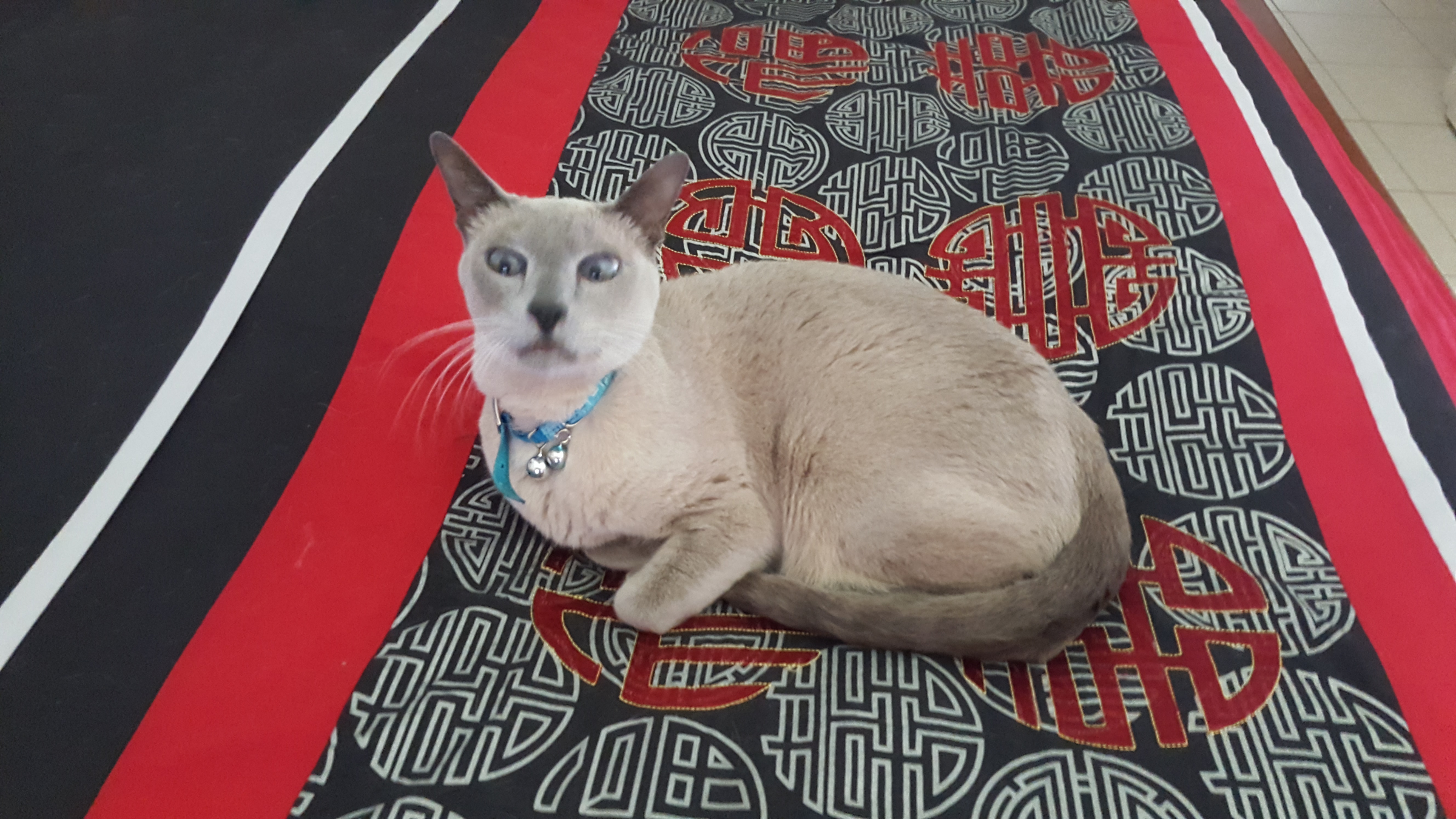
This is Chester.  He’s decided to be my personal alarm clock this morning.

It was a two-pronged attack.

First, he jumps from his bed, which, in our room, is a pile of blankets on a massage chair, on to our bed just about where my pillows are, regardless of the fact I might be lying there.

It can be quite disconcerting, as he decided to go for a walk across the back of the bed.

Even more so if he decided to let us know he’s not happy.

Come to think of it, when is he ever happy?

Second, he wanders down the end of the bed and lies down on your feet.  Being a Tonkinese, he’s a lot heavier than he looks.

If you decide to gently ease him off with a few subtle foot movements, he then starts attacking your feet.  This can be a painful exercise in summer if all that covers your feet is a sheet.

So, this morning…

We stayed up late to watch the last four episodes of Jack Ryan series 2.  It’s one of those things where you get hooked, and don’t realise the passing of time.

Consequently this morning I’m tired, and it’s past cat feeding time.

I should know better than to ignore him.

When the first two wake up calls fail, he goes to a third, comes right up in my face and taps me on the shoulder, then lets me know just how unhappy he is with me.

Oh well, sleeping in is over.


The cinema of my dreams – Was it just another surveillance job – Episode 29

I’m back home and this story has been sitting on a back burner for a few months, waiting for some more to be written.

The trouble is, there are also other stories to write, and I’m not very good at prioritizing.

But, here we are, a few minutes opened up and it didn’t take long to get back into the groove.

Chasing leads, maybe

Alone in the room, Herman returned.  I hadn’t seen him leave, but he was a cat, and cats were adept at slinking around, quietly stalking their quarry.  On the edge of that threshold between passage and living room, he was sitting, watching me.

“So, Herman.  The stories you could tell, eh?”

It elicited a meow and a deadpan expression.  No point in trying to read his mind, I’d probably finish up with a headache.

“Don’t suppose you could tell me where O’Connell’s secret hideout is?”

Another meow.

If he could talk no doubt he was saying that he wouldn’t tell me even if I tried to bribe him.  I thought about it, but instead went over to the door and opened it about six inches.

“You can go now.  It’s not safe, for man, woman or cat.”

Nothing this time.

“You’d better go before I change my mind.”

We were having a staring match.

Was that a nod?  He stood and started walking towards the door.  Perhaps he sensed I might close it just before he made it there.  Then, in a flash, he was gone.

I shrugged, and followed him out, closing the door behind me.

He was fast.  He was nowhere in sight.  Places to go no doubt.

Like me.

Only I wasn’t quite sure where it was.  I pulled out the piece of paper that was for a flat for sale, with several part words on it, ‘oak’ and underneath it, ‘Brom’.

It had to be part of the street name and a suburb.  The ‘Brom was obviously Bromley, the other a part of the street address.

I needed to find an internet café and do some research.  I also needed a new cell phone, but that could wait.  The main problem was finding an internet café, once just about on every corner, but now, with everyone owning a smartphone, there were very few to be found.

It took an hour before I found one in a back street in an area where there were several low-cost hotels, the sort that backpackers stayed in.

Armed with coffee and a sandwich, I began the search, starting with the realtor, and found the listing was no longer available, that is, not on their internet site.  It told me that the flat was taken up, possibly by O’Connell.

Next, I brought up a map application and put in the address, for information on both pieces of paper and ended up with Oakwood Avenue of Bromley Road, nearer to Beckenham than Bromley.

I had the flat number, now all I had to do was check it out.

Another search on the computer gave me the relative times, and a map to follow, by bus, train, and car.  I would have to get my car, which would take about half an hour, then drive out to the address which would take a further half-hour.

The flat was on the ground floor, and the realtor’s brochure had the layout of the block, and where the flat was located.  That it was on the ground floor and on a corner would make it easier to gain access without causing any trouble.

I would time my arrival for after dark so that I would go relatively unnoticed.  

© Charles Heath 2020

Writing a book in 365 days – 226

Day 226

The Pondering Paradox: Why Getting Stuck Might Be Your Story’s Best Friend

You know the feeling. You’ve poured your heart onto the page, crafted compelling characters, and set a scene. But now? Now you’re staring at a blinking cursor, a blank notebook page, or perhaps just the ceiling, utterly, hopelessly, gloriously stuck.

You’re not writing. You’re pondering.

And in that pondering, you feel the sticky tendrils of vacillation wrap around you. Is this procrastination? Is it writer’s block disguised as deep thought? Are you just plain wasting time when you should be producing?

It’s a common self-flagellation among creatives. We valorize output, word counts, and finished manuscripts. So when we find ourselves lost in the nebulous, unquantifiable space of “thinking about the next bit,” it feels wrong. It feels like inefficiency. It feels like a roadblock.

And sometimes, yes, it truly is. Sometimes, pondering crosses the line into analysis paralysis, where the fear of making the “wrong” choice paralyzes us from making any choice at all. We spin our wheels, overthinking every possibility, and the story gathers dust while our self-doubt grows.

But here’s the paradox: That very same deep dive into the unknown, that uncomfortable period of wrestling with narrative possibilities, character motivations, or thematic nuances – that, my friends, is often where the real magic happens.

Because what feels like vacillation on the surface is often, underneath, incubation.

Think of it like this:

  • Your subconscious is working overtime. While your conscious mind is pacing, muttering, and hitting refresh on social media, your brain is quietly, tirelessly, making connections you didn’t even know were there. It’s pulling threads from disparate ideas, assembling jigsaw pieces in the background.
  • You’re digging deeper than the obvious. The first answer, the easiest plot twist, the most predictable character beat – those are often discarded during true pondering. This is where you search for the richer, more surprising, more truthful path.
  • You’re building hidden layers. That moment you finally “get it” – that character’s true motivation, that perfect metaphor, the subtle shift in tone that elevates a scene – those don’t often arrive from brute-force writing. They emerge from the fertile ground of extended thought.
  • You’re creating a wellspring, not just a bucket. When you rush through a story, you might fill a bucket. But when you allow yourself the messy, uncomfortable, ponderous luxury of truly exploring the terrain, you’re not just finding the next step; you’re discovering entire underground rivers.

This is the process that leads to a trove of story. Not just a few chapters, but an entire universe. Not just a plot, but layers of meaning. Not just characters, but complex, breathing beings with histories and futures beyond the page. The scenes you haven’t written yet, the dialogue you haven’t heard, the twists you haven’t conceived – they are all waiting in that liminal space of pondering.

So, the next time you find yourself stuck, don’t automatically judge it as failure or procrastination. Acknowledge the potential for vacillation, yes, but also embrace the possibility that you’re not stuck at all. You’re just in the deep end of the creative pool, swimming through possibilities, allowing the next great wave of your story to gather momentum beneath the surface.

Trust the process. Trust the pause. Your trove awaits.

Searching for locations: Siena, Italy

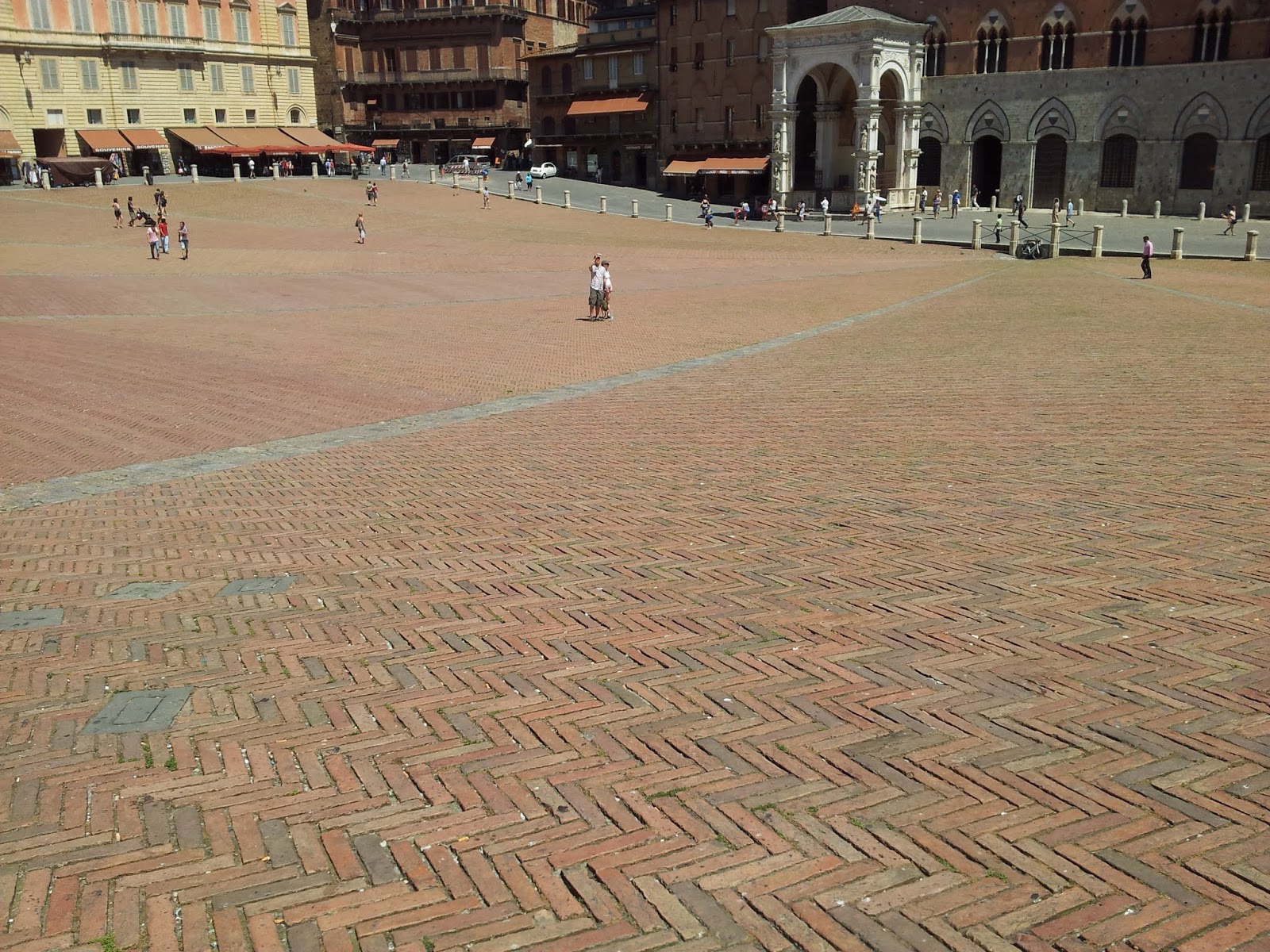
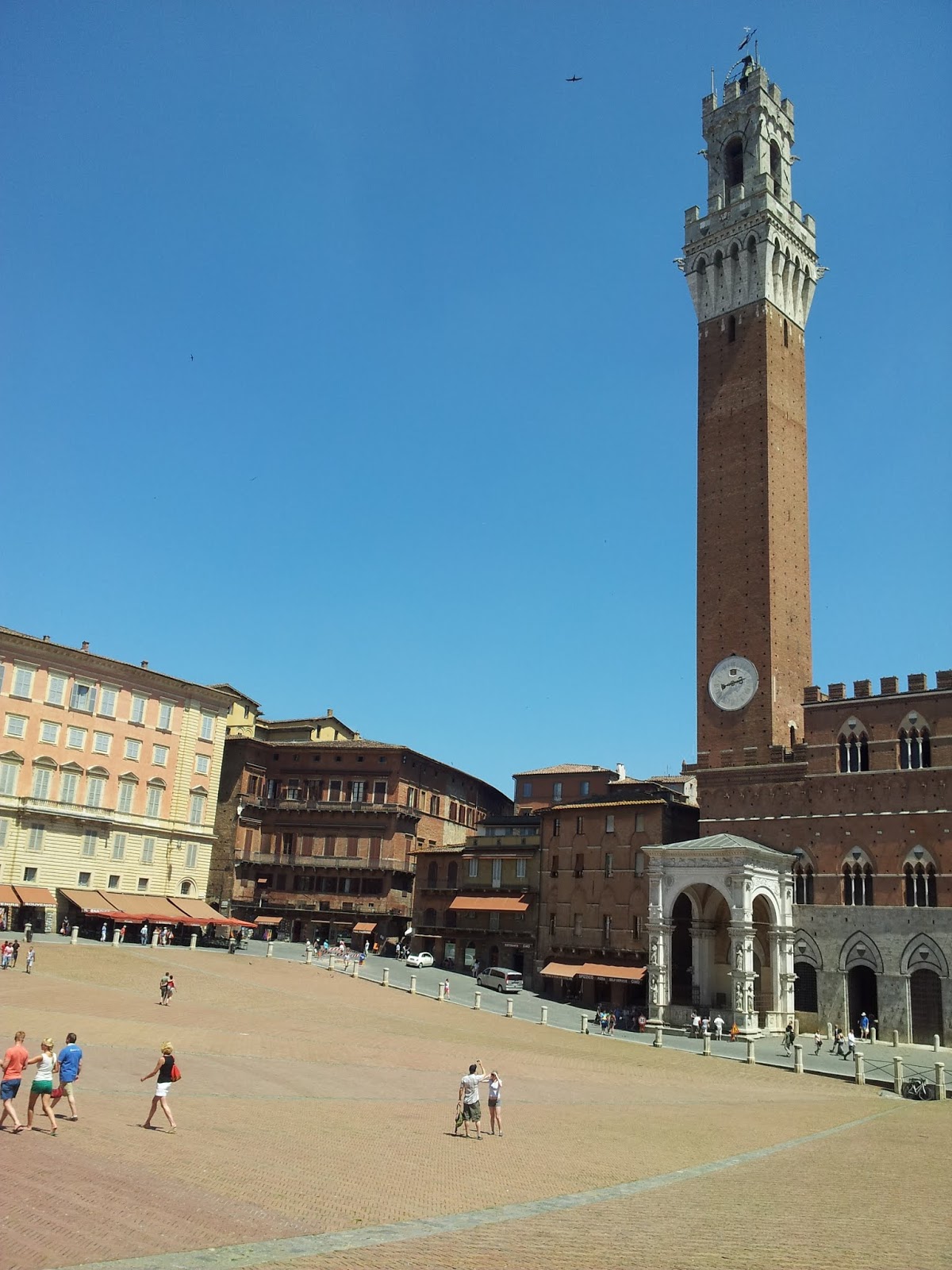
The Piazza del Campo is one of the greatest medieval squares in Europe.

It is shaped like a shell.

This is where the Palazzo Publico and the Torre del Mangia are.

At 102 meters (334 feet), the bell tower is the city’s second tallest structure.

When it was built in 1848 it was the exact same height of the Duomo to show that the state and church had equal amounts of power.

Around the edges of the Piazza are a lot of restaurants, where you can sit in the shade, have a plate of pasta and sip on a cold limonata.

Let’s sit down and talk about it?

What Authors Really Discuss in the Interview Hot Seat

There’s a unique magic tucked between the pages of a well-loved book. It transports us, challenges us, makes us laugh, cry, and ponder. But what about the person who crafted that magic? The author often remains an enigma, a name on a spine, until we get the rare chance to step into their world.

And that’s precisely why, when we get the opportunity to “sit down and talk about it” with an author, we leap at the chance. These conversations are more than mere publicity; they’re windows into the soul of storytelling itself. If you’ve ever wondered what goes on behind the scenes, or what an interviewer is truly trying to uncover, here are the typical, essential questions that peel back the layers of an author’s life.


1. The Genesis: “Why Do You Write?”

At the heart of every author interview lies the foundational question: “Why do you write?” This isn’t just a polite ice-breaker; it’s an invitation to explore the primal urge that drives someone to spend countless hours wrestling with words.

What interviewers are looking for:

  • The Spark: Was it a childhood dream, a sudden revelation, or a slow burn?
  • The Motivation: Is it a need to understand the world, to escape it, to connect with others, or to give voice to untold stories?
  • The Philosphy: What does writing mean to them on a personal, almost spiritual level?
  • The Impact: What do they hope their words achieve in the reader?

An author’s answer here often reveals their deepest values and the very bedrock of their artistic identity. It’s rarely about fame or fortune; more often, it’s a visceral, undeniable compulsion.


2. The Craft: “What Do You Write About?”

Closely following the “why” is the compelling “what.” This question delves into the subject matter, themes, and sources of inspiration behind their work.

What interviewers are looking for:

  • Inspiration Sources: Where do ideas come from? Dreams, headlines, personal experiences, history, observed moments?
  • Genre & Style: What defines their literary landscape? Are they a master of suspense, a poignant memoirist, a fantastical world-builder, or a sharp-witted satirist?
  • Recurring Themes: Are there common threads – love, loss, justice, identity, power – that weave through their various works?
  • The Message: Is there a particular message or question they’re exploring in their current or past projects?
  • Character Development: How do they bring characters to life? What makes them tick?

This question allows authors to articulate their artistic vision, revealing how their inner world translates into the stories they tell.


3. The Grind: “How Is Your Day Organized?”

For many readers, an author’s daily life is shrouded in a romanticized mist of inspiration strikes and dramatic keyboarding. This question brings the reality of the craft into sharp focus.

What interviewers are looking for:

  • Routine & Discipline: Do they have a strict schedule, or do they write when inspiration strikes? Morning person or night owl?
  • Environment: What does their writing space look like? A minimalist desk, a chaotic study, a noisy coffee shop?
  • Tools of the Trade: Pen and paper, specific software, dictation?
  • Balancing Act: How do they manage writing alongside other responsibilities (family, day job, other creative pursuits)?
  • The Non-Writing Tasks: Research, editing, marketing, social media – how do these fit in?

The truth, however, is often far more grounded: a meticulous dance of discipline, routine, and unwavering focus. Authors often reveal how they carve out time, protect their creative energy, and navigate the practicalities of a writing career.


4. The Obstacles & The Overcoming: “What Are the Pitfalls and Processes?”

No conversation with a serious author is complete without delving into the jagged edges of their journey – the pitfalls, the moments of doubt, and the challenges inherent in sustained creative work. But for every pitfall, there’s a process, a meticulously honed method for overcoming them.

What interviewers are looking for in Pitfalls:

  • Writer’s Block: How do they experience it, and how do they push through?
  • Self-Doubt & Imposter Syndrome: The quiet demons that plague even successful writers.
  • Rejection & Criticism: How do they handle the inevitable setbacks and negative reviews?
  • Isolation: The solitary nature of writing and its impact.
  • Burnout: The mental and emotional toll of intense creative output.
  • External Pressures: Deadlines, market trends, publisher expectations.

What interviewers are looking for in Processes:

  • Brainstorming & Outlining: From vague ideas to structured narratives.
  • Research Methods: How do they ensure accuracy and depth?
  • Drafting Techniques: First pass, messy copy, getting words on the page.
  • Revision & Editing: The crucial, often painstaking, work of refining.
  • Seeking Feedback: How and when do they share their work?
  • Perseverance & Resilience: The mental fortitude required to finish a book.

This section is where an author’s vulnerability shines through, juxtaposed with their incredible resilience and adaptability. It offers immense insight into the reality of authorship, proving that even the most celebrated writers face universal creative struggles.


The Unwritten Chapter

When we “sit down and talk about it” with an author, we’re not just discussing their latest book; we’re exploring the unwritten chapter of their life – the thoughts, habits, struggles, and triumphs that shape their published work. These interviews offer invaluable lessons for aspiring writers, deeper appreciation for readers, and a profound connection to the human spirit behind the story.

So, next time you encounter an author interview, listen closely. Beyond the plot summaries and character analyses, you might just find the secrets to creativity, perseverance, and the enduring power of the written word.