Inspiration, Maybe – Volume 2

50 photographs, 50 stories, of which there is one of the 50 below.

They all start with –

A picture paints … well, as many words as you like.  For instance:

And, the story:

Have you ever watched your hopes and dreams simply just fly away?

Everything I thought I wanted and needed had just left in an aeroplane, and although I said I was not going to, i came to the airport to see the plane leave.  Not the person on it, that would have been far too difficult and emotional, but perhaps it was symbolic, the end of one life and the start of another.

But no matter what I thought or felt, we had both come to the right decision.  She needed the opportunity to spread her wings.  It was probably not the best idea for her to apply for the job without telling me, but I understood her reasons.

She was in a rut.  Though her job was a very good one, it was not as demanding as she had expected, particularly after the last promotion, but with it came resentment from others on her level, that she, the youngest of the group would get the position.

It was something that had been weighing down of her for the last three months, and if noticed it, the late nights, the moodiness, sometimes a flash of temper.  I knew she had one, no one could have such red hair and not, but she had always kept it in check.

And, then there was us, together, and after seven years, it felt like we were going nowhere.  Perhaps that was down to my lack of ambition, and though she never said it, lack of sophistication.  It hadn’t been an issue, well, not until her last promotion, and the fact she had to entertain more, and frankly I felt like an embarrassment to her.

So, there it was, three days ago, the beginning of the weekend, and we had planned to go away for a few days and take stock.  We both acknowledged we needed to talk, but it never seemed the right time.

It was then she said she had quit her job and found a new one.  Starting the following Monday.

Ok, that took me by surprise, not so much that it something I sort of guessed might happen, but that she would just blurt it out.

I think that right then, at that moment, I could feel her frustration with everything around her.

What surprised her was my reaction.  None.

I simply asked where who, and when.

A world-class newspaper, in New York, and she had to be there in a week.

A week.

It was all the time I had left with her.

I remember I just shrugged and asked if the planned weekend away was off.

She stood on the other side of the kitchen counter, hands around a cup of coffee she had just poured, and that one thing I remembered was the lone tear that ran down her cheek.

Is that all you want to know?

I did, yes, but we had lost that intimacy we used to have when she would have told me what was happening, and we would have brainstormed solutions. I might be a cabinet maker but I still had a brain, was what I overheard her tell a friend once.

There’s not much to ask, I said.  You’ve been desperately unhappy and haven’t been able to hide it all that well, you have been under a lot of pressure trying to deal with a group of troglodytes, and you’ve been leaning on Bentley’s shoulder instead of mine, and I get it, he’s got more experience in that place,  and the politics that go with it, and is still an ally.

Her immediate superior and instrumental in her getting the position, but unlike some men in his position he had not taken advantage of a situation like some men would.  And even if she had made a move, which I doubted, that was not the sort of woman she was, he would have politely declined.

One of the very few happily married men in that organisation, so I heard.

So, she said, you’re not just a pretty face.

Par for the course for a cabinet maker whose university degree is in psychology.  It doesn’t take rocket science to see what was happening to you.  I just didn’t think it was my place to jump in unless you asked me, and when you didn’t, well, that told me everything I needed to know.

Yes, our relationship had a use by date, and it was in the next few days.

I was thinking, she said, that you might come with me,  you can make cabinets anywhere.

I could, but I think the real problem wasn’t just the job.  It was everything around her and going with her, that would just be a constant reminder of what had been holding her back. I didn’t want that for her and said so.

Then the only question left was, what do we do now?

Go shopping for suitcases.  Bags to pack, and places to go.

Getting on the roller coaster is easy.  On the beginning, it’s a slow easy ride, followed by the slow climb to the top.  It’s much like some relationships, they start out easy, they require a little work to get to the next level, follows by the adrenaline rush when it all comes together.

What most people forget is that what comes down must go back up, and life is pretty much a roller coaster with highs and lows.

Our roller coaster had just come or of the final turn and we were braking so that it stops at the station.

There was no question of going with her to New York.  Yes, I promised I’d come over and visit her, but that was a promise with crossed fingers behind my back.  After a few months in t the new job the last thing shed want was a reminder of what she left behind.  New friends new life.

We packed her bags, three out everything she didn’t want, a free trips to the op shop with stiff she knew others would like to have, and basically, by the time she was ready to go, there was nothing left of her in the apartment, or anywhere.

Her friends would be seeing her off at the airport, and that’s when I told her I was not coming, that moment the taxi arrived to take her away forever.  I remember standing there, watching the taxi go.  It was going to be, and was, as hard as it was to watch the plane leave.

So, there I was, finally staring at the blank sky, around me a dozen other plane spotters, a rather motley crew of plane enthusiasts.

Already that morning there’s been 6 different types of plane depart, and I could hear another winding up its engines for take-off.

People coming, people going.

Maybe I would go to New York in a couple of months, not to see her, but just see what the attraction was.  Or maybe I would drop in, just to see how she was.

As one of my friends told me when I gave him the news, the future is never written in stone, and it’s about time you broadened your horizons.

Perhaps it was.


© Charles Heath 2020-2021

Coming soon.  Find the above story and 49 others like it in:

Top 5 sights on the road less travelled – Adelaide, Australia

Discover Adelaide’s Best-Kept Secrets: Top 5 Crowd-Free Gems with Unique Charms

Adelaide, nestled in South Australia’s vibrant heart, is a treasure trove of cultural richness and natural beauty. While the city is home to iconic attractions like the Adelaide Zoo and the bustling Rundle Mall, it also harbours lesser-known wonders that promise unforgettable experiences without the crowds. If you’re looking to explore Adelaide’s hidden gems, here are five distinctive spots that are rarely overrun but brimming with charm.


1. Tandanya National Aboriginal Cultural Institute: A Window into Aboriginal Heritage

Tucked away in the city centre, the Tandanya National Aboriginal Cultural Institute is Australia’s oldest and largest Aboriginal-led cultural space. This dynamic museum showcases the art, stories, and traditions of South Australia’s First Nations peoples through immersive exhibitions, from contemporary art to traditional artifacts. Unlike larger, more generic museums, Tandanya offers a deeply authentic cultural experience with a serene atmosphere that draws visitors in for meaningful exploration rather than mere sightseeing.

Why it’s crowd-free: It’s often overlooked by mainstream tourist itineraries, making it a peaceful place to immerse yourself in history and art.
Pro tip: Check out their calendar for live performances and workshops for a more interactive visit.


2. Cleland Wildlife Park: Up-Close Encounters with Aussie Fauna

For a unique wildlife adventure, head to Cleland Wildlife Park, just a short drive from Adelaide’s CBD. This sanctuary is home to native species like koalas, kangaroos, and wallabies. Visitors can feed and photograph these creatures in a natural setting, but unlike busier zoos, Cleland’s laid-back vibe and spacious enclosures keep the atmosphere intimate.

Why it’s crowd-free: Mid-week visits or early mornings ensure a quiet experience, with plenty of space to roam and connect with nature.
Pro tip: Book a guided tour to learn about conservation efforts and meet nocturnal creatures in their hideaways.


3. Adelaide Gaol: A Glimpse into Dark Historical Days

Step into the shadows of Adelaide’s past at the Adelaide Gaol, a 19th-century prison that held some of Australia’s most notorious figures. This atmospheric site blends eerie history with engaging guided tours, where tales of rebellion, harsh punishment, and resilience come to life. The gaol’s moats and rusted cells offer a tangible connection to South Australia’s colonial legacy.

Why it’s crowd-free: While it’s a historic site, its solemn focus deters mass tourism, making it ideal for history buffs.
Pro tip: Opt for the 90-minute “History Tour” to uncover lesser-known stories and enjoy the most in-depth experience.


4. Old Government House: A Quaint Royal Retreat

Set within the lush grounds of the Adelaide Botanic Garden, Old Government House is a charming colonial-era mansion that served as a residence for South Australia’s governors. The building’s neoclassical architecture and manicured gardens offer a tranquil escape, while its hidden history as a “royal retreat” adds intrigue.

Why it’s crowd-free: Tucked inside a crowded attraction, the house and garden are often overlooked by tourists rushing to see the main highlights.
Pro tip: Visit during the weekdays to enjoy guided docent tours and the peace of the surrounding rose gardens.


5. Japanese Garden (Adelaide Botanic Garden): A Zen Oasis in the City

Within the sprawling Adelaide Botanic Garden, the Japanese Garden is a serene, minimalist haven filled with koi ponds, maple trees, and sand raked in meditative patterns. Designed in the late 1980s by Hidetori Matsumura, this gem is a perfect spot for reflection or a quiet picnic, far removed from the typical tourist hotspots.

Why it’s crowd-free: Its specific location within the garden and niche appeal ensure a peaceful, crowd-free experience.
Pro tip: Bring a sketchbook or a camera—this garden is a photographer’s dream, especially during spring when the blossoms are in full bloom.


Conclusion: Adelaide’s Hidden Treasures Awaits
Adelaide’s quieter attractions offer a perfect blend of history, culture, and natural beauty without the hassle of crowds. Whether you’re exploring the Tandanya’s Aboriginal art or savouring the peace of the Japanese Garden, these spots provide a deeper, more personal connection to the city’s soul. So next time you’re in Adelaide, venture off the well-trodden path—these hidden gems are sure to leave a lasting impression.

Respect the environment and local communities by following guidelines, especially in wildlife parks and cultural institutions. Enjoy your journey! 

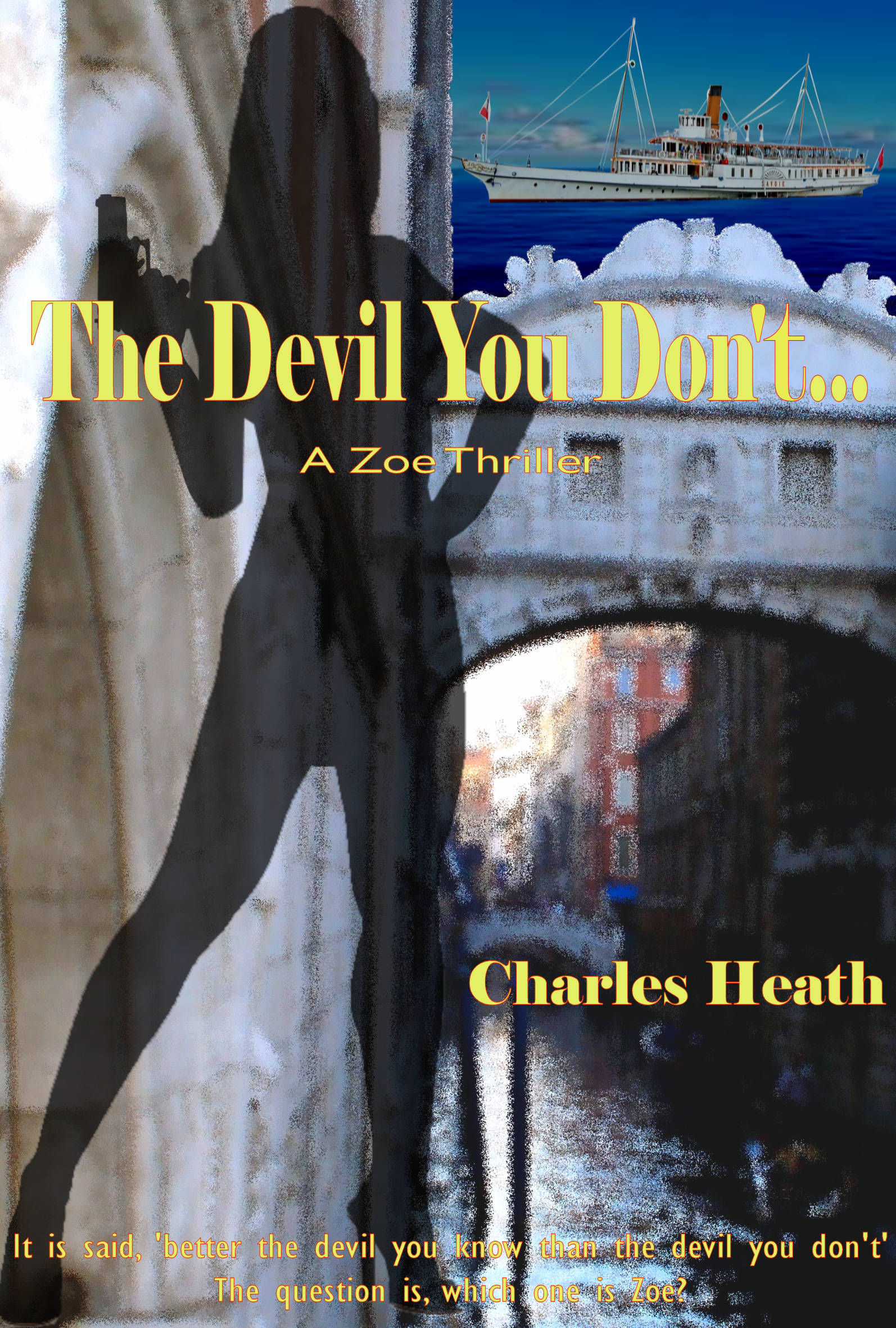
‘The Devil You Don’t’ – A beta reader’s view

It could be said that of all the women one could meet, whether contrived or by sheer luck, what are the odds it would turn out to be the woman who was being paid a very large sum to kill you.

John Pennington is a man who may be lucky in business, but not so lucky in love. He has just broken up with Phillipa Sternhaven, the woman he thought was the one, but relatives and circumstances, and perhaps because she was a ‘princess’, may also have contributed to the end result.

So, what do you do when you are heartbroken?

That is a story that slowly unfolds, from the first meeting with his nemesis on Lake Geneva, all the way to a hotel room in Sorrento, where he learns the shattering truth.

What should have been solace after disappointment, turns out to be something else entirely, and from that point, everything goes to hell in a handbasket.

He suddenly realizes his so-called friend Sebastian has not exactly told him the truth about a small job he asked him to do, the woman he is falling in love with is not quite who she says she is, and he is caught in the middle of a war between two men who consider people becoming collateral damage as part of their business.

The story paints the characters cleverly displaying all their flaws and weaknesses. The locations add to the story at times taking me back down memory lane, especially to Venice where, in those back streets I confess it’s not all that hard to get lost.

All in all a thoroughly entertaining story with, for once, a satisfying end.

Available on Amazon here: https://amzn.to/2Xyh1ow

365 Days of writing, 2026 – 12

Day 12 – The smaller characters that can steal the scene

The Scene-Stealers: Why the Bit Players in Stories Make Them Unforgettable

Every compelling narrative has a protagonist—the hero, the rebel, the reluctant saviour. We cheer for them, root for their growth, and remember their names long after the book is closed or the credits roll. But have you ever paused to consider the unsung heroes who linger in the background, the extras who, with a single line or moment, could steal the entire show? These bit players might not have the spotlight, but they’re the secret sauce that makes stories rich, relatable, and unforgettable.


The Depth Weavers: How Bit Players Add Layers

Stories thrive in worlds that feel alive, and minor characters are the mortar holding those worlds together. Take Mrs. Dubose from To Kill a Mockingbird. On the surface, she’s a grumpy neighbour, hurling insults at Scout. But her brief appearance unravels the complexities of addiction, courage, and legacy. Her story—told in the periphery—deepens the novel’s themes long after she disappears.

Similarly, in The Godfather, the scene where a horse’s head is placed in a man’s bed is legendary. While the man himself (a minor character) is a plot device, his presence underscores the Corleone family’s ruthless power and the era’s mob culture. These characters are not just “extras”; they’re the brushstrokes that add texture to the canvas.


The Mirrors and Shadows: Contrasting the Main Event

Bit players often highlight the protagonist’s journey by acting as foils. Consider Mr. Collins in Pride and Prejudice. Elizabeth Bennet’s sharp wit and independence shine brightest when measured against his obsequiousness and cluelessness. Though he’s a minor character, his presence sharpens the story’s critique of societal norms and amplifies Elizabeth’s growth.

In The Lord of the Rings, even the occasional tavern loiterer or roadside traveller reinforces the vastness of Middle-earth and the contrast between the mundane and the epic. These characters remind us why Frodo’s quest is so extraordinary—they live in the same world but will never attempt what he does.


The Scene-Stealers: When Bit Players Shine

Sometimes, all it takes is a single moment for a minor character to etch themselves into our memories. Recall the eerie calm of the priest in The Departed as he’s boxed in by assassins, or the surreal comedy of the “Dance of the Seven Veils” in The Producers. These characters may only appear for a scene, but their impact lingers.

Even in literature, consider the Looney Tunes-esque antics of the Gnomes in The Chronicles of Narnia: The Voyage of the Dawn Treader. They exist for less than a chapter but remain among the most quoted, parodied, and loved elements of the series. Their fleeting presence reminds us that magic often lives in the moments we least expect.


Why It Matters: The Human Touch

At our core, humans crave connection and recognition. We’re all protagonists in our own stories, yet bit players in others’. The minor characters in fiction mirror this duality, grounding narratives in authenticity. They remind us that a society—or a story—needs more than just heroes and villains. It needs the barista who forgets your name, the coworker who “borrowed” your pencil, and the stranger who hands you a stray umbrella in a downpour.

By appreciating these characters, we become more intentional readers and creators. We learn to look beyond the surface, to find wonder in the ordinary, and to recognise that even the smallest role can carry profound weight.


Your Turn: Who Are Your Favourite Bit Players?

Think back to your favourite stories. Which minor characters stick with you? Is it the gruff motel owner in Breaking Bad, the inscrutable IT guy in The Office, or even the diner regulars in your favourite novel? Share them in the comments—sometimes the best stories are the ones we didn’t expect to remember.

Because in the end, whether they’re on the page or the screen, these bit players teach us this: every voice, even every extra, has the power to change the narrative.

In a word: Zip

Which, unfortunately, I do not have a lot of in my step.

At last, we have reached the end of the alphabet because I’m running out of zip to write these blogs.

So…

Zip is the sing, the energy, the spring we have in our step, that usually gets us from a to b quickly.  Without this zest, we would need to take a bus, train, or cab.

Then comes the variations like …

Zip code, we all have one of these, though in some countries it is called a postcode.

Zip it up, meaning do not speak, especially if you’re about to spill a secret.

A zip, which is a part of some types of clothing, usually in trousers, jeans, and skirts to name a few.  Some dresses have long zips, some short, all seem to get tangled at one time or another, or, in the most embarrassing of situations, split.

Then there is a colloquial use of the word zip, meaning nothing, zilch, zero, in other words, a basis for of z words.

And that’s about as much zeal I’m going to show for writing this blog, and I’m going to close the book on it.

Thank you, and goodnight.

“The Things we do for Love”, the story behind the story

This story has been ongoing since I was seventeen, and just to let you know, I’m 72 this year.

Yes, it’s taken a long time to get it done.

Why, you might ask.

Well, I never gave it much interest because I started writing it after a small incident when I was 17, and working as a book packer for a book distributor in Melbourne

At the end of my first year, at Christmas, the employer had a Christmas party, and that year, it was at a venue in St Kilda.

I wasn’t going to go because at that age, I was an ordinary boy who was very introverted and basically scared of his own shadow and terrified by girls.

Back then, I would cross the street to avoid them

Also, other members of the staff in the shipping department were rough and ready types who were not backwards in telling me what happened, and being naive, perhaps they knew I’d be either shocked or intrigued.

I was both adamant I wasn’t coming and then got roped in on a dare.

Damn!

So, back then, in the early 70s, people looked the other way when it came to drinking, and of course, Dutch courage always takes away the concerns, especially when normally you wouldn’t do half the stuff you wouldn’t in a million years

I made it to the end, not as drunk and stupid as I thought I might be, and St Kilda being a salacious place if you knew where to look, my new friends decided to give me a surprise.

It didn’t take long to realise these men were ‘men about town’ as they kept saying, and we went on an odyssey.  Yes, those backstreet brothels where one could, I was told, have anything they could imagine.

Let me tell you, large quantities of alcohol and imagination were a very bad mix.

So, the odyssey in ‘The things we do’ was based on that, and then the encounter with Diana. Well, let’s just say I learned a great deal about girls that night.

Firstly, not all girls are nasty and spiteful, which seemed to be the case whenever I met one. There was a way to approach, greet, talk to, and behave.

It was also true that I could have had anything I wanted, but I decided what was in my imagination could stay there.  She was amused that all I wanted was to talk, but it was my money, and I could spend it how I liked.

And like any 17-year-old naive fool, I fell in love with her and had all these foolish notions.  Months later, I went back, but she had moved on, to where no one was saying or knew.

Needless to say, I was heartbroken and had to get over that first loss, which, like any 17-year-old, was like the end of the world.

But it was the best hour I’d ever spent in my life and would remain so until I met the woman I have been married to for the last 48 years.

As Henry, he was in part based on a rebel, the son of rich parents who despised them and their wealth, and he used to regale anyone who would listen about how they had messed up his life

If only I’d come from such a background!

And yes, I was only a run away from climbing up the stairs to get on board a ship, acting as a purser.

I worked for a shipping company and they gave their junior staff members an opportunity to spend a year at sea working as a purser on a cargo ship that sailed between Melbourne, Sydney and Hobart in Australia.

One of the other junior staff members’ turn came, and I would visit him on board when he would tell me stories about life on board, the officers, the crew, and other events. These stories, which sounded incredible to someone so impressionable, were a delight to hear.

Alas, by that time, I had tired of office work and moved on to be a tradesman at the place where my father worked.

It proved to be the right move, as that is where I met my wife.  Diana had been right; love would find me when I least expected it.

lovecoverfinal1

The cinema of my dreams – I always wanted to write a war story – Episode 34

For a story that was conceived during those long boring hours flying in a steel cocoon, striving to keep away the thoughts that the plane and everyone in it could just simply disappear as planes have in the past, it has come a long way.

Whilst I have always had a fascination with what happened during the second world war, not the battles or fighting, but in the more obscure events that took place, I decided to pen my own little sidebar to what was a long and bitter war.

And, so, it continues…


We gathered up what food there was to take with us.  There were no weapons left behind.  Leonardo had assumed correctly we would have used them if they’d been left there.

Carlo had changed slowly into an automaton, and I guess if I could read his mind, I’d know exactly what he was thinking.  Enrico had attached himself to Carlo, and I knew Carlo would look after him.

When I said that the burials would have to wait, Carlo agreed.

We had a short discussion on what we would be doing next, and in the first instance, we would be going back to the other soldiers and the church.  There, with both of our knowledge of the castle, its entrances, secret or otherwise, and the internal passageways which I knew Wallace and the others there were not too familiar with, we would formulate a plan to go in and pick them off one by one.

It seemed a good plan when we first talked about it, but on the way back to the church, and I had time to consider how it would work, it seemed we would only get an advantage once, and we would have to kill or capture as many as we could in the first raid.

Then it was going to be difficult.

Unless Carlo knew of more places we could enter the castle without being seen or heard.

I only knew of three.

And the first post we had to hit, and silence, the radio room.


My war had not been as start or as terrifying as most of those whom I’d known or worked with.  My part was more selective, finding and eliminating spies, informers, and enemy cells on home territory.  

Sometimes that would extend into enemy territory, particularly France where, as one who could speak French fluently, I found myself working with the resistance, using intelligence gathered by a network of spies we had, not only in France but in all parts of enemy territory.  That also meant, sometimes, accompanying weapons and other supplies into enemy territory.

It hadn’t included anything like what I’d just seen back at the underground cavern.

I’d been told, often, about the enemy executing whole villages, and large groups as retaliation for resistance operations that killed German soldiers, and particularly officers, but I’d not seen it first-hand.

Now I had.

I’d been told, along with the others who had been at the training camp way back at the start of the war, that we would inevitably see atrocities.  Those instructors, men who had survived the first war, were speaking from experience.  We were told it would make us angry.  It had.  I had this immediate thought of doing as much damage as I could to the perpetrators of that massacre.

But we had also been told that we had to harness that anger, and use it to drive our actions, bot in a reckless manner, but with a measured calm and with planning.  Blind rage, which had been predicted, would only get us killed.

I had left the cavern at the blind rage stage, but the walk to the church wore some of that off, and I began to piece together the seeds of a plan to get our revenge.  We were only a small group, but even so, we could work more efficiently than those at the castle. 

Leonardo was not going to tell Wallace that he hadn’t captured or killed me in his ambush, but it might make Wallace think that my ability to retaliate would be weakened.  Leonardo would know that Carlo and I were still alive.  He would not know about Blinky and his men.

It would be interesting to see if Wallace would commit any of his men to hunt us down, send Leonardo back out to finish the job, or just wait until Meyer turned up.  His contact in Gaole would know about the castle’s change of allegiance, but he would not know that Martina was not going to be there to greet them when they arrived in the village.

That was several days away.  We would have to be there, but it was going to be dangerous unless we found a way to neutralize the castle.  So far, in my head, we’d neutralized the radio and got as far as the dungeons before meeting enemy resistance.

The same had happened in the next six scenarios, after playing out the last we had arrived back at the church.


Chiara was resting as comfortably as the Sergeant could make her.

He had made a more thorough assessment of her injuries, and aside for the severe beating, she had sustained a few cracked ribs and several broken fingers.  The broken fingers were a surprise.  The sergeant had reset them as best he could.

Other than that, she would recover physically.  Mentally, he said, would be something else.  She was lucky, he said, her torturer was an amateur, and Italian.  Had it been the German Gestapo, she would be dead.

She was lucid and I told her we would make Leonardo pay for what he’d done.  I thought it best not to tell her about what had happened back at the cavern.  She had enough on her conscience without adding the senseless deaths of the villagers.

Then we had a meeting, where I asked Carlo to draw a plan of the castle and the places where we could breach their defenses and give us an element of surprise.

He had one that I hadn’t known about, one that might give us a fighting chance.

© Charles Heath 2020

A long short story that can’t be tamed – I always wanted to rescue a damsel in distress – 7

Seven

If I had deliberately wanted to flush out the people following us, and eventually lose them, I would never have thought of renting a car at a suburban shop.  I had to wonder what James Bond would have done in similar circumstances.

But it worked.

Driving out of the carpark onto the main street, it wasn’t difficult to see several people caught unawares.  And on their cell phones making calls.

And it was Emily’s last-minute brainwave to cover the car’s registration plates so if they were to take a photo, they would not be able to track it.  Well, not straight away.  It was she who said London had a lot of CCTV cameras, but on the way to the carpark, she had checked out where they were, those that she could readily identify, and we could avoid.

Something I learned about Emily that I didn’t know; she was a computer nerd, and a hacker of sorts, not one of those dark web experts, but she knew enough to dig around in places most people wouldn’t go looking.

That skill might just come in useful.

And, for a few minutes, maybe an hour, we revelled in the thought we may have outwitted them, whoever ‘them’ was.

It was late afternoon when we finally found a hotel with a carpark, a long way from Cecile’s flat in Earl’s Court, and on the other side of the Greater London region in Mile End Road, not very far from Stepney Green underground station, the result of Emily searching the web for a hotel with a carpark, and near public transport.

She also had our luggage delivered from the airport a little less than two hours from the moment she made the call.  I think I may have remarked that I might just employ her as my travel agent when I started my European odyssey, but she had fallen asleep, way past exhausted.

I wasn’t far behind her.  We had a long day tomorrow if today was anything to go by.

I woke to the smell of coffee and that more interesting aroma of burnt toast.

There were shopping bags on the table, and it looked as though Emily had been up and around for a while.

I looked at my watch, it was not much past seven, and not an hour I found myself up back home.  I had an apartment in the city, and it was a ten-minute walk to the office, so early rising was not a necessity.  My parents lived in the suburbs, and more than an hour by public transport, and two by car.  It was the reason I moved.  I didn’t want to spend a quarter of my life travelling to and from work.

Of course, London was so much larger than where I came from, and definitely not a place I would want to live, or work, despite the advantages that Cecile had tried to impress upon me.  And don’t get me get started on driving around London.  Yesterday had been harrowing, and left me, at times, shaken.

“Good morning, sleepyhead.”

Emily put a coffee plunger on the table, two cups, a plate of toast, bowls, and the cereal that was my favourite, though how she knew was anyone’s guess.

“You’ve been busy.”

“I like to get some exercise every morning, so I combined it with a shopping expedition

I had not attended this type of domesticity in a long time, at least not since I left home.  I had grown accustomed to being on my own, and that might have contributed to Cecile and I drifting apart.  It probably also had a lot to do with my awkwardness with girls, and rather than try to get over it, I just avoided them.

But, somehow, Emily was different, perhaps because she was younger and hadn’t been blunted by the vicissitudes of life.  She had finished school, and as far as I was aware, didn’t have a real job, preferring to spend her time pottering in her father’s office.

I had thought, much like in an 18th century romance novel, she was waiting for the right man to marry, but there were not too many of those running around these days.

Something else I just realised; how well I seemed to like being at ease in her company, much more so than when I was with Cecile, always on my guard not to say or do the wrong thing.

“I find going to a grocery store a trial, which is why I eat out a lot.”

She shook her head.  “You’re just lazy, like everyone else your age.  Convenience over practicality.  And you should think about doing some exercise.”

I could feel the eyes of the appraiser upon me and shivered.  It was good that I could not read her thoughts, but if I could, perhaps some might be considering those extra pounds that had found their way onto my frame after I stopped playing tennis and squash.

“I promise I’ll think about it.”

“Better still, I don’t think it’s all that safe to be jogging the streets in this neighbourhood early in the morning, so you can come with me as my protector.”

She saw my look of disdain, or was it the thought of having to exercise.

“Cheer up, I don’t go very fast.”

The sound of the phone vibrating on the table interrupted that thought, and conversation.

It was a private number, so I assumed it was the man from the day before.

“Yes?”

“Trafalgar Square, by the column, 12:30 pm today.”

It was the man’s voice.

“We’ll see you there.”

The call was disconnected.  Short and to the point.

“We have a lunch date.”

Before I could reach out to pick up my cup of coffee, the phone rang again.

Also a private number, I assumed it was the man ringing back with a change of plans.

“Yes?”

“We need to talk.”

A woman’s voice this time, not one that was familiar.

“About what?”  I was surprised and didn’t have time to work on a better comeback.

“Your Cecile.  She is over her head.”

Aside from stating the obvious, who was this woman, how did she know about Cecile, and more importantly, how did she know my cell number?

“Who the hell are you?”

“The London end of the team that recruited her.  Time is of the essence, so we’ll come to you.  We’ll be there in half an hour.”

That line went dead before I could ask another pertinent question, how did she know where we were?

“Who was that?”  Emily had been oblivious to the turmoil I was feeling.

“Someone else who wants to talk about Cecile.”

“Who?”

“No idea, but the word reruited popped up, whatever that might mean.”

“Here?  No one knows we’re here.”

“Exactly.”

“Perhaps we should leave, like, right now.”

“No.  I have a feeling that we might find out what Cecile is up to.”

And, in the back of my mind, several small, associated details clicked into place.  At the time they didn’t make any sense, but now, in a bigger context, and given the circumstances, I think I knew now why she had come.

And, more importantly, I realised she had been dropping breadcrumbs for me to follow long before she had left.

©  Charles Heath  2024

The cinema of my dreams – Was it just another surveillance job – Episode 17

As we all know, writing by the seat of your pants is almost the same as flying by the seat of your pants, a hazardous occupation.

As it happens, I like writing this way because like the reader, I don’t know what to expect next.

And equally, at times, you can write your self into a corner, much like painting, and then have to go back, make a few changes and//or repairs and then move forward.

It’s part of the writing process, only in this case, the changes occur before you’ve finished the novel, if you finish.  Quite often a lot of writers get only so far, then the manuscript hits the bottom drawer, to be brought out on a distant rainy day.

Or your cat has mocked your writing ability one too many times.

Therefore, we’re winding back to Episode 16, and moving forward once again, from there.

Why didn’t it surprise me that Nobbin was playing all ends against the middle if that was the expression?  What really bothered was that he wasn’t prepared to tell me the truth or trust me to help find the missing information.  But he had known I might become interested and do some investigating of my own.

Perhaps Nobbin feared Severin might track me down, as he had, and if I had found the USB, run the list of losing it to his foe.

Nor was it a surprise that someone else, namely Severin, was after the information, and he would have access to everything Nobbin did, and he was equally disadvantaged.  It was either Severin or one of his agents, that was caught in O’Connell’s flat and found ‘Josephine’ there.

I didn’t believe her name was Josephine, or that she lived in the flat next door.  And I didn’t think Severin had found anything going by the way the flat had been turned over, and the fact it looked like no one had lived there.

Having now dealt with both men, I was still on the fence about who was on the right side and who was on the wrong side, or whether they were both of questionable character.  What made it difficult to understand was how Severin could run an operation inside the organisation.  Surely someone knew about it, or from a high level, sanctioned it?

Knowing I would not be interrupted this time, I went back up to the third floor, and into O’Connell’s flat, a simple job since the front door was still unlocked.  The girl had assumed it was no value to them which told me she had already searched the place before being attacked.

Just in case anyone was likely to return, or there was another party interested in O’Connell, I locked the door from the inside.  At least no one had yet crashed through the door, smashing the lock and timber.

I stood in the middle of the main room, and did a slow 360-degree turn, looking at everything intently.  The thing with searches like this, it was more likely the object of any search was hidden in plain sight.  The usual places, such as the freezer, sections of fridges, stashed in bottles or packets in the pantry, under beds, inside mattresses, pillows, or under blankets, or with a form of glue on the inside of televisions or computers would prove fruitless.

We were taught to hide things such as USB sticks where they would be least expected to be found, such as a toy on a keyring, tossed in a bowl of pens, pins, clips, or other small insignificant items that all looked uninteresting.

My first thought was in the pocket of a coat in the closet, but all his clothes were strewn over the floor in the bedroom showing signs of being turned out.  Perhaps the searcher or searchers had thought like me.

There was no keyring in the kitchen or the bedroom, no was there any sort of stand inside the door, a place to put mail, and other items such as keys.  If there were any, they would have been on him when Severin had him killed.  I had not found, not felt, any in his pockets, not unusual for an agent in the field.  If you were captured or killed, you wanted nothing on you that could identify you or what you were doing.

Next I thought, a hidden compartment.  I was not going to predict he had a safe in the flat, but just in case, I did search thoroughly where one might be located.  The cheap watercolour on the wall hid nothing but some discoloured wallpaper.

I checked all the skirting boards, and inside walls of the robes, but there was nothing.  I also checked the robes thoroughly for false backs, or sides, or compartments hidden in the roof.  The floor was made from wood, so I checked to see if there were any loose boards, but in the end, considered that was a ruse used only in the movies and on television.

An hour later, I was no wiser as to where it could be, if at all, in the flat, but, looking around, it was certainly now a little more organised because in checking everything in case the previous searchers had missed anything, I’d put everything neatly in stacks.

And, no, there was nothing under the bed.  The previous searchers had thought of that too.

But, in one corner of the main room, there was a desk that had been completely turned out, papers were strewn everywhere.  There had been a computer, now missing, because there was a cable running from the printer, and a power cable in the wall, both running into thin air.

The papers yielded nothing of interest, other than he was researching a holiday to Russia and Poland. 

For two.

A break.  There was a significant other.  I made a more serious search of the papers that I’d gathered up off the floor and found a shred of a quickly torn up piece of paper, of which only this piece remained.  A name:  Jan, scribbled on it, with half another word ‘ord’.

Did this Jan also live in this block?  Did she work at the same place?  There were a hundred variations of that theme, but it was a start.  He might have trusted the USB to her safekeeping without telling her what it was, and it was possible she didn’t know he was dead.

I’d noticed that O’Connell’s death had been reported as a John Doe on the wrong end of an alleged mugging, the small dismissive paragraph on page seven reported the body was missing when police went to investigate a pool of blood in an alley, along with several other crimes of which police were seeking further information.  That alley hadn’t any CCTV cameras, so Severin knew he could easily shoot O’Connell without anyone knowing it was him.

There was nothing else of interest in the documents, other than the holiday, if it was a holiday, was to be in a month’s time.

My work was done.  I had a lead.  It was time to leave.

Except for one small problem.  Someone was knocking on the door.

© Charles Heath 2019-2022

365 Days of writing, 2026 – 10/11

Days 10 and 11 – Writing exercise

Standing over the grave, staring down at the coffin that held the body of my wife, there was only one question.  “Just who the hell were you?”

I was there when Mary Antoinette Davis died.  I wasn’t expecting it, but who does, at any time?

It shouldn’t have happened, but it did.  Simple, fast, a blink of an eye, and she was gone.

It wasn’t fair, but then, most of life isn’t.  It hands you a deck of cards, and you put them in the order you want them to be in.  And sometimes you get it right, and sometimes you get it wrong.

Like that morning.

The same as every other morning when Mary was home.  We slept in till ten, wandered around the house for an hour, had coffee, toast and marmalade, home-made by the neighbour next door.

Dress and go shopping, or sometimes to the cafe to have tea and scones.

Not this morning.

It was to the village grocery shop.

It had been raining.  The side of the road was wet, so we were walking on the edge of the road when there were no cars.

And then, within sight of the shop front, a car came, rather fast, and we got out of the way.

Just.

But she slipped on the wet grass and fell down.  Shaken.  She thought she had hit her head, feeling a little faint, but then, after a few minutes, she was back to her old self again.

We bought oranges, apples, some rhubarb, and bananas.  A fruit salad.

Then it happened.  I turned to pay Silvia, the storekeeper, and when I turned back, Mary had collapsed on the floor.

Quietly.

Not panicking, thinking it might be some residual effect from the slip, I took her hand and squeezed it, saying, “Are you alright?”

There was no response.

I shook her shoulder gently, but there was still no response.

I turned back to Sylvia.  “Please call an ambulance.  This might be serious.”

I heard her go over to the telephone and dial the number.  I turned back and decided to test for a pulse.  Not that I could remember how.

That was when Doc Adams came in, saw Mary on the ground, and came straight over.  He had been her doctor for most of her life.

“What happened?”

“She slipped and fell outside, avoiding a speeding car, and I think she hit her head, but she wasn’t dizzy for long.  She just collapsed just now.”

I watched him as he checked everything I’d forgotten to, and then for a pulse.  He was shaking his head.

Sylvia yelled out, “Ambulance here in five, they were just up the road.”

Otherwise, it would take twenty from the nearest depot.

“There’s no pulse, her eyes…”

He leaned down to see if she was breathing, then started C.P.R.

I didn’t want to ask, but in that moment I felt a chill run through me.  I knew she was dead because part of me had just died with her. 

That’s when I felt the room start to turn, and moments later, nothing.

I woke in the small hospital in the nearest town.  It handled non-serious cases, but mostly acted as a triage centre before shipping people off to the city an hour away.

Mary wasn’t there.

Angelina, the matron, nurse, pseudo doctor when Doc Adams was not there or in transit, and general factotum, was sitting beside the bed, knitting.

Nobody ever knew what she was knitting, and they never asked.

“You’re awake?”

I hoped I was recovering from a nightmare because my first thought was horrifying if it was true.

“Mary?”

“Doc couldn’t revive her.  I’m sorry, Evan.  Doc said she had taken a blow to the temple area, found an abrasion, went back to the accident site and found the rock.  Delayed reaction, or some such.”

“She’s dead?”

“Yes.  The police will be here soon and ask you some questions.  Routine, whatever that means.  Doc had her taken to the city hospital, and you will have to go and identify her, for the record.”

She put the knitting aside and stood.  “Doc told me it would not be a good idea if you drove anywhere, just for a day. It’s been a huge shock for you, for all of us.  Doc asked me to bring you, unless…”

“It’s fine.  I don’t think I could concentrate.  How is it possible…?”

“Simple things sometimes trump the more complex.  The odds are a million to one that she would fall and hit her head in that exact spot.  A billion to one even.  I can’t believe it myself.  None of us can.”

She continued with her checks, ticking boxes and making notes with the fountain pen that Mary had given her last Christmas.  They were old friends.  Angelina had known her long before I had, and they had their secrets.

“Can I go now?”

“Sorry.  No.  Not yet.  Have to monitor you for a half hour.  Doc’s orders.

I felt fine, but then what I thought I knew was not what Angelina was taught to expect.  Her medical training was extensive, proving a handy backup for the Doc.

He had asked her if she wanted to go to med school; he could arrange it, but she had shied away from fully committing because she wanted better.

What could be better than being a doctor?

I would be one in a heartbeat if I had the talent, but I did not.  I was destined to be an agricultural labourer, with no qualifications and no prospects.

What I couldn’t believe was a brilliant girl who could be anything she wanted, wanted to marry me and live in the village.  When she was not away being brilliant at her real job.

She explained it to me some time ago, but it was all double Dutch to me, well, some of it anyway.  I was a little smarter than I looked, and I think Mary knew, just decided not to rock the boat.

Her friends certainly thought I was just this farmer guy, punching above his weight.  It was true, if not unexpected.  She was the belle of the ball, the pick of the crop, and I ran last in the stakes for a date.

Until I saved her from one of the upper-class boys.  That day, I became her hero and their whipping boy.  Until one day it stopped.  Henry Turbot, son of the local laird, considered her his property because his parents owned everything, even us pathetic farm workers.

And then went about proving a point.

Until he disappeared.

The mystery of the missing Henry Turbot.  The police came and asked questions until they were satisfied I had nothing to do with his disappearance.  Apparently, according to some, there was a portal near the bakery building, painstakingly rebuilt when transferred from a local Stonehenge to the common.

Somehow, he had activated it and disappeared into the ether.  People preferred mumbo-jumbo to the truth;  he had disappeared to his grandmother’s in America. 

I was the luckiest man in the village.  Now I was the saddest.

It was painful to visit her in the big city hospital morgue.  It was her, she was dead, and I had half an hour before she was taken to the undertaker.

The funeral was in a few days.

She had no family, so there was no one to call.  We had no family, she was unable to have children because of a riding mishap when she was younger, and I was an only child of now deceased parents.

She had friends all through the village.  They were all devastated.  Most treated me with indifference, and now she was gone, as though I didn’t exist.

I rang her work, picking a number off her phone that oddly said work.  It was strange.

“Identification?”

“It’s Mary Antoinette Davis husband.  I’m calling to tell you she died yesterday.”

“Who is this?”

Didn’t they listen?  “I’ve already told you “

Silence for a moment.  “Wait.”

I waited.  For five minutes, then a woman answered, “Who is this?”

“The husband of Mary Davis.  I’m calling the number on her phone that says work. Who are you?”

“Irrelevant.  She’s dead.”

“Yesterday.  An accident.”

“And you are,”

“Her husband.”

“Of course.  Thank you.”

The line went dead.  I put the phone down, and a minute later it looked as if self-destructed.

What the hell…

What a strange bunch of people she worked for.  But what did I know about medical research and finding cures for complex maladies?  It was ironic that a medical condition other than a serious disease killed her.

Slipping and falling on a rock.

I thought no more of it and went down to the local pub.  Rex, one of the other farmers, asked me if I wanted to talk.  I didn’t, but perhaps a drink or two might have eased the pain.

Outside the pub, I arrived at the same time as a black Audi.  I don’t know why it caught my attention.  Perhaps it was the four men sitting in it.  Suits, big, men who’d seen a few bar fights.

They didn’t get out.  I went inside.

Rex was sitting at the side of the bar where we farmers say, away from the village folk.  Rex was nibbling at the remnants of a pork pie.  There were two large ales sitting in front of him.

I went over and sat.  He slid one over.

“You should be looking sadder,” he said without looking at me.  He was watching the door.

“I am.  I’m just hiding it well.”

The ale was not bad.  It was one the publican brewed himself.  He was getting better at it.  Rex and I were his Guinea pigs.

“Shell be missed.”

“Especially by me, Rex.”

“Damn horrible way to go.  It just goes to show we can all pop off at any moment.”

If been thinking about that, the randomness of it.  I’d also been reliving the event over and over in case I missed a detail, a sign that would tell me everything wasn’t alright.

There wasn’t any.

So, we talked.  People came, and people went, some who knew her, some who didn’t.  No one had a bad word to say about her.  Her friends, though, nodded but didn’t have anything to say.

If I could read minds, they’d probably be saying it was my fault she was dead.  If it came to that, they were probably right.  If she had not come home, it would never have happened.

It was, quite literally, my fault.

I left the pub after one too many drinks.  I didn’t drive, I walked, and I took the back path behind the pub that cut through the thicket and the bottom of Giles’ farm, two up from mine.

It was a public access path, and there had never been any trouble about it.  There was none tonight, except that as I approached our house, I saw two men walking towards the road, and a car drove off at speed.

That was unusual for these parts.

I went around the front, and when I got to the door, I could see it was ajar slightly.  I didn’t remember leaving it unlocked or partly open.

I pushed it open and looked in.  Someone had trashed the place, tossing everything out of cupboards, off shelves, off benches,  drawers emptied, seats slashed, and the stuffing ripped out.

In the other rooms, it was worse, clothes and belongings tossed everywhere, walls smashed in with gaping holes.

Someone had been looking for something and not found it.

I called the village constable.

Constable Jack Dwyer was close to retirement and ready to hang up his hat; that realisation, he said, was after trying to chase down a young offender on foot.

Neither the speed nor the stamina these days for the requirements of modern policing.

He was old school.

He arrived at the door where I was waiting outside, not wanting to contaminate the crime scene any more than I already had.

I watched all the police shows and knew the jargon.

“Evan.”

“Constable.”

“Jack, please.  You and Mary are friends.” 

He had a slight wheeze from the walk from the lane up to the door.

He peered in the door, and I heard a sharp intake of breath.  “What have we here?’  He pushed the door open further and took a few steps into the room.

I followed.

“When?”

“I came home a half hour ago, so it happened in the three hours before that.  I was at the pub.  Came home, this was what I found.”

“Touch anything?”

“Very little.”

“Anything missing?”

“Nothing obvious.  Why would people be looking in walls? That strikes me as not your average thief.”

“It does not.  I’ll call it in.  This is serious.”

“Do you think it might be something to do with Mary’s death.  She was a cutting-edge researcher, brought something home?”

He shrugged.  “Can’t say.  Let the experts work it out.  Above our collective pay grade, I think.”

He went back out onto the porch and made the call.

I took another look.  I tried to recall any episodes of the dramas I watched for similar incidents.  The best I could come up with; she was a spy and had secrets hidden away, on hand in case she had to run.

And then I laughed at the stupidity of that assessment.  She was a medical researcher.  Her work took her all over the world.  She was going to cure cancer.  We spoke about it often.  If anyone could, I knew it would be her.

When I came out of the bedroom, Jack was by the front door examining it, then looked at me, “Who has a key to the front door.”

“Both of us.”

“Anyone else?”

“No.  Why.”

“This door shows no signs of tampering.  It was opened with a key.”

Mine was in my pocket.  I had her bag, collected from the hospital when I identified her.  I fetched it from the car.  The key was on a key chain with other keys we shared.

“Both accounted for.”

He shrugged.  “Can you stay somewhere else for a few days?”

“Of course.”

We went out, and I locked the door and gave him the key. 

“I’ll let you know when the forensics are done.  They should be here tomorrow.  Bad business, Mary going like that.  One in a billion, the Doc says.  I’m sorry for your loss.”

I thanked him, and he left.

I refused to believe this had anything to do with Mary’s death.

The funeral service was attended by everyone in the village and some from the surrounding villages.  There was no one out of place, or I didn’t recognise.

No one from her work turned up.  I had met some of her colleagues fleetingly, first names only and only briefly to the point where I wouldn’t recognise them again.

The rebuff from the telephone call still lingered, and the fact that the phone self-destructed, well, no explanation made it sound plausible.

It was a beautiful service, a tribute to the fact that everyone loved her.  I got to say a few words before I couldn’t.  Others were equally overcome by emotion.

It was a short trip from the church to the freshly dug grave, where another little service was conducted, and the coffin was lowered into the grave.

Flowers, dirt, done.  Handshakes, hugs,  muttered condolences and then nothing.  I was alone by the grave, staring down at what had been the love of my life.

Then my cell phone rang.

No name, no number.

“Hello?”

“Evan, Mary’s husband?”

“Yes.”

“Don’t go home.  Leave, now.  Don’t look back.”

“What?  Who is this?”

“I worked with Mary.  She was murdered.  They’re after me.  And now you.  They think we have it, but we don’t, and no one will believe us.  Run.  Now.”

The line went dead.

I stared at the phone.  That voice on the other end.  Near hysterical.

I stared down at the box in the grave.  “Just who the hell were you, Mary Antoinette Davis?”

The truth was, I didn’t know, and what I thought I knew wasn’t even remotely true.

In that moment, a montage of scenes popped into my head.  The knowing looks between friends, the nuances and double meanings of her conversations, the way the policeman, the doctor and the matron acted.  They all knew.

A loud bang that sounded very much like a gunshot came from behind me, and I jumped, almost slipping into the grave.

I ran.

©  Charles Heath  2026