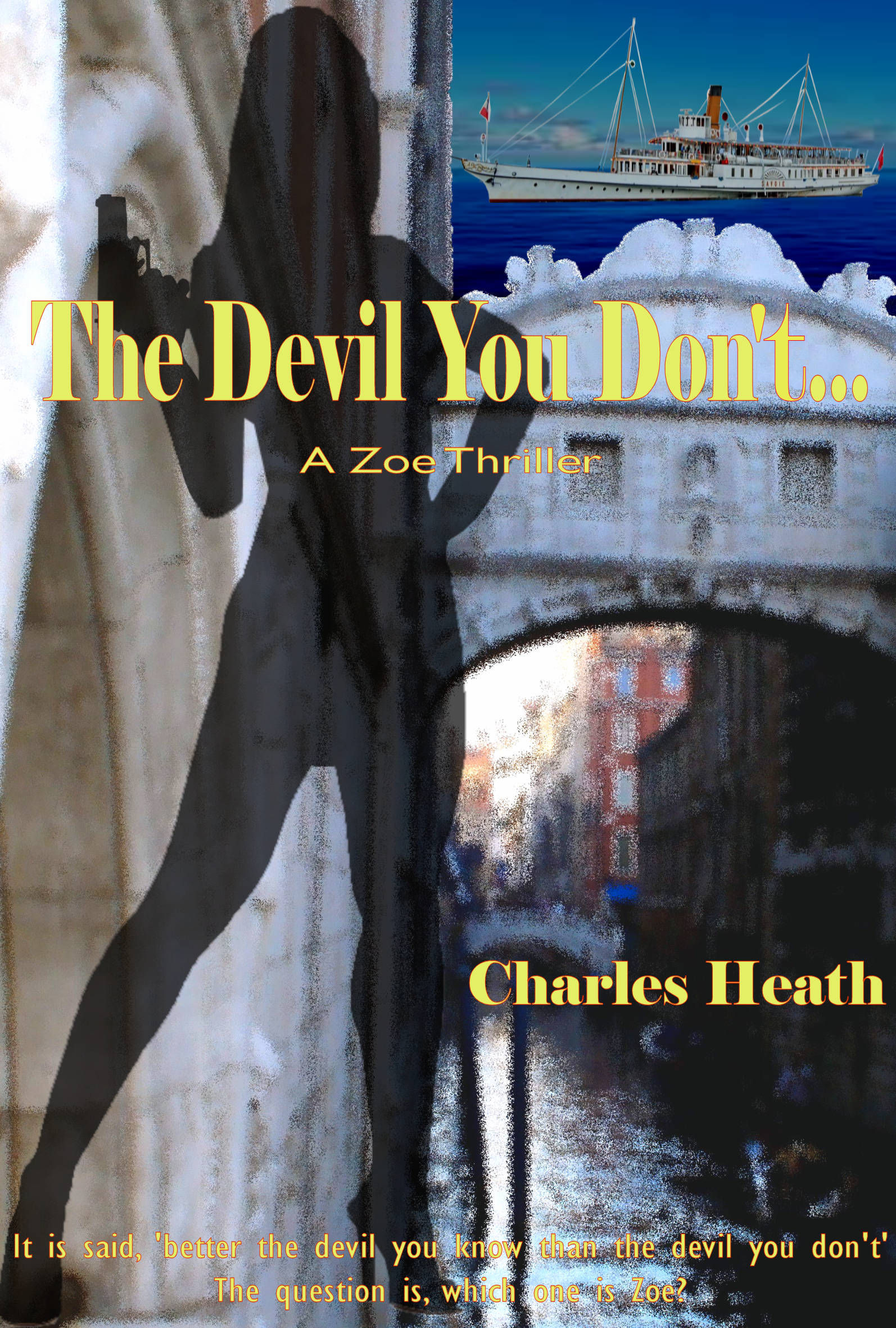
Perhaps not, but now seems to be an appropriate time, nearing the age of 72, to take stock.
We have achieved a lot in the last twenty or so years once the children have grown up and can look after themselves.
Unlike a lot of more modern couples who are travelling in their 20s and 30s and then having children, we chose to do it the other way around.
To me, it seemed easier to deal with teenagers when we were in our 40s rather than our 60s. With the benefit of hindsight, I can truthfully say we were right.
We were older and wiser when we travelled and more aware of the dangers around us, sometimes overlooked or ignored by a youthful devil-may-care attitude.
But, in saying that ….
No, I don’t think I’ll be getting to see Mt Kilimanjaro, observing the wild animals in the Serengeti, climbing Mt Everest, or seeing the ancient pyramids.
But, if it is ever possible before I die, I still want to go to the Greek Islands, and, Santorini is at the top of my travel bucket list.
We’ve been to London. We’ve been to Paris and Euro Disney. We’ve been to Rome and seen the ancient ruins. We’ve been to Vienna, Schönbrunn Palace, and, particularly for us, a visit to Swarovski crystal world, near Innsbruck, we’ve been to Salzburg, and been on the Sound of Music tour.
We’ve been to Florence and loved it, we’ve been to Venice and loved that too, and we’ve spent a few days in the heart of Tuscany, and want to go back for longer, much longer.
In fact, that’s the second item on the travel bucket list.
We’ve also been to Singapore and Hong Kong, at first out of necessity as an airline stopover, but then we went back to see the city and tourist, and non-tourist attractions.
I will not forget staying at the Hong Kong Conrad Hotel as a Diamond Hilton Honors member. Oh, the memories.
We’ve also stayed on the French Riviera, in a timeshare apartment in Antibes where every morning when out back you had a view of the shimmering Mediterranean if the sun was out.
Nice, Cannes, Monte Carlo, the billionaire’s yachts in Antibes harbour, Monte Carlo, and ‘that’ casino, taking the same drive along the coast as Grace Kelly did in To Catch a Thief, and feeling like James Bond arriving for a new adventure, minus the half-million-dollar sports car.
But now, crashing back to earth with an extremely hard thump ….
Travel in the future is looking difficult for both of us, not only financially but from a health aspect. We are both not as sprightly as we used to be.
Yet given the restraints and if it is at all possible, aside from the Greek Islands and Tuscany, the next items on the list are:
Germany, visiting both Berlin, from a Cold War aspect, the Brandenburg gate springs to mind, and Munich at the time of the Octoberfest. As a beer drinker that is also high on my bucket list.
Scotland, more so since we’ve started watching Outlander, and besides being a beer drinker, I am also partial to a good Single Malt, the Whiskey Trail.
Ireland, because my wife’s previous name was Murphy and at some point, in the long distant past some relatives emigrated to Australia, and she would like to visit the country of her forebears.
But with the current state of the world, our health issues, and that all-important requisite money, or the lack of it, perhaps it’s time to visit other parts of our own country.
Perhaps it’s time to do a culinary trip, particularly down south. It’s practical, achievable, and safe.
The Power of Tropes: Why Cliffhangers, Third-Act Twists, and the Hero’s Quest Still Rule Storytelling
As writers, we all chase the holy grail of absolute originality. We want to craft something so entirely unprecedented that it leaves readers breathless, wondering, “How on earth did they think of that?”
However, in the pursuit of being unique, it’s easy to slip into the writing morass—that confusing, overly abstract swamp where narratives become so convoluted that they alienate the reader entirely.
The truth? Tropes aren’t the enemy of creativity; they are its foundation. Tropes are the shared language between storyteller and audience. When used skillfully, time-tested devices like cliffhangers, third-act twists, and the hero’s quest act as narrative anchor points. They keep readers turning pages while giving you a sturdy framework to inject your own voice and subvert expectations.
Let’s break down three of the most powerful storytelling tropes, exploring the distinct advantages and disadvantages of each, and how you can use them without falling into clichés.
1. The Cliffhanger: The Ultimate Page-Turner
Think of the classic serialised novels of the 19th century or modern prestige television: just as the tension reaches a fever pitch, bam—fade to black. A cliffhanger abruptly halts the narrative at a moment of high suspense, leaving the ultimate fate of the characters hanging in the balance.
The Advantages:
Instant Engagement: Cliffhangers hijack our psychological need for closure (known as the Zeigarnik effect). Readers remember uncompleted tasks and unresolved plots much better than finished ones, making it nearly impossible to put the book down.
Momentum: They bridge the gap between chapters, episodes, or books. In serialised fiction or indie publishing, a well-placed cliffhanger is your best tool for securing immediate pre-orders for the sequel.
The Disadvantages:
Reader Frustration: If overused or deployed cheaply, cliffhangers can feel manipulative. When every single chapter ends with a manufactured crisis that is immediately resolved in the next sentence, readers lose trust in the narrative stakes.
The “Cheap Trick” Trap: Relying solely on cliffhangers can mask lazy plotting. If the core narrative arc isn’t compelling on its own, a cliffhanger is just a Band-Aid slapped over a boring story.
Pro Tip: Use cliffhangers sparingly and ensure they emerge naturally from the plot. A true cliffhanger should answer one major question while brilliantly spawning two more.
2. The Third-Act Twist: The Perspective Shifter
Positioned just as the story hurtles toward its climax, the third-act twist turns everything the reader thought they knew completely upside down. Think of The Sixth Sense, Gone Girl, or Shutter Island. Suddenly, clues that were hiding in plain sight take on a terrifying or triumphant new meaning.
The Advantages:
High Re-readability: A masterfully executed twist rewards the reader. Once the secret is out, looking back at the narrative jigsaw puzzle and seeing how the pieces fit together is one of the most deeply satisfying experiences a reader can have.
Emotional Resonance: A great twist doesn’t just shock; it changes the stakes. It forces the protagonist (and the audience) to re-evaluate their journey, often elevating a standard plot into a profound thematic statement.
The Disadvantages:
The “Come Out of Nowhere” Problem: If a twist has no foreshadowing, it stops being clever and starts looking like cheating. Readers hate feeling tricked by information the author withheld just to pull a fast one.
Predictability: Conversely, because third-act twists are so ubiquitous, seasoned readers can often spot them a mile away. If your twist relies on an amnesiac narrator, a secret twin, or “it was all a dream,” genre-savvy readers will guess it by page fifty.
Pro Tip: Play fair. Hide your clues in moments of high action so the reader’s attention is divided. When the twist drops, the reader should slap their forehead and say, “Of course! It was right there the whole time!”
3. The Hero’s Quest: The Blueprint of Human Myth
From The Odyssey and The Lord of the Rings to Star Wars and The Hunger Games, the hero’s quest (often mapped out as Joseph Campbell’s Hero’s Journey) is the undisputed heavyweight champion of storytelling structures. A protagonist is called to adventure, crosses a threshold, faces trials, undergoes a profound transformation, and returns home forever changed.
The Advantages:
Universal Resonance: The hero’s quest mirrors the human condition. We are all striving to grow, overcome obstacles, and find our place in the world. Because of this, the quest structure speaks directly to our primal emotional wiring.
Built-in Character Arcs: The structure forces your protagonist to change. By putting them through a gauntlet of external trials that reflect their internal flaws, you guarantee a deeply satisfying character arc.
The Disadvantages:
Formulaic Fatigue: Because it is so ubiquitous, the quest can easily feel paint-by-numbers. If you hit every single milestone of the Hero’s Journey without subverting any expectations, your story risks feeling like a generic clone of a thousand other books.
Scope Creep: Quests are naturally sprawling. It is very easy to get bogged down in world-building, lore, and “fetch quests” that stall the narrative momentum and exhaust the reader.
Pro Tip: Subvert the milestones. Maybe your hero refuses the call and stays home, changing their small corner of the world instead. Or perhaps the mentor figure turns out to be the ultimate antagonist. Give the familiar skeleton some entirely new skin.
Conclusion: Embrace the Tropes, Find Your Voice
Tropes are not a cage; they are tools. Cliffhangers keep the pages turning, third-act twists blow the reader’s mind, and the hero’s quest provides a resonant emotional backbone.
Don’t be afraid to lean into these time-tested traditions. Readers want the comfort of the familiar, provided you deliver it with a fresh voice, sharp prose, and genuine emotional stakes. Use these tropes as your foundation, and let your unique perspective be the architecture that brings the house down.
What is your favorite trope to write or read? Do you love a good plot twist, or do you prefer a classic epic journey? Let us know in the comments below!
There is that biography that sits on the inside of the dustcover of your book, slightly more impressive than that on X. What are the requirements?
…
That’s a fantastic point, and you’ve hit on the core difference between marketing copy (the X bio) and the author’s professional narrative (the book dust jacket bio).
The dust jacket biography, often called the Author Flap Copy or Jacket Copy, has a completely different purpose, format, and tone than the 160-character X bio. It serves as an authoritative statement to both readers and the book industry.
Key Differences in Purpose and Tone
Feature
X (Twitter) Bio (160 Characters)
Book Dust Jacket Bio (Approx. 150-250 Words)
Primary Goal
Acquisition & Engagement: Get a quick follow and signal the type of content the user tweets.
Authority & Trust: Validate the author’s expertise and establish their professional credentials.
Perspective
Often First-Person (“I write…”) to establish a personal connection.
Almost always Third-Person (“She lives in…”, “He is a…”) to create an objective, authoritative voice.
Tone
Conversational, Witty, Casual, or Punchy.
Formal, Professional, Established, and Narrative-Driven.
Focus
Current interests, latest projects, and a personal flair.
The author’s full professional history, prior publications, and relevant background.
Essentials for the Dust Jacket Biography
Since the book flap bio has a generous word count (relative to X), it functions as a short professional narrative. It should ideally include the following five components:
1. The Opening Hook (Name & Residency)
Start with the author’s full name and their geographic context, often framed by a sentence that establishes their vocation.
Example: Dr. Alana Chen is a professor of history at Yale University and a renowned specialist in Cold War espionage.
2. Relevant Credentials and Expertise
This is where the biography justifies why the author is the person who should be writing this particular book.
Non-Fiction: Include academic degrees, professional roles, awards, and relevant real-world experience (e.g., “A former intelligence analyst,” “Holds a PhD in Astrophysics,” “Co-founder of the global non-profit…”).
Fiction: Mention prior successful novels, major literary awards, or specific background that lends authenticity to the story (e.g., “Her short stories have appeared in The New Yorker,” “A three-time winner of the Edgar Award”).
3. Prior Work and Social Proof
List a maximum of two or three previous major works to demonstrate a history of publication and success.
Example: She is the author of the critically acclaimed novels, The Silicon Fog and The Memory Architect.
4. Personal/Relatable Detail
A single sentence to humanise the author and make them relatable to the reader. This is often an interest, a pet, or a detail about their family life.
Example: When not researching ancient civilisations, she enjoys hiking the trails near her home with her two rescue dogs.
5. Current Location
The final line often returns to their place of residence to provide a grounding detail.
Example: He currently lives in London. (This is often stylised to be the last, standalone line.)
A Day in Venice: Making the Most of Your 24-Hour Stopover
Venice, the City of Water, is a place that has captivated the hearts of travellers for centuries. With its stunning architecture, rich history, and unique culture, it’s no wonder that Venice is a top destination for many. But what if you only have a day to spend in this enchanting city? Is it possible to make the most of your 24-hour stopover and create unforgettable memories? The answer is yes, and it all starts with visiting one iconic place: St. Mark’s Square.
The Heart of Venice: St. Mark’s Square
Located in the heart of Venice, St. Mark’s Square (Piazza San Marco) is the city’s most famous landmark and a must-visit destination for any traveller. This stunning square is surrounded by breathtaking architecture, including the magnificent St. Mark’s Basilica, the Doge’s Palace, and the Campanile di San Marco (St. Mark’s Bell Tower). As you step into the square, you’ll be struck by the sheer beauty and grandeur of your surroundings.
Why St. Mark’s Square is a Must-Visit
So, what makes St. Mark’s Square the perfect place to visit during your one-day stopover in Venice? Here are just a few reasons:
Unparalleled Architecture: The square is home to some of the most stunning examples of Byzantine architecture in the world, including the intricate mosaics and golden domes of St. Mark’s Basilica.
Rich History: St. Mark’s Square has been the centre of Venetian life for centuries, with a history dating back to the 9th century. You can almost feel the weight of history as you walk through the square.
Cultural Significance: The square is a hub of cultural activity, with street performers, musicians, and artists adding to the lively atmosphere.
Accessibility: St. Mark’s Square is easily accessible by vaporetto (water bus) or on foot, making it a convenient destination for travellers with limited time.
Tips for Visiting St. Mark’s Square
To make the most of your visit to St. Mark’s Square, here are a few tips to keep in mind:
Arrive Early: Get to the square early in the morning to avoid the crowds and enjoy a more peaceful atmosphere.
Dress Modestly: Remember to dress modestly when visiting the basilica, as it’s a place of worship.
Take a Guided Tour: Consider taking a guided tour of the square and its surrounding attractions to get a deeper understanding of the history and culture.
Enjoy the Views: Don’t forget to take in the stunning views of the square from the top of the Campanile di San Marco, which offers breathtaking vistas of the city.
Conclusion
In conclusion, St. Mark’s Square is the perfect destination for travellers with a one-day stopover in Venice. With its stunning architecture, rich history, and cultural significance, this iconic square is sure to leave a lasting impression. By visiting St. Mark’s Square, you’ll be able to experience the essence of Venice and create unforgettable memories of your time in this enchanting city. So, make the most of your 24-hour stopover and head to St. Mark’s Square – you won’t regret it!
Now, brevity is something that I have not been able to fully wrap my head around.
The dictionary explains Brevity as
‘concise and exact use of words in writing and speech’
So…
I remember working with a writer a long time ago who explained certain authors’ styles, and for James A Michener of Hawaii fame, he said Michener wrote sentences instead of words, paragraphs instead of sentences, pages instead of paragraphs and chapters instead of pages.
It was a little harsh considering I’d just read the book and had liked it, despite its length and the time it took.
But some time later I realised he was not criticising Michener, but trying to tell me, in his, what I came to discover, interesting way, that I should strive to write more compactly.
I then came across a book by Brian Callison which was exactly that, the concise version, a story that fit into about 200 pages.
That too was a good book, and it took me a day to read it, and by his use of that economy of words, it read quickly.
Of course, I have tried over the years to emulate both styles, and to a certain degree, failing, because I think I have created my own style which is somewhere in between.
Still, when editing, it is always in the back of my mind that I should be
Using words instead of sentences
Using sentences instead of paragraphs
Using paragraphs instead of pages, and
Using pages instead of chapters.
The chapters, he said, with an air of amusement, will always take care of themselves.
David is a man troubled by a past he is trying to forget.
Susan is rebelling against a life of privilege and an exasperated mother who holds a secret that will determine her daughter’s destiny.
They are two people brought together by chance. Or was it?
When Susan discovers her mother’s secret, she goes in search of the truth that has been hidden from her since the day she was born.
When David realizes her absence is more than the usual cooling off after another heated argument, he finds himself being slowly drawn back into his former world of deceit and lies.
Then, back with his former employers, David quickly discovers nothing is what it seems as he embarks on a dangerous mission to find Susan before he loses her forever.
Parisian Odyssey: Making Memories in 24 Hours at the Eiffel Tower Subtitle: How to Craft an Unforgettable Day in the City of Light
Paris—the city where every cobbled street hums with history, every café table holds a story, and every landmark feels plucked from a dream. But when time is your most coveted luxury (and you’re stuck with just 24 hours), where do you begin? While the Louvre, Notre-Dame, and Montmartre all clamour for attention, there’s one icon that transcends mere sightseeing: the Eiffel Tower. More than a landmark, it’s the heartbeat of Paris. Here’s how to make your brief stopover a day you’ll remember forever.
Morning: Conquer the Iron Lady
Start your day early at the Eiffel Tower to avoid crowds. A pre-booked ticket to the top is non-negotiable—trust us, skipping the queue will save precious minutes. Ascend the 125 meters to the second floor for a panoramic view of the city: the Seine slicing through neighbourhoods, the distant dome of Sacré-Cœur, and the green sprawl of the Bois de Boulogne. If you’re energetic, the 164 steps to the first level (1,710 total to the top) are free, though the lift is worth it for efficiency.
Pro Tip: Grab a pastis or croissant from one of the restaurants on the first floor. It’s breakfast with a view!
Midday: Stroll the Champs-Élysées Backdrop
The Eiffel Tower isn’t an island—it’s a focal point for some of Paris’s most iconic scenery. Walk west toward the Champs-Élysées, a 1.2-mile boulevard that’s the epitome of Parisian glamour. Stop at the Arc de Triomphe for a photo (and climb for an even more divine view), then cruise past luxury shops like Dior and Louis Vuitton. You don’t need to spend a cent—just bask in the je ne sais quoi of Parisian elegance.
Unexpected Detour: Veer south to Trocadéro Gardens, a sprawling park with fountains and shaded paths. It’s a peaceful respite and the perfect spot to picnic with a baguette and fromage from a nearby market.
Afternoon: Seine Secrets and Hidden Gems
By 3 PM, head to the Seine River. The Eiffel Tower is visible from nearly every bridge here, but two spots are must-sees:
Pont d’Iéna (military museum) for a photo-perfect view of the tower against the sunset.
Rive Gauche Promenade for a leisurely walk past Left Bank cafés and the Institut de France.
If time allows, hop on a 1-hour Seine River cruise. As the boat glides past bridges and monuments, the Eiffel Tower will loom like a guardian, its silhouette contrasting with Haussmann-era architecture.
Evening: Twilight Magic and Farewell Glows
As dusk falls, make your way to Port de la Conférence (just south of the Eiffel Tower) or Pont National. Here, you’ll witness the tower’s daily ritual: a sparkling display every hour, where over 20,000 bulbs twinkle for five minutes. It’s romantic, awe-inspiring, and utterly unique to Paris.
Culinary Finale: Dine at a Seine-side restaurant like Le Jules Verne (inside the Eiffel Tower, reservations essential) or Café de l’Escargot for a jazz-tinged bistro vibe. Either way, you’ll cap off your day with the tower as your backdrop.
Why the Eiffel Tower?
In a day, you can’t do everything in Paris. You can’t visit every museum, every bakery, or every cabaret. But with the Eiffel Tower as your anchor, you’ll experience the city’s soul:
Iconic Energy: It’s the symbol of Paris you’ll recognise in movies, music, and literature.
Versatile Vibe: From bustling tourist hub to tranquil riverside retreat, it adapts to your dream.
Time Efficiency: Its centrality lets you explore adjacent neighbourhoods without exhausting yourself.
A 24-hour stopover is fleeting, but a day spent weaving through the Eiffel Tower’s orbit? That’s an hourglass filled with light, history, and memories.
Final Thought: Paris isn’t just seen—it’s felt. Choose the Eiffel Tower, and let it sweep you off your feet. After all, you’re not just visiting a city. You’re stepping into a masterpiece.
To write a private detective serial has always been one of the items at the top of my to-do list, though trying to write novels and a serial, as well as a blog, and maintain a social media presence, well, you get the idea.
But I made it happen, from a bunch of episodes I wrote a long, long time ago, used these to start it, and then continued on, then as now, never having much of an idea where it was going to end up, or how long it would take to tell the story.
That, I think, is the joy of ad hoc writing, even you, as the author, have as much of an idea of where it’s going as the reader does.
It’s basically been in the mill since 1990, and although I finished it last year, it looks like the beginning to end will have taken exactly 30 years. Had you asked me 30 years ago if I’d ever get it finished, the answer would be maybe?
My private detective, Harry Walthenson
I’d like to say he’s from that great literary mould of Sam Spade, or Mickey Spillane, or Philip Marlowe, but he’s not.
But I’ve watched Humphrey Bogart play Sam Spade with much interest, and modelled Harry and his office on it. Similarly, I’ve watched Robert Micham play Phillip Marlow with great panache, if not detachment, and added a bit of him to the mix.
Other characters come into play, and all of them, no matter what period they’re from, always seem larger than life. I’m not above stealing a little of Mary Astor, Peter Lorre or Sidney Greenstreet, to breathe life into beguiling women and dangerous men alike.
Then there’s the title, like
The Case of the Unintentional Mummy – this has so many meanings in so many contexts, though I imagine that back in Hollywood in the ’30s and ’40s, this would be excellent fodder for Abbott and Costello
The Case of the Three-Legged Dog – Yes, I suspect there may be a few real-life dogs with three legs, but this plot would involve something more sinister. And if made out of plaster, yes, they’re always something else inside.
But for mine, to begin with, it was “The Case of the …”, because I had no idea what the case was going to be about, well, I did, but not specifically.
Then I liked the idea of calling it “The Case of the Brothers’ Revenge” because I began to have a notion there was a brother no one knew about, but that’s stuff for other stories, not mine, so then it went the way of the others.
Now it’s called ‘A Case of Working With the Jones Brothers’, finished the first three drafts, and I am at the editor for the last reading.
I have high hopes of publishing it in mid-2026. It even has a cover.
The Power of Tropes: Why Cliffhangers, Third-Act Twists, and the Hero’s Quest Still Rule Storytelling
As writers, we all chase the holy grail of absolute originality. We want to craft something so entirely unprecedented that it leaves readers breathless, wondering, “How on earth did they think of that?”
However, in the pursuit of being unique, it’s easy to slip into the writing morass—that confusing, overly abstract swamp where narratives become so convoluted that they alienate the reader entirely.
The truth? Tropes aren’t the enemy of creativity; they are its foundation. Tropes are the shared language between storyteller and audience. When used skillfully, time-tested devices like cliffhangers, third-act twists, and the hero’s quest act as narrative anchor points. They keep readers turning pages while giving you a sturdy framework to inject your own voice and subvert expectations.
Let’s break down three of the most powerful storytelling tropes, exploring the distinct advantages and disadvantages of each, and how you can use them without falling into clichés.
1. The Cliffhanger: The Ultimate Page-Turner
Think of the classic serialised novels of the 19th century or modern prestige television: just as the tension reaches a fever pitch, bam—fade to black. A cliffhanger abruptly halts the narrative at a moment of high suspense, leaving the ultimate fate of the characters hanging in the balance.
The Advantages:
Instant Engagement: Cliffhangers hijack our psychological need for closure (known as the Zeigarnik effect). Readers remember uncompleted tasks and unresolved plots much better than finished ones, making it nearly impossible to put the book down.
Momentum: They bridge the gap between chapters, episodes, or books. In serialised fiction or indie publishing, a well-placed cliffhanger is your best tool for securing immediate pre-orders for the sequel.
The Disadvantages:
Reader Frustration: If overused or deployed cheaply, cliffhangers can feel manipulative. When every single chapter ends with a manufactured crisis that is immediately resolved in the next sentence, readers lose trust in the narrative stakes.
The “Cheap Trick” Trap: Relying solely on cliffhangers can mask lazy plotting. If the core narrative arc isn’t compelling on its own, a cliffhanger is just a Band-Aid slapped over a boring story.
Pro Tip: Use cliffhangers sparingly and ensure they emerge naturally from the plot. A true cliffhanger should answer one major question while brilliantly spawning two more.
2. The Third-Act Twist: The Perspective Shifter
Positioned just as the story hurtles toward its climax, the third-act twist turns everything the reader thought they knew completely upside down. Think of The Sixth Sense, Gone Girl, or Shutter Island. Suddenly, clues that were hiding in plain sight take on a terrifying or triumphant new meaning.
The Advantages:
High Re-readability: A masterfully executed twist rewards the reader. Once the secret is out, looking back at the narrative jigsaw puzzle and seeing how the pieces fit together is one of the most deeply satisfying experiences a reader can have.
Emotional Resonance: A great twist doesn’t just shock; it changes the stakes. It forces the protagonist (and the audience) to re-evaluate their journey, often elevating a standard plot into a profound thematic statement.
The Disadvantages:
The “Come Out of Nowhere” Problem: If a twist has no foreshadowing, it stops being clever and starts looking like cheating. Readers hate feeling tricked by information the author withheld just to pull a fast one.
Predictability: Conversely, because third-act twists are so ubiquitous, seasoned readers can often spot them a mile away. If your twist relies on an amnesiac narrator, a secret twin, or “it was all a dream,” genre-savvy readers will guess it by page fifty.
Pro Tip: Play fair. Hide your clues in moments of high action so the reader’s attention is divided. When the twist drops, the reader should slap their forehead and say, “Of course! It was right there the whole time!”
3. The Hero’s Quest: The Blueprint of Human Myth
From The Odyssey and The Lord of the Rings to Star Wars and The Hunger Games, the hero’s quest (often mapped out as Joseph Campbell’s Hero’s Journey) is the undisputed heavyweight champion of storytelling structures. A protagonist is called to adventure, crosses a threshold, faces trials, undergoes a profound transformation, and returns home forever changed.
The Advantages:
Universal Resonance: The hero’s quest mirrors the human condition. We are all striving to grow, overcome obstacles, and find our place in the world. Because of this, the quest structure speaks directly to our primal emotional wiring.
Built-in Character Arcs: The structure forces your protagonist to change. By putting them through a gauntlet of external trials that reflect their internal flaws, you guarantee a deeply satisfying character arc.
The Disadvantages:
Formulaic Fatigue: Because it is so ubiquitous, the quest can easily feel paint-by-numbers. If you hit every single milestone of the Hero’s Journey without subverting any expectations, your story risks feeling like a generic clone of a thousand other books.
Scope Creep: Quests are naturally sprawling. It is very easy to get bogged down in world-building, lore, and “fetch quests” that stall the narrative momentum and exhaust the reader.
Pro Tip: Subvert the milestones. Maybe your hero refuses the call and stays home, changing their small corner of the world instead. Or perhaps the mentor figure turns out to be the ultimate antagonist. Give the familiar skeleton some entirely new skin.
Conclusion: Embrace the Tropes, Find Your Voice
Tropes are not a cage; they are tools. Cliffhangers keep the pages turning, third-act twists blow the reader’s mind, and the hero’s quest provides a resonant emotional backbone.
Don’t be afraid to lean into these time-tested traditions. Readers want the comfort of the familiar, provided you deliver it with a fresh voice, sharp prose, and genuine emotional stakes. Use these tropes as your foundation, and let your unique perspective be the architecture that brings the house down.
What is your favorite trope to write or read? Do you love a good plot twist, or do you prefer a classic epic journey? Let us know in the comments below!
By the time I returned to the Savoie, the rain had finally stopped, and there was a streak of blue sky to offer some hope that the day would improve.
The ship was not crowded, the possibility of bad weather perhaps holding back potential passengers. Of those I saw, a number of them would be aboard for the lunch by Phillippe Chevrier. I thought about it, but the Concierge had told me about several restaurants in Yvoire and had given me a hand-drawn map of the village. I think he came from the area because he spoke with the pride and knowledge of a resident.
I was looking down from the upper deck observing the last of the boarding passengers when I saw a woman, notable for her red coat and matching shoes, making a last-minute dash to get on board just before the gangway was removed. In fact, her ungainly manner of boarding had also captured a few of the other passengers’ attention. Now they would have something else to talk about, other than the possibility of further rain.
I saw her smile at the deckhand, but he did not smile back. He was not impressed with her bravado, perhaps because of possible injury. He looked at her ticket, then nodded dismissively and went back to his duties in getting the ship underway. I was going to check the departure time, but I, like the other passengers, had my attention diverted to the woman in red.
From what I could see, there was something about her. It struck me when the light caught her as she turned to look down the deck, giving me a perfect profile. I was going to say she looked foreign, but here, as in almost anywhere in Europe, that described just about everyone. Perhaps I was just comparing her to Phillipa, so definitively British, whereas this woman was very definitely not.
She was perhaps in her 30’s, slim or perhaps the word I’d use was lissom, and had the look and manner of a model. I say that because Phillipa had dragged me to most of the showings, whether in Milan, Rome, New York, London, or Paris. The clothes were familiar, and in the back of my mind, I had a feeling I’d seen her before.
Or perhaps, to me, all models looked the same.
She looked up in my direction, and before I could divert my eyes, she locked on. I could feel her gaze boring into me, and then it was gone as if she had been looking straight through me. I remained out on deck as the ship got underway, watching her disappear inside the cabin. My curiosity was piqued, so I decided to keep an eye out for her.
I could feel the coolness of the air as the ship picked up speed, not that it was going to be very fast. With stops, the trip would take nearly two hours to get to my destination. It would turn back almost immediately, but I was going to stay until the evening when it returned at about half eight. It would give me enough time to sample the local fare and take a tour of the medieval village.
Few other passengers ventured out on the deck, most staying inside or going to lunch. After a short time, I came back down to the main deck and headed forward. I wanted to clear my head by concentrating on the movement of the vessel through the water, breathing in the crisp, clean air, and letting the peacefulness of the surroundings envelope me.
It didn’t work.
I knew it wouldn’t be long before I started thinking about why things hadn’t worked and what part I played in it. And the usual question that came to mind when something didn’t work out. What was wrong with me?
I usually blamed it on my upbringing.
I had one of those so-called privileged lives, a nanny till I was old enough to go to boarding school, then sent to the best schools in the land. There I learned everything I needed to be the son of a Duke, or, as my father called it in one of his lighter moments, nobility in waiting.
Had this been five or six hundred years ago, I would have needed to have sword and jousting skills, or if it had been a few hundred years later, a keen military mind. If nothing else, I could ride a horse and go on hunts, or did until they became not the thing to do.
I learned six languages, and everything I needed to become a diplomat in the far-flung British Empire, except the Empire had become the Commonwealth, and then, when no one was looking, Britain’s influence in the world finally disappeared. I was a man without a cause, without a vocation, and no place to go.
Computers were the new vogue, and I had an aptitude for programming. I guess that went hand in hand with mathematics, which, although I hated the subject, I excelled in. Both I and another noble outcast used to toss ideas around in school, but when it came to the end of our education, he chose to enter the public service, and I took a few of those ideas we had mulled over and turned them into a company.
About a year ago, I was made an offer I couldn’t refuse. There were so many zeroes on the end of it I just said yes, put the money into a very grateful bank, and was still trying to come to terms with it.
Sadly, I still had no idea what I was going to do with the rest of my life. My parents had asked me to come back home and help manage the estate, and I did for a few weeks. It was as long as it took for my parents to drive me insane.
Back in the city, I spent a few months looking for a mundane job, but there were very few that suited my qualifications, and the rest I think I intimidated simply because of who I was. In that time, I’d also featured on the cover of the Economist and, through my well-meaning accountant, started involving myself with various charities, earning the title ‘philanthropist’.
And despite all of this exposure, even making one of those ubiquitous ‘eligible bachelor’ lists, I still could not find ‘the one’, the woman I wanted to spend the rest of my life with. Phillipa seemed to fit the bill, but in time, she proved to be a troubled soul with ‘Daddy’ issues. I knew that in building a relationship, compromise was necessary, but with her, in the end, everything was a compromise, and what had happened was always going to be the end result.
It was perhaps a by-product of the whole nobility thing. There was a certain expectation I had to fulfil, to my peers, contemporaries, parents and family, and those who either liked or hated what it represented. The problem was, I didn’t feel like I belonged. Not like my friend from schooldays, and now obscure acquaintance, Sebastian. He had been elevated to his Dukedom early when his father died when he was in his twenties. He had managed to fade from the limelight and was rarely mentioned either in the papers or the gossip columns. He was one of the lucky ones.
I had managed to keep a similarly low profile until I met Phillipa. From that moment, my obscurity disappeared. It was, I could see now, part of a plan put in place by Phillipa’s father, a man who hogged the limelight with his daughter, to raise the profile of the family name and through it their businesses. He was nothing if not the consummate self-advertisement.
Perhaps I was supposed to be the last piece of the puzzle, the attachment to the establishment, that link with a class of people he would not normally get in the front door. There was nothing refined about him or his family, and more than once I’d noticed my contemporaries cringe at the mention of his name, or any reference of my association with him.
Yet could I truthfully say I really wanted to go back to the obscurity I had before Phillipa? For all her faults, there were times when she had been fun to be with, particularly when I first met her, when she had a certain air of unpredictability. That had slowly disappeared as she became part of her father’s plan for the future. She just failed to see how much he was using her.
Or perhaps, over time, I had become cynical.
I thought about calling her. It was one of those moments of weakness when I felt alone, more alone than usual.
I diverted my attention back to my surroundings and the shoreline. Out of the corner of my eye, I could see the woman in the red coat, making a move. The red coat was like a beacon, a sort of fire engine red. It was not the sort of coat most of the women I knew would wear, but on her, it looked terrific. In fact, her sublime beauty was the other attribute that was distinctly noticeable, along with the fact that her hair was short rather than long and jet-black.
I had to wrench my attention away from her.
A few minutes later, several other passengers came out of the cabin for a walk around the deck, perhaps to get some exercise, perhaps checking up on me, or perhaps I was being paranoid. I waited till they passed on their way forward, and I turned and headed aft.
I watched the wake sluicing out from under the stern for a few minutes before retracing my steps to the front of the ship, and there I stood against the railing, watching the bow carve its way through the water. It was almost mesmerising. There, I emptied my mind of thoughts about Phillipa and thoughts about the woman in the red coat.
Until a female voice behind me said, “Having a bad day?”
I started, caught by surprise, and slowly turned. The woman in the red coat had somehow got very close to me without my realising it. How did she do that? I was so surprised I couldn’t answer immediately.
“I do hope you are not contemplating jumping. I hear the water is very cold.”
Closer up, I could see what I’d missed when I saw her on the main deck. There was a slight hint of Chinese, or Oriental, in her, particularly around the eyes, and of her hair, which was jet black. An ancestor twice or more removed had left their mark, not in a dominant way, but more subtly, and easily missed except from a very short distance away, like now.
Other than that, she was quite possibly Eastern European, perhaps Russian, though that covered a lot of territory. The incongruity of it was that she spoke with an American accent and was fluent enough for me to believe English was her first language.
Usually, I could ‘read’ people, but she was a clean slate. Her expression was one of amusement, but with cold eyes. My first thought, then, was to be careful.
“No. Not yet.” I coughed to clear my throat because I could hardly speak. And blushed, because that was what I did when confronted by a woman, beautiful or otherwise.
The amusement gave way to a hint of a smile that brightened her demeanour as a little warmth reached her eyes. “So that’s a maybe. Should I change into my lifesaving gear, just in case?”
It conjured up a rather interesting image in my mind until I reluctantly dismissed it.
“Perhaps I should move away from the edge,” I said, moving sideways until I was back on the main deck, a few feet further away. Her eyes had followed me, and when I stopped, she turned to face me again. She did not move closer.
I realised then she had removed her beret and it was in her left side coat pocket. “Thanks for your concern …?”
“Zoe.”
“Thanks for your concern, Zoe. By the way, my name is John.”
She smiled again, perhaps in an attempt to put me at ease. “I saw you earlier, you looked so sad, I thought …”
“I might throw myself overboard?”
“An idiotic notion, I admit, but it is better to be safe than sorry.”
Then she tilted her head to one side, then the other, looking intently at me. “You seem to be familiar. Do I know you?”
I tried to think of where I may have seen her before, but all I could remember was what I’d thought earlier when I first saw her; she was a model and had been at one of the showings. If she were, it would be more likely she would remember Phillipa, not me. Phillipa always had to sit in the front row.
“Probably not.” I also didn’t mention the fact that she may have seen my picture in the society pages of several tabloid newspapers because she didn’t look the sort of woman who needed a daily dose of the comings and goings, and, more often than not, scandal associated with so-called celebrities.
She gave me a look, one that told me she had just realised who I was. “Yes, I remember now. You made the front cover of the Economist. You sold your company for a small fortune.”
Of course. She was not the first who had recognised me from that cover. It had raised my profile considerably, but not Sternhaven’s. That article had not mentioned Phillipa or her family. I suspect Grandmother had something to do with that, and it was, now I thought about it, another nail in the coffin that was my relationship with Phillipa.
“I wouldn’t say it was a fortune, small or otherwise, just fortunate.” Each time, I found myself playing down the wealth aspect of the business deal.
“Perhaps then, as the journalist wrote, you were lucky. It is not, I think, a good time for internet-based companies.”
The latter statement was an interesting fact, one she read in the Financial Times, which had made that exact comment recently.
“But I am boring you.” She smiled again. “I should be minding my own business and leaving you to your thoughts. I am sorry.”
She turned to leave and took a few steps towards the main cabin.
“You’re not boring me,” I said, thinking I was letting my paranoia get the better of me. It had been Sebastian, on learning of my good fortune, who had warned me against ‘a certain element here and abroad’ whose sole aim would be to separate me from my money. He was not very subtle when he described their methods.
But I knew he was right. I should have let her walk away.
She stopped and turned around. “You seem nothing like the man I read about in the Economist.”
A sudden and awful thought popped into my head. Those words were part of a very familiar opening gambit. “Are you a reporter?”
I was not sure if she looked surprised or amused. “Do I look like one?”
I silently cursed myself for speaking before thinking, and then immediately ignored my own admonishment. “People rarely look like what they are.”
I saw the subtle shake of the head and expected her to take her leave. Instead, she astonished me.
“I fear we have got off on the wrong foot. To be honest, I’m not usually this forward, but you seemed like you needed cheering up when probably the opposite is true. Aside from the fact that this excursion was probably a bad idea. And,” she added with a little shrug, “perhaps I talk too much.”
I was not sure what I thought of her after that extraordinary admission. It was not something I would do, but it was an interesting way to approach someone and have them ignore their natural instinct. I would let Sebastian whisper in my ear for a little longer and see where this was going.
“Oddly enough, I was thinking the same thing. I was supposed to be travelling with my prospective bride. I think you can imagine how that turned out.”
“She’s not here?”
“No.”
“She’s in the cabin?” Her eyes strayed in that direction for a moment, then came back to me. She seemed surprised I might be travelling with someone.
“No. She is back in England, and the wedding is off. So is the relationship. She dumped me by text.”
OK, why was I sharing this humiliating piece of information with her? I still couldn’t be sure she was not a reporter.
She motioned to an empty seat, back from the edge. No walking the plank today. She moved towards it and sat down. She showed no signs of being cold, nor interested in the breeze upsetting her hair. Phillipa would be having a tantrum about now, being kept outside, and freaking out over what the breeze might be doing to her appearance.
I wondered, if only for a few seconds, if she used this approach with anyone else. I guess I was a little different, a seemingly rich businessman alone on a ferry on Lake Geneva, contemplating the way his life had gone so completely off track.
She watched as I sat at the other end of the bench, leaving about a yard between us. After I leaned back and made myself as comfortable as I could, she said, “I have also experienced something similar, though not by text message. It is difficult, the first few days.”
“I saw it coming.”
“I did not.” She frowned, a sort of lifeless expression taking over, perhaps brought on by the memory of what had happened to her. “But it is done, and I moved on. Was she the love of your life?”
OK, that was unexpected.
When I didn’t answer, she said, “I am sorry. Sometimes I ask personal questions without realising what I’m doing. It is none of my business.” She shivered. “Perhaps we should go back inside.”
She stood and held out her hand. Should I take it and be drawn into her web? I thought of Sebastian. What would he do in this situation?
I took her hand in mine and let her pull me gently to my feet. “Wise choice,” she said, looking up at the sky.