I’m back home and this story has been sitting on a back burner for a few months, waiting for some more to be written.
The trouble is, there are also other stories to write, and I’m not very good at prioritising.
But, here we are, a few minutes opened up and it didn’t take long to get back into the groove.
An interrogation and a revelation.
Debriefings were like interrogations, only friendlier. We were trained to withstand interrogation, so it would be interesting to see how I reacted. I had no doubt what some of the questions would be.
While I had a few minutes to myself, sitting down behind a bare metal table on a hard plastic and uncomfortable chair, with a warm cup of station house coffee, to consider the briefing.
Target, male, 6 foot 3 inches, 200 pounds, Caucasian, thought to be from either Russia or Bulgaria, but nothing to define his as such. I had wondered, at the time, what that meant. When I saw him in the alley I knew, then, what was meant, he looked the same as you or me.
No explanation for why he was under surveillance, but we did get a warning that he might be dangerous if he suspected he was being observed. Right about that, given team casualties.
Main objective, who he met, talked to, and where he went, every place, every detail to be noted. The unpredictable explosion threw the whole operation into chaos.
The door opened and a woman, middle-aged, conservatively dressed, walked in, closing it behind her. She sat in the other chair opposite me. She brought a file, thin, and put it in front of her on the table.
“Your name is Sam Jackson?”
“Yes.”
No introductions, nothing, just a start on the questions. No nonsense, but I could see she was very, very angry. With me, or those who had run a failed operation?
“How long have you been with us?”
“Eight months.”
She opened the file and glanced at the piece of paper on top. A minute passed before she closed the file again. “Closer to nine,” she said.
I said nothing. I wasn’t counting the days.
“How many operations have you been on?”
“Six, including this one.”
“Who assigned you to this specific operation?”
“Couldn’t say. I got the usual request via text message to attend a briefing at the midtown office.”
“What was the designated operation name?”
“Chancellery.”
For a brief second, there was a quizzical expression on her face, then it was gone.
“Who was running this operation?”
“Director Severin.”
A full three minutes of silence passed. I thought she was looking at me, the sort of stare that would break a lesser man, but in the end, I think she was looking right through me. I could not read her thoughts, but if I was to guess, they would be rather dark right now.
Then she spoke.
“You should know that there was no Chancellery on the books, and we certainly do not have a Director named Severin.”
Writing should not be motivated by money. It must be for the love of it
…
In my mind, there are two types of writing.
One is where it is done as a paying profession, in which, in most cases, you might be a journalist. It can be a long, hard slog, working away on the bread-and-butter news.
Once you have established a reputation for producing award-winning stories, you can move on to more serious stories. One would assume that’s when you are adequately recompensed commensurate with your ability.
Still, it’s not like writing a string of number one best-sellers and becoming a multi-millionaire. Hard slog and determination to begin with, but as time passes, sometimes the work becomes more pedestrian.
Of course, those number one bestseller books often are borne out of the material used in those halcyon journalistic days and a fitting reward for all the hard work.
This, of course, is not meant to denigrate anyone; it is simply an opinion of some observations I have made over the years. Nor is it sour grapes because I’m not one of those mega-rich authors.
I definitely fit into the second type of writer living in my imagination garret, sacrificing everything for that first brilliant novel
How many times have we seen the spouse work slavishly at two or three jobs just to keep the place going while the struggling writer finishes that great novel?
And more often than not, living it up, having affairs and not really making any progress at all. Or is that the Hollywood trope?
I have written that first novel, and about thirty more, but success eludes me. I’m pragmatic, though. One day, I get my break, but until then, it’s Amazon self-publishing and writing for the love of it, not the money.
It’s true that describes quite a lot of writers put there, the ones that burn the midnight oil because they don’t give up their day job, typically the ones that don’t make an adequate living from book sales.
And yet some do. They are excellent authors, their books are very readable, as good as their number one best-sellers, but can’t quite crack the big time.
These are the people we aspire to become, because those truly wealthy from writing are far and few between.
We had afternoon tea in the lounge several times, and it is very pleasant in winter with the log fires burning.
The interior is still as ornate as it had been in the 1930s. The chairs are very comfortable, and the atmosphere pleasant.
Mount Ngauruhoe can be seen through the window of the lounge. This was used a backdrop in the filming of Lord of the Rings.
But…
This place is the ideal setting for a murder, and I can see a story being written very much in the mold of Agatha Christie, with a couple of amateur sleuths who are staying there, trying to solve the crime.
Given the sort of shows being produced in New Zealand currently, for Acorn and other streaming services, this could be turned into a very pleasant two hour diversion with some very unique New Zealand, and foreign, characters.
Is that depression speaking, or am I just tired from all the late nights?
Unlike most writers, authors and bloggers I don’t have a day job. You could say it’s one of the benefits of getting old, this retirement thing, but after a while, not having a reason to get out of bed starts working on your subconscious.
The idea of having a job, and going to work, is a good reason to drag yourself out of bed every morning. And because of this, the idea of sleeping in takes on a whole new meaning.
You know, I’ll just lie here for a few more minutes, and then I’ll get up. Having turned off the alarm, the eyelids flutter, and before you know it, half an hour had passed, and you wake up in fright, knowing you’re going to be late.
In retirement, that doesn’t happen. There is no alarm, there is no guilty pleasure in spending those extra minutes in bed.
Of course, this tardiness, or lack of desire could be because I find I do my best writing in the dead of night, often not getting to bed before 2 a.m. Last night it was a little later because of a story I’m working on came to life with a new idea.
It had been stagnating because it’s part two and whilst I had an idea about where it was going to go, in the end, we’re off in a different direction, and the words flowed. You just don’t stop writing when you hit a vein.
But this isn’t always the case. This morning I have an excuse to stay in bed, but most others I don’t.
Perhaps I should find something else to do, something that will give me that same reason I used to have to get up every morning.
Or maybe I should be more organized in my retirement life, you know, set a schedule and do things according to a timetable. I was never one for being organized, but perhaps it’s time to start.
Just let me lie here for a few more minutes and think about that.
I’m not one for writing Western, I’ll leave the honours for that to Louis L’Amour, whose acquaintance I made when I saw How the West Was Won on the big screen and then read the book.
That led to reading a few more by Zane Grey, but the stories’ reading, not the visual splendour of the West depicted in these films, made the actors almost secondary.
But my interest in watching Westerns had been fuelled by the fact my parents watched them on TV, though back in those days, they were in black and white, and starred John Wayne, Gary Cooper, Alan Ladd and, later on, Clint Eastwood among a great many others.
But the mainstay of my interest in the archetypal Western centred on John Wayne whose movies may have almost the same plot line, just a substitution of actors and locations.
Often, it was not so much that John Wayne was in it as the actors he surrounded himself with, like Dean Martin, Ricky Nelson, Walter Brennan, and Robert Mitcham, who made the experience all the better.
Films like The Sons of Katie Elder, True Grit, Rio Bravo, and El Dorado.
Who can forget the vast open spaces, the dry dusty streets lined with wooden buildings and the endless walkways that substituted for footpaths? Bars in hotels, rooms overlooking the street, havens for sharpshooters, when bad guys outnumber the good guys, and typically the Sherrif who always faced insurmountable odds.
Or the attacks staged by Indians who were routinely killed, in fact, there was not one film I saw where they ended up winning any battle. Only in recent years did they get a more sympathetic role, one film that comes to mind is Soldier Blue, which may have painted them as savages, but a possible reason why they ended up so.
But for those without Indians, there were plenty of others whose intentions were anything but for the good of the settlers.
A lot of films ended in a classic gunfight. High Noon, 3:10 to Yuma are two, where the story led to gun fights between good and bad in unlikely places like El Dorado or Rio Bravo.
There are countless others I could name, like Shane, or became to be called, the spaghetti Westerns with Clint Eastwood, or finally, The Magnificent Seven, or Once Upon a Time in the West.
All have contributed to a picture in my mind of how the American West was, fearsome men, beleaguered sheriffs, people with good intentions, and those driven by greed and power. All of this plays out in the harshest of conditions where life and death could be determined by a wrong word or a stray bullet.
And let’s not forget the role of the guns, Colt, Winchester, and Remington. And Smith and Wesson, and the gunslingers of the day. Some were good, but most according to the film world were bad.
So, against the lifelong interest of watching and reading about the archetypal view of the old West, shall I attempt to put pen to paper. Thank God it will be a work of fiction because I don’t think there are many who knew what it was really like.
What starts as a search for a missing husband soon develops into an unbelievable story of treachery, lies, and incredible riches.
…
It was meant to remain buried long enough for the dust to settle on what was once an unpalatable truth, when enough time had passed, and those who had been willing to wait could reap the rewards.
The problem was, no one knew where that treasure was hidden or the location of the logbook that held the secret.
At stake, billions of dollars’ worth of stolen Nazi loot brought to the United States in an anonymous tramp steamer and hidden in a specially constructed vault under a specifically owned plot of land on the once docklands of New York.
It may have remained hidden and unknown to only a few, if it had not been for a mere obscure detail being overheard …
… by our intrepid, newly minted private detective, Harry Walthenson …
… and it would have remained buried.
Now, through a series of unrelated events, or are they, that well-kept secret is out there, and Harry will not stop until the whole truth is uncovered.
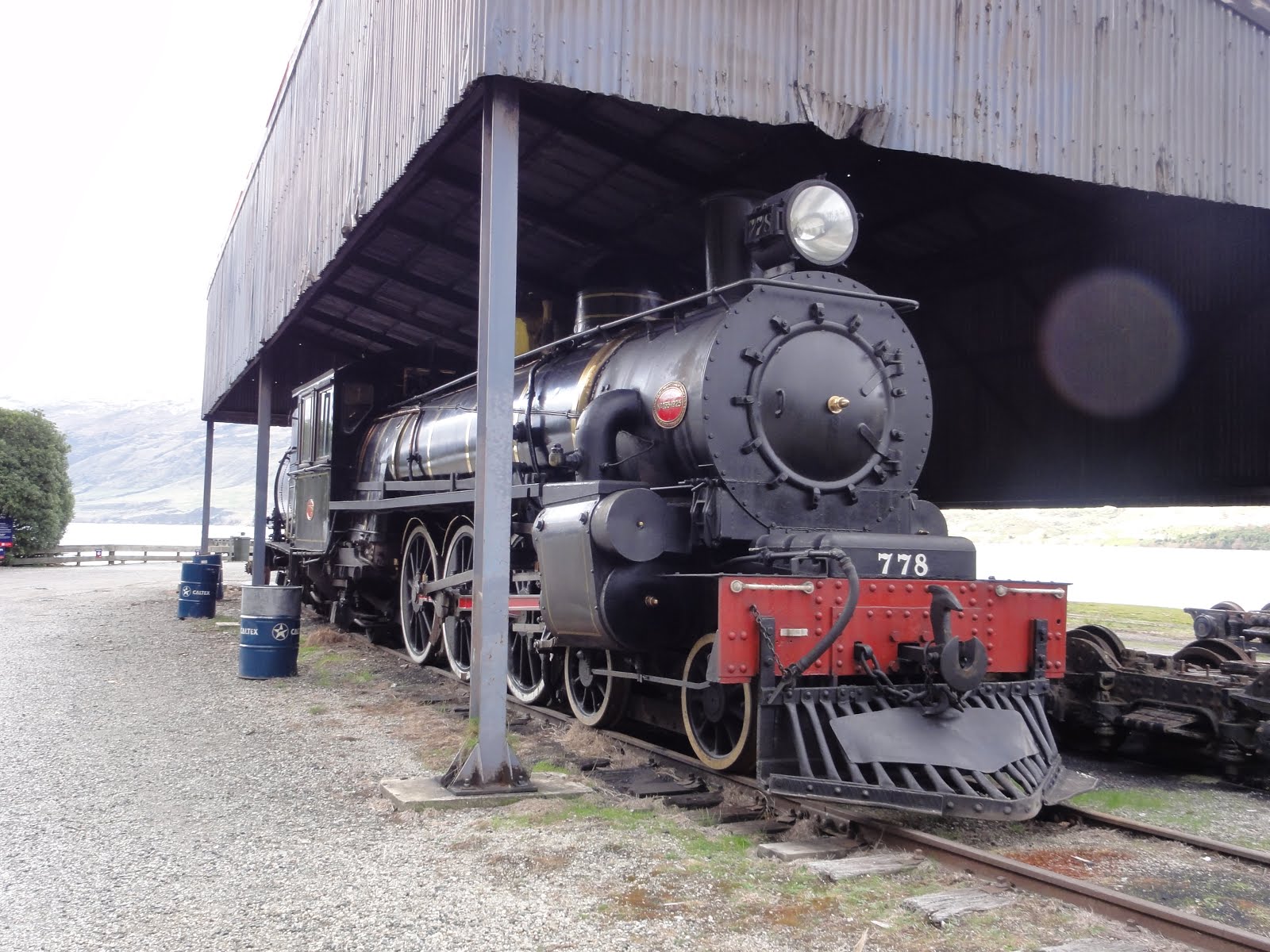
The Kingston Flyer was a vintage train that ran about 14km to Fairlight from Kingston, at the southern end of Lake Wakatipu, and back.
This tourist service was suspended in December 2012 because of locomotive issues.
However, before that, we managed to go on one of the tours, and it was a memorable trip. Trying to drink a cup of tea from the restaurant car was very difficult, given how much the carriages moved around on the tracks.
The original Kingston Flyer ran between Kingston, Gore, Invercargill, and sometimes Dunedin, from the 1890s through to 1957.
There are two steam locomotives used for the Kingston Flyer service, the AB778 starting service in 1925, and the AB795 which started service in 1927.
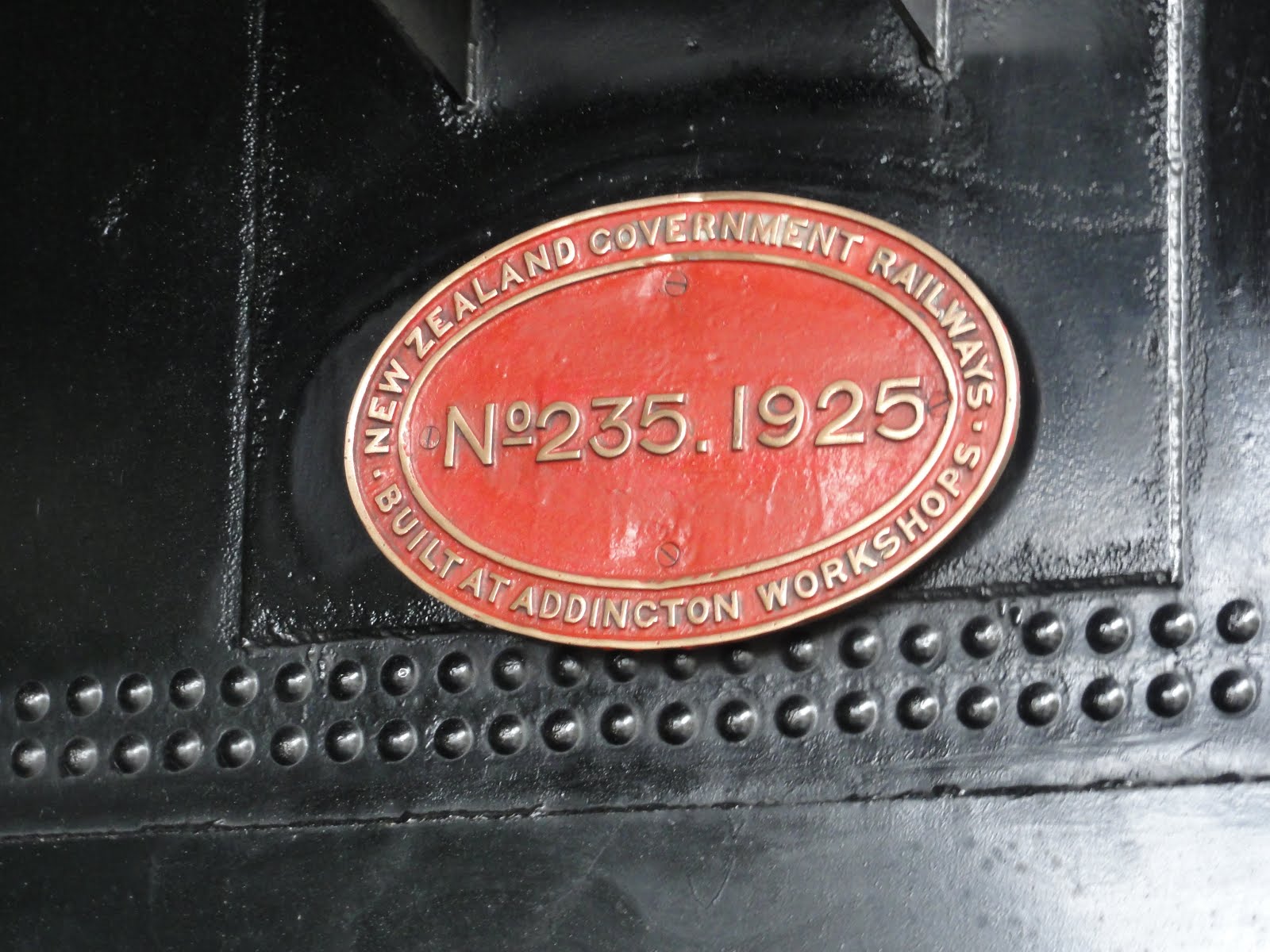
The AB class locomotive was a 4-6-2 Pacific steam locomotive with a Vanderbilt tender, of which 141 were built between 1915 and 1927 some of which by New Zealand Railways Addington Workshops.
No 235 is the builder’s number for the AB778
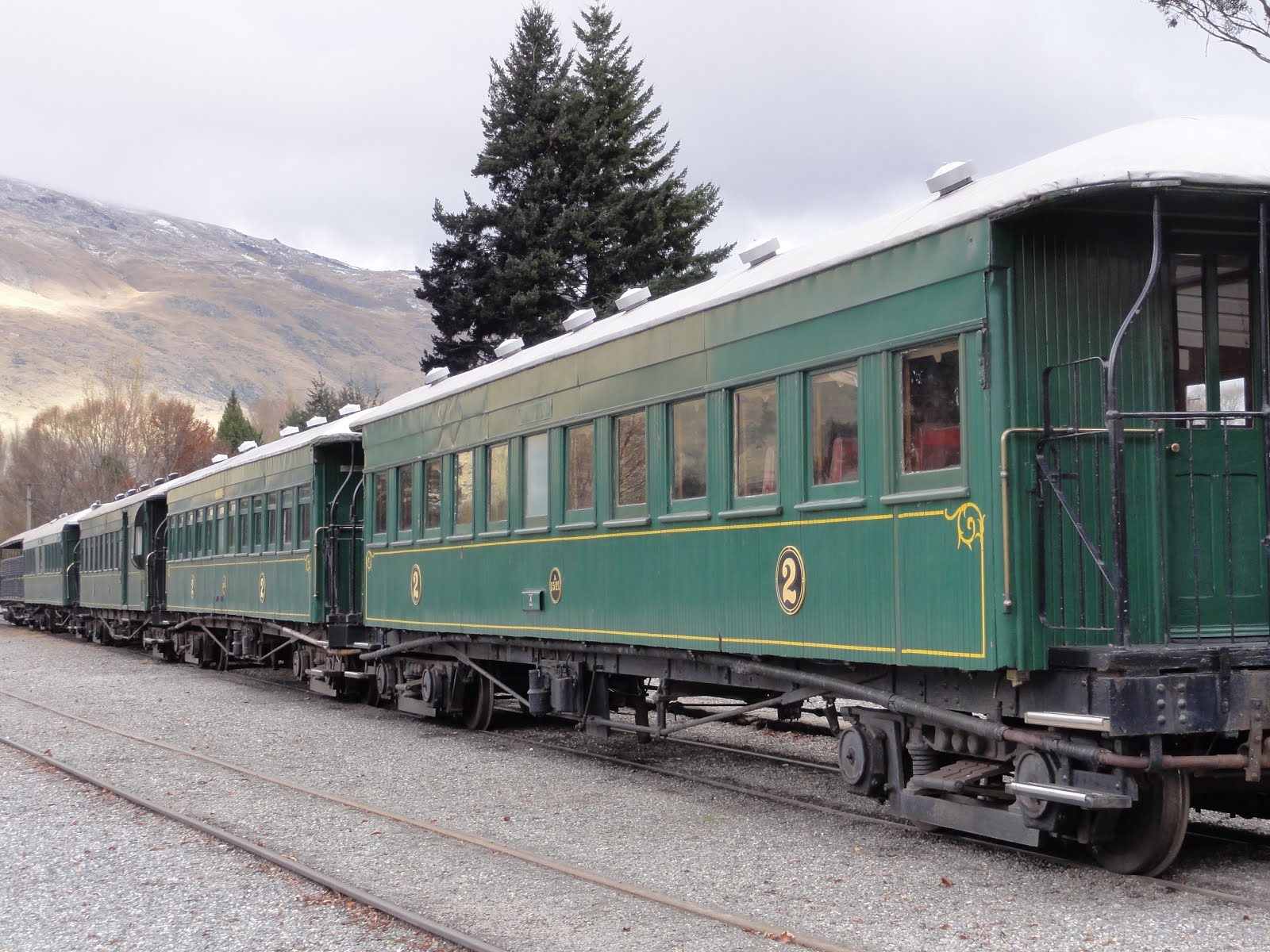
There were seven wooden bodied passenger carriages, three passenger coaches, one passenger/refreshments carriage and two car/vans. The is also a Birdcage gallery coach. Each of the rolling stock was built between 1900 and 1923. They were built at either of Addington, Petone, or Hillside.
I suspect the 2 on the side means second class
The passenger coach we traveled in was very comfortable.
This is one of the guard’s vans, and for transporting cargo.
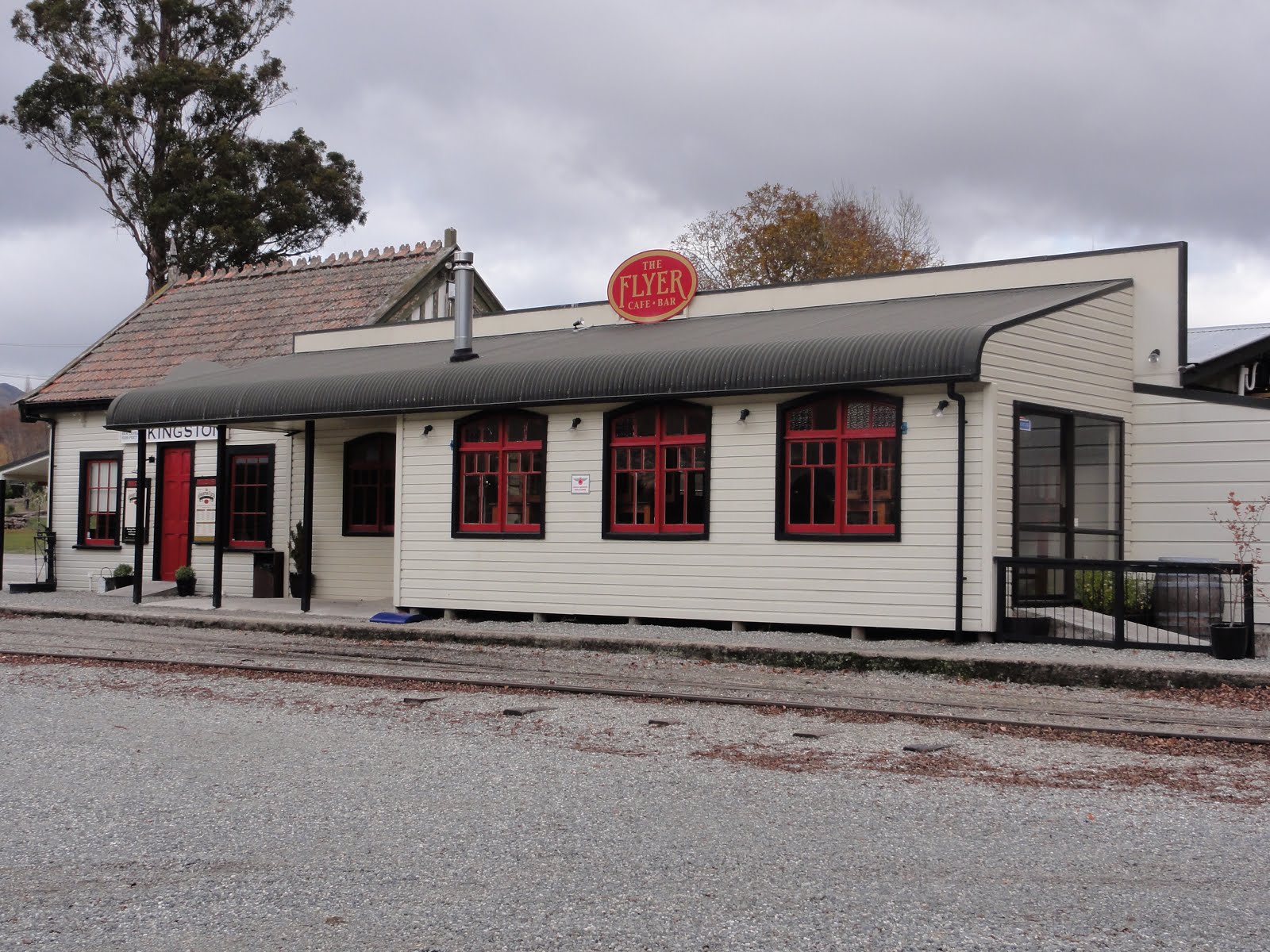
The Kingston Railway Station
and cafe.
A poster sign advertising the Kingston Flyer
The running times for the tourist services, when it was running.
50 photographs, 50 stories, of which there is one of the 50 below.
They all start with –
A picture paints … well, as many words as you like. For instance:
And, the story:
Have you ever watched your hopes and dreams simply just fly away?
Everything I thought I wanted and needed had just left in an aeroplane, and although I said I was not going to, i came to the airport to see the plane leave. Not the person on it, that would have been far too difficult and emotional, but perhaps it was symbolic, the end of one life and the start of another.
But no matter what I thought or felt, we had both come to the right decision. She needed the opportunity to spread her wings. It was probably not the best idea for her to apply for the job without telling me, but I understood her reasons.
She was in a rut. Though her job was a very good one, it was not as demanding as she had expected, particularly after the last promotion, but with it came resentment from others on her level, that she, the youngest of the group would get the position.
It was something that had been weighing down of her for the last three months, and if noticed it, the late nights, the moodiness, sometimes a flash of temper. I knew she had one, no one could have such red hair and not, but she had always kept it in check.
And, then there was us, together, and after seven years, it felt like we were going nowhere. Perhaps that was down to my lack of ambition, and though she never said it, lack of sophistication. It hadn’t been an issue, well, not until her last promotion, and the fact she had to entertain more, and frankly I felt like an embarrassment to her.
So, there it was, three days ago, the beginning of the weekend, and we had planned to go away for a few days and take stock. We both acknowledged we needed to talk, but it never seemed the right time.
It was then she said she had quit her job and found a new one. Starting the following Monday.
Ok, that took me by surprise, not so much that it something I sort of guessed might happen, but that she would just blurt it out.
I think that right then, at that moment, I could feel her frustration with everything around her.
What surprised her was my reaction. None.
I simply asked where who, and when.
A world-class newspaper, in New York, and she had to be there in a week.
A week.
It was all the time I had left with her.
I remember I just shrugged and asked if the planned weekend away was off.
She stood on the other side of the kitchen counter, hands around a cup of coffee she had just poured, and that one thing I remembered was the lone tear that ran down her cheek.
Is that all you want to know?
I did, yes, but we had lost that intimacy we used to have when she would have told me what was happening, and we would have brainstormed solutions. I might be a cabinet maker but I still had a brain, was what I overheard her tell a friend once.
There’s not much to ask, I said. You’ve been desperately unhappy and haven’t been able to hide it all that well, you have been under a lot of pressure trying to deal with a group of troglodytes, and you’ve been leaning on Bentley’s shoulder instead of mine, and I get it, he’s got more experience in that place, and the politics that go with it, and is still an ally.
Her immediate superior and instrumental in her getting the position, but unlike some men in his position he had not taken advantage of a situation like some men would. And even if she had made a move, which I doubted, that was not the sort of woman she was, he would have politely declined.
One of the very few happily married men in that organisation, so I heard.
So, she said, you’re not just a pretty face.
Par for the course for a cabinet maker whose university degree is in psychology. It doesn’t take rocket science to see what was happening to you. I just didn’t think it was my place to jump in unless you asked me, and when you didn’t, well, that told me everything I needed to know.
Yes, our relationship had a use by date, and it was in the next few days.
I was thinking, she said, that you might come with me, you can make cabinets anywhere.
I could, but I think the real problem wasn’t just the job. It was everything around her and going with her, that would just be a constant reminder of what had been holding her back. I didn’t want that for her and said so.
Then the only question left was, what do we do now?
Go shopping for suitcases. Bags to pack, and places to go.
Getting on the roller coaster is easy. On the beginning, it’s a slow easy ride, followed by the slow climb to the top. It’s much like some relationships, they start out easy, they require a little work to get to the next level, follows by the adrenaline rush when it all comes together.
What most people forget is that what comes down must go back up, and life is pretty much a roller coaster with highs and lows.
Our roller coaster had just come or of the final turn and we were braking so that it stops at the station.
There was no question of going with her to New York. Yes, I promised I’d come over and visit her, but that was a promise with crossed fingers behind my back. After a few months in t the new job the last thing shed want was a reminder of what she left behind. New friends new life.
We packed her bags, three out everything she didn’t want, a free trips to the op shop with stiff she knew others would like to have, and basically, by the time she was ready to go, there was nothing left of her in the apartment, or anywhere.
Her friends would be seeing her off at the airport, and that’s when I told her I was not coming, that moment the taxi arrived to take her away forever. I remember standing there, watching the taxi go. It was going to be, and was, as hard as it was to watch the plane leave.
So, there I was, finally staring at the blank sky, around me a dozen other plane spotters, a rather motley crew of plane enthusiasts.
Already that morning there’s been 6 different types of plane depart, and I could hear another winding up its engines for take-off.
People coming, people going.
Maybe I would go to New York in a couple of months, not to see her, but just see what the attraction was. Or maybe I would drop in, just to see how she was.
As one of my friends told me when I gave him the news, the future is never written in stone, and it’s about time you broadened your horizons.
We are all born with an imagination. It’s just whether we choose to use it or not.
Some people have every reason to want to disappear into an imaginary world of their creation because life is too hard or impossible in reality.
I was there for two reasons.
The first, because I loved reading books, stories about brave people, stories about children who had holidays by the sea, and children who got together to have adventures.
Of course, if you were like me, it was Enid Blyton, the Famous Five and the Secret Seven. I must have read and reread those stories over and over.
As I got older and the stories got more sophisticated, right out of the school library, my desire for adventure only grew.
Yes, we went on holiday, but there was never anything like what happened in those books.
Until…
We were allowed to stay at my grandmother’s house, who lived in the country. It was by a highway, it was at the end of a lane, it was only a very large block of land, and it was a huge house, lots of rooms, and a place where an imagination could run wild.
My grandmother lived alone. She was a hoarder. She had lots of old musty books and stories that were much different from those I read.
She had a wing of bedrooms, one for my mother, her sister and her brother and a spare, rooms filled with stuff, which is why when she went off to bowls and left us on our own, we used to explore.
Those rooms have files of magazines, old documents from the garage her husband, long deceased, had run. History.
Then there was the outside, now in disrepair. Two garages and old cars rotting away. A workshop that had all manner of tools, an overgrown garden of the sort one usually found in towns. There was an outhouse adjoining the laundry, very scary to go to at night, and almost as much during the day.
It was like stepping back in time, long before we had all the modern conveniences we have today.
Hers used to have a large fountain, a rose garden, a croquet lawn, a fernery, and a glasshouse. We recovered some of it, particularly the fountain, and it was incredible. Those gardens would have been magnificent.
Inside the house, there were tables, luxurious lounge chairs, 1930s furniture, cupboards, a wooden stove, and an ice box, an almost perfect reminder of what it had been like long before we were born.
My brother didn’t see it, but then he never really had an imagination.
The second, because of the horrible things that happened yo us, if I hadn’t been able to escape, I don’t think I would have made it to adulthood.
A vastly different world was needed, one I could almost walk through a portal into, a place where I could escape.
A child in a boarding school in the English countryside, a pilot in a Sopwith Camel flying over the trenches of WWI, a seaman on a destroyer in action against the Germans in a great sea battle, and an Explorer in the middle of the jungle in Africa, going down the Nile, or the Zambesi.
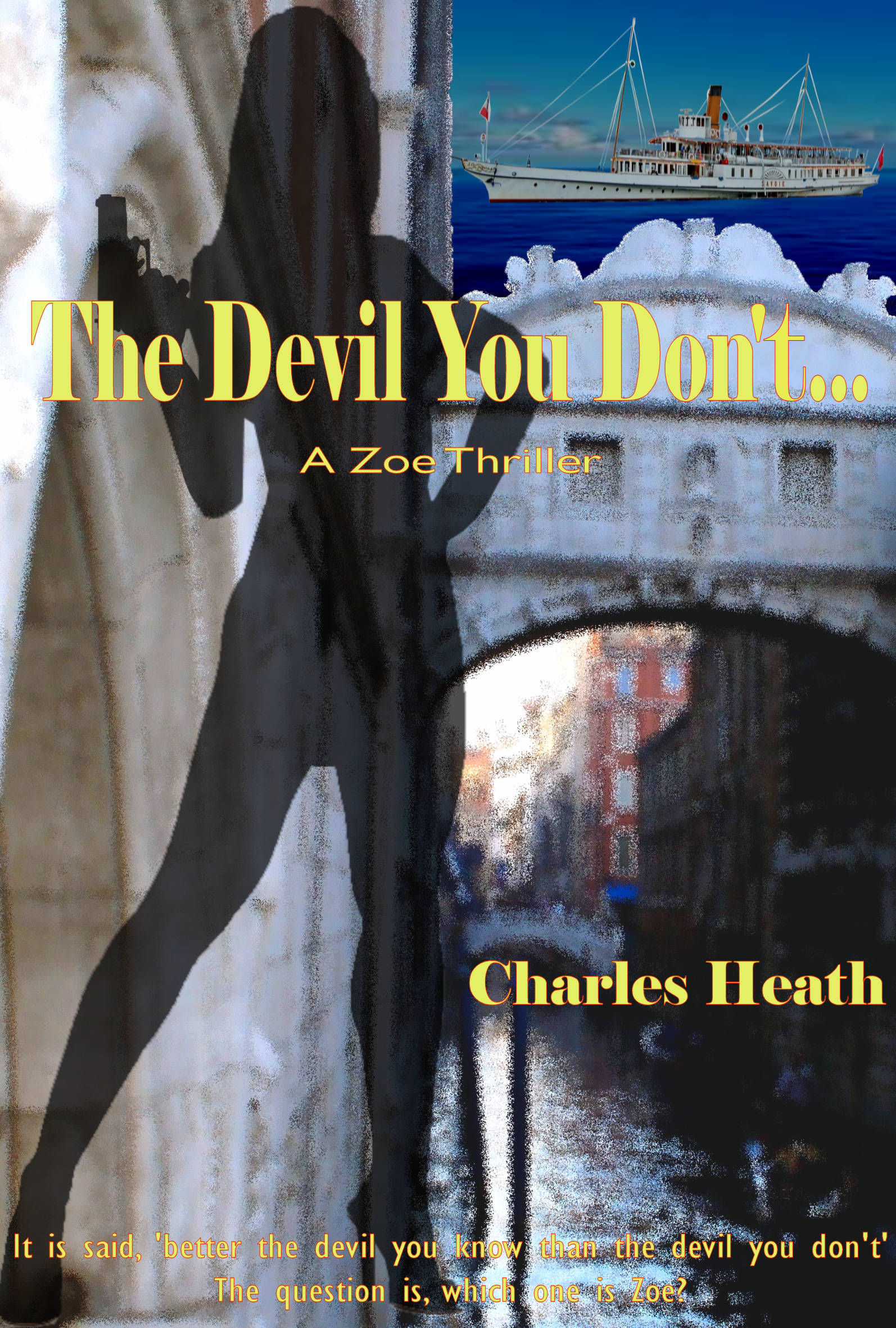
It could be said that of all the women one could meet, whether contrived or by sheer luck, what are the odds it would turn out to be the woman who was being paid a very large sum to kill you.
John Pennington is a man who may be lucky in business, but not so lucky in love. He has just broken up with Phillipa Sternhaven, the woman he thought was the one, but relatives and circumstances, and perhaps because she was a ‘princess’, may also have contributed to the end result.
So, what do you do when you are heartbroken?
That is a story that slowly unfolds, from the first meeting with his nemesis on Lake Geneva, all the way to a hotel room in Sorrento, where he learns the shattering truth.
What should have been solace after disappointment, turns out to be something else entirely, and from that point, everything goes to hell in a handbasket.
He suddenly realizes his so-called friend Sebastian has not exactly told him the truth about a small job he asked him to do, the woman he is falling in love with is not quite who she says she is, and he is caught in the middle of a war between two men who consider people becoming collateral damage as part of their business.
The story paints the characters cleverly displaying all their flaws and weaknesses. The locations add to the story at times taking me back down memory lane, especially to Venice where, in those back streets I confess it’s not all that hard to get lost.
All in all a thoroughly entertaining story with, for once, a satisfying end.








 Thrills, Spills, and just a dash of Romance