Writing a book in 365 days – 233

Day 233

What is an acceptable age to stop writing

Pen Down? Never! Why There’s No ‘Acceptable Age’ to Stop Writing

It’s a question that might silently gnaw at writers, especially as the years accumulate: “Am I too old to be doing this? Is there an acceptable age to finally put the pen down?”

Let’s take a deep breath and shatter this myth right now.

The beautiful, liberating truth is: there isn’t one.

Unlike professional sports where physical peak defines a career, or industries that demand intense, rapid-fire innovation, writing thrives on something entirely different: life experience, wisdom, observation, and the enduring power of the human spirit. These are qualities that only deepen and enrich with time.

Why the Calendar Doesn’t Define Your Craft

The idea of an “acceptable age” to stop writing is a construct, a societal whisper that has no place in the world of storytelling. Here’s why you should ignore it:

  1. Wisdom is Your Superpower: Youth brings fresh perspectives, but age brings the nuanced understanding that only comes from living through joy, sorrow, triumph, and failure. Every single year you live adds another layer to your understanding of human nature, making your characters richer, your plots more profound, and your themes more resonant.
  2. A Richer Tapestry of Experience: Think of your life as a vast library. With every passing decade, you add new wings, new genres, new collections. This reservoir of lived experience is invaluable for a writer. You have more to draw from, more to reflect upon, and more unique insights to offer your readers.
  3. Writing as Lifelong Learning: The act of writing keeps your mind sharp, your curiosity piqued, and your creative muscles toned. It’s a fantastic form of mental exercise that can genuinely contribute to well-being as we age. Why would you want to stop something that is so beneficial?
  4. The Perspective of Time: Have you ever revisited an old memory and seen it in a completely new light? Age provides that distance and perspective, allowing you to craft narratives that explore complex emotions and historical events with greater clarity and depth. What felt overwhelming at 30 might become a powerful narrative at 70.
  5. Technology is Your Ally: Worried about typing speed or hand cramps? Dictation software, ergonomic keyboards, larger screens, and assistive technologies mean that physical limitations are no longer insurmountable barriers. Adaptation, not cessation, is the key.

Legends Who Wrote On (and On!)

History is filled with writers who found their voice late, or continued to produce masterpieces well into their golden years:

  • Laura Ingalls Wilder: Didn’t publish her first “Little House” book until she was 65!
  • Frank McCourt: Won a Pulitzer for Angela’s Ashes in 1997 when he was 66.
  • Agatha Christie: Continued to write bestsellers and intricate mysteries well into her 80s.
  • Toni Morrison: Published acclaimed novels throughout her 70s and 80s, including God Help the Child at 84.
  • Harriet Doerr: Published her first novel, Stones for Ibarra, and won a National Book Award at 74.

These are not anomalies; they are testaments to the enduring power of the written word and the human capacity for creation.

So, When Is the Acceptable Age to Stop Writing?

When the stories stop calling out to you. When your imagination runs dry. When the desire to connect, to share, to create, finally fades.

For most writers, that moment never truly arrives. The urge to tell stories is intrinsic, deeply woven into the fabric of who we are. It’s a fire that, if tended, can burn brightly for a lifetime.

Don’t let the calendar dictate your creative journey. Pick up that pen, open that laptop, and keep pouring your unique perspective onto the page. The world needs your stories, no matter how many candles are on your birthday cake.


What are your thoughts? Have you ever felt the pressure to “slow down” creatively because of your age? Share your experiences in the comments below!

In a word: Under

Under by itself is a rather boring word, you know, under the moon, under the sea, under the influence, which is not hard to be if you’ve been hypnotised or after a few drinks.

Under is anything beneath something else.

But let’s add it to some other words like,

Underrated, which means it is better than what others give it credit for.

Underwear is what you would wear underneath your clothes.

An understudy is a person who takes over a lead role when the lead is incapacitated. And how many understudies are guilty of harming the lead, in order to get a big break?

And not get away with it?

Understood, an agreement that might or might not be in writing that something will happen, that is, it is understood that I will be the next president.

Or not. Who on earth would really want to be president of anything?

So in the spirit of trying to confuse everyone all of the time, I have a conundrum in the form of a question, what is the difference between under and underneath?

To me there is none, you can be under the sea or underneath the sea, or under the table or underneath the table, but then there’s another, you can be under the influence but not underneath the influence, though technically you could, if you wanted to use confusing English.

And, just to add to the confusion further, I can say that the submarine sailed under the sea, underneath the sea, but, in actual fact, it doesn’t.

What is under the sea is the sand, or sea bed, and a submarine does not plough its way through the sand, does it?

What we really should be saying is that a submarine moves through the water.

Just saying…

The first case of PI Walthenson – “A Case of Working With the Jones Brothers”

This case has everything, red herrings, jealous brothers, femme fatales, and at the heart of it all, greed.

See below for an excerpt from the book…

Coming soon!

PIWalthJones1

An excerpt from the book:

When Harry took the time to consider his position, a rather uncomfortable position at that, he concluded that he was somehow involved in another case that meant very little to him.

Not that it wasn’t important in some way he was yet to determine, it was just that his curiosity had got the better of him, and it had led to this: sitting in a chair, securely bound, waiting for someone one of his captors had called Doug.

It was not the name that worried him so much, it was the evil laugh that had come after the name was spoken.

Doug what? Doug the ‘destroyer’, Doug the ‘dangerous’, Doug the ‘deadly’; there was any number of sinister connotations, and perhaps that was the point of the laugh, to make it more frightening than it was.

But there was no doubt about one thing in his mind right then: he’d made a mistake. A very big. and costly, mistake. Just how big the cost, no doubt he would soon find out.

His mother, and his grandmother, the wisest person he had ever known, had once told him never to eavesdrop.

At the time he couldn’t help himself and instead of minding his own business, listening to a one-sided conversation which ended with a time and a place. The very nature of the person receiving the call was, at the very least, sinister, and, because of the cryptic conversation, there appeared to be, or at least to Harry, criminal activity involved.

For several days he had wrestled with the thought of whether he should go. Stay on the fringe, keep out of sight, observe and report to the police if it was a crime. Instead, he had willingly gone down the rabbit hole.

Now, sitting in an uncomfortable chair, several heat lamps hanging over his head, he was perspiring, and if perspiration could be used as a measure of fear, then Harry’s fear was at the highest level.

Another runnel of sweat rolled into his left eye, and, having his hands tied, literally, it made it impossible to clear it. The burning sensation momentarily took his mind off his predicament. He cursed and then shook his head trying to prevent a re-occurrence. It was to no avail.

Let the stinging sensation be a reminder of what was right and what was wrong.

It was obvious that it was the right place and the right time, but in considering his current perilous situation, it definitely was the wrong place to be, at the worst possible time.

It was meant to be his escape, an escape from the generations of lawyers, what were to Harry, dry, dusty men who had been in business since George Washington said to the first Walthenson to step foot on American soil, ‘Why don’t you become a lawyer?” when asked what he could do for the great man.

Or so it was handed down as lore, though Harry didn’t think Washington meant it literally, the Walthenson’s, then as now, were not shy of taking advice.

Except, of course, when it came to Harry.

He was, Harry’s father was prone to saying, the exception to every rule. Harry guessed his father was referring to the fact his son wanted to be a Private Detective rather than a dry, dusty lawyer. Just the clothes were enough to turn Harry off the profession.

So, with a little of the money Harry inherited from one of his aunts, he leased an office in Gramercy Park and had it renovated to look like the Sam Spade detective agency, you know the one, Spade and Archer, and The Maltese Falcon.

There’s a movie and a book by Dashiell Hammett if you’re interested.

So, there it was, painted on the opaque glass inset of the front door, ‘Harold Walthenson, Private Detective’.

There was enough money to hire an assistant, and it took a week before the right person came along, or, more to the point, didn’t just see his business plan as something sinister. Ellen, a tall cool woman in a long black dress, or so the words of a song in his head told him, fitted in perfectly.

She’d seen the movie, but she said with a grin, Harry was no Humphrey Bogart.

Of course not, he said, he didn’t smoke.

Three months on the job, and it had been a few calls, no ‘real’ cases, nothing but missing animals, and other miscellaneous items. What he really wanted was a missing person. Or perhaps a beguiling, sophisticated woman who was as deadly as she was charming, looking for an errant husband, perhaps one that she had already ‘dispatched’.

Or for a tall, dark and handsome foreigner who spoke in riddles and in heavily accented English, a spy, or perhaps an assassin, in town to take out the mayor. The man was such an imbecile Harry had considered doing it himself.

Now, in a back room of a disused warehouse, that wishful thinking might be just about to come to a very abrupt end, with none of the romanticized trappings of the business befalling him. No beguiling women, no sinister criminals, no stupid policemen.

Just a nasty little man whose only concern was how quickly or how slowly Harry’s end was going to be.

© Charles Heath 2019-2024

“Going out of my mind…” – a short story


Accidents can happen.

Sometimes they’re your fault, sometimes they’re not.

The accident I was in was not. Late at night driving home from work, a car came speeding out of a side street and T-boned my car.

It could have been worse, though the person who said it had a quite different definition of the word worse than I did.

To start with, I lost three months of my life in a coma, and even when I surfaced, it took another month to realize what had happened. Then came two months of working out my recovery plan.

If that wasn’t trial enough, what someone else might describe as the ‘last straw that broke the camel’s back’, my wife of 22 years decided to send me a text that morning, what was six months in hospital, to the day.

“I’m sorry, Joe, but enough is enough. I cannot visit you anymore, and for the sake of both our sanity, I think it’s time to draw a line in the sand. I know what happened isn’t your fault but given the prognosis, I don’t think I can cope with the situation. I need time to think about what will happen next and to do so, I’ll be going home to spend some time with family. Once again, I’m so sorry not to be doing this in person. I’ll let you know what I decide in due course. In the meantime, you have my best wishes for your recovery.”

In other words, goodbye. Her family lived in England, about 12,000 miles away in another hemisphere, and the likelihood of her returning was remote. We had meant to visit them, and had, in fact, booked the tickets shortly before the accident. I guess she couldn’t wait any longer.

My usual nurse came in for the first visit on this shift. She had become the familiar face on my journey, the one who made it worth waking up every morning.

“You look a little down in the dumps this morning. What’s up?”

She knew it couldn’t be for medical reasons because the doctor just yesterday had remarked how remarkable my recovery had been in the last week or so. Even I had been surprised given all the previous negative reports.

“Ever broken up by text?”

“What do you mean?”

“Frances has decided she no longer wants to be involved. I can’t say I blame her, she has put her whole life on hold because of this.”

“That’s surprising. She’s never shown any disappointment.”

“Six months have been a long time for everyone. We were supposed to be going home so she could see her family. Maybe that’s what it’s all about.”

I gave her the phone and she read the message.

Then she handed it back. “That’s goodbye, Tom. I’m sorry. And no, I’ve never had a breakup by text, but I guess there could always be a first time.”

She spent the next ten minutes going through the morning ritual, then said, “I’ve heard there’s a new doctor coming to visit you. Whatever has happened in the last few days had tongues wagging, and you might just become the next modern miracle. Fame and fortune await.”

“Just being able to walk again will be miracle enough.”

That had been the worst of it. The prognosis that it was likely I’d never be able to walk again, or work, and the changes to our lives that would cause. I knew Frances was bitterly disappointed that she might become the spouse who had to spend the rest of her life looking after me, and though she had said it didn’t matter, that she would be there for me, deep down I knew a commitment like that took more internal fortitude than she had.

She ran her own business, managed three children into adulthood, and had a life other than what we had together. When I was fit and able, and nothing got in the way, it had worked. Stopping everything to cater to my problems had severely curtailed her life. Something had to give, and it had.

But, as I said, I didn’t blame her. She had tried, putting in a brave face day after day but once the daily visits slipped to every other day, to once a week, I knew then the ship was heading towards the rocks.

This morning it foundered.

I pondered the situation for an hour before I sent a reply. “I believe you have made the right decision. It’s time to call it, go home and take some time to consider what to do next is right. In normal circumstances, we would not be considering any of this, but these are not normal circumstances. But, just in case you are worried about the effect of all of this on me, don’t. I will get over it, whatever the result is, and what you need to do first and foremost is to concentrate on what is best for you. If that means drawing a line on this relationship, so be it. All I want for you is for you to be happy, and clearly, having to contend with this, and everything else on your plate, is not helping. I am glad we had what time we had together and will cherish the memories forever, and I will always love you, no matter what you decide.”

It was heartfelt, and I meant it. But life was not going to be the same without her.

I’d dozed off after sending the message, and only woke again when my usual doctor came into the room on his morning rounds, the usual entourage of doctors and interns in tow. I’d been a great case for sparking endless debate on the best route for my recovery among those fresh out of medical school. Some ideas were radical, others pie in the sky, but one that seemed implausible had got a hearing, and then the go-ahead, mainly because there was little else that apparently could be done.

That doctor, and now another I hadn’t seen before was standing in the front row, rather than at the back.

The doctor in charge went through the basics of the case, as he did every day, mainly because the entourage changed daily. Then, he deferred to the radical doctor as I decided to call her.

She went through the details of a discovery she had made, and the recommendation she’d made as a possible road to recovery, one which involved several radical operations which had been undertaken by the elderly man standing beside her. When I first met him, I thought he was an escaped patient from the psychiatric ward, not the pre-eminent back surgeon reputed to be the miracle worker himself.

It seemed, based on the latest x-rays, that a miracle had occurred, but whether it was or not would not be known for another week. Then, if all went well, I would be able to get out of bed, and, at the very least, be able to stand on my own. In the meantime, I had endless sessions of physio in the lead-up to the big event. Six months in bed had taken its toll on everything, and the week’s work was going to correct some of that.

It meant there was hope, and despite what I said and thought, hope was what I needed.

There had been ups and downs before this, fuelled by a morning when I woke up and found I could wriggle my toes. It was after the second operation, and I thought, given the number of painkillers, it had been my imagination.

When I mentioned it, there was some initial excitement, and, yes, it was true, I wasn’t going out of my mind, it was real. The downside was, that I couldn’t move anything else, and other than an encouraging sign, as the days passed, and nothing more happened, the faces got longer.

Then, the physiotherapist moved in and started working on the areas that should be coming back to life. I felt little, maybe the painkillers again, until the next, and perhaps the last operation. I managed to lift my left leg a fraction of an inch.

But we’d been here before, and I wasn’t going to hold my breath.

Annabel, the daughter who lived on the other side of the country, finally arrived to visit me. I had thought, not being so far away she might have come earlier, but a few phone calls had sorted out her absence. Firstly, there was not much use visiting a coma patient, second, she was in a delicate stage of her professional career and a break might be the end of it, and thirdly, she accepted that I didn’t want to see her until I was much better.

She was not very happy about it, but it was a costly venture for her, in terms of time, being away from a young family, and just getting there.

Now, the time had come. She had a conference to attend, and I was happy to play second fiddle.

After the hugs and a few tears, she settled in the uncomfortable bedside chair.

“You don’t look very different than the last time I saw you,” she said.

“Hospitals have perfected the art of hiding the worst of it, but it’s true. The swelling had receded, the physios have revived the muscles, and I have a little movement again.”

“The injuries are not permanent?”

“Oh, they’re permanent but not as bad as first thought.”

“Pity my mother isn’t here.”

“She was day after day, through the darkest period. I wouldn’t wish that on anyone. But your mother is an independent woman, and she has always been free to do what she wants, and I would not have had it any other way.”

“But deserting you in the middle of all this…”

“It’s been very debilitating on her. I can understand her reasons, and so should you. She will still be your mother no matter what happens to us.”

There had been a number of phone calls, from each of the children, decrying her actions after she had sent a text message to each of them telling them what she was doing. She had not told them she was leaving, in so many words, but leaving the door ajar, perhaps to allay their fears she was deserting them too. Annabel had been furious. The other two, not so much.

“And this latest development?”

I had also told her about the miracle worker, and the possibilities, without trying to get hopes up.

“On a scale of one to ten, it’s a three. We’ve been here before, so I’m going to save the excitement for when it happens, if it happens.”

“And if it doesn’t?”

It was a question I’d asked myself a number of times, one that I didn’t want an answer to. Hope was staving it off, each day a new day of discovery, and a day closer to the idea I might walk again. I had to believe it would happen, if not the next day, the next week, month, year, that it would eventually happen.

For now, all I had to do was stand on my own two feet.

It was ironic, in a way, that simple statement. ‘Stand on your own two feet’. Right then, it seemed so near, and yet, at the same time, so far away.

I didn’t answer that question, but did what I usually did with visitors, run a distraction and talk about everything else. This visit was no exception. I had a lot of catching up to do.

It’s odd how some call the day of momentous events D-Day because to me nothing would be more momentous than the invasion of France during the Second World War.

Others were not quite of the same opinion. It was going to be a momentous day.

It started the same as any other.

The morning routine was when the duty nurse came to do the checks. Then the physio, now a permanent fixture mid-morning, just after the tea lady arrived. Deliberate, I thought, to deprive me of my tea break, and some unbelievably delicious coconut cookies.

Then the routine changed, and the escort arrived to take me down to the room where the physio had set up an obstacle course. It looked like one, and I’d told him so when I first saw it, and he had said by the time he was finished with me, I’d be able to go from start to finish without breaking a sweat.

In my mind perhaps, but not with this broken body. I didn’t say that because I was meant to be positive.

An entourage arrived for the main event. I would have been happier to fail in front of the doctor, the miracle worker, and the physio, but it seemed everyone wanted a front-row seat. If it worked, the physio confided in me, there was fame and fortune being mentioned in Lancet, which was a prestigious medical journal.

Expectations were running high.

The physio had gone through the program at least a hundred times, and the previous day we had got to the point where I was sitting on the side of the bed. We’d tried this ordinary maneuver several times, previously without success under my own steam but this morning, for some reason it was different.

I was able to sit up, and then, with a struggle move my legs part of the way, and with a little help for the rest.

What was encouraging, was being able to swing my legs a short distance. It was those simple things that everyone could do without thinking, that had seemed impossible not a month before, that got people excited. I didn’t know how I felt other than I missed those simple things.

Then the moment had arrived. Hushed silence.

There was a structure in place. All I had to do was pull myself across, at the same time sliding off the bed and into a standing position. There was a safety harness attached so that if my grip slipped it would prevent me from falling.

It was probably not the time to tell them the pain in my lower back was getting worse.

So, like I’d been instructed, and going one step further than the day before, I reached out, grabbed the bars, and pulled myself up and over, at the same time, sliding off the side of the bed. I could feel the tug of the safety harness which told me I had left the safety of the bed, and was in mid-motion.

I could feel my legs straightening, and then a very softly landing on the floor, the safety harness letting my body drop down slowly.

The pain increased exponentially as the weight came down onto my legs, but my body had stopped moving. I could not feel the tightness of the harness, but a rather odd sensation in my legs.

All that time I had been concentrating so hard that I had heard nothing, not even the encouraging words from the physio.

Until I realized, from the noise around me, that it had worked. I was standing on my own two feet, albeit a little shakily.

And I heard the physio say, in his inimitable way, “Today you just landed on the moon. Tomorrow, it’s going to be one small step for mankind. Well done.”

© Charles Heath 2021

The story behind the story – Echoes from the Past

The novel ‘Echoes from the past’ started out as a short story I wrote about 30 years ago, titled ‘The birthday’.

My idea was to take a normal person out of their comfort zone and led on a short but very frightening journey to a place where a surprise birthday party had been arranged.

Thus the very large man with a scar and a red tie was created.

So was the friend with the limousine who worked as a pilot.

So were the two women, Wendy and Angelina, who were Flight Attendants that the pilot friend asked to join the conspiracy.

I was going to rework the short story, then about ten pages long, into something a little more.

And like all re-writes, especially those I have anything to do with, it turned into a novel.

There was motivation.  I had told some colleagues at the place where I worked at the time that I liked writing, and they wanted a sample.  I was going to give them the re-worked short story.  Instead, I gave them ‘Echoes from the past’

Originally it was not set anywhere in particular.

But when considering a location, I had, at the time, recently been to New York in December, and visited Brooklyn and Queens, as well as a lot of New York itself.  We were there for New Years, and it was an experience I’ll never forget.

One evening we were out late, and finished up in Brooklyn Heights, near the waterfront, and there was rain and snow, it was cold and wet, and there were apartment buildings shimmering in the street light, and I thought, this is the place where my main character will live.

It had a very spooky atmosphere, the sort where ghosts would not be unexpected.  I felt more than one shiver go up and down my spine in the few minutes I was there.

I had taken notes, as I always do, of everywhere we went so I had a ready supply of locations I could use, changing the names in some cases.

Fifth Avenue near the Rockefeller center is amazing at first light, and late at night with the Seasonal decorations and lights.

The original main character was a shy and man of few friends, hence not expecting the surprise party.  I enhanced that shyness into purposely lonely because of an issue from his past that leaves him always looking over his shoulder and ready to move on at the slightest hint of trouble.  No friends, no relationships, just a very low profile.

Then I thought, what if he breaks the cardinal rule, and begins a relationship?

But it is also as much an exploration of a damaged soul, as it is the search for a normal life, without having any idea what normal was, and how the understanding of one person can sometimes make all the difference in what we may think or feel.

And, of course, I wanted a happy ending.

Except for the bad guys.

Get it here:  https://amzn.to/2CYKxu4

newechocover5rs

Memories of the conversations with my cat – 69

As some may be aware, but many not, Chester, my faithful writing assistant, mice catcher, and general pain in the neck, passed away some years ago.

Recently I was running a series based on his adventures, under the title of Past Conversations with my cat.

For those who have not had the chance to read about all of his exploits I will run the series again from Episode 1

These are the memories of our time together…

This is Chester. He’s looking for a cool spot to lie down.

We’ve been having something of a heat wave for the last few days, temperatures soaring above the mid-thirties, and nearly as high as forty degrees centigrade.

So, this morning we watched the ice hockey, and even Chester stayed the distance, not so he could smirk when the Maple Leafs lost, but to channel the idea it was cold somewhere else in the world.

And it worked for a while. Having been to the ice hockey in Toronto in person, I know just how cold it was.

After that, it was a matter of leaving the doors opens to let what breeze there was flow through the house, so Chester first sat by the front door, then the back door, then came out to see me.

Time for the air conditioner.

Yes, we have air conditioning, and yes, the cost of electricity in this country is horrendous.  It was why we had solar panels put in.

I just leave it as long as possible before turning it on.

I thought about toying with him, but he’s sitting on the keyboard looking angry.

Now was the right time.

The cinema of my dreams – Was it just another surveillance job – Episode 35

I’m back home and this story has been sitting on a back burner for a few months, waiting for some more to be written.

The trouble is, there are also other stories to write, and I’m not very good at prioritizing.

But, here we are, a few minutes opened up and it didn’t take long to get back into the groove.

Chasing leads, maybe


She gave me a minute to think about the situation, and then said what I was thinking, “So he could be anywhere?”

“He was dead.  I felt for a pulse.  There wasn’t one.”

I could interpret that expression on her face, ‘you’re not a doctor’.

She turned another page, read a few lines, then made a note at the bottom.

It read, if my deciphering was up to scratch, ‘doesn’t know if subject dead or not’.

She looked up again.  “It appears these documents are out there,” she waved her hand in the air, “somewhere.  Fortunately, they have not turned up, not has someone tried to sell them back or to the newspapers, so we’re lucky.  So far.  That isn’t going to last for much longer.  Every extra day out there is another chance for the government to be embarrassed.”

“You know what the contents are?”

“Don’t be silly.  That’s above my pay grade, and besides, you and I are better off not knowing.  So, what you need to do is find O’Connell and/or find the documents on this USB drive.”

She slid a card across the table.  It had a name and a telephone number.  Monica Sherive.  A mobile number, a burner no doubt that couldn’t be traced back to her.

“You find either, you tell me first.”

“Nobbin?”

“Second, and when I tell you.”

“So you don’t trust him either?”

“At the moment, for both you and I have to be careful who we trust.”

I added her to the list of people I couldn’t trust, not that she had told me I could trust her.  Yet.

“And if I get contacted by Severin again?”

“Have you?”

I had thought about not telling her about that brief meeting where he told me about the USB drive, but it couldn’t do any harm.  At least she hadn’t asked me if I knew about the USB, which was something, I suppose.

“Yes.  Once.  Told me to keep my head down.  And asked me if O’Connell had time to talk to me.  It was the same answer I gave him back in the alley.  No.  I’d just managed to corner him when he was shot.”

“By Severin, or this other fellow,” she shuffled back several pages, then said, “Maury?”

“No.  That was what was odd about it.  The shot came from somewhere else.  A sniper I would have thought.”

And, my brain suddenly moving into overdrive, piecing together what might be a coincidence, but in our business, they were rarely coincidences.  A sniper shot him., say Nobbin or one of his people, he looks dead, waits for a call to the cleaners, intercepts it, and collects the so-called dead O’Connell.  It was a good conspiracy theory.

And as far-fetched as one.

Severin had to have the body somewhere, trying to figure out how to bring O’Connell back to life so he could torture the USB location out of him.

Hell, that was as twisted as the conspiracy theory.

Time to change the subject.  “Do you have any idea who Severin and Maury are?”

She went to the back of the file and pulled out some photographs, mug shots perhaps of staff members.  She put five faces in front of me and asked me if the two were there.

They were.  The first, with the name of David Westcott, and the fourth with the name of Bernie Salvin.

“Who are they?”

“They used to work in the training department for ten or so years ago.  Westcott was also a handler for several years.  They both requested a transfer to operations, and we give a mission.  Six agents were assigned, and all six were killed, an investigation after the fact found that their identities had been leaked to the enemy before they reached the target.”

“They gave them up?”

“Nobody knows for sure.  There were others in that group, but in the end, the department retired them all.  All their years in training served them well.  We found the place where you were trained.”

Another photograph of the main building.  I nodded.

“It was an old training facility closed down five years ago.  It was just sitting there waiting for an enterprising crew.  It won’t happen again.  Needless to say, we haven’t been able to find either of them, only the people they employed, who believed it was in good faith.  A mess in other words.  Now, go.  Find me answers.”

She stood.  The meeting was over.

© Charles Heath 2020

Writing a book in 365 days – 232

Day 232

Sometimes, the best books for writers bear little similarity to their medium

The Unconventional Muse: When Your Best Writing Lesson Comes From Anywhere But a ‘How-To’ Guide

We writers are always chasing that elusive spark, that deeper understanding of human nature and narrative that elevates our work from good to truly profound. We devour books on craft, attend workshops, and pore over articles dissecting plot points and character arcs. All valuable, of course.

But what if the most potent lessons for your writing don’t come from a book with “How To Write” in the title? What if your greatest storytelling mentor isn’t a famous novelist, but a philosopher, a historian, or even a scientist?

This isn’t just a quirky idea; it’s a fundamental truth for many successful writers. Sometimes, the best books for writers bear little similarity to their medium.

Why Look Beyond the Craft?

Writers are, at heart, observers and interpreters of the human condition. We craft worlds, yes, but those worlds gain their resonance from reflecting or distorting truths about our world. To truly understand the stories we tell, we need to understand the world itself – its history, its psychology, its moral dilemmas, its scientific wonders.

This is where seemingly unrelated disciplines become invaluable. They offer different lenses through which to view conflict, motivation, and the very fabric of reality.

The Playwright, the Philosopher, and the Clash of Two Rights

Let’s take a specific example that perfectly illustrates this premise: the playwright. Should a playwright read philosophy? An emphatic yes.

Consider the profound wisdom offered by thinkers like George Wilhelm Friedrich Hegel. His work, particularly his dialectical approach to history and conflict, provides an incredible framework for understanding the deepest dramatic tensions.

For Hegel, the true tragedy – and the most compelling drama – lies not in a clear-cut battle between good and evil, but in the irreconcilable clash of two rights.

Think about that for a moment. It’s not the simple Hollywood narrative where the hero is unequivocally good and the villain is purely evil. That kind of story, while sometimes entertaining, often lacks the true grit and complexity of human experience.

Instead, Hegel pointed to the underlying issues in Greek tragedy as a case in point. Take Sophocles’ Antigone. Here, the conflict isn’t between a righteous hero and an evil tyrant. It’s between Antigone’s undeniable moral right to bury her brother, honoring the divine laws and family duty, and Creon’s equally legitimate right to uphold the laws of the state, ensuring order and preventing further rebellion.

Both characters are, in their own frameworks, right. Both are acting out of deeply held convictions and duties. And it is precisely because both are “right” that their collision is so utterly devastating, leading to a profound, unavoidable tragedy. Neither can simply concede without betraying their core identity or belief system.

A Golden Key for Every Writer

This isn’t just an academic point for philosophers; it’s a golden key for anyone crafting a narrative, whether it’s a novel, a screenplay, a short story, or even a compelling blog post.

  • Complex Characters: When your antagonists aren’t just “bad” but are operating from their own deeply held, morally defensible (to them) positions, your characters instantly gain depth. Their motivations become understandable, even if you disagree with their actions.
  • Richer Conflict: The “two rights” dilemma elevates your plot beyond simplistic good vs. evil. It forces your characters, and your readers, to grapple with true moral ambiguity, making the stakes feel far higher and more authentic. Think of a nuanced political drama, a family saga fraught with misunderstanding, or even a personal internal struggle where the protagonist is torn between two equally valid, yet conflicting, desires.
  • Deeper Themes: This approach allows you to explore profound themes about ethics, justice, loyalty, and the inherent contradictions of human existence, without needing to preach. The conflict itself becomes the exploration.

When your characters operate from their own deeply held, morally defensible positions, the story becomes infinitely more resonant because it mirrors the complexities of real life.

Broaden Your Mind, Deepen Your Stories

So, what does this mean for your reading list?

Don’t limit yourself to books on plot structure or character arcs (though those are valuable!). Dive into history, neuroscience, poetry, economics, art criticism, and yes, philosophy. Seek out texts that grapple with ethics, existence, and the nature of reality. Read the great thinkers, not necessarily to agree with them, but to understand how they thought and what they wrestled with.

You’re not just reading to learn facts; you’re reading to broaden your understanding of the human experience itself. And that, my fellow writers, is the wellspring from which truly compelling stories flow. Expand your mind, expand your world, and watch your own narratives deepen and soar.

What unconventional books or fields of study have unexpectedly impacted your writing? Share your discoveries in the comments below!

Searching for locations: Venice, Italy (Again)

We have visited Venice twice, in 2006 and not so long ago.

Not much had changed from visit to visit.

Instead of staying in a hotel selected by a travel agent, the Savoia and Jolanda on the waterfront of Riva Degli Schiavoni, because I’m a Hilton Honors member, more recently we stayed at the Hilton Molino Stucky.  It was located on an island, Giudecca, and had its own transport from the hotel to St Mark’s Square for a very reasonable one-off charge for the stay.

hiltonmolinostuckey2

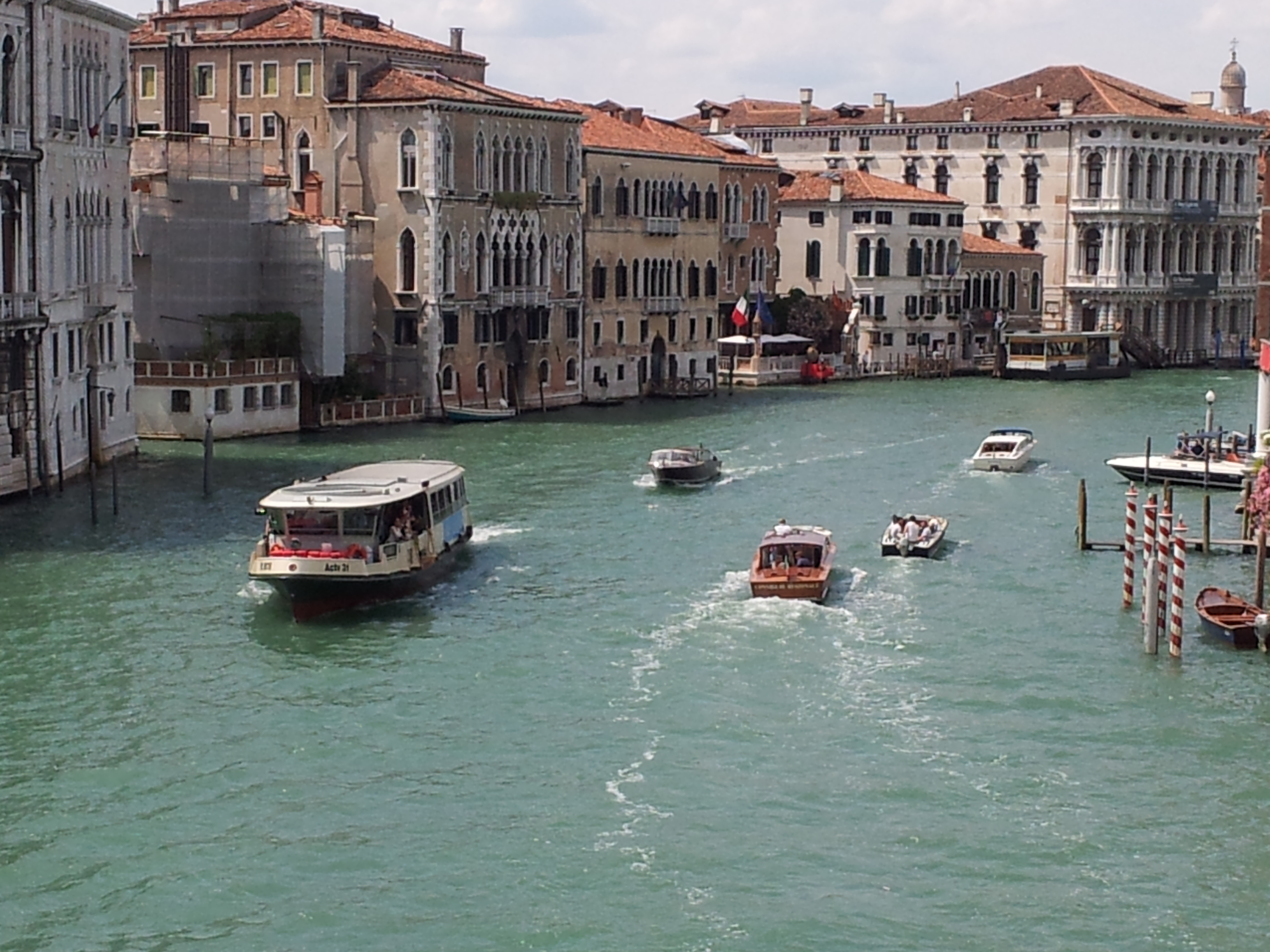
On our first visit, we traveled from Florence to Venice.  We were advised to take a water taxi to the hotel, not only the most direct route but to see some of Venice from the water.  The only drawback, you have to negotiate a price with the driver.

We were not very good negotiators, and it cost 60 Euros.

But, despite the cost, it was worth every Euro because the taxi driver took us by the scenic route, directly from the Station to the doorstep of our hotel.  For a first time in Venice, and you want to see it from the water, a water taxi is the best option.

2013-06-25 17.09.16

The first time we stayed at the Savoia and Jolanda Hotel, which was at the time quite old, and the room we had, on the ground floor, was comfortable enough, but being November, they had just stopped using the air conditioning, it was still quite warm and at times uncomfortable.

There were better rooms, but this was beyond the knowledge of the travel agent, and one of the reasons we stopped using agents to book hotels.

The most recent visit we had driven down from Salzburg to Venice airport where we had to return the hire car.  From there we were intending to take a private water taxi from the airport to the hotel, for an estimated 120 Euros.

We saved our money and took the ACTV public waterbus, from the airport to the hotel, with one stop.  It took a little over an hour and was equally as scenic.

venicecanals1

Our room in the Hilton was on one of the upper levels, floor four, and had a view of the canal, the large passenger ships coming and going, as well as a remarkable view of Venice itself as far up the canal to St Marks Square in one direction, and the port for the passenger ships in the other.

20130627_081601

We got to see three or four very large passenger ships come and go, along with a lot of other craft.  I hadn’t realized how busy the waterways, and the Grand Canal, were.

20130627_174408

Each evening after a day’s exploring we would end up in the Executive Lounge, and then one of the many restaurants, usually Il Molino for breakfast, and the Rialto Lobby Bar and Lounge for dinner.  After that, it was a stroll down the waterfront taking in the night air, and perhaps to walk off the delicious dinner.

Trying to pick up the pieces

I can see how it is that a writer’s life is one that, at times, has to be shut off from the outside world.

It’s a bit hard to keep a stream of thoughts going when in one ear is some banal detective show, and in the other, a conversation that you have to keep up with.  I know how hard it is because I’ve tried doing three things at once, and failed miserably in all three.

So, out I slink to the writing room and start by re-reading the previous chapters, to get back into the plot.  I should remember where I am, and get straight to it, but the devil is in the detail.

Going back, quite often I revise, and a plotline is tweaked, and a whole new window is opened.  God, I wish I didn’t do that!

Then I get to the blank page, ready to go, and…

The phone rings.

Damn.  Damn.  Damn.

Phone answered, back to the blank page, no, it’s gone, got yo go back, blast, another revision, and back to the blank page.

Half an hour shot to pieces.

The phone rings again.

Blast scam callers.  I nearly rip the cord out of the wall.

All through this the cat just watches, and, is that a knowing smile?

It can’t be, I’ve just learned that cats can’t smile, or make any sort of face.

I’m sure his thoughts are not a vague or scrambled, or wrestling with the ploys of several stories on the go, getting locations right, getting characters to think and do their thing with a fair degree of continuity.

The cat’s world is one of which chair to lie on, where is that elusive mouse be it real or otherwise, and is this fool going to feed me, and please, please, don’t let it be the lasagna.  I am not that cat!

Unlike other professions, it’s a steady, sometimes frustrating, slog where you can’t just walk away, have a great time, and come back and pick up where you left off.  Stories have to be written from beginning to end, not a bit here and a bit there.

It’s a bit like running a marathon.  You are in a zone, the first few miles are the hardest, the middle is just getting the rhythm and breathing under control, and then you hope you get to the end because it can seem that you’ve been going forever and the end is never in sight.

But, when you reach the end, oh, isn’t the feeling one of pure joy and relief.

Sorry, not there yet.

And no comment is required from the cat gallery, thankyou!