Writing about writing a book – Day 30

I’m having fun with chapter one.

Can you reach a point where you are never satisfied with what you’ve written?

What more can I say?

…

Looking at the mess constituting my room and my life, slob may have been an appropriate description.  I considered myself old, overweight though not necessarily fat, hair graying at the edges, and few wrinkles around the eyes, there were no real pluses in my description.

Some said I had a kindly face, but perhaps I had the look of a paternalistic grandfather.  There were several men in the office who were the same age and had grandchildren.  And some who had children at a time when they should be planning for retirement, not parenthood.

World-weary and perpetually tired, I’d passed the mid-life crisis, wondering what it was that affected other men my age.  Twenty-odd years later, I was still wondering.

I used to think I’d missed a lot in half a lifetime.

Now, I didn’t know what to think.

Did I deserve pity?  No.

Did I deserve sympathy?  No!

The only person who could get me out of the rut was myself.  For years I’d traded on Ellen’s good nature.  She deserved better, left me, and was now happier in the arms of a man who I wanted to believe treated her far better than I.  She had told me so herself, and judging by her manner, it had to be true.  Only recently had she got her smile back, the one that lit her face up, one that infectiously spread happiness to anyone near her.

There were reasons why I became the person I was now.  Some might say they were valid.  In the cold, hard light of dawn, I could see it was time I stopped using my past as a crutch and got on with the business of living.

Perhaps today would be the first day of the rest of my life.

I took the bus rather than drove.  At that hour of the morning, the traffic would be bad, and there would be no parking spaces left.  And I was using public transport more and more, have become accustomed to the convenience.  Time to read the paper, or a good book, or just dream about a different life.

This morning I thought about Ellen.  I hadn’t for a while, but that might have been fueled by the arrival of the divorce papers she wanted me to sign.  I’d had my time to be angry, and disappointed, she’d said, and she was right.  It was time to move on.

And she had stuck by me through thick and thin, coming back from overseas service a basket case after nine months in a POW camp, after a war that was more horrible than anyone could imagine.  Two mental breakdowns, periods of indolence and lassitude, leaving her to bring up the girls on her own.  I had not been a great father, and much less a husband.

I remembered that argument word for word.

I could see the looks of pain in the girl’s faces.

I remembered the hug, the kiss on the cheek, the tears.  It had not been out of hate, but a necessity.  For her and the children.  Until I found some lasting peace, they were better off at arm’s length.  Away from the arguing, the silences, the absences.

And disappointment.

After she left I tried to get my life in order.  Drugs, professional help, alcohol, meditation, then work.

Over ten years ago, it took a year, perhaps a little more before sanity returned.

She did not.

By then I knew she had found someone else, a mystery man, whom neither she would tell me who, and the girls honestly didn’t know.  She’d promised that much, any new man in her life would not get to meet the girls.  And she would tell me, and then when she was ready.

Then, suddenly, the children were no longer children but young adults and out in the world on their own, and I had become more a banker than a father, an observer rather than a participant, and it was as if we were more like ships passing in the night.  And overnight, the ships had sailed to the other side of the world.

My own fault, of course, and a bit late now to change history.  I could see Ellen’s influence over them, her prejudices and dislikes, and their contempt, like their mother, for me, simmering beneath the surface, but in fairness to them, I really hadn’t been much of a help as a parent should be.

And now I was getting my life back in order, perhaps I could try and make it up to them, and that first meeting, with them and Ellen, nearly a month ago, had been a step in the right direction.  They’d agreed to see me again, without her, during the holidays, which had now arrived.  All I had to do was make the call, and get on a plane.

This mess I was heading into, it would not take long.  I pulled out my phone and after searching for a travel agent near where I worked, I made an appointment to see about going overseas.

She had spoken to me about the divorce papers several days ago, alternately pleading with, and then abusing, me.  There had been some very strong language in the conversation, words I’d thought her incapable of using, but I confess, finally, I didn’t really know her all that well anymore.

Since then I had been calling her to arrange a meeting.  She had not yet replied.  With some distance to go before I reached the office, I tried calling her again.  I was almost glad when she didn’t answer.

…

I never realized just how hard it was to revise and re-write, and how much time it takes.

Perhaps that’s why first novels take so long to write!

…

© Charles Heath 2016-2023

Friday night at a hotel bar

It’s a writer’s paradise for characters

…

I’m not a night person and even less so a pub person, except perhaps for a Sunday lunch, for what is usually an incomparable steak.

But tonight is different.

We’re meeting people who have come up from Melbourne for a wedding, people we haven’t seen for a long time.

I’m not a conversationalist, so I leave them to it, and go on a character hunt.

And the pickings are rich.

My first victim, If she could be called that, is the one I call the lady in the red dress.

She’s on the other side of 40, with a sort of earthy attractiveness about her.  The first thing to notice, for her age, the dress is too short.  Maybe that’s the fashion and I’m just an old fogey, but it does say something.

She’s definitely single, or perhaps a player, certainly a flirt.  She holds the stage, and talks with her hands, and those around her are captivated.

The untidy hair loosely collected in a hair tie tells me she carries a sort of messy but not messy look, and I wonder at the state of her residence.  It’s a leap I know, but small signs indicate bigger things.

I’ve counted two glasses of beer in an hour and a half, so she is sensible, aware of her surroundings, and of the three men she has spent her time with, it’s hard to pick a winner.  It’s not hard to captivate a loser.

Next comes the party girls three 20 somethings dressed to be noticed, and overly animated and screams look at us.

Oops, they just parked themselves nearby with the very expensive and exotic-looking matching cocktails.  There’s the obligatory selfie together, and then a casual look around to see what’s on offer.

I don’t think there’s a lot, but my standards and their standards are most likely miles apart.

Hang on, news flash, they’re a part of another group nearby, several older office workers who could be the so-called chaperones, or just having a quiet drink before having to go home to any of, a family, a car, an empty flat, or blessed relief the week is finally over.

Next door to us is a family group, the kids are teens, and I’m wondering if the boys are boyfriends.  The mother is an older, very attractive version of the daughter.

Perhaps it’s an experience for the girls because I don’t see a man who could act as a husband unless it’s the second time around with a younger version.

Why not.  Men do it, why can’t women.  But out on the town with your teenage children?

The bar’s entertainment … a single guy playing the guitar, along with backing music that makes him sound better, but people seem to agree that it’s good but not brilliant.

He’s singing covers, which may have made him just so so, perhaps if he sang his own material it might take him to the next level.

But, who cares, no one seems to be listening, the noise level of what seems like a thousand concurrent conversations drowning out any appreciation.  

Of course, it’s headache-inducing because he has the volume so high, just to get over the ambient noise, and in doing so, it takes away the intrinsic musicality of it all, and it’s just more noise to contend with.

I suppose it’s better than canned music.

OK, news flash, the red dress had moved down the table and settled on a prospect, about 15 years younger.  Her animation has intensified, and yes, there’s the casual brushing against him, like a cat marking its territory.

The night is young, and it’s looking good.  I’m not going to pretend I have given a passing thought to spending a few minutes with her, for character creation purposes only.

And yes, we now have a sing-along.  At half-past eight, it’s a bit early for the crowd to be too exuberant.

A squeal shatters the, well, not silence, and is one of the groups pretending like someone had dripped ice down the back of a dress that has no back, the next phase of attention-getting.

And, attention directed their way, they do a little dance, skol the drinks, and with all eyes on them, head to the bar for round two, or is that three.  Several others join them, but they don’t need to do the dance.  The lack of clothes more than makes up for the squeals.

If these are the modern mating rituals a lot has changed in the last 50 years.  Or perhaps not, I’m just too old to remember.

“Second Thoughts”, a short story

Get me to the church on time.

It was a tune out of My Fair Lady, and it was in my head the moment I woke up that morning.  And this day was, to quote some immortal’s line, was supposed to be the happiest day of my life.

But, somehow, it didn’t feel like that and lying under the warm covers of my bed, perhaps for the last time at my parent’s home, the last place I thought I’d find myself, I began to consider how it was I had ended up in this situation.

It was not a question of who the bride was, we had been friends from an early age and used to joke about getting married, but at the age of six or seven, that was a concept rather than something we might act on in the future.

Except that was how it panned out, and, not for the reasons one might think would lead to such an eventuality.

Yes, we were close friends till the early teens, then my family went in one direction, New York, and her family went in another, San Francisco, and in each place both families built successful businesses.

Josephine, the intended bride, and I met off and on over the next fifteen years, some of that mutually when we were at university together, and, I might add, living together.  Even then, there had been no suggestion of permanency because we each had to go home to eventually work in the family business.

In those few years, it had been easy because there had been no expectations by either of us.  We simply came together, stayed together, and parted at the end both happy to have enjoyed the experience.

Then, several events changed the course of our lives.

My father died unexpectedly at a crucial point in the company’s expansion, and without his direction, it began to flounder.  Then, Josephine arrived in New York to open a branch of her family’s business, and just happened to arrive on the day of my father’s funeral.

I thought it a coincidence and was grateful for her support at a time when I needed it.

A month after that, one of the lead investors in the new expansion plan pulled out, as was his right because the loan had been contingent on my father overseeing the project.  It was the end of a very bad week, and instead of being the last to leave the office, I left early, called up an old friend, Rollo, who had followed us to New York, and we went to his favourite bar.

He suggested a night on the town was called for and I agreed with him.  I think by that time I’d had enough of the problems for a few days.  But with Rollo, I learned no invitation was without its twists and turns, so when he said his sister was bringing a friend, I had to act happy even if I didn’t feel like it.  Her friends could be a little strange.

Another coincidence, the friend was Josephine.  Hearing from her once maybe, but twice in the same week, I didn’t think so, so I let it pass.  Yet despite my reservations, in the end, I had to admit I was glad to see her because the last thing I wanted to do was entertain a quirky woman I didn’t know.

Long story short, Josephine’s family business came aboard as the replacement investor, but not without some rather stringent requirements, and though no one on either side would admit it, it was suggested that perhaps Josephine and I would make an excellent match.  After all, we were childhood friends, had lived together without the problems that sometimes came with it, and we would be working very closely together.

I proposed, she accepted, and everyone was happy.

Well, not everyone.

I was down in the dining room getting breakfast, before the wedding, when Rollo arrived.  It went without saying Rollo was going to be the best man.

Curiously, he was neither surprised nor shocked to learn of my proposal, but it was a surprise to learn, in a roundabout way, he wasn’t exactly happy for me.  It was not anything I could put my finger on, but more of a feeling I had.  And, to be honest, before I had proposed to her, I was sure that Rollo had feelings for her, and at times I thought how much more sense it would make if they were together.

I’d even asked him once or twice if he liked her, and he just said they were friends.

The other side of that equation was his sister, Adrienne, who was, I thought, charming, funny, and sometimes a little offbeat, which is why I was drawn to her.  Over time, I think I may have developed feelings for her, but by the time those feelings were rising to the surface, I was advised that a woman of Josephine’s standing was more my type.

My mother could be very annoying at times, and whilst she might be looking after her son’s best interests, she was also looking after the company’s interests as best she could.  I suspect Josephine’s parents were the same, hoping their daughter would marry advantageously.

Rollo, being on the outside, had summed it up perfectly, ‘if this had been the eighteenth century there’s no doubt you two would be the perfect match’.

“You look as happy as I feel,” I said when I saw him.

“It’s going to be a big day, church wedding, in Latin of all languages, then the society event of the year.  What’s not to be happy about?”

Put like that, I shrugged.  “A registry office, burger and chips at the local diner, then a few days in the Catskills would have sufficed.”

“And on what planet do you think you are right now?”

I didn’t answer.  I simply poured another cup of black coffee and sat down.  It was a large room, with seats for a dozen, and I was the only one up.  I had expected a room full of family members, of which at least twenty were upstairs right now recovering from last night’s festivities.

Rollo poured some tea into a cup and sat opposite.  “OK.  What’s wrong?  Wedding day jitters?”

Could he read my mind?

“It just doesn’t seem right.  I mean, it seems we have been on this track forever, but you know, there’s something missing.”

“Love?”

Exactly.  It was another of those thoughts I had just before I got out of bed.  I liked her, maybe I loved her once, when I didn’t really know what love was, but now?  I don’t know what it was I felt about her.  I had been expecting those mythical thunderbolts to strike, but as the days, weeks, and months wore on, it just didn’t happen.

It was almost if we were going through the motions.

“It feels like it’s going to be a marriage of convenience.”  There, I said it.

And I expected Rollo to start having a fit.  Instead, he concentrated on putting three spoonful’s of sugar into his tea and stirring.  And stirring.  And stirring.

“Say something,” I said.  “Anything.  Tell me I’m being stupid, tell me to get out of my funk and screw my courage to the sticking place, or whatever it is you say in times like this.”

“It’s not like you to drop a bomb like this at a time like this…”

I felt he had more to say, the good part where he’d call me an ass, and then tell me to get my shit together.  It wouldn’t be the first time.

“But…”

“But I rather get the impression this wedding might not be going ahead.”

“It has to.  God knows how many people have put themselves out to be here.  It was, my mother said, a logistical nightmare.”

“It wouldn’t be the first time this has happened.”

“You’re supposed to be arguing for the wedding, not against it.”

“I would if I knew your heart was in it.  But it isn’t, is it?  I think you’ve spent so much time trying to please everyone else, that you have forgotten about yourself.  I know you’re not happy.  I also happen to know that Jo isn’t either.”

“You’ve spoken to her?”

“Just before I got here.  Call her.  You two need to talk.  In the meantime, you’re going to have to repay a huge debt after I somehow manage to sort this mess out.  My car’s outside.  Leave now, and I’ll let you know when it’s safe to return.”

“Where will I go?”

He smiled.  “I’m sure you’ll know by the time you get in the car.”

It was reckless and would cause a lot of pain and anguish for my mother, but I considered how much more pain it would cause to Josephine if I didn’t call it off.

I made the call on the way upstairs to finish dressing.

“I’m assuming you’ve spoken to Rollo?”  She didn’t wait for me to speak.

“You feel the same way?”

“It started out with the best of intentions, but I can’t help thinking if we were right for each other we would have married after university.  We are best friends, Alan, and I don’t think it’s ever going to progress from there.  I know you feel that too, it’s just the pressure from our families has managed to mask our true feelings.”

“Do you have any idea what sort of storm is about to erupt?”

“Everyone will get over it.  There’s too much at stake on both sides for there to be any real or lasting consequences.  I guess Rollo is going to have his work cut out for him.  I’ll see you one the other side.”

She didn’t say what other side, but I suspect it meant when the dust had settled.

I literally ran downstairs, mainly because I heard movement and didn’t want to run into anyone, and out the door towards Rollo’s car.

Once again I had to admire the fact he had exquisite taste in cars, and the one he’d brought was no exception, a Lamborghini, yellow, fast, and he knew I wanted to drive it.

What I didn’t expect. His sister, Phoebe, sitting in the passenger seat.

© Charles Heath 2019

Searching for locations: Murano, Italy

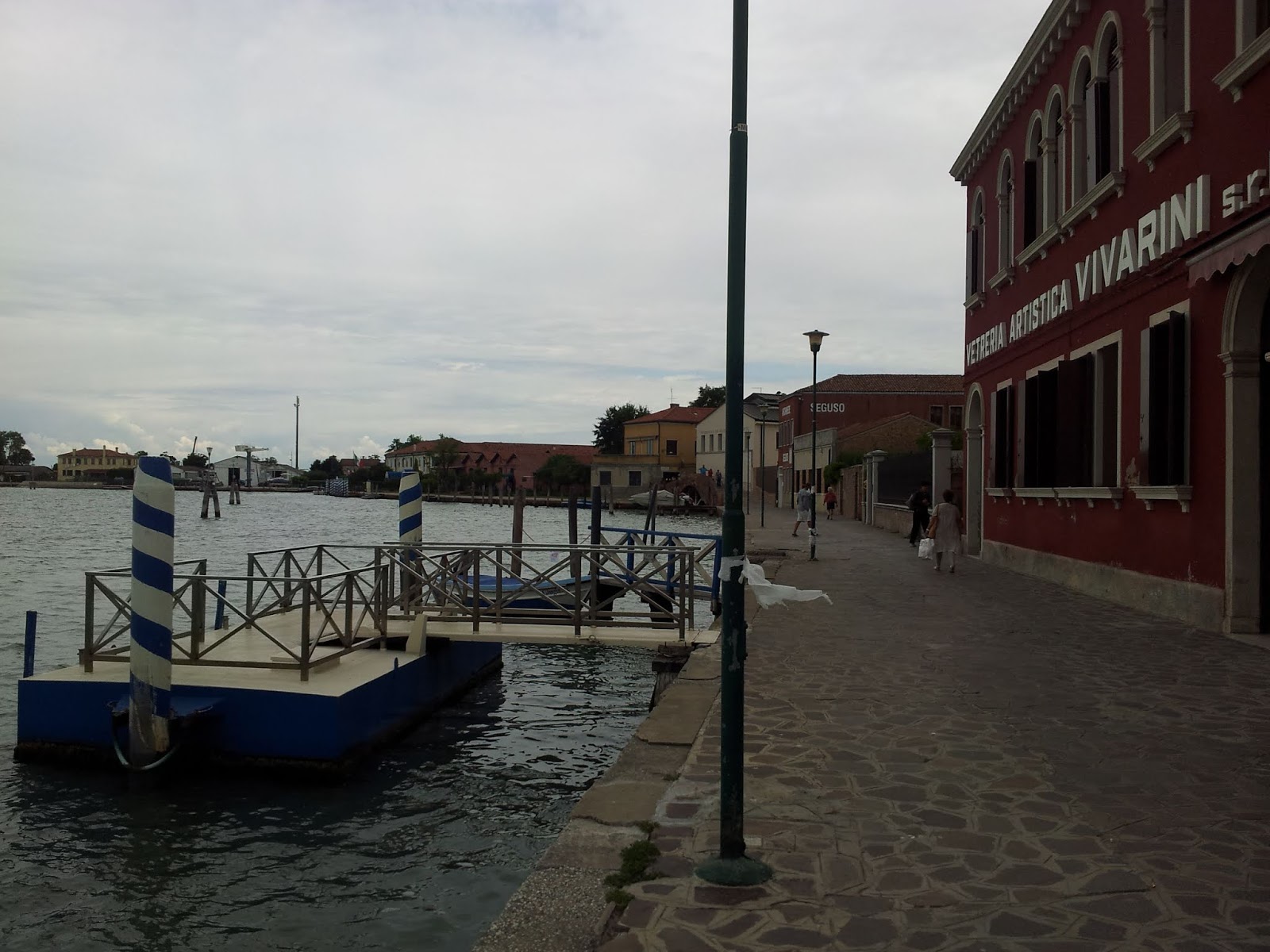
The first time we visited Venice, there was not enough time left to visit the glass-blowing factories on Murano.  We saved this for the next visit, and now more comfortable with taking the Vaporetto, boarded at San Marco for the short journey.

The view looking towards the cemetery:

The view looking down what I think was the equivalent to the main street, or where several of the glass-blowing factories and display shops were located:

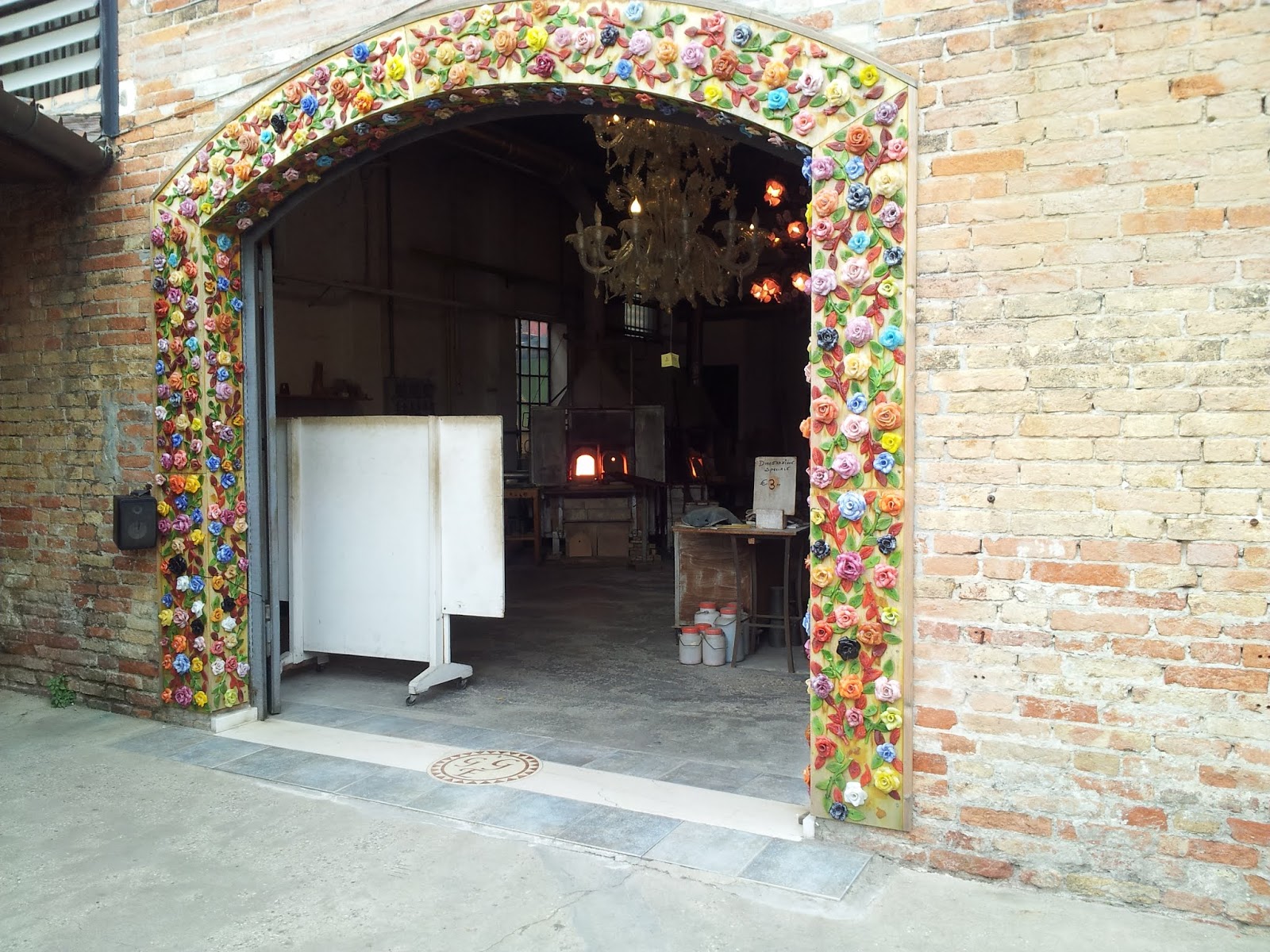
Looking towards a workshop, this one costs us each a Euro to go in and observe a demonstration of glass blowing, and it still surprises me that some people would not pay

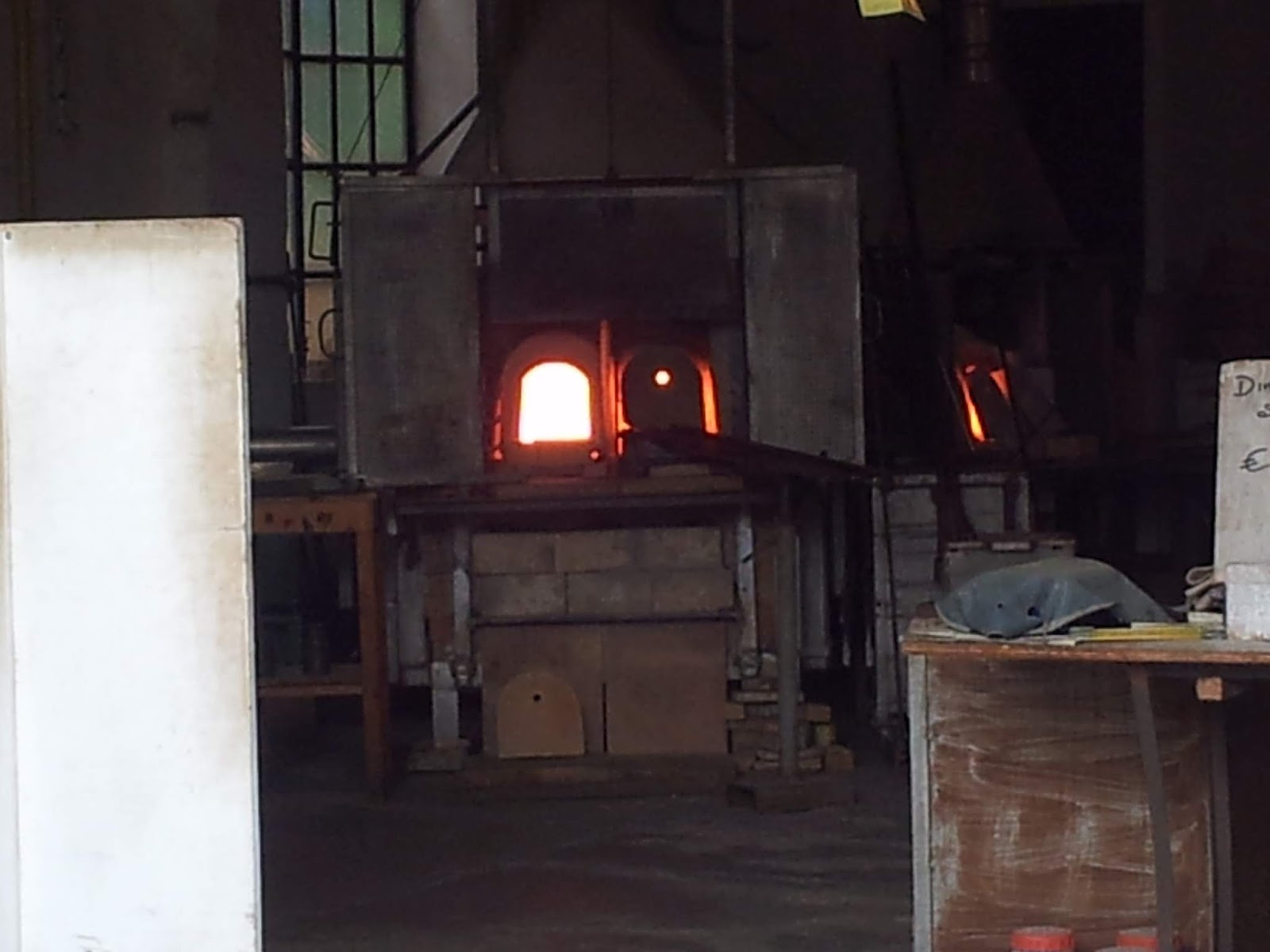
The oven where the glass is heated

And the finished product, the retail version of the horse that the glassblower created during the demonstration:

Then we bought some other glassware from the retail storefront, a candle holder

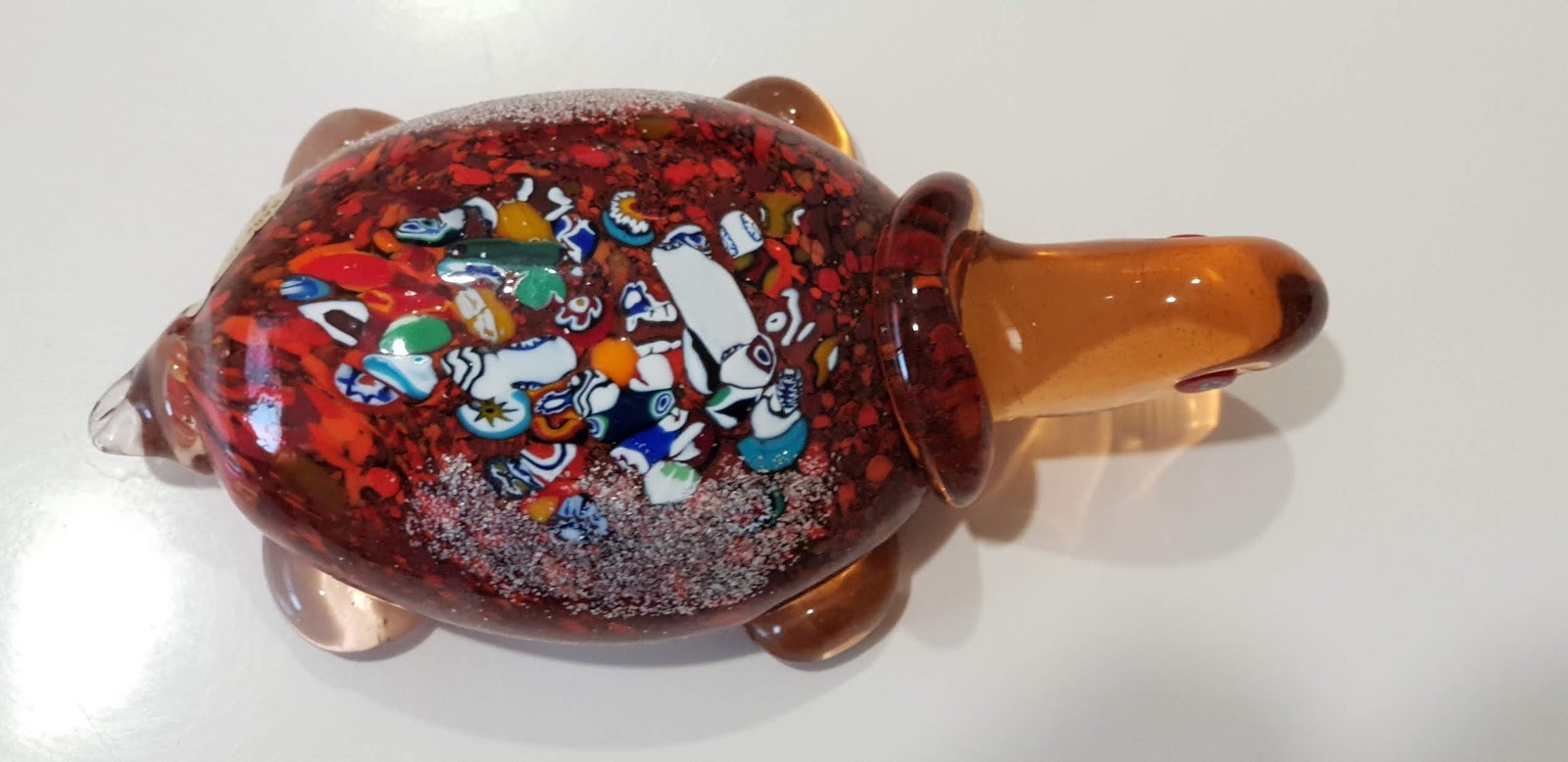
and a turtle.

“Trouble in Store” – Short stories my way: Actions have consequences

It’s time for the policewoman to arrive.

There is such a thing as pure dumb luck.

If she did not walk through the door when she did then Jack would have walked away.

From the policewoman’s perspective:


She crossed the street from the corner instead of remaining on the same side of the street as she did every other night.  When she reached the other sidewalk, she was about 20 yards from the nearest window of the store.

As she crossed, she got a better view of the three people in the store and noticed the woman, or girl, was acting oddly as if she had something in her hand, and, from time to time looked down beside her.

A yard or two from the window she stopped, took a deep breath, and then moved slowly, getting a better view of the scene with each step.

Then she saw the gun in the girl’s hand, and the two men, the shopkeeper and a customer facing her, hands up.

It was a convenience store robbery in progress.

She reached for her radio, but it wasn’t there.  She was off duty.  Instead, she withdrew, and called the station on her mobile phone, and reported the robbery.  The officer at the end of the phone said a car would be there in five minutes.

In five minutes there could be dead bodies.

She had to do something, and reached into her bag and pulled out a gun.  Not her service weapon, but one she carried in case of personal danger.


Guns are dangerous weapons in the hands of professional and amateur alike.  You would expect a professional who has trained to use a gun to not have a problem but consider what might happen in exceptional circumstances.

People freeze under pressure.  Alternately, some shoot first and ask questions later.

We have an edgy and frightened girl with a loaded gun, one bullet or thirteen in a magazine, it doesn’t matter.  It only takes one bullet to kill someone.

Then there’s the trigger pressure, light or heavy, the recoil after the shot and whether it causes the bullet to go into or above the intended target, especially if the person has never used a gun.

The policewoman, with training, will need two hands to take the shot, but in getting into the shop she will need one to open the door, and then be briefly distracted before using that hand to steady the other.

It will take a lifetime, even if it is only a few seconds.

Actions have consequences:


The policewoman crouched below the window shelf line so the girl wouldn’t see her, and made it to the door before straightening.  She was in dark clothes so the chances were the girl would not see her against the dark street backdrop.

Her hand was on the door handle about to push it inwards when she could feel in being yanked hard from the other side, and the momentum and surprise of it caused her to lose balance and crash into the man who was trying to get out.

What the hell…

A second or two later both were on the floor in a tangled mess, her gun hand caught underneath her, and a glance in the direction of the girl with the gun told her the situation had gone from bad to worse.

The girl had swung the gun around and aimed it at her and squeezed the trigger twice.

The two bangs in the small room were almost deafening and definitely disorientating.

Behind her, the glass door disintegrated when the bullet hit it.

Neither she nor the man beside her had been hit.

Yet.

She felt a kick in the back and the tickling of glass then broke free as the man she’d run into rolled out of the way.

Quickly on her feet, she saw the girl had gone, and wasted precious seconds getting up off the floor, then out the door to find she had disappeared.

She could hear a siren in the distance.  They’d find her.


If the policewoman had not picked that precise moment to enter the shop, maybe the man would have got away.

Maybe.

If he’d been aware of the fact he was allowed to leave.

He was lucky not to be shot.

Yet there were two shots, and we know at least one of them broke the door’s glass panel.


Next – the epilog

© Charles Heath 2016-2020

‘Sunday in New York’ – A beta reader’s view

I’m not a fan of romance novels but …

There was something about this one that resonated with me.

This is a novel about a world generally ruled by perception, and how people perceive what they see, what they are told, and what they want to believe.

I’ve been guilty of it myself as I’m sure we all have at one time or another.

For the main characters Harry and Alison there are other issues driving their relationship.

For Alison, it is a loss of self-worth through losing her job and from losing her mother and, in a sense, her sister.

For Harry, it is the fact he has a beautiful and desirable wife, and his belief she is the object of other men’s desires, and one in particular, his immediate superior.

Between observation, the less than honest motives of his friends, a lot of jumping to conclusions based on very little fact, and you have the basis of one very interesting story.

When it all comes to a head, Alison finds herself in a desperate situation, she realises only the truth will save their marriage.

But is it all the truth?

What would we do in similar circumstances?

Rarely does a book have me so enthralled that I could not put it down until I knew the result. They might be considered two people who should have known better, but as is often the case, they had to get past what they both thought was the truth.

And the moral of this story, if it could be said there is one, nothing is ever what it seems.

…

Available on Amazon here: amzn.to/2H7ALs8

…

The cinema of my dreams – I always wanted to go on a treasure hunt – Episode 13

Here’s the thing…

Every time I close my eyes, I see something different.

I’d like to think the cinema of my dreams is playing a double feature but it’s a bit like a comedy cartoon night on Fox.

But these dreams are nothing to laugh about.

Once again there’s a new instalment of an old feature, and we’re back on the treasure hunt.

…

I stood at the entrance and counted to ten, then pushed the door open and went in.

I was not sure what I was expecting, but it was not what I saw.  A country and western bar, with decorations that made you think you were in Texas, booths and tables elegantly set under subdued lighting, and well dressed serving staff serving customers.

Across the back was a long bar, and a bottle of every known drink known to mankind behind it, and two bartenders, looking busy.  Several people were sitting at the bar, including Nadia, who was by herself, having a shot glass, no doubt with tequila, and beer put in front of her.

No one even looked up to note my arrival.

It took a minute to scan the customers I could see, and not recognise any of them, except they were not of the scoundrel variety, and whether or not there was another exit if I needed one.

Always an emergency exit near the restrooms and I could see them in the distance.

Another look around, then I crossed the room, weaving through the tables, to where Nadia was sitting.  She hadn’t noticed my arrival.

“This seat taken?” I asked.

A quick turn of the head and I could see the rebuke on her lips.  Then surprise on her face.

“Smidge.  What are you doing here?”

“You keep asking me that question every time we meet.”

“Perhaps we should stop meeting like this.”  She turned back to the bar and downed the shot glass contents.  “Sit if you must.”

I had expected the back of her hand to slap me to the floor for daring to talk to her, but instead sat before she changed her mind.

“Same question,” she said, still not looking at me.

I’d try flippancy first and see how that went.  “Always wanted to come and see the famous Lantern Inn, but it doesn’t seem to be famous any more, well, not in that respect.”

She looked sideways at me.  “What if it had been?”

“Then I’m guessing this would have been a short encounter.”

“It still might be.”

OK, try not to be too brave, she could still beat me to a pulp with one hand tied behind her back.  “I doubt you want to cause a scene, and especially not with someone like me.”

She turned and looked at me.  Admittedly I was not the skinny assed punk I used to be, but still not her type.

“When did you go and grow up?”  At least, now, she didn’t tower over me, I could see eye to eye, literally and figuratively.

“While you were away.  Amazing what some sunshine and fertilizer will do.”

Was that a hint of a smile, or a grimace?

“Still a smart ass though.”

“You haven’t changed much either.”  Short skirt, low cut top, she’d been wearing a coat when she came in.  Hair was shorter and with a fringe.  Didn’t suit her.  “What happened to this place?”

“The last Mayor cleaned up the waterfront, most of it anyway.”

And died, rather ironically, in the crossfire between the two rival gangs in this very place.  Nothing like killing a public official, corrupt or not, to precipitate a cleanup.  It just sent the gangs into darker corners.

“Why are you here, then?”  I had to ask.

“I’m respectable.”  A nod to the bartended got another shot of tequila.

For me, a Budweiser.

“So does that mean you’re dating a Benderby?”  For her, it would be the only type of respectability she could have in a town like ours unless she moved away to somewhere no one knew who she was.

“Not if they were the last family on earth.”

“So, what’s he got on you?”

She turned much faster this time to look at me, sliding off the chair and standing over me.  There was not a pretty look on her face.

I tried not to exhibit signs of fear and failed.

“Who told you that?”

“No one.”  I took a deep breath to get the tremor out of my voice.  “They got the dirt on everyone, so why should you be an exception?”

I slipped of my chair and stood toe to toe with her.

For a person with an ugly soul, she had beautiful eyes.

Then she leaned forward those last six inches and kissed me briefly on the lips.  Hers was cold.

“What do you really want Smidge?”  She pulled back, and sat down again, picking up the beer and taking a sip.

“To get payback on Alex.”

“And you think I’ll help you?”

“Well, you need a map, and I don’t think you want to cosy up to Rico, do you?”

I had just put together a plan, shaky at best, highly dangerous at worst, but it might work.  It didn’t have to be the real map, just one that was close enough to the real thing.

She reached into her purse and pulled out a key, and slid it across the bar towards me.

Room 14 at the Shingle Hotel.   Where they used to have rooms to rent by the hour.  And cockroaches, people not the bugs, in every corner.

“One hour.  Now leave.”

I heard the door open and close and looked back through the mirror behind the bar.  A large man with a beard and dark glasses.  In a gloomy restaurant.

Her date?

I took the key and left, trying to look like I was not leaving in a hurry.

© Charles Heath 2019-2021

An excerpt from “Betrayal” – a work in progress

It could have been anywhere in the world, she thought, but it wasn’t.  It was in a city where if anything were to go wrong…

She sighed and came away from the window and looked around the room.  It was quite large and expensively furnished.  It was one of several she had been visiting in the last three months.

Quite elegant too, as the hotel had its origins dating back to before the revolution in 1917.  At least, currently, there would not be a team of KGB agents somewhere in the basement monitoring everything that happened in the room.

There was no such thing as the KGB anymore, though there was an FSB, but such organisations were of no interest to her.

She was here to meet with Vladimir.

She smiled to herself when she thought of him, such an interesting man whose command of English was as good as her command of Russian, though she had not told him of that ability.

All he knew of her was that she was American, worked in the Embassy as a clerk, nothing important, whose life both at work and at home was boring.  Not that she had blurted that out the first they met, or even the second.

That first time, at a function in the Embassy, was a chance meeting, a catching of his eye as he looked around the room, looking, as he had told her later, for someone who might not be as boring as the function itself.

It was a celebration, honouring one of the Embassy officials on his service in Moscow, and the fact he was returning home after 10 years.  She had been there once, and still hadn’t met all the staff.

They had talked, Vladimir knew a great deal about England, having been stationed there for a year or two, and had politely asked questions about where she lived, her family, and of course what her role was, all questions she fended off with an air of disinterested interest.

It fascinated him, as she knew it would, a sort of mental sparring as one would do with swords if this was a fencing match.

They had said they might or might not meet again when the party was over, but she suspected there would be another opportunity.  She knew the signs of a man who was interested in her, and Vladimir was interested.

The second time came in the form of an invitation to an art gallery, and a viewing of the works of a prominent Russian artist, an invitation she politely declined.  After all, invitations issued to Embassy staff held all sorts of connotations, or so she was told by the Security officer when she told him.

Then, it went quiet for a month.  There was a party at the American embassy and along with several other staff members, she was invited.  She had not expected to meet Vladimir, but it was a pleasant surprise when she saw him, on the other side of the room, talking to several military men.

A pleasant afternoon ensued.

And it was no surprise that they kept running into each other at the various events on the diplomatic schedule.

By the fifth meeting, they were like old friends.  She had broached the subject of being involved in a plutonic relationship with him with the head of security at the embassy.  Normally for a member of her rank, it would not be allowed, but in this instance it was.

She did not work in any sensitive areas, and, as the security officer had said, she might just happen upon something that might be useful.  In that regard, she was to keep her eyes and ears open and file a report each time she met him.

After that discussion, she got the impression her superiors considered Vladimir more than just a casual visitor on the diplomatic circuit.  She also formed the impression that he might consider her an ‘asset’, a word that had been used at the meeting with security and the ambassador.

It was where the word ‘spy’ popped into her head and sent a tingle down her spine.  She was not a spy, but the thought of it, well, it would be fascinating to see what happened.

A Russian friend.  That’s what she would call him.

And over time, that relationship blossomed, until, after a visit to the ballet, late and snowing, he invited her to his apartment not far from the ballet venue.  It was like treading on thin ice, but after champagne and an introduction to caviar, she felt like a giddy schoolgirl.

Even so, she had made him promise that he remain on his best behaviour.  It could have been very easy to fall under the spell of a perfect evening, but he promised, showed her to a separate bedroom, and after a brief kiss, their first, she did not see him until the next morning.

So, it began.

It was an interesting report she filed after that encounter, one where she had expected to be reprimanded.

She wasn’t.

It wasn’t until six weeks had passed when he asked her if she would like to take a trip to the country.  It would involve staying in a hotel, that they would have separate rooms.  When she reported the invitation, no objection was raised, only a caution; keep her wits about her.

Perhaps, she had thought, they were looking forward to a more extensive report.  After all, her reports on the places, and the people, and the conversations she overheard, were no doubt entertaining reading for some.

But this visit was where the nature of the relationship changed, and it was one that she did not immediately report.  She had realised at some point before the weekend away, that she had feelings for him, and it was not that he was pushing her in that direction or manipulating her in any way.

It was just one of those moments where, after a grand dinner, a lot of champagne, and delightful company, things happen.  Standing at the door to her room, a lingering kiss, not intentional on her part, and it just happened.

And for not one moment did she believe she had been compromised, but for some reason she had not reported that subtle change in the relationship to the powers that be, and so far, no one had any inkling.

She took off her coat and placed it carefully of the back of one of the ornate chairs in the room.  She stopped for a moment to look at a framed photograph on the wall, one representing Red Square.

Then, after a minute or two, she went to the mini bar and took out the bottle of champagne that had been left there for them, a treat arranged by Vladimir for each encounter.

There were two champagne flutes set aside on the bar, next to a bowl of fruit.  She picked up the apple and thought how Eve must have felt in the garden of Eden, and the temptation.

Later perhaps, after…

She smiled at the thought and put the apple back.

A glance at her watch told her it was time for his arrival.  It was if anything, the one trait she didn’t like, and that was his punctuality.  A glance at the clock on the room wall was a minute slow.

The doorbell to the room rang, right on the appointed time.

She put the bottle down and walked over to the door.

A smile on her face, she opened the door.

It was not Vladimir.  It was her worst nightmare.

…

© Charles Heath 2020

The cinema of my dreams – Was it just another surveillance job – Episode 16

As we all know, writing by the seat of your pants is almost the same as flying by the seat of your pants, a hazardous occupation.

As it happens, I like writing this way because like the reader, I don’t know what to expect next.

And equally, at times, you can write your self into a corner, much like painting, and then have to go back, make a few changes and//or repairs and then move forward.

It’s part of the writing process, only in this case, the changes occur before you’ve finished the novel if you finish.  Quite often a lot of writers get only so far, then the manuscript hits the bottom drawer, to be brought out on a distant rainy day.

Or your cat has mocked your writing ability one too many times.

Therefore, we’re winding back to Episode 16, and moving forward once again, from there.

O’Connor seemed to be more affluent than I because he was living in a flat located in an upmarket building.  Getting into the ground floor required a passkey, one I suspect might also be needed to get in the front door of his flat, but I’d worry about that later.

My first problem was that front door, and it was not until a tradesman exited that I took the opportunity to appear to arrive at the same time, pretending to find my card, and brushing past him as he was exiting.  He ignored me, his hands full, being in a hurry.

It took a day and a half of watching the building, waiting for an opportunity.  His flat was on the third floor and although there was an elevator, I took the stairs, hoping that I wouldn’t run into anyone.

Quickly and quietly, and thankfully without seeing another resident, I came out into the passageway, and it was about ten steps to his front door.  Number 37.  Not far away, in one direction, the end of the passage, and numbers 38, 39, and 40.  In the other, four more flats and the end of the corridor.  Windows at either end, perhaps an escape route.  I would not use the elevator if I had to leave in a hurry.

There were two elevators and one staircase.  Both elevators were stationary on the ground floor.

I knocked lightly on the door to number 37.

No answer.

I knocked a little harder on the door.  It was quite solid, and I had to wonder if the knocking sound penetrated the solid wood.

I checked the lock.  Simple to open.  We’d been given instruction by a master locksmith, and I’d brought my tools.

I waited a minute, checked to see if the elevators were still on the ground floor, then picked the lock and was inside within a minute.

Silence.

I felt along the wall for a light switch, usually by the door, and found it, and flicked it on.  The sudden light was almost blinding, but then my eyes adjusted.

Trashed, much the same as my flat.

But, with a difference.

A woman was stretched out on the floor, unmoving.  I could see, from where I was standing, she had been hit on the back of the head and could see the wound, and a trickle of blood through her hair.

Five steps to reach her, I reached down to check for a pulse.

Yes, she was alive.

I shook her gently.  She didn’t react.  I shook her a little more roughly and she stirred, then, as expected, lashed out.

I caught her hands, saying, “I just found you.  I’m not your enemy.”

Of course, considering I was a stranger in what could be her flat without permission, I was not surprised she continued to struggle until I tried being reassuring.  Then she stopped and asked, “Who are you?”

“A friend of O’Connor.  I worked with him.  Something happened to him at work and he said if that happened, I was to come here.  He didn’t say anything about you, though.”

“I live here, in the flat next door.  I heard a noise and came to investigate.  That’s all I remember.”

I helped her up into a sitting position, and, holding her head in her hands, looked around.  “Did you do this?”

“No.  Just got here.  But it’s the same at my place.  The people who did this are looking for something.  By the look of it, they didn’t find it here either.”

“I’ll get a damp cloth for your head.  It doesn’t look serious but there might be a slight concussion that might need attention.”

She felt the back of her head, and, when she touched the wound, gasped, “It hurts though.”

I stood and went over to the kitchenette.  O’Connor was not much of a cook, the benches looked new, and there was nothing out.  I looked in a draw near the sink and found a cloth, still with the price tag on it.  So were several utensils in the drawer.  I ran it under the water, then went back to her, now off the floor and sitting on one of the two chairs.  I handed her the wet cloth and she put it against the injured part of her head.

I made a mental note, it didn’t look like O’Connor had been here long, if at all.  Something was not right here, and if that was the case, I should take care when saying anything to this woman.

“Who are you again?” she asked.

“I worked with him.  My name is irrelevant.  It’s unlikely that he mentioned me to you, or anyone.  It’s the nature of our work.”

“Why should I believe you?  You could be my attacker.”

“If that were the case, why would I still be here trying to be helpful.”

A good question that elicited a curious expression.

“What do you do, what did Oliver do?”

Alarm bells were going off.  Oliver was not O’Connor’s first name.

“Nothing very interesting, I can assure you, and definitely nothing that would warrant this happening.  If it had only been me, I would have not thought any more of it, but since we worked together, and this has also happened to him, it seems we are mixed up in something bad.”

“Where is he, by the way?”

“I was hoping you could tell me.  If you live next door and know him well enough to be here, he might have told you.”

“No.  He never spoke about work.”

She was trying to stand so I helped her up and held on when it looked like she was about to collapse.  Last time I had a knock to the head, I had dizziness for a minute of two.  Her knock had been a lot harder.”

“Are you alright?”  She didn’t look it.

“I will be, I’m sure.”

I let her go, and she took several steps, then gave me a rather hard look.  “Why are you here again?”

“Trying to find my friend.”

“How did you get in here?”

Rather than make her disorientated, the knock must have sharpened her senses.  Time to test a theory. 

“I think we should call the police now, and report the break-in.”

I pulled out my phone.

“Look, I don’t want to get mixed up in this.  You go, and I report this when I get back home.  And, if you find him, tell him Josephine is looking for him.”

As I thought.  She was not able to explain to the authorities why she was in this flat, as I’m sure she believed I couldn’t either.

She started walking towards the door.  My staying any longer would raise her suspicions about me, and any search I was going to do would have to wait.  I opened the door, she walked out, and I followed shutting the door after me.

I left her standing outside the door and headed for the stairs.  A last glance back showed her still where I left her.  I went down to the first landing, then stopped.  It was part of the training, to treat everyone as suspicious.

Then I heard her voice, as she passed the top of the staircase, on her way back to her flat.  “He was here, looking for the files.  No, he’s gone.”  A minute’s silence, then “On my way.”

Another minute, I heard the elevator car arrive on the third floor.

I quickly ran down the stairs to the ground floor and waited at the door until she came out of the elevator, heading for the door.

Then as she passed through the front door, I came out into the foyer just in time to see a car stop out the front, and a familiar face out through the rear window.

Nobbin.

© Charles Heath 2019-2022

Inspiration, maybe – Volume 1

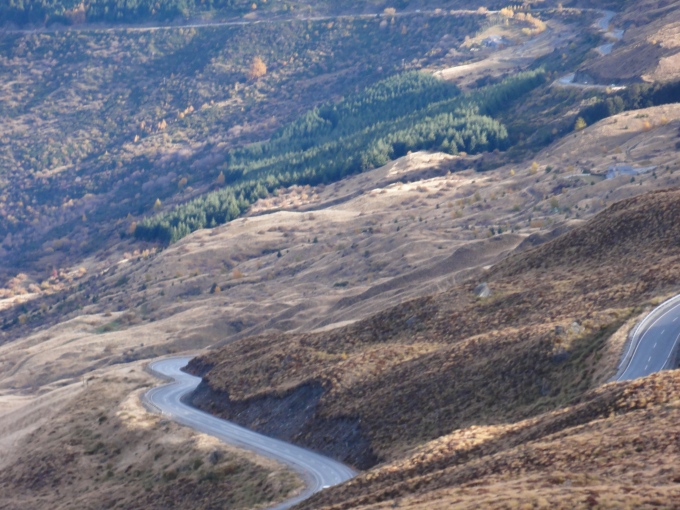
50 photographs, 50 stories, of which there is one of the 50 below.

They all start with –

A picture paints … well, as many words as you like.  For instance:

lookingdownfromcoronetpeak

And the story:

It was once said that a desperate man has everything to lose.

The man I was chasing was desperate, but I, on the other hand, was more desperate to catch him.

He’d left a trail of dead people from one end of the island to the other.

The team had put in a lot of effort to locate him, and now his capture was imminent.  We were following the car he was in, from a discrete distance, and, at the appropriate time, we would catch up, pull him over, and make the arrest.

There was nowhere for him to go.

The road led to a dead-end, and the only way off the mountain was back down the road were now on.  Which was why I was somewhat surprised when we discovered where he was.

Where was he going?

“Damn,” I heard Alan mutter.  He was driving, being careful not to get too close, but not far enough away to lose sight of him.

“What?”

“I think he’s made us.”

“How?”

“Dumb bad luck, I’m guessing.  Or he expected we’d follow him up the mountain.  He’s just sped up.”

“How far away?”

“A half-mile.  We should see him higher up when we turn the next corner.”

It took an eternity to get there, and when we did, Alan was right, only he was further on than we thought.”

“Step on it.  Let’s catch him up before he gets to the top.”

Easy to say, not so easy to do.  The road was treacherous, and in places just gravel, and there were no guard rails to stop a three thousand footfall down the mountainside.

Good thing then I had the foresight to have three agents on the hill for just such a scenario.

Ten minutes later, we were in sight of the car, still moving quickly, but we were going slightly faster.  We’d catch up just short of the summit car park.

Or so we thought.

Coming quickly around another corner we almost slammed into the car we’d been chasing.

“What the hell…” Aland muttered.

I was out of the car, and over to see if he was in it, but I knew that it was only a slender possibility.  The car was empty, and no indication where he went.

Certainly not up the road.  It was relatively straightforward for the next mile, at which we would have reached the summit.  Up the mountainside from here, or down.

I looked up.  Nothing.

Alan yelled out, “He’s not going down, not that I can see, but if he did, there’s hardly a foothold and that’s a long fall.”

Then where did he go?

Then a man looking very much like our quarry came out from behind a rock embedded just a short distance up the hill.

“Sorry,” he said quite calmly.  “Had to go if you know what I mean.”

I’d lost him.

It was as simple as that.

I had been led a merry chase up the hill, and all the time he was getting away in a different direction.

I’d fallen for the oldest trick in the book, letting my desperation blind me to the disguise that anyone else would see through in an instant.

It was a lonely sight, looking down that road, knowing that I had to go all that way down again, only this time, without having to throw caution to the wind.

“Maybe next time,” Alan said.

“We’ll get him.  It’s just a matter of time.”

© Charles Heath 2019-2021

Find this and other stories in “Inspiration, maybe”  available soon.

InspirationMaybe1v1