“Call me!” – a short story

You know what it’s like on Monday morning, especially if it’s very cold and the double glazing is failing miserably to keep the cold out.

It was warm under three blankets thick sheets and a doona, and I didn’t want to get up.

It doesn’t help if in the last few months, the dream job you once had turned into a drudge, and there was any number of reasons to stay home rather than go into the office. Once, that was trying to find an excuse to stay home because you’d rather go to work.

That was a long time ago or felt like it.

My cell phone vibrated; an incoming message, or more likely a reminder. I reached out into the icy wasteland that was the distance from under the covers to my phone on the bedside table. It was very cold out there, and for a moment I regretted that impulse to check.

It was a reminder; I had a meeting at HR with the manager. I had thought I might be eligible for redundancy since the company was in the throes of a cost-cutting exercise. Once I might have been apprehensive, but now, given my recent change in department and responsibility, I was kind of hoping now that it was.

I felt a hand on my shoulder. “Time to get up sleepy head. You have a meeting to go to, not one to be late.”

It felt strange to wake up with someone else in the bed. My luck in that department hadn’t been all that hood lately, but something changed, and at the usual Friday night after-work drinks at the pub, I ran into one of the PA’s I’d seen around, one who was curious to meet me as much as I was to meet her.

One thing had led to another and when I asked her if she wanted to drop in on the way home, she did.

“I’d prefer not to. I can think of better things to do.”

“So, could I but that’s not the point. Five more minutes, then I’m pushing you out.”

She snuggled into my back, and I could feel the warmth of her body, and having the exact opposite effect than she intended. But she was right. It was important, and I had to go. But, in the meantime, it was four more minutes and counting.

When you get a call from the head of HR it usually means one of two things, a promotion, or those two dreaded words, ‘you’re fired’, though not usually said with the same dramatic effect.

This year had already been calamitous enough getting sidelined from Mergers and Acquisitions because I’d been usurped. That was the word I was going with, but it was to a certain extent, my fault. I took my eye off the ball and allowed someone else to make their case.

Of course, it helped that the person was connected to all the right people in the company, and, with the change in Chairman, it was also a matter of removing some of the people who were appointed by the previous incumbent.

I and four of my equivalent managers had been usurped and moved to places where they would have less impact. I had finished up in sales and marketing, and to be quite honest, it was such a step-down, I had already decided to leave when the opportunity presented itself.

My assistant manager, who had already put in his resignation, was working out his final two weeks. I told him to take leave until the contract expired, but he was more dedicated than that. He had got in before me and was sitting at his desk a cup of coffee in his hand and another on the desk.

“How many days?”

“Six and counting. What about you? You should be out canvassing. There are at least three other places I know would be waiting to hear from you.”

“It’s still in the consideration phase.”

“You’re likely to get the chop anyway, with this thing you have with Sharkey.”

Sharkey was the HR manager.

You know something I don’t?” I picked up the coffee, removed the lid, and took in the aroma.
“They’re downsizing. Broadham had decided to go on a cost-cutting exercise, and instead of the suggested efficiencies we put up last year, they’re going with people. I don’t think he quite gets it.”

“You mean my replacement doesn’t know anything about efficiency. He makes a good yes man though, telling Broadham exactly what he wants to hear.”

Broadham, the new Chairman, never did understand that people appointed to important positions needed to have the relevant qualifications and experience. My replacement had neither. That was when the employees loyal to the previous Chairman had started leaving.

We had called it death, whilst Broadham had called it natural attrition. He didn’t quite understand that so far, over 300 years of experience had left, and as much again was in the process of leaving.

“Are you going to tell Sharky you’re leaving?”

“I’ll wait and see what he has to say. I think he knows the ship is sinking.”

There wasn’t much I didn’t know about the current state of the company, and with the departures, I knew it was only a matter of time. Sharky was a good man, but he couldn’t stem the tide.

He also knew the vagaries of profits and share prices, and we had been watching the share price, and the market itself. It was teetering, and in the last few months, parcels of shares were being unloaded, not a lot at one time, but a steady trickle.

That told me that Broadham and his cronies were cashing in while the going was good, and quite possibly were about to steer the ship onto the rocks. The question was who was buying, and that, after some hard research I found to be certain board members. Why, I suspected, was to increase their holdings and leverage, but I don’t think they quite realized that there would be nothing left but worthless stock certificates.

It was evidence, when I finally left, that I would pass on to the relevant authorities.

In the meantime, I had a meeting to go to.

“Best of luck,” my assistant muttered as I passed his desk.

“If I don’t return, I will have been escorted from the building. If that happens, call me.”

It had happened before. When people were sacked, they were escorted to their office, allowed to pack their belongings, and were then escorted to the front door. It would be an ignominious end to an illustrious career, or so I’d been told by the girl who was no doubt still asleep in my bed.

She had heard the whispers.

The walk to the lift, the traversing of the four floors to the executive level, and then to the outer office where Sharkey’s PA sat took all of three minutes. I had hoped it would be longer.

“He’s waiting for you,” she said, “go on in.”

I knocked on the door, then went in, closing it behind me. “Now, sir, what on earth could you want to see me about?


© Charles Heath 2021

Travelling after a pandemic: Destination Hobart

Hobart in June – Winter – Day 5 – Wednesday

…

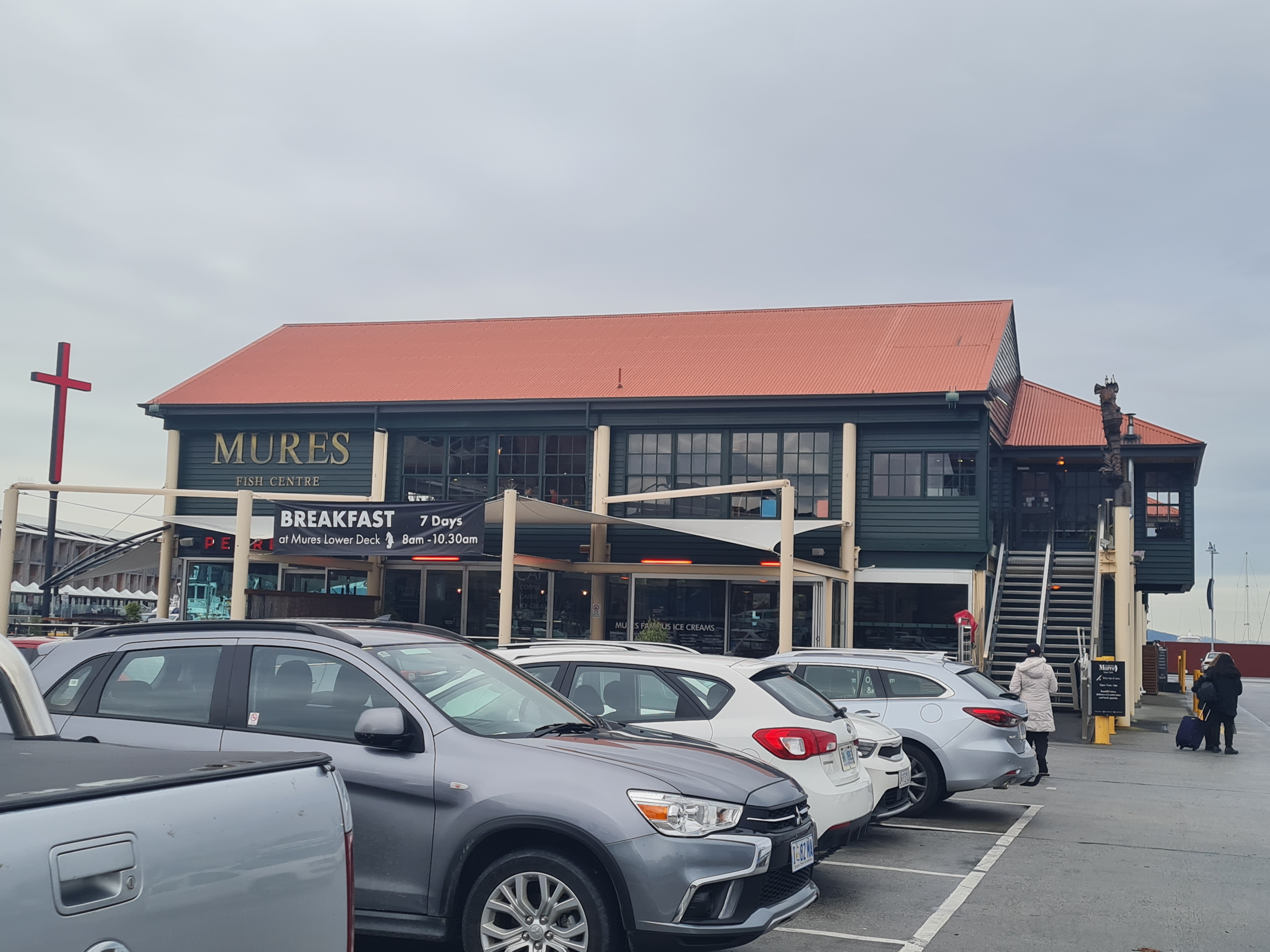
We ate at the wharves, and a place called Mures, which has sit-down eating.

Originally we were going to get lunch at Flippers, or one of three choices along the wharf.

The only problem was nowhere to sit and eat.

This means you have to hope the food at Mures tastes any good.

So, we order a curried scallop pie with chips and potato salad, a serving of battered flathead, and crumbed prawns.

While we were waiting I got a bottle of Tasmanian champagne.

Then it arrives.  The battered flathead also has a mountain of chips and we are going to be struggling to eat all of them.

The battered flathead was, as the saying goes, to die for.  It’s the best-battered fish I’ve had in a long time.

The curried scallop pie brought back a lot of bad memories of my mother’s curried sausages.  It’s the same curry taste, and I used to hate it

It was also similar to the four and twenty curried meat pies I used to have 50 years ago as a teen, with exactly the same taste.

Sadly it was not a pleasant experience, but the flathead more than made up for it.  The potato salad was delicious too, but for something so simple, so many people manage to stuff it up.  This was exactly how I like it.

The champagne was very good too, so the whole experience was above average.  Pity about the scallop pie.  More scallops and less curry would make it a more pleasant experience.

The fourth attempt, let’s look at the location

Equally important is the location.  Dark and brooding characters need dark and brooding locations.  It’s undeniable that there’s evil everywhere, we just have to look for it.

Of course, that’s not what I do, but …

I have been in a few tight corners, with some possibly dark and brooding characters where my heart rate has increased exponentially, and was saved by quick thinking, and a desire not to hang around and see what happens (for the purposes of a writable experience – no,, I’m not that stupid).

As the story stands, we move from a small staff room or restroom, and then we move out to the car park of … what?  It’s not exactly clear where it is, only that Graham is leaving work to go home.

Whether it’s clear or not, Graham is a security guard, part of a team that works on an industrial estate where there’s a number of factories and office blocks. 

Some of those buildings are empty, for a variety of reasons, so a back story for this might be created so that I can convey a clearer picture of not only the bricks and mortar but what it’s like there.

Ergo the first descriptive line, stepping outside into the epicenter of the south pole.  There is snow everywhere, which meant it was falling while he was inside at work, but now, the moment he leaves, it’s stopped.  Cold, then, and clear.

So it begins…

Now, as a secondary theme, it might not be obvious the owners are lax in the hiring of security staff to watch over their assets, staff that are relatively dubious in character, which might, in turn, mean that the notion of using cut-price security might mean something else is going on.

Are the empty factories empty?  Or have they been repurposed, and the guards are not sure what they’re guarding?  Do they want to know?  A job is a job, and in this situation, either from a hint from the employer, or the words of an old hand, and it doesn’t pay to poke a nose in where it’s not wanted.

So, as you can see, when starting the story I didn’t give proper thought to the background story, the fact that I could weave another or several storylines intertwined with what will be the master plotline.

What is the master plotline?

I have an idea or two, but let’s not get to ahead of ourselves.

Let’s stitch together a scenario or two for the back story and see where it takes us.  Remember that this was more or less part of the storyline originally in my mind but may not have been articulated in what I wrote at the time.

Basically, then, we’re dealing with a large industrial site on the outskirts of a city in decline.  Everyone can relate to the problematic times we’re in now, but this was written at the height of the last global financial meltdown about fifteen years ago, which caused a deep recession.

Within that framework, a lot of businesses and people went to the wall.  Graham, and others, lost a decent paying job, as well as his house, having finally got on the property ladder, only to find he couldn’t pay for it.

At the time he was not alone in that respect.  And lenders were not immune either, so there’s the possibility of one or two industrial park owners not exactly being legit in some of their business dealings, not after taking heavy hits financially.

In that scenario, there’s always the possibility of insurance fraud as a means of cutting losses, hence the need for security that might be asked to look the other way.

Another possibility could be that empty buildings and enterprising men, or women, fit the category of ‘the devil finds work for idle hands’. 

Or someone who recognizes an opportunity to make some money.  That particular scenario opens the door to a plethora of ideas.

…

© Charles Heath 2021

The cinema of my dreams – I always wanted to go on a treasure hunt – Episode 29

Here’s the thing…

Every time I close my eyes, I see something different.

I’d like to think the cinema of my dreams is playing a double feature but it’s a bit like a comedy cartoon night on Fox.

But these dreams are nothing to laugh about.

Once again there’s a new instalment of an old feature, and we’re back on the treasure hunt.


“Where is he?” I asked, hardly disguising the annoyance in my tone.

“In the toilet.”

A minor relief, but what the hell was she doing in his room?

“You do know Vince is responsible for Boggs being attacked, and me too, by the way.  There was no mistaking that thug even if he was hiding behind a balaclava.

“You’re not telling me anything I didn’t know already.  And it might be my fault.  I told him, no, he all but beat it out of me, about the map and Boggs, and you, and Alex.”

“So, I can expect to see Alex in here sometime soon?”

“No.  The Benderby’s have their own private hospital.  No one will get to hear about it, except maybe when there is the retaliation.  This who map and treasure thing is about to get a whole lot more problematical.”

Boggs chose to return from the bathroom and stopped dead in his tracks when he saw me.  “How did you manage to get past the head of Gestapo, Nurse Jamieson?”

“I had an angel show me the way.  How are you?”

“This is a hospital; how do you think I feel.”

The nurse was right, he looked worse than he was.  The bruising was going to be very colourful in the coming days, before everything settled down.

“Vince?”

“Like I could tell who it was.  Only Vince can sound like Vince even where he’s trying not to sound like Vince.”

“Did he get the map.”

“One of them, but not necessarily the right one, just a better one.”

Boggs got back onto the bed and lay back.  I got the impression he was putting on a brave face for Nadia.  But it didn’t explain why she was there.

“What are you doing here,” I asked, with just a shade less annoyance.

“I heard what Vince did and I cam to apologise.  You were next,.” She said to me, “But, seriously guys, you were the masters of your own destinies with this map thing.  You don’t even know if it’s real or just another of a host of hoaxes.  Old man Cossatino reckons that Boggs’s dad created a lot of different variations, in the hope of selling them as the real thing.  He was, after all, just a common con man, and not very good at it.”

The patriarch of the Cossatino’s the one she referred to as Old Man Cossatino, was Nadia’s grandfather, and although Nadia’s father was nominally in charge of the clan, everyone knew who the real leader was.  And Old Man Cossatino was someone you didn’t cross, and that went for the Benderby’s too.

Boggs’s dad had worked for the Cossatino’s at one time, and it would not surprise me if it was Cossatino’s idea to create all the bogus maps, just to make money.  I couldn’t see Boggs’s dad having the brains to mount a scheme such as Nadia described.

It surprised me that I had forgotten about that.  Way back, when my father was still picking a side, he had said there’d been a rumour going around that a new map for the treasure had been found, and that both the Cossatino’s and the Benderby’s were in a bidding war for it, along with some other unsavoury characters.

And the rumour died as fast as it had risen, and not long after Boggs’s dad disappeared, later to turn up dead.  One rumour, he had gone looking for the treasure, though no one proffered an answer as to how he might have come across the original map which he had, at one time, claimed, and another, Cossatino had him make it up, then killed him so he would never reveal the truth.

That original map had never seen the light of day, nor mentioned since.

It didn’t explain why Vince was on the warpath.

“What’s Vince up to?  I thought you guys had the original map?”

She looked surprised.  “First I’m hearing about it.”

I realised then she would have been as young as I was, and Boggs, which was about five or six.  Precognitive memories.  She might have been too young to remember.  I only remembered it because my father had continually bagged Boggs’s father as a fool who should have got a real job and support his family, rather than let others do it for him, a veiled reference about the times Boggs stayed over and ate with us.

But it was not lost on Boggs.

“There’s any number of maps, yes.  I found a lot of them in Dad’s stuff in the shed.  I suspect those were the ones created for the Cossatino’s to sell privately, and I also think he double-crossed them and kept one particular map, the one he called ‘the map’ for himself, which may have been the original.”

That I was guessing, was the map Boggs had now.  “And you’re telling me that’s the one you said you found, and…”

“I still have it.  Vince has one of the half dozen that all seem to be slightly different, different enough from the original to keep him happy for a while.”

“What was the point of sending him to me?”

“I needed more time to figure out which variation to give him.  I’m hoping now, if he thinks it’s the original, he’ll start looking for it.  Save us a lot of time and effort if he does the groundwork.  And I’m sorry about what happened to you.  If it’s any consolation, I knew he wouldn’t hurt you.”

It seemed to me, judging from the expression on Nadia’s face, that discussing the fact Vince didn’t have the right may prompt her to tell him.  She was a Cossatino first, after all, and had for years toed the family line.

Maybe she’d changed, but I wish Boggs was not so trusting.

“That’s nonsense Boggs,” Nadia said.  “My brother doesn’t go easy on anyone.”

“How did you get in here?”

No mistaking that voice of authority.  The head of the hospital Gestapo had arrived.  She glared at me.  “You’d better leave before I call both the hospital security staff and the police.”  Then she looked at Nadia, who was getting out of the seat.  “You should know better.”  Much kinder voice for Nadia, suggesting they were acquainted.

She probably helped old man Cossatino with his interrogations.

“Had you told me how Boggs was, I would not be here.”  I’m not sure why I decided to take a stand with her.

“Don’t be impertinent.  You can see how he is, now leave while I’m in a good mood.”

I’d hate to see her when she was in a bad mood.

“Tomorrow,” Boggs said.  “I’m sure they’ll let me have visitors by then.”

I waved and left.  Nadia stayed back for a moment, then joined me in the passage.

“What were you really doing here,” I asked her.  “It’s bot as if you had any reason to visit Boggs, other than to cause trouble.”

“I came to apologise.  My brother can be a moron sometimes.”

“Does he know you’re here?”

“No.  And I want to keep it that way.”

“It’s Vince we’re talking about, or has he gone soft.  From what I witness during our encounter, it seems he’s got worse.”

“Which is why I don’t want to see him.  You want to come back to the room and have a few drinks.  Maybe we could talk about old times, you know, trash Alex?”

“Sounds good to me.”

A nightcap with Nadia.  I would never have thought that possible, even in my wildest dreams.  Had she changed, or was she up to something?

Time would tell.


© Charles Heath 2019

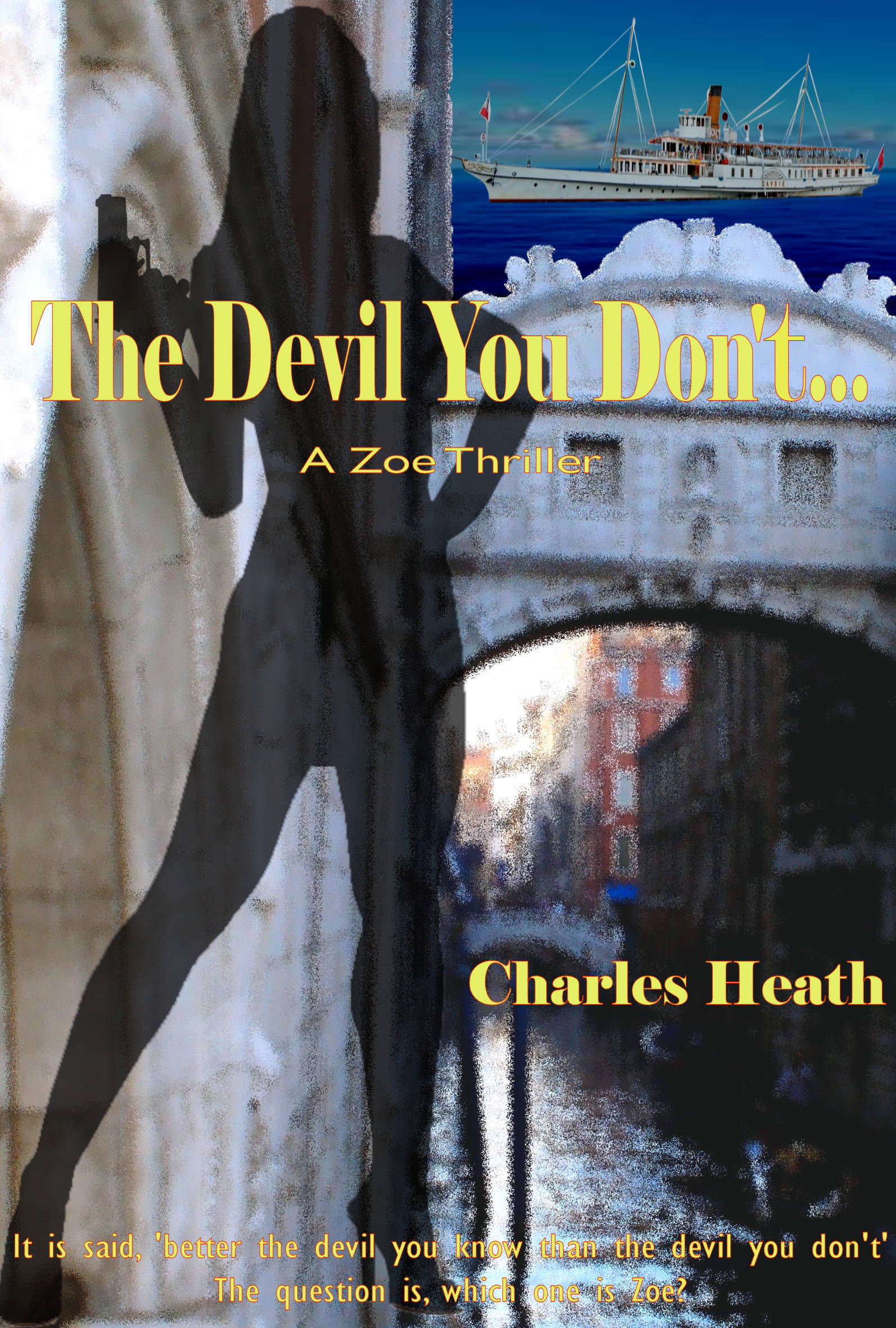
“The Devil You Don’t”, she was the girl you would not take home to your mother!

Now only $0.99 at https://amzn.to/2Xyh1ow

…

John Pennington’s life is in the doldrums. Looking for new opportunities, and prevaricating about getting married, the only joy on the horizon was an upcoming visit to his grandmother in Sorrento, Italy.

Suddenly he is left at the check-in counter with a message on his phone telling him the marriage is off, and the relationship is over.

If only he hadn’t promised a friend he would do a favour for him in Rome.

At the first stop, Geneva, he has a chance encounter with Zoe, an intriguing woman who captures his imagination from the moment she boards the Savoire, and his life ventures into uncharted territory in more ways than one.

That ‘favour’ for his friend suddenly becomes a life-changing event, and when Zoe, the woman who he knows is too good to be true, reappears, danger and death follow.

Shot at, lied to, seduced, and drawn into a world where nothing is what it seems, John is dragged into an adrenaline-charged undertaking, where he may have been wiser to stay with the ‘devil you know’ rather than opt for the ‘devil you don’t’.

newdevilcvr6

The cinema of my dreams – Was it just another surveillance job – Episode 32

I’m back home and this story has been sitting on a back burner for a few months, waiting for some more to be written.

The trouble is, there are also other stories to write, and I’m not very good at prioritizing.

But, here we are, a few minutes opened up and it didn’t take long to get back into the groove.

Chasing leads, maybe


I ordered breakfast to be brought to my room, then sat back and read the paper, culminating in a second cup of coffee and a half-hearted attempt at the crossword.

My mind was not sufficiently clear of all the implications of what I’d seen last night, and before that.

The first task was to go back to the office and get onto the computer to track down the address the car was registered to.  It was not the flat.  My guess that it was a sort of safe house.  He may not have had reservations about Jan, or who she worked for, not until he became the prey.

Then it occurred to me that if Jan didn’t know where the USB was, then she had to realize he might have rumbled her perfidy.  Maybe he was not as easily fooled as I first thought.

But it didn’t explain why Nobbin was in the dark over the USB’s whereabouts, as he had told me to give Nobbin a message.  Perhaps there’s been a secret message behind that message.

Now, my mind was spinning out of control.

Like O’Connell/Quinley, and in accordance with more lessons on tradecraft, I too, had what I would like to have called a safe house, a small flat on the outskirts of Wimbledon.  

I also had an off-site parking space that was a reasonable distance from the flat, so that if I was being hunted, the car would not lead them to my hiding spot.

There I had a shower, changed, and headed for the underground.

I took the train to Charing Cross, getting there around nine, to take the short walk to the hotel.

Not expecting to find her in the room, I used my key to let myself in.

I was wrong.

She was in bed, still asleep.  Or was until I let the door slam shut.

She didn’t exactly come out from under the covers with a gun pointing at me, but I would be willing to be there was one under her pillow and her hand was on it.

“Sam?”  It was uttered sleepily, the sort that would normally send a shiver down my spine.  Not now.

“I hope you’re not intending to shoot me?”

“No.”

I could see her hand moving slowly withdrawing, and then watched her sit up and swing her legs over the side.

Still in basic clothes.  Obviously, no time to go and get some pyjamas then.

“What happened to you?”

“Got side-tracked on what I thought might be a lead, and it wasn’t.  Just a waste of time and a long night.  Thought I’d come here and get some shuteye.  Perhaps not.  Are you going to order breakfast?”

“Of course.”

“I’ll have a pot of coffee and a paper, preferably one with a crossword.”

She rang down a breakfast order, full English, then said she was having a quick shower.  I heard the water running and wondered if she was giving Severin a short report.  Old trick, running water hides conversations.

Breakfast arrived at the same time as she came out of the bathroom, hair up in a towel, and in one of the hotel dressing gowns.  My imagination got a five-second workout before I grabbed the paper and the coffee and sat in the corner.

She could have the desk.

“Do we know where Maury is?” I asked suddenly.

“Who?”

She hesitated before answering, a moment to give herself time to process the question, and if there were any hidden meanings.

“You know?  You dropped a tracker on him.”

“Oh, him.  He must have found and dumped it.  It was pinging about 100 yards from the flat.”

Of course.  There probably wasn’t one in the first place.

“Pity.  I’d like to turn up unannounced, give him a bit of a scare.”

I went back to the crossword, keeping an eye on her, noticing every now and then giving me a sideways glance.

“Did you go anywhere after the flat?”  Again sudden, out of left field.

“No.  Just come straight back here.  Do you want to keep the room for a few days?  See what happens.”

“Sounds like a good idea.  Look, I have to run an errand this morning, unfortunately, it’s not a work matter, so I’ll give you a call on my way back.  You must want to talk to your people and let them know what’s happening if you haven’t already.”

I finished the coffee, folded the paper, and stood.

“At the very least,” I added, “I have to go back into the office and report to Nobbin.  I’m sure he’ll be impressed with the lack of progress.”

“Won’t you run into that other fellow, what’s his name?”

“Severin?”

“Him, yes.”

“I don’t think so.  His name will probably be very high on the ‘we’d like to talk to you’ list if he shows his face.  Anyway, I’ve got your number.”

I deliberately waved the phone where she could see it, and the implication she could probably use it to track my movements.  That might have been the case if there was a sim card in it, and it was similar to the phone she last saw me with.

It was not.

Where I was going, no one was going to follow me or find me.

© Charles Heath 2020

An excerpt from “One Last Look”: Charlotte is no ordinary girl

This is currently available at Amazon here:  http://amzn.to/2CqUBcz

…

I’d read about out-of-body experiences, and like everyone else, thought it was nonsense.  Some people claimed to see themselves in the operating theatre, medical staff frantically trying to revive them, and being surrounded by white light.

I was definitely looking down, but it wasn’t me I was looking at.

It was two children, a boy and a girl, with their parents, in a park.

The boy was Alan.  He was about six or seven.  The girl was Louise, and she was five years old.  She had long red hair and looked the image of her mother.

I remember it now, it was Louise’s birthday and we went down to Bournemouth to visit our Grandmother, and it was the last time we were all together as a family.

We were flying homemade kites our father had made for us, and after we lay there looking up at the sky, making animals out of the clouds.  I saw an elephant, Louise saw a giraffe.

We were so happy then.

Before the tragedy.

When I looked again ten years had passed and we were living in hell.  Louise and I had become very adept at survival in a world we really didn’t understand, surrounded by people who wanted to crush our souls.

It was not a life a normal child had, our foster parents never quite the sort of people who were adequately equipped for two broken-hearted children.  They tried their best, but their best was not good enough.

Every day it was a battle, to avoid the Bannister’s and Archie in particular, every day he made advances towards Louise and every day she fended him off.

Until one day she couldn’t.

Now I was sitting in the hospital, holding Louise’s hand.  She was in a coma, and the doctors didn’t think she would wake from it.  The damage done to her was too severe.

The doctors were wrong.

She woke, briefly, to name her five assailants.  It was enough to have them arrested.  It was not enough to have them convicted.

Justice would have to be served by other means.

I was outside the Bannister’s home.

I’d made my way there without really thinking, after watching Louise die.  It was like being on autopilot, and I had no control over what I was doing.  I had murder in mind.  It was why I was holding an iron bar.

Skulking in the shadows.  It was not very different from the way the Bannister’s operated.

I waited till Archie came out.  I knew he eventually would.  The police had taken him to the station for questioning, and then let him go.  I didn’t understand why, nor did I care.

I followed him up the towpath, waiting till he stopped to light a cigarette, then came out of the shadows.

“Wotcha got there Alan?” he asked when he saw me.  He knew what it was, and what it was for.

It was the first time I’d seen the fear in his eyes.  He was alone.

“Justice.”

“For that slut of a sister of yours.  I had nuffing to do with it.”

“She said otherwise, Archie.”

“She never said nuffing, you just made it up.”  An attempt at bluster, but there was no confidence in his voice.

I held up the pipe.  It had blood on it.  Willy’s blood.  “She may or may not have Archie, but Willy didn’t make it up.  He sang like a bird.  That’s his blood, probably brains on the pipe too, Archie, and yours will be there soon enough.”

“He dunnit, not me.  Lyin’ bastard would say anything to save his own skin.”  Definitely scared now, he was looking to run away.

“No, Archie.  He didn’t.  I’m coming for you.  All of you Bannisters.  And everyone who touched my sister.”

It was the recurring nightmare I had for years afterwards.

I closed my eyes and tried to shut out the thoughts, the images of Louise, the phone call, the visit to the hospital and being there when she succumbed to her injuries.  Those were the very worst few hours of my life.

She had asked me to come to the railway station and walk home with her, and I was running late.  If I had left when I was supposed to, it would never have happened and for years afterwards, I blamed myself for her death.

If only I’d not been late…

When the police finally caught the rapists, I’d known all along who they’d be; antagonists from school, the ring leader, Archie Bannister, a spurned boyfriend, a boy whose parents, ubiquitously known to all as ‘the Bannister’s, dealt in violence and crime and who owned the neighbourhood.  The sins of the father had been very definitely passed onto the son.

At school, I used to be the whipping boy, Archie, a few grades ahead of me, made a point of belting me and a few of the other boys, to make sure the rest did as they were told.  He liked Louise, but she had no time for a bully like him, even when he promised he would ‘protect’ me.

I knew the gang members, the boys who tow-kowed to save getting beaten up, and after the police couldn’t get enough information to prosecute them because everyone was too afraid to speak out, I went after Willy.  There was always a weak link in a group, and he was it.

He worked in a factory, did long hours on a Wednesday and came home after dark alone.  It was a half mile walk, through a park.  The night I approached him, I smashed the lights and left it in darkness.  He nearly changed his mind and went the long way home.

He didn’t.

It took an hour and a half to get the names.  At first, when he saw me, he laughed.  He said I would be next, and that was four words more than he knew he should have said.

When I found him alone the next morning I showed him the iron bar and told him he was on the list.  I didn’t kill him then, he could wait his turn, and worry about what was going to happen to him.

When the police came to visit me shortly after that encounter, no doubt at the behest of the Bannister’s, the neighbourhood closed ranks and gave me an ironclad alibi.  The Bannister’s then came to visit me and threatened me.  I told them their days were numbered and showed them the door.

At the trial, he and his friends got off on a technicality.  The police had failed to do their job properly, but it was not the police, but a single policeman, corrupted by the Bannisters.

Archie could help but rub it in my face.  He was invincible.

Joe Collins took 12 bullets and six hours to bleed out.  He apologized, he pleaded, he cried, he begged.  I didn’t care.

Barry Mills, a strong lad with a mind to hurting people, Archie’s enforcer, almost got the better of me.  I had to hit him more times than I wanted to, and in the end, I had to be satisfied that he died a short but agonizing death.

I revisited Willy in the hospital.  He’d recovered enough to recognize me, and why I’d come.  Suffocation was too good for him.

David Williams, second in command of the gang, was as tough and nasty as the Bannisters.  His family were forging a partnership with the Bannister’s to make them even more powerful.  Outwardly David was a pleasant sort of chap, affable, polite, and well mannered.  A lot of people didn’t believe he could be like, or working with, the Bannisters.

He and I met in the pub.  We got along like old friends.  He said Willy had just named anyone he could think of, and that he was innocent of any charges.  We shook hands and parted as friends.

Three hours later he was sitting in a chair in the middle of a disused factory, blindfolded and scared.  I sat and watched him, listened to him, first threatening me, and then finally pleading with me.  He’d guessed who it was that had kidnapped him.

When it was dark, I took the blindfold off and shone a very bright light in his eyes.  I asked him if the violence he had visited upon my sister was worth it.  He told me he was just a spectator.

I’d read the coroner’s report.  They all had a turn.  He was a liar.

He took nineteen bullets to die.

Then came Archie.

The same factory only this time there were four seats.  Anna Bannister, brothel owner, Spike Bannister, head of the family, Emily Bannister, sister, and who had nothing to do with their criminal activities.  She just had the misfortune of sharing their name.

Archie’s father told me how he was going to destroy me, and everyone I knew.

A well-placed bullet between the eyes shut him up.

Archie’s mother cursed me.  I let her suffer for an hour before I put her out of her misery.

Archie remained stony-faced until I came to Emily.  The death of his parents meant he would become head of the family.  I guess their deaths meant as little to him as they did me.

He was a little more worried about his sister.

I told him it was confession time.

He told her it was little more than a forced confession and he had done nothing to deserve my retribution.

I shrugged and shot her, and we both watched her fall to the ground screaming in agony.  I told him if he wanted her to live, he had to genuinely confess to his crimes.  This time he did, it all poured out of him.

I went over to Emily.  He watched in horror as I untied her bindings and pulled her up off the floor, suffering only from a small wound in her arm.  Without saying a word she took the gun and walked over to stand behind him.

“Louise was my friend, Archie.  My friend.”

Then she shot him.  Six times.

To me, after saying what looked like a prayer, she said, “Killing them all will not bring her back, Alan, and I doubt she would approve of any of this.  May God have mercy on your soul.”

Now I was in jail.  I’d spent three hours detailing the deaths of the five boys, everything I’d done; a full confession.  Without my sister, my life was nothing.  I didn’t want to go back to the foster parents; I doubt they’d take back a murderer.

They were not allowed to.

For a month I lived in a small cell, in solitary, no visitors.  I believed I was in the queue to be executed, and I had mentally prepared myself for the end.

Then I was told I had a visitor, and I was expecting a priest.

Instead, it was a man called McTavish. Short, wiry, and with an accent that I could barely understand.

“You’ve been a bad boy, Alan.”

When I saw it was not the priest I told the jailers not to let him in, I didn’t want to speak to anyone.  They ignored me.  I’d expected he was a psychiatrist, come to see whether I should be shipped off to the asylum.

I was beginning to think I was going mad.

I ignored him.

“I am the difference between you living or dying Alan, it’s as simple as that.  You’d be a wise man to listen to what I have to offer.”

Death sounded good.  I told him to go away.

He didn’t.  Persistent bugger.

I was handcuffed to the table.  The prison officers thought I was dangerous.  Five, plus two, murders, I guess they had a right to think that.  McTavish sat opposite me, ignoring my request to leave.

“Why’d you do it?”

“You know why.”  Maybe if I spoke he’d go away.

“Your sister.  By all accounts, the scum that did for her deserved what they got.”

“It was murder just the same.  No difference between scum and proper people.”

“You like killing?”

“No-one does.”

“No, I dare say you’re right.  But you’re different, Alan.  As clean and merciless killing I’ve ever seen.  We can use a man like you.”

“We?”

“A group of individuals who clean up the scum.”

I looked up to see his expression, one of benevolence, totally out of character for a man like him.  It looked like I didn’t have a choice.

Trained, cleared, and ready to go.

I hadn’t realized there were so many people who were, for all intents and purposes, invisible.  People that came and went, in malls, in hotels, trains, buses, airports, everywhere, people no one gave a second glance.

People like me.

In a mall, I became a shopper.

In a hotel, I was just another guest heading to his room.

On a bus or a train, I was just another commuter.

At the airport, I became a pilot.  I didn’t need to know how to fly; everyone just accepted a pilot in a pilot suit was just what he looked like.

I had a passkey.

I had the correct documents to get me onto the plane.

That walk down the air bridge was the longest of my life.  Waiting for the call from the gate, waiting for one of the air bridge staff to challenge me, stepping onto the plane.

Two pilots and a steward.  A team.  On the plane early before the rest of the crew.  A group that was committing a crime, had committed a number of crimes and thought they’d got away with it.

Until the judge, the jury and their executioner arrived.

Me.

Quick, clean, merciless.  Done.

I was now an operational field agent.

I was older now, and I could see in the mirror I was starting to go grey at the sides.  It was far too early in my life for this, but I expect it had something to do with my employment.

I didn’t recognize the man who looked back at me.

It was certainly not Alan McKenzie, nor was there any part of that fifteen-year-old who had made the decision to exact revenge.

Given a choice; I would not have gone down this path.

Or so I kept telling myself each time a little more of my soul was sold to the devil.

I was Barry Gamble.

I was Lenny Buckman.

I was Jimmy Hosen.

I was anyone but the person I wanted to be.

That’s what I told Louise, standing in front of her grave, and trying to apologize for all the harm, all the people I’d killed for that one rash decision.  If she was still alive she would be horrified, and ashamed.

Head bowed, tears streamed down my face.

God had gone on holiday and wasn’t there to hand out any forgiveness.  Not that day.  Not any day.

New York, New Years Eve.

I was at the end of a long tour, dragged out of a holiday and back into the fray, chasing down another scumbag.  They were scumbags, and I’d become an automaton hunting them down and dispatching them to what McTavish called a better place.

This time I failed.

A few drinks to blot out the failure, a blonde woman who pushed my buttons, a room in a hotel, any hotel, it was like being on the merry-go-round, round and round and round…

Her name was Silvia or Sandra, or someone I’d met before, but couldn’t quite place her.  It could be an enemy agent for all I knew or all I cared right then.

I was done.

I’d had enough.

I gave her the gun.

I begged her to kill me.

She didn’t.

Instead, I simply cried, letting the pent up emotion loose after being suppressed for so long, and she stayed with me, holding me close, and saying I was safe, that she knew exactly how I felt.

How could she?  No one could know what I’d been through.

I remembered her name after she had gone.

Amanda.

I remembered she had an imperfection in her right eye.

Someone else had the same imperfection.

I couldn’t remember who that was.

Not then.

I had a dingy flat in Kensington, a place that I rarely stayed in if I could help it.  After five-star hotel rooms, it made me feel shabby.

The end of another mission, I was on my way home, the underground, a bus, and then a walk.

It was late.

People were spilling out of the pub after the last drinks.  Most in good spirits, others slightly more boisterous.

A loud-mouthed chap bumped into me, the sort who had one too many, and was ready to take on all comers.

He turned on me, “Watch where you’re going, you fool.”

Two of his friends dragged him away.  He shrugged them off, squared up.

I punched him hard, in the stomach, and he fell backwards onto the ground.  I looked at his two friends.  “Take him home before someone makes mincemeat out of him.”

They grabbed his arms, lifted him off the ground and took him away.

Out of the corner of my eye, I could see a woman, early thirties, quite attractive, but very, very drunk.  She staggered from the bar, bumped into me, and finished up sitting on the side of the road.

I looked around to see where her friends were.  The exodus from the pub was over and the few nearby were leaving to go home.

She was alone, drunk, and by the look of her, unable to move.

I sat beside her.  “Where are your friends?”

“Dunno.”

“You need help?”

She looked up, and sideways at me.  She didn’t look the sort who would get in this state.  Or maybe she was, I was a terrible judge of women.

“Who are you?” she asked.

“Nobody.”  I was exactly how I felt.

“Well Mr Nobody, I’m drunk, and I don’t care.  Just leave me here to rot.”

She put her head back between her knees, and it looked to me she was trying to stop the spinning sensation in her head.

Been there before, and it’s not a good feeling.

“Where are your friends?” I asked again.

“Got none.”

“Perhaps I should take you home.”

“I have no home.”

“You don’t look like a homeless person.  If I’m not mistaken, those shoes are worth more than my weekly salary.”  I’d seen them advertised, in the airline magazine, don’t ask me why the ad caught my attention.

She lifted her head and looked at me again.  “You a smart fucking arse are you?”

“I have my moments.”

“Have them somewhere else.”

She rested her head against my shoulder.  We were the only two left in the street, and suddenly in darkness when the proprietor turned off the outside lights.

“Take me home,” she said suddenly.

“Where is your place?”

“Don’t have one.  Take me to your place.”

“You won’t like it.”

“I’m drunk.  What’s not to like until tomorrow.”

I helped her to her feet.  “You have a name?”

“Charlotte.”

The wedding was in a small church.  We had been away for a weekend in the country, somewhere in the Cotswolds, and found this idyllic spot.  Graves going back to the dawn of time, a beautiful garden tended by the vicar and his wife, an astonishing vista over hills and down dales.

On a spring afternoon with the sun, the flowers, and the peacefulness of the country.

I had two people at the wedding, the best man, Bradley, and my boss, Watkins.

Charlotte had her sisters Melissa and Isobel, and Isobel’s husband Giovanni, and their daughter Felicity.

And one more person who was as mysterious as she was attractive, a rather interesting combination as she was well over retirement age.  She arrived late and left early.

Aunt Agatha.

She looked me up and down with what I’d call a withering look.  “There’s more to you than meets the eye,” she said enigmatically.

“Likewise I’m sure,” I said.  It earned me an elbow in the ribs from Charlotte.  It was clear she feared this woman.

“Why did you come,” Charlotte asked.

“You know why.”

Agatha looked at me.  “I like you.  Take care of my granddaughter.  You do not want me for an enemy.”

OK, now she officially scared me.

She thrust a cheque into my hand, smiled, and left.

“Who is she,” I asked after we watched her depart.

“Certainly not my fairy godmother.”

Charlotte never mentioned her again.

Zurich in summer, not exactly my favourite place.

Instead of going to visit her sister Isobel, we stayed at a hotel in Beethovenstrasse and Isobel and Felicity came to us.  Her husband was not with her this time.

Felicity was three or four and looked very much like her mother.  She also looked very much like Charlotte, and I’d remarked on it once before and it received a sharp rebuke.

We’d been twice before, and rather than talk to her sister, Charlotte spent her time with Felicity, and they were, together, like old friends.  For so few visits they had a remarkable rapport.

I had not broached the subject of children with Charlotte, not after one such discussion where she had said she had no desire to be a mother.  It had not been a subject before and wasn’t once since.

Perhaps like all Aunts, she liked the idea of playing with a child for a while and then give it back.

Felicity was curious as to who I was, but never ventured too close.  I believed a child could sense the evil in adults and had seen through my facade of friendliness.  We were never close.

But…

This time, when observing the two together, something quite out of left field popped into my head.  It was not possible, not by any stretch of the imagination, but I thought she looked like my mother.

And Charlotte had seen me looking in their direction.  “You seem distracted,” she said.

“I was just remembering my mother.  Odd moment, haven’t done so for a very long time.”

“Why now?”  I think she had a look of concern on her face.

“Her birthday, I guess,” I said, the first excuse I could think of.

Another look and I was wrong.  She looked like Isobel or Charlotte, or if I wanted to believe it possible, Melissa too.

I was crying, tears streaming down my face.

I was in pain, searing pain from my lower back stretching down into my legs, and I was barely able to breathe.

It was like coming up for air.

It was like Snow White bringing Prince Charming back to life.  I could feel what I thought was a gentle kiss and tears dropping on my cheeks, and when I opened my eyes, I saw Charlotte slowly lifting her head, a hand gently stroking the hair off my forehead.

And in a very soft voice, she said, “Hi.”

I could not speak, but I think I smiled.  It was the girl with the imperfection in her right eye.  Everything fell into place, and I knew, in that instant that we were irrevocably meant to be together.

“Welcome back.”

© Charles Heath 2016-2019

onelastlookcoverfinal2

In a word: Right

Am I right?  Or is that correct?

In the moral sense, or in answering a question?

Do I have a right to …

As an entitlement?

Maybe

But right means generally to be correct, but the word itself can be used, like many others in a variety of ways

Such as, do we have any rights any more, since the government is slowly shutting down our freedoms, and, you guessed it, allegedly taking away our rights.

What about a right angle, we know this as being an angle of 90 degrees

How about I right a wrong, returning a bad situation to a good one?

Are you left-handed or right-handed?

Are you one of those people who can’t tell their left from their right?

And who was it that decided what was your left or your right, ever thought about that?  I didn’t until just now.  Good luck finding an answer on Google.

And how many times have you wished you were in the right place at the right time???

Then, of course, if English is a second language, how about confusing right with write.

Means something quite different, doesn’t it?

How about rite?  Yes, I guess if we were in the habit of chopping chicken heads off and dancing around a fire, that might be its meaning,

But…

It too has a lot of different meanings

Are you confused yet?

“Echoes From The Past”, the past doesn’t necessarily stay there


What happens when your past finally catches up with you?

…

Christmas is just around the corner, a time to be with family. For Will Mason, an orphan since he was fourteen, it is a time for reflection on what his life could have been, and what it could be.

Until a chance encounter brings back to life the reasons for his twenty years of self-imposed exile from a life only normal people could have. From that moment Will’s life slowly starts to unravel and it’s obvious to him it’s time to move on.

This time, however, there is more at stake.

Will has broken his number one rule, don’t get involved.

With his nemesis, Eddie Jamieson, suddenly within reach, and a blossoming relationship with an office colleague, Maria, about to change everything, Will has to make a choice. Quietly leave, or finally, make a stand.

But as Will soon discovers, when other people are involved there is going to be terrible consequences no matter what choice he makes.

https://amzn.to/2CYKxu4

newechocover5rs

I have to stop thinking…

Have you ever wondered what you might have been back in the 1700s, or the 1800s in England, or whatever country you reside.

I live in Australia, so I suspect I would be a convict or the descendant of a convict. Certainly, in those past years, there is nothing to suggest that I would have been much else, based on the fact I used to be a tradesman, and later a computer programmer, only one of which existed back then.

In England I have often imagined what it would be like for the underclasses, and very definitely where I;pd finish up. A servant maybe, like a stable boy or footman, or an agricultural worker before the industrial resolution, or a coal miner after it. Poor people it seemed had no prospects.

In the 1900s, my time on earth, and before the computer era, I trained in a trade school, doing woodwork, machine shop practise, and sheet metal. There was also farming. For the select few there was Accounting and business studies, but to be a clerk you had to go to a different school.

My family couldn’t afford it.

When I left school, as soon as I could, and therefore without the benefit of a good education, my prospects for work didn’t amount to much, and among my first jobs was mail sorter, telegram delivery boy, a packer for a book wholesaler, an odd job boy in an abattoir, and later a clerk.

Perhaps then I formed an idea that one day I might be a writer. I certainly had a go, but never did anything with it. I guess, even then, I knew my limitations borne from what I perceived was my station in life.

What did I want to do though? It didn’t matter. People from our social strata couldn’t afford university fees so I was never going to get a tertiary education. That just about ruled out everything.

So what happpened to change all that?

Reading.

From as young as I could, I read. Not only stories about people who lived so very different lives to me, but reference books about everything. It gave me an understanding of what it might be like to be something else, then gave me the impetus to actually apply for what I would call ‘a real job’.

Whether I could do it or not was irrelevant. I just wanted the chance.

It took a wile but then someone gave me that chance. That door was prised open just a little, enugh for me to get a foot in.

I had several tenets to abide by, don’t speak unless your spoken to, respect your elders, and don’t say anything unless it’s relevant.

First job was mail boy under a very crotchety old man who thought I was a waste of space. I learned everything he knew, listened to everything he said, and did everything I was told, better than everyone else.

I moved up to shipping clerk, creating manifests for ships cargo. It was the golden age just before computers, the days of the mainframes that had the computing power of an IBM XT.

They fascinated me.

My next job was for a new company, working for a mining and shipping company, as a distribution clerk maintaining a shipping timetable. That led to a role in communications, the days of telexes and internal couriers and memos, and memorandums for board meetings.

It wasn’t heady stuff, but I was in management, learned communications, and understood accounting.

When I left there, I became a computer programmers. It was dumb luck, my brother in law was an insurance salesman, created listings of investment outcomes using insurance products, and his individualised reports used to take in a week or so, restricting the number of clients he had.

This was the days of the first Apples, and IBM’s. I had a small personal computer, and told him I could create a program to work out his calculations in seconds not days, and he gave me the opportunity.

The rest is history.

So, it makes me wonder had I been back in those 1700s and 1800s, whether or not I may have started small, and made something of myself. A lord of the manor I would not be, but perhaps something more comfortable than a coal miner maybe.

I guess I’ll never know.