The Aesthetics of Inadequacy: Why Samuel Beckett Made Failure His Masterpiece
Most writers spend their lives trying to transcend, outrun, or at least strategically overcome their failures. They polish the rough edges, suppress the dud manuscripts, and curate a trajectory of upward momentum.
Then there is Samuel Beckett.
Where others saw an obstacle to be conquered, the Irish modernist saw a fundamental truth of the human condition. Beckett didn’t just tolerate failure; he elevated it into a formal aesthetic, a philosophical inquiry, and ultimately, a triumphant theme.
If most literature is built on the pursuit of success, resolution, and meaning, Beckett’s work is the magnificent monument built on the ruins of their impossibility. Let’s explore how the master of the absurd turned artistic and existential failure into high art—and what modern creators can learn from his glorious embrace of getting it wrong.
The Paradigm Shift: From Mastery to Incompetence
To understand Beckett’s relationship with failure, you have to look at the tradition of Western letters. For centuries, the implicit contract between writer and reader was one of authority. The author was an architect constructing a tidy, coherent world.
Beckett, deeply scarred by the horrors of the 20th century and disillusioned by grand narratives, realized this contract was a lie. How could an artist pretend to offer neat resolutions in a world shattered by world wars and defined by existential dread?
Instead of faking mastery, Beckett chose incompetence.
In his landmark essay on the painter Bram van Velde, Beckett dropped a meta-commentary on his own artistic ethos, writing: “The expression that there is nothing to express, nothing with which to express, nothing from which to express, no power to express, no desire to express, together with the obligation to express.”
This is the quintessential Beckettian bind: you must speak, even though you have nothing to say; you must try, even though you are bound to fail.
Waiting for Godot: The Art of Getting Nowhere
No work captures this ethos better than Beckett’s 1953 masterpiece, Waiting for Godot. The play’s premise is an act of structural failure: two tramps, Vladimir and Estragon, wait on a desolate road for a man named Godot who never arrives.
Act I: Nothing happens.
Act II: Exactly the same nothing happens, repeated.
Traditional drama relies on plot progression, character arcs, and a climax. Godot actively resists all three. It is a play about a failed appointment, a failed communication, and a failed attempt to pass the time.
Yet, by stripping away plot, Beckett achieves something profound. By making failure the very architecture of the play, he frees the audience from the tyranny of expectation. We stop asking, “What happens next?” and instead confront the deeper, heavier question: “What do we do with the time we have left?”
In Godot, failure is not a bug; it’s the operating system.
“Fail Better”: The Ultimate Creative Mantra
Perhaps Beckett’s most famous contribution to the lexicon of failure comes from his 1983 prose piece, Worstward Ho, which contains the oft-quoted, fiercely paradoxically encouraging line:
This is not cynical resignation; it is radical liberation. “Fail better” is a direct challenge to the paralysing perfectionism that plagues modern writers, entrepreneurs, and artists.
Most people view failure as a binary: you either succeed or you fail. Beckett introduces a gradient. He suggests that failure is an infinite regress, but within that regress, there is a craft to be honed. You can learn to articulate your ignorance more precisely. You can learn to map your dead ends with greater eloquence.
When you accept that failure is guaranteed, the stakes lower, and the true creative work can finally begin.
Why Beckett’s Failure Matters Today
In our current cultural moment—obsessed as it is with highlight reels, algorithmic success, and relentless personal branding—Beckett feels more subversive than ever. We live in a world terrified of looking foolish, of being cancelled, or of producing sub-optimal outputs.
Beckett reminds us that:
Uncertainty is honest: Pretending to have all the answers is a form of artistic dishonesty.
Incoherence has emotional resonance: Sometimes, the only way to express grief, confusion, or absurdity is through stuttering, repetition, and silence.
The struggle is the art: The value is not in the finished product that solves all problems, but in the noble, doomed attempt to articulate the inarticulate.
Conclusion: Embracing Your Inner Beckett
You don’t need to write a play about two guys standing by a leafless tree to incorporate Beckett’s philosophy into your life.
Next time you face a blank page, a botched project, or an ambition that has completely derailed, take a page out of Beckett’s playbook. Stop trying to transcend the mess. Lean into it.
Acknowledge that the words won’t be entirely right, the project won’t be a neat masterpiece, and the grand plan might completely dissolve. Then, smile, take a deep breath, and heed the master’s advice:
The One Place You Must Visit on a One-Day Stopover in Athens
So, you’ve landed in Athens with just 24 hours to spare—a layover that’s more than just a waiting game. Between the bustling airport and your next flight, you have a golden opportunity to step into the cradle of Western civilisation. But with so much to see—the ancient ruins, vibrant markets, and stunning coastline—how do you choose just one spot to make your short visit unforgettable?
The answer is clear: the Acropolis.
Yes, it might seem like the obvious choice, but there’s a reason it’s stood the test of time—both literally and figuratively. Here’s why dedicating your day to this iconic landmark will give you a memory to last a lifetime.
Why the Acropolis?
Perched high above Athens, the Acropolis is more than just a collection of ancient ruins. It’s a symbol of human achievement, a monument to artistry, democracy, and mythology all in one breathtaking site. In just a few hours here, you’ll walk in the footsteps of philosophers, stand before architectural marvels, and soak in panoramic views that stretch across the entire city.
What Makes It Special for a Short Visit?
Concentrated Wonder: Within the Acropolis complex, you’ll encounter the Parthenon, the Erechtheion, the Temple of Athena Nike, and the Odeon of Herodes Atticus—all within a walkable area. It’s like stepping into an open-air museum of ancient history.
Iconic Photo Opportunities: That postcard-perfect view of the Parthenon against the Athenian sky? You’ll capture it here. Whether you’re a photography enthusiast or just want a keepsake, the visuals are unbeatable.
Easy Access: The Acropolis is centrally located and well-connected by metro (the Acropoli station is a short walk away). With limited time, convenience is key.
How to Make the Most of Your Visit
Morning Start: Arrive early—right at opening time (usually 8 AM). You’ll beat the crowds and the midday heat. The morning light also casts a magical glow over the marble structures, perfect for photos.
Guided Insight: Consider a short guided tour or an audio guide. Hearing the stories behind the Parthenon’s construction or the myths tied to the Erechtheion’s Caryatids adds depth to what you’re seeing.
Don’t Miss the Acropolis Museum: Just a short walk downhill, this modern museum houses artifacts from the site. Its top-floor gallery, with views straight up to the Parthenon, is a breathtaking way to contextualise your visit.
Pause at the Areopagus Hill: On your way down, stop at this rocky outcrop near the Acropolis entrance. It offers stunning vistas of Athens and is steeped in history—the site where the apostle Paul is said to have preached.
A Taste of Athens on the Go
After your Acropolis exploration, wander into the nearby Plaka neighbourhood. Its cobblestone streets are lined with tavernas where you can grab a quick, authentic Greek lunch. Think souvlaki, fresh Greek salad, and a slice of baklava—because no stopover is complete without a taste of local flavour.
Practical Tips for a Smooth Layover
Storage: Athens International Airport has luggage storage facilities, so you can explore hands-free.
Transport: Take the metro Blue Line directly from the airport to the city centre (about 40-45 minutes). A day pass is affordable and efficient.
Timing: Allow at least 3-4 hours for the Acropolis and museum, plus transit time. Always keep your onward flight in mind!
Why This Day Will Stay With You
Athens is a city where history isn’t confined to textbooks—it’s etched into every stone and echoed in every horizon. By choosing the Acropolis, you’re not just checking off a landmark; you’re connecting with a legacy that has inspired millennia. As you watch the sunset paint the ancient marble in hues of gold (if your timing allows), you’ll carry with you more than just photos—you’ll take home a piece of timeless wonder.
So, on your next one-day Athens stopover, look up. The Acropolis awaits, ready to turn a few hours into a story you’ll tell for years.
Safe travels, and may your layover be nothing short of epic!
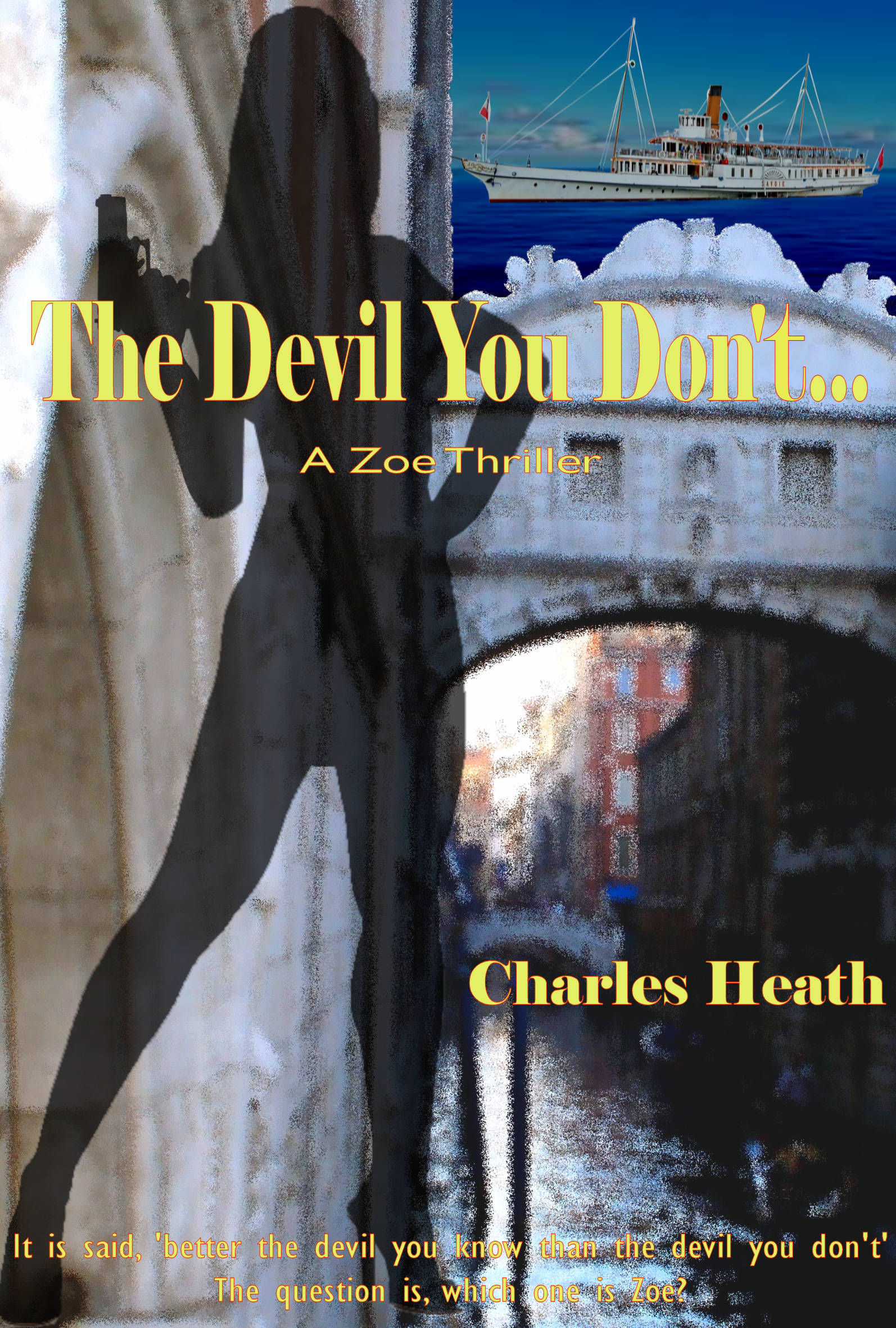
It could be said that of all the women one could meet, whether contrived or by sheer luck, what are the odds it would turn out to be the woman who was being paid a very large sum to kill you?
John Pennington is a man who may be lucky in business, but not so lucky in love. He has just broken up with Phillipa Sternhaven, the woman he thought was the one, but relatives and circumstances, and perhaps because she was a ‘princess’, may also have contributed to the end result.
So, what do you do when you are heartbroken?
That is a story that slowly unfolds, from the first meeting with his nemesis on Lake Geneva, all the way to a hotel room in Sorrento, where he learns the shattering truth.
What should have been solace after disappointment turns out to be something else entirely, and from that point, everything goes to hell in a handbasket.
He suddenly realises his so-called friend Sebastian has not exactly told him the truth about a small job he asked him to do, the woman he is falling in love with is not quite who she says she is, and he is caught in the middle of a war between two men who consider people becoming collateral damage as part of their business.
The story paints the characters, cleverly displaying all their flaws and weaknesses. The locations add to the story at times, taking me back down memory lane, especially to Venice, where, in those back streets, I confess it’s not all that hard to get lost.
All in all, a thoroughly entertaining story with, for once, a satisfying end.
The One Place You Must Visit in Monte Carlo to Make Your Stopover Unforgettable
Ever found yourself with just 24 hours in Monte Carlo, wondering how to make the most of it? Perhaps you’re on a European adventure, a business trip, or simply passing through—either way, a one-day stopover in this glamorous Mediterranean gem is a gift. And while it’s tempting to try and cram in as much as possible—the glitzy casinos, the yacht-lined harbour, the chic boutiques—there’s one experience that stands above the rest, capturing the very soul of this principality in a single, breathtaking moment.
If you’re looking for that one place to visit that will make your day truly memorable, look no further than Le Rocher de Monaco, or as it’s more commonly known, The Rock of Monaco.
Why The Rock of Monaco?
Monte Carlo is often synonymous with luxury—fast cars, high-stakes gambling, and opulent lifestyles. But to truly understand the heart and history of this tiny sovereign state, you need to go to its ancient core. The Rock is Monaco’s historic old town, perched dramatically on a cliff overlooking the Mediterranean. Here, centuries of history blend seamlessly with stunning views, charming streets, and an authentic sense of place that you won’t find in the more tourist-heavy areas below.
How to Spend Your Day on The Rock
Start your morning by taking a short walk or bus ride up to this elevated enclave. As you ascend, the modern bustle of Monte Carlo fades away, replaced by narrow cobblestone lanes, pastel-colored buildings, and the scent of salt air mixed with blooming flowers.
Your first stop should be the Prince’s Palace of Monaco. This isn’t just a museum—it’s the official residence of the Grimaldi family, who have ruled Monaco for over 700 years. If you time your visit right (between April and October), you can even tour the State Apartments, adorned with frescoes, antique furniture, and historical artifacts that tell the story of Monaco’s royal legacy. And don’t miss the Changing of the Guard ceremony at 11:55 AM—a brief but captivating display of tradition.
Next, wander through the Saint Nicholas Cathedral, a beautiful Romanesque-Byzantine masterpiece where Grace Kelly married Prince Rainier III and where both are now laid to rest. The serene atmosphere and stunning altar make it a peaceful retreat from the outside world.
But the true magic of The Rock lies in its hidden corners. Lose yourself in the Jardin de la Petite Afrique, a small but lush garden with exotic plants and panoramic views of the sea. Pop into a local café for a quick espresso or a glass of Provençal rosé, and savour a simple lunch at a family-run restaurant offering socca (a chickpea pancake) or barbagiuan (a traditional stuffed pastry).
As the afternoon sun begins to soften, make your way to the Fort Antoine Theatre, an open-air venue built into the old fortress walls, or simply find a quiet bench along the ramparts. From here, you’ll witness one of the most spectacular vistas in the Mediterranean—the entire Monaco coastline, the sparkling harbour filled with yachts, and the endless blue of the sea stretching toward the horizon.
Why This Makes Your Stopover Memorable
In a place often defined by extravagance, The Rock of Monaco offers something deeper: a connection to history, culture, and timeless beauty. It’s a reminder that Monaco isn’t just about what money can buy—it’s about legacy, resilience, and the simple joy of a stunning view shared over centuries.
By choosing to spend your day here, you’ll leave with more than just photos. You’ll carry with you the feeling of having touched the soul of Monaco, if only for a moment. And isn’t that what the most memorable travel experiences are all about?
So, on your next stopover in Monte Carlo, resist the urge to see it all. Instead, go to The Rock. Let its history inspire you, its views awe you, and its charm remind you that sometimes, the best way to experience a place is to slow down and savour its heart.
The Aesthetics of Inadequacy: Why Samuel Beckett Made Failure His Masterpiece
Most writers spend their lives trying to transcend, outrun, or at least strategically overcome their failures. They polish the rough edges, suppress the dud manuscripts, and curate a trajectory of upward momentum.
Then there is Samuel Beckett.
Where others saw an obstacle to be conquered, the Irish modernist saw a fundamental truth of the human condition. Beckett didn’t just tolerate failure; he elevated it into a formal aesthetic, a philosophical inquiry, and ultimately, a triumphant theme.
If most literature is built on the pursuit of success, resolution, and meaning, Beckett’s work is the magnificent monument built on the ruins of their impossibility. Let’s explore how the master of the absurd turned artistic and existential failure into high art—and what modern creators can learn from his glorious embrace of getting it wrong.
The Paradigm Shift: From Mastery to Incompetence
To understand Beckett’s relationship with failure, you have to look at the tradition of Western letters. For centuries, the implicit contract between writer and reader was one of authority. The author was an architect constructing a tidy, coherent world.
Beckett, deeply scarred by the horrors of the 20th century and disillusioned by grand narratives, realized this contract was a lie. How could an artist pretend to offer neat resolutions in a world shattered by world wars and defined by existential dread?
Instead of faking mastery, Beckett chose incompetence.
In his landmark essay on the painter Bram van Velde, Beckett dropped a meta-commentary on his own artistic ethos, writing: “The expression that there is nothing to express, nothing with which to express, nothing from which to express, no power to express, no desire to express, together with the obligation to express.”
This is the quintessential Beckettian bind: you must speak, even though you have nothing to say; you must try, even though you are bound to fail.
Waiting for Godot: The Art of Getting Nowhere
No work captures this ethos better than Beckett’s 1953 masterpiece, Waiting for Godot. The play’s premise is an act of structural failure: two tramps, Vladimir and Estragon, wait on a desolate road for a man named Godot who never arrives.
Act I: Nothing happens.
Act II: Exactly the same nothing happens, repeated.
Traditional drama relies on plot progression, character arcs, and a climax. Godot actively resists all three. It is a play about a failed appointment, a failed communication, and a failed attempt to pass the time.
Yet, by stripping away plot, Beckett achieves something profound. By making failure the very architecture of the play, he frees the audience from the tyranny of expectation. We stop asking, “What happens next?” and instead confront the deeper, heavier question: “What do we do with the time we have left?”
In Godot, failure is not a bug; it’s the operating system.
“Fail Better”: The Ultimate Creative Mantra
Perhaps Beckett’s most famous contribution to the lexicon of failure comes from his 1983 prose piece, Worstward Ho, which contains the oft-quoted, fiercely paradoxically encouraging line:
This is not cynical resignation; it is radical liberation. “Fail better” is a direct challenge to the paralysing perfectionism that plagues modern writers, entrepreneurs, and artists.
Most people view failure as a binary: you either succeed or you fail. Beckett introduces a gradient. He suggests that failure is an infinite regress, but within that regress, there is a craft to be honed. You can learn to articulate your ignorance more precisely. You can learn to map your dead ends with greater eloquence.
When you accept that failure is guaranteed, the stakes lower, and the true creative work can finally begin.
Why Beckett’s Failure Matters Today
In our current cultural moment—obsessed as it is with highlight reels, algorithmic success, and relentless personal branding—Beckett feels more subversive than ever. We live in a world terrified of looking foolish, of being cancelled, or of producing sub-optimal outputs.
Beckett reminds us that:
Uncertainty is honest: Pretending to have all the answers is a form of artistic dishonesty.
Incoherence has emotional resonance: Sometimes, the only way to express grief, confusion, or absurdity is through stuttering, repetition, and silence.
The struggle is the art: The value is not in the finished product that solves all problems, but in the noble, doomed attempt to articulate the inarticulate.
Conclusion: Embracing Your Inner Beckett
You don’t need to write a play about two guys standing by a leafless tree to incorporate Beckett’s philosophy into your life.
Next time you face a blank page, a botched project, or an ambition that has completely derailed, take a page out of Beckett’s playbook. Stop trying to transcend the mess. Lean into it.
Acknowledge that the words won’t be entirely right, the project won’t be a neat masterpiece, and the grand plan might completely dissolve. Then, smile, take a deep breath, and heed the master’s advice:
This story has been ongoing since I was seventeen, and just to let you know, I’m 72 this year.
Yes, it’s taken a long time to get it done.
Why, you might ask.
Well, I never gave it much interest because I started writing it after a small incident when I was 17, and working as a book packer for a book distributor in Melbourne
At the end of my first year, at Christmas, the employer had a Christmas party, and that year, it was at a venue in St Kilda.
I wasn’t going to go because at that age, I was an ordinary boy who was very introverted and basically scared of his own shadow and terrified by girls.
Back then, I would cross the street to avoid them
Also, other members of the staff in the shipping department were rough and ready types who were not backwards in telling me what happened, and being naive, perhaps they knew I’d be either shocked or intrigued.
I was both adamant I wasn’t coming and then got roped in on a dare.
Damn!
So, back then, in the early 70s, people looked the other way when it came to drinking, and of course, Dutch courage always takes away the concerns, especially when normally you wouldn’t do half the stuff you wouldn’t in a million years
I made it to the end, not as drunk and stupid as I thought I might be, and St Kilda being a salacious place if you knew where to look, my new friends decided to give me a surprise.
It didn’t take long to realise these men were ‘men about town’ as they kept saying, and we went on an odyssey. Yes, those backstreet brothels where one could, I was told, have anything they could imagine.
Let me tell you, large quantities of alcohol and imagination were a very bad mix.
So, the odyssey in ‘The things we do’ was based on that, and then the encounter with Diana. Well, let’s just say I learned a great deal about girls that night.
Firstly, not all girls are nasty and spiteful, which seemed to be the case whenever I met one. There was a way to approach, greet, talk to, and behave.
It was also true that I could have had anything I wanted, but I decided what was in my imagination could stay there. She was amused that all I wanted was to talk, but it was my money, and I could spend it how I liked.
And like any 17-year-old naive fool, I fell in love with her and had all these foolish notions. Months later, I went back, but she had moved on, to where no one was saying or knew.
Needless to say, I was heartbroken and had to get over that first loss, which, like any 17-year-old, was like the end of the world.
But it was the best hour I’d ever spent in my life and would remain so until I met the woman I have been married to for the last 48 years.
As Henry, he was in part based on a rebel, the son of rich parents who despised them and their wealth, and he used to regale anyone who would listen about how they had messed up his life
If only I’d come from such a background!
And yes, I was only a run away from climbing up the stairs to get on board a ship, acting as a purser.
I worked for a shipping company and they gave their junior staff members an opportunity to spend a year at sea working as a purser on a cargo ship that sailed between Melbourne, Sydney and Hobart in Australia.
One of the other junior staff members’ turn came, and I would visit him on board when he would tell me stories about life on board, the officers, the crew, and other events. These stories, which sounded incredible to someone so impressionable, were a delight to hear.
Alas, by that time, I had tired of office work and moved on to be a tradesman at the place where my father worked.
It proved to be the right move, as that is where I met my wife. Diana had been right; love would find me when I least expected it.
I’m back home and this story has been sitting on a back burner for a few months, waiting for some more to be written.
The trouble is, there are also other stories to write, and I’m not very good at prioritizing.
But, here we are, a few minutes opened up and it didn’t take long to get back into the groove.
Chasing leads, maybe
…
Darkness fell in a noticeably short time, and we left the pub at about six. In the hour so we have been there I’d been keeping a close eye on the comings and goings, and in particular, if O’Connell came in, or someone else that might look like him.
He hadn’t, nor had any mythical family members. Well, it had been a long shot.
Jennifer hadn’t volunteered anything more to the conversation and sat working her way through a piece of fried fish and a bowl of chips. Neither had looked appetizing. I would have bet she’d have the chicken, but I was wrong, and probably it wasn’t going to be the first time.
“Do you have a gun?”
It was after ten minutes of silence. It worried me that she didn’t ask how far it was or how long it would take. And then, out of nowhere, the gun question.
“No. Why would I have a gun.?”
“We were issued with weapons. I still have mine.”
“Did you bring it with you?”
“No. Like I told you, I didn’t think I was still working for the Department. They didn’t ask for it back, so I didn’t give it to them.”
“Or the identities?”
“No. It was odd though; they didn’t ask about them either.”
“Maybe they were going to wait a while and then ask you back.”
This was a weird conversation to be having. By this time we were in Peaslake Lane, and not far from the house I pulled over to the side of the road, under a tree.
The houses were set back in a rural setting. Between the darkness and the undergrowth, the chances were we could get to the house without being seen. From where I was sitting, no windows or doors were visible.
I made sure the car’s internal light didn’t go on the moment the door was open.
“Are you bringing your cell phone?”
“Why. I’m not envisaging having to call anyone, nor am I expecting a call.”
I shrugged, and slipped mine into a pocket where I could easily reach it I needed to.
I got out of the car, and she followed. She left he bag in the car. The first sign of training kicking in; eave all un-necessary baggage behind. Perhaps having a gun might have been a good option if we ran into trouble.
Oddly enough, now that I thought about it, Monica hadn’t asked for mine back either, but it was sitting at home in a safe, along with the five other identities Severin had issued each of us with.
I locked the car, equally as silent and invisible as she joined me.
“Which house?”
“Three along. Follow me and keep your eyes and ears peeled.”
I didn’t have to tell her, but it didn’t hurt to emphasize the importance of stealth. There were people home in other houses, lights in windows just discernible through the trees, one house a window without a curtain, a view into the dining room, but there was no one at the table.
If we were visiting them, perhaps we’d be in time for dinner.
The house we were looking for was in darkness from our approach.
“You keep an eye open this side, and I’ll go around the other, then come back. I’ll see if there’s an easy entry point.”
“What if someone is home?”
“Doesn’t look like it from here, and I’ll be surprised if there is.”
A moment later she had disappeared into the shrub line and I was heading across the front of the house, heading for the other side. I kept well away from the front door, just in case there was a motion light, or worse, a motion detector that might set off a silent alarm.
But, that might already have happened, and if it had, no one had made a move inside.
Down the side was walls and windows, no doors or French doors leading out into the garden. None of the windows were at a decent height for us to clamber through, and if we had to, it was going to be difficult.
I continued on, around the back, where there was more success. French doors leading onto a patio, and then the lawn. In the corner was a greenhouse, and next to that a rose garden. Or at least that was what both looked like in the dark.
The moon, for the moment, was hidden by dark clouds.
Perhaps it would rain, though it had not been in the forecast, but, this was England, and it could rain at any time, especially when you didn’t want or need it. There was no light, or motion sensor over the French doors, so I crossed the patio and looked through the doors.
I had expected curtains, but these hadn’t been completely drawn. No large light or lamp on, but there were indicator lights, several red and one a particularly bright blue, casting a rather long shadow over furniture and what looked to be a carpet square.
Out of curiosity, I tried the door.
It was open.
Then I had the blind panic moment of thinking it might be alarmed.
Williams’ Restaurant, East 65th Street, New York, Saturday, 8:00 p.m.
We met the Blaines at Williams’, a rather upmarket restaurant that the Blaines frequently visited and had recommended.
Of course, during the taxi ride there, Alison reminded me that with my new job, we would be able to go to many more places like Williams’. It was, at worst, more emotional blackmail, because as far as Alison was concerned, we were well on our way to posh restaurants, the Trump Tower Apartments, and the trappings of the ‘executive set’.
It would be a miracle if I didn’t strangle Elaine before the night was over. It was she who had filled Alison’s head with all this stuff and nonsense.
Aside from the half-frown, half-smile, Alison was looking stunning. It had been months since she had last dressed up, and she was especially wearing the dress I’d bought her for our 5th anniversary that cost a month’s salary. On her, it was worth it, and I would have paid more if I had to. She had adored it and me, for a week or so after.
For tonight, I think I was close to getting back on that pedestal.
She had the looks and figure to draw attention, the sort movie stars get on the red carpet, and when we walked into the restaurant, I swear there were at least five seconds of silence, and many more gasps.
I even had a sudden loss of breath earlier in the evening when she came out of the dressing room. Once more, I was reminded of how lucky I was that she had agreed to marry me. Amid all those self-doubts, I couldn’t believe she had loved me when there were so many others out there who were more appealing.
Elaine was out of her seat and came over just as the Head Waiter hovered into sight. She personally escorted Alison to the table, allowing me to follow like the Queen’s consort, while she and Alison basked in the admiring glances of the other patrons.
More than once, I heard the muted question, “Who is she?”
Jimmy stood, we shook hands, and then we sat together. It was not the usual boy, girl, boy, girl seating arrangement. Jimmy and I on one side and Elaine and Alison on the other.
The battle lines were drawn.
Jimmy was looking fashionable, with a permanent blade one beard, unkempt hair, and a designer dinner suit that looked like he’d slept in it. Alison insisted I wear a tuxedo, and I looked like the proverbial penguin or just a thinner version of Alfred Hitchcock.
The bow tie had been slightly crooked, but just before we stepped out, she had straightened it. And took the moment to look deeply into my soul. It was one of those moments when words were not necessary.
Then it was gone.
I relived it briefly as I sat and she looked at me. A penetrating look that told me to ‘behave’.
When we were settled, Elaine said, in that breathless, enthusiastic manner of hers when she was excited, “So, Harry, you are finally moving up.” It was not a question, but a statement.
I was not sure what she meant by ‘finally’, but I accepted it with good grace. Sometimes, Elaine was prone to using figures of speech I didn’t understand. I guessed she was talking about the new job. “It was supposed to be a secret.”
She smiled widely. “There are no secrets between Al and me, are there, Al?”
I looked at ‘Al’ and saw a brief look of consternation.
I was not sure Alison liked the idea of being called Al. I tried it once and was admonished. But it was interesting that her ‘best friend forever’ was allowed that distinction when I was not. It was, perhaps, another indicator of how far I’d slipped in her estimation.
Perhaps, I thought, it was a necessary evil. As I understood it, the Blaines were our mentors at the Trump Tower, because they didn’t just let ‘anyone’ in. I didn’t ask if the Blaines thought we were just ‘anyone’ before I got the job offer.
And then there was that look between Alison and Elaine, quickly stolen before Alison realised I was looking at both of them. I was out of my depth, in a place I didn’t belong, with people I didn’t understand. And yet, apparently, Alison did. I must have missed the memo.
“No,” Alison said softly, stealing a glance in my direction, “No secrets between friends.”
No secrets. Her look conveyed something else entirely.
The waiter brought champagne, Krug, and poured glasses for each of us. It was not the cheap stuff, and I was glad I brought a couple of thousand dollars with me. We were going to need it.
Then, a toast.
To a new job and a new life.
“When did you decide?” Elaine was effusive at the best of times, but with the champagne, it was worse.
Alison had a strange expression on her face. It was obvious she had told Elaine it was a done deal, even before I’d made up my mind. Perhaps she’d assumed I might be ‘refreshingly honest’ in front of Elaine, but it could also mean she didn’t really care what I might say or do.
Instead of consternation, she looked happy, and I realised it would be churlish, even silly, if I made a scene. I knew what I wanted to say. I also knew that it would serve little purpose provoking Elaine or upsetting Alison. This was not the time or the place. Alison had been looking forward to coming here, and I was not going to spoil it.
Instead, I said, smiling, “When I woke up this morning and found Alison missing. If she had been there, I would not have noticed the water stain on the roof above our bed, and decided there and then how much I hated the place.” I used my reassuring smile, the one I used with the customers when all hell was breaking loose, and the forest fire was out of control. “It’s the little things. They all add up until one day …” I shrugged. “I guess that one day was today.”
I saw an incredulous look pass between Elaine and Alison, a non-verbal question; perhaps, is he for real? Or, I told you he’d come around.
I had no idea the two were so close.
“How quaint,” Elaine said, which just about summed up her feelings towards me. I think, at that moment, I lost some brownie points. It was all I could come up with at short notice.
“Yes,” I added, with a little more emphasis than I wanted. “Alison was off to get some studying in with one of her friends.”
“Weren’t the two of you off to the Hamptons, a weekend with some friends?” Jimmy piped up and immediately got the ‘shut up, you fool’ look that cut that line of conversation dead. Someone forgot to feed Jimmy his lines.
It was followed by the condescending smile from Elaine, and “I need to powder my nose. Care to join me, Al?”
A frown, then a forced smile for her new best friend. “Yes.”
I watched them leave the table and head in the direction of the restroom, looking like they were in earnest conversation. I thought ‘Al’ looked annoyed, but I could be wrong.
I had to say Jimmy looked more surprised than I did.
There was that odd moment of silence between us, Jimmy still smarting from his death stare, and for me, the Alison and Elaine show. I was quite literally gob-smacked.
I drained my champagne glass, gathering some courage and turned to him. “By the way, we were going to have a weekend away, but this legal tutorial thing came up. You know Alison is doing her law degree.”
He looked startled when he realised I had spoken. He was looking intently at a woman several tables over from us, one who’d obviously forgotten some basic garments when getting dressed. Or perhaps it was deliberate. She’d definitely had some enhancements done.
He dragged his eyes back to me. “Yes. Elaine said something or other about it. But I thought she said the tutor was out of town and it had been postponed until next week. Perhaps I got it wrong. I usually do.”
“Perhaps I’ve got it wrong.” I shrugged as the dark thoughts started swirling in my head again. “This week or next, what does it matter?”
Of course, it mattered to me, and I digested what he said with a sinking heart. It showed there was another problem between Alison and me; she might have been telling me lies. If what he said was true and I had no reason to doubt him, where was she going tomorrow morning, and had she really been with a friend studying today?
We poured some more champagne, had a drink, then he asked, “This promotion thing, what’s it worth?”
“Trouble, I suspect. Definitely more money, but less time at home.”
“Oh,” raised eyebrows. Obviously, the women had not talked about the job in front of him, or, at least, not all the details. “You sure you want to do that?”
At last, the voice of reason. “Me? No.”
“Yet you accepted the job.”
I sucked in a breath or two while I considered whether I could trust him. Even if I couldn’t, I could see my ship was sinking, so it wouldn’t matter what I told him, or what Elaine might find out from him. “Jimmy, between you and me, I haven’t as yet decided one way or another. To be honest, I won’t know until I go up to Barclay’s office and he asks me the question.”
“Barclay?”
“My boss.”
“Elaine’s doing a job for a Barclay who recently moved into the tower a block down from us. I thought I recognised the name.”
“How did Elaine get the job?”
“Oh, Alison put him onto her.”
“When?”
“A couple of months ago. Why?”
I shrugged and tried to keep a straight face, while my insides were churning up like the wake of a supertanker. I felt sick, faint, and wanted to die all at the same moment. “Perhaps she said something about it, but it didn’t connect at the time. Too busy with work, I expect. I think I seriously need to get away for a while.”
I could hardly breathe, my throat was constricted, and I knew I had to keep it together. I could see Elaine and Alison coming back, so I had to calm down. I sucked in some deep breaths and put my ‘manage a complete and utter disaster’ look on my face.
And I had to change the subject, quickly, so I said, “Jimmy, Elaine told Alison, who told me, you were something of a guru of the cause and effects of the global economic meltdown. Now, I have a couple of friends who have been expounding this theory …”
Like flicking a switch, I launched into the well-worn practice of ‘running a distraction’, like at work when we needed to keep the customer from discovering the truth. It was one of the things I was good at, taking over a conversation and pushing it in a different direction. It was salvaging a good result from an utter disaster, and if ever there was a time that it was required, it was right here, right now.
When Alison sat down and looked at me, she knew something had happened between Jimmy and me. I might have looked pale or red-faced, or angry or disappointed, but it didn’t matter. If that didn’t seal the deal for her, the fact that I took over the dining engagement did. She knew well enough that the only time I did that was when everything was about to go to hell in a handbasket. She’d seen me in action before and had been suitably astonished.
But I got into gear, kept the champagne flowing and steered the conversation, as much as one could from a seasoned professional like Elaine, and, I think, in Jimmy’s eyes, he saw the battle lines and knew who took the crown on points. Neither Elaine nor Jimmy suspected anything, and if the truth be told, I had improved my stocks with Elaine. She was at times both surprised and interested, even willing to take a back seat.
Alison, on the other hand, tried poking around the edges, and, once when Elaine and Jimmy had got up to have a cigarette outside, questioned me directly. I chose to ignore her and pretend nothing had happened, rather than tell her how much I was enjoying the evening.
She had her ‘secrets’. I had mine.
At the end of the evening, when I got up to go to the bathroom, I was physically sick from the pent-up tension and the implications of what Jimmy had told me. It took a while for me to pull myself together; so long, in fact, that Jimmy came looking for me. I told him I’d drunk too much champagne, and he seemed satisfied with that excuse. When I returned, both Alison and Elaine noticed how pale I was, but neither made any comment.
It was a sad way to end what was supposed to be a delightful evening, which, to a large degree, it was for the other three. But I had achieved what I set out to do: to play them at their own game, watching the deception once I knew there was one, as warily as a cat watches its prey.
I had also discovered Jimmy’s real calling; a professor of economics at the same University Alison was doing her law degree. It was no surprise in the end, on a night where surprises abounded, that the world could really be that small.
We parted in the early hours of the morning, a taxi whisking us back to the Lower East Side, another taking the Blaines back to the Upper West Side. But, in our case, as Alison reminded me, it would not be for much longer. She showed concern for my health and asked me what was wrong. It took all the courage I could muster to tell her it was most likely something I ate and the champagne, and that I would be fine in the morning.
She could see quite plainly it was anything other than what I told her, but she didn’t pursue it. Perhaps she just didn’t care what I was playing at.
And yet, after everything that had happened, once inside our ‘palace’, the events of the evening were discarded, like her clothing, and she again reminded me of what we had together in the early years before the problems had set in.
It left me confused and lost.
I couldn’t sleep because my mind had now gone down that irreversible path that told me I was losing her, that she had found someone else, and that our marriage was in its last death throes.
And now I knew it had something to do with Barclay.
We managed to get out of the space dock without a scratch…
…
We’re moving slowly beyond the space dock, heading through clear space.
We had seen people inside the wings of the dock, lining the passage windows watching the big ship depart. In olden days, on earth, when a ship left port, people on the dock would remain connected to the passengers by streamers, until the ship started to move away.
It was impossible to do that in space.
But, it was a notable day, the first of its type, heading out into the known, and, later, the unknown if the shakedown worked out.
The captain had decided despite the success of the trials, that he wanted to have one more trial, this time putting the crew through their paces.
I looked sideways, one eye still on the screen, now showing three possible midrange destinations, and on the Captain, also looking at the screen.
Uranus was about 2.8 billion kilometres.
Neptune, where our orders were to go, was 4.5 billion kilometres.
I had done the rough calculations on time to destination, in round numbers, basing the speed of light, what we regarded as SSPD 1,000. That was in km’s about 1.8 billion kilometres an hour, give or take.
Our first ships were under SSPD 1, and the series before this ship had a maximum of SSPD 1.25, which in understandable numbers was about 1,349,063 km per hour. Our ship was capable of SSPD 5.
So, given that our previous fastest ship could move at a maximum of SSPD 1.25, the time it would take to the first destination at SSPD 2 (no one ever travelled at maximum) was a little over 86 days, and to Neptune about 139 days.
In this ship if we were to hit SSPD 4.5, the same time frames would be 24 days and just over 38.5 days.
“Check the co-ordinates for Neptune and once we’re clear of the dock and given clearance, let’s start her out slowly on SSPD 2.
The helmsman checked the co-ordinates and set the speed. “Co-ordinates and speed set, awaiting clearance.”
“Very good. Best have a seat Number One, just in case.”
“Yes, sir.” I took a last glance at the screen, now only showing Neptune on the long-range scanner, and sat.
“Adventurer, you’re cleared for departure.” The voice of the dock master came over the speakers.
No need for further orders, the helmsman pushed the button below his screen, there was a slight lurch, and we were under way.