Well, I know a lot about long haul, because living in Australia it’s a long, long way to anywhere in the northern hemisphere, in what is known as a long haul airline.
For the rest, haul means to pull a load along with effort or force.
Or a haul can be the plunder of a thief, stolen goods. It can be something different though, but generally lots of something taken away, such as fish.
You can haul yourself up the side of a hill, or up a cliff face
And for those who are nautically minded, and love sailing boats, you’ll know to haul offshore
If you’re an Olympian, you’ll know that seven medal haul was always going to be an uphill task.
This is not to be confused with hall, what you walk down in a building heading to a particular room.
Or it can be the name of a stately residence or building, for instance Toad Hall.
It can also be a university room where students are housed.
Would you give up everything to be with the one you love?
…
Is love the metaphorical equivalent to ‘walking the plank’; a dive into uncharted waters?
For Henry, the only romance he was interested in was a life at sea, and when away from it, he strived to find sanctuary from his family and perhaps life itself. It takes him to a small village by the sea, a place he never expected to find another just like him, Michelle, whom he soon discovers is as mysterious as she is beautiful.
Henry had long since given up the notion of finding romance, and Michelle couldn’t get involved for reasons she could never explain, but in the end, both acknowledge that something happened the moment they first met.
Plans were made, plans were revised, and hopes were shattered.
A chance encounter causes Michelle’s past to catch up with her, and whatever hope she had of having a normal life with Henry, or anyone else, is gone. To keep him alive she has to destroy her blossoming relationship, an act that breaks her heart and shatters his.
But can love conquer all?
It takes a few words of encouragement from an unlikely source to send Henry and his friend Radly on an odyssey into the darkest corners of the red-light district in a race against time to find and rescue the woman he finally realizes is the love of his life.
The cover, at the moment, looks like this:
Is love the metaphorical equivalent to ‘walking the plank’; a dive into uncharted waters?
For Henry the only romance he was interested in was a life at sea, and when away from it, he strived to find sanctuary from his family and perhaps life itself. It takes him to a small village by the sea, s place he never expected to find another just like him, Michelle, whom he soon discovers is as mysterious as she is beautiful.
Henry had long since given up the notion of finding romance, and Michelle couldn’t get involved for reasons she could never explain, but in the end both acknowledge that something happened the moment they first met.
Plans were made, plans were revised, and hopes were shattered.
A chance encounter causes Michelle’s past to catch up with her, and whatever hope she had of having a normal life with Henry, or anyone else, is gone. To keep him alive she has to destroy her blossoming relationship, an act that breaks her heart and shatters his.
But can love conquer all?
It takes a few words of encouragement from an unlikely source to send Henry and his friend Radly on an odyssey into the darkest corners of the red light district in a race against time to find and rescue the woman he finally realizes is the love of his life.
I was happy where I ended up, far, far away from the madding crowd, a misquote from the title of one of my favourite books.
One of six siblings, I had three brothers and two sisters, and being the youngest of the six, I was the one the other five gave the hardest time
It might have been because my parents spoiled me rotten, being the surprise, they never expected. That and much later, when our parents died travelling in a far away and relatively dangerous place, on their way home from visiting me.
That was the day I basically never saw or spoke to them. In a sense, it was easy. They were in England, too wrapped up in a squabble over the spoils of an undocumented inheritance, and I was happy being the forgotten son in Africa.
I had never wanted anything to do with family life in England, not living in the large house, the servants, the other properties in Europe, managing the farms, and later as grew older, watching the responsibility of it all slowly crush my father, trying to keep it all afloat while the other five siblings tried to squander the fortune in ways that beggared belief.
He knew what was happening, it was one of the reasons why he came to visit me. I wondered why he had come alone, but it turned out that the day they were both coming, she had got very ill.
It was then he told me that when they returned, the debt collectors would move in, and everything was lost. He knew it wouldn’t bother me, I had never had any interest in the family fortune or now lack thereof as it turned out.
He had wanted me to return home and sort out the mess, but I declined. Instead, we spent a few days together reliving old and better times l, then took him back to Nairobi and spent a day with my mother. It was clear he hadn’t told her. It would be a shock when they returned, but they would survive.
Except they didn’t return, at least not alive, killed in a freak accident on the way to the airport. When I sent word home of their deaths, there was not one response from any of the children.
In the end, I made arrangements with the estate manager at their home to send them home to be buried in the family plot. In a last-minute change of heart, I accompanied them back to England, and then to the Manor House which, when greeted by the Estate Manager, told me that the house had been repossessed by the bank and that everyone had been evicted.
In a final act of kindness, we were allowed to bury them in the family cemetery, in a service run by a priest I’d never seen before, attended by people I could not remember as family friends. Perhaps the only relevant attendee was a man I recognised, my father’s legal friend, Dobbins.
He only asked one question: Did I have a copy of the last will and testament. Apparently, my father had come out to discuss it. I told him he did not, and I did not have anything. We just talked about the old days, and he left. He just shook his head and left.
Not one of my brothers or sisters turned up to the service. Why would they? There was nothing in it for them. That would come with the reading of the will…oops, there was no will.
You never get what you wish for, and apparently, Lamu Island, about ten hours’ drive from Nairobi in Kenya, was not far enough away.
It was no coincidence that I ended up in Kenya, the brother of my great, great, great grandfather had served in the British army and then retired, and instead of going home, bought a small plot of land on Lamu Island and built a place to spend the rest of his days.
Successive generations made improvements until the line died out, the place came up for sale, and knowing its heritage and connection to the family, I bought it.
It was why, on a bright autumn morning, I was sitting on the front porch staring out across the landscape, paying attention on a car heading along the road that rarely had vehicular traffic.
It could only be heading for one of three places, two further up the road, if it could be called that, to my neighbours, or to my place. Neither of my neighbours was currently at home, and I wasn’t expecting anyone, so it was either trouble or an unexpected visitor.
I took a few minutes to prepare for any eventuality and then went back to my seat. The car slowed as it approached my driveway, then stopped. I could see there was only one person in the car, but it was hard to tell who it might be.
My cell phone rang.
Was it the person in the car? If so, how did they get my cell number?
There was a phone number but not a name. It was an English-based cell number, but no name, therefore not someone I knew.
I shrugged and pressed the green button.
“Jeremy?”
It sounded like my sister, Felicity, one year older and the one whom I had the most angst with. I hadn’t missed her after leaving and deliberately avoided contact since. I’d be very annoyed if my father had told the others where I was.
I could pretend to be someone else, but it would seem churlish. I had no doubt it was her.
“Turn around and go home.”
“Can’t. I flew in with a friend and they won’t be back for two days. I figure you would at the very least put me up for that time. We have things to discuss.”
“We have nothing to discuss. You and the rest of the vultures might, but it has nothing to do with me. I told Dad I wanted nothing to do with him, his assets, not that he has any, or you lot.”
“That might be what you think is the situation, but exactly the opposite is true. He didn’t die intestate, nor did he die penniless like he told everyone, and despite your protestations, he left you the lot. And I’m here to help head off the angry mob.”
As much as I wanted to believe it, this seemed a con to get in the door. I’d hear her out and then get Adolf, a friend who lived nearby to take her back to the airport.
“Whatever. You’ve got an hour to prove your case, and then you’re gone. I know for a fact he had nothing. He proved it when he was here, so whatever you think you know, you don’t.”
“I don’t have any choice.”
The line went dead, so I guess I would have to wait and see what the three of them had concocted.
I watched the car, and after the phone call, it surprised me that she did not drive in but sat outside and made another call.
I suspect she was calling the siblings to tell them she had found me and was about to plead their case.
It was stupid to think or believe that our father had left anything behind other than massive debts. There was no way that our mother had left anything because her fortune or lack thereof was tied up in our father’s financial mess.
He had told me quite plainly there was nothing left and that the receivers were moving in the moment he arrived home.
And if her information came from our father’s lawyer, then he had not mentioned anything when I spoke to him. He has asked if I had a copy of the will, and that I didn’t mean the last will stood which apportioned the estate to the other siblings, excluding me, because he and I had a falling out at the time.
Nothing she said made sense.
Ten minutes passed before the car continued from the front gate to the house. I remained on the deck, and watched her park the car next to mine, get out, smooth out the wrinkles, and walk up the stairs.
That last meeting, however long ago it was, and it still rankled, and I was angry. There were not going to be hugs nor apologies for distancing myself from all of them. I had nothing in common with any of them, and I’d made my views quite plain the last time I saw them all together and didn’t pull any punches.
It was odd that she was here now.
“Don’t get settled,” I noted she had left her bag in the car. “State your case.”
I didn’t move, and there was no way she was setting foot inside.
She held out a piece of paper, neatly folded.
“A copy of the will.”
I glared at her and then at it. “Where did you get it?”
“It was under one of the drawers in his study.”
“Who found it?”
“Jacob. You know what he’s like?”
“I do. His most notable trait, forging his father’s signature so he could escape school. If that’s your evidence, then it’s not.”
I took it, unfolded it, and glanced at the contents. It was worded like a six-year-old would, and had about ten lines that simply left all his worldly possessions to me. The writing was scrawled, as were the witnesses’ names I didn’t recognise.
“It’s a forgery. And he had no worldly possessions. Who are these witnesses?”
“Dobkins partners.”
“Why didn’t he tell me that when I saw him at the funeral? Moreover, why did he ask me if I had a copy of the will?”
OK, I could see what might be happening here. The angry mob were throwing a fake, hoping I would proffer the one they believed her left with me that was to their benefit.
This was Andrew’s doing. He was the most devious of the lot.
I had my cell phone, and I’d put Dobkin’s phone number on it when my father visited. He had said I would have to talk to him when things got bad. When they had, I’d expected a call. He did not.
Was he in league with the siblings thinking there were a few pounds to be made?
I called the number, and he answered.
“It’s Jeremy. I’ve got Felicity here with some cock and bull story about me being the only beneficiary of a non-existent fortune my father didn’t leave behind, in a will that was obviously forged by Jacob. I’ll be happy to prove it.”
His response was predictable. “You have a new will then?”
They were all in it together.
“We had this conversation. There is no other will, and this one I’d rubbish, and you know it. He died intestate. If there’s spoilt to be had, the vultures split it between them. If not, don’t bother me again.”
I hung up.
I glared at her. “Whatever this is, whatever you lot have conspired between you, forget about including me in it. There’s nothing to be bad. I don’t have a copy of my father’s will. That’s not why he came here. While he was here, he told me between Mother and you lot, you have bled the estate dry, and there was nothing left. Since I was the only one who wasn’t a bloodsucking leech, he thought I might have some idea of how to save the family home. Short of a miracle, I did not.”
“Then how do you account for this?”
She pulled another neatly folded piece of paper and held it out.
“What is it?”
“A list of assets.”
I took it more out of curiosity than anything else and looked at it. It had the title ‘Investments’ and was a list of stocks and bonds with the purchase date, and another date, about a month before he came to see me. Under the latter date was a value.
It was written in the same spidery handwriting that was almost the same in the will but with key differences. This was his writing. The will wasn’t.
It was the same documents he had shown me when he visited, and he had said when he cadged it all in to pay the debts, it had fallen short by nearly three million pounds.
He’d also shown me the bank documents, including the one that advised that he had a specified period to find that remaining sum or risk foreclosure.
They were still in the satchel the police had delivered along with what belongings he and our mother had at the time of their deaths. It was all upstairs in the attic, none of which I could find the desire to look at or send home.
I could see now why the vultures thought there were spoils to be had. That asset list was worth nearly twenty million pounds.
“I bet you and your fellow vultures eyes lit up when you saw this?”
“Only the fact he left it to you, not us. We all need that money, and as you say, you don’t.”
I shrugged. “You have spoken to his investment bankers before you came, didn’t you?”
“What do you mean?”
I shook my head. None of them had any common sense, not where money was concerned, and not while there was an endless well to draw from. They wouldn’t because none of them considered investing or even saving for a rainy day.
“You’ve come a long way for nothing. You can stay until your ride returns. I gave her the two sheets of paper back. “The will is fake. The list of investments, he cashed in trying to save the family home. He fell short by three million. Is any one of you still living in the house, or did the bank take it?”
She didn’t have to answer.
“Andrew and Jacob set you up, Felicity. If they came, I’d shoot them without hesitation. You, I would think twice. And I think you know that Will was a fake, and that because the bank took the house, there was nothing left. If you don’t, then perhaps I should shoot you.”
She was sullen over dinner after I showed her around the house. It wasn’t much, but I never had the same expensive tastes as the others.
They had all worn the mantle of the Lord’s in waiting, pushing that life of privilege to the limit. It was never a matter of keeping up with the Joneses. They were the Joneses.
Until the well went dry, and it was interesting reading their comeuppance one by one as they found themselves explaining what happened. Or not being able to, because none of them understood the nature of their problems. They had spent all their time relying on our father to do it for them.
I knew that Felicity was smarter than the rest of them, she had been the only one who was academically gifted and had aspirations of being, of all things, a jet fighter pilot in the RAF. Neatly succeeded if there hadn’t been an accident that, in the end, saw her discharged from the service.
From there, she became an airline pilot, an envious job, and how she managed to get to my place.
It didn’t make sense to me why she would buy into Andrew and Jacob’s scheme, and I tried to draw it out of her. Perhaps giving her the facts had made her realise what a waste of time the exercise was.
Whatever the reason, she went to bed a very sad woman.
Assuming that she was not going to believe what I had told her, I made that trip to the attic and found my father’s satchel. I took it down to my study and laid the papers out on the desk.
As some may be aware, but many not, Chester, my faithful writing assistant, mice catcher, and general pain in the neck, passed away some months ago.
Recently I was running a series based on his adventures, under the title of Past Conversations with my cat.
For those who have not had the chance to read about all of his exploits I will run the series again from Episode 1
These are the memories of our time together…
This is Chester. He’s now over having the grandchildren staying with us.
As part of the COVIS 19 restrictions in place, the grandchildren cannot go to school.
However, because their parents are both working (which is very fortunate as so many others are not) they have asked us to look after them.
So, they arrive Sunday night, stay the whole week, and go back home on Friday. It means they are homeschooling, so the internet is taking a beating, I have to feed them, morning tea, lunch. After school snack at three and then dinner.
Chicken nuggets, pies, and shoestring chips can only go so far, and, no, he does not like scraps from their plates.
And having to cater for four rather than two means a gentle shift in logistics. More shopping for food, having to do the washing every day, tormenting the cat.
OK, that last part is where Chester comes in, or, rather, he stays hidden away.
Remember that phobia he has when the grandchildren are around?
Now they’re here semi-permanently, he’s in hiding, and coming out only for food and water.
And to let me know just how displeased he is.
He wants his domain back.
Pity I haven’t told him yet they’re going to be back next week.
I’m back home and this story has been sitting on the back burner for a few months, waiting for some more to be written.
The trouble is, there are also other stories to write, and I’m not very good at prioritizing.
But, here we are, a few minutes opened up and it didn’t take long to get back into the groove.
Chasing leads, maybe
When the room was empty and only Richards and I remained, he cut the ties that bound my hands and legs.
“Bad business,” he said.
I sat again, and flexed the muscles that had begun to stiffen up whilst tightly bound.
“I’m assuming you know a woman by the name of Jan?” I said. “She told me she was working for MI6 so I’m assuming you’re her handler.”
“When she chooses to be handled, yes. Jan is just one of her names. She’s currently missing, and I think we now know why?”
“Her work,” I nodded towards the body.
“God no. She’s charged with chasing down leads and then calling the cavalry. We had a tracker on this chap, found him, and had him in a safe facility awaiting interrogation, what we thought was safe at any rate, and Jan and another agent watching over him until the interrogation team arrived. When the interrogation team got there everyone was gone, but with enough blood on the floor to paint a pretty clear picture. Maury had been interrogated and killed there, dumped here, with no indication of the whereabouts of our agents. She told me this guy and another trained you, and others, in rather strange circumstances. A bogus operation. To what end?”
“From what I could tell, a single surveillance operation. Me and a dozen others. Cut loose after it failed, those of us that survived, that is.”
“A lot of effort to achieve nothing.”
“Pity we can’t ask him what it was about?” I looked over at the body. Maury was hardly recognizable. Whoever carried out the interrogation had been either in a hurry or in a bad mood.
“Indeed. She told me this chap called O’Connell was involved. Now so?”
Another rule that popped into my head from the training: never share information with other agencies unless you absolutely had to. I had no doubt if Dobbin was here, he would agree, but he wasn’t.
I wondered if I should tell him she had allegiance to another branch of the secret services, or mention Dobbin.
“He was the surveillance target. We were charged with observing him, but not what he was suspected of. I followed him as far as the exploding shop, got temporarily disorientated after the blast,, but managed to reacquire the target, following him to an alley where I spoke briefly to him before Maury and Severin arrived, and he was shot, apparently killed.”
“Either he was or he wasn’t.”
“The body disappeared. My view is he is still alive, somewhere.”
“That explosion was supposed to be caused by a gas leak.”
“Standard operational doubletalk. A journalist was killed, apparently in the shop waiting for the target. It went up after the target passed, I’m assuming his tradecraft was to check first then go back. Never got a chance. I think now given the circumstances, the journalist was going to hand something off. I’ve been asked a number of times by various people about a USB drive. You know anything about it?”
“This is the first I’m hearing about anything about a USB drive. You know what was on it?”
“Above my pay grade, I was told.”
“OK. What about this Severin character?:
“All I have is a phone number, and that, I think we can both agree, will be a burner.”
“Agreed, but it might be useful.”
I gave it to him and he put it on his phone.
A new team of men in white suits arrived at the door, no doubt MI5 forensic specialists, and two more agents, bigger and tougher, what I would call the muscle.
“I’m afraid you’re going to have to come back to the office to answer a few more questions. It’s not custody, but mandatory co-operation.”
“And if I refuse?”
“It might make their day if you know what I mean.”
I shrugged. One I might be able to take, but not the both of them. And they both looked like they would be happy to teach me the error of my ways if I tried to escape/
“That won’t be necessary. I’m taking him with me.”
“Dobbin just came to the door, flashing an MI6 warrant card.
“I’ve been charged with cleaning this mess up.”
“And so you shall, but not including this agent. Orders from above, reasons why, as they say, are above your pay grade.
I suspect the warrant card said Dobbin outranked him. Did our people have fake MI6 IDs?
“This is highly irregular.”
“Call your boss, if you don’t like it. I can wait.”
I could see the reluctance in his face.
He glared at me. “Go, but don’t go too far. I still might get clearance to have another chat.”
This book has finally reached the Final Editor’s draft, so this month it is going to get the last revision, and a reread for the beta readers.
…
Today I’m dealing with the art of elusiveness, and trying to emulate what it would be like to hide the truth from someone. It would require a great deal of elusiveness and guile to carry it off as though whatever you’ve been lying about for so long doesn’t come back to bite you.
Of course, if I tried it in practice I’d fail miserably, because I don’t have a poker face, and worse, I can’t keep a secret.
So, best not to ask me if I can keep a secret because I will say yes very earnestly, and then give it up when the pressure is on.
I’d never make a good spy either.
But it does make me wonder about all those people out there that constantly tell lies about everything, their past, whether or not they’re having an affair, where they’ve been, and what happened to the money.
Some people are very good at it, especially those who change their names, or have a half dozen different passports.
But, here, in this story, Jack’s mother probably just wanted to believe her twin sister had perished a long time ago, and the longer it became since she last heard from her, the more it was likely she was gone.
Pity. She’s about to come back from the dead.
And, of course, she does know about the doppelganger Jacob, because he had already visited her.
But as to why Jacob has come out of the woodwork, well that has something to do with the past, and an old flame Jack’s mother had a long time ago.
He too has come out of the past for different reasons, none of them good for her health.
That meant we had to make the journey from New York to New Jersey, by train. It involved the underground, or as New Yorkers call it, the subway, from Columbus Circle which by any other name was really, 80th street, to 34th street which apparently was the New Jersey jump-off point for us to get overground, well a lot of it was overground. So, were we going uptown or downtown?
Apparently, it was downtown, and to 34th Street on the A train.
You would not think this to be a difficult task, but for people not used to the subway, and where they were going other than some internet derived instructions, but without the help of a man at the station, just getting tickets may have stopped us dead in our tracks. With his help, we determined the return fare for three of us and then get through the turnstile onto the platform.
We get on the A train, but soon discover it was not stopping at all stations. There was for a few minutes, a little apprehension we might just simply bypass our station. Luckily we did not.
Now, finding your way to the New Jersey transit part of Penn station might appear to be easy, on paper, but once there, on the ground, and mingling with the other passengers which all seemed to be purpose going somewhere, it took a few moments to realize we had to follow the New Jersey transit signs.
This led to a booking hall where luckily we realized we needed to buy more tickets, then find the appropriate platform, and then get on the right train, all of which, in the end, was not difficult at all.
Maybe on the return trip, it might be.
At Newark Penn station it was momentarily confusing because the exit was not readily in sight, so it was a case of following the majority of other passengers who’d got off the train.
This led us to exit onto the street under the train tracks. Luckily, having been before to Prudential Stadium to buy the tickets, we knew what the stadium looked like and roughly where it was, so it was a simple task to walk towards it.
We were early, so it was a case of finding a restaurant to get dinner before the game. So was a great many others, and we passed about 6 different restaurants that looked full to overflowing before we stopped at one called Novelty Burger and Bar.
It looked inviting, and it was not crowded.
It was yet another excuse to have a hamburger and beer, both of which seemed to be a specialty in American. I could not fault either.
And soon after we arrived, this restaurant too was full to overflowing. Thankfully there were other Maple Leaf fans there because being in a room full of opposition teams supports can be quite harrowing.
That was yet to come when we finally got to the stadium. I was not expecting a lot of Maple Leaf fans. We went to this game with high hopes. New Jersey Devils were not exactly at the top of the leader board, and coming off the loss in Toronto, this was make or break for whether we would ever go to another game.
It’s remarkable in that all the Ice Hockey stadiums are the same. Everyone has an excellent view of the game, the sound systems are loud, and the fans passionate. Here it seems to be a thing to ride on the Zambonis. At the front door they were handing out figurines of a Devil’s past player, and it seems a thing that you get a handout of some sort at each game. At Toronto we got towels. And, finally, we were in luck.
The Maple Leafs won.
And it was an odd feeling to know that even though their team lost, there did not seem to be any rancor amount the fans and that any expectation of being assaulted by losing fans was totally unfounded, unlike some sporting events I’ve been to.
Perhaps soccer should take a leaf out of the ice hockey playbook.
That also went for taking public transport late at night. I did not have any fears about doing so, which is more than I can say about traveling at night on our own transport system back home.
Oh, and by the way, there are train conductors who still come to every passenger to collect or stamp their tickets. No trusting the passenger has paid for his trip here. And, if you don’t have a ticket, I have it on good authority they throw you off the train and into the swamp. Good thing then, we had tickets.
Though revenge is not what Michael wanted to get caught up in, it was the people with whom he had to see that had him thinking that way.
Michael knew from bitter experience that the world would be a better place without half the people in it, the half that made up the cheats, liars, self-serving, egotistical twits, and pompous asses.
He’d seen enough of those when he and Agatha had been together.
Dealing with a chap Agatha had had what had to be described as a fling, seemed to think that an invitation to stay at one of her apartments until he found his own was the same as being married.
That aristocratic self-entitlement was enough to have Michael considering whether a three-hour torture session in a disused factory where no one would hear the screams, might just teach him the error of his assumptions. Sadly, it didn’t come to that, but there were plenty of others on the list.
It could be said that of all the women one could meet, whether contrived or by sheer luck, what are the odds it would turn out to be the woman who was being paid a very large sum to kill you.
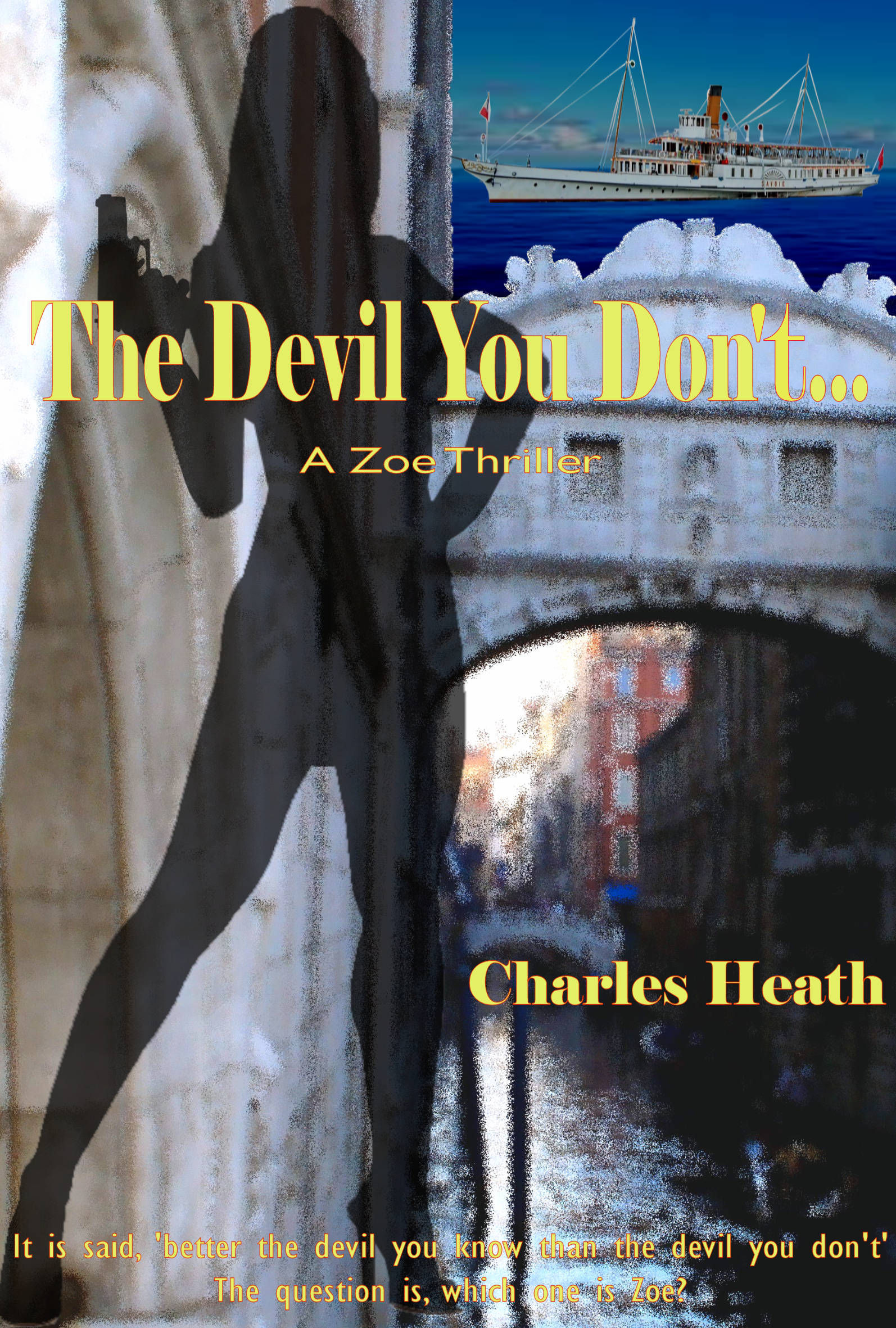
John Pennington is a man who may be lucky in business, but not so lucky in love. He has just broken up with Phillipa Sternhaven, the woman he thought was the one, but relatives and circumstances, and perhaps because she was a ‘princess’, may also have contributed to the end result.
So, what do you do when you are heartbroken?
That is a story that slowly unfolds, from the first meeting with his nemesis on Lake Geneva, all the way to a hotel room in Sorrento, where he learns the shattering truth.
What should have been solace after disappointment, turns out to be something else entirely, and from that point, everything goes to hell in a handbasket.
He suddenly realizes his so-called friend Sebastian has not exactly told him the truth about a small job he asked him to do, the woman he is falling in love with is not quite who she says she is, and he is caught in the middle of a war between two men who consider people becoming collateral damage as part of their business.
The story paints the characters cleverly displaying all their flaws and weaknesses. The locations add to the story at times taking me back down memory lane, especially to Venice where, in those back streets I confess it’s not all that hard to get lost.
All in all a thoroughly entertaining story with, for once, a satisfying end.
On an early morning walk, I discovered the Brooklyn Diner, a small restaurant tucked away in a street not far from Columbus Circle, perhaps a piece of history from the American past.
After all, if you’re going to take in the sights, sounds, and food of a country what better way to do it than visiting what was once a tradition.
This one was called the Brooklyn Diner. It had a combination of booths and counter sit down, though the latter was not a very big space, so we opted for a booth.
The object of going to a Diner is the fact they serve traditional American food, which when you get past the hot dogs and hamburgers and fries, takes the form of turkey and chicken pot pies among a variety of other choices.
Still looking for a perfectly cooked turkey, something I’ve never been able to do myself, I opted for the Teadition Turkey Lunch, which the menu invitingly said was cooked especially at the diner and was succulent. I couldn’t wait.
We also ordered a hamburger, yes, yet another, and a chicken pot pie, on the basis the last one I had in Toronto was absolutely delicious (and cooked the same way since the mid-1930s)
While waiting we got to look at a slice of history belonging to another great American tradition, Baseball, a painting on the wall of the Brooklyn Dodgers at Ebbets field, long since gone from their home.
The Turnkey lunch looked like this
which didn’t seem to be much, and had this odd pasta slice on the plate, but the turkey was amazing and lived up to the menu description.
The Chicken Pot Pie looked like this
And looked a lot larger in reality than the photo shows.
But, sadly while it was not bad, it was a little dry, and could possibly do with using the more succulent thigh part of the chicken.
All of this was washed down by Long Island Ice Teas and Brooklyn Lager.
AS for the Diner experience, it’s definitely a 10 out of 10 for me.