This story is now on the list to be finished so over the new few weeks, expect a new episode every few days.
The reason why new episodes have been sporadic, there are also other stories to write, and I’m not very good at prioritizing.
But, here we are, a few minutes opened up and it didn’t take long to get back into the groove.
Things are about to get complicated…
“Turn around and head towards the trees, we’re not very far from you,” the voice in my head said.
I turned, saw the trees and moved towards them.
“Straight ahead.”
Then I could just see her, beside one of the tree trunks, under the cover of the canopy.
For the moment we would not be seen, but if someone was looking intently, we would be seen.
Jennifer was kneeling, her knees and weight keeping the assailant on the ground. She handed me the gun, a silenced Baretta, with the distinct aroma of a discharged bullet.
Jennifer had pulled off the balaclava. Jan.
Not working for Severin, but Dobbin. Or someone else?
“Who ordered the hit?”
“Go fuck yourself.”
Not entirely unexpected.
I pulled out my phone and dialled the number for the Detective Inspector that had been at Maury’s crime scene. I knew there was going to be a need to call her in the not-too-distant future. And Jan needed to be in a safe place where she couldn’t be got at.
“Who is this?”
My number would have come up as a ‘private number’.
“We met at the hotel where Maury died.”
“The spy?”
“Of sorts. I’m sorry to say that his companion, Severin, is also now very dead in the rotunda at the Italian Gardens at Hyde Park. I’d get someone down here before the body is removed or found by a member of the public.”
I heard a scream and deduced it came from the rotunda.
“Too late. Hurry before the crime scene is contaminated.”
“Where are you?”
“Nearby. And if you’re especially quick, we have a surprise for you.”
Two constables arrived in four minutes, most likely nearby for another reason. The Detective Inspector and her Sergeant arrived within 20 minutes, but by that time Jennifer and Jan had retreated to the car, parked away from the gardens.
Anyone seeing us heading away would have picked us for three drunken fools escorting a friend who had passed out. Jan had struggled to get free, and it had been necessary to subdue her.
I had wanted to ask further questions, but circumstances didn’t allow it. Not yet.
Leaving Jennifer with Jan, securely tied up, but looking like she was sleeping of a long drinking session, I went back to the crime scene just as the Detective Inspector was coming out of the rotunda.
She recognised me and called me over to the tape that separated the public from the scene. The forensic team had just arrived and was setting up. I doubted she would let me into the crime scene area, but I had seen enough when I’d been there with Severin.
“Why are you here, and give me a good reason not to take you into custody.”
“He called me earlier and wanted to talk. I think he found out Maury was dead, and he was next. I didn’t kill him, but I know who did, but I’m not sure we’re going to be able to prove it.”
“That weedy little man that saved your ass the last time?”
“Richards or Dobbin? Either or together or one of their henchmen. Not sure, to be honest. All I knop is it’s possible Maury was killed during an intense interrogation. I suspect Severin was killed to silence him.”
“Because of what?”
“I believe it is about the existence of a formula for a biological weapon.”
I turned, and saw what appeared to be a relatively unkempt man standing behind me.
Jerome Kennedy. Astro physicist. A man who was mocked rather than revered for his theories on space, and in particular, space travel.
And those theories were, to put it mildly, interesting.
It was probably why the Admiral conscripted him for this voyage into the unknown.
“I though that was only in the imagination of television script writers.”
“Possibly, but we just witnessed something that none of us can rationally explain. One minute they were there, the next, poof.”
“That’s why you are along for the ride, to find explanations for the unexplainable. I look forward to your report.” Then, turning back to the navigator, “are we still in touch with the original alien vessel?”
“Just, and still heading towards Uranus.”
“Then let’s get after it, maximum speed when possible.”
I left the newly promoted number one in charge and went into the captains day room. I was still getting used to the idea of actually bring captain, because the aura of previous inhabitant of this room was still there. And it felt like he was in the room watching everything I did.
I shook my head, as if that would cast off the jitters I felt, and sat down behind the imposing desk, one thathad been made over a hundred years before, and from a vessel with the same name.
I still didn’t have a lot to put in any report to the Admiral, but had a lot to think about.
I brought up the navigation screen and looked at the suggested path from where we were to Uranus, and the time it would take.
There was a buzzing sound, and a face appeared on my screen. It was the Captain’s personal assistant for want of a better name, Louise Chalmers, an ex Lieutenant Colonel from the military, but not by much. She had retired into this position, and, I suspect, another was for the military to keep up to date on the Captain’s decisions.
“Come in.”
The door opened, she came in, and it closed behind her. There was no open door policy on this ship.
“Sir.”
“What can I do for you?”
“I’m not sure if you are aware, but I am here to serve whomever the current Captain is, and since Captain V is not here, that would be you in his stead.”
I had read that she was his choice for P A, and that it was a personal matter, as usually Captains didn’t have such staff members.
“I thought you were on board to serve only the previous captain “
“Not so. If you read standing order 207615, you will realise my position was ratified as general crew member, serving the ship rather than an individual. My job is to make your job easier.”
While she was speaking, I fetched the standing orders, and the one she referred, and a quick scan proved such to be the case.
“In what way?”
“Paperwork, the vane of any officers existence I’m told, and to organise all activities of a non urgent nature, like bring the daily reports to you.”
I knew that captain had to be appraised of everything that happened on board, just not every day.
“I take it you have the reports?”
“I have, and unfortunately, as per regulations, I have to make sure you have received them. Your predecessor wanted me to summarise. I can do the same for you.”
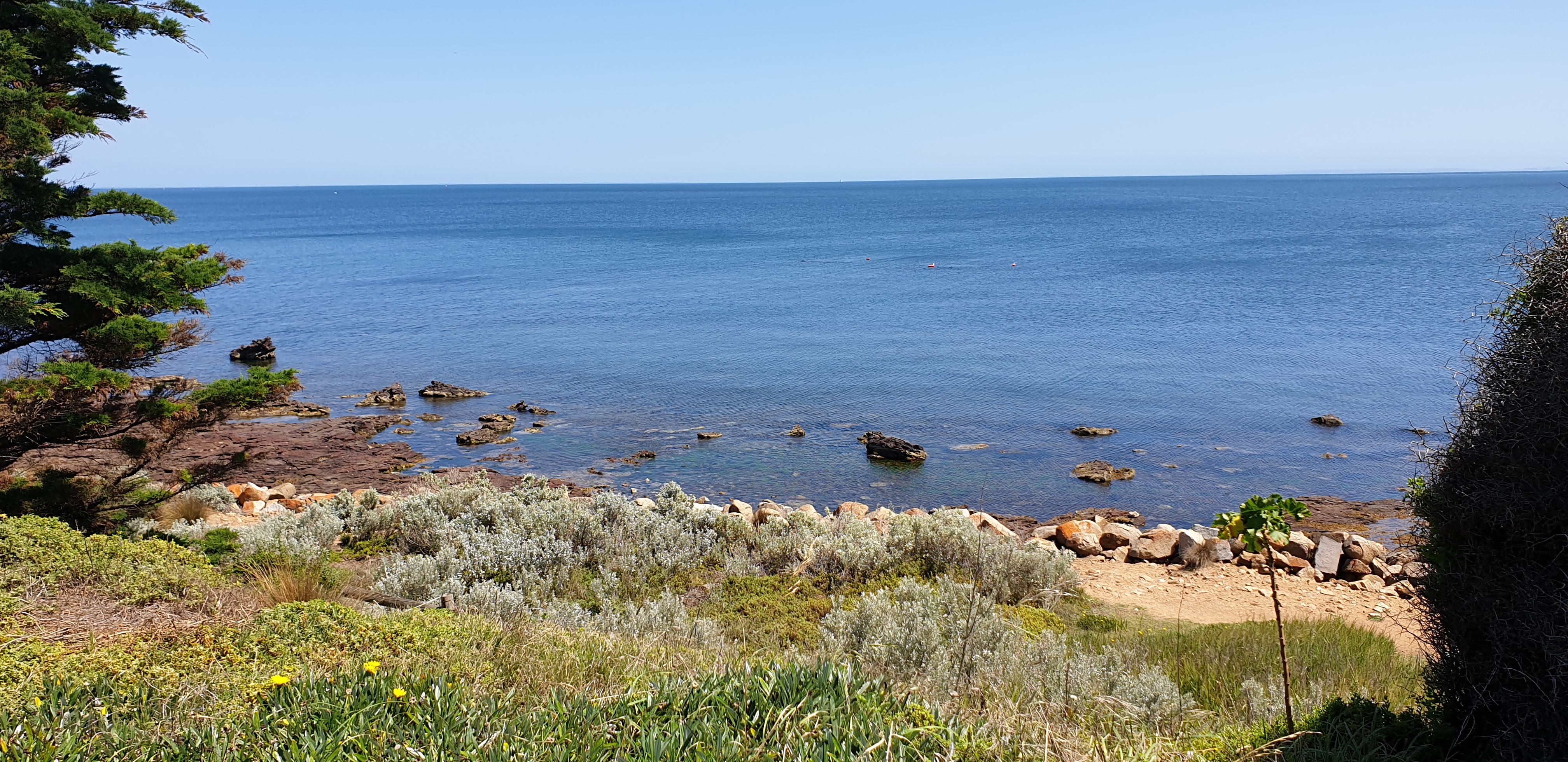
This is a rocky piece of coastline, adjacent to the city by the sea.
It’s highly urbanized, and just behind where I was standing to take this photo, there’s a large carpark, a restaurant, and several shops, as well as a long pier to walk on.
On this side, about 100 yards put is a reef, popular with divers, and the day I took this there we several divers out.
But, if you discounted all of that knowledge and just let your imagination run free, there are so many other possibilities
Like, scoping out a landing spot to bring ashore contraband on what might be a very desolate spot, access gained only by walking along and hazardous path.
Like there might be an imminent landing of foreign soldiers about to set up the start of a clandestine incursion, before a more formal invasion. Or just one person, a foreign spy.
Or a couple of friends having a picnic away from the madding crowd.
I first started writing by longhand, still do, in fact, then graduated to my mother’s portable, then moved upwards into the electric world having a pair of IBM electric typewriters I bought form one of the places I worked as second-hand cast-offs.
Until that is, I could no longer buy ribbons for my IBM Selectric, so it had to go the way of the dinosaurs.
IT was a good thing, then, that computers and word processing software started at about the same time.
So…
I didn’t get to sit down in front of the computer, well, to write that is. I thought I would go searching for some inspiration.
Bad idea.
It’s just that in that short distance, from, say, the couch where you were reading the latest blog posts in the WordPress reader, and the writers chair, your preparation for writing ends up getting confused at some of the pro-Trump and anti Trump bloggers, because it’s hard to find anything relevant to the man and his politics.
People seem to be radically for or radically opposed and there’s no middle ground. How does Government work in such a political climate?
But, there you are, my attention has been distracted and unless I’m about to indulge in political satire, I’m off track, with an out of balance mindset, and therefore unable to write.
Perhaps I should not read blog posts, but the newspapers.
Or not, because they all have an editorial policy that leans either and one way or another, which means their views are not necessarily unbiased.
I was a journalist once and hated the idea of having to toe the editorial line.
I’m coming around to thinking that it’s probably best left to the dark hours of the night when you would think all the distractions are behind you. After all, isn’t that what daytime is for?
Buried Alive: Why Writing Isn’t Just a Passion—It’s Oxygen
“For me, not being allowed to write is tantamount to being buried alive.” — Mikhail Bulgakov
Imagine the heavy, suffocating weight of earth pressing down on your chest. Imagine the absolute silence, the inability to move, the slow, agonizing realisation that your voice has been completely muffled from the world.
To most people, writing is a hobby, a professional skill, or perhaps a therapeutic outlet. But to the true writer, Mikhail Bulgakov’s haunting words are not hyperbole. They are a statement of biological and spiritual reality. For certain souls, the prohibition of the written word is not a restriction; it is an execution.
Why is it that the compulsion to write runs so deep? And what happens when a writer is forced into silence? Let’s explore the profound weight of Bulgakov’s words and what they reveal about the fierce, untameable nature of the creative spirit.
The Prison of the Unwritten: Who Was Mikhail Bulgakov?
To truly understand this sentiment, we have to look at the man who uttered it. Mikhail Bulgakov was a Russian novelist and playwright best known for his masterpiece, The Master and Margarita. Living and writing under the oppressive regime of the Soviet Union in the 1920s and 30s, Bulgakov experienced censorship and blacklisting firsthand.
His books were banned, his plays were pulled from stages, and his livelihood was systematically dismantled by the state. He was effectively silenced—not because he had nothing to say, but because what he had to say terrified those in power.
When a government or circumstance forbids an artist from creating, it attempts to sever their connection to humanity. For Bulgakov, living in Soviet Russia without the right to write meant his thoughts had nowhere to go. They stagnated, poisoned him from the inside, and turned his daily life into a tomb. When he wrote that famous plea to Joseph Stalin—asking either to be permitted to work or to be exiled abroad because “a Russian writer cannot live without his homeland”—he was fighting for his life.
Writing as an Existential Necessity
Why does the denial of writing feel like entombment?
The Mind as a Pressure Cooker: Writers don’t just decide to write; they are driven by a ceaseless internal engine. Characters speak in their heads; plots unfold while washing dishes; observations of the world demand to be translated into metaphor. When this creative pressure has no outlet, it builds up. Without the release valve of the blank page, the mind becomes a claustrophobic chamber.
The Urge to Exist . For many writers, writing is proof of existence. René Descartes said, “I think, therefore I am.” The writer adds, “I write, therefore I am understood.” To write is to take the chaotic, fleeting experience of being human and anchor it into something permanent. If you cannot write, your experiences vanish into the ether, leaving you feeling invisible—as if you have already faded away.
Connection Across the Void: Art is a bridge. When writers put pen to paper (or fingers to keyboard), they are reaching out across the dark abyss of isolation to say, “Are you here too? Did you feel this?” To ban a writer from writing is to cut the ropes of that bridge, leaving them stranded on an island of their own unspoken thoughts.
The Modern “Buried Alive”
You don’t have to live under a totalitarian regime to know what it feels like to be buried alive creatively.
In our modern lives, we often bury ourselves. We take on demanding corporate jobs that drain our cognitive battery. We prioritise productivity over expression. We tell ourselves, “I’ll write that novel, start that blog, or finish that poem when things settle down.”
Days turn into months. Months turn into years.
Suddenly, you wake up and realize you haven’t created anything authentic in ages. You feel restless, irritable, and strangely hollow—even if your life looks successful on paper. That is the feeling of suffocation. That is the slow creep of being buried alive by the mundane demands of daily survival.
Bulgakov’s words serve as a stark wake-up call: Neglecting your creative calling is a form of self-burial.
How to Unearth Yourself
If you are reading this and feeling the dirt piling up over your own creative ambitions, how do you dig your way out? How do you claw your way back to the surface?
Steal the Moments: You don’t need a cabin in the woods or a year-long sabbatical to write. Bulgakov wrote even when his works were banned, hiding manuscripts in drawers (famously leading to the phrase “manuscripts don’t burn”). Write in the margins of your day—fifteen minutes on your lunch break, thirty minutes before the world wakes up.
Release the Need for Perfection: Often, the fear of writing badly keeps us from writing at all. But a messy, breathing draft is infinitely better than the sterile perfection of a blank page locked inside your head.
Treat It Like Oxygen: Stop viewing writing as a reward you give yourself if you finish your chores. Treat it like water and air. Carve out non-negotiable space for it in your routine.
Final Thoughts: Let the Voice Out
Mikhail Bulgakov reminds us that the human spirit cannot be indefinitely suppressed without consequence. Words are meant to be let out into the light, not left to rot in the dark catacombs of the mind.
If you have a story burning a hole in your chest, an essay waiting to be born, or a poem struggling to break free, do not keep it buried. Pick up the pen. Hit the keys. Breathe.
Because on the other side of that blank page isn’t just a finished piece of work—it’s your freedom.
What does writing mean to you? Have you ever felt the suffocating weight of creative silence? Let’s talk about it in the comments below.
One Day in Valletta? The One Spot That Will Make It Unforgettable
You’ve just landed in Malta’s capital for a 24‑hour lay‑over. The airport shuttle whisks you into the heart of a city that feels like a living museum: baroque façades, limestone streets, and a history that stretches back to the Knights of St. John. With only a single day, the temptation is to try and cram everything—the fortifications, the museums, the seaside cafés—into a frantic sprint.
Spoiler alert: You don’t need to do all of that. One place, perched above the glittering Grand Harbour, captures the soul of Valletta in a single, unforgettable glance.
The Spot: Upper Barrakka Gardens (and the Saluting Battery)
“From here you can see the whole island as if it were a postcard.” — A seasoned traveller who once walked the same limestone steps.
The Upper Barrakka Gardens are a terraced public garden perched on the highest point of the city’s fortifications. From its neatly trimmed hedges and marble benches you get a 360° panorama of the Grand Harbour—Fort St. Elmo, the massive three‑fort complex of Fort St. Angelo, the sleek yachts of the marina, and the iconic Azure Window silhouette far out on the horizon (even after its collapse, the sea still holds its memory).
Below the gardens sits the Saluting Battery, a set of historic cannons that fire a majestic salute at noon every day (and at sunset on special occasions). The sound reverberates across the water, a dramatic reminder of Valletta’s martial past.
Why This Is the Only Must‑See for a One‑Day Stopover
Reason
What It Means for You
Instant Context
The view instantly tells you why Valletta was a coveted naval base for the Knights, the British, and now the European Union.
Photographic Jackpot
One wide‑angle shot from the central terrace captures the whole harbour—perfect for Instagram, postcards, or a memory that lasts a lifetime.
Time‑Friendly
A 30‑minute stroll (plus a quick coffee break) fits neatly into any itinerary, leaving you time for a bite, a museum, or a stroll through the streets.
Free Entry
No ticket queues, no crowds fighting over a museum’s limited capacity—just you, the sea, and a slice of Maltese sky.
Cultural Touchstone
The noon salute is a living tradition; watching (or hearing) it makes you part of Valletta’s daily rhythm.
Bottom line: If you can see Valletta from the Upper Barrakka Gardens, you’ve essentially seen Valletta.
How to Make the Most of Your 1‑Day Visit
1. Get There Quick‑Style
Mode
Approx. Time
Cost
Tips
Public Bus (Routes 13/14/222)
15‑20 min from the city gate
€2
Grab a Tallinja Card for unlimited rides (good if you plan a quick museum visit).
Taxi / Ride‑Hail
5‑10 min (traffic permitting)
€8‑€12
Ask for the driver to drop you at the Upper Barrakka Gate (just off Strait Street).
Walking from the Grand Harbour
10 min from the cruise‑ship dock
Free
The promenade is a scenic intro—watch the yachts glide past.
Pro tip: If you land early in the morning, the gardens are serene and the light is perfect for sunrise photography. Arriving by 9 am means you’ll beat the midday crowd and still have time for a leisurely coffee.
2. Time Your Saluting Battery
Noon (12:00 PM) – The traditional “Noon Gun” is fired every day. Arrive a few minutes early to snag a good spot on the steps or on the low terrace.
Sunset (optional) – On the first Saturday of each month, the battery fires a sunset salute (check the Malta Tourism Authority’s calendar).
If your schedule doesn’t line up with the noon salute, don’t worry— the view is spectacular at any hour. A short wait for the cannon’s echo is still worth the dramatic soundtrack.
3. Pair It With a Quick Bite
Café Jubilee (steps down from the garden, on Strait Street) – A historic café that once served British officers. Try the Maltese pastizzi (flaky pastry with ricotta or peas) and a strong Maltese coffee.
The Governor’s Palace Café (behind the Upper Barrakka) – Offers a modest terrace with a view of the harbour; ideal for a light lunch of ħobż biż-żejt (Maltese bread with olive oil, tomatoes, and tuna).
Dining tip: Order the Ħobż biż-żejt “to go” and enjoy it on a bench within the gardens for an authentic, on‑the‑go experience.
4. Quick Optional Add‑Ons (If Time Allows)
Add‑On
Approx. Time
Why It Works
St. John’s Co‑Cathedral
45 min
Home to Caravaggio’s St. John the Baptist, a masterpiece you can’t see anywhere else.
The Valletta Waterfront (Birgu/Hardwicke)
30 min
A stroll along the promenade offers a different perspective of the harbour at sea‑level.
The Malta Experience
30 min
A short audio‑visual show that condenses 700 years of Maltese history—great if you’re a visual learner.
If you decide to squeeze one of these in, keep an eye on the clock—most attractions close by 5 PM in winter and 7 PM in summer.
Insider Hacks: Making a One‑Day Stopover Feel Like a Mini‑Vacation
Dress Light, Carry a Light Jacket – Valletta’s limestone retains heat; mornings can be crisp, evenings breezy.
Buy a Small Bottle of Maltese Water – The tap is safe, but a reusable bottle with a filtered cap keeps you hydrated on the go.
Download the “Malta Public Transport” App – Real‑time bus schedules help you squeeze in that extra museum or shop without guessing wait times.
Use the “Free Wi‑Fi” in the Upper Barrakka Gardens – Malta’s tourism board provides a stable hotspot at the garden’s central bench (just look for the “Visit Malta” sign). Perfect for uploading those new photos.
Respect the “No Smoking” Zones – The gardens are a smoke‑free sanctuary; a polite “thank you” goes a long way with the local guards.
A Day in Review: How It Felt to Stand on the Upper Barrakka
“When the noon cannon boomed and the wind carried the sound across the water, I realized I was standing on a piece of living history. The sight of the three forts guarding the harbour, the modern yachts bobbing beside centuries‑old stone— it was a conversation between past and present that no guidebook could fully capture.”
That’s the magic of the Upper Barrakka Gardens. In less than an hour you get the city’s story, its strategic importance, and its breathtaking beauty—all while sipping a coffee, feeling the Mediterranean breeze, and listening to the echo of cannons that have sounded for over three hundred years.
Quick Reference: Your 24‑Hour Valletta Cheat Sheet
Time
Activity
Details
7:30 AM
Arrive at Valletta (bus/taxi)
Head straight to Upper Barrakka Gardens
8:00 AM
Sunrise & Photo Session
Use a wide‑angle lens, capture the harbour
9:00 AM
Coffee & Pastizzi at Café Jubilee
Quick bite, soak up the street vibe
10:00 AM
Optional: St. John’s Co‑Cathedral
Pre‑book a ticket to avoid lines
12:00 PM
Noon Salute at the Battery
Arrive early for the best spot
12:30 PM
Light Lunch on the Gardens Bench
Enjoy Ħobż biż-żejt with a view
1:30 PM
Stroll Down to Strait Street
Explore local shops, murals
3:00 PM
Return to airport / ferry
Allow 30‑45 min for travel and security
4:30 PM
Flight onward
With a pocket full of photos and a memory that lasts a lifetime
Final Thought: One Spot, Infinite Memories
Travel isn’t always about ticking boxes; it’s about feeling the pulse of a place, even if you’re only there for a few hours. The Upper Barrakka Gardens give you that pulse—an elevated, panoramic snapshot of Valletta’s past, present, and future.
So the next time a layover lands you in the heart of the Mediterranean, skip the exhaustive itinerary and head straight to the gardens. Let the sea, the sky, and the echo of historic cannons fill your senses. In that single moment, Valletta will have shared its story with you, and you’ll leave the island with a day that feels more like a lifetime.
Safe travels, and may your next stop be just as unforgettable!
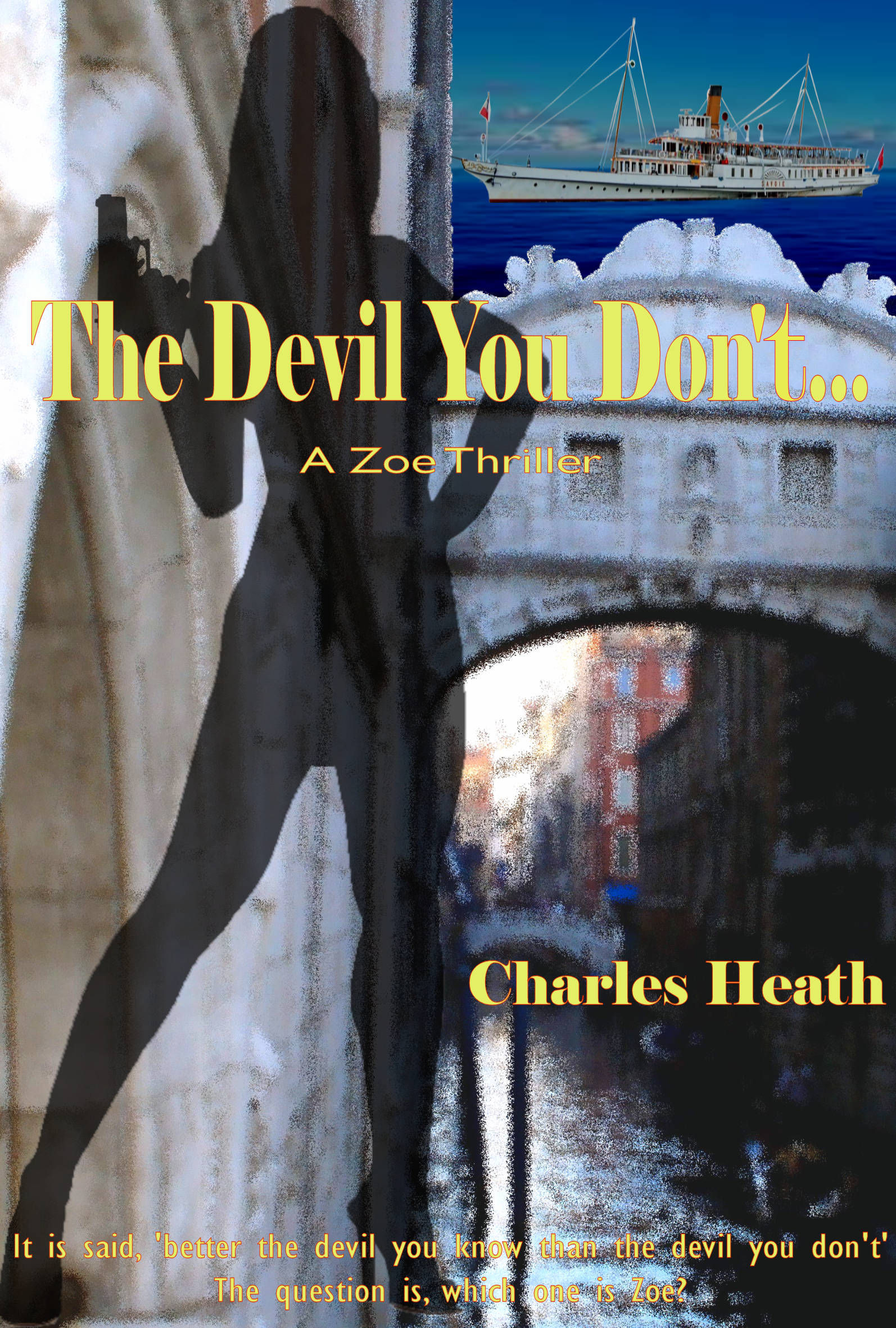
John Pennington’s life is in the doldrums. Looking for new opportunities and prevaricating about getting married, the only joy on the horizon was an upcoming visit to his grandmother in Sorrento, Italy.
Suddenly, he is left at the check-in counter with a message on his phone telling him the marriage is off, and the relationship is over.
If only he hadn’t promised a friend he would do a favour for him in Rome.
At the first stop, Geneva, he has a chance encounter with Zoe, an intriguing woman who captures his imagination from the moment she boards the Savoire, and his life ventures into uncharted territory in more ways than one.
That ‘favour’ for his friend suddenly becomes a life-changing event, and when Zoe, the woman who he knows is too good to be true, reappears, danger and death follow.
Shot at, lied to, seduced, and drawn into a world where nothing is what it seems, John is dragged into an adrenaline-charged undertaking, where he may have been wiser to stay with the ‘devil you know’ rather than opt for the ‘devil you don’t’.
One‑Day Stopover in Sofia? Make It Unforgettable with a Visit to Alexander Nevsky Cathedral
If you’ve only got 24 hours in Bulgaria’s capital, there’s one landmark that will give you a perfect snapshot of Sofia’s history, culture, and soul: the Alexander Nevsky Cathedral.
In this post I’ll walk you through why this soaring Orthodox masterpiece deserves the top spot on your itinerary, how to get there from the airport, what to see inside, where to grab a quick bite, and a few insider tips to make the most of a single day in Sofia.
Why the Cathedral Beats All Other Options
Aspect
What the Cathedral Offers
Comparison
Iconic Status
Sofia’s most photographed building; appears on postcards, travel guides, and the city’s coat of arms.
No other sight rivals its recognizability.
Architectural Drama
A blend of Russian Revival and Byzantine motifs, crowned by a golden dome that dominates the skyline.
Other sites (Vitosha Boulevard, Boyana Church) are beautiful but less instantly “Sofia‑defining.”
Cultural Insight
Houses relics, mosaics, and a crypt that tells the story of Bulgaria’s post‑Ottoman revival.
Museums require more time; the cathedral packs history into a single visit.
Convenient Location
Nestled in the heart of the city, within walking distance of restaurants, parks, and public transport.
Remote sites (Vitosha Mountain) need extra travel time you simply don’t have.
Free Admission
No ticket line, no booking required – perfect for a tight schedule.
Many other attractions charge entry or have long queues.
In short, Alexander Nevsky Cathedral is the single most efficient way to soak up Sofia’s character when the clock is ticking.
Getting There: From Sofia Airport to the Cathedral in 15 Minutes
Exit the arrivals hall and follow signs for the Sofia Metro (Line 1 – “Red” line). The metro station is a short 3‑minute walk, located under the terminal.
Buy a single‑journey ticket (≈ 1.60 BGN, about €0.80) from the vending machines – cash or contactless works.
Board the train toward “Mladost 1” and alight after three stops at “Serdika” (≈ 5 minutes travel).
Follow the signs to the “Sofia Central Railway Station” exit. You’ll emerge onto a bustling pedestrian zone.
Walk north along “Knyaz Mihail Obrinski” street (≈ 5 minutes). The cathedral’s golden domes will dominate the skyline as you approach “Nevski Sq.”
Total door‑to‑door time: ~15 minutes, leaving you with over 10 hours to explore.
Inside the Cathedral: A Mini‑Guide for the Time‑Pressed Traveler
Feature
What to Look For
How Much Time?
The Exterior
The massive gold-plated cross, the 12 onion domes, and the intricately detailed façade.
5 minutes (photos).
The Interior Nave
A forest of 40,000+ marble columns, a massive iconostasis, and the iconic fresco of the St. Alexander Nevsky mural.
7 minutes (scan).
The Crypt
Resting place of Bulgarian royalty and notable clergy; a quiet spot to reflect on the nation’s post‑Ottoman resurgence.
5 minutes (optional).
The Golden Mosaic
The “Christ Pantocrator” in the central dome glistens with gold leaf; a masterpiece of Orthodox art.
3 minutes (look up).
The Gift Shop
Hand‑crafted icons, amber jewelry, and traditional Bulgarian rosaries.
2 minutes (if you like souvenirs).
Tip: If you arrive between 9:00 – 11:00 am, you’ll avoid the mid‑day tourist rush and can enjoy a quieter atmosphere for photos.
Grab a Bite Nearby: The “Moma” Café Experience
Just a two‑minute walk from the cathedral’s side entrance sits Moma Café, a stylish spot beloved by locals for its blend of Bulgarian flavours and Mediterranean flair.
Signature Dish: Banitsa (phyllo pastry filled with feta and spinach) – a perfect quick‑eat that fuels your next adventure.
Coffee: Try the “Sofia Sunrise” – a cold brew infused with rosehip and a dash of honey, a nod to the city’s rose‑oil heritage.
Price Range: 5–12 BGN per item (≈ €2.50–€6).
If you’re on a tighter budget, the street‑side kebap shops on “Vitosha Blvd.” offer a savoury kebapche for under 3 BGN.
Making the Most of Your One‑Day Stopover
Time Slot
Activity
08:00‑09:30
Arrive at Sofia Airport, take the metro to the city center.
09:30‑10:45
Explore Alexander Nevsky Cathedral (photo session + brief interior tour).
10:45‑11:30
Coffee and Banitsa at Moma Café.
11:30‑13:30
Stroll through City Garden and National Art Gallery (both adjacent).
13:30‑15:00
Lunch at Made in Home (farm‑to‑table Bulgarian dishes).
15:00‑17:00
Walk the historic Vitosha Boulevard, shop for souvenirs.
17:00‑18:00
Return to the airport via metro (allow extra time for security).
Feel free to swap the afternoon activities for a quick trip to the Boyana Church (UNESCO site) if you’re a history buff – just remember you’ll need ~45 minutes of travel each way.
Insider Hacks: Avoid the Common Pitfalls
Dress Respectfully – While the cathedral is a tourist hotspot, it’s still a place of worship. Cover shoulders and knees (a light scarf works for women).
Mind the Bells – The massive bells toll every hour; a gentle hush is appreciated during the chime.
Free Wi‑Fi – The cathedral’s lobby offers complimentary Wi‑Fi; perfect for uploading those panoramic shots on the go.
Currency – Bulgaria uses the Lev (BGN). Most cafés accept cards, but carry a few coins for street vendors.
Time Zone – Sofia is UTC+2 (UTC+3 in summer). Double‑check your connecting flight departure time.
Bottom Line: One Site, One Day, One Memorable Experience
When you have just a single day to taste Sofia, you need a destination that encapsulates the city’s spirit without demanding a full‑day commitment. Alexander Nevsky Cathedral does exactly that: it offers a breathtaking visual punch, a concise history lesson, and a convenient central location that lets you weave in a few extra highlights without breaking the clock.
So next time your itinerary shows a brief stop in Bulgaria’s capital, skip the indecision and head straight for the golden domes. In 15 minutes you’ll be inside a living monument; in an hour you’ll have a collection of photos worthy of any travel album; and in a day you’ll leave Sofia with a vivid memory of its heart, soul, and unmistakable skyline.
Happy travels—and may your layover be as golden as the Nevsky domes!
It was the first time in almost a week that I made the short walk to the cafe alone. It was early, and the chill of the morning was still in the air. In summer, it was the best time of the day. When Susan came with me, it was usually much later, when the day was much warmer and less tolerable.
On the morning of the third day of her visit, Susan said she was missing the hustle and bustle of London, and by the end of the fourth she said, in not so many words, she was over being away from ‘civilisation’. This was a side of her I had not seen before, and it surprised me.
She hadn’t complained, but it was making her irritable. The Susan that morning was vastly different to the Susan on the first day. So much, I thought, for her wanting to ‘reconnect’, the word she had used as the reason for coming to Greve unannounced.
It was also the first morning I had time to reflect on her visit and what my feelings were towards her. It was the reason I’d come to Greve: to soak up the peace and quiet and think about what I was going to do with the rest of my life.
I sat in my usual corner. Maria, one of two waitresses, came out, stopped, and there was no mistaking the relief in her manner. There was an air of tension between Susan and Maria I didn’t understand, and it seemed to emanate from Susan rather than the other way around. I could understand her attitude if it was towards Alisha, but not Maria. All she did was serve coffee and cake.
When Maria recovered from the momentary surprise, she said, smiling, “You are by yourself?” She gave a quick glance in the direction of my villa, just to be sure.
“I am this morning. I’m afraid the heat, for one who is not used to it, can be quite debilitating. I’m also afraid it has had a bad effect on her manners, for which I apologise. I cannot explain why she has been so rude to you.”
“You do not have to apologise for her, David, but it is of no consequence to me. I have had a lot worse. I think she is simply jealous.”
It had crossed my mind, but there was no reason for her to be. “Why?”
“She is a woman, I am a woman, she thinks because you and I are friends, there is something between us.”
It made sense, even if it was not true. “Perhaps if I explained…”
Maria shook her head. “If there is a hole in the boat, you should not keep bailing but try to plug the hole. My grandfather had many expressions, David. If I may give you one piece of advice, as much as it is none of my business, you need to make your feelings known, and if they are not as they once were, and I think they are not, you need to tell her. Before she goes home.”
Interesting advice. Not only a purveyor of excellent coffee, but Maria was also a psychiatrist who had astutely worked out my dilemma. What was that expression, ‘not just a pretty face’?
“Is she leaving soon?” I asked, thinking Maria knew more about Susan’s movements than I did.
“You would disappoint me if you had not suspected as much. Susan was having coffee and talking to someone in her office on a cell phone. It was an intense conversation. I should not eavesdrop, but she said being here was like being stuck in hell. It is a pity she does not share your love for our little piece of paradise, is it not?”
“It is indeed. And you’re right. She said she didn’t have a phone, but I know she has one. She just doesn’t value the idea of getting away from the office. Perhaps her role doesn’t afford her that luxury.”
And perhaps Alisha was right about Maria, that I should be more careful. She had liked Maria the moment she saw her. We had sat at this very table, the first day I arrived. I would have travelled alone, but Prendergast, my old boss, liked to know where ex-employees of the Department were, and what they were doing.
She sighed. “I am glad I am just a waitress. Your usual coffee and cake?”
“Yes, please.”
Several months had passed since we had rescued Susan from her despotic father; she had recovered faster than we had thought, and settled into her role as the new Lady Featherington, though she preferred not to use that title, but go by the name of Lady Susan Cheney.
I didn’t get to be a Lord, or have any title, not that I was expecting one. What I had expected was that Susan, once she found her footing as head of what seemed to be a commercial empire, would not have time for details like husbands, particularly when our agreement made before the wedding gave either of us the right to end it.
There was a moment when I visited her recovering in the hospital, where I was going to give her the out, but I didn’t, and she had not invoked it. We were still married, just not living together.
This visit was one where she wanted to ‘reconnect’ as she called it, and invite me to come home with her. She saw no reason why we could not resume our relationship, conveniently forgetting she indirectly had me arrested for her murder, charges both her mother and Lucy vigorously pursued, and had the clone not returned to save me, I might still be in jail.
It was not something I would forgive or forget any time soon.
There were other reasons why I was reluctant to stay with her, like forgetting small details, an irregularity in her character I found odd. She looked the same, she sounded the same, she basically acted the same, but my mind was telling me something was not right. It was not the Susan I first met, even allowing for the ordeal she had been subjected to.
But, despite those misgivings, there was no question in my mind that I still loved her, and her clandestine arrival had brought back all those feelings. But as the days passed, I began to get the impression my feelings were one-sided and she was just going through the motions.
Which brought me to the last argument, earlier, where I said if I went with her, it would be business meetings, social obligations, and quite simply her ‘celebrity’ status that would keep us apart. I reminded her that I had said from the outset I didn’t like the idea of being in the spotlight, and when I reiterated it, she simply brushed it off as just part of the job, adding rather strangely that I always looked good in a suit. The flippancy of that comment was the last straw, and I left before I said something I would regret.
I knew I was not a priority. Maybe somewhere inside me, I had wanted to be a priority, and I was disappointed when I was not.
And finally, there was Alisha. Susan, at the height of the argument, had intimated she believed I had an affair with her, but that elephant was always in the room whenever Alisha was around. It was no surprise when I learned Susan had asked Prendergast to reassign her to other duties.
At least I knew what my feelings for Alisha were, and there were times when I had to remember she was persona non grata. Perhaps that was why Susan had her banished, but, again, a small detail; jealousy was not one of Susan’s traits when I first knew her.
Perhaps it was time to set Susan free.
When I swung around to look in the direction of the lane where my villa was, I saw Susan. She was formally dressed, not in her ‘tourist’ clothes, which she had bought from one of the local clothing stores. We had fun that day, shopping for clothes, a chore I’d always hated. It had been followed by a leisurely lunch, lots of wine and soul searching.
It was the reason why I sat in this corner; old habits die hard. I could see trouble coming from all directions, not that Susan was trouble or at least I hoped not, but it allowed me the time to watch her walking towards the cafe in what appeared to be short, angry steps; perhaps the culmination of the heat wave and our last argument.
She glared at me as she sat, dropping her bag beside her on the ground, where I could see the cell phone sitting on top. She followed my glance down, and then she looked unrepentant back at me.
Maria came back at the exact moment she was going to speak. I noticed Maria hesitate for a second when she saw Susan, then put her smile in place to deliver my coffee.
Neither spoke nor looked at each other. I said, “Susan will have what I’m having, thanks.”
Maria nodded and left.
“Now,” I said, leaning back in my seat, “I’m sure there’s a perfectly good explanation as to why you didn’t tell me about the phone, but that first time you disappeared, I’d guessed you needed to keep in touch with your business interests. I thought it somewhat unwisethat you should come out when the board of one of your companies was trying to remove you, because of what was it, an unexplained absence? All you had to do was tell me there were problems and you needed to remain at home to resolve them.”
My comment elicited a sideways look, with a touch of surprise.
“It was unfortunate timing on their behalf, and I didn’t want you to think everything else was more important than us. There were issues before I came, and I thought the people at home would be able to manage without me for at least a week, but I was wrong.”
“Why come at all. A phone call would have sufficed.”
“I had to see you, talk to you. At least we have had a chance to do that. I’m sorry about yesterday. I once told you I would not become my mother, but I’m afraid I sounded just like her. I misjudged just how much this role would affect me, and truly, I’m sorry.”
An apology was the last thing I expected.
“You have a lot of work to do catching up after being away, and of course, in replacing your mother and gaining the requisite respect as the new Lady Featherington. I think it would be for the best if I were not another distraction. We have plenty of time to reacquaint ourselves when you get past all these teething issues.”
“You’re not coming with me?” She sounded disappointed.
“I think it would be for the best if I didn’t.”
“Why?”
“It should come as no surprise to you that I’ve been keeping an eye on your progress. You are so much better doing your job without me. I told your mother once that when the time came I would not like the responsibilities of being your husband. Now that I have seen what it could possibly entail, I like it even less. You might also want to reconsider our arrangement, after all, we only had a marriage of convenience, and now that those obligations have been fulfilled, we both have the option of terminating it. I won’t make things difficult for you if that’s what you want.”
It was yet another anomaly, I thought; she should look distressed, and I would raise the matter of that arrangement. Perhaps she had forgotten the finer points. I, on the other hand, had always known we would not last forever. The perplexed expression, to me, was a sign she might have forgotten.
Then, her expression changed. “Is that what you want?”
“I wasn’t madly in love with you when we made that arrangement, so it was easy to agree to your terms, but inexplicably, since then, my feelings for you changed, and I would be sad if we parted ways. But the truth is, I can’t see how this is going to work.”
“In saying that, do you think I don’t care for you?”
That was exactly what I was thinking, but I wasn’t going to voice that opinion out loud. “You spent a lot of time finding new ways to make my life miserable, Susan. You and that wretched friend of yours, Lucy. While your attitude improved after we were married, that was because you were going to use me when you went to see your father, and then almost let me go to prison for your murder.”
“I had nothing to do with that, other than to leave, and I didn’t agree with Lucy that you should be made responsible for my disappearance. I cannot be held responsible for the actions of my mother. She hated you; Lucy didn’t understand you, and Millie told me I was stupid for not loving you in return, and she was right. Why do you think I gave you such a hard time? You made it impossible not to fall in love with you, and it nearly changed my mind about everything I’d been planning so meticulously. But perhaps there was a more subliminal reason why I did because after I left, I wanted to believe, if anything went wrong, you would come and find me.”
“How could you possibly know that I’d even consider doing something like that, given what you knew about me?”
“Prendergast made a passing comment when my mother asked him about you; he told us you were very good at finding people and even better at fixing problems.”
“And yet here we are, one argument away from ending it.”
I could see Maria hovering, waiting for the right moment to deliver her coffee, then go back and find Gianna, the café owner, instead. Gianna was more abrupt and, for that reason, was rarely seen serving the customers. Today, she was particularly cantankerous, banging the cake dish on the table and frowning at Susan before returning to her kitchen. Gianna didn’t like Susan either.
Behind me, I heard a car stop, and when she looked up, I knew it was for her. She had arrived with nothing, and she was leaving with nothing.
She stood. “Last chance.”
“Forever?”
She hesitated and then shook away the look of annoyance on her face. “Of course not. I wanted you to come back with me so we could continue working on our relationship. I agree there are problems, but it’s nothing we can’t resolve if we try.”
I had been trying. “It’s too soon for both of us, Susan. I need to be able to trust you, and given the circumstances, and all that water under the bridge, I’m not sure if I can yet.”
She frowned at me. “As you wish.” She took an envelope out of her bag and put it on the table. “When you are ready, it’s an open ticket home. Please make it sooner rather than later. Despite what you think of me, I have missed you, and I have no intention of ending it between us.”
That said, she glared at me for a minute, shook her head, then walked to the car. I watched her get in and the car drive slowly away.