The cinema of my dreams – I always wanted to see the planets – Episode 38

On the alien ship

…

It looked like the bridge on any other spaceship, and for a moment it had me thinking this was another earth ship, in concert with the fleeing vessel, running an operation to separate the captain from his ship.

But, why?

“Why did you bring us here?” I asked, trying to keep an even tone.  I was working overtime suppressing the fear I felt and regretting being so impulsive.

This was not how I expected first contact with another species, at least for me, would go. 

What did I expect?

Certainly not the red-carpet treatment.

“A private discussion, Captain to captain.”

He looked at Nancy Woolmer, and I said, “anything you say will be in strictest confidence.  is our on-board police detective, part of the security team.”

He gave her another long stare, as if he could see into her mind and knew what she was thinking, then just shook his head.

For an alien, he had a lot of human attributes.

“You speak very good English for, if you’ll pardon the expression, an alien.”  Nnnn decided to throw in her on the question.

I didn’t think my captain’s severe stare would silence her or re-establish my authority over the proceedings.

But it was a good question.

“We speak many languages.  You have, in your planet, hundreds.  We have the same in our corner of the galaxy, so we use what we call a universal translator.”

One thing the space age introduced, was to unify countries into blocs and reduced the number of languages.  It had been touch and go for a few years that we’d all be speaking Spanish, the most widely used language on our planet, but somehow English won the battle.

“We’ve tried to unify it to just a few.  It’s not easy.”

“We had the same problem until the translator was created, not only for us but for communicating with other species, like yourself.”

“Nevertheless, how is it you know of us, and how we speak?”

“That’s easy.  We have been visiting, even living among you, for many thousands of your years.”

“And you’ve chosen never to introduce yourselves or make contact.”

“We tried, a number of times, but you are, always were, a primitive and violent people.  We have waited for signs that you had changed, become peaceful, shown unity, but instead, you continue to kill each other and destroy your world through greed and utter stupidity.  Now you have spaceships, albeit limited in technology and travel distance.  Now, unfortunately, we can’t ignore you.”

“The other ship?”

“It was as we expected.  We had hoped they would be peaceful and curious explorers and adopting a cautious approach, we decided to observe, not contact, see if our assessment of your people had changed.  Unfortunately, it had not.  First habitable planet, not far from here, they visited, the scientists examined the world for technology, resources, and then the people.  What they couldn’t take, they stole.  They treated the people badly, getting into disagreements, fighting, and killing.  The other captain was like you, saying they were explorers.”

That’s the thing I hated about first impressions, you do the wrong thing, it’s all you are remembered for, and the other ship had just made the whole of earth look bad.  Not that we hadn’t done that already ourselves in other ways.

Something else to note, aliens had been visiting us for a long, long time.  I didn’t think it was an appropriate moment to bring up Roswell.

OK, we’ve established that humans are not the nicest people in the galaxy but why was l here?

“I can’t answer for my fellow humans, nor will I apologize for them.  The only way they can improve, we can improve, is the get out there and learn about how others have overcome the obstacles we still face.  But, aside from all that, what was so private that I had to come here?”

“Oh, that.  You have about ten of your earth minutes to convince me not to destroy your ship and everyone in it.”

So much for the alien Captain’s promise no harm would come to us.

…

© Charles Heath 2021-2022

A photograph from the inspirational bin – 20

20191216_175251

Suburbia, yes, reddish sky at night, yes, but what else might it be?

For just a moment, close your eyes, toss away everything you might accept as normal, and then, after a minute, open them again, and look at the photo with a new perspective.

Imagine…


It took two days for the dust to settle, figuratively and literally.

We heard screaming jet fighters overhead, followed by multiple explosions, then nothing but smoke and ash.  We assumed one of the jets had crashed.

Two days the media was saying it was an unfortunate accident.

On the third day, we discovered it was the result of multiple missile strikes on our power stations and oil refineries.  The jets had arrived too late to stop the attack.

And we only found out because an Army officer who lived in our street came home to collect his family and told us to leave, go anywhere but stay in the city.

The ash in the air was going to get worse, the sun was going to disappear altogether, and, well, he didn’t stay long enough to tell us the rest, but already the air was almost unbreathable.

But the leaving was easy, just take what we could in the car.  The problem was, everyone had the same idea, and by the time we reached the highway, it was a virtual carpark.

By then, it was day four.

That’s when the bombs started to fall.


It might not be an exact match for the photo, but that was the idea that came from it.

I’m sure there could be a far simpler and more pleasant story to be told.


What I learned about writing – Days can disappear in the blink of an eye

I had so many things planned, those little bits and pieces that seem to get away from you.

It’s now Thursday night, and I have only just come back to this post to write some more or maybe finish it, but that should give you some idea of how easy simple things can get away from me.

To fill in the gaps in the story, I started to make a list of those bits and pieces, and that was the first mistake.

I frightened myself.

Tuesday disappeared in writing down what was on my writing slate. For instance,

Episodes 11 to 15 of the murder story, because my characters are having a fight in my head

The treasure hunt story is done, just needs a few tweaks

Episode 47 of the Castello di Brolio story, where the Germans are about to find themselves on the wrong end of the war

Episode 1 of the WW2 story – this has a start, but is it Episode 1?  What bothers me is that I wrote some of this on the plane, but it disappeared somewhere, so I’m not sure when this may get done.

Writing instead of insomnia  is actually giving me insomnia

Episodes 151 through 177 of Being Inspired, Maybe – Volume 4. This is a series of photographs, and the story inspired by them.  Volume 3 is at first draft, and the photos are being associated with the stories.

Just about finished editing Volume 2, and I’m about to publish Volume 1.

Episodes 60 through 63 of PI Walthenson’s second case, new additions to the story, and although there is a title, the jury’s still out on whether it’ll be adopted.  There’s an interesting dynamic developing between the son and the mother, a woman whom he is discovering to be nothing like the one he thought he knew.

And, don’t get me started on where I am with Strangers We’ve Become, I just finished the 10th read and edit.  The book is done, but rereading told me, or the cat did far more emphatically, there are a few gaps.  This needs to get done, and I need to ‘stick the courage to the sticking point’.

Wednesday arrived, and I was looking at the list, wondering what I was going to do next and realised that I’d been putting off writing the next few posts on the travelling blog, which desperately need to be done.

So…

Travelling blog times two, and now it’s Thursday.

Damn, where did the week go?

365 Days of Writing, 2026 – 283/284

Days 283 and 284 – Music as Inspiration

…

Scoring the Void: What Hans Zimmer’s “Detach” Teaches Us About Crafting Sci-Fi Plotlines

If you have ever stared up at the night sky and felt a chilling mix of awe and absolute insignificance, you’ve likely experienced the exact emotional frequency of Hans Zimmer’s track “Detach” from the Interstellar original motion picture soundtrack.

Building slowly from a mournful, solitary organ into a towering, overwhelming wall of brass and cascading synth, the track isn’t just background music—it’s a masterclass in narrative tension. For writers, filmmakers, and creators, listening to “Detach” is akin to staring at a blank canvas with a loaded brush. It begs a question: What kind of story does this song demand to be told?

If you were to build an entire narrative arc, a novel, or a cinematic plotline inspired solely by the emotional trajectory of “Detach,” here is the blueprint of the story you would write.


The Premise: The Architecture of Isolation

  • Primary Theme: Sacrifice, duty, and the inescapable passage of time.
  • Genre: Hard Science Fiction / Existential Thriller
  • Tone: Melancholic, relentless, awe-inspiring, and ultimately transcendent.

To match the sonic landscape of “Detach,” your protagonist cannot merely be fighting for survival against aliens or laser-toting empires. They must be fighting against physics itself.

Act I: The Quiet Desperation (0:00 – 1:00)

The track begins with a slow, trembling organ melody. It feels like breathing in a cold, air-locked room. There is space between the notes—vast, echoing space.

The Plot Setup: We open on a dying colony ship or a lone research station at the edge of known space. Let’s call our protagonist Elena, a veteran terraforming engineer. Earth is a distant, unrecoverable memory, and the last viable biosphere project has just suffered a catastrophic failure.

The opening chapters mirror the opening notes of the song: quiet, methodical, and heavy with dread. Elena isn’t running from a monster; she is managing a slow-motion extinction event. The plot here is intimate. We watch her calibrate instruments in absolute silence, communicating with an automated AI system that has begun to mimic human grief. The conflict is internal: How do you keep working when you know the math doesn’t add up?

Act II: The Cascade and the Choice (1:01 – 2:30)

The music begins to swell. Additional layers fold into the composition. The rhythm picks up, mimicking a ticking clock—or a frantic heartbeat. The organ grows urgent, refusing to let you look away.

The Plot Escalation: A breakthrough occurs, but it comes with a devastating catch. Elena discovers a way to send a fully viable seed-vault of human DNA and planetary data through a gravitational slingshot toward a habitable zone. However, the vessel carrying the data is too heavy to make the jump with a pilot on board.

Worse yet, the launch window is opening now, and the automated guidance system has been fried by cosmic radiation. Someone has to manually override the thrusters from inside the launch chamber—knowing the radiation exposure and the gravitational G-force will be immediately fatal.

This is the narrative translation of the song’s title: Detachment.

The plot pivots from a survival story into a philosophical dilemma. Elena must choose between clinging to her remaining years of solitary life or severing her final ties to humanity to give the species one last, desperate shot at a future.

Act III: The Horizon Event (2:31 – End)

The music explodes. The gentle organ transforms into a roaring, majestic tidal wave of sound. It is terrifying, yet strangely beautiful—like watching a supernova.

The Climax and Resolution: Elena locks herself inside the payload bay. As the countdown reaches zero, the visual and narrative descriptions mirror the overwhelming crescendo of the Zimmer track.

There are no last-minute hero tropes here. No miraculous escape pods. The plot honors the gravity of the music. Elena manually initiates the launch sequence. We experience her final moments not through despair, but through profound clarity. As the ship tears away from the station and plunges into the cosmic abyss, she watches the data packet successfully clear the gravitational threshold.

The story ends not with death, but with momentum. The final fade-out of the song leaves us floating in the silence of deep space, knowing that a piece of us has made it to the other side.


Why This Plotline Works (An SEO & Storytelling Breakdown)

If you are a writer looking to use music as a wellspring for outlining your next manuscript, studying tracks like “Detach” reveals the power of emotional pacing:

  1. Start Small, End Vast: Great sci-fi plotlines start with intimate human stakes before scaling up to cosmic proportions.
  2. Embrace the Inevitable: Not all plots require a happy, Hollywood ending. Sometimes, a plot driven by sacrifice offers a much higher emotional return for the reader.
  3. Let the Soundtrack Dictate the Pacing: Use the crescendos of your favourite instrumental tracks to map out your story’s beat sheet. Where does the organ start playing faster? That’s your inciting incident. Where does the wall of sound hit? That’s your climax.

Your Turn to Write

Music is a portal to worlds we haven’t visited yet. The next time you need inspiration for a sci-fi masterpiece or a dramatic turning point in your current manuscript, put on Hans Zimmer’s Interstellar score, close your eyes, and ask yourself: What am I ready to detach from?


What kind of story does “Detach” bring to your mind? Let us know your plot ideas in the comments below

…

Top 5 sights on the road less travelled – Budapest

Budapest Beyond the Guidebook: 5 Adventures on the Road Less Travelled

Budapest. The Pearl of the Danube. A city of majestic architecture, thermal waters, ruin bars, and a history that echoes through every cobblestone street. It’s a city that rightfully earns its place on countless travel bucket lists, beckoning with the grandeur of the Parliament, the panoramic views from Buda Castle, and the vibrant pulse of Szimpla Kert.

But what if you’ve already seen the iconic sights, or perhaps you’re simply tired of following the well-worn path? What if you crave a deeper connection, a more authentic encounter with this incredible city?

If your adventurous spirit whispers for something different, something just off the main tourist radar, then pack your curiosity. We’re about to explore five truly unique experiences in Budapest that promise a new perspective and memories distinct from the typical postcard shots.


1. Descend into Budapest’s Hidden Labyrinth: The Pál-völgyi or Szemlő-hegyi Caves

Forget the surface for a moment and journey into Budapest’s fascinating underworld. Beneath the city, an extensive network of limestone caves riddles the earth, formed by ancient thermal waters. While few tourists venture here, these natural wonders offer a thrilling escape.

Why it’s unique: Unlike most cave systems, these are right beneath a bustling capital city! You’ll trade city noise for geological silence, marvelling at incredible stalactite and stalagmite formations, crystal growths, and narrow passages. The Pál-völgyi Cave offers a more adventurous, helmet-and-headlamp caving experience (guided, of course), while the Szemlő-hegyi Cave is more accessible, known as the “underground flower garden” for its stunning mineral formations.

Road Less Travelled Bonus: You’ll be one of the few experiencing an ancient, geological side of Budapest often overlooked. It’s an active, immersive adventure that feels a world away from the city above.


2. Bathe Like a Local: Rudas Thermal Bath (and its Rooftop Pool!)

Everyone knows Széchenyi and Gellért. They’re stunning, no doubt. But for a truly authentic, less-crowded thermal experience steeped in history, head to Rudas Thermal Bath. Dating back to the Ottoman occupation, Rudas offers a glimpse into centuries-old bathing traditions.

Why it’s unique: Rudas maintains designated gender-specific days in its beautiful 16th-century octagonal main pool (check their schedule!), offering a more traditional and serene experience. But the real hidden gem? It’s a contemporary rooftop panoramic hot tub. Imagine soaking in warm thermal waters, overlooking the magnificent Chain Bridge and the Danube, especially as the city lights up at dusk.

Road Less Travelled Bonus: While not entirely undiscovered, Rudas offers a far less ‘tourist factory’ feel than its more famous counterparts, allowing for a more reflective and local bathing ritual, especially on single-sex days. The rooftop pool is pure magic.


3. Ride the Whimsical Hungarian Children’s Railway (Gyermekvasút)

Step back in time and into a truly charming piece of Hungarian history. The Children’s Railway is no theme park ride; it’s a fully operational, narrow-gauge railway line winding through the picturesque Buda Hills, and almost every role – from ticket inspector to signalman – is performed by children (aged 10-14), under adult supervision.

Why it’s unique: It’s a fascinating relic of the socialist era, designed to teach children responsibility and discipline. The kids take their roles very seriously, making for a delightful and slightly surreal experience. The journey itself offers beautiful views of the surrounding forests and hills, a welcome green escape from the city’s concrete.

Road Less Travelled Bonus: Far from the city centre, this is a heartwarming, quirky, and surprisingly educational experience. It’s perfect for families, history buffs, or anyone seeking a genuinely unique interaction with Hungarian culture and its past.


4. Dive into Pinball Heaven at the Flippermúzeum (Pinball Museum)

If you’re looking for something purely fun, nostalgic, and utterly unexpected, the Budapest Pinball Museum is your answer. Tucked away in a basement close to Margaret Bridge, this vibrant museum houses over 160 playable pinball machines and arcade games, from the 1940s to the latest models.

Why it’s unique: It’s not just a museum; it’s an interactive arcade where your entrance fee grants you unlimited play for the entire day! You can spend hours immersed in the delightful clangs, flings, and flashing lights of pinball history, challenging friends or simply reliving childhood memories.

Road Less Travelled Bonus: This isn’t on any standard itinerary, making it a fantastic discovery for those craving entertainment beyond traditional sightseeing. It’s a quirky, joyful experience that appeals to all ages and offers a lively break from historical tours.


5. Explore the Ancient Charms of Óbuda

While everyone flocks to Buda Castle or Pest’s vibrant districts, take a tram or bus to Óbuda, the oldest part of Budapest. This tranquil district, effectively Budapest’s “Old Town,” predates the unification of Buda and Pest and offers a distinctly different atmosphere.

Why it’s unique: Here, you’ll find charming Baroque squares like Fő tér (Main Square), dotted with sculptures, quaint cafes, and local shops. Explore the ruins of Aquincum, an ancient Roman city that once thrived here, complete with an amphitheatre. Óbuda feels like a separate, sleepy village, with its own pace and unique history.

Road Less Travelled Bonus: You’ll experience a quieter, more residential side of Budapest, encountering fewer tourists and more locals going about their daily lives. It’s a chance to savour genuine Hungarian village charm within a major metropolis, and to walk among Roman ruins without the usual crowds.


Budapest is a city that keeps on giving, especially when you step away from the well-trodden path. These five adventures offer a glimpse into the city’s diverse soul, inviting you to connect with its history, nature, quirks, and local life in truly memorable ways. So, next time you’re planning a trip to the Hungarian capital, dare to take the road less travelled. You might just discover your own personal pearl.

What are your favourite Budapest hidden gems? Share them in the comments below!

In a word: play

I’m going to play a game. 

Is that a video game on the computer, or is that a board game with friends?

In reality, I didn’t play games with friends because I’m a poor loser.  Especially monopoly.

But to play a game often means you take on a persona or a role, as one, or one of many.

Personally, I like role-playing games like Dungeons and Dragons.

I’m going to a play

This is a stage production of a scripted story with various people in roles.

A play can have a star, a lead actor in a pivotal role, to draw in the viewers

I’ve been to good plays and bad ones with great actors and some not-so-great ones.

A play can be hard to understand, it can be a musical with singing and dancing, or it can be rollicking good fun where the audience dances in their seats.

The worst play I ever saw was Dr Zhivago; it never seemed to end.

The best play, The Pyjama Game, with John Inman from Are You Being Served, a British comedy TV show.

I’m going to play the game

There’s a slight difference between this and the first example because it means instead of doing something your own way, you’re going to do what everyone else does, prompting the analogy, you’re going to fight fire with fire.

Yep, even the explanations can be confusing.  You have to love the English language for being that.

I’m going to play a role

So many connotations to this one.  For instance, I’m going to be someone I’m not.  If I’m a kind person, then I’m going to pretend I’m mean.

I’m going to join a group of like-minded people and help further their cause, that is to say, together we changed the course of history, and I had a role in that.

Let’s hope it was for the betterment of mankind and not a leap towards infamy.

And of course, if you play a part in a play, it means you are pretending to be someone else.  I like the idea of playing God, but that’s usually the lead actor; I’m usually the janitor, servant, or just plain dogsbody.

Skeletons in the closet, and doppelgangers

A story called “Mistaken Identity”

…

How many of us have skeletons in the closet that we know nothing about? The skeletons we know about generally stay there, but those we do not, well, they have a habit of coming out of left field when we least expect them.

In this case, when you see your photo on a TV screen with the accompanying text that says you are wanted by every law enforcement agency in Europe, you’re in a state of shock, only to be compounded by those same police, armed and menacing, kicking the door down.

I’d been thinking about this premise for a while after I discovered my mother had a boyfriend before she married my father, a boyfriend who was, by all accounts, the man who was the love of her life.

Then, in terms of coming up with an idea for a story, what if she had a child by him that we didn’t know about, which might mean I had a half-brother or sister I knew nothing about. It’s not an uncommon occurrence from what I’ve been researching.

There are many ways of putting a spin on this story.

Then, in the back of my mind, I remembered a story an acquaintance at work was once telling us over morning tea, that a friend of a friend had a mother who had a twin sister and that each of the sisters had a son by the same father, without each knowing of the father’s actions, both growing up without the other having any knowledge of their half brother, only to meet by accident on the other side of the world.

It was an encounter that in the scheme of things might never have happened, and each would have remained oblivious of the other.

For one sister, the relationship was over before she discovered she was pregnant, and therefore had not told the man he was a father. It was no surprise the relationship foundered when she discovered he was also having a relationship with her sister, a discovery that caused her to cut all ties with both of them and never speak to either from that day.

It’s a story with more twists and turns than a country lane!

And a great idea for a story.

That story is called ‘Mistaken Identity’.

Top 5 sights on the road less travelled – Vienna

Vienna Beyond the Waltz: 5 Off-Beat Gems You Can’t Miss

Vienna. Just the name conjures images of majestic palaces, grand opera, and perhaps a slice of perfectly decadent Sachertorte. It’s a city steeped in imperial history, a classic tourist destination, and rightly so.

But what if you’ve already seen Schönbrunn, wandered the Ringstrasse, and gazed upon The Kiss? What if you’re pulling into Vienna on a road trip, looking to veer off the well-trodden tourist path and discover something truly unique?

Welcome to the Vienna that locals cherish—the road less travelled. Here are five essential, yet unconventional, things to do in the Austrian capital that will enrich your trip and leave you feeling like a true insider.


1. Dive into the Depths at the Third Man Museum

For fans of Cold War intrigue and cinematic history.

Forget typical movie museums; the Third Man Museum (Dritte Mann Museum) is a passion project run by dedicated enthusiasts. Tucked away in the less flashy 4th district (Wieden), this spot is a tribute to the iconic 1949 film The Third Man, which captured post-war Vienna’s atmosphere perfectly.

You’ll find thousands of artifacts, from original film posters, props, and scripts, to rare footage and historical documents detailing the Allied occupation of the city. It’s slightly cluttered, intensely atmospheric, and wonderfully niche. It doesn’t just celebrate the film; it gives you a fascinating look at the real city it was shot in.

  • Insider Tip: Check the opening times carefully—they are usually only open on Saturdays!

2. Take a Dip (or a Stroll) Along the Old Danube (Alte Donau)

For escaping the urban hustle without leaving the city.

When the summer heat hits, Viennese locals head not to a crowded beach, but to the Alte Donau—the horseshoe-shaped former main stream of the Danube. This tranquil area is miles away from the tourist crush and offers a refreshing, almost lakeside atmosphere right in the heart of Vienna’s 22nd district.

You can rent a rowboat, a pedal boat, or even an electric boat and enjoy the quiet waters, surrounded by charming boathouses and lush green banks. There are also several public bathing areas (known as Strandbäder) perfect for a swim.

  • Why it’s off-beat: Most tourists only see the straightened, industrial New Danube. The Alte Donau provides a glimpse into Vienna’s softer, more recreational side.

3. Seek out Hundertwasser’s Quirky Architectural Utopia

For lovers of color, curves, and defying convention.

While many tourists flock to the famous Hundertwasserhaus (a quirky apartment block), the real secret lies in visiting the other projects of the visionary Austrian artist, Friedensreich Hundertwasser.

Head to the Kunst Haus Wien, which houses a permanent exhibition of his work and is a museum designed entirely in his organic, colorful style. Afterward, explore the nearby Müllverbrennungsanlage Spittelau (Spittelau Waste Incineration Plant). Yes, an incinerator. Hundertwasser converted this industrial structure into a dazzling, gold-topped, eco-friendly fairytale castle, proving that even infrastructure can be art.

  • The Road Less Traveled Angle: While the Hundertwasserhaus is always packed, exploring these other sites gives you a much deeper appreciation for his unique architectural philosophy.

4. Experience Wine Culture in the Vienna Woods (Wienerwald)

For unparalleled views and authentic Austrian wine (Heuriger).

Did you know Vienna is one of the world’s only major capital cities with significant vineyards located within the city limits?

Skip the central bars and drive (or take the tram) to one of the picturesque suburbs nestled against the Wienerwald (Vienna Woods), such as Grinzing or the lesser-known Neustift am Walde.

Here you’ll find traditional Heuriger—rustic taverns run by the winemakers themselves. They serve their young wine (often a delightful white Grüner Veltliner) alongside simple, delicious homemade buffets (Brettljausen). The atmosphere is relaxed, the view over the city often stunning, and the experience authentically Viennese.

  • When to Go: Visit in late summer or early autumn for the best harvest atmosphere.

5. Step Back in Time at the Central Cemetery (Zentralfriedhof)

For history, grandeur, and an eerily serene experience.

A cemetery might seem like a morbid suggestion, but Vienna’s Zentralfriedhof is a sprawling, peaceful, and historically important destination that few tourists bother visiting. It’s so vast (the second largest in Europe) it even has its own bus line!

It is a beautiful park, yes, but its true draw is the honor graves (Ehrengräber). Here you can pay respects to icons like Beethoven, Schubert, Strauss, Brahms, and Arnold Schoenberg. The architectural splendor of the Art Nouveau church (St. Charles Borromeo Cemetery Church) is also breathtaking.

  • Why it’s worth the detour: It’s a profound testament to Vienna’s cultural importance and a uniquely quiet place for reflection, far from the central crowds.

Vienna offers endless classical charm, but for the true explorer on a road trip, the city rewards those who look beyond the main squares. Park your car, put on your walking shoes, and discover the quirky, colorful, and wonderfully authentic side of Austria’s imperial heart.

365 Days of Writing, 2026 – 283/284

Days 283 and 284 – Music as Inspiration

…

Scoring the Void: What Hans Zimmer’s “Detach” Teaches Us About Crafting Sci-Fi Plotlines

If you have ever stared up at the night sky and felt a chilling mix of awe and absolute insignificance, you’ve likely experienced the exact emotional frequency of Hans Zimmer’s track “Detach” from the Interstellar original motion picture soundtrack.

Building slowly from a mournful, solitary organ into a towering, overwhelming wall of brass and cascading synth, the track isn’t just background music—it’s a masterclass in narrative tension. For writers, filmmakers, and creators, listening to “Detach” is akin to staring at a blank canvas with a loaded brush. It begs a question: What kind of story does this song demand to be told?

If you were to build an entire narrative arc, a novel, or a cinematic plotline inspired solely by the emotional trajectory of “Detach,” here is the blueprint of the story you would write.


The Premise: The Architecture of Isolation

  • Primary Theme: Sacrifice, duty, and the inescapable passage of time.
  • Genre: Hard Science Fiction / Existential Thriller
  • Tone: Melancholic, relentless, awe-inspiring, and ultimately transcendent.

To match the sonic landscape of “Detach,” your protagonist cannot merely be fighting for survival against aliens or laser-toting empires. They must be fighting against physics itself.

Act I: The Quiet Desperation (0:00 – 1:00)

The track begins with a slow, trembling organ melody. It feels like breathing in a cold, air-locked room. There is space between the notes—vast, echoing space.

The Plot Setup: We open on a dying colony ship or a lone research station at the edge of known space. Let’s call our protagonist Elena, a veteran terraforming engineer. Earth is a distant, unrecoverable memory, and the last viable biosphere project has just suffered a catastrophic failure.

The opening chapters mirror the opening notes of the song: quiet, methodical, and heavy with dread. Elena isn’t running from a monster; she is managing a slow-motion extinction event. The plot here is intimate. We watch her calibrate instruments in absolute silence, communicating with an automated AI system that has begun to mimic human grief. The conflict is internal: How do you keep working when you know the math doesn’t add up?

Act II: The Cascade and the Choice (1:01 – 2:30)

The music begins to swell. Additional layers fold into the composition. The rhythm picks up, mimicking a ticking clock—or a frantic heartbeat. The organ grows urgent, refusing to let you look away.

The Plot Escalation: A breakthrough occurs, but it comes with a devastating catch. Elena discovers a way to send a fully viable seed-vault of human DNA and planetary data through a gravitational slingshot toward a habitable zone. However, the vessel carrying the data is too heavy to make the jump with a pilot on board.

Worse yet, the launch window is opening now, and the automated guidance system has been fried by cosmic radiation. Someone has to manually override the thrusters from inside the launch chamber—knowing the radiation exposure and the gravitational G-force will be immediately fatal.

This is the narrative translation of the song’s title: Detachment.

The plot pivots from a survival story into a philosophical dilemma. Elena must choose between clinging to her remaining years of solitary life or severing her final ties to humanity to give the species one last, desperate shot at a future.

Act III: The Horizon Event (2:31 – End)

The music explodes. The gentle organ transforms into a roaring, majestic tidal wave of sound. It is terrifying, yet strangely beautiful—like watching a supernova.

The Climax and Resolution: Elena locks herself inside the payload bay. As the countdown reaches zero, the visual and narrative descriptions mirror the overwhelming crescendo of the Zimmer track.

There are no last-minute hero tropes here. No miraculous escape pods. The plot honors the gravity of the music. Elena manually initiates the launch sequence. We experience her final moments not through despair, but through profound clarity. As the ship tears away from the station and plunges into the cosmic abyss, she watches the data packet successfully clear the gravitational threshold.

The story ends not with death, but with momentum. The final fade-out of the song leaves us floating in the silence of deep space, knowing that a piece of us has made it to the other side.


Why This Plotline Works (An SEO & Storytelling Breakdown)

If you are a writer looking to use music as a wellspring for outlining your next manuscript, studying tracks like “Detach” reveals the power of emotional pacing:

  1. Start Small, End Vast: Great sci-fi plotlines start with intimate human stakes before scaling up to cosmic proportions.
  2. Embrace the Inevitable: Not all plots require a happy, Hollywood ending. Sometimes, a plot driven by sacrifice offers a much higher emotional return for the reader.
  3. Let the Soundtrack Dictate the Pacing: Use the crescendos of your favourite instrumental tracks to map out your story’s beat sheet. Where does the organ start playing faster? That’s your inciting incident. Where does the wall of sound hit? That’s your climax.

Your Turn to Write

Music is a portal to worlds we haven’t visited yet. The next time you need inspiration for a sci-fi masterpiece or a dramatic turning point in your current manuscript, put on Hans Zimmer’s Interstellar score, close your eyes, and ask yourself: What am I ready to detach from?


What kind of story does “Detach” bring to your mind? Let us know your plot ideas in the comments below

…

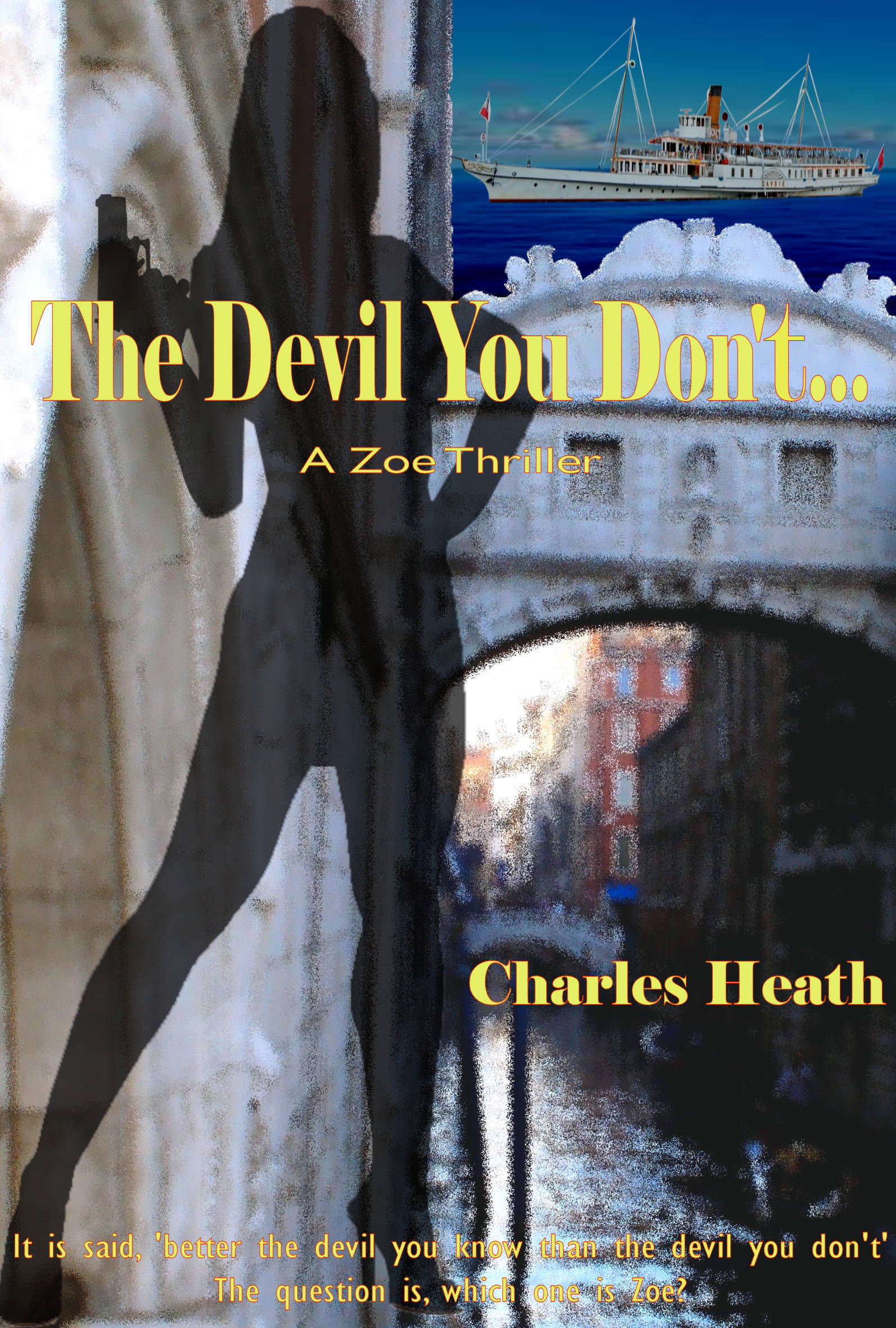
“The Devil You Don’t”, she was the girl you would not take home to your mother!

Now only $0.99 at https://amzn.to/2Xyh1ow

…

John Pennington’s life is in the doldrums. Looking for new opportunities and prevaricating about getting married, the only joy on the horizon was an upcoming visit to his grandmother in Sorrento, Italy.

Suddenly, he is left at the check-in counter with a message on his phone telling him the marriage is off, and the relationship is over.

If only he hadn’t promised a friend he would do a favour for him in Rome.

At the first stop, Geneva, he has a chance encounter with Zoe, an intriguing woman who captures his imagination from the moment she boards the Savoire, and his life ventures into uncharted territory in more ways than one.

That ‘favour’ for his friend suddenly becomes a life-changing event, and when Zoe, the woman who he knows is too good to be true, reappears, danger and death follow.

Shot at, lied to, seduced, and drawn into a world where nothing is what it seems, John is dragged into an adrenaline-charged undertaking, where he may have been wiser to stay with the ‘devil you know’ rather than opt for the ‘devil you don’t’.

newdevilcvr6