This case has everything: red herrings, jealous brothers, femme fatales, and at the heart of it all, greed.
See below for an excerpt from the book…
Coming soon!
An excerpt from the book:
…
When Harry took the time to consider his position, a rather uncomfortable position at that, he concluded that he was somehow involved in another case that meant very little to him.
Not that it wasn’t important in some way he was yet to determine, it was just that his curiosity had got the better of him, and it had led to this: sitting in a chair, securely bound, waiting for someone, one of his captors had called Doug.
It was not the name that worried him so much; it was the evil laugh that had come after the name was spoken.
Doug what? Doug the ‘destroyer’, Doug the ‘dangerous’, Doug the ‘deadly’; there were several sinister connotations, and perhaps that was the point of the laugh, to make it more frightening than it was.
But there was no doubt about one thing in his mind right then: he’d made a mistake. A very big. and a costly mistake. Just how big the cost, no doubt, he would soon find out.
His mother and his grandmother, the wisest person he had ever known, had once told him never to eavesdrop.
At the time, he couldn’t help himself, and instead of minding his own business, listening to a one-sided conversation that ended with a time and a place. The very nature of the person receiving the call was, at the very least, sinister, and, because of the cryptic conversation, there appeared to be, or at least to Harry, criminal activity involved.
For several days, he had wrestled with the thought of whether he should go. Stay on the fringe, keep out of sight, observe and report to the police if it was a crime. Instead, he had willingly gone down the rabbit hole.
Now, sitting in an uncomfortable chair, several heat lamps hanging over his head, he was perspiring, and if perspiration could be used as a measure of fear, then Harry’s fear was at the highest level.
Another runnel of sweat rolled into his left eye, and, having his hands tied, it literally made it impossible to clear it. The burning sensation momentarily took his mind off his predicament. He cursed and then shook his head, trying to prevent a recurrence. It was to no avail.
Let the stinging sensation be a reminder of what was right and what was wrong.
It was obvious that it was the right place and the right time, but in considering his current perilous situation, it definitely was the wrong place to be, at the worst possible time.
It was meant to be his escape, an escape from the generations of lawyers, what were to Harry, dry, dusty men who had been in business since George Washington said to the first Walthenson to step foot on American soil, ‘Why don’t you become a lawyer?” when asked what he could do for the great man.
Or so it was handed down as lore, though Harry didn’t think Washington meant it literally, the Walthenson’s, then as now, were not shy of taking advice.
Except, of course, when it came to Harry.
He was, Harry’s father was prone to saying, the exception to every rule. Harry guessed his father was referring to the fact that his son wanted to be a Private Detective rather than a dry, dusty lawyer. Just the clothes were enough to turn Harry off the profession.
So, with a little of the money Harry inherited from one of his aunts, he leased an office in Gramercy Park and had it renovated to look like the Sam Spade detective agency, you know the one, Spade and Archer, and The Maltese Falcon.
There’s a movie and a book by Dashiell Hammett if you’re interested.
So, there it was, painted on the opaque glass inset of the front door, ‘Harold Walthenson, Private Detective’.
There was enough money to hire an assistant, and it took a week before the right person came along, or, more to the point, didn’t just see his business plan as something sinister. Ellen, a tall, cool woman in a long black dress, or so the words of a song in his head told him, fitted in perfectly.
She’d seen the movie, but she said with a grin, Harry was no Humphrey Bogart.
Of course not, he said, he didn’t smoke.
Three months on the job, and it had been a few calls, no ‘real’ cases, nothing but missing animals, and other miscellaneous items. What he really wanted was a missing person. Or perhaps a beguiling, sophisticated woman who was as deadly as she was charming, looking for an errant husband, perhaps one that she had already ‘dispatched’.
Or for a tall, dark and handsome foreigner who spoke in riddles and in heavily accented English, a spy, or perhaps an assassin, in town to take out the mayor. The man was such an imbecile that Harry had considered doing it himself.
Now, in a back room of a disused warehouse, that wishful thinking might be just about to come to a very abrupt end, with none of the romanticised trappings of the business befalling him. No beguiling women, no sinister criminals, no stupid policemen.
Just a nasty little man whose only concern was how quickly or how slowly Harry’s end was going to be.
Beyond the Postcards: 5 Unique Madrid Experiences on the Road Less Travelled
Madrid. The very name conjures images of grand boulevards, world-class art museums, and bustling tapas bars. And while the Prado, the Royal Palace, and Retiro Park are undeniably magnificent, there’s a whole other layer to Spain’s vibrant capital, waiting to be discovered by those willing to stray from the well-trodden path.
If you’re like me – a traveller who loves to peel back the layers and uncover the authentic pulse of a city – then pack your sense of adventure. Here are my top five “road less travelled” experiences that will show you Madrid most tourists never see.
1. Dive into the Multicultural Heart of Lavapiés & the Mercado de San Fernando
Forget the polished tourist markets; head straight to Lavapiés, one of Madrid’s most historic and multicultural neighbourhoods. This isn’t just about street art (though there’s plenty of incredible murals to discover); it’s about the aroma of spices, the sound of different languages, and the genuine buzz of local life.
Your main mission here? The Mercado de San Fernando. Unlike the famous Mercado de San Miguel, San Fernando is a working neighbourhood market that has embraced a new life while retaining its authentic charm. Here, you can buy “libros al peso” (books by weight), sample craft beers, indulge in delicious Ethiopian food, browse artisanal goods, or grab a traditional Spanish tapa alongside locals doing their daily shopping. It’s a sensory feast and a true microcosm of modern Madrid.
Why it’s special: Authentic, multicultural, affordable, and a peek into Madrid’s real daily life.
Don’t miss: The book stall, the craft beer vendors, and simply soaking in the atmosphere.
2. Catch Sunset (and a Panorama) at Parque de las Siete Tetas
Looking for the best panoramic view of Madrid, away from the tourist crowds? Ditch the rooftop bars and head to Parque del Cerro del Tío Pío, affectionately known by locals as “Parque de las Siete Tetas” (Park of the Seven Tits) due to its seven rolling hills.
Located in the Vallecas district (easily accessible by metro), this park offers an unparalleled, uninterrupted vista of the entire city skyline, with the majestic Sierra de Guadarrama mountains as a backdrop. Grab a picnic, a bottle of wine, and join Madrileños as they gather here to watch the sun dip below the horizon, painting the city in hues of orange and gold. It’s a truly magical and unpretentious experience.
Why it’s special: The best, most local sunset spot with breathtaking views.
Don’t miss: The golden hour – arrive 45 minutes before sunset for the full spectacle.
3. Step into a Tranquil Oasis at the Sorolla Museum
While the Prado and Reina Sofía are essential, escape the crowds at the beautiful Sorolla Museum, dedicated to the luminous works of Spanish impressionist Joaquín Sorolla. Housed in the artist’s former home and studio, this museum is a serene retreat.
Wander through light-filled rooms filled with his vibrant paintings, many depicting sun-drenched beaches and family life. But the real hidden gem here are the exquisite Andalusian-style gardens, designed by Sorolla himself. They offer a tranquil escape from the city bustle, making you feel as though you’ve stumbled into a private, sun-drenched oasis. It’s a personal and intimate experience with art and history.
Why it’s special: A stunning house-museum with beautiful art and serene gardens, far less crowded than the major museums.
Don’t miss: The gardens are as much a work of art as the paintings themselves.
4. Immerse Yourself in a Traditional Vermutería Experience
Forget the generic sangria; dive into a truly Madrileño tradition: the vermutería. While tapas bars are everywhere, a dedicated vermutería offers a unique glimpse into a cherished cultural ritual. Vermouth, often served on tap (vermut de grifo), is a fortified wine infused with botanicals, and it’s experiencing a massive revival.
Seek out a classic spot like Casa Camacho in Malasaña or Bodega de la Ardosa (also in Malasaña, though it’s more broadly a classic tavern). Order a “vermút de grifo” (vermouth on tap), often served with an olive and a slice of orange. Pair it with their specific, often pickle-laden, tapas. It’s a delicious, slightly bitter, and utterly authentic way to start your evening, surrounded by locals engaging in lively conversation.
Why it’s special: A distinct Madrid tradition, away from tourist traps, with a unique drink and specific food pairings.
Don’t miss: Trying a “yayo” at Casa Camacho – a local concoction of vermouth, soda, and gin.
5. Explore the Opulent World of the Museo Cerralbo
For a glimpse into the extravagant life of a 19th-century Spanish aristocrat, the Museo Cerralbo is an absolute treasure, yet surprisingly overlooked by many guidebooks. The Marqués de Cerralbo, a passionate collector, bequeathed his entire palace and its vast contents to the state.
Walking through its ornately decorated rooms, you’ll find an astonishing collection of art, weaponry, ancient artifacts, and opulent furnishings, all preserved as if the family just stepped out for the afternoon. It’s a time capsule that offers a fascinating contrast to the often more institutional feel of other museums, providing an intimate look at the aesthetics and lifestyle of Madrid’s elite.
Why it’s special: A beautifully preserved opulent palace and private collection, offering a unique historical perspective.
Don’t miss: The stunning grand staircase and the ballroom – imagine the parties that took place here!
Madrid is a city of endless discoveries, and sometimes the most memorable experiences are found when you venture just a little bit off the well-worn path. So, ditch the guidebook for an afternoon, follow your curiosity, and let Madrid truly reveal itself to you.
What are your favourite hidden gems in Madrid? Share them in the comments below!
There was something about this one that resonated with me.
This is a novel about a world generally ruled by perception, and how people perceive what they see, what they are told, and what they want to believe.
I’ve been guilty of it myself, as I’m sure we all have at one time or another.
For the main characters, Harry and Alison, other issues are driving their relationship.
For Alison, it is a loss of self-worth through losing her job and from losing her mother and, in a sense, her sister.
For Harry, it is the fact that he has a beautiful and desirable wife, his belief that she is the object of other men’s desires, and, in particular, his immediate superior’s.
Between observation, the less-than-honest motives of his friends, a lot of jumping to conclusions based on very little fact, and you have the basis of one very interesting story.
When it all comes to a head, Alison finds herself in a desperate situation, and she realises only the truth will save their marriage.
But is it all the truth?
What would we do in similar circumstances?
Rarely does a book have me so enthralled that I could not put it down until I knew the result. They might be considered two people who should have known better, but as is often the case, they had to get past what they both thought was the truth.
And the moral of this story, if it could be said there is one, is that nothing is ever what it seems.
The Art of the “Seat of the Pants”: Why Writing Without a Map is a Masterpiece in Progress
“The art of writing is the art of applying the seat of the pants to the seat of the chair.” — Mary Heaton Vorse
This quote resonates with every writer who has ever stared at a blinking cursor. It strips away the romantic notion of the “divine muse” and replaces it with the stark, tactile reality of the craft. But beyond the discipline of sitting down, Vorse’s famous line carries a secondary, perhaps unintentional, meaning for a specific breed of writers: The Pantsers.
In the world of fiction, there are two primary archetypes: the Plotters (the architects who blueprint every room before a single brick is laid) and the Pantsers (the explorers who walk into a dark forest with only a lantern, trusting they’ll find the path as they go).
If you are a writer who finds the idea of an outline stifling, you aren’t just “making it up as you go”—you are practising the high art of discovery writing. Here is why the pantser methodology is not only valid but often leads to the most organic, surprising stories.
The Magic of “Not Knowing”
The greatest advantage of the pantser methodology is that it preserves the element of surprise. If a writer knows exactly what happens on page 200, the act of writing becomes a mechanical chore—a “connect the dots” exercise.
When you write by the seat of your pants, you are the first reader of your own story. If you’re bored, the reader is bored. But if you are genuinely shocked by a character’s betrayal or a sudden plot twist, your reader will be, too. There is an electric energy in a scene where the author doesn’t know how the protagonist is going to escape a locked room until they write the final paragraph of the chapter.
Embracing the “Organic” Character
Plotters often find themselves forcing characters to fit a pre-determined narrative arc. “He has to die here,” they might say, “because it’s in the outline.”
The pantser, however, allows the character to breathe. Because you aren’t tied to a rigid structure, you can listen to your characters. If a side character suddenly demands to have a larger role, or if your villain reveals a hidden vulnerability you didn’t anticipate, you have the flexibility to follow that thread. This creates a sense of “organic” development that feels less like a manufactured plot and more like a captured reality.
The “Seat of the Chair” Reality
Of course, there is a catch. The pantser methodology is not an excuse for aimlessness. This is where Vorse’s quote anchors us.
Writing by the seat of your pants requires more discipline, not less. Without a map, you are prone to getting lost. You might write yourself into a corner, produce three chapters of “fluff” that don’t move the story forward, or lose the main thread entirely.
To be a successful pantser, you must:
Trust your instincts: If it feels right, chase it. If it feels like a dead end, dare to cut it.
Edit ruthlessly: Because you don’t have an outline to guide you, your first draft will inevitably be messy. You must be willing to embrace the “vomit draft” and treat your revision process as the time when you finally build the scaffolding for the story you’ve discovered.
Stay in the seat: You can only find the path if you keep moving. The pantser who doesn’t show up to the desk is just a dreamer; the pantser who shows up is a navigator.
The Final Verdict
Whether you are a meticulous plotter or a wild-card pantser, the truth remains: the story only exists when you apply your physical presence to the task.
If you feel like you’re failing because you don’t have a 50-page outline, stop judging yourself. Pick up your lantern, sit in your chair, and start walking into the woods. The story is waiting for you in the dark, and it’s likely far more interesting than anything you could have planned on paper.
Are you a plotter or a pantser? Do you find that your best ideas come when you have no idea where you’re going? Let’s talk about your process in the comments below.
With my attention elsewhere, I walked into a man who was hurrying in the opposite direction. He was a big man with a scar running down the left side of his face from the eye socket to the mouth, and he was wearing a black shirt with a red tie.
That was all I remembered as my heart almost stopped.
He apologised as he stepped to one side, the same way I stepped, as I also muttered an apology.
I kept my eyes down. He was not the sort of man I wanted to recognise later in a lineup. I stepped to the other side, and so did he. It was one of those situations. Finally getting out of sync, he kept going in his direction, and I went towards the bus, which was now pulling away from the curb.
Getting my breath back, I just stood riveted to the spot watching it join the traffic. I looked back over my shoulder, but the man I’d run into had gone. I shrugged and looked at my watch. It would be a few minutes before the next bus arrived.
Wait, or walk? I could also go by subway, but it was a long walk to the station. What the hell, I needed the exercise.
At the first intersection, the ‘Walk’ sign had just flashed to ‘Don’t Walk’. I thought I’d save a few minutes by not waiting for the next green light. As I stepped onto the road, I heard the screeching of tyres.
A yellow car stopped inches from me.
It was a high-powered sports car, perhaps a Lamborghini. I knew what they looked like because Marcus Bartleby owned one, as did every other junior executive in the city with a rich father.
Everyone stopped to look at me, then the car. It was that sort of car. I could see the driver through the windscreen shaking his fist, and I could see he was yelling too, but I couldn’t hear him. I stepped back onto the sidewalk, and he drove on. The moment had passed, and everyone went back to their business.
My heart rate hadn’t come down from the last encounter. Now it was approaching cardiac arrest, so I took a few minutes and several sets of lights to regain composure.
At the next intersection, I waited for the green light, and then a few seconds more, just to be sure. I was no longer in a hurry.
Next, I heard what sounded like a gunshot. A few people looked around, worried expressions on their faces, but when it happened again, I saw it was an old car backfiring. I also saw another yellow car, much the same as the one before, stopped on the side of the road. I thought nothing of it, other than it was the second yellow car I’d seen.
At the next intersection, I realised I was subconsciously heading towards Harry’s new bar. It was somewhere on 6th Avenue, so I continued walking in what I thought was the right direction.
I don’t know why I looked behind me at the next intersection, but I did. There was another yellow car on the side of the road, not far from me. It, too, looked the same as the original Lamborghini, and I was starting to think it was not a coincidence.
Moments after crossing the road, I heard the roar of a sports car engine and saw the yellow car accelerate past me. As it passed by, I saw there were two people in it, and the blurry image of the passenger was a large man with a red tie.
Now my imagination was playing tricks.
It could not be the same man. He was going in a different direction.
In the few minutes I’d been standing on the pavement, it had started to snow; early for this time of year, and marking the start of what could be a long, cold winter. I shuddered, and it was not necessarily because of the temperature.
I looked up and saw a neon light advertising a bar, coincidentally the one Harry had ‘found’ and, looking once in the direction of the departing yellow car, I decided to go in. I would have a few drinks and then leave through the back door if there were one.
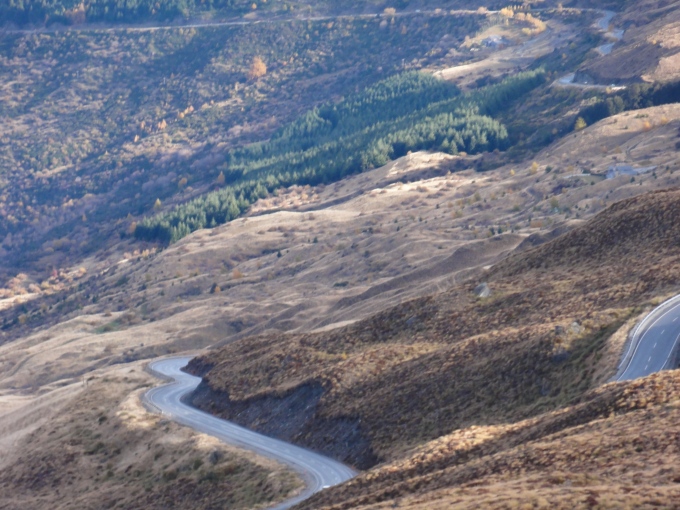
50 photographs, 50 stories, of which there is one of the 50 below.
They all start with –
A picture paints … well, as many words as you like. For instance:
And the story:
…
It was once said that a desperate man has everything to lose.
The man I was chasing was desperate, but I, on the other hand, was more desperate to catch him.
He’d left a trail of dead people from one end of the island to the other.
The team had put in a lot of effort to locate him, and now his capture was imminent. We were following the car he was in, from a discreet distance, and, at the appropriate time, we would catch up, pull him over, and make the arrest.
There was nowhere for him to go.
The road led to a dead-end, and the only way off the mountain was back down the road we were now on. Which was why I was somewhat surprised when we discovered where he was.
Where was he going?
“Damn,” I heard Alan mutter. He was driving, being careful not to get too close, but not far enough away to lose sight of him.
“What?”
“I think he’s made us.”
“How?”
“Dumb bad luck, I’m guessing. Or he expected we’d follow him up the mountain. He’s just sped up.”
“How far away?”
“A half-mile. We should see him higher up when we turn the next corner.”
It took an eternity to get there, and when we did, Alan was right, only he was further on than we thought.”
“Step on it. Let’s catch him up before he gets to the top.”
Easy to say, not so easy to do. The road was treacherous, and in places, just gravel, and there were no guard rails to stop a three-thousand-foot fall down the mountainside.
Good thing then, I had the foresight to have three agents on the hill for just such a scenario.
Ten minutes later, we were in sight of the car, still moving quickly, but we were going slightly faster. We’d catch up just short of the summit car park.
Or so we thought.
Coming quickly around another corner, we almost slammed into the car we’d been chasing.
“What the hell…” Aland muttered.
I was out of the car and over to see if he was in it, but I knew that it was only a slender possibility. The car was empty, and no indication of where he had gone.
Certainly not up the road. It was relatively straightforward for the next mile, at which we would have reached the summit. Up the mountainside from here, or down.
I looked up. Nothing.
Alan yelled out, “He’s not going down, not that I can see, but if he did, there’s hardly a foothold and that’s a long fall.”
Then where did he go?
Then a man looking very much like our quarry came out from behind a rock embedded just a short distance up the hill.
“Sorry,” he said quite calmly. “Had to go if you know what I mean.”
I’d lost him.
It was as simple as that.
I had been led a merry chase up the hill, and all the time he was getting away in a different direction.
I’d fallen for the oldest trick in the book, letting my desperation blind me to the disguise that anyone else would see through in an instant.
It was a lonely sight, looking down that road, knowing that I had to go all that way down again, only this time, without having to throw caution to the wind.
I preferred the version of Martha Rodby that I met the night of the opera. Now I could also understand why Rodby spent so much time at the office.
Yes, I had met her before when I was with Violetta and she was a much more amiable person then, but that was probably because of Violetta. She had that effect on people.
Maybe she was simply angry that Rodby’s work life had impinged on her private life, but that was one of the downsides of being involved with an intelligence agent.
It was a lesson I learned and why I gave it all up for Violetta. I wanted her more than I wanted that other life, that one I once thought was exciting. Perhaps this would be the excuse he needed to retire and have a peaceful rest of his life with her.
Or not.
Rodby was staying at the same hotel I was in, and by the time I arrived back there from Rome, Cecelia and the others were about a half hour away, and Rodby was there to greet his rather dishevelled wife in the lobby.
It was not a tearful reunion.
She had barely spoken on the entire four-hour drive, and any chance of Giulietta striking up a conversation was stopped dead by an icy glare in her direction.
As for myself, I was unimpressed by her attitude, and Rodby for that matter, though the circumstances were quite odd.
I waited an hour before I could no longer hold it in.
“Quite frankly,” I said, “I find it quite astonishing that you were able to hide the fact you had a stepsister from one of the top intelligence officers and research departments in the country. He had me investigated to the point he could tell me I was related to one of the seamen on James Cook’s Endeavour. But you, nothing. How is that possible?”
I gave her one of my icy stares just for good measure.
“He chose not to. I told him if he couldn’t trust me, then it would never work.”
Love trumps common sense. Yes, I could see how that would never be in his playbook.
“I live in a world of lies and deceit. Now your dirty little secret is out, welcome to my world. It’ll never be the same, you know that.”
She didn’t answer. Perhaps she was not used to the rabble talking to her in such a manner.
“Answer one question, did Heidi have a twin?”
She looked at me very strangely. “What?”
“I thought it was a pretty straightforward question.”
“No, she did not.”
“Was she incarcerated with you?”
“No. We were both snatched off the street and separated. I’ve been held by a bunch of thugs since.”
“Were they going to ransom you?”
“No one said anything until yesterday when I was handed a paper and shoved in front of a camera.”
“Did you see any of your captors?”
“No.”
“Would you recognise them later by other means?”
“Maybe.”
“Just one more question. Do you get together with Heidi often?”
“No. I hadn’t seen her for quite a few years, she called me saying she was in London for a few days, we went out, and that’s all I remember till I woke up in a dark room. That’s it.”
The look from Juliet in the back of the car was fascinating.
I had no doubt she was putting two and two together and coming up with anything other than four.
If there was no twin, then the woman who was pretending to be the countess was the countess pretending to be a twin. Convoluted and confusing? Yes. Make any sense, no.
Has she been masquerading as a pretend twin to Dicostini so that she could have an affair, or were they always having an affair, and she was going to … No, don’t go down the rabbit hole. None of it made any sense, and as Martha Rodby said. That’s it. Enough.
An hour after he had taken his wife up to the room and got her settled, Rodby came to see me.
“What the hell happened?”
It was not the polities of tones.
“Take the win.”
“I want to know what happened? One minute I’m getting information that tells me one thing, then next something else entirely.”
“Lies and deceit. It’s the world we live in.”
“Is that what you’re going to run with?”
“It’s all I know. You ask Mrs Rodby for the details. I’m sure she knows a lot more than all of us. Just the fact the Countess was her step-sister should be ample proof that no one is ever going to get to the bottom of this affair. So, like I said, take the win.”
Of course, I could see it in his face, the man who would make the world’s best poker player. Maybe once. He’s known all along about her secret. Had he been hoping it wouldn’t come out?
I shook my head. “Go away, Rodby. I’m done for good this time. I’m going back to Venice, and spending the rest of my days waiting for the canals to clear up.”
“With Juliet?”
“Maybe. Maybe not.”
“You ask her, her story before you do anything else.”
This word, where I live, has taken on a new meaning. We have telephone scammers who ask your name when you answer the phone, and when you say yes, they hang up.
It doesn’t take much imagination to consider how they can use that recording.
So, I now answer the phone with ‘maybe’, which confuses the real callers who want to know if it is you.
Of course, ‘maybe’ is one of those words that can have so many meanings, but the best one is to use it while you have time to think of a proper answer.
For example, did you get the potatoes? You haven’t been out, it slipped your mind, or you just plain forgot, but run with a ‘maybe’ so you can judge the reaction.
Angry face, you know, no matter what, you’re in trouble.
Genial face, you know that it didn’t really matter, and all is forgiven.
Then there’s the person who doesn’t know you and comes up to you in a crowded room. Are you [put name here]?
Maybe. We want to know if we’re in trouble, or if it’s for something good, or if it is the husband or wife of the person you’ve just spent the last twenty minutes in animated conversation with.
Using ‘maybe’ in writing probably isn’t the best word for us, but I like defying the experts. You can always find a ‘maybe’ or two in any of my books.
“I knew human nature well enough to depict it; in short, that all of the small tasks of which I was capable, literature, properly speaking, was the one that offered the most chance of success as a profession and – let us not mince words – was the way to earn my bread.”
…
When the Muse Meets the Mortgage: The Unromantic Truth of My Literary Calling
We’ve all heard the romanticised tales of artists, poets, and writers – struck by inspiration, driven by an insatiable passion, toiling away in garrets for the sheer love of their craft. While there’s undeniable truth to the passion part, there’s another, often unspoken, dimension to the creative life that an ancient, surprisingly honest quote brings into sharp focus:
“I knew human nature well enough to depict it; in short, that all of the small tasks of which I was capable, literature, properly speaking, was the one that offered the most chance of success as a profession and – let us not mince words – was the way to earn my bread.”
Let’s unpack this gem, because it speaks volumes about the pragmatic, often unromantic, journey of finding one’s professional purpose, especially in the arts.
The Unseen Power of Observation
“I knew human nature well enough to depict it.” This isn’t vanity; it’s a profound self-awareness, the very bedrock of a good writer. It speaks to an innate empathy, a keen eye for detail, and an understanding of the intricate dance of human emotions, motivations, and contradictions. Before words can flow, understanding must exist. This is the writer’s superpower: to see beyond the surface, to connect dots, and to translate the universal human experience into relatable narratives.
Many of us possess this kind of observational skill to varying degrees. We notice things others miss. We’re the friends people come to for advice because we “just get it.” For some, this skill is a social asset; for others, it’s the quiet engine of a potential career.
The Litany of “Small Tasks”
“All of the small tasks of which I was capable…” This is where most of us live, isn’t it? We shuffle through life, picking up skills, trying on different hats. We might be competent at a dozen different things – organising, problem-solving, number-crunching, designing. We can do them, often well enough. But there’s a difference between capability and calling, between competence and conviction.
This phrase beautifully captures the process of elimination. It’s the quiet concession that while we might be able to handle a variety of “small tasks,” none of them ignite that spark, none of them feel like the one. It’s a realistic appraisal of one’s diverse but perhaps diffuse talents, paving the way for the singular realisation.
Literature: The Most Probable Path to “Success”
“…literature, properly speaking, was the one that offered the most chance of success as a profession…” This is the pivotal moment. It’s not just about what you love to do, but what you can actually succeed at. And success, in this context, isn’t necessarily about fame or fortune, but about creating a sustainable livelihood from your distinct abilities.
For our anonymous author, the ability to depict human nature wasn’t just a passion; it was a skill that, when applied to literature, offered genuine professional viability. It wasn’t a whimsical choice but a strategic one. “Properly speaking” suggests a serious commitment to the craft – not just dabbling, but mastering the tools, understanding the market (even if that market was different centuries ago), and treating it as a legitimate profession.
It challenges the modern narrative that “following your passion” is enough. Sometimes, passion needs a sturdy bridge of practicality to cross into a career.
Let’s Not Mince Words: Earning My Bread
“…and – let us not mince words – was the way to earn my bread.” This is the mic drop. The raw, beautiful, and utterly human truth. Stripped of all artistic pretence, it comes down to survival. To put food on the table. To pay the rent.
This isn’t a cynical statement; it’s an honest one. For many creatives, the initial lure of their chosen field might be passion or talent, but the sustained effort, the diligent practice, and the strategic career decisions are often fueled by the fundamental need to make a living. There’s immense dignity in earning your bread through your craft, through the very expression of your unique insights and abilities.
The Modern Resonance
This centuries-old observation still holds remarkable power today. How many of us choose our careers not just because we love them, but because through them, we are best equipped to contribute, to find a sense of purpose, and yes, to earn our living?
Perhaps your “literature” isn’t writing stories, but is:
Designing elegant user interfaces because you understand human interaction.
Building innovative software because you can conceive of efficient systems.
Teaching complex subjects because you excel at simplifying knowledge.
Crafting beautiful objects because you have an eye for form and function.
The lesson is clear: true professional fulfillment often lies at the intersection of what you’re genuinely good at, what you find meaningful, and what can realistically sustain you. It’s less about a lightning bolt of inspiration and more about a thoughtful, pragmatic assessment of your unique place in the world, and how best to earn your bread with the gifts you possess.
So, what’s your “literature”? What’s the one thing, among all the small tasks you’re capable of, that truly offers you a chance at success, and allows you to earn your bread, no mincing of words required?



 Thrills, Spills, and just a dash of Romance