Searching for locations: From X’ian to Zhengzhou dong by bullet train, China

Lunch and then off on another high-speed train

We walked another umpteen miles from the exhibition to a Chinese restaurant that is going to serve us Chinese food again with a beer and a rather potent pomegranate wine that has a real kick.  It was definitely value for money at 60 yuan per person.

But perhaps the biggest thrill, if it could be called that, was discovering downstairs, the man who discovered the original pieces of a terracotta soldier when digging a well.  He was signing books bought in the souvenir store, but not those that had been bought elsewhere.

Some of is even got photographed with him.  Fifteen minutes of fame moment?  Maybe.

After lunch, it was off to the station for another high-speed train ride, this time for about two and a half hours, from X’ian to Zhangzhou dong.

It’s the standard high-speed train ride and the usual seat switching because of weird allocation issues, so a little confusion reigns until the train departs at 5:59.

Once we were underway it didn’t take long before we hit the maximum speed

Twenty minutes before arrival, and knowing we only have three minutes to get off everyone is heading for the exit clogging up the passageway.  It wasn’t panic but with the three-minute limit, perhaps organized panic would be a better description.

As it turned out, with all the cases near the door, the moment to door opened one of our group got off, and the other just started putting cases on the platform, and in doing so we were all off in 42 seconds with time to spare.

And this was despite the fact there were about twenty passengers just about up against the door trying to get in.  I don’t think they expected to have cases flying off the train in their direction.

We find our way to the exit and our tour guide Dannie.  It was another long walk to the bus, somewhat shabbier from the previous day, no leg room, no pocket, no USB charging point like the day before.  Disappointing.

On the way from the station to the hotel, the tour guide usually gives us a short spiel on the next day’s activities, but instead, I think we got her life history and a song, delivered in high pitched and rapid Chinglish that was hard to understand.

Not at this hour of the night to an almost exhausted busload of people who’d had enough from the train.  Oh, did I forgot the singing, no, it was an interesting rendition of ‘you are my sunshine’.

The drive was interesting in that it mostly in the dark.  There was no street lighting and in comparison to X’ian which was very bright and cheerful, this was dark and gloomy.

Then close to the hotel our guide said that if we had any problems with the room, she would be in the lobby for half an hour.

That spoke volumes about the hotel they put us in.

An excerpt from “Betrayal” – a work in progress

It could have been anywhere in the world, she thought, but it wasn’t.  It was in a city where if anything were to go wrong…

She sighed and came away from the window and looked around the room.  It was quite large and expensively furnished.  It was one of several she had been visiting in the last three months.

Quite elegant too, as the hotel had its origins dating back to before the revolution in 1917.  At least, currently, there would not be a team of KGB agents somewhere in the basement monitoring everything that happened in the room.

There was no such thing as the KGB anymore, though there was an FSB, but such organisations were of no interest to her.

She was here to meet with Vladimir.

She smiled to herself when she thought of him, such an interesting man whose command of English was as good as her command of Russian, though she had not told him of that ability.

All he knew of her was that she was American, worked in the Embassy as a clerk, nothing important, whose life both at work and at home was boring.  Not that she had blurted that out the first they met, or even the second.

That first time, at a function in the Embassy, was a chance meeting, a catching of his eye as he looked around the room, looking, as he had told her later, for someone who might not be as boring as the function itself.

It was a celebration, honouring one of the Embassy officials on his service in Moscow, and the fact he was returning home after 10 years.  She had been there once, and still hadn’t met all the staff.

They had talked, Vladimir knew a great deal about England, having been stationed there for a year or two, and had politely asked questions about where she lived, her family, and of course what her role was, all questions she fended off with an air of disinterested interest.

It fascinated him, as she knew it would, a sort of mental sparring as one would do with swords if this was a fencing match.

They had said they might or might not meet again when the party was over, but she suspected there would be another opportunity.  She knew the signs of a man who was interested in her, and Vladimir was interested.

The second time came in the form of an invitation to an art gallery, and a viewing of the works of a prominent Russian artist, an invitation she politely declined.  After all, invitations issued to Embassy staff held all sorts of connotations, or so she was told by the Security officer when she told him.

Then, it went quiet for a month.  There was a party at the American embassy and along with several other staff members, she was invited.  She had not expected to meet Vladimir, but it was a pleasant surprise when she saw him, on the other side of the room, talking to several military men.

A pleasant afternoon ensued.

And it was no surprise that they kept running into each other at the various events on the diplomatic schedule.

By the fifth meeting, they were like old friends.  She had broached the subject of being involved in a plutonic relationship with him with the head of security at the embassy.  Normally for a member of her rank, it would not be allowed, but in this instance it was.

She did not work in any sensitive areas, and, as the security officer had said, she might just happen upon something that might be useful.  In that regard, she was to keep her eyes and ears open and file a report each time she met him.

After that discussion, she got the impression her superiors considered Vladimir more than just a casual visitor on the diplomatic circuit.  She also formed the impression that he might consider her an ‘asset’, a word that had been used at the meeting with security and the ambassador.

It was where the word ‘spy’ popped into her head and sent a tingle down her spine.  She was not a spy, but the thought of it, well, it would be fascinating to see what happened.

A Russian friend.  That’s what she would call him.

And over time, that relationship blossomed, until, after a visit to the ballet, late and snowing, he invited her to his apartment not far from the ballet venue.  It was like treading on thin ice, but after champagne and an introduction to caviar, she felt like a giddy schoolgirl.

Even so, she had made him promise that he remain on his best behaviour.  It could have been very easy to fall under the spell of a perfect evening, but he promised, showed her to a separate bedroom, and after a brief kiss, their first, she did not see him until the next morning.

So, it began.

It was an interesting report she filed after that encounter, one where she had expected to be reprimanded.

She wasn’t.

It wasn’t until six weeks had passed when he asked her if she would like to take a trip to the country.  It would involve staying in a hotel, that they would have separate rooms.  When she reported the invitation, no objection was raised, only a caution; keep her wits about her.

Perhaps, she had thought, they were looking forward to a more extensive report.  After all, her reports on the places, and the people, and the conversations she overheard, were no doubt entertaining reading for some.

But this visit was where the nature of the relationship changed, and it was one that she did not immediately report.  She had realised at some point before the weekend away, that she had feelings for him, and it was not that he was pushing her in that direction or manipulating her in any way.

It was just one of those moments where, after a grand dinner, a lot of champagne, and delightful company, things happen.  Standing at the door to her room, a lingering kiss, not intentional on her part, and it just happened.

And for not one moment did she believe she had been compromised, but for some reason she had not reported that subtle change in the relationship to the powers that be, and so far, no one had any inkling.

She took off her coat and placed it carefully of the back of one of the ornate chairs in the room.  She stopped for a moment to look at a framed photograph on the wall, one representing Red Square.

Then, after a minute or two, she went to the mini bar and took out the bottle of champagne that had been left there for them, a treat arranged by Vladimir for each encounter.

There were two champagne flutes set aside on the bar, next to a bowl of fruit.  She picked up the apple and thought how Eve must have felt in the garden of Eden, and the temptation.

Later perhaps, after…

She smiled at the thought and put the apple back.

A glance at her watch told her it was time for his arrival.  It was if anything, the one trait she didn’t like, and that was his punctuality.  A glance at the clock on the room wall was a minute slow.

The doorbell to the room rang, right on the appointed time.

She put the bottle down and walked over to the door.

A smile on her face, she opened the door.

It was not Vladimir.  It was her worst nightmare.

…

© Charles Heath 2020

“The Enemy Within” – the editor’s third draft – Day 29

This book has been sitting in the ‘to-be-done’ tray, so this month it is going to get the final revision.

And so it begins…

…

What’s a spy story without an insidious plot?

…

So, the world of the spy is usually in the most expensive clothes, the most expensive cars, staying in six-star hotels, high rolling in the best casinos, in the company of very beautiful women. Also let’s not forget they can shoot with almost any weapon from a Luger to a sniper rifle, to a portable land-to-air missile launcher, they can fly any sort of plane or helicopter, and to finance all this, a briefcase full of money, six different passports, and whatever documents might be needed in a crunch situation.

Let’s not forget that he or she is an expert in martial arts and self-defence, and the notion of taking on six assailants at once does not faze them one bit.

Yes, larger than life.

But do they have to be? I mean, at some point our agent has to be a newbie in the field, after months and months of training in all the essential things they need to know.

That first job in the field.

Will they succeed, or will they be found out and killed before they draw their second breath?

This story starts out as a first mission of a newbie, and the fact that from the moment he is on the ground in the target zone, everything goes wrong. He is still working on the premise that those who sent him had researched the mission and planned for a basic safe working space. After all, it was a matter of going in, getting the target, and getting out. Since no one else was supposed to know they were coming, it should have been simple.

Shouldn’t it?

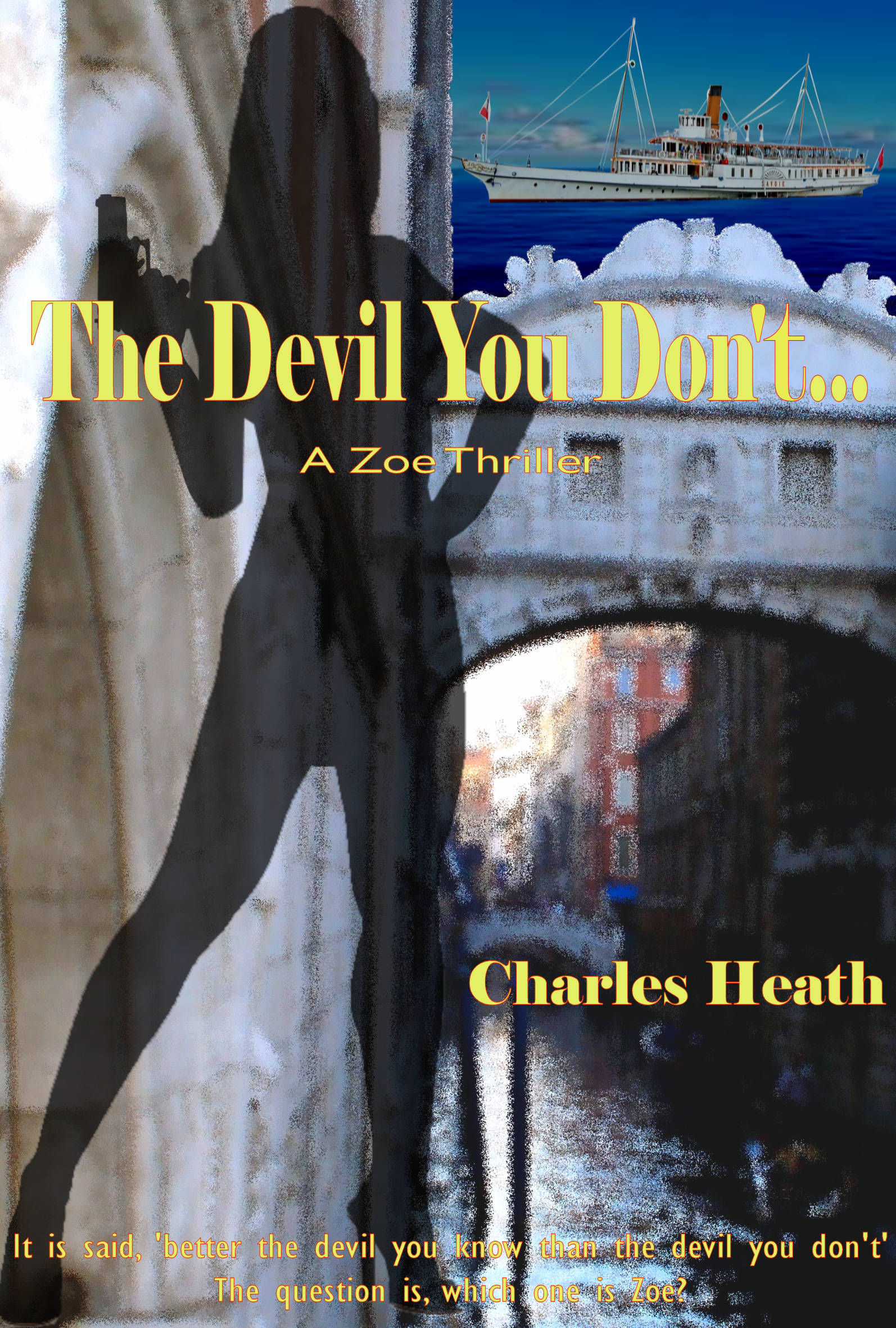
‘The Devil You Don’t’ – A beta reader’s view

It could be said that of all the women one could meet, whether contrived or by sheer luck, what are the odds it would turn out to be the woman who was being paid a very large sum to kill you.

John Pennington is a man who may be lucky in business, but not so lucky in love. He has just broken up with Phillipa Sternhaven, the woman he thought was the one, but relatives and circumstances, and perhaps because she was a ‘princess’, may also have contributed to the end result.

So, what do you do when you are heartbroken?

That is a story that slowly unfolds, from the first meeting with his nemesis on Lake Geneva, all the way to a hotel room in Sorrento, where he learns the shattering truth.

What should have been solace after disappointment, turns out to be something else entirely, and from that point, everything goes to hell in a handbasket.

He suddenly realizes his so-called friend Sebastian has not exactly told him the truth about a small job he asked him to do, the woman he is falling in love with is not quite who she says she is, and he is caught in the middle of a war between two men who consider people becoming collateral damage as part of their business.

The story paints the characters cleverly displaying all their flaws and weaknesses. The locations add to the story at times taking me back down memory lane, especially to Venice where, in those back streets I confess it’s not all that hard to get lost.

All in all a thoroughly entertaining story with, for once, a satisfying end.

…

Available on Amazon here: https://amzn.to/2Xyh1ow

…

In a word: Flight

There is a saying, if God wanted us to fly then he would have given us wings.

Unfortunately, he didn’t, so we do not get to know what it’s like to be in flight,

Unless…

We take an aeroplane, which usually has a flight number such as QF607, or in conversation, ‘I’ll be taking the 6 o’clock flight’.

If someone runs away, then we say they have taken flight.

If we roll back a few years, say about 80, to World War 2, flight tales on a whole new meaning.

It refers to a group of planes, in one case a number of spitfires, or,

The man in charge, a flight lieutenant, also colloquially known as ‘flight’.

This is not be confused with the word flite which has several very obscure meanings,

First, it means to quarrel or argue, or engage in a debate, and

Second, to make a complaint.

But one that sticks in my my mind is Flyte, from Brideshead Revisited.  they were a very interesting family.

The cinema of my dreams – I always wanted to go on a treasure hunt – Episode 38

Here’s the thing…

Every time I close my eyes, I see something different.

I’d like to think the cinema of my dreams is playing a double feature but it’s a bit like a comedy cartoon night on Fox.

But these dreams are nothing to laugh about.

Once again there’s a new instalment of an old feature, and we’re back on the treasure hunt.

…

Before we embarked on the great driving expedition, for which I was beginning to think might be harder than it seemed to Boggs’ one-track mind, we decided to go and check out the mall, and if, indeed, there was an underground river, or, at the very least, if his flooding theory was correct. 

We were going to need very old clothes, and when I left the next morning, my mother noticed it.

“I’m going to do some gardening with Boggs.  He came up with this notion we could help out at the old folk’s home.”

“That’s a nice thought.”

And it was a lie I knew would eventually come back to bite me.  My mother hadn’t exactly told me to stop seeing Boggs, because she was beginning to think his mental capacity had been diminished after the beating.

It was a logical and perfectly acceptable reason for his odd behavior.

I went directly to Boggs’ house, and he was waiting for me.  From there it was about twenty minutes, to a spot where he knew the surrounding fence had a hole big enough for us to crawl through.

It was odd seeing the place again, sitting out a few miles from the town, looking forlorn.  At the front entrance, off the road specially built between it and the town, there were miles of cyclone fencing, with signs alternately telling people to keep out on threat of prosecution for trespass, and more recently, hazard signs proclaiming the whole area was unsafe.

From where we’d stopped, we could see the carpark, enough for hundreds of cars, a bus terminus, a taxi rank, and the front façade of the shopping center, mostly looking like the front of a castle, with towers and ramparts.

There had been auxiliary plans for a medieval theme park at one stage, that would have blended in with the mall buildings, but that had to be abandoned, even though the land allocated to it was stable.  Or so a surveyor said.

We continued on until we reached the side leading to the marina.  From this vantage point looking one way, there was the ocean, and the other, the damage to the side of the mall buildings, the cracks, and, in places, where the roof had collapsed.

This would be the first time I’d set foot in the place since it had been a mall.

It had been popular, and there was always plenty of people shopping, eating and drinking, going to the cinemas, or just having a day out.  There had also been a museum dedicated to the naval days.

Now there was nothing.

It was ironic that as many of the castles in the British Isles that had been reduced to rubble, that was exactly what was going to happen here if someone didn’t take a bulldozer to the lot and level it out.

And that might happen sooner rather than later.  This was reputed to be the site of many a disappearance of a local person.  Three girls, two men, and a boy were supposedly hidden somewhere inside the mall, but the bodies had never been found.

I was thinking of those missing people when I said, with a degree of trepidation, “Do you really want to do this?  I mean, if you’re sure there’s an underground waterway here, I’ll happily take your word for it.”

Boggs just shook his head.  “You’re the last person I’d expect to chicken out.”

“It not that.”

“Isn’t it?  I can go by myself if you’re worried about getting hurt.”

“No.  You and me together.  I have to learn to fight those fears.”

Another look, then, “OK.  “Just a little further.”

Another minute or so, we reached a large rusting cylinder which had an almost illegible sign on it say the tank held inflammable liquid.  I tapped on the metal and it sounded empty.  I guess as part of the shut down they would have had to drain the tank.  I followed the tangle of pipes that ran slightly downhill for about 20 yards and then saw the opening in the fence Boggs had referred to.

We left our bikes behind the tank, among some bushes.

We then walked down to the fence line where the pipes passed through, and Boggs pulled back the chain wire.  A closer look showed it had been cut halfway up, making it easy to slip by, easier if there were two people along for the visit.

“Did you cut the fence,” I asked him.

He didn’t answer.  I guess he wanted me to think he had.

“Have you been here before?”

“Through here, yes.  A few times.”  He held the wire away and I climbed through.  I did the same for him on the other side, and he joined me.  The two halves melded back together so from a distance no one could tell the fence had been tampered with.

From the fence, we had to cross the access road to the marina, and across a carpark, now overgrown with weeds, and bushes, with the odd tree springing up through the cracks in the concrete.

The wall, when we reached it, was where several large cracks joined, and part of the wall had fallen away leaving a hole large enough to crawl through.  I put my head through the crack and could barely see anything.  There was light coming from the seaward side, but on the other, it was inky darkness.

There was also a very disturbing aroma, like freshly laid concrete crossed with the smell of a garage repair shop.  Years of spilled oil and grease.

“Is it safe?”  I asked.

Boggs shrugged.  “It could all fall down at any moment.  You read the signs on the fence.  Basically, this is, on one hand, cheating death.  On the other, we could be on the verge of an interesting discovery.”  Then, without another word, he went through the gap and inside. 

A few seconds later, I could see the light from his cell phone.

I shrugged.  If anything happened, like the building falling on me, I probably wouldn’t feel it.  And he was right, we could be on the verge of an interesting discovery.

I followed him inside and slid down the broken concrete and bricks to a dirty but solid-feeling floor, where Boggs was waiting, the light from his phone pointed in the direction of a storefront.

And looking at a dummy still dressed in clothes left behind.

I couldn’t help but think I’d seen that style of clothes somewhere before.

© Charles Heath 2020

The cinema of my dreams – I always wanted to go on a treasure hunt – Episode 38

Here’s the thing…

Every time I close my eyes, I see something different.

I’d like to think the cinema of my dreams is playing a double feature but it’s a bit like a comedy cartoon night on Fox.

But these dreams are nothing to laugh about.

Once again there’s a new instalment of an old feature, and we’re back on the treasure hunt.

…

Before we embarked on the great driving expedition, for which I was beginning to think might be harder than it seemed to Boggs’ one-track mind, we decided to go and check out the mall, and if, indeed, there was an underground river, or, at the very least, if his flooding theory was correct. 

We were going to need very old clothes, and when I left the next morning, my mother noticed it.

“I’m going to do some gardening with Boggs.  He came up with this notion we could help out at the old folk’s home.”

“That’s a nice thought.”

And it was a lie I knew would eventually come back to bite me.  My mother hadn’t exactly told me to stop seeing Boggs, because she was beginning to think his mental capacity had been diminished after the beating.

It was a logical and perfectly acceptable reason for his odd behavior.

I went directly to Boggs’ house, and he was waiting for me.  From there it was about twenty minutes, to a spot where he knew the surrounding fence had a hole big enough for us to crawl through.

It was odd seeing the place again, sitting out a few miles from the town, looking forlorn.  At the front entrance, off the road specially built between it and the town, there were miles of cyclone fencing, with signs alternately telling people to keep out on threat of prosecution for trespass, and more recently, hazard signs proclaiming the whole area was unsafe.

From where we’d stopped, we could see the carpark, enough for hundreds of cars, a bus terminus, a taxi rank, and the front façade of the shopping center, mostly looking like the front of a castle, with towers and ramparts.

There had been auxiliary plans for a medieval theme park at one stage, that would have blended in with the mall buildings, but that had to be abandoned, even though the land allocated to it was stable.  Or so a surveyor said.

We continued on until we reached the side leading to the marina.  From this vantage point looking one way, there was the ocean, and the other, the damage to the side of the mall buildings, the cracks, and, in places, where the roof had collapsed.

This would be the first time I’d set foot in the place since it had been a mall.

It had been popular, and there was always plenty of people shopping, eating and drinking, going to the cinemas, or just having a day out.  There had also been a museum dedicated to the naval days.

Now there was nothing.

It was ironic that as many of the castles in the British Isles that had been reduced to rubble, that was exactly what was going to happen here if someone didn’t take a bulldozer to the lot and level it out.

And that might happen sooner rather than later.  This was reputed to be the site of many a disappearance of a local person.  Three girls, two men, and a boy were supposedly hidden somewhere inside the mall, but the bodies had never been found.

I was thinking of those missing people when I said, with a degree of trepidation, “Do you really want to do this?  I mean, if you’re sure there’s an underground waterway here, I’ll happily take your word for it.”

Boggs just shook his head.  “You’re the last person I’d expect to chicken out.”

“It not that.”

“Isn’t it?  I can go by myself if you’re worried about getting hurt.”

“No.  You and me together.  I have to learn to fight those fears.”

Another look, then, “OK.  “Just a little further.”

Another minute or so, we reached a large rusting cylinder which had an almost illegible sign on it say the tank held inflammable liquid.  I tapped on the metal and it sounded empty.  I guess as part of the shut down they would have had to drain the tank.  I followed the tangle of pipes that ran slightly downhill for about 20 yards and then saw the opening in the fence Boggs had referred to.

We left our bikes behind the tank, among some bushes.

We then walked down to the fence line where the pipes passed through, and Boggs pulled back the chain wire.  A closer look showed it had been cut halfway up, making it easy to slip by, easier if there were two people along for the visit.

“Did you cut the fence,” I asked him.

He didn’t answer.  I guess he wanted me to think he had.

“Have you been here before?”

“Through here, yes.  A few times.”  He held the wire away and I climbed through.  I did the same for him on the other side, and he joined me.  The two halves melded back together so from a distance no one could tell the fence had been tampered with.

From the fence, we had to cross the access road to the marina, and across a carpark, now overgrown with weeds, and bushes, with the odd tree springing up through the cracks in the concrete.

The wall, when we reached it, was where several large cracks joined, and part of the wall had fallen away leaving a hole large enough to crawl through.  I put my head through the crack and could barely see anything.  There was light coming from the seaward side, but on the other, it was inky darkness.

There was also a very disturbing aroma, like freshly laid concrete crossed with the smell of a garage repair shop.  Years of spilled oil and grease.

“Is it safe?”  I asked.

Boggs shrugged.  “It could all fall down at any moment.  You read the signs on the fence.  Basically, this is, on one hand, cheating death.  On the other, we could be on the verge of an interesting discovery.”  Then, without another word, he went through the gap and inside. 

A few seconds later, I could see the light from his cell phone.

I shrugged.  If anything happened, like the building falling on me, I probably wouldn’t feel it.  And he was right, we could be on the verge of an interesting discovery.

I followed him inside and slid down the broken concrete and bricks to a dirty but solid-feeling floor, where Boggs was waiting, the light from his phone pointed in the direction of a storefront.

And looking at a dummy still dressed in clothes left behind.

I couldn’t help but think I’d seen that style of clothes somewhere before.

© Charles Heath 2020

The cinema of my dreams – I always wanted to write a war story – Episode 15

For a story that was conceived during those long boring hours flying in a steel cocoon, striving to keep away the thoughts that the plane and everyone in it could just simply disappear as planes have in the past, it has come a long way.

Whilst I have always had a fascination in what happened during the second world war, not the battles or fighting, but in the more obscure events that took place, I decided to pen my own little sidebar to what was a long and bitter war.

And, so, it continues…


The new leader of the resistance was the woman, Martina, best if I didn’t know her last name.  Fair enough.  There had been a necessary restructure after the infiltration, and untimely deaths of over half their number.

When I asked what happened to the former leader, I learned that he, and all but five other members were captured and taken to the castle.  They were now, for all intents and purposes, double agents, working for the Thompson at the castle.

The remaining five, of which Giuseppe and Martina belonged, had been forced to hide, dodging the men sent from the castle to hunt them down and kill them.

It was both the lack of reporting from the castle, followed by a message received regarding a possible traitor inside the resistance we had received in London, that set everything in motion, including my arrival to ascertain what was happening within the resistance group, and also at the castle.  Until that information reached us, there had been no reason to suspect that anything was wrong, and that the plans set in place to facilitate the defection of useful German scientists and, in some cases, high ranking officers, or that it had been infiltrated and to put it bluntly, original members had been killed and replaced.

I hadn’t realised who was in charge until the paratroopers had arrived and I’d become a prisoner.  Part of my brief had also been to verify the layout of the castle in accordance with old plans we had found using my archaeology background as a front, and Id managed to explore certain areas before Thompson had become suspicious and basically stopped me.  I’d searched part of the lower levels of the castle, but hadn’t got as far as the dungeons, where I eventually discovered becoming one myself, they were keeping many more prisoners.

I hadn’t long enough in the dungeons to discover whether any of the prisoners were part of the original team sent, whether there were any defectors being still held there, except for two that I’d seen, and definitely one I talked to, but there had to be more.

And, now that I’d found the remaining members of the resistance, it was my intention to return to rescue then, and retake the castle.  What was going to make it difficult, if not impossible, was the fact there were only five, and they were all busy trying not to get caught.  Still, I had to try, and I asked Martina if it was possible to get everyone together for a meeting.

Martina just laughed.  Whether it was my request or my plan to retake the castle was the cause of her mirth.

“With what?”  she said incredulously, “there are only five of us left, and we spend most of our time keeping one step ahead of the turncoats.”

“How many of them are there?”

“Too many, led by that bastard Francesco.  He didn’t like taking orders from a woman, thought we’d picked the wrong side, especially when the Germans killed about fifty of the villagers when we refused to give ourselves up.  They killed his wife and mother  after he refused to send them away.”

That didn’t seem right to me, to align yourself with that sort of enemy, not after what they had done.  Except there was no telling what anyone might do in the face of such an adversary, or circumstances.  But I had to ask, “Why would they?”

“They’ve got hostages from the village up there, in the dungeons.  That’s how they turned them.”

Damn.  I was not going to be able to turn them back, not when the lives of their friends, even family, was being threatened.

“Is that the case for those who didn’t surrender?”

“No.  Our relatives left when we could see what was going to happen.”

“So, the problem we have is, freeing the hostages, freeing the soldiers if there are any of the original group, retake the castle, and get the pipeline working again.”  And, I thought to myself, pull off seven miracles in fifteen minutes.

I was putting forward what was for all intents and purposes impossible.

“There’s more,” she said.  “There is a high-value scientist coming, last advice was that he was in transit from Germany to here.  We know, and they know, courtesy of Francesco.  They want him captured; we want him safely delivered to the submarine waiting to take him to England.  He’s due in three days, and he doesn’t know the castle’s allegiances have changed.”

“Then we’ll have to intercept him.”

“Yes, but we don’t know what he looks like, but we do have a code name.  Francesco and the castle don’t have that, only his real name.”

A name I saw on a highly confidential document on Forster’s desk the day he briefed me on my current mission.  Blackfoot.  I thought it was an operation.  I think that was the code name for the defector.

“Blackfoot?”

“How did you know?”

“A lucky guess.” 

The question I had was, why didn’t he tell me about it?  Did he think I was going to get captured and tortured?

“Well, you’re right.  But it means Francesco and his men are going to be looking extra hard for us, because without that codename, as soon as they fail to confirm their identity to him, he will kill himself rather than go back, which I’m guessing will be their least preferred option.  And to make matters worse, London’s orders are quite specific, this man must be delivered alive.  He has critical information they need, and which will hasten the end of the war”

“Then I think we should tell London the nature of our situation and see what they come up with.”


© Charles Heath 2019

And what was the inspiration behind the story “[Any title you’ve written]”

As accomplished as we can be at putting words on paper, what is it that makes it so difficult to sit in a chair with a camera on you, and saying words rather than writing them?

Er and um seem to crop up a lot in verbal speech.

OK, it was a simple question; “What motivates you to write?”

Damn.

My brain just turned to mush, and the words come out sounding like a drunken sailor after a night out on the town.

The written answer to the question is simple; “The idea that someone will read what I have written, and quite possibly enjoy it; that is motivation enough.”

It highlights the difficulties of the novice author.

Not only are there the constant demands of creating a ‘brand’ and building a ‘following’, there is also the need to market oneself, and the interview is one of the more effective ways of doing this.

If only I can settle the nerves.

I mean, really, it is only my granddaughter who is conducting the interview, and the questions are relatively simple.

The trouble is, I’ve never had to do it before, well, perhaps in an interview for a job, but that is less daunting.  That usually sticks to a predefined format.

Here the narrative can go in any direction.  There are set questions, but the interviewer, in her inimitable manner, can sometimes slide a question in out of left field.

For instance, “Your character Zoe the assassin, is she based on someone you know, or an amalgam of other characters you’ve read about or seen in movies?”

That was an interesting question, and one that has several answers, but the one most relevant was; “It was the secret alter ego of one of the women I used to work with.  I asked her one day if she wasn’t doing what she was, what she would like to do.  It fascinated me that other people had a desire to be something more exotic in an alter ego.”

Of course, the next question was about what I wanted to be in an alter ego.

Maybe I’ll tell you next time.

“The Enemy Within” – the editor’s second draft – Day 30

This book has finally come back from the Editor, so this month it is going to get a second revision, a second draft for the editor, and beta readers.

And so it begins…

…

So, we have a mission, and we have the players.

…

We let it play out. People die, and others escape. If you escape, knowing that someone is trying to kill you, what is the first thing to happen in the spy world?

A debriefing.

Searching for the reasons why and coming to conclusions can result in accusations. Or at worst, the survivors are blamed for those that didn’t. I hesitate to say it was like in the first days of flying aeroplanes, if it crashed, it was pilot error, not the plane.

The unthinkable happens, the survivor is fired, and the researcher/briefer is sent to their own version of a debriefing to find out what went wrong. At least, that is what everyone thinks happened.

What actually did was far more sinister, and our man who was fired, with a little help, launched his own investigation. It is coincidental that he was in a relationship with the researcher right up until the briefing when she broke it off.

But what follows makes a very interesting story, and highlights the fact that in the shadowy world of intelligence gathering, everyone lies, everyone has an agenda, and not everyone has the best interests of their country at heart.