It is not raining when we woke, but it had been most of the night. After a cold start, the weather, seems to have improved, if only for the time being.
Today’s expedition is the Cascade Brewery, which doesn’t have tours at the moment because of staff issues with Covid, but does have a bar and restaurant. There is also a historic site, an old women’s prison, and botanical gardens. I’m not sure how far we’ll get in the gardens, but the bar and restaurant is looking good.
We get there and decide on lunch first then a visit to the women’s prison.
Fail. The bar and restaurant are packed and there are no tables left. Time for a photograph of the old brewery, and move on.
Instead of going to the prison, just down the road, we go off in a different direction, to Mt Wellington, thinking it might give excellent views of Hobart.
Only a sign says the road is supposed to be closed, but it is not, so we and a dozen others are venturing up the road towards the summit.
The road was probably opened temporarily, but it is getting more treacherous as the snow appears and the road is wet. We make it about 2km before deciding it’s unsafe.
The adventure continues because at the bottom of the hill we decided to go to Huonville, hoping to chance upon the apple orchards and all things apple.
It was an immense letdown. There was nothing, except for one innocuous building with a sign out front saying it was open, but for all intents and purposes looked like it was completely empty.
Until you drove around the back to the carpark where there were hundreds of cars, and inside, totally packed.
It’s where everyone in Huonville had gone.
And not where we were going to get a distinctly Tasmanian meal.
We had to settle for another pie from Banjo’s in Sandy Bay.
The Endless Edit: Why We Keep Redrawing the Line in the Sand
And 10 Practical Ways to Tell Ourselves, “It’s Done.”
1. The Paradox of Perfection
If you’ve ever stared at a blank canvas, a half‑finished manuscript, or a spreadsheet teeming with conditional formatting, you know the feeling: the line you thought was final is suddenly a faint suggestion, begging for another tweak.
In our hyper‑connected world, the “edit forever” mindset has become almost reflexive. It’s not just a habit—it’s a cultural artifact shaped by three forces:
Force
How It Fuels the Edit Loop
Technology
Unlimited “undo,” auto‑save, and real‑time collaboration make every change feel reversible and safe, so we never feel pressured to settle.
Perfectionism
The myth that “perfect” equals “valuable” convinces us that any flaw will invalidate the whole piece.
Feedback Flood
Social media, peer reviews, and analytics serve up a constant stream of opinions, each of which can be interpreted as a reason to revise.
When these forces converge, we end up continuously re‑drawing the line in the sand, never quite willing to say, “That’s it.”
2. The Cost of Perpetual Editing
Cost
Real‑World Example
Time Drain
A marketing copywriter spends 12 hours polishing a 300‑word email that could have been sent in 2.
Creative Burnout
A designer abandons a brand identity after 30 iterations, losing the original spark that made it compelling.
Decision Fatigue
A product manager flips between feature sets, delaying launch and confusing the team.
Opportunity Loss
A researcher keeps adding “future work” sections, never publishing and never gaining citations.
The hidden toll isn’t just lost hours—it’s the erosion of confidence and the stifling of momentum.
3. How Do We Break the Cycle?
Below are 10 concrete strategies that move you from “always editing” to “confidently done.” Each one is paired with a quick implementation tip so you can start using it today.
#
Strategy
Why It Works
Quick Implementation
1
Set a hard deadline (not a “soft” one)
A deadline creates a psychological “stop” signal that overrides perfectionist impulses.
Put the due date on a visible wall calendar and block the final hour for “final review only.”
2
Define Done before you start
When “done” is a concrete checklist, the project has a clear finish line.
Write a 3‑item “Definition of Done” (e.g., “All headings formatted, 2‑round peer review completed, file exported to PDF”).
3
Apply the 80/20 Rule
80 % of impact comes from 20 % of effort; the remaining 20 % yields diminishing returns.
After the first major revision, ask: “What 20 % of the remaining changes will give 80 % of the benefit?”
4
Limit the number of revision cycles
A fixed ceiling forces you to prioritise the most critical changes.
Decide on “max 3 full passes”—after the third, the work is locked.
5
Use a “Freeze” checkpoint
Temporarily lock the file so you can view it without the temptation to edit.
On the final day, rename the file “FINAL_2025-10-22” and open only the read‑only copy.
6
Get a single external audit
One fresh set of eyes can surface the most important blind spots, after which further changes are often unnecessary.
Invite a colleague to do a 5‑minute critique focused on the “Definition of Done” checklist.
7
Embrace “Good Enough” as a virtue
Shifting language from “perfect” to “good enough” reduces anxiety and reframes completion as a win.
Add a sticky note on your workspace: “Good enough wins the day.”
8
Celebrate the finish line
Celebration creates a positive reinforcement loop that the brain associates with ending a task.
Schedule a 10‑minute “launch toast”—a coffee break, a quick walk, or a team shout‑out.
9
Separate creation from evaluation
Editing while you create clouds judgment; separating phases restores flow.
Use a timer: 25 min “create,” then 5 min “no edit—just observe.”
10
Practice “Version Mortality”
Accept that every version will die; the next one will replace it.
After you ship, archive the file with a note: “Version X – retired 2025-10-22.”
4. A Mini‑Exercise: The “One‑Pass” Challenge
Pick a small project (a blog post, a slide deck, a short code snippet).
Write a “Definition of Done” with exactly three bullet points.
Set a timer for 45 minutes and work without opening any editing tools or feedback channels.
When the timer ends, stop—no matter how incomplete it feels.
Do one final, 5‑minute review against your checklist. If it meets all three points, hit “publish.”
Result: You’ll experience how much you can accomplish when you deliberately stop editing. Most people are shocked to find the output already valuable.
5. When “Done” Isn’t a Destination, It’s a Habit
The goal isn’t to become a sloppy producer; it’s to become a deliberate one. By embedding the practices above into your daily workflow, you turn “finished” from a rare event into a reliable habit.
Takeaway: The compulsion to edit forever is a symptom of abundant tools, cultural perfectionism, and endless feedback. The antidote is structure: clear deadlines, explicit “done” criteria, and a finite number of revisions. When you give yourself permission to close a project, you free mental bandwidth for the next creative spark.
6. Closing Thought
Imagine a shoreline where the tide recedes just enough to reveal a clean, straight line in the sand—a line that says, “We built this, and we’re proud of it.” That line isn’t a mistake; it’s a statement.
The next time you feel the urge to keep polishing, ask yourself:
“Am I adding value, or am I just keeping the tide from coming in?”
If the answer leans toward the latter, it’s time to step back, declare it done, and let the next wave of ideas wash onto the beach.
Happy creating—and happy finishing!
Feel free to share your own “done” rituals in the comments. Let’s build a community that celebrates completion as much as it does creation.
The Beautiful Surrender: Why Perfectionism is the Enemy of Creation
“With each project, you eventually have to surrender the perfect version of the work to make room for what you actually create.”
When I first read this quote by Leslie Jamison, it felt like a gentle exhale. As creators—whether we are writing, coding, painting, or strategising—we spend an exhausting amount of time living in the “Perfect Version.”
The Perfect Version is that pristine, shimmering ghost of a project that lives in your head. It is the version where the prose is flawless, the code is bug-free on the first run, and the design captures the exact emotion you intended without a single misplaced pixel.
But there is a problem with the Perfect Version: It doesn’t actually exist.
The Trap of the Platonic Ideal
We often treat the “Perfect Version” as a gold standard. We think that if we just push a little harder, work a few more nights, or refine one more sentence, we will finally bridge the gap between that mental ideal and reality.
But as Jamison suggests, holding onto that perfection isn’t a pursuit of excellence; it’s a form of obstruction. The Perfect Version is static and sterile. It is a monument to what could be, but it prevents the birth of what is. By obsessing over the ideal, we stifle the messy, human, and surprising elements that make a project truly alive.
Why We Must Surrender
To “surrender the perfect version” sounds like giving up, but it is actually an act of bravery. Here is why it is the most important step in any creative process:
1. Reality is more interesting than abstraction. The Perfect Version is safe because it hasn’t been tested. The work you actually create, however, is shaped by your limitations, your constraints, and the real-world feedback you receive. There is a jagged beauty in the edges of a real project that a perfect, abstract idea could never replicate.
2. Perfectionism is a form of procrastination. It is easy to stay in the “planning” or “polishing” phase because that is where the work remains safe from criticism. To release a project into the world is to risk being judged. Surrendering the perfect vision is the only way to move from “dreaming” to “doing.”
3. The work needs room to breathe. A piece of art or a professional project is not a static object; it is a conversation. It needs to breathe. When you surrender your rigid expectations, you allow the project to evolve. You allow it to be better than you initially imagined because you are no longer forcing it to conform to a pre-defined mould.
How to Practice the Surrender
If you’re currently stuck in the grip of the Perfect Version, try these three shifts in perspective:
Define “Done” before you start. Perfection has no finish line. By setting clear parameters for completion (e.g., “I will spend four hours on this draft, and then I will send it off”), you force yourself to prioritise the work over the fantasy.
Embrace the “First Draft Energy.” Recognise that the first iteration is meant to be a rough sketch. If you treat it as a sandbox rather than a masterpiece, you remove the pressure to be perfect and open the door to being authentic.
Focus on the “What” rather than the “How.” Instead of obsessing over whether the work is perfectly executed, focus on whether the work effectively communicates your message or solves the problem.
Final Thoughts
The next time you find yourself stuck, replaying the same project over and over in your mind, remember Leslie Jamison’s words. Your desire for perfection is a barrier.
Give yourself permission to let the ideal version die. It is only in that surrender that you can reclaim the space to create something real, something tangible, and—most importantly—something done.
What project have you been holding onto because it wasn’t “perfect” enough? Maybe today is the day to let it go.
Beyond Ban Jelačić: 5 Hidden Gems That Define the Real Zagreb
Zagreb. The name conjures images of the iconic red roofs of the Upper Town, the vibrant café culture of the Lower Town, and the mandatory selfies by the Funicular. It’s a beautifully manageable European capital, often praised for its charm and easy walkability.
But for the seasoned traveller—the one who seeks the unvarnished truth of a city—the real magic often lies where the tourist map runs thin.
If you’ve already checked off the Museum of Broken Relationships and sipped your coffee on Cvjetni Trg, it’s time to venture deeper. We’ve compiled the five essential experiences that will take you off the beaten path and into the authentic heart of Zagreb.
1. Descend into History: The Grič Tunnel
While many tourists stick to the surface, locals know that a fascinating, slightly eerie piece of history lies just beneath the cobblestones of the Upper Town.
The Grič Tunnel is a 350-meter-long passage originally constructed during World War II as an air-raid shelter. For decades, it was mostly forgotten, dark, and damp. Today, it has been beautifully renovated and repurposed as a public walkway, linking Radićeva Street (near the main square) to the other side of Grič Hill (near Mesnička Street).
It’s often used for fashion shows, art installations, and even the spectacular Advent in Zagreb Christmas market features sections here. But even on a quiet Tuesday afternoon, walking through its vast, vaulted halls offers a cool, dramatic escape and a poignant reminder of Zagreb’s turbulent past.
Why it’s RLT (Road Less Travelled): Many tourists assume it’s a construction site or just a side alley, missing the entrance entirely.
Insider Tip: While there are several entrances, try the one on Radićeva Street for the full dramatic walk-through experience.
2. A Silent Architectural Masterpiece: Mirogoj Cemetery
Admittedly, the word “cemetery” might not immediately sound like a key tourist destination, but Mirogoj is unlike any other burial ground. Designed in 1876 by the famed architect Hermann Bollé, Mirogoj is less a cemetery and more an open-air art gallery and park.
What defines the space are the massive, sweeping neo-Renaissance arcades clad in green ivy, housing the tombs of Croatia’s most influential figures, from writers and artists to politicians. The central dome and the rows of elegant statues create an atmosphere of serene, melancholy beauty.
This is a space that speaks volumes about Croatian history, artistry, and respect for the departed. It’s quiet, reflective, and stunningly photogenic—a short bus ride from the city centre, but a world away from the city noise.
Why it’s RLT (Road Less Travelled): It requires a slight detour (Bus 106 from Kaptol), discouraging day-trippers focused solely on the centre.
Best Time to Visit: Early morning or late afternoon, when the sun casts dramatic shadows across the ivy-covered arcades.
3. The Unassuming Heart of Local Life: Trešnjevka Market
To truly feel the pulse of local Zagreb life, you need to leave the polished centre and head west to the bustling district of Trešnjevka. While Dolac Market is mandatory viewing, Trešnjevački plac (Trešnjevka Market) is where real Zagreb families shop.
This market is large, chaotic, affordable, and incredibly authentic. You won’t just find your typical kumice (market grandmothers) selling produce; you’ll find everything from hardware stalls and used clothing to cheap, traditional dining halls (gableci) serving hearty lunch deals.
Wander the indoor stalls filled with vintage clothing and household trinkets, or browse the outdoor stands overflowing with local cheeses, fresh meats, and flowers. This is the perfect place to grab a ridiculously inexpensive lunch and observe the daily rhythm of the city’s working class.
Why it’s RLT (Road Less Travelled): Located outside the traditional tourist triangle, it requires using the tram system (Trams 3, 9, 12).
What to Try: Look for a gablec (daily lunch) sign—usually a simple, filling meal like goulash or stuffed peppers for under €7.
4. Find the Inventors’ Spirit: The Technical Museum Nikola Tesla
While art and history museums abound in Zagreb, the Technical Museum often gets overlooked in favor of flashier attractions. This is a mistake, especially for those interested in science, industry, and the incredible contributions of Croatian minds.
Named after the world-famous inventor Nikola Tesla, this museum is a fantastic throwback, filled with retro industrial machinery, firefighting equipment, and displays dedicated to engineering breakthroughs. Highlights include a full-scale coal mine model (which you can walk through!), vintage trams, and a dedicated room honouring Tesla himself.
It’s hands-on, slightly dusty in a charming way, and a beautiful testament to Croatia’s industrial history and inventive spirit.
Why it’s RLT (Road Less Travelled): It isn’t located directly in the central museum quadrant, requiring a short tram ride south of the main train station.
Must-See: Check the schedule for the planetarium shows. They are highly rated and offer an excellent break from walking.
5. Escape to the Peak: Medvednica Nature Park
If you feel the need for fresh mountain air and stunning city views that rival those from Lotrščak Tower, hop on a bus or drive toward the northern edge of the city and ascend the Medvednica mountain range.
Medvednica, with its highest peak, Sljeme, is Zagreb’s essential backyard playground. It offers miles of hiking/biking trails, the historic Medvedgrad (a medieval fortified town), and, most importantly, numerous traditional mountain huts (planinarski domovi) serving classic, hearty Croatian mountain food.
Spend a day hiking to one of the lookouts, explore the Veternica cave, or just drive up for lunch at the top. The views are spectacular, and the atmosphere is entirely different from the busy city below.
Why it’s RLT (Road Less Travelled): Requires dedicated travel time and is not a quick walk-by attraction.
What to Try: Order štrukli (baked cheese pastry) at a mountain hut after a long walk—it’s the ultimate Croatian comfort food, and it tastes better high up in the woods.
The Reward of the Detour
Zagreb is a city built on layers of history, culture, and architecture. While the central squares offer undeniable beauty, the true reward comes when you step off the main path.
These five spots provide a window into the life that sustains the city, whether that’s the silent dignity of a historic park, the daily bustle of a working market, or the rugged landscape that surrounds it.
So, put away the polished guidebook, grab a tram, and go discover the real, complex, and captivating Zagreb.
Yes, it’s that huge device that is attached to a tall building and either raises or lowers building materials. I’ve often wondered how the driver, so far up in the air, can see where to pick up or drop a load.
Typically, cranes are used to move large or heavy loads, like large fibreglass swimming pools, from the roadside into the front or back yard.
There are train breakdown cranes, dockside cranes and broken down cranes, usually on the road in the middle of rush hour.
They used to have dog men, people who hung on grimly, going up or down with the load. Not me when the building is sixty or seventy floors up.
There can be smaller cranes built on trucks that are for smaller jobs like lifting boats or sometimes parts of houses. We had one near us once, lifting a swimming pool into a front yard.
Then there is the crane, a bird. Cranes are usually tall birds with long legs.
In Asia, the crane symbolises happiness and eternal youth, whereas in Japan, the crane symbolises good fortune and longevity.
And other uses such as:
The boy craned his neck to see the batter hit a home run.
Usually, if I crane my neck, it causes days of muscular pain, i.e., literally the definition of a pain in the neck!
It means to distort your body or neck in order to see something more clearly, especially if you are in a bad position, like behind a pylon or tree.
It can also be used to describe a trolley with a large boom with a camera attached.
I’d read about out-of-body experiences, and like everyone else, thought it was nonsense. Some people claimed to see themselves in the operating theatre, medical staff frantically trying to revive them, and being surrounded by white light.
I was definitely looking down, but it wasn’t me I was looking at.
It was two children, a boy and a girl, with their parents, in a park.
The boy was Alan. He was about six or seven. The girl was Louise, and she was five years old. She had long red hair and looked the image of her mother.
I remember it now, it was Louise’s birthday and we went down to Bournemouth to visit our Grandmother, and it was the last time we were all together as a family.
We were flying homemade kites our father had made for us, and after we lay there looking up at the sky, making animals out of the clouds. I saw an elephant, Louise saw a giraffe.
We were so happy then.
Before the tragedy.
When I looked again ten years had passed and we were living in hell. Louise and I had become very adept at survival in a world we really didn’t understand, surrounded by people who wanted to crush our souls.
It was not a life a normal child had, our foster parents never quite the sort of people who were adequately equipped for two broken-hearted children. They tried their best, but their best was not good enough.
Every day it was a battle, to avoid the Bannister’s and Archie in particular, every day he made advances towards Louise and every day she fended him off.
Until one day she couldn’t.
Now I was sitting in the hospital, holding Louise’s hand. She was in a coma, and the doctors didn’t think she would wake from it. The damage done to her was too severe.
The doctors were wrong.
She woke, briefly, to name her five assailants. It was enough to have them arrested. It was not enough to have them convicted.
Justice would have to be served by other means.
I was outside the Bannister’s home.
I’d made my way there without really thinking, after watching Louise die. It was like being on autopilot, and I had no control over what I was doing. I had murder in mind. It was why I was holding an iron bar.
Skulking in the shadows. It was not very different from the way the Bannister’s operated.
I waited till Archie came out. I knew he eventually would. The police had taken him to the station for questioning, and then let him go. I didn’t understand why, nor did I care.
I followed him up the towpath, waiting till he stopped to light a cigarette, then came out of the shadows.
“Wotcha got there Alan?” he asked when he saw me. He knew what it was, and what it was for.
It was the first time I’d seen the fear in his eyes. He was alone.
“Justice.”
“For that slut of a sister of yours. I had nuffing to do with it.”
“She said otherwise, Archie.”
“She never said nuffing, you just made it up.” An attempt at bluster, but there was no confidence in his voice.
I held up the pipe. It had blood on it. Willy’s blood. “She may or may not have Archie, but Willy didn’t make it up. He sang like a bird. That’s his blood, probably brains on the pipe too, Archie, and yours will be there soon enough.”
“He dunnit, not me. Lyin’ bastard would say anything to save his own skin.” Definitely scared now, he was looking to run away.
“No, Archie. He didn’t. I’m coming for you. All of you Bannisters. And everyone who touched my sister.”
It was the recurring nightmare I had for years afterwards.
I closed my eyes and tried to shut out the thoughts, the images of Louise, the phone call, the visit to the hospital and being there when she succumbed to her injuries. Those were the very worst few hours of my life.
She had asked me to come to the railway station and walk home with her, and I was running late. If I had left when I was supposed to, it would never have happened and for years afterwards, I blamed myself for her death.
If only I’d not been late…
When the police finally caught the rapists, I’d known all along who they’d be; antagonists from school, the ring leader, Archie Bannister, a spurned boyfriend, a boy whose parents, ubiquitously known to all as ‘the Bannister’s, dealt in violence and crime and who owned the neighbourhood. The sins of the father had been very definitely passed onto the son.
At school, I used to be the whipping boy, Archie, a few grades ahead of me, made a point of belting me and a few of the other boys, to make sure the rest did as they were told. He liked Louise, but she had no time for a bully like him, even when he promised he would ‘protect’ me.
I knew the gang members, the boys who tow-kowed to save getting beaten up, and after the police couldn’t get enough information to prosecute them because everyone was too afraid to speak out, I went after Willy. There was always a weak link in a group, and he was it.
He worked in a factory, did long hours on a Wednesday and came home after dark alone. It was a half mile walk, through a park. The night I approached him, I smashed the lights and left it in darkness. He nearly changed his mind and went the long way home.
He didn’t.
It took an hour and a half to get the names. At first, when he saw me, he laughed. He said I would be next, and that was four words more than he knew he should have said.
When I found him alone the next morning I showed him the iron bar and told him he was on the list. I didn’t kill him then, he could wait his turn, and worry about what was going to happen to him.
When the police came to visit me shortly after that encounter, no doubt at the behest of the Bannister’s, the neighbourhood closed ranks and gave me an ironclad alibi. The Bannister’s then came to visit me and threatened me. I told them their days were numbered and showed them the door.
At the trial, he and his friends got off on a technicality. The police had failed to do their job properly, but it was not the police, but a single policeman, corrupted by the Bannisters.
Archie could help but rub it in my face. He was invincible.
Joe Collins took 12 bullets and six hours to bleed out. He apologized, he pleaded, he cried, he begged. I didn’t care.
Barry Mills, a strong lad with a mind to hurting people, Archie’s enforcer, almost got the better of me. I had to hit him more times than I wanted to, and in the end, I had to be satisfied that he died a short but agonizing death.
I revisited Willy in the hospital. He’d recovered enough to recognize me, and why I’d come. Suffocation was too good for him.
David Williams, second in command of the gang, was as tough and nasty as the Bannisters. His family were forging a partnership with the Bannister’s to make them even more powerful. Outwardly David was a pleasant sort of chap, affable, polite, and well mannered. A lot of people didn’t believe he could be like, or working with, the Bannisters.
He and I met in the pub. We got along like old friends. He said Willy had just named anyone he could think of, and that he was innocent of any charges. We shook hands and parted as friends.
Three hours later he was sitting in a chair in the middle of a disused factory, blindfolded and scared. I sat and watched him, listened to him, first threatening me, and then finally pleading with me. He’d guessed who it was that had kidnapped him.
When it was dark, I took the blindfold off and shone a very bright light in his eyes. I asked him if the violence he had visited upon my sister was worth it. He told me he was just a spectator.
I’d read the coroner’s report. They all had a turn. He was a liar.
He took nineteen bullets to die.
Then came Archie.
The same factory only this time there were four seats. Anna Bannister, brothel owner, Spike Bannister, head of the family, Emily Bannister, sister, and who had nothing to do with their criminal activities. She just had the misfortune of sharing their name.
Archie’s father told me how he was going to destroy me, and everyone I knew.
A well-placed bullet between the eyes shut him up.
Archie’s mother cursed me. I let her suffer for an hour before I put her out of her misery.
Archie remained stony-faced until I came to Emily. The death of his parents meant he would become head of the family. I guess their deaths meant as little to him as they did me.
He was a little more worried about his sister.
I told him it was confession time.
He told her it was little more than a forced confession and he had done nothing to deserve my retribution.
I shrugged and shot her, and we both watched her fall to the ground screaming in agony. I told him if he wanted her to live, he had to genuinely confess to his crimes. This time he did, it all poured out of him.
I went over to Emily. He watched in horror as I untied her bindings and pulled her up off the floor, suffering only from a small wound in her arm. Without saying a word she took the gun and walked over to stand behind him.
“Louise was my friend, Archie. My friend.”
Then she shot him. Six times.
To me, after saying what looked like a prayer, she said, “Killing them all will not bring her back, Alan, and I doubt she would approve of any of this. May God have mercy on your soul.”
Now I was in jail. I’d spent three hours detailing the deaths of the five boys, everything I’d done; a full confession. Without my sister, my life was nothing. I didn’t want to go back to the foster parents; I doubt they’d take back a murderer.
They were not allowed to.
For a month I lived in a small cell, in solitary, no visitors. I believed I was in the queue to be executed, and I had mentally prepared myself for the end.
Then I was told I had a visitor, and I was expecting a priest.
Instead, it was a man called McTavish. Short, wiry, and with an accent that I could barely understand.
“You’ve been a bad boy, Alan.”
When I saw it was not the priest I told the jailers not to let him in, I didn’t want to speak to anyone. They ignored me. I’d expected he was a psychiatrist, come to see whether I should be shipped off to the asylum.
I was beginning to think I was going mad.
I ignored him.
“I am the difference between you living or dying Alan, it’s as simple as that. You’d be a wise man to listen to what I have to offer.”
Death sounded good. I told him to go away.
He didn’t. Persistent bugger.
I was handcuffed to the table. The prison officers thought I was dangerous. Five, plus two, murders, I guess they had a right to think that. McTavish sat opposite me, ignoring my request to leave.
“Why’d you do it?”
“You know why.” Maybe if I spoke he’d go away.
“Your sister. By all accounts, the scum that did for her deserved what they got.”
“It was murder just the same. No difference between scum and proper people.”
“You like killing?”
“No-one does.”
“No, I dare say you’re right. But you’re different, Alan. As clean and merciless killing I’ve ever seen. We can use a man like you.”
“We?”
“A group of individuals who clean up the scum.”
I looked up to see his expression, one of benevolence, totally out of character for a man like him. It looked like I didn’t have a choice.
Trained, cleared, and ready to go.
I hadn’t realized there were so many people who were, for all intents and purposes, invisible. People that came and went, in malls, in hotels, trains, buses, airports, everywhere, people no one gave a second glance.
People like me.
In a mall, I became a shopper.
In a hotel, I was just another guest heading to his room.
On a bus or a train, I was just another commuter.
At the airport, I became a pilot. I didn’t need to know how to fly; everyone just accepted a pilot in a pilot suit was just what he looked like.
I had a passkey.
I had the correct documents to get me onto the plane.
That walk down the air bridge was the longest of my life. Waiting for the call from the gate, waiting for one of the air bridge staff to challenge me, stepping onto the plane.
Two pilots and a steward. A team. On the plane early before the rest of the crew. A group that was committing a crime, had committed a number of crimes and thought they’d got away with it.
Until the judge, the jury and their executioner arrived.
Me.
Quick, clean, merciless. Done.
I was now an operational field agent.
I was older now, and I could see in the mirror I was starting to go grey at the sides. It was far too early in my life for this, but I expect it had something to do with my employment.
I didn’t recognize the man who looked back at me.
It was certainly not Alan McKenzie, nor was there any part of that fifteen-year-old who had made the decision to exact revenge.
Given a choice; I would not have gone down this path.
Or so I kept telling myself each time a little more of my soul was sold to the devil.
I was Barry Gamble.
I was Lenny Buckman.
I was Jimmy Hosen.
I was anyone but the person I wanted to be.
That’s what I told Louise, standing in front of her grave, and trying to apologize for all the harm, all the people I’d killed for that one rash decision. If she was still alive she would be horrified, and ashamed.
Head bowed, tears streamed down my face.
God had gone on holiday and wasn’t there to hand out any forgiveness. Not that day. Not any day.
New York, New Years Eve.
I was at the end of a long tour, dragged out of a holiday and back into the fray, chasing down another scumbag. They were scumbags, and I’d become an automaton hunting them down and dispatching them to what McTavish called a better place.
This time I failed.
A few drinks to blot out the failure, a blonde woman who pushed my buttons, a room in a hotel, any hotel, it was like being on the merry-go-round, round and round and round…
Her name was Silvia or Sandra, or someone I’d met before, but couldn’t quite place her. It could be an enemy agent for all I knew or all I cared right then.
I was done.
I’d had enough.
I gave her the gun.
I begged her to kill me.
She didn’t.
Instead, I simply cried, letting the pent up emotion loose after being suppressed for so long, and she stayed with me, holding me close, and saying I was safe, that she knew exactly how I felt.
How could she? No one could know what I’d been through.
I remembered her name after she had gone.
Amanda.
I remembered she had an imperfection in her right eye.
Someone else had the same imperfection.
I couldn’t remember who that was.
Not then.
I had a dingy flat in Kensington, a place that I rarely stayed in if I could help it. After five-star hotel rooms, it made me feel shabby.
The end of another mission, I was on my way home, the underground, a bus, and then a walk.
It was late.
People were spilling out of the pub after the last drinks. Most in good spirits, others slightly more boisterous.
A loud-mouthed chap bumped into me, the sort who had one too many, and was ready to take on all comers.
He turned on me, “Watch where you’re going, you fool.”
Two of his friends dragged him away. He shrugged them off, squared up.
I punched him hard, in the stomach, and he fell backwards onto the ground. I looked at his two friends. “Take him home before someone makes mincemeat out of him.”
They grabbed his arms, lifted him off the ground and took him away.
Out of the corner of my eye, I could see a woman, early thirties, quite attractive, but very, very drunk. She staggered from the bar, bumped into me, and finished up sitting on the side of the road.
I looked around to see where her friends were. The exodus from the pub was over and the few nearby were leaving to go home.
She was alone, drunk, and by the look of her, unable to move.
I sat beside her. “Where are your friends?”
“Dunno.”
“You need help?”
She looked up, and sideways at me. She didn’t look the sort who would get in this state. Or maybe she was, I was a terrible judge of women.
“Who are you?” she asked.
“Nobody.” I was exactly how I felt.
“Well Mr Nobody, I’m drunk, and I don’t care. Just leave me here to rot.”
She put her head back between her knees, and it looked to me she was trying to stop the spinning sensation in her head.
Been there before, and it’s not a good feeling.
“Where are your friends?” I asked again.
“Got none.”
“Perhaps I should take you home.”
“I have no home.”
“You don’t look like a homeless person. If I’m not mistaken, those shoes are worth more than my weekly salary.” I’d seen them advertised, in the airline magazine, don’t ask me why the ad caught my attention.
She lifted her head and looked at me again. “You a smart fucking arse are you?”
“I have my moments.”
“Have them somewhere else.”
She rested her head against my shoulder. We were the only two left in the street, and suddenly in darkness when the proprietor turned off the outside lights.
“Take me home,” she said suddenly.
“Where is your place?”
“Don’t have one. Take me to your place.”
“You won’t like it.”
“I’m drunk. What’s not to like until tomorrow.”
I helped her to her feet. “You have a name?”
“Charlotte.”
The wedding was in a small church. We had been away for a weekend in the country, somewhere in the Cotswolds, and found this idyllic spot. Graves going back to the dawn of time, a beautiful garden tended by the vicar and his wife, an astonishing vista over hills and down dales.
On a spring afternoon with the sun, the flowers, and the peacefulness of the country.
I had two people at the wedding, the best man, Bradley, and my boss, Watkins.
Charlotte had her sisters Melissa and Isobel, and Isobel’s husband Giovanni, and their daughter Felicity.
And one more person who was as mysterious as she was attractive, a rather interesting combination as she was well over retirement age. She arrived late and left early.
Aunt Agatha.
She looked me up and down with what I’d call a withering look. “There’s more to you than meets the eye,” she said enigmatically.
“Likewise I’m sure,” I said. It earned me an elbow in the ribs from Charlotte. It was clear she feared this woman.
“Why did you come,” Charlotte asked.
“You know why.”
Agatha looked at me. “I like you. Take care of my granddaughter. You do not want me for an enemy.”
OK, now she officially scared me.
She thrust a cheque into my hand, smiled, and left.
“Who is she,” I asked after we watched her depart.
“Certainly not my fairy godmother.”
Charlotte never mentioned her again.
Zurich in summer, not exactly my favourite place.
Instead of going to visit her sister Isobel, we stayed at a hotel in Beethovenstrasse and Isobel and Felicity came to us. Her husband was not with her this time.
Felicity was three or four and looked very much like her mother. She also looked very much like Charlotte, and I’d remarked on it once before and it received a sharp rebuke.
We’d been twice before, and rather than talk to her sister, Charlotte spent her time with Felicity, and they were, together, like old friends. For so few visits they had a remarkable rapport.
I had not broached the subject of children with Charlotte, not after one such discussion where she had said she had no desire to be a mother. It had not been a subject before and wasn’t once since.
Perhaps like all Aunts, she liked the idea of playing with a child for a while and then give it back.
Felicity was curious as to who I was, but never ventured too close. I believed a child could sense the evil in adults and had seen through my facade of friendliness. We were never close.
But…
This time, when observing the two together, something quite out of left field popped into my head. It was not possible, not by any stretch of the imagination, but I thought she looked like my mother.
And Charlotte had seen me looking in their direction. “You seem distracted,” she said.
“I was just remembering my mother. Odd moment, haven’t done so for a very long time.”
“Why now?” I think she had a look of concern on her face.
“Her birthday, I guess,” I said, the first excuse I could think of.
Another look and I was wrong. She looked like Isobel or Charlotte, or if I wanted to believe it possible, Melissa too.
I was crying, tears streaming down my face.
I was in pain, searing pain from my lower back stretching down into my legs, and I was barely able to breathe.
It was like coming up for air.
It was like Snow White bringing Prince Charming back to life. I could feel what I thought was a gentle kiss and tears dropping on my cheeks, and when I opened my eyes, I saw Charlotte slowly lifting her head, a hand gently stroking the hair off my forehead.
And in a very soft voice, she said, “Hi.”
I could not speak, but I think I smiled. It was the girl with the imperfection in her right eye. Everything fell into place, and I knew, in that instant that we were irrevocably meant to be together.
Beyond the Castle: 5 Offbeat Adventures in Bratislava You Won’t Find on Every Postcard
Bratislava. The name itself conjures images of a charming Old Town, the majestic castle perched above the Danube, and perhaps a quirky statue or two. And while these icons are undeniably wonderful, there’s a whole other side to Slovakia’s capital waiting to be discovered – a side that reveals the city’s true character, its rich history, and its vibrant local life, far from the well-trodden tourist paths.
If you’re ready to peel back the layers and experience Bratislava like a true explorer, here are five “road less travelled” adventures that promise unique memories and a deeper connection to this captivating city.
1. Ascend to Slavin Memorial: History, Views, and Serenity
While Bratislava Castle offers fantastic views, for a truly poignant and panoramic experience, head to Slavin Memorial. This colossal war memorial and cemetery honours the Soviet soldiers who fell liberating Bratislava during World War II. It’s a powerful, solemn place, but also one offering some of the most breathtaking, unobstructed views of the city, the Danube, and even the distant Austrian Alps.
Why it’s less travelled: Many tourists stick to the immediate Old Town. Slavin requires a short, scenic bus ride or a determined uphill walk, making it feel like a discovered secret.
What to expect: A grand staircase leading to an obelisk crowned with a triumphant soldier statue. Spend time walking among the graves, decorated with red stars, and then simply soak in the epic vista. It’s a place for reflection and stunning photography, especially at sunset.
How to get there: Take a local bus (such as number 203 or 207) from Hodžovo námestie (Presidential Palace) or take a taxi/ride-sharing service.
2. Explore the Small Carpathian Wine Route: A Taste of Local Tradition
Did you know Bratislava is the gateway to a historic wine region? Just a short drive or train ride from the city lies the Small Carpathian Wine Route (Malokarpatská Vínna Cesta), a picturesque trail dotted with charming winemaking villages like Pezinok and Modra. This region has been producing wine for centuries, and it’s a delightful escape from urban life.
Why it’s less travelled: While some tour operators offer trips, many independent travellers miss this authentic experience, opting for day trips to neighbouring capitals instead.
What to expect: Hop on a local train to Pezinok or Modra, and wander through their quaint streets. Look for traditional wine cellars (“vínne pivnice”) offering tastings of local varietals like Grüner Veltliner, Frankovka Modrá (Blaufränkisch), and Müller-Thurgau. Many wineries offer delicious regional snacks to accompany your tasting. If visiting in autumn, look out for the “burčiak,” a partially fermented young wine – a local delicacy!
How to get there: Take a regional train from Bratislava Hlavná Stanica (Main Station) to Pezinok or Modra. The journey takes around 20-30 minutes.
3. Discover the Danubiana Meulensteen Art Museum: Art on the Water
For a dose of contemporary art in an utterly unique setting, make your way to the Danubiana Meulensteen Art Museum. Located on a peninsula in the Danube River, about 15km south of Bratislava, this modern art gallery is a masterpiece in itself, offering stunning architecture, thought-provoking exhibitions, and incredible river views.
Why it’s less travelled: Its location outside the immediate city centre means it’s often overlooked by visitors with limited time.
What to expect: A captivating journey through modern and contemporary art, primarily by Slovak and international artists. The museum’s design allows natural light to flood the spaces, and the outdoor sculpture park, with its whimsical pieces set against the river backdrop, is a joy to explore. You can even enjoy a coffee with a view from their café.
How to get there: The most scenic (and recommended) way is by a special tourist boat that departs from Fajnorovo nábrežie near the Old Town (check seasonal schedules). Alternatively, take a local bus (number 90) from Nový Most (UFO Bridge) or a taxi/ride-sharing service.
4. Hike to Kamzík TV Tower & Koliba: Nature, Adventure, and Views
Escape the city hustle and immerse yourself in nature by heading up to the forested hills of Koliba, home to the iconic Kamzík TV Tower. This area is a beloved recreational spot for locals, offering hiking trails, a bobsled track, and, of course, the observation deck of the TV tower for breathtaking panoramic views.
Why it’s less travelled: Many tourists don’t realise such an extensive green space, complete with a TV tower offering great views, is so accessible from the city.
What to expect: Take the historic Kamzík cable car (Železná studnička – Koliba) up the hill, or hike one of the many well-marked trails. Once at the top, you can ascend the TV tower for 360-degree vistas (there’s also a rotating restaurant at the top if you’re feeling fancy!). In winter, it’s a popular spot for sledding, and in warmer months, you’ll find families picnicking and enjoying the fresh air.
How to get there: Take tram number 3 or 9 to the “Železná studnička” stop, then walk or take the cable car up to Koliba. Alternatively, bus number 203 or 207 will get you closer to the TV Tower area.
5. Dive into Local Life at Miletičova Tržnica (Market): A Sensory Feast
For an authentic slice of everyday Bratislava life, head to Miletičova Tržnica, the city’s largest outdoor and indoor market. This isn’t a quaint artisan market; it’s a bustling, vibrant hub where locals come to buy fresh produce, clothes, household goods, and indulge in hearty Slovak street food.
Why it’s less travelled: It’s located outside the immediate city centre in a residential area, away from the typical tourist routes.
What to expect: A kaleidoscope of sights, sounds, and smells! Browse stalls overflowing with seasonal fruits, vegetables, cheeses, and smoked meats. Discover quirky fashion, electronics, and souvenirs. But the real highlight is the food: grab a langoš (fried dough with garlic, cheese, and sour cream), a pecené kura (roasted chicken), or a classic halušky (potato dumplings) from one of the many unassuming food stands. It’s an affordable and delicious way to sample local flavours.
How to get there: Take a tram (e.g., number 8 or 9) or bus (e.g., number 50 or 53) to the “Miletičova” stop.
Bratislava is a city that rewards those who dare to venture beyond the obvious. These five experiences offer a taste of its diverse history, natural beauty, artistic spirit, and authentic local charm. So, next time you find yourself in Slovakia’s captivating capital, step off the well-worn path and create your own unique Bratislava story. You won’t regret it!
David is a man troubled by a past he is trying to forget.
Susan is rebelling against a life of privilege and an exasperated mother who holds a secret that will determine her daughter’s destiny.
They are two people brought together by chance. Or was it?
When Susan discovers her mother’s secret, she goes in search of the truth that has been hidden from her since the day she was born.
When David realizes her absence is more than the usual cooling off after another heated argument, he finds himself being slowly drawn back into his former world of deceit and lies.
Then, back with his former employers, David quickly discovers nothing is what it seems as he embarks on a dangerous mission to find Susan before he loses her forever.
The Beautiful Surrender: Why Perfectionism is the Enemy of Creation
“With each project, you eventually have to surrender the perfect version of the work to make room for what you actually create.”
When I first read this quote by Leslie Jamison, it felt like a gentle exhale. As creators—whether we are writing, coding, painting, or strategising—we spend an exhausting amount of time living in the “Perfect Version.”
The Perfect Version is that pristine, shimmering ghost of a project that lives in your head. It is the version where the prose is flawless, the code is bug-free on the first run, and the design captures the exact emotion you intended without a single misplaced pixel.
But there is a problem with the Perfect Version: It doesn’t actually exist.
The Trap of the Platonic Ideal
We often treat the “Perfect Version” as a gold standard. We think that if we just push a little harder, work a few more nights, or refine one more sentence, we will finally bridge the gap between that mental ideal and reality.
But as Jamison suggests, holding onto that perfection isn’t a pursuit of excellence; it’s a form of obstruction. The Perfect Version is static and sterile. It is a monument to what could be, but it prevents the birth of what is. By obsessing over the ideal, we stifle the messy, human, and surprising elements that make a project truly alive.
Why We Must Surrender
To “surrender the perfect version” sounds like giving up, but it is actually an act of bravery. Here is why it is the most important step in any creative process:
1. Reality is more interesting than abstraction. The Perfect Version is safe because it hasn’t been tested. The work you actually create, however, is shaped by your limitations, your constraints, and the real-world feedback you receive. There is a jagged beauty in the edges of a real project that a perfect, abstract idea could never replicate.
2. Perfectionism is a form of procrastination. It is easy to stay in the “planning” or “polishing” phase because that is where the work remains safe from criticism. To release a project into the world is to risk being judged. Surrendering the perfect vision is the only way to move from “dreaming” to “doing.”
3. The work needs room to breathe. A piece of art or a professional project is not a static object; it is a conversation. It needs to breathe. When you surrender your rigid expectations, you allow the project to evolve. You allow it to be better than you initially imagined because you are no longer forcing it to conform to a pre-defined mould.
How to Practice the Surrender
If you’re currently stuck in the grip of the Perfect Version, try these three shifts in perspective:
Define “Done” before you start. Perfection has no finish line. By setting clear parameters for completion (e.g., “I will spend four hours on this draft, and then I will send it off”), you force yourself to prioritise the work over the fantasy.
Embrace the “First Draft Energy.” Recognise that the first iteration is meant to be a rough sketch. If you treat it as a sandbox rather than a masterpiece, you remove the pressure to be perfect and open the door to being authentic.
Focus on the “What” rather than the “How.” Instead of obsessing over whether the work is perfectly executed, focus on whether the work effectively communicates your message or solves the problem.
Final Thoughts
The next time you find yourself stuck, replaying the same project over and over in your mind, remember Leslie Jamison’s words. Your desire for perfection is a barrier.
Give yourself permission to let the ideal version die. It is only in that surrender that you can reclaim the space to create something real, something tangible, and—most importantly—something done.
What project have you been holding onto because it wasn’t “perfect” enough? Maybe today is the day to let it go.
To write a private detective serial has always been one of the items at the top of my to-do list, though trying to write novels and a serial, as well as a blog, and maintain a social media presence, well, you get the idea.
But I made it happen, from a bunch of episodes I wrote a long, long time ago, used these to start it, and then continued on, then as now, never having much of an idea where it was going to end up, or how long it would take to tell the story.
That, I think, is the joy of ad hoc writing, even you, as the author, have as much of an idea of where it’s going as the reader does.
It’s basically been in the mill since 1990, and although I finished it last year, it looks like the beginning to end will have taken exactly 30 years. Had you asked me 30 years ago if I’d ever get it finished, the answer would be maybe?
My private detective, Harry Walthenson
I’d like to say he’s from that great literary mould of Sam Spade, or Mickey Spillane, or Philip Marlowe, but he’s not.
But I’ve watched Humphrey Bogart play Sam Spade with much interest, and modelled Harry and his office on it. Similarly, I’ve watched Robert Micham play Phillip Marlow with great panache, if not detachment, and added a bit of him to the mix.
Other characters come into play, and all of them, no matter what period they’re from, always seem larger than life. I’m not above stealing a little of Mary Astor, Peter Lorre or Sidney Greenstreet, to breathe life into beguiling women and dangerous men alike.
Then there’s the title, like
The Case of the Unintentional Mummy – this has so many meanings in so many contexts, though I imagine that back in Hollywood in the ’30s and ’40s, this would be excellent fodder for Abbott and Costello
The Case of the Three-Legged Dog – Yes, I suspect there may be a few real-life dogs with three legs, but this plot would involve something more sinister. And if made out of plaster, yes, they’re always something else inside.
But for mine, to begin with, it was “The Case of the …”, because I had no idea what the case was going to be about, well, I did, but not specifically.
Then I liked the idea of calling it “The Case of the Brothers’ Revenge” because I began to have a notion there was a brother no one knew about, but that’s stuff for other stories, not mine, so then it went the way of the others.
Now it’s called ‘A Case of Working With the Jones Brothers’, finished the first three drafts, and I am at the editor for the last reading.
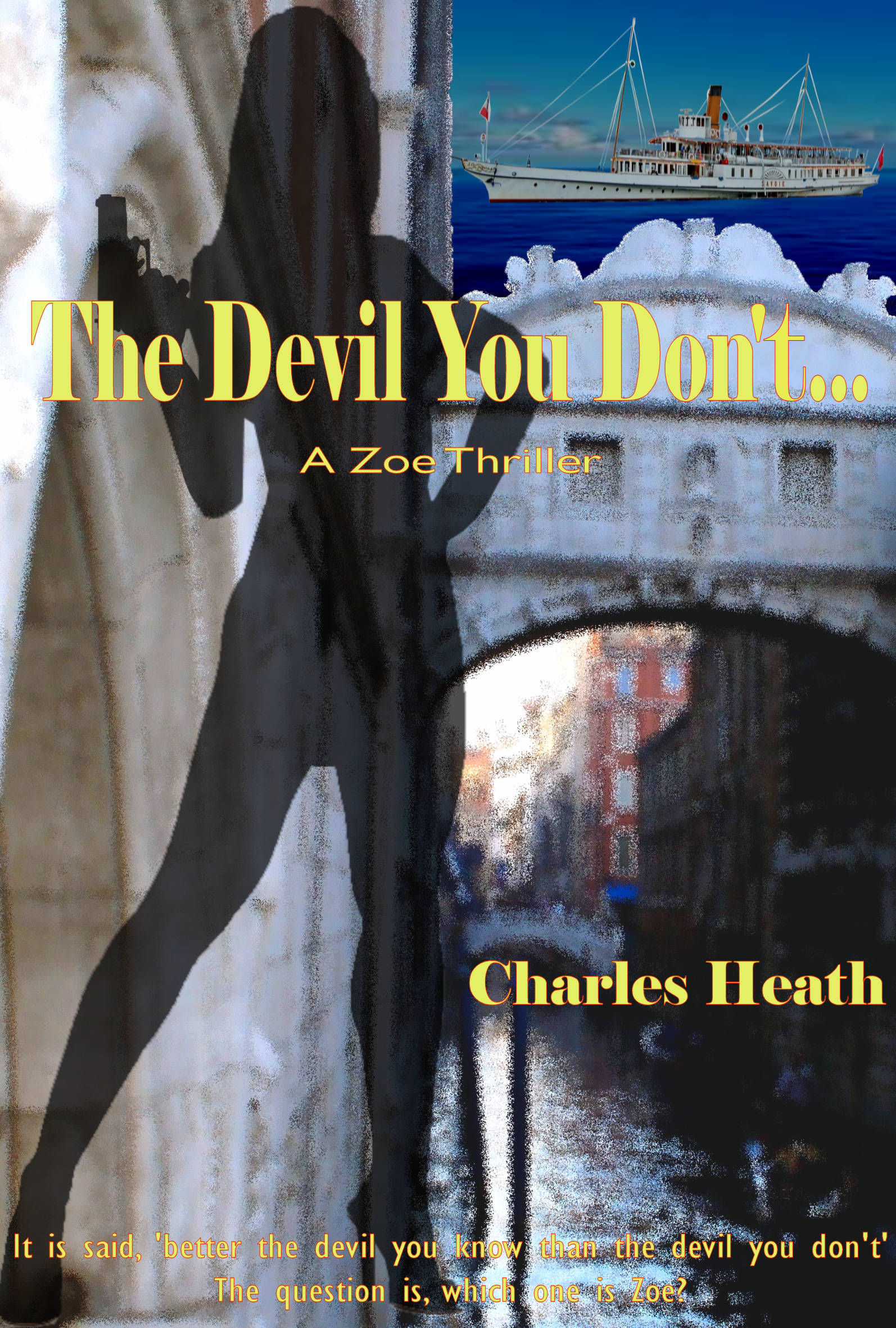
I have high hopes of publishing it in mid-2026. It even has a cover.