‘Sunday in New York’ – A beta reader’s view

I’m not a fan of romance novels but …

There was something about this one that resonated with me.

This is a novel about a world generally ruled by perception, and how people perceive what they see, what they are told, and what they want to believe.

I’ve been guilty of it myself as I’m sure we all have at one time or another.

For the main characters Harry and Alison there are other issues driving their relationship.

For Alison, it is a loss of self-worth through losing her job and from losing her mother and, in a sense, her sister.

For Harry, it is the fact he has a beautiful and desirable wife, and his belief she is the object of other men’s desires, and one in particular, his immediate superior.

Between observation, the less than honest motives of his friends, a lot of jumping to conclusions based on very little fact, and you have the basis of one very interesting story.

When it all comes to a head, Alison finds herself in a desperate situation, she realises only the truth will save their marriage.

But is it all the truth?

What would we do in similar circumstances?

Rarely does a book have me so enthralled that I could not put it down until I knew the result. They might be considered two people who should have known better, but as is often the case, they had to get past what they both thought was the truth.

And the moral of this story, if it could be said there is one, nothing is ever what it seems.

…

Available on Amazon here: amzn.to/2H7ALs8

…

In a word: Pad

Here is another of those three letter words that can have so many meanings that it is nigh on impossible to pin it down.

You have to use it in a sentence which all but explains it.

For instance,

A pad might be a writing pad, or a note pad, something on which you can write, notes, stories, anything really, even doodles.

Cats, dogs, a lot of animals have padded feet.  I’d say, for a cat, those pads would be like shock absorbers.

You can pad an expense account with false expenditure in an accounting sense, I’m sure a lot of people are tempted to do so.

I know places, where a single man might live, is called a bachelor pad.  So many men like to think they may have one, but it takes money to buy the accouterments of seduction.

Then there’s a medical dressing, a square of gauze called a pad, usually absorbent and soaked in disinfectant to help protect and repair a wound.

Shoulder pads, for broader shoulders

KInee pads, for when crashing off a bike

Shin pads for soccer, and ice hockey players

A helipad which is for helicopter landings and takeoffs, much the same as a launch pad for rockets.  Unfortunately, rockets do not generally have a tendency to land, not unless they are bombs, like the V1 and V2 rockets of WW2.

It could also be someone walking around a house in socks, the man stealthily approached the thief, padding silently in his socks so he wouldn’t be heard.

And lastly,

A place for frogs to hang out, ie, the flat leaves of a water Lilly.

Any more?

I’m sure there is, just let me know.


An excerpt from “Echoes from the Past”

Available on Amazon Kindle here:  https://amzn.to/2CYKxu4

…

With my attention elsewhere, I walked into a man who was hurrying in the opposite direction.  He was a big man with a scar running down the left side of his face from eye socket to mouth, and who was also wearing a black shirt with a red tie.

That was all I remembered as my heart almost stopped.

He apologized as he stepped to one side, the same way I stepped, as I also muttered an apology.

I kept my eyes down.  He was not the sort of man I wanted to recognize later in a lineup.  I stepped to the other side and so did he.  It was one of those situations.  Finally getting out of sync, he kept going in his direction, and I towards the bus, which was now pulling away from the curb.

Getting my breath back, I just stood riveted to the spot watching it join the traffic.  I looked back over my shoulder, but the man I’d run into had gone.  I shrugged and looked at my watch.  It would be a few minutes before the next bus arrived.

Wait, or walk?  I could also go by subway, but it was a long walk to the station.  What the hell, I needed the exercise.

At the first intersection, the ‘Walk’ sign had just flashed to ‘Don’t Walk’.  I thought I’d save a few minutes by not waiting for the next green light.  As I stepped onto the road, I heard the screeching of tires.

A yellow car stopped inches from me.

It was a high powered sports car, perhaps a Lamborghini.  I knew what they looked like because Marcus Bartleby owned one, as did every other junior executive in the city with a rich father.

Everyone stopped to look at me, then the car.  It was that sort of car.  I could see the driver through the windscreen shaking his fist, and I could see he was yelling too, but I couldn’t hear him.  I stepped back onto the sidewalk, and he drove on.  The moment had passed and everyone went back to their business.

My heart rate hadn’t come down from the last encounter.   Now it was approaching cardiac arrest, so I took a few minutes and several sets of lights to regain composure.

At the next intersection, I waited for the green light, and then a few seconds more, just to be sure.  I was no longer in a hurry.

At the next, I heard what sounded like a gunshot.  A few people looked around, worried expressions on their faces, but when it happened again, I saw it was an old car backfiring.  I also saw another yellow car, much the same as the one before, stopped on the side of the road.  I thought nothing of it, other than it was the second yellow car I’d seen.

At the next intersection, I realized I was subconsciously heading towards Harry’s new bar.   It was somewhere on 6th Avenue, so I continued walking in what I thought was the right direction.

I don’t know why I looked behind me at the next intersection, but I did.  There was another yellow car on the side of the road, not far from me.  It, too, looked the same as the original Lamborghini, and I was starting to think it was not a coincidence.

Moments after crossing the road, I heard the roar of a sports car engine and saw the yellow car accelerate past me.  As it passed by, I saw there were two people in it, and the blurry image of the passenger; a large man with a red tie.

Now my imagination was playing tricks.

It could not be the same man.  He was going in a different direction.

In the few minutes I’d been standing on the pavement, it had started to snow; early for this time of year, and marking the start of what could be a long cold winter.  I shuddered, and it was not necessarily because of the temperature.

I looked up and saw a neon light advertising a bar, coincidentally the one Harry had ‘found’ and, looking once in the direction of the departing yellow car, I decided to go in.  I would have a few drinks and then leave by the back door if it had one.

Just in case.

© Charles Heath 2015-2020

newechocover5rs

“Trouble in Store” – Short stories my way: Point of view

If this story were being written in the first person, the only perspective or point of view would be that of the narrator.

Since we need to have several perspectives, it is better done in the third person so we can change between characters and try to understand their motivation.

We might look at the first-person perspective for each of the characters later.

The second of the protagonists is the girl with the gun.  How did she get it?  How did the situation deteriorate so quickly?   What is she going to do?

This is a short story, and we need to know something about her, so we must get to the heat of the matter quickly, let’s start with:

Her mother said she would never amount to anything, and here she was, with a broken drug addict coming apart because she had been cut off from her money, dragged into coming to this shop to leverage drugs from his dealer at the end of a gun.  It was her fault, Jerry said and made her feel responsible, much the same as her parents and everyone else in her life.

One of life’s losers or just a victim?  This theme can go in any direction.

Then a moment to reflect on why she was here:

Why had she agreed to go with Jerry?  At that moment when she picked up the gun off the floor, she realized it was not out of responsibility or fault, it was out of fear.

That gives us the why; he had obviously tried to make her feel responsible and when that failed, he threatened her.  But now there’s a bigger issue, the gun and a situation spiralling out of control.  The thing is, she has the gun and the power to walk away or make matters worse.

The problem was that she had outed the shopkeeper as a dealer in front of someone who had not known.  That now made him a victim as much as she was.

She looked at the two men facing her, a shopkeeper who was a dealer and a customer scared shitless.  As much as she was.  Her gun hand was shaking.

The scene is set, and something has to give.

Time for the shopkeeper to weigh in.

“I have no idea what you are talking about.  Please, put the gun down before someone gets hurt.”

It’s a typical response from a man who realizes he’s in trouble and is trying to make time while he thinks of how to rescue himself from a potentially dangerous situation.

Time to change the perspective again and explore the shopkeeper.

If only Jack hadn’t come in when he did.  He would have the gun, call the police, and brazened his way out of trouble.  Who would the police believe a pair of addicts or a respectable shopkeeper?

Now he had to deal with the fallout, especially if the girl started talking.

Next, actions have consequences, building the tension.

This section was rewritten, moving from Jack as the narrator to the girl, and then to the shopkeeper:

Annalisa looked at the two men facing her, a shopkeeper who, despite his protestations, was a dealer and a customer scared shitless.

The poor bastard was not the only one.  This was meant to be simple, arrive at the shop just before closing, force the shopkeeper to hand over the shit, and leave.  Simple.

Except …

The shopkeeper told them to get out.  Simmo started ranting waving the gun around, then collapsed.  A race for the gun which spilled out of his hand, she won.

He was getting the stuff when the customer burst into the shop.

Shit, shit, shit, shit, she thought.

Why had she agreed to go with Jerry?  It was her fault, Jerry had said, and he made her feel responsible for his problems, much the same as her parents and everyone else in her life.

Her mother said she would never amount to anything, and here she was, with a drug addict coming apart because she had been cut off from her money, dragged into coming to this shop to pick up his score from his dealer at the end of a gun.

She heard a strange sound come from beside her and looked down.  Simmo was getting worse, like he had a fever, and was moaning.

The shopkeeper saw an opportunity.  “Listen to me, young lady, I have no idea what you are talking about.  Please, put the gun down before someone gets hurt.  Your friend needs medical help and I can call an ambulance.”

The girl switched her attention back to him.  “Shut up, let me think.  Shit.”

The storekeeper glanced over at the customer.  He’s been in once or twice, probably lived in the neighbourhood, but looked the sort who’d prefer to be anywhere but in his shop.  More so now.  If only he hadn’t burst in when he did.  He would have the gun, call the police, and brazen his way out of trouble.  Who would the police believe a pair of addicts or a respectable shopkeeper?

Now he had to deal with the fallout, especially if the girl started talking.

© Charles Heath 2016 – 2024

The cinema of my dreams – I always wanted to see the planets – Episode 29

Sometimes the easiest solution…

…

If I was to assume the recent visit by one of the so-called pirate ships as a benchmark for transporting a person between ships, then we’d have to get closer to the larger transport vessel where our crew member, logically, was being held.

The fact I was contemplating it was after the discussion with O’Mara, which, quite frankly, was like something out of a science fiction novel.

He’d started it with, “We have been working on a plan “

The same plan, I presumed, that the Lt Colonel had been referring to, only this time with more detail.

“You might not be aware that every member of this crew has a specific marker in their system that both enables us to track where they are, within a reasonable distance, and monitor their well-being.”

I was going to ask exactly what he meant by that, but amongst the reading material I’d been given before boarding, was a paper on the advances in medical science and how this related to space travel.

We all had a series of vaccinations, and I assumed one was to give us that specific marker. I suspect another was to give us nanites that would aid in our recovery as well as maintain our health in somewhat trying circumstances.

And, no, we’re were not meant to become super-soldiers, though work was being progressed on that too.

“It gives us the ability to track our people, and, yes, the two crew members’ life signs came back when we arrived here, and we are currently monitoring the scientist. That’s to say we know where she is, and that she had not been harmed.”

There was only one point about the plan that held any concern, we just didn’t transport people, not because we couldn’t, but because of the risk. Cargo was fine, but people were a little different. There had been testing, and it had worked, but then problems occurred, and it took only the slightest of issues during the transfer, for it to go wrong. After three accidental deaths, it was decided to ban it until the process could be more refined.

Of course, in line with everything else of this ship, the transporters were the latest versions with considerably upgraded hardware. The distance was still a problem, but getting a lock onto an individual was easier with the new markers provided to this crew.

We were, for all intents and purposes, guinea pigs for the new system, something else I didn’t know until now.

The question was, would she want to be transported? The fact the pirate ships were able to transport people with success was interesting given they would only have the old equipment, but they had an incentive to use it, it was a primary means for them to escape.

And that, too, had raised another issue, they had to have a marker, not necessarily the result of a vaccination, it could be a small device, and that could only be given to them by the guards, which meant it was likely the off-world prison authority was corrupt, not unheard of since it had been contracted out. It was just another paragraph in a report that was growing exponentially in size.

The Admiral was surprised to hear from me. I thought it best, in one of those cover your rear moments, to give him a heads up on what we were planning to do.

But to a more important matter I was sure he would be interested in hearing, “The trial for running at a much faster speed was a success, and that we are closer to travelling at the speed of light. But it seems we are not the first people to do so. It seems the people who stole the plutonium have the same capability.”

“The aliens?”

“No. Our scans of their ships and personnel show they are not. We believe the ships are older vessels discarded on the edge of space, refitted, and manned by escaped convicts from the Mars mining prison.” Saying it out loud didn’t quite sound the same as it had in my head.

“Or it is the result of a country that is not exactly playing by the rules that everyone agreed to for the exploration and exploitation of space.”

“So it was known we might run into some people who have another agenda?”

“Not in that direction, no.”

“Well, it seems they have a base on or under the surface of one of Uranus’s moons called Oberon. I suspect the plutonium is to fuel their base, which is far enough out of the mainstream that we might not have discovered it for years.”

“You then have to wonder why they told you about it?”

That answer was provided in a sudden and alarming manner.

“Bridge to Captain, we have three incoming vessels, and I think they are not here for a social visit.”

To the Admiral, “I have to go. Let’s hope the weapons we have are adequate.” I cut the call, saying, “Be there ASAP. Is the gunnery sergeant at her post?”

“Yes.”

“Then tell her she has permission to return fire if they attack.”

“Very good.”

I had considered why they hadn’t attacked when they had the chance earlier, but perhaps that visit was just to return the Captain’s body. If they were privy to information about our vessel, they might know of its capabilities, and not wish to engage. Of course, there was another reason, perhaps they were waiting until all three ships were free, and assume there was safety in numbers.

Whatever the reasons, we’d soon find out.

…

© Charles Heath 2021

“Uncanny good luck shines upon me…” – a short story


I never did take advice very seriously.  Especially when they were issued by old man Taggard, a man of some mystery that we all, adults and children alike wanted to know about.

Everyone in the street knew him as he had lived in the almost derelict mansion at the end of the cul-de-sac forever, way longer than anyone else in the neighbourhood had.  In fact, it was rumoured he had owned all the land around and sold it off bit by bit over time, the reason why there were so many houses of varying age in the estate.

Ours was one of the older houses, a few doors up from it.  We were close enough to observe Taggard’s habit, like sitting on the porch on an old swing chair in the afternoons, to the late-night wanderings in the street.  Some said he was accompanied by the ghost of his long-dead wife, which led to stories being told of the house he lived in being haunted.

As children, we had been brought up on a diet of TV shows such as ‘The Munsters’ and ‘The Addams Family’, and had invented our own make-believe show called ‘The Taggard Mansion’, the house with ghosts, and the neighborhood center for strange goings-on.

And as children were wont to do, we had to ‘investigate’.

There was a ‘gang’ even though we didn’t refer to it as such, about seven of us who lived in nearby houses, and all of whom had very active imaginations.  We also met in the cubby house out the back of our house to plan forays to find out whether the rumours were true.  The thing is we never got very far as he seemed to know when we were sneaking in and scared us off, so for years, the rumours remained just that, rumours.

But as grown-ups, and by that I mean, middle teens, our plans became bolder and more sophisticated, based on a whole new breed of TV shows, where the seemingly impossible was no longer that.  And Andy Boswell, my older brother’s best friend, his father was a private detective, or so he told us, and he had managed to ‘secure’ some of his father’s tools of the trade; a camera on the end of a wire that could connect to a cell phone, a listening device that could hear through walls, and in-ear communicators.  We could now, if we were close enough, see under doors, and hear if anyone was in.  We could all keep in touch, though I couldn’t see how this would help.

But a plan was formulated.  All seven of us had a role to play.  My brother Ron and Delilah, his girlfriend, were taking point, whatever that meant, Andy and I were going to take point, while Jack, Jill, and Kim were going to run distraction.  The theory was, they’d make enough noise to keep the old man occupied chasing them.  No one had been inside the house, ever.  Andy and I were going to be the first.

Andy had drawn up a plan and it was up on the wall.  He had charted the house, and had a very accurate picture of the house’s footprint, where doors and windows were, likely entrance points, including a hatchway down into what he assumed was a basement, though he preferred to call it the dungeon, and a layout of the grounds.  Apparently under the undergrowth were paths and gardens, even a large fountain that once graced the grounds of the three-story mansion made of sandstone, and built sometime during the middle of the 1800s.

Andy had done some research, mostly from old newspapers, and also discovered that the old man had once been married, they had a half dozen children, three of whom had died, the others scattered around the world.  It explained why no one ever visited the place.

The distraction team would be going in through the front gate, easy enough because it had come off its hinges and just needed a shove to open.  The old man usually emerged from the house via the driveway, or what was once a drive where cars could enter one side of the property, stop under a huge canopy, and emerge onto the road further along.  But it’s overgrown stare, the width of the pathway was now about six feet.  The fact it was once an amazing feature was the roadside lights, now all but disappearing behind the undergrowth.

Andy had found a photograph in the paper of it, and it had looked magnificent, as had the gardens, the overhanging canopy, and all the lights.  To think such magnificence was now lost.  And having seen it for what it once was, it was not hard to imagine any number of scenarios, my favourite, rescuing a damsel in distress from the tower.  Yes, it even had a tower, two, in fact, at each end of the house.  My brother always said I had an overactive imagination.

Andy and I would be going in by the less-used car exit, and heading for the left side of the building where Andy said were several floor-to-ceiling windows that looked to him like French doors.  Of course, none of us knew what French doors were, and my brother cut Andy short when he tried to explain.

Failing that, there was a door at the rear that seemed to be open, and we’d try that next.  We would get into position, advise the distraction team, and the operation would be a go.  The only debate was about what time of the day were we going to do it.  My brother preferred late in the afternoon.  Andy said it was better at dawn, or soon after if we were looking for maximum confusion about the target.

Dawn, confusion, tactics, target, Andy was in his element.  He was going to be a spy when he grew up.  My brother said he would never grow up, but then, my brother said I was a dreamer and would never amount to anything.  We ignored his advice, well, we pretty much ignored everything he said.

We were going in at dawn.

At 5 a.m. on Saturday morning, we gathered at the cubby house ready for action.  We all took a communicator and put it in our ears, and then had fun saying stupid stuff, and hearing it through the earpieces.  It was weird but added an exciting element to the adventure.  I know my heart was beating faster in anticipation.  Andy was pretending to be cool and failing.  I suspected my brother and Delilah had other plans when we left them alone in the cubby house.  The distraction team was ready to go.

Shortly after the sun came up, it was cool and the air still.  It was going to be a hot day, and in that first hour, everything was almost perfect.  It seemed a waste to do anything but let the early morning serenity settle over us.  Not today.  Andy and I went to our position, slowly feeling our way through the bushes, taking bearings from the light poles, and every now and then seeing the guttering and what looked to be a concrete path.  Beyond that was once a garden, and I tried, more than once, to imagine what it was like.

In my ear I could hear the others in the distraction team setting up at the start of the driveway, ready to go.  We reached our position, about twenty feet from the so-called French windows, the view into the house blocked by curtains, but beyond that, what we could see was darkness inside the house.  Taking in the whole side of the house, there were no lights on behind any of the windows.  If we didn’t know better, we could have assumed the house was empty.

I heard Andy say, “Ready.  Start making noise.”

A minute later we could both hear the distraction team in the distance and through the communicators.  It took two minutes before we heard the old man, yelling, “What the hell do you think you’re doing?”  Their job done, getting him out of the house, all they had to do was retreat.

Time for Andy and I to go.

Working on the basis that no one else was at the house, and the fact we had no evidence there was, we were not overly worried about making a stealthy approach.  I could hear in my earpiece, the gasping of those in the distraction team, having just made it outside the gate, and to tell us the old man had stopped them at the gate.  I doubt he had been running, but his yelling was just as effective.

That had stopped, and a sort of silence fell over the area.

We were now at the French doors, and Andy produced another tool that he’d forgotten to tell us about, a lock pick.  The fact it didn’t take long to unlock the door told me he was either very talented, or the lock was old and presented no problems.  Either way, he opened the door and ushered me in.

I brushed the curtains aside for him to follow, then moved in as he followed, closing the door behind him.

I’d taken five steps before I heard a woman’s voice say.  “Uncanny good luck shines upon me.  My knights in shining armour.  You’ve come to rescue me, no?”

…

© Charles Heath 2020-2023

Writing about writing a book – Day 4

Of course, by this time, a lot has changed and what I had discussed before now needs a few changes, so I have made the necessary amendments where required to the narrative, but that doesn’t mean I won’t revisit it sometime in the future.


It was a late night last night, reading and rereading, considering plot lines, new characters, and demolishing a six-pack.

It’s debatable if it is helping the creative process.  It has left me with a slight headache.

I drag myself out of bed and look out the window.  Bright sunshine, blue sky, slight breeze.

11:00 am.  Half the day is gone.

My stomach rumbles, I need something to eat.  I stagger out to the kitchen and look in the fridge.  OK, too busy to go shopping, time to make time.  A writer has to eat!


Three hours have passed and it’s mid-afternoon.  A new plan is required.  I need to make sure I don’t waste the day and write a certain number of words, otherwise, this book will never get written.

Bed: midnight

Rise: 7:00 am, go for a run to clear the head

Breakfast: 8:00 am

Writing: 9:00 am to ??

Let’s just see if that works tomorrow.


I sit down and stare at the pad.

Plotting:  Our main character is an IT department manager, whose main responsibility from the start, and at that time, he was alone and not the manager of anything, was setting up and keeping the network running.  These were the early days of Ethernet, token ring, and 3-Com, in moving from mainframes to desktops and servers.

I remember it well, and my first client/server network was 3-Com and Ethernet.

In the story scenario, Bill literally is indispensable because the job he performs is single point sensitive, even though Benton refuses to act on employing another network engineer.  This is art imitating life because so many places have similar situations.

So the reason why Benton is calling Bill; there is a crisis.

Some accountant is found shot dead at his desk, novel but not unheard of.  I know a few accountants who deserve just that.

That’s not the problem though, it’s the fact the network is down, and Benton is almost hysterical (after he makes a promise to his superiors that he can’t keep!).  Nothing unusual there with the sort of person he is, and like many in similar situations.


Scribble, scribble …


Another five minutes, then the phone began its shrill insistence again.  Before it rang again, I’d moved it from the floor to the bed.  I counted the rings, to ten, and then picked up the receiver.

“Bill?  Don’t hang up.”  Almost pleading.

“Why?  You said I should go, away from work, away from the phones, away to recharge my batteries, I believe you said.”

“That was Friday.  This is Monday. You’re needed.  Richardson has been found shot dead by his desk.  All hell has broken loose!”  Benton rarely used adjectives, so I assumed when he said all hell had broken loose, it meant something had happened he couldn’t fix.  His flowery language and telegram style had momentarily distracted my attention from Richardson’s fate.

Harold Richardson was an accountant, rather stuffy, but good at his job.  I’d spoken to him probably twice in as many years, and he didn’t strike me as the sort who would kill himself.  So why did I think that?  Benton had only said he was shot.

Benton’s voice went up an octave, a sure sign he was going into meltdown.  “It’s a circus down here.  Jennifer is missing, Giles is not in yet, the network is down, and that bunch of nincompoops you call support staff are running around the office like headless chooks.”

It all came out in a nonstop sentence, followed by a gasp for air.  It gave me time to sift the facts.  Jennifer, the Assistant Manager, and responsible for data entry and accounts maintenance, was not there, which in itself was unusual, because she kept longer hours than me, Peter Giles, my youthful assistant, just out of university and still being beaten into shape was also not in, and that was usual, so it could only mean one thing.

The network was down.

It was my responsibility since I’d recommended it and then won the support of management over his objections, and following that it had become a point of continual contention, a petty war neither of us was going to win.

I tried to keep the joy out of my voice. 

He’d also vetoed my recommendation for an extra full-time network engineer as my alternative, and in doing so Benton had made my job become single point sensitive.  There was no one to replace me if anything went wrong.


Richardson has nothing to do with the plot, he just happened to be in the wrong place at the wrong time, but someone else further up the chain of command will be.  That’s something to look forward to, though I’ve yet to decide what happens.

As for Benton, he will linger around for a while, but has no real part to play, except perhaps as the comic light relief.  He will get a rude awakening at the end.

Try not to make it too technical, no one really wants to know about computer systems, just the machinations of the people who are creating the problems and why.


© Charles Heath 2016 – 2020

Searching for locations: Port Macquarie – Day 1 – Part 1

In keeping with the new travel plan, we are picking places in Australia, where we can exchange our timeshare week.

Some people consider timeshares as a waste of time and money, and the process of getting one is very painful, which it can be. 

Certainly, in some of the places we have gone, they tried hard to sell you another which can be a downside to staying, but the fact we get to stay in a three-bedroom fully kitted apartment of bungalow for $200 for the week far outweighs the small inconveniences.

Previously, we stayed at Coffs Harbour, but this time, we decided to stay at Port Macquarie.

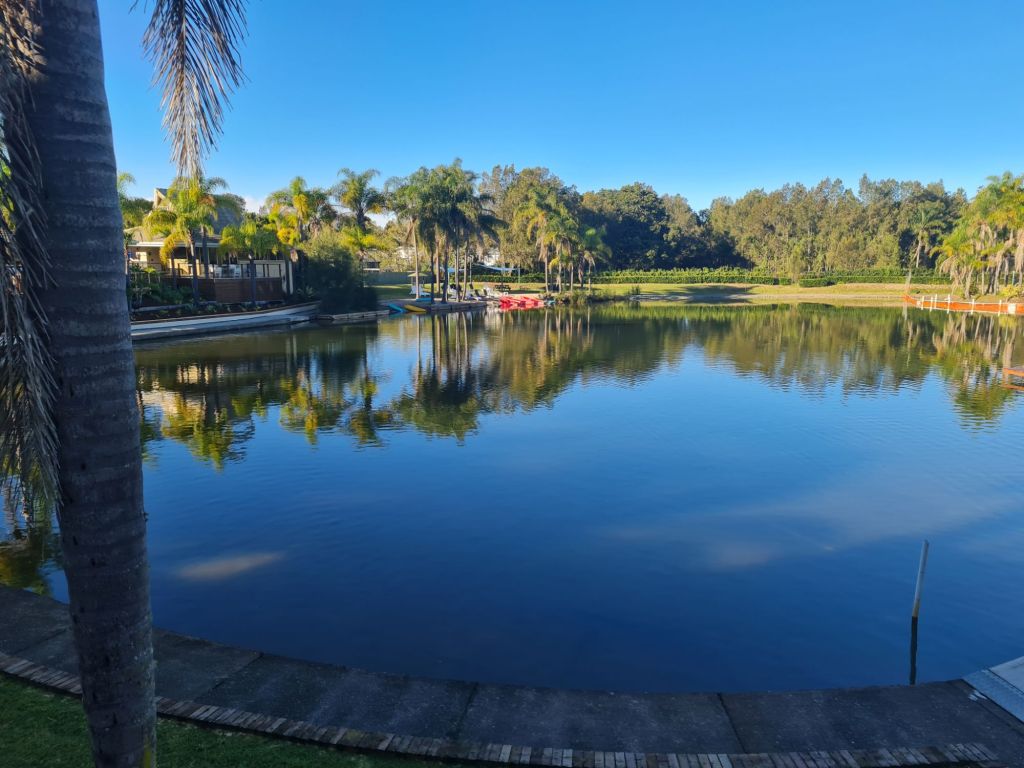
Our bungalow, as they are called, is on the edge of the lagoon, which has an island and has been stocked with fish, though I doubt we would be allowed to go fishing in it.

For the more adventurous, there are canoes.  I think I would prefer the BBQ, and watch the planes taking off and landing at the airport just on the other side of the tree line on the other side of the lagoon.

At least they are only smaller planes like the De Havilland Dash 8.

And, knowing the airport was only minutes away, we dropped in for a quick photo op and got the following

The bane of our existence: social media

I’m back to writing, sitting at the desk, pad in front of me, pen in hand.

The only thing lacking is an idea.

It’s 9:03 am, too early to start on a six-pack.

I need a distraction.

Blogging, websites, Twitter, and Facebook, all of these social media problems are swirling around in my mind.

The more I read the more it bothers me that if I don’t have the right social media presence if I do not start to build an email list, all of my efforts in writing a book will come to naught.

Then I start trawling the internet for information on marketing and found a plethora of people offering any amount of advice for anything between a ‘small amount’ to a rather large amount that gives comprehensive coverage of most social media platforms for periods of a day, a week or a month.  I don’t have a book so it’s a bit early to be worrying about that.

I move on to the people who offer advice for a cost on how to build a following, how to build a web presence, how to get a thousand Twitter followers, and how to get thousands of email followers before the launch.

The trouble is I’m writing a novel, not a nonfiction book, or have some marvellous 30 page ebook on how to do something, for free just to drive people to my site.

I’m a novelist, not a handyman so those ideas while good are not going to help me.

Yet another problem to wrestle with along with actually creating a product to sell in the first place.

Except I’m supposed to be writing for the love of it without the premeditated idea of writing for gain or getting rich quick.

What am I missing here?

So should l be writing short stories and offering them for free to drive people to my site?  These would have to be genre-specific so it needs time and effort and fit into a convenient size story that will highlight or showcase my talent.

Or should I create a website for the novel and set up pages for the characters and get some interaction going that way?

It will be difficult without giving the whole plot away so if I do it will have to be carefully managed.

I don’t think I will have a good night’s sleep again with all of these social media problems I’m going to have.

Oh well, back to the book.  It’s time to have a nightmare of a different sort!

An excerpt from “What Sets Us Apart”, a mystery with a twist

See the excerpt from the story below, just a taste of what’s in store…

http://amzn.to/2Eryfth

whatsetscover

McCallister was old school, a man who would most likely fit in perfectly campaigning on the battlefields of Europe during the Second World War. He’d been like a fish out of water in the army, post-Falklands, and while he retired a hero, he still felt he’d more to give.

He’d applied and was accepted as head of a SWAT team, and, watching him now as he and his men disembarked from the truck in almost military precision, a look passed between Annette, the police liaison officer, and I that said she’d seen it all before. I know I had.

There was a one in four chance his team would be selected for this operation, and she had been hoping it would be one of the other three. While waiting for them to arrive she filled me in on the various teams. His was the least co-operative, and the more likely to make ad-hoc decisions rather than adhere to the plan, or any orders that may come from the officer in charge.

This, she said quite bluntly, was going to end badly.

I still had no idea why Prendergast instructed me to attend the scene of what looked to be a normal domestic operation, but as the nominated expert in the field in these types of situations, it was fairly clear he wasn’t taking any chances. It was always a matter of opinion between us, and generally I lost.

In this case, it was an anonymous report identifying what the authorities believed were explosives in one of the dockside sheds where explosives were not supposed to be.

The only reason why the report was given any credence was the man, while not identifying himself by name, said he’d been an explosive expert once and recognized the boxes. That could mean anything, but the Chief Constable was a cautious man.

With his men settled and preparing their weapons, McCallister came over to the command post, not much more than the SUV my liaison and I arrived in, with weapons, bulletproof vests, and rolls of tape to cordon off the area afterward. We both had coffee, steaming in the cold early morning air. Dawn was slowly approaching and although rain had been forecast it had yet to arrive.

A man by the name of Benson was in charge. He too had groaned when he saw McCallister.

“A fine morning for it.” McCallister was the only enthusiastic one here.

He didn’t say what ‘it’ was, but I thought it might eventually be mayhem.

“Let’s hope the rain stays away. It’s going to be difficult enough without it,” Benson said, rubbing his hands together. We had been waiting for the SWAT team to arrive, and another team to take up their position under the wharf, and who was in the final stages of securing their position.

While we were waiting we drew up the plan. I’d go in first to check on what we were dealing with, and what type of explosives. The SWAT team, in the meantime, were to ensure all the exits to the shed were covered. When I gave the signal, they were to enter and secure the building. We were not expecting anyone inside or out, and no movement had been detected in the last hour since our arrival and deployment.

“What’s the current situation?”

“I’ve got eyes on the building, and a team coming in from the waterside, underneath. Its slow progress, but they’re nearly there. Once they’re in place, we’re sending McKenzie in.”

He looked in my direction.

“With due respect sir, shouldn’t it be one of us?” McCallister glared at me with the contempt that only a decorated military officer could.

“No. I have orders from above, much higher than I care to argue with, so, McCallister, no gung-ho heroics for the moment. Just be ready to move on my command, and make sure you have three teams at the exit points, ready to secure the building.”

McCallister opened his mouth, no doubt to question those orders, but instead closed it again. “Yes sir,” he muttered and turned away heading back to his men.

“You’re not going to have much time before he storms the battlements,” Benson quietly said to me, a hint of exasperation in his tone. “I’m dreading the paperwork.”

It was exactly what my liaison officer said when she saw McCallister arriving.

The water team sent their ‘in position’ signal, and we were ready to go.

In the hour or so we’d been on site nothing had stirred, no arrivals, no departures, and no sign anyone was inside, but that didn’t mean we were alone. Nor did it mean I was going to walk in and see immediately what was going on. If it was a cache of explosives then it was possible the building was booby-trapped in any number of ways, there could be sentries or guards, and they had eyes on us, or it might be a false alarm.

I was hoping for the latter.

I put on the bulletproof vest, thinking it was a poor substitute for full battle armor against an exploding bomb, but we were still treating this as a ‘suspected’ case. I noticed my liaison officer was pulling on her bulletproof vest too.

“You don’t have to go. This is my party, not yours,” I said.

“The Chief Constable told me to stick to you like glue, sir.”

I looked at Benson. “Talk some sense into her please, this is not a kindergarten outing.”

He shrugged. Seeing McCallister had taken all the fight out of him. “Orders are orders. If that’s what the Chief Constable requested …”

Madness. I glared at her, and she gave me a wan smile. “Stay behind me then, and don’t do anything stupid.”

“Believe me, I won’t be.” She pulled out and checked her weapon, chambering the first round. It made a reassuring sound.

Suited up, weapons readied, a last sip of the coffee in a stomach that was already churning from nerves and tension, I looked at the target, one hundred yards distant and thought it was going to be the longest hundred yards I’d ever traversed. At least for this week.

A swirling mist rolled in and caused a slight change in plans.

Because the front of the buildings was constantly illuminated by large overhead arc lamps, my intention had been to approach the building from the rear where there was less light and more cover. Despite the lack of movement, if there were explosives in that building, there’d be ‘enemy’ surveillance somewhere, and, after making that assumption, I believed it was going to be easier and less noticeable to use the darkness as a cover.

It was a result of the consultation, and studying the plans of the warehouse, plans that showed three entrances, the main front hangar type doors, a side entrance for truck entry and exit and a small door in the rear, at the end of an internal passage leading to several offices. I also assumed it was the exit used when smokers needed a break. Our entry would be by the rear door or failing that, the side entrance where a door was built into the larger sliding doors. In both cases, the locks would not present a problem.

The change in the weather made the approach shorter, and given the density of the mist now turning into a fog, we were able to approach by the front, hugging the walls, and moving quickly while there was cover. I could feel the dampness of the mist and shivered more than once.

It was nerves more than the cold.

I could also feel rather than see the presence of Annette behind me, and once felt her breath on my neck when we stopped for a quick reconnaissance.

It was the same for McCallister’s men. I could feel them following us, quickly and quietly, and expected, if I turned around, to see him breathing down my neck too.

It added to the tension.

My plan was still to enter by the back door.

We slipped up the alley between the two sheds to the rear corner and stopped. I heard a noise coming from the rear of the building, and the light tap on the shoulder told me Annette had heard it too. I put my hand up to signal her to wait, and as a swirl of mist rolled in, I slipped around the corner heading towards where I’d last seen the glow of a cigarette.

The mist cleared, and we saw each other at the same time. He was a bearded man in battle fatigues, not the average dockside security guard.

He was quick, but my slight element of surprise was his undoing, and he was down and unconscious in less than a few seconds with barely a sound beyond the body hitting the ground. Zip ties secured his hands and legs, and tape his mouth. Annette joined me a minute after securing him.

A glance at the body then me, “I can see why they, whoever they are, sent you.”

She’d asked who I worked for, and I didn’t answer. It was best she didn’t know.

“Stay behind me,” I said, more urgency in my tone. If there was one, there’d be another.

Luck was with us so far. A man outside smoking meant no booby traps on the back door, and quite possibly there’d be none inside. But it indicated there were more men inside, and if so, it appeared they were very well trained. If that were the case, they would be formidable opponents.

The fear factor increased exponentially.

I slowly opened the door and looked in. A pale light shone from within the warehouse itself, one that was not bright enough to be detected from outside. None of the offices had lights on, so it was possible they were vacant. I realized then they had blacked out the windows. Why hadn’t someone checked this?

Once inside, the door closed behind us, progress was slow and careful. She remained directly behind me, gun ready to shoot anything that moved. I had a momentary thought for McCallister and his men, securing the perimeter.

At the end of the corridor, the extent of the warehouse stretched before us. The pale lighting made it seem like a vast empty cavern, except for a long trestle table along one side, and, behind it, stacks of wooden crates, some opened. It looked like a production line.

To get to the table from where we were was a ten-yard walk in the open. There was no cover. If we stuck to the walls, there was equally no cover and a longer walk.

We needed a distraction.

As if on cue, the two main entrances disintegrated into flying shrapnel accompanied by a deafening explosion that momentarily disoriented both Annette and I. Through the smoke and dust kicked up I saw three men appear from behind the wooden crates, each with what looked like machine guns, spraying bullets in the direction of the incoming SWAT members.

They never had a chance, cut down before they made ten steps into the building.

By the time I’d recovered, my head heavy, eyes watering and ears still ringing, I took several steps towards them, managing to take down two of the gunmen but not the third.

I heard a voice, Annette’s I think, yell out, “Oh, God, he’s got a trigger,” just before another explosion, though all I remember in that split second was a bright flash, the intense heat, something very heavy smashing into my chest knocking the wind out of me, and then the sensation of flying, just before I hit the wall.

I spent four weeks in an induced coma, three months being stitched back together and another six learning to do all those basic actions everyone took for granted. It was twelve months almost to the day when I was released from the hospital, physically, except for a few alterations required after being hit by shrapnel, looking the same as I always had.

But mentally? The document I’d signed on release said it all, ‘not fit for active duty; discharged’.

It was in the name of David Cheney. For all intents and purposes, Alistair McKenzie was killed in that warehouse, and for the first time ever, an agent left the Department, the first to retire alive.

I was not sure I liked the idea of making history.

© Charles Heath 2016-2020