A long short story that can’t be tamed – I always wanted to rescue a damsel in distress – 8

Eight

So, not to sound like I was a snotty loser, when Cecile had first told me about Jake, the man I assumed was her new boyfriend, I said he was too good to be true.

He’d been sent to Australia to work in a branch of his father’s company as a learning experience on the way to bigger and better things.  He was just the sort of man she thought she wanted, not the slow and steady wins the race type, but someone who would, and literally did, sweep her off her feet.

Our last conversation, when she told me I was not the man of her dreams, she didn’t exactly identify him, but I knew who she was talking about.  She had fobbed me off several times, so I followed her and lo and behold, there was the man himself.

All she had to do was tell me we were done, but she didn’t, and exactly why she hadn’t remained a mystery.

That he had led her down a very dangerous path, well, I might have carried a grudge, but we had been together since childhood, and my feelings for her were not easily extinguished, not to the point I would take her back, but I would find her, and save her if she wanted to be saved.  After that, I would be the tourist for a while before going home.

Or if I got the travel bug, tour Europe for a while.

From the moment I’d told Emily about our separation, she had gone quiet.  Had she known about it?  If she knew that we were no longer together, why did she think I would come with her on this mission?  Get us back together?  We were going to have to talk about this, and the fact Cecile and I were done, and sooner rather than later, in case she got the wrong idea.

I was not the knight in shining armour, not anymore.

As for this Jake character, just who the hell was her.  If he was not who he said he was, and his parents were bot the people she was expecting, was he just some cheap imposter, after he money.  Her parents were wealthy, yes, but not overly so, and certainly not the sort who could pay a hefty ransom.

All of this would make sense if he was a conman.  And if that was the case, perhaps the man in the pin stripe suit was his accomplice.  I would call him soon once we were resettled in another hotel.

In the meantime, we had to make sure we were not being followed.

After spending an hour confusing even ourselves where we were, we stopped at a café.  Coffee and a rest, along with a consultation with the map, and an internet search of small hotels, on the other side of town, one that required a few changes of train and/or bus.

We had said little except to agree or disagree which way to go, until now.  I could see that revelation about Cecile and her new boyfriend had struck her, and I began to believe that Cecile had neither told her, or told anyone else about Jake.

That made sense too, if he didn’t want her to tell anyone ‘Just yet’, until they got home.  For a girl with so much common sense, how could she have been so easily led astray?

After the coffee and a cake was delivered to the table, she said, “I’m sorry.”

“About what?”

“Dragging you here on this odyssey.  If I’d known you two had split up, I would not have been so insensitive.  Why didn’t you tell me?”

“I thought she had.”

“Do you know who this Jake is?”

“Only saw him once, and he was devilishly handsome.  Adonis would have had trouble competing with him.”

Did that sound like sour grapes?  Probably.  The first time I saw him, I knew I had no chance.

“That’s not her type.”

“Apparently it is now.”

She took a moment, eyed the cake, and mentally calculated the number of calories it contained, in exactly the manner he elder sister did, then asked, “Why did you come?”

“I still care about her, and what happens to her.”

“Even after she dumped you?”

I had forgotten Emily could be quite blunt sometimes, and now that she had learned of our split, she wasn’t taking it well.  That may have had something to do with the fact she took the credit for us getting together, all those years ago, when I might add, she was about five.

I’d been part of the furniture for almost all of her life, so I guess it was hard to take.

“Well, when we find her, I’m going to give her a very stern bollocking.”

If, and/or when, we found her. 

We still had to find a new hotel, get our luggage from the airport, Figure how to find our way to Jakes last known address, and make a call to a man called Sid Jackson, though he didn’t look like a Sid to me.

An idea occurred to me, and rather than having to rely on public transport, not that in London it wasn’t far better than anything we had at home, I remembered seeing a rent-a-car place not too far back.  A car might just be the thing, and in one respect, just the move they might not be expecting.

Something else had just occurred to me too.  Why had Cecile left this trail of breadcrumbs for me to follow, when she had made it quite clear she didn’t want to be with me anymore?

I guess it was a question I’d have to ask when we finally found her.

©  Charles Heath  2024

The cinema of my dreams – Was it just another surveillance job – Episode 18

As we all know, writing by the seat of your pants is almost the same as flying by the seat of your pants, a hazardous occupation.

As it happens, I like writing this way because like the reader, I don’t know what to expect next.

And equally, at times, you can write your self into a corner, much like painting, and then have to go back, make a few changes and//or repairs and then move forward.

It’s part of the writing process, only in this case, the changes occur before you’ve finished the novel, if you finish.  Quite often a lot of writers get only so far, then the manuscript hits the bottom drawer, to be brought out on a distant rainy day.

Or your cat has mocked your writing ability one too many times.

Therefore, we’re winding back to Episode 16, and moving forward once again, from there.  This is episode 18 revised…

Ever had the heart-stopping feeling when you’re in the wrong place, and someone has interrupted you?  Especially if you shouldn’t be there, or that you have no right to be there.

I stood quietly on the inside of the door and hoped whoever the visitor was would go away.  No answer meant no one was home, didn’t it?

Unless…

I heard a key in the door, and it turn in the lock.

I moved quickly to the other side of the door so I would be shielded when the person came into the room.  Too late to get out, I was of two minds what to do.  Hit the visitor over the head and flee, or ask them what they were doing, before they asked me that same question.

Then nothing.

Until a few seconds later I heard a voice, a man, say, “Jan, you’re back.  How was the visit to Philadelphia?”

I heard the slight rattle of Jan taking her hand off the handle and moving away from the door.  “Sad, as all funerals are.  Now, we are left with the house, and my father’s stuff; a huge collection of mostly junk over a long period of time.  Seems he never threw anything out.”

Jan?  Did she live here, with O’Connell?

“Yes, “I’m a bit like that.”

Another tenant, or the building super?

“I made sure Herman was looked after while you were away.  I don’t think he missed you at all?”

She laughed.  “He’s a cat, Fred.  We belong to them, not the other way around.”

“True.  Your friend has not been in for a week or so.”

“I know.  The last message I got from him, he was in Prague, lucky bastard.  He was going to take me with him, but at the last moment, they changed his itinerary.  Perhaps next time.  I was just going to make sure everything was OK, before going home myself.”

“I could look in if you want?”

“No.  Thanks anyway, but last time I was here I left a jacket behind.  Thanks, Fred.”

A moment later I could hear his footsteps heading away, and Jan moved back to the door, and opened it.

I heard the light switch, and then, suddenly, the room was filled with bright light.

The girl was unassuming, stepped into the room, and closed the door behind her.  Before she could take a step, I put a hand over her mouth and an arm around her neck and started squeezing.

Instinctively she started to struggle and call out for help.

I whispered in her ear, “I mean you no harm, but if you struggle, or yell out, it could turn out very bad for you.”

We had been taught how to subdue people without killing them, but that always didn’t go to plan.  There was that instinct to fight back in everyone, and it was sometimes hard not to apply excessive pressure which could, depending on the severity of resistance, see the target asphyxiated, or end up with a broken neck.

She was still struggling, which mean I had to exert more force.

“Stop fighting me or you will harm yourself,” I said, this time in a more forceful whisper.

It had an immediate effect, but I don’t think it was her obedience that caused it.  I gently lowered her to the floor and felt for a pulse.  Unconscious, not dead.  I sighed in relief.  I took a good long look at her so that I would remember what she looked like.  At some point, I was going to have to talk to her.

Then footsteps outside the door.  What else could go wrong?

Then knocking on the door.  Short and sharp.  Followed by, “Jan, are you in there?”

Fred, whoever he was.  What did he want?”

Another knock on the door, this time more urgent.  Damn.  O’Connell’s flat was like a busy store.

I looked around for an escape now there would be no going out the front door.  Not unless I had to disable another person, and assuming if he was the building super, he would not be a small man, so it would take a greater, and noisier, effort to subdue him.

A fire escape, all buildings usually had one down the side of the building, in case of fire.  I went over and checked the windows and found it.  The window needed a little force to open it, but the sound of a key in the door motivated me.

Out the window, close the window again, I made it down the stairs far enough that when I looked up, no one was following me.

That was close.  Too close.

© Charles Heath 2019-2022

365 Days of writing, 2026 – 12

Day 12 – The smaller characters that can steal the scene

The Scene-Stealers: Why the Bit Players in Stories Make Them Unforgettable

Every compelling narrative has a protagonist—the hero, the rebel, the reluctant saviour. We cheer for them, root for their growth, and remember their names long after the book is closed or the credits roll. But have you ever paused to consider the unsung heroes who linger in the background, the extras who, with a single line or moment, could steal the entire show? These bit players might not have the spotlight, but they’re the secret sauce that makes stories rich, relatable, and unforgettable.


The Depth Weavers: How Bit Players Add Layers

Stories thrive in worlds that feel alive, and minor characters are the mortar holding those worlds together. Take Mrs. Dubose from To Kill a Mockingbird. On the surface, she’s a grumpy neighbour, hurling insults at Scout. But her brief appearance unravels the complexities of addiction, courage, and legacy. Her story—told in the periphery—deepens the novel’s themes long after she disappears.

Similarly, in The Godfather, the scene where a horse’s head is placed in a man’s bed is legendary. While the man himself (a minor character) is a plot device, his presence underscores the Corleone family’s ruthless power and the era’s mob culture. These characters are not just “extras”; they’re the brushstrokes that add texture to the canvas.


The Mirrors and Shadows: Contrasting the Main Event

Bit players often highlight the protagonist’s journey by acting as foils. Consider Mr. Collins in Pride and Prejudice. Elizabeth Bennet’s sharp wit and independence shine brightest when measured against his obsequiousness and cluelessness. Though he’s a minor character, his presence sharpens the story’s critique of societal norms and amplifies Elizabeth’s growth.

In The Lord of the Rings, even the occasional tavern loiterer or roadside traveller reinforces the vastness of Middle-earth and the contrast between the mundane and the epic. These characters remind us why Frodo’s quest is so extraordinary—they live in the same world but will never attempt what he does.


The Scene-Stealers: When Bit Players Shine

Sometimes, all it takes is a single moment for a minor character to etch themselves into our memories. Recall the eerie calm of the priest in The Departed as he’s boxed in by assassins, or the surreal comedy of the “Dance of the Seven Veils” in The Producers. These characters may only appear for a scene, but their impact lingers.

Even in literature, consider the Looney Tunes-esque antics of the Gnomes in The Chronicles of Narnia: The Voyage of the Dawn Treader. They exist for less than a chapter but remain among the most quoted, parodied, and loved elements of the series. Their fleeting presence reminds us that magic often lives in the moments we least expect.


Why It Matters: The Human Touch

At our core, humans crave connection and recognition. We’re all protagonists in our own stories, yet bit players in others’. The minor characters in fiction mirror this duality, grounding narratives in authenticity. They remind us that a society—or a story—needs more than just heroes and villains. It needs the barista who forgets your name, the coworker who “borrowed” your pencil, and the stranger who hands you a stray umbrella in a downpour.

By appreciating these characters, we become more intentional readers and creators. We learn to look beyond the surface, to find wonder in the ordinary, and to recognise that even the smallest role can carry profound weight.


Your Turn: Who Are Your Favourite Bit Players?

Think back to your favourite stories. Which minor characters stick with you? Is it the gruff motel owner in Breaking Bad, the inscrutable IT guy in The Office, or even the diner regulars in your favourite novel? Share them in the comments—sometimes the best stories are the ones we didn’t expect to remember.

Because in the end, whether they’re on the page or the screen, these bit players teach us this: every voice, even every extra, has the power to change the narrative.

Top 5 sights on the road less travelled – Hobart, Australia

Discover Hobart’s Hidden Gems: Top 5 Tourist Attractions That Aren’t Crowded but Still Captivating

Hobart, Tasmania’s capital, is best known for its vibrant arts scene, stunning natural landscapes, and iconic attractions like Salamanca Place and MONA. But for travellers craving a quieter, more introspective experience—yet still rich in culture and charm—Hobart offers a treasure trove of lesser-known spots. These hidden gems are often overlooked by crowds but brim with unique stories, history, and beauty. Here are five must-visit attractions that will give you a fresh perspective on this coastal city.


1. Battery Point: A Glimpse into Hobart’s Colonial Heart

Tucked on the northern shore of the Derwent River, Battery Point is a charming historic suburb that feels more like a sleepy local neighbourhood than a tourist hotspot. Here, you’ll find well-preserved Federation-era homes (late 1800s) now converted into cozy cafes, galleries, and boutique shops. Stroll through the cobblestone streets, admire the convict-built wharves, and enjoy waterfront views of the bustling Salamanca Wharf.

Why It’s Special: Battery Point is a vibrant, community-focused area where history and modernity blend seamlessly. Its peaceful atmosphere and local vibe make it perfect for a leisurely afternoon.
Pro Tip: Visit on a weekday for a more relaxed experience, and don’t miss Battery Point’s famous Sunday markets for fresh produce and handmade crafts.


2. Mawson’s Hut Replica at Kingston

A few kilometres east of Hobart, the Mawson’s Hut Replica at Kingston offers a fascinating slice of Antarctic history. Built by Sir Douglas Mawson, an Australian explorer of Antarctica, this replica of his original 1911 hut now serves as a museum showcasing his daring expeditions to the frozen continent. The original hut is still preserved in Commonwealth Bay, while this one houses artifacts and interactive exhibits.

Why It’s Special: This is Tasmania’s unique contribution to polar exploration. While small in scale, the museum is packed with gripping stories and rare artifacts, making it a niche but powerful experience.
Pro Tip: Combine your visit with a scenic walk around Kingston Bay, where you can spot penguins and enjoy views of the Storm Bay.


3. Tasmanian Museum and Art Gallery (TMAG)

Nestled in the heart of Hobart, TMAG is a cultural hub that often flies under the radar. Its eclectic mix of exhibitions ranges from Aboriginal art and natural history to Victorian scientific instruments and contemporary Tasmanian art. The building itself—a former courthouse with a dramatic red-brick façade—is a masterpiece.

Why It’s Special: TMAG offers depth and diversity without the crowds. Its rotating exhibitions ensure there’s always something new to discover, whether you’re a history buff or an art lover.
Pro Tip: Check the calendar for special events and exhibitions, such as their popular Dark Mofo winter festivals.


4. Hobart Rivulet: A River of Stories and Art

Once an industrial channel, the Hobart Rivulet has been transformed into a vibrant urban space. The revitalised area now features interactive art installations, public sculptures, and walkways that trace the river’s path through the city. It’s a great place to reflect on Hobart’s past while appreciating its creative present.

Why It’s Special: The Rivulet is a living museum of art and history. From the quirky Sculpture by the Rivulet collection to historic convict-era buildings like the old Hobart Gaol, there’s plenty to explore.
Pro Tip: Visit at sunset for a magical view of the river, or join a guided walk to delve into its industrial and Indigenous heritage.


5. Cascades Female Factory: A Haunting Chapter of Convict History

In South Hobart, the Cascades Female Factory stands as a poignant reminder of Tasmania’s convict past. This UNESCO World Heritage Site once housed nearly 12,000 women transported to Tasmania. Today, it’s a museum that tells their stories through interactive displays, preserved buildings, and audio-visual guides.

Why It’s Special: Unlike the bustling convict sites at Port Arthur (which is further out), the Cascades Female Factory offers a more intimate and reflective experience. Its focus on the experiences of Indigenous and convict women is deeply moving and educational.
Pro Tip: Take a guided tour to uncover lesser-known stories and get a personal connection to this significant site.


Why These Places Are Perfect for the Discerning Traveller

These attractions stand out not only for their historical and cultural value but also for their ability to offer a peaceful, off-the-beaten-path experience. They’re ideal for travellers who want to avoid the usual tourist throngs while still connecting with Tasmania’s rich heritage and creativity.

How to Visit:

  • Plan your trip during weekdays or shoulder seasons (spring/fall) for the fewest crowds.
  • Use Hobart’s bike paths or rent a car for easy access to nearby spots like Kingston and South Hobart.
  • Pack a picnic and linger longer at these less-visited sites—they’re perfect for slowing down and savouring the moment.

Final Thoughts
Hobart is more than its famous landmarks—it’s a city of hidden stories waiting to be uncovered. Whether you’re exploring the stately homes of Battery Point or reflecting on the resilience of convict women at Cascades, these attractions offer a deeper, more personal connection to Tasmania. So next time you’re in Hobart, trade the well-trodden path for these quiet, captivating gems and discover why the best experiences sometimes lie in the unexpected.

Have you visited any of these hidden spots in Hobart? Share your favourite underrated destination in the comments below! 🌿📷

What I learned about writing – Stirring conscience

The Writer’s Role: Menacing the Public’s Conscience

In an age of carefully curated content and echo chambers, the idea of a writer’s role is often reduced to entertainment, information, or self-expression. But at its most vital, literature and journalism hold a far more urgent purpose: to menace the public’s conscience. This phrase, simple yet provocative, invites us to consider how the written word can challenge complacency, disrupt apathy, and force society to confront its contradictions. Let’s unpack why this responsibility is not just important—it’s essential for a healthy democracy and a humane world.

What Does It Mean to “Menace the Conscience”?

The word menace often carries negative connotations, evoking fear or threat. But in this context, it refers to the act of unsettling—provoking discomfort so that the public is jolted from complacency. It’s about holding up a mirror to societal evils, hypocrisies, and injustices, and demanding that we look. A writer who menaces the conscience doesn’t offer easy answers; they ask uncomfortable questions. They expose the rot beneath the surface, from systemic inequality to the erosion of truth.

The Historical Imperative

Great writers have always played this role. George Orwell’s 1984 didn’t just predict a dystopian future; it forced readers to grapple with the dangers of authoritarianism and surveillance. Kafka’s The Trial and The Metamorphosis turned bureaucratic absurdity and alienation into visceral, haunting experiences. James Baldwin, in essays like The Fire Next Time, confronted America’s unhealed wounds of racism, not with anger alone, but with a moral urgency that demanded reflection.

These authors didn’t write to comfort the comfortable. They wrote to challenge the status quo, urging readers to see themselves not as passive observers but as active participants in the world they inhabit.

The Mechanism of Menace: How Writers Provoke Change

  1. Narrative as Disruption
    Stories humanise the abstract. When a writer portrays a character fleeing persecution or a community decimated by poverty, they convert statistics into lived experience. This empathy is a form of menace—it annoys the conscience into action.
  2. Language as a Weapon Against Lies
    In an era of misinformation, writers have a duty to sharpen truth. By exposing half-truths, biases, and manipulative rhetoric, they dismantle the narratives that allow injustice to persist.
  3. Unmasking Invisibility
    Too often, the powerful and the privileged are invisible to themselves. A writer’s job is to illuminate those hidden corners—like the systemic gender wage gap, the trauma of climate migration, or the dehumanising effects of capitalism.

The Risks and Challenges

Menacing the public’s conscience isn’t without peril. Writers may face backlash, censorship, or accusations of being “divisive.” After all, people protect their worldviews fiercely; to challenge them is to threaten the self. Consider the criticism directed at authors like Ta-Nehisi Coates for confronting racial trauma or Greta Thunberg for shaming inaction on climate change. The more a writer’s work stings, the more resistance it may provoke.

Yet, this resistance is a sign that the conscience is awakening. It’s a discomfort that precedes growth. The key is persistence.

The Modern Media Landscape: A New Frontier

Today’s writers face a paradox: we have more voices and platforms than ever, yet attention spans are shorter. How can a writer menace a conscience buried beneath viral trends and endless scrolling? The answer lies in specificity. Instead of broad, generalised critiques, focus on the personal, the granular. A single, powerful story can cut through the noise.

Also, consider the power of gentle menace. It’s not always about outrage; sometimes, it’s about aching honesty or poetic reflection that slowly reshapes how we see the world. Writers like Ocean Vuong and Chimamanda Ngozi Adichie master this, blending vulnerability and truth to pierce the reader’s heart.

The Writer’s Responsibility: Beyond Provocation

To menace the conscience is not simply to shock for shock’s sake. It requires care. Writers must balance courage with nuance, pushing readers toward empathy without exploiting trauma. The goal is not to paralyse with guilt but to inspire—to show how change is possible and how each of us can contribute.

A conscience menaced is only useful if it leads to action. That means pairing uncomfortable truths with glimpses of hope, with paths forward.

Final Thoughts

The writer’s role has never been more critical. In a fractured world, we need voices that refuse to sanitise, that dare to ask, “What if this were you?” To menace the public’s conscience is to stand as a sentinel against complacency, a provocateur for justice, and ultimately, a hope for a better future.

So, to writers: Write boldly. Write with empathy. Write until the comfortable start to squirm—and then write some more.

What stories will you stir? What truths will you unearth? The world is waiting.

Inspiration, Maybe – Volume 2

50 photographs, 50 stories, of which there is one of the 50 below.

They all start with –

A picture paints … well, as many words as you like.  For instance:

And, the story:

Have you ever watched your hopes and dreams simply just fly away?

Everything I thought I wanted and needed had just left in an aeroplane, and although I said I was not going to, i came to the airport to see the plane leave.  Not the person on it, that would have been far too difficult and emotional, but perhaps it was symbolic, the end of one life and the start of another.

But no matter what I thought or felt, we had both come to the right decision.  She needed the opportunity to spread her wings.  It was probably not the best idea for her to apply for the job without telling me, but I understood her reasons.

She was in a rut.  Though her job was a very good one, it was not as demanding as she had expected, particularly after the last promotion, but with it came resentment from others on her level, that she, the youngest of the group would get the position.

It was something that had been weighing down of her for the last three months, and if noticed it, the late nights, the moodiness, sometimes a flash of temper.  I knew she had one, no one could have such red hair and not, but she had always kept it in check.

And, then there was us, together, and after seven years, it felt like we were going nowhere.  Perhaps that was down to my lack of ambition, and though she never said it, lack of sophistication.  It hadn’t been an issue, well, not until her last promotion, and the fact she had to entertain more, and frankly I felt like an embarrassment to her.

So, there it was, three days ago, the beginning of the weekend, and we had planned to go away for a few days and take stock.  We both acknowledged we needed to talk, but it never seemed the right time.

It was then she said she had quit her job and found a new one.  Starting the following Monday.

Ok, that took me by surprise, not so much that it something I sort of guessed might happen, but that she would just blurt it out.

I think that right then, at that moment, I could feel her frustration with everything around her.

What surprised her was my reaction.  None.

I simply asked where who, and when.

A world-class newspaper, in New York, and she had to be there in a week.

A week.

It was all the time I had left with her.

I remember I just shrugged and asked if the planned weekend away was off.

She stood on the other side of the kitchen counter, hands around a cup of coffee she had just poured, and that one thing I remembered was the lone tear that ran down her cheek.

Is that all you want to know?

I did, yes, but we had lost that intimacy we used to have when she would have told me what was happening, and we would have brainstormed solutions. I might be a cabinet maker but I still had a brain, was what I overheard her tell a friend once.

There’s not much to ask, I said.  You’ve been desperately unhappy and haven’t been able to hide it all that well, you have been under a lot of pressure trying to deal with a group of troglodytes, and you’ve been leaning on Bentley’s shoulder instead of mine, and I get it, he’s got more experience in that place,  and the politics that go with it, and is still an ally.

Her immediate superior and instrumental in her getting the position, but unlike some men in his position he had not taken advantage of a situation like some men would.  And even if she had made a move, which I doubted, that was not the sort of woman she was, he would have politely declined.

One of the very few happily married men in that organisation, so I heard.

So, she said, you’re not just a pretty face.

Par for the course for a cabinet maker whose university degree is in psychology.  It doesn’t take rocket science to see what was happening to you.  I just didn’t think it was my place to jump in unless you asked me, and when you didn’t, well, that told me everything I needed to know.

Yes, our relationship had a use by date, and it was in the next few days.

I was thinking, she said, that you might come with me,  you can make cabinets anywhere.

I could, but I think the real problem wasn’t just the job.  It was everything around her and going with her, that would just be a constant reminder of what had been holding her back. I didn’t want that for her and said so.

Then the only question left was, what do we do now?

Go shopping for suitcases.  Bags to pack, and places to go.

Getting on the roller coaster is easy.  On the beginning, it’s a slow easy ride, followed by the slow climb to the top.  It’s much like some relationships, they start out easy, they require a little work to get to the next level, follows by the adrenaline rush when it all comes together.

What most people forget is that what comes down must go back up, and life is pretty much a roller coaster with highs and lows.

Our roller coaster had just come or of the final turn and we were braking so that it stops at the station.

There was no question of going with her to New York.  Yes, I promised I’d come over and visit her, but that was a promise with crossed fingers behind my back.  After a few months in t the new job the last thing shed want was a reminder of what she left behind.  New friends new life.

We packed her bags, three out everything she didn’t want, a free trips to the op shop with stiff she knew others would like to have, and basically, by the time she was ready to go, there was nothing left of her in the apartment, or anywhere.

Her friends would be seeing her off at the airport, and that’s when I told her I was not coming, that moment the taxi arrived to take her away forever.  I remember standing there, watching the taxi go.  It was going to be, and was, as hard as it was to watch the plane leave.

So, there I was, finally staring at the blank sky, around me a dozen other plane spotters, a rather motley crew of plane enthusiasts.

Already that morning there’s been 6 different types of plane depart, and I could hear another winding up its engines for take-off.

People coming, people going.

Maybe I would go to New York in a couple of months, not to see her, but just see what the attraction was.  Or maybe I would drop in, just to see how she was.

As one of my friends told me when I gave him the news, the future is never written in stone, and it’s about time you broadened your horizons.

Perhaps it was.


© Charles Heath 2020-2021

Coming soon.  Find the above story and 49 others like it in:

Top 5 sights on the road less travelled – Adelaide, Australia

Discover Adelaide’s Best-Kept Secrets: Top 5 Crowd-Free Gems with Unique Charms

Adelaide, nestled in South Australia’s vibrant heart, is a treasure trove of cultural richness and natural beauty. While the city is home to iconic attractions like the Adelaide Zoo and the bustling Rundle Mall, it also harbours lesser-known wonders that promise unforgettable experiences without the crowds. If you’re looking to explore Adelaide’s hidden gems, here are five distinctive spots that are rarely overrun but brimming with charm.


1. Tandanya National Aboriginal Cultural Institute: A Window into Aboriginal Heritage

Tucked away in the city centre, the Tandanya National Aboriginal Cultural Institute is Australia’s oldest and largest Aboriginal-led cultural space. This dynamic museum showcases the art, stories, and traditions of South Australia’s First Nations peoples through immersive exhibitions, from contemporary art to traditional artifacts. Unlike larger, more generic museums, Tandanya offers a deeply authentic cultural experience with a serene atmosphere that draws visitors in for meaningful exploration rather than mere sightseeing.

Why it’s crowd-free: It’s often overlooked by mainstream tourist itineraries, making it a peaceful place to immerse yourself in history and art.
Pro tip: Check out their calendar for live performances and workshops for a more interactive visit.


2. Cleland Wildlife Park: Up-Close Encounters with Aussie Fauna

For a unique wildlife adventure, head to Cleland Wildlife Park, just a short drive from Adelaide’s CBD. This sanctuary is home to native species like koalas, kangaroos, and wallabies. Visitors can feed and photograph these creatures in a natural setting, but unlike busier zoos, Cleland’s laid-back vibe and spacious enclosures keep the atmosphere intimate.

Why it’s crowd-free: Mid-week visits or early mornings ensure a quiet experience, with plenty of space to roam and connect with nature.
Pro tip: Book a guided tour to learn about conservation efforts and meet nocturnal creatures in their hideaways.


3. Adelaide Gaol: A Glimpse into Dark Historical Days

Step into the shadows of Adelaide’s past at the Adelaide Gaol, a 19th-century prison that held some of Australia’s most notorious figures. This atmospheric site blends eerie history with engaging guided tours, where tales of rebellion, harsh punishment, and resilience come to life. The gaol’s moats and rusted cells offer a tangible connection to South Australia’s colonial legacy.

Why it’s crowd-free: While it’s a historic site, its solemn focus deters mass tourism, making it ideal for history buffs.
Pro tip: Opt for the 90-minute “History Tour” to uncover lesser-known stories and enjoy the most in-depth experience.


4. Old Government House: A Quaint Royal Retreat

Set within the lush grounds of the Adelaide Botanic Garden, Old Government House is a charming colonial-era mansion that served as a residence for South Australia’s governors. The building’s neoclassical architecture and manicured gardens offer a tranquil escape, while its hidden history as a “royal retreat” adds intrigue.

Why it’s crowd-free: Tucked inside a crowded attraction, the house and garden are often overlooked by tourists rushing to see the main highlights.
Pro tip: Visit during the weekdays to enjoy guided docent tours and the peace of the surrounding rose gardens.


5. Japanese Garden (Adelaide Botanic Garden): A Zen Oasis in the City

Within the sprawling Adelaide Botanic Garden, the Japanese Garden is a serene, minimalist haven filled with koi ponds, maple trees, and sand raked in meditative patterns. Designed in the late 1980s by Hidetori Matsumura, this gem is a perfect spot for reflection or a quiet picnic, far removed from the typical tourist hotspots.

Why it’s crowd-free: Its specific location within the garden and niche appeal ensure a peaceful, crowd-free experience.
Pro tip: Bring a sketchbook or a camera—this garden is a photographer’s dream, especially during spring when the blossoms are in full bloom.


Conclusion: Adelaide’s Hidden Treasures Awaits
Adelaide’s quieter attractions offer a perfect blend of history, culture, and natural beauty without the hassle of crowds. Whether you’re exploring the Tandanya’s Aboriginal art or savouring the peace of the Japanese Garden, these spots provide a deeper, more personal connection to the city’s soul. So next time you’re in Adelaide, venture off the well-trodden path—these hidden gems are sure to leave a lasting impression.

Respect the environment and local communities by following guidelines, especially in wildlife parks and cultural institutions. Enjoy your journey! 

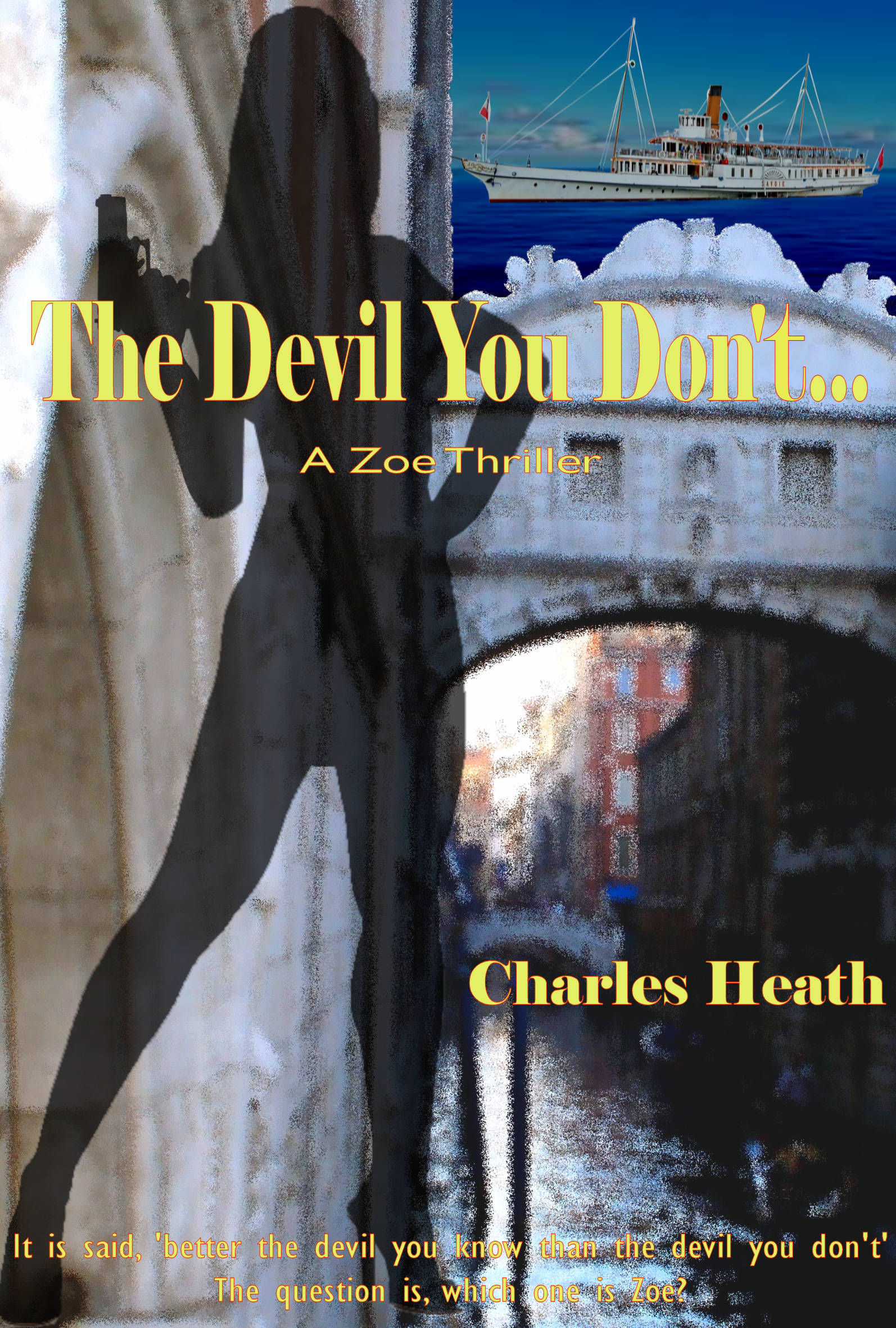
‘The Devil You Don’t’ – A beta reader’s view

It could be said that of all the women one could meet, whether contrived or by sheer luck, what are the odds it would turn out to be the woman who was being paid a very large sum to kill you.

John Pennington is a man who may be lucky in business, but not so lucky in love. He has just broken up with Phillipa Sternhaven, the woman he thought was the one, but relatives and circumstances, and perhaps because she was a ‘princess’, may also have contributed to the end result.

So, what do you do when you are heartbroken?

That is a story that slowly unfolds, from the first meeting with his nemesis on Lake Geneva, all the way to a hotel room in Sorrento, where he learns the shattering truth.

What should have been solace after disappointment, turns out to be something else entirely, and from that point, everything goes to hell in a handbasket.

He suddenly realizes his so-called friend Sebastian has not exactly told him the truth about a small job he asked him to do, the woman he is falling in love with is not quite who she says she is, and he is caught in the middle of a war between two men who consider people becoming collateral damage as part of their business.

The story paints the characters cleverly displaying all their flaws and weaknesses. The locations add to the story at times taking me back down memory lane, especially to Venice where, in those back streets I confess it’s not all that hard to get lost.

All in all a thoroughly entertaining story with, for once, a satisfying end.

Available on Amazon here: https://amzn.to/2Xyh1ow

365 Days of writing, 2026 – 12

Day 12 – The smaller characters that can steal the scene

The Scene-Stealers: Why the Bit Players in Stories Make Them Unforgettable

Every compelling narrative has a protagonist—the hero, the rebel, the reluctant saviour. We cheer for them, root for their growth, and remember their names long after the book is closed or the credits roll. But have you ever paused to consider the unsung heroes who linger in the background, the extras who, with a single line or moment, could steal the entire show? These bit players might not have the spotlight, but they’re the secret sauce that makes stories rich, relatable, and unforgettable.


The Depth Weavers: How Bit Players Add Layers

Stories thrive in worlds that feel alive, and minor characters are the mortar holding those worlds together. Take Mrs. Dubose from To Kill a Mockingbird. On the surface, she’s a grumpy neighbour, hurling insults at Scout. But her brief appearance unravels the complexities of addiction, courage, and legacy. Her story—told in the periphery—deepens the novel’s themes long after she disappears.

Similarly, in The Godfather, the scene where a horse’s head is placed in a man’s bed is legendary. While the man himself (a minor character) is a plot device, his presence underscores the Corleone family’s ruthless power and the era’s mob culture. These characters are not just “extras”; they’re the brushstrokes that add texture to the canvas.


The Mirrors and Shadows: Contrasting the Main Event

Bit players often highlight the protagonist’s journey by acting as foils. Consider Mr. Collins in Pride and Prejudice. Elizabeth Bennet’s sharp wit and independence shine brightest when measured against his obsequiousness and cluelessness. Though he’s a minor character, his presence sharpens the story’s critique of societal norms and amplifies Elizabeth’s growth.

In The Lord of the Rings, even the occasional tavern loiterer or roadside traveller reinforces the vastness of Middle-earth and the contrast between the mundane and the epic. These characters remind us why Frodo’s quest is so extraordinary—they live in the same world but will never attempt what he does.


The Scene-Stealers: When Bit Players Shine

Sometimes, all it takes is a single moment for a minor character to etch themselves into our memories. Recall the eerie calm of the priest in The Departed as he’s boxed in by assassins, or the surreal comedy of the “Dance of the Seven Veils” in The Producers. These characters may only appear for a scene, but their impact lingers.

Even in literature, consider the Looney Tunes-esque antics of the Gnomes in The Chronicles of Narnia: The Voyage of the Dawn Treader. They exist for less than a chapter but remain among the most quoted, parodied, and loved elements of the series. Their fleeting presence reminds us that magic often lives in the moments we least expect.


Why It Matters: The Human Touch

At our core, humans crave connection and recognition. We’re all protagonists in our own stories, yet bit players in others’. The minor characters in fiction mirror this duality, grounding narratives in authenticity. They remind us that a society—or a story—needs more than just heroes and villains. It needs the barista who forgets your name, the coworker who “borrowed” your pencil, and the stranger who hands you a stray umbrella in a downpour.

By appreciating these characters, we become more intentional readers and creators. We learn to look beyond the surface, to find wonder in the ordinary, and to recognise that even the smallest role can carry profound weight.


Your Turn: Who Are Your Favourite Bit Players?

Think back to your favourite stories. Which minor characters stick with you? Is it the gruff motel owner in Breaking Bad, the inscrutable IT guy in The Office, or even the diner regulars in your favourite novel? Share them in the comments—sometimes the best stories are the ones we didn’t expect to remember.

Because in the end, whether they’re on the page or the screen, these bit players teach us this: every voice, even every extra, has the power to change the narrative.

An excerpt from “Betrayal” – a work in progress

It could have been anywhere in the world, she thought, but it wasn’t.  It was in a city where if anything were to go wrong…

She sighed and came away from the window and looked around the room.  It was quite large and expensively furnished.  It was one of several she had been visiting in the last three months.

Quite elegant too, as the hotel had its origins dating back to before the revolution in 1917.  At least, currently, there would not be a team of KGB agents somewhere in the basement monitoring everything that happened in the room.

There was no such thing as the KGB anymore, though there was an FSB, but such organisations were of no interest to her.

She was here to meet with Vladimir.

She smiled to herself when she thought of him, such an interesting man whose command of English was as good as her command of Russian, though she had not told him of that ability.

All he knew of her was that she was American, worked in the Embassy as a clerk, nothing important, whose life both at work and at home was boring.  Not that she had blurted that out the first they met, or even the second.

That first time, at a function in the Embassy, was a chance meeting, a catching of his eye as he looked around the room, looking, as he had told her later, for someone who might not be as boring as the function itself.

It was a celebration, honouring one of the Embassy officials on his service in Moscow, and the fact he was returning home after 10 years.  She had been there once, and still hadn’t met all the staff.

They had talked, Vladimir knew a great deal about England, having been stationed there for a year or two, and had politely asked questions about where she lived, her family, and of course what her role was, all questions she fended off with an air of disinterested interest.

It fascinated him, as she knew it would, a sort of mental sparring as one would do with swords if this was a fencing match.

They had said they might or might not meet again when the party was over, but she suspected there would be another opportunity.  She knew the signs of a man who was interested in her, and Vladimir was interested.

The second time came in the form of an invitation to an art gallery, and a viewing of the works of a prominent Russian artist, an invitation she politely declined.  After all, invitations issued to Embassy staff held all sorts of connotations, or so she was told by the Security officer when she told him.

Then, it went quiet for a month.  There was a party at the American embassy and along with several other staff members, she was invited.  She had not expected to meet Vladimir, but it was a pleasant surprise when she saw him, on the other side of the room, talking to several military men.

A pleasant afternoon ensued.

And it was no surprise that they kept running into each other at the various events on the diplomatic schedule.

By the fifth meeting, they were like old friends.  She had broached the subject of being involved in a plutonic relationship with him with the head of security at the embassy.  Normally for a member of her rank, it would not be allowed, but in this instance it was.

She did not work in any sensitive areas, and, as the security officer had said, she might just happen upon something that might be useful.  In that regard, she was to keep her eyes and ears open and file a report each time she met him.

After that discussion, she got the impression her superiors considered Vladimir more than just a casual visitor on the diplomatic circuit.  She also formed the impression that he might consider her an ‘asset’, a word that had been used at the meeting with security and the ambassador.

It was where the word ‘spy’ popped into her head and sent a tingle down her spine.  She was not a spy, but the thought of it, well, it would be fascinating to see what happened.

A Russian friend.  That’s what she would call him.

And over time, that relationship blossomed, until, after a visit to the ballet, late and snowing, he invited her to his apartment not far from the ballet venue.  It was like treading on thin ice, but after champagne and an introduction to caviar, she felt like a giddy schoolgirl.

Even so, she had made him promise that he remain on his best behaviour.  It could have been very easy to fall under the spell of a perfect evening, but he promised, showed her to a separate bedroom, and after a brief kiss, their first, she did not see him until the next morning.

So, it began.

It was an interesting report she filed after that encounter, one where she had expected to be reprimanded.

She wasn’t.

It wasn’t until six weeks had passed when he asked her if she would like to take a trip to the country.  It would involve staying in a hotel, that they would have separate rooms.  When she reported the invitation, no objection was raised, only a caution; keep her wits about her.

Perhaps, she had thought, they were looking forward to a more extensive report.  After all, her reports on the places, and the people, and the conversations she overheard, were no doubt entertaining reading for some.

But this visit was where the nature of the relationship changed, and it was one that she did not immediately report.  She had realised at some point before the weekend away, that she had feelings for him, and it was not that he was pushing her in that direction or manipulating her in any way.

It was just one of those moments where, after a grand dinner, a lot of champagne, and delightful company, things happen.  Standing at the door to her room, a lingering kiss, not intentional on her part, and it just happened.

And for not one moment did she believe she had been compromised, but for some reason she had not reported that subtle change in the relationship to the powers that be, and so far, no one had any inkling.

She took off her coat and placed it carefully of the back of one of the ornate chairs in the room.  She stopped for a moment to look at a framed photograph on the wall, one representing Red Square.

Then, after a minute or two, she went to the mini bar and took out the bottle of champagne that had been left there for them, a treat arranged by Vladimir for each encounter.

There were two champagne flutes set aside on the bar, next to a bowl of fruit.  She picked up the apple and thought how Eve must have felt in the garden of Eden, and the temptation.

Later perhaps, after…

She smiled at the thought and put the apple back.

A glance at her watch told her it was time for his arrival.  It was if anything, the one trait she didn’t like, and that was his punctuality.  A glance at the clock on the room wall was a minute slow.

The doorbell to the room rang, right on the appointed time.

She put the bottle down and walked over to the door.

A smile on her face, she opened the door.

It was not Vladimir.  It was her worst nightmare.

© Charles Heath 2020