Writing a book in 365 days – 337

Day 337

Authors to study from the past

Mastering the Craft: Must-Read Authors from the 1940s and Beyond to Elevate Your Writing

When it comes to mastering the art of writing—whether it’s crafting intricate plots, developing multidimensional characters, or diving into profound themes—there are countless literary giants whose works serve as masterclasses in storytelling. Starting from the 1940s and moving backwards in time, these authors offer timeless lessons in style, structure, and substance. Here’s a curated list of authors and their works that can transform your approach to writing.


1. William Golding (1954) – Lord of the Flies

Lesson: Human Nature and Allegory
Golding’s Lord of the Flies is a masterclass in allegorical storytelling and psychological depth. By placing a group of boys on a deserted island, he peels back the veneer of civilisation to reveal primal instincts. For writers, Golding teaches how to use a microcosmic setting to explore universal themes like power, fear, and morality. His sparse yet brutal prose shows how simplicity can amplify tension and symbolism.


2. Evelyn Waugh (1945) – Brideshead Revisited

Lesson: Structure and Societal Critique
Waugh’s semi-autobiographical novel combines lush prose with a fragmented, reflective narrative. Brideshead Revisited is a lesson in balancing character development with thematic depth. Writers can learn how to weave personal introspection with societal critique (e.g., the decline of British aristocracy) and how to structure a narrative around memory and emotional resonance.


3. Graham Greene (1940s–1950s) – The Power and the Glory (1940), The Quiet American (1955)

Lesson: Moral Ambiguity and Pacing
Greene’s novels, set against politically turbulent backdrops, explore moral ambiguity with razor-sharp precision. In The Power and the Glory, he uses a flawed priest to ask, “What makes a man good?” Writers can study Greene’s lean, taut prose, his ability to build tension through understatement, and how to embed philosophical questions into action-driven plots.


4. John Steinbeck (1939–1952) – The Grapes of WrathEast of Eden

Lesson: Social Justice and Emotional Resonance
Steinbeck’s unflinching portrayal of the human condition, from the Joad family’s plight in The Grapes of Wrath to the complex family dynamics in East of Eden, teaches the power of empathy in storytelling. His ability to balance epic scope with intimate moments is a guide to creating narratives that are both socially relevant and emotionally gripping.


5. F. Scott Fitzgerald (1925) – The Great Gatsby

Lesson: Symbolism and Narrative Voice
Though published in the 1920s, Fitzgerald’s The Great Gatsby remains a touchstone for writers. Nick Carraway’s reflective narration and Gatsby’s glittering, tragic world showcase how symbolism (e.g., the green light, the Valley of Ashes) can anchor themes of aspiration and decay. His lyrical prose reminds us that language itself can be a character in the story.


6. Ernest Hemingway (1940s–1950s) – Across the River and into the Trees (1950)

Lesson: The Iceberg Theory
Hemingway’s famous “theory of omission” (hide the deeper meaning beneath the surface) is best learned by studying his sparse, understated prose. His 1950s works, while less celebrated, demonstrate how much can be said with minimal words. A lesson in restraint: show, don’t tell.


7. George Orwell (1949) – 1984

Lesson: Dystopian Storytelling and Warning Narratives
Orwell’s 1984 endures as a chilling exploration of authoritarianism and language manipulation. For writers, it’s a blueprint for constructing cautionary tales: how to create a world that feels grounded in reality, yet pushes the boundaries of imagination to provoke thought.


8. Virginia Woolf (1920s–1930s) – To the LighthouseMrs. Dalloway

Lesson: Stream of Consciousness and Subjective Time
Woolf’s modernist experiments with time and perspective teach writers how to capture the inner lives of characters. Her fluid narratives, like the fragmented days of Mrs. Dalloway, show how to blur the lines between external action and internal emotion.


9. Truman Capote (1960) – In Cold Blood

Lesson: Narrative Non-Fiction
Though published in the 1960s, Capote’s blend of journalism and novelistic technique in In Cold Blood redefined true crime. It’s a masterclass in pacing, interview-driven storytelling, and how to humanise even the most heinous characters.


10. Harper Lee (1960) – To Kill a Mockingbird

Lesson: Moral Courage in Character Development
Lee’s iconic novel, published in the early 1960s, is a case study in using a child’s perspective to critique systemic racism. Atticus Finch’s quiet moral authority and Scout’s growth illustrate how to embed ethical dilemmas into character arcs without sermonizing.


Conclusion: The Timeless Classroom of Literature

From Golding’s haunting allegories to Hemingway’s clipped prose, these authors offer a rich tapestry of techniques to inspire modern writers. Whether you’re drawn to the moral complexity of Greene, the symbolic depth of Fitzgerald, or the socio-political acuity of Orwell, reading backward from the 1940s is a journey into the heart of what makes storytelling enduring. So, dive in—your next story’s secret might be hidden in the pages of their masterpieces.


Final Tip: As you explore these works, don’t just read—annotate, imitate, and experiment. The best writing lessons come when you let these authors’ voices influence your own unique style. Happy writing!

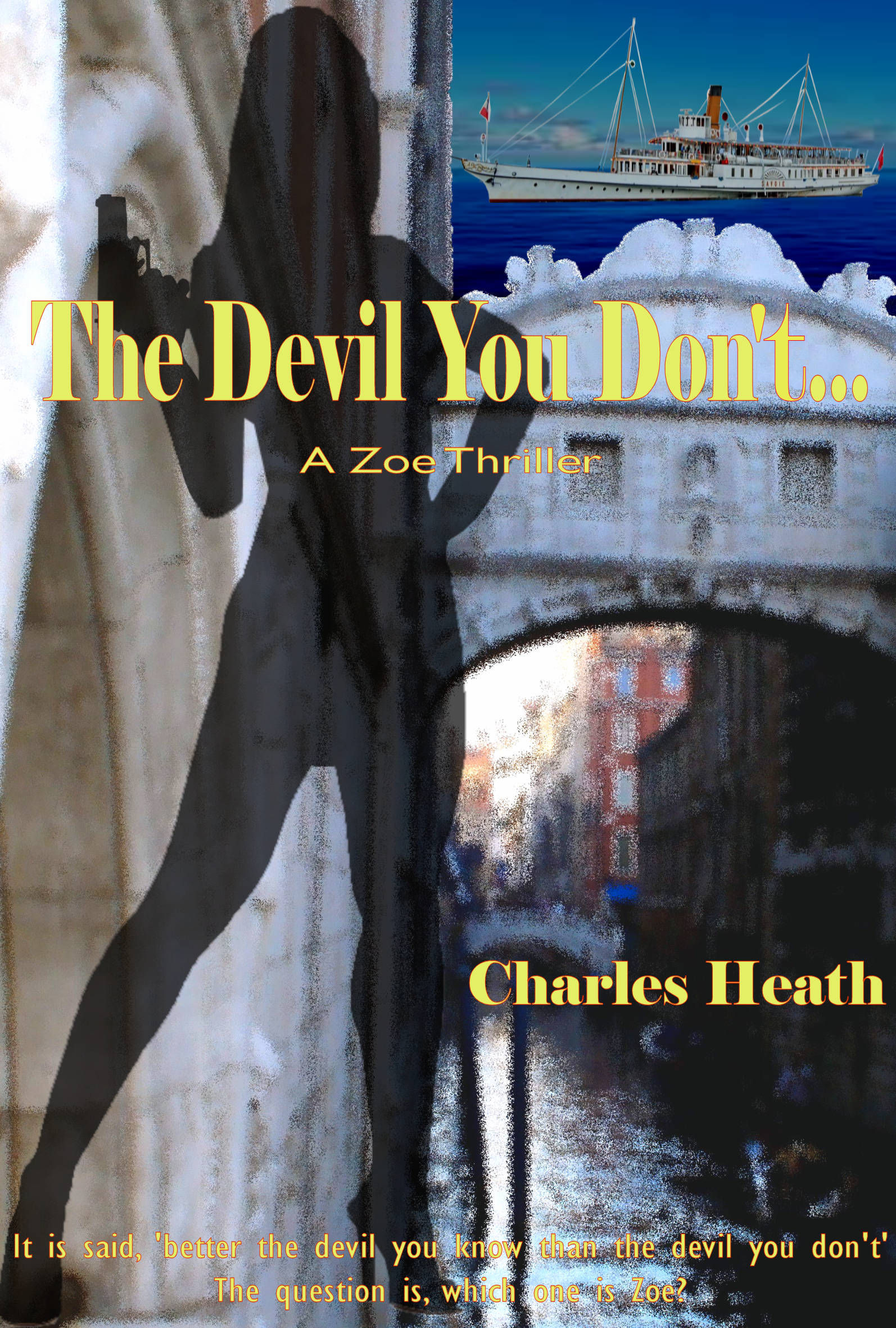
‘The Devil You Don’t’ – A beta reader’s view

It could be said that of all the women one could meet, whether contrived or by sheer luck, what are the odds it would turn out to be the woman who was being paid a very large sum to kill you.

John Pennington is a man who may be lucky in business, but not so lucky in love. He has just broken up with Phillipa Sternhaven, the woman he thought was the one, but relatives and circumstances, and perhaps because she was a ‘princess’, may also have contributed to the end result.

So, what do you do when you are heartbroken?

That is a story that slowly unfolds, from the first meeting with his nemesis on Lake Geneva, all the way to a hotel room in Sorrento, where he learns the shattering truth.

What should have been solace after disappointment, turns out to be something else entirely, and from that point, everything goes to hell in a handbasket.

He suddenly realizes his so-called friend Sebastian has not exactly told him the truth about a small job he asked him to do, the woman he is falling in love with is not quite who she says she is, and he is caught in the middle of a war between two men who consider people becoming collateral damage as part of their business.

The story paints the characters cleverly displaying all their flaws and weaknesses. The locations add to the story at times taking me back down memory lane, especially to Venice where, in those back streets I confess it’s not all that hard to get lost.

All in all a thoroughly entertaining story with, for once, a satisfying end.

Available on Amazon here: https://amzn.to/2Xyh1ow

In a word: Might

We might have to use some might to beat the mite.  Confused?

Might is force, so expending might be much the same as what Thor does with his hammer.

We might expend some force; this might be a maybe.  You’re never quite sure when someone uses the word might, whether or not they will actually do it.

I might do a lot of things, but somehow, I never seem to get around to actually doing them,

Of and just for the record, it’s the past tense of the word may.  You know, you may do something, or you might not.

You might also use the word might when being polite, which seems to be a rarity these days because everyone is terse, tense, and in a hurry.

So might I go to the movie will always get a resounding no if it means you get home late at night.   And you’re only 10 years old.

I might be interested, but I don’t think so.  Let me think about it.  Which also means no.

Of course, if you’re slack in doing homework, you might want to try a little harder next time.

What might have been if only you tried harder?

Then there’s that little pest called a mite, though it goes by a lot of other names, one of which is everywhere, a termite.

Or a dust mite.

It also could be used slangily for a child in distress, that is, look at that poor little mite, he looks so tired.

Or another word for slightly, for example, the girl seemed a mite embarrassed.

An excerpt from “Betrayal” – a work in progress

It could have been anywhere in the world, she thought, but it wasn’t.  It was in a city where if anything were to go wrong…

She sighed and came away from the window and looked around the room.  It was quite large and expensively furnished.  It was one of several she had been visiting in the last three months.

Quite elegant too, as the hotel had its origins dating back to before the revolution in 1917.  At least, currently, there would not be a team of KGB agents somewhere in the basement monitoring everything that happened in the room.

There was no such thing as the KGB anymore, though there was an FSB, but such organisations were of no interest to her.

She was here to meet with Vladimir.

She smiled to herself when she thought of him, such an interesting man whose command of English was as good as her command of Russian, though she had not told him of that ability.

All he knew of her was that she was American, worked in the Embassy as a clerk, nothing important, whose life both at work and at home was boring.  Not that she had blurted that out the first they met, or even the second.

That first time, at a function in the Embassy, was a chance meeting, a catching of his eye as he looked around the room, looking, as he had told her later, for someone who might not be as boring as the function itself.

It was a celebration, honouring one of the Embassy officials on his service in Moscow, and the fact he was returning home after 10 years.  She had been there once, and still hadn’t met all the staff.

They had talked, Vladimir knew a great deal about England, having been stationed there for a year or two, and had politely asked questions about where she lived, her family, and of course what her role was, all questions she fended off with an air of disinterested interest.

It fascinated him, as she knew it would, a sort of mental sparring as one would do with swords if this was a fencing match.

They had said they might or might not meet again when the party was over, but she suspected there would be another opportunity.  She knew the signs of a man who was interested in her, and Vladimir was interested.

The second time came in the form of an invitation to an art gallery, and a viewing of the works of a prominent Russian artist, an invitation she politely declined.  After all, invitations issued to Embassy staff held all sorts of connotations, or so she was told by the Security officer when she told him.

Then, it went quiet for a month.  There was a party at the American embassy and along with several other staff members, she was invited.  She had not expected to meet Vladimir, but it was a pleasant surprise when she saw him, on the other side of the room, talking to several military men.

A pleasant afternoon ensued.

And it was no surprise that they kept running into each other at the various events on the diplomatic schedule.

By the fifth meeting, they were like old friends.  She had broached the subject of being involved in a plutonic relationship with him with the head of security at the embassy.  Normally for a member of her rank, it would not be allowed, but in this instance it was.

She did not work in any sensitive areas, and, as the security officer had said, she might just happen upon something that might be useful.  In that regard, she was to keep her eyes and ears open and file a report each time she met him.

After that discussion, she got the impression her superiors considered Vladimir more than just a casual visitor on the diplomatic circuit.  She also formed the impression that he might consider her an ‘asset’, a word that had been used at the meeting with security and the ambassador.

It was where the word ‘spy’ popped into her head and sent a tingle down her spine.  She was not a spy, but the thought of it, well, it would be fascinating to see what happened.

A Russian friend.  That’s what she would call him.

And over time, that relationship blossomed, until, after a visit to the ballet, late and snowing, he invited her to his apartment not far from the ballet venue.  It was like treading on thin ice, but after champagne and an introduction to caviar, she felt like a giddy schoolgirl.

Even so, she had made him promise that he remain on his best behaviour.  It could have been very easy to fall under the spell of a perfect evening, but he promised, showed her to a separate bedroom, and after a brief kiss, their first, she did not see him until the next morning.

So, it began.

It was an interesting report she filed after that encounter, one where she had expected to be reprimanded.

She wasn’t.

It wasn’t until six weeks had passed when he asked her if she would like to take a trip to the country.  It would involve staying in a hotel, that they would have separate rooms.  When she reported the invitation, no objection was raised, only a caution; keep her wits about her.

Perhaps, she had thought, they were looking forward to a more extensive report.  After all, her reports on the places, and the people, and the conversations she overheard, were no doubt entertaining reading for some.

But this visit was where the nature of the relationship changed, and it was one that she did not immediately report.  She had realised at some point before the weekend away, that she had feelings for him, and it was not that he was pushing her in that direction or manipulating her in any way.

It was just one of those moments where, after a grand dinner, a lot of champagne, and delightful company, things happen.  Standing at the door to her room, a lingering kiss, not intentional on her part, and it just happened.

And for not one moment did she believe she had been compromised, but for some reason she had not reported that subtle change in the relationship to the powers that be, and so far, no one had any inkling.

She took off her coat and placed it carefully of the back of one of the ornate chairs in the room.  She stopped for a moment to look at a framed photograph on the wall, one representing Red Square.

Then, after a minute or two, she went to the mini bar and took out the bottle of champagne that had been left there for them, a treat arranged by Vladimir for each encounter.

There were two champagne flutes set aside on the bar, next to a bowl of fruit.  She picked up the apple and thought how Eve must have felt in the garden of Eden, and the temptation.

Later perhaps, after…

She smiled at the thought and put the apple back.

A glance at her watch told her it was time for his arrival.  It was if anything, the one trait she didn’t like, and that was his punctuality.  A glance at the clock on the room wall was a minute slow.

The doorbell to the room rang, right on the appointed time.

She put the bottle down and walked over to the door.

A smile on her face, she opened the door.

It was not Vladimir.  It was her worst nightmare.

© Charles Heath 2020

Third son of a Duke – The research behind the story – 19

All stories require some form of research, quite often to place a character in a place at a particular time, especially if it is in a historical context. This series will take you through what it was like in 1914 through 1916.

What sort of people would be seeking to travel by ship back to England from Australia in April 1915

In April 1915, civilians seeking to travel by ship from Australia to England would have been predominantly British subjects with deep ties to the “mother country”. The outbreak of World War I in August 1914 had drastically changed the context of ocean travel, transforming passenger liners into military transports while introducing new dangers from German U-boats. The people who made this risky journey would have had compelling and urgent reasons, unlike the voluntary migration that defined the pre-war era. 

Military-related reasons

The Gallipoli campaign began on April 25, 1915, but Australian troops had already been in training in Egypt since early 1915. Civilian travel was therefore strongly influenced by military matters. 

  • Families of soldiers: The families of soldiers preparing to fight in Europe or the Middle East would have had a range of motivations to travel. Some may have been seeking to visit relatives fighting in the war, while others could have been returning to England to wait out the war closer to family there.
  • Returning wounded soldiers: Some of the earliest wounded troops from the Gallipoli campaign may have been shipped back to England for treatment.
  • Soldiers on leave: Troops who were ill or wounded were sometimes sent to England to recover before returning to the front or being repatriated to Australia. 

Personal and professional reasons

Despite the war, some civilians with urgent matters still had to travel, though the number of civilian passengers had dropped significantly. 

  • Settling estates or dealing with family emergencies: Individuals might have needed to travel to manage pressing family matters, such as inheriting an estate or attending to a sick or dying relative.
  • Business trips: Essential business-related travel, though rare, would have been undertaken by those with connections to the war effort or other vital industries.
  • Government officials: Personnel in government service or diplomacy would have been required to travel between Australia and the UK for official duties. 

Impeded migration

Travel was not happening in the typical fashion. Normal migration patterns to Australia from Britain had been disrupted by the war, meaning that few people were moving for purely leisurely reasons. 

  • Government restrictions: The British government had fixed age limits for conscription, which, combined with the shortages of shipping, heavily restricted the movement of male immigrants.
  • Fewer migrants: In turn, this meant fewer assisted passage immigrants were travelling to Australia, reducing the overall pool of travellers. 

“More or less…” – A short story

It was meant to be time to reacquaint as brothers.

Louis and I had not seen each other for decades, and when he returned, about a week before, I got the impression there was more than just ‘missing his brother’ going on.

But that was Louis. He was never one to say what or how he felt about anything, preferring to be the strong silent type, and it had not fared well for him transitioning from teenager to adult.

As for me, when our parents split up, Louis went with our father, and I stayed with our mother, and, given the amount of acrimony there was attached to the split, it was no surprise to anyone that Louis and I had effectively become estranged.

In fact, when I had tried to find them, about two years after the split and our mother had died suddenly, all I found were loose ends. They had effectively vanished.

With that part of my life effectively over, I had married, had children and watched 30 years disappear before Louis suddenly popped up. He simply knocked on the front door one afternoon, Helen answered it, and within minutes they were the best of friends. I’d had that rapport, once, many years before, but life and circumstances had all but ruined that.

Or perhaps that was just me, worn down by that same life and circumstances we were all supposed to take on the chin.

His arrival was a welcome distraction, and when, after a week, he suggested that he and I go on a hike, the sort our father used to take us on when we were a family, I agreed. Helen was happy to be rid of me, and I guess a week without our arguing would suit everyone.

It was probably fortuitous timing. Helen and I had finally got to the point where divorce lawyers were about to be called in. The children had all moved on and had children and problems of their own, and we, as parents just didn’t gel anymore.

Besides, I said, just before I joined Louis in the truck, ready to embark for the wilderness, it would be time to clear my head.

And by day two, my head was clear, and Louis, taking the lead, led us along the ridgeline, a trek he said, that would take us about seven hours. We’d stopped the previous night in a base camp and then headed out the next morning. We were the only two, it being early in the season with snow still on the ground.

Above was the clear cloudless blue sky and in front of us, trees and mountains. There was snow on the ground but it was not solid and showed no signs of human footsteps, only animals. The air was fresh, and it was good to be away from the city and its pressures.

Approaching noon, I’d asked him if we were about halfway. I knew he was holding back, being the fitter of us.

“More or less.”

“More or less what, more closer or less close than we should be.”

I watched him do a 360-degree turn, scoping out our position. It was a maneuver I was familiar with from my time with the National Guard. I’d used my backcountry experience that I’d learned from my father, as a skill I thought they might be able to, and eventually did, use. I got the feeling Louis was looking for something.

“You get the impression we’re not alone?” I asked. I had that nagging feeling something was not right, not from about two miles back in the forest. It was like my sixth sense being switched on.

“Doesn’t seem so, though there have been a few animals lurking behind us, probably surprised anyone’s about this time of the year. It’s been a while, so I’m just getting a feel for the trail. This is, for now, our mountain.”

There was a time, from a time when we were kids, that I could tell when he was lying. He was better at covering it, but it was still there.

Where we’d stopped was a small clearing, a staging point that would be used by other trekkers, still overgrown because of lack of trekkers. Ahead there were the signs of a trail, and after six months, it would become clear again. In places, as we had made our way from the base camp, sections of the distinctive trail had all but disappeared, but Louis seemed to know where he was going, and it was not long before we had picked up the trail again. This spot was a lookout, giving a spectacular view of the valley below, and a fast running river through it.

I walked to the edge and looked up and down the valley, and at the trail that ran along the cliff for a short distance. I looked down, not the wisest of things to do, but it was long enough to catch sight of several charred pieces of wood. On top of the snow. The thing is, someone had been along this trail before us, and recently, something I thought wise to keep to myself.

Back at the log, I sat for a moment and drank some water, while Louis stood patiently, but impatiently, for me to join him.

“You look like you’ve got somewhere to be.” Probably not the wisest thing to say but it was out before I could stop it.

A flicker of annoyance crossed his face, then it was gone. “If we stop too long, joints will freeze up, especially when it gets colder.”

“Sorry.” I put the container back in the pack and joined him. “Let’s go. The cold and I don’t get along very well, and it’s been a long time since the last time I ventured into the great unknown.”

“Helen said you gave up trekking when you married her.”

“She wasn’t a trekker, Robbie. We all have to give up something, sooner or later.”

Another hour, feeling rather weary, we’d come to another small clearing and a place where I could sit down.

“You always were the weak link, Robbie. Admittedly you were younger, but you never seemed to grasp the concept of exercise and fitness.”

I looked up at him and could see my father, the exact stance, the exact words, the exact same sneer in his voice. It all came rushing back as if it was yesterday, the reasons why I chose to go with our mother, that another day with his bullying would be one too many. And he was a bully. And, in an instant, I could see the apple hadn’t fallen far from the tree.

“Out of shape after languishing in an office, perhaps,” I said, “but I was never the disappointment our father always considered me.”

“You didn’t join the army, follow in his footsteps, as he wanted us to do. I did. Proudly served, too.”

I could see it. Like father, like son. No surprise Robbie had followed in his father’s footsteps. And it was a clue as to what Robbie had been doing since I saw him last.

“So, tell me about it.”

“You wouldn’t understand.”

“No, I probably wouldn’t. Let’s push on.”

I’d also thought, along the way, he might ask questions, delve further into the problems that Helen and I were having, but I knew she had told him all he needed to know. I’d been held up at the office, and had rung to ask her to take him to dinner, get to know him, she might get to learn something of my life before I met her, details of which I hadn’t told her other than that my mother was dead, my father had left and taken Robbie with him. My past, I’d told her from the outset, was not something I would talk about.

I didn’t ask what they talked about, but I could see a change in both of them. Perhaps she had succumbed to Robbie’s charm, back in school all the girls did, but they all soon learned he was not a nice person, not once you got to know him. I didn’t warn her, and perhaps that was regrettable on my part, but it reflected the state in which our relationship had reached.

I’d also tried, once or twice, to find out if our father was still alive, but he deflected it, changing the subject. That meant he was still alive, somewhere, perhaps annoyed at Robbie for coming to see me. If I was a betting man, I’d bet our father would have denied permission for
Robbie to do so, even if he was a grown man and capable of making his own decisions.

Odd, but not surprising. Even now I could remember my father had secrets, and those secrets had fed into the breakup of our parents.

“So, you’ve been dodging it for days now, but you still haven’t told me if dad is alive or dead. He’d be about seventy-odd now.”

He stopped and turned to face me. “Would it matter if he was alive? I doubt you’d want to see him after what mother must have said about him.”

Interesting that he would think so. “She never had a bad word for him, and wouldn’t hear of one spoken, by me or anyone. And I have wondered what became of him, and you. At least now I know you spent time in the Army. If I was to guess what happened, that would be high on my list.”

“No surprise then you became an office wanker.”

Blunt, but, to him, it was a fact. I’d used that expression when telling Helen one time after a very bad day.

“We can’t all be heroes, Robbie.”

I put my hand up. Alarm bells were going off in my head. “You can come out now,” I yelled.

Robbie looked puzzled.

“I know you’re there. You’ve been behind us for about a half-mile now.”

A few seconds passed before the cracking of a twig, and then a person in a camouflage kit came towards us.

He’d aged, hair and beard grey in places but almost white now, but the face was familiar.

“What brings you to this part of the woods, Dad. Or is it just an unlucky coincidence?”

—–

© Charles Heath 2020-2021

The 2am Rant: What the hell time is it anyway, and why should I care?

And why is a coyote baying?

Oh, that’s right, at the time we were in Canada, and the ice hockey channel was running in the background while I was trying to work.

It brought to mind, then, the interesting concept of movement through time zones, and how it was possible to live the same day for nearly two days, which is as close as I was going to get the ‘Groundhog Day’.

It’s not something that I’ve considered when writing stories because usually we are grounded in one particular time zone, or if we’re travelling, we just go from one chapter to the next, each a different location, and the reader is no wiser.

Except the editor is and pulls me up when it appears I think it’s during the day, when in reality it’s really 3am.

But, just to illustrate my point, the following is what I wrote two Christmases ago, and boy was it confusing at times.

Alright, we’ve arrived in Lake Louise from Kamloops, and there’s been a time change.  Being from Australia, we lost or gained so many hours I don’t know whether I’m coming or going.

Yes, I left on the 26th of December, travelled around half the planet, and it’s still the 26th, after a stopover in Shanghai where it was the 27th.

Can someone tell me what the hell is going on?

On another day in Canada, it was the 30th.  The day before, back home, it was my wife’s birthday in Australia and we got a number of calls on the 29th, which was amusing, to say the least.

Now, we’ve gone from Kamloops to Lake Louise, and apparently now that we are in Alberta, it’s an hour later.

The rental car we’re driving didn’t get it, and we’re still an hour behind.

My phone didn’t get it, but it is understandable because I didn’t connect it to the Canadian network to give us an internet connection because it was going to cost money.

It did on my wife’s phone which is connected to the network and it’s the only device we have that tells the correct time.

And why do we really need to know what time it is?

So we make the plane the day after tomorrow, from Calgary to Toronto.

I never realized that time was so important, and I wonder how people who travel the world remain sane with all the changes to the time zones.

Just how do road warriors get on?

Writing a book in 365 days – 336

Day 336

Writing exercise – Everything she could see from the room she never left was beautiful.

It was Princess Elizabeth’s bright, sunny disposition that gave her the ability to see the good in everything.

Or so someone had said, a long time ago, so long she could not remember who said it or when it was.

What she did know was that it was good advice.

Why, when she knew that she might never leave that room, at the top of the north tower, the one that overlooked the gardens, the lake, the valley and then the sea.

On a good day, she thought, I could see forever.

On a bad day, not that there were many, she could just barely remember how she finished up in that room in the north tower.

But on the periphery of her memory was a story…

The Princess Matilda had arrived from a Kingdom across the ocean, a land they had never heard of before, seeking a Prince’s hand in marriage, and she was visiting the seven kingdoms that made up the realm.

Her kingdom was the last, and her brother Prince Joshua was seeking a Princess bride, and Matilda was perfect.

What they didn’t know was that Princess Matilda was not quite who she said she was.  It was not long before her brother became ill, and when none of the healers in the kingdom could save him, Princess Matilda told them of a prophecy that foretold of a great sickness that would spread through the realm, and that the only way it could be stopped was to ensure that Princess Elizabeth never left the castle.

Of course, no one believed it, not until people in the kingdom succumbed to the same ailment that the Prince was suffering from.

So, when the people started to die, the King had no choice.  The Princess Elizabeth was confined to a room in the north tower, and then people recovered.  No one knew why it was, only that her confinement had saved the people.

Some years passed before one day the Princess Matilda came to visit her.

She came into her room and sat down.  Elizabeth stayed by the windows.  It was only the second time she had been face-to-face with Matilda, who had deliberately stayed away from her.

“Are you not afraid you will get sick?”

She knew the reason why she was confined, but never understood why she was not sick herself.

“No.  It does not affect me.  In fact, you are not the reason people are getting sick.  That was just a spell I cast to make them believe you are the cause.”

Elizabeth did not understand why she would say that.  “A spell?”  She was equally unaware of witches and witchcraft, though it was said that witches once existed in the realm a very, very long time ago.

“Yes.  A spell.  It was necessary to do what I have done to make sure you do not cause trouble.”

“Why would you think that?  I have no intention of doing anything except marrying a Prince and living happily ever after.”

“That’s the problem.  If you marry a Prince and have children, they will become witches or warlocks, very powerful and dangerous sorcerers.  You were the last of the line, and we have to contain your powers.”

“I have no powers.”

“Not in this room.  It is a special room that keeps you from using any spells or exerting any influence.”

“Are you a witch?”

“A good witch, assigned by the Wizard to ensure we do not slip back into the old ways.  You will be here until you die.  So will I.”

“So I can never leave here?”

“No.”

Elizabeth thought that was harsh, and was going to say something, but then realised that a sudden, random thought just entered her head, one that told her there was a means to escape.

Not exactly how to, but that Princess Matilda knew, but wasn’t going to share.

“You cannot be killed, but you will eventually die.  When that happens, I will be free.  This is as much torture for me as it is for you.”

“It is not torture.  I have a comfortable room and a splendid view.  And I do not have to marry a horrible Prince.  What more could a princess ask for?”

Her cheery manner was too much for Matilda, and she left in a grumpy mood.

Many years passed.

Elizabeth realised that she was not aging as fast as her family members, or Princess Matilda.

Something else she noticed was the fact that outside the door to her room,  Princess Matilda looked quite old, as old as her brother, now the King of their kingdom, but inside the room, as old as her parents had been when she was first confined.  Elizabeth herself had hardly aged at all.

It was as if she had eternal youth.

And she was sure that was what angered Matilda.

Over the years, she had been working on how she was going to get to the secrets locked away in Matilda’s head.

At first, when she tried to read her mind, Matilda knew straight away.  Not that she said anything, so Elizabeth had to be smarter.

She practised reading the minds of those who walked in the gardens below, at first amazed that she could, considering Matilda told her her powers were useless in that room.

That wasn’t entirely true.

And as the years passed, she began to realise that she had some powers, and that it was possible to move objects, make objects appear or disappear, and make objects invisible.

She also realised that she could plant ideas into those people below, and get them to do her bidding.  It was not horrible things, she could not and would not want to harm anyone, but she did want to stop whatever it was Matilda was going to do.

She had finally realised that Matilda was not the good witch that she portrayed herself as, bur a bad witch, who slowly, over time, was turning the people against her brother. 

This culminated in Princess Matilda’s latest visit, the seventh anniversary of her confinement, the visits being once every ten years.

Matilda swept into the room and sat in her usual chair.

“You are looking old, Matilda,” she said, with no malice in her tone. 

Her bright and cheerful disposition annoyed Matilda

“You are fortunate I cannot kill you.”

To Elizabeth, it seemed an odd thing to say.  A clue perhaps that Matilda’s powers were waning.  She had felt a shift in the atmosphere of her room.

“That would be the act of a bad witch, which you claim you are not.”

“That is true.  Forget I said that.  There’s a blizzard coming, and we did not get enough grain in storage to last the winter.  It’s going to be hard.”

“You could use your powers to stop the storm.”

Matilda glared at her.  “What would you know of such things?”

“Just random thoughts.  My mother used to recite stories of the old days when a grand Wizard ruled the realm.”

Fairytales.  Of course.  Did she tell you of the bad things that happened to the good witches and warlocks?”

“I don’t believe there was good and bad then.  What there was, I believe, was greed, lust, and the desire for malevolent power.  Instead of sharing the wealth and goodness, some people wanted it all for themselves and made the people their slaves.  Is that not what is happening now?”

Matilda looked at her curiously.  “You know this how?”

“I can see.  I can hear the people who bring me things.  I can feel a change in the atmosphere.  It is hard not to feel the people’s pain.  You are planning something evil.  It is the only explanation.”

She stood suddenly, her cheeks flushed front anger.

“I am not.  We are preparing for the winter solstice sacrifice to the Gods so that we will survive this harsh weather.  Enough.”

She flounced out of the room, the door slammed shut, and the bolts were driven home.

Where Elizabeth should have been dismayed, she was not.  Her plan had succeeded far beyond her expectations.

She knew how to defeat Princess Matilda.

Having the know-how and exercising it were two entirely different things.

Elizabeth had to assume that if anything about her changed, Matilda, as a witch, would know.  After all, Elizabeth was now aware of Matilda, where she was, who she was with, and what she was doing.

More importantly, she now knew what she was thinking.

And that was what had her worried.

It had been a long, magical plan, because neither Matilda nor any of her fellow sorcerers were capable of killing, mailing, or stopping her except within the confines of a single room.

But what she discovered was that over time, the strength of the spell that kept her in that room weakened along with the caster.

Matilda had been relying on the fact that she would hold out longer than Elizabeth.  Elizabeth had considered whether there was simply another witch, younger and more powerfu,l to take Matilda’s place.

It was surprising to discover that Matilda was the last of her line, any line of consequence, and that they were the last two genuine witches.  There were others scattered throughout both kingdoms, but they were almost powerless, and more importantly, did not want to show their heritage.

So what was Matilda’s endgame?  If she survived, would she become the next Wizard, for surely the Wizard who had sent her had to be dead?

Or did she need Elizabeth to die and then usurp her power to rule?

Elizabeth had not been able to get a sense of what Matila’s plan was, just the means to escape the room.  After that, Elizabeth was not sure what she would or even could do.  Just breathe in the fresh mountain air, walk alongside the lake, and bask in the rays of the sun.

Instead, when she looked out over the kingdom, it was bleak, cold and very miserable.  It suddenly felt like everything had changed, and the realm, her realm, was different now.

She was suddenly tired and felt compelled to lie down and rest.

When she opened her eyes, she was not in her room, but in the middle of a field of flowers and grass, surrounded by the sounds and aromas of spring.

The sky was blue without a cloud, the sun shining but not too hot, the breeze gentle and soothing.

Was this the afterlife?

Had she died?

A child of about six or seven years old appeared, coming out of the grass, and seeing her, stopped and smiled.

“Hello, Elizabeth.  You have come to us at last?”

“Come to whom?”

“Your true family.  I am the youngest, you are the eldest.  You are seeking guidance, no?”

She hesitated, suddenly realising the girl was herself at that age.  “I think so.”

“Good.  Then it is time.  You cannot defeat the bad magic with good magic, as bad magic cannot defeat good.  You cannot cast a spell to defeat a spell, for magic cannot achieve what must be done. You cannot go forward; you can only go back, but not as far as you might think.  You must be polite, well-mannered, but firm.  You cannot use force and involve anyone else; it must be you and you alone.  It must be done at water’s edge when the skies are dark but aglow.  You have everything you need now, go!”

When she opened her eyes again, she was in her bedroom in the castle. 

It was a long time ago.

The door opened and Mary Anne, her younger sister, burst in, skipping across the stone floor and then leaping onto her bed.

She moved quickly before her sister landed on her.  That she had not missed in all the years in the north tower.

Then she realised she was not confined, but was back before Matilda had arrived at the castle.

“Has Princess Matilda arrived?”

“Who?”

“A prospective bride for your brother.”

“No.  Never heard of her. “

Elizabeth cast her mind back to the day Matilda arrived.  She came with a party of guardsmen, a prince and several knights in escort.

“Are we expecting anyone?”

“No.  Why would we?”

“A handsome prince may be coming to sweep me off my feet.  A princess can always hope, can’t she?”

“I’m hoping you’ll come a play with me.  I’d rather go pick flowers than learn how to use a longbow.  I mean, girls do not go hunting; they fight in battles.”

“Are we going to war with anyone?”

“No.  But that’s the point.”

“I will play with you after your lessons.”

Mary Anne made one of her many expressions, the one that said she was upset with her sister.

“I don’t like you any more.”  She climbed off the bed and walked slowly towards the door, waiting for her sister to call her back.

Elizabeth didn’t.  She was busy trying to remember the little girl’s riddle in her dream.

If it was a dream.

‘You can’t go forward, you can only go back, but not as far as you think’.

It was the time before Matilda’s arrival.

That meant she could stop her from coming.  Except, she couldn’t use magic.

What magic?

She had no magic.  She was not a witch, not like Matilda had kept telling her she was.  A bad witch?  She was not a bad person.  She could never be a bad person.

She looked around her room, and it was missing something.  Flowers.  There were always flowers in a vase by the windows.  Freshly picked and with the aromas of the gardens.

She closed her eyes, wished for flowers, opened her eyes and there was a vase of freshly picked flowers on the windowsill.

That was odd.  She shook her head.

Her personal handmaiden knocked on the door and came in with a vase, identical to the one already on the sill.

“Sorry.  Someone else has brought you flowers.”

“No.  Please.  Put them next to the others, and tell me, what day is it?”

The girl rearranged the two vases, then turned around.  Four moons to your birthday, Princess.  There is going to be a great celebration with people from all over the realm.  Are you excited?”

She should be, but she wasn’t.  She remembered that Matilda arrived the day before the celebration, and all but ruined it for her.

Two moons then to try and remember and figure out what the riddle meant.

“Thank you, yes.  Very excited.  I presume the dressmaker will be along shortly.”

“Indeed.  We are all waiting anxiously to see it.  It is going to be the talk of the banquet hall.”

Not if history repeats itself.

“Thank you, Louisa, that will be all for the time being.”

She had magic, but she could not use it.  She had come back to the time before Matilda had arrived.  She had to find some way of diverting her from coming to the kingdom, but she could not do it herself, because Matilda knew who she was.  But she was the only one who could do it.

And what else was there?  It must be when the sky is dark but aglow.  What did that mean?

She was distracted the whole time the dressmakers were trying to finish fitting the dress.  Louisa was right, it was going to be the highlight of the banquet, only this time she was not going to stumble on the bottom step.

Unless Matilda cast a spell and made her trip.

Used to sneaking out at night, Elizabeth waited until the castle was quiet and went to the stables, where her horse was saddled and ready.

The sky was cloudy, and the moon was hidden, making it very dark.  Albert, the stable boy, was waiting and ready to go with her, even though she had asked him not to.

It was not worth the King’s wrath, so he rode with he,r or he followed her discreetly, but he was going.

She sighed.  It took an hour to reach the waters edge, part of a cove that stretched as far as she could see, the moon having intermittently perked out to light the way.

It was a restricted area for the people, the King reserving it as a private bathing spot.  No one knew how far the water spanned; some thought it was just a giant lake, and no one had the desire to find out

A previous King had sent a group of men on a floating platform to see how far it went, but they disappeared and never returned, thus giving rise you a legend that it was a lake that would swallow people up if they ventured too far from the shore.

Then, while standing just back from the water coming towards her in ripples, the moon came out and reflected off the water.

Aglow.

So she had to be here when the moon was out.  Did that mean Matilda arrived here by following the moon glowing on the water?

“It’s an omen.”  Albert appeared beside her.

“What is?”

“The moon on the water.  It is said to happen when a disaster is about to strike.”

“What sort of disaster?”

“Well, if we fail to provide the Gods a proper sacrifice, they get angry and send a warning.  We haven’t made a proper sacrifice for 99 moons, and it is said that on the 100th, failure to do so will bring on a severe punishment.”

“Where?”

“Here.  This area is not usually covered in water; it is a dry, sandy area where nothing grows and smells very bad.  It’s why no one comes here.  You can see over there,” he was pointing to a flat rock formation at the base of a cliff, “the place where sacrifices are made.  You don’t want to be there in two days.”

It didn’t make sense.  If Matilda had been there at the time, why hadn’t she been at the mercy of the Gods?

“Doesn’t that make it dangerous for anyone?”

“No.  Just the designated sacrifice, or a member of the Royal family, like yourself, who is why they are there for the ceremony, then move to higher ground.”

“So if I were there, then…”

“You would not want to be there.  No one has ever survived a sacrifice, which is why it was stopped when the King ascended the throne.  You’d best stay away from this place.”

She remained on the shore for a few minutes, looking out past the shoreline until the moon disappeared once again behind the clouds.

She was faced with a difficult decision.  Stay in the castle and let the bad witch take control of her kingdom, or sacrifice herself to save it.  Either way, her future was bleak.

She had a very difficult decision to make.

All day, she spent her time strolling around the gardens, drinking in the summery sounds and aromas.  It was her most favourite season of the year.

In the castle, preparations were well underway for the banquet in her honour the following day, and she had just had the last fitting of the dress.

Just the oohs and aahs of the hand maidens were enough to know it would be memorable and talked about for a long time after the banquet.

If she survived the night’s adventure.

It was an agonising decision, but it was not worth the trouble to her brother, her people, or to accede to the bad witch’s whims.

It would end tonight, one way or another.

As she had two nights before, she got as far as the stable before she was joined by Albert.  Predictably, he tried to convince her not to go to the Cove, but her mind was made up.  He could come or stay, but she was not going to be responsible for what might happen to him.

He didn’t understand why she wanted to be at the sacrificial site, when it might cause her death, but it didn’t stop him from going with her.

They left the horses at the top of the cliff and headed towards the sacrificial rock.

When the clouds cleared, and the moon came out, its shimmering light on the water led straight to the rock.  She took up a position near the rock and waited.

Then, after an hour or so, she saw a ship come into sight and sail slowly towards the rock.  As it got closer, she could see people on the deck.  Not far from shore, a boat was launched over the side, and a group climbed down into it.

Elizabeth could see one person covered in a robe, and guessed that it would be Princess Matilda.

When the boat reached the shore, men jumped out and pulled the boat closer.  Another boat had been launched, and more people followed.

The robed person came ashore, and Elizabeth came down to greet them.

“This is a surprise.  I did not expect there would be a reception party.”  Matilda removed the bonnet of the cape she was wearing.

“This is not a welcoming party.  It is a warning.  You should leave now.”

In the distance, up in the sky from where the ship had come, forks of light lit up the sky, showing swirling clouds.

The men who had accompanied Matilda were looking at the sky apprehensively.

“What is happening?” Matilda asked.

“It is the 100th moon, after the last sacrifice.  We did not perform the proper ritual, and I believe the Gods are angry with us.  You must leave now if you wish to avoid the Gods’ punishment.”

“That is nonsense.  You cannot still believe in pagan rituals, such as sacrificing anything for the so-called Gods’ favour.”

The forks of light came closer, this time bringing very loud noises.  Elizabeth had heard these noises before, as had many odd the people of her kingdom, and they to be a sign of imminent danger.

She was glad Albert had gone back up the cliff face.

“You should leave now.”

“Don’t be silly.  Who are you, anyway?”

Behind her, the rest of the landing party had come ashore.  There were about 20 people or more.  The same number as those who had arrived the last time, or was it the same time?  Elizabeth was confused.

“I am Princess Elizabeth.  I know who you are, and I know why you have come, and I have given you every opportunity to save yourselves, and you declined.  I am no longer responsible for what happens next.”

As Matilda went to reply, a gust of wind came from the water and splashed everyone.  The forks of light were much closer and were instantly followed by the loud noise.

The wind began to howl, and then, as Elisabeth looked out over the water, she could see a wall of water coming towards them.

Matilda had just seen the horrified expression on Elizabeth’s face and turned.

It was too late.

Elizabeth closed her eyes and moments later was swept into the wall, along with the ship, the boats, and everyone on the shore.

It was a new day, and when Elizabeth woke, she was in her bed.

Not long after, she heard soft footsteps coming across the stones and then being joined under the covers.

Mary Anne, her sister.

“It’s your big day, Lizzy.”

“Is it?”

“Yes.  But just a little sad.  There was a storm last night, the Gods’ wrath for disobeying their command for a sacrifice.  They took away our lake and replaced it with rocks and sand.”

“That can’t be all that bad.  No one ever visited it, not since Papa stopped the sacrifices.”

“That is true.  Anyway, you have the banquet, and perhaps you may meet a nice Prince.  Mama has invited at least three.”

Elizabeth sighed.  It could be worse.  She might still be locked up in the north tower.  Now that was an odd thought.  Whatever made her think of that?

©  Charles Heath  2025

Top 5 sights on the road less travelled – Helsinki

Discover Helsinki Beyond the Usual: 5 Hidden Gems to Explore

Helsinki, the vibrant capital of Finland, is renowned for its architectural splendour, vibrant art scene, and serene access to the archipelago. Yet, beyond the iconic Senate Square and the UNESCO-listed Suomenlinna, there’s a trove of offbeat experiences waiting to be uncovered. If you’re eager to venture off the well-trodden path, here are five lesser-known treasures to add to your Helsinki itinerary.


1. Stroll Through the Helsinki Botanical Garden (Kaisaniemi)

Tucked near the parliament building in Kaisaniemi, this haven of greenery offers a tranquil escape from the city’s hustle. Established in 1855, the garden spans 5.6 hectares and features a glasshouse housing over 12,000 plant species from around the world. In summer, the lush herb garden and seasonal flowerbeds are a riot of colour, while autumn brings fiery foliage. A peaceful walk here is the perfect way to appreciate Helsinki’s natural beauty without the crowds.

Pro Tip: Combine your visit with a constitutional at the adjacent Parliament Square (Kanssakuntori) for a slice of Helsinki’s political and ecological charm.


2. Unwind on Ulvila Cathedral Island

Just a short bus and ferry ride from central Helsinki lies Ulvila, a quiet island known for its historic cathedral and serene atmosphere. Once the favoured retreat of Finnish presidents, this hidden gem is accessible via a scenic 40-minute ferry ride. Explore the 17th-century Ulvila Church, stroll through its secluded cemetery, or simply soak in the views of the surrounding archipelago. With no restaurants or shops, it’s a spot to disconnect and reconnect with nature.

Pro Tip: Pack a picnic to enjoy on the island’s rocky shoreline, where the Baltic Sea shimmers under the midnight sun in summer.


3. Shop for Local Crafts at the Kadu Market

Nestled in Helsinki’s Design District (Kadu), the Kadu Market is a weekly pop-up paradise for design lovers. Held every Saturday in the summer and on weekends during winter, this market showcases handmade crafts, vintage finds, and locally sourced Nordic products. From organic skincare to handcrafted jewellery, it’s a vibrant window into Helsinki’s creative community.

Pro Tip: Stay afterwards to explore Kadu’s boutique shops and cafés, like the cozy Apartment 42 café, known for its Instagram-worthy sundaes.


4. Get Lost in the Kiasma Museum of Contemporary Art

Helsinki’s modern art scene is on full display at Kiasma, a striking building designed by American architect Steven Holl. The museum’s ever-changing exhibits blend international and Finnish art, often pushing boundaries with avant-garde installations. Its unique, glass-clad structure and spiral layout make it a visual treat, while the free guided tours (in multiple languages) offer deeper insights into the works.

Pro Tip: Visit during the museum’s opening hours (weekends often have extended hours) to fully absorb the atmosphere without the weekday rush.


5. Picnic in Rastila Park, Helsinki’s Oldest Public Park

Founded in 1838, Rastila Park is a green oasis nestled between the Baltic Sea and Helsinki’s city centre. This lesser-known park is ideal for solo walks, family outings, or a quiet picnic on its grassy lawns. The park’s modest charm lies in its simplicity—think ancient trees, children playing on the playground, and the distant hum of the city. It’s a rare spot where Helsinki’s past and present coexist harmoniously.

Pro Tip: Pair your visit with a stop at Kahvila Rastila, a nearby café serving excellent Nordic-inspired dishes.


Final Thoughts

While Helsinki’s landmarks are undeniably captivating, these hidden spots offer a more intimate and personal experience of the city. Whether you’re wandering through a historic island, discovering modern art, or simply relaxing in nature, these destinations showcase Helsinki’s diversity and depth. Pack your curiosity, embrace the unexpected, and let the road less travelled reveal itself.

Ready to explore Helsinki beyond the usual? These five spots are waiting to become your favourite stories.

What I learned about writing – Travelling without leaving your armchair

Once upon a time…

It was impossible to travel to any destination you would like to go to in the world.

Except perhaps if you had a travel guide, a book about a particular place, or watch a geographical documentary, which was limited to one person’s point of view.

Now, with the internet, it’s possible to go anywhere, read up on any place, and even see what it looks like.

I have been along many a street in several towns or cities, over 12,000 miles away, as if I was actually there.

I can construct a path from one part of a city to another, and know exactly what there will be along the way.

The thing is, I can be thoroughly at home in a place I’ve never been to, and this is invaluable for writers.

And travellers.

I can’t tell you how many times I’ve researched my way around a city long before I got there, and then know exactly where to go and what to do, even how much it costs.

It’s why I’ve never been lost in New York, London, Paris, or any of the cities, and it was particularly invaluable in Philadelphia when we only had an afternoon to see the sights.

Now, whenever I have a part of a story to write, I hit the internet.

In a story I’m currently writing, I’m flying from Djoubuti to an airstrip in Northern Uganda, where I’ll be leading a team along a river that is the defacto border between Uganda and the Democratic Republic of the Congo, to a possible plantation that was once an airfield.

Or that might change, but in this particular case, I know exactly what the terrain is like where the river is navigable, where I need to go and how long it will take.

Certain you would have to agree that’s better than having to go there in person and run the risk of being killed or worse.