In a word: Deal

Deal or no deal.  That was a game show on TV once, involving briefcases.

Then, if you win…

It’s a big deal!

Or, of course, it is if you get in on the ground floor, which is to say, you’re one of the original investors, it becomes a great deal; it’s meaning, taking part in a financial transaction.

The word ‘deal’ along with big, great, tremendous, and once in a lifetime, feature prominently, but if you are like me by the time you invest the pyramid is about to collapse!

Then you’re in a great deal of trouble, meaning a lot of trouble — at the time, it feels catastrophic.

Or you’re working impossibly long hours to enrich the others above you, it a good deal of effort on your part for no reward.

Or deal with a problem, which is to say cope with or control, though if it’s a problem child, good luck with that.

But enough of the depressing descriptions,

When you play a card game, the first thing to happen is to deal the cards.

The second is to ask yourself if the dealer is dealing from the bottom of the deck, even if it looks like the top.

My father called these dealers ‘card sharps’.

Then there is a piece of wood commonly called deal, usually thin and square though not always so; it can also be a plank of pine or fir.

The Cinema of My Dreams – It ended in Sorrento – Episode 44

So, how does Mrs Rodby know the Countess?

…

Her name was Isabella Agostini, but I suspect that was not her real name.  I had stood to one side after we entered the solicitor’s rooms, and let her state why she was there.

I could have been wrong about her, but I had to admit if I wasn’t, she was quick on her feet.  There was no doubt she knew who I was, not why I was there, and I had to state my business, which gave away information I preferred not to.

Now she knew why I was there, and that I was working with the countess, though I had to believe she already knew that too.  The question was, were they using me to find the countess.

There were a half dozen chairs in that waiting room, and I chose to sit next to her.  It surprised her, or I hope it did.

“You here for any particular reason,” I asked. 

I did so only because I had to maintain that I-don’t-know-Italian thing.  If I did, I’d know it was for a matter of making a will.  I accompanied the question with a look of sincere interest.

“Legal stuff,” she said.  It sounded quaint with her Italian accent which suddenly crept in. 

Had I caught her off guard?

“You?” she asked, trying to make it sound like an offhand comment.

“Legal stuff, boring really.  I’d rather be touring the Vatican, maybe I’ll get there later.  Seen it?”

‘What?”

OK.  She was losing interest in the small talk and had started looking at her cell phone.

“The Vatican?”

‘Yes.  Big.”  And went back to her phone, a sign the small talk was over.

Perhaps it was a sign.  The solicitor, Benito, came out and called my name, gave the girl a dismissive look and motioned me to follow him.

Benito was one of those old, tired, family retainers, who had been doing the job for a hundred years, and looking forward to the next.

He obviously had a set of clients who paid well, because the rooms, not to mention the building, reeked money.

He was dressed in an expensive, but tired suit, and was slightly unkempt, part of an act, I thought, to keep people guessing as to his competence.  The other lawyers, not his clients.

“The girl belong to you?”

“No.  She followed me in.  She says she’s here to see you about making a will.”

“Odd.  She works for a private detective agency, and knowing the Burkehardt’s as I do, she’s probably working for them.

“How could they know I’m here?”

He shrugged.  “They seem to know everything.

“Except where the countess is, so it stands to reason they would follow her associates and see if they lead them to her.  Why the interest in the countess?”

“The damage she could do to their business.”

“You mean she’s not a good businesswoman?”

“Oh, I’m sure she could do that.  It’s the other business.

“You mean the Burkehardt’s are criminals?”

“Not in so many words, and it would be a brave man to accuse them.  But some of the business they do, on the side, is illegal.  I’ve tried to tell the countess that it would be unwise to try and fulfil her late husband’s wishes, but she says it was his fervent wish she did.”

“What would she get if she walked away?”

“They offered her a house and an income.  I believe it is a fair offer, but she seems reticent.  It’s better than the alternative.  They have judges who will deliver verdicts they want, and they will give her nothing.”

“Is she entitled to it?”

“According to the law, but there can be exceptions.  They will use one of those exceptions.  I can fight it, but even if we prove his intent she should inherit, it might not go our way.  What is your interest in this matter?  The countess has not mentioned you before today.”

“A friend of a friend.  Mrs Rodby asked me if I could help her persuade the Burkehardt’s to honour their son’s will.”

“I’m not surprised Mrs Rodby is concerned.  You do know she is the countess’s stepsister, don’t you.”

© Charles Heath 2023

Motive, means, and opportunity – Episode 14

…

Detective Worthey investigates a car crash

…

Detective Worthey had some experience with arguments and death.

It was a simple scenario and it happened more than one thought.  Only recently there had been a case where a husband and wife had an extreme argument, a number of residents in the apartment block attested to it, and to the fact the husband left in a fit of pique, and not thirty minutes later was killed in a car crash caused by his inattentiveness.

For all intents and purposes, it was an open and shut case.

The case notes before him were anything but an open and shut case, even though the investigating detective had considered it so.  On the surface it was.

The son was a recovering drug addict.  His mother refused to accept that the boy was an addict, that he had a problem that could easily be overcome and was being handled.  According to her statement, the son had told her it was not a problem, as it was being made out to be.

The father knew the extent of the problem and had been working with the medical team to look after his son, and the considered opinion of the medical team and the father was for an extra period in rehab.  The problem: the treatment was working but the son was not strictly adhering to the program.

It was that old story, the son didn’t think he had a problem and had fallen off the wagon.

And, of course, the program was not like jail.  The participant was not obligated to stay if they didn’t want to, and the son had considered he was sorted and signed himself out.

Only to go and visit his old friends, and, that mistake made, he was convinced just a little wouldn’t harm him.  Define ‘just a little’.

Another statement had the son returning home, clearly under the influence, and a meltdown ensues.  The wife takes the son’s side, not acknowledging the son was back on drugs, the father tries to convince them that the son needed to return to rehab, and while the parents are fighting, the son takes the car and leaves.

Not twenty minutes later the son was involved in a car accident, failing to stop at a red light, and cleaned up by a car who had a green light.  The son is severely injured, and the car is wrecked.  The other car is also disabled, but the driver just got out and ran.

There were seven witness statements covering the crash and aftermath.

Each was different.

Each said the son’s car ran the red light and the other car had nowhere to go.

Each said the driver of the car that hit the son’s car got out and simply walked away.

Seven descriptions of the fleeing driver were basically the same in that it was a man, he was wearing a dark blue suit, and he had short reddish hair.

That was it.  Two said he was tall, two said her was short, and the rest of average height.

Three said he was a black man, and the others said he was Mexican.

Four said the man stopped to look in the car that he’d hit, saw the driver, and completely changed expression, to one of recognition followed by shock.

The others said he looked in the car, shook his head, and then walked off.  The detectives’ notes said the car was registered to a man named…

Phillip Megarry.

Worthey re-read the paragraph again, and then shook his head.

The report then went on to say that Megarry had been contacted, did not match the description of the man who had ran not the son’s car, and then reported the fact the car was stolen, having not realised that it was not in the garage where it should be.

That man showed the Detective the garage where the car was stored and provided the registration papers for the car.  The Megarry then, was not the Megarry aka Bergman now.

But, that Megarry was short, slight, and spoke with a German accent.  The Bergman Megarry was American with no sign of any accent.

Worthy made a note: Follow up interview with Megarry the owner of the car that hit the son’s car.

But, if the Megarry that did hit the son’s car was the Bergman alias, then the killing of the son was from the very person Wendy was having an affair with, whom she had known for a long time, and was the cause of all Anderson’s problems.

What are the odds of it being such a small world? Worthey asked himself.

This was adding a new level of complication that he was sure none of the family knew about.

The accident wasn’t James Anderson’s fault.  Whether or not he could have prevented his son taking the car, that could also be applicable to the mother.  That accident was always going to happen, one way of another, because the son’s ability to do anything was impaired by drugs.

And Worthey was curious what the mother would say when she learned who it was driving the car that caused the death of her son.  No, that was Bryson’s problem to sort out as the lead detective on the case.

But there was one lingering possibility, had James Anderson known it was his best friend who had virtually killed his son, and did he kill him because of it?

…

© Charles Heath 2019-2023

The cinema of my dreams – Was it just another surveillance job – Episode 32

I’m back home and this story has been sitting on a back burner for a few months, waiting for some more to be written.

The trouble is, there are also other stories to write, and I’m not very good at prioritizing.

But, here we are, a few minutes opened up and it didn’t take long to get back into the groove.

Chasing leads, maybe


I ordered breakfast to be brought to my room, then sat back and read the paper, culminating in a second cup of coffee and a half-hearted attempt at the crossword.

My mind was not sufficiently clear of all the implications of what I’d seen last night, and before that.

The first task was to go back to the office and get onto the computer to track down the address the car was registered to.  It was not the flat.  My guess that it was a sort of safe house.  He may not have had reservations about Jan, or who she worked for, not until he became the prey.

Then it occurred to me that if Jan didn’t know where the USB was, then she had to realize he might have rumbled her perfidy.  Maybe he was not as easily fooled as I first thought.

But it didn’t explain why Nobbin was in the dark over the USB’s whereabouts, as he had told me to give Nobbin a message.  Perhaps there’s been a secret message behind that message.

Now, my mind was spinning out of control.

Like O’Connell/Quinley, and in accordance with more lessons on tradecraft, I too, had what I would like to have called a safe house, a small flat on the outskirts of Wimbledon.  

I also had an off-site parking space that was a reasonable distance from the flat, so that if I was being hunted, the car would not lead them to my hiding spot.

There I had a shower, changed, and headed for the underground.

I took the train to Charing Cross, getting there around nine, to take the short walk to the hotel.

Not expecting to find her in the room, I used my key to let myself in.

I was wrong.

She was in bed, still asleep.  Or was until I let the door slam shut.

She didn’t exactly come out from under the covers with a gun pointing at me, but I would be willing to be there was one under her pillow and her hand was on it.

“Sam?”  It was uttered sleepily, the sort that would normally send a shiver down my spine.  Not now.

“I hope you’re not intending to shoot me?”

“No.”

I could see her hand moving slowly withdrawing, and then watched her sit up and swing her legs over the side.

Still in basic clothes.  Obviously, no time to go and get some pyjamas then.

“What happened to you?”

“Got side-tracked on what I thought might be a lead, and it wasn’t.  Just a waste of time and a long night.  Thought I’d come here and get some shuteye.  Perhaps not.  Are you going to order breakfast?”

“Of course.”

“I’ll have a pot of coffee and a paper, preferably one with a crossword.”

She rang down a breakfast order, full English, then said she was having a quick shower.  I heard the water running and wondered if she was giving Severin a short report.  Old trick, running water hides conversations.

Breakfast arrived at the same time as she came out of the bathroom, hair up in a towel, and in one of the hotel dressing gowns.  My imagination got a five-second workout before I grabbed the paper and the coffee and sat in the corner.

She could have the desk.

“Do we know where Maury is?” I asked suddenly.

“Who?”

She hesitated before answering, a moment to give herself time to process the question, and if there were any hidden meanings.

“You know?  You dropped a tracker on him.”

“Oh, him.  He must have found and dumped it.  It was pinging about 100 yards from the flat.”

Of course.  There probably wasn’t one in the first place.

“Pity.  I’d like to turn up unannounced, give him a bit of a scare.”

I went back to the crossword, keeping an eye on her, noticing every now and then giving me a sideways glance.

“Did you go anywhere after the flat?”  Again sudden, out of left field.

“No.  Just come straight back here.  Do you want to keep the room for a few days?  See what happens.”

“Sounds like a good idea.  Look, I have to run an errand this morning, unfortunately, it’s not a work matter, so I’ll give you a call on my way back.  You must want to talk to your people and let them know what’s happening if you haven’t already.”

I finished the coffee, folded the paper, and stood.

“At the very least,” I added, “I have to go back into the office and report to Nobbin.  I’m sure he’ll be impressed with the lack of progress.”

“Won’t you run into that other fellow, what’s his name?”

“Severin?”

“Him, yes.”

“I don’t think so.  His name will probably be very high on the ‘we’d like to talk to you’ list if he shows his face.  Anyway, I’ve got your number.”

I deliberately waved the phone where she could see it, and the implication she could probably use it to track my movements.  That might have been the case if there was a sim card in it, and it was similar to the phone she last saw me with.

It was not.

Where I was going, no one was going to follow me or find me.

© Charles Heath 2020

“The Document” – the editor’s final draft – Day 28

This book has been sitting in the ‘to-be-done’ tray, so this month it is going to get the final revision.

And so it begins…

…

The final two chapters are coming

…

That’s right.

Two chapters to go, before I get to type those two wonderful words. ‘The End’ again.

Of writing that revised second draft, of course.

But not the end of the process. A little rest time away from it and then the next laborious task begins.

Editing after the beta readers are finished with it.

Perhaps we should have a NaNoWriMo, with a Ma standing for May, and setting a month aside to do that edit.

Come to think of it, maybe I’ll do anyway it just to see how it goes.

Searching for locations: The Opera House, Paris, France

This was one of the more interesting experiences for the grandchildren as they were, as all young girls are, interested in ballet.

We thoroughly enjoyed our visit which included some time watching ballet practice.

I could not convince anyone to take the elevator back down to the ground floor as it was suspected we might be ‘attacked’ by the ‘phantom’.  Certainly, the elevator was very old and I think at the time it was being repaired.

20140108_124100

Part of the Grand Staircase in Palais Garnier Opera de Paris

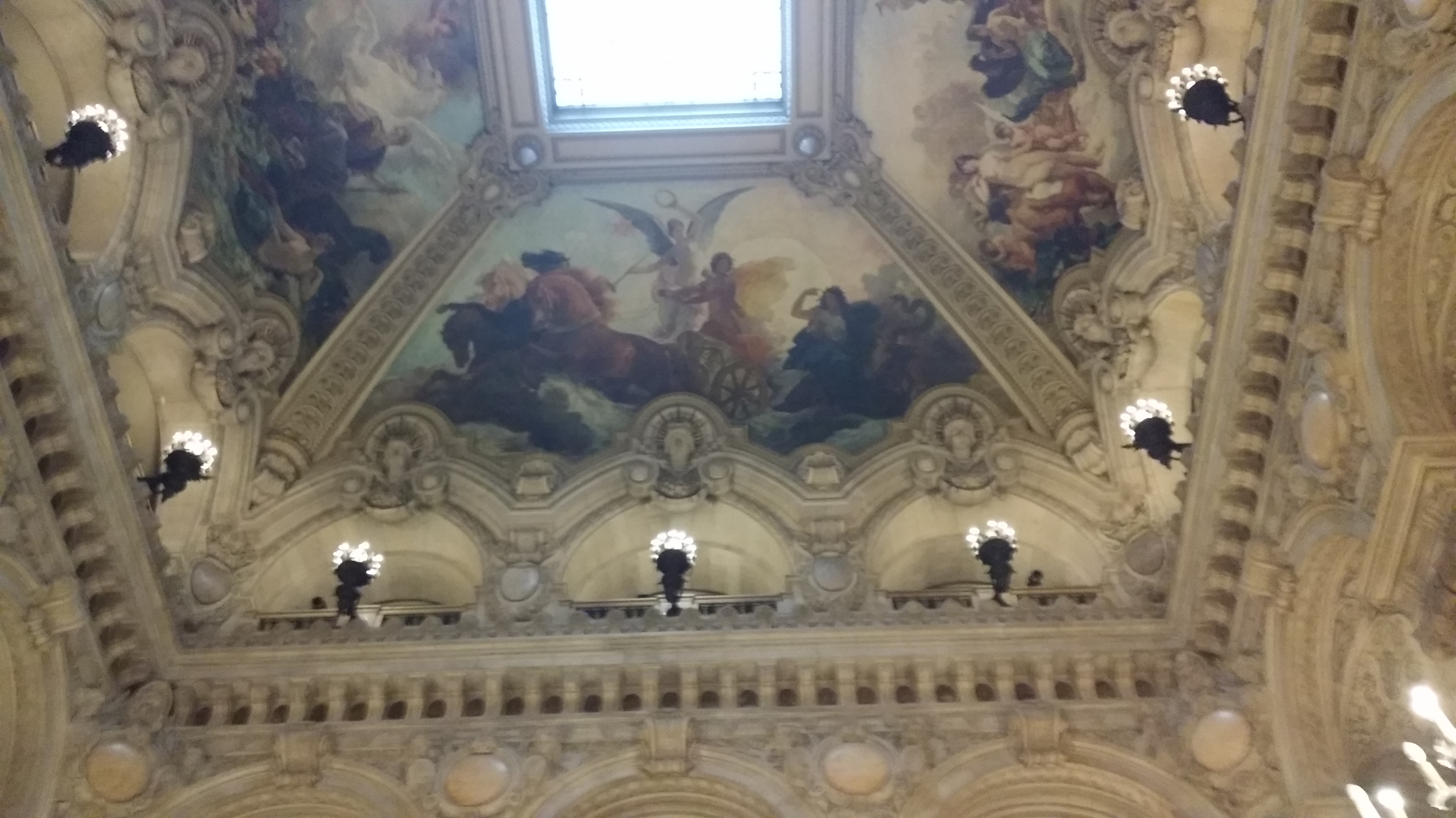
20140108_125843

The ceiling above the main staircase.  The ceiling above the staircase was painted by Isidore Pils to depict The Triumph of Apollo, The Enchantment of Music Deploying its Charms, Minerva Fighting Brutality Watched by the Gods of Olympus, and The City of Paris Receiving the Plan of the New Opéra.

20140108_123338

The ceiling of Chagall at the Palais Garnier

On 23 September 1964, the new ceiling of the Opéra Garnier was inaugurated with great pomp.  It was painted by Marc Chagall at the request of André Malraux

20140108_125807

Amphitheatre and Orchestra Pit entrance

20140108_122243

Interior, and doorways to boxes

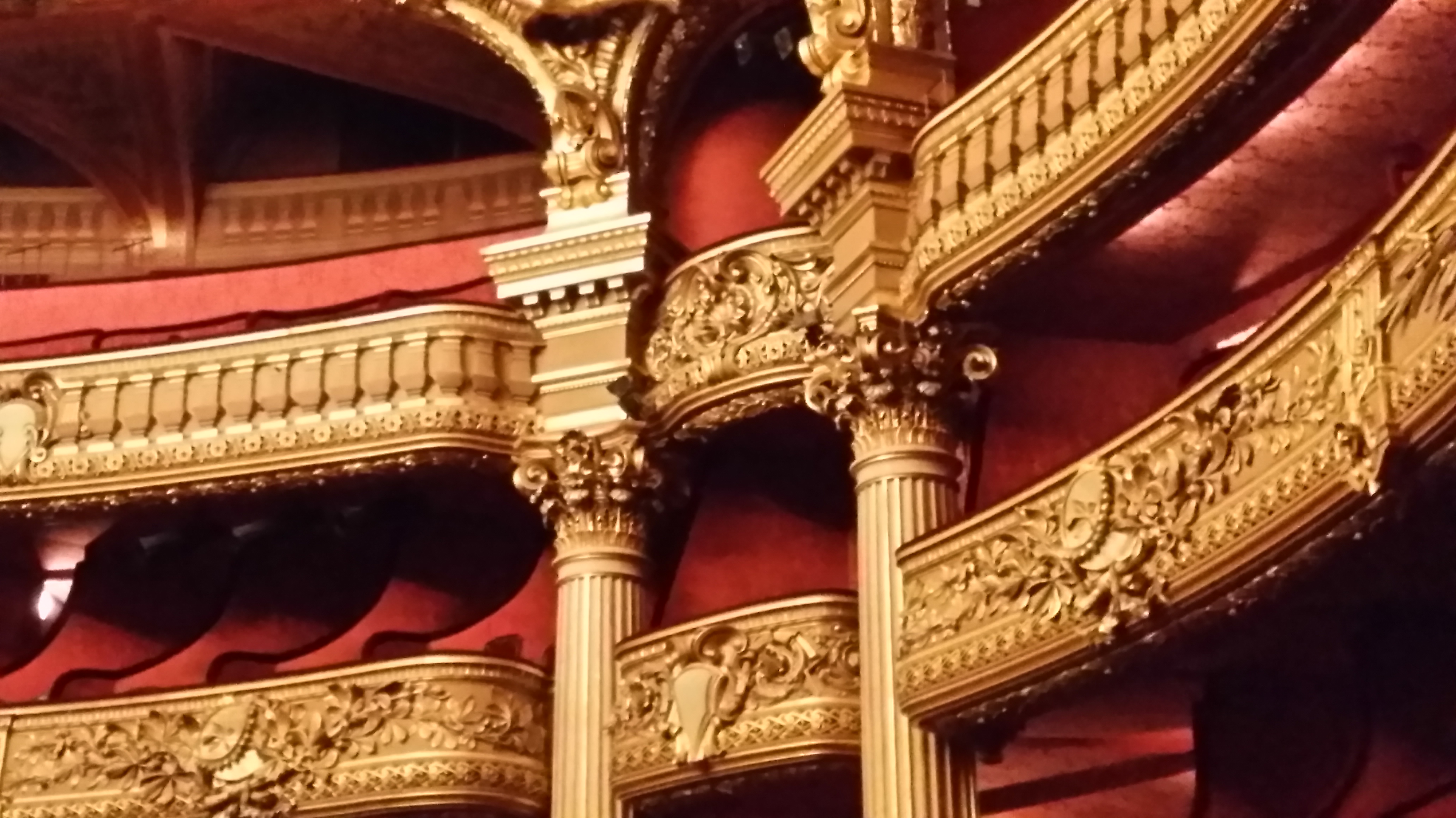
20140108_123500

Box seats in the auditorium

20140108_123512

Ornate ceilings and columns

20140108_123332

Seating inside the auditorium

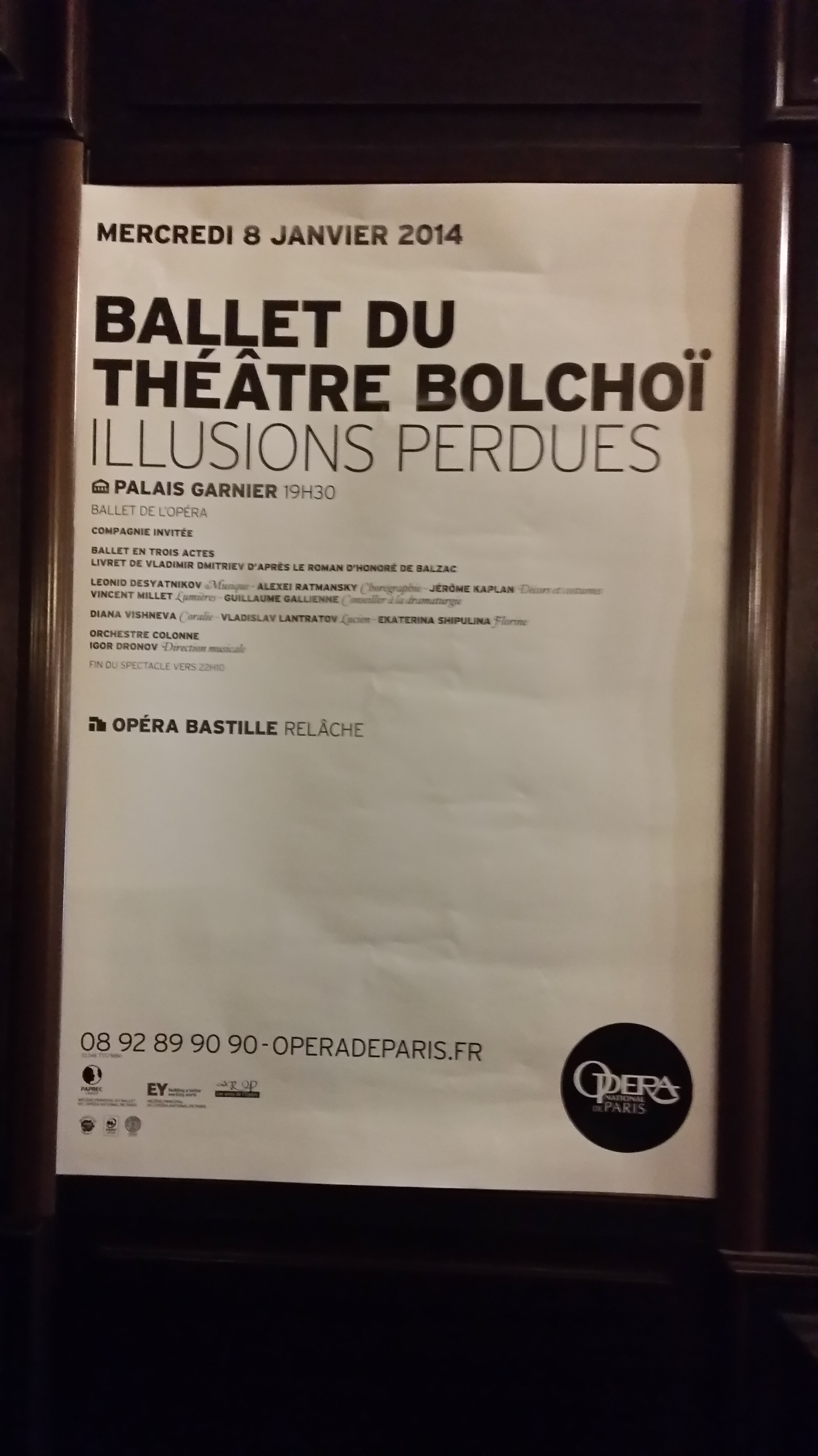
20140108_125603

The day we were leaving Paris, was the first night of the Bolshoi Ballet.  My two granddaughters were greatly disappointed at missing out on the opportunity of a lifetime, to see the Bolshoi Ballet at the Paris Opera House.

20140108_123359

But we did get to see the principals practicing.

Reminiscing

I was sitting down discussing with my granddaughter how we’re going to approach what will become an author interview.

We were talking about how old I was when it was, I first authored a story, and what was that story about.

OK, that sent me back a long way into the distant past.

There was also a trick question; “What was the first story you read that put you on the path to wanting to become a writer”.

That was easy, Alistair Maclean’s HMS Ulysses.  I showed her a copy of the book.

But, back to the main question.

Grandparents are old, I said, older than your parents, so that should give you some idea.

When did I start writing, that required a little thought, and several triggers gave me a date, where we lived at the time, the fact I used my mother’s old portable typewriter, and the fact I had not been long out of school.  I was, in fact, about 17, the wrong side of half a century ago.

What was it about; that I couldn’t tell her, but I said I had rescued a lot of old scribbling of mine and put them in a box to look at later when I had the time.

I guess that time had arrived.

And, yes, there was the book, the individually typed pages, some with corrections, unfinished.

The pages were brown with age.

The story, well, I read the first few pages, and I’d started down the thriller path then, the story so far, an agent comes ashore from a trawler to a bleak and isolated village, perhaps on the Scottish coast,

The next question, understandably; “What was the first book you ever finished?”  That was The Starburst Conspiracy, soon to be published on Amazon.

It also led to a few more discoveries, including a book I had forgotten I’d written. And all of the short stories I’d written when at university.

The interview is proceeding.

The memories it is bringing about my earliest forays into the world of writing are priceless.

‘The Devil You Don’t’ – A beta reader’s view

It could be said that of all the women one could meet, whether contrived or by sheer luck, what are the odds it would turn out to be the woman who was being paid a very large sum to kill you.

John Pennington is a man who may be lucky in business, but not so lucky in love. He has just broken up with Phillipa Sternhaven, the woman he thought was the one, but relatives and circumstances, and perhaps because she was a ‘princess’, may also have contributed to the end result.

So, what do you do when you are heartbroken?

That is a story that slowly unfolds, from the first meeting with his nemesis on Lake Geneva, all the way to a hotel room in Sorrento, where he learns the shattering truth.

What should have been solace after disappointment, turns out to be something else entirely, and from that point, everything goes to hell in a handbasket.

He suddenly realizes his so-called friend Sebastian has not exactly told him the truth about a small job he asked him to do, the woman he is falling in love with is not quite who she says she is, and he is caught in the middle of a war between two men who consider people becoming collateral damage as part of their business.

The story paints the characters cleverly displaying all their flaws and weaknesses. The locations add to the story at times taking me back down memory lane, especially to Venice where, in those back streets I confess it’s not all that hard to get lost.

All in all a thoroughly entertaining story with, for once, a satisfying end.

…

Available on Amazon here: https://amzn.to/2Xyh1ow

…

Searching for Locations: The Eiffel Tower, Paris, France

Sorry, reminiscing again…

It was a cold but far from a miserable day.  We were taking our grandchildren on a tour of the most interesting sites in Paris, the first of which was the Eiffel Tower.

We took the overground train, which had double-decker carriages, a first for the girls, to get to the tower.

We took the underground, or Metro, back, and they were fascinated with the fact the train carriages ran on road tires.

Because it was so cold, and windy, the tower was only open to the second level. It was a disappointment to us, but the girls were content to stay on the second level.

There they had the French version of chips.

It was a dull day, but the views were magnificent.

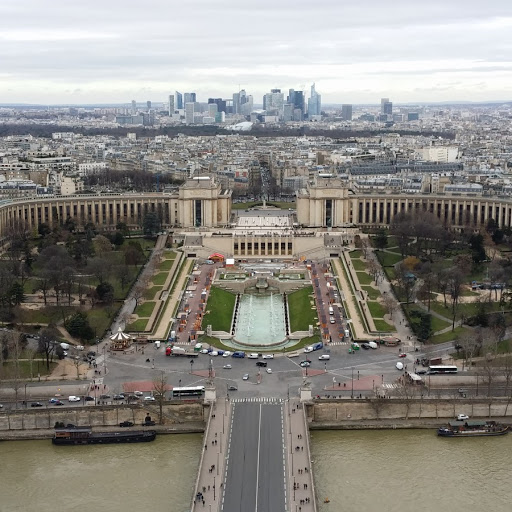
20140107_132225

A view of the Seine

20140107_132859

20140107_132208

Sacre Coeur church at Montmartre in the distance.

Another view along the river Seine

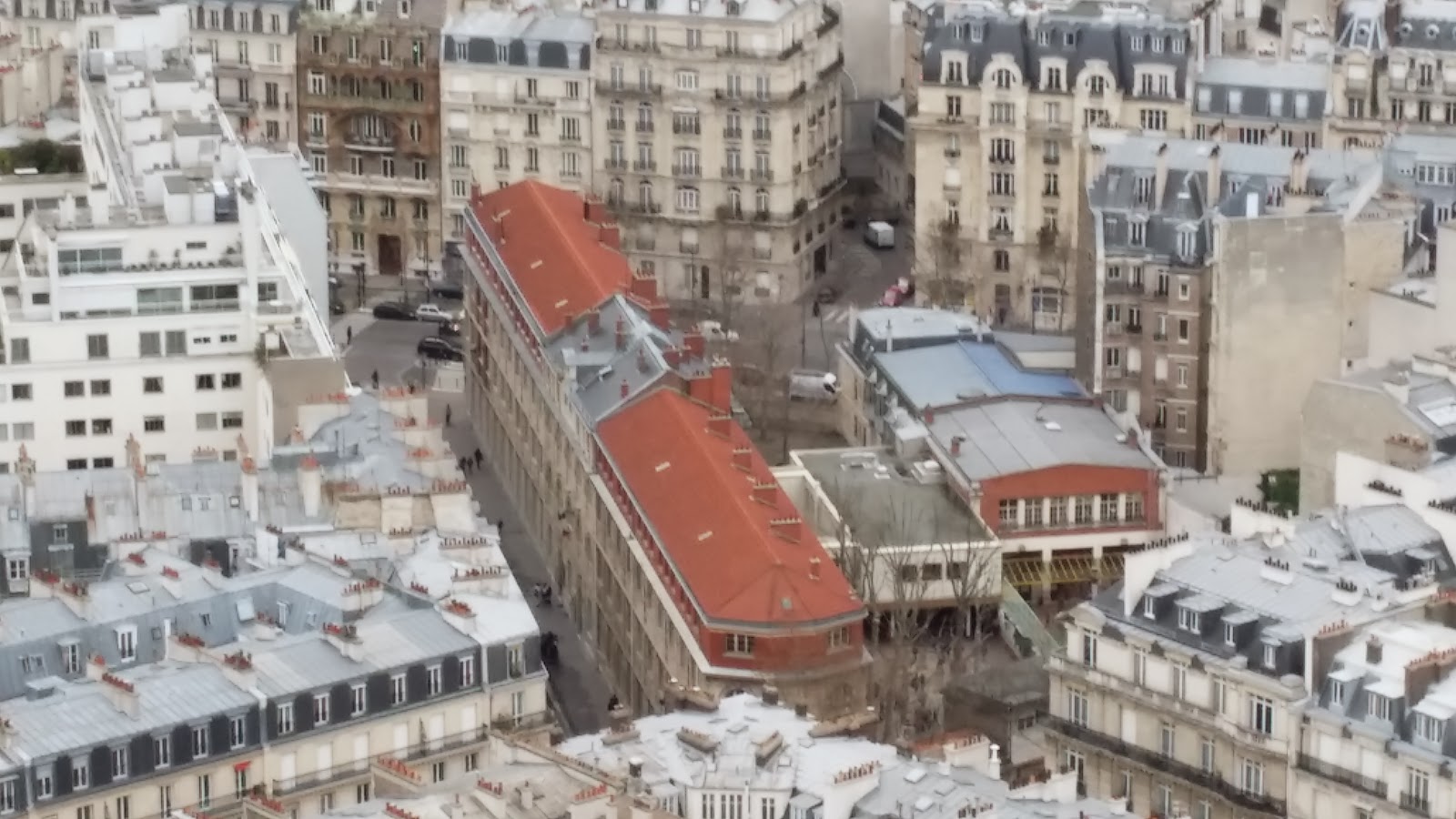
Overlooking the tightly packed apartment buildings

Looking along the opposite end of the river Seine

An excerpt from “Betrayal” – a work in progress

It could have been anywhere in the world, she thought, but it wasn’t.  It was in a city where if anything were to go wrong…

She sighed and came away from the window and looked around the room.  It was quite large and expensively furnished.  It was one of several she had been visiting in the last three months.

Quite elegant too, as the hotel had its origins dating back to before the revolution in 1917.  At least, currently, there would not be a team of KGB agents somewhere in the basement monitoring everything that happened in the room.

There was no such thing as the KGB anymore, though there was an FSB, but such organisations were of no interest to her.

She was here to meet with Vladimir.

She smiled to herself when she thought of him, such an interesting man whose command of English was as good as her command of Russian, though she had not told him of that ability.

All he knew of her was that she was American, worked in the Embassy as a clerk, nothing important, whose life both at work and at home was boring.  Not that she had blurted that out the first they met, or even the second.

That first time, at a function in the Embassy, was a chance meeting, a catching of his eye as he looked around the room, looking, as he had told her later, for someone who might not be as boring as the function itself.

It was a celebration, honouring one of the Embassy officials on his service in Moscow, and the fact he was returning home after 10 years.  She had been there once, and still hadn’t met all the staff.

They had talked, Vladimir knew a great deal about England, having been stationed there for a year or two, and had politely asked questions about where she lived, her family, and of course what her role was, all questions she fended off with an air of disinterested interest.

It fascinated him, as she knew it would, a sort of mental sparring as one would do with swords if this was a fencing match.

They had said they might or might not meet again when the party was over, but she suspected there would be another opportunity.  She knew the signs of a man who was interested in her, and Vladimir was interested.

The second time came in the form of an invitation to an art gallery, and a viewing of the works of a prominent Russian artist, an invitation she politely declined.  After all, invitations issued to Embassy staff held all sorts of connotations, or so she was told by the Security officer when she told him.

Then, it went quiet for a month.  There was a party at the American embassy and along with several other staff members, she was invited.  She had not expected to meet Vladimir, but it was a pleasant surprise when she saw him, on the other side of the room, talking to several military men.

A pleasant afternoon ensued.

And it was no surprise that they kept running into each other at the various events on the diplomatic schedule.

By the fifth meeting, they were like old friends.  She had broached the subject of being involved in a plutonic relationship with him with the head of security at the embassy.  Normally for a member of her rank, it would not be allowed, but in this instance it was.

She did not work in any sensitive areas, and, as the security officer had said, she might just happen upon something that might be useful.  In that regard, she was to keep her eyes and ears open and file a report each time she met him.

After that discussion, she got the impression her superiors considered Vladimir more than just a casual visitor on the diplomatic circuit.  She also formed the impression that he might consider her an ‘asset’, a word that had been used at the meeting with security and the ambassador.

It was where the word ‘spy’ popped into her head and sent a tingle down her spine.  She was not a spy, but the thought of it, well, it would be fascinating to see what happened.

A Russian friend.  That’s what she would call him.

And over time, that relationship blossomed, until, after a visit to the ballet, late and snowing, he invited her to his apartment not far from the ballet venue.  It was like treading on thin ice, but after champagne and an introduction to caviar, she felt like a giddy schoolgirl.

Even so, she had made him promise that he remain on his best behaviour.  It could have been very easy to fall under the spell of a perfect evening, but he promised, showed her to a separate bedroom, and after a brief kiss, their first, she did not see him until the next morning.

So, it began.

It was an interesting report she filed after that encounter, one where she had expected to be reprimanded.

She wasn’t.

It wasn’t until six weeks had passed when he asked her if she would like to take a trip to the country.  It would involve staying in a hotel, that they would have separate rooms.  When she reported the invitation, no objection was raised, only a caution; keep her wits about her.

Perhaps, she had thought, they were looking forward to a more extensive report.  After all, her reports on the places, and the people, and the conversations she overheard, were no doubt entertaining reading for some.

But this visit was where the nature of the relationship changed, and it was one that she did not immediately report.  She had realised at some point before the weekend away, that she had feelings for him, and it was not that he was pushing her in that direction or manipulating her in any way.

It was just one of those moments where, after a grand dinner, a lot of champagne, and delightful company, things happen.  Standing at the door to her room, a lingering kiss, not intentional on her part, and it just happened.

And for not one moment did she believe she had been compromised, but for some reason she had not reported that subtle change in the relationship to the powers that be, and so far, no one had any inkling.

She took off her coat and placed it carefully of the back of one of the ornate chairs in the room.  She stopped for a moment to look at a framed photograph on the wall, one representing Red Square.

Then, after a minute or two, she went to the mini bar and took out the bottle of champagne that had been left there for them, a treat arranged by Vladimir for each encounter.

There were two champagne flutes set aside on the bar, next to a bowl of fruit.  She picked up the apple and thought how Eve must have felt in the garden of Eden, and the temptation.

Later perhaps, after…

She smiled at the thought and put the apple back.

A glance at her watch told her it was time for his arrival.  It was if anything, the one trait she didn’t like, and that was his punctuality.  A glance at the clock on the room wall was a minute slow.

The doorbell to the room rang, right on the appointed time.

She put the bottle down and walked over to the door.

A smile on her face, she opened the door.

It was not Vladimir.  It was her worst nightmare.

…

© Charles Heath 2020