In a word: well

At first, you would think this word has something to do with your health.

You’d be right.  “Are you well?” or “Are you well enough?”

Of course, it can cause some confusion, because how do you measure degrees of wellness.

Reasonably well, very well, not well, or just well.  Not a good descriptive word for the state of your health, maybe.

How about what if the team played well.  Not health this time, but a standard.

There’s ordinary, mediocre, as a team, brilliantly, and then there’s well.

It seems it can be used to describe an outcome.

Well, well.

Hang on, that’s something else again.

What about, then, we use the word to describe a hole in the ground with water at the bottom.

Or not if it is a drought.

A lot of people get water from a well, in fact in the olden days that was a common sight in a village.

What about those environment destroyers, oilmen.  They have oil wells, don’t they?

And when I went to school, there were ink wells on every desk.

Messy too, because I was once the ink monitor.

But if the well’s dried up?

It becomes a metaphor for a whole new bunch of stuff.

OR what about a stairwell?

And at the complexity of it all, for such a small word, tears well up in my eyes.

The story behind the story – Echoes from the Past

The novel ‘Echoes from the Past’ started out as a short story I wrote about 30 years ago, titled ‘The Birthday’.

My idea was to take a normal person out of their comfort zone and led on a short but very frightening journey to a place where a surprise birthday party had been arranged.

Thus, the very large man with a scar and a red tie was created.

So was the friend with the limousine who worked as a pilot.

So were the two women, Wendy and Angelina, who were Flight Attendants that the pilot friend asked to join the conspiracy.

I was going to rework the short story, then about ten pages long, into something a little more.

And like all rewrites, especially those I have anything to do with, it turned into a novel.

There was motivation.  I had told some colleagues at the place where I worked at the time that I liked writing, and they wanted a sample.  I was going to give them the re-worked short story.  Instead, I gave them ‘Echoes from the past’

Originally, it was not set anywhere in particular.

But when considering a location, I had, at the time, recently been to New York in December, and visited Brooklyn and Queens, as well as a lot of New York itself.  We were there for New Year’s, and it was an experience I’ll never forget.

One evening, we were out late and finished up in Brooklyn Heights, near the waterfront, and there was rain and snow; it was cold and wet, and apartment buildings were shimmering in the street light, and I thought, “This is the place where my main character will live”.

It had a very spooky atmosphere, the sort where ghosts would not be unexpected.  I felt more than one shiver go up and down my spine in the few minutes I was there.

I had taken notes, as I always do, of everywhere we went, so I had a ready supply of locations I could use, changing the names in some cases.

Fifth Avenue near the Rockefeller Centre is amazing at first light, and late at night with the Seasonal decorations and lights.

The original main character was a shy man with few friends, hence not expecting the surprise party.  I enhanced that shyness into purposely lonely because of an issue from his past that leaves him always looking over his shoulder and ready to move on at the slightest hint of trouble.  No friends, no relationships, just a very low profile.

Then I thought, what if he breaks the cardinal rule and begins a relationship?

But it is also as much an exploration of a damaged soul as it is the search for a normal life, without having any idea what normal was, and how the understanding of one person can sometimes make all the difference in what we may think or feel.

And, of course, I wanted a happy ending.

Except for the bad guys.

Get it here:  https://amzn.to/2CYKxu4

newechocover5rs

Top 5 sights on the road less travelled – Shanghai

Shanghai Unveiled: 5 Offbeat Adventures Beyond the Usual Tourist Trail

Shanghai. The name itself conjures images of glittering skyscrapers, historic Bund architecture, and bustling shopping streets. It’s a city of undeniable grandeur, a futuristic metropolis steeped in a fascinating past. Most visitors flock to the Oriental Pearl Tower, wander through Yu Garden, or stroll along Nanjing Road. And while these experiences are certainly iconic, they only scratch the surface of what this incredible city has to offer.

What if you’ve seen the postcard views? What if you crave a deeper connection, a glimpse into the everyday magic and quirky corners that locals cherish? You’ve come to the right place. Pack your sense of adventure, because we’re about to explore the roads less travelled in Shanghai, uncovering five unique experiences that will show you a different side of the “Pearl of the Orient.”


1. Immerse Yourself in Urban Art at M50 Creative Park (Moganshan Road 50)

Just a short walk from the Suzhou Creek, M50 is Shanghai’s answer to New York’s SoHo or London’s Shoreditch. Once a series of derelict industrial buildings and textile mills, this sprawling complex has been cleverly repurposed into a vibrant hub for contemporary art.

Why it’s off the beaten path: While known to art enthusiasts, M50 isn’t on the typical tourist itinerary. It’s not a single attraction but a collection of galleries, studios, and workshops, requiring a willingness to wander and discover.

What makes it special: You’ll find everything from cutting-edge installations and abstract paintings to photography exhibitions and quirky design shops. Many artists work on-site, offering a chance to see them in action or even purchase unique pieces directly. The raw, industrial backdrop provides a stark contrast to the sleek art, creating a unique atmosphere. Grab a coffee, chat with a gallerist, and let the creative energy inspire you.

Pro Tip: Look out for street art and graffiti that constantly change on the exterior walls, adding another layer to the artistic experience. Weekdays are generally quieter if you prefer a more contemplative visit.


2. Step Back in Time at the Shanghai Propaganda Poster Art Centre

Tucked away in the basement of a nondescript apartment building in the former French Concession, this private museum is a fascinating, if somewhat clandestine, journey into China’s revolutionary past.

Why it’s off the beaten path: Blink and you’ll miss the subtle entrance! There are no grand signs, and finding it often feels like you’re on a secret mission. It’s certainly not listed in every guidebook.

What makes it special: This veritable treasure trove houses an incredible collection of original propaganda posters from the early days of the People’s Republic of China, through the Cultural Revolution, and beyond. The posters are vibrant, historically significant, and incredibly rare. They offer a unique, visual narrative of a pivotal era, showcasing the artistic styles and political messages that shaped a nation. It’s a poignant and thought-provoking experience, often leaving visitors with a deeper understanding of modern Chinese history.

Pro Tip: Be prepared to ring a doorbell at the address (Room B, 868 Huashan Road) and navigate a residential complex. Photography is usually allowed without flash in most areas, but always double-check.


3. Dive into Local Life at a Bustling Wet Market

Forget souvenir shops; for a true taste of authentic Shanghai life, head to a local wet market. These vibrant, sensory-overload hubs are where locals buy their fresh produce, meat, fish, and unique regional ingredients.

Why it’s off the beaten path: This isn’t a “sight” in the traditional sense, but an immersive cultural experience. It can be loud, a little messy, and overwhelming for some, but that’s precisely its charm.

What makes it special: The sheer energy is infectious. Watch vendors expertly butcher meat, bargain over piles of colourful fruits and vegetables, and marvel at the exotic array of seafood, some of which you’ve probably never seen before. It’s a kaleidoscope of sights, sounds, and smells, offering an unfiltered glimpse into the daily routines of Shanghai residents. You might even discover some incredible street food stalls outside the market selling freshly made noodles, dumplings, or steamed buns.

Pro Tip: Go in the morning when the markets are most active and the produce is freshest. Popular options include the Wulumuqi Road Wet Market or smaller ones nestled in local neighbourhoods around the former French Concession. Be respectful, don’t block aisles, and be open to new sensory experiences!


4. Find Serenity at Longhua Temple & Pagoda

While Yu Garden’s classical beauty draws crowds, the Longhua Temple offers a more contemplative and authentic Buddhist experience. Located a bit further south, it’s Shanghai’s oldest and largest Buddhist complex, boasting a history that dates back nearly 1,800 years.

Why it’s off the beaten path: It requires a short Metro ride out of the absolute city centre, making it less convenient for quick tourist dashes. This results in fewer crowds and a more peaceful atmosphere.

What makes it special: The temple complex features several grand halls, each housing impressive statues of Buddha and various deities, as well as beautifully manicured gardens. The most striking feature is the magnificent 7-story Longhua Pagoda, an elegant brick and wood structure that is one of the few examples of ancient pagoda architecture remaining in Shanghai. Explore the grounds, listen to the rhythmic chanting of monks, and watch locals offer prayers, giving you a sense of ancient spirituality amidst the modern urban sprawl.

Pro Tip: Visit during a Buddhist festival for a more lively experience with special ceremonies and offerings, but avoid it if you prefer quiet reflection. The Vegetarian Restaurant within the temple grounds offers a delicious and authentic temple-fare lunch.


5. Ride the Local Ferry for Unbeatable Skyline Views (Without the Price Tag)

Forget expensive Huangpu River cruises! For a truly local and incredibly cheap experience with equally stunning views of Shanghai’s iconic skyline, hop on one of the regular commuter ferries.

Why it’s off the beaten path: Most tourists are directed to the fancier cruise ships. The local ferries are simply a means of transport for residents crossing the river, making them a genuine “road less travelled” experience.

What makes it special: For just a few yuan, you can glide across the Huangpu River, enjoying panoramic vistas of both the historic Bund on the Puxi side and the futuristic Pudong skyline (Oriental Pearl Tower, Shanghai Tower, Jin Mao Tower) on the other. It’s an unpretentious, unhurried way to soak in the city’s breathtaking architecture, rub shoulders with locals, and feel the pulse of Shanghai’s daily life, all while getting incredible photo opportunities.

Pro Tip: Take the ferry from the Bund (near Chenyi Square) to Pudong, especially around sunset, for the most dramatic views as the city lights begin to twinkle. You can pay with a Shanghai Public Transportation Card or exact change (usually 2-3 RMB).


Shanghai is a city that constantly reinvents itself, but its true magic often lies just beyond the well-trodden paths. By venturing into these less-explored corners, you’ll not only discover hidden gems but also gain a richer, more authentic understanding of this dynamic metropolis. So, next time you’re in this incredible city, dare to take the road less travelled – you might just find your new favourite Shanghai memory.

What hidden gems have YOU uncovered in Shanghai? Share your tips in the comments below!

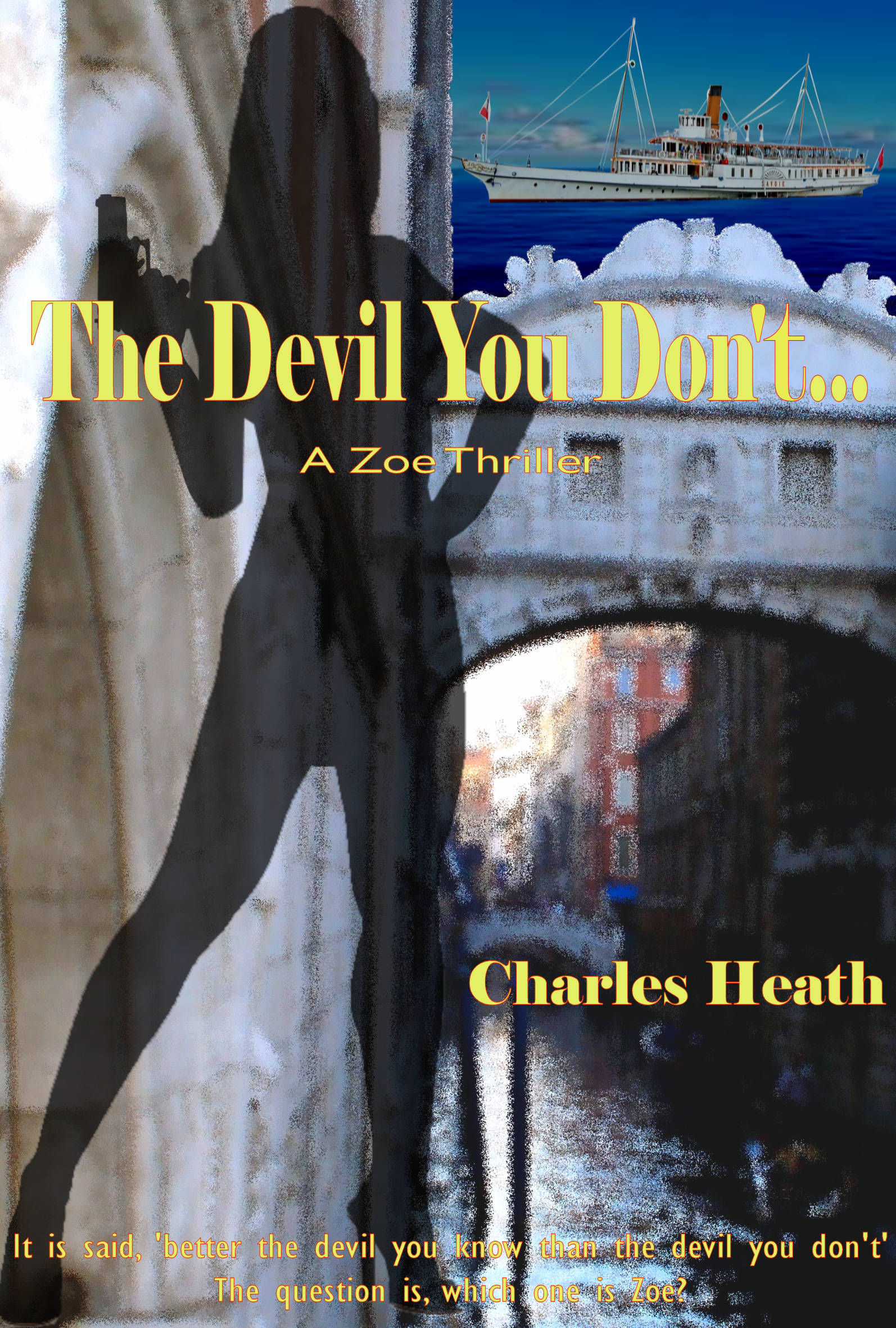
The first case of PI Walthenson – “A Case of Working With the Jones Brothers”

This case has everything: red herrings, jealous brothers, femme fatales, and at the heart of it all, greed.

See below for an excerpt from the book…

Coming soon!

PIWalthJones1

An excerpt from the book:

When Harry took the time to consider his position, a rather uncomfortable position at that, he concluded that he was somehow involved in another case that meant very little to him.

Not that it wasn’t important in some way he was yet to determine, it was just that his curiosity had got the better of him, and it had led to this: sitting in a chair, securely bound, waiting for someone, one of his captors had called Doug.

It was not the name that worried him so much; it was the evil laugh that had come after the name was spoken.

Doug what? Doug the ‘destroyer’, Doug the ‘dangerous’, Doug the ‘deadly’; there were several sinister connotations, and perhaps that was the point of the laugh, to make it more frightening than it was.

But there was no doubt about one thing in his mind right then: he’d made a mistake. A very big. and a costly mistake. Just how big the cost, no doubt, he would soon find out.

His mother and his grandmother, the wisest person he had ever known, had once told him never to eavesdrop.

At the time, he couldn’t help himself, and instead of minding his own business, listening to a one-sided conversation that ended with a time and a place. The very nature of the person receiving the call was, at the very least, sinister, and, because of the cryptic conversation, there appeared to be, or at least to Harry, criminal activity involved.

For several days, he had wrestled with the thought of whether he should go. Stay on the fringe, keep out of sight, observe and report to the police if it was a crime. Instead, he had willingly gone down the rabbit hole.

Now, sitting in an uncomfortable chair, several heat lamps hanging over his head, he was perspiring, and if perspiration could be used as a measure of fear, then Harry’s fear was at the highest level.

Another runnel of sweat rolled into his left eye, and, having his hands tied, it literally made it impossible to clear it. The burning sensation momentarily took his mind off his predicament. He cursed and then shook his head, trying to prevent a recurrence. It was to no avail.

Let the stinging sensation be a reminder of what was right and what was wrong.

It was obvious that it was the right place and the right time, but in considering his current perilous situation, it definitely was the wrong place to be, at the worst possible time.

It was meant to be his escape, an escape from the generations of lawyers, what were to Harry, dry, dusty men who had been in business since George Washington said to the first Walthenson to step foot on American soil, ‘Why don’t you become a lawyer?” when asked what he could do for the great man.

Or so it was handed down as lore, though Harry didn’t think Washington meant it literally, the Walthenson’s, then as now, were not shy of taking advice.

Except, of course, when it came to Harry.

He was, Harry’s father was prone to saying, the exception to every rule. Harry guessed his father was referring to the fact that his son wanted to be a Private Detective rather than a dry, dusty lawyer. Just the clothes were enough to turn Harry off the profession.

So, with a little of the money Harry inherited from one of his aunts, he leased an office in Gramercy Park and had it renovated to look like the Sam Spade detective agency, you know the one, Spade and Archer, and The Maltese Falcon.

There’s a movie and a book by Dashiell Hammett if you’re interested.

So, there it was, painted on the opaque glass inset of the front door, ‘Harold Walthenson, Private Detective’.

There was enough money to hire an assistant, and it took a week before the right person came along, or, more to the point, didn’t just see his business plan as something sinister. Ellen, a tall, cool woman in a long black dress, or so the words of a song in his head told him, fitted in perfectly.

She’d seen the movie, but she said with a grin, Harry was no Humphrey Bogart.

Of course not, he said, he didn’t smoke.

Three months on the job, and it had been a few calls, no ‘real’ cases, nothing but missing animals, and other miscellaneous items. What he really wanted was a missing person. Or perhaps a beguiling, sophisticated woman who was as deadly as she was charming, looking for an errant husband, perhaps one that she had already ‘dispatched’.

Or for a tall, dark and handsome foreigner who spoke in riddles and in heavily accented English, a spy, or perhaps an assassin, in town to take out the mayor. The man was such an imbecile that Harry had considered doing it himself.

Now, in a back room of a disused warehouse, that wishful thinking might be just about to come to a very abrupt end, with none of the romanticised trappings of the business befalling him. No beguiling women, no sinister criminals, no stupid policemen.

Just a nasty little man whose only concern was how quickly or how slowly Harry’s end was going to be.

© Charles Heath 2019-2024

365 Days of writing, 2026 – 180

Day 180 – Rest periods for compulsive writers

The Inescapable Itch: How Compulsive Writers Finally Unplug (and Why They Dread It)

For the compulsive writer, the blank page isn’t just a workspace; it’s a nervous system. To stop writing is, in many ways, to stop feeling the pulse of the world. But even the most prolific ink-stained wretches occasionally find their pens running dry, or their minds fogging over with the static of over-output.

How does a writer whose baseline is “compulsive” actually step away? And more importantly, is the silence of a break actually a form of creative death?

The Williams Paradigm: The Panic of the Still Moment

If you want a masterclass in the agony of the “break,” look to Tennessee Williams.

Williams was a man possessed. His plays—A Streetcar Named DesireCat on a Hot Tin Roof—seemed to bleed out of him in a fit of architectural necessity. He didn’t just write stories; he exorcised ghosts. For Williams, the act of writing was a frantic attempt to outrun his own inner demons.

When Williams wasn’t writing, he wasn’t “relaxing” in the way modern self-help gurus suggest. He wasn’t taking a spa day or practising mindfulness. He was vibrating with a specific, high-frequency anxiety. He famously equated the downtime between creative bursts with a kind of spiritual oblivion.

He didn’t take breaks by choice; he took them when the exhaustion became too heavy to carry. But in those quiet intervals, the “boredom” he felt was actually a confrontation with reality—a reality he found far less interesting and far more terrifying than the worlds he built on paper.

Why the Break Feels Like a Grave

For the compulsive writer, a break feels like “death” for three distinct reasons:

  1. The Loss of Control: When you are writing, you are the god of a small, contained universe. You decide who lives, who dies, and how the dialogue flows. In the real world, you are subject to the messy, boring, and uncontrollable whims of traffic, groceries, and small talk.
  2. The Shadow of the “Interior”: Writers often use work as a distraction from the recursive loops of their own thoughts. When the writing stops, the inner monologue—usually the one questioning your worth or replaying old embarrassments—gets the megaphone.
  3. The Identity Crisis: If you define yourself as a “Writer,” then a day spent not writing is a day you aren’t “being” anything. You feel like a malfunctioning machine.

How to Take a Break Without Losing Your Mind

If you are like Williams—wired to the page—you can’t just stop. You have to “pivot” your compulsion. Here is how the pros handle the hiatus:

  • Change the Input: If you can’t stop the output, change the channel. Switch to a medium that doesn’t feel like “work.” If you write prose, spend your break painting, gardening, or cooking. You are still creating, but you’ve let the part of your brain that handles syntax rest.
  • The “Low-Stakes” Journal: Give yourself permission to write in a way that doesn’t count. Take a pocket notebook where you are forbidden from writing anything “publishable.” Write about your lunch, the colour of the sky, or how annoying your neighbour’s dog is. It keeps the muscle moving without the pressure of the performance.
  • Embrace the “Restless Walk”: Williams often found his best ideas while walking. If you’re bored, don’t sit still. The brain that is compulsive needs movement. A three-mile walk can settle the nervous system while allowing the subconscious to keep filing away plot points.

The Verdict: Is It Boredom or Fuel?

Is it boring? Yes.

But here is the secret that Tennessee Williams eventually realised: Boredom is the soil in which the best ideas take root.

When you are constantly writing, you are mining your storehouse of ideas until you hit bedrock. You are repeating yourself because you haven’t given yourself time to experience anything new. The break, as terrifying as it feels, is the process of refilling the well.

You aren’t dying when you put the pen down. You’re simply waiting for the tide to come back in. And trust me—if you are truly a compulsive writer—the tide always comes back. You’ll be back at the desk before you know it, pen in hand, wondering why you ever missed the silence in the first place.

‘Sunday in New York’ – A beta reader’s view

I’m not a fan of romance novels but …

There was something about this one that resonated with me.

This is a novel about a world generally ruled by perception, and how people perceive what they see, what they are told, and what they want to believe.

I’ve been guilty of it myself, as I’m sure we all have at one time or another.

For the main characters, Harry and Alison, other issues are driving their relationship.

For Alison, it is a loss of self-worth through losing her job and from losing her mother and, in a sense, her sister.

For Harry, it is the fact that he has a beautiful and desirable wife, his belief that she is the object of other men’s desires, and, in particular, his immediate superior’s.

Between observation, the less-than-honest motives of his friends, a lot of jumping to conclusions based on very little fact, and you have the basis of one very interesting story.

When it all comes to a head, Alison finds herself in a desperate situation, and she realises only the truth will save their marriage.

But is it all the truth?

What would we do in similar circumstances?

Rarely does a book have me so enthralled that I could not put it down until I knew the result. They might be considered two people who should have known better, but as is often the case, they had to get past what they both thought was the truth.

And the moral of this story, if it could be said there is one, is that nothing is ever what it seems.

Available on Amazon here: amzn.to/2H7ALs8

The cinema of my dreams – I always wanted to write a war story – Episode 24

For a story that was conceived during those long boring hours flying in a steel cocoon, striving to keep away the thoughts that the plane and everyone in it could just simply disappear as planes have in the past, it has come a long way.

Whilst I have always had a fascination with what happened during the second world war, not the battles or fighting, but in the more obscure events that took place, I decided to pen my own little sidebar to what was a long and bitter war.

And, so, it continues…


While waiting for Carlo and Chiara to return with the villagers, and taking some time to consider the plan that had almost formed in my mind, I went back to my room, which, I was guessing was once used for wine storage, because now that I had taken a moment to stop and consider my surroundings, I could smell the aroma of spilled wine.

With a little more light, I could see the arches within which the bottles would be stacked.  I’d also noticed while I’d been outside, that there were vines everywhere, albeit in bad shape as the people who tended them had either left, or been taken away, or shot.

Red grapes if I was not mistaken, though I had no idea what the variety might be.

If the war dragged on much longer, it would do a lot of damage to the wine-growing districts, and I doubted, when the Germans were here, they had any interest in tending the vines, but just drink the wine, and then probably not with the appreciation it deserved.

That had certainly been the case up at the castle before fate turned against me.  Perhaps that was where all of the wine from this cellar had been taken for safekeeping, once the locals thought the Germans had gone forever.  Maybe that was the reason why Leonardo spent so much of his time at the castle, the free wine.

Jack had returned from what I assumed was an inspection of our new quarters and was sitting on the ground next to me.  I wondered what he made of everything he had seen.  It was certainly not a dog’s life being caught in the middle of a war.  

“It’s a fine mess we’re in,” I said to him, and he looked back with uncomprehending eyes.  I would have to brush up on my German.  Or maybe Italian.  It only just occurred to me that he was probably someone’s dog from around here.  We’d only run into each other a few miles away.

“Yes, and I’m sure if you spoke English you could tell me a thing or two.  But, alas, you can’t, so a piece of advice.  Try to keep out of trouble, and by that, next time I go out, you might want to stay here.”

I shrugged.  Things must be bad; I’m talking to a dog.

Martina stopped outside the entrance.  “I heard voices.  Who are you talking to?”

“The dog.  He’s the only one who’s making any sense at the moment.”

“Are you sure he’s not a German spy.  Or, in fact, it’s a he?”

“You probably know as much as I do.  Anything happening?”

“Carlo’s back with a dozen or so of those who want to stay alive.  Chiara has a few more.  The rest have other places to hide if they need to.  We’ve told them to expect a raid.  Leonardo and a few of his men have been out looking for you and told everyone that you are a German spy and that he’ll pay them a lot of money for information about where you are or who’s hiding you.  He doesn’t understand everyone hates him, they always have.”

“Good to know if I run into him, he won’t be happy to see me.”

“This plan of yours?”

“Wallace will be getting edgy about the men he sent out, those men we ambushed at Chiara’s place.  It depends on who he sends, and where they go, but I was thinking we could prepare another ambush at Chiara’s.  All we have to do is wait because I’m sure they’ll get there eventually.”

“And if I know Leonardo, he’ll send them straight to my farm.  He knows that both Carlo and I, and the other two you’ve met were the other four who refused to join him in going up to the castle to make peace.  It seems he’s made a bad choice.”

“Wallace didn’t.  He needs someone like Leonardo to find us.  You’re probably right.  I was thinking Carlo and I could go.  No sense sending all of us, and if anything happens, there will be someone left to carry on.”

“You don’t sound too confident.  You are a soldier, aren’t you?”

“In a manner of speaking.  But I was not trained to be a commando, and not necessarily on the front line, or in this case behind enemy lines.”

“You’re not one of those rich kids whose father bought a commission, so you didn’t have to fight?”

Interesting the ideas foreigners had about elements of the army.  I was not sure if that was done anymore, at least not in this war.

“I have poor parents, that is if they have survived the bombs falling on London.  Refused to give in to Hitler’s aggression.”

I tried to convince them to go to the countryside, just to be safe, but one of the places they thought of going, had also been bombed, so as far as they were concerned, nowhere in England was safe.

“But yes, they did teach me how to shoot, and I know my way around several different types of gun.”  My mind flicked to the sniper rifle and the damage that could do.  

I’d be definitely taking that with me.

I saw her turn her head, and then heard the sound of new arrivals.  Chiara had returned.

“Time’s up for planning.”

I told the dog to stay, but as usual, he ignored me.  We went back into the main cavern where a dozen more people were settling in various places along one wall.  They looked as though they’d packed for a reasonably long stay.

But what worried me was the way they looked at me.  Those rumors Leonardo spread, I was hoping no one believed him.  Above the sound of voices, I could hear Marina speaking to them in Italian, hopefully, to tell them I was not a threat.

I found Carlo. 

“I have a small job to do.  After our last exercise at Chiara’s my old commander will no doubt send someone down to the village to seek answers, and I’m hoping you’ll come with me so we can convince them of the error of their ways.”

He smiled.  There was no mirth in it, and I knew I didn’t have to say anything more.

I saw movement coming from a group of people, and among them the boy I’d met earlier, Enrico.  He had jumped up off the floor when he saw me and came over.

“What are we going to do now.  I mean, we’re not going to sit here and do nothing.”

Boyish enthusiasm.  He had not been shot at yet, and to him, it was all a bit of a game.  I remembered back to the start of the war, and the number of boys who lied about their age, hardly waiting for the war to be declared.  They had no idea what a real war was, and if they had known, they would not have been so recklessly enthusiastic.

“You’re going to stay here and protect your family and all the others here.”

“No.  I want to be useful, fight the bastards.”

Carlo gave him one of his dark stares.  “You will stay here and help others if anything goes wrong.  Out there,” he pointed towards the entrance, “out there, if you’re not careful, you will die.”

Martina had seen him talking to us and came over.

“Enrico, we’ve talked about this.  Go back to your family.”

A last pleading look in case we changed our minds, then he reluctantly returned to his group.

Carlo handed me the sniper rifle and a pistol, a luger, probably captured from a German earlier, when they were in occupation.

“Good luck,” Martina said.

© Charles Heath 2019-2020

An excerpt from “Echoes from the Past”

Available on Amazon Kindle here:  https://amzn.to/2CYKxu4

With my attention elsewhere, I walked into a man who was hurrying in the opposite direction.  He was a big man with a scar running down the left side of his face from the eye socket to the mouth, and he was wearing a black shirt with a red tie.

That was all I remembered as my heart almost stopped.

He apologised as he stepped to one side, the same way I stepped, as I also muttered an apology.

I kept my eyes down.  He was not the sort of man I wanted to recognise later in a lineup.  I stepped to the other side, and so did he.  It was one of those situations.  Finally getting out of sync, he kept going in his direction, and I went towards the bus, which was now pulling away from the curb.

Getting my breath back, I just stood riveted to the spot watching it join the traffic.  I looked back over my shoulder, but the man I’d run into had gone.  I shrugged and looked at my watch.  It would be a few minutes before the next bus arrived.

Wait, or walk?  I could also go by subway, but it was a long walk to the station.  What the hell, I needed the exercise.

At the first intersection, the ‘Walk’ sign had just flashed to ‘Don’t Walk’.  I thought I’d save a few minutes by not waiting for the next green light.  As I stepped onto the road, I heard the screeching of tyres.

A yellow car stopped inches from me.

It was a high-powered sports car, perhaps a Lamborghini.  I knew what they looked like because Marcus Bartleby owned one, as did every other junior executive in the city with a rich father.

Everyone stopped to look at me, then the car.  It was that sort of car.  I could see the driver through the windscreen shaking his fist, and I could see he was yelling too, but I couldn’t hear him.  I stepped back onto the sidewalk, and he drove on.  The moment had passed, and everyone went back to their business.

My heart rate hadn’t come down from the last encounter.   Now it was approaching cardiac arrest, so I took a few minutes and several sets of lights to regain composure.

At the next intersection, I waited for the green light, and then a few seconds more, just to be sure.  I was no longer in a hurry.

Next, I heard what sounded like a gunshot.  A few people looked around, worried expressions on their faces, but when it happened again, I saw it was an old car backfiring.  I also saw another yellow car, much the same as the one before, stopped on the side of the road.  I thought nothing of it, other than it was the second yellow car I’d seen.

At the next intersection, I realised I was subconsciously heading towards Harry’s new bar.   It was somewhere on 6th Avenue, so I continued walking in what I thought was the right direction.

I don’t know why I looked behind me at the next intersection, but I did.  There was another yellow car on the side of the road, not far from me.  It, too, looked the same as the original Lamborghini, and I was starting to think it was not a coincidence.

Moments after crossing the road, I heard the roar of a sports car engine and saw the yellow car accelerate past me.  As it passed by, I saw there were two people in it, and the blurry image of the passenger was a large man with a red tie.

Now my imagination was playing tricks.

It could not be the same man.  He was going in a different direction.

In the few minutes I’d been standing on the pavement, it had started to snow; early for this time of year, and marking the start of what could be a long, cold winter.  I shuddered, and it was not necessarily because of the temperature.

I looked up and saw a neon light advertising a bar, coincidentally the one Harry had ‘found’ and, looking once in the direction of the departing yellow car, I decided to go in.  I would have a few drinks and then leave through the back door if there were one.

Just in case.

© Charles Heath 2015-2020

newechocover5rs

The cinema of my dreams – I always wanted to go on a treasure hunt – Episode 25

Here’s the thing…

Every time I close my eyes, I see something different.

I’d like to think the cinema of my dreams is playing a double feature but it’s a bit like a comedy cartoon night on Fox.

But these dreams are nothing to laugh about.

Once again there’s a new instalment of an old feature, and we’re back on the treasure hunt.


I was in the middle of a large building, sitting on a chair, a single light on above me creating a weird shadow in a circle of light.  Beyond that circle was darkness.

But I was grateful there was no blindfold or gag.

It had to be one of the buildings on Benderby’s factory site.  There were a number of older warehouses on the perimeter of the site, boarded up and in disrepair.  I had heard rumours they were going to be refurbished or demolished, no one seemed to be able to decide what to do with them.

It was deathly quiet, but if I strained hard, I thought I could hear the sound of a generator not far away.  Benderby’s had their own mini power station in case the main power grid went down, and I remembered that it was round the time for the six-monthly testing of the generators.  I was definitely inside the Benderby complex.

So, did that make my captor one of Benderby’s men?  Or was it Alex himself, trying to make a bold statement.  I didn’t think he had that sort of aggressive behaviour in him, but he was a Benderby, and they all had violent streaks somewhere in their makeup.

“Good.  You’re awake.”  The distorted voice could be either male or female.  I’d know more when I saw my assailant, but it came from beside me and I tried to look in that direction.  It was difficult because whoever tied me up did a good job.

There was also an echo, brought on by the emptiness of the building.

“What do you want?  I’m not much good to you if you’re trying to break into the main building.  I don’t have night access.”

“I’m not interested in the main building.”

“What are you interested in?”

“You.”

I had expected to hear the word treasure, not me.

“Sadly, I’m not that interesting.”

“So you say.  But maybe it might have something to do with that friend of yours, Boggs.”

“Then it’s the treasure you’re after.”

“Me, personally, no.  The people I work for, I guess.  The word is that Boggs has a treasure map that his father left him.”

This person had to be acquainted with Rico, because only he could possibly know about that particular map, that is, if Boggs had told him, or told his mother, and Rico had overheard him.

Or Boggs had told this person, under duress, that I had the map, holding it for safekeeping.  My mind started conjuring up all sorts of terrifying scenarios, all of which ended badly.

“If Rico told you that, then he was only trying to save his own skin.  He’s been trying to barter a copy of something to the Benderby’s, a map he didn’t have and hadn’t been able to get off Boggs.  If there is such a map, then Boggs has it.”

“I’m sure he told you about it, didn’t he?”

“What are best friends for, but whether I believed him is a different matter.  He told me about a map he said his father had in his possession, and I know he’s been hunting high and low for it, but if he’s found it, then he hasn’t told me about it yet.”

I was trying to sound sincere, but fear has a way of making you sound, well, afraid.

My captor took a step forward into the fringe of the light.  Dressed in black, with a mask, the body shape looked more like a woman than a man, a figure that could be disguised by the bulky outer clothing.

“Who are you?”

“That’s irrelevant.  What I will do to you if you do not tell me the truth, is.  Boggs told me you had the map.  I believe he was telling the truth.”

So, this person had interrogated Boggs.  It would not have taken much.  Boggs was not the bravest soul I knew.  At school, Boggs had always been the first to capitulate in any confrontation.

I wondered if they had searched him.  Of course, they had, and he didn’t have the map on him, which made it easier to deflect the onus to me.

But I didn’t have the map on me either.  I took the precaution of hiding it away in a place no one would find except me.  Now it was a matter of withstanding whatever this person decided was needed to extract ‘the truth’.

The problem was, I didn’t handle confrontation any better than Boggs had.

“And I’m telling you the truth when I tell you I haven’t got the map.  But I do have one of those being peddled at Osborne’s bar.  You can have that one if you like.”

I saw my captor shake their head.  Disdain, or disappointment?

Two steps further into the circle of light, and the two slaps, either side of my face, very hard.  The paid was instant and stinging, bringing tears to my eyes.  It should have brought acquiescence, but deep down defiance was building.  It surprised me.

My captor took a step back and looked down on me.  “Don’t make me have to hurt you.  All I want is the map.”

“I can’t give you what I don’t have.”

Closed fist this time, and aside from the teeth jarring, possible jaw-breaking, nose bleeding effect, I was starting to consider how long I could withstand this sort of beating.

“The map?”  Patience was running thin, anger was building.

“I can’t…”

Several punches to the ribs and stomach, taking my breath away and making it very difficult to breathe.  Pains where I’d never had pain before.  I’d had beatings at school but never like this.

Once more a step back, I could now only see the black figure through blurry eyes.

Time to plead to deaf ears, “You can beat me to within an inch of my life, but I can’t give you what I don’t have.  It’s as simple as that.”

And then I waited for the next round of punches.

A minute.  Two.

Then a new voice, out in the void, said, “He doesn’t have it.  This is a nothing but an elaborate hoax.”

Not a recognisable voice though.

A final blow rendered me unconscious.


© Charles Heath 2019

A 2am Rant: Almost nonsensical descriptions we sometimes use without thinking

I found this explanation on the internet which seems to sum up what odd phrases like ‘you can’t judge a book by its cover’ mean: ‘a word or phrase used in a non-literal sense for rhetorical or vivid effect.’

We, as writers, are constantly reminded that we should not use these in our writing because most people might not understand their use.

But, being that unconventional, never-to-be-told type, I honestly think that it sometimes adds a degree of whimsy to the story.

I remember some years ago when I was working with a Russian chap who’d not been in the country very long, and though he had a reasonable use of English, he was not quite up with our figures of speech.

And made me realise when he kept asking me what they meant, just how many I used in everyday conversation.

Most of these figures of speech use descriptions that do not necessarily match the word being described, such as ‘I dance like I have two left feet’.

And that pretty much sums up how good I can dance.  But …

‘Like a bat out of hell’, not sure how this got into the vernacular, but it means to get the hell out of dodge quickly.  Hang on, that’s another saying, American, and the way Dodge city was in western American folklore, if you irritated a gunslinger, then best be on your way, fast.

Otherwise, yes, you guessed it, you were at the end of another saying, you would get a one-way ticket to Boot Hill.  In other words, the cemetery.

And while I’m digressing, again, Yul Brynner made a trip to Boot Hill very memorable in The Magnificent Seven.

Then,

‘Like a bull in a China shop’ describes a toddler let loose

‘More front than Myers’, as my mother used to say, but in context, Myers is the Australian version of the English Selfridges or Harrods or Paris Galleries Lafayette.  It refers to the width of the street frontage of the stores

‘As mad as a hatter’, though not necessarily of the millinery kind, but, well, you can guess

‘As nutty as a fruitcake’, provided your fruitcake has nuts in it

You can see, if you get the references, they are somewhat apt, and, yes, they sometimes creep into my stories.