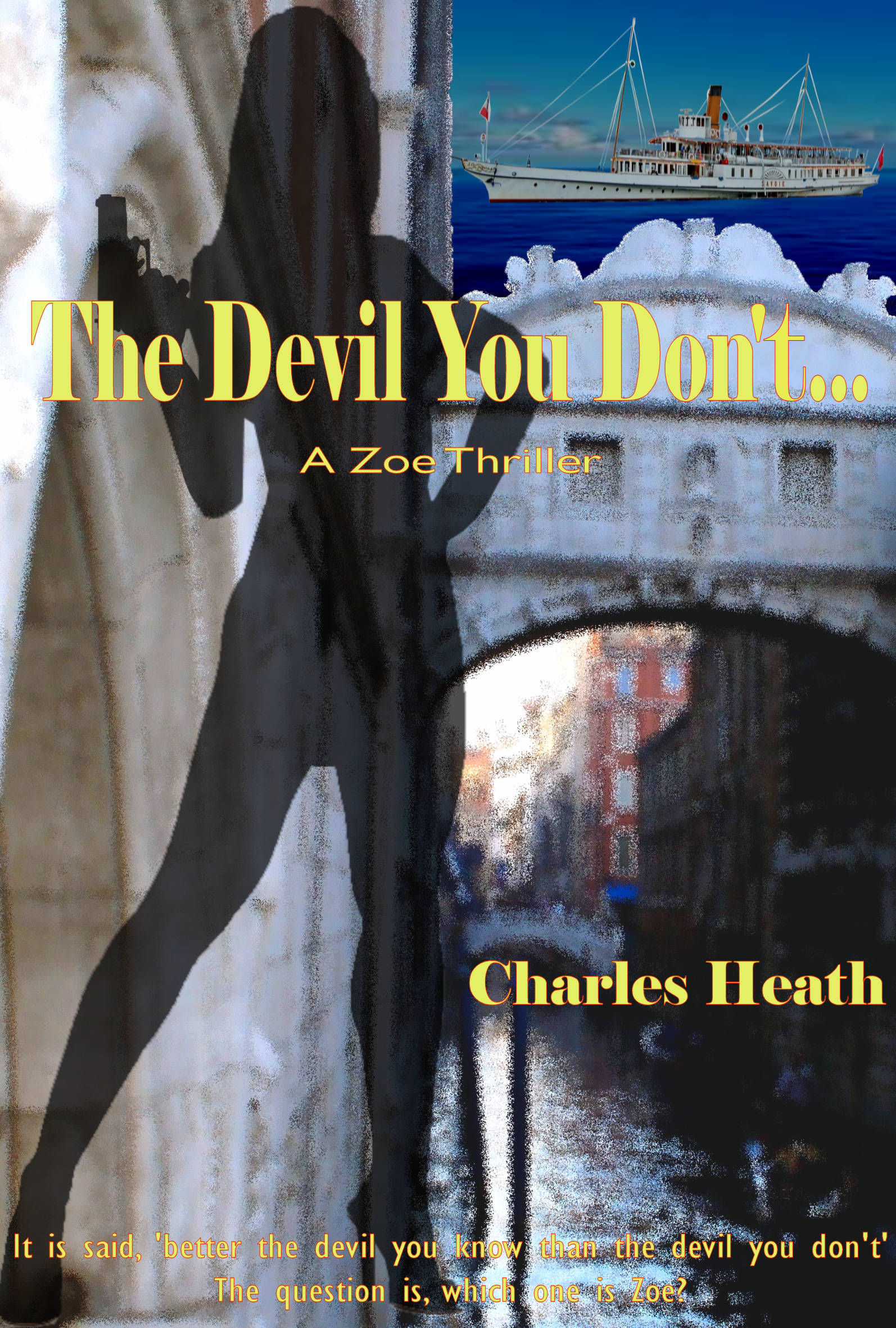
Another excerpt from ‘Betrayal’; a work in progress

My next destination in the quest was the hotel we believed Anne Merriweather had stayed at.

I was, in a sense, flying blind because we had no concrete evidence she had been there, and the message she had left behind didn’t quite name the hotel or where Vladimir was going to take her.

Mindful of the fact that someone might have been following me, I checked to see if the person I’d assumed had followed me to Elizabeth’s apartment was still in place, but I couldn’t see him. Next, I made a mental note of seven different candidates and committed them to memory.

Then I set off to the hotel, hailing a taxi. There was the possibility the cab driver was one of them, but perhaps I was slightly more paranoid than I should be. I’d been watching the queue, and there were two others before me.

The journey took about an hour, during which time I kept an eye out the back to see if anyone had been following us. If anyone was, I couldn’t see them.

I had the cab drop me off a block from the hotel and then spent the next hour doing a complete circuit of the block the hotel was on, checking the front and rear entrances, the cameras in place, and the siting of the driveway into the underground carpark. There was a camera over the entrance, and one we hadn’t checked for footage. I sent a text message to Fritz to look into it.

The hotel lobby was large and busy, which was exactly what you’d want if you wanted to come and go without standing out. It would be different later at night, but I could see her arriving about mid-afternoon, and anonymous among the type of clientele the hotel attracted.

I spent an hour sitting in various positions in the lobby simply observing. I had already ascertained where the elevator lobby for the rooms was, and the elevator down to the car park. Fortunately, it was not ‘guarded’ but there was a steady stream of concierge staff coming and going to the lower levels, and, just from time to time, guests.

Then, when there was a commotion at the front door, what seemed to be a collision of guests and free-wheeling bags, I saw one of the seven potential taggers sitting by the front door. Waiting for me to leave? Or were they wondering why I was spending so much time there?

Taking advantage of that confusion, I picked my moment to head for the elevators that went down to the car park, pressed the down button, and waited.

The was no car on the ground level, so I had to wait, watching, like several others, the guests untangling themselves at the entrance, and an eye on my potential surveillance, still absorbed in the confusion.

The doors to the left car opened, and a concierge stepped out, gave me a quick look, then headed back to his desk. I stepped into the car, pressed the first level down, the level I expected cars to arrive on, and waited what seemed like a long time for the doors to close.

As they did, I was expecting to see a hand poke through the gap, a latecomer. Nothing happened, and I put it down to a television moment.

There were three basement levels, and for a moment, I let my imagination run wild and considered the possibility that there were more levels. Of course, there was no indication on the control panel that there were any other floors, and I’d yet to see anything like it in reality.

With a shake of my head to return to reality, the car arrived, the doors opened, and I stepped out.

A car pulled up, and the driver stepped out, went around to the rear of his car, and pulled out a case. I half expected him to throw me the keys, but the instant glance he gave me told him was not the concierge, and instead brushed past me like I wasn’t there.

He bashed the up button several times impatiently and cursed when the doors didn’t open immediately. Not a happy man.

Another car drove past on its way down to a lower level.

I looked up and saw the CCTV camera, pointing towards the entrance, visible in the distance. A gate that lifted up was just about back in position and then made a clunk when it finally closed. The footage from the camera would not prove much, even if it had been working, because it didn’t cover the life lobby, only in the direction of the car entrance.

The doors to the other elevator car opened, and a man in a suit stepped out.

“Can I help you, sir? You seem lost.”

Security, or something else. “It seems that way. I went to the elevator lobby, got in, and it went down rather than up. I must have been in the wrong place.”

“Lost it is, then, sir.” I could hear the contempt for Americans in his tone. “If you will accompany me, please.”

He put out a hand ready to guide me back into the elevator. I was only too happy to oblige him. There had been a sign near the button panel that said the basement levels were only to be accessed by the guests.

Once inside, he turned a key and pressed the lobby button. The doors closed, and we went up. He stood, facing the door, not speaking. A few seconds later, he was ushering me out to the lobby.

“Now, sir, if you are a guest…”

“Actually, I’m looking for one. She called me and said she would be staying in this hotel and to come down and visit her. I was trying to get to the sixth floor.”

“Good. Let’s go over the the desk and see what we can do for you.”

I followed him over to the reception desk, where he signalled one of the clerks, a young woman who looked and acted very efficiently, and told her of my request, but then remained to oversee the proceeding.

“Name of guest, sir?”

“Merriweather, Anne. I’m her brother, Alexander.” I reached into my coat pocket and pulled out my passport to prove that I was who I said I was. She glanced cursorily at it.

She typed the name into the computer, and then we waited a few seconds while it considered what to output. Then, she said, “That lady is not in the hotel, sir.”

Time to put on my best-confused look. “But she said she would be staying here for the week. I made a special trip to come here to see her.”

Another puzzled look from the clerk, then, “When did she call you?”

An interesting question to ask, and it set off a warning bell in my head. I couldn’t say today, it would have to be the day she was supposedly taken.

“Last Saturday, about four in the afternoon.”

Another look at the screen, then, “It appears she checked out Sunday morning. I’m afraid you have made a trip in vain.”

Indeed, I had. “Was she staying with anyone?”

I just managed to see the warning pass from the suited man to the clerk. I thought he had shown an interest when I mentioned the name, and now I had confirmation. He knew something about her disappearance. The trouble was, he wasn’t going to volunteer any information because he was more than just hotel security.

“No.”

“Odd,” I muttered. “I thought she told me she was staying with a man named Vladimir something or other. I’m not too good at pronouncing those Russian names. Are you sure?”

She didn’t look back at the screen. “Yes.”

“OK, now one thing I do know about staying in hotels is that you are required to ask guests with foreign passports their next destination, just in case they need to be found. Did she say where she was going next?” It was a long shot, but I thought I’d ask.

“Moscow. As I understand it, she lives in Moscow. That was the only address she gave us.”

I smiled. “Thank you. I know where that is. I probably should have gone there first.”

She didn’t answer; she didn’t have to, her expression did that perfectly.

The suited man spoke again, looking at the clerk. “Thank you.” He swivelled back to me. “I’m sorry we can’t help you.”

“No. You have more than you can know.”

“What was your name again, sir, just in case you still cannot find her?”

“Alexander Merriweather. Her brother. And if she is still missing, I will be posting a very large reward. At the moment, you can best contact me via the American Embassy.”

Money is always a great motivator, and that thoughtful expression on his face suggested he gave a moment’s thought to it.

I left him with that offer and left. If anything, the people who were holding her would know she had a brother, that her brother was looking for her, and equally that brother had money.

© Charles Heath – 2018-2025

Top 5 sights on the road less travelled – Belgrade

Uncovering the Hidden Gems of Belgrade: 5 Off-the-Beaten-Path Experiences

Belgrade, the vibrant capital of Serbia, is a city that seamlessly blends Eastern and Western cultures, offering a unique and exciting travel experience. While most tourists flock to the famous Kalemegdan Fortress and Saint Sava Temple, there’s more to Belgrade than meets the eye. As a seasoned traveller, I’m excited to share with you the top five other things to do in Belgrade that will take you off the beaten path and into the heart of this fascinating city.

1. Explore the Street Art Scene in Savamala

Tucked away in the Savamala neighbourhood, Belgrade’s street art scene is a treasure trove of creativity and self-expression. This former industrial area has been transformed into a vibrant arts district, featuring stunning murals, graffiti, and quirky installations. Take a self-guided walking tour to discover the works of local and international artists, and experience the city’s edgy, avant-garde side. Be sure to check out the famous “Savamala” mural, which has become a symbol of the neighbourhood’s revitalisation.

2. Visit the Nikola Tesla Museum

While many visitors to Belgrade are familiar with the famous scientist’s name, few know about the fascinating museum dedicated to his life and work. The Nikola Tesla Museum is a must-visit for anyone interested in science, technology, and innovation. Located in a beautiful villa, the museum showcases an impressive collection of Tesla’s personal belongings, experiments, and inventions, including his famous Tesla coil. The museum’s interactive exhibits and guided tours offer a unique glimpse into the mind of a genius.

3. Take a Stroll through the Botanical Garden

Escape the hustle and bustle of the city and find serenity in the beautiful Botanical Garden, also known as the Jevremovac Botanical Garden. This peaceful oasis is home to over 1,000 plant species, including some rare and endangered ones. As you wander through the gardens, you’ll discover a variety of flora, from roses and lavender to cacti and succulents. The garden’s tranquil atmosphere and stunning natural beauty make it an ideal spot for relaxation and contemplation.

4. Discover the Vinča Culture at the Vinča Archaeological Site

Located just outside Belgrade, the Vinča Archaeological Site is a fascinating glimpse into the city’s ancient past. This Neolithic settlement, dating back over 7,000 years, is one of the oldest and most important archaeological sites in Europe. Explore the excavated ruins, which feature remnants of ancient homes, pottery, and tools, and learn about the daily lives of the Vinča people. The site’s museum offers a wealth of information and artifacts, providing a unique insight into the region’s rich cultural heritage.

5. Enjoy a Night Out in the Cvetni Trg Neighbourhood

For a truly authentic Belgrade experience, head to the Cvetni Trg (Flower Square) neighbourhood, known for its lively atmosphere, charming cafes, and eclectic nightlife. This trendy area is home to a variety of bars, clubs, and live music venues, offering everything from jazz and rock to traditional Serbian folk music. As you explore the neighbourhood, you’ll discover a mix of old and new, with historic buildings, street performers, and modern art installations adding to the area’s vibrant energy. Be sure to try some of the local cuisine, including delicious ćevapi and pljeskavica, at one of the many restaurants and food stalls.

In conclusion, Belgrade is a city that offers so much more than its famous landmarks. By venturing off the beaten path, you’ll discover a wealth of hidden gems, from street art and science museums to ancient archaeological sites and vibrant nightlife. Whether you’re a culture vulture, a foodie, or an adventure-seeker, Belgrade has something for everyone. So come and explore the real Belgrade, and experience the city’s unique blend of tradition, innovation, and warmth.

“Sunday in New York”, a romantic adventure that’s not a walk in the park!

“Sunday in New York” is ultimately a story about trust, and what happens when a marriage is stretched to its limits.

When Harry Steele attends a lunch with his manager, Barclay, to discuss a promotion that any junior executive would accept in a heartbeat, it is the fact his wife, Alison, who previously professed her reservations about Barclay, also agreed to attend, that casts a small element of doubt in his mind.

From that moment, his life, in the company, in deciding what to do, his marriage, his very life, spirals out of control.

There is no one big factor that can prove Harry’s worst fears, that his marriage is over, just a number of small, interconnecting events, when piled on top of each other, points to a cataclysmic end to everything he had believed in.

Trust is lost firstly in his best friend and mentor, Andy, who only hints of impending disaster, Sasha, a woman whom he saved, and who appears to have motives of her own, and then in his wife, Alison, as he discovered piece by piece damning evidence she is about to leave him for another man.

Can we trust what we see with our eyes or trust what we hear?

Haven’t we all jumped to conclusions at least once in our lives?

Can Alison, a woman whose self-belief and confidence is about to be put to the ultimate test, find a way of proving their relationship is as strong as it has ever been?

As they say in the classics, read on!

Purchase:

http://tinyurl.com/Amazon-SundayInNewYork

Writing a book in 365 days – 338

Day 338

Don’t Be Obsessed, Be Obsessedly Curious: The Balanced Art of Writing a Compelling Play

Playwriting is a thrilling dance between creativity and discipline. It’s a craft that demands passion, yet many aspiring playwrights believe they must be obsessively consumed by their work to succeed. But here’s the truth: you don’t need to be obsessive to write a great play. Instead, what you need is curiosity, patience, and a toolkit of strategies to bring your vision to life. Let’s explore why obsession isn’t the answer—and how to write a play that lingers in the hearts of audiences long after the curtain falls.


The Myth of the “Obsessed Artist”

Pop culture loves the image of the tormented artist locked in a studio for months, surviving on coffee and sheer willpower. But this myth is a red herring. While dedication is key, obsession—borderline compulsion, neglecting self-care, or losing balance—can lead to burnout, poor writing, and even health issues.

Consider this: Great plays are born from sustainable creativity, not self-destruction. Playwrights like Lynn Nottage and David Mamet thrived by setting boundaries, sleeping, and nourishing their minds with diverse experiences. The goal isn’t to “die for your art” but to live for it in a way that fuels your creativity without stealing your joy.


5 Strategies to Write a Compelling Play (Without Going Crazy)

1. Start with a Core Question, Not a Plot

Every great play is driven by an emotional or philosophical “what if?” Ask yourself:

  • What story haunts me?
  • What truth am I desperate to explore?
    Your answer might be as simple as, “What if a single mother lost her job and had to choose between her kids and a dream?” That question becomes the heartbeat of your play. Build your plot and characters to answer it—or, better yet, to challenge it.

2. Craft Nuanced Characters, Not Stereotypes

Audiences don’t want perfect heroes or villains. They want characters who feel human: flawed, vulnerable, and complicated.

  • Give each character a hidden motive. (Example: A grieving father might lash out, but his rage masks guilt.)
  • Avoid monologues that “explain” everything—let their actions and subtext do the work.

3. Fuel the Fire with Conflict and Stakes

Conflict isn’t just a punchy line—it’s the engine of drama. Ask:

  • What do my characters want?
  • What’s stopping them?
  • What do they stand to lose?

Think of Glengarry Glen Ross by David Mamet: The fight for a car sales job isn’t just about money—it’s about dignity. Raise the stakes by making the cost of failure personal.

4. Dialogue That Bites: Less Is More

Play dialogue should echo real speech—but with purpose.

  • Trim the filler: Delete “ums” and “you know.”
  • Subtext is your friend: Let characters say one thing but mean another. (This is how Shakespeare’s Ophelia truly speaks.)
  • Conflict in soundbites: Short, sharp lines pack more punch than long speeches.

Need help? Try the “Rewrite as a Screenplay” method: If your lines would feel at home on a Zoom call, they’re not dramatic enough.

5. Edit Ruthlessly and Collaborate Relentlessly

First drafts are drafts for a reason. Let them simmer, then revise with a surgeon’s precision.

  • Cut scenes that don’t serve the core question.
  • Work with others: Read your play aloud to beta readers, actors, or writers’ groups. Fresh ears catch what you miss.

Remember: Even August Wilson revised his plays 20+ times. Perfection isn’t a starting point—it’s a destination.


The Secret Sauce: Curiosity Over Compulsion

The key to writing a compelling play isn’t marathon sessions fueled by espresso but consistency and exploration. Take walks, read poetry, or attend stranger’s conversations. Inspiration isn’t just about being a “crazy artist”—it’s about living with open eyes and ears.

And when you feel stuck? Pace yourself. A daily 30-minute writing habit can build a masterpiece faster than a week-long caffeine-fueled sprint followed by burnout.


Final Thought: Write to Be Free, Not Trapped

A play is a mirror held up to life. It doesn’t have to be born of obsessive frenzy—just honest curiosity. The stage is for stories that matter, not for self-imposed suffering. So write from your deepest joys, fears, and questions. And remember: Your best work will come when you’re energised to tell it—not exhausted by the process.

Now go. Let the world see what makes you uniquely human. The audience is waiting. 🎭


Need more playwriting tips? Join our monthly writing workshops or follow us for weekly tips on balancing creativity and sanity in the arts. You’ve got this!

“Echoes From The Past”, the past doesn’t necessarily stay there


What happens when your past finally catches up with you?

Christmas is just around the corner, a time to be with family. For Will Mason, an orphan since he was fourteen, it is a time for reflection on what his life could have been, and what it could be.

Until a chance encounter brings back to life the reasons for his twenty years of self-imposed exile from a life only normal people could have. From that moment Will’s life slowly starts to unravel and it’s obvious to him it’s time to move on.

This time, however, there is more at stake.

Will has broken his number one rule, don’t get involved.

With his nemesis, Eddie Jamieson, suddenly within reach, and a blossoming relationship with an office colleague, Maria, about to change everything, Will has to make a choice. Quietly leave, or finally, make a stand.

But as Will soon discovers, when other people are involved there is going to be terrible consequences no matter what choice he makes.

https://amzn.to/2CYKxu4

newechocover5rs

In a word: Rain

Well, isn’t it just like you to rain on my parade?

Yes, and don’t we need a lot of rain because of the bushfires that are burning out of control?

Rain is that stuff that falls from the sky, sometimes at the awkwardest of times, like when you leave your umbrella in the car.

And rain can be a problem in sub-zero temperatures and high winds when it almost takes on the form of multiple miniature knives.  Rain and snow together, sleep, but that’s something else.

Of course, it could always rain cats and dogs, a rather interesting occurrence if it ever happened.

This should not be confused with the word rein.

As any horseperson would know this is what helps control a horse

But, it doesn’t have to be a horse, it might be that you are told to rein in your attack dog

Or rein in your excesses

Or alternatively, give a person free rein to go about their business.

Then there is reign, that period of time when a monarch rules, and it seems in England women hold the record for the longest reign, Queen Victoria, and Queen Elizabeth II

That’s distinct from the office oligarchs who seem to think they reign over the plebs

An excerpt from “What Sets Us Apart”, a mystery with a twist

See the excerpt from the story below, just a taste of what’s in store…

http://amzn.to/2Eryfth

whatsetscover

McCallister was old school, a man who would most likely fit in perfectly campaigning on the battlefields of Europe during the Second World War. He’d been like a fish out of water in the army, post-Falklands, and while he retired a hero, he still felt he’d more to give.

He’d applied and was accepted as head of a SWAT team, and, watching him now as he and his men disembarked from the truck in almost military precision, a look passed between Annette, the police liaison officer, and I that said she’d seen it all before. I know I had.

There was a one in four chance his team would be selected for this operation, and she had been hoping it would be one of the other three. While waiting for them to arrive she filled me in on the various teams. His was the least co-operative, and the more likely to make ad-hoc decisions rather than adhere to the plan, or any orders that may come from the officer in charge.

This, she said quite bluntly, was going to end badly.

I still had no idea why Prendergast instructed me to attend the scene of what looked to be a normal domestic operation, but as the nominated expert in the field in these types of situations, it was fairly clear he wasn’t taking any chances. It was always a matter of opinion between us, and generally I lost.

In this case, it was an anonymous report identifying what the authorities believed were explosives in one of the dockside sheds where explosives were not supposed to be.

The only reason why the report was given any credence was the man, while not identifying himself by name, said he’d been an explosive expert once and recognized the boxes. That could mean anything, but the Chief Constable was a cautious man.

With his men settled and preparing their weapons, McCallister came over to the command post, not much more than the SUV my liaison and I arrived in, with weapons, bulletproof vests, and rolls of tape to cordon off the area afterward. We both had coffee, steaming in the cold early morning air. Dawn was slowly approaching and although rain had been forecast it had yet to arrive.

A man by the name of Benson was in charge. He too had groaned when he saw McCallister.

“A fine morning for it.” McCallister was the only enthusiastic one here.

He didn’t say what ‘it’ was, but I thought it might eventually be mayhem.

“Let’s hope the rain stays away. It’s going to be difficult enough without it,” Benson said, rubbing his hands together. We had been waiting for the SWAT team to arrive, and another team to take up their position under the wharf, and who was in the final stages of securing their position.

While we were waiting we drew up the plan. I’d go in first to check on what we were dealing with, and what type of explosives. The SWAT team, in the meantime, were to ensure all the exits to the shed were covered. When I gave the signal, they were to enter and secure the building. We were not expecting anyone inside or out, and no movement had been detected in the last hour since our arrival and deployment.

“What’s the current situation?”

“I’ve got eyes on the building, and a team coming in from the waterside, underneath. Its slow progress, but they’re nearly there. Once they’re in place, we’re sending McKenzie in.”

He looked in my direction.

“With due respect sir, shouldn’t it be one of us?” McCallister glared at me with the contempt that only a decorated military officer could.

“No. I have orders from above, much higher than I care to argue with, so, McCallister, no gung-ho heroics for the moment. Just be ready to move on my command, and make sure you have three teams at the exit points, ready to secure the building.”

McCallister opened his mouth, no doubt to question those orders, but instead closed it again. “Yes sir,” he muttered and turned away heading back to his men.

“You’re not going to have much time before he storms the battlements,” Benson quietly said to me, a hint of exasperation in his tone. “I’m dreading the paperwork.”

It was exactly what my liaison officer said when she saw McCallister arriving.

The water team sent their ‘in position’ signal, and we were ready to go.

In the hour or so we’d been on site nothing had stirred, no arrivals, no departures, and no sign anyone was inside, but that didn’t mean we were alone. Nor did it mean I was going to walk in and see immediately what was going on. If it was a cache of explosives then it was possible the building was booby-trapped in any number of ways, there could be sentries or guards, and they had eyes on us, or it might be a false alarm.

I was hoping for the latter.

I put on the bulletproof vest, thinking it was a poor substitute for full battle armor against an exploding bomb, but we were still treating this as a ‘suspected’ case. I noticed my liaison officer was pulling on her bulletproof vest too.

“You don’t have to go. This is my party, not yours,” I said.

“The Chief Constable told me to stick to you like glue, sir.”

I looked at Benson. “Talk some sense into her please, this is not a kindergarten outing.”

He shrugged. Seeing McCallister had taken all the fight out of him. “Orders are orders. If that’s what the Chief Constable requested …”

Madness. I glared at her, and she gave me a wan smile. “Stay behind me then, and don’t do anything stupid.”

“Believe me, I won’t be.” She pulled out and checked her weapon, chambering the first round. It made a reassuring sound.

Suited up, weapons readied, a last sip of the coffee in a stomach that was already churning from nerves and tension, I looked at the target, one hundred yards distant and thought it was going to be the longest hundred yards I’d ever traversed. At least for this week.

A swirling mist rolled in and caused a slight change in plans.

Because the front of the buildings was constantly illuminated by large overhead arc lamps, my intention had been to approach the building from the rear where there was less light and more cover. Despite the lack of movement, if there were explosives in that building, there’d be ‘enemy’ surveillance somewhere, and, after making that assumption, I believed it was going to be easier and less noticeable to use the darkness as a cover.

It was a result of the consultation, and studying the plans of the warehouse, plans that showed three entrances, the main front hangar type doors, a side entrance for truck entry and exit and a small door in the rear, at the end of an internal passage leading to several offices. I also assumed it was the exit used when smokers needed a break. Our entry would be by the rear door or failing that, the side entrance where a door was built into the larger sliding doors. In both cases, the locks would not present a problem.

The change in the weather made the approach shorter, and given the density of the mist now turning into a fog, we were able to approach by the front, hugging the walls, and moving quickly while there was cover. I could feel the dampness of the mist and shivered more than once.

It was nerves more than the cold.

I could also feel rather than see the presence of Annette behind me, and once felt her breath on my neck when we stopped for a quick reconnaissance.

It was the same for McCallister’s men. I could feel them following us, quickly and quietly, and expected, if I turned around, to see him breathing down my neck too.

It added to the tension.

My plan was still to enter by the back door.

We slipped up the alley between the two sheds to the rear corner and stopped. I heard a noise coming from the rear of the building, and the light tap on the shoulder told me Annette had heard it too. I put my hand up to signal her to wait, and as a swirl of mist rolled in, I slipped around the corner heading towards where I’d last seen the glow of a cigarette.

The mist cleared, and we saw each other at the same time. He was a bearded man in battle fatigues, not the average dockside security guard.

He was quick, but my slight element of surprise was his undoing, and he was down and unconscious in less than a few seconds with barely a sound beyond the body hitting the ground. Zip ties secured his hands and legs, and tape his mouth. Annette joined me a minute after securing him.

A glance at the body then me, “I can see why they, whoever they are, sent you.”

She’d asked who I worked for, and I didn’t answer. It was best she didn’t know.

“Stay behind me,” I said, more urgency in my tone. If there was one, there’d be another.

Luck was with us so far. A man outside smoking meant no booby traps on the back door, and quite possibly there’d be none inside. But it indicated there were more men inside, and if so, it appeared they were very well trained. If that were the case, they would be formidable opponents.

The fear factor increased exponentially.

I slowly opened the door and looked in. A pale light shone from within the warehouse itself, one that was not bright enough to be detected from outside. None of the offices had lights on, so it was possible they were vacant. I realized then they had blacked out the windows. Why hadn’t someone checked this?

Once inside, the door closed behind us, progress was slow and careful. She remained directly behind me, gun ready to shoot anything that moved. I had a momentary thought for McCallister and his men, securing the perimeter.

At the end of the corridor, the extent of the warehouse stretched before us. The pale lighting made it seem like a vast empty cavern, except for a long trestle table along one side, and, behind it, stacks of wooden crates, some opened. It looked like a production line.

To get to the table from where we were was a ten-yard walk in the open. There was no cover. If we stuck to the walls, there was equally no cover and a longer walk.

We needed a distraction.

As if on cue, the two main entrances disintegrated into flying shrapnel accompanied by a deafening explosion that momentarily disoriented both Annette and I. Through the smoke and dust kicked up I saw three men appear from behind the wooden crates, each with what looked like machine guns, spraying bullets in the direction of the incoming SWAT members.

They never had a chance, cut down before they made ten steps into the building.

By the time I’d recovered, my head heavy, eyes watering and ears still ringing, I took several steps towards them, managing to take down two of the gunmen but not the third.

I heard a voice, Annette’s I think, yell out, “Oh, God, he’s got a trigger,” just before another explosion, though all I remember in that split second was a bright flash, the intense heat, something very heavy smashing into my chest knocking the wind out of me, and then the sensation of flying, just before I hit the wall.

I spent four weeks in an induced coma, three months being stitched back together and another six learning to do all those basic actions everyone took for granted. It was twelve months almost to the day when I was released from the hospital, physically, except for a few alterations required after being hit by shrapnel, looking the same as I always had.

But mentally? The document I’d signed on release said it all, ‘not fit for active duty; discharged’.

It was in the name of David Cheney. For all intents and purposes, Alistair McKenzie was killed in that warehouse, and for the first time ever, an agent left the Department, the first to retire alive.

I was not sure I liked the idea of making history.

© Charles Heath 2016-2020

Third son of a Duke – The research behind the story – 20

All stories require some form of research, quite often to place a character in a place at a particular time, especially if it is in a historical context. This series will take you through what it was like in 1914 through 1916.

Were there any government restrictions in place against people travelling from Australia to England in April 1915

Yes, significant government restrictions were in place on travel from Australia to England in April 1915, driven by the war effort’s needs and security concerns. While formal immigration between British colonies and the UK did not require passports in the modern sense at that time, wartime regulations imposed severe limitations and risks on civilian travel. 

Key government restrictions and wartime conditions included:

War Precautions Act 1914

In August 1914, the Australian government passed the War Precautions Act, which gave it broad powers for the duration of the war. By 1915, this act was used to impose regulations that profoundly affected public life, including travel. A second, expanded act was even introduced in April 1915. It allowed the government to: 

  • Contribute to censorship and surveillance. The act granted the government the power to control newspapers and censor information that could be detrimental to the war effort.
  • Restrict “aliens.” Regulations required people with connections to enemy nations to register as “aliens”. While this was primarily aimed at German and Austro-Hungarian nationals, it subjected anyone not of British descent to greater scrutiny. 

Shipping scarcity and military requisition

By April 1915, most passenger liners had been requisitioned for military use to transport troops, munitions, and supplies. 

  • Troop transport: By this time, tens of thousands of Australian soldiers had already been transported to training camps in Egypt. Many of these troop transports departed in convoys from ports like Brisbane and Melbourne.
  • Cargo needs: The vast logistical demands of the war meant that civilian shipping was drastically reduced. The few remaining voyages were fraught with danger from German U-boats, particularly after the outbreak of unrestricted submarine warfare later in the war. 

Increased security and surveillance

All travellers, even British subjects, were subject to greater security measures and scrutiny.

  • Alien registration: The UK’s own Aliens Restriction Act 1914 and subsequent orders initiated a system of systematic registration and surveillance of non-British subjects. In Australia, people with connections to enemy nations were required to register as “aliens,” and many were interned in camps.
  • Port authority powers: Both Australian and British authorities had powers to restrict or prohibit the movement of people in and out of specified areas. 

Informal and indirect restrictions

Beyond specific regulations, other factors severely curtailed travel.

  • Travel cost and availability: The scarcity of passenger shipping drove up costs and made bookings extremely difficult.
  • Reduced incentive: With the war dominating daily life, most people without urgent, war-related reasons had little desire to take such a risky and difficult journey. 

In summary, while a British subject might not have faced the outright ban that an “enemy alien” did, wartime government regulations and military control of shipping made a casual trip from Australia to England in April 1915 a nearly impossible and highly risky undertaking.

“How could that possibly happen…” – A short story

I had hoped by the time I was promoted to assistant manager it might mean something other than long hours and an increase in pay.

It didn’t.

But unlike others who had taken the job, and eventually become jaded and left, I stayed. Something I realized that others seemed to either ignore or just didn’t understand, this was a company that rewarded loyalty.

It was why there were quite a few who had served 30 years or more. They might not reach the top job, but they are certainly well looked after.

I had a long way to go, having been there only 8 years, and according to some, on a fast track. I was not sure how I would describe this so-called ‘fast track’ other than being in the right place at the right time and making a judicial selection.

When it was my turn to be promoted, I had a choice of a plum department, or one most of my contemporaries had passed over. At the time, the words of my previous manager sprang to mind, that being a manager for the most sought-after department or the least sought-after, came with exactly the same privileges.

And, he was right. I took the least sought-after, much to their disdain and disapproval. One year on, that disapproval had turned almost to envy; that was when the Assistant Managers were granted a new privilege, tea, and lunch in the executive dining room.

“So, what’s it like?” John asked when our group met on a Friday night, this was the first after the privilege was granted.

He had been one of the three, including me, who had the opportunity to take the role. Both he and Alistair had both declined, prepared to wait for a more prestigious department. It hadn’t happened to them yet.

“The same as the staff dining room, only smaller. Except, I guess, the waitstaff and butler. They come and serve you when you have to go to them in the staff room. They’re the same staff, by the way, except for the butler.”

I could see the awe, or was it envy, in their eyes. “but it’s not that great. The Assistant Managers all sit at one end of the table, and we’re not part of the main group, so no sharing of information I’m afraid. And the meals are the same, just served on fancier crockery.”

“Then nothing to write home about?” Will was one of those who they also thought to be on a ‘fast track’. I was still trying to see how my ‘fast track’ was actually that fast.

“Put it this way, the extra pay doesn’t offset the long hours because you get overtime, I don’t, so on a good week, you’d all be earning more than me. Without responsibility, if anything goes wrong. I think that’s why Assistant Managers were created, to take the blame when anything goes wrong.”

That had been the hardest pill to swallow. Until I got the role, I hadn’t realized what it really involved. Nor had the others, and it was not something we could whinge about. My first-day introductory speech from Tomkins, my Manager, was all about taking responsibility, and how I was there to make his life easier. It was a speech he made a few times because he’d been Manager for the last 16 years, much the same as the others, and promotion if ever, would come when they died.

And Manager’s rarely died, because of their Assistant Managers.

“How old is Tomkins now?” Bert, a relative newcomer to our group, asked. He was still in the ‘in awe’ phase.

“About the same as Father Time,” I said. “But the reality is, no one knows, except perhaps for the personnel manager.” O looked over at Wally, the Personnel Department’s Assistant Manager. “Any chance of you telling us?”

“No. You know I can’t.”

“But you know?” I asked.

“Of course, but you know the rules. That’s confidential information. Not like what you are the custodian of, information everyone needs.”

Which, of course, was true. Communication and Secretarial Services had no secrets, except for twice a year when the company Bord of Directors met, and we were responsible for all the documents used at their meetings. Then, and only then, was I privy to all the secrets, including promotions. And be asked ‘What’s happening?’.

“Just be content to know that he’s as old as the hills, as most of them. It seems to me that one of the pre-requisites for managership is that you have been employed here for 30 years.”

Not all, though, I’d noticed, but there wasn’t one under the age of fifty.

And so it would go, the Friday night lament, those ‘in’ the executive, and those who were not quite there yet.
It seemed prophetic, in a sense, that we had been talking about Mangers and their ages. By a quirk of fate, some weeks before, that I learned of Tomkins’s currents state of health via a call on his office phone. At the time he was out, where, he had not told me, but by his the I believed it was something serious, so serious he didn’t want me, or anyone else, to know about it.

That phone call was from his wife, Eleanor, whom I’d met on a number of occasions when she came to take him home from work. I liked her, and couldn’t help but notice she was his exact opposite, Tomkins, silent and at times morose, and Eleanor, the life of the party. I could imagine her being a handful in her younger days, and it was a stark reminder of that old saying ‘opposites attract’.

She was concerned and asked me if he had returned from the specialist. I simply said he had but was elsewhere, and promised to get him to call her when he returned. Then I made a quick call around to see where he was and found that he was in Personnel. I left an innocuous message on his desk, and then let my imagination run wild.

At least for a day or so, the time it took for me to realize that it was probably nothing, the lethargy he’d been showing, gone.

I’d put it out of my mind until my cell phone rang, and it was from the Personnel Manager. On a Sunday, no less. In the few seconds before I answered it, I’d made the assumption that Tomkins’s secretive visits to the specialist meant he needed time off for a routine operation.

Greetings over, O’Reilly, the Personnel Manager, cut straight to the chase, “For your personal information, and not to be repeated, Tomkins will be out of action for about two months, and as that is longer than the standard period, you will become Acting Manager. We’ll talk more about this Tuesday morning.” Monday was a holiday.

All Assistant Managers knew the rules. Any absence of a manager for longer than a month, promotion to Acting Manager. Anything less, you sat in the office, but no change in title. There was one more rule, that in the event of the death of a manager, the assistant manager was immediately promoted to Manager. This had only happened once before. 70 years ago. If a manager retired, then the position of Manager was thrown open to anyone in the organization.

It was an intriguing moment in time.

Tuesday came, and as usual, I went into the office, with only one thought in mind, let the staff in the department know what was happening, of course, the moment I was given the approval to do so by Personnel.

Not a minute after I sat down, the phone rang. I picked it up, gave my name and greeting. It was met with a rather excitable voice of the Assistant Manager, Personnel, “I just got word from on high, you’ve been promoted to manager. How could that possibly happen…”

Then a moment later, as realization set in, “Unless…”

—-

© Charles Heath 2020-2021

The 2am Rant: Have you ever been sidetracked

Started to write a post, get so far, and another theme or idea slips in, and demands to be written first?

I’m on this nostalgia kick, simply because when I turned on the TV to catch up with the latest news, it was on a channel that shows old movies.

In case you don’t realize it, I love old movies, not just those from Hollywood, but also from Britain.

What was on?

An American in Paris.

Well, it had to be one of my favourites, even though I’m not a great fan of Gene Kelly, the sheer majesty of the music more than makes up for the story in between.

Could it be said, then, this was from the golden years of Hollywood? Such bright and cheerful movies such as Singing in the Rain, and An American in Paris, perhaps exemplify the Hollywood musical.

Years before, Fred Astaire and Ginger Rogers were the quintessential musical stars, followed by the likes of Judy Garland and Deanna Durbin, and later Bing Crosby and Frank Sinatra. A couple of musicals, in particular, comes to mind, firstly the Wizard of Oz and then High Society.

Moving forward to more modern times, several stand out in the 1960s, My Fair Lady and Sound of Music. By this time theatregoers were dining on the superb talents of Rogers and Hammerstein, and Learner and Lowe. Of the former, musicals such as Carousel, South Pacific, and The King and I were on my list of favourites.

Even later still in the 1970s, there is Funny Girl, and Hello Dolly, which have a connection to the past with its director, none other than, yes, Gene Kelly.

But it seems once the 60s had passed the notion of the Hollywood blockbuster musical had gone, and we were left with clip shows like That’s Entertainment, put together while Gene Kelly and Fred Astaire were still alive. We still had the film versions of the stage plays, but the lustre had, somehow, gone.

Perhaps it will return, who knows, after all, everything old is usually new again, it just takes time to go full circle.