In a word: Saw or Sore or Soar

In the first or second instance of the word Sore, we all know this malady can sometimes fester into something a lot worse.

Or that a person could be a sore loser

Or after spending an hour on the obstacle course, they come off very sore and sorry.  I never quite understood why they should be sorry because no one ever apologises to an inanimate object.  Or do they?

Or perhaps he was sore at his friend for not telling him the truth.

Then, there’s another meaning, saw, which can mean the past tense of seeing, that is, I saw them down by the pool.

I could also use a saw, you know, that thing that cuts through wood, steel, plastic, almost anything.  And yes, it’s possible someone might actually saw through a loaf of bread.

There are hand saws, electric saws, band saws, coping saws, and even a bread knife, all of these have one thing in common, a serrated edge with teeth of different sizes, designed to cut, smoothly or roughly depending on the size.

Add it to bones, and you have Captain Kirk’s description of his medical officer on the Enterprise.  I’m not sure any doctor would like to be addressed as saw-bones.

But then, confusingly in the way only English can do, there’s another word that sounds exactly the same, soar

This, of course, means hovering up there in the heavens, with or without propulsion or oxygen.

Yes, it’s difficult to soar with eagles when you work with turkeys.  I’ve always liked this expression though most of the time people don’t quite understand what it means.

An excerpt from “Amnesia”, a work in progress

I remembered a bang.

I remembered the car slewing sideways.

I remember another bang, and then it was lights out.

When I opened my eyes again, I saw the sky.

Or I could be underwater.

Everything was blurred.

I tried to focus but I couldn’t. My eyes were full of water.

What happened?

Why was I lying down?

Where was I?

I cast my mind back, trying to remember.

It was a blank.

What, when, who, why and where, are questions I should easily be able to answer. These are questions any normal person could answer.

I tried to move. Bad, bad mistake.

I did not realise the scream I heard was my own. Just before my body shut down.

“My God! What happened?”

I could hear, not see. I was moving, lying down, looking up.

I was blind. Everything was black.

“Car accident; hit a tree, sent the passenger flying through the windscreen. Pity to poor bastard didn’t get the message that seat belts save lives.”

Was I that poor bastard?

“Report?” A new voice, male, authoritative.

“Multiple lacerations, broken collar bone, broken arm in three places, both legs broken below the knees, one badly. We are not sure of internal injuries, but ruptured spleen, cracked ribs and pierced right lung are fairly evident, x-rays will confirm that and anything else.”

“What isn’t broken?”

“His neck.”

“Then I would have to say we are looking at the luckiest man on the planet.”

I heard the shuffling of pages.

“OR1 ready?”

“Yes. On standby since we were first advised.”

“Good. Let’s see if we can weave some magic.”

Magic.

It was the first word that popped into my head when I surfaced from the bottom of the lake. That first breath, after holding it for so long, was sublime, and, in reality, agonising.

Magic, because it seemed like I’d spent a long time underwater.

Or somewhere.

I tried to speak but couldn’t. The words were just in my head.

Was it night or was it day?

Was it hot, or was it cold?

Where was I?

Around me, it felt cool.

It was incredibly quiet. No noise except for the hissing of air through an air-conditioning vent. Or that was the sound of pure silence.  And with it the revelation that silence was not silent. It was noisy.

I didn’t try to move.

Instinctively, somehow, I knew not to.

A previous unpleasant experience?

I heard what sounded like a door opening, and noticeably quiet footsteps slowly came into the room. They stopped. I could hear breathing, slightly laboured, a sound I’d heard before.

My grandfather.

He had smoked all his life until he was diagnosed with lung cancer. But for years before that he had emphysema. The person in the room was on their way, down the same path. I could smell the smoke.

I wanted to tell whoever it was the hazards of smoking.

I couldn’t.

I heard a metallic clanging sound from the end of the bed. A moment later the clicking of a pen, then writing.

“You are in a hospital.” A female voice suddenly said. “You’ve been in a bad accident. You cannot talk, or move, all you can do, for the moment, is listen to me. I am a nurse. You have been here for 45 days and just came out of a medically induced coma. There is nothing to be afraid of.”

She had a very soothing voice.

Her fingers stroked the back of my hand.

“Everything is fine.”

Define fine, I thought. I wanted to ask her what ‘fine’ meant.

“Just count backwards from 10.”

Why?

I didn’t reach seven.

Over the next ten days, that voice became my lifeline to sanity. Every morning, I longed to hear it, if only for the few moments she was in the room, those few waking moments when I believed she, and someone else who never spoke, were doing tests. I knew it had to be someone else because I could smell the essence of lavender. My grandmother had worn a similar scent.

It rose above the disinfectant.

She was another doctor, not the one who had been there the day I arrived. Not the one who had used some ‘magic’ and kept me alive.

It was then, in those moments before she put me under again, that I thought, what if I was paralysed? It would explain a lot. A chill went through me.

The next morning, she was back.

“My name is Winifred. We don’t know what your name is, not yet. In a few days, you will be better, and you will be able to ask us questions. You were in an accident, and you were very severely injured, but I can assure you there will be no lasting damage.”

More tests, and then when I expected the lights to go out, they didn’t. Not for a few minutes more. This was how I would be integrated back into the world. A little bit at a time.

The next morning, she came later than usual, and I’d been awake for a few minutes. “You have bandages over your eyes and face. You had bad lacerations to your face, and glass in your eyes. We will know more when the bandages come off in a few days. Your face will take longer to heal. It was necessary to do some plastic surgery.”

Lacerations, glass in my eyes, car accidents, plastic surgery. By logical deduction, I knew I was the poor bastard thrown through the windscreen. It was a fleeting memory from the day I was admitted.

How could that happen?

That was the first of many startling revelations. The second was the fact I could not remember the crash. Equally shocking, in that same moment was the fact I could not remember before the crash either, or only vague memories after.

But the most shattering of all these revelations was the one where I realised, I could not remember my name.

I tried to calm down, sensing a rising panic.

I was just disoriented, I told myself. After 45 days in an induced coma, it had messed with my mind, and it was only a temporary lapse. Yes, that’s what it was, a temporary lapse. I will remember tomorrow. Or the next day.

Sleep was a blessed relief.

The next day I didn’t wake up feeling nauseous. I think they’d lowered the pain medication. I’d heard that morphine could have that effect. Then, how could I know that but not who I am?

Now I knew Winifred the nurse was preparing me for something unbelievably bad. She was upbeat, and soothing, giving me a new piece of information each morning. This morning, “You do not need to be afraid. Everything is going to be fine. The doctor tells me you are going to recover with little scarring. You will need some physiotherapy to recover from your physical injuries, but that’s in the future. We need to let you mend a little bit more before then.”

So, I was not going to be able to leap out of bed and walk out of the hospital any time soon. I don’t suppose I’d ever leapt out of bed, except as a young boy. I suspect I’d sustained a few broken bones. I guess learning to walk again was the least of my problems.

But there was something else. I picked it up in the timbre of her voice, a hesitation, or reluctance. It sent another chill through me.

This time I was left awake for an hour before she returned.

This time sleep was restless.

Scenes were playing in my mind, nothing I recognised, and nothing lasting longer than a glimpse. Me. Others, people I didn’t know. Or I knew them and couldn’t remember them.

Until they disappeared, slowly like the glowing dot in the centre of the computer screen, before finally fading to black.

The morning the bandages were to come off she came in early and woke me. I had another restless night, the images becoming clearer, but nothing recognisable.

“This morning the doctor will be removing the bandages over your eyes. Don’t expect an immediate effect. Your sight may come back quickly, or it may come back slowly, but we believe it will come back.”

I wanted to believe I was not expecting anything, but I was. It was human nature. I did not want to be blind as well as paralysed. I had to have at least one reason to live.

I dozed again until I felt a gentle hand on my shoulder. I could smell the lavender; the other doctor was back. And I knew the hand on my shoulder was Winifred’s. She told me not to be frightened.

I was amazed to realise at that moment, I wasn’t.

I heard the scissors cutting the bandages.

I felt the bandage being removed, and the pressure coming off my eyes. I could feel the pads covering both eyes.

Then a moment when nothing happened.

Then the pads are gently lifted and removed.

Nothing.

I blinked my eyes, once, twice. Nothing.

“Just hold on a moment,” Winifred said. A few seconds later I could feel a cool towel wiping my face, and then gently wiping my eyes. There was ointment or something else in them.

Then a flash. Well, not a flash, but like when a light is turned on and off. A moment later, it was brighter, not the inky blackness of before, but a shade of grey.

She wiped my eyes again.

I blinked a few more times, and then the light returned, and it was like looking through water, at distorted and blurry objects in the distance.

I blinked again, and she wiped my eyes again.

Blurry objects took shape. A face looking down on me, an elderly lady with a kindly face, surely Winifred, who was smiling. And on the opposite side of the bed, the doctor, a Chinese woman of indescribable beauty.

I nodded.

“You can see?”

I nodded again.

“Clearly?”

I nodded.

“Very good. We will just draw the curtains now. We don’t want to overdo it. Tomorrow we will be taking off the bandages on your face. Then, it will be the next milestone. Talking.”

I couldn’t wait.

When morning came, I found myself afraid. Winifred had mentioned scarring, there were bandages on my face. I knew, but wasn’t quite sure how I knew, I wasn’t the most handsome of men before the accident, so this might be an improvement.

I was not sure why I didn’t think it would be the case.

They came at mid-morning, the nurse, Winifred, and the doctor, the exquisite Chinese. She was the distraction, taking my mind off the reality of what I was about to see.

Another doctor came into the room before the bandages were removed, and he was introduced as the plastic surgeon who had ‘repaired’ the ravages of the accident. It had been no easy job, but, with a degree of egotism, he did say he was one of the best in the world.

I found it hard to believe, if he were, that he would be at a small country hospital.

“Now just remember, what you might see now is not how you will look in a few months.”

Warning enough.

The Chinese doctor started removing the bandages. She did it slowly and made sure it did not hurt. My skin was very tender, and I suspect still bruised, either from the accident or the surgery, I didn’t know.

Then it was done.

The plastic surgeon gave his work a thorough examination and seemed pleased with his work. “Coming along nicely,” he said to the other doctor. He issued some instructions on how to manage the skin, nodded to me, and I thanked him before he left.

I noticed Winifred had a mirror in her hand and was reticent in using it. “As I said,” she said noticing me looking at the mirror, “what you see now will not be the result. The doctor said it was going to heal with little scarring. You have been extremely fortunate he was available. Are you ready?”

I nodded.

She showed me.

I tried not to be reviled at the red and purple mess that used to be my face. At a guess, I would have to say he had to put it all back together again, but not knowing what I looked like before, I had no benchmark. All I had was a snippet of memory that told me I was not the tall, dark, and handsome type.

And I still could not talk. There was a reason, he had worked in that area too. Just breathing hurt. I think I would save up anything I had to say for another day. I could not even smile. Or frown. Or grimace.

“We’ll leave you for a while. Everyone needs a little time to get used to the change. I suspect you are not sure if there has been an improvement in last year’s model. Well, time will tell.”

A new face?

I could not remember the old one.

My memory still hadn’t returned.

©  Charles Heath  2024

NANOWRIMO – November 2025 – Day 15

The Third Son of a Duke

War is declared … on the other side of the world.

Of course, things happen, but our Protagonist is nowhere near any of it.  He learns of the conflagration via a rather interesting young lady who flies a plane, delivering mail and urgent supplies to the outlying stations.

Her explanation, a summary of newspaper reports, goes something like this:

“Declare war.  Some Serbian geezer assassinated some old geezer, the Archduke for Austria or some such, and his wife, then the Kaiser, some other old geezer in Germany said he’d back them to attack the assassin’s country, and now it’s on for young and old.  Guys are lining up to enlist, thinking it’s going to be a lark.  Mad, completely mad.”

Where does that leave our protagonist?

Back in the saddle.  The war has affected them too, with several of the station hands taking off to Winton and beyond to enlist.  He was not going anywhere.  But the thought is there, that notion of enlisting himself.  For the moment, though, there was work to be done.

Letters from home. The first was from his wavering girlfriend, who told him she had moved on,  the others from his family, but eventually one from his father, the news he wasn’t quite expecting. The death at war of his eldest brother, the Duck to be, the title moving down to the next son, the brother above him.

Does that mean he now becomes the second son of the duke?

But now he can use his brother’s death at the hands of the enemy as an excuse to enlist and go mete out some retribution.

1630 words, for a total of 22760 words.

Writing about writing a book – Research

Day 24

Lost Battalions: The Vietnam Vets Who Walked Into the Wilderness and Never Came Back

We often talk about the heroes who returned from war and the ones who made the ultimate sacrifice. But history is also written in the silences—in the stories of those who simply vanished. After the Vietnam War, a curious and sombre phenomenon occurred in both Australia and the United States: a notable number of veterans returned home only to eventually disappear, opting for a life completely “off the grid.”

The question isn’t just a matter of historical curiosity: Just how many ex-servicemen from Australia and America went off-grid after dabbling in drugs in Vietnam, and why?

While the romanticised image is of a lone vet building a cabin deep in the woods, the reality is far more complex, tragic, and rooted in the unique trauma of the Vietnam experience.

The Uncountable Numbers: A Statistical Ghost Story

First, the hard truth: we will never know the exact number. By its very nature, going “off-grid” means severing ties with official institutions—no census, no veterans’ affairs paperwork, no tax records. These men became statistical ghosts.

We can, however, look at the clues:

  • Rough Estimates: Some researchers and veterans’ advocates have suggested that in the US, the number could be in the tens of thousands over the decades following the war. This doesn’t mean they all fled immediately; for many, it was a slow, painful fade from society after failed attempts to reintegrate.
  • The Australian Experience: Australia sent nearly 60,000 troops to Vietnam. While the numbers would be proportionally smaller, the pattern was strikingly similar. Reports from the time and subsequent decades tell of veterans retreating to the vast Outback, the tropical Daintree, or isolated coastal regions to escape the world they no longer recognised.

The common thread in these disappearances? For a significant number, it was intertwined with their experience with drugs during the war.

The “Why”: A Perfect Storm of Trauma

To understand the drift towards isolation, you have to understand the Vietnam War’s psychological battlefield. The decision to disappear wasn’t about a single thing; it was a cascade of factors.

1. Self-Medication for Unseen Wounds: In Vietnam, drugs—particularly marijuana and heroin—were cheap, potent, and astonishingly prevalent. For many young soldiers, substance use began as a way to cope with the unbearable daily stress of guerrilla warfare, the fear of booby traps, and the moral ambiguity of the conflict. They weren’t using it for a high; they were using it to numb the horror. This created a physical and psychological dependency that they brought home.

2. A Society That Spat, Rather Than Embraced: Unlike the heroes’ welcome of previous wars, Vietnam vets returned to a deeply divided society, often facing open hostility and being branded “baby killers.” There was no parade. There was no understanding of PTSD (a term that wouldn’t even be officially recognised until 1980). This profound rejection made “the World” feel just as hostile and alien as the jungles they had left. Why stay in a society that hates you?

3. The Failure of Traditional Support Systems: Many vets found the VA (Veterans Affairs) systems in both countries overwhelmed and ill-equipped to handle their specific trauma and substance abuse issues. Feeling failed by the very governments that sent them to war, they concluded that no one could help them. The only solution was to rely on themselves, away from everyone else.

4. The Lure of the Familiar Unknown: The jungle was hell, but it was a hell they understood. It was a place of hyper-vigilance, self-reliance, and stripped-down simplicity. For some, the logical escape from the confusing noise of modern society—the traffic, the bureaucracy, the crowds—was to return to a wilderness they could control. The Australian bush or the American backcountry became a substitute for the environment where they had last felt a grim sense of purpose and competence.

5. Guilt, Shame, and the Desire for Erasure: Many veterans carried immense guilt for things they had done, things they had seen, or simply for having survived when their mates did not. Coupled with the stigma of addiction, this created a powerful desire to erase themselves. Going off-grid was the ultimate form of penance; a self-imposed exile to escape the demons within and the judgmental eyes of the world without.

Beyond the Myth

It’s crucial to move beyond the romanticised “Rambo” narrative. These were not action heroes. They were deeply wounded men, often self-medicating with the drugs they first encountered in the war, failed by their societies, and crushed by a trauma they had no name for. Their flight to the wilderness was not an adventure; it was a last resort—a desperate attempt to find a peace that society could not, or would not, provide.

Their legacy is a stark lesson. It underscores the critical importance of mental health support, the devastating cost of societal rejection, and the lifelong battle soldiers face long after the final shot is fired. They are the starkest reminder that some wounds are invisible, and some battles are fought not in foreign jungles, but in the silent, lonely woods of a soldier’s mind.

The cinema of my dreams – I never wanted to go to Africa – Episode 38

Our hero knows he’s in serious trouble.

The problem is, there are familiar faces and a question of who is a friend and who is foe made all the more difficult because of the enemy, if it was the enemy, simply because it didn’t look or sound or act like the enemy.

Now, it appears, his problems stem from another operation he participated in, and because of it, he has now been roped into what might be called a suicide mission.


“So, Jacobi, tell me what I don’t know.”

I was taking the track slowly and keeping within a short distance of the cars behind me.  The road was little more than a dirt track, and in places, there were almost un-navigable ruts.  We would not have got a truck down this road.

He looked sideways at me.  “You know as much as I do.”

“That’s not possible.  I know nothing.  You set this up.  Tell me about the leader of this group.  Is he the heard of his own militia group?”

“An area commander of a larger group spread out across the top of the Republic, bordering onto Sudan.  They get their guns and other military hardware across that border.  Where we’re going, it’s their main camp in this location.”

“How many men will be here?”

“Twenty, thirty.  Sometimes they train new recruits.”

“Those militia back there, were they his people?”

“I don’t know.”

“I think you do, Jacobi.  And I think if you want to come out of this alive, you might consider giving me all the facts.  If they were his men, there could be ramifications if they don’t report back, especially if he was expecting to add to his payday.”

“Even if they were, there’s no communication lines out here.  They would have to report back to the camp first.  And then there’s the possibility with all the money they were supposed to collect, there might be a detour.  It’s why I think they asked for 10,000 rather than the 5,000.  The commander was going to take a cut.  Loyalty only goes so far in these places.”

“No likely surprises?”

“None that I’m aware of.  You killed them all anyway.  Dead men do not get up, walk back to come and inform.”

No, they didn’t.


A mile to go I saw the rear car stop for a few seconds and Monroe and Stark get out and disappear into the bush.  The chances were they could walk through the bush faster than we could drive on the track, and beat us there.

And, then, the checkpoint was in sight, a pair of empty petrol drums with a piece of wood across the road, each end resting on a drum.  Behind the barrier were three men, one I presumed to be the commander, the other two, guns at the ready, his guard.  Behind them was a clearing with several buildings and to one side several huts that might belong to some villagers.  There were a truck and two Toyota tray utilities parked to one side.

All in all, I could see about ten men.

When I reached the barrier, I stopped but left the engine running.  Just before we arrived, I gave the order to hide the hand weapons.  It was risky going in unarmed, but the chances were they’d take the guns if we were wearing them.  This way, if we needed them, there was a slight chance we might be able to retrieve them.

Both Jacobi and I got out.  I left my door open.  Jacobi closed his.

“Sergeant James, I presume.”  Good English, beaming smile, friendly manner.

“I think I know how Dr. Livingston felt.  I am he.”

A puzzled look for a moment, then the resumption of good nature.  He didn’t understand the nuances of British history in Africa.

There was no handshake, none was expected.  Jacobi stepped forward.  “I assume the packages are here, and in good condition.”

“Of course.  I assume that you have brought the exchange material.”

“We have.  Now, if we can just park these cars, we can get on with the exchange.”

“In a hurry, Jacobi?  Somewhere else to be?”

“Yes, as it happens.  I’m a busy man, as you are aware.”

Politeness disappeared from his face as quickly as the sun sometimes went behind a cloud.

The commander looked over towards a hut just back from the road, one I hadn’t seen from the car because it was hidden by a grove of bushes.  Two men came out.

“Move the barrier.”

As they did, he said to me, “Tell your men to get out of the vehicles and come slowly up the track.  My men will bring the vehicles into the camp.  Tell them also not to make any sudden or suspicious moves, or there will be trouble.”

A glance back showed another four of his men, also armed, appearing out of the bush towards the driver’s side of the cars.

I’d brought the radio and gave them the instructions the commander had given me.

Five minutes later we were standing outside one of the huts, the cars were parked neatly in a row, and each of us had been frisked as I thought we would.  The four who acted as drivers were now our guards, not with weapons trained on us, but they could be very quickly.

The commander waited until the guards at the checkpoint had replaced the barrier, then came striding towards us.  I could see he was counting heads and seemed perplexed by the time he reached us.

“There are men missing.  Where are they?”
© Charles Heath 2019-2020

Writing a book in 365 days – 302

Day 302

The Accuracy of Non-fiction

The Unbreakable Vow: How Accurate Must Non-Fiction Really Be?

The Ethical Tightrope Walk of the Storyteller

In an age where information is constantly challenged and fact-checking seems like a lost art, the role of the non-fiction writer has never been more vital—or more scrutinised. When a reader picks up a memoir, a history book, or a piece of investigative journalism, they enter into a sacred contract with the author.

That contract is simple: This is the truth.

But how absolute is that requirement? Writing, after all, is an art form, not a police report. Where does artistic license end, and fabrication begin? And what happens when a writer breaks the cardinal vow of non-fiction?


1. The Currency of Trust: Defining Accuracy

Non-fiction is built on trust. Unlike the novelist, whose power lies in invention, the non-fiction writer’s power rests entirely on verifiability.

The Standard is Rigour

For true accuracy, a writer must adhere to several key principles:

  • Verifiability: All key facts, dates, events, and quotes must be traceable to reliable sources (documents, interviews, established historical record).
  • Contextual Honesty: Presenting a fact accurately is not enough; it must be presented within its proper context. Omitting crucial context can turn a truth into a lie of implication.
  • Due Diligence: The writer has an ethical obligation to actively seek out and include information that might contradict their central thesis, rather than cherry-picking facts that bolster their argument.

The Grey Area: When Narrative Needs Taming

The truth is often messy, disorganised, and tedious. To shape a compelling narrative, even the most rigorous writer must perform certain operations that skirt the edges of pure objectivity:

  • Composite Characters: Combining minor, unnamed figures into one character for the sake of narrative flow (e.g., “a nurse” who represents three different nurses the author spoke to). Ethical Boundary: This is acceptable only if the composite character does not perform actions that never happened or fundamentally alter the setting or plot.
  • Dialogue Recreation: Human memory is imperfect. Few people remember the exact wording from conversations years ago. Writers often recreate dialogue based on notes, journals, or the known speaking style of the person. Ethical Boundary: The reconstructed dialogue must faithfully reflect the actual intent and meaning of the original exchange.
  • Compression of Time: Events that occurred over weeks may be described as happening over a day to maintain momentum. Ethical Boundary: This cannot mislead the reader about cause and effect.

In essence, the rule for navigating the gray area is this: You can compress, simplify, or rephrase, but you cannot introduce invention. If the event, the essential characters, or the core outcome did not happen or exist, you have crossed into fiction.


2. The Cardinal Sin: Fabrication and Lying

Fabricating material in non-fiction is not merely a mistake; it is an act of fraud.

A writer lies when they invent interviews, invent sources, invent data, or fundamentally alter the outcome of a factual event simply to make the story “better.”

The motivation for lying is almost always narrative convenience—the truth wasn’t exciting enough, complete enough, or emotionally satisfying. This choice, driven by desperation or arrogance, guarantees catastrophic consequences.


3. The Scorched-Earth Consequences of Lying

The consequences for writers who fabricate or lie about non-fiction material are swift, catastrophic, and often permanent. They touch every aspect of the writer’s professional and personal life.

A. Reputational Death

For a non-fiction writer, reputation is their lifeblood. Once fabrication is discovered, the writer is professionally toxic.

  • Loss of Credibility: A single lie taints every word the writer has ever published and ever will publish. The reader instantly wonders, “If they lied about this date, did they lie about the entire premise?”
  • Ostracization: Publishers, editors, journalists, and academic institutions will severely limit or cease association with the writer. The writer is no longer a professional peer; they are a liability.
  • The Loss of the Subject: If the work was a biography or history, the writer loses the ability to access primary sources or interview subjects, as no one will risk having their story distorted again.

B. Financial and Legal Ruin

Fabrication often leads to substantial financial and legal actions:

  • Book Recalls and Returns: Publishers are often forced to recall and pulp thousands of copies, costing millions. Royalties are stopped immediately, and the author may be required to pay back advances (a “clawback”) based on breach of contract.
  • Lawsuits: If the fabricated material slanders or libels a real person, or invades privacy, the author and publisher face costly civil lawsuits. This is especially true in memoirs, where the writer has misrepresented the actions or character of family members or acquaintances.

C. The Death of the Work

When fabrication is exposed, the work itself ceases to be viewed as literature or history; it becomes a footnote in the history of literary scandal.

  • Academic institutions remove the book from reading lists.
  • Awards won by the book are often revoked.
  • The work, no matter how engaging the fictional elements were, loses its cultural permanence because its foundation is rotten.

The Example of Literary Hoaxes

History is littered with examples of celebrated non-fiction—particularly memoirs—that were revealed to be frauds. These incidents rarely end with the writer receiving a slap on the wrist. They often involve public confession, professional exile, and a permanent asterisk next to their name in literary history. The narrative satisfaction gained by lying is never worth the loss of an entire career.


The Ultimate Responsibility

The job of the non-fiction writer is the challenging, often frustrating, task of wrestling the truth into a readable shape. It means accepting that sometimes, the real story is incomplete, ambiguous, or less dramatic than we might wish.

The commitment to accuracy is not just an ethical preference; it is the scaffolding upon which the entire genre is built. When we pick up a pen or open a keyboard to write non-fiction, we make an unbreakable vow to the reader to stay true to the facts, not because it’s easy, but because the alternative is professional and sometimes personal extinction.

The truth may be messy, but in non-fiction, it is the only story that matters.

Top 5 sights on the road less travelled – Moscow

Beyond Red Square: 5 Unique Moscow Adventures on the Road Less Travelled

Moscow. The name alone conjures images of gilded domes, grand kremlins, and vast, historic squares. It’s a city of epic scale and monumental beauty, drawing millions to its iconic sights. But what if you’ve done the Red Square selfie, marvelled at St. Basil’s, and wandered the halls of the Kremlin? What if you crave a deeper, more authentic peek into the soul of this sprawling metropolis?

Fear not, intrepid traveller! Moscow is a city of endless layers, brimming with unexpected delights lurking just beyond the well-trodden tourist paths. If you’re ready to scratch beneath the gilded surface and uncover some truly unique experiences, here are five unforgettable adventures that promise a richer, more intimate understanding of Russia’s vibrant capital.


1. Step Back in Time at the Museum of Soviet Arcade Machines (Музей советских игровых автоматов)

Forget modern gaming consoles; this place is a nostalgic wonderland! Tucked away in a charming underground space, this museum is a playful pilgrimage to the Soviet era, featuring dozens of fully functional arcade machines from the 1970s and 80s. Think clunky joysticks, pixelated graphics, and wonderfully bizarre names like “Sea Battle,” “Safari,” and “Winter Hunt.”

Why it’s off the beaten path: While well-known among locals and a niche group of enthusiasts, it’s rarely on the itinerary of first-time visitors who stick to grander museums. It offers a unique cultural insight into Soviet-era leisure and technology.

What makes it special: Not only do you get to admire these relics, but your entry ticket often includes a handful of authentic 15-kopeck coins, allowing you to actually play the games! It’s a hands-on, interactive experience that’s both fun and surprisingly educational about a bygone era.

Pro-tip: Go with friends for some competitive fun. The staff are usually happy to explain the games and their history, even if your Russian is limited.


2. Wander the Fairytale Grounds of Tsaritsyno Museum-Reserve (Царицыно)

While Kolomenskoye often gets the nod for its royal history and wooden architecture, Tsaritsyno offers a completely different, equally stunning experience. This sprawling estate, once intended as Catherine the Great’s summer residence, features unique pseudo-Gothic palaces, picturesque ponds, and meticulously landscaped parks.

Why it’s off the beaten path: Located a bit further south of the city center, it requires a short metro journey, which deters many tourists. Its specific architectural style (a Russian take on Gothic Revival) is also a fascinating departure from the more common classical Russian styles.

What makes it special: The Grand Palace and the intricate bridges evoke a fantastical, almost theatrical atmosphere. The park itself is massive, perfect for a leisurely stroll, a boat ride on the ponds, or simply finding a quiet bench to soak in the beauty. Don’t miss the Singing Fountain, especially mesmerizing in the evenings (seasonal).

Pro-tip: Dedicate at least half a day. Wear comfortable shoes, as there’s a lot of ground to cover. Check their schedule for classical music concerts or light shows, which often take place in the warmer months.


3. Find Serenity at the Aptekarsky Ogorod (Botanical Garden of Moscow State University – “The Pharmacy Garden”)

Amidst Moscow’s urban hustle, this historical botanical garden is a true hidden oasis of calm. Founded by Peter the Great in 1706 as a garden for medicinal plants (hence “pharmacy garden”), it’s Moscow’s oldest botanical garden and a living museum of flora.

Why it’s off the beaten path: Despite its central location near Prospekt Mira, it’s a quiet retreat often overlooked by tourists rushing between major landmarks. It’s more of a local favourite for a peaceful escape.

What makes it special: Each season brings new beauty, from vibrant spring blooms and lush summer greenery to fiery autumn colours and serene winter landscapes. It features various themed sections, including extensive greenhouses with tropical plants, a vast collection of conifers, and charming ponds. It also hosts open-air exhibitions, concerts, and offers a lovely on-site cafe.

Pro-tip: Ideal for a relaxed afternoon. If you’re visiting in spring or early summer, you’ll be treated to an explosion of colours and fragrances. It’s perfect for photography enthusiasts seeking natural beauty away from the crowds.


4. Savor Global Flavors at Danilovsky Market (Даниловский рынок)

Forget the sterile supermarkets; Danilovsky Market is a gastronomic marvel and a vibrant hub of local life. Housed in a striking circular building with a domed roof, this renovated market seamlessly blends traditional Russian produce stalls with trendy international food vendors.

Why it’s off the beaten path: While gaining popularity, it’s still primarily a local hotspot rather than a primary tourist destination. It offers a more authentic taste of Moscow’s burgeoning food scene than many city-centre restaurants.

What makes it special: This isn’t just a place to buy groceries; it’s a culinary adventure. You can sample Georgian khachapuri, Vietnamese pho, Israeli falafel, Dagestani delicacies, and of course, classic Russian pelmeni and blini – all under one roof. The atmosphere is buzzing, friendly, and incredibly diverse.

Pro-tip: Go hungry! It’s an excellent spot for lunch or an early dinner, allowing you to graze from different stalls. It’s also a great place to pick up unique local treats and spices as souvenirs.


5. Explore the Ancient Streets of Zamoskvorechye (Замоскворечье)

Step across the Moscow River from the Kremlin, and you enter a different era. Zamoskvorechye (literally “beyond the Moskva River”) is one of Moscow’s oldest and most charming districts, known for its quiet, winding streets, traditional merchant houses, and numerous historic churches.

Why it’s off the beaten path: While home to the Tretyakov Gallery (a major draw), the neighbourhood itself is often overlooked by tourists who rush straight to the gallery and then leave. Exploring its backstreets offers a glimpse into a quieter, more preserved Moscow.

What makes it special: You’ll discover hidden courtyards, beautiful onion-domed churches (like the Church of St. Clement, Papa, a stunning example of Baroque architecture), and charming wooden houses nestled between more stately mansions. It feels like stepping into a 19th-century novel, with a tangible sense of history around every corner.

Pro-tip: Put away your map and simply wander. Get lost in its labyrinthine alleys. Pop into a small local café for a coffee. This district is best explored on foot, allowing you to soak in its unique atmosphere at your own pace.


Moscow is a city that constantly reinvents itself, yet always cherishes its past. By venturing beyond the well-worn tourist trails, you’ll discover a more nuanced, intimate, and often surprising side of this magnificent capital. So, pack your adventurous spirit, a sense of curiosity, and get ready to uncover Moscow’s hidden gems!

What hidden gems have you uncovered in Moscow? Share your discoveries in the comments below!

What I learned about writing – There is no such thing as free [whatever you need]

There’s nothing more certain than a favourite website you go to and use often, sooner or later starts charging a subscription ‘fee’.  I guess nothing in this life is free, they have to raise advertising to make it so, but…

The alternatives that charge do not give you the facilities you need unless you pay an exorbitant monthly or yearly charge.  And, if you accept the minimum charge, you get nothing other than a visual display of your books, and that’s about it.

And what author starting out can afford the $200 a month for the premium site to get all the bells and whistles, which coincidentally is the stuff the author needs just to sell.

Anyway…

I remember when the NANOWRIMO site had been updated, and the changes looked good.  At that moment the site was free, but you do get a lot of emails and requests to purchase products, which I think is a reasonable way to raise money for keeping the site free.

But, how long is this going to last before a ‘fee’ is introduced, and then a ‘fee’ to enter your book?

It’s the airline principle, it was a flat charge for the ticket, now you pay for this tax, that tax, fuel tax, baggage tax, tax on the tax, and then if that’s not enough, a charge for the food and water.  Soon it will be a charge for toilets, and then the air you breathe.

It’s inevitable, and once these charges start they don’t stop and only get higher with each passing year.

A lot of the sites I use are free.  Some have since started to charge and have put up a firewall to stop you from getting any free information.

I’m not a rich author, so sadly I have to discontinue using these sites.

Perhaps the problem is that the owner of the site has come up with a good idea, thousands of people sign up, and suddenly a small website becomes a big one, and hosting costs suddenly go through the roof.

Like airlines, it’s the user that pays.

Often I see or get an email from, various people with what looks to be a useful site.  Some start out by giving you a month free to have a look and use the facilities.  In some cases they are quite good, in others, well, there are a dozen others like it that are still free.

But, after a month, you have to pay.  What gets me with some of them, they are asking somewhere between 50 and 200 US dollars a month, you heard that right, a month, which you can basically double that for me after the exchange rate and a dozen bank fees.

Sometimes there are different levels, but basically, if you look at the fine print, the lowest level set, which gives you very little, is set low deliberately.  Say it’s 10 dollars a month.  It’s no different to the free version except they probably don’t have annoying ads and advertise, what for many, is non-existent 24/7 help (via an email, no guarantee they look at it more than once a week, if at all).  Money for jam for the site owner, as the saying goes.

Why can’t there be a more reasonable option?

But I get it.  Everyone wants to get rich quick, it’s an objective that’s built into all of us, but it seems I missed the inoculation given the day after you’re born.

I also get it that these people worked hard on coming up with the websites and facilities, and they deserve a reward for that hard work, but to me it would make more sense if they sold the service for 10 dollars or even 20 dollars a month if the systems were available and they worked.  And flowing from that wouldn’t 20,000 sales at 20 dollars, be better than 2000 at a 100 dollars?

The same seems to go for the so-called decent website hosts, like WordPress, Wix and GoDaddy.  The free option is good but just for show and tell, but I’m sure they deliberately nobble it so it’s slow and kludgy just the sort of attributes that turn potential visitors off.

I thought if I paid a monthly charge for Wix, and reading the inclusions for what my site could do over the free one was very persuasive, so I signed up.  The site was no better than it was before and half the options that were on the list weren’t available, and still aren’t.  But I suspect if I paid them 100 plus dollars a month or more for their premium package I’d get it.

But, to pay for it I would have to be selling a million books a month, and I doubt, no matter how good my web site is, it wouldn’t attract that kind of business.

Not one of the basic packages, read affordable for me, has the ability to allow downloads after sales.  You can’t even have a sales page where you can actually sell books to people like you were a bookshop.  That’s in all of the premium packages, so they say, and that costs far too much.

GoDaddy was by far the worst, telling me if I signed up for the 60-dollar-a-month package I could have sales and downloads.  I tried to add it to the web page, which I might add was as difficult to create as all hell, and when it didn’t work, rang up to ask why I couldn’t have downloading after sales and was met with silence.

No, that’s not available at the moment, I was told, and not likely in the future.  What am I paying all this money for?  I don’t have a GoDaddy site any more.  I had a Wix site that I paid for, and I don’t have that any more.  They don’t offer anything useful, and they too, make it virtually impossible to create a useful site, so it sits out there in the ether with disappointment written all over it.

Perhaps others have had better luck, or things have changed in the last few years but I won’t be going back.

Maybe one day someone might understand the needs of the majority who can afford to pay exorbitant monthly charges but just not as much as we are expected to, for very little in return.

What’s that saying, hope springs eternal.

PS Sorry about the rant!

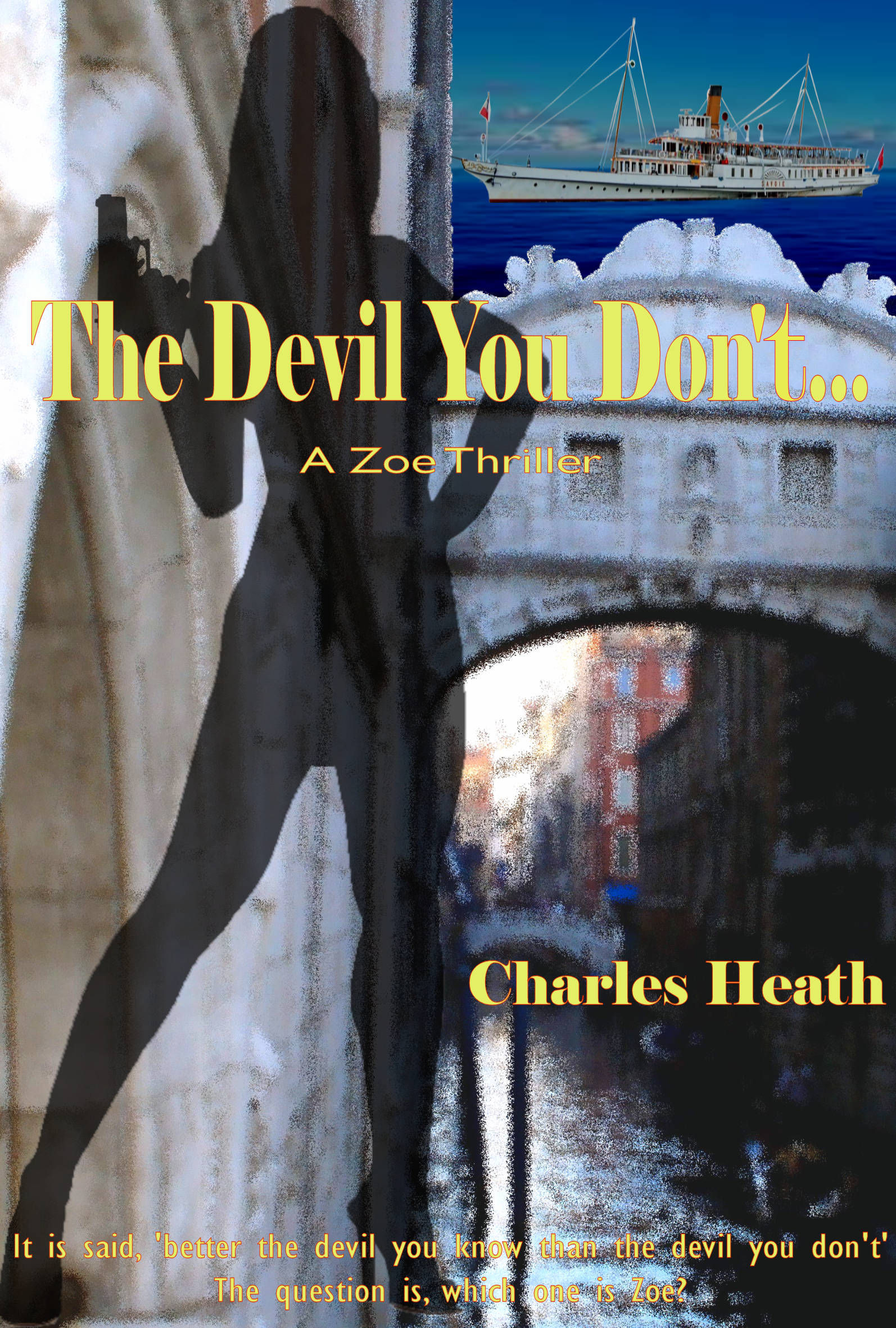
“The Devil You Don’t”, she was the girl you would not take home to your mother!

Now only $0.99 at https://amzn.to/2Xyh1ow

John Pennington’s life is in the doldrums. Looking for new opportunities, and prevaricating about getting married, the only joy on the horizon was an upcoming visit to his grandmother in Sorrento, Italy.

Suddenly he is left at the check-in counter with a message on his phone telling him the marriage is off, and the relationship is over.

If only he hadn’t promised a friend he would do a favour for him in Rome.

At the first stop, Geneva, he has a chance encounter with Zoe, an intriguing woman who captures his imagination from the moment she boards the Savoire, and his life ventures into uncharted territory in more ways than one.

That ‘favour’ for his friend suddenly becomes a life-changing event, and when Zoe, the woman who he knows is too good to be true, reappears, danger and death follow.

Shot at, lied to, seduced, and drawn into a world where nothing is what it seems, John is dragged into an adrenaline-charged undertaking, where he may have been wiser to stay with the ‘devil you know’ rather than opt for the ‘devil you don’t’.

newdevilcvr6

Top 5 sights on the road less travelled – Sorrento, Italy

Beyond the Limoncello & Lira: 5 Unforgettable Adventures on Sorrento’s Road Less Travelled

Sorrento. Just the name conjures images of sun-drenched cliffs, fragrant lemon groves, and the sparkling azure waters of the Bay of Naples. It’s a town of undeniable charm, a perfect blend of natural beauty and vibrant Italian life, and a beloved gateway to the Amalfi Coast and Pompeii.

But what if you’ve already strolled through Piazza Tasso, admired the views from Villa Comunale, and perhaps even sampled a limoncello (or three)? What if you yearn for experiences that delve a little deeper, moving beyond the main tourist thoroughfare to uncover the authentic soul of Sorrento?

You’re in luck! While Sorrento certainly holds its own as a popular destination, there’s a wealth of hidden gems and less-trodden paths waiting to be discovered. So, dust off your sense of adventure, because we’re about to explore five unforgettable things to do in Sorrento that go a little something like this: “the road less travelled.”


1. Dive into Local Cuisine with an Authentic Cooking Class (Beyond the Tourist Trap)

Sure, you can eat incredible food everywhere in Sorrento, but why not learn to make it? While many hotels offer classes, seek out a more intimate, local experience. Look for classes held in a family home, a small agriturismo on the outskirts, or even a local nonna (grandmother) offering private lessons.

Why it’s “road less traveled”: This isn’t just about cooking; it’s about cultural immersion. You’ll learn family secrets, understand local ingredients (perhaps even picking them from a garden), and participate in a timeless Italian ritual. Often, these experiences involve a market visit, too, truly connecting you to the source of your meal. Imagine kneading pasta dough by hand, concocting a perfectly balanced tiramisu, or mastering gnocchi with a view of the Bay – now that’s a souvenir!

Tip: Ask your B&B host for recommendations for private classes or small, family-run operations. Websites like Airbnb Experiences can also be a good starting point for finding unique local hosts.


2. Discover the Hidden Gem of Marina di Puolo

While Marina Grande and Marina Piccola are bustling hubs, venture slightly west along the coast, and you’ll stumble upon the charming, much quieter fishing village of Marina di Puolo. It feels like stepping back in time.

Why it’s “the road less travelled”: This isn’t a place most bus tours stop. It’s a genuine working fishing village with a small, pebbly beach, crystal-clear water perfect for a swim, and a handful of delightful, unpretentious seafood trattorias right on the shore. Here, you’ll find locals enjoying their afternoon, children playing, and the freshest catch imaginable gracing your plate. The vibe is relaxed, authentic, and utterly charming.

Tip: You can reach Marina di Puolo by a pleasant walk from Sorrento (about 30-40 minutes), or a short, scenic bus ride. Stay for sunset – it’s magical as the lights twinkle across the water.


3. Hike to the Pristine Bay of Ieranto (Punta Campanella Nature Reserve)

For nature lovers and intrepid explorers, the hike to Ieranto Bay offers breathtaking rewards far from the crowds. Located at the very tip of the Sorrentine Peninsula, within the Punta Campanella Marine Protected Area, this stunning bay is accessible only by foot or kayak.

Why it’s “road less travelled”: It requires effort! The moderate 6km (round trip) trail starts from Nerano (a short bus ride from Sorrento) and descends through olive groves and Mediterranean scrub, offering panoramic views of Capri and the Faraglioni rocks. The destination is a secluded, pebbly beach with unbelievably clear turquoise waters, perfect for swimming and snorkelling. It’s a veritable sanctuary, managed by the FAI (Italian National Trust).

Tip: Wear sturdy shoes, bring plenty of water, and pack a picnic. There are no facilities once you reach the bay. Check the FAI website for opening times and any potential entry requirements (though usually free). The views alone are worth every step!


4. Explore the Authentic Hilltop Village of Sant’Agata sui Due Golfi

Escape the coastal hustle and bustle by heading inland to Sant’Agata sui Due Golfi, a charming village perched high on the hills of the Sorrentine Peninsula. Its name, “on the two gulfs,” perfectly describes its unique selling point: incredible panoramic views of both the Bay of Naples (with Vesuvius) and the Bay of Salerno (with the Amalfi Coast).

Why it’s “road less travelled”: Many tourists zoom past Sant’Agata on their way to more famous destinations. But taking the time to explore its quiet streets, browse local shops, and enjoy a meal here offers a glimpse into authentic Sorrentine life away from the souvenir stands. It even boasts a couple of Michelin-starred restaurants if you’re looking for a special culinary splurge, alongside fantastic traditional trattorias.

Tip: A local SITA bus from Sorrento will get you there easily. Dedicate an afternoon to wander, enjoying an aperitivo in the piazza, and soaking in the incredible vistas. Don’t forget your camera!


5. Swim in the Natural Pool of Bagni della Regina Giovanna

While not entirely “secret,” many visitors simply snap a picture from above and move on. To truly experience the Magic of Bagni della Regina Giovanna (Queen Joanna’s Bath), you need to descend and take a dip!

Why it’s “the road less travelled”: It requires a bit of effort to reach the actual swimming spot, involving a walk down a rocky path. Most tourists stick to the top viewpoint. This dramatic natural archway, formed by the sea carving through the cliffs, encloses a hidden, emerald-green natural swimming pool. Overlooking it are the fascinating ruins of a Roman villa, believed to be where Queen Joanna II of Naples met her lovers.

Tip: Wear sturdy shoes for the walk down and water shoes for entering the water, as it can be rocky. It’s a fantastic spot for a refreshing swim and a picnic amidst ancient history and stunning nature. You can reach it by foot (about 30-40 minutes from Sorrento center) or by local bus to the Capo di Sorrento stop.


Sorrento is undeniably captivating, but by venturing off the well-trodden path, you unlock a deeper, richer experience. These “road less traveled” adventures offer not just sights, but genuine connections to the local culture, breathtaking natural beauty, and memories that will truly set your trip apart. So, next time you’re in this Italian paradise, dare to explore beyond the postcard – your Sorrento story will be richer, deeper, and uniquely yours.

Have you discovered a hidden gem in Sorrento? Share your tips in the comments below!