In a word: Stern

It’s what I’d always expected of my teachers, having to stand up the front of the classroom and look like they were in control.

These days, not so much, but back in my day, teachers, and particularly the men, were to be feared, and stern expressions were the features of an effective teacher.

So, in this context, it means a hardness or severity of manner.

Whilst in a sense that was frightening to us kids, another form of the word also can be used to express a forbidding or gloomy appearance.

Grandfathers also have that stern look, but it’s more forbidding, more authoritarian, more severe, more austere, well, you get the picture.  A six-year-old would be trembling in his or her boots.

There again, in facing up to either possibility above, you could stand firm with a stern resolve not to buckle under the pressure.

Of course, not a good idea if you’re facing a tank (with a stern-looking tank master)

Then…

If you’re standing at the end of the boat, not the front, but the rear, you would be standing at the stern of the boat, or ship.

Oddly, when issuing instructions to go in reverse, not something you would say if you were on the bridge, you would instead say, or possibly yell, full speed astern, because you’re about to hit an iceberg.

Or some idiot in a jet ski who likes to think he or she can beat the bullet (or 65,000 tonnes of a ship that has very little mobility).

An excerpt from “Amnesia”, a work in progress

I remembered a bang.

I remembered the car slewing sideways.

I remember another bang, and then it was lights out.

When I opened my eyes again, I saw the sky.

Or I could be underwater.

Everything was blurred.

I tried to focus but I couldn’t. My eyes were full of water.

What happened?

Why was I lying down?

Where was I?

I cast my mind back, trying to remember.

It was a blank.

What, when, who, why and where, are questions I should easily be able to answer. These are questions any normal person could answer.

I tried to move. Bad, bad mistake.

I did not realise the scream I heard was my own. Just before my body shut down.

“My God! What happened?”

I could hear, not see. I was moving, lying down, looking up.

I was blind. Everything was black.

“Car accident; hit a tree, sent the passenger flying through the windscreen. Pity to poor bastard didn’t get the message that seat belts save lives.”

Was I that poor bastard?

“Report?” A new voice, male, authoritative.

“Multiple lacerations, broken collar bone, broken arm in three places, both legs broken below the knees, one badly. We are not sure of internal injuries, but ruptured spleen, cracked ribs and pierced right lung are fairly evident, x-rays will confirm that and anything else.”

“What isn’t broken?”

“His neck.”

“Then I would have to say we are looking at the luckiest man on the planet.”

I heard the shuffling of pages.

“OR1 ready?”

“Yes. On standby since we were first advised.”

“Good. Let’s see if we can weave some magic.”

Magic.

It was the first word that popped into my head when I surfaced from the bottom of the lake. That first breath, after holding it for so long, was sublime, and, in reality, agonising.

Magic, because it seemed like I’d spent a long time underwater.

Or somewhere.

I tried to speak but couldn’t. The words were just in my head.

Was it night or was it day?

Was it hot, or was it cold?

Where was I?

Around me, it felt cool.

It was incredibly quiet. No noise except for the hissing of air through an air-conditioning vent. Or that was the sound of pure silence.  And with it the revelation that silence was not silent. It was noisy.

I didn’t try to move.

Instinctively, somehow, I knew not to.

A previous unpleasant experience?

I heard what sounded like a door opening, and noticeably quiet footsteps slowly came into the room. They stopped. I could hear breathing, slightly laboured, a sound I’d heard before.

My grandfather.

He had smoked all his life until he was diagnosed with lung cancer. But for years before that he had emphysema. The person in the room was on their way, down the same path. I could smell the smoke.

I wanted to tell whoever it was the hazards of smoking.

I couldn’t.

I heard a metallic clanging sound from the end of the bed. A moment later the clicking of a pen, then writing.

“You are in a hospital.” A female voice suddenly said. “You’ve been in a bad accident. You cannot talk, or move, all you can do, for the moment, is listen to me. I am a nurse. You have been here for 45 days and just came out of a medically induced coma. There is nothing to be afraid of.”

She had a very soothing voice.

Her fingers stroked the back of my hand.

“Everything is fine.”

Define fine, I thought. I wanted to ask her what ‘fine’ meant.

“Just count backwards from 10.”

Why?

I didn’t reach seven.

Over the next ten days, that voice became my lifeline to sanity. Every morning, I longed to hear it, if only for the few moments she was in the room, those few waking moments when I believed she, and someone else who never spoke, were doing tests. I knew it had to be someone else because I could smell the essence of lavender. My grandmother had worn a similar scent.

It rose above the disinfectant.

She was another doctor, not the one who had been there the day I arrived. Not the one who had used some ‘magic’ and kept me alive.

It was then, in those moments before she put me under again, that I thought, what if I was paralysed? It would explain a lot. A chill went through me.

The next morning, she was back.

“My name is Winifred. We don’t know what your name is, not yet. In a few days, you will be better, and you will be able to ask us questions. You were in an accident, and you were very severely injured, but I can assure you there will be no lasting damage.”

More tests, and then when I expected the lights to go out, they didn’t. Not for a few minutes more. This was how I would be integrated back into the world. A little bit at a time.

The next morning, she came later than usual, and I’d been awake for a few minutes. “You have bandages over your eyes and face. You had bad lacerations to your face, and glass in your eyes. We will know more when the bandages come off in a few days. Your face will take longer to heal. It was necessary to do some plastic surgery.”

Lacerations, glass in my eyes, car accidents, plastic surgery. By logical deduction, I knew I was the poor bastard thrown through the windscreen. It was a fleeting memory from the day I was admitted.

How could that happen?

That was the first of many startling revelations. The second was the fact I could not remember the crash. Equally shocking, in that same moment was the fact I could not remember before the crash either, or only vague memories after.

But the most shattering of all these revelations was the one where I realised, I could not remember my name.

I tried to calm down, sensing a rising panic.

I was just disoriented, I told myself. After 45 days in an induced coma, it had messed with my mind, and it was only a temporary lapse. Yes, that’s what it was, a temporary lapse. I will remember tomorrow. Or the next day.

Sleep was a blessed relief.

The next day I didn’t wake up feeling nauseous. I think they’d lowered the pain medication. I’d heard that morphine could have that effect. Then, how could I know that but not who I am?

Now I knew Winifred the nurse was preparing me for something unbelievably bad. She was upbeat, and soothing, giving me a new piece of information each morning. This morning, “You do not need to be afraid. Everything is going to be fine. The doctor tells me you are going to recover with little scarring. You will need some physiotherapy to recover from your physical injuries, but that’s in the future. We need to let you mend a little bit more before then.”

So, I was not going to be able to leap out of bed and walk out of the hospital any time soon. I don’t suppose I’d ever leapt out of bed, except as a young boy. I suspect I’d sustained a few broken bones. I guess learning to walk again was the least of my problems.

But there was something else. I picked it up in the timbre of her voice, a hesitation, or reluctance. It sent another chill through me.

This time I was left awake for an hour before she returned.

This time sleep was restless.

Scenes were playing in my mind, nothing I recognised, and nothing lasting longer than a glimpse. Me. Others, people I didn’t know. Or I knew them and couldn’t remember them.

Until they disappeared, slowly like the glowing dot in the centre of the computer screen, before finally fading to black.

The morning the bandages were to come off she came in early and woke me. I had another restless night, the images becoming clearer, but nothing recognisable.

“This morning the doctor will be removing the bandages over your eyes. Don’t expect an immediate effect. Your sight may come back quickly, or it may come back slowly, but we believe it will come back.”

I wanted to believe I was not expecting anything, but I was. It was human nature. I did not want to be blind as well as paralysed. I had to have at least one reason to live.

I dozed again until I felt a gentle hand on my shoulder. I could smell the lavender; the other doctor was back. And I knew the hand on my shoulder was Winifred’s. She told me not to be frightened.

I was amazed to realise at that moment, I wasn’t.

I heard the scissors cutting the bandages.

I felt the bandage being removed, and the pressure coming off my eyes. I could feel the pads covering both eyes.

Then a moment when nothing happened.

Then the pads are gently lifted and removed.

Nothing.

I blinked my eyes, once, twice. Nothing.

“Just hold on a moment,” Winifred said. A few seconds later I could feel a cool towel wiping my face, and then gently wiping my eyes. There was ointment or something else in them.

Then a flash. Well, not a flash, but like when a light is turned on and off. A moment later, it was brighter, not the inky blackness of before, but a shade of grey.

She wiped my eyes again.

I blinked a few more times, and then the light returned, and it was like looking through water, at distorted and blurry objects in the distance.

I blinked again, and she wiped my eyes again.

Blurry objects took shape. A face looking down on me, an elderly lady with a kindly face, surely Winifred, who was smiling. And on the opposite side of the bed, the doctor, a Chinese woman of indescribable beauty.

I nodded.

“You can see?”

I nodded again.

“Clearly?”

I nodded.

“Very good. We will just draw the curtains now. We don’t want to overdo it. Tomorrow we will be taking off the bandages on your face. Then, it will be the next milestone. Talking.”

I couldn’t wait.

When morning came, I found myself afraid. Winifred had mentioned scarring, there were bandages on my face. I knew, but wasn’t quite sure how I knew, I wasn’t the most handsome of men before the accident, so this might be an improvement.

I was not sure why I didn’t think it would be the case.

They came at mid-morning, the nurse, Winifred, and the doctor, the exquisite Chinese. She was the distraction, taking my mind off the reality of what I was about to see.

Another doctor came into the room before the bandages were removed, and he was introduced as the plastic surgeon who had ‘repaired’ the ravages of the accident. It had been no easy job, but, with a degree of egotism, he did say he was one of the best in the world.

I found it hard to believe, if he were, that he would be at a small country hospital.

“Now just remember, what you might see now is not how you will look in a few months.”

Warning enough.

The Chinese doctor started removing the bandages. She did it slowly and made sure it did not hurt. My skin was very tender, and I suspect still bruised, either from the accident or the surgery, I didn’t know.

Then it was done.

The plastic surgeon gave his work a thorough examination and seemed pleased with his work. “Coming along nicely,” he said to the other doctor. He issued some instructions on how to manage the skin, nodded to me, and I thanked him before he left.

I noticed Winifred had a mirror in her hand and was reticent in using it. “As I said,” she said noticing me looking at the mirror, “what you see now will not be the result. The doctor said it was going to heal with little scarring. You have been extremely fortunate he was available. Are you ready?”

I nodded.

She showed me.

I tried not to be reviled at the red and purple mess that used to be my face. At a guess, I would have to say he had to put it all back together again, but not knowing what I looked like before, I had no benchmark. All I had was a snippet of memory that told me I was not the tall, dark, and handsome type.

And I still could not talk. There was a reason, he had worked in that area too. Just breathing hurt. I think I would save up anything I had to say for another day. I could not even smile. Or frown. Or grimace.

“We’ll leave you for a while. Everyone needs a little time to get used to the change. I suspect you are not sure if there has been an improvement in last year’s model. Well, time will tell.”

A new face?

I could not remember the old one.

My memory still hadn’t returned.

…

©  Charles Heath  2024
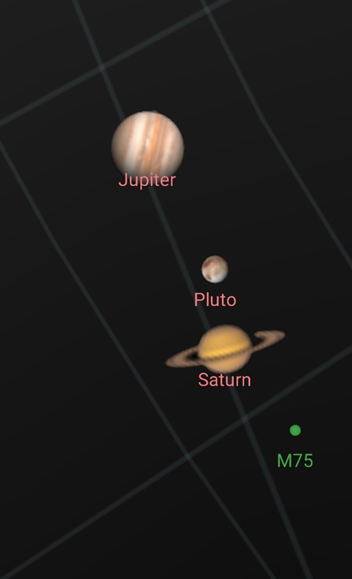
The cinema of my dreams – I always wanted to see the planets – Episode 3

Meanwhile, space is still waiting…

…

Back on the spaceship, after a last glance at the screen that had the same planets, just in a different perspective, and representing what we’re heading to:

It’s still debatable whether we’re going to get out of the dock.

The Captain requested me to go down and personally find out what was happening down in the bowels of the ship, and I’d just risked life and limb in the elevator that wasn’t working properly not 24 hours before. Now, the doors having opened, and after a huge sigh of relief, I step into the maelstrom.

The engine room, if it could be called that, looks like a shopping mall at Christmas, with the centre piece looking like a set of constantly strobing lights, and around it, people with computer pads, looking for answers.

I doubt whether any or all of the information they required was going to be in the central computer system because it was too new.

Whatever happened to paper manuals? Oh, sorry, that was so twenty first century.

I felt like I was walking against the tide until I see the Chief Engineer, hands in pockets, not look in the least perturbed.

No, he’s not Scottish. To be honest, I’m not sure where he comes from, I hadn’t got acquainted in the short time we’ve all been aboard.

He sees me coming, and I’m surprised he knows who I am.

“Captain send you?”

He broke away from one of his assistants, and turned towards me.

“He could have just asked you himself,” I said.

He shook his head. “He doesn’t work like that. Prefers the personal touch.”

“What’s happening?”

“Everything and nothing. New modifications are not infallible, but it appears to be just a glitch. The builders are on it, so we’ll have an answer soon.”

“Your opinion?”

“Doesn’t pay to have opinions, only answers.”

A wave from the other side of the room was accompanied by a change in the strobing lights, and a different sound.

“Good news,” he said. “By the time you get back to the bridge, everything will be fine.”

The activity hadn’t lessened given the resolution. “You sure?”

“Nothing’s written in stone. Try crossing your fingers.” With that he left me, and I headed towards to the lift.

…

© Charles Heath 2021

A photograph from the inspirational bin – 22

I found this…


So near and yet so far.

What I found was the moon out in the late afternoon, a phenomenon that might happen on a regular basis, but this one of the few times I’ve seen it.

And it reminds me of something I was told a long time ago. Shoot for the moon. I never quite understood what the person meant, not until a long time later when I realised that I was being told nothing was impossible.

Had I ever achieved the impossible?

The thing is, each of us define what is possible and what is impossible ourselves, and is therefore different for every person. If you tell yourself it is impossible, then it requires a mind shift to get past that barrier.

But, the question still remains the same, did I achieve the impossible?

I never thought I’d write a book, or have it published. Some would say I still haven’t achieved that goal because I self published it on Amazon.

I think I achieved what I set out to do.

I never thought I’d get a university degree, but people had faith in me, and yes, I got it in the end.

I never thought, when I was younger, I would be a father, and sometimes I wonder whether it was worth it, but having grandchildren dispelled any perceived disappointment.

And what is on the impossible list now?

Not a lot. At my age, I don’t think it’s possible I will travel to the moon, nor afford to skirt the edge of space, as much as it would be amazing to look back at the planet.

I don’t think I’ll ever become a CEO, but then I don’t want to. Too much responsibility.

What’s left that is achievable?

Tracing my family history, and going back to where my ancestors came from, and, hopefully finding someone who was ‘famous’.

The cinema of my dreams – Was it just another surveillance job – Episode 41

I’m back home and this story has been sitting on the back burner for a few months, waiting for some more to be written.

The trouble is, there are also other stories to write, and I’m not very good at prioritizing.

But, here we are, a few minutes opened up and it didn’t take long to get back into the groove.

Chasing leads, maybe

—

I gave it about five minutes before I think I started breathing again and then headed back to Jennifer.

Or where I thought I had left her.

She wasn’t there. I think, in the end, it didn’t surprise me. She had been reluctant from the start so if I had to guess, she had done a bunk. This was not her fight, nor mine, but she had a ticket out. Why would you want to come back after being betrayed by the likes of Severin and Maury?

I hope she left the car behind.

Now that I was here there was no point leaving, so I took a few minutes to search the surrounding area, just in case she was still here, just someplace else, and when she wasn’t, I quickly and silently made my way back to the side of the house with the open door from a different direction.

There was another set of French doors, these curtained, and with an overhead light above the doorway, so I kept my distance in case there was a movement activator, another which looked to be a servant’s entrance at the back. Neither door looked to be an easy viable entrance.

The original side door was still unlocked, with no lights or movement inside.

I waited, then opened the door wide enough to slip through. Again, I waited in case there was a silent alarm, then when nothing stirred, slipped through and closed the door behind me.

On the other side of the door, it was quite dark, except now I could see, on one wall, the dying embers of a fire. Someone had been in the room earlier and most likely gone to bed.

It meant the house was occupied.

It also meant I had to be careful.

On the other side of the doors, it was a lot warmer. Again I waited a few minutes, just in case someone came, and, when they didn’t, I pulled out a small torch and turned it on.

In front of me were two chairs and a table, one I would have walked into without a light. The walls had shelves and those shelves were filled with books. Some behind glass doors, others not. There was another chair by the fire, and beside it, a stack of cooks, and a table with had an empty glass and a bottle, and a pair of reading glasses.

The downstairs reading room.

I cross the room slowly, hoping there were no squeaky floorboards, to be expected in an old house like this one. The timber flooring was exposed only at the edges of the room, the rest of the floor covered in a large, discolored, and fraying carpet square.

It was old, like everything else in the room.

I was tempted to have a look at how far the books dated back to but resisted the urge. I was looking for information on the owner.

At the doorway to what looked like a passage, I turned off the torch and peered out. It was not exactly dark, my eyes had adjusted to the low-level light from low wattage lights about a foot above the floor.

Lights to help guide the way at night.

Left, rooms, right, rooms, at the end of the passage a wide doorway leading towards the other side of the house. Larger rooms perhaps.

I turned right and headed towards the front, and they stopped at the doorway to the next room. I’d deliberately walked on the carpet runner in the middle of the passage, and just managed to catch my foot when one part of the floor creaked softly.

The room next door was almost the same as the one I’d entered by, with chairs and shelves but only on two sides. This room had a long window and no French doors.

On one side there was a writing desk, open, with papers scatted on the writing surface. I quickly crossed the room to it, switched on the light, and checked.

Bills. In the name of Mrs. Marianne Quigley. This had to be Adam Quigley’s mother, and by deduction, O’Connell’s mother.

Proof I was in the right place.

Then I heard the squeak of a floorboard followed by the clicking sound of a gun being cocked.

“Don’t move, or I’ll shoot. Hands in the air. And don’t make me ask twice.”

Hands up it was.

—

© Charles Heath 2020-2022

365 Days of writing, 2026 – 35

Day 35 – Poetry

…

The Paradox of Poetry: Unpacking Elizabeth Bishop’s Insight

Elizabeth Bishop, a Pulitzer Prize-winning poet, once astutely observed, “Writing poetry is an unnatural act. It takes great skill to make it seem natural.” This statement may seem counterintuitive, as poetry is often associated with spontaneity and emotional expression. However, Bishop’s words reveal a profound truth about the craft of poetry, one that warrants closer examination. In this blog post, we’ll delve into the complexities of writing poetry, exploring why it can be considered an unnatural act, and what it takes to make it seem natural.

The Unnatural Act of Writing Poetry

On the surface, poetry appears to be a natural extension of human language, a way to express thoughts, emotions, and experiences through words. However, the process of crafting a poem is often a deliberate and calculated one. Poets must carefully select and arrange words, considering factors like meter, rhyme, imagery, and syntax, to convey their intended meaning. This self-conscious process can feel unnatural, as it requires a level of manipulation and control that doesn’t always come easily.

Furthermore, poetry often involves distilling complex emotions and ideas into concise, precise language, which can be a challenging and artificial process. Poets must navigate the tension between authenticity and artifice, striving to capture the essence of their subject matter while also shaping it into a cohesive, aesthetically pleasing form. This balancing act can make writing poetry feel like an unnatural act, as it demands a high degree of craftsmanship and attention to detail.

The Skill of Making it Seem Natural

So, how do poets overcome the unnatural aspects of writing poetry and make it seem natural? According to Bishop, it takes great skill. This skill encompasses a range of abilities, including:

  1. Mastering form and technique: Poets must develop a deep understanding of poetic forms, such as sonnets, free verse, or haikus, and learn to wield them effectively. This involves experimenting with different structures, rhythms, and language patterns to find the right fit for their message.
  2. Developing a unique voice: A poet’s voice is the distinctive tone, style, and perspective they bring to their work. Cultivating a unique voice requires a deep understanding of one’s own experiences, emotions, and observations, as well as the ability to express them in a way that feels authentic and relatable.
  3. Using language effectively: Poets must be skilled in the use of language, able to select words, images, and metaphors that evoke the desired response in the reader. This involves a keen sense of observation, a rich vocabulary, and a willingness to experiment with language.
  4. Editing and revision: The process of writing poetry is often iterative, with poets refining their work through multiple drafts and revisions. This involves being willing to cut, reshape, and rework lines, stanzas, and entire poems to achieve the desired effect.

By honing these skills, poets can create poetry that seems natural, effortless, and spontaneous, even when it’s the result of careful crafting and revision. The best poetry appears to flow from the poet’s heart and mind with ease, concealing the hard work and dedication that went into its creation.

Conclusion

Elizabeth Bishop’s observation that “writing poetry is an unnatural act” may seem paradoxical, but it highlights the complex, nuanced nature of the craft. While poetry is often associated with natural expression and spontaneity, the process of writing it can be deliberate, calculated, and artificial. However, with great skill and dedication, poets can overcome these challenges and create work that seems natural, authentic, and beautiful. By embracing the unnatural aspects of writing poetry and developing the skills necessary to master the craft, poets can produce poetry that resonates with readers and leaves a lasting impression.

If I only had one day to stop over in – Copenhagen – what would I do?

The One Place to Make Your Copenhagen Stopover Unforgettable

Have you ever found yourself with just one day in a city you’ve always dreamed of exploring? That’s exactly the magic of a Copenhagen stopover. Whether you’re en route to another destination or squeezing in a quick European getaway, this Danish capital offers a taste of hygge, history, and vibrant culture—all in a compact, walkable city.

But with limited time, how do you choose just one spot to capture the essence of Copenhagen? You could wander through colourful Nyhavn, explore the historic Tivoli Gardens, or marvel at the futuristic architecture of the Opera House. Yet if you’re looking for a truly memorable experience—one that blends history, culture, and breathtaking views—there’s one place that stands above the rest: The Rundetårn (The Round Tower).

Why The Rundetårn?

Built in the 17th century as an astronomical observatory, The Round Tower is more than just a historic landmark—it’s a journey through time. Unlike most towers with steep staircases, Rundetårn features a unique, gently sloping spiral ramp that winds its way to the top. As you ascend, you’ll pass historical exhibitions, an atmospheric library hall, and even a glass floor looking down into the core of the tower.

But the real reward awaits at the summit.

The View That Steals Your Heart

When you step out onto the rooftop platform, you’re greeted with a 360-degree panoramic view of Copenhagen’s rooftops, spires, and bustling streets. From this vantage point, you can spot iconic landmarks like the Christiansborg Palace, the Church of Our Saviour, and the distant silhouette of the Øresund Bridge. It’s the perfect place to orient yourself, snap unforgettable photos, and simply soak in the city’s charm.

A Stopover Moment to Remember

What makes Rundetårn especially perfect for a one-day visit is its central location. Just a short walk from Strøget, Copenhagen’s famous pedestrian street, you can easily pair your visit with a stroll through the city’s vibrant heart, a bite of smørrebrød (Danish open-faced sandwiches), or a quick coffee in a cozy café.

Whether you visit in the morning light, under the blue afternoon sky, or during the golden hour before sunset, The Round Tower offers a moment of reflection and wonder—a chance to pause and appreciate the beauty of Copenhagen from above.

So, if you find yourself with just one day in this Nordic gem, make your way to Rundetårn. Let its spiral ramp lead you upward, and let Copenhagen unfold beneath you. It’s not just a sightseeing stop—it’s a memory in the making.

Pro Tip: Arrive early to avoid crowds, and don’t forget to look up at night if you’re in town after dark—the tower’s observatory still opens for stellar views of the cosmos.

Happy exploring, and may your Copenhagen stopover be filled with wonder!

What I learned about writing – Why do we persist in writing?

It’s another reminder that we should never give up, despite the advice that’s sometimes given by our peers, not exactly saying it, but alluding to the fact that some do, and some don’t and that the talented should not.

But … do we know we’re talented, and even if we are, after a myriad or plethora of rejections, the temptation to walk away might be there.

Except…

If you’re like me, you’re not in it for the wealth and fame. Yes, wealth and fame would be nice; just an adequate living would be better, but most of us aren’t likely to give up our day jobs any time soon.

I write because I love writing. I like inventing characters and throwing everything, but the kitchen sink, at them. Maybe that’s where I’m going wrong. I should throw in the kitchen sink.

Kidding.

And I publish a lot of those stories on this blog, and people are reading them because I get a few comments every day, and most of them are positive, and even if they are not, yes, you can’t please everyone, I take them as constructive criticism.

So the next time someone advises you that writing just might not be your vocation, write them a story and tell them they’re wrong.

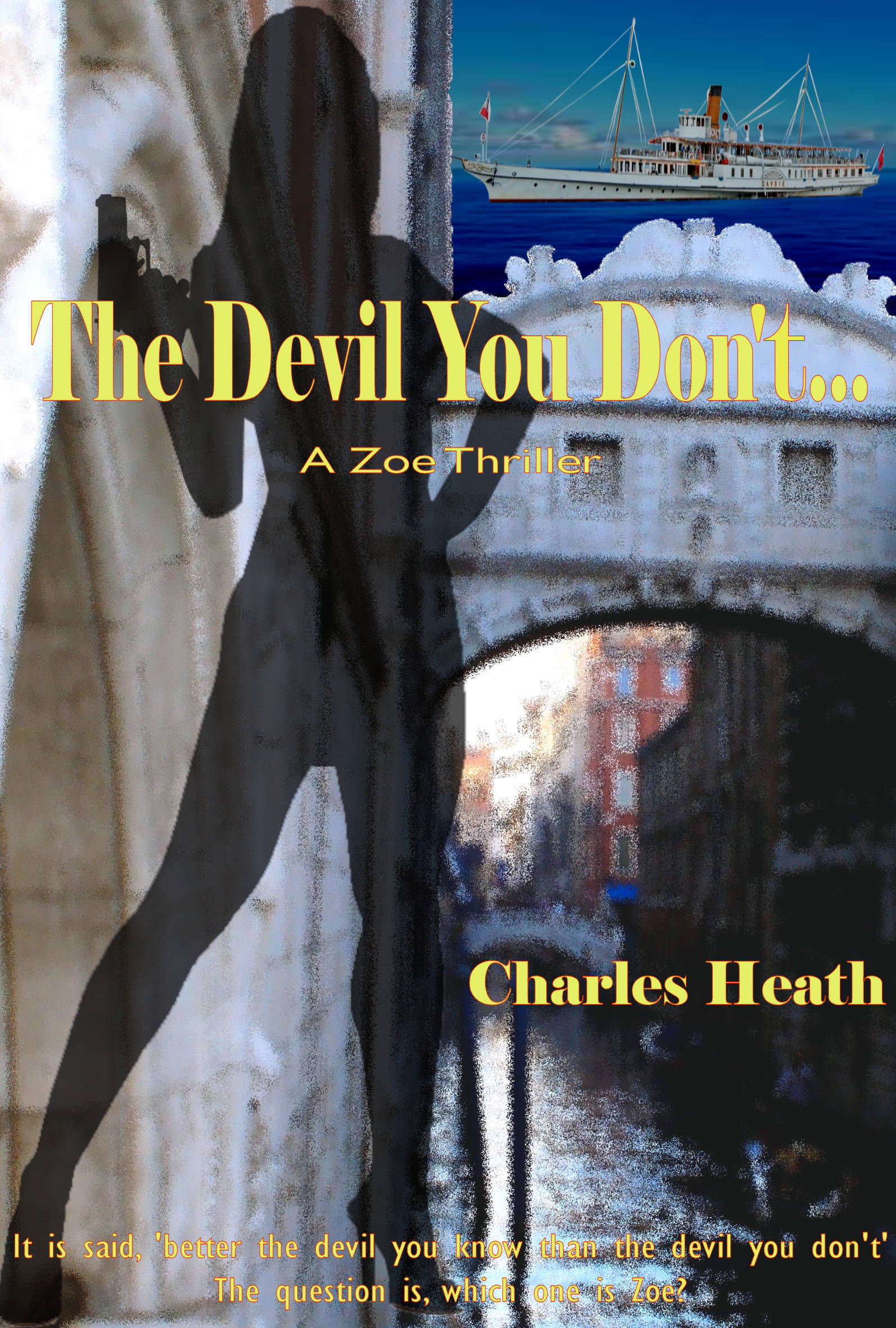
“The Devil You Don’t”, she was the girl you would not take home to your mother!

Now only $0.99 at https://amzn.to/2Xyh1ow

…

John Pennington’s life is in the doldrums. Looking for new opportunities, and prevaricating about getting married, the only joy on the horizon was an upcoming visit to his grandmother in Sorrento, Italy.

Suddenly he is left at the check-in counter with a message on his phone telling him the marriage is off, and the relationship is over.

If only he hadn’t promised a friend he would do a favour for him in Rome.

At the first stop, Geneva, he has a chance encounter with Zoe, an intriguing woman who captures his imagination from the moment she boards the Savoire, and his life ventures into uncharted territory in more ways than one.

That ‘favour’ for his friend suddenly becomes a life-changing event, and when Zoe, the woman who he knows is too good to be true, reappears, danger and death follow.

Shot at, lied to, seduced, and drawn into a world where nothing is what it seems, John is dragged into an adrenaline-charged undertaking, where he may have been wiser to stay with the ‘devil you know’ rather than opt for the ‘devil you don’t’.

newdevilcvr6

If I only had one day to stop over in – Helsinki – what would I do?

One Day in Helsinki: The One Place You Must Visit for an Unforgettable Stopover

Picture this: You’ve just landed in Helsinki, Finland, with only one day to explore before catching your next flight. The city beckons with its sleek design, vibrant culture, and Nordic charm—but time is limited. So, where do you go to capture the true spirit of Helsinki in just a few hours?

While the city offers countless gems—from the striking Helsinki Cathedral to the bustling Market Square—there’s one spot that perfectly encapsulates Helsinki’s soul and ensures your short visit is nothing short of memorable.

That place is Suomenlinna Sea Fortress.

Why Suomenlinna?

A UNESCO World Heritage site since 1991, Suomenlinna is not just a fortress—it’s an island adventure, a historical journey, and a scenic retreat all rolled into one. Built in the 18th century, this maritime fortress sprawls across six interconnected islands and tells stories of Swedish, Russian, and Finnish history. But more than that, it offers an immersive experience you can savor even in a single day.

How to Make the Most of Your Visit

Getting There:
From the heart of Helsinki, it’s just a 15–20-minute ferry ride from Kauppatori (Market Square). Ferries run regularly year-round, and the journey itself offers stunning views of the Baltic Sea and Helsinki’s coastline.

What to Do on the Island:

  1. Step Back in Time:
    Wander through tunnels, cannons, and historic barracks. Visit the Suomenlinna Museum for a compact overview of the fortress’s 270-year history.
  2. Embrace Nature and Views:
    Walk along the rugged coastal paths for breathtaking panoramas of the sea and the city skyline. In summer, the islands are lush and green; in winter, they transform into a serene, snow-dusted wonderland.
  3. Taste Finnish Flavors:
    Stop by Café Vanille or the brewery restaurant, Suomenlinnan Panimo, for a warm drink, local pastry, or even a craft beer brewed on the island.
  4. Capture the Moment:
    From the iconic King’s Gate to the tranquil shoreline, every corner is photogenic. This is a place where memories are made—and Instagram-worthy shots are guaranteed.

Why It’s Perfect for a Stopover

  • Compact Yet Complete: You can explore the highlights in 3–4 hours, leaving you plenty of time to return to the city, enjoy a meal, or even visit another quick attraction.
  • Authentic Helsinki Vibe: Suomenlinna blends history, nature, and local life in a way that feels uniquely Finnish.
  • Escape the Hustle: Despite being so close to the city, the islands offer a peaceful retreat away from urban noise—a refreshing pause during a travel day.

Before You Go

  • Check Ferry Schedules: Plan your trip around ferry times to maximize your stay.
  • Dress for the Weather: Helsinki can be breezy, even in summer. Wear comfortable shoes for walking.
  • Pack Light Snacks: While there are cafes, having a water bottle and a snack ensures you can explore uninterrupted.

One Day, One Unforgettable Experience

Your stopover in Helsinki is a gift—a chance to taste a new culture, even briefly. And Suomenlinna is the perfect bite-sized piece of Finland to savor. It’s more than a tourist attraction; it’s an experience that stays with you: the sea breeze, the whisper of history, and the serene beauty of the archipelago.

So, when you find yourself with one day in Helsinki, skip the stress of trying to see it all. Take the ferry, step onto the island, and let Suomenlinna turn your stopover into a story worth telling.

Safe travels—and may your day in Helsinki be unforgettable!


Have you visited Suomenlinna or have another Helsinki favourite? Share your experiences in the comments below!