Over the years, I have traveled extensively and kept journals, with the idea that one day all of those places would become locations in books. Notebooks filled with odd characters, people and incidents observed, and whole tracts of stories written when the on the spot inspiration has been a driving force.
All of this is the basis of the first three novels, Sunday In New York, set, of course, in New York, probably my favorite city in the world, “Echoes From The Past’ equally set in New York, Brooklyn Heights and Philadelphia. The third, The Devil You Don’t, travels through Europe, starting in Geneva, moving to Rome, then Sorrento, and then to Venice.
Now, my passion to write is fuelled by travel and fine dining. When I take a break from these, I get to torment my three wonderful grandchildren whom I actively encourage to read as much as they can, and more recently to also write.
As for almost every other writer, I would not be able to do any of this without my wife who has put up with my moodiness, the times when I'm locked away in a room trying to push out another 2,000 words, and yet despite everything still puts up with me.
I wish I could say the same for our cat. Alas, I am still trying to work out how to be his friend!
There are two, possibly more, but two fundamental questions you have to ask yourself when you are reading through your work, and perhaps for the first time after finishing writing that first draft.
What am I saying?
What happens next for the characters?
Here’s the thing…
What you’re saying is what the reader wants to know, what sets the tone, what sets up the story. I like to throw readers in the deep right from the start, to give the reader a sense of who they’re going on the journey with.
In my opinion, a book is a journey and the more compelling you can make it, the more invested the reader will be.
Your ultimate aim: that the reader cannot put the book down. They just have to read a bit more to see what happens.
It is always going to be what happens next, whether our protagonist is hanging out of a helicopter trying to avoid being killed, or chasing a lead (or person), chasing a suspect or a person of interest, or just a red herring or entanglement.
And there is always that trope, the cliffhanger at the end of every chapter.
50 photographs, 50 stories, of which there is one of the 50 below.
They all start with –
A picture paints … well, as many words as you like. For instance:
And, the story:
Have you ever watched your hopes and dreams simply just fly away?
Everything I thought I wanted and needed had just left in an aeroplane, and although I said I was not going to, i came to the airport to see the plane leave. Not the person on it, that would have been far too difficult and emotional, but perhaps it was symbolic, the end of one life and the start of another.
But no matter what I thought or felt, we had both come to the right decision. She needed the opportunity to spread her wings. It was probably not the best idea for her to apply for the job without telling me, but I understood her reasons.
She was in a rut. Though her job was a very good one, it was not as demanding as she had expected, particularly after the last promotion, but with it came resentment from others on her level, that she, the youngest of the group would get the position.
It was something that had been weighing down of her for the last three months, and if noticed it, the late nights, the moodiness, sometimes a flash of temper. I knew she had one, no one could have such red hair and not, but she had always kept it in check.
And, then there was us, together, and after seven years, it felt like we were going nowhere. Perhaps that was down to my lack of ambition, and though she never said it, lack of sophistication. It hadn’t been an issue, well, not until her last promotion, and the fact she had to entertain more, and frankly I felt like an embarrassment to her.
So, there it was, three days ago, the beginning of the weekend, and we had planned to go away for a few days and take stock. We both acknowledged we needed to talk, but it never seemed the right time.
It was then she said she had quit her job and found a new one. Starting the following Monday.
Ok, that took me by surprise, not so much that it something I sort of guessed might happen, but that she would just blurt it out.
I think that right then, at that moment, I could feel her frustration with everything around her.
What surprised her was my reaction. None.
I simply asked where who, and when.
A world-class newspaper, in New York, and she had to be there in a week.
A week.
It was all the time I had left with her.
I remember I just shrugged and asked if the planned weekend away was off.
She stood on the other side of the kitchen counter, hands around a cup of coffee she had just poured, and that one thing I remembered was the lone tear that ran down her cheek.
Is that all you want to know?
I did, yes, but we had lost that intimacy we used to have when she would have told me what was happening, and we would have brainstormed solutions. I might be a cabinet maker but I still had a brain, was what I overheard her tell a friend once.
There’s not much to ask, I said. You’ve been desperately unhappy and haven’t been able to hide it all that well, you have been under a lot of pressure trying to deal with a group of troglodytes, and you’ve been leaning on Bentley’s shoulder instead of mine, and I get it, he’s got more experience in that place, and the politics that go with it, and is still an ally.
Her immediate superior and instrumental in her getting the position, but unlike some men in his position he had not taken advantage of a situation like some men would. And even if she had made a move, which I doubted, that was not the sort of woman she was, he would have politely declined.
One of the very few happily married men in that organisation, so I heard.
So, she said, you’re not just a pretty face.
Par for the course for a cabinet maker whose university degree is in psychology. It doesn’t take rocket science to see what was happening to you. I just didn’t think it was my place to jump in unless you asked me, and when you didn’t, well, that told me everything I needed to know.
Yes, our relationship had a use by date, and it was in the next few days.
I was thinking, she said, that you might come with me, you can make cabinets anywhere.
I could, but I think the real problem wasn’t just the job. It was everything around her and going with her, that would just be a constant reminder of what had been holding her back. I didn’t want that for her and said so.
Then the only question left was, what do we do now?
Go shopping for suitcases. Bags to pack, and places to go.
Getting on the roller coaster is easy. On the beginning, it’s a slow easy ride, followed by the slow climb to the top. It’s much like some relationships, they start out easy, they require a little work to get to the next level, follows by the adrenaline rush when it all comes together.
What most people forget is that what comes down must go back up, and life is pretty much a roller coaster with highs and lows.
Our roller coaster had just come or of the final turn and we were braking so that it stops at the station.
There was no question of going with her to New York. Yes, I promised I’d come over and visit her, but that was a promise with crossed fingers behind my back. After a few months in t the new job the last thing shed want was a reminder of what she left behind. New friends new life.
We packed her bags, three out everything she didn’t want, a free trips to the op shop with stiff she knew others would like to have, and basically, by the time she was ready to go, there was nothing left of her in the apartment, or anywhere.
Her friends would be seeing her off at the airport, and that’s when I told her I was not coming, that moment the taxi arrived to take her away forever. I remember standing there, watching the taxi go. It was going to be, and was, as hard as it was to watch the plane leave.
So, there I was, finally staring at the blank sky, around me a dozen other plane spotters, a rather motley crew of plane enthusiasts.
Already that morning there’s been 6 different types of plane depart, and I could hear another winding up its engines for take-off.
People coming, people going.
Maybe I would go to New York in a couple of months, not to see her, but just see what the attraction was. Or maybe I would drop in, just to see how she was.
As one of my friends told me when I gave him the news, the future is never written in stone, and it’s about time you broadened your horizons.
One‑Day Stopover in Sofia? Make It Unforgettable with a Visit to Alexander Nevsky Cathedral
If you’ve only got 24 hours in Bulgaria’s capital, there’s one landmark that will give you a perfect snapshot of Sofia’s history, culture, and soul: the Alexander Nevsky Cathedral.
In this post I’ll walk you through why this soaring Orthodox masterpiece deserves the top spot on your itinerary, how to get there from the airport, what to see inside, where to grab a quick bite, and a few insider tips to make the most of a single day in Sofia.
Why the Cathedral Beats All Other Options
Aspect
What the Cathedral Offers
Comparison
Iconic Status
Sofia’s most photographed building; appears on postcards, travel guides, and the city’s coat of arms.
No other sight rivals its recognizability.
Architectural Drama
A blend of Russian Revival and Byzantine motifs, crowned by a golden dome that dominates the skyline.
Other sites (Vitosha Boulevard, Boyana Church) are beautiful but less instantly “Sofia‑defining.”
Cultural Insight
Houses relics, mosaics, and a crypt that tells the story of Bulgaria’s post‑Ottoman revival.
Museums require more time; the cathedral packs history into a single visit.
Convenient Location
Nestled in the heart of the city, within walking distance of restaurants, parks, and public transport.
Remote sites (Vitosha Mountain) need extra travel time you simply don’t have.
Free Admission
No ticket line, no booking required – perfect for a tight schedule.
Many other attractions charge entry or have long queues.
In short, Alexander Nevsky Cathedral is the single most efficient way to soak up Sofia’s character when the clock is ticking.
Getting There: From Sofia Airport to the Cathedral in 15 Minutes
Exit the arrivals hall and follow signs for the Sofia Metro (Line 1 – “Red” line). The metro station is a short 3‑minute walk, located under the terminal.
Buy a single‑journey ticket (≈ 1.60 BGN, about €0.80) from the vending machines – cash or contactless works.
Board the train toward “Mladost 1” and alight after three stops at “Serdika” (≈ 5 minutes travel).
Follow the signs to the “Sofia Central Railway Station” exit. You’ll emerge onto a bustling pedestrian zone.
Walk north along “Knyaz Mihail Obrinski” street (≈ 5 minutes). The cathedral’s golden domes will dominate the skyline as you approach “Nevski Sq.”
Total door‑to‑door time: ~15 minutes, leaving you with over 10 hours to explore.
Inside the Cathedral: A Mini‑Guide for the Time‑Pressed Traveler
Feature
What to Look For
How Much Time?
The Exterior
The massive gold-plated cross, the 12 onion domes, and the intricately detailed façade.
5 minutes (photos).
The Interior Nave
A forest of 40,000+ marble columns, a massive iconostasis, and the iconic fresco of the St. Alexander Nevsky mural.
7 minutes (scan).
The Crypt
Resting place of Bulgarian royalty and notable clergy; a quiet spot to reflect on the nation’s post‑Ottoman resurgence.
5 minutes (optional).
The Golden Mosaic
The “Christ Pantocrator” in the central dome glistens with gold leaf; a masterpiece of Orthodox art.
3 minutes (look up).
The Gift Shop
Hand‑crafted icons, amber jewelry, and traditional Bulgarian rosaries.
2 minutes (if you like souvenirs).
Tip: If you arrive between 9:00 – 11:00 am, you’ll avoid the mid‑day tourist rush and can enjoy a quieter atmosphere for photos.
Grab a Bite Nearby: The “Moma” Café Experience
Just a two‑minute walk from the cathedral’s side entrance sits Moma Café, a stylish spot beloved by locals for its blend of Bulgarian flavours and Mediterranean flair.
Signature Dish: Banitsa (phyllo pastry filled with feta and spinach) – a perfect quick‑eat that fuels your next adventure.
Coffee: Try the “Sofia Sunrise” – a cold brew infused with rosehip and a dash of honey, a nod to the city’s rose‑oil heritage.
Price Range: 5–12 BGN per item (≈ €2.50–€6).
If you’re on a tighter budget, the street‑side kebap shops on “Vitosha Blvd.” offer a savoury kebapche for under 3 BGN.
Making the Most of Your One‑Day Stopover
Time Slot
Activity
08:00‑09:30
Arrive at Sofia Airport, take the metro to the city center.
09:30‑10:45
Explore Alexander Nevsky Cathedral (photo session + brief interior tour).
10:45‑11:30
Coffee and Banitsa at Moma Café.
11:30‑13:30
Stroll through City Garden and National Art Gallery (both adjacent).
13:30‑15:00
Lunch at Made in Home (farm‑to‑table Bulgarian dishes).
15:00‑17:00
Walk the historic Vitosha Boulevard, shop for souvenirs.
17:00‑18:00
Return to the airport via metro (allow extra time for security).
Feel free to swap the afternoon activities for a quick trip to the Boyana Church (UNESCO site) if you’re a history buff – just remember you’ll need ~45 minutes of travel each way.
Insider Hacks: Avoid the Common Pitfalls
Dress Respectfully – While the cathedral is a tourist hotspot, it’s still a place of worship. Cover shoulders and knees (a light scarf works for women).
Mind the Bells – The massive bells toll every hour; a gentle hush is appreciated during the chime.
Free Wi‑Fi – The cathedral’s lobby offers complimentary Wi‑Fi; perfect for uploading those panoramic shots on the go.
Currency – Bulgaria uses the Lev (BGN). Most cafés accept cards, but carry a few coins for street vendors.
Time Zone – Sofia is UTC+2 (UTC+3 in summer). Double‑check your connecting flight departure time.
Bottom Line: One Site, One Day, One Memorable Experience
When you have just a single day to taste Sofia, you need a destination that encapsulates the city’s spirit without demanding a full‑day commitment. Alexander Nevsky Cathedral does exactly that: it offers a breathtaking visual punch, a concise history lesson, and a convenient central location that lets you weave in a few extra highlights without breaking the clock.
So next time your itinerary shows a brief stop in Bulgaria’s capital, skip the indecision and head straight for the golden domes. In 15 minutes you’ll be inside a living monument; in an hour you’ll have a collection of photos worthy of any travel album; and in a day you’ll leave Sofia with a vivid memory of its heart, soul, and unmistakable skyline.
Happy travels—and may your layover be as golden as the Nevsky domes!
It could be said that of all the women one could meet, whether contrived or by sheer luck, what are the odds it would turn out to be the woman who was being paid a very large sum to kill you.
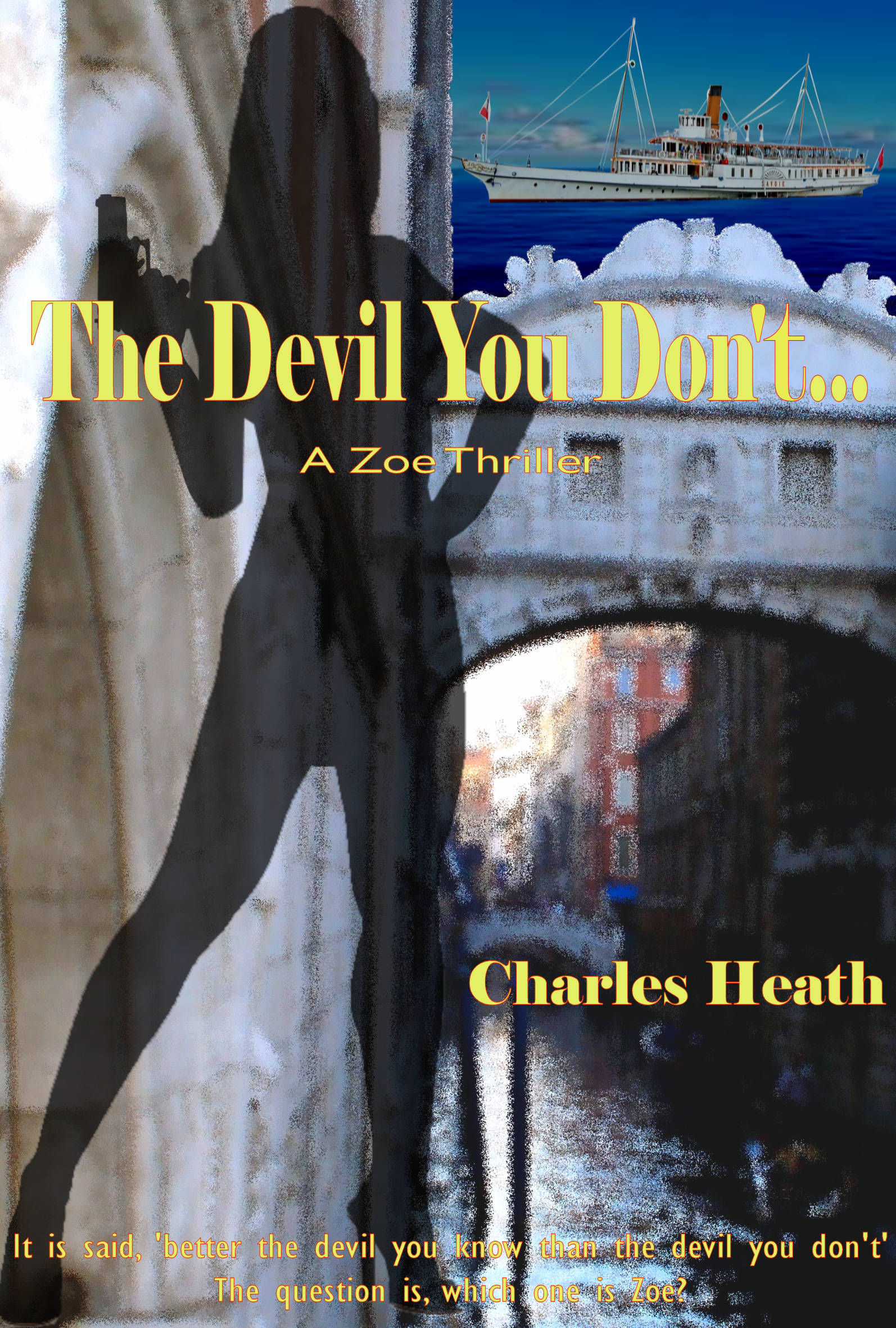
John Pennington is a man who may be lucky in business, but not so lucky in love. He has just broken up with Phillipa Sternhaven, the woman he thought was the one, but relatives and circumstances, and perhaps because she was a ‘princess’, may also have contributed to the end result.
So, what do you do when you are heartbroken?
That is a story that slowly unfolds, from the first meeting with his nemesis on Lake Geneva, all the way to a hotel room in Sorrento, where he learns the shattering truth.
What should have been solace after disappointment, turns out to be something else entirely, and from that point, everything goes to hell in a handbasket.
He suddenly realizes his so-called friend Sebastian has not exactly told him the truth about a small job he asked him to do, the woman he is falling in love with is not quite who she says she is, and he is caught in the middle of a war between two men who consider people becoming collateral damage as part of their business.
The story paints the characters cleverly displaying all their flaws and weaknesses. The locations add to the story at times taking me back down memory lane, especially to Venice where, in those back streets I confess it’s not all that hard to get lost.
All in all a thoroughly entertaining story with, for once, a satisfying end.
John’s search for Zoe was at an impasse because it was her job to disappear and reappear at will, and he knew he was no match for her in that regard.
So, having gone to her residence in Paris, not finding her there, which was predictable, the place looked like it had not been visited in months, he concluded a short stay might help to clear his head.
Until he gets a phone call.
Kidnappers, other than the Russians, have captured Zoe, and they’re ringing him for a ransom.
Odd, because he was not the one who placed the kidnap order on her, so why would they be ringing him?
This was initiated by Zoe, no doubt playing the kidnapper by sending him to a bigger payday.
If that’s the case, then John has to deduce she has faith in him to come and get her.
Which he’s going to do, but not on his own.
It’s time to call Sebastian, someone John knew would know what to do.
Or at least hope he does!
Talk about rescue missions gone wrong.
John is not very good at this, though; who’s to say Sebastian isn’t as good as he thinks he is?
So, tossed in a basement awaiting his fate, who should he discover: Zoe
Mission accomplished.
Of course, no good deed goes unpunished as she tears strips off him for being a fool, firstly, to come after her, and secondly, for trusting Sebastian.
But they’ve been in tighter scrapes before, and the fun is just about to begin.
After a few minutes of catching up!
And, no doubt, Sebastian is somewhere near plotting his own operation to fix up the first operation.
It could have been anywhere in the world, she thought, but it wasn’t. It was in a city where if anything were to go wrong…
She sighed and came away from the window and looked around the room. It was quite large and expensively furnished. It was one of several she had been visiting in the last three months.
Quite elegant too, as the hotel had its origins dating back to before the revolution in 1917. At least, currently, there would not be a team of KGB agents somewhere in the basement monitoring everything that happened in the room.
There was no such thing as the KGB anymore, though there was an FSB, but such organisations were of no interest to her.
She was here to meet with Vladimir.
She smiled to herself when she thought of him, such an interesting man whose command of English was as good as her command of Russian, though she had not told him of that ability.
All he knew of her was that she was American, worked in the Embassy as a clerk, nothing important, whose life both at work and at home was boring. Not that she had blurted that out the first they met, or even the second.
That first time, at a function in the Embassy, was a chance meeting, a catching of his eye as he looked around the room, looking, as he had told her later, for someone who might not be as boring as the function itself.
It was a celebration, honouring one of the Embassy officials on his service in Moscow, and the fact he was returning home after 10 years. She had been there once, and still hadn’t met all the staff.
They had talked, Vladimir knew a great deal about England, having been stationed there for a year or two, and had politely asked questions about where she lived, her family, and of course what her role was, all questions she fended off with an air of disinterested interest.
It fascinated him, as she knew it would, a sort of mental sparring as one would do with swords if this was a fencing match.
They had said they might or might not meet again when the party was over, but she suspected there would be another opportunity. She knew the signs of a man who was interested in her, and Vladimir was interested.
The second time came in the form of an invitation to an art gallery, and a viewing of the works of a prominent Russian artist, an invitation she politely declined. After all, invitations issued to Embassy staff held all sorts of connotations, or so she was told by the Security officer when she told him.
Then, it went quiet for a month. There was a party at the American embassy and along with several other staff members, she was invited. She had not expected to meet Vladimir, but it was a pleasant surprise when she saw him, on the other side of the room, talking to several military men.
A pleasant afternoon ensued.
And it was no surprise that they kept running into each other at the various events on the diplomatic schedule.
By the fifth meeting, they were like old friends. She had broached the subject of being involved in a plutonic relationship with him with the head of security at the embassy. Normally for a member of her rank, it would not be allowed, but in this instance it was.
She did not work in any sensitive areas, and, as the security officer had said, she might just happen upon something that might be useful. In that regard, she was to keep her eyes and ears open and file a report each time she met him.
After that discussion, she got the impression her superiors considered Vladimir more than just a casual visitor on the diplomatic circuit. She also formed the impression that he might consider her an ‘asset’, a word that had been used at the meeting with security and the ambassador.
It was where the word ‘spy’ popped into her head and sent a tingle down her spine. She was not a spy, but the thought of it, well, it would be fascinating to see what happened.
A Russian friend. That’s what she would call him.
And over time, that relationship blossomed, until, after a visit to the ballet, late and snowing, he invited her to his apartment not far from the ballet venue. It was like treading on thin ice, but after champagne and an introduction to caviar, she felt like a giddy schoolgirl.
Even so, she had made him promise that he remain on his best behaviour. It could have been very easy to fall under the spell of a perfect evening, but he promised, showed her to a separate bedroom, and after a brief kiss, their first, she did not see him until the next morning.
So, it began.
It was an interesting report she filed after that encounter, one where she had expected to be reprimanded.
She wasn’t.
It wasn’t until six weeks had passed when he asked her if she would like to take a trip to the country. It would involve staying in a hotel, that they would have separate rooms. When she reported the invitation, no objection was raised, only a caution; keep her wits about her.
Perhaps, she had thought, they were looking forward to a more extensive report. After all, her reports on the places, and the people, and the conversations she overheard, were no doubt entertaining reading for some.
But this visit was where the nature of the relationship changed, and it was one that she did not immediately report. She had realised at some point before the weekend away, that she had feelings for him, and it was not that he was pushing her in that direction or manipulating her in any way.
It was just one of those moments where, after a grand dinner, a lot of champagne, and delightful company, things happen. Standing at the door to her room, a lingering kiss, not intentional on her part, and it just happened.
And for not one moment did she believe she had been compromised, but for some reason she had not reported that subtle change in the relationship to the powers that be, and so far, no one had any inkling.
She took off her coat and placed it carefully of the back of one of the ornate chairs in the room. She stopped for a moment to look at a framed photograph on the wall, one representing Red Square.
Then, after a minute or two, she went to the mini bar and took out the bottle of champagne that had been left there for them, a treat arranged by Vladimir for each encounter.
There were two champagne flutes set aside on the bar, next to a bowl of fruit. She picked up the apple and thought how Eve must have felt in the garden of Eden, and the temptation.
Later perhaps, after…
She smiled at the thought and put the apple back.
A glance at her watch told her it was time for his arrival. It was if anything, the one trait she didn’t like, and that was his punctuality. A glance at the clock on the room wall was a minute slow.
The doorbell to the room rang, right on the appointed time.
She put the bottle down and walked over to the door.
This story has been ongoing since I was seventeen, and just to let you know, I’m 72 this year.
Yes, it’s taken a long time to get it done.
Why, you might ask.
Well, I never gave it much interest because I started writing it after a small incident when I was 17, and working as a book packer for a book distributor in Melbourne
At the end of my first year, at Christmas, the employer had a Christmas party, and that year, it was at a venue in St Kilda.
I wasn’t going to go because at that age, I was an ordinary boy who was very introverted and basically scared of his own shadow and terrified by girls.
Back then, I would cross the street to avoid them
Also, other members of the staff in the shipping department were rough and ready types who were not backwards in telling me what happened, and being naive, perhaps they knew I’d be either shocked or intrigued.
I was both adamant I wasn’t coming and then got roped in on a dare.
Damn!
So, back then, in the early 70s, people looked the other way when it came to drinking, and of course, Dutch courage always takes away the concerns, especially when normally you wouldn’t do half the stuff you wouldn’t in a million years
I made it to the end, not as drunk and stupid as I thought I might be, and St Kilda being a salacious place if you knew where to look, my new friends decided to give me a surprise.
It didn’t take long to realise these men were ‘men about town’ as they kept saying, and we went on an odyssey. Yes, those backstreet brothels where one could, I was told, have anything they could imagine.
Let me tell you, large quantities of alcohol and imagination were a very bad mix.
So, the odyssey in ‘The things we do’ was based on that, and then the encounter with Diana. Well, let’s just say I learned a great deal about girls that night.
Firstly, not all girls are nasty and spiteful, which seemed to be the case whenever I met one. There was a way to approach, greet, talk to, and behave.
It was also true that I could have had anything I wanted, but I decided what was in my imagination could stay there. She was amused that all I wanted was to talk, but it was my money, and I could spend it how I liked.
And like any 17-year-old naive fool, I fell in love with her and had all these foolish notions. Months later, I went back, but she had moved on, to where no one was saying or knew.
Needless to say, I was heartbroken and had to get over that first loss, which, like any 17-year-old, was like the end of the world.
But it was the best hour I’d ever spent in my life and would remain so until I met the woman I have been married to for the last 48 years.
As Henry, he was in part based on a rebel, the son of rich parents who despised them and their wealth, and he used to regale anyone who would listen about how they had messed up his life
If only I’d come from such a background!
And yes, I was only a run away from climbing up the stairs to get on board a ship, acting as a purser.
I worked for a shipping company and they gave their junior staff members an opportunity to spend a year at sea working as a purser on a cargo ship that sailed between Melbourne, Sydney and Hobart in Australia.
One of the other junior staff members’ turn came, and I would visit him on board when he would tell me stories about life on board, the officers, the crew, and other events. These stories, which sounded incredible to someone so impressionable, were a delight to hear.
Alas, by that time, I had tired of office work and moved on to be a tradesman at the place where my father worked.
It proved to be the right move, as that is where I met my wife. Diana had been right; love would find me when I least expected it.
One minute I was looking at three people holding two of the freighter crew hostage, then next I was watching the three disintegrate into a matter stream, and disappear.
It was not possible, and yet I saw it with my own eyes.
I pressed the transmit button on my communicator and said, “What the hell was what?”
“A ship, twice the size of this vessel, came out of nowhere, appeared on screen for about a minute and then disappeared.”
“Along with our friends over here. They just dematerialised. It seems they can transport people whereas we can only transfer matter. On a good day.”
Another voice came over the freighter’s internal communications system, “Cargo supervisor to captain, it seems we have just lost a container of plutonium fuel rods, sir.”
“Did you hear that, sir?” I said.
“Those would be the rods needed on Venus we were sent to pick up. Without them, they’re about to go offline. Get back here now, we now have a humanitarian rescue mission. Out.”
I looked over at Myrtle. “We have to leave, I’ll be along in a minute.”
I walked over to Jacko who was looking far more relieved now he didn’t had a space gun being held to his head. “How did you get to be hauling Plutonium?”
“Only ship available, I guess. Freighters are stretched thin with this new building program on the outer planets. Can you call up head office and tell them we need repairs.”
“No comms?”
“No anything at the moment, except life support, and that’s likely to become a problem if they take their time. You know how it is.”
I did. Repairs never seemed to be a priority, not considering how much a ship cost.
“I’ll get the captain to get space command to put a rocket up them. Any idea who those people were?”
“Not any of us I reckon. I think we’ve just made first contact with a new species. And if they know what they can do with the plutonium, things might get a little interesting out here.”
This is rugged bushland not far from suburbia, though you wouldn’t know exactly where it is just by looking at the photograph
But, for the writer, this is an excellent setting.
For instance, once again we are out wandering in the bush, lost. It’s not hard to get lost, and stay lost if there are no recognizable landmarks, and given we all walk with a bias to one side or the other, and we have to avoid objects like trees, ravines, animals, and rocks, keeping a straight line is impossible.
But the question is, how did you get into the bush in the first place?
It’s not as if you would deliberately go there, just to if you can get lost.
No, my idea is that you have been kidnapped and drugged, then taken to a location either in the book of a car or just in the back seat with a hood, then dropped off and left to die
The criminals in this story are more efficient in getting rid of pesky witnesses.
Or maybe it’s something less sinister, like going out and counting the koalas in the bush, well, what’s left of the bush as the suburban spray takes more and more of the koala’s habitat.
And it could also be like the planet of the apes, the koalas start fighting back.




 Thrills, Spills, and just a dash of Romance