The cinema of my dreams – I never wanted to go to Africa – Episode 3

Dreaming I was in the desert…

But it was just another episode of the helicopter story, we’re back on the ground after that fateful jump, things are not going quite as planned.

Do they ever in life or death situations?


Yards were like miles, and I didn’t have the time to reach the weapon.  I could see the pickup going around the burning wreck as he of the helicopter and approach me.

But, being the optimist I was I had to try.

And fail.

The pickup was on me before I’d made it halfway, stopping about a foot from me.  Any further and it would have run me over.

I got to my knees and put my hands on my head not giving them any immediate reason to kill me.  The man who had fired the rocket got out of the vehicle moments after it stopped.

A man in military garb, not very old.  And not a foreigner.  I was expecting South American, but not ostensibly one of us.  A glance inside the vehicle showed the driver was a woman, in civilian clothes.

A surprise, yes.

“Mr. James I presume.”  English, well spoken.

Another surprise or more than one, that he spoke English and knew who I was.

“We were expecting you but not be quite so dramatic entrance.  Please stand.”

Kneeling had been difficult; I was not quite sure how standing was going to work.  I was still recovered from the impromptu exit from the helicopter.

I tried and fell back on the ground.  I looked up at him.  “Sorry, the legs are still a little rubbery.”

He simply shook his head, leaned over and dragged me to my feet, then slung me over his shoulder, carried me to the rear of the pickup and tossed me in.  I just managed to avoid hitting my head on the floor.

The man climbed in the back and then slapped the back of the cab.

Crunching gears, an over-revving engine, then a jerky start.  It was not going to be a comfortable journey.

© Charles Heath 2019-2022

Writing a book in 365 days – 267

Day 267

Can banal events become edge-of-the-seat thrillers?

Absolutely, this is not only possible, it is the defining characteristic of some of the most successful and enduring storytelling across literature, film, and television.

This method of storytelling—taking the mundane and making it the setting for the dramatic—is known as the “Everyman” or “Fish-Out-of-Water” narrative.


The Power of the Mundane to Magnify Drama

The core effectiveness of this approach relies on two psychological factors: Relatability and Escalation.

1. The Relatability Factor (The “Everyman”)

When you start with a character grounded in the banality of everyday life, you automatically lower the barrier to entry for the reader.

  • The stakes are personal: Readers immediately connect with a character who has a recognizable job, routine, and worries (paying bills, traffic, dealing with a difficult boss). This initial familiarity creates a stronger emotional investment.
  • The trauma is amplified: When a character who is a high school chemistry teacher (like Walter White in Breaking Bad) or an ordinary suburban couple (like the protagonists in a Hitchcock thriller) is dragged into a life-or-death situation, the sense of dread and disbelief is far more intense than if the protagonist were already a spy or a police detective.

2. The Escalation Principle (The “Twist”)

The “twist” that turns the banality into chaos is almost always a single, seemingly small choice or event that then creates an irreversible spiral of consequences.

  • The Point of No Return: The character’s struggle is not against a supervillain, but against the weight of their own decisions. The conflict arises from an initial, poor choice made to protect their ordinary life (e.g., lying to a spouse, stealing a small amount of money, attempting a harmless prank).
  • The Loss of Control: The character quickly loses the ability to manage the consequences, and the problems grow exponentially—the simple lie requires a bigger lie, the small theft leads to criminal association. The reader watches their relatable life dissolve, experiencing the terror vicariously.

Examples of the Balanity Spiral

  • Literary Thrillers: Many novels, from those by Harlan Coben to Gillian Flynn (Gone Girl), start with an average person or couple whose ordinary life is shattered by a sudden disappearance or shocking revelation.
  • The Coen Brothers: Their films, like Fargo, often find dark comedy and terrifying violence when bumbling, ordinary people try to commit crimes and are overwhelmed by the reality of their actions.
  • The Suspense Genre: This entire genre is built on the idea that the threat is hiding in plain sight. It often features a non-professional protagonist—a librarian, a teacher, a banker—who stumbles upon a conspiracy and has to rely on their wits and their “boring” skills (like research or careful planning) to survive.

Searching for locations: Windsor Castle, London, England

A fine day, on this trip a rarity, we decided to take the train to Windsor and see the castle.

This is a real castle, and still in one piece, unlike a lot of castles.

Were we hoping to see the Queen, no, it was highly unlikely.

But there were a lot of planes flying overhead into Heathrow.  The wind must have been blowing the wrong day, and I’m sure, with one passing over every few minutes, it must annoy the Queen if she was looking for peace and quiet.

Good thing then, when it was built, it was an ideal spot, and not under the landing path.  I guess it was hard to predict what would happen 500 years in the future!

2013-06-30 12.09.56

I’m not sure if this was the front gate or back gate, but I was wary of any stray arrows coming out of those slits either side of the entrance.

You just never know!

2013-06-30 13.58.11

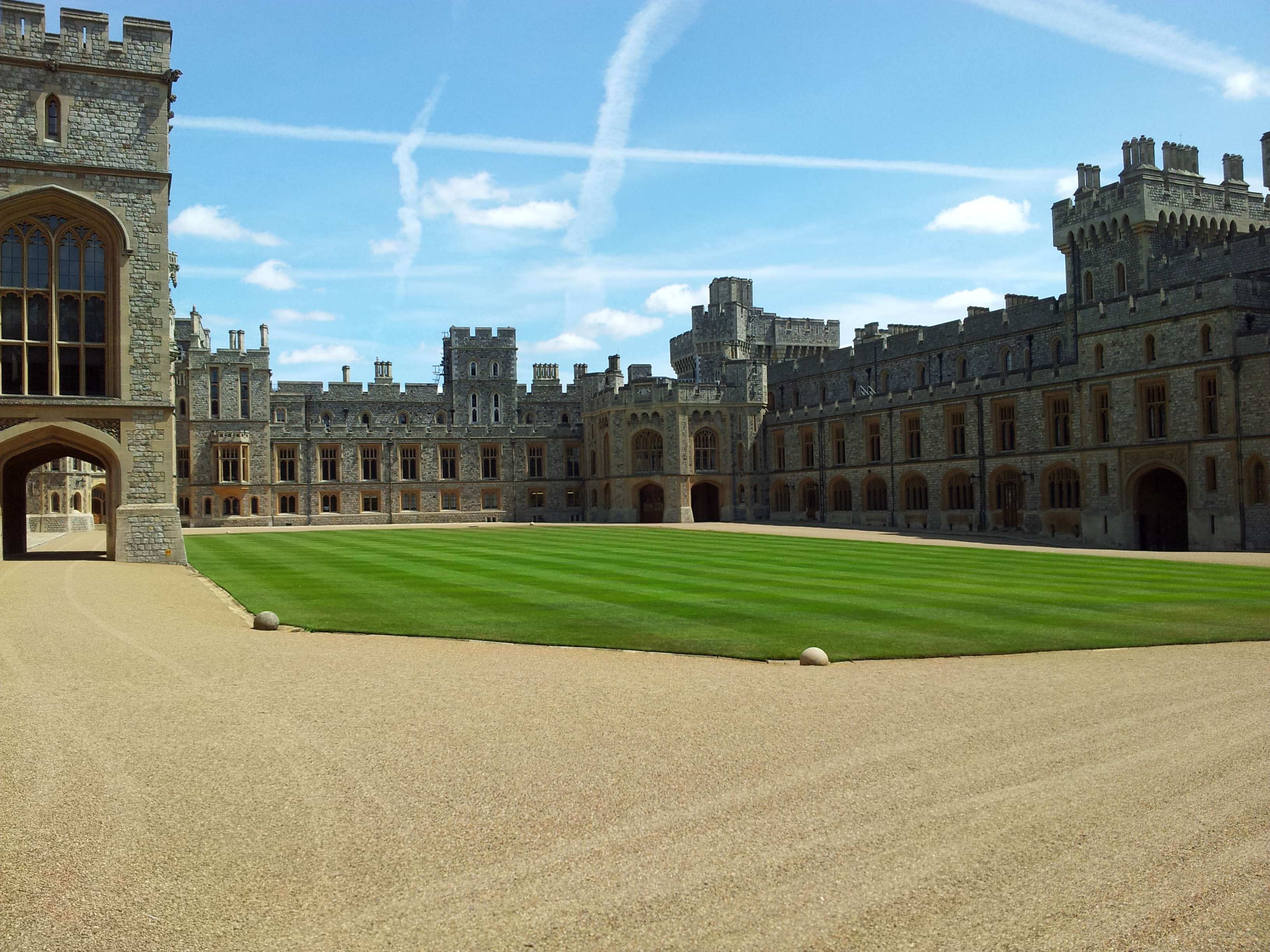
An excellent lawn for croquet.  This, I think, is the doorway, on the left, where dignitaries arrive by car.  The private apartments are across the back.

2013-06-30 13.58.00

The visitor’s apartments.  Not sure who that is on the horse.

2013-06-30 14.07.25

St George’s Chapel.  It’s a magnificent church for a private castle.  It’s been very busy the last few months with Royal weddings.

2013-06-30 12.12.29

The Round Tower, or the Keep.  It is the castle’s centerpiece.  Below it is the gardens.

2013-06-30 13.59.57

Those stairs are not for the faint-hearted, nor the Queen I suspect.  But I think quite a few royal children and their friends have been up and down them a few times.

2013-06-30 12.13.04

And well worth the effort to reach the bottom.

2013-06-30 14.00.40

Any faces peering out through the windows?

What I learned about writing – You need to find a place without distractions

I just spent a week away in one of our favourite places, in a cottage in the hills not far from the Gold Coast in Queensland.

The location is in a valley, at the bottom of which is a small creek.  There is nothing but farming land in every direction, and it’s a place where you can luxuriate in the silence, when not being interrupted by the sounds of wildlife and farm animals.

The serenity is simply amazing.

You can use it as a base because everything you could want is no more than two hours in any direction, but for us, there is no reason to leave the cottage.  We come for relaxation and to wind completely down, away from everything.

The good news is there’s no TV, and the internet and phone coverage are terrible at best, which means you need to find alternate ways of relaxing.

I can’t tell you how good it is not to be addicted to TV news, not to have the internet calling you via social media, and not have the phone ring once in four days.  After you get past that first day of withdrawal symptoms are nearly as bad as coming down off drugs.

Except…

This time I had a mission, to take the time to finish off one of my books. The Enchanted Horse, a story I’ve been promising my grandchildren I’d finish for the last five years.

There just never seems to be time at home with all the distractions, you know those trappings of modern life, the phone, the internet, TV.

And, the good news is I managed to review, collate and generally structure the 700 odd pages I’d already written, and comprehensively outline the last few remaining chapters so I can finally finish the first draft.

The other job that became apparent about one-third of the way through, was that the story is too big for one book, and now it is three, each instalment about 300 pages long, and it gave me the opportunity to write bridging chapters, a sort of the story so far, which will also serve as synopsis I can send to prospective publishers.

All in all, huge progress was made.

Pity I could stay for a month.  I have so much that needs doing without distraction

An excerpt from “What Sets Us Apart”, a mystery with a twist

See the excerpt from the story below, just a taste of what’s in store…

http://amzn.to/2Eryfth

whatsetscover

McCallister was old school, a man who would most likely fit in perfectly campaigning on the battlefields of Europe during the Second World War. He’d been like a fish out of water in the army, post-Falklands, and while he retired a hero, he still felt he’d more to give.

He’d applied and was accepted as head of a SWAT team, and, watching him now as he and his men disembarked from the truck in almost military precision, a look passed between Annette, the police liaison officer, and I that said she’d seen it all before. I know I had.

There was a one in four chance his team would be selected for this operation, and she had been hoping it would be one of the other three. While waiting for them to arrive she filled me in on the various teams. His was the least co-operative, and the more likely to make ad-hoc decisions rather than adhere to the plan, or any orders that may come from the officer in charge.

This, she said quite bluntly, was going to end badly.

I still had no idea why Prendergast instructed me to attend the scene of what looked to be a normal domestic operation, but as the nominated expert in the field in these types of situations, it was fairly clear he wasn’t taking any chances. It was always a matter of opinion between us, and generally I lost.

In this case, it was an anonymous report identifying what the authorities believed were explosives in one of the dockside sheds where explosives were not supposed to be.

The only reason why the report was given any credence was the man, while not identifying himself by name, said he’d been an explosive expert once and recognized the boxes. That could mean anything, but the Chief Constable was a cautious man.

With his men settled and preparing their weapons, McCallister came over to the command post, not much more than the SUV my liaison and I arrived in, with weapons, bulletproof vests, and rolls of tape to cordon off the area afterward. We both had coffee, steaming in the cold early morning air. Dawn was slowly approaching and although rain had been forecast it had yet to arrive.

A man by the name of Benson was in charge. He too had groaned when he saw McCallister.

“A fine morning for it.” McCallister was the only enthusiastic one here.

He didn’t say what ‘it’ was, but I thought it might eventually be mayhem.

“Let’s hope the rain stays away. It’s going to be difficult enough without it,” Benson said, rubbing his hands together. We had been waiting for the SWAT team to arrive, and another team to take up their position under the wharf, and who was in the final stages of securing their position.

While we were waiting we drew up the plan. I’d go in first to check on what we were dealing with, and what type of explosives. The SWAT team, in the meantime, were to ensure all the exits to the shed were covered. When I gave the signal, they were to enter and secure the building. We were not expecting anyone inside or out, and no movement had been detected in the last hour since our arrival and deployment.

“What’s the current situation?”

“I’ve got eyes on the building, and a team coming in from the waterside, underneath. Its slow progress, but they’re nearly there. Once they’re in place, we’re sending McKenzie in.”

He looked in my direction.

“With due respect sir, shouldn’t it be one of us?” McCallister glared at me with the contempt that only a decorated military officer could.

“No. I have orders from above, much higher than I care to argue with, so, McCallister, no gung-ho heroics for the moment. Just be ready to move on my command, and make sure you have three teams at the exit points, ready to secure the building.”

McCallister opened his mouth, no doubt to question those orders, but instead closed it again. “Yes sir,” he muttered and turned away heading back to his men.

“You’re not going to have much time before he storms the battlements,” Benson quietly said to me, a hint of exasperation in his tone. “I’m dreading the paperwork.”

It was exactly what my liaison officer said when she saw McCallister arriving.

The water team sent their ‘in position’ signal, and we were ready to go.

In the hour or so we’d been on site nothing had stirred, no arrivals, no departures, and no sign anyone was inside, but that didn’t mean we were alone. Nor did it mean I was going to walk in and see immediately what was going on. If it was a cache of explosives then it was possible the building was booby-trapped in any number of ways, there could be sentries or guards, and they had eyes on us, or it might be a false alarm.

I was hoping for the latter.

I put on the bulletproof vest, thinking it was a poor substitute for full battle armor against an exploding bomb, but we were still treating this as a ‘suspected’ case. I noticed my liaison officer was pulling on her bulletproof vest too.

“You don’t have to go. This is my party, not yours,” I said.

“The Chief Constable told me to stick to you like glue, sir.”

I looked at Benson. “Talk some sense into her please, this is not a kindergarten outing.”

He shrugged. Seeing McCallister had taken all the fight out of him. “Orders are orders. If that’s what the Chief Constable requested …”

Madness. I glared at her, and she gave me a wan smile. “Stay behind me then, and don’t do anything stupid.”

“Believe me, I won’t be.” She pulled out and checked her weapon, chambering the first round. It made a reassuring sound.

Suited up, weapons readied, a last sip of the coffee in a stomach that was already churning from nerves and tension, I looked at the target, one hundred yards distant and thought it was going to be the longest hundred yards I’d ever traversed. At least for this week.

A swirling mist rolled in and caused a slight change in plans.

Because the front of the buildings was constantly illuminated by large overhead arc lamps, my intention had been to approach the building from the rear where there was less light and more cover. Despite the lack of movement, if there were explosives in that building, there’d be ‘enemy’ surveillance somewhere, and, after making that assumption, I believed it was going to be easier and less noticeable to use the darkness as a cover.

It was a result of the consultation, and studying the plans of the warehouse, plans that showed three entrances, the main front hangar type doors, a side entrance for truck entry and exit and a small door in the rear, at the end of an internal passage leading to several offices. I also assumed it was the exit used when smokers needed a break. Our entry would be by the rear door or failing that, the side entrance where a door was built into the larger sliding doors. In both cases, the locks would not present a problem.

The change in the weather made the approach shorter, and given the density of the mist now turning into a fog, we were able to approach by the front, hugging the walls, and moving quickly while there was cover. I could feel the dampness of the mist and shivered more than once.

It was nerves more than the cold.

I could also feel rather than see the presence of Annette behind me, and once felt her breath on my neck when we stopped for a quick reconnaissance.

It was the same for McCallister’s men. I could feel them following us, quickly and quietly, and expected, if I turned around, to see him breathing down my neck too.

It added to the tension.

My plan was still to enter by the back door.

We slipped up the alley between the two sheds to the rear corner and stopped. I heard a noise coming from the rear of the building, and the light tap on the shoulder told me Annette had heard it too. I put my hand up to signal her to wait, and as a swirl of mist rolled in, I slipped around the corner heading towards where I’d last seen the glow of a cigarette.

The mist cleared, and we saw each other at the same time. He was a bearded man in battle fatigues, not the average dockside security guard.

He was quick, but my slight element of surprise was his undoing, and he was down and unconscious in less than a few seconds with barely a sound beyond the body hitting the ground. Zip ties secured his hands and legs, and tape his mouth. Annette joined me a minute after securing him.

A glance at the body then me, “I can see why they, whoever they are, sent you.”

She’d asked who I worked for, and I didn’t answer. It was best she didn’t know.

“Stay behind me,” I said, more urgency in my tone. If there was one, there’d be another.

Luck was with us so far. A man outside smoking meant no booby traps on the back door, and quite possibly there’d be none inside. But it indicated there were more men inside, and if so, it appeared they were very well trained. If that were the case, they would be formidable opponents.

The fear factor increased exponentially.

I slowly opened the door and looked in. A pale light shone from within the warehouse itself, one that was not bright enough to be detected from outside. None of the offices had lights on, so it was possible they were vacant. I realized then they had blacked out the windows. Why hadn’t someone checked this?

Once inside, the door closed behind us, progress was slow and careful. She remained directly behind me, gun ready to shoot anything that moved. I had a momentary thought for McCallister and his men, securing the perimeter.

At the end of the corridor, the extent of the warehouse stretched before us. The pale lighting made it seem like a vast empty cavern, except for a long trestle table along one side, and, behind it, stacks of wooden crates, some opened. It looked like a production line.

To get to the table from where we were was a ten-yard walk in the open. There was no cover. If we stuck to the walls, there was equally no cover and a longer walk.

We needed a distraction.

As if on cue, the two main entrances disintegrated into flying shrapnel accompanied by a deafening explosion that momentarily disoriented both Annette and I. Through the smoke and dust kicked up I saw three men appear from behind the wooden crates, each with what looked like machine guns, spraying bullets in the direction of the incoming SWAT members.

They never had a chance, cut down before they made ten steps into the building.

By the time I’d recovered, my head heavy, eyes watering and ears still ringing, I took several steps towards them, managing to take down two of the gunmen but not the third.

I heard a voice, Annette’s I think, yell out, “Oh, God, he’s got a trigger,” just before another explosion, though all I remember in that split second was a bright flash, the intense heat, something very heavy smashing into my chest knocking the wind out of me, and then the sensation of flying, just before I hit the wall.

I spent four weeks in an induced coma, three months being stitched back together and another six learning to do all those basic actions everyone took for granted. It was twelve months almost to the day when I was released from the hospital, physically, except for a few alterations required after being hit by shrapnel, looking the same as I always had.

But mentally? The document I’d signed on release said it all, ‘not fit for active duty; discharged’.

It was in the name of David Cheney. For all intents and purposes, Alistair McKenzie was killed in that warehouse, and for the first time ever, an agent left the Department, the first to retire alive.

I was not sure I liked the idea of making history.

© Charles Heath 2016-2020

Searching for locations: A small part of London, England

We were in London in Summer, it was a fine afternoon, going into the evening and we decided to get on the London Eye.  As you can see from the clock it was near 7:00 pm.

housesofparliament3

This photo was taken as we were coming down.

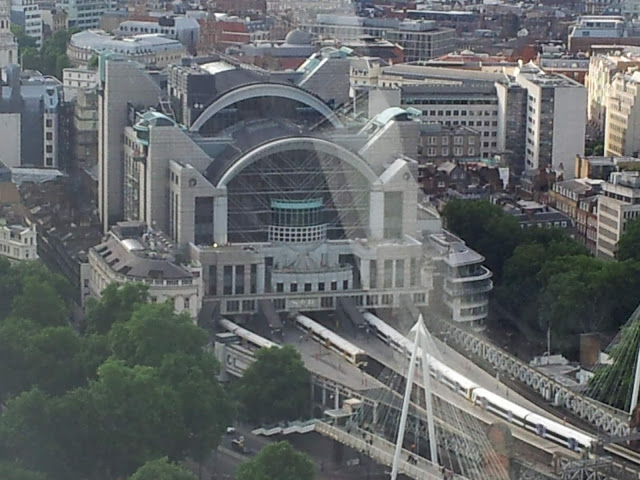
Those long evenings were quite remarkable, not in the least going to a pub and sinking a few pints!  There was one such pub not far from Charing Cross Station

The pub was called ‘The Princess of Wales’

And still be light enough to find your way home.

An excerpt from “The Things We Do for Love”; In love, Henry was all at sea!

In the distance, he could hear the dinner bell ringing and roused himself.  Feeling the dampness of the pillow, and fearing the ravages of pent-up emotion, he considered not going down but thought it best not to upset Mrs. Mac, especially after he said he would be dining.

In the event, he wished he had reneged, especially when he discovered he was not the only guest staying at the hotel.

Whilst he’d been reminiscing, another guest, a young lady, had arrived.  He’d heard her and Mrs. Mac coming up the stairs and then shown to a room on the same floor, perhaps at the other end of the passage.

Henry caught his first glimpse of her when she appeared at the door to the dining room, waiting for Mrs. Mac to show her to a table.

She was in her mid-twenties, slim, with long brown hair, and the grace and elegance of a woman associated with countless fashion magazines.  She was, he thought, stunningly beautiful with not a hair out of place, and make-up flawlessly applied.  Her clothes were black, simple, elegant, and expensive, the sort an heiress or wife of a millionaire might condescend to wear to a lesser occasion than dinner.

Then there was her expression; cold, forbidding, almost frightening in its intensity.  And her eyes, piercingly blue and yet laced with pain.  Dracula’s daughter was his immediate description of her.

All in all, he considered, the only thing they had in common was, like him, she seemed totally out of place.

Mrs. Mac came out of the kitchen, wiping her hands on her apron.  She was, she informed him earlier, chef, waitress, hotelier, barmaid, and cleaner all rolled into one.  Coming up to the new arrival she said, “Ah, Miss Andrews, I’m glad you decided to have dinner.  Would you like to sit with Mr. Henshaw, or would you like to have a table of your own?”

Henry could feel her icy stare as she sized up his appeal as a dining companion, making the hair on the back of his neck stand up.  He purposely didn’t look back.  In his estimation, his appeal rating was minus six.  Out of a thousand!

“If Mr. Henshaw doesn’t mind….”  She looked at him, leaving the query in mid-air.

He didn’t mind and said so.  Perhaps he’d underestimated his rating.

“Good.”  Mrs. Mac promptly ushered her over.  Henry stood, made sure she was seated properly and sat.

“Thank you.  You are most kind.”  The way she said it suggested snobbish overtones.

“I try to be when I can.”  It was supposed to nullify her sarcastic tone but made him sound a little silly, and when she gave him another of her icy glares, he regretted it.

Mrs. Mac quickly intervened, asking, “Would you care for the soup?”

They did, and, after writing the order on her pad, she gave them each a look, imperceptibly shook her head, and returned to the kitchen.

Before Michelle spoke to him again, she had another quick look at him, trying to fathom who and what he might be.  There was something about him.

His eyes, they mirrored the same sadness she felt, and, yes, there was something else, that it looked like he had been crying?  There was a tinge of redness.

Perhaps, she thought, he was here for the same reason she was.

No.  That wasn’t possible.

Then she said, without thinking, “Do you have any particular reason for coming here?”  Seconds later she realized she’d spoken it out loud, had hadn’t meant to actually ask, it just came out.

It took him by surprise, obviously not the first question he was expecting her to ask of him.

“No, other than it is as far from civilization, and home, as I could get.”

At least we agree on that, she thought.

It was obvious he was running away from something as well.

Given the isolation of the village and lack of geographic hospitality, it was, from her point of view, ideal.  All she had to do was avoid him, and that wouldn’t be difficult.

After getting through this evening first.

“Yes,” she agreed.  “It is that.”

A few seconds passed, and she thought she could feel his eyes on her and wasn’t going to look up.

Until he asked, “What’s your reason?”

Slightly abrupt in manner, perhaps, because of her question and how she asked it.

She looked up.  “Rest.  And have some time to myself.”

She hoped he would notice the emphasis she had placed on the word ‘herself’ and take due note.  No doubt, she thought, she had completely different ideas of what constituted a holiday than he, not that she had said she was here for a holiday.

Mrs. Mac arrived at a fortuitous moment to save them from further conversation.

Over the entree, she wondered if she had made a mistake coming to the hotel.  Of course, there had been no conceivable way she could know that anyone else might have booked the same hotel, but realized it was foolish to think she might end up in it by herself.

Was that what she was expecting?

Not a mistake then, but an unfortunate set of circumstances, which could be overcome by being sensible.

Yet, there he was, and it made her curious, not that he was a man, by himself, in the middle of nowhere, hiding like she was, but for quite varied reasons.

On discreet observance, whilst they ate, she gained the impression his air of light-heartedness was forced, and he had no sense of humour.

This feeling was engendered by his looks, unruly dark hair, and permanent frown.  And then there was his abysmal taste in clothes on a tall, lanky frame.  They were quality but totally unsuited to the wearer.

Rebellion was written all over him.

The only other thought crossing her mind, and incongruously, was he could do with a decent feed.  In that respect, she knew now from the mountain of food in front of her, he had come to the right place.

“Mr. Henshaw?”

He looked up.  “Henshaw is too formal.  Henry sounds much better,” he said, with a slight hint of gruffness.

“Then my name is Michelle.”

Mrs. Mac came in to take their order for the only main course, gather up the entree dishes, and then return to the kitchen.

“Staying long?” she asked.

“About three weeks.  Yourself?”

“About the same.”

The conversation dried up.

Neither looked at the other, rather at the walls, out the window, towards the kitchen, anywhere.  It was, she thought, unbearably awkward.

Mrs. Mac returned with a large tray with dishes on it, setting it down on the table next to theirs.

“Not as good as the usual cook,” she said, serving up the dinner expertly, “but it comes a good second, even if I do say so myself.  Care for some wine?”

Henry looked at Michelle.  “What do you think?”

“I’m used to my dining companions making the decision.”

You would, he thought.  He couldn’t help but notice the cutting edge of her tone.  Then, to Mrs. Mac, he named a particular White Burgundy he liked, and she bustled off.

“I hope you like it,” he said, acknowledging her previous comment with a smile that had nothing to do with humour.

“Yes, so do I.”

Both made a start on the main course, a concoction of chicken and vegetables that were delicious, Henry thought when compared to the bland food he received at home and sometimes aboard my ship.

It was five minutes before Mrs Mac returned with the bottle and two glasses.  After opening it and pouring the drinks, she left them alone again.

Henry resumed the conversation.  “How did you arrive?  I came by train.”

“By car.”

“Did you drive yourself?”

And he thought, a few seconds later, that was a silly question, otherwise she would not be alone, and certainly not sitting at this table. With him.

“After a fashion.”

He could see that she was formulating a retort in her mind, then changed it, instead, smiling for the first time, and it served to lighten the atmosphere.

And in doing so, it showed him she had another more pleasant side despite the fact she was trying not to look happy.

“My father reckons I’m just another of ‘those’ women drivers,” she added.

“Whatever for?”

“The first and only time he came with me I had an accident.  I ran up the back of another car.  Of course, it didn’t matter to him the other driver was driving like a startled rabbit.”

“It doesn’t help,” he agreed.

“Do you drive?”

“Mostly people up the wall.”  His attempt at humour failed.  “Actually,” he added quickly, “I’ve got a very old Morris that manages to get me where I’m going.”

The apple pie and cream for dessert came and went and the rapport between them improved as the wine disappeared and the coffee came.  Both had found, after getting to know each other better, their first impressions were not necessarily correct.

“Enjoy the food?” Mrs. Mac asked, suddenly reappearing.

“Beautifully cooked and delicious to eat,” Michelle said, and Henry endorsed her remarks.

“Ah, it does my heart good to hear such genuine compliments,” she said, smiling.  She collected the last of the dishes and disappeared yet again.

“What do you do for a living,” Michelle asked in an off-hand manner.

He had a feeling she was not particularly interested, and it was just making conversation.

“I’m a purser.”

“A what?”

“A purser.  I work on a ship doing the paperwork, that sort of thing.”

“I see.”

“And you?”

“I was a model.”

“Was?”

“Until I had an accident, a rather bad one.”

“Oh, I’m sorry.”

So that explained the odd feeling he had about her.

As the evening wore on, he began to think there might be something wrong, seriously wrong with her because she didn’t look too well.  Even the carefully applied makeup, from close, didn’t hide the very pale, and tired look, or the sunken, dark-ringed eyes.

“I try not to think about it, but it doesn’t necessarily work.  I’ve come here for peace and quiet, away from doctors and parents.”

“Then you will not have to worry about me annoying you.  I’m one of those fall-asleep-reading-a-book types.”

Perhaps it would be like ships passing in the night and then smiled to himself about the analogy.

Dinner over, they separated.

Henry went back to the lounge to read a few pages of his book before going to bed, and Michelle went up to her room to retire for the night.

But try as he might, he was unable to read, his mind dwelling on the unusual, yet compellingly mysterious person he would be sharing the hotel with.

Overlaying that original blurred image of her standing in the doorway was another of her haunting expressions that had, he finally conceded, taken his breath away, and a look that had sent more than one tingle down his spine.

She may not have thought much of him, but she had certainly made an impression on him.

© Charles Heath 2015-2024

lovecoverfinal1

Writing a book in 365 days – 267

Day 267

Can banal events become edge-of-the-seat thrillers?

Absolutely, this is not only possible, it is the defining characteristic of some of the most successful and enduring storytelling across literature, film, and television.

This method of storytelling—taking the mundane and making it the setting for the dramatic—is known as the “Everyman” or “Fish-Out-of-Water” narrative.


The Power of the Mundane to Magnify Drama

The core effectiveness of this approach relies on two psychological factors: Relatability and Escalation.

1. The Relatability Factor (The “Everyman”)

When you start with a character grounded in the banality of everyday life, you automatically lower the barrier to entry for the reader.

  • The stakes are personal: Readers immediately connect with a character who has a recognizable job, routine, and worries (paying bills, traffic, dealing with a difficult boss). This initial familiarity creates a stronger emotional investment.
  • The trauma is amplified: When a character who is a high school chemistry teacher (like Walter White in Breaking Bad) or an ordinary suburban couple (like the protagonists in a Hitchcock thriller) is dragged into a life-or-death situation, the sense of dread and disbelief is far more intense than if the protagonist were already a spy or a police detective.

2. The Escalation Principle (The “Twist”)

The “twist” that turns the banality into chaos is almost always a single, seemingly small choice or event that then creates an irreversible spiral of consequences.

  • The Point of No Return: The character’s struggle is not against a supervillain, but against the weight of their own decisions. The conflict arises from an initial, poor choice made to protect their ordinary life (e.g., lying to a spouse, stealing a small amount of money, attempting a harmless prank).
  • The Loss of Control: The character quickly loses the ability to manage the consequences, and the problems grow exponentially—the simple lie requires a bigger lie, the small theft leads to criminal association. The reader watches their relatable life dissolve, experiencing the terror vicariously.

Examples of the Balanity Spiral

  • Literary Thrillers: Many novels, from those by Harlan Coben to Gillian Flynn (Gone Girl), start with an average person or couple whose ordinary life is shattered by a sudden disappearance or shocking revelation.
  • The Coen Brothers: Their films, like Fargo, often find dark comedy and terrifying violence when bumbling, ordinary people try to commit crimes and are overwhelmed by the reality of their actions.
  • The Suspense Genre: This entire genre is built on the idea that the threat is hiding in plain sight. It often features a non-professional protagonist—a librarian, a teacher, a banker—who stumbles upon a conspiracy and has to rely on their wits and their “boring” skills (like research or careful planning) to survive.

“One Last Look”, nothing is what it seems

A single event can have enormous consequences.

A single event driven by fate, after Ben told his wife Charlotte he would be late home one night, he left early, and by chance discovers his wife having dinner in their favourite restaurant with another man.

A single event where it could be said Ben was in the wrong place at the wrong time.

Who was this man? Why was she having dinner with him?

A simple truth to explain the single event was all Ben required. Instead, Charlotte told him a lie.

A single event that forces Ben to question everything he thought he knew about his wife, and the people who are around her.

After a near-death experience and forced retirement into a world he is unfamiliar with, Ben finds himself once again drawn back into that life of lies, violence, and intrigue.

From London to a small village in Tuscany, little by little Ben discovers who the woman he married is, and the real reason why fate had brought them together.

It is available on Amazon here:  http://amzn.to/2CqUBcz

In a word: Murder

I started off thinking that murder was pretty straight forward, you know, someone pulls out a gun and shoots someone else: murder.  Of course, there are any other means of doing the same crime, by knife, poison, strangulation, or suffocation.

Or, by endless inane conversation.  Much less chance of going to jail with that one.

Its the stuff that keeps crime writers going, fictional detectives detecting and crime scene investigators analysing.

Still the fact someone might be getting away with murder, means they’ve successfully found a way to have their cake and eat it.

Come to think of it how many times have we used that word in vain, like when a child drives you to distraction, red-faced and you say with a great deal of conviction ‘you do that again I’ll murder you’.

Just make sure it doesn’t actually happen, or those words will come back to haunt you.

But this is only one aspect of using the word.

You could, if you want, scream blue murder, which is literally impossible.  In fact, what the does that really mean?

It can also refer to an onerous task or experience, hence the possibility that listening to that discussion about hot water bottles was absolute murder.

For one thing, it probably murdered an hour or two of my time.

It could also describe a comprehensive defeat, that we murdered the other side 86 to nothing.  Come to think of it, I never got to participate in such a game, so that might account for why I’d never heard it used before.

And, lastly…

Did you know it can refer to a flock of a particular type of bird, I think crows.