Top 5 sights on the road less travelled – Montevideo

For a road less travelled, explore some of Montevideo’s hidden gems and unique local experiences beyond the main tourist routes:

Unique Local Exploration

  • Experience Candombe in Palermo or Barrio Sur: Instead of a formal show, witness the authentic candombe music and dance that originates from the descendants of liberated African slaves, recognised by UNESCO as intangible cultural heritage. This is often performed in the streets of the Palermo and Barrio Sur neighbourhoods on Sunday evenings.
  • Winery Day Trip in Canelones: Venture outside the city to the surrounding Canelones region, known for its wineries and vineyards. Explore local, family-owned bodegas like Bodega Spinoglio or Pizzorno Family Estates for a tour and tasting of the local Tannat wine, offering a more intimate experience than city-centre wine bars.
  • Discover the Castillo Pittamiglio: Explore this unique architectural landmark, also known as the “Alchemist’s Castle”, a building with an eclectic mix of styles (Gothic, Art Nouveau, etc.) built by an eccentric architect. It offers guided tours and a fascinating, slightly mysterious history, distinct from the city’s neoclassical buildings.
  • Browse the Feria de Tristán Narvaja: Skip the standard souvenir shops and visit this large, vibrant street market on Sunday mornings in the Cordón neighbourhood. You can find everything from antiques and second-hand books to local crafts, fresh produce, and unique oddities, providing a genuine slice of local life.
  • Visit the Jardín Botánico: For a peaceful natural escape, the Montevideo Botanical Garden in the Prado neighbourhood is a serene urban oasis. It features diverse plant species, walking trails, and a Japanese garden, and is a great spot to enjoy a quiet picnic or read a book, largely frequented by locals. 

What I learned about writing – The never say die attitude

Writing Isn’t a Bowl of Cherries – It’s a Marathon, Not a Sprint

If anyone ever told you that a writing career is a “walk in the park,” they were selling a fantasy. The truth is a little messier, a little harder, and a whole lot more rewarding when you finally get it right.

“We accept that writing is not going to be that proverbial bowl of cherries and that it involves stamina, dedication, and commitment.”

In this post we’ll unpack what that really means, why the “never‑say‑die” mindset matters, and how to keep the momentum going even when the world seems indifferent to your manuscript.


1. The Reality Check: Writing Demands Grit, Not Glamour

MythReality
“If you love writing, it will flow effortlessly.”Even the most passionate writers hit blank pages, endless revisions, and moments of doubt.
“One great story will launch you overnight.”Most books (and articles, scripts, blogs) crawl to a modest readership before they ever find their niche.
“Rejection is a sign you’re not good enough.”Rejection is a data point. It tells you what didn’t work, not who you are.

Stamina. – Think of your writing practice as a long‑distance run. You won’t win the race by sprinting for ten minutes and then stopping. You need a sustainable pace: a daily word count, a weekly revision schedule, or a set number of writing sessions per month.

Dedication. – This is the promise you make to yourself that you’ll show up, even when the coffee is cold, the Wi‑Fi is spotty, or life throws another curveball. Dedication is the habit that pulls you out of the “I don’t feel like writing today” mindset.

Commitment. – Commitment is the broader contract with your craft. It’s the decision to finish the manuscript you started, to edit the drafts you hate, and to polish the final product until it shines—no matter how many rounds it takes.


2. Embracing Rejection: The “Never‑Say‑Die” Attitude

“Even when done, and the rejection slips mount up, it will require a never say die attitude.”

Rejection letters are the writer’s version of a gym’s “you missed a rep” notification. They hurt, but they also build muscle. Here’s how to turn each “no” into a stepping stone:

  1. Collect, Don’t Internalise
    Keep a simple spreadsheet:
    • Title/ProjectDate SentAgency/Publisher/AgentReason (if given)What you learned
    Seeing the numbers on a sheet makes the process a business operation rather than a personal affront.
  2. Extract the Gold
    Every editorial note contains a nugget of feedback. Strip away the polite fluff and ask: What can I improve? Use it as a concrete action item for your next draft.
  3. Batch Your Submissions
    Don’t submit one manuscript at a time and wait three months for a response before moving on. Send several query letters or article pitches in parallel; the odds of a “yes” increase dramatically.
  4. Celebrate Small Wins
    A polite “thank you for your submission” is still a win—it means your work reached a professional inbox. Treat each acknowledgment as a milestone.

3. Publication Is Not the Finish Line

“And even when the manuscript is accepted and published and doesn’t become an overnight sensation, you cannot give up.”

Getting the green light is a huge victory, but it’s only the beginning of a longer journey:

a. Post‑Launch Promotion

  • Micro‑marketing: Share a single paragraph, a character sketch, or a behind‑the‑scenes anecdote on social media each day.
  • Email List: Offer readers a free short story or a bonus chapter in exchange for their email. A loyal list can boost sales for future projects.
  • Community Engagement: Join genre‑specific forums, Reddit threads, or Discord servers. Answer questions, give feedback, and let people know you’re an active member of the community.

b. Iterate, Not Stagnate

Your first book may not be a bestseller, but it gives you data:

  • Which chapters were most downloaded?
  • Which keywords drove traffic?
  • What reviews highlighted strengths and weaknesses?

Use that intelligence to fine‑tune your next manuscript, marketing copy, and even cover design.

c. Diversify Your Portfolio

Don’t put all your creative eggs in one basket. Write articles, short stories, or serialized content alongside your novel. Each piece builds credibility, expands your audience, and provides additional revenue streams.


4. Practical Toolbox for Staying the Course

HabitHow to ImplementTime Investment
Morning Pages (Free‑write 10 mins)Keep a notebook by your bed; write whatever comes to mind.10 mins
Scheduled Word CountSet a daily goal (e.g., 800 words) and use a timer.30–45 mins
Weekly ReviewEvery Sunday, glance at your rejection spreadsheet and progress chart.15 mins
Reading SprintRead 1–2 chapters of a book in your genre for inspiration.30 mins
Physical Movement5‑minute stretch or walk before each writing session to reset brain.5 mins

Consistency beats intensity. It’s better to write 500 words a day for a year than to crank out 5,000 words once and then go silent for months.


5. A Real‑World Example: From Rejection to Resilience

The author of “The Quiet Harbour” (a fictional but relatable case study) received 27 rejection letters before a small independent press took a chance. The manuscript didn’t skyrocket to the bestseller list; sales were modest, but the author:

  • Leveraged the press’s newsletter to build a 2,500‑subscriber email list.
  • Released a free prequel novella that attracted 1,200 new readers.
  • Used the feedback from the first edition to rewrite the ending, which earned a 4‑star review on a major retailer site.

Six months later, the author secured a contract for a sequel, and the combined sales of both books exceeded the original expectations. The key? Never giving up after the first publication.


Bottom Line: Keep Writing, Keep Trying, Keep Growing

Writing is a marathon of stamina, dedication, and commitment. Rejection letters are inevitable, but they’re not verdicts. Publication is a milestone, not a finish line. As long as you maintain a never‑say‑die attitude, you’ll keep forging ahead—turning each setback into a stepping stone and each modest launch into the foundation for your next breakthrough.

Your next paragraph is waiting. Put pen to paper, hit “send” on that query, and remember: the bowl of cherries may be far away, but the trail you’re blazing today will eventually lead you there.

‘Sunday in New York’ – A beta reader’s view

I’m not a fan of romance novels but …

There was something about this one that resonated with me.

This is a novel about a world generally ruled by perception, and how people perceive what they see, what they are told, and what they want to believe.

I’ve been guilty of it myself as I’m sure we all have at one time or another.

For the main characters Harry and Alison there are other issues driving their relationship.

For Alison, it is a loss of self-worth through losing her job and from losing her mother and, in a sense, her sister.

For Harry, it is the fact he has a beautiful and desirable wife, and his belief she is the object of other men’s desires, and one in particular, his immediate superior.

Between observation, the less than honest motives of his friends, a lot of jumping to conclusions based on very little fact, and you have the basis of one very interesting story.

When it all comes to a head, Alison finds herself in a desperate situation, she realises only the truth will save their marriage.

But is it all the truth?

What would we do in similar circumstances?

Rarely does a book have me so enthralled that I could not put it down until I knew the result. They might be considered two people who should have known better, but as is often the case, they had to get past what they both thought was the truth.

And the moral of this story, if it could be said there is one, nothing is ever what it seems.

Available on Amazon here: amzn.to/2H7ALs8

Top 5 sights on the road less travelled – Quito

Quito, the capital of Ecuador, is located in the northern Andes Mountains, nestled in a valley on the slopes of the Pichincha volcano, about 25 miles south of the equator, making it one of the world’s highest capital cities at roughly 9,350 feet in elevation. 

  • Region: Sierra (Highlands) of Ecuador, part of the Andes mountain range.
  • Key Landmark: Situated on the Pichincha volcano‘s eastern slopes.
  • Equator: Very close to the Equator, with a monument marking the line just outside the city. 

Beyond Quito’s major landmarks, there are many unique, local experiences and attractions to explore. These include visiting bohemian neighbourhoods, a renowned pre-Columbian art museum, and local food markets. 

Alternative Cultural Experiences

  • Explore La Floresta: This bohemian neighbourhood is known for its vibrant street art, independent galleries, and hip cafes and restaurants. A popular spot is the indie cinema, Ocho y Medio, which screens avant-garde and foreign films.
  • Wander through La Ronda: This charming, narrow cobblestone street in the historic centre truly comes alive at sunset with local art galleries, artisan workshops (like coppersmiths and traditional hat makers), cafes, and live music.
  • Visit Museo Casa del Alabado: Located in the Old Town, this private museum houses an impressive and well-curated collection of pre-Columbian art and archaeological pieces, providing deep insight into Ecuador’s ancestral heritage.
  • Check out the street art: The La Floresta and La Mariscal neighbourhoods feature an evolving outdoor gallery of murals and graffiti that reflect contemporary social and political themes.
  • Experience local markets: For an authentic slice of daily life, visit the Mercado Central or Mercado Artesanal La Mariscal. The Central Market offers inexpensive, traditional Ecuadorian food (try the locro de papa or horno) and fresh juices, while the Artisan Market is perfect for shopping for handicrafts, textiles, and jewellery. 

An excerpt from “Echoes from the Past”

Available on Amazon Kindle here:  https://amzn.to/2CYKxu4

With my attention elsewhere, I walked into a man who was hurrying in the opposite direction.  He was a big man with a scar running down the left side of his face from eye socket to mouth, and who was also wearing a black shirt with a red tie.

That was all I remembered as my heart almost stopped.

He apologized as he stepped to one side, the same way I stepped, as I also muttered an apology.

I kept my eyes down.  He was not the sort of man I wanted to recognize later in a lineup.  I stepped to the other side and so did he.  It was one of those situations.  Finally getting out of sync, he kept going in his direction, and I towards the bus, which was now pulling away from the curb.

Getting my breath back, I just stood riveted to the spot watching it join the traffic.  I looked back over my shoulder, but the man I’d run into had gone.  I shrugged and looked at my watch.  It would be a few minutes before the next bus arrived.

Wait, or walk?  I could also go by subway, but it was a long walk to the station.  What the hell, I needed the exercise.

At the first intersection, the ‘Walk’ sign had just flashed to ‘Don’t Walk’.  I thought I’d save a few minutes by not waiting for the next green light.  As I stepped onto the road, I heard the screeching of tires.

A yellow car stopped inches from me.

It was a high powered sports car, perhaps a Lamborghini.  I knew what they looked like because Marcus Bartleby owned one, as did every other junior executive in the city with a rich father.

Everyone stopped to look at me, then the car.  It was that sort of car.  I could see the driver through the windscreen shaking his fist, and I could see he was yelling too, but I couldn’t hear him.  I stepped back onto the sidewalk, and he drove on.  The moment had passed and everyone went back to their business.

My heart rate hadn’t come down from the last encounter.   Now it was approaching cardiac arrest, so I took a few minutes and several sets of lights to regain composure.

At the next intersection, I waited for the green light, and then a few seconds more, just to be sure.  I was no longer in a hurry.

At the next, I heard what sounded like a gunshot.  A few people looked around, worried expressions on their faces, but when it happened again, I saw it was an old car backfiring.  I also saw another yellow car, much the same as the one before, stopped on the side of the road.  I thought nothing of it, other than it was the second yellow car I’d seen.

At the next intersection, I realized I was subconsciously heading towards Harry’s new bar.   It was somewhere on 6th Avenue, so I continued walking in what I thought was the right direction.

I don’t know why I looked behind me at the next intersection, but I did.  There was another yellow car on the side of the road, not far from me.  It, too, looked the same as the original Lamborghini, and I was starting to think it was not a coincidence.

Moments after crossing the road, I heard the roar of a sports car engine and saw the yellow car accelerate past me.  As it passed by, I saw there were two people in it, and the blurry image of the passenger; a large man with a red tie.

Now my imagination was playing tricks.

It could not be the same man.  He was going in a different direction.

In the few minutes I’d been standing on the pavement, it had started to snow; early for this time of year, and marking the start of what could be a long cold winter.  I shuddered, and it was not necessarily because of the temperature.

I looked up and saw a neon light advertising a bar, coincidentally the one Harry had ‘found’ and, looking once in the direction of the departing yellow car, I decided to go in.  I would have a few drinks and then leave by the back door if it had one.

Just in case.

© Charles Heath 2015-2020

newechocover5rs

Writing a book in 365 days – 364

Day 364

Writing exercise

His loneliness bothered him less than the reasons for it.

“It happened when I was very young.  I wasn’t brought up this way; that was forced on me by people I thought I could trust.”

The psychiatrist had been working for weeks now, trying to get to the nub of the matter, and perhaps if I had decided not to play a game with them, she might have got there.

But when did I ever make anything easy for them?

“So, you have trust issues?”  She scribbled a few notes on a page near the end of the book.  It was the sum total of my life, according to her.

And the material she would use to write her assessment.

Looking back, that one moment when I finally lost, that one moment of rage that sent me off the metaphorical reservation, there would be consequences.

For her, my last statement could be construed as a major breakthrough, passing through the gate and onto where the grass is greener.

Of course, in reality, it was nothing like that.  I simply had another argument with my parents and left, their strict and stifling rules about how we should behave, and live our lives finally too much.

They could have compromised, as they had for my brother, but they didn’t.

I could see that self-satisfied half smile and understood what it meant.  The longer this had gone, the quicker she had started disappearing down a rabbit hole.

She worked for the department.  She had analysed and buried good people over small mistakes, with what I had told the ivory tower dwellers was a lack of experience or understanding of the nature of our work.

For her, snapping as we sometimes did, was a form of release from doing what no one else would, work that is vital and necessary.  It’s just when there’s collateral damage, the bosses are antsy.

Civilians always seemed to find themselves getting in the way, accidentally, and for that, I blamed the mobile phone culture.  Take phones off people, and they wouldn’t become zombies, they’d be aware of what’s going on around them, and then I wouldn’t be in this chair in front of a one-person execution squad.

That was the truth of the matter.

She simply said I was shifting blame.

Finished scribbling, she looked up.  “Tell me more.”

Pen was poised, expression expectant.

I hesitated for a moment longer before I spoke, an indication of whether she was smart enough to interpret as me taking a moment to work out which lie she would buy.

“My parents simply up and left one night, leaving me alone in the house.  Gone, not a word, not an indication, nothing.  Just simply gone.”

“And before that, how were they?”

“Normal.  Like I said, no indication anything had changed.”

“How old were you?”

“Seven.”

“And what happened next?”

As if she didn’t know what would happen to an abandoned seven-year-old with no other relatives, or none that they looked for, because the child welfare officer at the time was taking children and selling them to the highest bidder.

It had been my second job for the department.

Nasty people came in all shapes and sizes and backgrounds, but this person was a chameleon, someone no one would suspect, which is how she got away with it for so long.

“I was put in the system.  You know how that works, and you can guess what happened to me.  Not what is on the reports, but I’m not going to spell it out for you.  Those memories are buried.”

The nod was acceptance, because my story was the same as many others that came before her.  Candidates who came from broken homes, abandoned, or simply maltreated to a point where they had to be removed.

And sent to Joe’s Diner, to have all that hate and rage twisted into an effective tool against those who had harmed them.  Tapping into that basic raw instinct of killing, maiming and destroying anything or anyone that put them there.

My story was slightly different.  I ended up in jail, framed for something I didn’t do, by a small-town sheriff protecting his son, the real perpetrator.  I was minding my own business, in the wrong place at the wrong time.

I was rescued from one form of torture only to finish up in another, but the end result was the same.

It eventually broke us and brought us here.

I knew the mention of buried memories was, for her, manna from heaven.  A bone she was going to pick at, because in her teaching and subsequent experience, that’s where the key to our problems lay.  In the past.

We had to confront our demons head-on, make the connection ourselves, and start the gradual healing process, somewhere far away and isolated, and preferably to never see another weapon or bad guy again.

I jokingly told the director the only way that would happen was to be put in a pine box six feet under.  That’s when the memories would truly be buried.

It was hard to tell if he thought I was joking or not, but it must have weighed on him, the number of cases like mine.  Just reading the executive summary of the cases before the briefing began made people physically ill, and those were just words on paper.

“Of course, you know that isn’t going to cut it.  You have to be forthcoming in all aspects of this investigation, and it would help your case to remember that.”

Threats no less.  Perhaps the director had told her that I was going to be the one she wasn’t going to crack.  Just as he was wont to tell anyone who would listen that I was his best agent.

I wasn’t.  Not by a long chalk.  That was Andreas.  Even I was scared of him.  He was the best, the best of the best.

Until he wasn’t.

He let his guard down for a fraction of a second.  Less than a fraction of a second.  An eternity in terms of vulnerability.

Another case of shattered trust.

Perhaps somewhere in all of the narrative she had put together over the last six weeks was the truth. 

In training, we were told that when interrogated, everyone grounds their stories with elements of truth because when asked over and over and over, it’s too hard to remember all of the lies, particularly after a long and painful torture session.

This was the more subtle form of torture.  She was looking for inconsistencies, lies, half-truths, and stories worthy of the best thriller writers.

Our whole life was a collection of stories, our cover identities with back stories to suit the person.  Butcher, baker, candlestick maker.

Gambler, billionaire, financier, mercenary, average Joe. 

When you wake up in the morning, it takes a moment to remember who you are today, and it’s not Harry Wells, the name I was given the day I was born.  He died a long time ago.

Now it was Joshua Bergen.  Yes, Joshua.

“Let’s start again, shall we?  From the top.  Why did you think you’re here?”

Yep, here we go again.

“I believe we’ve covered this ten times, perhaps more, before.  If there are inconsistencies, just ask specific questions.”

“That’s not how this works.”

“Asking the same thing over and over and expecting a different result is the definition of madness.  You do know that?”

Perhaps she didn’t, at least not in this context.  Her expression had changed to one of annoyance.  She liked to be the one running the session.

“Again.”  Short, sharp.

“No.  Like Chinese whispers, we both know stories change each time they’re related, otherwise if it was exactly the same, you’d think that it was rehearsed.”

“What I think is irrelevant.”

“It isn’t, though.  He needs to know what happened because, like me, there was more going on than he was led to believe; that he was a pawn in someone else’s game.”

“A setup?”

“Someone else is looking for a scapegoat.  Either him or me, it doesn’t matter.  Just another breach of trust, being told one thing and it turns out to be something else entirely.”

Like that last assignment, a total botch, or so it seemed.

Collateral damage happens, but this time it extended to the wife of a Cabinet minister who was believed to be in the wrong place at the wrong time.  Only I knew the true story, that she was there to hand over her husband’s secrets.

I was there to talk to a high-level public servant who had asked Rawlins for clandestine assistance in a delicate matter.  It was not to meet up with the woman; she arrived unexpectedly and in a highly agitated state.

It was clear to me who she was and what was going on between them.  Except before a word was exchanged, he shot her, turned the gun on me, and I shot him.

The woman was barely alive when I reached her, but with enough time to say just above a whisper, “he is a Russian spy, and I’m not the only one he is blackmailing.”  There was more, but she was out of time and life.

Ten seconds later, the SAS kicked the door in, and I had six guns pointed at me.  Given their first impression of the scene before them, I was lucky to still be alive. 

“What was your mission?”

“To assist the public servant.  Favours owed.  Whatever he needed.”

“Did you shoot the woman?”

“No.  Ballistics will prove it.”

She shook her head.  “No.  They won’t.  Both shots, man and woman, came from your weapon.”

That was impossible.  I only fired one shot.  Except as everyone in the department knew, the boffins could manufacture evidence to suit any narrative.  Write me out of the script, or in.

“So, as you say, a setup.  Someone wants to take Rawlins down.”

“Or you, if you don’t tell me the truth.  Why was she there?”

“Isn’t it obvious?”

“It can’t be that simple.”

“Well, that’s the problem.  It is that simple.  I know Rawlins doesn’t believe in coincidences, neither do I, for that matter, but there’s a first time for everything.”

“Why did you shoot the target?”

“He shot the woman before she went to speak, then turned the gun on me.  Reflex action.  I can’t tell you why he took that action, but it stopped her from doing or saying anything.  I did not shoot the woman; I had no reason to.  She just burst into the room, indicating she’d met him before, and expected him to be there.”

There was a knock on the door, and without waiting to be asked, Rawlins came in.  A nod in the woman’s direction, she closed the notebook, picked up her bag and left, closing the door behind her.

I knew Rawlins had been watching, and I suspected she had an earpiece where he was suggesting what to ask.

He would also be observing and analysing.

He didn’t sit.

“She said something to you, in those last few seconds.”

Why didn’t it surprise me that the target’s room was under surveillance?  Rawlins obviously suspected the target had an agenda.  That he had waited so long for me to volunteer to tell him was the interesting part.

“Why would you think it would be significant?”

“We suspected she was having an affair.  Her husband did and told his head of security.  He told us.  They weren’t having an affair, were they?”

“From what I saw, it was very definitely an affair.”

“He shot her, without a moment’s thought.”

“Hence, we will never know.  If he hadn’t aimed the gun at me, we might have got to find out,  but I think now, seeing you here, this whole episode was staged to get rid of two problems, a double agent and a treasonous wife, without having to bear the dirty linen in public.”

Rawlins sat in the recently vacated seat.

“A satisfactory result for an unsatisfactory problem.  Two birds with one stone.”

“The minister?”

“Heartbroken, but his personal assistant is helping him get over the crisis.”

“Life goes on?”

“As indeed it always will.  I hate feeding you to the dogs, but you know what it’s like in the new age intelligence landscape.  Transparency.  Access to psychological help to avoid trauma, stress leave, so there’s less room for errors.  A week’s leave, I’m afraid.  Talk to Mandy, she’ll set it up.  So, just what did Melanie say in that last dying breath?”

“Told me to remind her husband to feed Chester, their new cat.  I think she thought more of that cat than her husband.”

Rawlins laughed.  “Of course, she didn’t say that.  We will talk about this again.  When you get back.”

©  Charles Heath  2025

Inspiration, maybe – Volume 1

50 photographs, 50 stories, of which there is one of the 50 below.

They all start with –

A picture paints … well, as many words as you like.  For instance:

lookingdownfromcoronetpeak

And the story:

It was once said that a desperate man has everything to lose.

The man I was chasing was desperate, but I, on the other hand, was more desperate to catch him.

He’d left a trail of dead people from one end of the island to the other.

The team had put in a lot of effort to locate him, and now his capture was imminent.  We were following the car he was in, from a discrete distance, and, at the appropriate time, we would catch up, pull him over, and make the arrest.

There was nowhere for him to go.

The road led to a dead-end, and the only way off the mountain was back down the road were now on.  Which was why I was somewhat surprised when we discovered where he was.

Where was he going?

“Damn,” I heard Alan mutter.  He was driving, being careful not to get too close, but not far enough away to lose sight of him.

“What?”

“I think he’s made us.”

“How?”

“Dumb bad luck, I’m guessing.  Or he expected we’d follow him up the mountain.  He’s just sped up.”

“How far away?”

“A half-mile.  We should see him higher up when we turn the next corner.”

It took an eternity to get there, and when we did, Alan was right, only he was further on than we thought.”

“Step on it.  Let’s catch him up before he gets to the top.”

Easy to say, not so easy to do.  The road was treacherous, and in places just gravel, and there were no guard rails to stop a three thousand footfall down the mountainside.

Good thing then I had the foresight to have three agents on the hill for just such a scenario.

Ten minutes later, we were in sight of the car, still moving quickly, but we were going slightly faster.  We’d catch up just short of the summit car park.

Or so we thought.

Coming quickly around another corner we almost slammed into the car we’d been chasing.

“What the hell…” Aland muttered.

I was out of the car, and over to see if he was in it, but I knew that it was only a slender possibility.  The car was empty, and no indication where he went.

Certainly not up the road.  It was relatively straightforward for the next mile, at which we would have reached the summit.  Up the mountainside from here, or down.

I looked up.  Nothing.

Alan yelled out, “He’s not going down, not that I can see, but if he did, there’s hardly a foothold and that’s a long fall.”

Then where did he go?

Then a man looking very much like our quarry came out from behind a rock embedded just a short distance up the hill.

“Sorry,” he said quite calmly.  “Had to go if you know what I mean.”

I’d lost him.

It was as simple as that.

I had been led a merry chase up the hill, and all the time he was getting away in a different direction.

I’d fallen for the oldest trick in the book, letting my desperation blind me to the disguise that anyone else would see through in an instant.

It was a lonely sight, looking down that road, knowing that I had to go all that way down again, only this time, without having to throw caution to the wind.

“Maybe next time,” Alan said.

“We’ll get him.  It’s just a matter of time.”

© Charles Heath 2019-2021

Find this and other stories in “Inspiration, maybe”  available soon.

InspirationMaybe1v1

In a word: Fire

I have not yet had the privilege, or otherwise of being fired, but the meaning of the word fire is to get removed unceremoniously from your job.

Donald Trump used to use it a lot on The Apprentice, e.g., “You’re fired”.  And unbelievably, I used to like that show.

But…

Fire can be quite hot, something you can sit in front of on those chilly winter nights, whether it be a gas fire, or a wood fire, my preference.

Then there’s a phrase, set fire to, which can be good or bad depending on what eventually gets burned.

I have on the odd occasion had someone fire my imagination, a good thing being a writer.

To feel the fire in the back of your throat when drinking neat whiskey is so much better when it is an expensive brand

Then there’s the fire in your heart driving patriotism, but make sure it is for the right reasons.

If you have a gun, then when you pull the trigger, you fire it.  Just be sure not to be pointing it the wrong way or anyone.

A good indication is when you hear the words, ready, aim, fire.  Especially if you are in the wrong place at the wrong time.  Napoleon can attest to that, it is alleged!

You can,

fire off a message, hopefully, a nice one

fire questions rapidly at someone (but not a politician, they must have time to answer anything, but the question asked)

or accidentally fire someone up by saying the wrong thing

or fire a piece of pottery, and in saying that, the best I could do was an awkward mug.

First Dig Two Graves

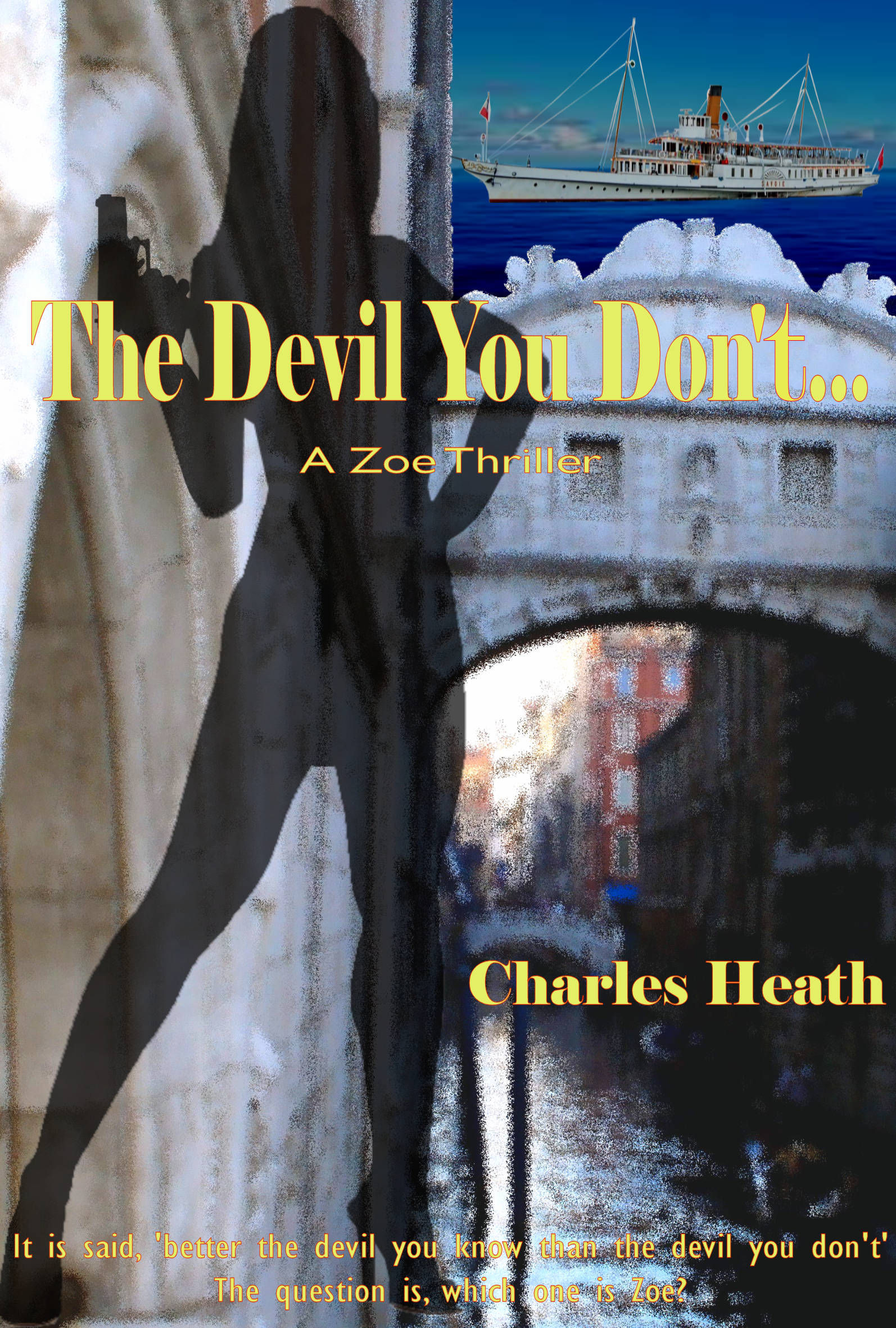
A sequel to “The Devil You Don’t”

Revenge is a dish best served cold – or preferably so when everything goes right

Of course, it rarely does, as Alistair, Zoe’s handler, discovers to his peril. Enter a wildcard, John, and whatever Alistair’s plan for dealing with Zoe was dies with him.

It leaves Zoe in completely unfamiliar territory.

John’s idyllic romance with a woman who is utterly out of his comfort zone is on borrowed time. She is still trying to reconcile her ambivalence, after being so indifferent for so long.

They agree to take a break, during which she disappears. John, thinking she has left without saying goodbye, refuses to accept the inevitable, calls on an old friend for help in finding her.

After the mayhem and being briefly reunited, she recognises an inevitable truth: there is a price to pay for taking out Alistair; she must leave and find them first, and he would be wise to keep a low profile.

But keeping a low profile just isn’t possible, and enlisting another friend, a private detective and his sister, a deft computer hacker, they track her to the border between Austria and Hungary.

What John doesn’t realise is that another enemy is tracking him to find her too. It could have been a grand tour of Europe. Instead, it becomes a race against time before enemies old and new converge for what will be an inevitable showdown.

The cinema of my dreams – I always wanted to write a war story – Episode 20

For a story that was conceived during those long boring hours flying in a steel cocoon, striving to keep away the thoughts that the plane and everyone in it could just simply disappear as planes have in the past, it has come a long way.

Whilst I have always had a fascination in what happened during the second world war, not the battles or fighting, but in the more obscure events that took place, I decided to pen my own little sidebar to what was a long and bitter war.

And, so, it continues…


Wallace was furious, and despite his attempts to stay clear of his commanding officer, Thompson discovered he couldn’t hide forever.

“Where is Atherton?”  Wallace asked the moment Johannsson walked into the room.

It was a question he couldn’t answer and had been equally as furious as Wallace when he learned of what had happened.  It was not supposed to go the way it did.  Atherton was to lead them to the remnants of the Resistance, and then Burke and Richardson had orders to kill them all.

The first part of the plan had worked as Burke had said it would.  It was his idea to ‘break’ Atherton out and then he would lead them to the resistance.  London would know where they were, and Atherton would also know, nay not exactly where they were, but how to contact them.  There were only about six left, according to Leonardo.

But he had been wrong before.  He’d labelled the remnants of the resistance as useless but to his chagrin discovered they were anything but.  He had three dead men to prove it.  And given the restraints on his current mission, he couldn’t go into the village and execute a like number of villagers for those men.

That would give away the fact they were not British, but Germans in disguise.  Best, he had been told, to let the matter be until their current mission was completed.  Then, Wallace told him, he could do what he liked with the villagers.

But like all plans, this one had gone awry.  Burke had lost Atherton approaching the village, and a thorough search of every building hadn’t found him.  Atherton, according to Burke, had completely disappeared.

Now Wallace was on the warpath because he didn’t like loose ends and not one as dangerous as Atherton.

“My men lost him by the time they reached the village.  They did a thorough search but he wasn’t there.”

“And you believe that?”

“I trust my men.  Atherton is a fully trained soldier with a few extra tricks up his sleeve, otherwise, London would not have sent him out.  There is a positive in this if he’s out of the way he can’t stir up any trouble.”

“But those so

Called remnants of the resistance can, and I assure you, will.  And more so now they know that we’re not exactly the British liberators they were hoping for.”

“You can’t believe that he found them.  We’ve seen none of them since Leonardo defected.  He told us he killed them all.”

“Well, he’s a liar.  Here’s an idea, get him and tell him to take his men down the hill and find them.  Promise him anything, as long he brings back Atherton and the rest of them dead or alive, preferably dead.  Unless you think you can do a better job.”

“Sir…”

A soldier came running in, then stood to attention until Wallace addressed him.  “What is it?”

“Carmichael hasn’t returned.”

“What do you mean, hasn’t returned.  I thought everyone was confined to the castle?’  He turned around to look at Johannsson.  “What the devil is going on?”

“Some men don’t exactly respond well to curfews.  Carmichael was one of them.”

“Carmichael?  Isn’t he the one who knows the Reich Marshall by sight?”

“Yes, sir.”

“And now he’s missing.  You still don’t think there is resistance out there, and making us look like monkeys?  This has Atherton written all over it.  How much did he find out?  I thought you had that situation covered.”

“I couldn’t exactly put him under house arrest, could I, not unless you wanted to hand out a sign that said German outpost.”

“Don’t get snippy with me Johannsson. Just get a team of five or six and find the bastard.  And while you’re at it, find this Carmichael.  Take those two fools that lost him, and if you accidentally shoot them, we’ll call them casualties of war.”

“Yes, sir.”  And how long before I share their fate, he thought.  Blame was transferable, so he’d kick it down the line.  “Jackerby,” he yelled out.  I’ve got a job for you.”

© Charles Heath 2019