Top 5 sights on the road less travelled – Sydney

Beyond the Icons: Five Hidden Sydney Gems on the Road Less Travelled

Sydney is one of the world’s most beautiful cities, but let’s be honest: once you’ve seen the Opera House sails sparkle and crossed the Harbour Bridge, you might feel like you’ve checked the box.

But for the traveller yearning for authenticity—the one who prefers the local pub to the tourist trap, and a hidden bush track over a crowded promenade—Sydney holds secrets. If you’re touring New South Wales and looking to uncover the true soul of the Harbour City, you need to drive past the postcards.

Here are the top five things to do in Sydney on the road less travelled, reserved for those willing to venture just slightly off the beaten track.


1. Trace Ancient History at Ku-ring-gai Chase National Park

While the Royal National Park gets most of the glory (and the weekend crowds), the vast, stunning wilderness of Ku-ring-gai Chase, located in the north, often slips under the radar for international visitors. This is the perfect spot for a Sydney day trip that feels like a true escape from urban life.

Why it’s on the road less travelled: This park is not just known for its phenomenal bushwalking and sprawling waterways; it is a repository of irreplaceable history. Ku-ring-gai is home to some of the most significant and well-preserved Aboriginal rock art and engraving sites in the Sydney basin.

The Must-Do: Head to the captivating West Head Lookout, which offers panoramic, uninterrupted views across the juncture of the Hawkesbury River, Broken Bay, and Barrenjoey Headland. On your way back, stop and walk the short loop trail at the Basin Track to view Aboriginal engravings of marine life and human figures, remnants of the Guringai people who have called this land home for millennia.


2. Harbour Views Without the Crowds: The Hermitage Foreshore Walk

Everyone knows the walk from Bondi to Coogee, but Sydney’s most exquisite harbour views are often found on the quieter paths along the Eastern Suburbs. The Hermitage Foreshore Walk, connecting Nielsen Park to Rose Bay, is the perfect example of secluded city beauty.

Why it’s on the road less travelled: This 1.8 km track meanders through lush, protected rainforest, leading you to tiny, secret beaches that feel utterly remote, despite being minutes from million-dollar homes. You get postcard-perfect views of the Sydney Harbour Bridge and Opera House—but from across the water, framed by trees and exclusive little coves.

The Must-Do: Pack a picnic and stop at Milk Beach, a glorious sliver of sand that is largely inaccessible except via this track or boat. It is one of the most romantic spots in Sydney, ideal for watching the yachts sail by without the presence of tour buses or selfie sticks.


3. Step Back in Time (and Ruin): Cockatoo Island

Located right in the middle of Sydney Harbour, Cockatoo Island is a UNESCO World Heritage site and one of the world’s most unique islands. It’s an industrial ghost town, a former prison, shipyard, and reformatory school, offering a fascinatingly gritty contrast to the polished surrounding suburbs.

Why it’s on the road less travelled: While easily accessible by ferry from Circular Quay, most tourists jump off at Taronga Zoo or Manly. Those who make the short trip to Cockatoo Island find a raw, sprawling historical site where the massive industrial machinery and sandstone penal buildings have been left largely intact.

The Must-Do: Take a self-guided audio tour that delves into the island’s dark convict past and its role in building Australia’s naval strength. For the truly adventurous, book a waterfront glamping tent or apartment for the night. Waking up on a silent, historical island, watching the sun rise over the harbour, is an experience few visitors ever get to claim.


4. Explore Inner West’s Industrial Transformation: The Tramsheds

Sydney’s Inner West is famous for its hipster cafes and vintage shops, but the Tramsheds in Forest Lodge offer a specific culinary and architectural experience that screams “local.”

Why it’s on the road less travelled: This is not a standard food court; it’s a beautifully restored Rozelle Tram Depot, built in 1904. The massive, soaring industrial space, complete with old tram tracks and repurposed steel infrastructure, now houses a selection of artisanal retailers, high-quality restaurants, and providores focusing on local Australian produce.

The Must-Do: Skip the chain restaurants and grab lunch at a specialist venue like Bodega 1904 or pick up fresh seafood. The atmosphere is buzzing but intimate, giving you a real feel for Sydney’s industrial heritage fused seamlessly with modern dining culture. It’s a perfect pitstop for lunch if you are driving through the Inner West towards the city.


5. Discover the Tranquil Waters of Pittwater via Ferry

For a Sydney experience that truly requires a sense of adventure (and a slightly longer drive north), head to Church Point or Palm Beach and leave the car behind to explore the hidden waterways of Pittwater.

Why it’s on the road less travelled: Pittwater is Sydney’s serene northern counterpart to the bustling Harbour. It is edged by protected national parks and sprinkled with tiny, virtually car-less communities only accessible by private ferry or water taxi. This area feels less like Sydney and more like a secluded holiday destination.

The Must-Do: Catch the little commuter ferry from Church Point across to Scotland Island or The Basin (part of Ku-ring-gai Chase). The Basin offers brilliant, calm, lagoon-like swimming and excellent walking tracks leading to lookouts over the pristine water. This ferry journey itself is a charming slice of local life—you’ll be sharing the trip with residents doing their grocery runs and kids heading home from school.


Your Sydney Adventure Starts Now

Sydney’s iconic sights are worth the visit, but the true brilliance of the city lies just beyond the tourist trails. By taking the road less travelled, you don’t just observe Sydney; you immerse yourself in its history, its wild geography, and its genuine, local spirit.

So, ditch the guidebook, fire up the GPS, and go find the hidden beaches and industrial ruins that the locals try to keep secret.


Have you discovered a hidden Sydney gem that should be on this list? Share your favourite off-the-beaten-path spot in the comments below!
Skeletons in the closet, and doppelgangers

A story called “Mistaken Identity”

…

How many of us have skeletons in the closet that we know nothing about? The skeletons we know about generally stay there, but those we do not, well, they have a habit of coming out of left field when we least expect them.

In this case, when you see your photo on a TV screen with the accompanying text that says you are wanted by every law enforcement agency in Europe, you’re in a state of shock, only to be compounded by those same police, armed and menacing, kicking the door down.

I’d been thinking about this premise for a while after I discovered my mother had a boyfriend before she married my father, a boyfriend who was, by all accounts, the man who was the love of her life.

Then, in terms of coming up with an idea for a story, what if she had a child by him that we didn’t know about, which might mean I had a half-brother or sister I knew nothing about. It’s not an uncommon occurrence from what I’ve been researching.

There are many ways of putting a spin on this story.

Then, in the back of my mind, I remembered a story an acquaintance at work was once telling us over morning tea, that a friend of a friend had a mother who had a twin sister and that each of the sisters had a son by the same father, without each knowing of the father’s actions, both growing up without the other having any knowledge of their half brother, only to meet by accident on the other side of the world.

It was an encounter that in the scheme of things might never have happened, and each would have remained oblivious of the other.

For one sister, the relationship was over before she discovered she was pregnant, and therefore had not told the man he was a father. It was no surprise the relationship foundered when she discovered he was also having a relationship with her sister, a discovery that caused her to cut all ties with both of them and never speak to either from that day.

It’s a story with more twists and turns than a country lane!

And a great idea for a story.

That story is called ‘Mistaken Identity’.

365 Days of writing, 2026 – 309

Day 309 – The myth of invisibility

…

Would an Author Ever Believe the Job Means Never Being Seen by Clients? The Book Tour and the Myth of Invisibility


Introduction

Would an author ever ascribe to the notion that choosing such an occupation means he is never seen by his clients? After all, there is that thing called a “book tour.”

It is a fair question, and it gets at a real tension in authorship. Writing is often solitary. The work happens alone, at a desk, in a notebook, or on a screen. The relationship between author and reader is frequently asynchronous: the reader encounters the author’s voice long after the writing is finished. For freelance authors, the same can be true of clients—communication may happen by email, project brief, or contract rather than in a office.

So does authorship mean invisibility?

Not really. But it does mean that visibility is different from what it is in many client-facing professions. Authors are not always seen in person, and they are not always seen on demand. Yet the idea that an author is “never seen by clients” is a myth—or at best a half-truth. Book tours are one obvious counterexample, but they are not the only one. Modern authors are visible through book signings, festivals, podcasts, social media, newsletters, virtual events, and the books themselves.

The real issue is not whether authors can be seen. It is how, when, and for whom visibility happens.


Why the “Invisible Author” Idea Exists

The notion that authorship is an invisible occupation comes from a genuine place. Writing is interior work. It rewards focus, privacy, and long stretches of uninterrupted time. Many authors deliberately protect their attention, which can make them seem remote.

There is also the nature of the author-reader relationship. A reader may spend hours with an author’s ideas without ever meeting the author. In that sense, the author is present through the work but absent in person. For freelance writers and ghostwriters, the dynamic can be similar: a client may receive a finished article, report, or manuscript without ever sitting across from the writer.

Then there is the economics of publishing. Not every author gets a traditional book tour. Publishers reserve major tours for lead titles, established authors, and books with strong commercial potential. Debut authors, midlist authors, and self-published authors often have to create their own visibility. If an author never gets a formal tour, it is easy to conclude that the occupation is invisible by design.

But that conclusion confuses a lack of guaranteed visibility with a lack of visibility altogether.


What a Book Tour Actually Does—and Doesn’t Do

A book tour is a marketing and publicity tool. It puts an author in front of readers, booksellers, media, and industry professionals. It can generate buzz, create local press, strengthen bookseller relationships, and give readers a memorable experience. For authors who do tour, it is a powerful way to be seen.

But a book tour is not a client-service appointment. It does not mean the author is available to every reader at all times. It does not guarantee deep personal interaction. And it does not happen for every author.

This matters because the original question assumes that a book tour settles the visibility question. It helps, but it is not universal. A traditional tour can be expensive, exhausting, and limited in reach. Many authors now do virtual tours, local events, library appearances, podcast interviews, and social media campaigns instead. Some do a hybrid of in-person and online events.

So yes, a book tour disproves the idea that authors are never seen. But it would be inaccurate to say that every author is seen in the same way, or that a book tour is the only proof of visibility.


Readers Are Not Clients—But Visibility Still Matters

The word “clients” is worth examining. Authors usually have readers, not clients. Readers buy books, attend events, subscribe to newsletters, and recommend authors to friends. They are an audience, a community, and sometimes a market—but they are not clients in the traditional service-provider sense.

Freelance authors, ghostwriters, and content strategists do have clients. In those cases, visibility is often professional rather than public. A freelance author may be seen through a portfolio, a LinkedIn profile, a referral, a proposal, or a video call. The author does not need to be physically present to be credible. What matters is that the client can find the author, evaluate the work, and communicate clearly.

For book authors, visibility is usually public and reputational. The author is seen through the book, the byline, the author bio, the website, the podcast appearance, and the signing table. The relationship is not a one-to-one service relationship, but it is still a relationship.

The key distinction is this: authors are not invisible; their visibility is often mediated by the work and by the platforms they use.


The Modern Author Is Visible in More Ways Than a Tour

A book tour is one visibility channel among many. Today’s authors can be seen through:

  • In-person events: book signings, readings, festivals, conferences, and bookstore appearances.
  • Virtual events: webinars, live streams, online Q&As, and virtual book tours.
  • Podcasts and interviews: author conversations that reach niche audiences.
  • Social media: behind-the-scenes content, writing updates, and direct reader engagement.
  • Newsletters: a direct line to readers that does not depend on algorithms.
  • Author websites and blogs: a permanent home for bios, essays, and book information.
  • Media coverage: reviews, features, and radio or television appearances.
  • Professional platforms: portfolios, bylines, and client testimonials for freelance authors.
  • The book itself: the most durable form of author visibility.

This is why the “never seen” claim does not hold up. Authors may be private, but the occupation does not require invisibility. It requires a visibility strategy that fits the author’s genre, goals, budget, and personality.


When Authors Do Feel Invisible—and Why

It would be dishonest to pretend that authors never feel unseen. Many do, especially at certain stages of their careers.

A debut author may feel invisible before publication. A midlist author may feel invisible after the initial launch window closes. A self-published author may feel invisible without a publisher’s publicity machine. A freelance author may feel invisible when clients treat the work as a commodity rather than a collaboration.

These feelings are real, but they are not proof that authorship is inherently invisible. They are proof that visibility is uneven. It depends on resources, timing, genre, platform, and luck.

There is also a difference between being seen and being known. An author can be seen at an event without being deeply known by the audience. A book tour can create exposure without creating intimacy. That can feel disappointing, but it is not the same as never being seen at all.


Book Tours in the Digital Age

The traditional book tour has changed. Publishers are more selective about sending authors on the road. Many authors now combine local events with virtual appearances. A virtual book tour can include blog interviews, podcast spots, Instagram Live conversations, and Zoom events with book clubs.

This is especially important for authors who cannot travel, have caregiving responsibilities, or live outside major publishing hubs. Digital visibility can be more accessible and more targeted than a traditional tour. It can also be more sustainable.

At the same time, digital visibility is not a perfect substitute for in-person connection. A signing creates a memory. A live event creates atmosphere. A podcast creates intimacy. The best author visibility strategies use more than one channel.


How Authors Can Stay Visible Without a Traditional Tour

Authors who want to avoid invisibility do not need to wait for a publisher to send them on tour. They can build visibility deliberately.

  1. Clarify the audience. Are you visible to readers, clients, or both? The answer shapes the strategy.
  2. Build an author platform. A website, newsletter, and social profile create a reliable home base.
  3. Use virtual events. Webinars, live Q&As, and online book clubs are low-cost ways to be seen.
  4. Partner with bookstores and libraries. Local events can be small but meaningful.
  5. Appear on podcasts. Niche shows often create deeper engagement than broad media.
  6. Publish consistently. Essays, short pieces, and behind-the-scenes content keep the author present.
  7. Maintain professional visibility. For freelance authors, keep a portfolio, testimonials, and clear contact channels.
  8. Measure what matters. Visibility is not just impressions; it is recognition, trust, and relationship.

The Bottom Line

Would an author ever ascribe to the notion that picking such an occupation means he is never seen by his clients? Some authors might feel that way during solitary stretches or slow seasons. But as a general claim, it is false.

Book tours are one clear sign that authors can be seen. Yet they are not the only sign, and they are not guaranteed. Authors are visible through their work, their events, their platforms, and their relationships with readers and clients. The occupation can be private, but it is not invisible by definition.

The better question is not “Will an author ever be seen?” It is “How will this author choose to be seen?” In the modern publishing landscape, visibility is not a single event. It is an ongoing practice.


FAQ

Do all authors get book tours?
No. Traditional book tours are usually reserved for lead titles, established authors, or books with strong commercial potential. Many authors use virtual tours, local events, and digital marketing instead.

Are authors invisible to their readers?
No. Authors are seen through their books, bylines, events, podcasts, social media, and newsletters. The relationship may be less direct than in a service profession, but it is still visible.

What if “clients” means freelance writing clients?
Freelance authors maintain visibility through portfolios, referrals, proposals, video calls, and published work. They do not need constant face-to-face contact to be credible.

Is a book tour still worth it?
It can be, especially for authors with a strong local audience or a publisher-supported campaign. But it is not the only path to visibility, and it should be part of a broader author marketing strategy.

…

An excerpt from “Amnesia”, a work in progress

I remembered a bang.

I remembered the car slewing sideways.

I remembered another bang, and then it was lights out.

When I opened my eyes again, I saw the sky.

Or I could be underwater.

Everything was blurred.

I tried to focus, but I couldn’t. My eyes were full of water.

What happened?

Why was I lying down?

Where was I?

I cast my mind back, trying to remember.

It was a blank.

What, when, who, why and where are questions I should easily be able to answer. These are questions any normal person could answer.

I tried to move. Bad, bad mistake.

I did not realise the scream I heard was my own. Just before my body shut down.

“My God! What happened?”

I could hear, not see. I was moving, lying down, looking up.

I was blind. Everything was black.

“Car accident; hit a tree, sent the passenger flying through the windscreen. Pity to poor bastard didn’t get the message that seat belts save lives.”

Was I that poor bastard?

“Report?” A new voice, male, authoritative.

“Multiple lacerations, broken collar bone, broken arm in three places, both legs broken below the knees, one badly. We are not sure of internal injuries, but ruptured spleen, cracked ribs and pierced right lung are fairly evident, x-rays will confirm that and anything else.”

“What isn’t broken?”

“His neck.”

“Then I would have to say we are looking at the luckiest man on the planet.”

I heard the shuffling of pages.

“OR1 ready?”

“Yes. On standby since we were first advised.”

“Good. Let’s see if we can weave some magic.”

Magic.

It was the first word that popped into my head when I surfaced from the bottom of the lake. That first breath, after holding it for so long, was sublime, and, in reality, agonising.

Magic, because it seemed like I’d spent a long time underwater.

Or somewhere.

I tried to speak but couldn’t. The words were just in my head.

Was it night or was it day?

Was it hot, or was it cold?

Where was I?

Around me, it felt cool.

It was incredibly quiet. No noise except for the hissing of air through an air-conditioning vent. Or that was the sound of pure silence.  And with it the revelation that silence was not silent. It was noisy.

I didn’t try to move.

Instinctively, somehow, I knew not to.

A previous unpleasant experience?

I heard what sounded like a door opening, and noticeably quiet footsteps slowly came into the room. They stopped. I could hear breathing, slightly laboured, a sound I’d heard before.

My grandfather.

He had smoked all his life until he was diagnosed with lung cancer. But for years before that, he had emphysema. The person in the room was on their way down the same path. I could smell the smoke.

I wanted to tell whoever it was the hazards of smoking.

I couldn’t.

I heard a metallic clanging sound from the end of the bed. A moment later, the clicking of a pen, then writing.

“You are in a hospital.” A female voice suddenly said. “You’ve been in a bad accident. You cannot talk or move; all you can do, for the moment, is listen to me. I am a nurse. You have been here for 45 days and just came out of a medically induced coma. There is nothing to be afraid of.”

She had a very soothing voice.

Her fingers stroked the back of my hand.

“Everything is fine.”

Define fine, I thought. I wanted to ask her what ‘fine’ meant.

“Just count backwards from 10.”

Why?

I didn’t reach seven.

Over the next ten days, that voice became my lifeline to sanity. Every morning, I longed to hear it, if only for the few moments she was in the room, those few waking moments when I believed she, and someone else who never spoke, were doing tests. I knew it had to be someone else because I could smell the essence of lavender. My grandmother had worn a similar scent.

It rose above the disinfectant.

She was another doctor, not the one who had been there the day I arrived. Not the one who had used some ‘magic’ and kept me alive.

It was then, in those moments before she put me under again, that I thought, what if I was paralysed? It would explain a lot. A chill went through me.

The next morning, she was back.

“My name is Winifred. We don’t know what your name is, not yet. In a few days, you will be better, and you will be able to ask us questions. You were in an accident, and you were very severely injured, but I can assure you there will be no lasting damage.”

More tests, and then when I expected the lights to go out, they didn’t. Not for a few minutes more. This was how I would be integrated back into the world. A little bit at a time.

The next morning, she came later than usual, and I’d been awake for a few minutes. “You have bandages over your eyes and face. You had bad lacerations to your face and glass in your eyes. We will know more when the bandages come off in a few days. Your face will take longer to heal. It was necessary to do some plastic surgery.”

Lacerations, glass in my eyes, car accidents, plastic surgery. By logical deduction, I knew I was the poor bastard thrown through the windscreen. It was a fleeting memory from the day I was admitted.

How could that happen?

That was the first of many startling revelations. The second was the fact that I could not remember the crash. Equally shocking, in that same moment, was the fact that I could not remember before the crash either, or only vague memories after.

But the most shattering of all these revelations was the one where I realised I could not remember my name.

I tried to calm down, sensing a rising panic.

I was just disoriented, I told myself. After 45 days in an induced coma, it had messed with my mind, and it was only a temporary lapse. Yes, that’s what it was, a temporary lapse. I will remember tomorrow. Or the next day.

Sleep was a blessed relief.

The next day I didn’t wake up feeling nauseous. I think they’d lowered the pain medication. I’d heard that morphine could have that effect. Then, how could I know that but not who I am?

Now I knew Winifred, the nurse, was preparing me for something unbelievably bad. She was upbeat and soothing, giving me a new piece of information each morning. This morning, “You do not need to be afraid. Everything is going to be fine. The doctor tells me you are going to recover with little scarring. You will need some physiotherapy to recover from your physical injuries, but that’s in the future. We need to let you mend a little bit more before then.”

So, I was not going to be able to leap out of bed and walk out of the hospital any time soon. I don’t suppose I’d ever leapt out of bed, except as a young boy. I suspect I’d sustained a few broken bones. I guess learning to walk again was the least of my problems.

But there was something else. I picked it up in the timbre of her voice, a hesitation, or reluctance. It sent another chill through me.

This time, I was left awake for an hour before she returned.

This time, sleep was restless.

Scenes were playing in my mind, nothing I recognised, and nothing lasting longer than a glimpse. Me. Other people, I didn’t know. Or I knew them and couldn’t remember them.

Until they disappeared, slowly like the glowing dot in the centre of the computer screen, before finally fading to black.

The morning the bandages were to come off, she came in early and woke me. I had another restless night, the images becoming clearer, but nothing recognisable.

“This morning, the doctor will be removing the bandages over your eyes. Don’t expect an immediate effect. Your sight may come back quickly, or it may come back slowly, but we believe it will come back.”

I wanted to believe I was not expecting anything, but I was. It was human nature. I did not want to be blind as well as paralysed. I had to have at least one reason to live.

I dozed again until I felt a gentle hand on my shoulder. I could smell the lavender; the other doctor was back. And I knew the hand on my shoulder was Winifred’s. She told me not to be frightened.

I was amazed to realise at that moment, I wasn’t.

I heard the scissors cutting the bandages.

I felt the bandage being removed and the pressure coming off my eyes. I could feel the pads covering both eyes.

Then a moment when nothing happened.

Then the pads are gently lifted and removed.

Nothing.

I blinked my eyes, once, twice. Nothing.

“Just hold on a moment,” Winifred said. A few seconds later, I could feel a cool towel wiping my face, and then gently wiping my eyes. There was ointment or something else in them.

Then a flash. Well, not a flash, but like when a light is turned on and off. A moment later, it was brighter, not the inky blackness of before, but a shade of grey.

She wiped my eyes again.

I blinked a few more times, and then the light returned, and it was like looking through water, at distorted and blurry objects in the distance.

I blinked again, and she wiped my eyes again.

Blurry objects took shape. A face looking down on me, an elderly lady with a kindly face, surely Winifred, who was smiling. And on the opposite side of the bed, the doctor, a Chinese woman of indescribable beauty.

I nodded.

“You can see?”

I nodded again.

“Clearly?”

I nodded.

“Very good. We will just draw the curtains now. We don’t want to overdo it. Tomorrow we will be taking off the bandages on your face. Then, it will be the next milestone. Talking.”

I couldn’t wait.

When morning came, I found myself afraid. Winifred had mentioned scarring; there were bandages on my face. I knew, but wasn’t quite sure how I knew, I wasn’t the most handsome of men before the accident, so this might be an improvement.

I was not sure why I didn’t think it would be the case.

They came at mid-morning, the nurse, Winifred, and the doctor, the exquisite Chinese. She was the distraction, taking my mind off the reality of what I was about to see.

Another doctor came into the room before the bandages were removed, and he was introduced as the plastic surgeon who had ‘repaired’ the ravages of the accident. It had been no easy job, but, with a degree of egotism, he did say he was one of the best in the world.

I found it hard to believe that if he were, he would be at a small country hospital.

“Now just remember, what you might see now is not how you will look in a few months.”

Warning enough.

The Chinese doctor started removing the bandages. She did it slowly and made sure it did not hurt. My skin was very tender, and I suspect still bruised, either from the accident or the surgery, I didn’t know.

Then it was done.

The plastic surgeon gave his work a thorough examination and seemed pleased with it. “Coming along nicely,” he said to the other doctor. He issued some instructions on how to manage the skin, nodded to me, and I thanked him before he left.

I noticed Winifred had a mirror in her hand and was reticent in using it. “As I said,” she said, noticing me looking at the mirror, “what you see now will not be the result. The doctor said it was going to heal with little scarring. You have been extremely fortunate that he was available. Are you ready?”

I nodded.

She showed me.

I tried not to be reviled at the red and purple mess that used to be my face. At a guess, I would have to say he had to put it all back together again, but not knowing what I looked like before, I had no benchmark. All I had was a snippet of memory that told me I was not the tall, dark, and handsome type.

And I still could not talk. There was a reason; he had worked in that area too. Just breathing hurt. I think I would save up anything I had to say for another day. I could not even smile. Or frown. Or grimace.

“We’ll leave you for a while. Everyone needs a little time to get used to the change. I suspect you are not sure if there has been an improvement in last year’s model. Well, time will tell.”

A new face?

I could not remember the old one.

My memory still hadn’t returned.

…

©  Charles Heath  2024-2026

The cinema of my dreams – It continued in London – Episode 30

Vittoria and Juliet

…

What was it that found me finding ways to run into a woman that I really didn’t want to run into or see again?  And yet, it seemed everything I did, since Rodby reappeared in my life, revolved around her.

And it crossed my mind, while I was trying to find where she was living in London, that having a mother like Vittoria might have contributed to her ‘downfall’.  The biography of Vittoria wasn’t that of a society angel, more the pretender who was little more than a petty criminal worming her way into a field of rich pickings.

She’d been in service in the count’s residence, and as much as I hoped wasn’t a continuation of the old practice of masters having their way with their employees, or servants back in the old days, he might have forced himself on her, but I suspect it was the other way around.

If she was a grifter then she would have made him aware of the girl he sired, and if he was good about it, would have adequately compensated her, if only to keep it quiet.  Very adequately and for a long time until he died.  I suspect the countess didn’t know, and like most women in those sorts of marriages, probably didn’t want to know.

The reason why there was no surveillance in Juliet was because no one had found a starting reference point.  In other words, no one knew where she was.  And Cecilia was right, London was a big place if I wanted to pound the pavement looking for her.

The file said an internet search on her was performed, but the only information relevant to her they found was her fall from grace and very little beyond that date range.  It seemed Juliet Ambrose only existed for three years before I first met her.

That meant she had been someone else before that, most likely Juliet, the name of her mother at the time.  That, of course, suggested one of two eventualities, that she wanted to escape her mother, or the Count’s family because of her mother, and changed her own name, or her mother had informed on some fellow criminals to leverage a free ticket and going into a form of witness protection.

Knowing Juliet as I did, the former was more likely than the latter.

Now there was a new possibility that wasn’t a scenario in the file.  Had the count told anyone about the daughter, and the mother’s no doubt incessant demands?  That could be a reason for a hitman to remove the problem or problems.

I looked at the biography for Vittoria Romano again and noted she had a number of aka’s, Gallo, Rossi, and her birth name Moretti.

A quick search told me the Italian version of Juliet was Giulietta, so I put Giulietta Moretti into the search engine and waited all of 35 nanoseconds to get the obligatory 20,000,000 hits.  Popular girl.

But…

There on page three of endless pages on a fading Italian Rock and Roll singer, there was a picture, albeit of Juliet in her younger days, taken on the grounds of a mansion in Sorrento.  The Count had a place in Sorrento, and I looked it up in the list provided.

Yes.  It still belonged to the family.  I tucked that away in the mental notes stored at the back of my mind.  It would be worth a visit when I went looking for the Countess.

A further search through 32 useless pages of items found another.

Giulietta Moretti published a paper in a medical journal about a year ago on the effects on the human body caused by car crashes, and it was getting recognition by her peers.  So much so, that she had been asked by a group of surgeons to talk about it at a conference in Blackpool.

The day after tomorrow.

And…

It had an address where she worked in London, a morgue in one of the larger hospitals.  I now had a starting point.

My curiosity then switched to Alessandro.

I wondered if he knew the background of Vittoria.  Surely his brother would have alerted him to the trouble she was causing him.  Or, and this was a huge leap, had the Count not told anyone about her, thinking he had alone contained the problem.

If Alessandro knew then was he in cahoots with Vittoria in removing the Countess from the playing field.

What bothered me was that I saw Alessandro at the hotel at the same time as the countess, and I had no doubt he was the problem she needed to attend to.  How had he managed to spirit her away, if he did?  If not, why would she sneak out of the hotel and disappear?

Was it something to do with that meeting between her and Alessandro?  All good questions for a Detective Inspector.

It was particularly troublesome that our surveillance on the main players managed to lose two of them for a lengthy period.  No one had thought to stay in the hotel and were relying on the hotel’s own CCTV.  That, of course, showed nothing other than the countess and Alessandro arriving, and nothing after that.

There were a dozen CCTV camera feeds and I had them sent to my phone and that afternoon went through all of them, looking for anomalies, people ridiculously disguised, large crates or cases that could hide bodies, anything to show she had left, albeit disguised.

What she would want to be seen was anyone’s guess, but it may have had something to do with Alessandro.  What bothered me, though, was a report from the people who installed the CCTV system at the hotel.  It was interesting that it found its way to the Department, but not as interesting as the fact the number installed, and locations, didn’t match the number that had returned video for the time.  A second sheet noted that seven of the CCTV cameras were not in operation at the time, with no reason given.

As for Alessandro, he and I were going to have a talk sooner rather than later, and I was going to use my Detective Inspector warrant card for the second time.

Long ago, when developing guises, I got the chance to follow around a real detective inspector and learned the ropes.  He was a good detective and a better teacher.  It was my first item on the list for the next morning.

© Charles Heath 2023

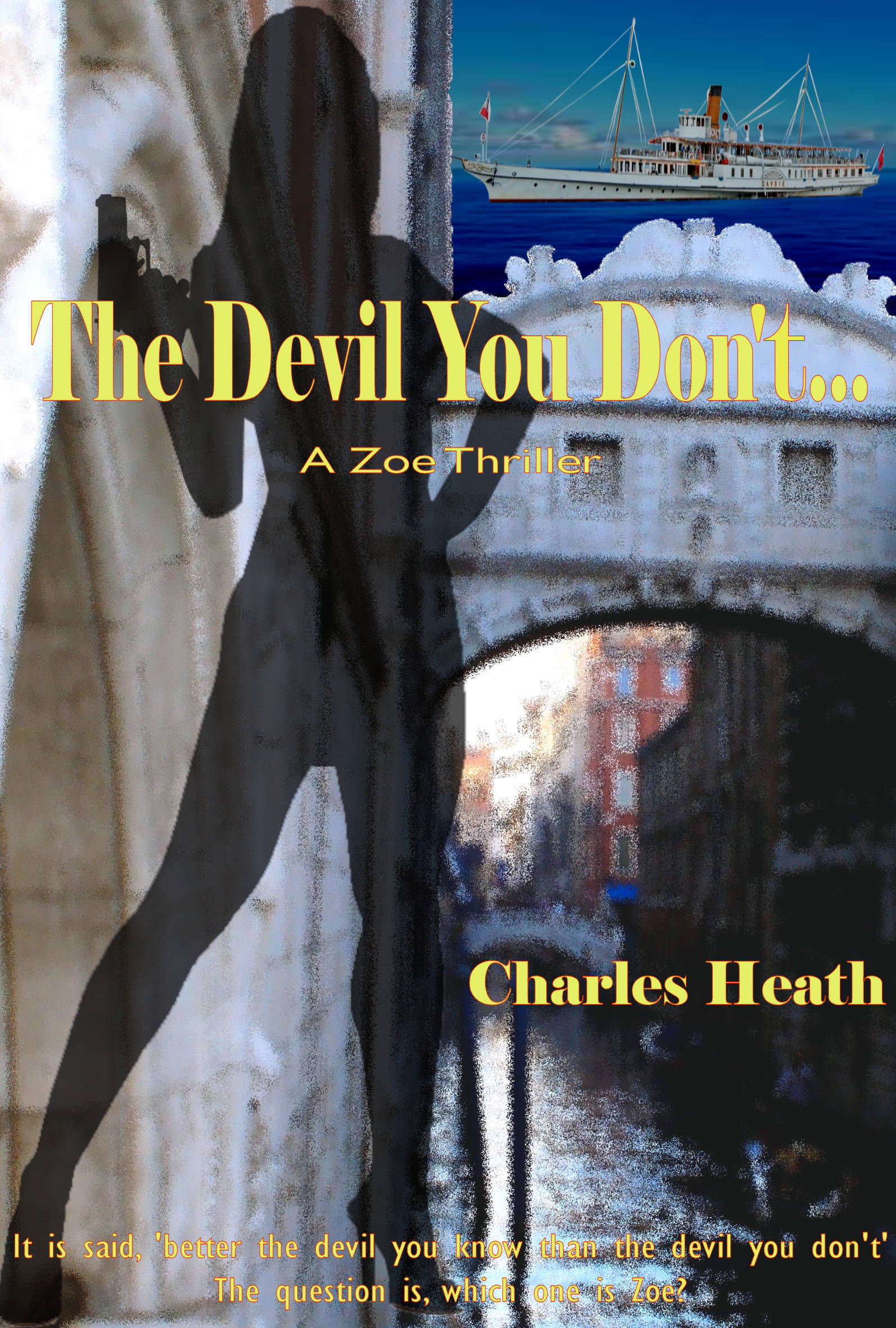
“The Devil You Don’t”, she was the girl you would not take home to your mother!

Now only $0.99 at https://amzn.to/2Xyh1ow

…

John Pennington’s life is in the doldrums. Looking for new opportunities and prevaricating about getting married, the only joy on the horizon was an upcoming visit to his grandmother in Sorrento, Italy.

Suddenly, he is left at the check-in counter with a message on his phone telling him the marriage is off, and the relationship is over.

If only he hadn’t promised a friend he would do a favour for him in Rome.

At the first stop, Geneva, he has a chance encounter with Zoe, an intriguing woman who captures his imagination from the moment she boards the Savoire, and his life ventures into uncharted territory in more ways than one.

That ‘favour’ for his friend suddenly becomes a life-changing event, and when Zoe, the woman who he knows is too good to be true, reappears, danger and death follow.

Shot at, lied to, seduced, and drawn into a world where nothing is what it seems, John is dragged into an adrenaline-charged undertaking, where he may have been wiser to stay with the ‘devil you know’ rather than opt for the ‘devil you don’t’.

newdevilcvr6

“Trouble in Store” – Short stories my way: Revisiting the first section

First drafts are always a little messy.  The words spill out onto the page, and any or all of them are rarely perfect.  Sometimes you get lucky, but most of the time you don’t.

That’s why there’s revision or by the more dreaded name, editing.

Editing conjures up a lot of different images in my mind, from completely re-writing, to cutting the Mss down in size.  Or where you discover the main character’s name has changed from Bill to Fred after a bad night.

Usually, though, as stories progress, they go through several rewrites, and sometimes because of what follows.  It depends on how long a period the story is written.  Some of mine take days, others quite a lot longer.

This is the rewrite of the first section of the short story I’m undertaking, adding some new details:

Jack was staring down the barrel of a gun.

He had gone down to the corner shop to get a pack of cigarettes.

He had to hustle because he knew the shopkeeper, Alphonse, liked to close at 11:00 pm sharp.  His momentum propelled him through the door, causing the customer warning bell to ring loudly as the door bashed into it, and before the sound had died away, he knew he was in trouble.

It took a second, perhaps three, to sum up the situation. 

Young girl, about 16 or 17, scared, looking sideways at a man on the ground, then Alphonse, and then Jack.  He recognized the gun, a Luger, a German relic of WW2, perhaps her father’s souvenir, now pointing at him then Alphonse, then back to him.

Jack to another second or two to consider if he could disarm her.  No, the distance was too great.  He put his hands out where she could see them.  No sudden movements, he tried to remain calm, and his heart rate was up to the point of cardiac arrest.

Pointing with the gun, she said, “Come in, close the door, and move towards the counter.”

Everything but her hand was steady as a rock.  The only telltale sign of stress was the beads of perspiration on her brow.  It was 40 degrees Fahrenheit in the shop.

Jack shivered and then did as he was told.  She was in the unpredictable category.

“What’s wrong with your friend?”  Jack tried the friendly approach, as he took several slow steps sideways towards the counter.

The shopkeeper, Alphonse, seemed calmer than usual, or the exact opposite spoke instead, “I suspect he’s an addict, looking for a score.  At the end of his tether, my guess, and came to the wrong place.”

Wrong time, wrong place, in more ways than one Jack thought, now realizing he had walked into a very dangerous situation.  She didn’t look like a user.  The boy on the ground did, and he looked like he was going through the beginnings of withdrawal.

 “Simmo said you sell shit.  You wanna live, ante up.”  She was glaring at Alphonse. 

The language, Jack thought, was not her own, she had been to a better class of school, a good girl going through a bad boy phase. Caught in a situation she was not equipped to deal with.

© Charles Heath 2016-2024

A photograph from the inspirational bin – 44

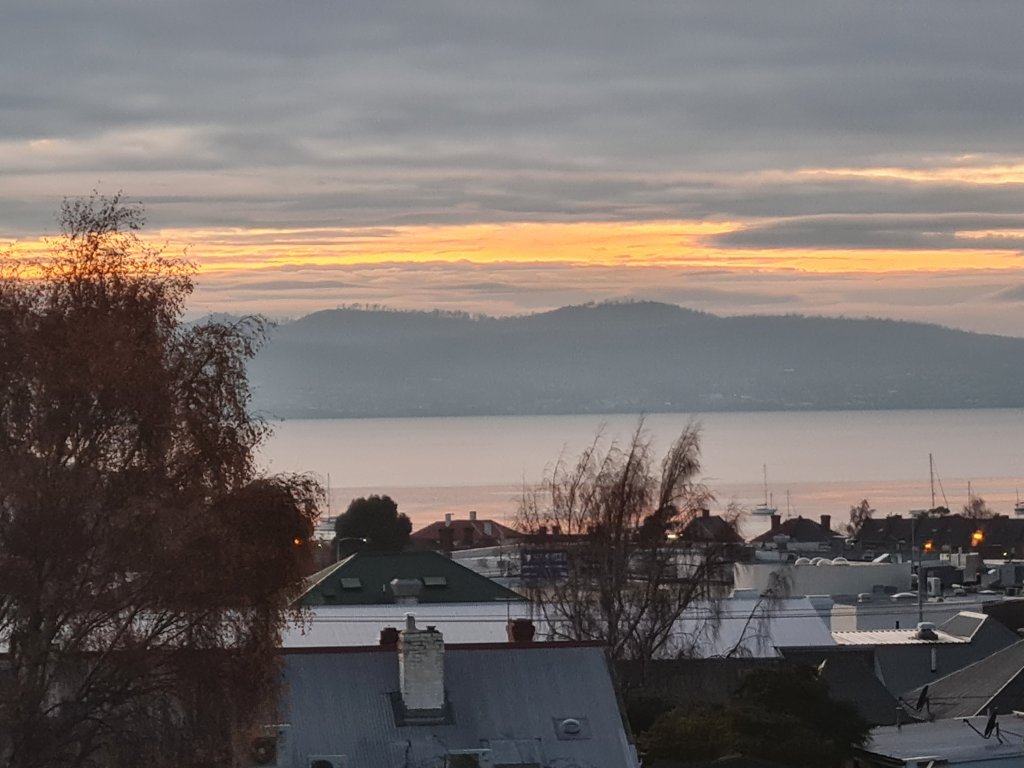
How often do we sit on the balcony of our by-the-sea residence and stare across the water, wondering what was on the other side?

We probably don’t, and if we were interested, it wouldn’t take long by car to find out.

My guess, a whole bunch of other people looking across the water wondering what’s on the other side.

Curiosity killed the cat!

So, having got that flippancy out of the way, what can be inspiring about this photograph.

Perhaps if we sent our minds back to 1804, there would be nothing on the other side except for trees. There may well have been aborigines there, going about their business, blissfully unaware of the white man, until they started arriving in big ships.

For them, it was the beginning of the end.

For those that lived on this side, in 1804, the other side would seem a long way off. There would be no bridges, no cars, and no other means of transport other than by boat.

My guess, some adventurous people would have got in a boat and rowed over there. More adventurous people would explore the coastline further north, and then 25 odd years later some bright spark would come up with the idea of creating a prison, and import a few thousand felons from the mother country, England.

It would make an interesting story, if the narrator was a boy or girl growing up in this new land.

What I learned about writing – Truth is stranger than fiction

It seems rather strange reading letters that were written by my parents before they were married.

They’re not love letters, but just words, words that knowing my father and mother as I do, seem so totally at odds with that knowledge.

The thing is, I never knew anything of theirs from that era existed, even though I knew my mother was a hoarder, and we didn’t discover the extent of that phobia until it was time to move them from their last residence to the retirement home.

There were cases and boxes filled with papers, letters, cuttings, and everything else in between.  Nothing had been thrown out.

And whilst I knew those letters existed, there was the yuk factor involved, such that I would never want to read them because, well, that was my parents’ stuff.

So, all of it was sorted, most of it thrown away, and only what we thought was of any intrinsic value was kept.  Those letters were part of the ‘keep’ pile and ended up in an old metal steamer trunk, and there they have lived for about ten years.

With the recent cleaning of my office, much to Chester’s disdain, the trunk suddenly looked out of place in a clean room.

My grandchildren ‘found’ this trunk and started looking through the contents and finished up with the letters.

And, being the curious people, they were, they started reading them, of course, stumbling over understanding the handwriting, which was based on what we learned in school, cursive script.  That meant I had to interpret the writing for them.

Talk about morbid curiosity!

And like I said, in reading them, formed the impression that these two correspondents were nothing like the people I knew growing up.

These letters dated from 1948 and 1949 when they were married in June of 1949.  There was no doubt it was a different time, and they were different people.  My mother came from a country town and went to work in Melbourne around that time.  I know that during the war, those years from 1939 to 1945 she was a student at Dandenong High School.

It was odd to realize that considering we eventually moved to Dandenong, and that may have had something to do with it.

My father served in the war till 1946, and then after being discharged from the army, worked as a projectionist until he went overseas for nearly a year, ostensibly to see how the war had affected Europe.  After that, he went back to being a projectionist at the Athenaeum in Melbourne, and later on, not knowing much of his work history, he would always tell us about the movies, especially those that came up on television.

There’s more I’m sure, like the fact my mother had another chap on the go at the same time, but it seems he was not interested in settling down.

Perhaps more will come to light in further reading, but like it said, it seems very strange to be reading those letters, much like walking over a grave; it gives me the odd shiver down the spine.

No doubt, the next time the grandchildren visit there will be another installment.

They, at least, think the story is fascinating.

365 Days of writing, 2026 – 308

Day 308 – Finding the determination to succeed

…

Beyond Luck: How to Cultivate the Grim Determination Every Writer Needs

Let’s address the elephant in the room: every writer loves a good luck story. We adore the myth of the overnight sensation—the author discovered in a dusty café, the manuscript fished from the slush pile that immediately commands a six-figure advance.

While luck undeniably plays a role in publishing, relying on it is a strategy for failure. Beneath every enduring writing career, you won’t find pure serendipity. You will find grim determination, an unyielding work ethic, and a burning desire to succeed.

Not everyone is naturally wired with that level of relentless drive. So, the ultimate question for aspiring authors is: How do we get it?

Let’s look at a masterclass in grit, and figure out how to channel that energy without necessarily destroying our social lives or sanity.


The Ultimate Case Study in Grit: John Nichols

To understand what grim determination actually looks like, look no further than novelist John Nichols.

Before he became a literary success, Nichols didn’t wait for inspiration to strike, nor did he wait for a comfortable fellowship to fund his art. Instead, he rented a cheap, fifth-floor walk-up apartment—the kind of place where the rent was low and the stairs were a daily cardiovascular penance. To pay for it, he worked two crummy, soul-draining jobs.

And how did he spend his remaining time? Sleeping? Relaxing?

Not quite. Nichols was writing five novels simultaneously.

Imagine the sheer mental real estate required to hold five different plots, characters, and worlds in your head while exhausted from low-wage labour and climbing five flights of stairs. It sounds borderline insane. But out of that chaotic crucible of overwork and fierce ambition came The Sterile Cuckoo, the breakout novel that launched his career.

Do You Need to Suffer to Succeed? (Spoiler: No)

Stories like Nichols’s inspire us, but they also terrify us. They make us ask: Do I need to live in a miserable apartment, work myself to the bone, and juggle five books at once to make it as a writer?

Take a deep breath: No, you don’t.

While Nichols’s story is a brilliant testament to raw willpower, we can—and should—adapt his mindset without adopting his exact lifestyle. You don’t need to court burnout to prove your dedication. However, you do need to understand the psychological mechanics behind his success.

Nichols didn’t succeed just because he suffered; he succeeded because he possessed a system of discipline that made quitting impossible.


How to Cultivate “Grim Determination” (Even If You Don’t Have It Naturally)

If you feel like your writing habit is fragile—abandoned at the first sign of writer’s block, fatigue, or a negative review—you can build that missing grit. Here is how to forge a writer’s work ethic from the ground up:

1. Shift from “Motivation” to “Identity”

Waiting to feel like writing is a trap. Motivation is a fickle emotion driven by weather, caffeine levels, and mood. Grim determination, on the other hand, is rooted in identity.

  • Stop saying: “I want to write a book.”
  • Start saying: “I am a writer, and writers write today.” When writing becomes as non-negotiable as brushing your teeth, you stop needing inspiration.

2. Embrace the “Crummy Job” Mentality (Without the Job)

Nichols wrote through terrible circumstances because he had no other choice; the fire under him was too hot. If your life is currently comfortable, you might lack that burning urgency. Manufacture your own urgency by setting strict, artificial constraints. Treat your writing time with the same grim seriousness you would treat a shift at a job you hate. Lock the door, turn off the internet, and sit in the chair. Make the blank page the only acceptable alternative to boredom.

3. Start Small, But Compound Daily

You don’t need to write five novels at once—in fact, please don’t. Multitasking creative projects is a fast track to finishing none of them. Instead, channel that intense focus into one project. Aim for consistency over volume. Writing 300 words a day equals roughly 100,000 words a year (enough for a hefty novel draft). The secret isn’t writing a masterpiece in a single frantic weekend; it’s showing up when you don’t want to.

4. Build a High Pain Tolerance for Rejection and Failure

Writing requires a thick skin. The determined writer views rejection letters, harsh critiques, and clumsy first drafts not as signs to quit, but as data points. When a piece fails, grit asks: What can I learn from this? When you separate your self-worth from your output, determination becomes unstoppable.


The Bottom Line

Luck is a lightning strike. It’s glorious, unpredictable, and entirely out of our control.

Grim determination, however, is building a lightning rod and standing out in the storm anyway.

You don’t need to rent a fifth-floor walk-up or juggle a half-dozen manuscripts while working double shifts to be a “real” writer. But you do need to decide that your stories matter enough to fight for—especially on the days when the muse is nowhere to be found.

Put in the work, embrace the grind, and write your way out.

…