The cinema of my dreams – It all started in Venice – Episode 9

Watching the watchers

…

My day’s entertainment was spotting the surveillance and then watching the surveillance.  It was an aspect of my job that was really strange, but it was important to keep an eye on your enemies, if only to be ready for the unexpected.

I didn’t expect anything to happen, for the time being, taking Larry at his word that, for some reason, he needed Juliet to win my trust before he made an approach.

And yet there was always an air of unpredictability in these matters, so I decided that if the opportunity arose, I’d surprise him.  In any case, I had a feeling Larry might get impatient and arrive with a small army before too long.

The librarian, to all those who didn’t know who she was, was the quintessential librarian on holiday.  She was very much a loner, who was quite capable of appearing like a lost schoolgirl on one hand, and someone very much at home, and at ease, in her environment.

She also had an air of danger about her, so she would be when push came to shove, a formidable opponent.

I couldn’t say the same for the Frenchman because there were times, I didn’t quite believe he was anything other than an abrasive Frenchman.  The only thing that kept me interested was the fact I couldn’t shake him.

I’d managed to lose the librarian several times, long enough to observe her, before I let her find me again.  Until the last time when she lost me, I came up behind her.

I’m not sure what I was thinking, but surprise often brought out a person’s true character.

When she turned around, his sixth sense finally kicking in, she jumped

“We have to stop meeting like this,” I said.

“We haven’t met before.”

“You were at the hotel this morning, and I got an icy look from you just before you left.  From them 9n, every time I turn around, there you are.”

“Coincidence, I assure you.”

“I hope so, because I cannot for the life of me wonder what your interest could be in me.”

“None.”

“Are you staying at the hotel?”

There had to be a point where. If she was a normal person, she would find this encounter creepy, and begin to think I was a stalker.  Not so far, which meant that she hadn’t time to formulate the proper response to our first meeting, outrage. Or at least genuine fear.

She had fallen back on training, training that I was familiar with.  The question then was, she might not be working for Larry, but Rodby.

“I can’t see that it’s any of your business.”

“Well or might be.  If you are a tourist, I live here, and know the city well, and could be at the very least an English-speaking guide.”

“I’m not in need of a guide.  I’m only here a few days and talking to you is wasting time.  If you’re following me, don’t.”

A last look up and down, definitely checking out what sort of threat I was, she then wandered off, cool and calm demeanor reacquired.

And, I thought, cover blown.  One down and one to go.

It might have been disconcerting to fund the Frenchman and Juliet having coffee at a small Cafe opposite a church on one of the wider streets in Venice.

After running into the librarian in St Mark’s square, I decided to walk a large circuitous route to Rio Terra Foscarini, at the end of which was a church and a Vaporetto terminal.

I was at the top of Campo Morosini, and saw them before they saw me, which left me with two options.  Crash the party, or leave them alone.  The latter seemed the best idea, and I doubled back and decided to check out the film festival events for the days.

Something else, which might be a worry, I had noticed the Frenchman had stopped following me.  At least now I knew who she was working for.

Changing my mind again, I decided to go home and contemplate my next meeting with Juliet.

Waiting, not far from the doorstep, was Alfie.

“Knew you’d get around to coming home sometime today.  How are you?”

“Confused.”

“Well, that’s not a good state to be in.”

I opened the door and let him pass in front of me.  A quick look to see if anyone was watching, there was no one that I could see, then closed the door.

If only that could shut out all the problems.

“Why are you confused?”

“Has Rodby put another dog on my tail?”

“You mean that woman you accosted in the souvenir shop?  Not aware of one, but you know Rodby, trusts no one and tells you only what he thinks you want to hear.”

So Alfie was not above telling me lies.  Or maybe he didn’t know, but I found that hard to believe.  And it was disconcerting to learn he knew of my every movement.  Was her surveilling me too, or just tracking me.  And how did he know about the librarian?

“She’s just one of two keeping an eye on me.  The other is a Frenchman, and I just saw him and Juliet having coffee.”

“Details.  What’s your plan for tonight?  You should be taking Cecilia.”

“She’s busy.”

“Not that busy that our affairs cone first.”

“It’s not that important.  I’m sure when she’s finished, she’ll be crashing the party.  But, in any case, there is no plan.  I’m not sure whether I want to interrogate her, or just play along.  Where’s Larry?”

“Still in Sorrento.”

“You will tell me the moment he leaves?”

“Of course.  If you want me to take care of the woman and the Frenchman, let me know.”

“Won’t that alert Larry that we’re on to him?”

“Possibly, but people disappear here all the time.”

“I don’t think we need to be that drastic.  Yes.  Let’s see what happens tonight.”

“Have fun then “

I was not sure who I had to worry about the most.  Rodby or Larry.  They both seemed overly obsessive.

…

© Charles Heath 2022
Inspiration, maybe – Volume 1

50 photographs, 50 stories, of which there is one of the 50 below.

They all start with –

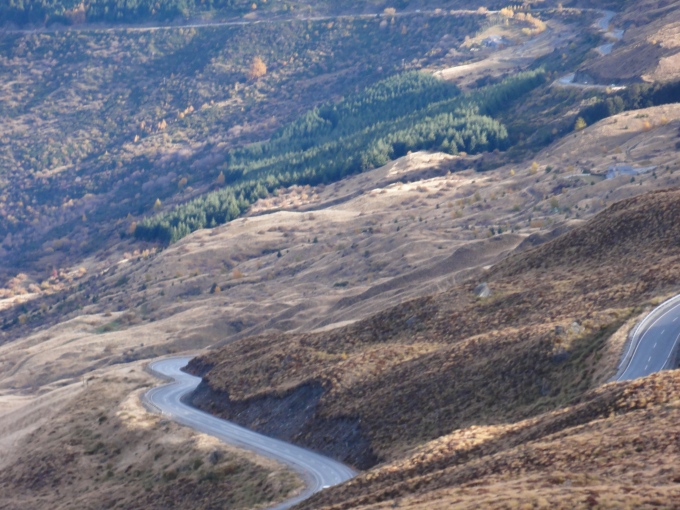
A picture paints … well, as many words as you like.  For instance:

lookingdownfromcoronetpeak

And the story:

…

It was once said that a desperate man has everything to lose.

The man I was chasing was desperate, but I, on the other hand, was more desperate to catch him.

He’d left a trail of dead people from one end of the island to the other.

The team had put in a lot of effort to locate him, and now his capture was imminent.  We were following the car he was in, from a discreet distance, and, at the appropriate time, we would catch up, pull him over, and make the arrest.

There was nowhere for him to go.

The road led to a dead-end, and the only way off the mountain was back down the road we were now on.  Which was why I was somewhat surprised when we discovered where he was.

Where was he going?

“Damn,” I heard Alan mutter.  He was driving, being careful not to get too close, but not far enough away to lose sight of him.

“What?”

“I think he’s made us.”

“How?”

“Dumb bad luck, I’m guessing.  Or he expected we’d follow him up the mountain.  He’s just sped up.”

“How far away?”

“A half-mile.  We should see him higher up when we turn the next corner.”

It took an eternity to get there, and when we did, Alan was right, only he was further on than we thought.”

“Step on it.  Let’s catch him up before he gets to the top.”

Easy to say, not so easy to do.  The road was treacherous, and in places, just gravel, and there were no guard rails to stop a three-thousand-foot fall down the mountainside.

Good thing then, I had the foresight to have three agents on the hill for just such a scenario.

Ten minutes later, we were in sight of the car, still moving quickly, but we were going slightly faster.  We’d catch up just short of the summit car park.

Or so we thought.

Coming quickly around another corner, we almost slammed into the car we’d been chasing.

“What the hell…” Aland muttered.

I was out of the car and over to see if he was in it, but I knew that it was only a slender possibility.  The car was empty, and no indication of where he had gone.

Certainly not up the road.  It was relatively straightforward for the next mile, at which we would have reached the summit.  Up the mountainside from here, or down.

I looked up.  Nothing.

Alan yelled out, “He’s not going down, not that I can see, but if he did, there’s hardly a foothold and that’s a long fall.”

Then where did he go?

Then a man looking very much like our quarry came out from behind a rock embedded just a short distance up the hill.

“Sorry,” he said quite calmly.  “Had to go if you know what I mean.”

I’d lost him.

It was as simple as that.

I had been led a merry chase up the hill, and all the time he was getting away in a different direction.

I’d fallen for the oldest trick in the book, letting my desperation blind me to the disguise that anyone else would see through in an instant.

It was a lonely sight, looking down that road, knowing that I had to go all that way down again, only this time, without having to throw caution to the wind.

“Maybe next time,” Alan said.

“We’ll get him.  It’s just a matter of time.”

…

© Charles Heath 2019-2026

…

Find this and other stories in “Inspiration, maybe”, available soon.

InspirationMaybe1v1

The cinema of my dreams – I always wanted to see the planets – Episode 41

Nothing is ever what it seems

…

I didn’t have the luxury of taking a moment to consider what I was going to do, other than to draw the inevitable conclusion that whatever I did, there would be consequences.

One thought did cross my mind, in relation to the alien ship and her Captain, why hadn’t they exercised their superior capability, stopped the Russian ship, and taken the offenders away themselves.  And, given the captain was prepared to destroy my ship, why had he let the Russians go?

“The Russian ship is hailing us, sir.”

“Very good, I’ll be there in a moment.”

They had waited a long time before asking our intentions, so what had they been waiting for?  The fact they appeared to be immobilized was, to me, a little too convenient.  Also, they had to know the alien ship was nearby, but even that raised the question of why they were standing off, and not alongside us.

Something was not right about this whole scenario.

I came on to the bridge, Number One standing in front of the Captain’s chair, the bridge crew waiting expectantly.

“Get the Russian ship’s Captain on screen.”

A moment later he appeared, with a depleted bridge crew, different from the last time we spoke.

“What can I do for you?”

“Why is the alien vessel here?”

“I think you know the answer to that question.”

“What did he tell you?”

“How about you tell me why you think he’s here?”

Why was his concern more about the alien vessel than the state of their propulsion unit?  Unless there was nothing wrong with it.

Silence.

I motioned to the comms officer to cut our side of the conversation.

“General?”

He had taken up a position behind the defense team.

“Sir?”

“If they try to move or power weapons, stop them.”

“Yes, sir.”

“Russian ship powering up propulsion, sir.”

“General?”

“Just say the word.”

“Comms.”

A gesture told me the artesian ship was back online.

“Do not try to leave or we will disable your ship.”

A tense few seconds before the navigator said, “powering down.”

“Good choice.  Now, prepare to be boarded.  Any resistance will be met with force.  Am I understood, Captain?”

A measured reluctance in his tone when he said, “Yes.”

“Number one, boarding team assembled?”

“Yes, sir.”

“Good.  Any resistance is to be dealt with severely.  If the Captain or a representative of the ship wants to come with their crew members, let them.   Bring those on the list back here.”

“Understood.  Sir.”

The Russian captain was still on the screen.

“You have no right or jurisdiction to do what you are doing, and I will be recording this as an act of piracy.”

“Will that be with the international space agency?”

“My superiors, we have already alerted them to the situation.”

“As far as I am aware, your superiors did not register your flight plan as per the treaty that they are signatories to.  Also, you are on a ship that no one knows about.  All of that could be forgiven though, but you had to cause what can I call it, an Intergalactic incident which may yet setback relations with an alien race for a long time.  You would be well advised to tell me now what the hell happened so I can at least try and save you from very severe consequences.”

On a secondary channel that number one had switched to after arriving at the Russian vessel, I heard, “what do you mean you cannot dock?”

The pilot replied, “They haven’t initiated the docking sequence.”

“Is it an incompatible system?”

“No, it’s exactly the same as ours.  It’s like they’ve ripped everything off.  They’re stalling.”

To the captain of the Russian ship, I said, “I get it.  No Captain likes to have his ship boarded.  But this is not the time.”  To the General, “Target their propulsion unit.  On my mark…”

“You are making a mistake,” the Russian captain said.

“Docking initiated.  It is exactly like our system, right down to the override authorization code.”  Number one had the same thought that just come to mind.  Then, “Lieutenant, don’t hesitate to use force if you have to. We have to assume anyone on the other side of the door is a potential hostile.  Counting down, three, two, one…”

I heard the whoosh of the door, and then utter silence, broken only by Number One, “What the hell…”

…

© Charles Heath 2021-2022

A photograph from the inspirational bin – 23

20200217_130345

Whilst in reality these steps go down to a very narrow space of the beach, and scattered rocks in the shallow water, so much more could be inspired by this photograph.

20200217_130205

Further out that day, divers were out exploring about 100 yards offshore.

But, to me, it what you don’t see that gives it its fascination.

We could be anywhere along a 1,000-mile shoreline, one side a small village lazily gets through the day, on the other, a deserted and overgrown picnic spot that no one ever comes to anymore since the bypass road was built.

But it is not any of those.  it’s in Mornington, Victoria, Australia, the pier that is not far from a small park, and that day, very, very busy.

20200217_130235

It simply goes to show that sometimes a photograph can provide enough information to inspire a story.

What I learned about writing – Memories blur over time

I was reading an article about the bible the other day, and what I gathered to be the writer’s intent was that the end result was an accumulation of many times retold and translated stories.

It sort of relates to another story I read years ago and reenacted with a few friends to check its veracity. What happens is the first person is given the correct story, then having memorised it, relates it to the second and then so on along a chain of ten people.

The end story related by the tenth person, when compared to the original, had only parts of the original story and for some reason new elements that somehow were misinterpretations of original story elements.

This perhaps could be put down to the individual’s upbringing and background, which always gets used in the interpretation of what they are told. We all use different methods to remember things, and this will always impact how we interpret and relate information.

It’s also the same when three different eyewitnesses to an accident will rarely agree on the details. Certain elements will be the same, but others will not.

When families recall events involving all of them, each will remember seminal events differently, and usually, from their perspective, it will revolve around where they perceive they fit in the family hierarchy. A stronger brother or sister will always see it differently from a weaker one.

My childhood memories are basically different to my brothers, and I suspect those events that he fails to recall are deliberately cast away because either they didn’t affect him, or they were so horrible, that he deliberately cast them out.

We all tend to do that. Some memories he has of the so-called old days I have no recollection of.

Memories are a choice. We choose to remember the good ones and cast out the bad. Was that the case when it came to putting the biblical story down on paper (or stone as the case may be).

However we look at it, remember it, or relate it, the old days, the days of yesteryear, will always be different. For me, the 60’s and 70’s were horrible, for everyone else, well that’s another story.

365 Days of Writing, 2026 – 287

Day 287 – Packing an entire world into one sentence

…

Packing an Entire World into One Sentence: The Literary Economy of Charles Portis and True Grit

Charles Portis and True Grit: How One Sentence Built a World Meta Description: Explore the brilliant literary economy of Charles Portis through his masterpiece True Grit. Discover how just six novels proved that less is more.


There is a rare breed of writer who cares very little for literary fanfare, yet commands the absolute, obsessive devotion of fellow authors and devoted readers alike. Charles Portis was the patron saint of this elusive club.

Publishing a mere six novels over the course of his career, Portis never chased blockbuster status or critical preening. Instead, he crafted a body of work defined by precision, deadpan wit, and an astonishingly balanced economy of plot, character, and description.

Nowhere is this mastery more evident than in the opening sentence of his 1968 masterpiece, True Grit. With a single breath, Portis does something extraordinary: he packs an entire world, a distinct voice, and a complete worldview onto the page.

Let’s take a journey into the brilliant literary mind of Charles Portis and examine how a famously brief bibliography achieved timeless greatness through the art of economy.


The Immortal Opening: Setting the Stage in One Sentence

To understand what makes Charles Portis a master of narrative efficiency, you need only look at how True Grit begins:

“People do not often give due credence to the sorrows of young people, but those of us who have been young ourselves know differently and can remember what it was like in those sad and lonely days.”

In just thirty-one words, Portis accomplishes what other writers take whole chapters to establish.

First, he establishes voice. Through the narrator, a 14-year-old Mattie Ross looking back from old age, we immediately recognise a tone that is formal, unyielding, slightly archaic, and utterly lacking in self-pity or sentimentality.

Second, he establishes perspective. This is not a standard, bloodless Western. It is a deeply personal reckoning. By acknowledging the gravity of youth, Mattie preemptively pushes back against anyone who might dismiss her quest for vengeance as childish folly.

Without describing a horse, a dusty street, a revolver, or a badge, Portis sets the psychological and emotional stakes of the American frontier. He packs a whole world—a universe of stubborn grief and nineteenth-century grit—into a single sentence.


The Magic of Six: Quality Over Quantity in the Portis Canon

It is staggering to think that a writer of Portis’s calibre produced only six novels:

  1. Norwood (1966)
  2. True Grit (1968)
  3. The Dog of the South (1979)
  4. Masters of Atlantis (1985)
  5. Gringos (1991)
  6. Starlight (1999)

In an era of bloated manuscripts and multi-book fantasy series, Portis’s bibliography looks positively monastic. Yet, every single one of these books is a polished gem.

Portis had no time for literary fat. His books are famously difficult to categorise—are they comedies? Westerns? Picaresque road trips? They are all of these things, bound together by an economically balanced plot that never drags, characters who are eccentric yet undeniably human, and descriptions that are razor-sharp without ever lapsing into purple prose.


The Three Pillars of Portis’s Economy

How did Portis pull off this rare literary magic trick across his six novels? By maintaining a strict equilibrium between three essential elements:

1. The Balanced Plot: Movement Without Rush

Portis’s plots are generally simple in design—often structured as a quest or a journey. In True Grit, it’s a girl hunting her father’s killer. In The Dog of the South, it’s a man chasing his runaway wife and his stolen Ford Torino.

Because the overarching premise is usually straightforward, Portis doesn’t need to waste time on convoluted twists. The plot simply acts as a vehicle to move his wonderfully bizarre characters from one strange encounter to the next. The pacing is steady, rhythmic, and perfectly proportioned.

2. The Unforgettable Character: Eccentricity Grounded in Truth

If you ask readers to name their favourite Charles Portis characters—whether it’s Mattie Ross, the hard-drinking Rooster Cogburn, or the grandiose Lamar Jimmerson from Masters of Atlantis—you are talking about people who march to the beat of an entirely different drum.

Portis loved obsessives, grifters, pedants, and drifters. Yet, his genius lies in his restraint. He lets his characters reveal their absurdities through their own dialogue and deadpan narration. He doesn’t need to tell us they are funny; he just lets them speak, trusting the reader to appreciate the dry humour.

3. The Minimalist Description: Showing the World in Flashbacks and Brief Strokes

Portis was a former journalist (having worked as a reporter for the New York Herald Tribune), and it shows in his prose. He understood the power of the selected detail.

Instead of devoting pages to describing a sunset or a saloon, Portis gives you the one detail that matters—a slouching hat, a particular brand of canned peach, the precise legal terminology of a land dispute. His descriptions are economical because they serve a dual purpose: they anchor the scene visually while simultaneously revealing character.


Why Charles Portis Matters Today

In contemporary fiction, we often equate length and complexity with depth. We celebrate door-stopper novels that take hundreds of pages to warm up.

Charles Portis stands as a glorious antidote to this trend. He proved that a novel doesn’t need to be massive to be profound. By respecting the reader’s intelligence, stripping away every unnecessary word, and anchoring his stories in unforgettable, singular voices, Portis created a body of work that will be read and admired as long as people care about great writing.

It all started with a thirty-one-word sentence.

If you haven’t yet stepped into the wonderfully eccentric, economically crafted world of Charles Portis, open True Grit, read that first sentence, and prepare to be carried away by a master….

Top 5 sights on the road less travelled – Dublin

Escape the Crowds: Dublin’s Top 5 Hidden Gem Attractions

Dublin is a city of undeniable charm, buzzing with energy, history, and a legendary pub scene. While iconic spots like the Guinness Storehouse, Trinity College, and Dublin Castle are must-sees, they often come with lengthy queues and shoulder-to-shoulder crowds.

But what if you long for a taste of authentic Dublin culture and history without the tourist rush?

Luckily, the Irish capital is brimming with distinctive features tucked away in quieter corners. We’ve compiled a list of the top five visitor attractions in Dublin that offer unique experiences, fascinating stories, and, best of all, a peaceful respite from the throngs.


1. The Chester Beatty Library

Nestled within the walls of Dublin Castle (but often overlooked by those rushing to the main courtyard), the Chester Beatty is a true global treasure. This museum and library holds the collected works of Sir Alfred Chester Beatty, one of the greatest collectors of the 20th century.

Why it’s distinctive: This isn’t just a collection of old books. You’ll find exquisite manuscripts, rare books, miniature paintings, and decorative arts from across Asia, the Middle East, North Africa, and Europe. It houses some of the world’s most important holdings of Islamic, East Asian, and Western printed materials.

The Quiet Factor: While the Dublin Castle grounds can be busy, the library itself offers a tranquil, dimly lit haven perfect for quiet reflection. Best of all? Admission is free. Don’t forget to visit the rooftop garden café for stunning views over the city.

2. The Dublin Writers Museum (Temporarily Closed – See Alternative Below)

Note: While the original Dublin Writers Museum building is currently closed for relocation, the spirit of literary Dublin is still alive and accessible in less-crowded formats.

The Alternative: The Museum of Literature Ireland (MoLI)

Located in UCD’s stately Newman House on St. Stephen’s Green, MoLI is a beautiful, modern museum dedicated to the rich tapestry of Irish writing, from James Joyce to contemporary voices.

Why it’s distinctive: Set in the beautiful historic home where literary giants like Gerard Manley Hopkins and James Joyce once studied, MoLI offers interactive displays, beautiful exhibitions (including the original ‘Copy No. 1’ of Joyce’s Ulysses), and stunning period rooms.

The Quiet Factor: While popular with writers and literature lovers, MoLI rarely reaches the peak capacity of the larger city museums. It offers spacious exhibition rooms and one of the finest cultural gift shops in the city. The tranquil, hidden courtyard garden is a perfect spot to enjoy a coffee and escape the city noise.

3. Richmond Barracks, Inchicore

Stepping slightly outside the immediate city centre opens up historical venues of immense importance. Richmond Barracks, located in the Inchicore area, offers a deep dive into pivotal moments of Irish history, particularly the 1916 Easter Rising.

Why it’s distinctive: This site served as the primary holding place for over 3,000 men arrested after the 1916 Rising. It was here that Pádraig Pearse and the other executed leaders were court-martialed. Today, it operates as a heritage centre and a community hub, offering moving and highly informative tours detailing the barracks’ role through the centuries, including its post-independence use as housing for local families.

The Quiet Factor: Because it requires a short tram ride (the Luas Red Line to Suir Road), it naturally filters out the casual tourist crowd. You’ll likely enjoy a small, intimate guided tour that allows for detailed questions and reflection.

4. The Marsh’s Library

For those who crave the smell of old paper and the feeling of stepping back in time, Marsh’s Library is an essential visit. Dating back to 1707, it is one of the oldest public libraries in Ireland.

Why it’s distinctive: This library remains virtually unchanged since it opened its doors in the early 18th century. It features beautiful dark oak bookcases, wire cages (used to prevent the theft of valuable texts), and over 25,000 rare and fascinating books. You can walk the very aisles where writers like Bram Stoker and James Joyce once studied.

The Quiet Factor: Tucked away behind St. Patrick’s Cathedral, Marsh’s charges a small entrance fee, which helps keep visitor numbers manageable. The atmosphere is hushed and reverential—it’s an ideal place to spend an hour truly absorbing Dublin’s intellectual history without jostling for space.

5. The Botanic Gardens (National Botanic Gardens of Ireland)

While not entirely undiscovered, Dublin’s National Botanic Gardens in Glasnevin offers such a vast, sprawling space that crowds simply melt away amongst the lush greenery.

Why it’s distinctive: Spread across nearly 50 acres, the gardens feature stunning Victorian glasshouses (including the curvilinear range designed by Richard Turner), extensive plant collections, a tranquil arboretum, and historically significant grounds. It’s an essential centre for conservation and research.

The Quiet Factor: Located a short bus ride north of the city centre (near the Glasnevin Cemetery, another excellent, quiet spot), the gardens provide endless walking paths, hidden benches, and quiet corners. You can easily spend an entire afternoon wandering the grounds and enjoying the peace, particularly once you move past the main entrance and glasshouses.


Trade the Noise for Narrative

Dublin’s biggest attractions tell a powerful story, but sometimes the best narratives are found off the beaten path. By seeking out these quieter, distinctive attractions, you can enjoy a more personal, profound, and peaceful encounter with the heart and history of the Irish capital. Happy Exploring!

In a word: Bar

There’s more than one way … er, perhaps it’s better to say, there are many ways to use the word bar, which is not bad for a three-letter word.

Bar, the one you associate with drinks, in hotels, restaurants and we’ll, just bars.

Probably the best type of bar you might find me in is a Sports Bar, where you can snack on buffalo wings a tall glass of beer and watch with ice hockey in winter or baseball in summer.

It’s one I use from time to time when asked, what will we do, and the reply is often let’s go to a bar.  The best bars are underground, dark and dingy, full of eclectic people, with a band playing almost passable music or better still jazz

Bar, as in the legal variety

There are so many legal references to using bar, that the one that I am most familiar with is being admitted to the bar which means that you can now practice law.

Raising the bar, if that’s possible, where the bar is that imaginary level which offers sinks very low.  When someone says they’re going to try and raise the bar, you may be assured there will be a long battle ahead, simply because people generally find it hard to change.

Bar, as in we are not going to let you in here.  Yes, this is the irksome one where you find yourself, often for reasons unknown, barred from somewhere or something.  This may also be referred to by saying everyone may enter bar you.  

Bar, as in an iron bar, the sort that is sometimes used as a blunt force object by villains to remind the victim they owe any one of a loan shark, bookie or the mafia.  God help you if it is all three.

There are also iron bars of a different sort, those that are set in concrete outside a window most likely in a prison where the objective is to prevent escape.

It gives rise to an old expression, that person should be behind bars.

Then there is just a bar, such as a bar of gold, which I’m sure we’d all like to have stashed away, but not necessarily in the mattress, or the more common variety, a chocolate bar, which I have one now.  What’s your favorite?

And just to add to the list of meanings you can always refer to sashes or stripes as bars.

Confused?  Well, there’s still music, and the bane of yachtsmen, sand bars but I think we’ll leave it there.

Welcome to the English language

First Dig Two Graves

A sequel to “The Devil You Don’t”

…

Revenge is a dish best served cold – or preferably so when everything goes right

Of course, it rarely does, as Alistair, Zoe’s handler, discovers to his peril. Enter a wildcard, John, and whatever Alistair’s plan for dealing with Zoe was dies with him.

It leaves Zoe in completely unfamiliar territory.

…

John’s idyllic romance with a woman who is utterly out of his comfort zone is on borrowed time. She is still trying to reconcile her ambivalence after being so indifferent for so long.

They agree to take a break, during which she disappears. John, thinking she has left without saying goodbye, refuses to accept the inevitable and calls on an old friend for help in finding her.

After the mayhem and being briefly reunited, she recognises an inevitable truth: there is a price to pay for taking out Alistair; she must leave and find them first, and he would be wise to keep a low profile.

But keeping a low profile just isn’t possible, and enlisting another friend, a private detective and his sister, a deft computer hacker, they track her to the border between Austria and Hungary.

What John doesn’t realise is that another enemy is tracking him to find her too. It could have been a grand tour of Europe. Instead, it becomes a race against time before enemies old and new converge for what will be an inevitable showdown.

Top 5 sights on the road less travelled – Moscow

Beyond Red Square: 5 Unique Moscow Adventures on the Road Less Travelled

Moscow. The name alone conjures images of gilded domes, grand kremlins, and vast, historic squares. It’s a city of epic scale and monumental beauty, drawing millions to its iconic sights. But what if you’ve done the Red Square selfie, marvelled at St. Basil’s, and wandered the halls of the Kremlin? What if you crave a deeper, more authentic peek into the soul of this sprawling metropolis?

Fear not, intrepid traveller! Moscow is a city of endless layers, brimming with unexpected delights lurking just beyond the well-trodden tourist paths. If you’re ready to scratch beneath the gilded surface and uncover some truly unique experiences, here are five unforgettable adventures that promise a richer, more intimate understanding of Russia’s vibrant capital.


1. Step Back in Time at the Museum of Soviet Arcade Machines (Музей советских игровых автоматов)

Forget modern gaming consoles; this place is a nostalgic wonderland! Tucked away in a charming underground space, this museum is a playful pilgrimage to the Soviet era, featuring dozens of fully functional arcade machines from the 1970s and 80s. Think clunky joysticks, pixelated graphics, and wonderfully bizarre names like “Sea Battle,” “Safari,” and “Winter Hunt.”

Why it’s off the beaten path: While well-known among locals and a niche group of enthusiasts, it’s rarely on the itinerary of first-time visitors who stick to grander museums. It offers a unique cultural insight into Soviet-era leisure and technology.

What makes it special: Not only do you get to admire these relics, but your entry ticket often includes a handful of authentic 15-kopeck coins, allowing you to actually play the games! It’s a hands-on, interactive experience that’s both fun and surprisingly educational about a bygone era.

Pro-tip: Go with friends for some competitive fun. The staff are usually happy to explain the games and their history, even if your Russian is limited.


2. Wander the Fairytale Grounds of Tsaritsyno Museum-Reserve (Царицыно)

While Kolomenskoye often gets the nod for its royal history and wooden architecture, Tsaritsyno offers a completely different, equally stunning experience. This sprawling estate, once intended as Catherine the Great’s summer residence, features unique pseudo-Gothic palaces, picturesque ponds, and meticulously landscaped parks.

Why it’s off the beaten path: Located a bit further south of the city center, it requires a short metro journey, which deters many tourists. Its specific architectural style (a Russian take on Gothic Revival) is also a fascinating departure from the more common classical Russian styles.

What makes it special: The Grand Palace and the intricate bridges evoke a fantastical, almost theatrical atmosphere. The park itself is massive, perfect for a leisurely stroll, a boat ride on the ponds, or simply finding a quiet bench to soak in the beauty. Don’t miss the Singing Fountain, especially mesmerizing in the evenings (seasonal).

Pro-tip: Dedicate at least half a day. Wear comfortable shoes, as there’s a lot of ground to cover. Check their schedule for classical music concerts or light shows, which often take place in the warmer months.


3. Find Serenity at the Aptekarsky Ogorod (Botanical Garden of Moscow State University – “The Pharmacy Garden”)

Amidst Moscow’s urban hustle, this historical botanical garden is a true hidden oasis of calm. Founded by Peter the Great in 1706 as a garden for medicinal plants (hence “pharmacy garden”), it’s Moscow’s oldest botanical garden and a living museum of flora.

Why it’s off the beaten path: Despite its central location near Prospekt Mira, it’s a quiet retreat often overlooked by tourists rushing between major landmarks. It’s more of a local favourite for a peaceful escape.

What makes it special: Each season brings new beauty, from vibrant spring blooms and lush summer greenery to fiery autumn colours and serene winter landscapes. It features various themed sections, including extensive greenhouses with tropical plants, a vast collection of conifers, and charming ponds. It also hosts open-air exhibitions, concerts, and offers a lovely on-site cafe.

Pro-tip: Ideal for a relaxed afternoon. If you’re visiting in spring or early summer, you’ll be treated to an explosion of colours and fragrances. It’s perfect for photography enthusiasts seeking natural beauty away from the crowds.


4. Savor Global Flavors at Danilovsky Market (Даниловский рынок)

Forget the sterile supermarkets; Danilovsky Market is a gastronomic marvel and a vibrant hub of local life. Housed in a striking circular building with a domed roof, this renovated market seamlessly blends traditional Russian produce stalls with trendy international food vendors.

Why it’s off the beaten path: While gaining popularity, it’s still primarily a local hotspot rather than a primary tourist destination. It offers a more authentic taste of Moscow’s burgeoning food scene than many city-centre restaurants.

What makes it special: This isn’t just a place to buy groceries; it’s a culinary adventure. You can sample Georgian khachapuri, Vietnamese pho, Israeli falafel, Dagestani delicacies, and of course, classic Russian pelmeni and blini – all under one roof. The atmosphere is buzzing, friendly, and incredibly diverse.

Pro-tip: Go hungry! It’s an excellent spot for lunch or an early dinner, allowing you to graze from different stalls. It’s also a great place to pick up unique local treats and spices as souvenirs.


5. Explore the Ancient Streets of Zamoskvorechye (Замоскворечье)

Step across the Moscow River from the Kremlin, and you enter a different era. Zamoskvorechye (literally “beyond the Moskva River”) is one of Moscow’s oldest and most charming districts, known for its quiet, winding streets, traditional merchant houses, and numerous historic churches.

Why it’s off the beaten path: While home to the Tretyakov Gallery (a major draw), the neighbourhood itself is often overlooked by tourists who rush straight to the gallery and then leave. Exploring its backstreets offers a glimpse into a quieter, more preserved Moscow.

What makes it special: You’ll discover hidden courtyards, beautiful onion-domed churches (like the Church of St. Clement, Papa, a stunning example of Baroque architecture), and charming wooden houses nestled between more stately mansions. It feels like stepping into a 19th-century novel, with a tangible sense of history around every corner.

Pro-tip: Put away your map and simply wander. Get lost in its labyrinthine alleys. Pop into a small local café for a coffee. This district is best explored on foot, allowing you to soak in its unique atmosphere at your own pace.


Moscow is a city that constantly reinvents itself, yet always cherishes its past. By venturing beyond the well-worn tourist trails, you’ll discover a more nuanced, intimate, and often surprising side of this magnificent capital. So, pack your adventurous spirit, a sense of curiosity, and get ready to uncover Moscow’s hidden gems!

What hidden gems have you uncovered in Moscow? Share your discoveries in the comments below!