I have not yet had the privilege, or otherwise of being fired, but the meaning of the word fire is to get removed unceremoniously from your job.
Donald Trump used to use it a lot on The Apprentice, e.g., “You’re fired”. And unbelievably, I used to like that show.
But…
Fire can be quite hot, something you can sit in front of on those chilly winter nights, whether it be a gas fire, or a wood fire, my preference.
Then there’s a phrase, set fire to, which can be good or bad depending on what eventually gets burned.
I have on the odd occasion had someone fire my imagination, a good thing being a writer.
To feel the fire in the back of your throat when drinking neat whiskey is so much better when it is an expensive brand
Then there’s the fire in your heart driving patriotism, but make sure it is for the right reasons.
If you have a gun, then when you pull the trigger, you fire it. Just be sure not to be pointing it the wrong way or anyone.
A good indication is when you hear the words, ready, aim, fire. Especially if you are in the wrong place at the wrong time. Napoleon can attest to that, it is alleged!
You can,
fire off a message, hopefully, a nice one
fire questions rapidly at someone (but not a politician, they must have time to answer anything, but the question asked)
or accidentally fire someone up by saying the wrong thing
or fire a piece of pottery, and in saying that, the best I could do was an awkward mug.
This case has everything: red herrings, jealous brothers, femme fatales, and at the heart of it all, greed.
See below for an excerpt from the book…
Coming soon!
An excerpt from the book:
…
When Harry took the time to consider his position, a rather uncomfortable position at that, he concluded that he was somehow involved in another case that meant very little to him.
Not that it wasn’t important in some way he was yet to determine, it was just that his curiosity had got the better of him, and it had led to this: sitting in a chair, securely bound, waiting for someone, one of his captors had called Doug.
It was not the name that worried him so much; it was the evil laugh that had come after the name was spoken.
Doug what? Doug the ‘destroyer’, Doug the ‘dangerous’, Doug the ‘deadly’; there were several sinister connotations, and perhaps that was the point of the laugh, to make it more frightening than it was.
But there was no doubt about one thing in his mind right then: he’d made a mistake. A very big. and a costly mistake. Just how big the cost, no doubt, he would soon find out.
His mother and his grandmother, the wisest person he had ever known, had once told him never to eavesdrop.
At the time, he couldn’t help himself, and instead of minding his own business, listening to a one-sided conversation that ended with a time and a place. The very nature of the person receiving the call was, at the very least, sinister, and, because of the cryptic conversation, there appeared to be, or at least to Harry, criminal activity involved.
For several days, he had wrestled with the thought of whether he should go. Stay on the fringe, keep out of sight, observe and report to the police if it was a crime. Instead, he had willingly gone down the rabbit hole.
Now, sitting in an uncomfortable chair, several heat lamps hanging over his head, he was perspiring, and if perspiration could be used as a measure of fear, then Harry’s fear was at the highest level.
Another runnel of sweat rolled into his left eye, and, having his hands tied, it literally made it impossible to clear it. The burning sensation momentarily took his mind off his predicament. He cursed and then shook his head, trying to prevent a recurrence. It was to no avail.
Let the stinging sensation be a reminder of what was right and what was wrong.
It was obvious that it was the right place and the right time, but in considering his current perilous situation, it definitely was the wrong place to be, at the worst possible time.
It was meant to be his escape, an escape from the generations of lawyers, what were to Harry, dry, dusty men who had been in business since George Washington said to the first Walthenson to step foot on American soil, ‘Why don’t you become a lawyer?” when asked what he could do for the great man.
Or so it was handed down as lore, though Harry didn’t think Washington meant it literally, the Walthenson’s, then as now, were not shy of taking advice.
Except, of course, when it came to Harry.
He was, Harry’s father was prone to saying, the exception to every rule. Harry guessed his father was referring to the fact that his son wanted to be a Private Detective rather than a dry, dusty lawyer. Just the clothes were enough to turn Harry off the profession.
So, with a little of the money Harry inherited from one of his aunts, he leased an office in Gramercy Park and had it renovated to look like the Sam Spade detective agency, you know the one, Spade and Archer, and The Maltese Falcon.
There’s a movie and a book by Dashiell Hammett if you’re interested.
So, there it was, painted on the opaque glass inset of the front door, ‘Harold Walthenson, Private Detective’.
There was enough money to hire an assistant, and it took a week before the right person came along, or, more to the point, didn’t just see his business plan as something sinister. Ellen, a tall, cool woman in a long black dress, or so the words of a song in his head told him, fitted in perfectly.
She’d seen the movie, but she said with a grin, Harry was no Humphrey Bogart.
Of course not, he said, he didn’t smoke.
Three months on the job, and it had been a few calls, no ‘real’ cases, nothing but missing animals, and other miscellaneous items. What he really wanted was a missing person. Or perhaps a beguiling, sophisticated woman who was as deadly as she was charming, looking for an errant husband, perhaps one that she had already ‘dispatched’.
Or for a tall, dark and handsome foreigner who spoke in riddles and in heavily accented English, a spy, or perhaps an assassin, in town to take out the mayor. The man was such an imbecile that Harry had considered doing it himself.
Now, in a back room of a disused warehouse, that wishful thinking might be just about to come to a very abrupt end, with none of the romanticised trappings of the business befalling him. No beguiling women, no sinister criminals, no stupid policemen.
Just a nasty little man whose only concern was how quickly or how slowly Harry’s end was going to be.
How to Make a One-Day Warsaw Stopover Unforgettable: Your Ultimate Guide
So, you’ve got a one-day stopover in Warsaw, and you’re wondering how to make the most of it. Maybe it’s a layover on your way to another European city, or perhaps it’s a quick visit squeezed into a packed itinerary. Either way, Warsaw—a city of resilience, history, and vibrant culture—is waiting to surprise you. With just 24 hours, it might seem impossible to capture the essence of Poland’s capital, but trust me: one place can make your day truly memorable.
The challenge? Warsaw is packed with incredible spots: the historic Old Town (a UNESCO World Heritage site), the hauntingly powerful Warsaw Uprising Museum, the lush Łazienki Park, and the bustling Nowy Świat street. But if you only have time for one standout experience, I’d point you straight to the Warsaw Uprising Museum.
Why the Warsaw Uprising Museum?
Yes, it’s a museum—but not just any museum. This is a visceral, immersive journey into the soul of Warsaw. In 1944, the city’s residents rose up against Nazi occupation in a brave, tragic 63-day struggle. The museum doesn’t just tell that story; it makes you feel it. From the moment you step inside, you’re surrounded by the sights, sounds, and emotions of that pivotal moment in history. It’s a tribute to courage, sacrifice, and the incredible rebirth of a city that was nearly destroyed.
What Makes It So Special for a Short Visit?
Emotional Impact: You’ll leave moved and inspired. It’s a powerful reminder of why Warsaw is called the “Phoenix City”—rebuilt from ashes with unwavering spirit.
Central Location: Easily accessible by public transport or taxi from the city centre or airport (Chopin Airport is just a 20-minute drive away).
Efficient Experience: You can spend 2–3 hours here and come away feeling like you’ve truly connected with Warsaw’s heart. It’s time well spent, offering more depth than a quick stroll through tourist spots.
Making Your Stopover Memorable: A Quick Plan
Morning: Head straight to the Warsaw Uprising Museum (book tickets online to skip lines). Allow yourself to absorb the exhibits—don’t rush.
Afternoon: Grab a traditional Polish lunch at a nearby milk bar (like “Bar Bambino”) for pierogi or żurek soup. Then, take a short walk to the reconstructed Old Town to see the Royal Castle and Market Square—it’s a beautiful contrast to the museum’s history, showcasing Warsaw’s renewal.
Evening: If time allows, enjoy a coffee or craft beer in the trendy Powiśle district before heading back to the airport.
But What If Museums Aren’t Your Thing?
If you’re craving something lighter, Warsaw’s Old Town is a fantastic alternative. Stroll through its colourful streets, admire the meticulous post-war reconstruction, and climb the bell tower of St. Anne’s Church for panoramic views. It’s a testament to beauty rising from destruction.
Final Tips for Your One-Day Adventure
Transport: Use Warsaw’s efficient public transport or Bolt/Uber for convenience.
Currency: Have some Polish złoty for small purchases, though cards are widely accepted.
Mind the Time: Keep an eye on your flight schedule—allow ample time to return to the airport.
A one-day stopover in Warsaw doesn’t have to be a blur. By choosing one meaningful place—like the Warsaw Uprising Museum—you’ll take home more than just photos; you’ll carry a piece of Warsaw’s indomitable spirit. Whether you’re a history buff, a curious traveller, or someone seeking authentic experiences, this city will leave a lasting impression.
So, go ahead—turn that layover into a memorable chapter of your journey. Warsaw is ready to welcome you.
There was something about this one that resonated with me.
This is a novel about a world generally ruled by perception, and how people perceive what they see, what they are told, and what they want to believe.
I’ve been guilty of it myself, as I’m sure we all have at one time or another.
For the main characters, Harry and Alison, other issues are driving their relationship.
For Alison, it is a loss of self-worth through losing her job and from losing her mother and, in a sense, her sister.
For Harry, it is the fact that he has a beautiful and desirable wife, his belief that she is the object of other men’s desires, and, in particular, his immediate superior’s.
Between observation, the less-than-honest motives of his friends, a lot of jumping to conclusions based on very little fact, and you have the basis of one very interesting story.
When it all comes to a head, Alison finds herself in a desperate situation, and she realises only the truth will save their marriage.
But is it all the truth?
What would we do in similar circumstances?
Rarely does a book have me so enthralled that I could not put it down until I knew the result. They might be considered two people who should have known better, but as is often the case, they had to get past what they both thought was the truth.
And the moral of this story, if it could be said there is one, is that nothing is ever what it seems.
If You’re Going to Write a Series, You Need a Plan: Here’s Exactly How to Do It
Whether you’re writing a sprawling fantasy epic, a gripping romance sequence, a non-fiction masterclass, or a serialized content marketing campaign for your brand, one golden rule reigns supreme: If you are going to write a series, you need a plan.
It’s easy to get swept up in the adrenaline of Book 1. You have a brilliant premise, a head full of steam, and a blank document waiting to be conquered. But what happens when you reach the end of that first installment? If you haven’t mapped out the bigger picture, you risk painting yourself into a narrative corner, dropping vital plot threads, or watching your reader engagement plummet because Book 2 feels directionless.
Series planning isn’t about killing your spontaneity—it’s about building a sturdy scaffolding so your creativity can safely soar.
Just how do you plan a series without losing your mind? Let’s break down the step-by-step roadmap to building a cohesive, binge-worthy series from scratch.
Phase 1: Define the Scope and Structure
Before you write a single scene, you need to understand what kind of series you are building. Not all series are created equal, and your planning strategy will depend heavily on your format.
The Epic/Arc-Driven Series (e.g., Harry Potter, The Lord of the Rings): Each book has its own conflict, but they all feed into one massive, overarching plot that concludes in the final book.
The Episodic/Character-Driven Series (e.g., Jack Reacher, most cozy mysteries): Each book stands completely on its own, tied together only by the recurring protagonist and setting.
The Non-Fiction/Content Series: A sequence of blogs, emails, or modules designed to take a customer or reader from point A to point B on a specific journey.
Ask yourself: How many installments will this take? Is it a trilogy? A duology? An open-ended series? Knowing your endpoint helps you pace the reveals.
Phase 2: Map the Macro-Story (The Big Picture)
If you’re writing a connected series, you must know your destination before you take the first step. You don’t need every single sentence figured out, but you need the major milestones.
Define the Ultimate Climax: What is the final question your series is trying to answer? (e.g., Will the hero defeat the dark lord? Will the two lovers finally end up together?). Write down how the series ends.
Break Down the Major Beats by Book: Divide your overarching plot into major milestones.
Book 1: Introduce the world, the characters, and the inciting incident of the macro-plot. End with a major victory that reveals a bigger threat.
Book 2: The “dark middle” where things get worse for the protagonists. Stakes are raised; loyalties are tested.
Book 3: The convergence, the final battle, and the resolution.
Plant the Seeds Early: If a character is going to betray the protagonist in Book 3, you need to lay subtle clues in Book 1. Macro-planning allows you to weave these rewarding “Easter eggs” into your early chapters.
Phase 3: Treat Characters Like Investments
In a series, your characters are your stock in trade. If they stagnate, your readers will leave. When planning a series, you need to map out character arcs, not just plot arcs.
The Core Wound: What internal flaw is your main character overcoming across the entire series? How does Book 1 chip away at it? How does the final book heal it?
Supporting Cast Evolution: Plan how your side characters will grow, change, or exit the narrative. Nothing is more frustrating than a companion character who serves no purpose other than holding a flashlight for three books.
The Villains: If you have an overarching antagonist, map out their evolution too. Are they always in the background, or do they step into the spotlight gradually?
Phase 4: Create a Series “Bible”
Organization is the secret weapon of prolific series authors. As your world grows, your brain will inevitably drop important details—like the name of the tavern your characters visited in Book 1, or the exact rules of your magic system (or your brand’s content framework).
Create a digital Series Bible (using Notion, Scrivener, or even a simple Google Doc) that includes:
Character Profiles: Physical descriptions, backstories, quirks, and arc trajectories.
World-Building Lore: Geography, history, rules, terminology, or product lines.
Timeline: A master chronology to ensure events line up properly across multiple installments.
Open Threads: A running list of unanswered questions or subplots you need to resolve later.
Phase 5: Pace the Information (The “Iceberg” Method)
One of the biggest mistakes creators make in a series is dumping all their best ideas into Book 1. They empty the tank, leaving nothing exciting for the sequels.
Use the Iceberg Method. Show only 10% to 20% of your world, lore, or strategy in the first installment. Hint at the 80% lurking beneath the surface. This creates immediate intrigue and gives you plenty of room to expand in subsequent books without feeling repetitive or forced.
Final Thoughts: Be Flexible, But Stay Grounded
Remember, a plan is a roadmap, not a prison sentence. As you actually sit down to write Book 1, your characters might surprise you, or a better plot twist might reveal itself. That’s okay!
The beauty of having a series plan is that it gives you the freedom to pivot. When you know where you are ultimately going, you can take creative detours along the way without getting lost.
So, before you write that thrilling opening sentence, take a step back. Grab a notebook, map out the horizon, and set yourself up for a series your readers won’t be able to put down.
With my attention elsewhere, I walked into a man who was hurrying in the opposite direction. He was a big man with a scar running down the left side of his face from the eye socket to the mouth, and he was wearing a black shirt with a red tie.
That was all I remembered as my heart almost stopped.
He apologised as he stepped to one side, the same way I stepped, as I also muttered an apology.
I kept my eyes down. He was not the sort of man I wanted to recognise later in a lineup. I stepped to the other side, and so did he. It was one of those situations. Finally getting out of sync, he kept going in his direction, and I went towards the bus, which was now pulling away from the curb.
Getting my breath back, I just stood riveted to the spot watching it join the traffic. I looked back over my shoulder, but the man I’d run into had gone. I shrugged and looked at my watch. It would be a few minutes before the next bus arrived.
Wait, or walk? I could also go by subway, but it was a long walk to the station. What the hell, I needed the exercise.
At the first intersection, the ‘Walk’ sign had just flashed to ‘Don’t Walk’. I thought I’d save a few minutes by not waiting for the next green light. As I stepped onto the road, I heard the screeching of tyres.
A yellow car stopped inches from me.
It was a high-powered sports car, perhaps a Lamborghini. I knew what they looked like because Marcus Bartleby owned one, as did every other junior executive in the city with a rich father.
Everyone stopped to look at me, then the car. It was that sort of car. I could see the driver through the windscreen shaking his fist, and I could see he was yelling too, but I couldn’t hear him. I stepped back onto the sidewalk, and he drove on. The moment had passed, and everyone went back to their business.
My heart rate hadn’t come down from the last encounter. Now it was approaching cardiac arrest, so I took a few minutes and several sets of lights to regain composure.
At the next intersection, I waited for the green light, and then a few seconds more, just to be sure. I was no longer in a hurry.
Next, I heard what sounded like a gunshot. A few people looked around, worried expressions on their faces, but when it happened again, I saw it was an old car backfiring. I also saw another yellow car, much the same as the one before, stopped on the side of the road. I thought nothing of it, other than it was the second yellow car I’d seen.
At the next intersection, I realised I was subconsciously heading towards Harry’s new bar. It was somewhere on 6th Avenue, so I continued walking in what I thought was the right direction.
I don’t know why I looked behind me at the next intersection, but I did. There was another yellow car on the side of the road, not far from me. It, too, looked the same as the original Lamborghini, and I was starting to think it was not a coincidence.
Moments after crossing the road, I heard the roar of a sports car engine and saw the yellow car accelerate past me. As it passed by, I saw there were two people in it, and the blurry image of the passenger was a large man with a red tie.
Now my imagination was playing tricks.
It could not be the same man. He was going in a different direction.
In the few minutes I’d been standing on the pavement, it had started to snow; early for this time of year, and marking the start of what could be a long, cold winter. I shuddered, and it was not necessarily because of the temperature.
I looked up and saw a neon light advertising a bar, coincidentally the one Harry had ‘found’ and, looking once in the direction of the departing yellow car, I decided to go in. I would have a few drinks and then leave through the back door if there were one.
I’m back home and this story has been sitting on the back burner for a few months, waiting for some more to be written.
The trouble is, there are also other stories to write, and I’m not very good at prioritizing.
But, here we are, a few minutes opened up and it didn’t take long to get back into the groove.
Chasing leads, maybe
—–
“You left a paper trail, a car registration form at the flat in Bromley.”
I saw him shake his head. “I thought I’d removed any evidence.”
“Good thing then, that I found it, and not Severin who was next through the door.”
He nodded towards Jennifer. “What’s she doing here, she was one of your surveillance team.”
“She came with me. The department threw her out, I found her and asked her if she wanted to find out what was going on. Apparently, she did. Everyone can put their guns down now. We are, believe it or not, all friends here.”
Jennifer put her gun back in a pocket I hadn’t seen before.
Adam lowered his, but it was still ready to shoot if either of us made the wrong move. The old woman’s aim hadn’t changed; she was still intent on shooting me if I moved.
“Mother, give it up.”
A few seconds later she lowered the weapon, but it was still ready. To fire if I moved.
“Can we sit,” I asked. Having a gun aimed at you tended to make you feel week in the knees. I was.
There were three chairs in front of the fireplace, this room also having a fire ready but not lit, and one chair by the writing-table. We sat in the three chairs, the old woman over by the table. She put the rifle down on the desktop, within easy reach.
“My first question,” I said, “has to be, how are you still alive?”
“You left when Severin’s crew arrived to clean up. He left at the same time. Luckily. Then two of Dobbin’s agents arrived and cleaned up the cleaners, as it were, and took me to a safe place where it was discovered my injuries were not fatal.”
“You were hit by a sniper, that’s hard to believe he, or she, aimed to miss.”
“They didn’t. I think I moved slightly because of you, so I have you to thank for my life. Something else to remember, Dobbin doesn’t know I’m here, and I think the only link was that registration certificate. No one actually knows me by Adam Quigley, except, of course, my mother.
“And the USB everyone is after?”
A few seconds of silence, then, “It’s missing.”
“Were you the only one who knew where it was?”
“No, but as far as I’m aware, that person is dead, killed by the explosion you witnessed. We were due to meet there, just before the explosion which is why I was heading there.”
“You walked past it, as I recall.”
“Standard procedure. I walk past, check to see if the contact is there, then come back a few minutes later. I was running late, just got past when it went up. We would have both been in there, and dead.”
“And the USB gone with it?”
“Yes. My friend had it with him at the time. I was going there to pick it up.”
“No copies?” It was too much to expect there would be, even if it was worth more than life itself.
“No. That sort of information needs to be in as few places as possible.”
“You knew what it was about?”
“Yes.”
“And…”
“It’s above all our pay grades. But something I can tell you; I know why your Severin and Maury wanted it back.”
“It was theirs?”
“Yes. They originally stole it. I stole it from them and trying to return it to whom it belonged.”
“Nobbin?”
“God, no. I’ve since discovered he’s as crooked as all the rest. But now that it’s gone, it doesn’t matter who the owner of the information is. Just staying one step ahead of the jackals, that’s the job in hand.”
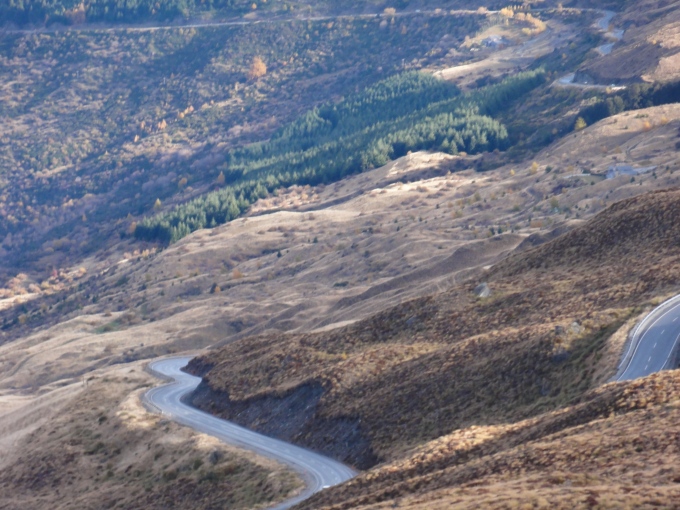
50 photographs, 50 stories, of which there is one of the 50 below.
They all start with –
A picture paints … well, as many words as you like. For instance:
And the story:
…
It was once said that a desperate man has everything to lose.
The man I was chasing was desperate, but I, on the other hand, was more desperate to catch him.
He’d left a trail of dead people from one end of the island to the other.
The team had put in a lot of effort to locate him, and now his capture was imminent. We were following the car he was in, from a discreet distance, and, at the appropriate time, we would catch up, pull him over, and make the arrest.
There was nowhere for him to go.
The road led to a dead-end, and the only way off the mountain was back down the road we were now on. Which was why I was somewhat surprised when we discovered where he was.
Where was he going?
“Damn,” I heard Alan mutter. He was driving, being careful not to get too close, but not far enough away to lose sight of him.
“What?”
“I think he’s made us.”
“How?”
“Dumb bad luck, I’m guessing. Or he expected we’d follow him up the mountain. He’s just sped up.”
“How far away?”
“A half-mile. We should see him higher up when we turn the next corner.”
It took an eternity to get there, and when we did, Alan was right, only he was further on than we thought.”
“Step on it. Let’s catch him up before he gets to the top.”
Easy to say, not so easy to do. The road was treacherous, and in places, just gravel, and there were no guard rails to stop a three-thousand-foot fall down the mountainside.
Good thing then, I had the foresight to have three agents on the hill for just such a scenario.
Ten minutes later, we were in sight of the car, still moving quickly, but we were going slightly faster. We’d catch up just short of the summit car park.
Or so we thought.
Coming quickly around another corner, we almost slammed into the car we’d been chasing.
“What the hell…” Aland muttered.
I was out of the car and over to see if he was in it, but I knew that it was only a slender possibility. The car was empty, and no indication of where he had gone.
Certainly not up the road. It was relatively straightforward for the next mile, at which we would have reached the summit. Up the mountainside from here, or down.
I looked up. Nothing.
Alan yelled out, “He’s not going down, not that I can see, but if he did, there’s hardly a foothold and that’s a long fall.”
Then where did he go?
Then a man looking very much like our quarry came out from behind a rock embedded just a short distance up the hill.
“Sorry,” he said quite calmly. “Had to go if you know what I mean.”
I’d lost him.
It was as simple as that.
I had been led a merry chase up the hill, and all the time he was getting away in a different direction.
I’d fallen for the oldest trick in the book, letting my desperation blind me to the disguise that anyone else would see through in an instant.
It was a lonely sight, looking down that road, knowing that I had to go all that way down again, only this time, without having to throw caution to the wind.
We were diverting to Venus, sitting out there on screen, lonely as a cloud, if there could be clouds in space.
So, I wondered if the Captain had a special reason why I should head the team going to the freighter.
It was an opportunity to take one of the new class of shuttles, reported to be faster, more stable, and larger so that we could carry more people and cargo. It would be overkill today.
The crew assigned to collect the cargo was aboard, and my co-pilot for want of a better name was Myrtle, an officer that joined the ship with me, and had excellent qualifications.
We were going through the preflight, ready to lift off.
“First time?”
“In a shuttle, no. In space, real space, more or less.”
I don’t think I wanted to know what more or less meant.
“There’s nothing to it.”
The captain’s voice came over the speaker, “You’re cleared for departure, they’re expecting you imminently.”
“Very good, sir.”
It was never a gentle lift-off, unlike landing, and that initial jerk was an annoyance. Then engaging the thrusters, we began to move forward slowly towards the cargo door, and at the synchronised time, the doors opened and there was nothing but empty space before us.
Outside, we increased speed, turned, and flew under our ship, just to get a look at it, something I knew the people aboard might be interested in seeing, then onto the Aloysius 5 drifting off our port bow.
“Do you see what I see?” Nice to see Myrtle wasn’t blind.
“I do, and that’s worrying.”
What was it? A scorch mark on the side of the Aloysius 5, in a place where we couldn’t see it from our ship, and a direct hit on one of the exhaust manifolds. That would stop a ship dead in its tracks without wrecking it.
You would think that going away for a few days, you would be able to drag yourself away from writing.
You would think, after doing it every day for the last six months, it would be time to take a break. But the trouble with good intentions and being in a different place is that there’s a ton of new and different sights and things to write about.
We are away primarily for a wedding, with part of it being a Chinese Tea Ceremony, and of course, I’ve been reading up on it, and there are several descriptions, making it difficult to get a clear idea of what happens.
I guess I’m going to have to wait until the day, next Friday.
In between, there will be a dinner that will have as the centrepiece, Peking Duck, my absolute favourite duck dish.
I had it last in Hong Kong two years back, before the riots at the restaurant in the Peninsula Hotel, and it was exquisite.
Then it’s my brother’s 70th birthday. As he is working feverishly on the family history, and having jetted off many times overseas tracking down the long lost relatives we knew nothing about, it’ll be time for a progress report.
I must admit that some of those relatives have roused my writer’s curiosity. When I helped clear out my parents’ house after they moved into a retirement home, we found a great deal of ancestral material, the most interesting of which was, would you believe, about my mother.
We have found a whole lot of letters she received from her first boyfriend and then from my father. It shows a side to her I never knew about, and a side to my father that, given what I know of him, is totally out of character.
There will no doubt be more on this subject later.
And finally, but not least, there was a baby announcement, always a subject of much joy and happiness.
This is only day two. There is definitely more to come.