365 Days of Writing, 2026 – 210

Day 210 – The magic that comes with an idea

Where Do Ideas Actually Come From? The Hidden Mechanics of Inspiration

We’ve all been there. You’re staring at a blank document, a pristine canvas, or a lump of clay, waiting for the lightning bolt. You want that magical Aha! moment—that sudden flash of brilliance where an entirely original concept materialises out of thin air.

We romanticise creativity as something ethereal. We talk about waiting for inspiration to strike, as if ideas are floating spirits looking for a host body.

Here is the truth, and it might sting a little: Ideas just don’t appear out of nowhere. They come from somewhere, even if you don’t know where.

You saw something. You heard something. You did something. Sometime, somewhere, somehow.

Understanding this invisible assembly line of thought is the key to unlocking consistent creativity. Let’s dive into the fascinating mechanics of where ideas actually come from and how you can harness the unseen forces shaping your mind.


The Myth of the Immaculate Conception of Ideas

In the creative world, the “Immaculate Conception” is the belief that a truly original idea is born in a vacuum, untouched by outside influence.

It simply doesn’t happen.

Human beings are not creators in the sense of making something out of absolute nothingness; we are combiners. As the late, great writer and podcaster Maria Popova often highlights, creativity is simply connecting things that haven’t been connected before.

Steve Jobs famously said, “Creativity is just connecting things. When you ask creative people how they did something, they feel a little guilty because they didn’t really do it, they just saw something. It seemed obvious to them after a while.”

Those “obvious” connections are built on a foundation of subconscious data collection.

The Subconscious Sponge: You Saw, You Heard, You Did

Every second of every day, your brain acts as a voracious sponge. Even when you aren’t actively working on a problem, your senses are recording the world around you:

  • What you saw: A peculiar shadow cast by a fire escape, a striking colour combination on a stranger’s jacket, the way light hits water in a puddle.
  • What you heard: A snippet of an overheard conversation on the subway, the rhythmic clicking of a train track, the cadence of a stranger’s laughter.
  • What you did: Tripped over a curb, burned your toast, took a different route home because of roadwork, read a biography on a 19th-century pirate.

You store these fragments in the vast archives of your subconscious. You forget about them. They get buried under grocery lists, work deadlines, and yesterday’s scrolling session on social media.

Then, weeks later, you sit down to write a story, design a logo, or solve a business problem, and boom—an idea appears. You think it’s magic. In reality, your brain quietly cross-referenced that peculiar shadow you saw three weeks ago with the rhythm of the train you heard yesterday, mashing them together into a brand-new concept.

The “Sometime, Somewhere, Somehow” Factor

Because the genesis of an idea is a delayed reaction, we rarely trace the breadcrumbs back to the source.

  • Sometime: The input might have happened ten minutes ago or ten years ago. A childhood memory can trigger a breakthrough in an adult’s architectural design.
  • Somewhere: It might not have happened at your desk. It probably happened in the shower, on a walk, while doing the dishes, or drifting off to sleep. (Ever wonder why the best ideas happen in the shower? It’s because your brain is finally relaxed enough to let the subconscious data bubble to the surface).
  • Somehow: The neural handshake—the moment two unrelated concepts lock together—happens entirely beneath the threshold of your conscious awareness.

How to Feed the Machine (Actionable Creativity)

If ideas are merely the byproduct of what you feed your brain, then the quality of your output depends entirely on the quality of your input. If you want better ideas, you have to upgrade your raw materials.

Here is how you can weaponise this psychological phenomenon to become a more creative thinker:

1. Expand Your Input Diet

If you only consume content from your specific industry, your ideas will look like everyone else’s in your industry. To get truly novel ideas, read outside your niche. Watch foreign films, visit art museums, study botany, listen to genres of music you hate. Fill your subconscious with diverse, unusual ingredients.

2. Carry a Capture Tool Everywhere

Because ideas are slippery and often stem from fleeting moments (“you saw something, you heard something”), you need to catch them before they sink back into the mud of your subconscious. Whether it’s a Moleskine notebook, the notes app on your phone, or a voice recorder, build a habit of capturing fragments.

3. Give Your Brain Empty Space

Your subconscious cannot connect the dots if you never stop talking long enough for the dots to touch. Constant stimulation—scrolling, podcasts, background TV—chokes creativity. Boredom is not the enemy of productivity; it is the incubator of genius. Go for walks without your headphones. Stare out the window. Let your mind wander.


Conclusion: Respect the Process

The next time an incredible idea hits you, don’t just pat yourself on the back for being a genius. Appreciate the invisible machinery at work. Thank the stranger whose unusual coat you saw last Tuesday, the podcast you half-listened to on a road trip last year, and the quiet walk that gave your brain the space to connect the dots.

Ideas don’t just appear out of thin air. They are the echoes of your lived experience, waiting for the right moment to transform into something new.

So, go out there, pay attention, and feed your mind well. You never know what you’ll make with it later.

Top 5 sights on the road less travelled – Boston

Discovering Boston’s Hidden Gems: Five Unforgettable Experiences Off the Beaten Path

When most visitors to Boston think about things to do, they immediately gravitate toward the Freedom Trail, Fenway Park, or the Boston Tea Party Ships. While these attractions are iconic, Boston’s charm lies just as much in its hidden corners—places where history, nature, and culture blend seamlessly, far from the usual tourist crowds. If you’re ready to explore the city’s “road less travelled,” here are five exceptional, off-the-grid experiences that promise unforgettable memories.


1. Wander the Bulfinch Place Rooftop Gardens

Tucked above Massachusetts General Hospital in the Back Bay, the Bulfinch Place Rooftop Gardens offer a serene escape in the heart of the city. This hidden green space, created on a 19th-century hospital complex, features winding paths, sculptural art, and panoramic views of Boston’s skyline. Originally designed in the 1980s as a therapeutic space for patients and staff, the gardens are free to the public and perfect for a peaceful afternoon stroll. Pro tip: Visit at dusk to see the city lights sparkle beneath the glass canopy.


2. Step into Literary History at the Boston Athenaeum

Nestled on Beacon Hill since 1807, the Boston Athenaeum is a lesser-known treasure for book lovers and culture enthusiasts. Known as “the oldest indoor public park in America,” the Athenaeum houses over 100,000 rare books, art collections, and a stunning Reading Garden hidden within its labyrinthine halls. While not a traditional museum, it welcomes the public for guided tours (available online). The view from its iconic stone staircase overlooking the Charles River is photo-worthy and feels worlds away from the bustling city below.


3. Discover the Mapparium at the Mary Baker Eddy Library

While the Christian Science Church’s downtown campus is impressive, its crown jewel is the Mapparium—a three-story stained-glass map of the world. Completed in 1932, this architectural marvel is one of the few three-dimensional geographic globes in the world. Visitors step inside the structure, where light filters through vibrant glass panels, casting a kaleidoscope of colours. The Mapparium’s blend of art, history, and science makes it a unique stop for families and curious travellers alike. Admission is free, with timed ticketing recommended.


4. Explore the Arnold Arboretum in Jamaica Plain

Jamaica Plain’s Arnold Arboretum, established in 1872, is a 281-acre botanical wonderland that’s both a sanctuary and a living museum. Managed by Harvard University, the arboretum showcases over 15,000 plant species from around the globe, arranged in ecological landscapes that invite leisurely exploration. It’s a favourite among locals for jogging, sketching, or birdwatching. Don’t miss the Japanese pagoda or the historic glass-greenhouse complex. Pro tip: Visit during cherry blossom season (April) for a view straight out of a postcard.


5. Unwind at the Westin Hotel’s Secret Courtyard

Though the Westin Copley in the Back Bay is a luxury hotel, few know about its lush, tranquil courtyard hidden behind a French chateau-style façade. Designed by renowned horticulturist Piet Oudolf, the courtyard features waterfalls, stone arches, and a mosaic-tiled fountain. It’s a perfect spot for a quiet lunch or to enjoy the city’s skyline in a peaceful setting. While not entirely public, hotel guests can access the space, and locals often enjoy it through nearby cafes with courtyard views.


Hidden Boston: A City Beyond the Guidebooks

Boston’s beauty isn’t just in its landmarks but in the stories whispered through its hidden gardens, literary sanctuaries, and tranquil oases. These five experiences offer a different lens to view the city—one that prioritises serenity, curiosity, and local charm over crowds and checklists. Next time you’re in Boston, let the road less travelled show you its quiet magic.

Final Tip: Download the Boston.com “Off the Beaten Path” app or follow local guidebooks for more quirky stops, like the quirky Leather District’s historic tanneries turned boutiques or the Somerville Theatre, a 1920s movie palace outside downtown. Boston waits, eager to surprise you.

In a word: Lot

I’ve got a lot of time on my hands…

Or not.  It’s just an expression, where a lot means plenty.  Only the rich and idle seem to have a lot of time on their hands, and a lot of money, sometimes more than they know what to do with.

It spawns another saying: the devil finds work for idle hands.

This is distinct from the other form of a lot: a piece of land that can be used to build a house, an office building or a warehouse, or just land to graze cattle or sheep.

For those with a lot of money, they can buy two lots or four lots.

Lot can also mean everything, i.e. he bought the lot.

Now it’s getting confusing, as only the English language can.

How about, there’s a lot of love in the room.   Well, it’s certainly not at a political debate, that’s for sure!

Then, still having more money than sense, I went to an auction and bid for two lots.  Unfortunately, there was someone else who had more money than I did.

My mother had a lot of quaint expressions; once we were sitting opposite a man of dubious character and she said, he’s a bad lot.

Back in the old days, and sometimes these days, the word lot was used instead of lottery when names were put in a hat and one drawn as the winner.  Today it’s a little more sophisticated; balls are put in a cage.

And I was never happy with my lot in life.  Not till I got older, anyway.

Inspiration, Maybe – Volume 2

50 photographs, 50 stories, of which there is one of the 50 below.

They all start with –

A picture paints … well, as many words as you like.  For instance:

And, the story:

Have you ever watched your hopes and dreams simply fly away?

Everything I thought I wanted and needed had just left in an aeroplane, and although I said I was not going to, I came to the airport to see the plane leave.  Not the person on it, that would have been far too difficult and emotional, but perhaps it was symbolic, the end of one life and the start of another.

But no matter what I thought or felt, we had both come to the right decision.  She needed the opportunity to spread her wings.  It was probably not the best idea for her to apply for the job without telling me, but I understood her reasons.

She was in a rut.  Though her job was a very good one, it was not as demanding as she had expected, particularly after the last promotion, but with it came resentment from others on her level that she, the youngest of the group, would get the position.

It was something that had been weighing her down for the last three months, and if she noticed it, the late nights, the moodiness, sometimes a flash of temper.  I knew she had one; no one could have such red hair and not, but she had always kept it in check.

And then there was us, together, and after seven years, it felt like we were going nowhere.  Perhaps that was down to my lack of ambition, and though she never said it, lack of sophistication.  It hadn’t been an issue, well, not until her last promotion, and the fact that she had to entertain more, and frankly, I felt like an embarrassment to her.

So, there it was, three days ago, the beginning of the weekend, and we had planned to go away for a few days and take stock.  We both acknowledged we needed to talk, but it never seemed the right time.

It was then that she said she had quit her job and found a new one.  Starting the following Monday.

Ok, that took me by surprise, not so much that it was something I sort of guessed might happen, but that she would just blurt it out.

I think that right then, at that moment, I could feel her frustration with everything around her.

What surprised her was my reaction.  None.

I simply asked who, where, and when.

A world-class newspaper in New York, and she had to be there in a week.

A week.

It was all the time I had left with her.

I remember just shrugging and asking if the planned weekend away was off.

She stood on the other side of the kitchen counter, hands around a cup of coffee she had just poured, and that one thing I remembered was the lone tear that ran down her cheek.

Is that all you want to know?

I did, yes, but we had lost the intimacy we used to have, where she would have told me what was happening, and we would have brainstormed solutions. I might be a cabinet maker, but I still had a brain, was what I overheard her tell a friend once.

There’s not much to ask, I said.  You’ve been desperately unhappy and haven’t been able to hide it all that well, you have been under a lot of pressure trying to deal with a group of troglodytes, and you’ve been leaning on Bentley’s shoulder instead of mine, and I get it, he’s got more experience in that place,  and the politics that go with it, and is still an ally.

Her immediate superior was instrumental in her getting the position, but unlike some men in his position, he had not taken advantage of the situation like some might.  And even if she had made a move, which I doubted, that was not the sort of woman she was, he would have politely declined.

One of the very few happily married men in that organisation, so I heard.

So, she said, you’re not just a pretty face.

Par for the course for a cabinet maker whose university degree is in psychology.  It doesn’t take rocket science to see what was happening to you.  I just didn’t think it was my place to jump in unless you asked me, and when you didn’t, well, that told me everything I needed to know.

Yes, our relationship had a use-by date, and it was in the next few days.

I was thinking, she said, that you might come with me; you can make cabinets anywhere.

I could, but I think the real problem wasn’t just the job.  It was everything around her and going with her that would just be a constant reminder of what had been holding her back. I didn’t want that for her and said so.

Then the only question left was, what do we do now?

Go shopping for suitcases.  Bags to pack, and places to go.

Getting on the roller coaster is easy.  At the beginning, it’s a slow, easy ride, followed by the slow climb to the top.  It’s much like some relationships; they start out easy, they require a little work to get to the next level, followed by the adrenaline rush when it all comes together.

What most people forget is that what comes down must go back up, and life is pretty much a roller coaster with highs and lows.

Our roller coaster had just come out of the final turn, and we were braking so that it would stop at the station.

There was no question of going with her to New York.  Yes, I promised I’d come over and visit her, but that was a promise with crossed fingers behind my back.  After a few months in the new job, the last thing she’d want was a reminder of what she left behind.  New friends, new life.

We packed her bags, threw out everything she didn’t want, a free trip to the op shop with stuff she knew others would like to have, and basically, by the time she was ready to go, there was nothing left of her in the apartment, or anywhere.

Her friends would be seeing her off at the airport, and that’s when I told her I was not coming; that moment, the taxi arrived to take her away forever.  I remember standing there, watching the taxi go.  It was going to be, and was, as hard as it was to watch the plane leave.

So, there I was, finally staring at the blank sky, around me a dozen other plane spotters, a rather motley crew of plane enthusiasts.

Already that morning, there had been 6 different types of planes departing, and I could hear another winding up its engines for take-off.

People coming, people going.

Maybe I would go to New York in a couple of months, not to see her, but just to see what the attraction was.  Or maybe I would drop in, just to see how she was.

As one of my friends told me when I gave him the news, the future is never written in stone, and it’s about time you broadened your horizons.

Perhaps it was.


© Charles Heath 2020-2026

Coming soon.  Find the above story and 49 others like it in:

Top 5 sights on the road less travelled – Washington State

Discover Washington’s Hidden Treasures: A Road Less Travelled Adventure

Washington State is often synonymous with bustling cities, iconic peaks like Mount Rainier, and the majestic Olympic Peninsula. But for those who crave a deeper, more authentic connection with the Pacific Northwest, a quieter side of Washington awaits—off the crowded highways and beyond the usual tourist map. If you’re ready to trade the familiar for the extraordinary, here are five must-experience adventures on Washington’s road less travelled.


1. Stehekin: The Remote Gateway to North Cascades Wilderness

Tucked deep within North Cascades National Park, Stehekin is a place only accessible by boat or floatplane. This secluded 360-square-mile paradise feels like stepping into a living canvas of alpine peaks, glacial lakes, and ancient forests.

Why It’s Special: With no cars allowed, the only way to reach this hidden gem is via a 2.5-hour boat ride from Wenatchee. Once there, the hiking is legendary—trails like the Skyline and Cascade Loop offer jaw-dropping views, while Lake Chelan’s turquoise waters invite kayaking or picnics. Stay at the cozy Stehekin Resort, where lodging includes meals prepared from local ingredients.

Tip: Best visited May–October. Pack layers; the mountain climate can shift quickly.


2. Methow Valley: Wild Beauty and Cultural Gems

Nestled in the North Cascades, the Methow Valley is a playground for nature lovers and culture seekers alike. Often dubbed “One of America’s Last Frontiers,” this region blends dramatic scenery with a quirky, artsy vibe.

Why It’s Special: Drive Highway 2 through wildflower meadows and pine forests to towns like Winthrop and Twisp. Hike the iconic Hidden Lake Trail in North Cascades National Park, or horseback ride along the Methow River. Don’t miss the Methow Arts Trail, which connects galleries, studios, and local markets in towns like Trout Lake and Pateros.

Tip: Visit in late spring for wildflower blooms and in the fall for incredible fall foliage.


3. Palouse Region: A Sea of Scrolling Gold and Green

The Palouse—a region spanning southeast Washington and Idaho—is a surreal blend of rolling hills, historic prairie landscapes, and vibrant college towns. Known for its wheat fields and kaleidoscopic sunsets, this area feels like a step into a different world.

Why It’s Special: Follow the Palouse to Cascades Trail for scenic drives with panoramic views of the bluffs. Hunt for quirky “Cereal Box Art” dotting the hillsides, and explore the charming college town of Pullman, home to Washington State University. Don’t miss the Palouse High Prairie—a UNESCO Biosphere Reserve—and the nearby Tumwater Falls Park in Cle Elum.

Tip: Visit in the spring or fall for the most colourful landscapes.


4. Cispus Falls: A Secret Waterfall Oasis

For a true off-grid adventure, head to Cispus Road in the Gifford Pinchot National Forest. This 26-mile gravel road is a haven for those seeking seclusion, with lush evergreen forests, cascading waterfalls, and natural springs.

Why It’s Special: Park at the trailhead and walk to Cispus Falls, where icy water plunges into a perfect-pool swimming hole. Further down the road, discover Pine Creek Falls and hidden swimming spots. The area is a favourite among locals but remains largely undiscovered by tourists.

Tip: Prepare for rough terrain—four-wheel drive is recommended. Visit in summer for warmer water and hiking conditions.


5. San Juan Islands: Slow Life on Lopez Island

While the San Juan Islands are a popular stop for ferry rides, Lopez Island offers a serene alternative to the bustling Friday Harbour. This car-free island (except for a few local vehicles) invites you to slow down and savour the pace of island life.

Why It’s Special: Rent a bike or hike to Gold Beach, where you can kayak, birdwatch, or simply relax. Visit the American Museum of Wine in the quaint village of Lopezport, or join a farm-to-table tour at Lopez Island Creamery. Night owls will love stargazing—light pollution here is so low that the Milky Way seems to touch the ground.

Tip: Take the Washington State Ferries from Anacortes or Clinton.


Conclusion: Embrace the Road Less Travelled

Washington’s lesser-known corners offer more than just stunning landscapes—they tell stories of the state’s rich history, thriving ecosystems, and resilient communities. Whether you’re hiking through Stehekin’s alpine silence, biking the Palouse’s golden hills, or floating above Cispus Falls, these adventures promise moments of serenity and discovery. So, next time you’re planning a road trip, veer off the map and let the unexpected lead the way. The road less travelled is waiting to surprise you.

Final Tip: Always check local regulations and trail conditions before heading out. Share the trail, pack out trash, and respect the land—because these hidden gems are worth protecting for future travellers.

Where will your next detour take you?

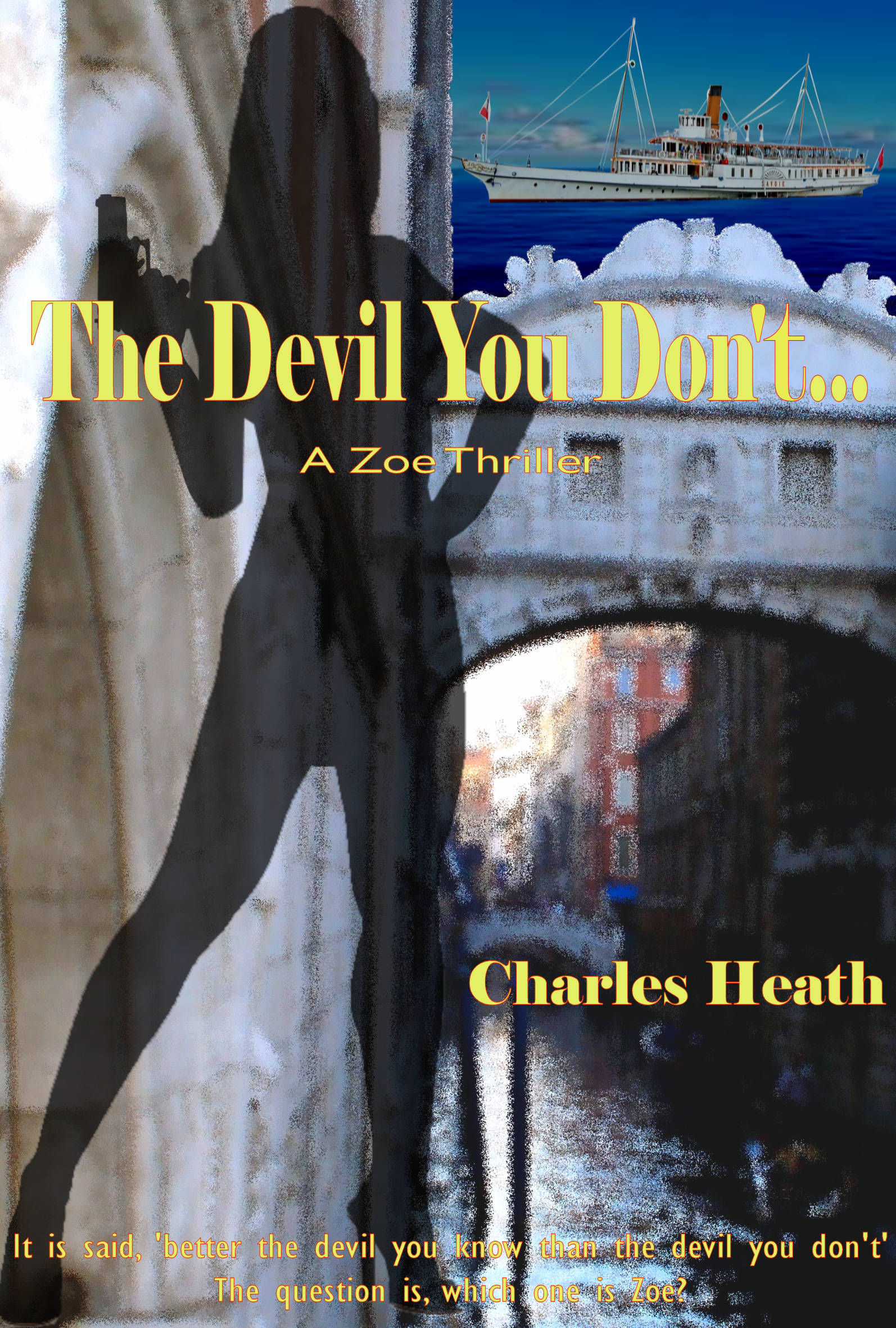
‘The Devil You Don’t’ – A beta reader’s view

It could be said that of all the women one could meet, whether contrived or by sheer luck, what are the odds it would turn out to be the woman who was being paid a very large sum to kill you?

John Pennington is a man who may be lucky in business, but not so lucky in love. He has just broken up with Phillipa Sternhaven, the woman he thought was the one, but relatives and circumstances, and perhaps because she was a ‘princess’, may also have contributed to the end result.

So, what do you do when you are heartbroken?

That is a story that slowly unfolds, from the first meeting with his nemesis on Lake Geneva, all the way to a hotel room in Sorrento, where he learns the shattering truth.

What should have been solace after disappointment turns out to be something else entirely, and from that point, everything goes to hell in a handbasket.

He suddenly realises his so-called friend Sebastian has not exactly told him the truth about a small job he asked him to do, the woman he is falling in love with is not quite who she says she is, and he is caught in the middle of a war between two men who consider people becoming collateral damage as part of their business.

The story paints the characters, cleverly displaying all their flaws and weaknesses. The locations add to the story at times, taking me back down memory lane, especially to Venice, where, in those back streets, I confess it’s not all that hard to get lost.

All in all, a thoroughly entertaining story with, for once, a satisfying end.

Available on Amazon here: https://amzn.to/2Xyh1ow

365 Days of Writing, 2026 – 210

Day 210 – The magic that comes with an idea

Where Do Ideas Actually Come From? The Hidden Mechanics of Inspiration

We’ve all been there. You’re staring at a blank document, a pristine canvas, or a lump of clay, waiting for the lightning bolt. You want that magical Aha! moment—that sudden flash of brilliance where an entirely original concept materialises out of thin air.

We romanticise creativity as something ethereal. We talk about waiting for inspiration to strike, as if ideas are floating spirits looking for a host body.

Here is the truth, and it might sting a little: Ideas just don’t appear out of nowhere. They come from somewhere, even if you don’t know where.

You saw something. You heard something. You did something. Sometime, somewhere, somehow.

Understanding this invisible assembly line of thought is the key to unlocking consistent creativity. Let’s dive into the fascinating mechanics of where ideas actually come from and how you can harness the unseen forces shaping your mind.


The Myth of the Immaculate Conception of Ideas

In the creative world, the “Immaculate Conception” is the belief that a truly original idea is born in a vacuum, untouched by outside influence.

It simply doesn’t happen.

Human beings are not creators in the sense of making something out of absolute nothingness; we are combiners. As the late, great writer and podcaster Maria Popova often highlights, creativity is simply connecting things that haven’t been connected before.

Steve Jobs famously said, “Creativity is just connecting things. When you ask creative people how they did something, they feel a little guilty because they didn’t really do it, they just saw something. It seemed obvious to them after a while.”

Those “obvious” connections are built on a foundation of subconscious data collection.

The Subconscious Sponge: You Saw, You Heard, You Did

Every second of every day, your brain acts as a voracious sponge. Even when you aren’t actively working on a problem, your senses are recording the world around you:

  • What you saw: A peculiar shadow cast by a fire escape, a striking colour combination on a stranger’s jacket, the way light hits water in a puddle.
  • What you heard: A snippet of an overheard conversation on the subway, the rhythmic clicking of a train track, the cadence of a stranger’s laughter.
  • What you did: Tripped over a curb, burned your toast, took a different route home because of roadwork, read a biography on a 19th-century pirate.

You store these fragments in the vast archives of your subconscious. You forget about them. They get buried under grocery lists, work deadlines, and yesterday’s scrolling session on social media.

Then, weeks later, you sit down to write a story, design a logo, or solve a business problem, and boom—an idea appears. You think it’s magic. In reality, your brain quietly cross-referenced that peculiar shadow you saw three weeks ago with the rhythm of the train you heard yesterday, mashing them together into a brand-new concept.

The “Sometime, Somewhere, Somehow” Factor

Because the genesis of an idea is a delayed reaction, we rarely trace the breadcrumbs back to the source.

  • Sometime: The input might have happened ten minutes ago or ten years ago. A childhood memory can trigger a breakthrough in an adult’s architectural design.
  • Somewhere: It might not have happened at your desk. It probably happened in the shower, on a walk, while doing the dishes, or drifting off to sleep. (Ever wonder why the best ideas happen in the shower? It’s because your brain is finally relaxed enough to let the subconscious data bubble to the surface).
  • Somehow: The neural handshake—the moment two unrelated concepts lock together—happens entirely beneath the threshold of your conscious awareness.

How to Feed the Machine (Actionable Creativity)

If ideas are merely the byproduct of what you feed your brain, then the quality of your output depends entirely on the quality of your input. If you want better ideas, you have to upgrade your raw materials.

Here is how you can weaponise this psychological phenomenon to become a more creative thinker:

1. Expand Your Input Diet

If you only consume content from your specific industry, your ideas will look like everyone else’s in your industry. To get truly novel ideas, read outside your niche. Watch foreign films, visit art museums, study botany, listen to genres of music you hate. Fill your subconscious with diverse, unusual ingredients.

2. Carry a Capture Tool Everywhere

Because ideas are slippery and often stem from fleeting moments (“you saw something, you heard something”), you need to catch them before they sink back into the mud of your subconscious. Whether it’s a Moleskine notebook, the notes app on your phone, or a voice recorder, build a habit of capturing fragments.

3. Give Your Brain Empty Space

Your subconscious cannot connect the dots if you never stop talking long enough for the dots to touch. Constant stimulation—scrolling, podcasts, background TV—chokes creativity. Boredom is not the enemy of productivity; it is the incubator of genius. Go for walks without your headphones. Stare out the window. Let your mind wander.


Conclusion: Respect the Process

The next time an incredible idea hits you, don’t just pat yourself on the back for being a genius. Appreciate the invisible machinery at work. Thank the stranger whose unusual coat you saw last Tuesday, the podcast you half-listened to on a road trip last year, and the quiet walk that gave your brain the space to connect the dots.

Ideas don’t just appear out of thin air. They are the echoes of your lived experience, waiting for the right moment to transform into something new.

So, go out there, pay attention, and feed your mind well. You never know what you’ll make with it later.

An excerpt from “Betrayal” – a work in progress

It could have been anywhere in the world, she thought, but it wasn’t.  It was in a city where if anything were to go wrong…

She sighed, came away from the window and looked around the room.  It was quite large and expensively furnished.  It was one of several she had been visiting in the last three months.

Quite elegant too, as the hotel had its origins dating back to before the revolution in 1917.  At least, currently, there would not be a team of KGB agents somewhere in the basement monitoring everything that happened in the room.

There was no such thing as the KGB anymore, though there was an FSB, but such organisations were of no interest to her.

She was here to meet with Vladimir.

She smiled to herself when she thought of him, such an interesting man whose command of English was as good as her command of Russian, though she had not told him of that ability.

All he knew of her was that she was American, worked in the Embassy as a clerk, nothing important, whose life both at work and at home was boring.  Not that she had blurted that out the first time they met, or even the second.

That first time, at a function in the Embassy, was a chance meeting, a catching of his eye as he looked around the room, looking, as he had told her later, for someone who might not be as boring as the function itself.

It was a celebration honouring one of the Embassy officials’ service in Moscow, soon to be returning home after 10 years.  She had been there one and still hadn’t met all the staff.

They had talked; Vladimir knew a great deal about England, having been stationed there for a year or two, and had politely asked questions about where she lived, her family, and, of course, what her role was, all questions she fended off with an air of disinterested interest.

It fascinated him, as she knew it would, a sort of mental sparring as one would do with swords if this were a fencing match.

They had said they might or might not meet again when the party was over, but she suspected there would be another opportunity.  She knew the signs of a man interested in her, and Vladimir was.

The second time came in the form of an invitation to an art gallery and a viewing of the works of a prominent Russian artist, an invitation she politely declined.  After all, invitations issued to Embassy staff held all sorts of connotations, or so she was told by the Security officer when she told him.

Then, it went quiet for a month.  There was a party at the American embassy, and along with several other staff members, she was invited.  She had not expected to meet Vladimir, but it was a pleasant surprise when she saw him, on the other side of the room, talking to several military men.

A pleasant afternoon ensued.

And it was no surprise that they kept running into each other at the various events on the diplomatic schedule.

By the fifth meeting, they were like old friends.  She had broached the subject of being involved in a platonic relationship with him with the head of security at the embassy.  Normally, for a member of her rank, it would not be allowed, but in this instance, it was.

She did not work in any sensitive areas, and, as the security officer had said, she might just happen upon something useful.  In that regard, she was to keep her eyes and ears open and file a report each time she met him.

After that discussion, she got the impression her superiors considered Vladimir more than just a casual visitor on the diplomatic circuit.  She also formed the impression that he might consider her an ‘asset’, a word that had been used at the meeting with security and the ambassador.

It was where the word ‘spy’ popped into her head and sent a tingle down her spine.  She was not a spy, but the thought of it, well, it would be fascinating to see what happened.

A Russian friend.  That’s what she would call him.

And over time, that relationship blossomed, until, after a visit to the ballet, late and snowing, he invited her to his apartment not far from the ballet venue.  It was like treading on thin ice, but after champagne and an introduction to caviar, she felt like a giddy schoolgirl.

Even so, she had made him promise that he would remain on his best behaviour.  It could have been very easy to fall under the spell of a perfect evening, but he promised, showed her to a separate bedroom, and after a brief kiss, their first, she did not see him until the next morning.

So, it began.

It was an interesting report she filed after that encounter, one she had expected to be reprimanded.

She wasn’t.

It wasn’t until six weeks had passed that he asked her if she would like to take a trip to the country.  It would involve staying in a hotel, as always, in separate rooms.  When she reported the invitation, no objection was raised, only a caution: keep her wits about her.

Perhaps, she had thought, they were looking forward to a more extensive report.  After all, her reports on the places, the people, and the conversations she overheard were no doubt entertaining reading for some.

But on this visit, the nature of the relationship changed, and it was one that she did not immediately report.  She had realised at some point before the weekend away that she had feelings for him, and it was not that he was pushing her in that direction or manipulating her in any way.

It was just one of those moments where, after a grand dinner, a lot of champagne, and delightful company, things happen.  Standing at the door to her room, a lingering kiss, not intentional on her part, just happened.

And for not one moment did she believe she had been compromised, but for some reason she had not reported that subtle change in the relationship to the powers that be, and so far, no one had any inkling.

She took off her coat and placed it carefully on the back of one of the ornate chairs in the room.  She stopped for a moment to look at a framed photograph on the wall, one representing Red Square.

Then, after a minute or two, she went to the minibar and took out the bottle of champagne left there for them, a treat Vladimir arranged for each encounter.

There were two champagne flutes set aside on the bar, next to a bowl of fruit.  She picked up the apple and thought about how Eve must have felt in the Garden of Eden, and the temptation.

Later perhaps, after…

She smiled at the thought and put the apple back.

A glance at her watch told her it was time for his arrival.  It was, if anything, the one trait she didn’t like, and that was his punctuality.  A glance at the clock on the room wall was a minute slow.

The doorbell rang, right on the appointed time.

She put the bottle down and walked over to the door.

A smile on her face, she opened the door.

It was not Vladimir.  It was her worst nightmare.

© Charles Heath 2020-2026

The cinema of my dreams – I always wanted to write a war story – Episode 54

For a story that was conceived during those long boring hours flying in a steel cocoon, striving to keep away the thoughts that the plane and everyone in it could just simply disappear as planes have in the past, it has come a long way.

Whilst I have always had a fascination with what happened during the Second world war, not the battles or fighting, but in the more obscure events that took place, I decided to pen my own little sidebar to what was a long and bitter war.

And, so, it continues…

When Carlo stopped, I was out of breath and gasping.  We all were.  The smoke was getting more intense.  At times it had made navigation almost impossible.

In front of us were more trees, but these looked different to those we had passed through.  I watched Carlo walk back and forth a few yards each way, then disappear into the bushes.  A minute later he put his head out and said, “This way.”

We followed him.  It was a hidden entrance down to a drain that was quite deep and headed back towards the castle one way and into the forest the other.

If the fire kept up by tomorrow the cover would be gone.

It was still a hard walk through the bushes, but we made it to a wireframe and door with a lock on it.  It looked ancient as if it hadn’t been used in decades, even longer.

Carlo produced a rather odd looking key and unlocked it.  I would have thought it was rusted shut, but appearances were deceptive.  The lock was almost new.

But the gate had not been used for a long time and it took Carlo a few minutes to force it to open.  It had rusted shut.  When it did finally move, it was with a very loud screeching sound.

We filed in and he relocked it.  Anyone thinking they heard something and came to investigate; it would end up on the other side of the gate.

So far so good.

For a moment I was back in my element, the archaeologist exploring caves, a wooden fire torch lighting the way, dampness underfoot, and the trickling of water down the walls.  All around the dankness from continual dampness.

It was easy the pretend if only for a few minutes I had not been caught up in the war, that I was on a quest for lost treasure, hidden away at the end of a labyrinth.

The reality was we were quite literally in an ancient sewer and the original builders of the castle had used an underground waterway to tap into to remove waste.  It was far more effective than modern systems and used the earth’s own ecology.

Inside the castle, the places where the waste used to drop down into the waterway had been covered over by trapdoors that were still there, and that was how we were going to gain access, through rooms that were no longer used.

We were going in via four access points, two men at each door, and mine with one of Blinkys men would be going into the area where the soldiers were camping to mop up whatever the bombs left behind, before closing off an exit.

Carlo had reserved the last one for himself and the boy, where he hoped to find Wallace and the new German commander.

Our cue to move: the bombs going off.

We just had time to get to the point and lower the trapdoors. Then climb up onto the floor and wait by the door.  From the other side, Carlo said, anyone in the castle would only see a continuation of the wall panelling.

We made it with seconds to spare.

We were closest to the bombs and the percussive effect was disorientating for a few seconds before we pushed through the door and into the smoke and dust raised by the explosions.

As the dust settled, we could see dead soldiers, and mess everywhere.  If a soldier was still alive, we shot them, systematically picking our way through the debris.  I counted thirty-one dead by the time we reached the other side, the other exit from the space.

In the distance, we could hear sporadic gunfire coming from other parts of the castle, and then, after taking up our position, near the tank, we waited.

Three soldiers came bursting out of the exit and we shot them too..

Ten minutes later Carlo yelled out, “It’s me, don’t shoot.”  Then he stepped out the door.  “It is done.”

The castle was ours.

“You wish to speak to your old commander before I execute him?

“Wallace?”

He nodded.

“Sure”

I followed him into the castle and walked through familiar passageways and rooms, much had not changed in a long time.

Wallace and the new commander were tied up in the dining room.  The remnants of a meal and several empty bottles of wine were on the table.

Wallace watched me from the doorway until I stood before him.

“I knew it was a mistake letting you go.  Jackerby was convinced you were a stupid fool who would unwittingly lead us directly to the resistance.  I told him you were cleverer than you looked.”

“And yet…”

“Perhaps I was tired of people like you being killed needlessly.  What just happened, that was a waste of human life.”

“I didn’t start the war, and for the record, I didn’t want any part of it.  Unfortunately, higher authorities deemed otherwise, and here I am.  This is not a victory to savour.”

“A victory nonetheless.”

I shrugged.  “It didn’t have to be like this, but at least we’ve weeded out a few more traitors.”

“Then no point asking for mercy?”

“No.”

With that said Carlo executed both men.

© Charles Heath 2021-2023

“The Things we do for Love”, the story behind the story

This story has been ongoing since I was seventeen, and just to let you know, I’m 72 this year.

Yes, it’s taken a long time to get it done.

Why, you might ask.

Well, I never gave it much interest because I started writing it after a small incident when I was 17, and working as a book packer for a book distributor in Melbourne

At the end of my first year, at Christmas, the employer had a Christmas party, and that year, it was at a venue in St Kilda.

I wasn’t going to go because at that age, I was an ordinary boy who was very introverted and basically scared of his own shadow and terrified by girls.

Back then, I would cross the street to avoid them

Also, other members of the staff in the shipping department were rough and ready types who were not backwards in telling me what happened, and being naive, perhaps they knew I’d be either shocked or intrigued.

I was both adamant I wasn’t coming and then got roped in on a dare.

Damn!

So, back then, in the early 70s, people looked the other way when it came to drinking, and of course, Dutch courage always takes away the concerns, especially when normally you wouldn’t do half the stuff you wouldn’t in a million years

I made it to the end, not as drunk and stupid as I thought I might be, and St Kilda being a salacious place if you knew where to look, my new friends decided to give me a surprise.

It didn’t take long to realise these men were ‘men about town’ as they kept saying, and we went on an odyssey.  Yes, those backstreet brothels where one could, I was told, have anything they could imagine.

Let me tell you, large quantities of alcohol and imagination were a very bad mix.

So, the odyssey in ‘The things we do’ was based on that, and then the encounter with Diana. Well, let’s just say I learned a great deal about girls that night.

Firstly, not all girls are nasty and spiteful, which seemed to be the case whenever I met one. There was a way to approach, greet, talk to, and behave.

It was also true that I could have had anything I wanted, but I decided what was in my imagination could stay there.  She was amused that all I wanted was to talk, but it was my money, and I could spend it how I liked.

And like any 17-year-old naive fool, I fell in love with her and had all these foolish notions.  Months later, I went back, but she had moved on, to where no one was saying or knew.

Needless to say, I was heartbroken and had to get over that first loss, which, like any 17-year-old, was like the end of the world.

But it was the best hour I’d ever spent in my life and would remain so until I met the woman I have been married to for the last 48 years.

As Henry, he was in part based on a rebel, the son of rich parents who despised them and their wealth, and he used to regale anyone who would listen about how they had messed up his life

If only I’d come from such a background!

And yes, I was only a run away from climbing up the stairs to get on board a ship, acting as a purser.

I worked for a shipping company and they gave their junior staff members an opportunity to spend a year at sea working as a purser on a cargo ship that sailed between Melbourne, Sydney and Hobart in Australia.

One of the other junior staff members’ turn came, and I would visit him on board when he would tell me stories about life on board, the officers, the crew, and other events. These stories, which sounded incredible to someone so impressionable, were a delight to hear.

Alas, by that time, I had tired of office work and moved on to be a tradesman at the place where my father worked.

It proved to be the right move, as that is where I met my wife.  Diana had been right; love would find me when I least expected it.

lovecoverfinal1