Discovering La Paz: Five Hidden Gems Off the Beaten Path
Introduction Nestled amidst the towering peaks of the Andes, La Paz is a city of vibrant cultures and breathtaking landscapes. While many travellers flock to its iconic Witches Market and the Death Road, the Bolivian capital holds countless secrets for the curious. For those seeking an authentic, less-travelled journey, here are five extraordinary experiences that redefine what La Paz has to offer.
1. Cholitas Licking: A Celebration of Andean Identity Step into the striking world of the cholitas, traditional Aymara women, and immerse yourself in their fearless blend of style, resilience, and heritage. This unique cultural encounter, often described as “Cholitas Licking,” features fashion shows, workshops, and artisan markets where cholitas showcase their vibrant polleras (dresses) and colonial-era masks. More than a spectacle, this experience challenges stereotypes and honours indigenous identity. Visit their community centres in El Alto for a deeper understanding of their role as cultural ambassadors.
Tip: Respect cultural significance—ask for permission before photographing participants.
2. Kallawaya School of Traditional Healing: Ancient Wisdom in Modern Medicine Journey to the outskirts of La Paz to explore the Kallawaya School of Traditional Healing, a living archive of pre-Columbian medicinal knowledge. The Kallawaya people, renowned for their healing practices, offer workshops on herbal remedies, music therapy, and shamanic rituals. Wander their medicinal garden, where over 200 plant species are catalogued, and learn how to craft teas or tinctures for common ailments. This is a rare chance to connect with Bolivia’s spiritual and ecological heritage.
Tip: Book workshops in advance—offerings (regalos) to the mountain (apacheta) are customary.
3. Wuli Qhapaq Cable Car to Chimehua: Sky-High Serenity Traverse the urban sprawl of La Paz aboard the Wuli Qhapaq (Red) cable car network. While most travellers stick to the main routes, venture to the Chimehua line, a golden cable car that extends into the Illimani Valley. This lesser-known route offers panoramic views of the Illimani volcano and descends into the lush, remote countryside. Alight at a local farm for a chicha (corn beer) tasting or a guided hike through cloud forests teeming with orchids.
Tip: Bring a reusable bottle for coca tea from the local market—perfect for altitude adjustment.
4. Sopocachi Caves: Earth’s Hidden Art Gallery Just 20 minutes from downtown La Paz, the Sopocachi Cave System reveals a subterranean wonderland of stalactites, stalagmites, and ancient rock art. These caves, once inhabited by pre-Columbian communities, are adorned with mysterious symbols and animal carvings. The self-guided tour is affordable (£16-£20) and led by local guides who share tales of the caves’ role in ancestral rituals.
Tip: Visit early in the day to avoid crowds and bring a headlamp for optimal visibility.
5. Trek to the Valley of the Moon: A Martian Landscape While Salar de Uyuni is Bolivia’s most famous attraction, venture toward the Valley of the Moon (Valle de la Luna) for a quieter, equally dramatic experience. Located near Salar de Cotapata, this surreal red and orange badlands, sculpted by wind and erosion, feels like another planet. Guided day tours from La Paz (lasting 8-10 hours) include a detour to this hidden gem, where photography and hiking are unspoiled by crowds.
Tip: Visit during dry seasons (April–September) for the best colour contrasts without mud.
Conclusion: La Paz, Redefined La Paz is more than its skyline—it’s a gateway to the extraordinary. By stepping beyond the cobbled streets of the city, travellers can uncover traditions, landscapes, and communities that epitomise Bolivia’s soul. Whether you’re sipping chicha at a cloud forest farm or tracing your fingers along ancient rock art, these hidden adventures promise memories that linger long after your boots return to solid ground. So, pack your sense of curiosity and let La Paz surprise you.
Final Tip: Learn a few Aymara phrases—Suma qhapaq kama (Beautiful is the life well lived) is a poetic way to end your journey.
Being a computer programmer, this word had a particular meaning for me, where a part of the programme did something other than expected.
Like unexpectedly stopping and freezing the screen. Some very famous programs and operating systems used to have a lot of these ‘bugs’.
More familiarly for all of us, a bug is an unwanted insect pest like a fly, or an ant, though there’s a host of those pesky ‘bugs’.
You could bug someone by hanging around and asking inane questions.
You could also bug someone by surreptitiously planting a microphone on them, or somewhere in their house, car, or office.
A person could have a bug, meaning there’s some germ or bacteria they’ve picked up that makes them very ill, like a cold, or pneumonia. Or, more than likely, it’s a bug going around. School children are particularly susceptible.
And if you like reading books you might have caught the reading bug.
You could tell someone to bug off, that is, to go away.
I might want to bug out, as in disappear, especially if there was someone I didn’t want to see.
How many of us have skeletons in the closet that we know nothing about? The skeletons we know about generally stay there, but those we do not, well, they have a habit of coming out of left field when we least expect them.
In this case, when you see your photo on a TV screen with the accompanying text that says you are wanted by every law enforcement agency in Europe, you’re in a state of shock, only to be compounded by those same police, armed and menacing, kicking the door down.
I’d been thinking about this premise for a while after I discovered my mother had a boyfriend before she married my father, a boyfriend who was, by all accounts, the man who was the love of her life.
Then, in terms of coming up with an idea for a story, what if she had a child by him that we didn’t know about, which might mean I had a half-brother or sister I knew nothing about. It’s not an uncommon occurrence from what I’ve been researching.
There are many ways of putting a spin on this story.
Then, in the back of my mind, I remembered a story an acquaintance at work was once telling us over morning tea, that a friend of a friend had a mother who had a twin sister and that each of the sisters had a son by the same father, without each knowing of the father’s actions, both growing up without the other having any knowledge of their half brother, only to meet by accident on the other side of the world.
It was an encounter that in the scheme of things might never have happened, and each would have remained oblivious of the other.
For one sister, the relationship was over before she discovered she was pregnant, and therefore had not told the man he was a father. It was no surprise the relationship foundered when she discovered he was also having a relationship with her sister, a discovery that caused her to cut all ties with both of them and never speak to either from that day.
It’s a story with more twists and turns than a country lane!
Santiago, Chile’s vibrant capital, is often associated with its iconic landmarks like Cerro San Cristóbal and the Central Cathedral. But for travellers eager to uncover the city’s soul, there’s a world of hidden gems waiting to be explored. Let’s venture beyond the guidebooks and dive into Santiago’s lesser-known treasures that promise unforgettable experiences. Grab your sense of curiosity and join us on this journey!
1. Barrio Lastarria: A Cultural Escape
Tucked just north of downtown, Barrio Lastarria is a bohemian enclave where cobblestone streets, ivy-clad buildings, and creative energy reign. This neighbourhood is a haven for artists, intellectuals, and foodies. Stroll through its tree-lined avenues to discover cozy cafés, indie bookstores, and art galleries like Galería Gabriela Mistral. Don’t miss the Cine Lastarria, a beloved 19th-century cinema that hosts independent films and cultural events. For lunch, try El Rincón de Mafalda, a charming parrilla where locals gather for juicy empanadas and artisanal wines. Weekends are best spent exploring its bustling outdoor markets and hidden patios that buzz with live music.
2. Explore Historic Downtown & Plaza de Armas
Visit the heart of Santiago, see the Metropolitan Cathedral, the Presidential Palace (La Moneda), and soak in the atmosphere with street performers at the main square, Plaza de Armas. Historic Downtown Santiago, centred around the lively Plaza de Armas, is Chile’s historical heart, featuring iconic buildings like the Metropolitan Cathedral, Central Post Office, and National History Museum, all surrounding the leafy square with its monuments, street performers, and vibrant local atmosphere, offering a perfect starting point for exploring the city’s rich heritage and culture. Visitors can enjoy free entry to the square and surrounding museums, observe local life, and easily access it via the Metro.
3. Mapocho Valley: A Modern Cultural Oasis
Once an industrial hub, the Mapocho Valley has been transformed into Santiago’s hippest cultural destination. Home to the Gabriela Mistral Park, this riverside haven offers jogging trails, art installations, and the striking Biomuseo, a modern art space with rotating exhibitions. Nearby, the Pabellón 5 hosts innovative food and craft fairs, while the Museo del Banco Central showcases Chilean art and history. Arrive in the evening to witness the glow of the Mapocho Wharf, a perfect spot to sip a chicha morada (purple corn drink) and watch the city skyline shimmer.
4. Mercado de las Pulgas: Time-Travel at the Flea Market
Every Saturday and Sunday, the Mercado de las Pulgas (Flea Market) resurrects Santiago’s colonial past in the Mansión Villarrica. Spread over 30 blocks, this open-air bazaar is a treasure hunt for antiques, handicrafts, and vintage clothing. Haggling is part of the fun—pick up a handwoven poncho or a pre-Columbian artifact at stalls owned by passionate vendors. The surrounding Parque Forestal is perfect for a post-shopping stroll, where street performers and food trucks add to the lively atmosphere.
5. Fundo Balmaceda: A Botanical Sanctuary
Tucked away in the leafy suburb of Ñuñoa, Fundo Balmaceda is a hidden garden paradise. This historic estate features lush botanical gardens, tranquil ponds, and a small museum of pre-Columbian art. It’s a peaceful retreat from the city’s hustle, where you can picnic, bird-watch, or simply lose yourself in the beauty of over 1,500 species of plants. The best part? Admission is free, and the site’s blend of nature and history makes it a local favourite. Tip: Visit during the day (it’s closed at night) and bring a camera for those Insta-worthy moments.
Local Tips for the Best Experience
Getting Around: Use Santiago’s efficient metro system or bike-share program (Bicentenario) to reach these spots.
Timing: Plan your visits around local events—check out the Santiago a Mil theatre festival or Ciclo del Terror horror film season for added flair.
Safety: Stay in well-populated areas, especially in neighbourhoods like Barrio Lastarria and La Vega Central.
Conclusion: Santiago Beyond the Surface Santiago’s magic isn’t just in its skyline or its museums—it’s in the whispered stories of its hidden corners. From the depths of the catacombs to the blooms of Fundo Balmaceda, these experiences offer a deeper connection to Chile’s heritage and creativity. So, step off the main road; the most rewarding adventures lie where few tourists tread. ¡Buen viaje!
Final Note: Ready to explore? Share your favourite hidden spots in Santiago in the comments—let’s keep the road less travelled ever-evolving!
I remember another bang, and then it was lights out.
When I opened my eyes again, I saw the sky.
Or I could be underwater.
Everything was blurred.
I tried to focus, but I couldn’t. My eyes were full of water.
What happened?
Why was I lying down?
Where was I?
I cast my mind back, trying to remember.
It was a blank.
What, when, who, why and where are questions I should easily be able to answer. These are questions any normal person could answer.
I tried to move. Bad, bad mistake.
I did not realise the scream I heard was my own. Just before my body shut down.
“My God! What happened?”
I could hear, not see. I was moving, lying down, looking up.
I was blind. Everything was black.
“Car accident; hit a tree, sent the passenger flying through the windscreen. Pity to poor bastard didn’t get the message that seat belts save lives.”
Was I that poor bastard?
“Report?” A new voice, male, authoritative.
“Multiple lacerations, broken collar bone, broken arm in three places, both legs broken below the knees, one badly. We are not sure of internal injuries, but ruptured spleen, cracked ribs and pierced right lung are fairly evident, x-rays will confirm that and anything else.”
“What isn’t broken?”
“His neck.”
“Then I would have to say we are looking at the luckiest man on the planet.”
I heard the shuffling of pages.
“OR1 ready?”
“Yes. On standby since we were first advised.”
“Good. Let’s see if we can weave some magic.”
Magic.
It was the first word that popped into my head when I surfaced from the bottom of the lake. That first breath, after holding it for so long, was sublime, and, in reality, agonising.
Magic, because it seemed like I’d spent a long time underwater.
Or somewhere.
I tried to speak but couldn’t. The words were just in my head.
Was it night or was it day?
Was it hot, or was it cold?
Where was I?
Around me, it felt cool.
It was incredibly quiet. No noise except for the hissing of air through an air-conditioning vent. Or that was the sound of pure silence. And with it the revelation that silence was not silent. It was noisy.
I didn’t try to move.
Instinctively, somehow, I knew not to.
A previous unpleasant experience?
I heard what sounded like a door opening, and noticeably quiet footsteps slowly came into the room. They stopped. I could hear breathing, slightly laboured, a sound I’d heard before.
My grandfather.
He had smoked all his life until he was diagnosed with lung cancer. But for years before that, he had emphysema. The person in the room was on their way down the same path. I could smell the smoke.
I wanted to tell whoever it was the hazards of smoking.
I couldn’t.
I heard a metallic clanging sound from the end of the bed. A moment later, the clicking of a pen, then writing.
“You are in a hospital.” A female voice suddenly said. “You’ve been in a bad accident. You cannot talk or move; all you can do, for the moment, is listen to me. I am a nurse. You have been here for 45 days and just came out of a medically induced coma. There is nothing to be afraid of.”
She had a very soothing voice.
Her fingers stroked the back of my hand.
“Everything is fine.”
Define fine, I thought. I wanted to ask her what ‘fine’ meant.
“Just count backwards from 10.”
Why?
I didn’t reach seven.
Over the next ten days, that voice became my lifeline to sanity. Every morning, I longed to hear it, if only for the few moments she was in the room, those few waking moments when I believed she, and someone else who never spoke, were doing tests. I knew it had to be someone else because I could smell the essence of lavender. My grandmother had worn a similar scent.
It rose above the disinfectant.
She was another doctor, not the one who had been there the day I arrived. Not the one who had used some ‘magic’ and kept me alive.
It was then, in those moments before she put me under again, that I thought, what if I was paralysed? It would explain a lot. A chill went through me.
The next morning, she was back.
“My name is Winifred. We don’t know what your name is, not yet. In a few days, you will be better, and you will be able to ask us questions. You were in an accident, and you were very severely injured, but I can assure you there will be no lasting damage.”
More tests, and then when I expected the lights to go out, they didn’t. Not for a few minutes more. This was how I would be integrated back into the world. A little bit at a time.
The next morning, she came later than usual, and I’d been awake for a few minutes. “You have bandages over your eyes and face. You had bad lacerations to your face and glass in your eyes. We will know more when the bandages come off in a few days. Your face will take longer to heal. It was necessary to do some plastic surgery.”
Lacerations, glass in my eyes, car accidents, plastic surgery. By logical deduction, I knew I was the poor bastard thrown through the windscreen. It was a fleeting memory from the day I was admitted.
How could that happen?
That was the first of many startling revelations. The second was the fact that I could not remember the crash. Equally shocking, in that same moment, was the fact that I could not remember before the crash either, or only vague memories after.
But the most shattering of all these revelations was the one where I realised I could not remember my name.
I tried to calm down, sensing a rising panic.
I was just disoriented, I told myself. After 45 days in an induced coma, it had messed with my mind, and it was only a temporary lapse. Yes, that’s what it was, a temporary lapse. I will remember tomorrow. Or the next day.
Sleep was a blessed relief.
The next day I didn’t wake up feeling nauseous. I think they’d lowered the pain medication. I’d heard that morphine could have that effect. Then, how could I know that but not who I am?
Now I knew Winifred, the nurse, was preparing me for something unbelievably bad. She was upbeat and soothing, giving me a new piece of information each morning. This morning, “You do not need to be afraid. Everything is going to be fine. The doctor tells me you are going to recover with little scarring. You will need some physiotherapy to recover from your physical injuries, but that’s in the future. We need to let you mend a little bit more before then.”
So, I was not going to be able to leap out of bed and walk out of the hospital any time soon. I don’t suppose I’d ever leapt out of bed, except as a young boy. I suspect I’d sustained a few broken bones. I guess learning to walk again was the least of my problems.
But there was something else. I picked it up in the timbre of her voice, a hesitation, or reluctance. It sent another chill through me.
This time, I was left awake for an hour before she returned.
This time, sleep was restless.
Scenes were playing in my mind, nothing I recognised, and nothing lasting longer than a glimpse. Me. Other people, I didn’t know. Or I knew them and couldn’t remember them.
Until they disappeared, slowly like the glowing dot in the centre of the computer screen, before finally fading to black.
The morning the bandages were to come off, she came in early and woke me. I had another restless night, the images becoming clearer, but nothing recognisable.
“This morning, the doctor will be removing the bandages over your eyes. Don’t expect an immediate effect. Your sight may come back quickly, or it may come back slowly, but we believe it will come back.”
I wanted to believe I was not expecting anything, but I was. It was human nature. I did not want to be blind as well as paralysed. I had to have at least one reason to live.
I dozed again until I felt a gentle hand on my shoulder. I could smell the lavender; the other doctor was back. And I knew the hand on my shoulder was Winifred’s. She told me not to be frightened.
I was amazed to realise at that moment, I wasn’t.
I heard the scissors cutting the bandages.
I felt the bandage being removed and the pressure coming off my eyes. I could feel the pads covering both eyes.
Then a moment when nothing happened.
Then the pads are gently lifted and removed.
Nothing.
I blinked my eyes, once, twice. Nothing.
“Just hold on a moment,” Winifred said. A few seconds later, I could feel a cool towel wiping my face, and then gently wiping my eyes. There was ointment or something else in them.
Then a flash. Well, not a flash, but like when a light is turned on and off. A moment later, it was brighter, not the inky blackness of before, but a shade of grey.
She wiped my eyes again.
I blinked a few more times, and then the light returned, and it was like looking through water, at distorted and blurry objects in the distance.
I blinked again, and she wiped my eyes again.
Blurry objects took shape. A face looking down on me, an elderly lady with a kindly face, surely Winifred, who was smiling. And on the opposite side of the bed, the doctor, a Chinese woman of indescribable beauty.
I nodded.
“You can see?”
I nodded again.
“Clearly?”
I nodded.
“Very good. We will just draw the curtains now. We don’t want to overdo it. Tomorrow we will be taking off the bandages on your face. Then, it will be the next milestone. Talking.”
I couldn’t wait.
When morning came, I found myself afraid. Winifred had mentioned scarring; there were bandages on my face. I knew, but wasn’t quite sure how I knew, I wasn’t the most handsome of men before the accident, so this might be an improvement.
I was not sure why I didn’t think it would be the case.
They came at mid-morning, the nurse, Winifred, and the doctor, the exquisite Chinese. She was the distraction, taking my mind off the reality of what I was about to see.
Another doctor came into the room before the bandages were removed, and he was introduced as the plastic surgeon who had ‘repaired’ the ravages of the accident. It had been no easy job, but, with a degree of egotism, he did say he was one of the best in the world.
I found it hard to believe that if he were, he would be at a small country hospital.
“Now just remember, what you might see now is not how you will look in a few months.”
Warning enough.
The Chinese doctor started removing the bandages. She did it slowly and made sure it did not hurt. My skin was very tender, and I suspect still bruised, either from the accident or the surgery, I didn’t know.
Then it was done.
The plastic surgeon gave his work a thorough examination and seemed pleased with it. “Coming along nicely,” he said to the other doctor. He issued some instructions on how to manage the skin, nodded to me, and I thanked him before he left.
I noticed Winifred had a mirror in her hand and was reticent in using it. “As I said,” she said, noticing me looking at the mirror, “what you see now will not be the result. The doctor said it was going to heal with little scarring. You have been extremely fortunate that he was available. Are you ready?”
I nodded.
She showed me.
I tried not to be reviled at the red and purple mess that used to be my face. At a guess, I would have to say he had to put it all back together again, but not knowing what I looked like before, I had no benchmark. All I had was a snippet of memory that told me I was not the tall, dark, and handsome type.
And I still could not talk. There was a reason; he had worked in that area too. Just breathing hurt. I think I would save up anything I had to say for another day. I could not even smile. Or frown. Or grimace.
“We’ll leave you for a while. Everyone needs a little time to get used to the change. I suspect you are not sure if there has been an improvement in last year’s model. Well, time will tell.”
Hook, Line, and Sinker: What Makes a Masterpiece First Line (And Why Readers Can’t Look Away)
You have about three seconds.
In the age of endless scrolling, infinite browser tabs, and shrinking attention spans, a reader’s finger hovers constantly over the back button or the swipe-up gesture. Whether you’re writing a sprawling epic fantasy, a punchy B2B blog post, or a gripping journalistic exposé, your opening line is your one and only bouncer. It either opens the velvet rope or tells the reader to move along.
So, what constitutes a strong first line—one that makes it utterly impossible for the reader not to know more?
Let’s break down the psychology of the irresistible hook, analyse some of the greatest opening lines in literature and non-fiction, and look at how you can weaponise your own introductions.
The Anatomy of an Irresistible First Line
A great first line doesn’t just sound pretty (though rhythm and cadence certainly help). It performs specific psychological heavy-lifting. It usually achieves at least one—if not all—of the following:
It creates an “Information Gap”: Coined by economist George Loewenstein, the “information gap theory” states that curiosity happens when we feel a gap between what we know and what we want to know. A great opening line introduces a puzzle, a paradox, or an abrupt shift in reality that demands resolution.
It establishes an unmistakable voice: Tone is the personality of your writing. A strong first line immediately signals who is speaking and how they see the world, whether that voice is cynical, lyrical, urgent, or darkly comedic.
It drops the reader in media res: Great openers rarely start with throat-clearing, weather reports, or background exposition. They throw the reader into the deep end of the pool and let them figure out how to swim.
5 Types of Powerful First Lines (With Examples)
To understand how to craft your own magnetic openers, let’s look at five distinct archetypes of killer first lines and dissect why they work.
1. The Audacious Declaration
This type of opening makes a bold, sometimes shocking claim that forces the reader to sit up straight. It challenges conventional wisdom or immediately stakes out a controversial stance.
The Example: “Happy families are all alike; every unhappy family is unhappy in its own way.” — Leo Tolstoy, Anna Karenina
Why it works: Tolstoy doesn’t ease you into 19th-century Russian aristocracy; he drops a sweeping, absolute philosophical maxim. It immediately prompts the reader’s brain to object: Are all happy families really alike? Let me read on to see what he means. It frames the entire novel as an exploration of human misery and complexity.
2. The Unsettling Fact or Paradox
Nothing halts a scroll faster than a statement that defies logic or makes you slightly uncomfortable. It creates an instant cognitive itch that only reading the next sentence can scratch.
The Example: “It was a bright cold day in April, and the clocks were striking thirteen.” — George Orwell, 1984
Why it works: Notice the sleight of hand. Orwell lulls you into a sense of normalcy with “a bright cold day in April”—and then shatters reality with “the clocks were striking thirteen.” Without a single word of exposition, you instantly understand that something is deeply, chillingly wrong with this world. You must read on to find out what kind of society operates on a thirteen-hour clock.
3. The Confession or Secret
We are hardwired to lean in when someone whispers a secret. Starting a piece with a deeply personal confession—or an implication of guilt—creates instant intimacy and urgency.
The Example: “Caller ID does not adequately protect us from the people we already know.” — Lionel Shriver, We Need to Talk About Kevin
Why it works: This line is brilliant because it takes a mundane, modern technology (Caller ID) and twists it into a source of dread. It implies violence, domestic tension, and inescapable trauma right out of the gate. We know immediately that the narrator is hiding from someone, and the suspense is instantly palpable.
4. The Action-Packed Drop (In Media Res)
Instead of starting at the beginning, start in the middle of the chaos. This forces the reader to play catch-up, assembling the puzzle pieces in real-time.
The Example: “The man in black fled across the desert, and the gunslinger followed.” — Stephen King, The Dark Tower: The Gunslinger
Why it works: With just twelve words, King establishes pursuit, high stakes, stark geography, and two opposing forces. Who is the man in black? Why is he fleeing? Who is the gunslinger? You don’t know yet, but the kinetic energy of the sentence drags you across the desert sand behind them.
5. The Deadpan Absurdity
Humor and shock value are close cousins. When a narrator states something wildly bizarre with complete, deadpan seriousness, the reader is hooked by sheer curiosity and dark delight.
The Example: “You better not never tell nobody but God.” — Alice Walker, The Colour Purple
Why it works: This line is devastatingly intimate. Written in vernacular, it instantly establishes the protagonist’s youth, vulnerability, and the immense weight of the secret she is about to share. It feels illicit to read it, which makes looking away impossible.
How to Write Your Own Killer First Line
Knowing what a great first line looks like is one thing; reverse-engineering one for your own piece is another. When you are editing your introduction, run your opening sentence through this checklist:
Cut the throat-clearing: Delete any introductory phrases like “In today’s fast-paced world…” or “It has often been said that…” Start with the noun or the action.
Check the rhythm: Read your first line aloud. Does it have a musicality to it? Does it land with a punch, or does it trail off?
Ask: “So what?”: If your first line is “Content marketing is important for businesses,” your reader will yawn. If it is “Your content strategy is actively repelling your best customers,” your reader will panic—and keep reading.
Save it for last: Often, you won’t find your killer first line until you’ve finished writing the entire piece. Once you know what your story or article is actually about, go back to the top and write an opening that serves as the ultimate gateway.
The Bottom Line
A great first line is a promise. It’s a pact between you and the reader that says: If you give me your time, I will reward you with something extraordinary.
Master the art of the hook, and you’ll never have to worry about losing your audience before the journey has even begun.
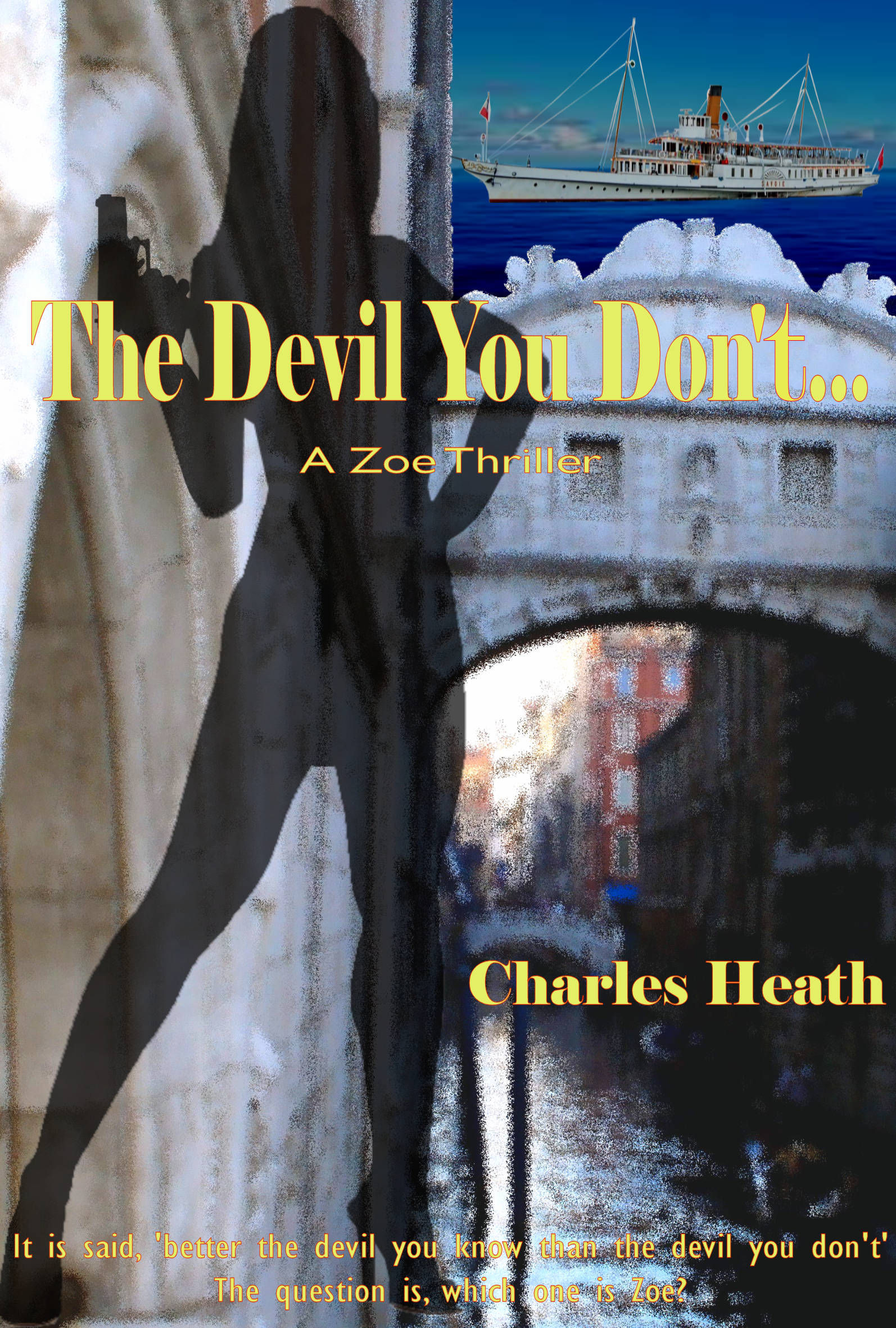
John Pennington’s life is in the doldrums. Looking for new opportunities and prevaricating about getting married, the only joy on the horizon was an upcoming visit to his grandmother in Sorrento, Italy.
Suddenly, he is left at the check-in counter with a message on his phone telling him the marriage is off, and the relationship is over.
If only he hadn’t promised a friend he would do a favour for him in Rome.
At the first stop, Geneva, he has a chance encounter with Zoe, an intriguing woman who captures his imagination from the moment she boards the Savoire, and his life ventures into uncharted territory in more ways than one.
That ‘favour’ for his friend suddenly becomes a life-changing event, and when Zoe, the woman who he knows is too good to be true, reappears, danger and death follow.
Shot at, lied to, seduced, and drawn into a world where nothing is what it seems, John is dragged into an adrenaline-charged undertaking, where he may have been wiser to stay with the ‘devil you know’ rather than opt for the ‘devil you don’t’.
I’m back home and this story has been sitting on a back burner for a few months, waiting for some more to be written.
The trouble is, there are also other stories to write, and I’m not very good at prioritising.
But, here we are, a few minutes opened up and it didn’t take long to get back into the groove.
Did he just witness an execution?
…
I could see the cogs in his mind turning over. Calculating what it would take to get past me.
Running would only help me.
Walking, well, he wasn’t going to get far.
A fight? He might be more experienced, but I was angrier, now controlled anger aided by rational thinking. There would be no blindly lashing out.
Reconnaissance, Surveillance, and Self-defence.
We were ten yards apart when he stopped, moving to one side near the wall. I’d seen him looking for a weapon, but luckily none were on offer. Someone kept this laneway very clean.
A car had been parked at the end, and I’d seen him try the doors. Locked. It would not be available for his escape.
He glared at me. “You’re Jackson, right?”
A brief moment of shock. How did he know my name?
“Who I am is irrelevant.”
“So you say. But I can assure you this is all wrong.”
Rule number seventy, or something like that, the target will say anything to get you offside.
“You harmed my friends.”
“Then, you’re in big trouble if you regard them as friends. In this business, we don’t have friends.”
He was right in one respect. Having friends gave our enemies leverage. But without friends, the loneliness of the job could break you.
But, right then I wasn’t interested in his opinion.
When I didn’t answer he said, “This is a setup. I’m not the enemy; I’m one of you. I made a mistake, and now they’ve set the dogs on me.”
I didn’t ask why we were following him, that was above my pay grade, added to the fact I didn’t want to know. Knowing the perfidy of the target could compromise how I treated him.
“You’re the target, why I don’t care.”
“Look, I haven’t got much time. Find a man called Alfred Nobbin. I work for him. I found something I shouldn’t, which is why you are here, now. Tell him the evidence is ….”
I didn’t hear the bullet that killed him, but it came from behind me, hit him in the chest, its force sending him backwards, and he was dead before he hit the ground.”
It was the first time in almost a week that I made the short walk to the cafe alone. It was early, and the chill of the morning was still in the air. In summer, it was the best time of the day. When Susan came with me, it was usually much later, when the day was much warmer and less tolerable.
On the morning of the third day of her visit, Susan said she was missing the hustle and bustle of London, and by the end of the fourth she said, in not so many words, she was over being away from ‘civilisation’. This was a side of her I had not seen before, and it surprised me.
She hadn’t complained, but it was making her irritable. The Susan that morning was vastly different to the Susan on the first day. So much, I thought, for her wanting to ‘reconnect’, the word she had used as the reason for coming to Greve unannounced.
It was also the first morning I had time to reflect on her visit and what my feelings were towards her. It was the reason I’d come to Greve: to soak up the peace and quiet and think about what I was going to do with the rest of my life.
I sat in my usual corner. Maria, one of two waitresses, came out, stopped, and there was no mistaking the relief in her manner. There was an air of tension between Susan and Maria I didn’t understand, and it seemed to emanate from Susan rather than the other way around. I could understand her attitude if it was towards Alisha, but not Maria. All she did was serve coffee and cake.
When Maria recovered from the momentary surprise, she said, smiling, “You are by yourself?” She gave a quick glance in the direction of my villa, just to be sure.
“I am this morning. I’m afraid the heat, for one who is not used to it, can be quite debilitating. I’m also afraid it has had a bad effect on her manners, for which I apologise. I cannot explain why she has been so rude to you.”
“You do not have to apologise for her, David, but it is of no consequence to me. I have had a lot worse. I think she is simply jealous.”
It had crossed my mind, but there was no reason for her to be. “Why?”
“She is a woman, I am a woman, she thinks because you and I are friends, there is something between us.”
It made sense, even if it was not true. “Perhaps if I explained…”
Maria shook her head. “If there is a hole in the boat, you should not keep bailing but try to plug the hole. My grandfather had many expressions, David. If I may give you one piece of advice, as much as it is none of my business, you need to make your feelings known, and if they are not as they once were, and I think they are not, you need to tell her. Before she goes home.”
Interesting advice. Not only a purveyor of excellent coffee, but Maria was also a psychiatrist who had astutely worked out my dilemma. What was that expression, ‘not just a pretty face’?
“Is she leaving soon?” I asked, thinking Maria knew more about Susan’s movements than I did.
“You would disappoint me if you had not suspected as much. Susan was having coffee and talking to someone in her office on a cell phone. It was an intense conversation. I should not eavesdrop, but she said being here was like being stuck in hell. It is a pity she does not share your love for our little piece of paradise, is it not?”
“It is indeed. And you’re right. She said she didn’t have a phone, but I know she has one. She just doesn’t value the idea of getting away from the office. Perhaps her role doesn’t afford her that luxury.”
And perhaps Alisha was right about Maria, that I should be more careful. She had liked Maria the moment she saw her. We had sat at this very table, the first day I arrived. I would have travelled alone, but Prendergast, my old boss, liked to know where ex-employees of the Department were, and what they were doing.
She sighed. “I am glad I am just a waitress. Your usual coffee and cake?”
“Yes, please.”
Several months had passed since we had rescued Susan from her despotic father; she had recovered faster than we had thought, and settled into her role as the new Lady Featherington, though she preferred not to use that title, but go by the name of Lady Susan Cheney.
I didn’t get to be a Lord, or have any title, not that I was expecting one. What I had expected was that Susan, once she found her footing as head of what seemed to be a commercial empire, would not have time for details like husbands, particularly when our agreement made before the wedding gave either of us the right to end it.
There was a moment when I visited her recovering in the hospital, where I was going to give her the out, but I didn’t, and she had not invoked it. We were still married, just not living together.
This visit was one where she wanted to ‘reconnect’ as she called it, and invite me to come home with her. She saw no reason why we could not resume our relationship, conveniently forgetting she indirectly had me arrested for her murder, charges both her mother and Lucy vigorously pursued, and had the clone not returned to save me, I might still be in jail.
It was not something I would forgive or forget any time soon.
There were other reasons why I was reluctant to stay with her, like forgetting small details, an irregularity in her character I found odd. She looked the same, she sounded the same, she basically acted the same, but my mind was telling me something was not right. It was not the Susan I first met, even allowing for the ordeal she had been subjected to.
But, despite those misgivings, there was no question in my mind that I still loved her, and her clandestine arrival had brought back all those feelings. But as the days passed, I began to get the impression my feelings were one-sided and she was just going through the motions.
Which brought me to the last argument, earlier, where I said if I went with her, it would be business meetings, social obligations, and quite simply her ‘celebrity’ status that would keep us apart. I reminded her that I had said from the outset I didn’t like the idea of being in the spotlight, and when I reiterated it, she simply brushed it off as just part of the job, adding rather strangely that I always looked good in a suit. The flippancy of that comment was the last straw, and I left before I said something I would regret.
I knew I was not a priority. Maybe somewhere inside me, I had wanted to be a priority, and I was disappointed when I was not.
And finally, there was Alisha. Susan, at the height of the argument, had intimated she believed I had an affair with her, but that elephant was always in the room whenever Alisha was around. It was no surprise when I learned Susan had asked Prendergast to reassign her to other duties.
At least I knew what my feelings for Alisha were, and there were times when I had to remember she was persona non grata. Perhaps that was why Susan had her banished, but, again, a small detail; jealousy was not one of Susan’s traits when I first knew her.
Perhaps it was time to set Susan free.
When I swung around to look in the direction of the lane where my villa was, I saw Susan. She was formally dressed, not in her ‘tourist’ clothes, which she had bought from one of the local clothing stores. We had fun that day, shopping for clothes, a chore I’d always hated. It had been followed by a leisurely lunch, lots of wine and soul searching.
It was the reason why I sat in this corner; old habits die hard. I could see trouble coming from all directions, not that Susan was trouble or at least I hoped not, but it allowed me the time to watch her walking towards the cafe in what appeared to be short, angry steps; perhaps the culmination of the heat wave and our last argument.
She glared at me as she sat, dropping her bag beside her on the ground, where I could see the cell phone sitting on top. She followed my glance down, and then she looked unrepentant back at me.
Maria came back at the exact moment she was going to speak. I noticed Maria hesitate for a second when she saw Susan, then put her smile in place to deliver my coffee.
Neither spoke nor looked at each other. I said, “Susan will have what I’m having, thanks.”
Maria nodded and left.
“Now,” I said, leaning back in my seat, “I’m sure there’s a perfectly good explanation as to why you didn’t tell me about the phone, but that first time you disappeared, I’d guessed you needed to keep in touch with your business interests. I thought it somewhat unwisethat you should come out when the board of one of your companies was trying to remove you, because of what was it, an unexplained absence? All you had to do was tell me there were problems and you needed to remain at home to resolve them.”
My comment elicited a sideways look, with a touch of surprise.
“It was unfortunate timing on their behalf, and I didn’t want you to think everything else was more important than us. There were issues before I came, and I thought the people at home would be able to manage without me for at least a week, but I was wrong.”
“Why come at all. A phone call would have sufficed.”
“I had to see you, talk to you. At least we have had a chance to do that. I’m sorry about yesterday. I once told you I would not become my mother, but I’m afraid I sounded just like her. I misjudged just how much this role would affect me, and truly, I’m sorry.”
An apology was the last thing I expected.
“You have a lot of work to do catching up after being away, and of course, in replacing your mother and gaining the requisite respect as the new Lady Featherington. I think it would be for the best if I were not another distraction. We have plenty of time to reacquaint ourselves when you get past all these teething issues.”
“You’re not coming with me?” She sounded disappointed.
“I think it would be for the best if I didn’t.”
“Why?”
“It should come as no surprise to you that I’ve been keeping an eye on your progress. You are so much better doing your job without me. I told your mother once that when the time came I would not like the responsibilities of being your husband. Now that I have seen what it could possibly entail, I like it even less. You might also want to reconsider our arrangement, after all, we only had a marriage of convenience, and now that those obligations have been fulfilled, we both have the option of terminating it. I won’t make things difficult for you if that’s what you want.”
It was yet another anomaly, I thought; she should look distressed, and I would raise the matter of that arrangement. Perhaps she had forgotten the finer points. I, on the other hand, had always known we would not last forever. The perplexed expression, to me, was a sign she might have forgotten.
Then, her expression changed. “Is that what you want?”
“I wasn’t madly in love with you when we made that arrangement, so it was easy to agree to your terms, but inexplicably, since then, my feelings for you changed, and I would be sad if we parted ways. But the truth is, I can’t see how this is going to work.”
“In saying that, do you think I don’t care for you?”
That was exactly what I was thinking, but I wasn’t going to voice that opinion out loud. “You spent a lot of time finding new ways to make my life miserable, Susan. You and that wretched friend of yours, Lucy. While your attitude improved after we were married, that was because you were going to use me when you went to see your father, and then almost let me go to prison for your murder.”
“I had nothing to do with that, other than to leave, and I didn’t agree with Lucy that you should be made responsible for my disappearance. I cannot be held responsible for the actions of my mother. She hated you; Lucy didn’t understand you, and Millie told me I was stupid for not loving you in return, and she was right. Why do you think I gave you such a hard time? You made it impossible not to fall in love with you, and it nearly changed my mind about everything I’d been planning so meticulously. But perhaps there was a more subliminal reason why I did because after I left, I wanted to believe, if anything went wrong, you would come and find me.”
“How could you possibly know that I’d even consider doing something like that, given what you knew about me?”
“Prendergast made a passing comment when my mother asked him about you; he told us you were very good at finding people and even better at fixing problems.”
“And yet here we are, one argument away from ending it.”
I could see Maria hovering, waiting for the right moment to deliver her coffee, then go back and find Gianna, the café owner, instead. Gianna was more abrupt and, for that reason, was rarely seen serving the customers. Today, she was particularly cantankerous, banging the cake dish on the table and frowning at Susan before returning to her kitchen. Gianna didn’t like Susan either.
Behind me, I heard a car stop, and when she looked up, I knew it was for her. She had arrived with nothing, and she was leaving with nothing.
She stood. “Last chance.”
“Forever?”
She hesitated and then shook away the look of annoyance on her face. “Of course not. I wanted you to come back with me so we could continue working on our relationship. I agree there are problems, but it’s nothing we can’t resolve if we try.”
I had been trying. “It’s too soon for both of us, Susan. I need to be able to trust you, and given the circumstances, and all that water under the bridge, I’m not sure if I can yet.”
She frowned at me. “As you wish.” She took an envelope out of her bag and put it on the table. “When you are ready, it’s an open ticket home. Please make it sooner rather than later. Despite what you think of me, I have missed you, and I have no intention of ending it between us.”
That said, she glared at me for a minute, shook her head, then walked to the car. I watched her get in and the car drive slowly away.
Every time I close my eyes, I see something different.
I’d like to think the cinema of my dreams is playing a double feature but it’s a bit like a comedy cartoon night on Fox.
But these dreams are nothing to laugh about.
Once again there’s a new installment of an old feature, and we’re back on the treasure hunt.
…
A run in with Alex
…
It had been an interesting excursion, with discovery, but not so significant, it meant anything. I went back to Nadia’s hotel room to collect the maps she had in the picnic basket so I could compare them with others because at least two of them had features I’d not seen before.
I was there only for the maps, then left. It had been a long day and she was tired, and I was glad not to be working that night. I also had been thinking about what Boggs was doing, and where, for that matter, he’d been.
I hadn’t seen Boggs for days, and worse, the last time I did see him, we didn’t exactly part on the best of terms. It was a long way to fall from when, what seemed less than a week, we were the best of friends.
It seemed his obsession with the treasure hunt had usurped any possibility of being civil or any understanding that there might be more pressing matters in my life, like having to help support my mother.
Perhaps he didn’t realize the nature of my necessity to actually get a job and bring some money onto a household that was struggling just to exist.
For that matter, I had to wonder just how he and his mother managed to exist now that Rico was behind bars with little chance of escaping a prison sentence. Oddly, I felt sorry for him, but I was beginning to believe that Alex and the Benderby’s were responsible for the archaeologist’s death and had used Rico’s boat to stitch him up.
As for Boggs, there was that lingering doubt in his mind that I had crossed to the dark side, associating myself with Nadia, a sworn enemy, and treasure hunting rival.
It was a thought that crossed my mind too and could be argued that she was just using me as a means of getting to the treasure for her family given that she might assume that I stood a better chance of deducing where it was because Boggs had a head start on everyone else, and was still stumbling around in the dark.
That she was willing to help, by means that could have only been facilitated by her family didn’t go unnoticed, and I was a lot warier now of sharing everything I knew with her. I was not that naive to believe she was interested in me for any other reason.
It didn’t really matter because whether I would share any or all information with her or anyone else was largely irrelevant. I was inclined to believe it didn’t exist, or if it had, it was more likely that someone had found it long ago, and like the Cossatino’s later on, promoted the myth for the purpose of exploiting people’s gullibility.
This was, I guess, one of those between a rock and a hard place moment.
A sudden itch on the back of my neck made me turn around and look back in the direction of her room, and I noticed a flutter where the curtain was. Had she been waiting to see if I had gone?
I hated the idea of being suspicious of people’s motives, but the name conjured up all manner of expectations, and I could only imagine what it was like to live with that. Would she ever live a normal life, or even know what normal was?
Did any of us?
“Smidge.”
A voice that would strike terror into the heart of anyone like me.
Alex. Loitering outside the vicinity of Nadia’s hotel. Was he spying on her?
“Alex.”
Beside him was one of his father’s henchmen and it didn’t look good.
“What are you doing here?”
Had he just arrived on his way to see her, or had he been lurking in the shadows? My money was on the latter. He had been the jealous boyfriend once, and it was hard to see him changing.
Truth or dare? Truth. “I was visiting Nadia. But I wouldn’t start assuming it was for any reason other than for her to be questioning me about Boggs’s progress on his treasure hunt, which, by the way, is zero. My guess is you are having more success.”
“Why would you think that?”
“The flash boat on the water, I suspect you’re trying to find a trail of coins from bay to beach in the hope of establishing where it came ashore. I’m sure you have some fancy metal detection going on from the boat. So, any success?”
“Why would I tell you?”
“Why wouldn’t you? I’m sure telling Boggs is hardly going to make his investigation move along faster than it is. What would help is the captain’s logbook, and that I suspect was the archaeologist’s trump card, and he died before imparting its whereabouts.”
It was pure speculation on my part, but Alex always lacked a poker face, even back in school when he got into trouble. His expression changed just slightly. So, there was a logbook.
“Does your father know what you’re doing?”
“This had nothing to do with my father.”
“Perhaps I should tell him that, including your obsession with Nadia.”
Something I should have realized long ago, and just crystallized in my mind, though I was not sure why was the fact Benderby had become almost a regular visitor at our place. If I thought about it, it explained why my mother had suddenly started taking more care of her appearance, and how it came to pass that I could get a job in a place where very few could.
Benderby had always had an interest in my mother, and suddenly I realized they had been to school together, and the words of my father spoken once in anger made sense. He was not her first choice. She may have been Benderby’s first choice back then, but I doubted his family would have sanctioned it.
I wondered what Alex would have thought of that revelation. Since his mother’s death, Benderby had started seeing more of her, and that had to add to Alex’s dislike of me.
“Not a good idea smidge.”
“Not a good idea to be calling me Smidge, Alex.”
A nod from Alex, the henchman took a step forward and grabbed my shirt, and then rammed into the wall.”
Alex laughed, and then suddenly went quiet.
Another voice joined the conversation. “Tell your goon to let him go or I’ll cut your throat from ear to ear.”
Nadia. Her tone scared me.
“You’re not that stupid,” Alex said in a tone that told me it scared the hell out of him too
“I’m a Cossatino, since when did stupidity rate a mention. We’ve been doing stupid shit forever, and you’re about to join the party.”
“You don’t want to do this.”
“Actually Alex, I do. It’ll get rid of one big problem I have with you, and it’ll get rid of a serial pest. People will thank me.”
I could see her now, behind him, dressed in black, and at first thought, she was a ninja. I could see the knife at his throat, and as she moved it slightly, he jerked drawing blood.
“Let him go,” Alex muttered.
The goon let go of my shirt and stepped back.
“Now go, Alex. Don’t come back. And don’t annoy Smidge again, or you’ll have me to deal with.”
He looked me up and down with a look of distaste. “This isn’t over.”
Nadia gave him a shove and stepped between him and me.
“It is, Alex. I know what you did to that chap you dumped on Rico’s boat. You might not have killed him, but you’re ultimately responsible for his death, and I’m sure the sheriff would like to hear about it. So, go away Alex, and be a good boy and we’ll all keep our little secrets.”
Angry yes, sullen answered resentful, equally so, but reluctantly agreeable. “If you say so.”
A nod to his goon and they left.
There was something else hanging in the air, that statement about keeling little secrets. He’d kept something over her, she had admitted as much to me, but the tables had been turned. But what it was she had over him, it was more than just the archaeologist.
“What was that about?” I had to ask.
“The Benderby’s have lots of secrets Sam, not just Alex. I played a card and it paid off. He won’t bother you again, not seriously anyway.”
“Should I be thanking you, or have I just been dragged down a rabbit hole?”
Perhaps I might have worked it better because she did save me from a certain beating.
“You don’t trust me, do you?”
Stating the obvious, there was no easy way out of that question.
“You said it yourself. You’re a Cossatino. I want to believe you, and strangely, given history, I like you perhaps more than I should.”
“Good boys and bad girls, it’s usually the other way around. I wanted to hurt him, believe me, and I meant it when I said we do stupid shit, but I’m trying to be better than that. I want to be better than that. It’s why I need to get away from this place.”
“Then why do you just go? For that matter, why did you come back?”
“Unfinished business.” She took my hand in hers. “And I like being with you. You have a way of making me feel like I can change.”
“You are different.”
“Am I though? I don’t feel like it right now.”
“Well, I am grateful you came along.”
“Good to be a help for once. What’s our next adventure going to be?”
“A picnic in the hills. I want to look at a few caves.”
“The one where Ormiston reportedly went missing? You seem to be on a very macabre Odyssey. What did the newspaper archives turn up?”
“An interesting coincidence. I’ll let you know when I’m free next.”
“I’ll be waiting.” She leaned over and kissed me lightly on the lips, then leaned back to look me in the eyes.
What I wanted then couldn’t be put into words.
Thank God she blinked.
I kissed her on the cheek, shook my head slightly, and said quietly, ” You will be the death of me.”
“Maybe,” she said softly, ” but you will die a very happy man.”