The problem is, there are familiar faces and a question of who is a friend and who is foe made all the more difficult because of the enemy, if it was the enemy, simply because it didn’t look or sound or act like the enemy.
Now, it appears, his problems stem from another operation he participated in, and because of it, he has now been roped into what might be called a suicide mission.
04:00 in Africa was an interesting time of the morning, especially after a few hours of intense rain during the night. I could see what the Colonel meant if it had been raining because outside the barracks it was very wet.
Whilst the others appeared to get some sleep, in a much better environment than the back of an aircraft, I lay awake, at first waiting for the sound of the aircraft leaving, and then listening to the rain that started an hour or so later, followed by the sounds that came afterward. It was never silent, and there was always that suspicion of being attacked when you’re at your most vulnerable. I had a weapon ready, just in case.
Outside the cloud cover had gone and it looked like it would be a fine day.
When I did the headcount, I noticed Mobley was missing as agreed, and by the time we had assembled, the cars had arrived. We would be driving ourselves in a convoy behind Monroe and the Colonel, who was no longer dressed in army fatigues, along with Jacobi and one of his guards.
For the trip, we had been supplied with the western notion of jungle wear, safari suits, that identified us not only garrulous visitors, but typical tourists hardly prepared for what was to come. It made a good cover for a group of ‘fools’ making a documentary.
All we had to do was get to the location for the exchange of the hostages reportedly between Aba, a town in the Democratic Republic of the Congo, and somewhere on the outskirts of the Park. It was going to be an easy drive from Uganda to Aba, then the situation might change.
I was going to be in the rear vehicle, with Leslie Davies. The more I thought about her being assigned to this mission, it seemed she was here solely for her ability to fly anything with wings. It was the part that was missed on her resume, perhaps for a reason, but whatever that reason was, it would become clear eventually.
We left at 04:05. Monroe had a slight problem starting her car.
Other than exchanging a few words before getting on the plane and then getting off the plane, Davies and I had not spoken. After half an hour of driving in silence, I decided to break the ice.
“What did you do to get nominated for this mission?”
A glance sideways gave me no indication of her thoughts, or what look was hidden behind the aviator sunglasses. I hadn’t seen her smile, or talk to any of the other team members other than a few brief words with Monroe, likely because she was the only other female.
Even then, I didn’t get the impression they were going to be best friends.
“Best you don’t know.”
Her reply came about three minutes after I’d asked, and at a point where I assumed she was going to ignore me.
“Let’s say I’m curious.”
“Curiosity killed the cat.”
“I’m not a cat.”
Another two minutes of silence, then, “Disobeyed a direct order.”
Not as bad as killing your immediate superior because you didn’t like him. And I could sympathize. Some orders were utterly ridiculous.
“Not a bad thing.”
“Not what the court-martial thought.”
I noticed she didn’t use sir. I could live with that.
“You volunteer?”
“In a manner of speaking. You?”
She raised her glasses slightly and gave me a sideways glance.
“In a manner of speaking. Been here before, not that it was for very long, and in a different part of the country, but the powers that be deemed my experience adequate for the mission.”
“I take it the mission isn’t to take pictures of animals?”
It might. Just not the animals you’re expecting.”
It was our lucky day. At the Vurra customs post we were met by a Ugandan official who had been forewarned of our arrival, and whom I expect was well compensated for his work, and after going through a half-hour of paperwork, we were taken to the Congo counterpart with whom Jacobi weaved his magic.
I say lucky because the border crossing was often closed, either because of the weather, the road conditions, or the fact neither country was talking to the other, though it was more to do with the Congo villagers and their dispute over lands that stretched into Uganda.
We arrived with a number of trucks, to join a long line waiting to cross, and included were several United Nations vehicles.
Everyone seemed to take the delays and administrative diligence in their stride.
We were moving again, behind several tracks, almost an hour and a half after arriving. All of the crates of equipment had been opened and inspected, as had our packs, and the raft of documents Monroe had been supplied. She had a satellite phone at the ready in case we needed to make any calls, though I was not sure what Bamfield would have been able to do.
But, after a few tense moments, everyone lost interest in the documentary crew and moved onto the next vehicle.
Jacobi said it was the easiest crossing he’d made.
About a half-hour, after we had driven on our way, then my radio crackled, and Mobley reported in. He had just crossed over and was behind us, and a number of trucks.
I got a strange look from Davies.
“Insurance,” was all I said. “Which no one else needs to know about.”
The road was not exactly in the best of condition in places and having four-wheel drives was a help. The lie of the land was quite flat, and we passed a lot of small villages and curious looks from the villagers. Some parts of the road were quite bad, and we had to drive very slowly, especially where it was damp, but for the most part, it was reasonably dry and the roads were navigable.
Other times, Jacobi said, after the rains, those same roads were impossible to drive on and would often see villagers out trying to help the truck drivers keep moving.
I had expected to run into a number of soldiers, but for the first few hours after leaving the border, there wasn’t a lot to see other than flat land, villages, and people on the side of the road, along with the occasional vehicle, belying the fact it was a major road between the border and a town called Aba, a distance that was measured at about 170 kilometers.
Anywhere else in the world it would have taken about an hour and a half, but here, it was early afternoon and finally on a stretch of reasonable road into Aba. A refuel and we’d be on our way quickly. The first of the kidnappers appointed times was 16:00 hours and I was hoping the roads would get us there by that time.
This story has been ongoing since I was seventeen, and just to let you know, I’m 72 this year.
Yes, it’s taken a long time to get it done.
Why, you might ask.
Well, I never gave it much interest because I started writing it after a small incident when I was 17, and working as a book packer for a book distributor in Melbourne
At the end of my first year, at Christmas, the employer had a Christmas party, and that year, it was at a venue in St Kilda.
I wasn’t going to go because at that age, I was an ordinary boy who was very introverted and basically scared of his own shadow and terrified by girls.
Back then, I would cross the street to avoid them
Also, other members of the staff in the shipping department were rough and ready types who were not backwards in telling me what happened, and being naive, perhaps they knew I’d be either shocked or intrigued.
I was both adamant I wasn’t coming and then got roped in on a dare.
Damn!
So, back then, in the early 70s, people looked the other way when it came to drinking, and of course, Dutch courage always takes away the concerns, especially when normally you wouldn’t do half the stuff you wouldn’t in a million years
I made it to the end, not as drunk and stupid as I thought I might be, and St Kilda being a salacious place if you knew where to look, my new friends decided to give me a surprise.
It didn’t take long to realise these men were ‘men about town’ as they kept saying, and we went on an odyssey. Yes, those backstreet brothels where one could, I was told, have anything they could imagine.
Let me tell you, large quantities of alcohol and imagination were a very bad mix.
So, the odyssey in ‘The things we do’ was based on that, and then the encounter with Diana. Well, let’s just say I learned a great deal about girls that night.
Firstly, not all girls are nasty and spiteful, which seemed to be the case whenever I met one. There was a way to approach, greet, talk to, and behave.
It was also true that I could have had anything I wanted, but I decided what was in my imagination could stay there. She was amused that all I wanted was to talk, but it was my money, and I could spend it how I liked.
And like any 17-year-old naive fool, I fell in love with her and had all these foolish notions. Months later, I went back, but she had moved on, to where no one was saying or knew.
Needless to say, I was heartbroken and had to get over that first loss, which, like any 17-year-old, was like the end of the world.
But it was the best hour I’d ever spent in my life and would remain so until I met the woman I have been married to for the last 48 years.
As Henry, he was in part based on a rebel, the son of rich parents who despised them and their wealth, and he used to regale anyone who would listen about how they had messed up his life
If only I’d come from such a background!
And yes, I was only a run away from climbing up the stairs to get on board a ship, acting as a purser.
I worked for a shipping company and they gave their junior staff members an opportunity to spend a year at sea working as a purser on a cargo ship that sailed between Melbourne, Sydney and Hobart in Australia.
One of the other junior staff members’ turn came, and I would visit him on board when he would tell me stories about life on board, the officers, the crew, and other events. These stories, which sounded incredible to someone so impressionable, were a delight to hear.
Alas, by that time, I had tired of office work and moved on to be a tradesman at the place where my father worked.
It proved to be the right move, as that is where I met my wife. Diana had been right; love would find me when I least expected it.
I asked Alfie to send me a track of Francesca’s movements, yes, I cloned her phone too, because I didn’t trust her, and yes, she went to see Anna at the Burkehardt’s residence.
We had a recording of her conversation, but it didn’t amount to much and Anna finished up yelling at her and kicking her out of the house. Not literally, but if she hadn’t left the house when she did…
She was sitting at the table with her computer open. By the way she shut it quickly, I suspect it was a video call to her boss.
“Your boss not happy with progress?”
She glared at me.
“You should go and have a talk to Anna Burkehardt. Charming lady.”
Cecelia snorted almost too loudly on her way to the bathroom.
Francesca shrugged. “Where have you been?”
“Looking at vines, would you believe.”
“How is that going to help?
“It’s not. But I’ve decided you can come with me to see the countess.”
“You found her?”
“Not exactly. She’s always been here, waiting for the day to sign the documents. I was going to keep her away from your lot, now I’m not so sure that’s a good idea. You can recognise her if you see her?”
“Are you saying the woman you have is not the countess?”
“No. I’m asking if you can recognise her.”
“Of course. We have a half dozen photographs we used, and some that deliberately disguise her in case she’s trying to be anonymous.”
“Good. Tomorrow morning.”
That simple conversation was to see if she called her boss and they make arrangements to ‘take’ the countess into their protective custody, or, take her to Anna von Burkehardt.
As I said to Cecelia later, we would soon find out who Francesca and her people were working for. Because of the hostility that Anne had shown towards her, I was wondering if Anna was, in fact, the one who hired them to find the countess.
“You’re going to have a busy morning tomorrow,” I said to Cecelia. “You need to watch is leave and see if anyone follows us.”
“Do you really think they’d be that unsubtle?”
“Yes. When large sums of money are involved.”
“And what will Anna do to her?”
“Nothing. She’ll know straight away it’s not the real Countess, so I’m sure after they snatch her, the Countess will escape. She can’t afford to be unmasked. Not yet.
The fact that Cecelia didn’t tell me what I was doing was risky, told me that it was risky.
During the night, tossing and turning, with various women on my mind, I went through various scenarios, each of which had a bad outcome, the worst where Francesca became collateral damage.
This whole exercise was to see the lengths the fake Countess would go to not to be identified. Or whether she thought her cover was good enough to fool everyone.
Except perhaps Anna.
A mother knows her daughter-in-law, especially after all that time. A fake could not replicate the mannerisms, the speech, the idiosyncrasies, or a lifetime of just being together.
And I was banking on Francesca’s boss being greedy and putting money before ethics. Francesca didn’t strike me as one with ethical problems, but I had read books by their covers before and been horribly wrong.
If it all blew up in my face at the very least, I could use it as an example of what not to do, but I doubt Cecelia would thank me in a hurry.
By the time I was ready to go, Cecelia had gone out for her morning run, and Francesca was ready to go and see the countess. We had just enough time to sort out how we were going to communicate, and it was going to be amusing having Cecelia’s voice in my head.
At one point I had heavy breathing in my ear and told her it was distracting. She simply replied that I should get out and join her and get rid of some of that retirement flab.
She did not have to be so mean, even if she was right.
I finished the coffee Cecelia had made in the percolator an hour before and tasted over-brewed, then finally stopped running scenarios that ended in disaster in my head.
“You ready?” I asked her.
I’d seen the transcript of the call Francesca made to her boss after I told her I was taking her to see the countess, and I knew the answer to that question. It was rhetorical, but I couldn’t tell her that.
I just hoped the team that descended on us at the hotel was not a smash-and-grab type, not afraid to leave bodies behind.
It was one of those beautiful Autumn mornings, blue sky with a smattering of clouds, but a sunny day all the same. It’s Sunday, so there is not as much traffic on the road.
Anyone with any sense would be going to their favourite coffee place and settling down to their choice of coffee and perhaps a toaster or muffin to accompany the conversation.
This is what’s happening at the cafe where we go for coffee. At 9:00 in the morning, it is packed. But great coffee is hard to find, and this is apparently great coffee.
It’s that in-between time before it gets windy, cold and wet, with the sort of chill you can feel in your bones, whether it’s the time when you have a barbecue in the mid-afternoon and get home before the cold sets in or take the kids to the park for some healthy exercise.
Today I have to take a drive from one side of suburbia to the other, taking a network of main roads with rather anonymous names such as North and South
We travel through the older suburbs, those with a collection of red or white bricks and timber dating back to the fifties and sixties. They are not, for the most part, in a good state of repair, and rather than looking ramshackle, it’s more like they are slowly decaying.
Fences are rotting or falling over, extensions are like they have been glued on rather than added by an architect, and paint is either fading or missing. For the most part, people are struggling to keep up with the cost of living and are too busy to worry about maintenance.
Some have been bulldozed and replaced, blocks are cleared awaiting new development, and others are being renovated. Anyway, you look at them, they are still worth a great deal of money, being relatively close to the city. But it’s a double-edged sword, worth a lot, but costing more to keep.
It’s a location we could never afford. Because we were not affluent, we were pushed out to the less expensive outer suburbs. This was, of course, 50 years ago, and now those outer suburbs are the new inner suburbs, and people are buying up to 50 km further out in the new estates. When I was young, these suburbs were farms and open land.
It also surprises me that people would want to live on the main road because, with traffic as it is heading into the city, it would be difficult to leave or return by car. At least for these people, public transport is better than in the outer suburbs.
Because it’s Sunday, my trip takes a lot less time, except for those unpredictable traffic lights, some of which I missed and took a while to cycle through the other traffic before it was our time to move. It’s the only disappointment of the modern era, the fact that roads were never made to handle the traffic, and the fact that they now have to bulldoze homes to make way for roads.
Pity they didn’t lay down the foundations of a proper transport system, much like they have in major European cities.
The Writer’s Crossroads: When Is It Time to Hang Up the Quill?
Imagine for a moment. You’ve been writing for years, pouring your heart onto the page, publishing works on free sites, trying to garner a following. You’ve self-published your books on Amazon, seeing them as the culmination of countless hours, endless revisions, and boundless passion.
People read your stories. Most comments are of praise, echoing the beauty of your prose, the depth of your characters, the compelling nature of your plots. Reviews are overwhelmingly 4 and 5 stars, a testament to the quality you know you possess.
But sales? Only a few every week. A trickle, not the torrent you dreamed of, not the steady stream you need to even consider this a sustainable path.
And your query letters – letters you know are nothing short of brilliant, honed to perfection, showcasing your voice and vision – always come back with the same result: rejection. A polite “not for us,” or worse, silent dismissal.
It’s a scenario many writers know intimately, a soul-crushing paradox where internal validation clashes brutally with external reality. The question starts small, a whisper in the dark, then grows into a gnawing doubt: When is the time to hang up the quill?
The Pain of the Unseen Success
This isn’t about lacking talent. Your readers tell you otherwise. This isn’t about lack of effort. Years of dedication speak for themselves. This is about the heartbreaking disconnect between the quality of your work and its market reception. It’s about the emotional toll of constant rejection despite undeniable praise. It’s about feeling invisible in a crowded, noisy world.
Before You Hang It Up: Revisit Your “Why”
Before you even consider putting down your pen for good, ask yourself one crucial question: Why do you write?
Is it for the joy of creation? Does the act of building worlds, crafting characters, and weaving narratives bring you profound satisfaction, regardless of external validation?
Is it because you have stories that demand to be told? Do these ideas bubble up inside you, insistent, needing to be set free?
Is it for the connection with readers? Do those few 4 and 5-star reviews, those occasional heartfelt comments, fuel your spirit enough to keep going?
Is it for fame and fortune? Be honest. If it’s only for the big advance, the bestseller list, or the movie deal, then the current reality is indeed devastating.
The answer to this “why” is your compass.
When NOT to Hang Up the Quill
You might not be ready to quit if:
The creative spark still ignites you. If writing still feels like breathing, like an essential part of who you are, then the fire isn’t out.
Those few readers truly matter. If those handful of steady sales, those glowing reviews, remind you that your words do touch people, however few, don’t underestimate that impact.
You haven’t truly explored all avenues. Have you tried different genres? Different marketing strategies (even self-taught ones)? Different writing communities? Different approaches to querying (pitching a different book, refining your synopsis)?
You’re still learning and improving. Every rejection, every low sale, can be a data point. Are you actively seeking to understand why things aren’t working and adjusting your approach?
When It Might Be Time to Re-evaluate (Not Necessarily Quit)
There are legitimate reasons to reconsider your path, or at least, your approach:
When the joy is gone, replaced by resentment. If writing has become a bitter chore, a source of constant stress and negativity, it might be time to protect your mental well-being.
When your “why” has fundamentally shifted. If you started writing purely for the love of it, but now find yourself only chasing external metrics that aren’t materialising, and that chase is draining you, it’s time to check in.
When you’ve genuinely exhausted all strategic and emotional resources. If you’ve tried everything you can think of, sought professional advice, taken breaks, and still feel utterly depleted with no hope in sight, take a step back.
When the opportunity cost is too high. Is the time and energy you pour into writing preventing you from pursuing other passions, or even just living a balanced life?
Beyond Quitting: What Else Can You Do?
Hanging up the quill doesn’t have to be a surrender; it can be a pivot.
Take a Break, Not a Surrender: Step away for weeks or months. Let the creative well refill without pressure. Sometimes, absence makes the heart grow fonder, and new perspectives emerge.
Re-evaluate Your Strategy (Ruthlessly):
Marketing: Are you doing anything to market your self-published books effectively? This is often the biggest blind spot for writers. Learn about Amazon ads, social media, building an author platform.
Genre/Market: Is your brilliant work in a niche that’s too small? Or is it hard to categorise? Sometimes, a slight shift in genre or understanding market trends can make a huge difference.
Query Letters: Are they truly brilliant, or simply well-written? A brilliant query letter is strategic. It targets the right agent, highlights marketability, and hints at the “hook.” Consider professional query critiques.
Professional Feedback: Move beyond friends and family. Invest in a professional editor or sensitivity reader who can give you objective, market-aware advice on your manuscript’s strengths and weaknesses.
Redefine Success: Does success have to be a bestseller? Can it be the joy of finishing a manuscript? The connection with those few devoted readers? The personal growth you’ve experienced through the craft?
Write for Yourself (Again): If you’ve been constantly chasing trends or trying to impress agents, go back to writing the story only you can tell, purely for your own satisfaction. Publish it anonymously if you wish.
Explore Other Creative Outlets: Maybe your creative energy needs a different channel for a while – painting, music, coding, baking. It can refresh your writing perspective.
The Personal Journey
There’s no universal answer to “When is the time to hang up the quill?” It’s a deeply personal decision, one that only you can make. It’s not about being a “failure” if you choose to step back, nor is it about being “naive” if you choose to persist.
Listen to your writer’s heart. Does it still beat with the rhythm of stories untold? Does the mere thought of not writing feel like losing a part of yourself? If so, then perhaps it’s not time to hang up the quill. Perhaps, it’s simply time to sharpen it, to learn a new stroke, and to write a different kind of story – your own story of resilience, adaptation, and unwavering passion.
Worthington was in a state, now realising that he had become a target, and immediately assumed it was Zoe at the end of the sniper rifle.
He considers calling John and telling him what just happened, but if Zoe was there with him…
No, better to attend to the problems at hand. Arabella wasn’t dead, but it had come very close. And, he suspected, it was because he had asked her to get a drink for him, and if she had not moved, the damage would be far less.
It was important then to go to the hospital with her and make sure he was there when she woke up to explain what had just happened. If she would ever speak to him again, that is.
Meanwhile, John is ‘collected’ at his hotel and taken to Olga. When he wakes up in a rather quaint bedroom or what seems to be a house in the countryside, he only remembers being in the hotel, then nothing.
When he is escorted to the meeting room, it is not the sort of interrogation he was expecting, but he is fascinated with the old Russian woman who claims to be Zoe’s mentor and teacher, and says that she has no interest in harming him; she only wants Zoe back.
John works out that the woman is, in fact, Alistair’s mother and presses her for more information about Zoe.
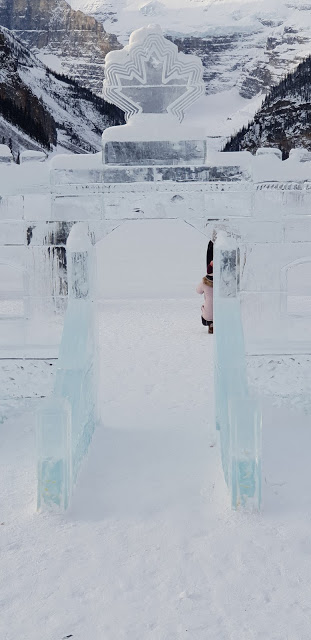
The Fairmont at Lake Louise, in Canada, is noted for its ice castle in winter. This has been created by the ice sculptor, Lee Ross since 2007, using about 150 blocks of ice, each weighing roughly 300 pounds.
When I first saw it, from a distance, looked like it was made out of plastic It’s not. Venturing out into the very, very cold, a close inspection showed it was made of ice.
And, it’s not likely to melt in a hurry given the temperature when I went down to look at it was hovering around minus 10 degrees Fahrenheit.
I have not yet had the privilege, or otherwise of being fired, but the meaning of the word fire is to get removed unceremoniously from your job.
Donald Trump used to use it a lot on The Apprentice, e.g., “You’re fired”. And unbelievably, I used to like that show.
But…
Fire can be quite hot, something you can sit in front of on those chilly winter nights, whether it be a gas fire, or a wood fire, my preference.
Then there’s a phrase, set fire to, which can be good or bad depending on what eventually gets burned.
I have on the odd occasion had someone fire my imagination, a good thing being a writer.
To feel the fire in the back of your throat when drinking neat whiskey is so much better when it is an expensive brand
Then there’s the fire in your heart driving patriotism, but make sure it is for the right reasons.
If you have a gun, then when you pull the trigger, you fire it. Just be sure not to be pointing it the wrong way or anyone.
A good indication is when you hear the words, ready, aim, fire. Especially if you are in the wrong place at the wrong time. Napoleon can attest to that, it is alleged!
You can,
fire off a message, hopefully, a nice one
fire questions rapidly at someone (but not a politician, they must have time to answer anything, but the question asked)
or accidentally fire someone up by saying the wrong thing
or fire a piece of pottery, and in saying that, the best I could do was an awkward mug.
Williams’ Restaurant, East 65th Street, New York, Saturday, 8:00 p.m.
We met the Blaines at Williams’, a rather upmarket restaurant that the Blaines frequently visited and had recommended.
Of course, during the taxi ride there, Alison reminded me that with my new job, we would be able to go to many more places like Williams’. It was, at worst, more emotional blackmail, because as far as Alison was concerned, we were well on our way to posh restaurants, the Trump Tower Apartments, and the trappings of the ‘executive set’.
It would be a miracle if I didn’t strangle Elaine before the night was over. It was she who had filled Alison’s head with all this stuff and nonsense.
Aside from the half-frown, half-smile, Alison was looking stunning. It had been months since she had last dressed up, and she was especially wearing the dress I’d bought her for our 5th anniversary that cost a month’s salary. On her, it was worth it, and I would have paid more if I had to. She had adored it and me, for a week or so after.
For tonight, I think I was close to getting back on that pedestal.
She had the looks and figure to draw attention, the sort movie stars get on the red carpet, and when we walked into the restaurant, I swear there were at least five seconds of silence, and many more gasps.
I even had a sudden loss of breath earlier in the evening when she came out of the dressing room. Once more, I was reminded of how lucky I was that she had agreed to marry me. Amid all those self-doubts, I couldn’t believe she had loved me when there were so many others out there who were more appealing.
Elaine was out of her seat and came over just as the Head Waiter hovered into sight. She personally escorted Alison to the table, allowing me to follow like the Queen’s consort, while she and Alison basked in the admiring glances of the other patrons.
More than once, I heard the muted question, “Who is she?”
Jimmy stood, we shook hands, and then we sat together. It was not the usual boy, girl, boy, girl seating arrangement. Jimmy and I on one side and Elaine and Alison on the other.
The battle lines were drawn.
Jimmy was looking fashionable, with a permanent blade one beard, unkempt hair, and a designer dinner suit that looked like he’d slept in it. Alison insisted I wear a tuxedo, and I looked like the proverbial penguin or just a thinner version of Alfred Hitchcock.
The bow tie had been slightly crooked, but just before we stepped out, she had straightened it. And took the moment to look deeply into my soul. It was one of those moments when words were not necessary.
Then it was gone.
I relived it briefly as I sat and she looked at me. A penetrating look that told me to ‘behave’.
When we were settled, Elaine said, in that breathless, enthusiastic manner of hers when she was excited, “So, Harry, you are finally moving up.” It was not a question, but a statement.
I was not sure what she meant by ‘finally’, but I accepted it with good grace. Sometimes, Elaine was prone to using figures of speech I didn’t understand. I guessed she was talking about the new job. “It was supposed to be a secret.”
She smiled widely. “There are no secrets between Al and me, are there, Al?”
I looked at ‘Al’ and saw a brief look of consternation.
I was not sure Alison liked the idea of being called Al. I tried it once and was admonished. But it was interesting that her ‘best friend forever’ was allowed that distinction when I was not. It was, perhaps, another indicator of how far I’d slipped in her estimation.
Perhaps, I thought, it was a necessary evil. As I understood it, the Blaines were our mentors at the Trump Tower, because they didn’t just let ‘anyone’ in. I didn’t ask if the Blaines thought we were just ‘anyone’ before I got the job offer.
And then there was that look between Alison and Elaine, quickly stolen before Alison realised I was looking at both of them. I was out of my depth, in a place I didn’t belong, with people I didn’t understand. And yet, apparently, Alison did. I must have missed the memo.
“No,” Alison said softly, stealing a glance in my direction, “No secrets between friends.”
No secrets. Her look conveyed something else entirely.
The waiter brought champagne, Krug, and poured glasses for each of us. It was not the cheap stuff, and I was glad I brought a couple of thousand dollars with me. We were going to need it.
Then, a toast.
To a new job and a new life.
“When did you decide?” Elaine was effusive at the best of times, but with the champagne, it was worse.
Alison had a strange expression on her face. It was obvious she had told Elaine it was a done deal, even before I’d made up my mind. Perhaps she’d assumed I might be ‘refreshingly honest’ in front of Elaine, but it could also mean she didn’t really care what I might say or do.
Instead of consternation, she looked happy, and I realised it would be churlish, even silly, if I made a scene. I knew what I wanted to say. I also knew that it would serve little purpose provoking Elaine or upsetting Alison. This was not the time or the place. Alison had been looking forward to coming here, and I was not going to spoil it.
Instead, I said, smiling, “When I woke up this morning and found Alison missing. If she had been there, I would not have noticed the water stain on the roof above our bed, and decided there and then how much I hated the place.” I used my reassuring smile, the one I used with the customers when all hell was breaking loose, and the forest fire was out of control. “It’s the little things. They all add up until one day …” I shrugged. “I guess that one day was today.”
I saw an incredulous look pass between Elaine and Alison, a non-verbal question; perhaps, is he for real? Or, I told you he’d come around.
I had no idea the two were so close.
“How quaint,” Elaine said, which just about summed up her feelings towards me. I think, at that moment, I lost some brownie points. It was all I could come up with at short notice.
“Yes,” I added, with a little more emphasis than I wanted. “Alison was off to get some studying in with one of her friends.”
“Weren’t the two of you off to the Hamptons, a weekend with some friends?” Jimmy piped up and immediately got the ‘shut up, you fool’ look that cut that line of conversation dead. Someone forgot to feed Jimmy his lines.
It was followed by the condescending smile from Elaine, and “I need to powder my nose. Care to join me, Al?”
A frown, then a forced smile for her new best friend. “Yes.”
I watched them leave the table and head in the direction of the restroom, looking like they were in earnest conversation. I thought ‘Al’ looked annoyed, but I could be wrong.
I had to say Jimmy looked more surprised than I did.
There was that odd moment of silence between us, Jimmy still smarting from his death stare, and for me, the Alison and Elaine show. I was quite literally gob-smacked.
I drained my champagne glass, gathering some courage and turned to him. “By the way, we were going to have a weekend away, but this legal tutorial thing came up. You know Alison is doing her law degree.”
He looked startled when he realised I had spoken. He was looking intently at a woman several tables over from us, one who’d obviously forgotten some basic garments when getting dressed. Or perhaps it was deliberate. She’d definitely had some enhancements done.
He dragged his eyes back to me. “Yes. Elaine said something or other about it. But I thought she said the tutor was out of town and it had been postponed until next week. Perhaps I got it wrong. I usually do.”
“Perhaps I’ve got it wrong.” I shrugged as the dark thoughts started swirling in my head again. “This week or next, what does it matter?”
Of course, it mattered to me, and I digested what he said with a sinking heart. It showed there was another problem between Alison and me; she might have been telling me lies. If what he said was true and I had no reason to doubt him, where was she going tomorrow morning, and had she really been with a friend studying today?
We poured some more champagne, had a drink, then he asked, “This promotion thing, what’s it worth?”
“Trouble, I suspect. Definitely more money, but less time at home.”
“Oh,” raised eyebrows. Obviously, the women had not talked about the job in front of him, or, at least, not all the details. “You sure you want to do that?”
At last, the voice of reason. “Me? No.”
“Yet you accepted the job.”
I sucked in a breath or two while I considered whether I could trust him. Even if I couldn’t, I could see my ship was sinking, so it wouldn’t matter what I told him, or what Elaine might find out from him. “Jimmy, between you and me, I haven’t as yet decided one way or another. To be honest, I won’t know until I go up to Barclay’s office and he asks me the question.”
“Barclay?”
“My boss.”
“Elaine’s doing a job for a Barclay who recently moved into the tower a block down from us. I thought I recognised the name.”
“How did Elaine get the job?”
“Oh, Alison put him onto her.”
“When?”
“A couple of months ago. Why?”
I shrugged and tried to keep a straight face, while my insides were churning up like the wake of a supertanker. I felt sick, faint, and wanted to die all at the same moment. “Perhaps she said something about it, but it didn’t connect at the time. Too busy with work, I expect. I think I seriously need to get away for a while.”
I could hardly breathe, my throat was constricted, and I knew I had to keep it together. I could see Elaine and Alison coming back, so I had to calm down. I sucked in some deep breaths and put my ‘manage a complete and utter disaster’ look on my face.
And I had to change the subject, quickly, so I said, “Jimmy, Elaine told Alison, who told me, you were something of a guru of the cause and effects of the global economic meltdown. Now, I have a couple of friends who have been expounding this theory …”
Like flicking a switch, I launched into the well-worn practice of ‘running a distraction’, like at work when we needed to keep the customer from discovering the truth. It was one of the things I was good at, taking over a conversation and pushing it in a different direction. It was salvaging a good result from an utter disaster, and if ever there was a time that it was required, it was right here, right now.
When Alison sat down and looked at me, she knew something had happened between Jimmy and me. I might have looked pale or red-faced, or angry or disappointed, but it didn’t matter. If that didn’t seal the deal for her, the fact that I took over the dining engagement did. She knew well enough that the only time I did that was when everything was about to go to hell in a handbasket. She’d seen me in action before and had been suitably astonished.
But I got into gear, kept the champagne flowing and steered the conversation, as much as one could from a seasoned professional like Elaine, and, I think, in Jimmy’s eyes, he saw the battle lines and knew who took the crown on points. Neither Elaine nor Jimmy suspected anything, and if the truth be told, I had improved my stocks with Elaine. She was at times both surprised and interested, even willing to take a back seat.
Alison, on the other hand, tried poking around the edges, and, once when Elaine and Jimmy had got up to have a cigarette outside, questioned me directly. I chose to ignore her and pretend nothing had happened, rather than tell her how much I was enjoying the evening.
She had her ‘secrets’. I had mine.
At the end of the evening, when I got up to go to the bathroom, I was physically sick from the pent-up tension and the implications of what Jimmy had told me. It took a while for me to pull myself together; so long, in fact, that Jimmy came looking for me. I told him I’d drunk too much champagne, and he seemed satisfied with that excuse. When I returned, both Alison and Elaine noticed how pale I was, but neither made any comment.
It was a sad way to end what was supposed to be a delightful evening, which, to a large degree, it was for the other three. But I had achieved what I set out to do: to play them at their own game, watching the deception once I knew there was one, as warily as a cat watches its prey.
I had also discovered Jimmy’s real calling; a professor of economics at the same University Alison was doing her law degree. It was no surprise in the end, on a night where surprises abounded, that the world could really be that small.
We parted in the early hours of the morning, a taxi whisking us back to the Lower East Side, another taking the Blaines back to the Upper West Side. But, in our case, as Alison reminded me, it would not be for much longer. She showed concern for my health and asked me what was wrong. It took all the courage I could muster to tell her it was most likely something I ate and the champagne, and that I would be fine in the morning.
She could see quite plainly it was anything other than what I told her, but she didn’t pursue it. Perhaps she just didn’t care what I was playing at.
And yet, after everything that had happened, once inside our ‘palace’, the events of the evening were discarded, like her clothing, and she again reminded me of what we had together in the early years before the problems had set in.
It left me confused and lost.
I couldn’t sleep because my mind had now gone down that irreversible path that told me I was losing her, that she had found someone else, and that our marriage was in its last death throes.
And now I knew it had something to do with Barclay.
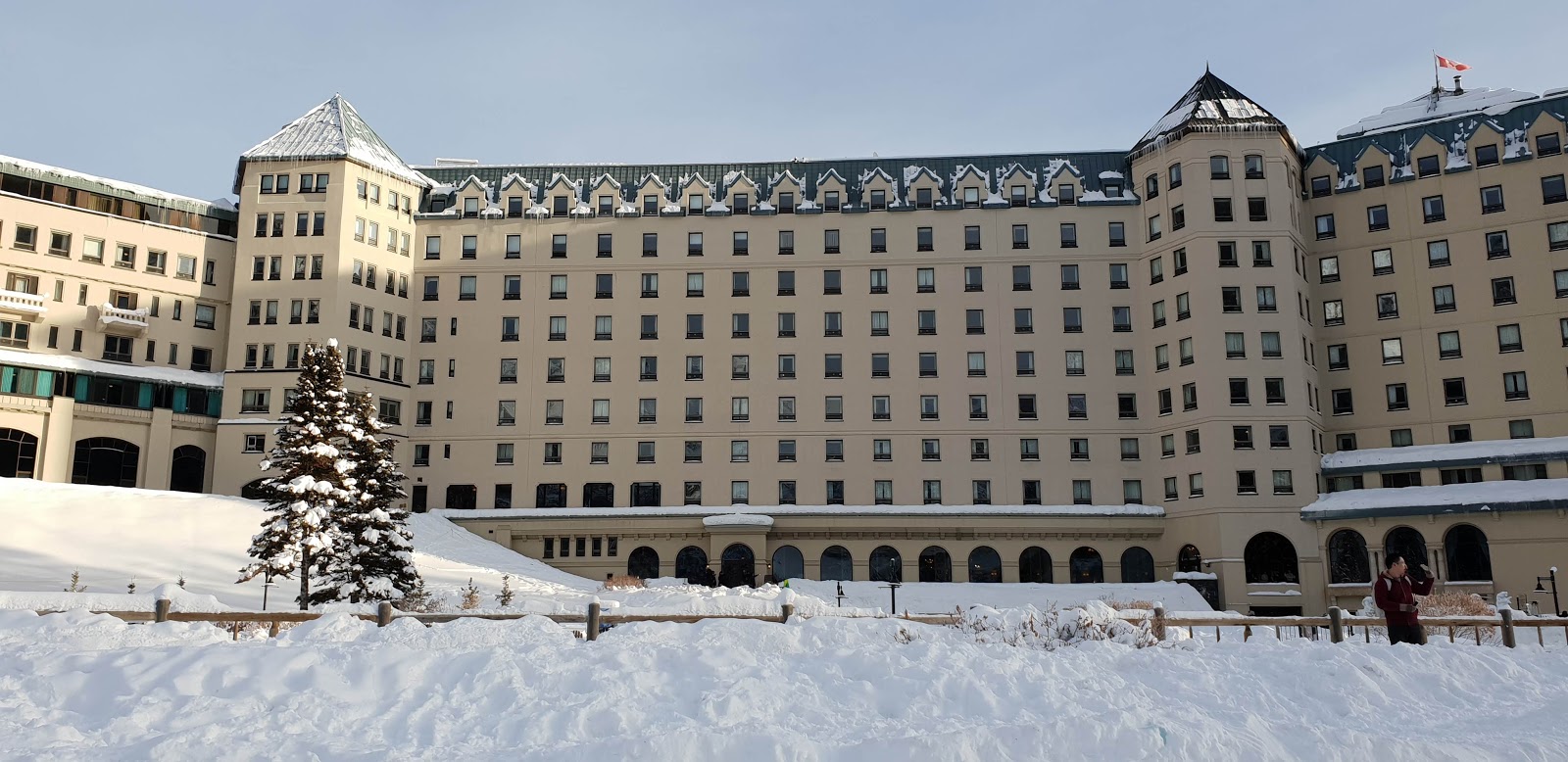
I was not sure what I expected to see when we first arrived at the Fairmont Hotel in Lake Louise, Alberta, Canada.
I’d seen endless photographs both in Winter and in Summer, and the problem with photos is that they never quite prepare you for reality.
That’s not to say that our first impression was of incredible scenery, it was of the front door if it could be called that, where we pulled up in the car, and then, if the sub-zero temperatures, a mad rush to get the baggage out, and get into the warmth of the foyer, which was almost the size of several football fields, and then some.
Check-in was quick and easy, and then we went to our room on the first floor. I had hoped to be higher up, but, being a corner room, when we got there, the views could not be more majestic.
I could not believe there were people who were willing to take a sleigh ride in the minus degree temperatures. Don’t let the sunny aspect fool you; it’s freezing cold, literally, outside.
The lake had frozen over, and a closer look showed there was a skating rink, an ice castle, and a hockey rink as well. People were skating and walking over the frozen surface of the lake.
No skating or walking on thin ice here.
Venturing outside into the cold, you have to be rugged up, and definitely, have both a hat and gloves. It was minus six degrees.
There’s this amazing hotel, just like you would see in the movies
A frozen lake where you’re half expecting to open up and a huge spaceship, or something else, come out
Mountainsides to climb, but only if you are stark staring mad. And, of course, if you don’t freeze to death before you get there.
Our room, believe it or not, is on the extreme right-hand side, just above the first roofline.
Tomorrow we will venture further out onto the lake.