The cinema of my dreams – I never wanted to go to Africa – Episode 17

Our hero knows he’s in serious trouble.

The problem is, there are familiar faces and a question of who is a friend and who is foe made all the more difficult because of the enemy if it was the enemy, simply because it didn’t look or sound or act like the enemy.

Now it looks like he’s been renditioned by his own people.


Seeing Colonel Bamfield made my blood run cold.

This wasn’t an old commanding officer coming to see one of his protégés after being almost killed in a bad accident.

This was a man checking up on me, and whether or not I had relayed any of the details of my incarceration at the mystery camp in the desert.

The thing is, he didn’t have to come calling if I had said anything Breeman would have reported it directly to her superiors.

No, he was here for another reason, and one I had no doubt I was not going to like.

Firstly, it was apparent the feelings of dislike and mistrust ran deep between the two, and I could see, on first sight, there had been something between them once, and it had exploded on someone, and I suspect it was Breeman.

Male officers of Bamfield rank rarely got into trouble for fraternising with lower ranked female officers.  It was, I was told once, a man’s army, not for women.

And I expect Bamfield was old school.

He looked at me then at her.  “How is our patient?”

Our patient?  How did he have anything to do with me, unless he was reclaiming me for his command.

“Sergeant Digwater has a name, and he is not your patient.”  The accompanying look on her face told me that Bamfield better be ready for war.

“Perhaps that might be the case for now, but I have given orders to temporarily detach Sergeant Digwater from this command and assign him temporally to mine so that he can be sent to our medical facility in Germany before being sent home.  The sergeant has done enough for his country.”

Had I?  It was customary to patch soldiers like me up if the injuries were not life-threatening, and then send them back to the front line.  I had, as far as I was aware, a few broken bones, and nothing that a month or two of physical therapy wouldn’t put straight.

Besides, as a loner, I had made the Army my home, and where most of the people I knew were.  As a civilian, I would be like a fish out of water.

“Do I get to choose what happens to me?”  I spoke for the first time, directly at both of them.

Bamfield answered.  “No.”  Then gave me a genial look.  “How are you, Sam.  I’ve spoken to the doctors, and they say all you need is rest and recuperation and you’ll be as good as new.  But I want to know how you feel?”

I gave him a measured look.  “I would have to say a lot worse than a few days ago.”

His expression changed as a result of those words.  Breeman’s expression was a lot more interesting, processing what that statement might mean.

She was about to ask when he interrupted her.  “Understandable, since you were found unconscious in the cabin of the crashed aircraft.  A case perhaps of a delayed reaction.  You should tell the medics you need more pain killers.”  He then turned to Breeman.  “The sergeant will be evacuated at 0800 hours tomorrow morning.  Until then, no one is to visit him until he is debriefed.  Am I clear?”

Breeman stood.  She was a good six inches shorter than Bamfield in stature, and at least 100 pound in weight.  Still, she projected a formidable opponent.

“I take it that does not include me?”

“What part of everyone did you not understand?”

Fighting words and she was ready to take up the battle.  Except, I think she knew she was outranked, and if push came to shove, it was not worth losing her command over the visiting of a lowly Sergeant.  This was pulling rank at its worst.

“Something’s not right here,” she said.  “And you can be assured I will get to the bottom of it.”  A final glare in his direction and she left, almost slamming the ward door behind her.

Bamfield waited a moment to make sure she had left, then addressed me.

“What have you said about your time missing?”

“Nothing.  If anything I was almost sure you’d turn up.  I had no intention of telling her what happened to me because I’m not sure myself.  I don’t remember having any broken bones.”

“You had to look like you were in a crash, not sitting in a cell for the time you were missing.  I suggest you keep our discussion to yourself, and remember, we could have sent you back in a body bag.  The debriefing crew will be here in an hour or so.”

“What am I supposed to tell them?”

“Whatever you want.  It won’t go any further than them because they are assigned to me.  Now, I have to work to get back to.  I might see you again in Germany, but if I don’t, enjoy the rest of your life.”

The way he said it, I didn’t think this visit would be the last time I saw him.  Like Breeman said, something was not right.

He had a brief word to the guard, another soldier he had brought with him, and left him on guard outside the ward door.  It looked to me like he didn’t take Breeman at her word she wouldn’t return.


© Charles Heath 2019

“The Things We Do For Love”

Would you give up everything to be with the one you love?

Is love the metaphorical equivalent to ‘walking the plank’; a dive into uncharted waters?

For Henry, the only romance he was interested in was a life at sea, and when away from it, he strived to find sanctuary from his family and perhaps life itself.  It takes him to a small village by the sea, a place he never expected to find another just like him, Michelle, whom he soon discovers is as mysterious as she is beautiful.

Henry had long since given up the notion of finding romance, and Michelle couldn’t get involved for reasons she could never explain, but in the end, both acknowledged that something had happened the moment they first met.  

Plans were made, plans were revised, and hopes were shattered.

A chance encounter causes Michelle’s past to catch up with her, and whatever hope she had of having a normal life with Henry, or anyone else, is gone.  To keep him alive, she has to destroy her blossoming relationship, an act that breaks her heart and shatters his.

But can love conquer all?

It takes a few words of encouragement from an unlikely source to send Henry and his friend Radly on an odyssey into the darkest corners of the red-light district in a race against time to find and rescue the woman he finally realises is the love of his life.

The cover, at the moment, looks like this:

lovecoverfinal1

Is love the metaphorical equivalent to ‘walking the plank’; a dive into uncharted waters?

For Henry, the only romance he was interested in was a life at sea, and when away from it, he strived to find sanctuary from his family and perhaps life itself.  It takes him to a small village by the sea, s place he never expected to find another just like him, Michelle, whom he soon discovers is as mysterious as she is beautiful.

Henry had long since given up the notion of finding romance, and Michelle couldn’t get involved for reasons she could never explain, but in the end, both acknowledge that something happened the moment they first met.  

Plans were made, plans were revised, and hopes were shattered.

A chance encounter causes Michelle’s past to catch up with her, and whatever hope she had of having a normal life with Henry, or anyone else, is gone.  To keep him alive she has to destroy her blossoming relationship, an act that breaks her heart and shatters his.

But can love conquer all?

It takes a few words of encouragement from an unlikely source to send Henry and his friend Radly on an odyssey into the darkest corners of the red-light district in a race against time to find and rescue the woman he finally realizes is the love of his life.

The cover, at the moment, looks like this:

lovecoverfinal1

The cinema of my dreams – It continued in London – Episode 39

That was a surprise

Cecelia leaned against the door to close it.  I was about three steps in front of her.  Juliet had moved to stand behind the two women, each standing to the side and back far enough that if they were not deadly accurate, if they pulled the trigger, the bullets could go anywhere.

I put my hands out.  No point looking threatening.

“Well,” I said, “This is about as good as it gets.”

The countess looked at me.  “How so?”

“My brief.”  I nodded towards Cecelia.  “Our brief was to find you.  We’ve found you.  That’s it.  We can go back to our lives now.  You have no idea how much that pleases me.”

“And me,” Cecelia added.  “I much preferred working in Venice.  Why couldn’t you have gone to Venice, or Paris, or Athens?  It’s time to go.”  She put her hand on the door handle and started to open the door.

Vittoria was watching us the whole time, and her expression was getting more incredulous.  “Not so fast.  What are you talking about?”

“Vittoria, I presume,” I said to her.  “You might want to put the guns down.  We’re not here to hurt you, or take you away, or do anything, other than find you so I can tell my boss everything’s fine.  Well, not you exactly, but the countess.”

“How do you know I want to be found,” the countess said, a look of surprise on her face also.

“That makes things a bit difficult now that we have.  I must tell Mrs Rodby because she’s adamant something’s happened to you.”

I could hear the door close again and Cecelia took her hand off the handle.  She might be a little confused but knew well enough to run with me.  I wasn’t expecting the countess or guns.  Nor had there been any pushback from Juliet against us coming to her flat, and she had to know her mother was waiting.  Perhaps she didn’t know about the countess.

“She can be a busybody.”  The countess sighed.

I felt a vibration in my pocket, the organisation’s standard-issued cell phone, supposedly untraceable.  Supposedly.  “Just give me a second.”

I pulled it out and swiped the screen.  Alfie.  ‘Is she there?’

So much for being untraceable.  That being the case, I had the impression he could not hear anything, so we had a slight advantage, though he would be nearby, and he would know we had met up with Juliet.  I typed in, ‘Hold your horses, outside the door!!!’.  I hoped he got the inference, that barging through doors could be dangerous.

And it alerted me to a new problem.  Rodby didn’t trust me to tell him, and that meant he had been hiding something from us.

“Alfie?” Cecelia asked.

“He knows we’re here.”

“How?”

“How, exactly.”

“Damn.  You sure know how to give a girl a good time.”  She pulled out her cell phone and was about the dismantle it when she saw me shake my head.

“What is…” the countess started to say.

I put my finger up to my lips as a sign for her not to talk.

I called him.  “Something else Rodby forgot to tell me about, you becoming our shadow.”

“What can I say, Rodby knows you sometimes go off book, and this is Juliet.”

“Does he think I still have a thing for her?  After Venice?  The man has rocks in his head.  You might want to remind him the next time you speak to him that I didn’t want to go on this rabbit hunt in the first place.  My life was fine without a countess in it.”

The expressions on all three of the women’s faces were past incredulous, wondering what was going on.

“Is she there?”

“I’ll ask Cecelia, she just got back.  She thought she saw both Juliet and the countess, but it’s dark and the lighting in the building isn’t that great.  I’m in the flat now, and I’m sure the countess was here.  I remember her perfume”.

Cecelia chimed in.  “They got away.  It was the countess.  She’s fine though I don’t know why they would run from us.  What are you not telling us.”

When I didn’t hear a response, I saw that he had hung up.

The countess lowered her weapon and turned to Vittoria.  “Lower the gun.  He’s not here to cause problems.”

“You know who he is?”  She lowered the weapon but not so far that she couldn’t use it if I became a threat.  She’d been around guns which made it a curious skill for a once servant girl.

“Yes.  He escorted me to the opera.  I suspected you might be one of Rodby’s agents.”

“Ex.  He seems to think I want to do this search and rescue instead of retiring.  He’s wrong.  Retirement suits me.  Right now, I’m, missing out on salmon fishing in Scotland.  Oh, and going on a whiskey trail.   But for the moment that’s the least of our concerns.”  I looked at Juliet.  “Do you have another way out of this place?”

“What do you think. You’re not the only one who thrives on paranoia.”

“Then we needed to be gone five minutes ago.”

© Charles Heath 2023

The 2am Rant: I think the asylum is beckoning

I’m sitting at my desk surrounded by any number of scraps of paper with more storylines, written excerpts, parts of stories, and a number of chapters of a work in progress.

Does this happen to anyone else?

The business of writing requires a talent to keep focused on the one project and silence all the other screaming voices in your head, pouring out their side of the story.

But it’s not working.

I try to be determined in my efforts to edit my current completed novel, after letting it ‘rest’ in my head for a few months.

I planned to have some time off, but all of those prisoners in my head started clamouring for my attention.  A story I started some time ago needs revising, another story I wrote last year of NANOWRIMO has come back to haunt me, and characters, well, they’re out in the waiting room, pacing up and down, ready to tell me their life stories.

Is the temporary cure coffee or wine?

Now I think I really do need a holiday

Or a trip to the asylum.  Thank God this is not the early 20th century, or I might never return.  And if it’s named Bellview, it would be just another story to be written.

The Author that went Bonkers!

Does it ever end?

What I learned about writing – Sharing your experiences

Whilst some of the experiences you have sometimes become parts of the stories about the protagonists, the places, and even sometimes the events, others are just experiences that you will want to share with others.

It is the reason why I have specific blogs, one that records almost like diary entries, the things that happen, like seeing a movie or going to a play, or just some event I got caught up in.

The other is a travel blog where, whenever we go away, I always take photos and record what it is we do if I think it would be useful for others. Sometimes these travel events appear as ‘Searching for Locations’, much like the movie makers do when setting up to film.

But, more often, it is like keeping a diary, and these events record my writing progress, the problems with writing, and especially advertising for self-publishing authors. Certainly, the travel entries being time-based keep a record of any changes at a place we go to more than once.

That’s usually Coffs Harbour in northern New South Wales, where we get a timeshare.

We realised very early on the advantage of owning a timehare because it means we can go anywhere in the world, for a week, for a relatively low cost, and get a place with three bedrooms, two bathrooms, and plenty of living space, a kitchen and a laundry.

Major travels in the last few years include America, Canada, China, New Zealand, Austria, Italy and France. Writing about those places is mostly for my own benefit, as they all, at one time or another, end up in my stories.

I also hope that it helps other people with their plans.

365 Days of writing, 2026 – 125

Day 125 – Writing Exercise

Down the slope and across the valley, they rode

It was a cold day in hell, my father said.

Two men had come into town, men who didn’t look like who they were, murderers.

They said they were scouts for the railway.  We had been told a year before that the railways were going to be passing through.  Some people who owned land would become rich, the town would benefit with a rail head, station, hotels and more people.

Some liked the idea, most didn’t

They’d come to Stillwater Creek from the cities to get away from the hustle and bustle, only to find it wolfed follow them.

The two men visited all the farms along a specific path.  They asked about the other landowners.  It wasn’t until it was too late that someone realised they were looking for one specific person.

My elder brother: Mason Henry.

He was the one who was going to make the Henry name famous.  Study law, practise in the big city, then come home and hang a shingle in town.

Got the law degree, got into a large practise, got one case, and then came home.  Showed us the big city newspaper. Prosecuted the criminal, got him life in jail.  A success by any stretch of the imagination.

He didn’t tell us that he had fled the big city in fear for his life.  The family of the criminal put a price on his head, and he was lucky to survive the first attempt.  He didn’t tell us; the sheriff did, days after the so-called railway scouts arrived.

At that time, Mason was out doing a tour of the farms and ranches being courted by the railways, offering his services so the railway wouldn’t take advantage of them.

When he didn’t come home, we went looking for him, my father and I.  And found him, dead, with the horse standing guard.  Shot as he rode past Devils Range, between the Parson’s ranch and town.

The railwaymen had gone.

The sheriff called on any men who were available for a posse.  We started with twenty.  The Henry name meant something in Stillwater Creek.

The usual words about law and order and no shooting on sight or unless in self-defence, we set out.  It was three days ride to the nearest railhead.  There was nowhere else they could go, unless they were simply running.

Fifteen would ride the track.  Five of us were heading straight to Alabaster Springs, the railhead, in the hope that they believed they had got a head start. 

When we finally got Mason to Doc, he said he’d been dead no more than twelve hours.

There was hope.

We’d had our fair share of gunslingers passing through.  The Tuckers were among the first of the few land owners that came out when the West was new, and everything was up for grabs.

Others followed, like my family, the Henrys, and they lay claim to smaller tracts and smaller cattle ranches.  It was before fences, with rivalries and perceived injustices, and eventually the law found its way out, along with the start of a town.

It began with two hotels and a general store, a stable and then the stagecoach.  From there, a sheriff’s office and fences.  Disputes over water rights, and the Tuckers trying to run the new ranchers off their properties.

Tucker’s hands were more than cowboys; they were enforcers.  His leading hand had a reputation as a man who’d won a dozen shoot-outs on Main Street, the closest we ever saw a gunslinger.

The last gunfight I saw, not a month or two back, a card sharp was caught and called out.

We thought it was entertainment.

The sheriff called it murder.

Pa said the card sharp should have stayed on the Mississippi.  Ma said he would’ve died anyway.

The point is, talk of railways, more people moving out of the cities, and opportunists arrive every day.  The Tuckers had an investment in the railways, but their land wasn’t on the direct route, so they were buying up land, and those that wouldn’t sell had cattle rustled, cowboys beaten or shot, and the owners intimidated.

Pa knew who was ultimately responsible for Mason’s death, a message of what was going to happen to me and my older sister, Polly, but he was picking on the wrong people.  He tried going down the law path, but the law could be bought or replaced; it, too, was under threat from the Tuckers.

We were not selling, and we were going to prove that the Tuckers were the people responsible for Mason.  With or without the law.

That’s why Polly and I were in the group of five heading to the railhead.  Dad said it was to protect our interests; Polly said through gritted teeth she was going to kill the sons of bitches.

I said that that wouldn’t help find out who hired them.  I don’t think she heard me.

Polly was insistent that I learn to shoot.  Not just a rifle, which was a necessity when out herding and moving cattle, but a handgun, for emergencies.

Pa had taught Polly and Mason, even though Mason never liked the idea.  He had no problem with using a rifle; he helped with the cattle when he was home, and there were plenty of reasons for carrying a gun.  Ma said I was too young, so Polly taught me when we were away from the ranch.

I could use a gun.

I shouldn’t have to.

But it was there.

Just before we slowed down, the horses were just about all in from the mad dash, in sight of the town in the distance, and not far from the rail tracks heading back east.

Alabaster Springs was a big town.  When we were younger, it wasn’t much more than our town.  Now it was a city.  A long main street, several livery stables, half a dozen hotels, two with dancing girls, gambling, drinking, and trouble.

It had grown too quickly, and lawlessness outstripped the sheriff and his deputies, and the good intentions from the mayor, the council and law and order were lost in a tangle of land rights, personal power struggles, and property ownership disputes.

Not even the establishment of three churches and three upstanding ministers vigorously performing the Lord’s work could stop the tide of sin.  Pa said it was too little too late, and compared it to Sodom and Gomorrah. 

Pa said never to go there because a child who thought he was a man was still a child and wouldn’t get treated properly.  Or as Polly bluntly put it, a child or a man would be led down the devil’s path before he knew what happened.

We would find the railwaymen, catch them, and turn them in to the law.

Passing Jockheim’s Livery Stable, several sheets of the newspaper blew across the street, picked up by a gust. Once, it had been tumbleweeds.

It was late afternoon, and the sun was going down after a hot day in the saddle.  We were sore and tired, but the day, for us, was not over.

We had a plan.  Hotel by hotel, looking for the men.  We all knew what they looked like.  Who they were.  Faces etched in our minds.

The faces of murderers.

The horses moved slowly. Jackerby, a deputy, stopped first, hitched his horse to the rail outside the Northern Hotel.

A wave, he went in.

Next, Walters, a cowboy from the ranch next to ours, stopped, and did the same.  He went into the Wiseman Hotel.  There was a lot of noise inside, and as he stepped up onto the boardwalk, a drunk was thrown out onto the street.

It was a confronting sight.

A wagon came up behind us and nearly ran over him.

Samson, a new deputy, stopped at the Likerest Casino and Hotel. 

Three down, about a dozen or more to go.

Everyone, on the street, going in and coming out of the hotels, the stores or walking the boardwalk, carried guns.

It was very busy. A lot of men looked dangerous.

In the distance, the sound of cattle in the pens, waiting for the next train.  It was why so many men were in town.

A gun went off, and I jumped, and the horse reared, a little skittish.  Polly was beside me and leaned over to pay my horse on the neck.

Another man, a distance up the street, found himself face down in the street, muddy, churned up, and not a pleasant place to end up.

The gun followed him.

Polly shook her head.  Ma said it would be dangerous for her in a rough town with drunken men used to having their way.  Pa reckoned she could handle herself, but I was there to protect her.

More like it would be the other way around.

The Belvedere.  Supposedly classy.  Or so the advertisements in the newspaper, sent over once a week by stagecoach, said.  Fine dining, fine ladies, fine entertainment, genuine showgirls from back east.  Jack Belvedere, Mayor of Alabaster Springs, owned nearly everything; it was his city.

Pa said he was the personification of evil.

I could believe it.

He was standing outside his hotel, having his photo taken with two of his showgirls.

Polly and I had reached our first stop, hitched the horses and walked up the stairs outside the next-door storefront, the land office.  It was closed.

She brought her rifle.

Now that I was here, the plan of going to the bar and checking whether the two men were inside seemed impossible.

She stopped just as we were about to cross from the storefront boardwalk to the hotels.

“I see them,” she said.

The other end of the boardwalk.  Coming towards Belvedere.  When they stopped to talk to Belvendere, Polly disappeared after telling me to follow them.

She went down the alley and around the back.

I heard them talking.

Belvedere:  “You made good time.  The train will be here in two hours.  Go inside.  Tell Joe at the bar you’ve got a tab.  He’ll give you whatever you want.”

One said, “Thank you, Mr Belvadere.”

“No, Ned.  I should be thanking you for cleaning up what was about to be a big problem.”

He shook hands with them, and they went inside.

Belvedere, in cahoots with the Tuckers.  No surprises there.  He was part of their escape plan. 

I skirted my way around the photographer and Belvedere and went inside.  Just.  The bar was huge, one of several and packed.

The long bar down one side was crowded with men drinking, some in an intoxicated state, some with women hanging on to them, perhaps to keep them from falling over.  Certainly to keep plying them with drink.  Ma had a name for them.  I don’t think it was a good name.

I saw the two men head down the end, and they were met by several others.  A loud voice carried above the noise.  Larry Tucker.  Then I saw the brothers, Sam and Chuck. Not a good one between them.

Larry was the worst, the same age as Mason.  Tried to lead him astray, but Mason had no taste for drink and bullying, or shooting at innocents.  Harry Tucker had wounded several boys from surrounding ranches, covered by his father as shooting accidents while hunting.

They weren’t.  The boys treated him with contempt, where he expected fealty.  We all knew he was an idiot with a rich father.

“Well, well, well.”  Larry had seen me.

Not good.

Not in a bar.

Not after he’d been drinking.  He was a boy who couldn’t hold his liquor.  And that was dangerous.

“If it isn’t little Tom Henry.  Little fish in a big pond.”

He stepped out from the bar, a hand on the gun, a big gun, bigger than most.  Smirk.  Threatening posture.  Daring.  A blink and slight swaying movement.

A drink too many.

A touch too much courage?

A section of the crowd had gone quiet, waiting to see what happened.

“What are you doing here?”

Trying not to alert the two men, but it was a bit late for that.  They were on the alert now and looking worried.

Three men with guns.

But what the hell.  It was death or glory.  “Looking for two murderers.”

Harry Tucker laughed.  “You’re in the wrong place.  Nothing but law-abiding citizens in here.”

He looked around at the people who were now interested in this side show.  I saw several men by the door, closed up, cutting off the exit.

“And the two railway agents standing next to you at the bar?”

“Businessmen.  Buying land for the railway that will benefit not only the Henrys.”

“How does killing my brother fit into the plan?”

“I know nothing about your brother.  But if he’s dead, then he was obviously sticking his nose in where it didn’t belong.  Like you.  I don’t like you calling my friends unsavoury names, Henry.  Leave, or I’ll put a bullet in you.”

He drew his gun and pointed it at me.  It wavered in his hand.  It was heavy.

The next few seconds were a blur.

A gun went off, and I felt a bullet hit me in the arm, the force of it knocking me backwards.  Then several more shots, and as I was falling, I saw Harry go down, the two railwaymen drawing their guns and being shot, the other brothers trying to draw their weapons and being stopped by men behind them, then a gun shot three bullets into the roof and a man yelling, “The next man to fire a gun will die.”

Silence, after I finished sprawling on the floor, holding my arm that was hurting like hell, and bleeding.  I honestly thought I was going to die.  That’s when I passed out.

When I woke, it was in a hotel room with an old man leaning over me, looking at my arm.

“He’ll survive, it’s just a scratch.  It’s patched, you just need to change the bandage in a day or so.”

On the floor, there were three bodies.  The two railwaymen and Harry Tucker.  I didn’t shoot him or any of them.  I knew better than to draw a weapon in a place like that.

Belvedere was standing over them, shaking his head.

In the corner, a man with a sheriff’s badge and sporting a blackening eye was standing next to my sister, looking somewhat dishevelled.

Belvedere looked at her.  “Anytime you want a job working for me, just make yourself known to Joe.”

“I’m not a whore.” Her tone and manner dripped defiance. She scared me, most of the time.

“I mean, as a sharp shooter.  That was the most amazing display of shooting I’ve ever seen.”

“Pity she didn’t shoot you,” I said.

He swivelled around.  “Ah, the small fish speaks.”

“You paid them to kill my brother.”

“Correction, Tom Henry, that is your name, isn’t it?  Of course it is.  The family resemblance is unmistakable.  Are all of you Henrys this rambunctious?  I had nothing to do with it.  In fact, I told those stupid Tuckers it would bring nothing but trouble.  And here it is, on my doorstep.”

“You reap what you sow,” Polly said.

“I’m trying to build something here.  Not spend the rest of my life in jail.  Harry Tucker simply misinterpreted what his father said and took it into his own hands to get these two second-rate shooters to kill your brother.  Had you not turned up, I was going to hand them over to the law.  In fact, the sheriff is about to transfer them to Boot Hill.  I’ll send Tucker back to his father with an explanation.  Neither of you two nor any of the Henrys had anything to do with it.”

He looked at Polly.  “Take your brother home, tell your Pa he got caught in the crossfire.  Don’t come back any time soon, or you might get arrested.  Whatever you came here for is done.  Am I clear?”

I could see her thinking.

“It’s done, Polly, no matter what we think.  It’s done.  I’m done.”

She thought some more.  “I get my gun back?”

“Once you leave the city limits.  My deputy will escort you back to Springwater.  All of you.”

“Fine.”

The sheriff said, “I could lock you up for assaulting a sheriff, but I wasn’t wearing my badge, so you weren’t to know.  That’s a mean right you’ve got.”

She gave him a smile, but I didn’t think she was trying to be nice.

“Take them over to the jail house and get them to sign some paperwork, and a report to their father about what happened here.  An investigation into his son’s death has been carried out.  You know the details.” To a deputy by the door.  “Ride out and meet the posse.  Take them to the sheriff’s office.  Make sure they understand the circumstances.”

Back home, Pa was not a happy man.

The fact that Polly and I went into a bar, each carrying a gun.

The fact that the moment I saw Harry Tucker, I should have run.

The fact that Polly exercised summary justice in the two railwaymen/murderers.

The fact that I got shot by a Tucker.

The fact that we got caught.

The fact that we might never get the truth.

He was interested to learn what I heard between the railwaymen and Belvedere, but it wasn’t conclusive evidence. But at least he knew the Tuckers were trouble, and he had not prosecuted his daughter when they had sworn testimony that said otherwise. The report had a note from Belvedere himself; the Henrys had suffered enough.

The fact that Belvedere had outlined the facts of the case, and, according to him, Harry Butler had taken matters into his own hands and hired the railwayman to execute Mason, was as good an explanation they would get.

For that, old man Tucker apologised and said he would do everything he could to help the family cope with the loss.

Ma was particularly upset.

A parent, she told Polly, should never have to outlive their child.  Then she slapped Polly very hard for allowing me to go into the bar and for nearly getting me killed.

It was the only time I saw Polly cry.

Other than that, as far as I was concerned, the Lord should be satisfied his work was done.  And eye for an eye. Harry Butler for Mason Henry, though Harry was far from being the same man as Mason.

The Lord, it had to be said, worked in mysterious ways.

The railway came.  We made some money, not a lot, and in time, what happened at Alabaster nearly happened in Stillwater.

Except…

We had the foreknowledge of what was coming and stopped most of it dead in its tracks.

Polly, as if it were ordained, became the first Mayor. She married the sheriff she gave a black eye.

My arm still aches with the onset of winter, a reminder that we don’t always get what we want at the time; it eventually happens if you wait long enough.

©  Charles Heath  2026

Searching for locations: The Erqi Memorial Tower, Zhengzhou, China

A convoluted explanation on the reasons for this memorial came down to it being about the deaths of those involved in the 1923 Erqi strike, though we’re not really sure what the strike was about.

So, after a little research, this is what I found:

The current Erqi Tower was built in 1971 and was, historically, the tallest building in the city. It is a memorial to the Erqi strike and in memory of Lin Xiangqian and other railway workers who went on strike for their rights, which happened on February 7, 1923.

It has 14 floors and is 63 meters high. One of the features of this building is the view from the top, accessed by a spiral staircase, or an elevator, when it’s working (it was not at the time of our visit).

There seems to be an affinity with the number 27 with this building, in that

  • It’s the 27th memorial to be built
  • to commemorate the 27th workers’ strike
  • located in the 27th plaza of Zhengzhou City.

We drive to the middle of the city where we once again find traveling in kamikaze traffic more entertaining than the tourist points

When we get to the drop-off spot, it’s a 10-minute walk to the center square where the tower is located on one side. Getting there we had to pass a choke point of blaring music and people hawking goods, each echoing off the opposite wall to the point where it was deafening. Too much of it would be torture.

But, back to the tower…

It has 14 levels, but no one seemed interested in climbing the 14 or 16 levels to get to the top. The elevator was broken, and after the great wall episode, most of us are heartily sick of stairs.

The center square was quite large but paved in places with white tiles that oddly reflected the heat rather than absorb it. In the sun it was very warm.

Around the outside of two-thirds of the square, and crossing the roads, was an elevated walkway, which if you go from the first shops and around to the other end, you finish up, on the ground level, at Starbucks.

This is the Chinese version and once you get past the language barrier, the mixology range of cold fruity drinks are to die for, especially after all that walking. Mine was a predominantly peach flavor, with some jelly and apricot at the bottom. I was expecting sliced peaches but I prefer and liked the apricot half.

A drink and fruit together was a surprise.

Then it was the walk back to the meeting point and then into the hotel to use the happy house before rejoining the kamikaze traffic.

We are taken then to the train station for the 2:29 to our next destination, Suzhou, the Venice of the East.

In a word: Happy

“I’m happy to be being here.”

Yes, I actually heard that answer given in a television interview, and thought, at the time, it was a quaint expression.

But in reality, this was a person for whom English was a second language, and that was, quite literally, their translation from their language to English.

Suffice to say, that person was not happy when lost the event she was participating in.

But that particular memory was triggered by another event.

Someone asked me how happy I was.

Happy is another of those words like good, thrown around like a rag doll, used without consequence, or regard for its true meaning.

“After everything that’s happened, you should be the happiest man alive!”

I’m happy.

I should be, to them.

A real friend might also say, “Are you sure, you don’t look happy.”

I hesitate but say, “Sure.  I woke up with a headache,” or some other lame reason.

But, in reality, I’m not ‘happy’.  Convention says that we should be happy if everything is going well.  In my case, it is, to a certain extent, but it is what’s happening within that’s the problem.  We say it because people expect it.

I find there is no use complaining because no one will listen, and definitely, no one likes serial complainers.

True.

But somewhere in all those complaints will be the truth, the one item that is bugging us.

It is a case of whether we are prepared to listen.  Really listen.

And not necessarily take people at their word.


An excerpt from “If Only” – a work in progress

Investigation of crimes doesn’t always go according to plan, nor does the perpetrator get either found or punished.

That was particularly true in my case.  The murderer was incredibly careful in not leaving any evidence behind, to the extent that the police could not rule out whether it was a male or a female.

At one stage, the police thought I had murdered my own wife, though how I could be on a train at the time of the murder was beyond me.  I had witnesses and a cast-iron alibi.

The officer in charge was Detective First Grade Gabrielle Walters.  She came to me on the day after the murder seeking answers to the usual questions like, when was the last time you saw your wife, did you argue, the neighbours reckon there were heated discussions the day before.

Routine was the word she used.

Her fellow detective was a surly piece of work whose intention was to get answers or, more likely, a confession by any or all means possible.  I could sense the raging violence within him.  Fortunately, common sense prevailed.

Over the course of the next few weeks, once I’d been cleared of committing the crime, Gabrielle made a point of keeping me informed of the progress.

After three months, the updates were more sporadic, and when, for lack of progress, it became a cold case, communication ceased.

But it was not the last time I saw Gabrielle.

The shock of finding Vanessa was more devastating than the fact that she was now gone, and those images lived on in the same nightmare that came to visit me every night when I closed my eyes.

For months, I was barely functioning, to the extent that I had all but lost my job and quite a few friends, particularly those who were more attached to Vanessa rather than me.

They didn’t understand how it could affect me so much, and since it had not happened to them, my tart replies of ‘you wouldn’t understand’ were met with equally short retorts.  Some questioned my sanity, even, for a time, so did I.

No one, it seemed, could understand what it was like, no one except Gabrielle.

She was by her own admission, damaged goods, having been the victim of a similar incident, a boyfriend who turned out to be an awfully bad boy.  Her story varied only in that she had been made to witness his execution.  Her nightmare, in reliving that moment in time, was how she was still alive and, to this day, had no idea why she’d been spared.

It was a story she told me one night, some months after the investigation had been scaled down.  I was still looking for the bottom of a bottle and an emotional mess.  Perhaps it struck a resonance with her; she’d been there and managed to come out the other side.

What happened became our secret, a once-only night together that meant a great deal to me, and by mutual agreement, it was not spoken of again.  It was as if she knew exactly what was required to set me on the path to recovery.

And it had.

Since then, we saw each other about once a month in a cafe.   I had been surprised to hear from her again shortly after that eventful night when she called to set it up, ostensibly for her to provide me with any updates on the case, but perhaps we had, after that unspoken night, formed a closer bond than either of us wanted to admit.

We generally talked for hours over wine, then dinner and coffee.  It took a while for me to realise that all she had was her work; personal relationships were nigh on impossible in a job that left little or no spare time for anything else.

She’d always said that if I had any questions or problems about the case, or if there was anything that might come to me that might be relevant, even after all this time, all I had to do was call her.

I wondered if this text message was in that category.  I was certain it would interest the police, and I had no doubt they could trace the message’s origin, but there was that tiny degree of doubt about whether or not I could trust her to tell me what the message meant.

I reached for the phone, then put it back down again.  I’d think about it and decide tomorrow.

© Charles Heath 2018-2020

Searching for locations: The Henan Museum, Zhengzhou, Henan Province, China

The Henan Museum is one of the oldest museums in China.  In June 1927, General Feng Yuxiang proposed that a museum be built, and it was completed the next year.  In 1961, along with the move of the provincial capital, Henan Museum moved from Kaifeng to Zhengzhou.

It currently holds about 130,000 individual pieces, more of which are mostly cultural relics, bronze vessels of the Shang and Zhou Dynasties, and pottery and porcelain wares of the various dynasties.

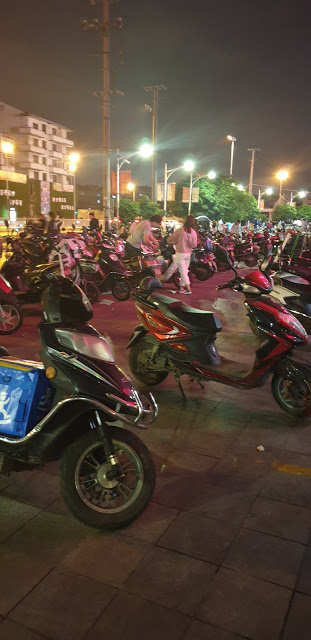
Eventually, we arrive at the museum and get off the bus adjacent to a scooter track and despite the efforts of the guide, there’s no stopping them from nearly running us over.

We arrive to find the museum has been moved to a different and somewhat smaller building nearby as the existing, and rather distinctively designed, building is being renovated.

While we are waiting for the tickets to enter, we are given another view of industrial life in that there is nothing that resembles proper health and safety on worksites in this country, and the workers are basically standing on what looks to be a flimsy bamboo ladder with nothing to stop them from falling off.

The museum itself has exhibits dating back a few thousand years and consist of bronze and ceramic items.  One of the highlights was a tortoiseshell with reportedly the oldest know writing ever found.

Other than that it was a series of cooking utensils, a table, and ceramic pots, some in very good condition considering their age.


There were also small sculptures

an array of small figures

and a model of a settlement

20 minutes was long enough.